I have kept writing about my brother Al regularly every day of his anniversary.However, yesterday, the day he left the Earth, all the negative feelings stemming from the issues I am facing overwhelmed me, leaving me unable to think clearly and without energy. In any case, the precise date isn’t very significant, since Al is always on my mind. While I don’t view death as an end, Carl Jung’s words always echo in my ears: ‘Death is a drawing together of two worlds, not an end.’ We are the bridge.
Still, before I melt into the chair from the heat, it is good to have a review.
It is one of the unforgettable memories that I would like to share with you here:
You came, sweating, on a hot summer afternoon, and I was surprised. You were on military duty, far away in the south, but suddenly you were there. You said, “I can’t anymore!” You had escaped that mess! In Iran, two years of military service are mandatory, and if one refuses, they have no chance of finding a job and will be sent to jail.
When it was your turn for military service, I was very worried about you; I knew we were not suited to the military, since our mother wanted to send us to a military school because she was tired of our unconventional behaviour. Still, one of our family members, a general, advised her not to do so. He told her that we were the sons of a thinker and intellectual, and that this was controversial for military school.
“Military intelligence is a contradiction in terms,” as Groucho Marx once said. However, during the first three months of your service, you were in northern Tehran, could often come home, and found wonderful, unconventional friends there. Still, after that, they sent you far away to the south, far from home, far from your room, music, and solitude. After about two weeks, you left everything behind, came home, went to your room, put on a Beatles vinyl (Abbey Road), lay down, and listened. Oh yes, I wasn’t a revolutionary like you yet and was a bit conservative! I asked you what would happen to you after this escape, about your life and your future. It doesn’t matter to me, he said; it is not my world! I asked, What world is yours? And he answered, “It is a world inhabited all by crazy people!”
Of course, it took me a while to understand your stance on that crazy world. I remember it well. I was in the bathroom, under the shower, and there, like Archimedes, I cried out, “Eureka! Eureka! I know now what the matter is: I know now that I don’t know!” It’s been about nineteen years since you, in your belief, transitioned to that level of existence. May you have found your crazy world by now. I can still see the image before my eyes; the moment you were lying on the ground, listening to music, while I sat helplessly before you. Still, that haunting, sad song brings tears to my eyes. I think of you so often!
PS: I might be unavailable next week as I plan to visit a friend, unless I need urgent surgery and must stay in hospital. We’ll see how things unfold! Wishing everyone a peaceful and wonderful time.
Today, I am concluding the section on Memories in dreams. Freud gathered many ideas and examples on this topic, which is interesting. However, it also made me think of something larger and more profound.
As we read the following section of this chapter, we can see how the memories in Freud’s analysis remind us of Jung’s purposes for symbols. I believe Jung further examined the role of memories in dreams to illustrate their purpose, delving deeper into this concept through his understanding of symbols.
Dr Jung examines how dreams employ symbolic imagery rooted in the collective unconscious and explains how interpreting these symbols can yield a deeper understanding of the self and the human mind. Dreams are the royal road to the unconscious, using symbols that are not direct language but images rooted in the collective unconscious. Symbols bridge the conscious mind and inner worlds, carrying deep, multifaceted meanings that extend beyond personal experience and often reference universal archetypes. Interpretation involves exploring these associations to uncover unconscious wisdom and promote balance and individuation. Symbols in dreams facilitate dialogue with inner depths, revealing fears, desires, and potentials, and engaging us in the ongoing drama of the human soul.
Now let’s refocus on our starting point: the beginning! Sequel to the previous season.
The Material of Dreams—Memory in the Dream (Das Traummaterial – Das Gedächtnis im Traum)
I can recount a dream of my own here, in which the impression to be recalled is replaced by a connection. In the dream, I saw a person whom I knew to be the doctor from my hometown. His face was indistinct, yet it merged with the image of one of my high school teachers whom I still encounter occasionally. Upon waking, I could not determine what connection linked the two individuals. However, when I asked my mother about the doctor from those early years of my childhood, I learned that he had been one-eyed, and the high school teacher whose figure had overlaid the doctor’s in the dream was also one-eyed. Thirty-eight years had passed since I last saw the doctor, and to the best of my knowledge, I had never thought of him in my waking life.
It sounds as though a counterweight to the outsized role played by childhood impressions in dream life is being proposed when several authors claim that elements from one’s earliest days can be detected in most dreams. Robert (p. 46) even states: In general, the normal dream concerns itself only with impressions from the most recent days. We shall see, however, that the theory of dreams constructed by Robert imperatively demands such a relegation of the oldest impressions and a foregrounding of the most recent ones. Yet the fact to which Robert gives expression is—as I can confirm from my own investigations—valid. An American author, Nelson, suggests that the impressions most frequently utilised in dreams are those from the day prior to the day of the dream or from three days earlier, as if the impressions from the day immediately preceding the dream were not yet sufficiently faded or distant.
Several authors who did not wish to question the intimate connection between dream content and waking life have noted that impressions which intensely occupy waking thought only appear in dreams after they have been somewhat pushed aside by the mental work of the day. Thus, as a rule, one does not dream of a beloved deceased person during the initial period when grief completely consumes the survivor (Delage). However, one recent observer, Miss Hallam, has also collected examples of the opposite pattern and asserts the validity of psychological individuality in this regard.
The third, most peculiar, and most baffling characteristic of memory in dreams manifests itself in the selection of the material reproduced; for, unlike in the waking state, it is not merely the most significant elements that are retained, but—on the contrary—even the most trivial and inconspicuous details are deemed worthy of remembrance. Here, I shall let those authors speak who have expressed their astonishment most emphatically.
Hildebrandt (p. 11): “For the curious thing is that the dream generally draws its elements not from the great and profound events, not from the powerful and driving interests of the day just past, but from the incidental details—from the worthless scraps, so to speak—of the recent or more distant past. A shattering death in the family, under the impression of which we fall asleep late, remains blotted out of our memory until the first moment of waking forces it back upon us with distressing intensity. In contrast, the wart on the forehead of a stranger we encountered—someone we did not give another thought to after passing by—plays a role in our dream” …
Strümpell (p. 39): “… such cases where the analysis of a dream uncovers components that, while originating in the experiences of the previous day or the day before that, were nevertheless so insignificant and valueless to waking consciousness that they were consigned to oblivion shortly after the experience itself. Such experiences might include, for instance, casually overheard remarks or the superficially observed actions of another person, fleeting perceptions of objects or individuals, isolated snippets from something one has read, and the like.”
Havelock Ellis (p. 727): The profound emotions of waking life, the questions and problems on which we spread our chief voluntary mental energy, are not those which usually present themselves at once to dream consciousness. It is so far as the immediate past is concerned, mostly the trifling, the incidental, the »forgotten« impressions of daily life which reappear in our dreams. The psychic activities that are awake most intensely are those that sleep most profoundly.
Binz (p. 45) takes the very characteristics of memory in dreams under discussion as an occasion to express his dissatisfaction with the explanations of dreams that he himself had previously supported: “And the natural dream poses similar questions to us. Why do we not always dream of memory impressions from the days immediately past, but instead often plunge—without any discernible motive—into a past that lies far behind us and has all but faded away? Why does consciousness in dreams so often receive the impression of indifferent memory images, while the brain cells—precisely where they harbour the most vivid traces of past experiences—usually remain silent and dormant, unless an acute reactivation during waking hours had stirred them shortly before?”
It is easy to see how the peculiar preference of dream-memory for the trivial—and therefore disregarded—elements of daily experiences was bound, in most cases, to lead to a failure to recognise the dream’s dependence on waking life altogether, or at least to make it difficult to demonstrate that dependence in any individual instance. Thus, it was possible for Miss Whiton Calkins, in her statistical analysis of her own dreams (and those of her associate), to be left with eleven per cent of the total in which no connection to waking life was apparent. Hildebrandt is surely right in asserting that all dream images could be explained genetically if we were to devote the time and sufficient concentration to tracing their origins. He calls this, of course, “an extremely laborious and thankless task.” For it would usually amount to unearthing all manner of psychologically worthless items from the most remote corners of the memory’s storehouse—bringing back to light all sorts of completely inconsequential moments from the distant past, buried perhaps as early as the very next hour. Yet I cannot help but regret that this astute author allowed himself to be deterred from pursuing a path that began so inconspicuously; it would have led him directly to the heart of dream interpretation.
The behaviour of dream-memory is certainly of the utmost significance for any theory of memory whatsoever. It teaches that “nothing we have once possessed mentally can ever be completely lost” (Scholz, p. 34). Or, as Delboeuf puts it, »que toute impression même la plus insignifiante, laisse une trace inaltérable, indéfiniment susceptible de reparaître au jour« (“that every impression, even the most insignificant, leaves an unalterable trace, indefinitely capable of reappearing”)—a conclusion to which so many other pathological phenomena of mental life likewise point. One should bear in mind this extraordinary capacity of memory in dreams in order to vividly appreciate the contradiction inherent in certain dream theories—to be discussed later—that seek to explain the absurdity and incoherence of dreams by positing a partial forgetting of what is known to us during the day.
One might, for instance, hit upon the idea of reducing the phenomenon of dreaming entirely to remembering—viewing the dream as the expression of a reproductive activity that does not rest even at night and that exists as an end in itself. Reports such as those by Pilcz would seem to support this view; they suggest that demonstrable, fixed relationships exist between the time of dreaming and the dream content, such that deep sleep reproduces impressions from the distant past. In contrast, the dream reproduces recent impressions as morning approaches. However, such a conception is rendered unlikely from the outset by the way the dream handles the material to be recalled. Strümpell rightly points out that repetitions of actual experiences do not occur in dreams.
The dream may well make a start in that direction, but the subsequent link fails to appear; it emerges in altered form, or something entirely alien takes its place. The dream yields only fragmentary reproductions. This is certainly the rule, to such an extent that it allows for theoretical application. Yet exceptions do occur in which a dream repeats an experience just as completely as our waking memory can. Delboeuf recounts the story of one of his university colleagues (who currently teaches in Vienna) who, in a dream, relived in every detail a perilous carriage ride—one in which he had escaped an accident only by a miracle. Miss Calkins mentions two dreams that consisted of the exact reproduction of an experience from the previous day, and I myself shall later have occasion to report an instance known to me of the unaltered recurrence of a childhood experience in a dream. One might, for instance, be tempted to reduce the phenomenon of dreaming entirely to that of remembering—viewing the dream as the expression of a reproductive activity that does not rest even at night and serves as an end in itself.
The upcoming post will address dream stimuli and sources. However, I am currently facing some health-related uncertainties. My urologist and I view my condition as critical, yet during a discourse at the hospital on Thursday, I was scheduled for surgery in August. So it’s all up in the air whether I can work on the new post; I need to consult my doctor next week! Wishing everyone good health and safety. 🤗💖🙏🌹
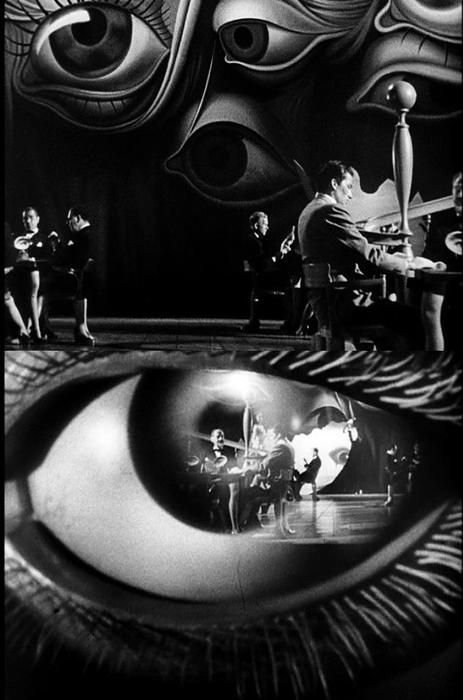
Stills from the Salvador Dalí-designed dream sequence in Spellbound (1945, dir. Alfred Hitchcock)
Most of the fundamental ideas of science are essentially simple and may, as a rule, be expressed in a language comprehensible to everyone. ~Albert Einstein
Today, I will continue from my previous instalment and share the second part of Freud’s chapter on how memories influence dreams.
Dr Freud reviews various researchers’ perspectives on dreams and offers several compelling examples of how human memories shape them.
(The title image I chose depicts a scene from one of my favourite Hitchcock films, in which Salvador Dali designed the sets for the dream sequences.)
The Material of Dreams—Memory in the Dream (Das Traummaterial – Das Gedächtnis im Traum)
The fact that the dream contains memories inaccessible to the waking state is so curious and theoretically significant that I wish to draw further attention to it by recounting other such “hypermnestic” dreams. Maury relates that, for a time, the word “Mussidan” would frequently come to his mind during the day. He knew it was the name of a French town, but nothing more. One night, he dreamt of a conversation with a certain individual who told him that she hailed from Mussidan; when he asked where the town was situated, she replied that Mussidan was a district town in the Département de la Dordogne. Upon waking, Maury placed no credence in the information he had received in his dream; however, a geographical dictionary informed him that it was entirely accurate. In this instance, the dream’s superior knowledge was confirmed, yet the forgotten source of that knowledge remained undiscovered.
Jessen recounts (p. 55) a very similar dream occurrence from earlier times: “To this category belongs, among others, the dream of the elder Scaliger (Hennings, *l. c.*, p. 300), who had written a poem in praise of the famous men of Verona; a man calling himself Brugnolus appeared to him in a dream and complained that he had been forgotten. Although Scaliger could not recall ever having heard of him, he nevertheless composed verses in his honour; his son subsequently learned in Verona that just such a Brugnolus had indeed once been renowned there as a critic.”
In a source to which I unfortunately do not have access (the *Proceedings of the Society for Psychical Research*), Myers is said to have published an entire collection of such hypermnestic dreams. I believe that anyone who occupies themselves with dreams must acknowledge that it is a very common phenomenon for a dream to bear witness to knowledge and memories which the waking subject does not suppose themselves to possess. In my psychoanalytic work with neurotic patients—which I shall discuss later—I find myself, several times a week, in a position to demonstrate to patients, based on their dreams, that they know quotations, obscene words, and the like very well, and that they make use of them in their dreams, even though they have forgotten them in their waking lives. I should like to share one harmless instance of dream hypermnesia here, as the source from which this knowledge—accessible only to the dream—originated was very easily traceable.
A patient dreamed—as part of a longer narrative sequence—that he was ordering a “Kontuszówka” for himself in a coffeehouse; however, when recounting the dream, he asked what on earth that might be, saying he had never heard the name before. I was able to reply that Kontuszówka is a Polish spirit—a name he could not possibly have invented in his dream, as I myself had long been familiar with it from posters. At first, the man refused to believe me. A few days later, after he had turned his dream into reality by ordering the drink in a coffeehouse, he noticed the name on a poster—specifically at a street corner he had been obliged to pass at least twice a day for months.
One of the sources from which the dream draws material for reproduction—material that, in part, is neither recalled nor utilised during waking thought—is childhood life. I shall cite only a few of the authors who have noted and emphasised this:
Hildebrandt (p. 23): “It has already been expressly acknowledged that the dream, at times, with a marvellous power of reproduction, faithfully brings back to our minds events that are quite remote and even forgotten, dating from the distant past.”
Strümpell (p. 40): “The matter becomes even more remarkable when one observes how the dream—at times, as it were, from beneath the deepest and most massive layers of sediment that later life has deposited upon the earliest experiences of youth—brings forth images of specific localities, objects, and persons, entirely intact and with their original freshness. This is not limited merely to such impressions as may have attained a vivid level of consciousness at the moment of their inception, or become imbued with strong psychological significance—impressions that subsequently reappear in the dream as genuine memories, in which the awakened consciousness takes delight. Rather, the depth of dream-memory encompasses also those images of persons, objects, localities, and experiences from earliest times which either possessed only a faint degree of consciousness or no psychological significance whatsoever—or which had long since lost both—and which, for this very reason, appear utterly strange and unfamiliar both within the dream and upon awakening, until their distant origin is finally discovered.”
Volkelt (p. 119): “It is particularly noteworthy how readily memories of childhood and youth find their way into dreams. Things we have long ceased to think about—matters that have long since lost all significance for us—the dream tirelessly reminds us of them.” The dream’s dominion over childhood material—which, as is well known, largely falls into the gaps of conscious memory—gives rise to interesting hypermnestic dreams, of which I shall, in turn, present a few examples.
Maury recounts (in *Le sommeil*, p. 92) that, as a child, he often travelled from his hometown of Meaux to nearby Trilport, where his father was supervising the construction of a bridge. One night, a dream transports him back to Trilport, allowing him to play once again in the town’s streets. A man approaches him, wearing a uniform. Maury asks for his name; he introduces himself as C… and says he is the bridge keeper. Upon waking—still doubting the memory’s reality—Maury asks an old servant, who has been with him since childhood, whether she can recall a man by that name. “Certainly,” comes the reply, “he was the keeper of the bridge your father built back then.”
Maury recounts another beautifully confirmed example of the accuracy of childhood memories surfacing in dreams, concerning a Mr F… who had grown up in Montbrison. Twenty-five years after leaving, this man decided to revisit his hometown and see old family friends he had not encountered since. On the night before his departure, he dreamed that he had arrived at his destination and, near Montbrison, met a gentleman whose appearance was unfamiliar to him; the man identified himself as Mr T., a friend of his father. The dreamer knew he had known a man by that name during childhood, but could not recall what he looked like while awake. Upon actually arriving in Montbrison a few days later, he rediscovered the location from the dream—which he had previously not recognised—and met a gentleman whom he immediately identified as Mr T. from the dream. The real person had simply aged more than the figure in the dream image had suggested.
To be continued!
PS: I’ll translate and share the rest of this chapter in my next post. However, I’ve been told I need another surgery soon (the old problem is the new problem!), so I’m unsure when I can do so. Wishing all the best! 🤗💖
Today, I need to write a second post to celebrate Carl Jung’s sixty-fifth anniversary, and I just couldn’t let it pass! Carl Jung viewed death as a meaningful transition, emphasising its psychological significance in the acceptance of mortality. He saw it not merely as an end but as a vital part of the individuation process and a profound mystery inviting reflection, highlighting its spiritual dimension.
Jung believed that humans inherently recognise their mortality, which profoundly shapes the unconscious mind. He suggested that our perspectives on death shape our fears, values, creativity, and sense of purpose. Denying or repressing death can lead to psychological difficulties, whereas accepting it fosters growth and wisdom. Jung viewed death not only as a physical event but also as symbolic. Drawing on myth and religion, he noted that many cultures regard death as a transition to another state. These archetypal images reflect the collective unconscious. He believed that, like birth, death can be a form of transformation—a return to the greater whole from which life originates. In his later works, Jung emphasised the importance of mentally and spiritually preparing for death. He encouraged individuals to confront their mortality openly and reflectively, believing this approach could foster a deeper, more meaningful existence. Jung’s perspective on death was neither overly pessimistic nor escapist; instead, he regarded it as a profound mystery and a crucial part of human life, encouraging contemplation and acceptance.
Here is a letter Jug wrote to an unknown woman during his final days, in response to her question about how he expressed his thoughts on death. I am sharing this letter with you, sourced from a post by my friend Lewis Lafontaine, with many thanks.
My old age and the need for rest make me fight shy of too many visitors, so I have to confine myself as far as possible to written answers. I can answer your question about life after death just as well by letter as by word of mouth. Actually, this question exceeds the capacity of the human mind, which cannot assert anything beyond itself. Furthermore, all scientific statements are merely probable. So we can only ask: Is there a probability of life after death? The point is that, like all our concepts, time and space are not axiomatic but are statistical truths. This is proved by the fact that the psyche does not fit entirely into these categories. It is capable of telepathic and precognitive perceptions. To that extent, it exists in a continuum outside time and space. We may therefore expect post-mortem phenomena to occur, which must be regarded as authentic. Nothing can be ascertained about existence outside time. The comparative rarity of such phenomena suggests at all events that the forms of existence inside and outside time are so sharply divided that crossing this boundary presents the greatest difficulties. But this does not exclude the possibility that there is an existence outside time which runs parallel with existence inside time. Yes, we ourselves may simultaneously exist in both worlds, and occasionally we do have intimations of a twofold existence. But what is outside time is, according to our understanding, outside change. It possesses relative eternity. Perhaps you know my essay “The Soul and Death .” For its scientific foundation, I would draw your attention to my “Synchronicity: An Acausal Connecting Principle,” in Jung and Pauli, The Interpretation of Nature and the Psyche. Psychology. These are my essential thoughts, and I would not express them otherwise in a talk with you.
Sigmund Freud believed that memories and dreams are deeply interconnected. According to Freud, dreams are not random or meaningless; rather, they express unconscious desires, fears, and—most importantly—memories. He argued that many dreams are constructed from fragments of past experiences, some of which may be long forgotten or repressed. Freud introduced the concept of “day residues”, in which events and thoughts from the previous day often appear in dreams, intermingled with older memories from childhood or earlier life. He believed that dreams serve as a way for the unconscious mind to process unresolved conflicts, using both recent and distant memories as material. These memories may be disguised, condensed, or symbolically represented in the dream, making their true meaning difficult to recognise without analysis.
One of Freud’s key ideas was that repressed memories—those which are too painful or unacceptable to face consciously—often find their way into dreams. Through the process of “dream work,” the mind transforms these latent memories into the strange and sometimes confusing images we remember upon waking. By analysing dreams, Freud believed we could uncover hidden memories and gain insight into our deepest desires and anxieties. In summary, Freud saw dreams as a window into the unconscious, built from layers of memories both recent and distant. For him, exploring the connection between memories and dreams was essential for understanding the human mind and the hidden forces that shape our thoughts and behaviours.
Now, following parts one & two, let’s proceed to the next chapter of his book, Dream Interpretation. I divided this chapter due to its length!
The Material of Dreams—Memory in the Dream (Das Traummaterial – Das Gedächtnis im Traum)
That all the material comprising the content of a dream derives in some way from lived experience—that is, that it is reproduced or recalled within the dream—may be accepted, at the very least, as an indisputable fact. Yet it would be an error to assume that such a connection between the dream content and waking life must emerge effortlessly as an immediately obvious result of comparison. Rather, this connection must be sought out with close attention, and in a considerable number of cases, it manages to remain concealed for a long time. The reason for this lies in several peculiarities exhibited by the faculty of memory during dreaming—peculiarities which, though widely noted, have hitherto eluded all explanation. It will be well worth the effort to examine these characteristics in detail.
It happens, in the first place, that the content of a dream features material that, upon waking, one does not recognise as belonging to one’s own knowledge or experience. One may well recall having dreamt the specific item in question, but cannot recall when one actually experienced it. One thus remains in the dark about the source from which the dream drew its material—and is indeed tempted to believe in an independently creative activity on the part of the dream—until, often after a long interval, a new experience restores the lost memory of the earlier event, thereby revealing the dream’s true source. One is then compelled to concede that, in the dream, one possessed knowledge of—and was reminded of—something that had been inaccessible to one’s powers of recollection while awake.
Delboeuf recounts a particularly striking example of this kind, drawn from his own dream experience. In his dream, he saw the courtyard of his house covered in snow; there, he discovered two small lizards—half-frozen and buried beneath the snow—which, being an animal lover, he took in, warmed, and returned to the small niche in the masonry intended for them. Furthermore, he tucked in a few fronds of a small fern growing on the wall—a plant he knew they were very fond of. In the dream, he knew the plant’s name: Asplenium ruta-murale. The dream then continued; after a brief interlude, it returned to the lizards and—to Delboeuf’s astonishment—revealed two new little creatures feasting upon the remnants of the fern. He then turned his gaze towards the open field and saw a fifth, then a sixth lizard, making their way towards the hole in the wall; eventually, the entire street was covered by a procession of lizards, all moving in the same direction, and so on. In his waking life, Delboeuf’s botanical knowledge encompassed only a few Latin plant names and did not include any familiarity with the genus Asplenium. To his great astonishment, he subsequently verified that a fern of this very name does, in fact, exist. Asplenium ruta muraria was its correct designation—a name the dream had slightly distorted. One could hardly attribute this to mere coincidence; yet it remained a mystery to Delboeuf how he had acquired knowledge of the name “Asplenium” in his dream.
The dream had occurred in 1862; sixteen years later, while visiting a friend, the philosopher spotted a small album of dried flowers—the kind sold to travellers as souvenirs in certain regions of Switzerland. A memory stirred within him; he opened the herbarium, found the Asplenium from his dream inside it, and recognised his own handwriting in the accompanying Latin names. The connection could now be established. A sister of this friend had visited Delboeuf in 1860—two years before the lizard dream—while on her honeymoon. At the time, she had with her this album intended for her brother, and Delboeuf had taken the trouble to write out the Latin name beneath each of the dried plants, dictating them from a botanist.
The favour of chance—which renders this example so eminently worth recounting—allowed Delboeuf to trace yet another element of this dream’s content to its forgotten source. One day in 1877, an old volume of an illustrated magazine fell into his hands, and he saw the entire procession of lizards depicted exactly as he had dreamed it in 1862. The volume bore the date 1861, and Delboeuf recalled that he had been a subscriber to the magazine since its inception.





You must be logged in to post a comment.