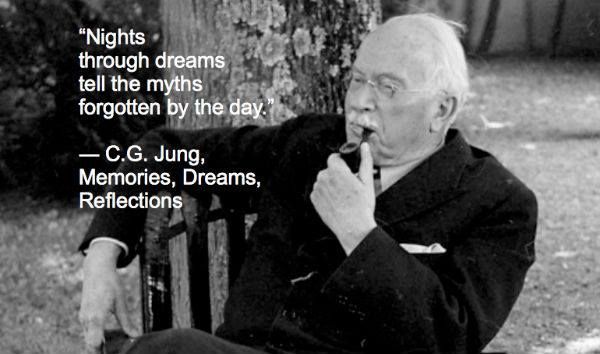
I have kept writing about my brother Al regularly every day of his anniversary.However, yesterday, the day he left the Earth, all the negative feelings stemming from the issues I am facing overwhelmed me, leaving me unable to think clearly and without energy. In any case, the precise date isn’t very significant, since Al is always on my mind. While I don’t view death as an end, Carl Jung’s words always echo in my ears: ‘Death is a drawing together of two worlds, not an end.’ We are the bridge.
Still, before I melt into the chair from the heat, it is good to have a review.
It is one of the unforgettable memories that I would like to share with you here:
You came, sweating, on a hot summer afternoon, and I was surprised. You were on military duty, far away in the south, but suddenly you were there. You said, “I can’t anymore!” You had escaped that mess! In Iran, two years of military service are mandatory, and if one refuses, they have no chance of finding a job and will be sent to jail.
When it was your turn for military service, I was very worried about you; I knew we were not suited to the military, since our mother wanted to send us to a military school because she was tired of our unconventional behaviour. Still, one of our family members, a general, advised her not to do so. He told her that we were the sons of a thinker and intellectual, and that this was controversial for military school.
“Military intelligence is a contradiction in terms,” as Groucho Marx once said. However, during the first three months of your service, you were in northern Tehran, could often come home, and found wonderful, unconventional friends there. Still, after that, they sent you far away to the south, far from home, far from your room, music, and solitude. After about two weeks, you left everything behind, came home, went to your room, put on a Beatles vinyl (Abbey Road), lay down, and listened. Oh yes, I wasn’t a revolutionary like you yet and was a bit conservative! I asked you what would happen to you after this escape, about your life and your future. It doesn’t matter to me, he said; it is not my world! I asked, What world is yours? And he answered, “It is a world inhabited all by crazy people!”
Of course, it took me a while to understand your stance on that crazy world. I remember it well. I was in the bathroom, under the shower, and there, like Archimedes, I cried out, “Eureka! Eureka! I know now what the matter is: I know now that I don’t know!” It’s been about nineteen years since you, in your belief, transitioned to that level of existence. May you have found your crazy world by now. I can still see the image before my eyes; the moment you were lying on the ground, listening to music, while I sat helplessly before you. Still, that haunting, sad song brings tears to my eyes. I think of you so often!
PS: I might be unavailable next week as I plan to visit a friend, unless I need urgent surgery and must stay in hospital. We’ll see how things unfold! Wishing everyone a peaceful and wonderful time.
Today, I am concluding the section on Memories in dreams. Freud gathered many ideas and examples on this topic, which is interesting. However, it also made me think of something larger and more profound.
As we read the following section of this chapter, we can see how the memories in Freud’s analysis remind us of Jung’s purposes for symbols. I believe Jung further examined the role of memories in dreams to illustrate their purpose, delving deeper into this concept through his understanding of symbols.
Dr Jung examines how dreams employ symbolic imagery rooted in the collective unconscious and explains how interpreting these symbols can yield a deeper understanding of the self and the human mind. Dreams are the royal road to the unconscious, using symbols that are not direct language but images rooted in the collective unconscious. Symbols bridge the conscious mind and inner worlds, carrying deep, multifaceted meanings that extend beyond personal experience and often reference universal archetypes. Interpretation involves exploring these associations to uncover unconscious wisdom and promote balance and individuation. Symbols in dreams facilitate dialogue with inner depths, revealing fears, desires, and potentials, and engaging us in the ongoing drama of the human soul.
Now let’s refocus on our starting point: the beginning! Sequel to the previous season.
The Material of Dreams—Memory in the Dream (Das Traummaterial – Das Gedächtnis im Traum)
I can recount a dream of my own here, in which the impression to be recalled is replaced by a connection. In the dream, I saw a person whom I knew to be the doctor from my hometown. His face was indistinct, yet it merged with the image of one of my high school teachers whom I still encounter occasionally. Upon waking, I could not determine what connection linked the two individuals. However, when I asked my mother about the doctor from those early years of my childhood, I learned that he had been one-eyed, and the high school teacher whose figure had overlaid the doctor’s in the dream was also one-eyed. Thirty-eight years had passed since I last saw the doctor, and to the best of my knowledge, I had never thought of him in my waking life.
It sounds as though a counterweight to the outsized role played by childhood impressions in dream life is being proposed when several authors claim that elements from one’s earliest days can be detected in most dreams. Robert (p. 46) even states: In general, the normal dream concerns itself only with impressions from the most recent days. We shall see, however, that the theory of dreams constructed by Robert imperatively demands such a relegation of the oldest impressions and a foregrounding of the most recent ones. Yet the fact to which Robert gives expression is—as I can confirm from my own investigations—valid. An American author, Nelson, suggests that the impressions most frequently utilised in dreams are those from the day prior to the day of the dream or from three days earlier, as if the impressions from the day immediately preceding the dream were not yet sufficiently faded or distant.
Several authors who did not wish to question the intimate connection between dream content and waking life have noted that impressions which intensely occupy waking thought only appear in dreams after they have been somewhat pushed aside by the mental work of the day. Thus, as a rule, one does not dream of a beloved deceased person during the initial period when grief completely consumes the survivor (Delage). However, one recent observer, Miss Hallam, has also collected examples of the opposite pattern and asserts the validity of psychological individuality in this regard.
The third, most peculiar, and most baffling characteristic of memory in dreams manifests itself in the selection of the material reproduced; for, unlike in the waking state, it is not merely the most significant elements that are retained, but—on the contrary—even the most trivial and inconspicuous details are deemed worthy of remembrance. Here, I shall let those authors speak who have expressed their astonishment most emphatically.
Hildebrandt (p. 11): “For the curious thing is that the dream generally draws its elements not from the great and profound events, not from the powerful and driving interests of the day just past, but from the incidental details—from the worthless scraps, so to speak—of the recent or more distant past. A shattering death in the family, under the impression of which we fall asleep late, remains blotted out of our memory until the first moment of waking forces it back upon us with distressing intensity. In contrast, the wart on the forehead of a stranger we encountered—someone we did not give another thought to after passing by—plays a role in our dream” …
Strümpell (p. 39): “… such cases where the analysis of a dream uncovers components that, while originating in the experiences of the previous day or the day before that, were nevertheless so insignificant and valueless to waking consciousness that they were consigned to oblivion shortly after the experience itself. Such experiences might include, for instance, casually overheard remarks or the superficially observed actions of another person, fleeting perceptions of objects or individuals, isolated snippets from something one has read, and the like.”
Havelock Ellis (p. 727): The profound emotions of waking life, the questions and problems on which we spread our chief voluntary mental energy, are not those which usually present themselves at once to dream consciousness. It is so far as the immediate past is concerned, mostly the trifling, the incidental, the »forgotten« impressions of daily life which reappear in our dreams. The psychic activities that are awake most intensely are those that sleep most profoundly.
Binz (p. 45) takes the very characteristics of memory in dreams under discussion as an occasion to express his dissatisfaction with the explanations of dreams that he himself had previously supported: “And the natural dream poses similar questions to us. Why do we not always dream of memory impressions from the days immediately past, but instead often plunge—without any discernible motive—into a past that lies far behind us and has all but faded away? Why does consciousness in dreams so often receive the impression of indifferent memory images, while the brain cells—precisely where they harbour the most vivid traces of past experiences—usually remain silent and dormant, unless an acute reactivation during waking hours had stirred them shortly before?”
It is easy to see how the peculiar preference of dream-memory for the trivial—and therefore disregarded—elements of daily experiences was bound, in most cases, to lead to a failure to recognise the dream’s dependence on waking life altogether, or at least to make it difficult to demonstrate that dependence in any individual instance. Thus, it was possible for Miss Whiton Calkins, in her statistical analysis of her own dreams (and those of her associate), to be left with eleven per cent of the total in which no connection to waking life was apparent. Hildebrandt is surely right in asserting that all dream images could be explained genetically if we were to devote the time and sufficient concentration to tracing their origins. He calls this, of course, “an extremely laborious and thankless task.” For it would usually amount to unearthing all manner of psychologically worthless items from the most remote corners of the memory’s storehouse—bringing back to light all sorts of completely inconsequential moments from the distant past, buried perhaps as early as the very next hour. Yet I cannot help but regret that this astute author allowed himself to be deterred from pursuing a path that began so inconspicuously; it would have led him directly to the heart of dream interpretation.
The behaviour of dream-memory is certainly of the utmost significance for any theory of memory whatsoever. It teaches that “nothing we have once possessed mentally can ever be completely lost” (Scholz, p. 34). Or, as Delboeuf puts it, »que toute impression même la plus insignifiante, laisse une trace inaltérable, indéfiniment susceptible de reparaître au jour« (“that every impression, even the most insignificant, leaves an unalterable trace, indefinitely capable of reappearing”)—a conclusion to which so many other pathological phenomena of mental life likewise point. One should bear in mind this extraordinary capacity of memory in dreams in order to vividly appreciate the contradiction inherent in certain dream theories—to be discussed later—that seek to explain the absurdity and incoherence of dreams by positing a partial forgetting of what is known to us during the day.
One might, for instance, hit upon the idea of reducing the phenomenon of dreaming entirely to remembering—viewing the dream as the expression of a reproductive activity that does not rest even at night and that exists as an end in itself. Reports such as those by Pilcz would seem to support this view; they suggest that demonstrable, fixed relationships exist between the time of dreaming and the dream content, such that deep sleep reproduces impressions from the distant past. In contrast, the dream reproduces recent impressions as morning approaches. However, such a conception is rendered unlikely from the outset by the way the dream handles the material to be recalled. Strümpell rightly points out that repetitions of actual experiences do not occur in dreams.
The dream may well make a start in that direction, but the subsequent link fails to appear; it emerges in altered form, or something entirely alien takes its place. The dream yields only fragmentary reproductions. This is certainly the rule, to such an extent that it allows for theoretical application. Yet exceptions do occur in which a dream repeats an experience just as completely as our waking memory can. Delboeuf recounts the story of one of his university colleagues (who currently teaches in Vienna) who, in a dream, relived in every detail a perilous carriage ride—one in which he had escaped an accident only by a miracle. Miss Calkins mentions two dreams that consisted of the exact reproduction of an experience from the previous day, and I myself shall later have occasion to report an instance known to me of the unaltered recurrence of a childhood experience in a dream. One might, for instance, be tempted to reduce the phenomenon of dreaming entirely to that of remembering—viewing the dream as the expression of a reproductive activity that does not rest even at night and serves as an end in itself.
The upcoming post will address dream stimuli and sources. However, I am currently facing some health-related uncertainties. My urologist and I view my condition as critical, yet during a discourse at the hospital on Thursday, I was scheduled for surgery in August. So it’s all up in the air whether I can work on the new post; I need to consult my doctor next week! Wishing everyone good health and safety. 🤗💖🙏🌹
(A “patience stone” (Persian: sang-e sabur) is a legendary element from Persian folklore that absorbs secrets, pain, and hardships when spoken to. It patiently listens until it breaks or explodes, thus relieving the speaker of emotional burdens.)
As we understand it now, in Persian traditional sagas, the term ‘Patient Stone’ refers to a stone where people can share their pain and worries to ease their hearts. I think this website or blog on WordPress has become similar to a patient stone, holding our suffering and helping to lighten our minds. I take this chance to share my feelings with you, my friends. I just hope our WP, serving as a patient stone, doesn’t explode under the weight!
‘It is no measure of health to be well adjusted in a profoundly sick society.’~Krishnamurti.
Madness amongst Individuals is rare. Amongst the Collective, it is the rule.’ ~ Nietzsche
‘To be normal is the ultimate aim of the unsuccessful.’ ~Carl Gustav Jung.
Lately, carrying a heavy heart, I reflect on my memories to soothe my soul. A poem by the renowned Persian poet Nima Yushij came to mind, resonating deeply with my current feelings. I believe I have been searching for this flautist (in this poem) for a long time, as I have been constantly seeking harmony and a muse, both of which I have missed ever since.
I’ve previously shared a post about this great poet’s work, but I wanted to share this very poem again to show how it resonates with me. You may want to check out the full post here!
My home is cloudy The entire earth is clouded by that from the height of the mountains pass, broken, ruined, and drunk, The wind whirls, and the whole world has been shattered by that, and so have my senses. Ay, flautist, that the sound of your flute brought you out of the road, where are you? My home is cloudy But the cloud seems to tend towards rain. In the reverie of my bright days that have been lost, I, in the face of my Sun, carry to observe at the threshold of the sea. And all the world is ruined and shattered by the wind. And on the path, the flautist who blows into his flute in this cloudy world has his own path ahead.
And here is the original version;
خانهام ابریست …
خانه ام ابری ست
یکسره روی زمین ابری ست با آن.
از فراز گردنه خرد و خراب و مست
باد میپیچد.
یکسره دنیا خراب از اوست
و حواس من!
آی نی زن که تو را آوای نی برده ست دور از ره کجایی؟
خانه ام ابری ست اما
ابر بارانش گرفته ست
در خیال روزهای روشنم کز دست رفتندم،
من به روی آفتابم
می برم در ساحت دریا نظاره.
و همه دنیا خراب و خرد از باد است
و به ره ، نی زن که دائم می نوازد نی ، در این دنیای ابراندود
Recently, I’ve been overwhelmed by memories and dreams that take me back to the past, recalling the unforgettable times when Al and I faced our ups and downs and challenging moments.
I avoid saying things like “happy heavenly birthday” because birthdays are truly earthly, not heavenly! In heaven, every day might be a birthday! And I believe it’s simply a traditional custom to use these anniversaries as reminders. However, I remember Al daily and in everything I do, and I can’t help but think of him and his lessons.
One of these memories is our arrival in Germany after fleeing Iran, and this time, it feels somehow significant because it marked the fortieth anniversary. We arrived at Düsseldorf airport in the evening on October 19th.
Although we had a close friend in the city, we didn’t want to trouble him. We considered renting a hotel room, but it was too costly. An airport staff member overheard us and suggested, “Why not sleep on a couch at the airport for the night?” We appreciated the kind idea, and even if it wasn’t as comfortable as a hotel, it was free!
Before we carried out that experiment, we took a walk through the large airport. As I clearly remember, in the department where packages are received, two older women were trying to manoeuvre their luggage onto a trolley, although the suitcases seemed too heavy for them. Al reacted quickly and helped them load the items onto the trolley. One of the women, thankfully, took some coins from her purse and offered them to Al, but he refused immediately and turned away. They were quite surprised, and I later learned that such acts are common in Germany, although Al felt a bit offended. Honestly, that money could have been useful to us, but Al was very proud, and it didn’t suit his class!
Anyway, that was a remarkable memory of that period, and I thought I would share it here, on his seventy-third earthly birthday. Yes, as I might repeat, every day is a birthday in heaven, as well as Christmas!
It’s been around two weeks since my brother’s anniversary, and I am late this year. Was it the recent incidents in the Middle East, or exhaustion from continuously writing about death? I’m not sure. Yet, it wasn’t the forgetfulness; I still feel his presence, and it gives me strength.
I titled this post ‘Changing the Level…’ because it reflects Al’s interpretation of death. I also agree with him that since no Persephone has returned from Hades to describe it, we have the free will to accept our assumptions about the afterlife as we imagine them.
Let’s stop discussing death and speculating about the afterlife. This time, I want to share with you a story about him and his relationship with our father, especially his actual name, which he truly disliked. It’s pretty common for fathers and sons with similar genetic material to struggle to get along.
As I mentioned in my article a few weeks ago, our father was a devout Muslim with a strong emphasis on the mystical aspects of the faith. He loved the Arabic language, which he always regarded as one of the most perfect languages in the world. As a result, he gave us Arabic names. I was fortunate to have a name associated with an enchanting fairy tale. Unfortunately, Al’s name, inherited from our grandfather, is a genuine Arabic name: Abulhasan! (I also refer to a promise I made to a respected friend of mine, Resa.)
Things deteriorated further when he tried to abbreviate our names for calling. He knew that shortening Abulhassan to Abul sounded awful, so he picked two sounds he thought suited us: ‘Ala’ for me and ‘Aali’ for Al, both meaning “the best of all.” I was still lucky in this instance, but ‘Aali’ is technically an adjective meaning excellent—more appropriate as a source or descriptor than a proper name. This mistake led to trouble for Al; at school, he was fooled, teased, and bullied.
He carried this burdensome heritage throughout his life. After we escaped to the West, he became quite desperate about how friends called him. Most called him Ali, a plain, simple Arabic name, but close and smart friends called him McAllister, after the English footballer from Liverpool, his ever-beloved team. As a result, his name was shortened to McAll, then to All, or Al! I do believe choosing names is a crucial decision for parents, and honestly, as Persians, we were not particularly enthusiastic about Arabic names.
In any case, he could have had greater success in life, especially as an author, if circumstances had been different, and I understand this well. We were neither of us fortunate! Still, he endured for 57 years, and I, with my worn-out body and suffering soul, seek to join him.
I dedicate this song to you, Al, because you introduced me to Emily Dickinson and Robert Frost; thank you!
Behind the smile, there’s danger and a promise to be told You’ll never get old Life’s fantasy, to be locked away And still, to think you’re free, you’re free, we’re free… “Die Young” Ronnie James Dio; Black Sabbath
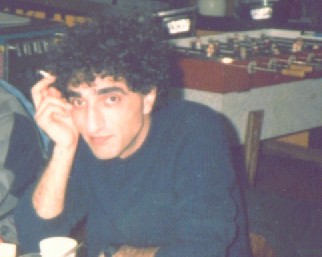
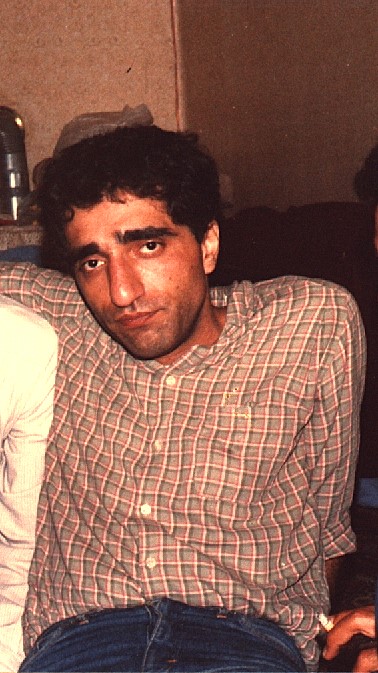
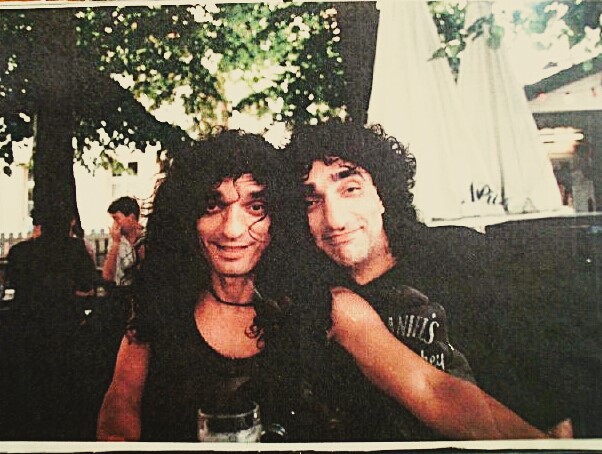
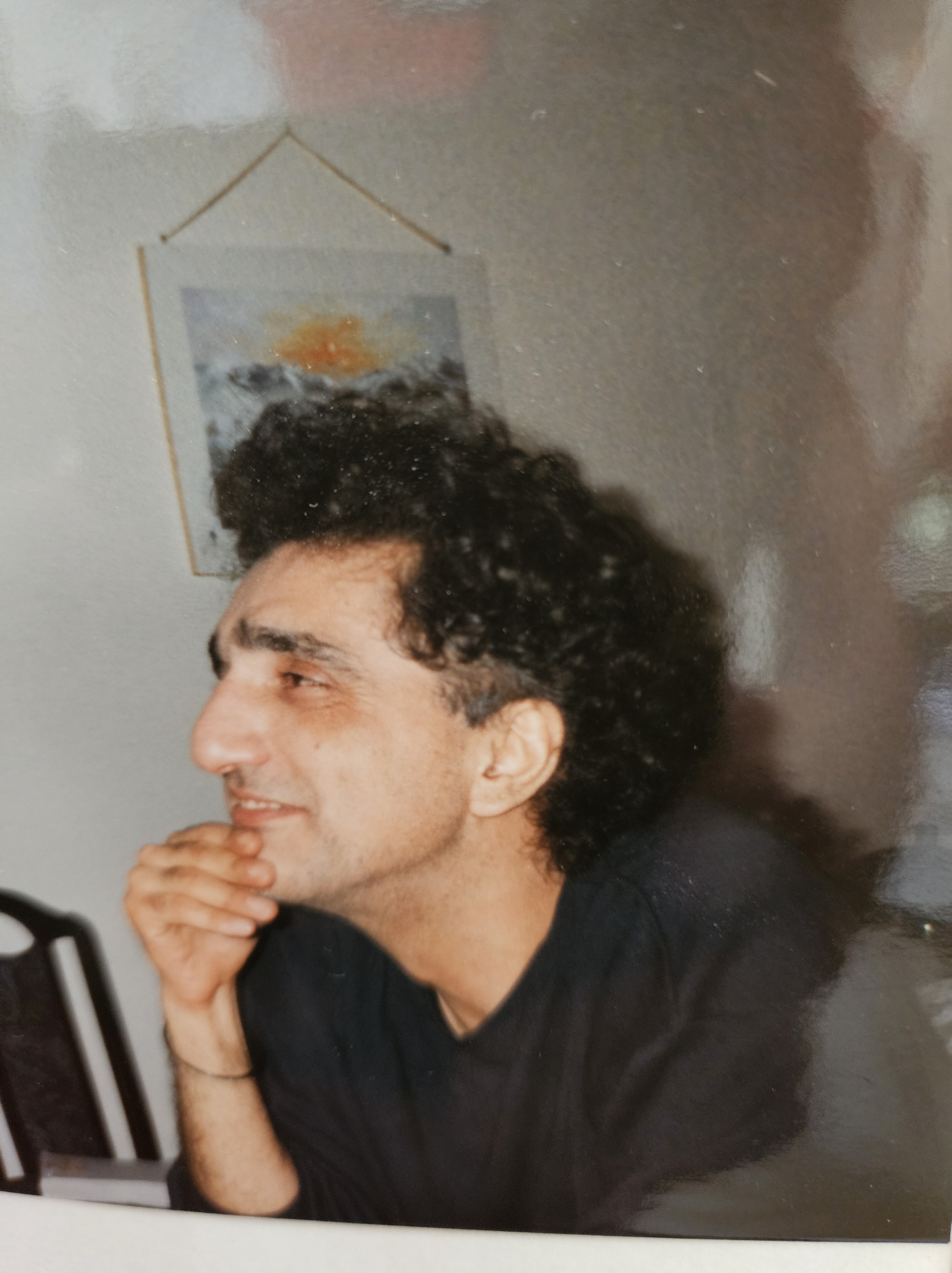
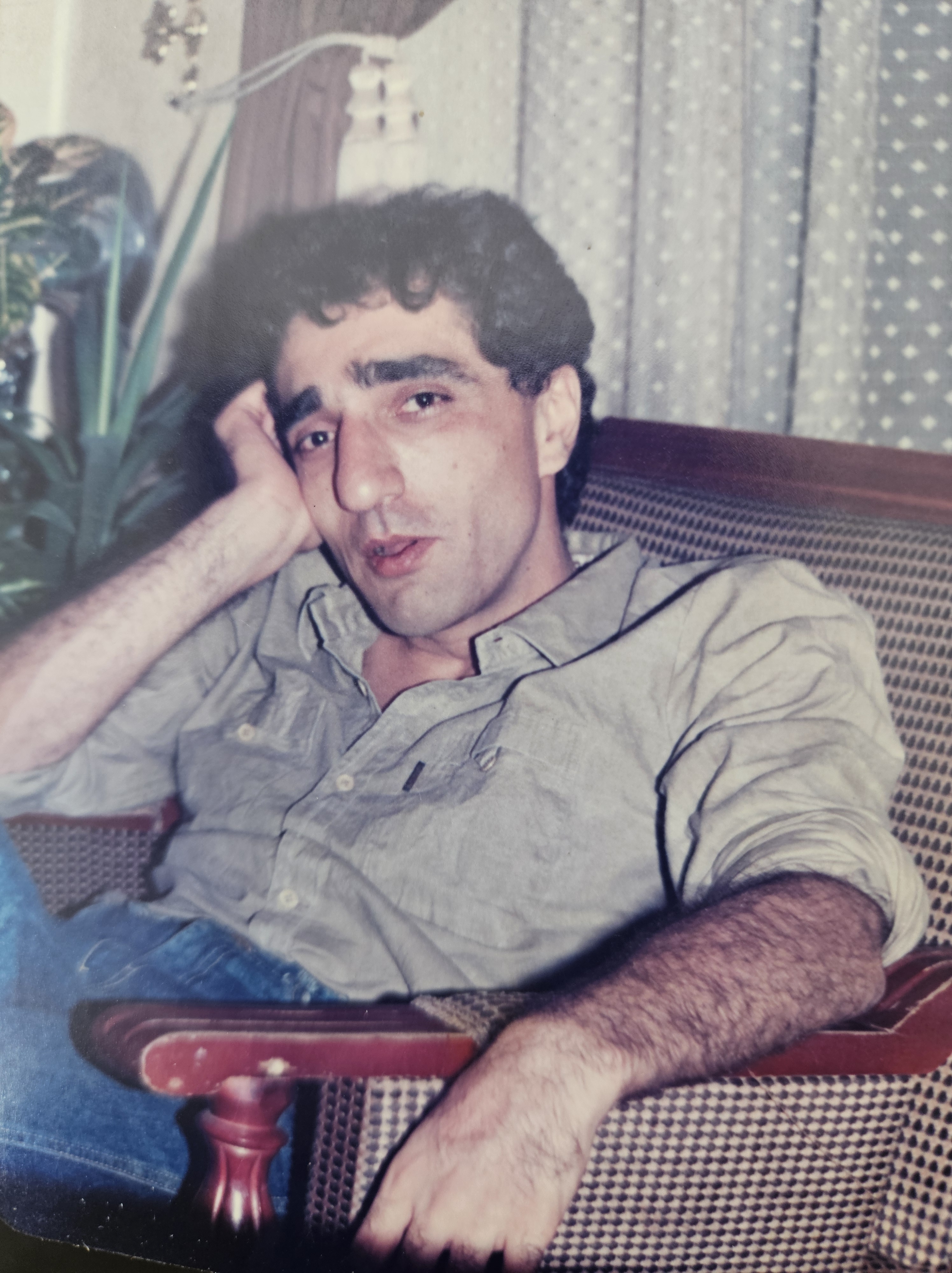
Today is once again my brother Al’s anniversary, and I am lucky this is on Wednesday, so I have the chance to write a few words about our memories. I have often said I feel my brother Al’s presence with me all the time, but it is somehow extra emotional when the time of his farewell comes back again and again. For example, these last ten days, I could remember his last days in the hospital as I could stay with him till the end.
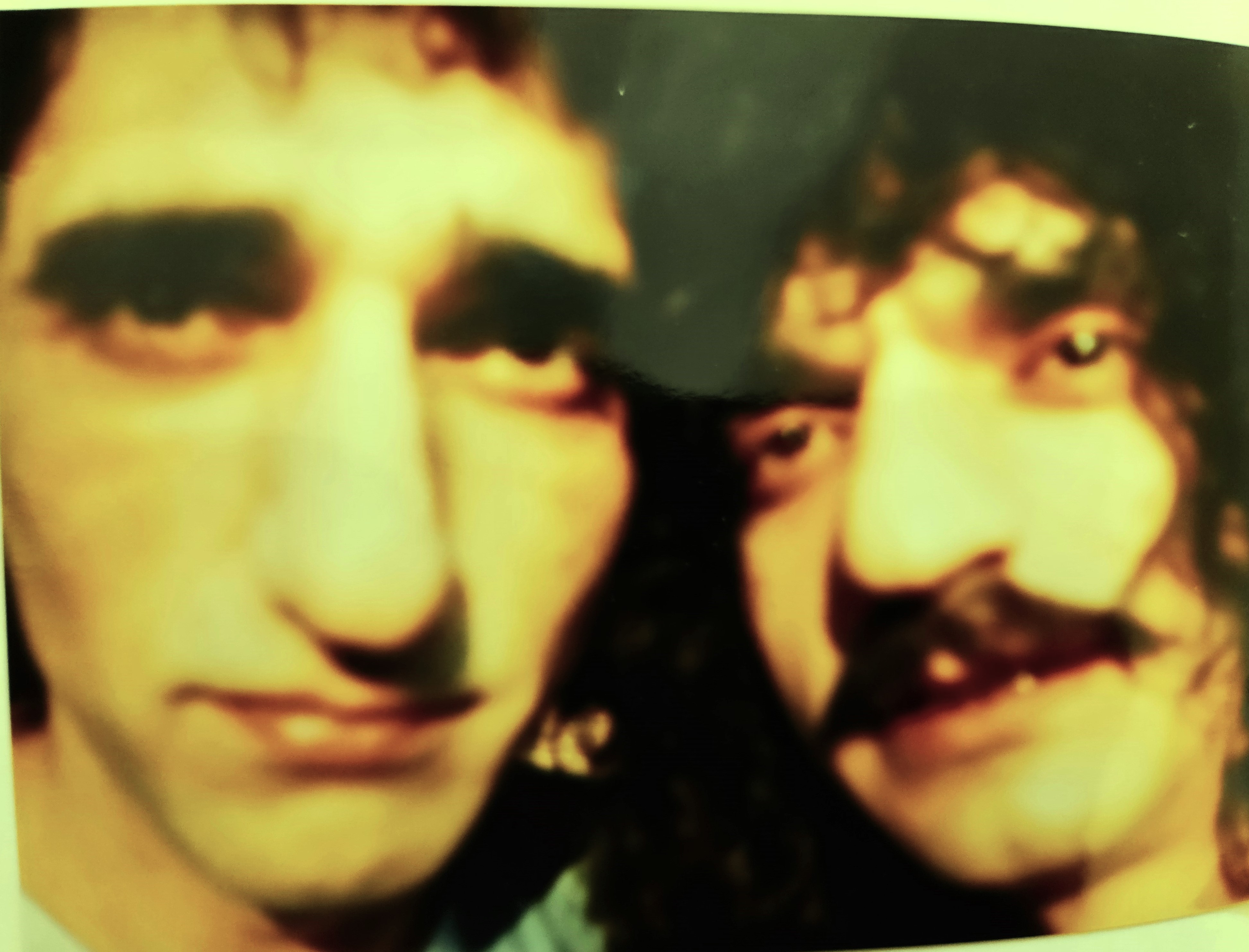
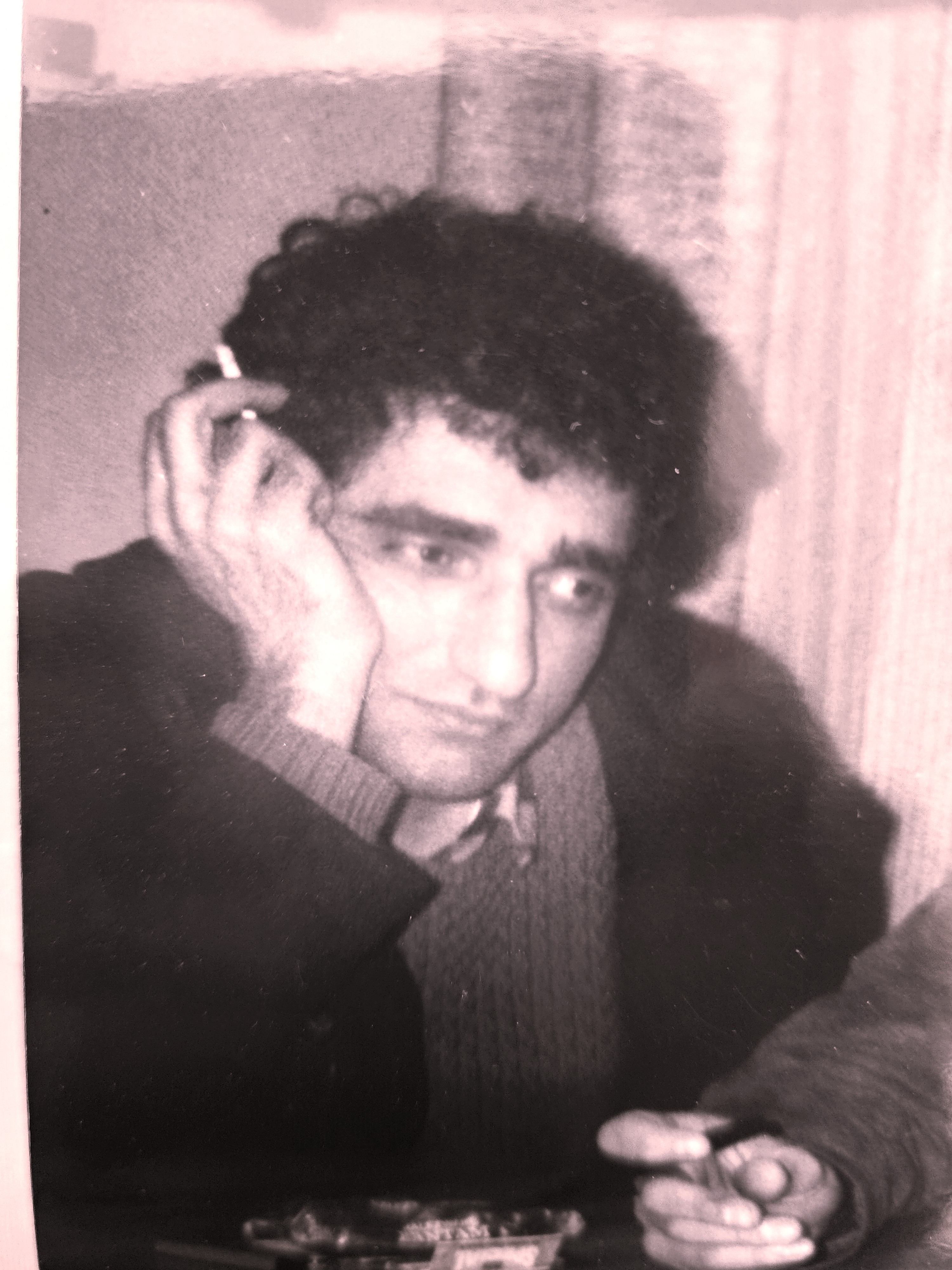
I spent a lot of time trying to find new pictures of him because I don’t like to repeat myself! During this search, memories of the past came rushing into my head like a raging sea from a storm, overwhelming my whole mind and soul and warming my heart by those loving times, as memories linger forever.
Time it was And what a time it was It was . . . A time of innocence A time of confidences Long ago . . . it must be . . . I have a photograph Preserve your memories They’re all that’s left you Simon & Garfunkel, Old Friends from Bookends
At the peak, I selected some verses from Ronnie James Dio’s “Die Young” because Al died “young” at fifty-four, even though the lyrics encourage living for the present and dying young! Both of us (probably Al more so) adored Dio’s songs, especially his voice and lyrics. Ronnie had been battling cancer when Al and I attended one of his final concerts, and we never knew that Al would pass away before him!
Here is another Al’s loving person, Rumi, who tell the right words:
“ON THE DAY I DIE On the day I die, when I’m being carried toward the grave, don’t weep. Don’t say, He’s gone! He’s gone. Death has nothing to do with going away. The sun sets and the moon sets, but they’re not gone. Death is a coming together. The tomb looks like a prison, but it’s really release into the union. The human seed goes down into the ground like a bucket into the well where Joseph is. It grows and comes up full of some unimagined beauty. Your mouth closes here and immediately opens with a shout of joy there.











You must be logged in to post a comment.