There is always a Beginning to Grasp the Whole! P. 1

Standard

One day, as I browsed my bookshelf, a heavy volume suddenly fell into my hands — it was the Collected Works (die Gesammelten Werke) of Sigmund Freud, a book I had almost forgotten. I had read some of Freud’s writings, especially during my time in Iran, but later I became deeply engaged with Jung’s work. When I opened the book, it felt as though a whisper told me that this was the foundation — something I hadn’t known before. I started reading, and it turned out to be completely true!

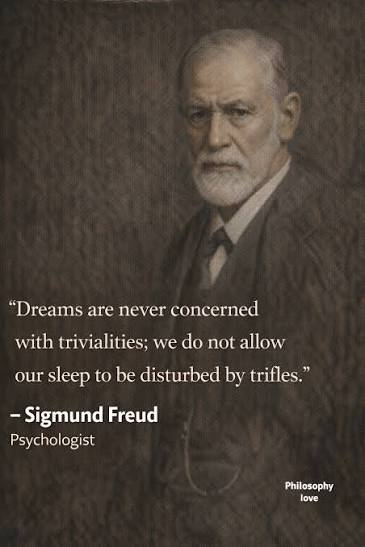
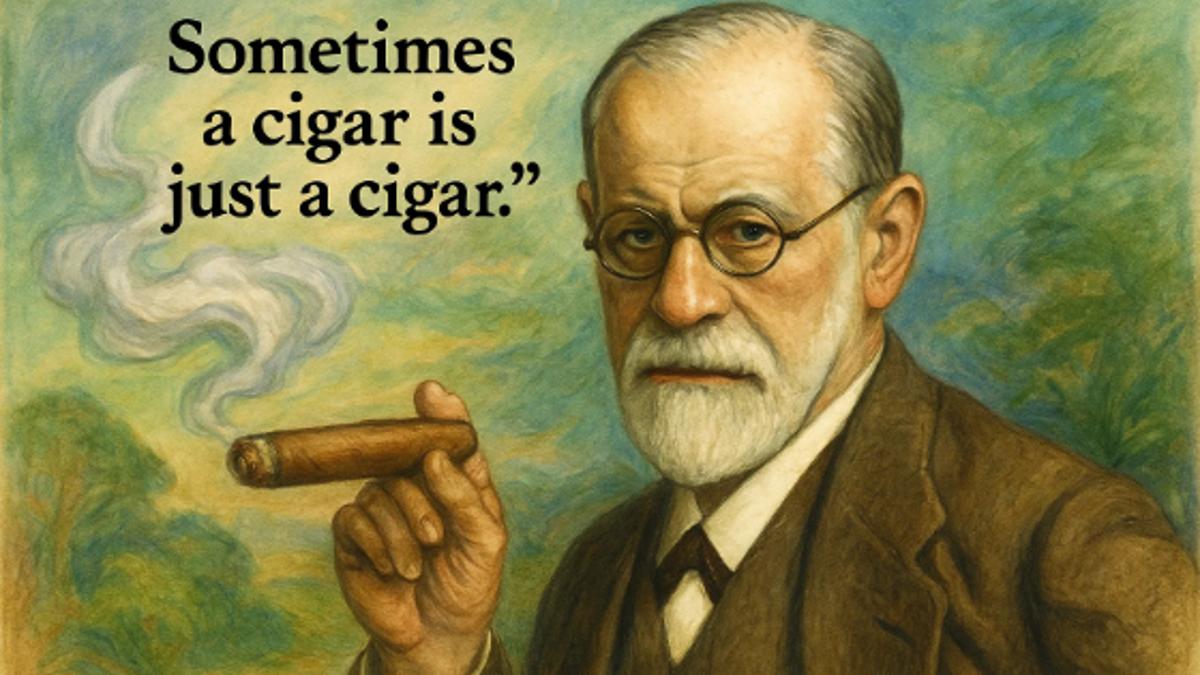
Sigmund Freud was an Austrian neurologist, the founder of psychoanalysis, and a pioneer in exploring the hidden aspects of the human mind, particularly the unconscious. He developed a clinical method to assess and treat psychological conflicts arising from inner struggles through patient-analyst dialogue, along with a unique theory of mind and human agency grounded in this approach.

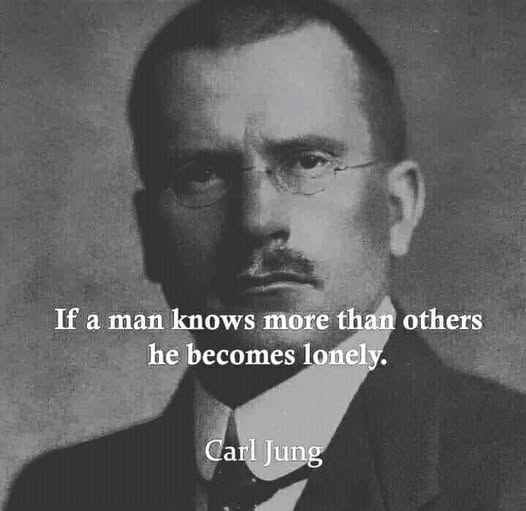
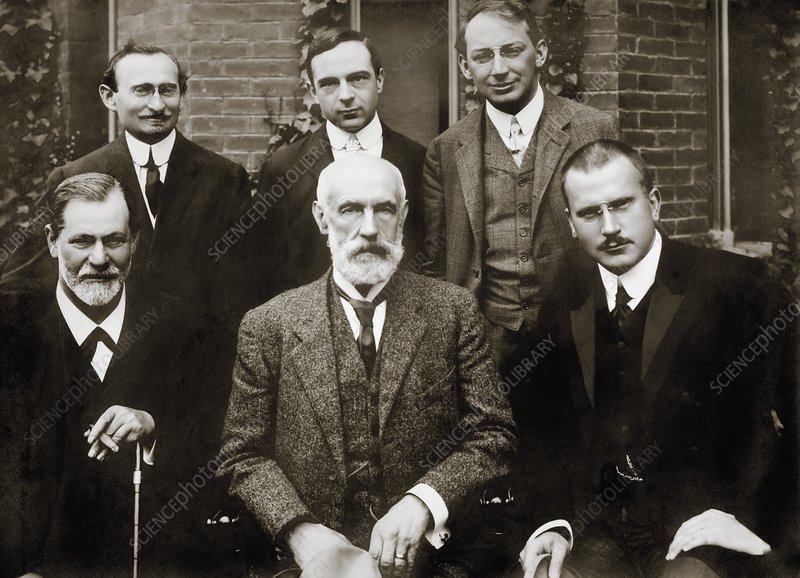
I reached a point where understanding Sigmund Freud and his work would enhance our grasp of Carl Gustav Jung. Freud acts as the key unlocking the door into the unconscious, while Jung is the train guiding us through the hidden depths of our souls!

Therefore, I decided to translate and share his insights on communicating knowledge and experience, beginning with dreams and dream interpretation: The scientific literature on dream issues (Die wissenschaftliche Literatur der Traumprobleme). I will start with his scientific explanation—(a brief summary, of course, to keep it concise)—to help it be better understood.

The scientific literature on dream problems

In the following pages, I will show that a psychological technique exists for interpreting dreams, revealing each as a meaningful psychic construct linked to waking life. I will explain the processes behind dream strangeness and draw conclusions about the psychic forces involved. My presentation concludes by linking the problem of dreaming to broader issues that require other sources. I begin with a review of past research and current understanding, noting that little progress has been made despite centuries of effort. The existing literature offers insight and interesting material, but few definitive answers about dreams. Even educated laypeople have limited knowledge.

The first work to treat dreams as a psychological object is Aristotle’s On Dreams and Their Interpretation. He states that dreams are of a demonic, not divine, nature, but can reveal profound meanings if correctly interpreted. Aristotle notes characteristics such as dreams reinterpreting minor stimuli as large ones, suggesting they might show early signs of bodily changes unnoticed during the day. Due to limited knowledge, I haven’t deepened my understanding of his treatise. Before Aristotle, the ancients saw dreams as divine inspiration, distinguishing true dreams that warn or foretell from false, deceptive ones meant to mislead or harm. This view aligned with their worldview, projecting internal reality onto the external world. They believed dreams came from another world and considered their supernatural origin plausible, a view still held by some today, including mystical writers and certain philosophers such as Schellingians. The debate over dreams’ divinatory power continues, as scientific explanations remain insufficient to account for all dream phenomena.

Writing a history of our understanding of dream problems is difficult because, despite its value in certain areas, no clear progress is visible. No foundational results exist for future researchers to build on; instead, each author starts anew, as if from scratch. If I followed a chronological account of authors’ views, I couldn’t provide a clear overview of current dream knowledge. Thus, I structured the discussion by topic, citing the relevant literature to each dream problem.

Since I haven’t covered all scattered and extensive literature, I ask readers to be modest, assuming no fundamental facts or significant aspects are lost.

Until recently, most authors treated sleep and dreams together, often including analogous states like hallucinations or visions. Recently, work has focused more narrowly on specific questions within dream life. This shift reflects a belief that clear understanding and consensus require detailed investigations. I offer only such psychological investigation here, excluding sleep, which is mainly physiological, though sleep-related changes in mental function are acknowledged.

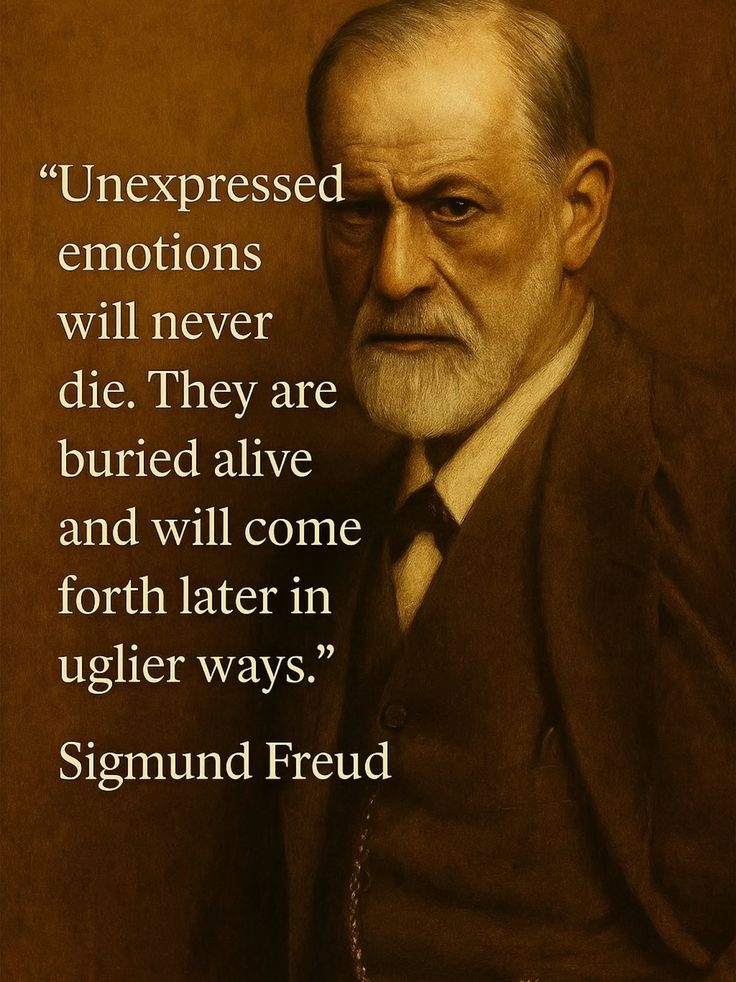
Freud (assuming these are his words) highlights that psychoanalysis and psychotherapy aim to uncover repressed, unconscious memories and create a supportive environment where these ‘traumas’ can be expressed through language and contact. Whether he explicitly said these words is irrelevant, as his writings demonstrate that he held these beliefs.

The scientific interest in dream phenomena prompts several overlapping questions:

The relationship between dreams and waking life (Beziehung des Traumes zum Wachleben)

The naive judgement of the awakened person assumes that the dream—if it does not originate in another world—has at least transported the sleeper to one. The old physiologist Burdach, to whom we owe a careful and subtle description of dream phenomena, expressed this conviction in a much-noted sentence (p. 474): “…the life of the day, with its efforts and pleasures, its joys and sorrows, is never repeated; rather, the dream aims to free us from them. Even if our whole soul has been filled with an object, if deep pain has torn our inner being, or a task has consumed all our mental power, the dream either gives us something entirely alien, or it takes only individual elements from reality for its combinations, or it merely adopts the tone of our mood and symbolises reality.”

L. Strümpell expresses a similar sentiment in his rightly acclaimed study of the nature and origin of dreams (p. 16): “Whoever dreams is turned away from the world of waking consciousness”… (p. 17): “In dreams, the memory of the ordered content of waking consciousness and its normal behaviour is almost entirely lost…” (p. 19): “The almost memoryless isolation of the soul in dreams from the regular content and course of waking life…”

However, the vast majority of authors have held the opposite view on the relationship between dreams and waking life. For example, Haffner (p. 19) states: “First of all, dreams continue waking life. Our dreams always connect to the ideas that were present in our consciousness shortly beforehand. Close observation will almost always find a thread in which the dream linked to the experiences of the previous day.” Weygandt (p. 6) directly contradicts Burdach’s assertion quoted above, “for it can often be observed, apparently in the vast majority of dreams, that they lead us right back into ordinary life, instead of freeing us from it.” Maury (Le sommeil et les rêves, p. 56) states in a concise formula: “nous rêvons de ce que nous avons vu, dit, desiré ou fait”(We dream of what we have seen, said, desired, or done.); Jessen, in his psychology published in 1855 (p. 530), elaborates somewhat more: “More or less, the content of dreams is always determined by the individual personality, by age, gender, social class, level of education, accustomed way of life, and by the events and experiences of the entire life to date.”

To be continued! 🙏💖
Human Values are not Rooted in the Possession of Power!

Standard

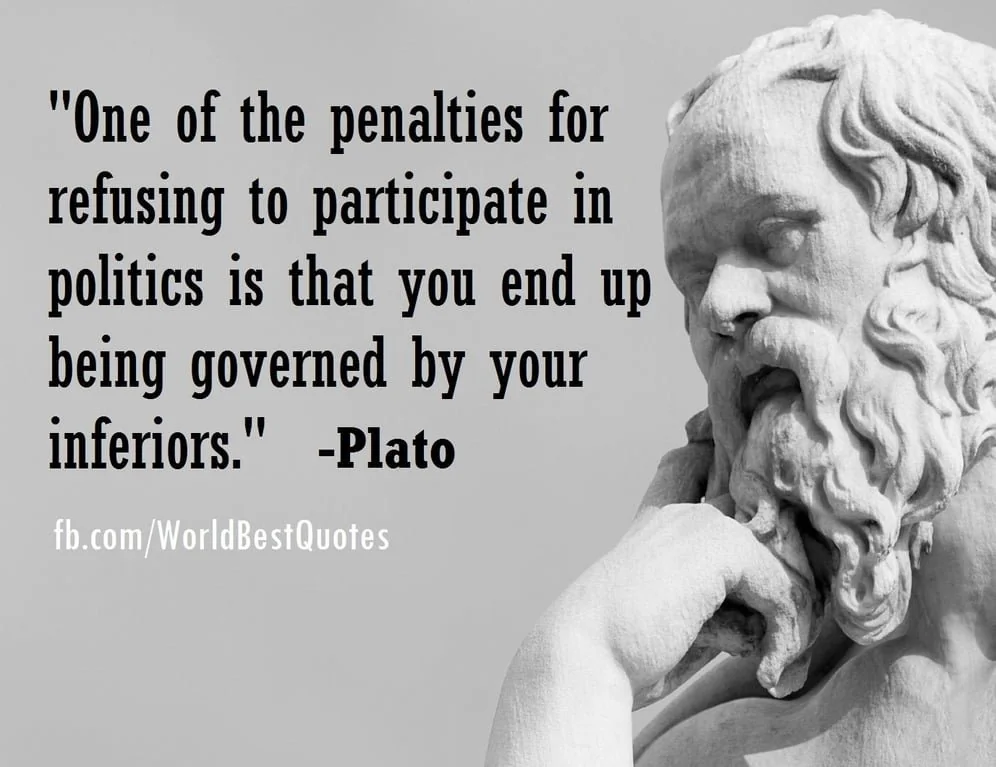
I am writing another post on politics because I believe it is a relevant issue in our current lives and a crucial concept for shaping society in the best way for everyone. This time, I selected a section from Plato’s book, The Republic, to learn from and reflect on what it should or wishes to be, as I consider it timeless. It explores how Plato analyses the motivations for seeking power, the risks of selfish ambition, and his concept of philosopher-kings who govern out of duty and virtue instead of personal gain. The essay emphasises Plato’s view that genuine political authority should prioritise justice and the common good over individual interests.

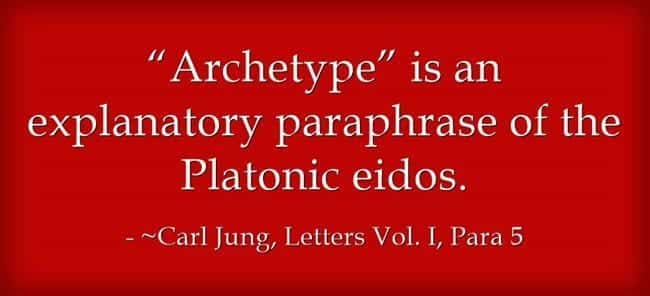
Carl Jung interpreted Plato’s politics, especially in The Republic, not as literal plans but as symbols of the collective unconscious. He regarded Plato’s “Forms” as psychic archetypes, with the “ideal state” shaping human qualities such as vision, wisdom, and power in the external world. Jung believed these political ideas originated from the “collective unconscious,” where perfect Forms such as justice exist. He also saw the ideal state as a psychological model, with the philosopher-king symbolising the self and social classes representing parts of the soul. By viewing Platonism as psychology, Jung considered himself a successor to Plato, identifying the “Forms” as archetypal patterns within the psyche. Additionally, he saw the “Cave” allegory as a way to convey deep psychological truths that are otherwise hard to express.

Carl Jung Depth Psychology

Plato’s Republic is a foundational text of Western philosophy, exploring justice, the ideal state, and political power. The dialogue examines what motivates individuals to seek power and how societal structures can corrupt or uplift those in authority. Plato, through Socrates, argues that the desire for power is often driven by basic urges—such as ambition, greed, and personal gain. However, he maintains that true power should serve the common good rather than personal interests. The philosopher-kings in Plato’s city are chosen for wisdom, virtue, and reluctance to rule, not for a craving for power. Plato believes the best rulers govern out of duty and justice, and warns against unchecked power, which can lead to tyranny. He emphasises education and virtue, claiming that only those who transcend personal desires are fit to hold power responsibly. Ultimately, the Republic views power as a moral duty, not an end in itself, aimed at justice and societal harmony. It urges reconsideration of who should rule, emphasising leadership for the greater good rather than personal gain.
Yet recently, it seems we have strayed from this goal!

The Pursuit of Political Authority in Plato’s Republic.

These passages from Plato’s Republic, spoken by Socrates, contend that the main goal of a craft—such as medicine or architecture—is to serve its subject, not the craftsman. Income (pay) comes from a separate, related “fee-earning art,” rather than the craft itself. [Thrasymachus was a Chalcedonian (from Chalcedon on the Bosphorus, near Byzantium), active around 430-400 B.C. He was a sophist and rhetorician, best known for arguing that “Justice is the interest of the stronger.”]   (Oxford Classical Dictionary 2e)

It might seem like a complex philosophical argument, but Socrates has always aimed to clarify his reasoning through detailed questioning to make it easier to understand. I hope you find this reading enjoyable!

Event Date: -425 GR

(§ 346d) The receiving of wages does not accrue to each from his own art. But if we are to consider it ‘precisely’, medicine produces health but the fee-earning art the pay, and architecture a house but the fee-earning art accompanying it the fee, and so with all the others, each performs its own task and benefits that over which it is set, but unless pay is added to it is there any benefit which the craftsman receives from the craft?”

(§ 346e) “Apparently not,” he said. “Does he then bestow no benefit either when he works for nothing?”I’ll say he does.”
“Then, Thrasymachus, is not this immediately apparent, that no art or office provides what is beneficial for itself, but as we said long ago, it provides and enjoins what is beneficial to its subject, considering the advantage of that, the weaker, and not the advantage of the stronger? That was why, friend Thrasymachus, I was just now saying that no one of his own will chooses to hold rule and office and take other people’s troubles in hand to straighten them out, but everybody expects pay for that,

(§ 347a) because he who is to exercise the art rightly never does what is best for himself or enjoins it when he gives commands according to the art, but what is best for the subject. That is the reason, it seems, why pay must be provided for those who are to consent to rule, either in the form of money or honour or a penalty if they refuse.”
“What do you mean by that, Socrates?” said Glaucon. “The two wages I recognise, but the penalty you speak of and described as a form of wage I don’t understand.”
“Then,” said I, “you don’t understand the wages of the best men…

(§ 347b) for the sake of which the finest spirits hold office and rule when they consent to do so. Don’t you know that to be covetous of honour and covetous of money is said to be and is a reproach?”
“I do,” he said. “Well, then,” said I, “that is why the good are not willing to rule either for the sake of money or of honour. They do not wish to collect pay openly for their service of rule and be styled hirelings, nor to take it by stealth from their office and be called thieves, nor yet for the sake of honour,

(§ 347c) for they are not covetous of honour. So, some compulsion and penalty must be imposed to constrain them to rule if they are to consent to hold office. That is perhaps why to seek office oneself and not await compulsion is thought disgraceful. But the chief penalty is to be governed by someone worse if a man will not himself hold office and rule. It is from fear of this, as it appears to me, that the better sort hold office when they do, and then they go to it not in the expectation of enjoyment nor as to a good thing, but as to a necessary evil and because they are unable to turn it over to better men than themselves…

(§ 347d) or to their like. For we may venture to say that, if there should be a city of good men only, immunity from office-holding would be as eagerly contended for as office is now, and there it would be made plain that in very truth the true ruler does not naturally seek his own advantage but that of the ruled; so that every man of undjusticeing would rather choose to be benefited by another than to be bothered with benefiting him. This point, then, I…

(§ 347e) by no means concede to Thrasymachus that justice is the advantage of the superior. But we will reserve that for another occasion. A far weightier matter, to me, seems to be Thrasymachus’s present statement, his assertion that the life of the unjust man is better than that of the just. Which now do you choose, Glaucon?” said I, “and which seems to you to be the truer statement?”
“That the life of the just man is more profitable, I say,” he replied.

‘Defensiveness’ from Feminist Perspective on Resistance

Standard

Today, I want to share a throwback to one of my Facebook posts from a few weeks ago, of course, more extensive, perhaps for a change, and because of this fascinating woman in the history of psychology.
Actually, I’ve also been considering writing about Sigmund Freud, the originator of psychoanalysis, and this might be a good starting point.

Honestly, I previously didn’t know much about Anna Freud, or rather, I didn’t think highly of her. However, after watching the film ‘Freud’s Last Session‘ about Sigmund Freud’s final days, her brief appearance still caught my attention.

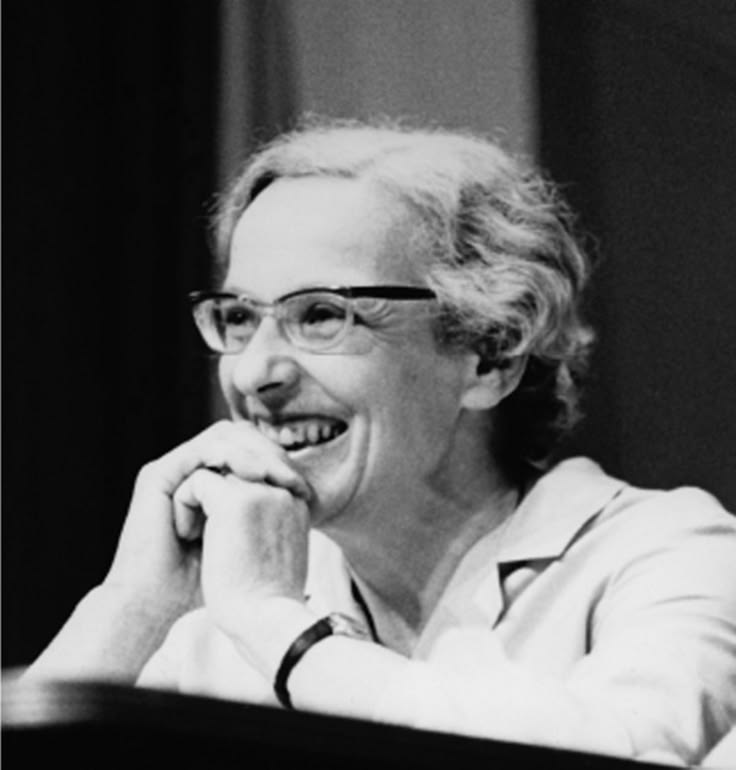
Anna Freud was a trailblazing psychoanalyst who made significant contributions to child psychology. Born in Vienna in 1895, the youngest daughter of Sigmund Freud, she grew up in an intellectually stimulating environment. She was deeply interested in her father’s work and eventually became his close collaborator. Originally trained as a teacher, Anna developed a keen interest in children’s development. In the 1920s, she began psychoanalytic training and started working with children, establishing Vienna’s first child psychoanalysis clinic in 1927. At this clinic, she developed innovative observation and treatment methods. Her influential book, “The Ego and the Mechanisms of Defence” (1936), built on her father’s theories by explaining how the ego defends against anxiety through mechanisms such as repression and denial. Fleeing the Nazis in 1938, she settled in London, where she co-founded the Hampstead Child Therapy Course and Clinic, a prominent centre for child psychoanalysis. Anna emphasised the importance of observing children in their natural settings and customising therapy to each child’s needs. Her contributions remain influential in psychoanalysis and child psychology, setting new standards through her research and clinical work.

In her 1936 work “The Ego and the Mechanisms of Defence,” Anna Freud identified defence mechanisms as unconscious protections employed by the ego. These mechanisms serve to shield individuals from anxiety, shame, and the instinctual urges of the id that the superego prohibits. Among the major defence mechanisms are repression, projection, reaction formation, regression, and sublimation.

In the film mentioned above, I noticed she had no relationships with men. There is no public or scholarly evidence regarding her sexuality. She never married but had close relationships with women, especially Dorothy Burlingham, her lifelong partner and collaborator. Some biographers speculate about their relationship, but Anna Freud never publicly discussed her sexuality, and no records confirm whether she was lesbian, bisexual, or otherwise. Her private life was discreet, centred on work and family. Any discussion of her sexuality is largely speculative, based on personal correspondence and life choices.

Children have an almost uncanny instinct for the teacher’s personal shortcomings.
They know the false from the true far better than one likes to admit.
Therefore, the teacher should monitor his own psychic condition so he can spot the source of trouble when anything goes wrong with the children entrusted to his care.
Civilisation in Transition (The Collected Works of C. G. Jung, Volume 10)

via Carl Jung DepthPsychology 🙏

Thank you all for your support and presence. Wishing you a peaceful weekend. 🙏🌹

What a Pity!

Standard

As I hover over the news and feel the hangover from all this stress, I give my mind another chance to relax by jotting down a few words.
Of course, I didn’t swear an oath to post every week (like some, daily; oh my goodness, save me!😛). However, as I mentioned in my last post, I need to talk to my “Patient Stone” to help me gather my scattered thoughts.

Honestly, I have numerous projects and ideas to pursue and share, but my busy mind is too preoccupied to concentrate on them. On the other hand, I had to delete many of my old posts because WP warned me that my 13 GB storage limit was full, leaving me with the choice of upgrading or deleting. Since I couldn’t afford to upgrade, I had no option but to delete them. Now I have some space to post more!

I think, as well as believe, that the animals have their own characters and, in their own instinctual life, have their own species-specific way of living, even though we compare some of them, like sheep, with humans in the form of messes.

Dr Jung viewed “mass-mindedness” and mass psychology as perilous, believing crowds trigger “the dynamisms of the collective man,” transforming individuals into “beasts or demons” until they join a mob. Crowds diminish morality, incite fears, provoke “infantile behaviour,” and can cause even the most virtuous to lose their significance, resulting in “psychologically abnormal” individuals. Mobs foster “herd psychology” and produce “mass man,” who is childish, irrational, irresponsible, and emotional. The crowd dissolves personal responsibility, facilitating crimes and increasing reliance on the state.

The levelling down of the masses through suppression of the aristocratic or hierarchical structure natural to a community is bound, sooner or later, to lead to disaster. For when everything outstanding is levelled down, the signposts are lost, and the longing to be led becomes an urgent necessity.
~Carl Jung, CW 17, Para 248

Now, I’d like to share one of my Facebook posts that reflects my thoughts. It is a poem by Lawrence Ferlinghetti, a notable American poet, painter, and social activist. Ferlinghetti published works of many Beat poets and is sometimes considered a Beat poet himself, although he never liked that label!

You are Whitman, you are Poe, you are Mark Twain, you are Emily Dickinson and Edna St. Vincent Millay, you are Neruda and Mayakovsky and Pasolini, you are an American or a non-American, you can conquer the conquerors with words….
~ Lawrence Ferlinghetti. From Poetry as Insurgent Art [I am signalling you through the flames]
.

Pity the Nation (After Khalil Gibran)

Pity the nation whose people are sheep
And whose shepherds mislead them
Pity the nation whose leaders are liars
Whose sages are silenced
and whose bigots haunt the airways
Pity the nation that raises not its voice
but aims to rule the world
by force and by torture
And knows
No other language but its own
Pity the nation whose breath is money
and sleeps the sleep of the too well fed
Pity the nation, oh, pity the people of my country
My country, tears of thee
Sweet land of liberty!

I’d also like to share one of Mozart’s greatest works, a requiem, to comfort the spirits. Wishing all individuals friends a peaceful time. 💖🙏

Just Taking a Breath!

Standard

Since I will be away from tomorrow until Saturday, visiting a friend and attending a concert together, I’ll just say hello and goodbye with my best wishes.

It will be a welcome change of pace in these turbulent times, though my friend is also Iranian, so there will definitely be some deep discussions.

Dr Jung’s philosophy (thoughts) suggests that a “break” often serves as an invitation to explore the unconscious, encouraging a shift from merely doing to a state of being.

“As far as we can discern, the sole purpose of human existence is to kindle a light in the darkness of mere being”.

Dr Jung’s insight about the nature of existence is thoughtfully highlighted at the conclusion of his Life and Death chapter in Memories, Dreams, and Reflections:

Our age has shifted all emphasis to the here and now, and thus brought about a daemonization of man and his world.
The phenomenon of dictators and all the misery they have wrought springs from the fact that man has been robbed of transcendence by the shortsightedness of the super-intellectuals.
Like them, he has fallen victim to unconsciousness.
But man’s task is the exact opposite: to become conscious of the contents that press upward from the unconscious.
Neither should he persist in his unconsciousness, nor remain identical with the unconscious elements of his being, thus evading his destiny, which is to create more and more consciousness.
As far as we can discern, the sole purpose of human existence is to kindle a light in the darkness of mere being.
It may even be assumed that just as the unconscious affects us, so the increase in our consciousness affects the unconscious.
~Carl Jung, MDR, Page 326.(Via carljungdepthpsychologysite.blog, with thanks)


The band we’re meeting is called UFO, and they’re roughly my age, although the videos below are from their earlier years.

Do it well, do it better. 🤗💖🙏

My (Carl Jung’s) Most Difficult Experiment [p. 4]

Standard

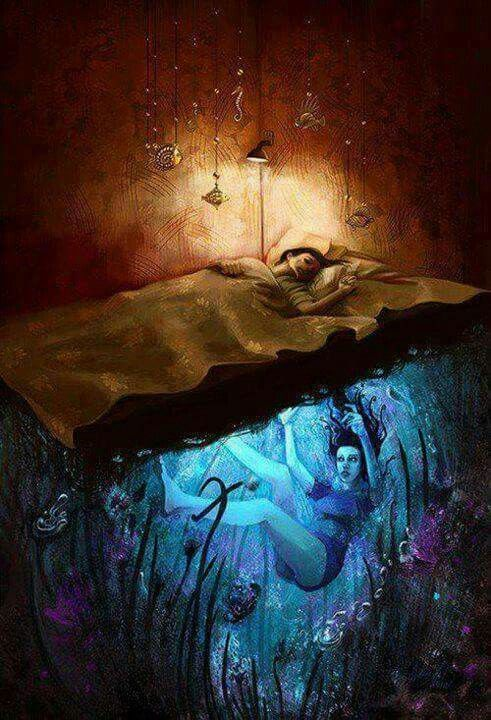
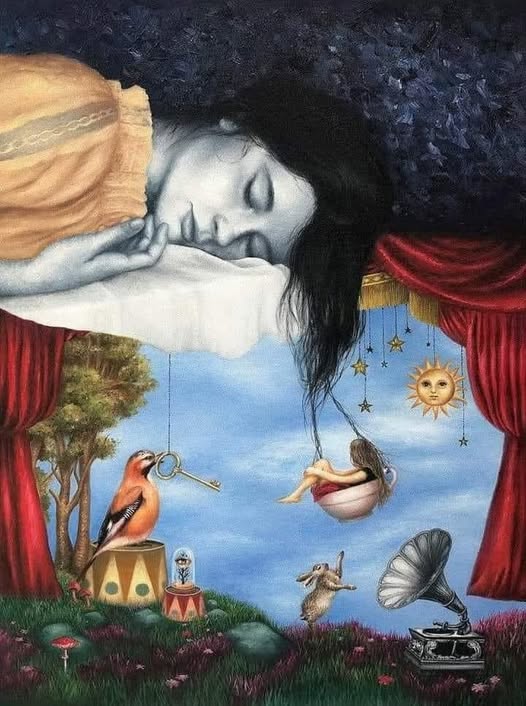
I had a dream a few weeks ago, and surprisingly, I still remember it clearly. Usually, I forget my dreams the moment I wake up, but this one is vividly etched in my mind. In the dream, a bird flew elegantly through my room. She looked like a hummingbird, but much larger. She stared at me as she was facing the window. I suspected that I knew her well.

She gazed at me for a while before flying away; I don’t know where, but somehow she disappeared right before my eyes.

It reminded me of a dream Dr Jung once described. However, his bird was transformed into a child and could speak; mine did not, but I believed she was wise and knew many things.

Carl Jung’s dream of a white bird transforming into a girl, often a dove or gull, was a key vision from his Black Book. It signalled his break with Freud, marked his dive into deep psychological work, and symbolised the soul’s link to the spirit world, spiritual change, and the union of opposites within the Self. Featured in The Red Book, the dream showed birds as messengers of the soul, bridging conscious and unconscious, representing freedom, wisdom, and the’ higher self”.

I would now like to reiterate his dream, which I presented in the first part, because it is remarkable.

I dreamt at that time (it was shortly after Christmas 1912) that I was sitting with my children in a marvellous and richly furnished castle apartment – an open columned hall – we were seated at a round table, whose top was a marvellous dark green stone. Suddenly, a gull or a dove flew in and sprang lightly onto the table. I admonished the children to be quiet so they would not scare away the beautiful white bird. Suddenly, this bird turned into an eight-year-old blond child and ran around, playing with my children in the marvellous columned colonnades. Then, the child suddenly turned into the gull or dove. She said the following to me: “Only in the first hour of the night can I become human while the male dove is busy with the twelve dead.” With these words, the bird flew away, and I awoke. (Black Book 2, pp. 17-18)

Key Elements of Jung’s Bird Dream:
The White Bird: Symbolises the soul, spirit, or divine feminine (Anima), depicted as a dove or gull.
Transformation: The bird turning into an eight-year-old blond girl playing with his children represents the soul’s embodiment and interaction with earthly life.
The Message: “Only in the first hours of the night can I transform myself into a human being, while the male Dove is busy with the twelve dead” highlights the unconscious’s link to the spiritual realm and the soul’s hidden work.
Context: This dream from around 1912 helped Jung realise the collective unconscious archetypes and influenced his relationship with Toni Wolff.
Broader Jungian Bird Symbols:
Archetypal Connection: Birds link earthly and spiritual realms, symbolising transcendence, consciousness, and freedom.
The Self: Birds often symbolise the Self, representing wholeness and inner guidance.
Individuation: Birds symbolise Jung’s concept of individuation—integrating archetypes to achieve wholeness.
Language of Birds: In dreams, birds speak a symbolic language that reveals hidden meanings and psychic realities.

Jung’s bird dream was a profound encounter with his own unconscious, initiating his personal myth-making and laying the groundwork for his analytical psychology.

I know that one day, if I am still alive, I will continue this never-ending story, though there is another “never-ending story” in which I am fully involved! Enjoy your peaceful lives. ✌💕🥰

Observing the Depths from Below!

Standard

I am a forest, and a night of dark trees: but he who is not afraid of my darkness will find banks full of roses beneath my cypresses. The higher we soar, the smaller we appear to those who cannot fly.
~Friedrich Nietzsche, Thus Spoke Zarathustra

Understanding duality and the existence of opposites is essential for comprehending both our world and ourselves. Today, I often see the phrase ‘We are good & They are bad’ being misused and exploited. Good and evil are present within everyone!

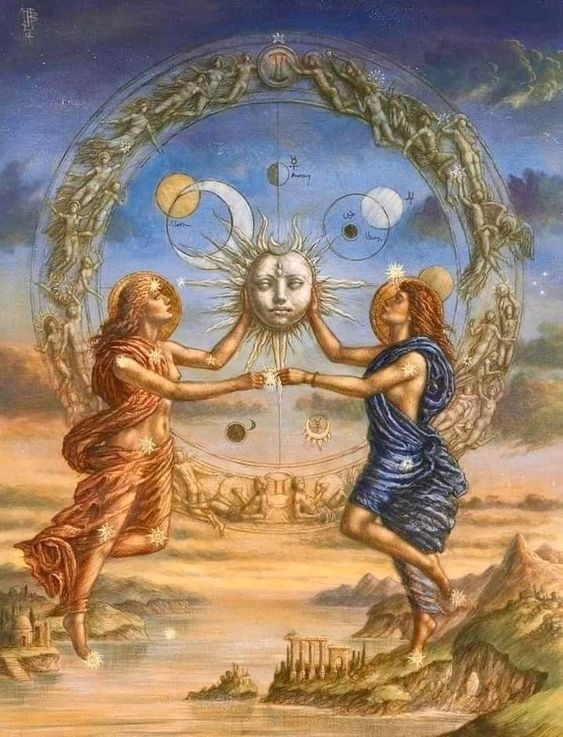
Duality promotes understanding of the balance and tension between opposing elements, showing that complexity and harmony come from these interactions. Jung extensively studied duality, viewing it not just as external contrasts like light versus dark, cold versus warm, or above versus below, but as essential components of the human psyche and the process of individuation.

Jung says: Roots of Life reach into Hell. A core idea in Jung’s view of human existence is the concept of Duality and the Principle of Opposites. He argued that the psyche operates under the “principle of opposites,” meaning that every psychological concept or experience—such as light, warmth, consciousness, or life—inevitably has its opposite, like darkness, cold, unconsciousness, or death. The ongoing tension between these opposing forces is vital for psychological development and transformation. Dualities are not always entirely opposite; instead, they often depend on each other and define one another. For instance, light derives meaning only through its contrast with darkness. Many philosophies, including Taoism, highlight that these opposites are interconnected and mutually dependent, creating a balanced whole (yin and yang).

Jung’s psychology focuses on a fundamental duality between the conscious mind—associated with light, warmth, and awareness—and the unconscious, linked to darkness, coldness, and forgotten elements. The unconscious includes repressed or unknown parts, with the ‘shadow’ representing darker aspects we often reject or ignore. Recognising and accepting the shadow is crucial for achieving psychological wholeness.
The process of individuation involves integrating these opposites, acknowledging and reconciling them, rather than suppressing one side.
Jung explored myths, dreams, and alchemy, which frequently symbolised these dualities—such as sun/moon, king/queen, above/below—as part of psychic development. He saw alchemy as a metaphor for merging the conscious and unconscious components of the psyche.

Jung’s idea of duality illustrates how opposites are essential and creative elements of the mind. Concepts like light and dark, cold and warm, or the branches of a tree reaching upward and downward symbolise both external facts and internal truths. Personal development requires embracing these dualities to achieve a more integrated and authentic self.

An 1847 depiction of the Norse Yggdrasil as described in the Icelandic Prose Edda by Oluf Olufsen Bagge. Via Carl Jung Depth Psychology

He perceives the tree of life, whose roots extend into Hell and whose top reaches Heaven. He no longer distinguishes between right and wrong, holy and unholy, genuine and false, or good and evil. The only difference he recognises is between below and above: he sees that the tree of life grows from the ground upward, with its crown at the top, clearly separate from the roots. This view is unquestionable to him, and it guides his path to salvation.
To unlearn all distinctions except that of direction is part of your salvation. This liberates you from the old curse of knowing good and evil. Although you separated good from evil based on your best judgment, aiming only for the good and denying the evil you did- and struggled to accept it- your roots no longer drew dark nourishment from below, causing your tree to weaken and wither.
Therefore, the ancients said that after Adam ate the apple, the tree of paradise withered. Your life needs the dark. But knowing it is evil makes acceptance impossible, leading to suffering and confusion. You cannot accept it as evil, or your sense of goodness will reject you. Nor can you deny it, because you
know both good and evil. This knowledge of good and evil became an insurmountable curse.

But if you return to primal chaos and recognise that which hangs stretched between the two unbearable poles of fire, you will notice that you can no longer conclusively separate good and evil, neither through feeling nor through knowledge, but that you can discern the direction of growth only from below to above. You thus forget the distinction between good and evil, and you no longer know it as long as your tree grows from below to above. But as soon as growth stops, what was united in growth falls apart, and once more you recognise good and evil.
You can never deny your knowledge of good and evil to yourself, so that you could betray your good in order to live evil. For as soon as you separate good and evil, you recognise them. They are united only in growth. But you grow if you stand still in the greatest doubt, and therefore, steadfastness in great doubt is a veritable flower of life.
He who cannot bear doubt does not bear himself. Such a one is doubtful; he does not grow, and hence he does not live. Doubt is the sign of both the strongest and the weakest. The strong have doubt, but doubt has the weak.

Therefore, the weakest is close to the strongest, and if he can say to his doubt: “I have you,” then he is the strongest. But no one can say yes to their doubt unless they endure wide-open chaos. Because there are so many among us who can talk about anything, pay heed to what they live. What someone says can be very much or very little. Thus, examine his life.

My speech is neither light nor dark, since it is the speech of someone who is growing. ~Carl Jung, Red Book, Page 301

Thank you for taking the time to read. 🙏

Searching for the Eternal Girl/Boy P. 3 Puella Aeterna/Puer Aeternus and Corne/Senex

Standard

I’ll borrow life and not grow old;
And nightingales and trees
Shall keep me, though the veins be cold,
As young as Sophocles.
And when I may no longer live,
They’ll say, who knows the truth,
He gave whate’er he had to give
To Freedom and to Youth.
~William Corey, Master at Eton c. 1850-1870

Success achieved, he never stays
For only by never staying does he not depart.
~Dao Tzu, Dao De Jing.

From Now or Neverland, p. 156

In this third part, let’s revisit the inspiring book, Now or Neverland, which motivated me to write these articles.

Here’s a brief essay on Now or Neverland by Ann Yeoman:

Ann Yeoman’s book “Now or Neverland: Peter Pan and the Myth of Eternal Youth” analyses the enduring charm of J.M. Barrie’s story, emphasising its psychological and mythological elements. She interprets Neverland as a metaphor for humanity’s longing to escape time and mortality. Yeoman considers Peter Pan an archetype embodying wonder and the peril of avoiding growth.
She explains that Neverland represents the myth of eternal youth—a place where responsibilities cease. This dream enables Peter to evade adult challenges but also leads him to miss meaningful relationships and personal development. Her study suggests Barrie’s tale celebrates youth but also warns against escapism.
In “Now or Neverland,” Yeoman encourages reflection on individual perceptions of time, change, and maturation, transforming a children’s story into a profound meditation on memory, imagination, and ageing.

Yesterday, I attended a birthday party for a dear family member, where my grandchildren were also present. I hadn’t seen them in a long time due to my illness and hospital stay. As always, I was the only adult the kids enjoyed playing with, because they knew the child in me well. It reminded me of what Yeoman mentioned in her book:

…Paradoxically, whereas lightness, freedom and space may be the necessary conditions for play, play itself is far from light, in that it has the capacity to ground one in the wholeness of one’s being. In a discussion of the importance of play in childhood, Anthony Stevens cites Johan Huizinga’s claim, in Homo Ludens, his work on the subject of play, that “in play there is something ‘at play’ which transcends the immediate needs of life.” This is because the archetypal activities of human life are filled with possibilities for play. Notes Stevens:

Hence, Schiller’s famous aphorism, “Man is only truly himself when he is at play.”
… Childhood is a period of immense vitality and inventiveness, when imagination is given free rein to complement the realities or compensate for the deficiencies of everyday existence…
It is one of the misfortunes of growing up that we readily lose touch with this rich land of childhood … Yet nothing is lost to the Self, and play, like the child who sponsors it, lives on as a propensity of the psyche to its dying day. (250On Jung, pp. 87f.)

What is of particular interest in our discussion of Barrie is Stevens’s emphasis that fantasy, as introverted play,

is the product of play between the archetypes of the collective unconscious and the living circumstances of the individual. . . . Fantasy is not a regressive means of escape from reality . . . but the modus operandi of psychological growth: it is the stuff of life, leading us on into the future. (251 Ibid., pp. 88f.)

Play and fantasy lead us into the future because they make us creators. They legitimise our re-formation and re-creation of the world, allowing us to remember and so re-deem the scattered fragments of ordinary life. They make us gods for an hour or a day, enabling an activity which affirms our sense of Self because it affords unlimited scope to our desire for realisation, fulfilment and creative power in a world of our own making that is secret and therefore safe. The task of the artist is then to establish a vital connection between the hidden world of possibility and the world of actuality.

However, according to Winnicott, the “place” of play and fantasy is precarious, “because it belongs to the interplay in the . . . mind of that which is subjective (near-hallucination) and that which is objectively perceived (actual or shared reality).” (Playing and Reality, p. 61)

…This place is the No-man’s land, an intermediary realm of the imagination that the artist must continually interpret and re-interpret. Here, one might encounter the god-child, buried deep in the personality. The challenge for the writer, like Barrie, who feels more at home in the imaginal realm, is to interpret such experiences within the real world. But in Peter Pan, Barrie’s two worlds remain as opposed at the end as at the beginning, with no space in the Edwardian world for the richness found in Neverland. Ultimately, Barrie cannot show that reality offers room for self-fulfilment, unlike other children’s classics such as Grahame’s The Wind in the Willows or Milne’s Winnie-the-Pooh.

In Barrie, there’s an apparent devaluation of cosy domesticity and an iconoclastic streak visible in his work, especially in Peter Pan and other heroes resembling Peter’s mysterious presence. We find in Peter Pan the masculine energy of the trickster, a mythic figure known as a lawbreaker who embodies instinctual desires. (Barbara Greenfield, “The Archetypal Masculine,” in Andrew Samuels, ed., The Father, p. 192.)

The trickster often marks an early stage in the development of the heroic ego, reflecting nature’s transformative power while resisting change. Barrie’s hero also resists transformation, with little evidence of active sexuality or development beyond a boy-trickster to a mature hero or Wise Old Man. Instead, Peter Pan’s iconoclasm risks becoming an idol of boyish rebellion for its own sake.

(Ibid., p. 191. Greenfield argues that “The boy, Don Juan, and the trickster show us the ego in its early stages of development, while the hero, the father and the wise old man represent later stages of development. As a whole, the animus, or male archetype, unifies these disparate figures because it exists as those principles which underlie them all.” She suggests that the most powerful mythological forms of the masculine archetype are those of the father and the trickster, claiming the trickster as “an early incarnation of the father” rather than an archetype separate from that of the father, as it is treated by Jung. Her view supports our earlier discussion of the inherent similarities of Peter Pan and Hook and is useful when individual development and personal pathology are the issue. However, what we may describe as the “creative iconoclasm” of the Self in its impulse to further consciousness favours Jung’s treatment of the trickster and his recognition of its essential and constant role in the archetypal drama of the psyche. Perhaps this presents a case for “both/and” rather than “either/or” terminology; and for a concept of co-existing levels of activity rather than a more linear development from one stage to the next, with only faint traces of earlier characteristics evident in the later stages.)

Remember to cherish the child within you; thank you! 🙏

Everything is Relative; Even Happiness!

Standard

Put your hand on a hot stove for a minute, and it seems like an hour. Sit with a pretty girl for an hour, and it seems like a minute. That’s relativity.
~Albert Einstein

I was always sceptical about the concepts of time and space. As I explored Einstein’s theory of relativity, I realised that it encompasses not just time and space, but everything else as well, including happiness.

Indeed, it pertains to an individual’s life circumstances or, more precisely, it is linked to them. For example, someone living a stress-free and trouble-free life may experience a lack of happiness, but when faced with tough times, they may find happiness more readily.

My life has been filled with challenges, but this year has been especially tough. As you know, I had issues with my lower abdomen and underwent three surgeries to fix it, or so I thought. However, a problem arose when I went to the toilet, which caused concern, and I visited my doctor. After the examination, he stated that an apparent mistake had occurred during the last operation, a part had been injured, and I would require another procedure. I won’t go into the details, but after some anxious days, I’ve managed to secure a scheduled appointment for next Wednesday, as the procedure needs to be done soon to prevent kidney issues.

I gathered some insights and words from my teacher, Carl Jung, who held that the psyche and cosmos are fundamentally timeless. Working with Einstein and Pauli, he examined a concept of timelessness that goes beyond linear clock time. Jung proposed that accurate understanding involves transcending causality because time in the psyche and reality is relative. Although our conscious mind perceives time linearly, embracing a sense of timelessness can enhance learning. His goal was to unify physical and psychic realities and how they interact.

He believed in a psychological “relativity of time,” where perception is subjective and affected by inner states. He connected this to synchronicity, implying that the psyche and material world are not always ruled by linear cause-and-effect but can relate in other ways. Jung pointed out that, similar to the space-time continuum in modern physics, the unconscious also exhibits “indistinctness” or psychic relativity, which blurs the boundaries between time and space.

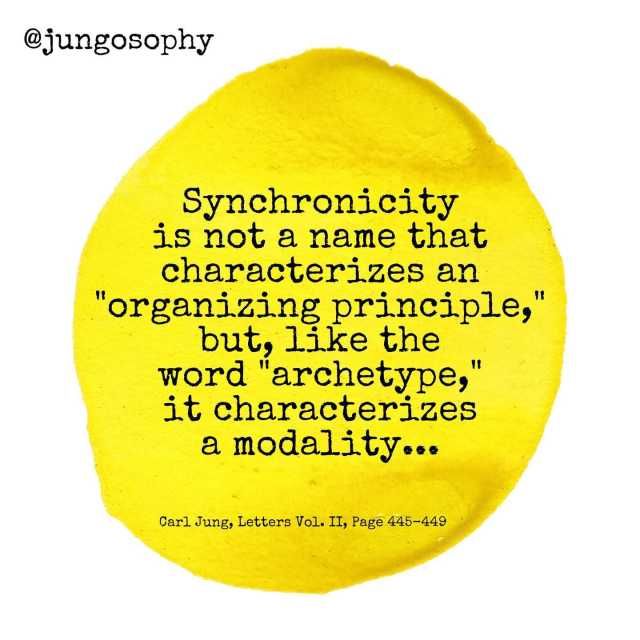
For Jung: “[Synchronicity] cannot be a question of cause and effect, but of a falling together in time, a kind of simultaneity. Because of this quality of simultaneity, I have chosen the term ‘synchronicity’ to designate a hypothetical factor equal in rank to causality as a principle of explanation.”
Jung, C. G. (1952). The Structure and Dynamics of the Psyche; Synchronicity: An Acausal Connecting Principle, in CW, Vol. 8.

Now, what about happiness? I tell you this: when I go to the toilet and manage to pee, I feel the entire joy of life again and find happiness!

Humour plays a vital role, and hope remained until the very end. In my seventy years, I have enjoyed good health and no surgeries, but this year I face my fourth operation. Here’s to a brighter year ahead. Wishing you all health and prosperity.

Searching for the Eternal Girl/Boy P. 2 Puella Aeterna/Puer Aeternus and Corne/Senex

Standard

The dynamic principle of fantasy is play, a characteristic also of the child, and as such, it appears inconsistent with the principle of serious work. But without this playing with fantasy, no creative work has ever yet come to birth. The debt we owe to the play of imagination is incalculable. It is, therefore, short-sighted to treat fantasy, on account of its risky or unacceptable nature, as a thing of little worth.
~Carl Jung; Psychological Types Ch. 1; Page 82.
Fantasy is the creative function—the living form is a result of fantasy. Fantasy is a pre-stage of the symbol, but it is an essential characteristic of the symbol that it is not mere fantasy.
~Carl Jung, 1925 Seminar, Page 11
Source: Carl Jung Depth Psychology

Continuing from the first part of my blog, I recall the days when Al and I created our own worlds, feeling utterly disconnected from the outside world. My childhood was filled with dreams and wishes, driven by my imagination and a touch of fantasy. Perhaps it was my name that ignited my desire to make my wishes come true, with a hint of magic.

On the other hand, I didn’t want to be treated like a child. I don’t know what the issue was; maybe it was because I’d been isolated at that age. I mean, there we were, a group of five boys, Al and me, including three cousins, all nearly the same age. One of the cousins, Ham, who was around Al’s age, about two years older than me, and the other two were roughly two years younger than me, and I was stuck in the middle.

Dream Catcher by Michael Cheval

As I remember, one evening in Mashhad, when we were visiting our aunt, we were playing hide and seek — a game like ‘catch me if you can find me!’ I was so engrossed in the game that I didn’t notice Al and Ham were missing. At first, when I caught my breath from running around to find a hiding spot, I thought, ‘What’s going on with me?’ and scolded myself for acting like a child. But then I got angry when I found out Al and Ham weren’t playing with us – they were off to see a movie, and I wanted to be there with them so badly! In the evening, when we gathered again, Al and Ham began by making a reference and a joke about the movie, which I remember was called Madame. This made me feel jealous and sad. It was so obvious that my mother recognised it and tried to comfort me, but to me, her effort was like giving milk to a crying infant! So I felt even more alone and forsaken.

In Ann Yeoman’s book, we can read:
…In terms of personality traits, a strong emotional attachment to what we may call the mother-realm manifests on the one hand in a certain preciousness, a sense of specialness and difference, a fictional example of which we see in James Joice’s young hero Stephen, who is always “on the fringe,” a little apart from his fellows, an isolate. On the other hand, when out of the province of the mother and, metaphorically, the reach of the mother’s watchful eye, the mother’s son experiences an incapacity to stand on his own and embrace the risks, challenges and unpredictable fullness of life, or realise the courage “to live, to err, to fall, to triumph, to recreate life out of life,”> to cite Joice once again>(A Portrait of the Artist as a Young Amn, p. 172).
As a result, the puer remains dissociated from his feelings. In order to shield himself unconsciously from suffering, he protects himself from the possibility of abandonment, rejection and disappointment with an array of defences which prevent him from fully committing himself to life in the first place.
Jung describes the neurosis of such a “mother’s boy” in terms of a “secret conspiracy between mother and so…. [in which] each helps the other to betray life” He continues:

Where does the guilt lie? With the mother, or with the son? Probably with both. The unsatisfied longing of the son for life and the world ought to be taken seriously. There is in him a desire to touch reality, to embrace the earth and fructify the field of the world.
But he makes no more than a series of fitful starts, for his initiative as well as his staying power are crippled by the secret memory that the world and happiness may be had as a gift from the mother. The fragment of the world which he, like every man, must encounter again and again is never quite the right one, since it does not fall into his lap, does not meet him halfway, but remains resistant, has to be conquered, and submits only to force.
It makes demands on the masculinity of a man, on his ardour, above all on his courage and resolution when it comes to throwing his whole being into the scales. For this, he would need a faithless Eros, one capable of forgetting his mother and undergoing the pain of relinquishing the first love of his life.
~Carl Jung, The Syzygy, Anima & Animus, Aion, CW 9ii, par. 20-21

I may laugh at that event now, but as I recall every detail, it seems it left a particular impression on me. I know I wanted to be noticed and taken seriously. However, my mother, as she always had, saw me as her lost daughter. That’s why, when I finally found my solitude, it was mostly when I woke early in the morning in my bed and looked out of the window into the street, where the summer breeze made the leaves of the poplar tree dance. I immersed myself in my fantasy world and let my imagination run freely.

I will definitely try to write another episode.🙏💖