
One day, as I browsed my bookshelf, a heavy volume suddenly fell into my hands — it was the Collected Works (die Gesammelten Werke) of Sigmund Freud, a book I had almost forgotten. I had read some of Freud’s writings, especially during my time in Iran, but later I became deeply engaged with Jung’s work. When I opened the book, it felt as though a whisper told me that this was the foundation — something I hadn’t known before. I started reading, and it turned out to be completely true!
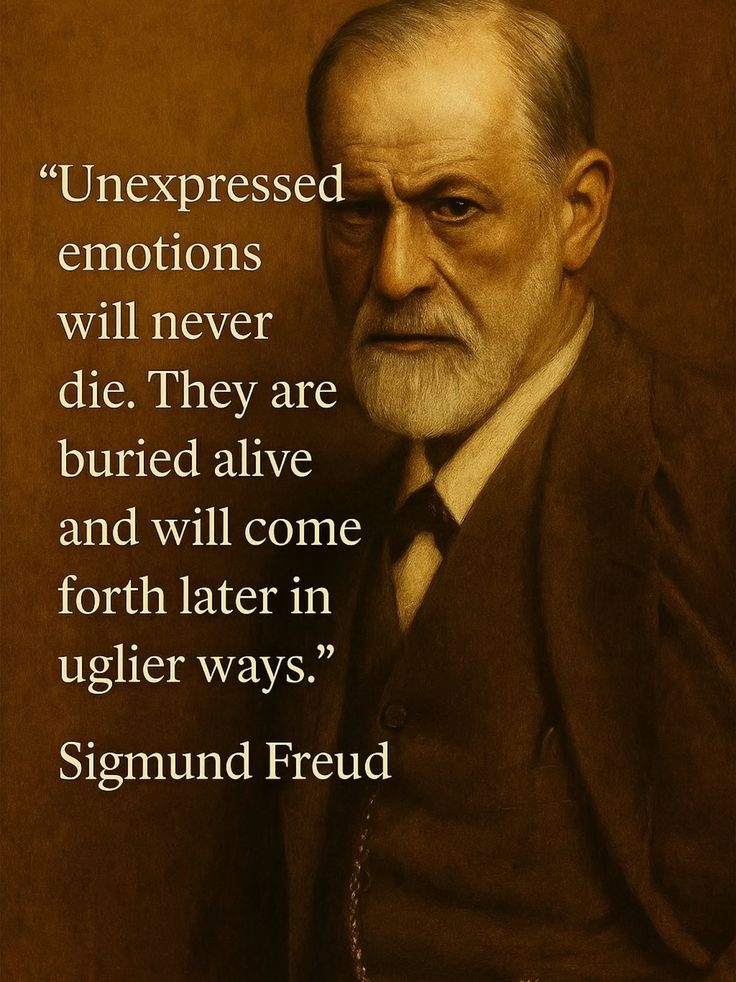
Sigmund Freud was an Austrian neurologist, the founder of psychoanalysis, and a pioneer in exploring the hidden aspects of the human mind, particularly the unconscious. He developed a clinical method to assess and treat psychological conflicts arising from inner struggles through patient-analyst dialogue, along with a unique theory of mind and human agency grounded in this approach.
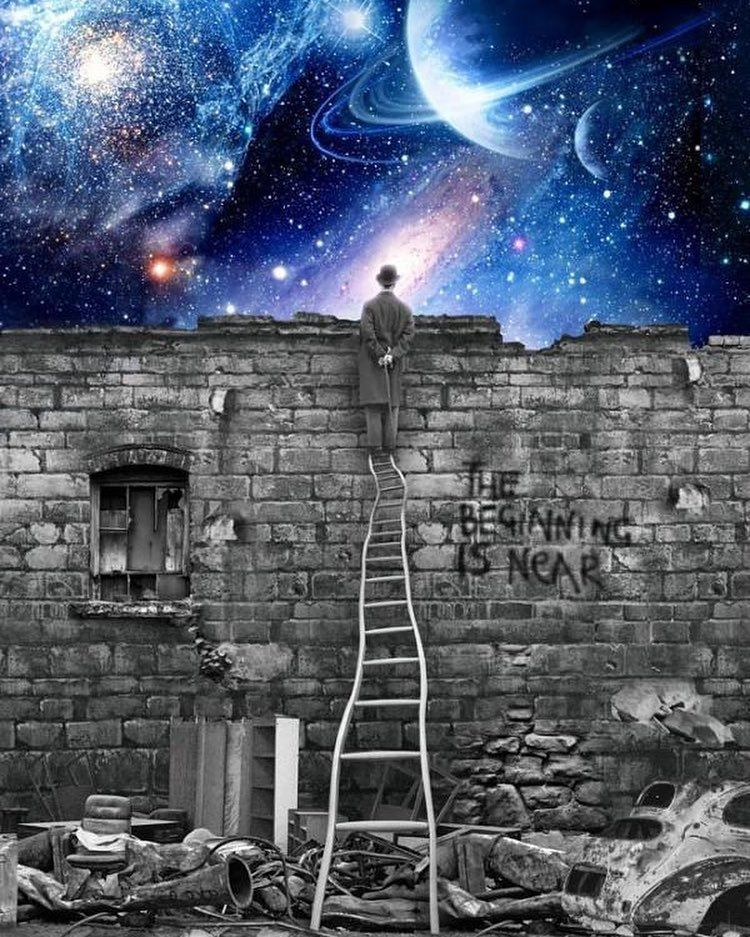
I reached a point where understanding Sigmund Freud and his work would enhance our grasp of Carl Gustav Jung. Freud acts as the key unlocking the door into the unconscious, while Jung is the train guiding us through the hidden depths of our souls!
Therefore, I decided to translate and share his insights on communicating knowledge and experience, beginning with dreams and dream interpretation: The scientific literature on dream issues (Die wissenschaftliche Literatur der Traumprobleme). I will start with his scientific explanation—(a brief summary, of course, to keep it concise)—to help it be better understood.
The scientific literature on dream problems
In the following pages, I will show that a psychological technique exists for interpreting dreams, revealing each as a meaningful psychic construct linked to waking life. I will explain the processes behind dream strangeness and draw conclusions about the psychic forces involved. My presentation concludes by linking the problem of dreaming to broader issues that require other sources. I begin with a review of past research and current understanding, noting that little progress has been made despite centuries of effort. The existing literature offers insight and interesting material, but few definitive answers about dreams. Even educated laypeople have limited knowledge.
The first work to treat dreams as a psychological object is Aristotle’s On Dreams and Their Interpretation. He states that dreams are of a demonic, not divine, nature, but can reveal profound meanings if correctly interpreted. Aristotle notes characteristics such as dreams reinterpreting minor stimuli as large ones, suggesting they might show early signs of bodily changes unnoticed during the day. Due to limited knowledge, I haven’t deepened my understanding of his treatise. Before Aristotle, the ancients saw dreams as divine inspiration, distinguishing true dreams that warn or foretell from false, deceptive ones meant to mislead or harm. This view aligned with their worldview, projecting internal reality onto the external world. They believed dreams came from another world and considered their supernatural origin plausible, a view still held by some today, including mystical writers and certain philosophers such as Schellingians. The debate over dreams’ divinatory power continues, as scientific explanations remain insufficient to account for all dream phenomena.
Writing a history of our understanding of dream problems is difficult because, despite its value in certain areas, no clear progress is visible. No foundational results exist for future researchers to build on; instead, each author starts anew, as if from scratch. If I followed a chronological account of authors’ views, I couldn’t provide a clear overview of current dream knowledge. Thus, I structured the discussion by topic, citing the relevant literature to each dream problem.
Since I haven’t covered all scattered and extensive literature, I ask readers to be modest, assuming no fundamental facts or significant aspects are lost.
Until recently, most authors treated sleep and dreams together, often including analogous states like hallucinations or visions. Recently, work has focused more narrowly on specific questions within dream life. This shift reflects a belief that clear understanding and consensus require detailed investigations. I offer only such psychological investigation here, excluding sleep, which is mainly physiological, though sleep-related changes in mental function are acknowledged.
The scientific interest in dream phenomena prompts several overlapping questions:
The relationship between dreams and waking life (Beziehung des Traumes zum Wachleben)
The naive judgement of the awakened person assumes that the dream—if it does not originate in another world—has at least transported the sleeper to one. The old physiologist Burdach, to whom we owe a careful and subtle description of dream phenomena, expressed this conviction in a much-noted sentence (p. 474): “…the life of the day, with its efforts and pleasures, its joys and sorrows, is never repeated; rather, the dream aims to free us from them. Even if our whole soul has been filled with an object, if deep pain has torn our inner being, or a task has consumed all our mental power, the dream either gives us something entirely alien, or it takes only individual elements from reality for its combinations, or it merely adopts the tone of our mood and symbolises reality.”
L. Strümpell expresses a similar sentiment in his rightly acclaimed study of the nature and origin of dreams (p. 16): “Whoever dreams is turned away from the world of waking consciousness”… (p. 17): “In dreams, the memory of the ordered content of waking consciousness and its normal behaviour is almost entirely lost…” (p. 19): “The almost memoryless isolation of the soul in dreams from the regular content and course of waking life…”
However, the vast majority of authors have held the opposite view on the relationship between dreams and waking life. For example, Haffner (p. 19) states: “First of all, dreams continue waking life. Our dreams always connect to the ideas that were present in our consciousness shortly beforehand. Close observation will almost always find a thread in which the dream linked to the experiences of the previous day.” Weygandt (p. 6) directly contradicts Burdach’s assertion quoted above, “for it can often be observed, apparently in the vast majority of dreams, that they lead us right back into ordinary life, instead of freeing us from it.” Maury (Le sommeil et les rêves, p. 56) states in a concise formula: “nous rêvons de ce que nous avons vu, dit, desiré ou fait”(We dream of what we have seen, said, desired, or done.); Jessen, in his psychology published in 1855 (p. 530), elaborates somewhat more: “More or less, the content of dreams is always determined by the individual personality, by age, gender, social class, level of education, accustomed way of life, and by the events and experiences of the entire life to date.”
To be continued! 🙏💖


“Freud acts as the key unlocking the door into the unconscious, while Jung is the train guiding us through the hidden depths of our souls!” 🚪🚂🖖
LikeLiked by 1 person
Well depicted! Thank you, mate. 🤗🙏🖖
LikeLike
This is a terrific post, friend! Food for thought.
LikeLiked by 1 person
You brightened my day, friend; thanks a lot!
LikeLiked by 1 person
You’re very welcome!
LikeLiked by 1 person
🙏
LikeLiked by 1 person
An excellent introduction to a timeless debate.
The tension between dreams as an escape from reality and as an extension of conscious life remains highly relevant today.
Thank you for sharing this great post, dear Aladin!
LikeLiked by 1 person
That is definitely an everlasting topic! Thank you, my dear Luisa, for your insightful comment. 🥰🙏💖
LikeLiked by 1 person
You are so very welcome, dear Aladin!
It was my pleasure💖
LikeLiked by 1 person
🤗😘
LikeLiked by 1 person
Looking forward to hearing more about this Aladin..
thank you ❤️
LikeLiked by 1 person
Thank you very much, dear Kathy. I truly appreciate it. It’s a pleasure to see you here. ☺️💖🙏🌹
LikeLike
Ohh, I like this article. I look forward to more.
Thank you very much dear Aladin.
You are terrific at translating these works for us.
EXCELLENT!
💙🕊❦🕊💙
LikeLiked by 1 person
Wow, you’ve truly moved me and filled me with encouragement! Thank you so much, and here’s a big virtual hug your way.
🥰🙏💖🌺🫂💙
LikeLiked by 1 person
HUGS!!!!!
XO💙🕊❦🕊💙XO
LikeLiked by 1 person
Good 👌well written
LikeLiked by 1 person
That’s a kind compliment coming from a talented professional; thank you! I truly appreciate it. 🥰🙏💖
LikeLiked by 1 person
🙏
LikeLiked by 1 person