There is always a Beginning to Grasp the Whole! P. 1

Standard

One day, as I browsed my bookshelf, a heavy volume suddenly fell into my hands — it was the Collected Works (die Gesammelten Werke) of Sigmund Freud, a book I had almost forgotten. I had read some of Freud’s writings, especially during my time in Iran, but later I became deeply engaged with Jung’s work. When I opened the book, it felt as though a whisper told me that this was the foundation — something I hadn’t known before. I started reading, and it turned out to be completely true!

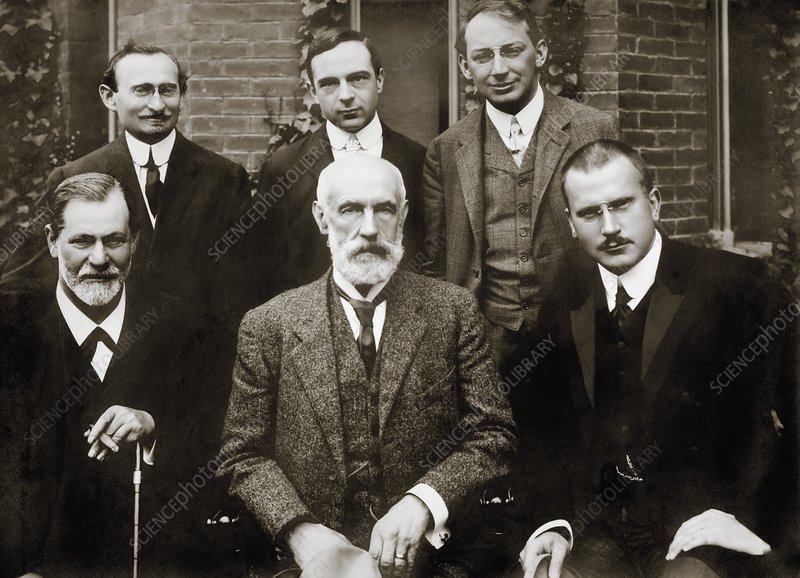
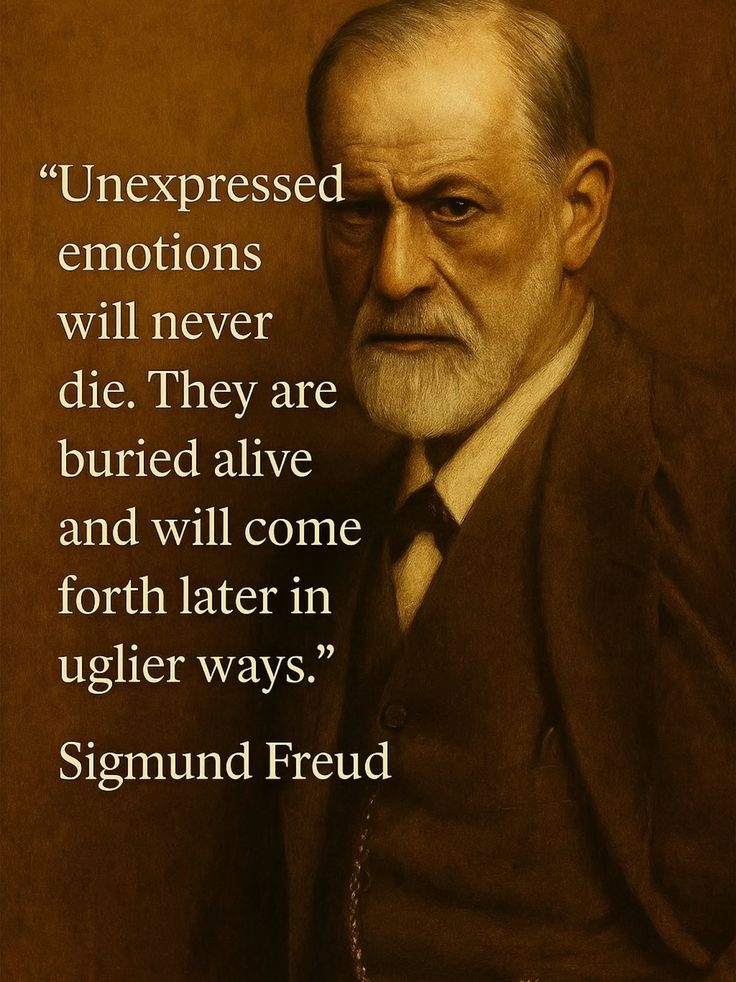
Sigmund Freud was an Austrian neurologist, the founder of psychoanalysis, and a pioneer in exploring the hidden aspects of the human mind, particularly the unconscious. He developed a clinical method to assess and treat psychological conflicts arising from inner struggles through patient-analyst dialogue, along with a unique theory of mind and human agency grounded in this approach.

I reached a point where understanding Sigmund Freud and his work would enhance our grasp of Carl Gustav Jung. Freud acts as the key unlocking the door into the unconscious, while Jung is the train guiding us through the hidden depths of our souls!

Therefore, I decided to translate and share his insights on communicating knowledge and experience, beginning with dreams and dream interpretation: The scientific literature on dream issues (Die wissenschaftliche Literatur der Traumprobleme). I will start with his scientific explanation—(a brief summary, of course, to keep it concise)—to help it be better understood.

The scientific literature on dream problems

In the following pages, I will show that a psychological technique exists for interpreting dreams, revealing each as a meaningful psychic construct linked to waking life. I will explain the processes behind dream strangeness and draw conclusions about the psychic forces involved. My presentation concludes by linking the problem of dreaming to broader issues that require other sources. I begin with a review of past research and current understanding, noting that little progress has been made despite centuries of effort. The existing literature offers insight and interesting material, but few definitive answers about dreams. Even educated laypeople have limited knowledge.

The first work to treat dreams as a psychological object is Aristotle’s On Dreams and Their Interpretation. He states that dreams are of a demonic, not divine, nature, but can reveal profound meanings if correctly interpreted. Aristotle notes characteristics such as dreams reinterpreting minor stimuli as large ones, suggesting they might show early signs of bodily changes unnoticed during the day. Due to limited knowledge, I haven’t deepened my understanding of his treatise. Before Aristotle, the ancients saw dreams as divine inspiration, distinguishing true dreams that warn or foretell from false, deceptive ones meant to mislead or harm. This view aligned with their worldview, projecting internal reality onto the external world. They believed dreams came from another world and considered their supernatural origin plausible, a view still held by some today, including mystical writers and certain philosophers such as Schellingians. The debate over dreams’ divinatory power continues, as scientific explanations remain insufficient to account for all dream phenomena.

Writing a history of our understanding of dream problems is difficult because, despite its value in certain areas, no clear progress is visible. No foundational results exist for future researchers to build on; instead, each author starts anew, as if from scratch. If I followed a chronological account of authors’ views, I couldn’t provide a clear overview of current dream knowledge. Thus, I structured the discussion by topic, citing the relevant literature to each dream problem.

Since I haven’t covered all scattered and extensive literature, I ask readers to be modest, assuming no fundamental facts or significant aspects are lost.

Until recently, most authors treated sleep and dreams together, often including analogous states like hallucinations or visions. Recently, work has focused more narrowly on specific questions within dream life. This shift reflects a belief that clear understanding and consensus require detailed investigations. I offer only such psychological investigation here, excluding sleep, which is mainly physiological, though sleep-related changes in mental function are acknowledged.

Freud (assuming these are his words) highlights that psychoanalysis and psychotherapy aim to uncover repressed, unconscious memories and create a supportive environment where these ‘traumas’ can be expressed through language and contact. Whether he explicitly said these words is irrelevant, as his writings demonstrate that he held these beliefs.

The scientific interest in dream phenomena prompts several overlapping questions:

The relationship between dreams and waking life (Beziehung des Traumes zum Wachleben)

The naive judgement of the awakened person assumes that the dream—if it does not originate in another world—has at least transported the sleeper to one. The old physiologist Burdach, to whom we owe a careful and subtle description of dream phenomena, expressed this conviction in a much-noted sentence (p. 474): “…the life of the day, with its efforts and pleasures, its joys and sorrows, is never repeated; rather, the dream aims to free us from them. Even if our whole soul has been filled with an object, if deep pain has torn our inner being, or a task has consumed all our mental power, the dream either gives us something entirely alien, or it takes only individual elements from reality for its combinations, or it merely adopts the tone of our mood and symbolises reality.”

L. Strümpell expresses a similar sentiment in his rightly acclaimed study of the nature and origin of dreams (p. 16): “Whoever dreams is turned away from the world of waking consciousness”… (p. 17): “In dreams, the memory of the ordered content of waking consciousness and its normal behaviour is almost entirely lost…” (p. 19): “The almost memoryless isolation of the soul in dreams from the regular content and course of waking life…”

However, the vast majority of authors have held the opposite view on the relationship between dreams and waking life. For example, Haffner (p. 19) states: “First of all, dreams continue waking life. Our dreams always connect to the ideas that were present in our consciousness shortly beforehand. Close observation will almost always find a thread in which the dream linked to the experiences of the previous day.” Weygandt (p. 6) directly contradicts Burdach’s assertion quoted above, “for it can often be observed, apparently in the vast majority of dreams, that they lead us right back into ordinary life, instead of freeing us from it.” Maury (Le sommeil et les rêves, p. 56) states in a concise formula: “nous rêvons de ce que nous avons vu, dit, desiré ou fait”(We dream of what we have seen, said, desired, or done.); Jessen, in his psychology published in 1855 (p. 530), elaborates somewhat more: “More or less, the content of dreams is always determined by the individual personality, by age, gender, social class, level of education, accustomed way of life, and by the events and experiences of the entire life to date.”

To be continued! 🙏💖

Human Values are not Rooted in the Possession of Power!

Standard

I am writing another post on politics because I believe it is a relevant issue in our current lives and a crucial concept for shaping society in the best way for everyone. This time, I selected a section from Plato’s book, The Republic, to learn from and reflect on what it should or wishes to be, as I consider it timeless. It explores how Plato analyses the motivations for seeking power, the risks of selfish ambition, and his concept of philosopher-kings who govern out of duty and virtue instead of personal gain. The essay emphasises Plato’s view that genuine political authority should prioritise justice and the common good over individual interests.

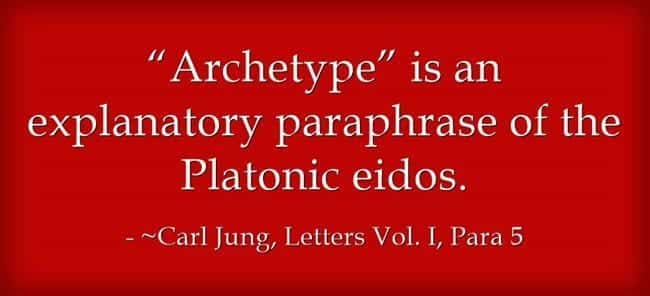
Carl Jung interpreted Plato’s politics, especially in The Republic, not as literal plans but as symbols of the collective unconscious. He regarded Plato’s “Forms” as psychic archetypes, with the “ideal state” shaping human qualities such as vision, wisdom, and power in the external world. Jung believed these political ideas originated from the “collective unconscious,” where perfect Forms such as justice exist. He also saw the ideal state as a psychological model, with the philosopher-king symbolising the self and social classes representing parts of the soul. By viewing Platonism as psychology, Jung considered himself a successor to Plato, identifying the “Forms” as archetypal patterns within the psyche. Additionally, he saw the “Cave” allegory as a way to convey deep psychological truths that are otherwise hard to express.

Carl Jung Depth Psychology

Plato’s Republic is a foundational text of Western philosophy, exploring justice, the ideal state, and political power. The dialogue examines what motivates individuals to seek power and how societal structures can corrupt or uplift those in authority. Plato, through Socrates, argues that the desire for power is often driven by basic urges—such as ambition, greed, and personal gain. However, he maintains that true power should serve the common good rather than personal interests. The philosopher-kings in Plato’s city are chosen for wisdom, virtue, and reluctance to rule, not for a craving for power. Plato believes the best rulers govern out of duty and justice, and warns against unchecked power, which can lead to tyranny. He emphasises education and virtue, claiming that only those who transcend personal desires are fit to hold power responsibly. Ultimately, the Republic views power as a moral duty, not an end in itself, aimed at justice and societal harmony. It urges reconsideration of who should rule, emphasising leadership for the greater good rather than personal gain.
Yet recently, it seems we have strayed from this goal!

The Pursuit of Political Authority in Plato’s Republic.

These passages from Plato’s Republic, spoken by Socrates, contend that the main goal of a craft—such as medicine or architecture—is to serve its subject, not the craftsman. Income (pay) comes from a separate, related “fee-earning art,” rather than the craft itself. [Thrasymachus was a Chalcedonian (from Chalcedon on the Bosphorus, near Byzantium), active around 430-400 B.C. He was a sophist and rhetorician, best known for arguing that “Justice is the interest of the stronger.”]   (Oxford Classical Dictionary 2e)

It might seem like a complex philosophical argument, but Socrates has always aimed to clarify his reasoning through detailed questioning to make it easier to understand. I hope you find this reading enjoyable!

Event Date: -425 GR

(§ 346d) The receiving of wages does not accrue to each from his own art. But if we are to consider it ‘precisely’, medicine produces health but the fee-earning art the pay, and architecture a house but the fee-earning art accompanying it the fee, and so with all the others, each performs its own task and benefits that over which it is set, but unless pay is added to it is there any benefit which the craftsman receives from the craft?”

(§ 346e) “Apparently not,” he said. “Does he then bestow no benefit either when he works for nothing?”I’ll say he does.”
“Then, Thrasymachus, is not this immediately apparent, that no art or office provides what is beneficial for itself, but as we said long ago, it provides and enjoins what is beneficial to its subject, considering the advantage of that, the weaker, and not the advantage of the stronger? That was why, friend Thrasymachus, I was just now saying that no one of his own will chooses to hold rule and office and take other people’s troubles in hand to straighten them out, but everybody expects pay for that,

(§ 347a) because he who is to exercise the art rightly never does what is best for himself or enjoins it when he gives commands according to the art, but what is best for the subject. That is the reason, it seems, why pay must be provided for those who are to consent to rule, either in the form of money or honour or a penalty if they refuse.”
“What do you mean by that, Socrates?” said Glaucon. “The two wages I recognise, but the penalty you speak of and described as a form of wage I don’t understand.”
“Then,” said I, “you don’t understand the wages of the best men…

(§ 347b) for the sake of which the finest spirits hold office and rule when they consent to do so. Don’t you know that to be covetous of honour and covetous of money is said to be and is a reproach?”
“I do,” he said. “Well, then,” said I, “that is why the good are not willing to rule either for the sake of money or of honour. They do not wish to collect pay openly for their service of rule and be styled hirelings, nor to take it by stealth from their office and be called thieves, nor yet for the sake of honour,

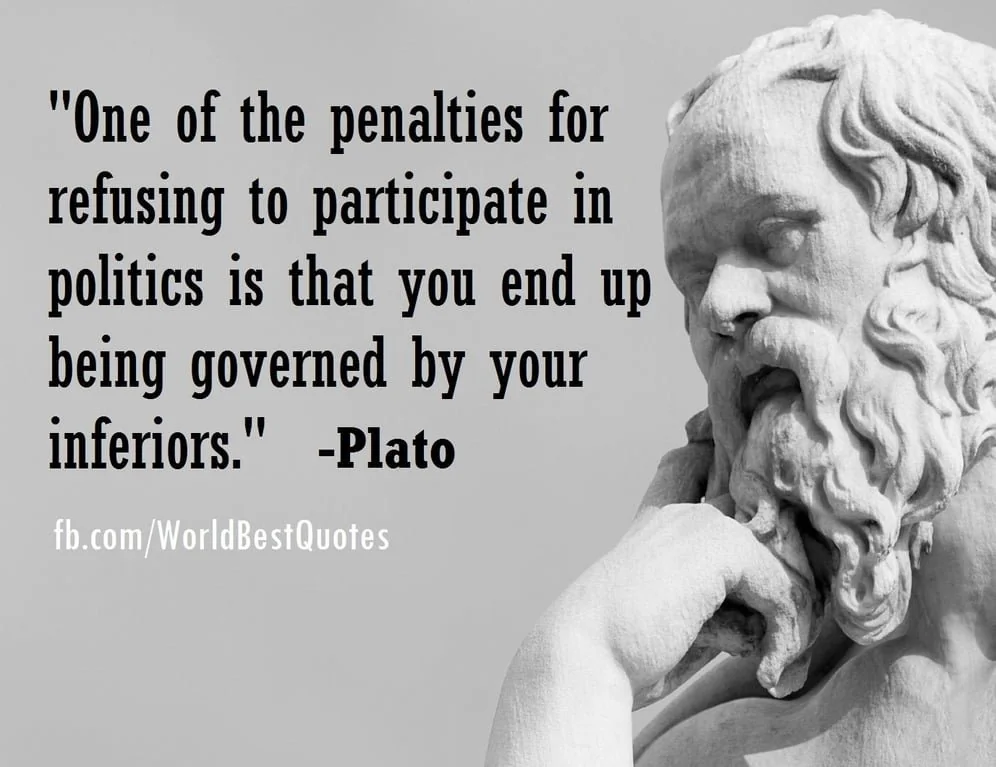
(§ 347c) for they are not covetous of honour. So, some compulsion and penalty must be imposed to constrain them to rule if they are to consent to hold office. That is perhaps why to seek office oneself and not await compulsion is thought disgraceful. But the chief penalty is to be governed by someone worse if a man will not himself hold office and rule. It is from fear of this, as it appears to me, that the better sort hold office when they do, and then they go to it not in the expectation of enjoyment nor as to a good thing, but as to a necessary evil and because they are unable to turn it over to better men than themselves…

(§ 347d) or to their like. For we may venture to say that, if there should be a city of good men only, immunity from office-holding would be as eagerly contended for as office is now, and there it would be made plain that in very truth the true ruler does not naturally seek his own advantage but that of the ruled; so that every man of undjusticeing would rather choose to be benefited by another than to be bothered with benefiting him. This point, then, I…

(§ 347e) by no means concede to Thrasymachus that justice is the advantage of the superior. But we will reserve that for another occasion. A far weightier matter, to me, seems to be Thrasymachus’s present statement, his assertion that the life of the unjust man is better than that of the just. Which now do you choose, Glaucon?” said I, “and which seems to you to be the truer statement?”
“That the life of the just man is more profitable, I say,” he replied.

‘Defensiveness’ from Feminist Perspective on Resistance

Standard

Today, I want to share a throwback to one of my Facebook posts from a few weeks ago, of course, more extensive, perhaps for a change, and because of this fascinating woman in the history of psychology.
Actually, I’ve also been considering writing about Sigmund Freud, the originator of psychoanalysis, and this might be a good starting point.

Honestly, I previously didn’t know much about Anna Freud, or rather, I didn’t think highly of her. However, after watching the film ‘Freud’s Last Session‘ about Sigmund Freud’s final days, her brief appearance still caught my attention.

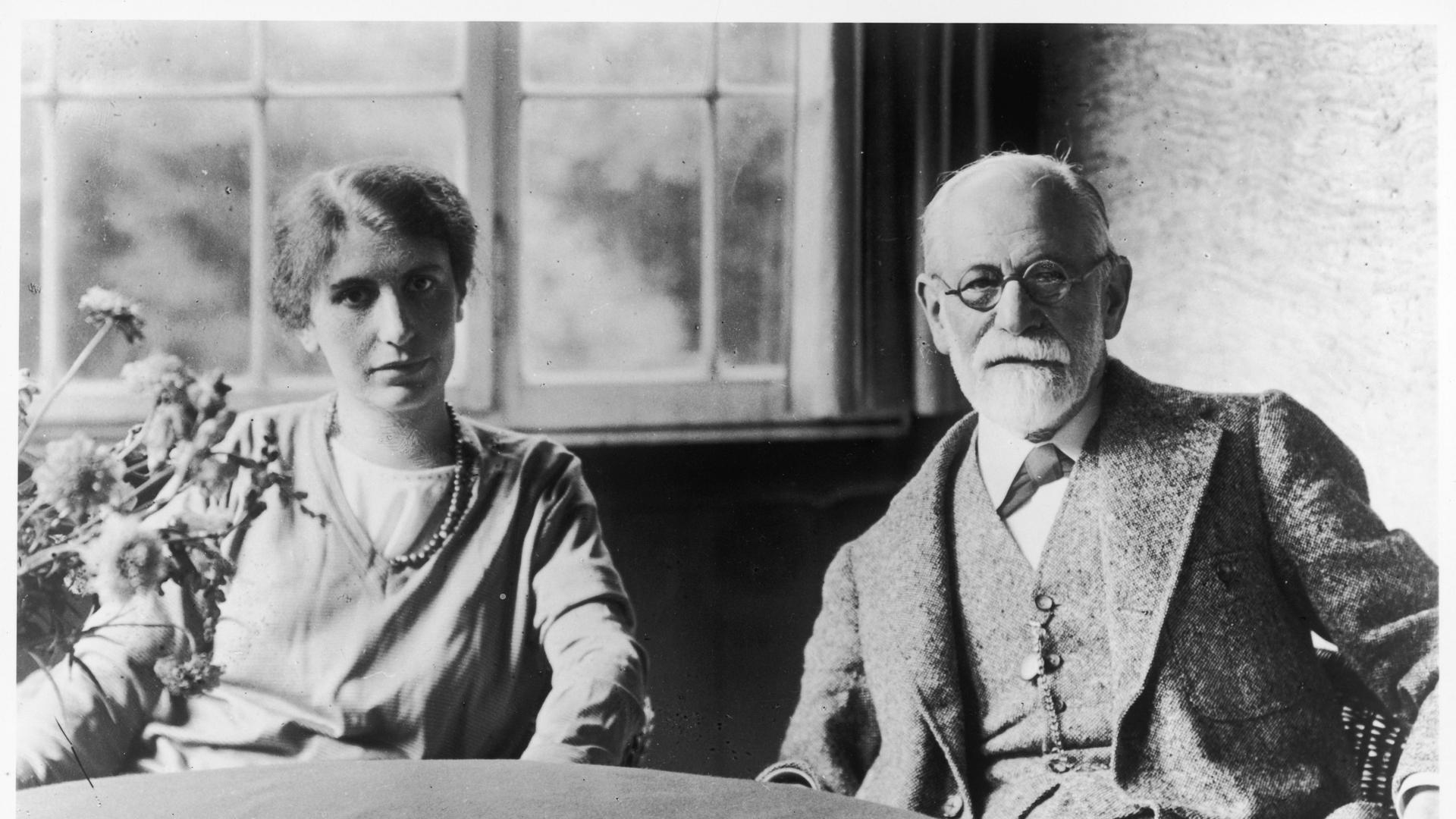
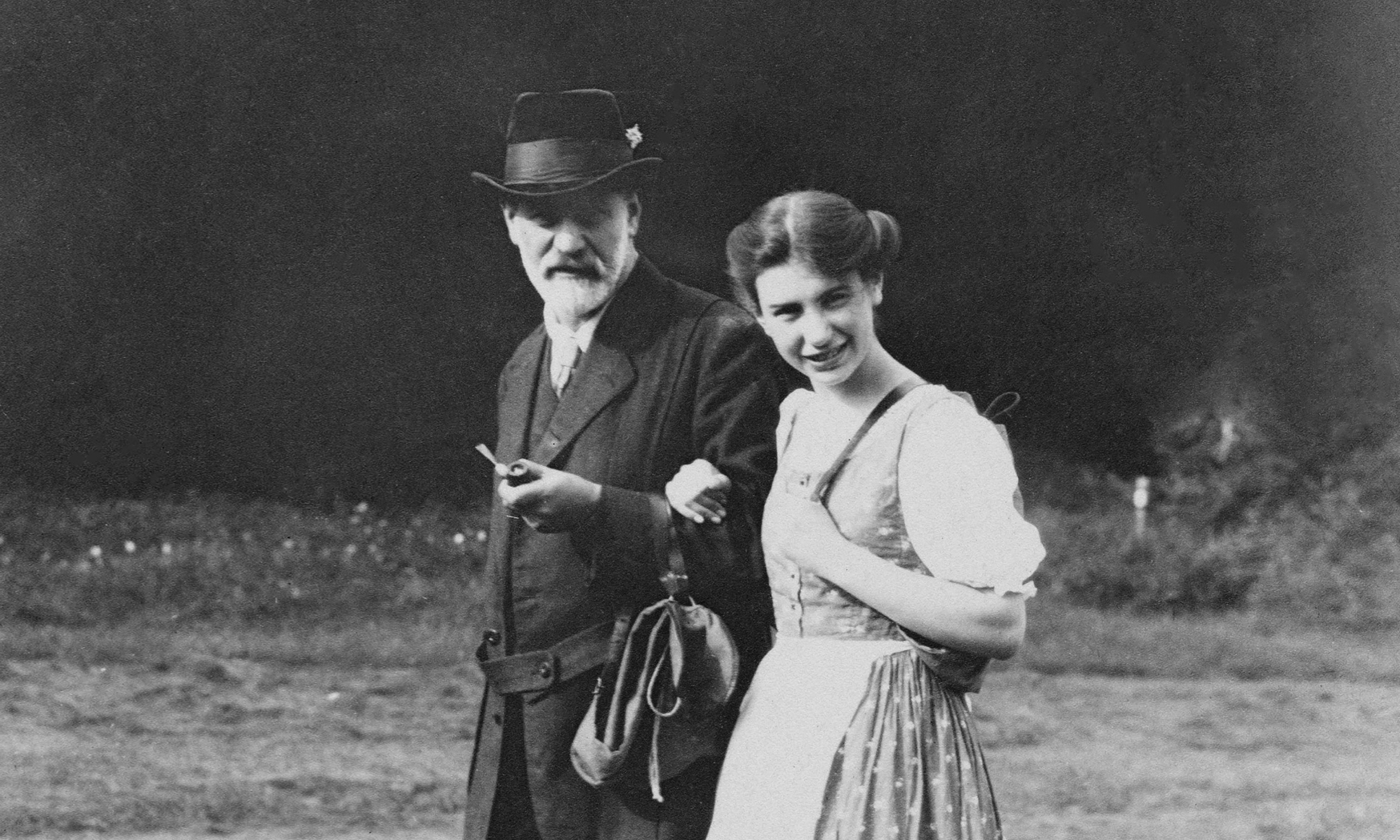
Anna Freud was a trailblazing psychoanalyst who made significant contributions to child psychology. Born in Vienna in 1895, the youngest daughter of Sigmund Freud, she grew up in an intellectually stimulating environment. She was deeply interested in her father’s work and eventually became his close collaborator. Originally trained as a teacher, Anna developed a keen interest in children’s development. In the 1920s, she began psychoanalytic training and started working with children, establishing Vienna’s first child psychoanalysis clinic in 1927. At this clinic, she developed innovative observation and treatment methods. Her influential book, “The Ego and the Mechanisms of Defence” (1936), built on her father’s theories by explaining how the ego defends against anxiety through mechanisms such as repression and denial. Fleeing the Nazis in 1938, she settled in London, where she co-founded the Hampstead Child Therapy Course and Clinic, a prominent centre for child psychoanalysis. Anna emphasised the importance of observing children in their natural settings and customising therapy to each child’s needs. Her contributions remain influential in psychoanalysis and child psychology, setting new standards through her research and clinical work.

In her 1936 work “The Ego and the Mechanisms of Defence,” Anna Freud identified defence mechanisms as unconscious protections employed by the ego. These mechanisms serve to shield individuals from anxiety, shame, and the instinctual urges of the id that the superego prohibits. Among the major defence mechanisms are repression, projection, reaction formation, regression, and sublimation.

In the film mentioned above, I noticed she had no relationships with men. There is no public or scholarly evidence regarding her sexuality. She never married but had close relationships with women, especially Dorothy Burlingham, her lifelong partner and collaborator. Some biographers speculate about their relationship, but Anna Freud never publicly discussed her sexuality, and no records confirm whether she was lesbian, bisexual, or otherwise. Her private life was discreet, centred on work and family. Any discussion of her sexuality is largely speculative, based on personal correspondence and life choices.

Children have an almost uncanny instinct for the teacher’s personal shortcomings.
They know the false from the true far better than one likes to admit.
Therefore, the teacher should monitor his own psychic condition so he can spot the source of trouble when anything goes wrong with the children entrusted to his care.
Civilisation in Transition (The Collected Works of C. G. Jung, Volume 10)

via Carl Jung DepthPsychology 🙏

Thank you all for your support and presence. Wishing you a peaceful weekend. 🙏🌹