

We may wonder why Dr Freud uses so many quotes from other scientists’ research. In my opinion, it was always difficult for a genius thinker, especially in the years before WWII, to express their ideas freely without running into problems with the conservative society of the time. It was not so easy to bring up such revolutionary ideas and remain safe from attacks by colleagues (jealous detractors)! We live in a “very” modern age, when virtually every new idea—even one that seems absurd—will find people willing to share and defend it. In Freud’s and Jung’s time, however, anyone who became famous and entered the public eye faced intense scrutiny, leaving little room for unconventional views or missteps. Dr Jung therefore had much to contend with when he was asked whether he believed in God. He talked about it more easily and more often:
Knowledge of background processes early on shaped my relationship to the world. Basically, that relationship was the same in my childhood as it is today. As a child, I felt alone, and I am still [alone], because I know things and must hint at things that others apparently know nothing of and, for the most part, do not want to know.
Loneliness does not come from having no people about one, but from being unable to communicate what seems important to oneself, or from holding certain views that others find inadmissible.
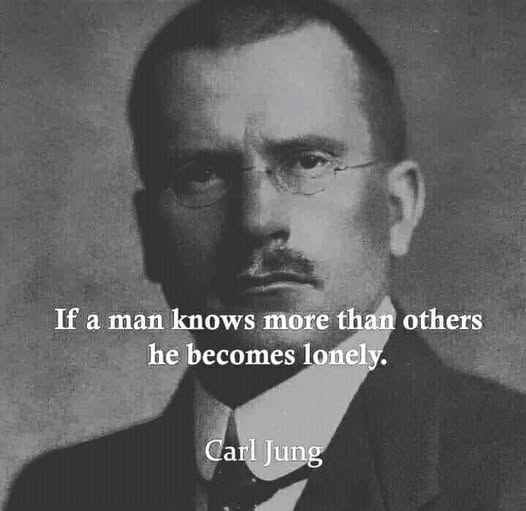
Loneliness began with the experiences of my early dreams and reached its climax when I worked on the unconscious. If a man knows more than others, he becomes lonely. But loneliness is not necessarily inimical to companionship, for no one is more sensitive to companionship than the lonely man, and companionship thrives only when each individual remembers his individuality and does not identify himself with others, from Memories, Dreams, Reflections.
The psychological characteristics of dreams (Die psychologischen Besonderheiten des Traumes)
Freud believed that these characteristics reveal how dreams are shaped by the unconscious mind. He argued that dreams express hidden desires, fears, and conflicts, but do so in a disguised and symbolic form because the conscious mind censors or resists their direct expression. He argues that dreams follow their own psychological “rules,” which differ from the logic of wakefulness. By studying these characteristics, he believed we could better understand the workings of the unconscious mind and the hidden meanings of our dreams.
So, let’s continue reading the second part of this section. The previous one is here!
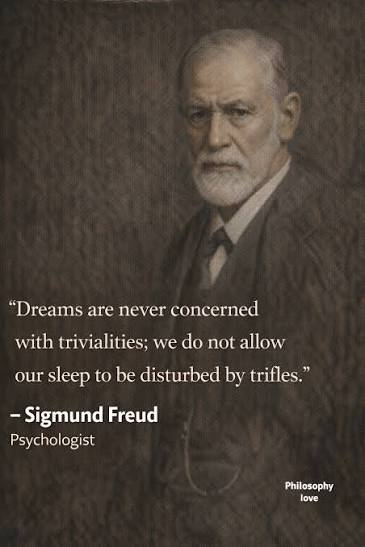
Burdach has summarised the characteristics of dream life considered thus far in the following statements (p. 476): “Among the essential features of the dream are: a) that the subjective activity of our soul appears as objective,
in that the faculty of perception apprehends the products of the imagination as if they were sensory impressions; … b) sleep is a suspension of volitional control. Hence, falling asleep involves a certain passivity. … Dream images are conditioned by the relaxation of volitional control.”
The task now is to explain the soul’s belief in the reality of dream hallucinations—phenomena that arise only after a certain autonomous activity has ceased. Strümpell argues that the soul behaves correctly in this regard, acting in accordance with its own mechanisms. The elements of the dream are by no means mere mental representations; rather, they are genuine experiences of the soul, akin to those that occur in waking life through sensory mediation (p. 34).
While the soul, in its waking state, forms representations and thinks using word-images and language, in dreams it forms representations and thinks using actual sensory images (p. 35). Moreover, a sense of spatial awareness emerges in dreams, as sensations and images are projected into external space, just as they are during waking life (p. 36). One must therefore acknowledge that in dreams the soul stands in the same relationship to its images and perceptions as it does in waking life (p. 43). If it nevertheless falls into error, it is because, during sleep, it lacks the criterion for distinguishing between sensory perceptions originating externally and those originating internally. It cannot subject its images to the tests that alone would demonstrate their objective reality.
Furthermore, it fails to distinguish between images that can be arbitrarily interchanged and those where such freedom of choice is absent. It errs because it cannot apply the law of causality to the dream’s content (p. 58). In short, its withdrawal from the external world also underpins its belief in the subjective dream world.
Delboeuf arrives at the same conclusion, albeit through a somewhat different line of psychological reasoning. We attribute reality to dream images because, while asleep, we have no other impressions to compare them to—we are cut off from the outside world. Yet it is not simply because we are deprived of the opportunity to conduct tests during sleep that we believe in the truth of our hallucinations. A dream can simulate all such tests, showing us, for instance, that we are touching a rose we see, even while we remain asleep. According to Delboeuf, no definitive criterion distinguishes a dream from waking reality other than—and even then only in a general, practical sense—waking up. I dismiss everything experienced between falling asleep and waking as an illusion once I realise, upon waking, that I am lying undressed in my bed (p. 84).
During sleep, I accepted the dream images as real because of an ineradicable habit of thought: the tendency to assume the existence of an external world to which I contrast my own self. (1)
(1) Haffner undertook an attempt similar to Delboeuf’s to explain dream activity by the alteration that an abnormally introduced condition must necessarily impose upon the otherwise correct functioning of the intact mental apparatus; however, he described this condition in slightly different terms. According to him, the primary characteristic of the dream is its detachment from space and time—that is, the emancipation of the mental image from the individual’s position within the spatial and temporal order. Linked to this is the dream’s second fundamental characteristic: the confusion between hallucinations, imaginings, and the combination of fantasy with external perceptions. “Since the totality of higher mental faculties—specifically concept formation, judgment, and inference on the one hand, and free self-determination on the other—are linked to sensory mental images and rely upon them as a constant foundation, these activities, too, partake in the irregularity of dream imagery. They partake in it, let us say, for in and of themselves, our faculty of judgment—like our faculty of will—undergoes no alteration whatsoever during sleep. In terms of activity, we are just as astute and just as free as we are in the waking state. Even in a dream, a person cannot violate the laws of thought as such—that is, one cannot equate things that present themselves as opposites, and so forth. Nor can one desire anything in a dream other than what one conceives as good (sub ratione boni). Yet, in this application of the laws of thought and volition, the human mind is led astray in the dream by confusing one mental image with another. “Thus it happens that in dreams we posit and commit the greatest contradictions, while at the same time forming the most acute judgments, drawing the most consistent conclusions, and making the most virtuous and holy resolutions. A lack of orientation is the entire secret of the flight with which our imagination moves in dreams, and a lack of critical reflection—as well as of communication with others—is the primary source of the boundless extravagances of our judgments, hopes, and wishes in dreams” (p. 18).
To be continued! 🙏💖





You must be logged in to post a comment.