‘Defensiveness’ from Feminist Perspective on Resistance

Standard

Today, I want to share a throwback to one of my Facebook posts from a few weeks ago, of course, more extensive, perhaps for a change, and because of this fascinating woman in the history of psychology.
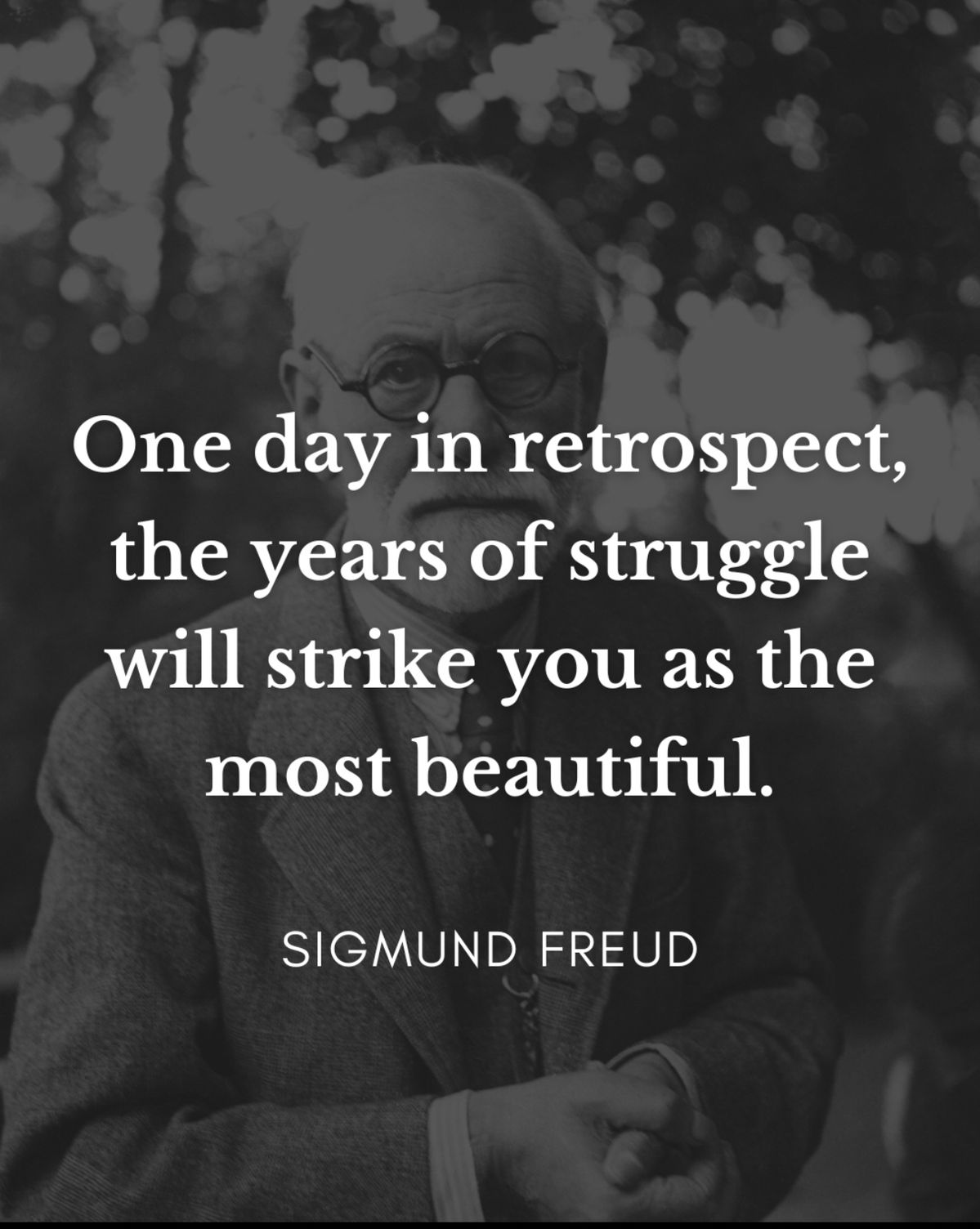
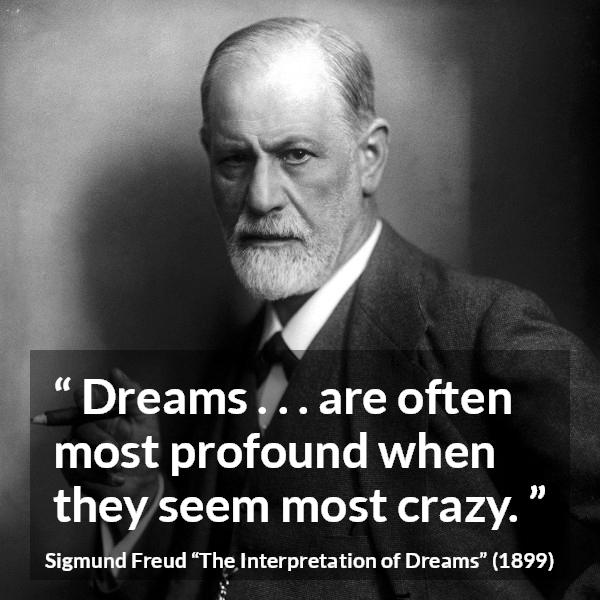
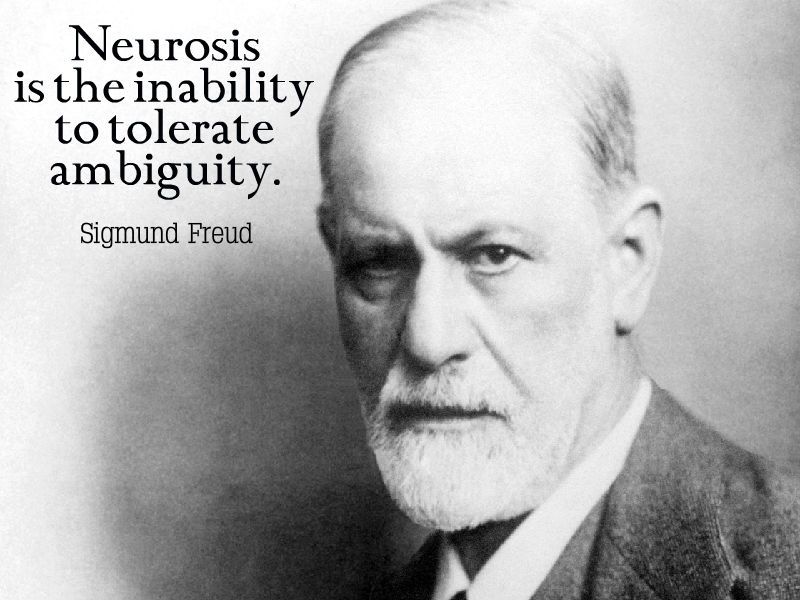
Actually, I’ve also been considering writing about Sigmund Freud, the originator of psychoanalysis, and this might be a good starting point.

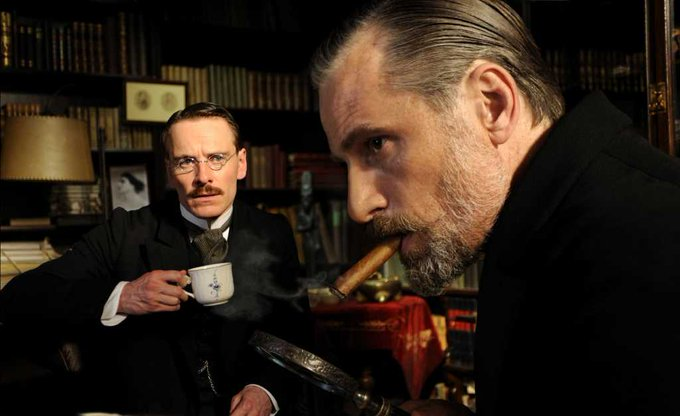
Honestly, I previously didn’t know much about Anna Freud, or rather, I didn’t think highly of her. However, after watching the film ‘Freud’s Last Session‘ about Sigmund Freud’s final days, her brief appearance still caught my attention.

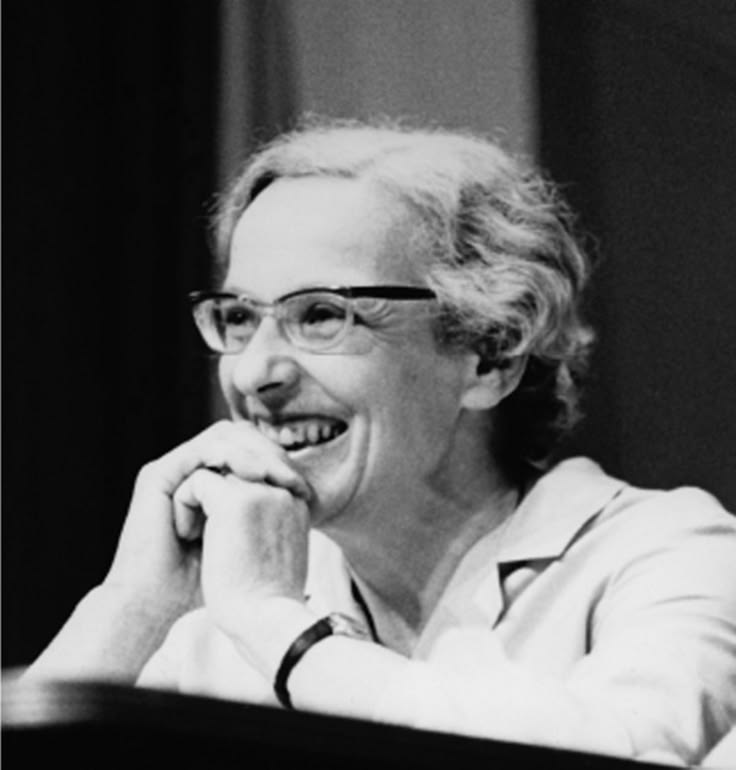
Anna Freud was a trailblazing psychoanalyst who made significant contributions to child psychology. Born in Vienna in 1895, the youngest daughter of Sigmund Freud, she grew up in an intellectually stimulating environment. She was deeply interested in her father’s work and eventually became his close collaborator. Originally trained as a teacher, Anna developed a keen interest in children’s development. In the 1920s, she began psychoanalytic training and started working with children, establishing Vienna’s first child psychoanalysis clinic in 1927. At this clinic, she developed innovative observation and treatment methods. Her influential book, “The Ego and the Mechanisms of Defence” (1936), built on her father’s theories by explaining how the ego defends against anxiety through mechanisms such as repression and denial. Fleeing the Nazis in 1938, she settled in London, where she co-founded the Hampstead Child Therapy Course and Clinic, a prominent centre for child psychoanalysis. Anna emphasised the importance of observing children in their natural settings and customising therapy to each child’s needs. Her contributions remain influential in psychoanalysis and child psychology, setting new standards through her research and clinical work.

In her 1936 work “The Ego and the Mechanisms of Defence,” Anna Freud identified defence mechanisms as unconscious protections employed by the ego. These mechanisms serve to shield individuals from anxiety, shame, and the instinctual urges of the id that the superego prohibits. Among the major defence mechanisms are repression, projection, reaction formation, regression, and sublimation.

In the film mentioned above, I noticed she had no relationships with men. There is no public or scholarly evidence regarding her sexuality. She never married but had close relationships with women, especially Dorothy Burlingham, her lifelong partner and collaborator. Some biographers speculate about their relationship, but Anna Freud never publicly discussed her sexuality, and no records confirm whether she was lesbian, bisexual, or otherwise. Her private life was discreet, centred on work and family. Any discussion of her sexuality is largely speculative, based on personal correspondence and life choices.

Children have an almost uncanny instinct for the teacher’s personal shortcomings.
They know the false from the true far better than one likes to admit.
Therefore, the teacher should monitor his own psychic condition so he can spot the source of trouble when anything goes wrong with the children entrusted to his care.
Civilisation in Transition (The Collected Works of C. G. Jung, Volume 10)

via Carl Jung DepthPsychology 🙏

Thank you all for your support and presence. Wishing you a peaceful weekend. 🙏🌹

What a Pity!

Standard

As I hover over the news and feel the hangover from all this stress, I give my mind another chance to relax by jotting down a few words.
Of course, I didn’t swear an oath to post every week (like some, daily; oh my goodness, save me!😛). However, as I mentioned in my last post, I need to talk to my “Patient Stone” to help me gather my scattered thoughts.

Honestly, I have numerous projects and ideas to pursue and share, but my busy mind is too preoccupied to concentrate on them. On the other hand, I had to delete many of my old posts because WP warned me that my 13 GB storage limit was full, leaving me with the choice of upgrading or deleting. Since I couldn’t afford to upgrade, I had no option but to delete them. Now I have some space to post more!

I think, as well as believe, that the animals have their own characters and, in their own instinctual life, have their own species-specific way of living, even though we compare some of them, like sheep, with humans in the form of messes.

Dr Jung viewed “mass-mindedness” and mass psychology as perilous, believing crowds trigger “the dynamisms of the collective man,” transforming individuals into “beasts or demons” until they join a mob. Crowds diminish morality, incite fears, provoke “infantile behaviour,” and can cause even the most virtuous to lose their significance, resulting in “psychologically abnormal” individuals. Mobs foster “herd psychology” and produce “mass man,” who is childish, irrational, irresponsible, and emotional. The crowd dissolves personal responsibility, facilitating crimes and increasing reliance on the state.

The levelling down of the masses through suppression of the aristocratic or hierarchical structure natural to a community is bound, sooner or later, to lead to disaster. For when everything outstanding is levelled down, the signposts are lost, and the longing to be led becomes an urgent necessity.
~Carl Jung, CW 17, Para 248

Now, I’d like to share one of my Facebook posts that reflects my thoughts. It is a poem by Lawrence Ferlinghetti, a notable American poet, painter, and social activist. Ferlinghetti published works of many Beat poets and is sometimes considered a Beat poet himself, although he never liked that label!

You are Whitman, you are Poe, you are Mark Twain, you are Emily Dickinson and Edna St. Vincent Millay, you are Neruda and Mayakovsky and Pasolini, you are an American or a non-American, you can conquer the conquerors with words….
~ Lawrence Ferlinghetti. From Poetry as Insurgent Art [I am signalling you through the flames]
.

Pity the Nation (After Khalil Gibran)

Pity the nation whose people are sheep
And whose shepherds mislead them
Pity the nation whose leaders are liars
Whose sages are silenced
and whose bigots haunt the airways
Pity the nation that raises not its voice
but aims to rule the world
by force and by torture
And knows
No other language but its own
Pity the nation whose breath is money
and sleeps the sleep of the too well fed
Pity the nation, oh, pity the people of my country
My country, tears of thee
Sweet land of liberty!

I’d also like to share one of Mozart’s greatest works, a requiem, to comfort the spirits. Wishing all individuals friends a peaceful time. 💖🙏

Patient Stone! (!سنگ صبور) Or, A Line from Gloom!

Standard

(A “patience stone” (Persian: sang-e sabur) is a legendary element from Persian folklore that absorbs secrets, pain, and hardships when spoken to. It patiently listens until it breaks or explodes, thus relieving the speaker of emotional burdens.)

As we understand it now, in Persian traditional sagas, the term ‘Patient Stone’ refers to a stone where people can share their pain and worries to ease their hearts. I think this website or blog on WordPress has become similar to a patient stone, holding our suffering and helping to lighten our minds. I take this chance to share my feelings with you, my friends. I just hope our WP, serving as a patient stone, doesn’t explode under the weight!

‘It is no measure of health to be well adjusted in a profoundly sick society.’ ~Krishnamurti.

Madness amongst Individuals is rare. Amongst the Collective, it is the rule.’ ~ Nietzsche

‘To be normal is the ultimate aim of the unsuccessful.’ ~Carl Gustav Jung.

Via Chis Sizeland from FB 🙏

Lately, carrying a heavy heart, I reflect on my memories to soothe my soul. A poem by the renowned Persian poet Nima Yushij came to mind, resonating deeply with my current feelings. I believe I have been searching for this flautist (in this poem) for a long time, as I have been constantly seeking harmony and a muse, both of which I have missed ever since.

I’ve previously shared a post about this great poet’s work, but I wanted to share this very poem again to show how it resonates with me. You may want to check out the full post here!

My home is cloudy
The entire earth is clouded by that
from the height of the mountains pass,
broken, ruined, and drunk,
The wind whirls, and the whole world has been shattered by that,
and so have my senses.
Ay, flautist, that the sound of your flute brought you out of the road, where are you?
My home is cloudy
But the cloud seems to tend towards rain.
In the reverie of my bright days that have been lost,
I, in the face of my Sun, carry to observe at the threshold of the sea.
And all the world is ruined and shattered by the wind.
And on the path, the flautist who blows into his flute in this cloudy world has his own path ahead.

And here is the original version;


خانه‌ام ابریست …

خانه ام ابری ست

یکسره روی زمین ابری ست با آن.

از فراز گردنه خرد و خراب و مست

باد میپیچد.

یکسره دنیا خراب از اوست

و حواس من!

آی نی زن که تو را آوای نی برده ست دور از ره کجایی؟

خانه ام ابری ست اما

ابر بارانش گرفته ست

در خیال روزهای روشنم کز دست رفتندم،

من به روی آفتابم

می برم در ساحت دریا نظاره.

و همه دنیا خراب و خرد از باد است

و به ره ، نی زن که دائم می نوازد نی ، در این دنیای ابراندود

Thank you for reading! 🙏💖

Back to the Roots; for a Revision?!

Standard

The longing to return to the womb — to the very origin of existence — reflects a deep, universal desire for renewal. It embodies a conscious wish to turn back time and retreat into the ultimate sanctuary where life’s struggles and regrets have not yet taken hold. Recently, I have noticed I often wake up with memories of scenes or songs from a TV series that Al and I enjoyed in our youth; for example, today I woke up with the theme song from the 60s Batman TV show, and I wonder how it entered my mind, since I haven’t heard it in ages! I then ask myself: Is this a desire to return to that joyful, simple time, or even more, to go back to the basics and start anew?

The womb symbolises comfort, safety, and innocence. The desire to return often signifies a wish to escape the burdens and complexities accumulated over a lifetime. In psychoanalysis, returning to the mother’s womb may sometimes be viewed as a sign of incest. However, it also reflects a longing for the simplicity and purity that existed before self-awareness and responsibilities—before choices and their consequences shape our identities. Nonetheless, this longing goes beyond mere escapism. It reflects the human yearning for change and a fresh start. Although we acknowledge that a literal return isn’t feasible, the desire reveals our profound wish to leave past mistakes behind and start anew. It acts as a cry for self-forgiveness and the bravery to reinvent ourselves—building on the wisdom gained from our experiences rather than erasing them.

Ultimately, the desire to return to the womb is not about going backwards but about renewal. It acts as a reminder that, although we can’t literally start over, we can seek personal rebirth—discovering new purpose and hope at each stage of life. This may also evoke memories of those days and the happiness I now long for.

Jung’s investigation of incest in Transformations and Symbols of the Libido (1912) caused a rift with Freud. He describes the archetype’s dual nature as both “spiritual” and rooted in the “organic–material substrate” (“On the Nature of the Psyche” par. 380), allowing him to formulate a concept of libido that combines Freud’s sexual perspective with a broader view. In Freud’s view, libido is fundamentally sexual; incest symbolises a link from Oedipal desire to the taboo and the formation of the superego. Although Jung does not deny the actual occurrence of incest (McGuire 505–506), he highlights its symbolic role in expressing libido creatively rather than focusing on its biological aspect. As he proceeds, the foundation of incest is thus:

The strange idea of becoming a child again, of returning to the parental shelter, and of entering the mother in order to be reborn through her. But the way to this goal lies through incest, i.e. the necessity of finding some way into the mother’s body. One of the simplest ways would be to impregnate the mother and beget oneself in identical form all over again. But here the incest prohibition intervenes; consequently [myths develop new mother–analogies] for the purpose of canalising the libido into new forms and preventing it from regressing to actual incest [. . .]. It is not incestuous cohabitation that is desired, but rebirth [. . .]. The effect of the incest taboo and of the attempts at canalisation is to stimulate the creative imagination, which gradually opens up possible avenues for the self–realisation of libido. In this way, the libido becomes imperceptibly spiritualised.
~Carl Jung, “Symbols of the Mother and of Rebirth” par. 332)

Thank you for staying by. 🙏💖

Just Taking a Breath!

Standard

Since I will be away from tomorrow until Saturday, visiting a friend and attending a concert together, I’ll just say hello and goodbye with my best wishes.

It will be a welcome change of pace in these turbulent times, though my friend is also Iranian, so there will definitely be some deep discussions.

Dr Jung’s philosophy (thoughts) suggests that a “break” often serves as an invitation to explore the unconscious, encouraging a shift from merely doing to a state of being.

“As far as we can discern, the sole purpose of human existence is to kindle a light in the darkness of mere being”.

Dr Jung’s insight about the nature of existence is thoughtfully highlighted at the conclusion of his Life and Death chapter in Memories, Dreams, and Reflections:

Our age has shifted all emphasis to the here and now, and thus brought about a daemonization of man and his world.
The phenomenon of dictators and all the misery they have wrought springs from the fact that man has been robbed of transcendence by the shortsightedness of the super-intellectuals.
Like them, he has fallen victim to unconsciousness.
But man’s task is the exact opposite: to become conscious of the contents that press upward from the unconscious.
Neither should he persist in his unconsciousness, nor remain identical with the unconscious elements of his being, thus evading his destiny, which is to create more and more consciousness.
As far as we can discern, the sole purpose of human existence is to kindle a light in the darkness of mere being.
It may even be assumed that just as the unconscious affects us, so the increase in our consciousness affects the unconscious.
~Carl Jung, MDR, Page 326.(Via carljungdepthpsychologysite.blog, with thanks)


The band we’re meeting is called UFO, and they’re roughly my age, although the videos below are from their earlier years.

Do it well, do it better. 🤗💖🙏

Jiddu Krishnamurti: The Philosopher Who Rejected Authority

Standard

I think it’s time to set aside our current critical perspective on life for a moment and take a deeper look. Jiddu Krishnamurti can gently guide us and help us see things anew.

Jiddu Krishnamurti (1895-1986) was a prominent spiritual teacher and philosopher, famous for his rejection of organised religion, gurus, and spiritual authorities, including his own. Born in colonial India, his life changed when members of the Theosophical Society recognised him as the expected “World Teacher.” In 1929, at age 34, he disbanded his organisation, stating that “truth is a pathless land” and no belief system ensures understanding. Over more than sixty years, Krishnamurti travelled globally, giving talks on the mind, consciousness, and suffering. His teachings emphasised direct observation and awareness, urging questioning of authority to achieve psychological freedom. He believed that the separation between the observer and the observed causes conflict. He encouraged living without fear, exploring love and relationships, and transforming consciousness. His legacy includes books, talks, and schools, inspiring individuals to seek truth from within rather than externally.

Jiddu Krishnamurti’s Parables and Poems

Jiddu Krishnamurti’s parables and poems are central to his teachings, offering glimpses of truth through imagery and metaphor rather than through direct argument. These works appeal to intuition and feeling, promoting immediate perception, often inspired by nature—such as a flower blooming or a bird flying—while highlighting his core idea that truth is perceived directly rather than through thought or belief. They do not explain but point, creating space for sudden insights beyond words. His poems share this sense of immediacy; they are simple, unembellished, emerging from attentive presence—watching, listening, and being aware. Their language is calm, observing without a separate observer, often dissolving the boundary between seer and seen, reflecting his teaching that authentic perception occurs only when the self is absent. These works are essential because they echo his main message: transformation arises through direct insight, not through knowledge. Instead of enriching conceptual understanding, they invite us to set aside concepts, to observe, listen, and remain present without interpretation. His literary works might be his most genuine expression—offering not solutions but gateways to experience.

Once upon a time, when there was great understanding and in a world full of rejoicing, there lived a gentlewoman full of years. One day, she found herself in a temple before an altar made by human hands. She was crying bitterly to heaven, and none was there to comfort her, till in the long last, a friend of God took notice of her and asked the reason for her tears. “God must have forgotten me. My husband is gracious and well. My children are full and strong. Many servants are there to care for us. All things are well with me, and mine own. God has forgotten us.” The friend of God replied, “God never forgets His children.” When she came home, she found her son dead. She
never cried. “God remembers me and mine own.”

Every step we take in life lays the foundation for the experiences we gather. Krishnamurti soon recognised these and attempted to share his experience with us.

A HYMN

I have stood in Thy holy presence. I have seen the splendour of Thy face. I prostrate at Thy sacred feet. I kiss the hem of Thy garment, I have felt the glory of Thy beauty. I have seen Thy serene look.
Thy wisdom has opened my closed eyes. Thine eternal peace has transfigured me.
Thy tenderness, the tenderness of a mother to her child,
The teacher to his pupil, I have felt.
Thy compassion for all things, living and non-living, the animate and inanimate, I have felt.
Thy joy, indescribable, has thrilled me.
Thy voice has opened in me many voices.
Thy touch has awakened my heart. Thine eyes have opened mine eyes.
Thy glory has kindled the glory in me.
Master of Masters, I have longed, yea, yearned for this happy hour, when I should stand in Thy holy presence.
At last, it has been granted unto me.

I am happy. I am peaceful, peaceful as the bottom of a deep, blue lake. I am calm, calm as the snow-clad mountain-top above the storm clouds.
I have longed for this hour; it has come.
I shall follow humbly in Thy footsteps along that path
which Thy holy feet have trodden. I shall humbly serve the world, the world for which
Thou hast suffered, sacrificed and toiled. I shall bring that peace into the world. I have longed for this happy hour; it has come.

Thine image is in mine heart.
Thy compassion is burning in me.
Thy wisdom guides me.
Thy peace enlightens me.
Thy tenderness has given me the power to sacrifice.
Thy love has given me energy.
Thy glory pervades my entire being.

I have yearned for this hour; it has come, in all the
splendour of a glorious spring. I am as young as the youngest. I am as old as the oldest.
I am happy as a blind lover, for I have found my love. I have seen.
I can never be blind, though a thousand years pass. I have seen Thy divine face everywhere, in the stone, in the blade of grass, in the giant pines of the forest,
in the reptile, in the Hon, in the criminal, in the saint. I have longed for this magnificent moment; it came and

I have grasped it.
I have stood in Thy presence.
I have seen the splendour of Thy face.
I prostrate at Thy sacred feet.
I kiss the hem of Thy garment.


Thanks a lot for visiting and for your time in reading! 🙏💖🙏

Stupidity: Humanity in Reverse Function!

Standard
Jacek Lipowczan – “Crazy World”

With a warm greeting to all my friends, I didn’t want to keep writing critical articles repeatedly, although I see no way to look away from all these terrible happenings around me, and around you all, for sure.

Although this topic is quite old—one that Al and I came across in our youth as we distanced ourselves from the masses—we initially believed it was a characteristic of the Third World due to inadequate education systems. However, later observing in the West, we realised it is very common there as well. Therefore, I decided to analyse it, at least for my own understanding, to explore how it might be possible:

As I observe the world and its phenomena, I repeatedly notice the absence of consideration, recklessness, and ignorance shown by many people, and above all, the lack of individuality.

It is not a matter of living in the third world, which we might argue is due to poor education or oppressive rulers! That already happens in the free world!

I think people are getting lazier, aiming for a more comfortable life without the stress of thinking, decision-making, or solitude, which leads to a loss of their individuality. As AI advances, the significance of the self-mind diminishes; the artificial mind assumes creative functions, rendering learning unnecessary.

They often prefer to be part of a crowd that takes them somewhere, no matter the outcome. This reduces the need to use the mind, enabling everyone to enjoy life effortlessly and without deep understanding; making judgments becomes simpler.

I’ve often met people with such judgments; they use these to solve problems that require thought or research to discover the truth, and then they feel proud of their ingenuity.

In this chaos, a deep examination of issues quickly leads to dismissal, labelling as an outsider and a foreigner, and, subsequently, isolation.

Benjamin Franklin’s expression is quite adept: “We are all born ignorant, but one must work hard to remain stupid.”!

The main profit, naturally, goes to the politician. Populism comes to the fore; the bigger the mouth and the louder the voice, the more it draws the crowds, because there is a greater resemblance among them; the stupid always gravitate towards the same type!

I am witnessing the severe turmoil in Iran. The son of Iran’s late Shah, echoing President Trump, urged people to protest against the Mullahs’ regime. “We are coming!” they both declared. Many took to the streets, risking their lives, and thousands have lost their lives. Yet, no one has offered them support. Now, helping the Iranian people is forgotten, as President Trump proudly discusses a deal with the murderous regime!!

One no longer faces the agony of decision – no more being spoiled for choice! They lose their individuality and dreams. Imagination wanes, and visions grow shallow. And those who manage to protect their minds from such propaganda and attempt to stay aware of their own thoughts will be marginalised and become outsiders.

The loneliness began with the experiences of my early dreams, and reached its climax at the time I was working on the unconscious.
If a man knows more than others, he becomes lonely.
But loneliness is not necessarily inimical to companionship, for no one is more sensitive to companionship than the lonely man, and companionship thrives only when each individual remembers his individuality and does not identify himself with others.
~Carl Jung, MDR, Pages 355-356

In this video, the narrator references Carlo M. Cipolla‘s ideas on stupidity and on people deemed stupid. This seems to serve as an overall summary.

“Stupidity is an indiscriminate privilege of all human groups and is uniformly distributed according to a constant proportion.” And, “non-stupid individuals underestimate the potential for damage by stupid people and fail to recognise the cost of dealing with them.”
~Carlo M. Cipolla

“The difference between stupidity and genius is that genius has its limits”!! ~Albert Einstein

I must admit that I am at least pleased to be here, among such wonderful friends, who give me hope for a better future for humanity! Take care and stay vigilant.🙏✌️

My (Carl Jung’s) Most Difficult Experiment [p. 4]

Standard

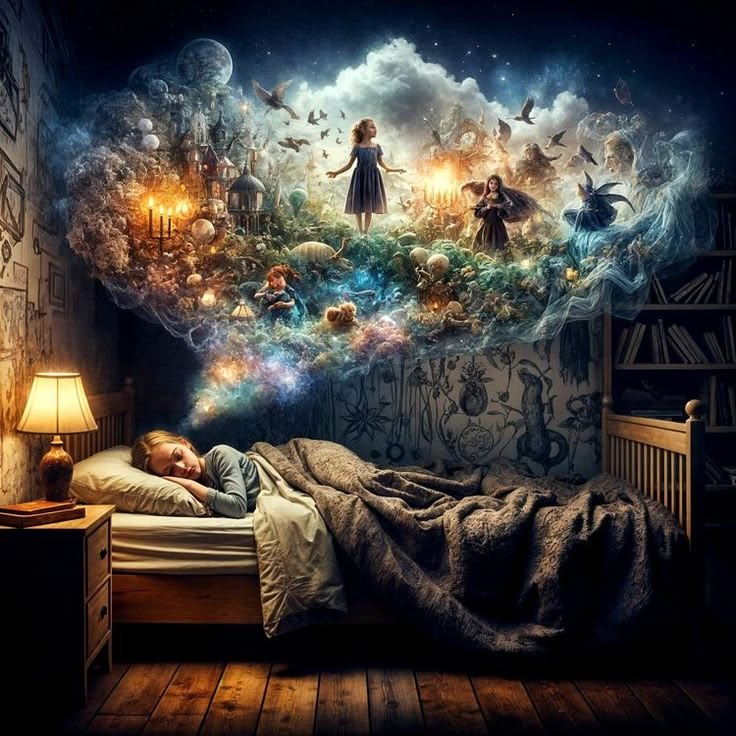
I had a dream a few weeks ago, and surprisingly, I still remember it clearly. Usually, I forget my dreams the moment I wake up, but this one is vividly etched in my mind. In the dream, a bird flew elegantly through my room. She looked like a hummingbird, but much larger. She stared at me as she was facing the window. I suspected that I knew her well.

She gazed at me for a while before flying away; I don’t know where, but somehow she disappeared right before my eyes.

It reminded me of a dream Dr Jung once described. However, his bird was transformed into a child and could speak; mine did not, but I believed she was wise and knew many things.

Carl Jung’s dream of a white bird transforming into a girl, often a dove or gull, was a key vision from his Black Book. It signalled his break with Freud, marked his dive into deep psychological work, and symbolised the soul’s link to the spirit world, spiritual change, and the union of opposites within the Self. Featured in The Red Book, the dream showed birds as messengers of the soul, bridging conscious and unconscious, representing freedom, wisdom, and the’ higher self”.

I would now like to reiterate his dream, which I presented in the first part, because it is remarkable.

I dreamt at that time (it was shortly after Christmas 1912) that I was sitting with my children in a marvellous and richly furnished castle apartment – an open columned hall – we were seated at a round table, whose top was a marvellous dark green stone. Suddenly, a gull or a dove flew in and sprang lightly onto the table. I admonished the children to be quiet so they would not scare away the beautiful white bird. Suddenly, this bird turned into an eight-year-old blond child and ran around, playing with my children in the marvellous columned colonnades. Then, the child suddenly turned into the gull or dove. She said the following to me: “Only in the first hour of the night can I become human while the male dove is busy with the twelve dead.” With these words, the bird flew away, and I awoke. (Black Book 2, pp. 17-18)

Key Elements of Jung’s Bird Dream:
The White Bird: Symbolises the soul, spirit, or divine feminine (Anima), depicted as a dove or gull.
Transformation: The bird turning into an eight-year-old blond girl playing with his children represents the soul’s embodiment and interaction with earthly life.
The Message: “Only in the first hours of the night can I transform myself into a human being, while the male Dove is busy with the twelve dead” highlights the unconscious’s link to the spiritual realm and the soul’s hidden work.
Context: This dream from around 1912 helped Jung realise the collective unconscious archetypes and influenced his relationship with Toni Wolff.
Broader Jungian Bird Symbols:
Archetypal Connection: Birds link earthly and spiritual realms, symbolising transcendence, consciousness, and freedom.
The Self: Birds often symbolise the Self, representing wholeness and inner guidance.
Individuation: Birds symbolise Jung’s concept of individuation—integrating archetypes to achieve wholeness.
Language of Birds: In dreams, birds speak a symbolic language that reveals hidden meanings and psychic realities.

Jung’s bird dream was a profound encounter with his own unconscious, initiating his personal myth-making and laying the groundwork for his analytical psychology.

I know that one day, if I am still alive, I will continue this never-ending story, though there is another “never-ending story” in which I am fully involved! Enjoy your peaceful lives. ✌💕🥰

The World of Fairy Tales: A Parallel World Second to Ours?

Standard
via Petra Glimmdall

In my view, during Christmas, fairy tales feel more meaningful and relevant than at any other time. I’m not sure why; perhaps because love and forgiveness are more apparent, and the longing, wishing, and hidden desires gain greater strength to make dreams come true.

We often believe fairy tales are purely imaginary, but what is truly real? Who can definitively prove that events involving elves, gnomes, fairies, leprechauns, gorgons, mermaids, and similar beings have never occurred? We can’t be certain, but fairies are an excellent gift for enhancing and refining our “Weltanschauung,” or worldview.

Fairy tales have captivated audiences for centuries, creating worlds of wonder and possibility that spark the imagination. Usually set in enchanted realms with talking animals, brave heroes, and clever villains, they do more than entertain—they inspire us to dream beyond reality’s boundaries. Central to every fairy tale is the power of imagination. Through fantastical adventures and impossible feats, they encourage us to envision worlds where anything is possible. Castles floating in the clouds, animals speaking with wisdom, and ordinary characters changing their fates with a clever wish or brave act—all stimulate creativity and expand our view of what the world could become. Additionally, fairy tales offer a safe space to explore complex emotions, moral challenges, and the victory of good over evil. They teach important life lessons while nurturing imagination, empathy, and resilience. Ultimately, fairy tales show us that with imagination, even the toughest challenges can be overcome, and that magic exists in everyday life.

Now, as Christmas Eve approaches, let our imagination take flight—fly freely to Neverland and Wonderland; may we find joy and peace.

Wishing everyone a peaceful and serene Christmas Eve. Sweet dreams to all!😉🥰🙏💖

Observing the Depths from Below!

Standard

I am a forest, and a night of dark trees: but he who is not afraid of my darkness will find banks full of roses beneath my cypresses. The higher we soar, the smaller we appear to those who cannot fly.
~Friedrich Nietzsche, Thus Spoke Zarathustra

Understanding duality and the existence of opposites is essential for comprehending both our world and ourselves. Today, I often see the phrase ‘We are good & They are bad’ being misused and exploited. Good and evil are present within everyone!

Duality promotes understanding of the balance and tension between opposing elements, showing that complexity and harmony come from these interactions. Jung extensively studied duality, viewing it not just as external contrasts like light versus dark, cold versus warm, or above versus below, but as essential components of the human psyche and the process of individuation.

Jung says: Roots of Life reach into Hell. A core idea in Jung’s view of human existence is the concept of Duality and the Principle of Opposites. He argued that the psyche operates under the “principle of opposites,” meaning that every psychological concept or experience—such as light, warmth, consciousness, or life—inevitably has its opposite, like darkness, cold, unconsciousness, or death. The ongoing tension between these opposing forces is vital for psychological development and transformation. Dualities are not always entirely opposite; instead, they often depend on each other and define one another. For instance, light derives meaning only through its contrast with darkness. Many philosophies, including Taoism, highlight that these opposites are interconnected and mutually dependent, creating a balanced whole (yin and yang).

Jung’s psychology focuses on a fundamental duality between the conscious mind—associated with light, warmth, and awareness—and the unconscious, linked to darkness, coldness, and forgotten elements. The unconscious includes repressed or unknown parts, with the ‘shadow’ representing darker aspects we often reject or ignore. Recognising and accepting the shadow is crucial for achieving psychological wholeness.
The process of individuation involves integrating these opposites, acknowledging and reconciling them, rather than suppressing one side.
Jung explored myths, dreams, and alchemy, which frequently symbolised these dualities—such as sun/moon, king/queen, above/below—as part of psychic development. He saw alchemy as a metaphor for merging the conscious and unconscious components of the psyche.

Jung’s idea of duality illustrates how opposites are essential and creative elements of the mind. Concepts like light and dark, cold and warm, or the branches of a tree reaching upward and downward symbolise both external facts and internal truths. Personal development requires embracing these dualities to achieve a more integrated and authentic self.

An 1847 depiction of the Norse Yggdrasil as described in the Icelandic Prose Edda by Oluf Olufsen Bagge. Via Carl Jung Depth Psychology

He perceives the tree of life, whose roots extend into Hell and whose top reaches Heaven. He no longer distinguishes between right and wrong, holy and unholy, genuine and false, or good and evil. The only difference he recognises is between below and above: he sees that the tree of life grows from the ground upward, with its crown at the top, clearly separate from the roots. This view is unquestionable to him, and it guides his path to salvation.
To unlearn all distinctions except that of direction is part of your salvation. This liberates you from the old curse of knowing good and evil. Although you separated good from evil based on your best judgment, aiming only for the good and denying the evil you did- and struggled to accept it- your roots no longer drew dark nourishment from below, causing your tree to weaken and wither.
Therefore, the ancients said that after Adam ate the apple, the tree of paradise withered. Your life needs the dark. But knowing it is evil makes acceptance impossible, leading to suffering and confusion. You cannot accept it as evil, or your sense of goodness will reject you. Nor can you deny it, because you
know both good and evil. This knowledge of good and evil became an insurmountable curse.

But if you return to primal chaos and recognise that which hangs stretched between the two unbearable poles of fire, you will notice that you can no longer conclusively separate good and evil, neither through feeling nor through knowledge, but that you can discern the direction of growth only from below to above. You thus forget the distinction between good and evil, and you no longer know it as long as your tree grows from below to above. But as soon as growth stops, what was united in growth falls apart, and once more you recognise good and evil.
You can never deny your knowledge of good and evil to yourself, so that you could betray your good in order to live evil. For as soon as you separate good and evil, you recognise them. They are united only in growth. But you grow if you stand still in the greatest doubt, and therefore, steadfastness in great doubt is a veritable flower of life.
He who cannot bear doubt does not bear himself. Such a one is doubtful; he does not grow, and hence he does not live. Doubt is the sign of both the strongest and the weakest. The strong have doubt, but doubt has the weak.

Therefore, the weakest is close to the strongest, and if he can say to his doubt: “I have you,” then he is the strongest. But no one can say yes to their doubt unless they endure wide-open chaos. Because there are so many among us who can talk about anything, pay heed to what they live. What someone says can be very much or very little. Thus, examine his life.

My speech is neither light nor dark, since it is the speech of someone who is growing. ~Carl Jung, Red Book, Page 301

Thank you for taking the time to read. 🙏