Today I’m writing a short piece about my condition and what ultimately happened to me, for anyone’s interest. So, as you probably know, I was on vacation: first for three days with the kids, and then for two weeks in Greece. That sounds lovely, but because my urinary problems were becoming increasingly difficult, the whole experience was a real roller coaster ride for me! I wasn’t sure if I’d make it to my scheduled surgery without ending up in an emergency room in Greece—even though the Greek healthcare system is top-notch. In any case, the period from July through early August was anything but boring, but somehow I managed to get through it.
Now, I am through with the surgery, and so far, it looks like everything is okay. As I mentioned, I am feeling weak and can’t do the same things as before. I have to sit for a while after doing even a little to catch my breath. Even though I am taking antibiotics, I still feel like something isn’t right inside me. This means visiting the doctor again in the hope of solving the problems.
By the way, whenever I sit in front of a screen—whether on my phone or a computer—everything starts spinning after a while, and I have to stop immediately. So please don’t be surprised if I don’t manage to read or provide feedback on your daily or hourly posts.
As many here likely know (and some, I’m sure, feel deeply!), life isn’t easy, but we have no choice but to keep pushing forward. My political outlook has grown bleak and hopeless. You may have noticed I haven’t posted about Iran in a while. I feel like I’m being played for a fool—as if some shady game is going on behind the scenes and no one cares about people’s suffering. So let them chase profits while the Iranian opposition dreams of fame. I don’t have much time left to change or save the world. As Jalaluddin Rumi wisely said: “Yesterday I was clever, so I wanted to change the world. Today I am wise, so I am changing myself.” I’ve pretty much given up on it all.
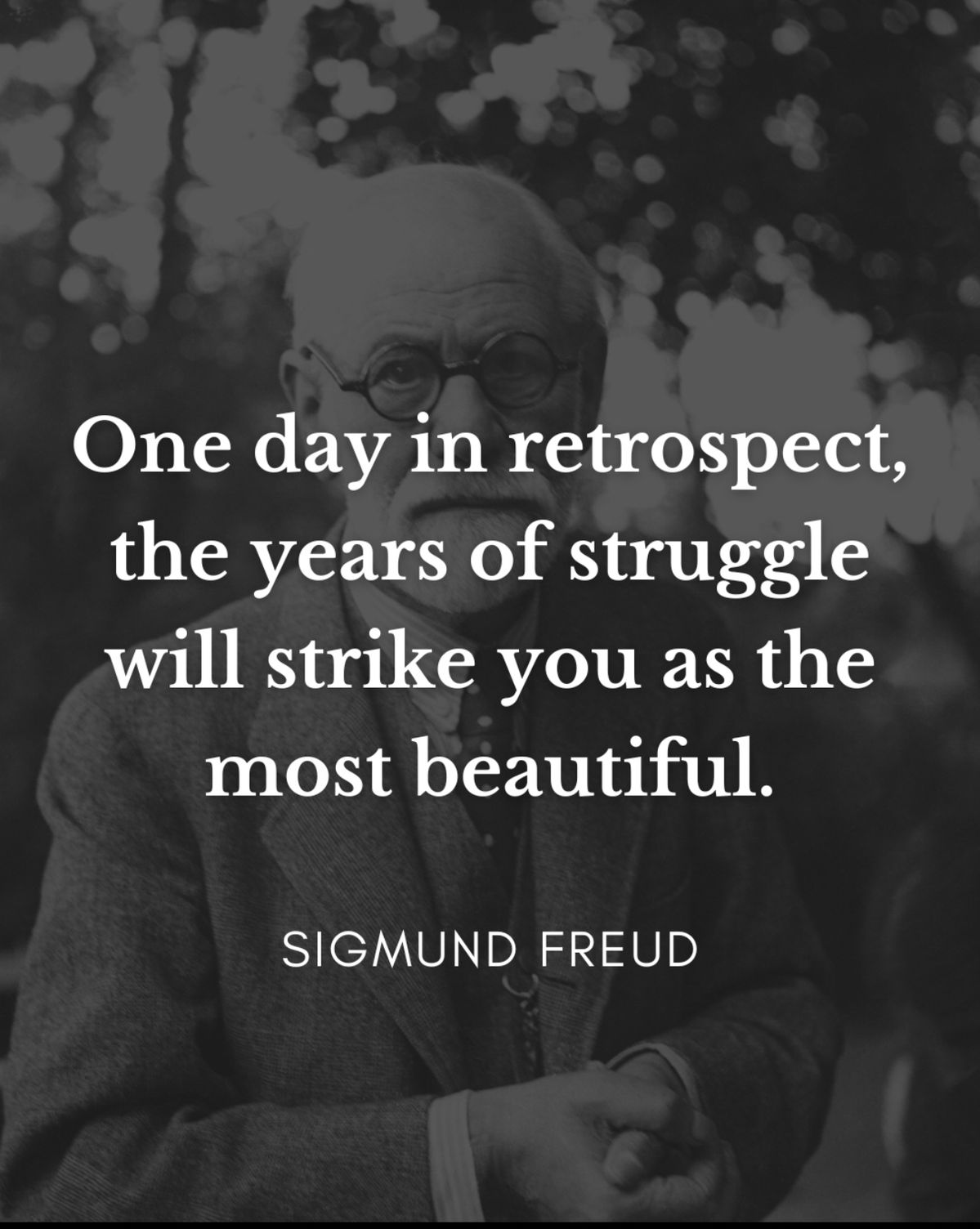
I sincerely value your friendship, loyalty, and trust. I’ll share my contribution to the translation of Freud’s book in following. Since I will be away next week, I will be absent and leave you in peace!
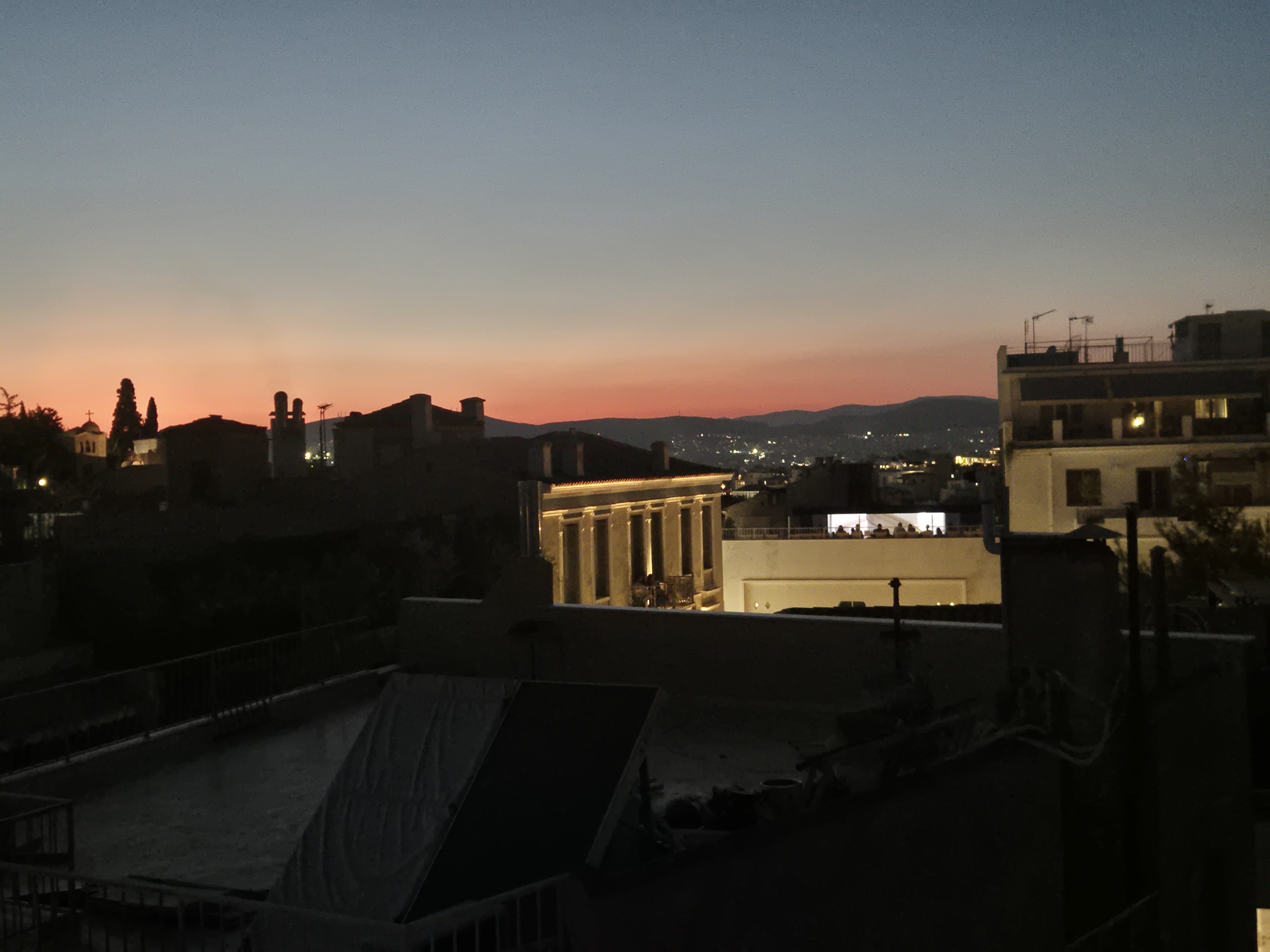
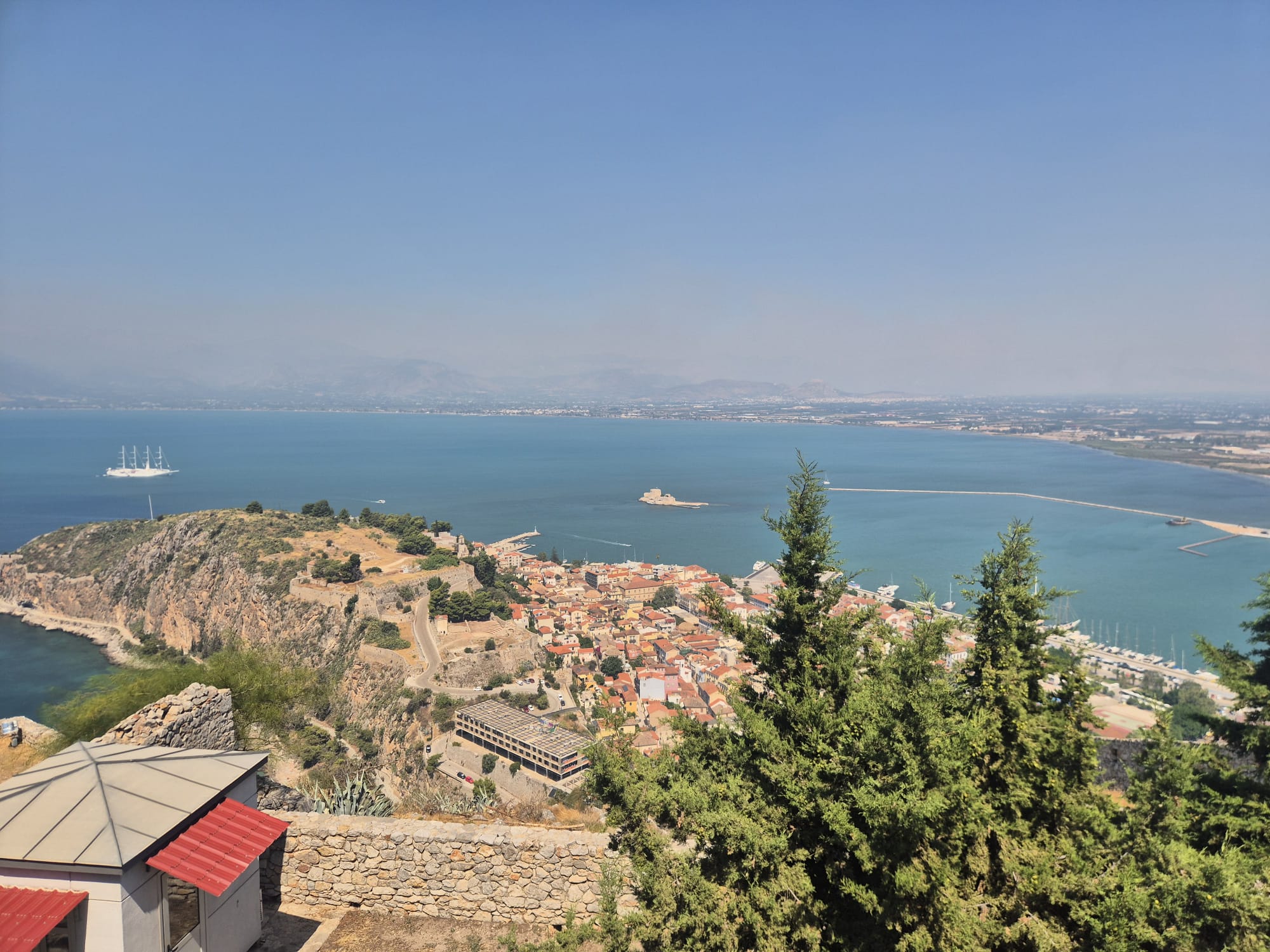
Here are a few pics from our vacation to Greece. 🙏💖🌹
Dream Stimuli and Dream Sources (Traumreize und Traumquellen)
Hello, dear friends. I’m sharing another section of Freud’s book with my translation. I hope you find it interesting and insightful. This part discusses forgetting dreams—I usually forget mine, though the ones that endure seem to stay forever. I believe we forget dreams after waking because we don’t want to remember them right away, so we push them into the unknown for later.
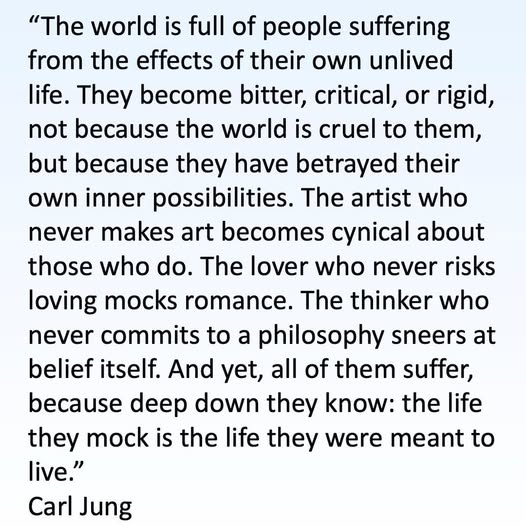
Anyway, Dr Freud explains why we forget our dreams, and I think his research is worth exploring, especially since Dr Carl Jung admired Freud’s work. Here are some quotes from Carl Jung’s Depth Psychology, by my good friend Lewis Lafontaine. 🙏
It is Freud’s great achievement to have put dream-interpretation on the right track. ~Carl Jung, CW 8, Para 539
“Freud was kind to people and gave them his interest; that was what cured, and that is what always cures – the human contact.” ~Carl Jung, Meetings with Jung, Page 48
Let’s proceed with Freud’s arguments. The previous chapter is available here!
Why do we forget the dream after waking up? (Warum man den Traum nach dem Erwachen vergisst?)
It is proverbial that a dream “dissolves” in the morning. Yet it is certainly capable of being remembered. After all, we know the dream only through memory after waking; yet we very often believe that we recall it only incompletely, whereas more of it was present during the night; we can observe how a dream memory—vivid in the morning—fades over the course of the day until only small fragments remain; we often know that we have dreamt, but not what we dreamt; and we are so accustomed to the experience of dreams being subject to oblivion that we do not dismiss as absurd the possibility that a person who, in the morning, knows nothing of the content or even the fact of having dreamt, might nevertheless have dreamt during the night. On the other hand, it happens that dreams display extraordinary persistence in memory. I have analysed dreams of my patients that occurred twenty-five or more years ago, and I can recall a dream of my own separated from the present by at least thirty-seven years, yet it has lost nothing of its freshness in memory. All this is very strange and, at first glance, incomprehensible.
Strümpell discusses the forgetting of dreams at greatest length. This forgetting is evidently a complex phenomenon, for Strümpell attributes it not to a single cause but to a whole series of reasons.
To begin with, the same factors that cause forgetting in waking life are at work in the forgetting of dreams. When awake, we tend to quickly forget a vast number of sensations and perceptions because they were too weak—because the mental excitation associated with them was insufficiently intense. The same applies to many dream images: they are forgotten because they were too weak, whereas stronger images that occur alongside them are remembered. However, intensity alone is not the decisive factor in retaining dream images; Strümpell, like other authors (such as Calkins), acknowledges that we often quickly forget dream images known to have been very vivid, while many of the images retained in memory are shadowy and faint. Furthermore, in the waking state, we tend to forget events that occurred only once, while remembering better those we perceived repeatedly. However, most dream images are unique experiences (though recurring dreams have been noted; cf. Chabaneix’s collection); this characteristic inevitably contributes to the forgetting of all dreams. A third reason for forgetting is far more significant. For sensations, mental images, thoughts, and the like to attain a certain degree of memorability, they must not remain isolated but rather enter into appropriate connections and associations. If one breaks a short verse down into its constituent words and jumbles them, it becomes very difficult to commit it to memory. “When well-ordered and arranged in a logical sequence, one word supports another, and the whole remains firmly, easily, and enduringly in the memory. We generally find it just as difficult—and rare—to retain nonsensical material as we do material that is confused and disordered.” Yet, in most cases, dreams lack coherence and order. Dream compositions inherently lack the basis for their own retention and are forgotten because they usually disintegrate almost immediately. – Admittedly, this view does not quite align with Radestock’s observation (p. 168) that it is precisely the strangest dreams we remember best.
Strümpell considers other factors, derived from the relationship between the dream and waking life, to be even more significant in causing dreams to be forgotten. The fact that dreams are forgotten by waking consciousness is evidently merely the counterpart to the previously mentioned fact that the dream (almost) never incorporates organised memories from waking life, but rather only isolated details torn from the familiar mental associations in which they are recalled during the waking state. Dream imagery thus finds no place within the array of mental sequences that fill the mind; it lacks all mnemonic aids. “In this way, the dream formation detaches itself, as it were, from the soil of our mental life and floats in the psychic realm like a cloud in the sky, quickly dispersed by a fresh breath of air” (p. 87). Working in the same direction is the fact that, upon waking, the encroaching sensory world immediately lays claim to one’s attention, so that very few dream images can withstand this force. They give way to the impressions of the new day just as the radiance of the stars fades before the light of the sun.
Sigmund Freud’s Letter to Carl Jung, September 19, 1907
Finally, a factor conducive to the forgetting of dreams is that most people show little interest in them to begin with. For instance, anyone who—perhaps as a researcher—takes an interest in dreams for a time will also dream more than usual during that period; this presumably means they recall their dreams more easily and more frequently. Two other reasons for the forgetting of dreams—added by Bonatelli (cited in Benini) to those proposed by Strümpell—are arguably already implicit in the latter: namely, 1) that the shift in general bodily sensation between sleep and wakefulness is unfavourable to reciprocal recall, and 2) that the different arrangement of mental imagery in dreams renders them, so to speak, untranslatable for waking consciousness.
Given all these reasons for forgetting, it becomes—as Strümpell himself emphasises—all the more remarkable that so much of our dreams is nevertheless retained in memory. The persistent efforts of authors to formulate rules for recalling dreams amount to an admission that, here too, something remains enigmatic and unresolved. Certain peculiarities in the recollection of dreams have rightly attracted special attention of late—for instance, the fact that a dream one believes to have forgotten in the morning may be recalled later in the day, triggered by a perception that happens to touch upon the dream’s—supposedly forgotten—content (Radestock, Tissié). However, the entire phenomenon of dream recall is subject to an objection that could well lead a critical observer to devalue it significantly. One might question whether our memory—which omits so much of the dream—also distorts the fragments it has preserved.
Strümpell also voices doubts about the accuracy of dream reproduction: “It easily happens, then, that waking consciousness involuntarily inserts various elements into the memory of the dream: one imagines having dreamt all sorts of things that the actual dream did not contain.” Jessen expresses himself particularly emphatically on this point (p. 547): “Moreover, when examining and interpreting coherent and logical dreams, one must give serious consideration to a circumstance that—it seems—has hitherto received little attention: namely, that the truth is almost always compromised in the process, because, when we recall a dream we have had, we—without noticing or intending to—fill in and supplement the gaps in the dream imagery. Rarely, and perhaps never, was a coherent dream actually as coherent as it appears to us in memory. Even for the most truthful person, it is scarcely possible to recount a remarkable dream one has experienced without any additions or embellishments; the human mind’s drive to perceive everything as a coherent whole is so strong that, when recalling a somewhat disjointed dream, it involuntarily supplies the missing links in the narrative.”
V. Egger’s remarks, which were certainly conceived independently, sound almost like a translation of Jessen’s words: »… l’observation des rêves a ses difficultés spéciales et le seul moyen d’éviter toute erreur en pareille matière est de confier au papier sans le moindre retard ce que l’on vient d’éprouver et de remarquer; sinon, l’oubli vient vite ou total ou partiel; l’oubli total est sans gravité; mais l’oubli partiel est perfide; car si l’on se met ensuite à raconter ce que l’on n’a pas oublié, on est éxposé à compléter par imagination les fragments incohérents et disjoints fourni par la mémoire …; on devient artiste à son insu, et le récit periodiquement répété s’impose à la créance de son auteur, qui, de bonne foi, le présente comme un fait authentique, dûment établi selon les bonnes méthodes …« {Observing dreams poses particular difficulties, and the only way to avoid error in such matters is to commit to paper, without the slightest delay, what one has just experienced and noted; otherwise, forgetting—whether total or partial—quickly sets in. Total forgetting is of no consequence, but partial forgetting is treacherous; for if one subsequently sets out to recount what has not been forgotten, one risks filling in the gaps—using one’s imagination—within the incoherent, disjointed fragments supplied by memory… One becomes an artist unwittingly, and the story, through repeated telling, comes to be believed by its own author, who then—in good faith—presents it as an authentic fact, duly established according to sound methods…}
Spitta (p. 338) holds a very similar view; he seems to assume that it is only when we attempt to reproduce the dream that we introduce order into the loosely associated dream elements—”transforming the side-by-side arrangement into a sequence or a separation, thereby adding the process of logical connection that is absent in the dream.” Now, since we possess no means of verifying the accuracy of our memory other than objective confirmation—which is impossible in the case of a dream, an experience of our own for which memory is the sole source—what value can we still attach to our memory of the dream?
_____________Stay tuned! More coming soon!_________________
Thank you all so much, dear friends. As for my condition, I was constantly bouncing around and acting without paying attention to my age. But after the recent surgery, I realise, and must admit, with my tired bones, that I am an old man now! This is the reality of life on this earth, and I accept it. I may write an extra post about that.
I’m sharing a brief update today to avoid repeating last week’s mistake of not mentioning my absence. After three days, I took a short trip with my wife and kids. We’re also planning another two-week holiday near Athens, Greece, starting on Sunday. Although my current situation isn’t ideal, I feel like I’m in a twilight zone (pardon me; I pray to be able to empty my bladder every time I go to the toilet!). Still, I don’t want to cancel this trip, which my wife is very excited about. So, after the vacation, before the vacation!
Reflecting on my age, I don’t feel like I’ll be seventy-two soon. I don’t act like a typical person my age, and people are often surprised when they find out how old I am. I recognise that ageing brings wisdom and value: as Carl Jung said, “Life really does begin at forty. Up until then, you are just doing research.” This idea divides human life into two psychological phases, shifting the focus from survival to inner purpose. “Die Lebenswende” (translated as “The Turning Point of Life” or “The Stages of Life”), a pivotal 1930/1931 essay by Carl Jung.
Certainly, he focuses more on the mental aspect than the physical, as I observe daily that I cannot act or react as I once did. There’s a fleeting warning to slow down; I’m no longer as quick as I used to be.
Eventually, we all age gradually and need to accept our situation, but we should never lose sight of the child within us! Also, continue researching and asking questions; learning never ends. Take care, dear friends.
“Song For The Asking” Here is my song for the asking Ask me, and I will play So sweetly, I’ll make you smile This is my tune for the taking Take it, don’t turn away I’ve been waiting all my life Thinking it over, I’ve been sad Thinking it over, I’d be more than glad To change my ways for the asking Ask me, and I will play All the love that I hold inside
PS: I’ll leave the comment open, though I might reply later. You might be aware that I’m on my way and uncertain when I’ll be able to respond. I don’t want to miss your generosity; thanks in advance. 🥰🙏💖
I have kept writing about my brother Al regularly every day of his anniversary.However, yesterday, the day he left the Earth, all the negative feelings stemming from the issues I am facing overwhelmed me, leaving me unable to think clearly and without energy. In any case, the precise date isn’t very significant, since Al is always on my mind. While I don’t view death as an end, Carl Jung’s words always echo in my ears: ‘Death is a drawing together of two worlds, not an end.’ We are the bridge.
Still, before I melt into the chair from the heat, it is good to have a review.
It is one of the unforgettable memories that I would like to share with you here:
You came, sweating, on a hot summer afternoon, and I was surprised. You were on military duty, far away in the south, but suddenly you were there. You said, “I can’t anymore!” You had escaped that mess! In Iran, two years of military service are mandatory, and if one refuses, they have no chance of finding a job and will be sent to jail.
When it was your turn for military service, I was very worried about you; I knew we were not suited to the military, since our mother wanted to send us to a military school because she was tired of our unconventional behaviour. Still, one of our family members, a general, advised her not to do so. He told her that we were the sons of a thinker and intellectual, and that this was controversial for military school.
“Military intelligence is a contradiction in terms,” as Groucho Marx once said. However, during the first three months of your service, you were in northern Tehran, could often come home, and found wonderful, unconventional friends there. Still, after that, they sent you far away to the south, far from home, far from your room, music, and solitude. After about two weeks, you left everything behind, came home, went to your room, put on a Beatles vinyl (Abbey Road), lay down, and listened. Oh yes, I wasn’t a revolutionary like you yet and was a bit conservative! I asked you what would happen to you after this escape, about your life and your future. It doesn’t matter to me, he said; it is not my world! I asked, What world is yours? And he answered, “It is a world inhabited all by crazy people!”
Of course, it took me a while to understand your stance on that crazy world. I remember it well. I was in the bathroom, under the shower, and there, like Archimedes, I cried out, “Eureka! Eureka! I know now what the matter is: I know now that I don’t know!” It’s been about nineteen years since you, in your belief, transitioned to that level of existence. May you have found your crazy world by now. I can still see the image before my eyes; the moment you were lying on the ground, listening to music, while I sat helplessly before you. Still, that haunting, sad song brings tears to my eyes. I think of you so often!
PS: I might be unavailable next week as I plan to visit a friend, unless I need urgent surgery and must stay in hospital. We’ll see how things unfold! Wishing everyone a peaceful and wonderful time.
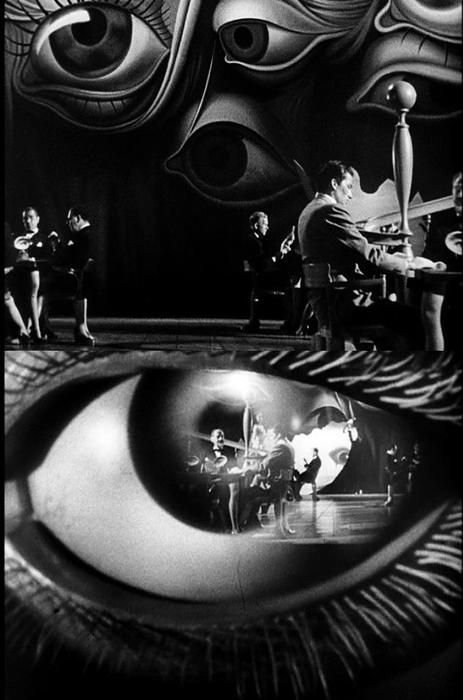
Stills from the Salvador Dalí-designed dream sequence in Spellbound (1945, dir. Alfred Hitchcock)
Most of the fundamental ideas of science are essentially simple and may, as a rule, be expressed in a language comprehensible to everyone. ~Albert Einstein
Today, I will continue from my previous instalment and share the second part of Freud’s chapter on how memories influence dreams.
Dr Freud reviews various researchers’ perspectives on dreams and offers several compelling examples of how human memories shape them.
(The title image I chose depicts a scene from one of my favourite Hitchcock films, in which Salvador Dali designed the sets for the dream sequences.)
The Material of Dreams—Memory in the Dream (Das Traummaterial – Das Gedächtnis im Traum)
The fact that the dream contains memories inaccessible to the waking state is so curious and theoretically significant that I wish to draw further attention to it by recounting other such “hypermnestic” dreams. Maury relates that, for a time, the word “Mussidan” would frequently come to his mind during the day. He knew it was the name of a French town, but nothing more. One night, he dreamt of a conversation with a certain individual who told him that she hailed from Mussidan; when he asked where the town was situated, she replied that Mussidan was a district town in the Département de la Dordogne. Upon waking, Maury placed no credence in the information he had received in his dream; however, a geographical dictionary informed him that it was entirely accurate. In this instance, the dream’s superior knowledge was confirmed, yet the forgotten source of that knowledge remained undiscovered.
Jessen recounts (p. 55) a very similar dream occurrence from earlier times: “To this category belongs, among others, the dream of the elder Scaliger (Hennings, *l. c.*, p. 300), who had written a poem in praise of the famous men of Verona; a man calling himself Brugnolus appeared to him in a dream and complained that he had been forgotten. Although Scaliger could not recall ever having heard of him, he nevertheless composed verses in his honour; his son subsequently learned in Verona that just such a Brugnolus had indeed once been renowned there as a critic.”
In a source to which I unfortunately do not have access (the *Proceedings of the Society for Psychical Research*), Myers is said to have published an entire collection of such hypermnestic dreams. I believe that anyone who occupies themselves with dreams must acknowledge that it is a very common phenomenon for a dream to bear witness to knowledge and memories which the waking subject does not suppose themselves to possess. In my psychoanalytic work with neurotic patients—which I shall discuss later—I find myself, several times a week, in a position to demonstrate to patients, based on their dreams, that they know quotations, obscene words, and the like very well, and that they make use of them in their dreams, even though they have forgotten them in their waking lives. I should like to share one harmless instance of dream hypermnesia here, as the source from which this knowledge—accessible only to the dream—originated was very easily traceable.
A patient dreamed—as part of a longer narrative sequence—that he was ordering a “Kontuszówka” for himself in a coffeehouse; however, when recounting the dream, he asked what on earth that might be, saying he had never heard the name before. I was able to reply that Kontuszówka is a Polish spirit—a name he could not possibly have invented in his dream, as I myself had long been familiar with it from posters. At first, the man refused to believe me. A few days later, after he had turned his dream into reality by ordering the drink in a coffeehouse, he noticed the name on a poster—specifically at a street corner he had been obliged to pass at least twice a day for months.
One of the sources from which the dream draws material for reproduction—material that, in part, is neither recalled nor utilised during waking thought—is childhood life. I shall cite only a few of the authors who have noted and emphasised this:
Hildebrandt (p. 23): “It has already been expressly acknowledged that the dream, at times, with a marvellous power of reproduction, faithfully brings back to our minds events that are quite remote and even forgotten, dating from the distant past.”
Strümpell (p. 40): “The matter becomes even more remarkable when one observes how the dream—at times, as it were, from beneath the deepest and most massive layers of sediment that later life has deposited upon the earliest experiences of youth—brings forth images of specific localities, objects, and persons, entirely intact and with their original freshness. This is not limited merely to such impressions as may have attained a vivid level of consciousness at the moment of their inception, or become imbued with strong psychological significance—impressions that subsequently reappear in the dream as genuine memories, in which the awakened consciousness takes delight. Rather, the depth of dream-memory encompasses also those images of persons, objects, localities, and experiences from earliest times which either possessed only a faint degree of consciousness or no psychological significance whatsoever—or which had long since lost both—and which, for this very reason, appear utterly strange and unfamiliar both within the dream and upon awakening, until their distant origin is finally discovered.”
Volkelt (p. 119): “It is particularly noteworthy how readily memories of childhood and youth find their way into dreams. Things we have long ceased to think about—matters that have long since lost all significance for us—the dream tirelessly reminds us of them.” The dream’s dominion over childhood material—which, as is well known, largely falls into the gaps of conscious memory—gives rise to interesting hypermnestic dreams, of which I shall, in turn, present a few examples.
Maury recounts (in *Le sommeil*, p. 92) that, as a child, he often travelled from his hometown of Meaux to nearby Trilport, where his father was supervising the construction of a bridge. One night, a dream transports him back to Trilport, allowing him to play once again in the town’s streets. A man approaches him, wearing a uniform. Maury asks for his name; he introduces himself as C… and says he is the bridge keeper. Upon waking—still doubting the memory’s reality—Maury asks an old servant, who has been with him since childhood, whether she can recall a man by that name. “Certainly,” comes the reply, “he was the keeper of the bridge your father built back then.”
Maury recounts another beautifully confirmed example of the accuracy of childhood memories surfacing in dreams, concerning a Mr F… who had grown up in Montbrison. Twenty-five years after leaving, this man decided to revisit his hometown and see old family friends he had not encountered since. On the night before his departure, he dreamed that he had arrived at his destination and, near Montbrison, met a gentleman whose appearance was unfamiliar to him; the man identified himself as Mr T., a friend of his father. The dreamer knew he had known a man by that name during childhood, but could not recall what he looked like while awake. Upon actually arriving in Montbrison a few days later, he rediscovered the location from the dream—which he had previously not recognised—and met a gentleman whom he immediately identified as Mr T. from the dream. The real person had simply aged more than the figure in the dream image had suggested.
To be continued!
PS: I’ll translate and share the rest of this chapter in my next post. However, I’ve been told I need another surgery soon (the old problem is the new problem!), so I’m unsure when I can do so. Wishing all the best! 🤗💖
Today, I need to write a second post to celebrate Carl Jung’s sixty-fifth anniversary, and I just couldn’t let it pass! Carl Jung viewed death as a meaningful transition, emphasising its psychological significance in the acceptance of mortality. He saw it not merely as an end but as a vital part of the individuation process and a profound mystery inviting reflection, highlighting its spiritual dimension.
Jung believed that humans inherently recognise their mortality, which profoundly shapes the unconscious mind. He suggested that our perspectives on death shape our fears, values, creativity, and sense of purpose. Denying or repressing death can lead to psychological difficulties, whereas accepting it fosters growth and wisdom. Jung viewed death not only as a physical event but also as symbolic. Drawing on myth and religion, he noted that many cultures regard death as a transition to another state. These archetypal images reflect the collective unconscious. He believed that, like birth, death can be a form of transformation—a return to the greater whole from which life originates. In his later works, Jung emphasised the importance of mentally and spiritually preparing for death. He encouraged individuals to confront their mortality openly and reflectively, believing this approach could foster a deeper, more meaningful existence. Jung’s perspective on death was neither overly pessimistic nor escapist; instead, he regarded it as a profound mystery and a crucial part of human life, encouraging contemplation and acceptance.
Here is a letter Jug wrote to an unknown woman during his final days, in response to her question about how he expressed his thoughts on death. I am sharing this letter with you, sourced from a post by my friend Lewis Lafontaine, with many thanks.
My old age and the need for rest make me fight shy of too many visitors, so I have to confine myself as far as possible to written answers. I can answer your question about life after death just as well by letter as by word of mouth. Actually, this question exceeds the capacity of the human mind, which cannot assert anything beyond itself. Furthermore, all scientific statements are merely probable. So we can only ask: Is there a probability of life after death? The point is that, like all our concepts, time and space are not axiomatic but are statistical truths. This is proved by the fact that the psyche does not fit entirely into these categories. It is capable of telepathic and precognitive perceptions. To that extent, it exists in a continuum outside time and space. We may therefore expect post-mortem phenomena to occur, which must be regarded as authentic. Nothing can be ascertained about existence outside time. The comparative rarity of such phenomena suggests at all events that the forms of existence inside and outside time are so sharply divided that crossing this boundary presents the greatest difficulties. But this does not exclude the possibility that there is an existence outside time which runs parallel with existence inside time. Yes, we ourselves may simultaneously exist in both worlds, and occasionally we do have intimations of a twofold existence. But what is outside time is, according to our understanding, outside change. It possesses relative eternity. Perhaps you know my essay “The Soul and Death .” For its scientific foundation, I would draw your attention to my “Synchronicity: An Acausal Connecting Principle,” in Jung and Pauli, The Interpretation of Nature and the Psyche. Psychology. These are my essential thoughts, and I would not express them otherwise in a talk with you.
Since I will be away from tomorrow until Saturday, visiting a friend and attending a concert together, I’ll just say hello and goodbye with my best wishes.
It will be a welcome change of pace in these turbulent times, though my friend is also Iranian, so there will definitely be some deep discussions.
Dr Jung’s philosophy (thoughts) suggests that a “break” often serves as an invitation to explore the unconscious, encouraging a shift from merely doing to a state of being.
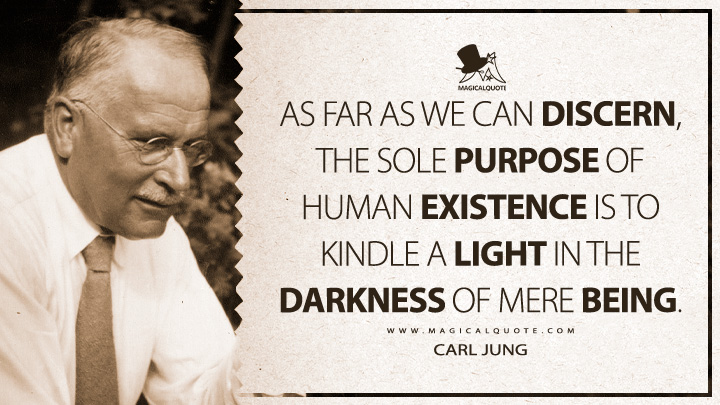
“As far as we can discern, the sole purpose of human existence is to kindle a light in the darkness of mere being”.
Dr Jung’s insight about the nature of existence is thoughtfully highlighted at the conclusion of his Life and Death chapter in Memories, Dreams, and Reflections:
Our age has shifted all emphasis to the here and now, and thus brought about a daemonization of man and his world. The phenomenon of dictators and all the misery they have wrought springs from the fact that man has been robbed of transcendence by the shortsightedness of the super-intellectuals. Like them, he has fallen victim to unconsciousness. But man’s task is the exact opposite: to become conscious of the contents that press upward from the unconscious. Neither should he persist in his unconsciousness, nor remain identical with the unconscious elements of his being, thus evading his destiny, which is to create more and more consciousness. As far as we can discern, the sole purpose of human existence is to kindle a light in the darkness of mere being. It may even be assumed that just as the unconscious affects us, so the increase in our consciousness affects the unconscious. ~Carl Jung, MDR, Page 326.(Via carljungdepthpsychologysite.blog, with thanks)
The band we’re meeting is called UFO, and they’re roughly my age, although the videos below are from their earlier years.
With a warm greeting to all my friends, I didn’t want to keep writing critical articles repeatedly, although I see no way to look away from all these terrible happenings around me, and around you all, for sure.
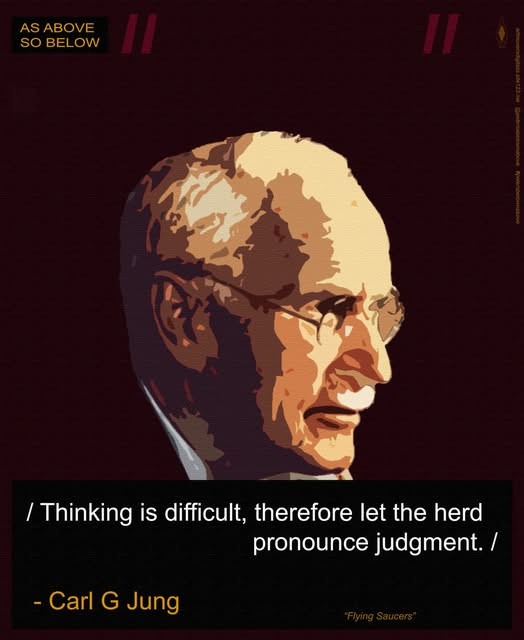
Although this topic is quite old—one that Al and I came across in our youth as we distanced ourselves from the masses—we initially believed it was a characteristic of the Third World due to inadequate education systems. However, later observing in the West, we realised it is very common there as well. Therefore, I decided to analyse it, at least for my own understanding, to explore how it might be possible:
As I observe the world and its phenomena, I repeatedly notice the absence of consideration, recklessness, and ignorance shown by many people, and above all, the lack of individuality.
It is not a matter of living in the third world, which we might argue is due to poor education or oppressive rulers! That already happens in the free world!
I think people are getting lazier, aiming for a more comfortable life without the stress of thinking, decision-making, or solitude, which leads to a loss of their individuality. As AI advances, the significance of the self-mind diminishes; the artificial mind assumes creative functions, rendering learning unnecessary.
They often prefer to be part of a crowd that takes them somewhere, no matter the outcome. This reduces the need to use the mind, enabling everyone to enjoy life effortlessly and without deep understanding; making judgments becomes simpler.
I’ve often met people with such judgments; they use these to solve problems that require thought or research to discover the truth, and then they feel proud of their ingenuity.
In this chaos, a deep examination of issues quickly leads to dismissal, labelling as an outsider and a foreigner, and, subsequently, isolation.
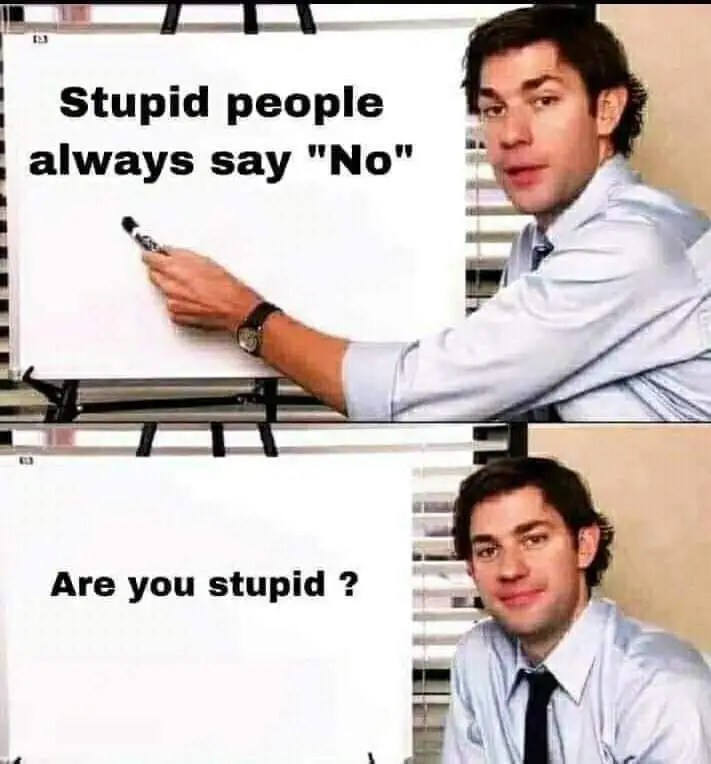
Benjamin Franklin’s expression is quite adept: “We are all born ignorant, but one must work hard to remain stupid.”!
The main profit, naturally, goes to the politician. Populism comes to the fore; the bigger the mouth and the louder the voice, the more it draws the crowds, because there is a greater resemblance among them; the stupid always gravitate towards the same type!
I am witnessing the severe turmoil in Iran. The son of Iran’s late Shah, echoing President Trump, urged people to protest against the Mullahs’ regime. “We are coming!” they both declared. Many took to the streets, risking their lives, and thousands have lost their lives. Yet, no one has offered them support. Now, helping the Iranian people is forgotten, as President Trump proudly discusses a deal with the murderous regime!!
One no longer faces the agony of decision – no more being spoiled for choice! They lose their individuality and dreams. Imagination wanes, and visions grow shallow. And those who manage to protect their minds from such propaganda and attempt to stay aware of their own thoughts will be marginalised and become outsiders.
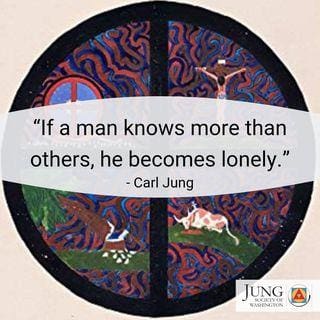
The loneliness began with the experiences of my early dreams, and reached its climax at the time I was working on the unconscious. If a man knows more than others, he becomes lonely. But loneliness is not necessarily inimical to companionship, for no one is more sensitive to companionship than the lonely man, and companionship thrives only when each individual remembers his individuality and does not identify himself with others. ~Carl Jung, MDR, Pages 355-356
In this video, the narrator references Carlo M. Cipolla‘s ideas on stupidity and on people deemed stupid. This seems to serve as an overall summary.
“Stupidity is an indiscriminate privilege of all human groups and is uniformly distributed according to a constant proportion.” And, “non-stupid individuals underestimate the potential for damage by stupid people and fail to recognise the cost of dealing with them.” ~Carlo M. Cipolla
“The difference between stupidity and genius is that genius has its limits”!! ~Albert Einstein
I must admit that I am at least pleased to be here, among such wonderful friends, who give me hope for a better future for humanity! Take care and stay vigilant.🙏✌️
This is my final post of the year, and I reflected on the joy of carrying music into the new year; may it be a year filled with peace, love, and music.
Music, a universal language, has played a crucial role in human civilisation, shaping emotions, cultures, and societies for centuries. It can evoke feelings and memories, reduce stress, and uplift mood, supporting mental well-being. Music influences cultures, brings communities together, and promotes social cohesion through events like ceremonies, concerts, and festivals. It connects generations, displays creativity, and allows us to express ourselves and build connections. Moreover, music is a significant educational resource, transmitting stories and messages across generations via lyrics and melodies. National anthems, protest songs, and lullabies inspire, motivate, and offer comfort to people from all backgrounds. Overall, music’s significance extends beyond entertainment; it fosters emotional health, strengthens bonds, and enriches cultural traditions. It remains a vital aspect of the human experience, deserving of recognition and preservation.
Rainy Blues, Painting by Michael Cheval. 2024
We all, more or less, consciously or unconsciously, listen to music every day. Since the songs are created by humans rather than artificial means, they primarily affect our mood. I grew up surrounded by music because my mother loved it. My older brother, Soroosh, who brought home many LPs and singles, taught Al and me numerous songs, bands, and songwriters.
I don’t know about you, but I prefer listening to music on recorders or vinyl in my home rather than in a concert hall. You know, in this way, I can immerse myself more deeply in each note or sound and feel the composer’s emotions. It reminds me of a film I saw many years ago: Luchino Visconti’s Conversation Piece (Italian: Gruppo di famiglia in un interno),starring Burt Lancaster and Helmut Berger, etc. In which Professor (Burt Lancaster) says the same to Konrad (Helmut Berger).
However, I didn’t come across that part!😁😅
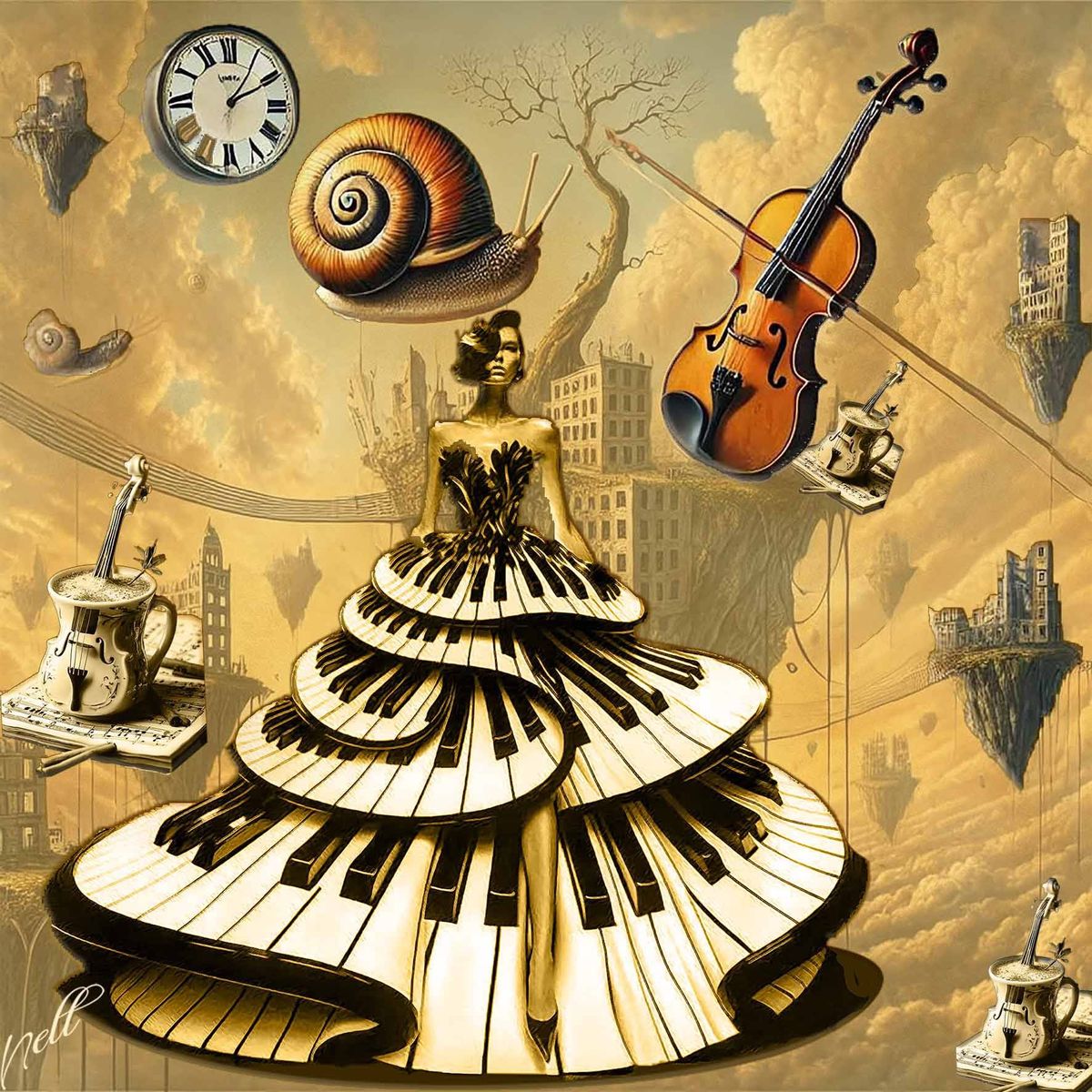
I came across these illustrations of classical music, created with modern techniques or AI, to show how melodies express emotion. I found them quite fascinating.
And here’s a surprising twist: artificial intelligence shows it understands art far better than humans!
I hope you enjoy them! Wishing you, wherever you are, a wonderful Silvester Eve and a joyful start to the New Year, filled with peace and love. Take good care! 💖🌟🥰🥂
Last night I begged the Wise One to tell me the secret of the world. Gently, gently, he whispered, “Be quiet, the secret cannot be spoken, It is wrapped in silence.”
Rumi
I wonder if any of you, my dear friends, have noticed how this hurried pace of life is affecting us globally, with people rushing unconsciously, often unaware of their surroundings or the noise around them. It seems time is passing faster than it used to, and this perception isn’t related to age, contrary to some beliefs. In both modern and traditional contexts, we often overlook an essential aspect: silence. I particularly notice this when I step into the forest, pause, and listen quietly.
Silence holds significant value that is often overlooked in our noisy world. It creates a space for reflection, helping us process our thoughts and emotions without external distractions. During quiet moments, creativity can flourish, fostering deeper thinking and the development of new ideas. Additionally, silence can foster a sense of peace and calm. In a hectic environment, pausing to embrace silence can refresh the mind and spirit, ease stress, and sharpen decision-making. In conversations, silence can be powerful, as listening is a sign of intelligence. It enables thoughtful responses and promotes meaningful dialogue. By embracing silence, we can enhance our listening skills and better understand others. Ultimately, silence’s value is in its ability to connect us with ourselves and others, encouraging introspection and stronger relationships. Whether through meditation, nature, or solitude, embracing silence can enrich our lives in many ways.
After sharing a quote from Rumi, I would like to offer a poem by Pablo Neruda. I hope you enjoy them and might relish a moment of silence to cherish.
Keeping Quiet By Pablo Neruda
Trans. Alastair Reid
Now we will count to twelve And we will all keep still for once on the face of the earth, let’s not speak in any language; let’s stop for a second, and not move our arms so much.
It would be an exotic moment without rush, without engines; We would all be together in a sudden strangeness.
Fishermen in the cold sea would not harm whales and the man gathering salt would not look at his hurt hands.
Those who prepare for green wars, wars with gas, wars with fire, victories with no survivors, would put on clean clothes and walk about with their brothers in the shade, doing nothing.
What I want should not be confused with total inactivity. Life is what it is about. I want no truck with death.
If we were not so single-minded about keeping our lives moving, and for once could do nothing, perhaps a huge silence might interrupt this sadness of never understanding ourselves and of threatening ourselves with death. Perhaps the earth can teach us, as when everything seems dead and later proves to be alive.
Now I’ll count up to twelve. And you keep quiet, and I will go.
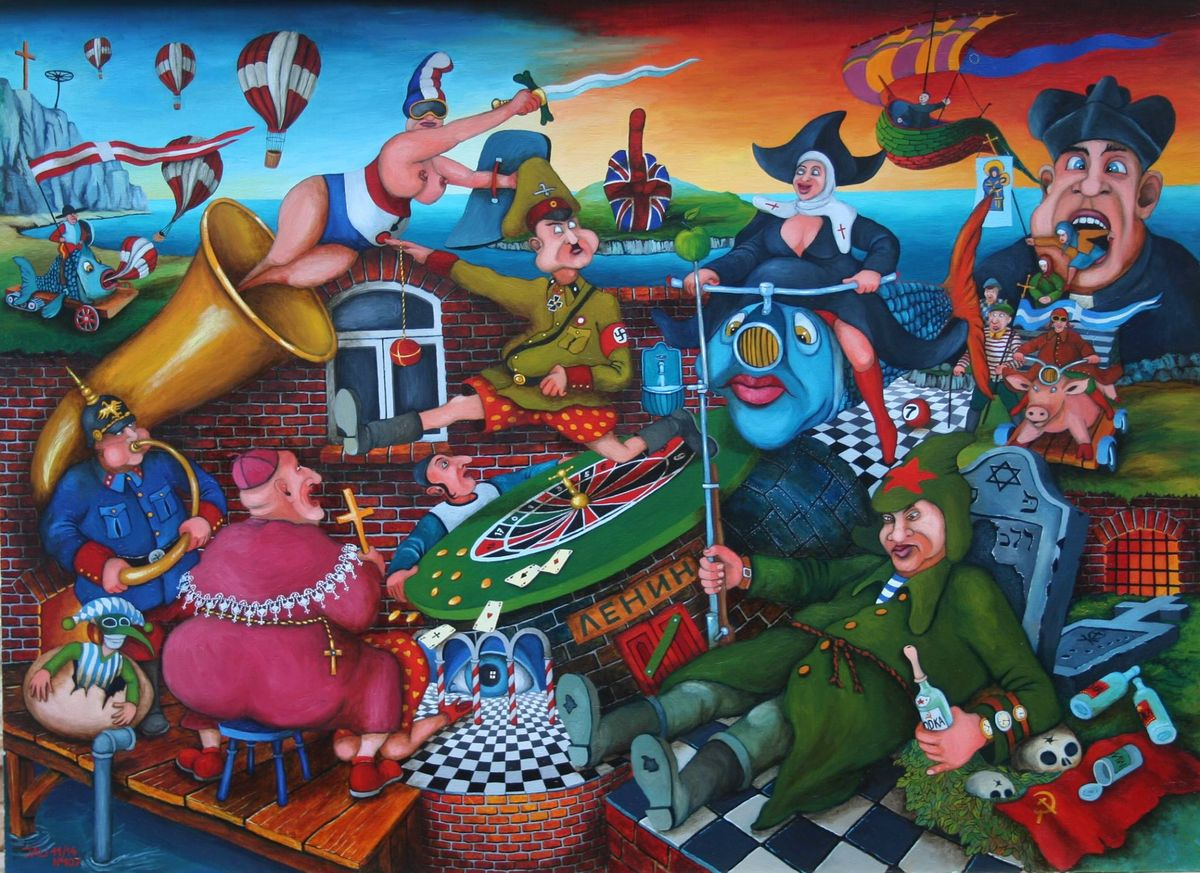
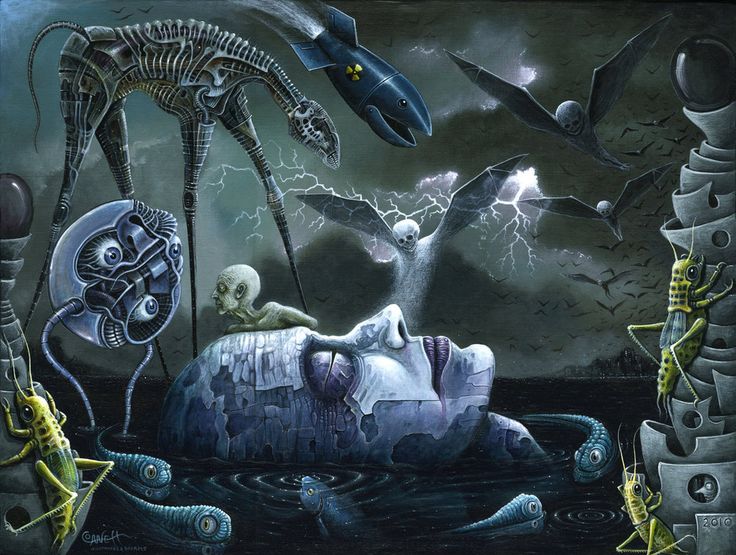
Title image: Dreamscapes and nightmares by the artist R.S. Connett.















You must be logged in to post a comment.