
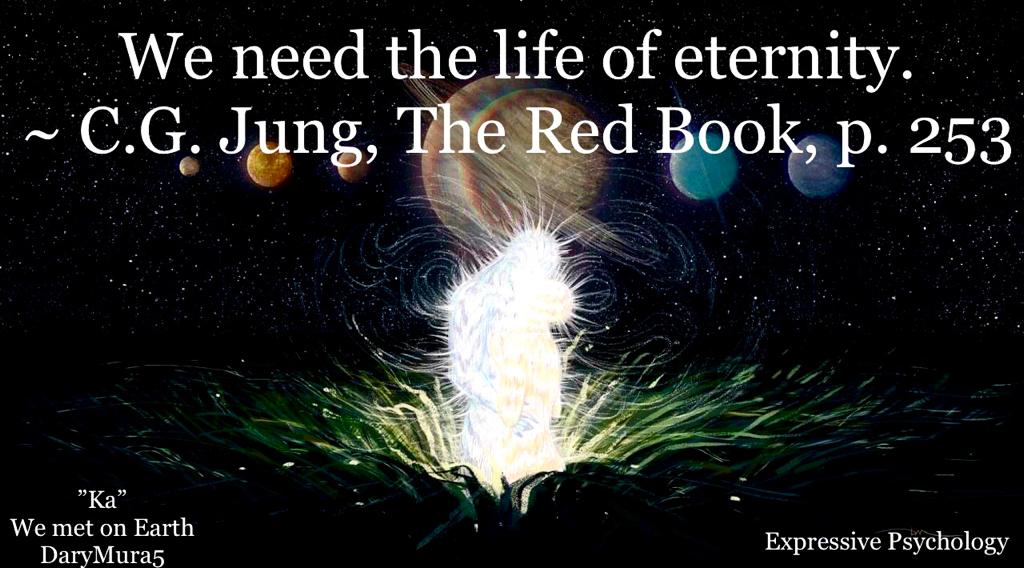
Today, I need to write a second post to celebrate Carl Jung’s sixty-fifth anniversary, and I just couldn’t let it pass!
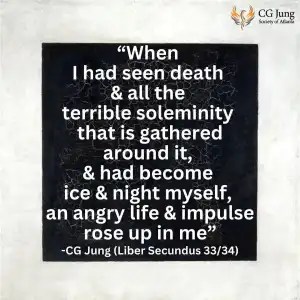
Carl Jung viewed death as a meaningful transition, emphasising its psychological significance in the acceptance of mortality. He saw it not merely as an end but as a vital part of the individuation process and a profound mystery inviting reflection, highlighting its spiritual dimension.
Jung believed that humans inherently recognise their mortality, which profoundly shapes the unconscious mind. He suggested that our perspectives on death shape our fears, values, creativity, and sense of purpose. Denying or repressing death can lead to psychological difficulties, whereas accepting it fosters growth and wisdom. Jung viewed death not only as a physical event but also as symbolic. Drawing on myth and religion, he noted that many cultures regard death as a transition to another state. These archetypal images reflect the collective unconscious. He believed that, like birth, death can be a form of transformation—a return to the greater whole from which life originates.
In his later works, Jung emphasised the importance of mentally and spiritually preparing for death. He encouraged individuals to confront their mortality openly and reflectively, believing this approach could foster a deeper, more meaningful existence. Jung’s perspective on death was neither overly pessimistic nor escapist; instead, he regarded it as a profound mystery and a crucial part of human life, encouraging contemplation and acceptance.
Here is a letter Jug wrote to an unknown woman during his final days, in response to her question about how he expressed his thoughts on death. I am sharing this letter with you, sourced from a post by my friend Lewis Lafontaine, with many thanks.
Carl Jung on Life after Death
Letters of C. G. Jung: Volume 2, 1951-1961
Dear Frau N., 30 May 1960
My old age and the need for rest make me fight shy of too many visitors, so I have to confine myself as far as possible to written answers.
I can answer your question about life after death just as well by letter as by word of mouth.
Actually, this question exceeds the capacity of the human mind, which cannot assert anything beyond itself.
Furthermore, all scientific statements are merely probable.
So we can only ask: Is there a probability of life after death?
The point is that, like all our concepts, time and space are not axiomatic but are statistical truths.
This is proved by the fact that the psyche does not fit entirely into these categories.
It is capable of telepathic and precognitive perceptions.
To that extent, it exists in a continuum outside time and space.
We may therefore expect post-mortem phenomena to occur, which must be regarded as authentic.
Nothing can be ascertained about existence outside time.
The comparative rarity of such phenomena suggests at all events that the forms of existence inside and outside time are so sharply divided that crossing this boundary presents the greatest difficulties.
But this does not exclude the possibility that there is an existence outside time which runs parallel with existence inside time.
Yes, we ourselves may simultaneously exist in both worlds, and occasionally we do have intimations of a twofold existence.
But what is outside time is, according to our understanding, outside change.
It possesses relative eternity.
Perhaps you know my essay “The Soul and Death .”
For its scientific foundation, I would draw your attention to my “Synchronicity: An Acausal Connecting Principle,” in Jung and Pauli, The Interpretation of Nature and the Psyche. Psychology.
These are my essential thoughts, and I would not express them otherwise in a talk with you.
Yours sincerely,
C.G. Jung ~Carl Jung, Letters Vol. II, Page 561.


Us mortal introverts dream of saying No to visitors as gracefully as The Master here!😅… “No I cannot tolerate your company But please allow me to write you instead.”😁
I believe in reincarnation, my dear Aladin. And it frightens me more each day.
Hope you and the family have a most excellent weekend🍻🖖
LikeLiked by 1 person
Haha! Writing is always easier than getting personally involved! Anyway, I have no problem with reincarnation. Have a great time, brother. 🤗🙏🖖
LikeLike
Terrific post! I always look forward to these Jung posts and you never disappoint, friend!
LikeLiked by 1 person
Thank you, my friend. I am forever grateful for this inspiring reminder.
LikeLiked by 1 person
You’re very welcome!
LikeLiked by 1 person
So… maybe.
Jung has an eloquent way of putting things. His thoughts are like mine. Or, are my thoughts like his?
Perhaps his thoughts are best understood when one is divorced from the idea of god(s).
Happy birthday Mr. Jung! Happy Birthday Aladin! I don’t know the exact date of your birth, but you might as well share it with Jung, in many ways.
In others, you would share with your brother, Al.
Sending love! xxx❦🕊🤗🌹
LikeLiked by 1 person
Thank you so much, Resa, my lovely friend. You said it well; I believe Jung is in each of us if we look deeply within ourselves. Also, divorcing from all of them is a good idea!
PS: As you might notice, the topic is about his death because it’s his 65th anniversary! His birthday is in July, and mine is in August!! 😉☺️🙏💖
LikeLiked by 1 person
Ahhh! xoxoxoxo
LikeLiked by 1 person
A beautiful tribute to Jung!
His view of death as a transformation rather than an end is so powerful.
That letter is wonderful share.Thank you, dear Aladin
LikeLiked by 1 person
Thank YOU for your heartfelt, wise, and inspiring comment, my lovely friend. You makemehappywithyourkindness. 🙏❤️🌹🥰😘
LikeLiked by 1 person
As always, you’re more than welcome, dearest Aladin 💗🙏🌹
LikeLiked by 1 person
🙏🙏❤️❤️🙏🙏🫂
LikeLiked by 1 person
Jung’s theory on death is quite beautiful and a revelation.
Thank you for sharing, Aladin xx
LikeLiked by 1 person
Oh yes! It dispels fear and helps us see the whole situation from a new perspective!
Thank you once more, dear friend, for stopping by. 🙏🥰
LikeLike