
Most of the fundamental ideas of science are essentially simple and may, as a rule, be expressed in a language comprehensible to everyone.
~Albert Einstein
Today, I will continue from my previous instalment and share the second part of Freud’s chapter on how memories influence dreams.
Dr Freud reviews various researchers’ perspectives on dreams and offers several compelling examples of how human memories shape them.
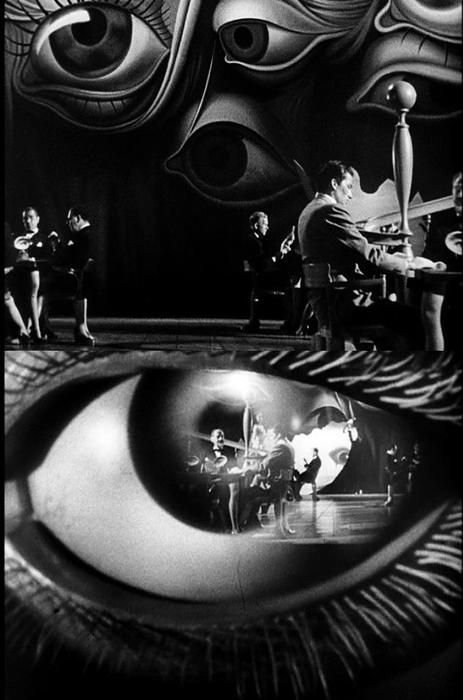
(The title image I chose depicts a scene from one of my favourite Hitchcock films, in which Salvador Dali designed the sets for the dream sequences.)
The Material of Dreams—Memory in the Dream (Das Traummaterial – Das Gedächtnis im Traum)
The fact that the dream contains memories inaccessible to the waking state is so curious and theoretically significant that I wish to draw further attention to it by recounting other such “hypermnestic” dreams. Maury relates that, for a time, the word “Mussidan” would frequently come to his mind during the day. He knew it was the name of a French town, but nothing more. One night, he dreamt of a conversation with a certain individual who told him that she hailed from Mussidan; when he asked where the town was situated, she replied that Mussidan was a district town in the Département de la Dordogne. Upon waking, Maury placed no credence in the information he had received in his dream; however, a geographical dictionary informed him that it was entirely accurate. In this instance, the dream’s superior knowledge was confirmed, yet the forgotten source of that knowledge remained undiscovered.
Jessen recounts (p. 55) a very similar dream occurrence from earlier times: “To this category belongs, among others, the dream of the elder Scaliger (Hennings, *l. c.*, p. 300), who had written a poem in praise of the famous men of Verona; a man calling himself Brugnolus appeared to him in a dream and complained that he had been forgotten. Although Scaliger could not recall ever having heard of him, he nevertheless composed verses in his honour; his son subsequently learned in Verona that just such a Brugnolus had indeed once been renowned there as a critic.”
In a source to which I unfortunately do not have access (the *Proceedings of the Society for Psychical Research*), Myers is said to have published an entire collection of such hypermnestic dreams. I believe that anyone who occupies themselves with dreams must acknowledge that it is a very common phenomenon for a dream to bear witness to knowledge and memories which the waking subject does not suppose themselves to possess. In my psychoanalytic work with neurotic patients—which I shall discuss later—I find myself, several times a week, in a position to demonstrate to patients, based on their dreams, that they know quotations, obscene words, and the like very well, and that they make use of them in their dreams, even though they have forgotten them in their waking lives. I should like to share one harmless instance of dream hypermnesia here, as the source from which this knowledge—accessible only to the dream—originated was very easily traceable.
A patient dreamed—as part of a longer narrative sequence—that he was ordering a “Kontuszówka” for himself in a coffeehouse; however, when recounting the dream, he asked what on earth that might be, saying he had never heard the name before. I was able to reply that Kontuszówka is a Polish spirit—a name he could not possibly have invented in his dream, as I myself had long been familiar with it from posters. At first, the man refused to believe me. A few days later, after he had turned his dream into reality by ordering the drink in a coffeehouse, he noticed the name on a poster—specifically at a street corner he had been obliged to pass at least twice a day for months.
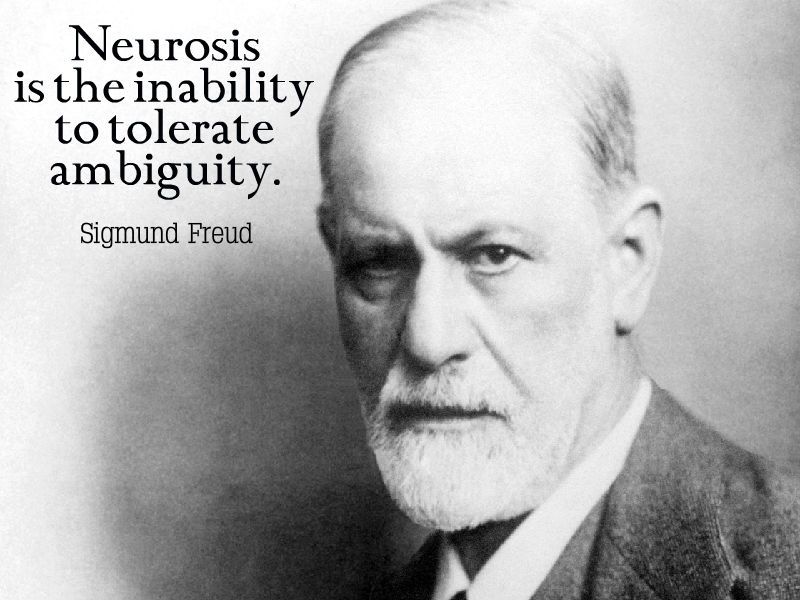
One of the sources from which the dream draws material for reproduction—material that, in part, is neither recalled nor utilised during waking thought—is childhood life. I shall cite only a few of the authors who have noted and emphasised this:
Hildebrandt (p. 23): “It has already been expressly acknowledged that the dream, at times, with a marvellous power of reproduction, faithfully brings back to our minds events that are quite remote and even forgotten, dating from the distant past.”
Strümpell (p. 40): “The matter becomes even more remarkable when one observes how the dream—at times, as it were, from beneath the deepest and most massive layers of sediment that later life has deposited upon the earliest experiences of youth—brings forth images of specific localities, objects, and persons, entirely intact and with their original freshness. This is not limited merely to such impressions as may have attained a vivid level of consciousness at the moment of their inception, or become imbued with strong psychological significance—impressions that subsequently reappear in the dream as genuine memories, in which the awakened consciousness takes delight. Rather, the depth of dream-memory encompasses also those images of persons, objects, localities, and experiences from earliest times which either possessed only a faint degree of consciousness or no psychological significance whatsoever—or which had long since lost both—and which, for this very reason, appear utterly strange and unfamiliar both within the dream and upon awakening, until their distant origin is finally discovered.”
Volkelt (p. 119): “It is particularly noteworthy how readily memories of childhood and youth find their way into dreams. Things we have long ceased to think about—matters that have long since lost all significance for us—the dream tirelessly reminds us of them.” The dream’s dominion over childhood material—which, as is well known, largely falls into the gaps of conscious memory—gives rise to interesting hypermnestic dreams, of which I shall, in turn, present a few examples.
Maury recounts (in *Le sommeil*, p. 92) that, as a child, he often travelled from his hometown of Meaux to nearby Trilport, where his father was supervising the construction of a bridge. One night, a dream transports him back to Trilport, allowing him to play once again in the town’s streets. A man approaches him, wearing a uniform. Maury asks for his name; he introduces himself as C… and says he is the bridge keeper. Upon waking—still doubting the memory’s reality—Maury asks an old servant, who has been with him since childhood, whether she can recall a man by that name. “Certainly,” comes the reply, “he was the keeper of the bridge your father built back then.”
Maury recounts another beautifully confirmed example of the accuracy of childhood memories surfacing in dreams, concerning a Mr F… who had grown up in Montbrison. Twenty-five years after leaving, this man decided to revisit his hometown and see old family friends he had not encountered since. On the night before his departure, he dreamed that he had arrived at his destination and, near Montbrison, met a gentleman whose appearance was unfamiliar to him; the man identified himself as Mr T., a friend of his father. The dreamer knew he had known a man by that name during childhood, but could not recall what he looked like while awake.
Upon actually arriving in Montbrison a few days later, he rediscovered the location from the dream—which he had previously not recognised—and met a gentleman whom he immediately identified as Mr T. from the dream. The real person had simply aged more than the figure in the dream image had suggested.
To be continued!
PS: I’ll translate and share the rest of this chapter in my next post. However, I’ve been told I need another surgery soon (the old problem is the new problem!), so I’m unsure when I can do so. Wishing all the best! 🤗💖


You are the best of the lot. All the best, Mike
LikeLiked by 1 person
You are truly gracious, my dear brother, teacher, and friend. I am deeply grateful.
Sincerely yours, Aladin.
LikeLike
An interesting read! I have seen Spellbound, an excellent movie. Wishing you a quick recovery and hope to see you back soon.🌹
LikeLiked by 1 person
The movie was, and still is, undeniably a masterpiece of its time. Many thanks, dear Holly, for taking the time to read.
🤗🙏💖🌹
LikeLiked by 1 person
As a classic movie fan, I agree , Spellbound is a masterpiece! Thank you. 🤗🙏
LikeLiked by 1 person
🤗💖
LikeLiked by 1 person
I agree about Spellbound! Take care, friend!
LikeLiked by 1 person
Thanks a lot, dear friend. 🙏🙏
LikeLiked by 1 person
You’re very welcome!
LikeLiked by 1 person
🤗🙏
LikeLiked by 1 person
😀
LikeLiked by 1 person
Our Memory is much stronger than we know consciously!.. Hoping for a swift recovery. You will be in our prayer this evening— my sister and I. Wishing you the best🙏🖖
LikeLiked by 1 person
Indeed! Even the memories from a very distant past. 😉
Thank you, mate, and your lovely sister. 🤗🙏🖖
LikeLike
First, Aladin… when is this next new/old surgery? You know I’m hoping the best!
A most intriguing article about dreams, and this explains some dreams. Actually, each article explains something about my dreams.
In some dreams, whatever the imagery, I wake up with heart palpitations. I’m foreseeing something, and when I wake up, I believe I know what it is. And that comes true.
In these dreams I am managing fear. They are either in dark locations, or high on mountains, or in a sea with very few places to come ashore. There are people currently in my life in these dreams.
I look forward to your next post, and discovering something else about my dreams, whether it relates to what I have mentioned above, or not.
Be well dear friend! I will write you soon!
xo❦🌹❦xo
LikeLiked by 1 person
Wow, fascinating! It appears your unconscious mind is very active during your dreams. I’ve heard of many dreams that trigger a racing heart due to excitement. One might even dare to dive into the abyss!
I would love to read more of your interpretations based on Freud’s analyses.
And yes, as you mentioned, it’s an old/new or new/old surgery that I hope will be the last!
Thank you, my dear friend.
🙏💖🥰👥😘
LikeLike
Do visitations while asleep count as dreams? I had dreamt my great aunt passed away, she came to say goodbye, and then I learnt the news of her death the following day. She lived in Argentina, quite a distance away from my home in Australia!
Amazing article as always, Aladin.
I’m sorry to hear you need to have another operation. Blessings to you xx
LikeLiked by 1 person
Interesting! As I know, dreams can also serve as messages from another dimension. My mother and my aunt possessed this ability, and you have it as well. 😉🤗
Thank you for your kind wishes. I hope this is the last one. 🙏💖
LikeLike
As always, I found your post interesting and fascinating; I’ve been dreaming about my childhood and youth lately.
My warmest and most sincere wishes for the surgery you’re about to undergo.
LikeLiked by 1 person
Thank you, dear Luisa. I think we dream of our youth more often as we get older. 😉😊
And thanks so much for your kind wishes.🙏🥰🫂
LikeLiked by 1 person
Sending a big hug 🤗
LikeLiked by 1 person
🙏🫂🩷
LikeLiked by 1 person