

Dream Stimuli and Dream Sources (Traumreize und Traumquellen)
Hello, dear friends. I’m sharing another section of Freud’s book with my translation. I hope you find it interesting and insightful. This part discusses forgetting dreams—I usually forget mine, though the ones that endure seem to stay forever. I believe we forget dreams after waking because we don’t want to remember them right away, so we push them into the unknown for later.
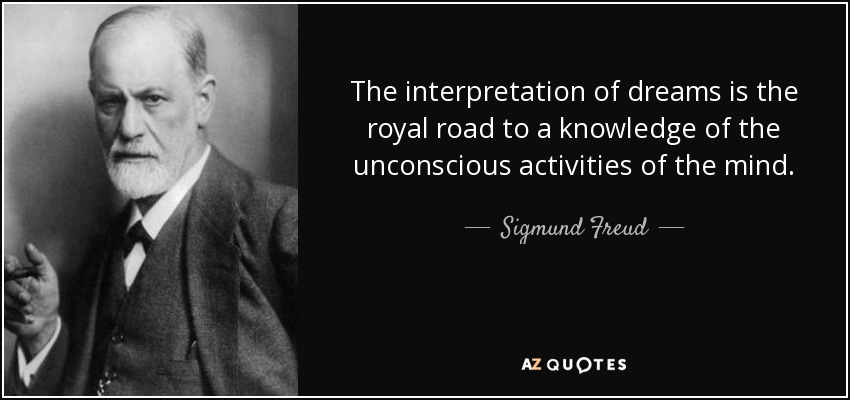
Anyway, Dr Freud explains why we forget our dreams, and I think his research is worth exploring, especially since Dr Carl Jung admired Freud’s work. Here are some quotes from Carl Jung’s Depth Psychology, by my good friend Lewis Lafontaine. 🙏
It is Freud’s great achievement to have put dream-interpretation on the right track. ~Carl Jung, CW 8, Para 539
“Freud was kind to people and gave them his interest; that was what cured, and that is what always cures – the human contact.”
~Carl Jung, Meetings with Jung, Page 48
Let’s proceed with Freud’s arguments. The previous chapter is available here!
Why do we forget the dream after waking up? (Warum man den Traum nach dem Erwachen vergisst?)
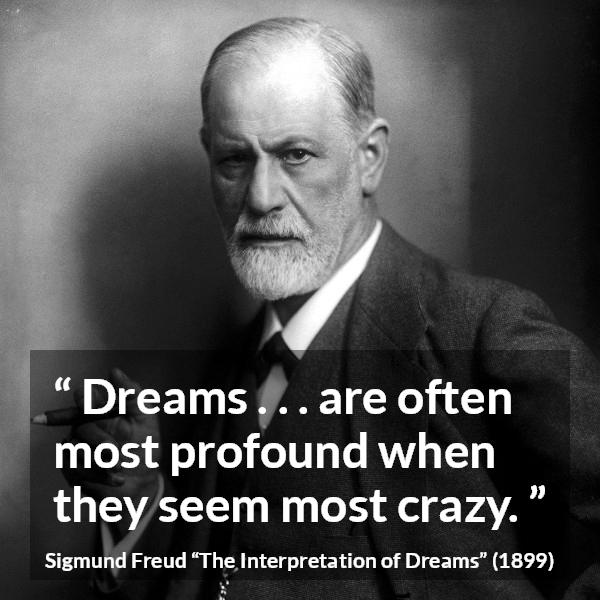
It is proverbial that a dream “dissolves” in the morning. Yet it is certainly capable of being remembered. After all, we know the dream only through memory after waking; yet we very often believe that we recall it only incompletely, whereas more of it was present during the night; we can observe how a dream memory—vivid in the morning—fades over the course of the day until only small fragments remain; we often know that we have dreamt, but not what we dreamt; and we are so accustomed to the experience of dreams being subject to oblivion that we do not dismiss as absurd the possibility that a person who, in the morning, knows nothing of the content or even the fact of having dreamt, might nevertheless have dreamt during the night. On the other hand, it happens that dreams display extraordinary persistence in memory. I have analysed dreams of my patients that occurred twenty-five or more years ago, and I can recall a dream of my own separated from the present by at least thirty-seven years, yet it has lost nothing of its freshness in memory. All this is very strange and, at first glance, incomprehensible.
Strümpell discusses the forgetting of dreams at greatest length. This forgetting is evidently a complex phenomenon, for Strümpell attributes it not to a single cause but to a whole series of reasons.
To begin with, the same factors that cause forgetting in waking life are at work in the forgetting of dreams. When awake, we tend to quickly forget a vast number of sensations and perceptions because they were too weak—because the mental excitation associated with them was insufficiently intense. The same applies to many dream images: they are forgotten because they were too weak, whereas stronger images that occur alongside them are remembered. However, intensity alone is not the decisive factor in retaining dream images; Strümpell, like other authors (such as Calkins), acknowledges that we often quickly forget dream images known to have been very vivid, while many of the images retained in memory are shadowy and faint. Furthermore, in the waking state, we tend to forget events that occurred only once, while remembering better those we perceived repeatedly. However, most dream images are unique experiences (though recurring dreams have been noted; cf. Chabaneix’s collection); this characteristic inevitably contributes to the forgetting of all dreams. A third reason for forgetting is far more significant. For sensations, mental images, thoughts, and the like to attain a certain degree of memorability, they must not remain isolated but rather enter into appropriate connections and associations. If one breaks a short verse down into its constituent words and jumbles them, it becomes very difficult to commit it to memory. “When well-ordered and arranged in a logical sequence, one word supports another, and the whole remains firmly, easily, and enduringly in the memory. We generally find it just as difficult—and rare—to retain nonsensical material as we do material that is confused and disordered.”
Yet, in most cases, dreams lack coherence and order. Dream compositions inherently lack the basis for their own retention and are forgotten because they usually disintegrate almost immediately. – Admittedly, this view does not quite align with Radestock’s observation (p. 168) that it is precisely the strangest dreams we remember best.
Strümpell considers other factors, derived from the relationship between the dream and waking life, to be even more significant in causing dreams to be forgotten. The fact that dreams are forgotten by waking consciousness is evidently merely the counterpart to the previously mentioned fact that the dream (almost) never incorporates organised memories from waking life, but rather only isolated details torn from the familiar mental associations in which they are recalled during the waking state. Dream imagery thus finds no place within the array of mental sequences that fill the mind; it lacks all mnemonic aids. “In this way, the dream formation detaches itself, as it were, from the soil of our mental life and floats in the psychic realm like a cloud in the sky, quickly dispersed by a fresh breath of air” (p. 87). Working in the same direction is the fact that, upon waking, the encroaching sensory world immediately lays claim to one’s attention, so that very few dream images can withstand this force. They give way to the impressions of the new day just as the radiance of the stars fades before the light of the sun.

Finally, a factor conducive to the forgetting of dreams is that most people show little interest in them to begin with. For instance, anyone who—perhaps as a researcher—takes an interest in dreams for a time will also dream more than usual during that period; this presumably means they recall their dreams more easily and more frequently.
Two other reasons for the forgetting of dreams—added by Bonatelli (cited in Benini) to those proposed by Strümpell—are arguably already implicit in the latter: namely, 1) that the shift in general bodily sensation between sleep and wakefulness is unfavourable to reciprocal recall, and 2) that the different arrangement of mental imagery in dreams renders them, so to speak, untranslatable for waking consciousness.
Given all these reasons for forgetting, it becomes—as Strümpell himself emphasises—all the more remarkable that so much of our dreams is nevertheless retained in memory. The persistent efforts of authors to formulate rules for recalling dreams amount to an admission that, here too, something remains enigmatic and unresolved. Certain peculiarities in the recollection of dreams have rightly attracted special attention of late—for instance, the fact that a dream one believes to have forgotten in the morning may be recalled later in the day, triggered by a perception that happens to touch upon the dream’s—supposedly forgotten—content (Radestock, Tissié). However, the entire phenomenon of dream recall is subject to an objection that could well lead a critical observer to devalue it significantly. One might question whether our memory—which omits so much of the dream—also distorts the fragments it has preserved.
Strümpell also voices doubts about the accuracy of dream reproduction: “It easily happens, then, that waking consciousness involuntarily inserts various elements into the memory of the dream: one imagines having dreamt all sorts of things that the actual dream did not contain.” Jessen expresses himself particularly emphatically on this point (p. 547):
“Moreover, when examining and interpreting coherent and logical dreams, one must give serious consideration to a circumstance that—it seems—has hitherto received little attention: namely, that the truth is almost always compromised in the process, because, when we recall a dream we have had, we—without noticing or intending to—fill in and supplement the gaps in the dream imagery. Rarely, and perhaps never, was a coherent dream actually as coherent as it appears to us in memory.
Even for the most truthful person, it is scarcely possible to recount a remarkable dream one has experienced without any additions or embellishments; the human mind’s drive to perceive everything as a coherent whole is so strong that, when recalling a somewhat disjointed dream, it involuntarily supplies the missing links in the narrative.”
V. Egger’s remarks, which were certainly conceived independently, sound almost like a translation of Jessen’s words: »… l’observation des rêves a ses difficultés spéciales et le seul moyen d’éviter toute erreur en pareille matière est de confier au papier sans le moindre retard ce que l’on vient d’éprouver et de remarquer; sinon, l’oubli vient vite ou total ou partiel; l’oubli total est sans gravité; mais l’oubli partiel est perfide; car si l’on se met ensuite à raconter ce que l’on n’a pas oublié, on est éxposé à compléter par imagination les fragments incohérents et disjoints fourni par la mémoire …; on devient artiste à son insu, et le récit periodiquement répété s’impose à la créance de son auteur, qui, de bonne foi, le présente comme un fait authentique, dûment établi selon les bonnes méthodes …« {Observing dreams poses particular difficulties, and the only way to avoid error in such matters is to commit to paper, without the slightest delay, what one has just experienced and noted; otherwise, forgetting—whether total or partial—quickly sets in. Total forgetting is of no consequence, but partial forgetting is treacherous; for if one subsequently sets out to recount what has not been forgotten, one risks filling in the gaps—using one’s imagination—within the incoherent, disjointed fragments supplied by memory… One becomes an artist unwittingly, and the story, through repeated telling, comes to be believed by its own author, who then—in good faith—presents it as an authentic fact, duly established according to sound methods…}
Spitta (p. 338) holds a very similar view; he seems to assume that it is only when we attempt to reproduce the dream that we introduce order into the loosely associated dream elements—”transforming the side-by-side arrangement into a sequence or a separation, thereby adding the process of logical connection that is absent in the dream.”
Now, since we possess no means of verifying the accuracy of our memory other than objective confirmation—which is impossible in the case of a dream, an experience of our own for which memory is the sole source—what value can we still attach to our memory of the dream?
_____________Stay tuned! More coming soon!_________________
Thank you all so much, dear friends. As for my condition, I was constantly bouncing around and acting without paying attention to my age. But after the recent surgery, I realise, and must admit, with my tired bones, that I am an old man now! This is the reality of life on this earth, and I accept it.
I may write an extra post about that.
Take care, everyone.🙏🤗






You must be logged in to post a comment.