I’m sharing a brief update today to avoid repeating last week’s mistake of not mentioning my absence. After three days, I took a short trip with my wife and kids. We’re also planning another two-week holiday near Athens, Greece, starting on Sunday. Although my current situation isn’t ideal, I feel like I’m in a twilight zone (pardon me; I pray to be able to empty my bladder every time I go to the toilet!). Still, I don’t want to cancel this trip, which my wife is very excited about. So, after the vacation, before the vacation!
Reflecting on my age, I don’t feel like I’ll be seventy-two soon. I don’t act like a typical person my age, and people are often surprised when they find out how old I am. I recognise that ageing brings wisdom and value: as Carl Jung said, “Life really does begin at forty. Up until then, you are just doing research.” This idea divides human life into two psychological phases, shifting the focus from survival to inner purpose. “Die Lebenswende” (translated as “The Turning Point of Life” or “The Stages of Life”), a pivotal 1930/1931 essay by Carl Jung.
Certainly, he focuses more on the mental aspect than the physical, as I observe daily that I cannot act or react as I once did. There’s a fleeting warning to slow down; I’m no longer as quick as I used to be.
Eventually, we all age gradually and need to accept our situation, but we should never lose sight of the child within us! Also, continue researching and asking questions; learning never ends. Take care, dear friends.
“Song For The Asking” Here is my song for the asking Ask me, and I will play So sweetly, I’ll make you smile This is my tune for the taking Take it, don’t turn away I’ve been waiting all my life Thinking it over, I’ve been sad Thinking it over, I’d be more than glad To change my ways for the asking Ask me, and I will play All the love that I hold inside
PS: I’ll leave the comment open, though I might reply later. You might be aware that I’m on my way and uncertain when I’ll be able to respond. I don’t want to miss your generosity; thanks in advance. 🥰🙏💖
I have kept writing about my brother Al regularly every day of his anniversary.However, yesterday, the day he left the Earth, all the negative feelings stemming from the issues I am facing overwhelmed me, leaving me unable to think clearly and without energy. In any case, the precise date isn’t very significant, since Al is always on my mind. While I don’t view death as an end, Carl Jung’s words always echo in my ears: ‘Death is a drawing together of two worlds, not an end.’ We are the bridge.
Still, before I melt into the chair from the heat, it is good to have a review.
It is one of the unforgettable memories that I would like to share with you here:
You came, sweating, on a hot summer afternoon, and I was surprised. You were on military duty, far away in the south, but suddenly you were there. You said, “I can’t anymore!” You had escaped that mess! In Iran, two years of military service are mandatory, and if one refuses, they have no chance of finding a job and will be sent to jail.
When it was your turn for military service, I was very worried about you; I knew we were not suited to the military, since our mother wanted to send us to a military school because she was tired of our unconventional behaviour. Still, one of our family members, a general, advised her not to do so. He told her that we were the sons of a thinker and intellectual, and that this was controversial for military school.
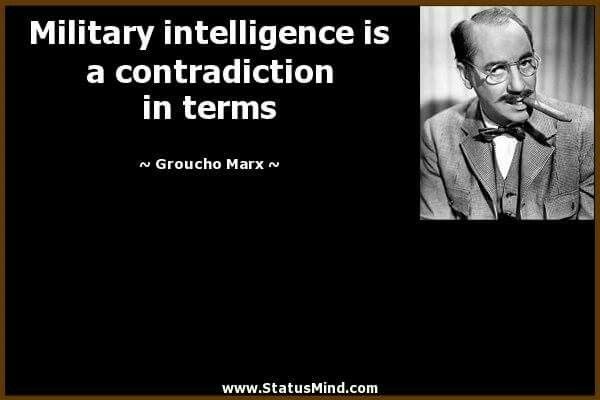
“Military intelligence is a contradiction in terms,” as Groucho Marx once said. However, during the first three months of your service, you were in northern Tehran, could often come home, and found wonderful, unconventional friends there. Still, after that, they sent you far away to the south, far from home, far from your room, music, and solitude. After about two weeks, you left everything behind, came home, went to your room, put on a Beatles vinyl (Abbey Road), lay down, and listened. Oh yes, I wasn’t a revolutionary like you yet and was a bit conservative! I asked you what would happen to you after this escape, about your life and your future. It doesn’t matter to me, he said; it is not my world! I asked, What world is yours? And he answered, “It is a world inhabited all by crazy people!”
Of course, it took me a while to understand your stance on that crazy world. I remember it well. I was in the bathroom, under the shower, and there, like Archimedes, I cried out, “Eureka! Eureka! I know now what the matter is: I know now that I don’t know!” It’s been about nineteen years since you, in your belief, transitioned to that level of existence. May you have found your crazy world by now. I can still see the image before my eyes; the moment you were lying on the ground, listening to music, while I sat helplessly before you. Still, that haunting, sad song brings tears to my eyes. I think of you so often!
PS: I might be unavailable next week as I plan to visit a friend, unless I need urgent surgery and must stay in hospital. We’ll see how things unfold! Wishing everyone a peaceful and wonderful time.
This is my final post of the year, and I reflected on the joy of carrying music into the new year; may it be a year filled with peace, love, and music.
Music, a universal language, has played a crucial role in human civilisation, shaping emotions, cultures, and societies for centuries. It can evoke feelings and memories, reduce stress, and uplift mood, supporting mental well-being. Music influences cultures, brings communities together, and promotes social cohesion through events like ceremonies, concerts, and festivals. It connects generations, displays creativity, and allows us to express ourselves and build connections. Moreover, music is a significant educational resource, transmitting stories and messages across generations via lyrics and melodies. National anthems, protest songs, and lullabies inspire, motivate, and offer comfort to people from all backgrounds. Overall, music’s significance extends beyond entertainment; it fosters emotional health, strengthens bonds, and enriches cultural traditions. It remains a vital aspect of the human experience, deserving of recognition and preservation.
Rainy Blues, Painting by Michael Cheval. 2024
We all, more or less, consciously or unconsciously, listen to music every day. Since the songs are created by humans rather than artificial means, they primarily affect our mood. I grew up surrounded by music because my mother loved it. My older brother, Soroosh, who brought home many LPs and singles, taught Al and me numerous songs, bands, and songwriters.
I don’t know about you, but I prefer listening to music on recorders or vinyl in my home rather than in a concert hall. You know, in this way, I can immerse myself more deeply in each note or sound and feel the composer’s emotions. It reminds me of a film I saw many years ago: Luchino Visconti’s Conversation Piece (Italian: Gruppo di famiglia in un interno),starring Burt Lancaster and Helmut Berger, etc. In which Professor (Burt Lancaster) says the same to Konrad (Helmut Berger).
However, I didn’t come across that part!😁😅
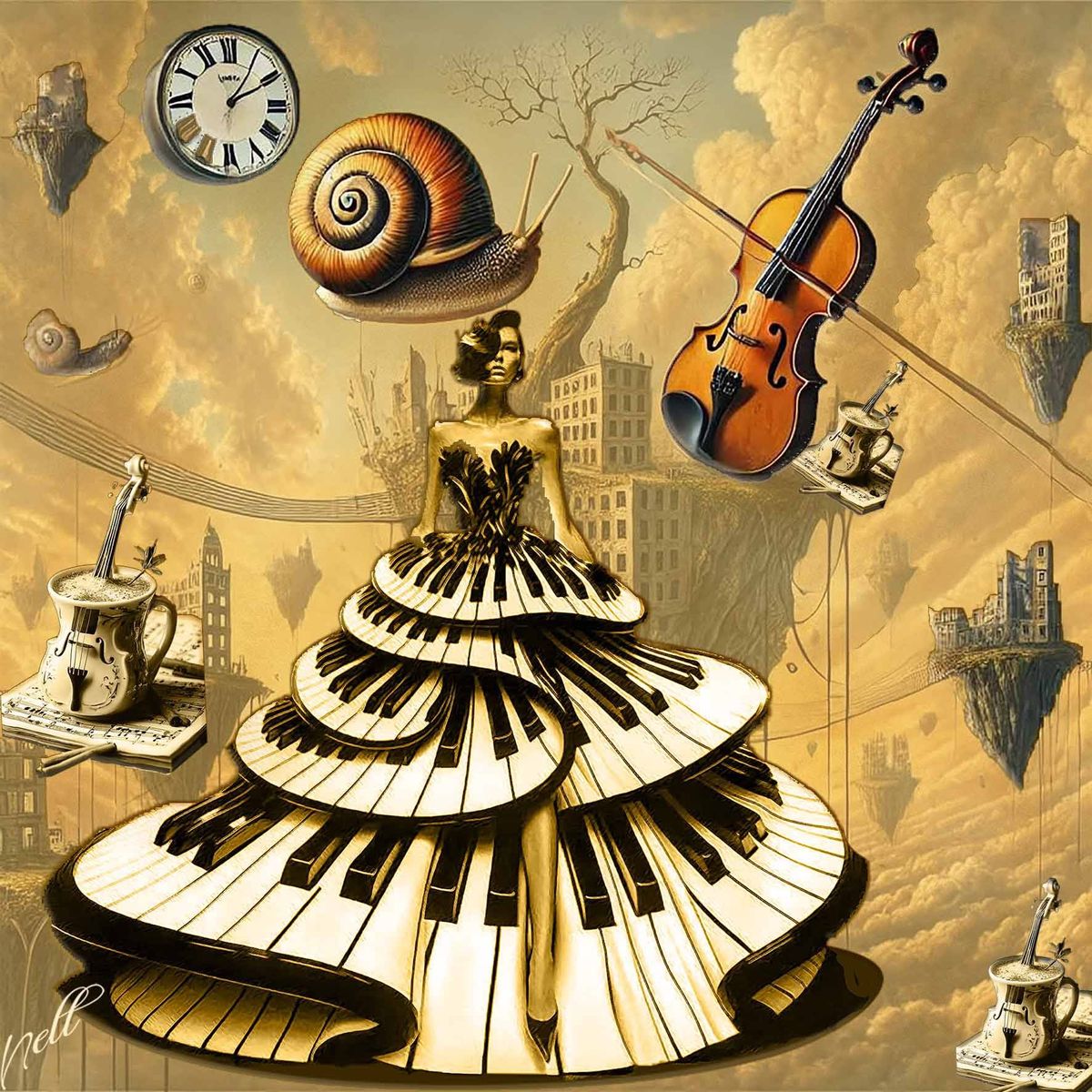
I came across these illustrations of classical music, created with modern techniques or AI, to show how melodies express emotion. I found them quite fascinating.
And here’s a surprising twist: artificial intelligence shows it understands art far better than humans!
I hope you enjoy them! Wishing you, wherever you are, a wonderful Silvester Eve and a joyful start to the New Year, filled with peace and love. Take good care! 💖🌟🥰🥂
Recently, I’ve been overwhelmed by memories and dreams that take me back to the past, recalling the unforgettable times when Al and I faced our ups and downs and challenging moments.
I avoid saying things like “happy heavenly birthday” because birthdays are truly earthly, not heavenly! In heaven, every day might be a birthday! And I believe it’s simply a traditional custom to use these anniversaries as reminders. However, I remember Al daily and in everything I do, and I can’t help but think of him and his lessons.
One of these memories is our arrival in Germany after fleeing Iran, and this time, it feels somehow significant because it marked the fortieth anniversary. We arrived at Düsseldorf airport in the evening on October 19th.
Although we had a close friend in the city, we didn’t want to trouble him. We considered renting a hotel room, but it was too costly. An airport staff member overheard us and suggested, “Why not sleep on a couch at the airport for the night?” We appreciated the kind idea, and even if it wasn’t as comfortable as a hotel, it was free!
Before we carried out that experiment, we took a walk through the large airport. As I clearly remember, in the department where packages are received, two older women were trying to manoeuvre their luggage onto a trolley, although the suitcases seemed too heavy for them. Al reacted quickly and helped them load the items onto the trolley. One of the women, thankfully, took some coins from her purse and offered them to Al, but he refused immediately and turned away. They were quite surprised, and I later learned that such acts are common in Germany, although Al felt a bit offended. Honestly, that money could have been useful to us, but Al was very proud, and it didn’t suit his class!
Anyway, that was a remarkable memory of that period, and I thought I would share it here, on his seventy-third earthly birthday. Yes, as I might repeat, every day is a birthday in heaven, as well as Christmas!
Today, I want to share something familiar, maybe ordinary, yet an important issue: Marriage! Of course, we can translate it into the modern language as a partnership, friendship, bedmate or lifemate, etc. But the main point is how much a couple should merge into each other, how close they must be and how deep.
Rene Magritte; Perfect Woman
I’ve had various experiences in the realm of relationships. I’ve had many different connections with different women, and you can imagine how much effort it took to understand the intricacies of this adorable gender. However, my current wife is the first and only one I’ve married. It took me about twenty-three years until to say “yes” and marry her and two more years to move in together. It wasn’t easy for either of us, but we’ve slowly but surely learned to respect each other’s boundaries and individualities over the years. We share one Life but have our own dreams, all while maintaining love and respect for each other.
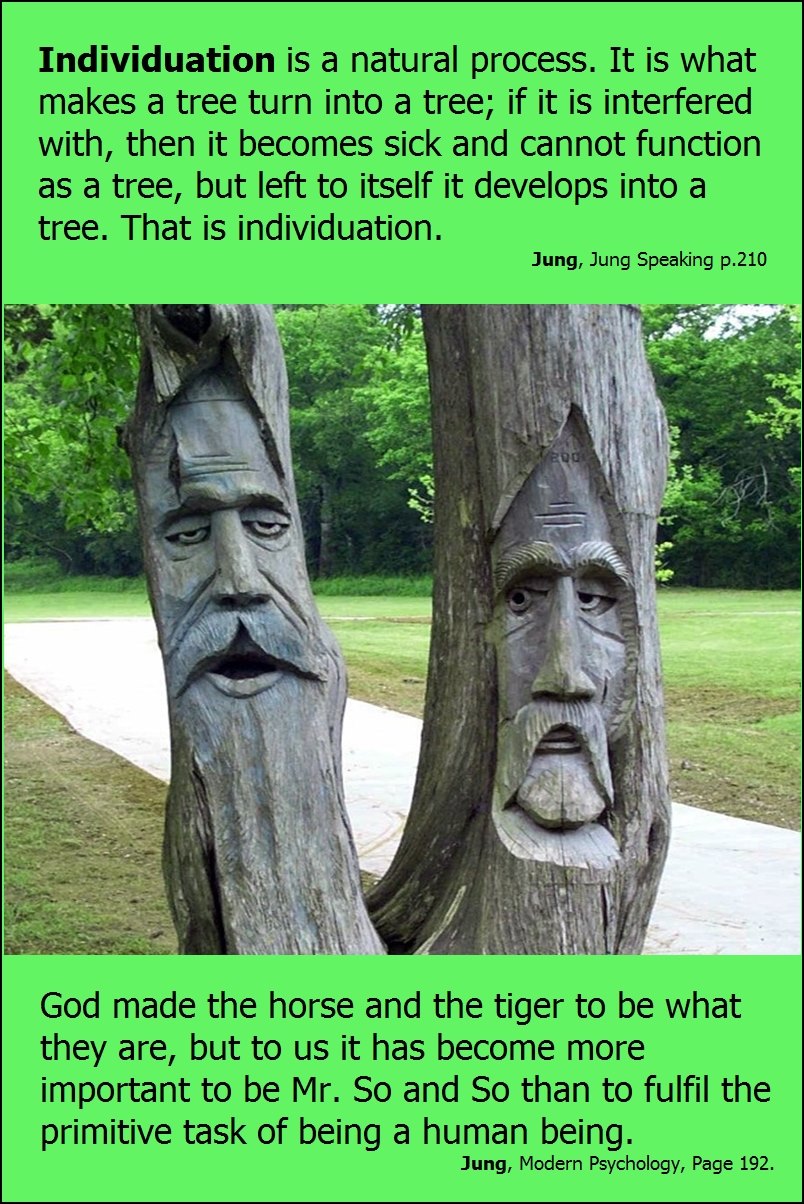
I have spent my life trying to understand the crucial topic in psychology called individuality. I finally succeeded with the help of Dr. Jung. It is essential for discovering and proving my uniqueness.
As it turns out, Kahlil Gibran also agrees with me. Here, I share a part of his book, “The Prophet”, about Marriage. I hope you enjoy reading it. Thanks, and have a peaceful weekend.
Sing and dance together and be joyous, but let each one of you be alone. Even as the strings of a lute are alone, though they quiver with the same music.
“Love is the only freedom in the world because it so elevates the spirit that the laws of humanity and the phenomena of nature do not alter its course_” Text and art by Kahlil Gibran
On Marriage, From the Book “The Prophet”
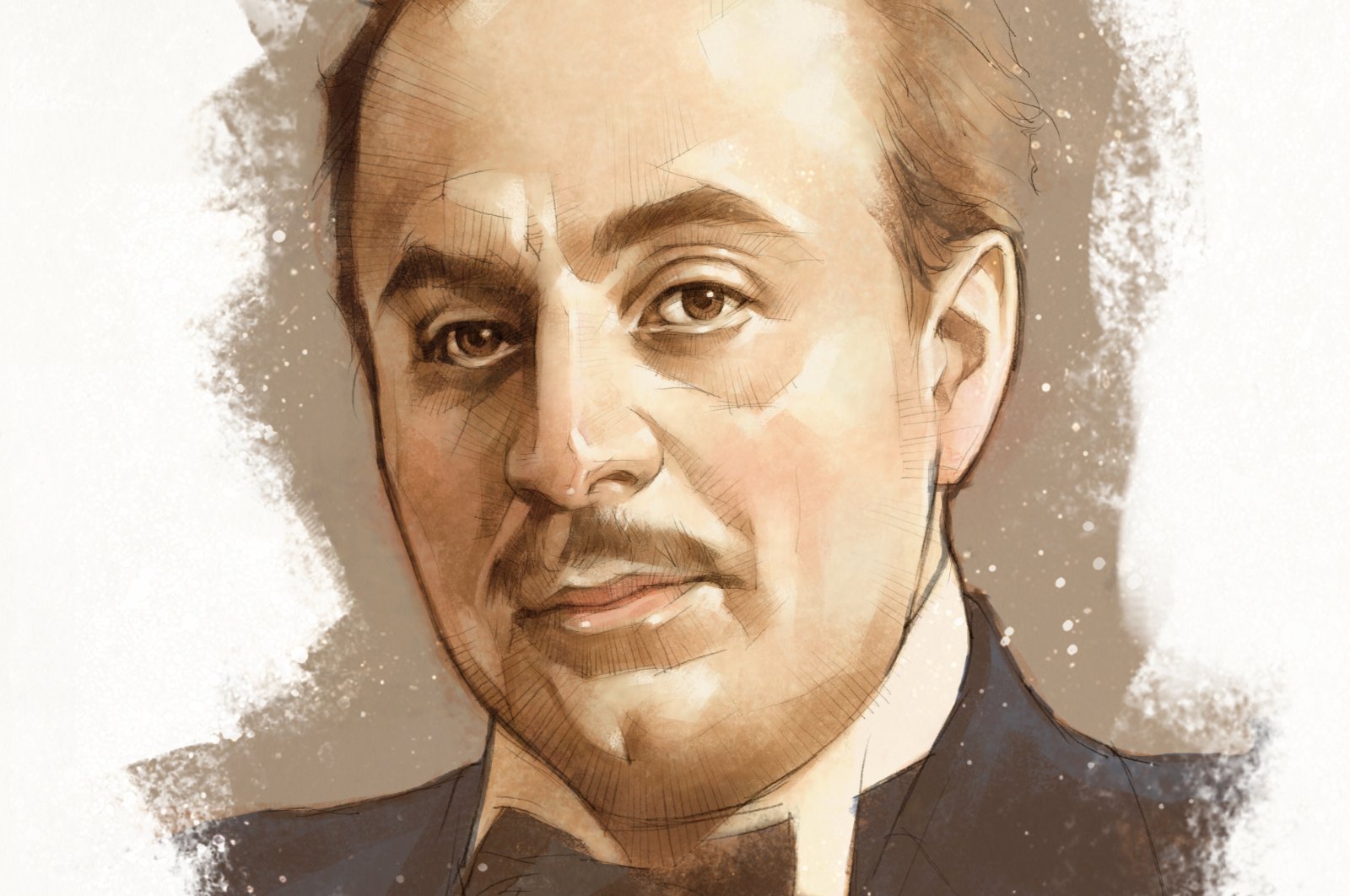
An illustration of Khalil Gibran. (Shutterstock)
Then Almitra spoke again and said: And what of Marriage, master? And he answered, saying: You were born together, and together you shall be forevermore. You shall be together when the white wings of death scatter your days. Aye, you shall be together even in the silent memory of God. But let there be spaces in your togetherness. And let the winds of the heavens dance between you. Love one another, but make not a bond of love: Let it rather be a moving sea between the shores of your souls. Fill each other’s cup but drink not from one cup. Give one another of your bread but eat not from the same loaf. Sing and dance together and be joyous, but let each one of you be alone. Even as the strings of a lute are alone, they quiver with the same music. Give your hearts, but not into each other’s keeping. For only the hand of Life can contain your hearts. And stand together, yet not too near together: For the pillars of the temple stand apart, And the oak tree and the cypress grow not in each other’s shadow.
Translated from volumes published by Lorenz Jung based on the edition “Gesammelte Werke” dtv.de The Symbols of Transformation (1952) and Aion (1950)
Recently, on X (Twitter), during one of Perian’s talks titled “The Way of Democratic Talk,” someone mentioned that social morals are crucial for keeping people mindful of their behaviour towards others. I responded that social morals are relative and not constant; throughout human history, they have consistently changed after wars or revolutions. I prefer to use the word “conscience.” Another friend said she would stick with “morals” because she was tired of having a guilty conscience. I replied that conscience is based on inner awareness and individuality and, therefore, has a more substantial and profound foundation, strengthening our consciousness as individuals.
Anyway, it was a prologue to noticing that words like consciousness, ego, anima, and their influential product, Mana, are important to take seriously. Mana may sound strange and unknown, but we all have it inside us!
Jung has always attempted to clarify that good and evil exist within every human and has made significant efforts to help us realize that it all depends on us to recognize these and find the balance between them.
Illustration at the top: NIKOLAY ZAITSEV
Here, in the continuation of the first part, I share some more words from this magical Mana.
Individuation The Mana Personality (P2)
‘Parsifal’ illustrations for Richard Wagner’s opera by Franz Stassen.
Who has now come to terms with the anima? Apparently, the conscious “I”, and therefore the “I”, has taken over the Mana. In this way, the conscious “I” becomes the Mana personality. The Mana personality, however, is a Dominant of the collective unconscious, the well-known archetype of the mighty man in the form of the hero, the chief, the magician, the medicine man and saint, the lord of men and spirits, the friend of God.
This is now a male collective figure that emerges from the dark background and takes possession of the conscious personality. This psychological danger is of a subtle nature; by inflating consciousness, it can destroy everything that has been gained through the confrontation with the anima. It is, therefore, of no minor practical importance to know that in the hierarchy of the unconscious, the anima is only the lowest level and one of the possible figures and that its overcoming creates another collective figure that now takes over its Mana. In reality, it is the figure of the magician – as I will call her in short – that draws the Mana, that is, the autonomous value of the anima to itself. Only insofar as I am unconsciously identical with this figure can I imagine that I myself possess the Mana of the anima. But under these circumstances, I will do so infallibly.
SD World _ Youri Ivanov _ Jouris Kunst
The figure of the magician has a no less dangerous equivalent for women: it is a maternal, superior figure, the great mother, the all-merciful one who understands everything and forgives everything and always wanted the best, who always lived for others and never sought her own, the discoverer of great love, just as it is the herald of the ultimate truth. And just as great love is never appreciated, great wisdom is never understood either. And they can’t stand each other at all.
There must be a serious misunderstanding here because it is undoubtedly a case of inflation. The “I” has appropriated something that does not belong to it. But how did it appropriate this Mana? If it really was the ego that overcame the anima, then the Mana also belongs to it, and then the conclusion is correct: one has become significant. But why does this significance, the Mana, not affect others? That would be an essential criterion! It does not work because one has not become significant but has simply merged with an archetype, another unconscious figure. So, we must conclude that “I” has not overcome the anima and, therefore, has not acquired the Mana. It is just that a new merger has occurred, with a figure of the same sex that corresponds to the father’s imago and has perhaps even greater power.
From the power that binds all beings, The person who overcomes himself frees himself< (Goethe: The Mysteries. A Fragment, in. Works in ten volumes, Vol. 7, 1962)
Thus, he becomes a superman, superior to all powers, a demigod, perhaps even more. ‘I and the Father are one’, this powerful confession in all its terrible ambiguity stemming from precisely this psychological moment.
Translated from volumes published by Lorenz Jung based on the edition “Gesammelte Werke” dtv.de The Symbols of Transformation (1952) and Aion (1950)
Another challenge? Yes! I have decided to present a perhaps tricky but important topic; of course, I will try to make it as understandable as possible. I believe Dr. Jung’s theories and thoughts are not difficult to understand. They may seem strange, or rather, they are still new to us, which might make them seem difficult to comprehend. However, they are essential because they show us how to understand our undiscovered inner soul, which we might never notice deeply. Often, we look for problems outside of ourselves.
I understand his concerns about whether he adequately and comprehensively explains his lessons, although he never intended to present himself as a teacher. This may be due to the monstrous and sinister issues he has researched and discovered. “The only real danger that exists is man himself,” he says. “He is the great danger, and we are pitifully unaware of it.” He has seen this danger and tried to show us how to recognize and handle it.
In November of 1960, seven months before his death, C.G. Jung suffered what he called “the lowest ebb of feeling I ever experienced.” He explained the sentiment in a letter to Eugene Rolfe: I had to understand that I was unable to make the people see what I’ve been after. I am practically alone. There are a few who understand this and that, but almost nobody sees the whole… I have failed in my foremost task: to open people’s eyes to the fact that man has a soul, and there is a buried treasure in the field, and that our religion and philosophy are in a lamentable state.
I will do my best and hope that what he tries to convey to us will become more understandable. The topic of Mana might be an unknown subject, though very familiar to all of us. It is with us, man or woman, from childhood to old age. (I decided to translate the original Jung’s words myself because, as I found out, some online translations are incorrect due to false interpretations. Yes, it is hard work, but trustfully!) Here is just a foretaste because it will take some parts more than one post! So, let’s begin:
According to Jung, the ‘Mana Personality’ represents an archetypal phase of the individuation process of remarkable interest in psychological, hermeneutic, and theoretical terms. This figure is characterized by a high initiate potential that fosters the approximation of the Self’s consciousness.
Individuation The Mana Personality
Klingsor verflucht Kundry (Gemälde von Franz Stassen)
My starting material for the following discussion is those cases in which what was presented as the next goal in the previous chapter was achieved, namely the overcoming of the anima as an autonomous complex and its transformation into a function of the relationship of the conscious to the unconscious. By achieving this goal, it is possible to free the ego from all its entanglements with collectivity and the collective unconscious. Through this process, the anima loses the demonic power of the autonomous complex, i.e. it can no longer exercise possession as it is depotentiated. It is no longer the guardian of unknown treasures, it is no longer Kundry, the demonic messenger of the Grail of a divine-animal nature, no longer the >Mistress-Soul<, but a psychological function of an intuitive nature, of which one could say with the primitive: >He goes into the forest to talk to the spirits<, or: >My snake spoke to me<, or expressed in mythological infantile language: >The little finger told me.<
Those of my readers who are familiar with Rider Haggard‘s description of the ‘She-who-must-be-obeyed‘ will certainly remember the magical powers of this personality. She is a mana personality, a being full of occult, magical qualities (Mana) endowed with mystical knowledge and powers. All these attributes, of course, arise from the naive projection of unconscious self-knowledge, expressed in less poetic terms, which would be something like this: ‘I recognize that there is a psychic factor at work within me which can escape my conscious will most incredibly. It can put extraordinary ideas into my head, cause me unwanted and unwelcome moods and effects, induce me to perform astonishing actions for which I cannot take responsibility, disturb my relations with other people in an irritating way, and so on. I feel powerless in the face of this fact, and what is worse, I am in love with her, so I have yet to admire her. < (Poets often call this the artistic temperament; unpoetic ones excuse themselves in other ways.)
If the factor >Anima< loses its Mana, where has it gone? Evidently, the person who mastered the anima has acquired that Mana, in accordance with the primitive idea that the person who kills the Mana person absorbs its Mana.
Being continued! 😉😅
PS: I’m writing this post between doing the laundry, mowing the lawn and cleaning the windows, and unfortunately, I had to skip the second post; I’m completely exhausted! (I always wonder how some people can produce posts every hour!!). Thank you all, and have a lovely weekend.🙏💖🤗
There have been many attempts to define the extraordinary feeling of love, but it is not an easy task. I know that, as I have also grappled with it repeatedly. Here, I would like to present Khalil Gibran’s approach. I hope you will enjoy it.🙏💖
The illustration on the top by Jeramondo Djeriandi
From The Prophet
Love gives naught but itself and takes naught but from itself. Love processed not nor would it be possessed; For love is sufficient unto love.
Khalil Gibran Speaks of Love
Then said Almitra, Speak to us of Love. And he raised his head and looked upon the people, and there fell a stillness upon them. And with a great voice he said: When love beckons to you, follow him, Though his ways are hard and steep.
And when his wings enfold you yield to him, Though the sword hidden among his pinions may wound you. And when he speaks to you believe in him, Though his voice may shatter your dreams as the north wind lays waste the garden.
For even as love crowns you so shall he crucify you. Even as he is for your growth so is he for your pruning. Even as he ascends to your height and caresses your tenderest branches that quiver in the sun, So shall he descend to your roots and shake them in their clinging to the earth.
Like sheaves of corn he gathers you unto himself. He threshes you to make you naked. He sifts you to free you from your husks. He grinds you to whiteness. He kneads you until you are pliant;
And then he assigns you to his sacred fire, that you may become sacred bread for God’s sacred feast.
All these things shall love do unto you that you may know the secrets of your heart, and in that knowledge become a fragment of Life’s heart.
But if in your fear you would seek only love’s peace and love’s pleasure, Then it is better for you that you cover your nakedness and pass out of love’s threshing-floor, Into the seasonless world where you shall laugh, but not all of your laughter, and weep, but not all of your tears.
Love gives naught but itself and takes naught but from itself. Love possesses not nor would it be possessed; For love is sufficient unto love.
When you love you should not say, “God is in my heart,” but rather, “I am in the heart of God.” And think not you can direct the course of love, for love, if it finds you worthy, directs your course.
Love has no other desire but to fulfil itself. But if you love and must needs have desires, let these be your desires: To melt and be like a running brook that sings its melody to the night. To know the pain of too much tenderness. To be wounded by your own understanding of love; And to bleed willingly and joyfully. To wake at dawn with a winged heart and give thanks for another day of loving; To rest at the noon hour and meditate love’s ecstasy; To return home at eventide with gratitude; And then sleep to with a prayer for the beloved in your heart and a song of praise upon your lips.
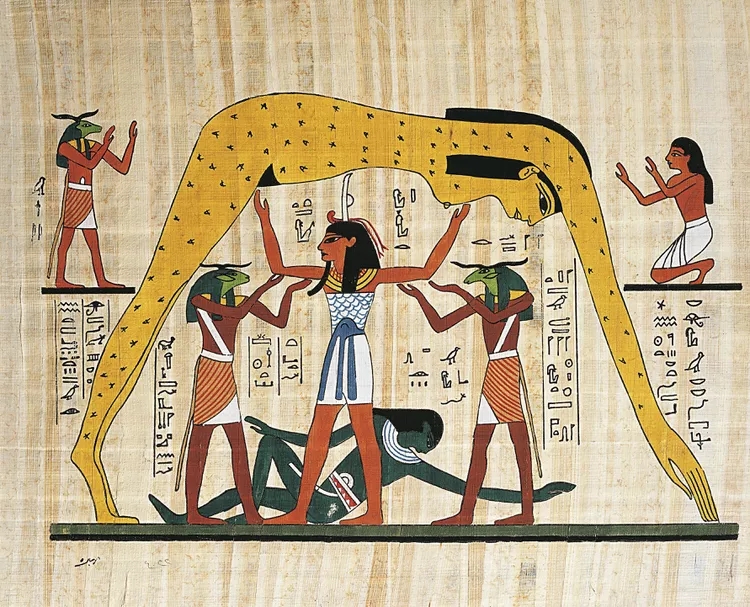
Egyptian civilization. Papyrus. Scene of creation. The sky-goddess Nut, covered with stars, is generated by Geb, the god of the earth. Reconstruction of a fresco from a tomb at Thebes, Valley of the Kings. Cairo, Istituto Del Papiro
As we all know, yesterday marked International Women’s Day, and many posts were published on this topic. I apologize for being late to the celebration; I was until now occupied with my grandson, Ilias! This is the first time I have decided to participate in this acknowledgement match, not just because of a lack of time but because I have some reservations about celebrating a cause on a single day and then forgetting about it for the rest of the year. Perhaps it’s true that those in charge choose to memorialize and celebrate under a specific title to alleviate their guilt instead of resolving the issues. However, I believe in using this special day to awaken their consciousness and galvanize them into action.
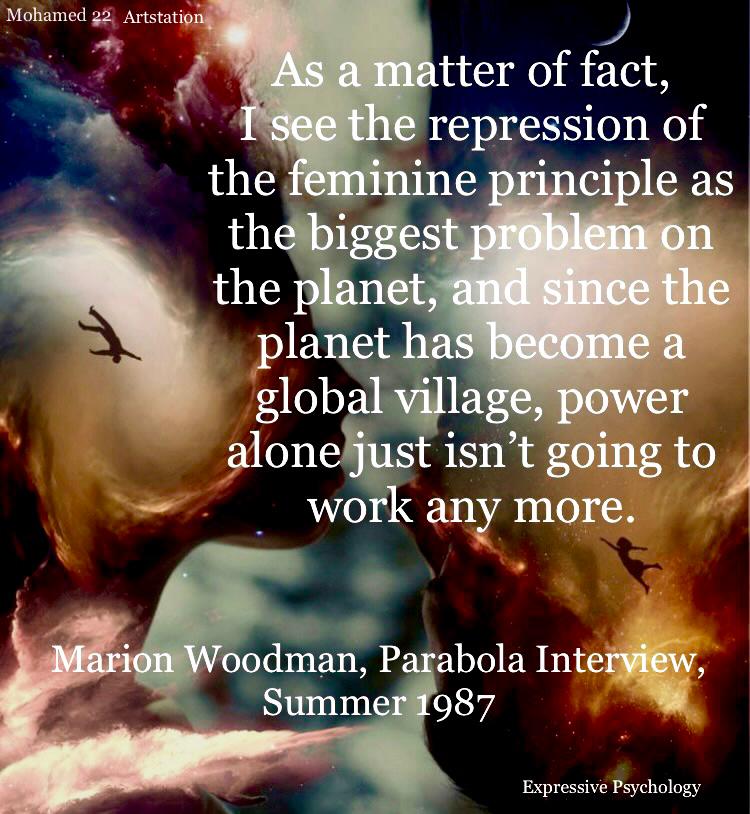
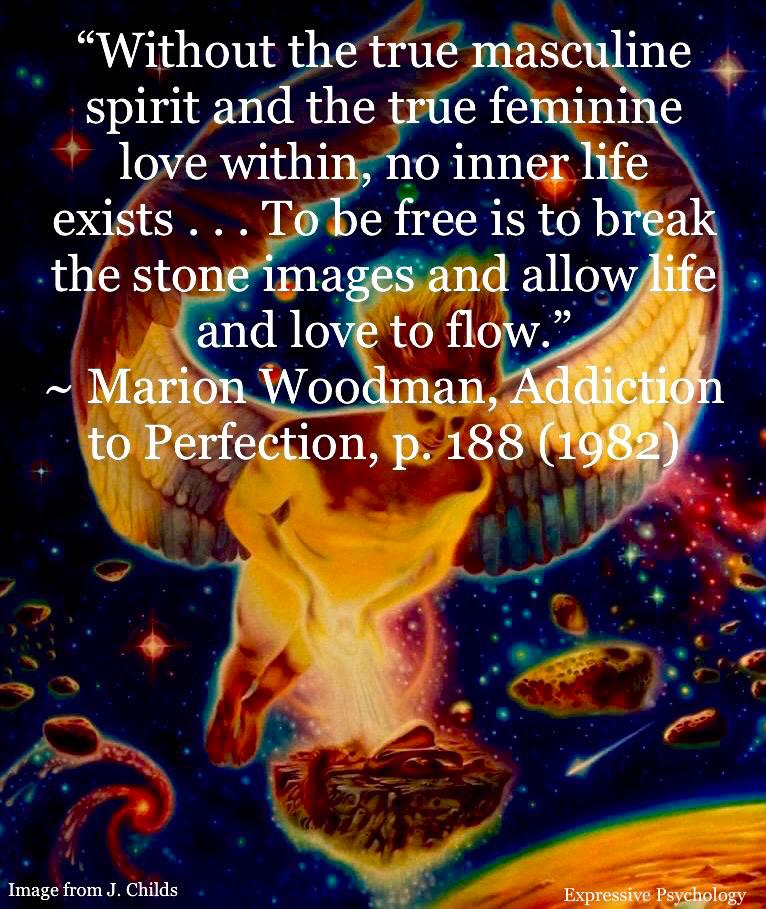
How well described Marion Woodman about the core of the issue.
via Petra Glimmdall 🙏💖
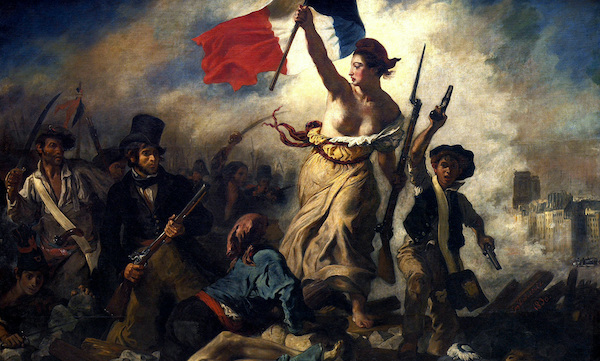
I have frequently written about women’s missing rights and opportunities in society, and I have noticed that progress is being made. A recent example is the approval of a new law by the French parliament to add the right to abortion to their constitution. Bravo! Viva France!
Liberté, Égalité, Fraternité:
The concept is that if we believe in the duality of everything: cold – warm, above – below, bright – dark, woman – man, etc. Then, they not only mutually prove each other’s existence but also complement each other’s evolution. To comprehend these concepts, we should ponder twice (as the Germans say: Nachdenken!). Coldness would hold no significance if we always had everything cold and were unaware of warmth. Similarly, if we were constantly surrounded by brightness without ever experiencing darkness, we would never be able to comprehend the value of brightness. And it would be the same about feminine and masculine: Anima & Animus.
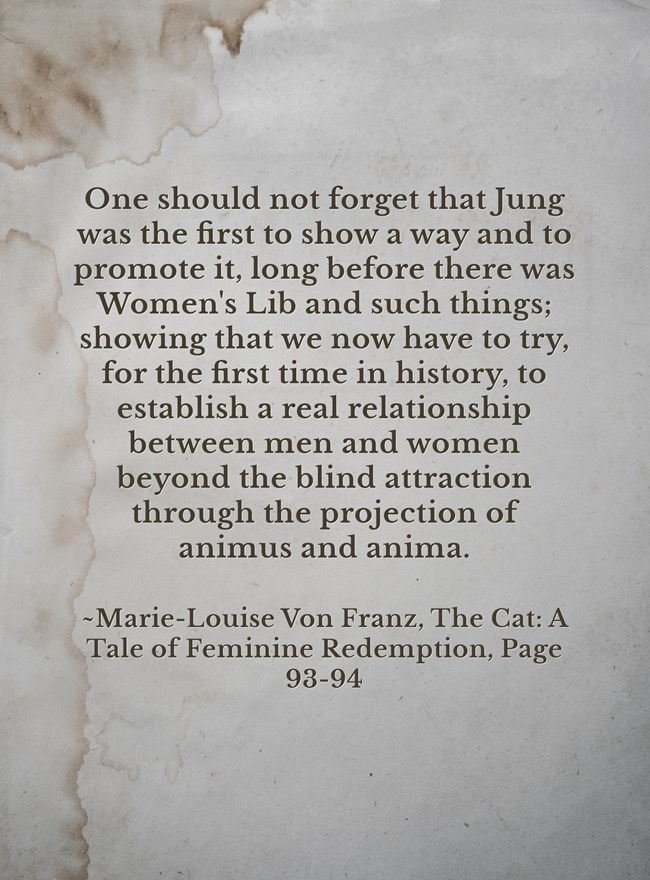
C. G. Jung introduced terms to describe specific functions of the human “soul” and “mind” ( Anima and Animus, Latin). I have published a partitional post about this issue before. Anima names the feminine unconscious factor in a man, while animus applies to the corresponding masculine factor in a woman’s unconscious.
I believe these are suitable lessons that will make us aware of how to help each other along the difficult path towards achieving the goal or the Self. This is how we can help each other because without encountering the other side, we are incomplete!
However, I have to repeat myself sadly, of man’s blindness as his stupid vanity has damaged a perhaps brave new world!
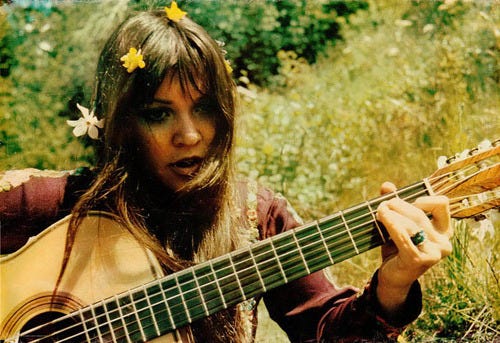
I remember on a cold, foggy evening, as the misty meadow spread in the yard, we sat in the room, listening to Melanie’s song, Leftover Wine, in one of her concerts, which was playing from the cassette recorder. When she had ended her song, the audience clapped, and suddenly, someone shouted, ” We Love You! ” And she said in her extraordinary hoarse voice, ” It is so lovely sometimes somebody says something! “
Melanie Anne Safka Schekeryk, professionally known as Melanie or Melanie Safka, was an American singer-songwriter.
“I don’t know how much you have heard of her or know her songs, but Al and I got to know Melanie during Woodstock. It was probably the most remarkable collection of half a million seekers of love, freedom, and peace who proved it was possible to live all in peace together. And she was one of them.
I left my body’: during Woodstock, turned a 22-year-old nobody into a superstar.
I’m the one I found the birthday of the sun But all things change And I think it’s the birthday of the rain
If I never said goodbye To all that I’ve known I would never be alone But still, I will not cry…
A few days ago, when I saw a ten-by-ten cm announcement in the newspaper about her death, it felt like something had stabbed my heart.”
She was a messenger of love and peace and nothing else throughout her life, and she profoundly impacted our lives, which still lingers in my mind. We had almost all of their songs on cassettes and maybe one or two vinyl records, and she had always warmed our hearts with her beautiful, hoarse and heart-touching voice among her deep-meaning poems.
Although saying goodbye might be the saddest thing, she had sung sad songs often, but her last words were always ” love, ” love, love, and being alive.
“The Saddest Thing”
And the saddest thing Under the sun above Is to say goodbye To the ones you love
All the things that I have known Be came my life my very own But before you know, you say goodbye Oh, good time, goodbye It’s time to cry But I will not weep nor make a scene Just say, “thank you Life for having been.”
And the hardest thing Under the sun above Is to say goodbye to the ones you love No, I will not weep nor make a scene I’m gonna say, “thank you Life for having been.”
And the loudest cry Under the sun above Is to silent goodbye From the ones you love
Let’s not say goodbye to this flower cause she stays with us with her hoarse voice and beautiful poems about the sun, life and love.💖🙏🌹🌻💥🌞








 lampmagician
You must be logged in to post a comment.