There is always a Beginning to Grasp the Whole! P 9

Standard

Dream Stimuli and Dream Sources (Traumreize und Traumquellen)

Dreams are the guiding words of the soul. Why should I henceforth not love my dreams and not make their riddling images into objects of my daily consideration?
~Carl Jung, The Red Book

Carl Jung believed that dreams are direct messages from the unconscious mind. According to Jung, these nightly visions are not random or meaningless; instead, they offer valuable insight into our deepest thoughts, feelings, and truths. By paying attention to dreams, he argued, we can better understand aspects of ourselves that are usually hidden from conscious awareness. He saw dream interpretation as an important tool for personal growth and self-discovery. Through understanding our dreams, Jung believed we could achieve greater harmony within ourselves and that dreams serve as direct messages from the unconscious mind.

“Dreams are impartial, spontaneous products of the unconscious psyche, outside the control of the will. They are pure nature; they show us the unvarnished, natural truth, and are therefore fitted, as nothing else is, to give us back an attitude that accords with our basic human nature when our consciousness has strayed too far from its foundations and run into an impasse.”
~Carl Jung, CW, Vol.10, para 317

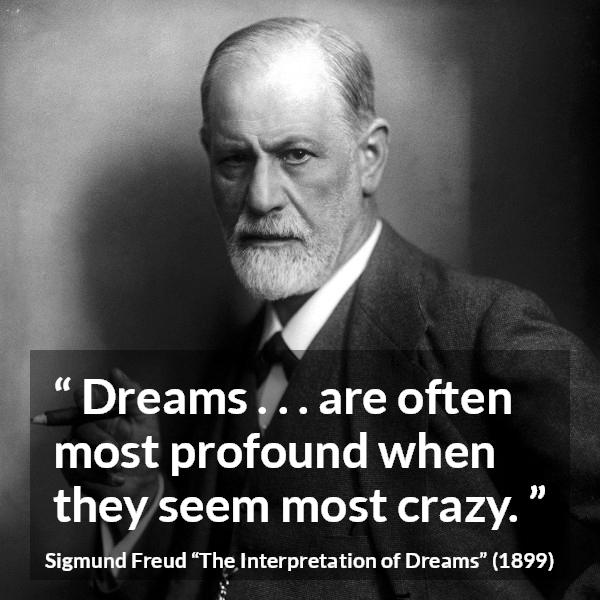
However, since Jung is more advanced in his ideas on this issue, we return to the basic findings that Freud had begun to explore and move on to the next level of his book, Dreams’ Meaning. (Preview here!)

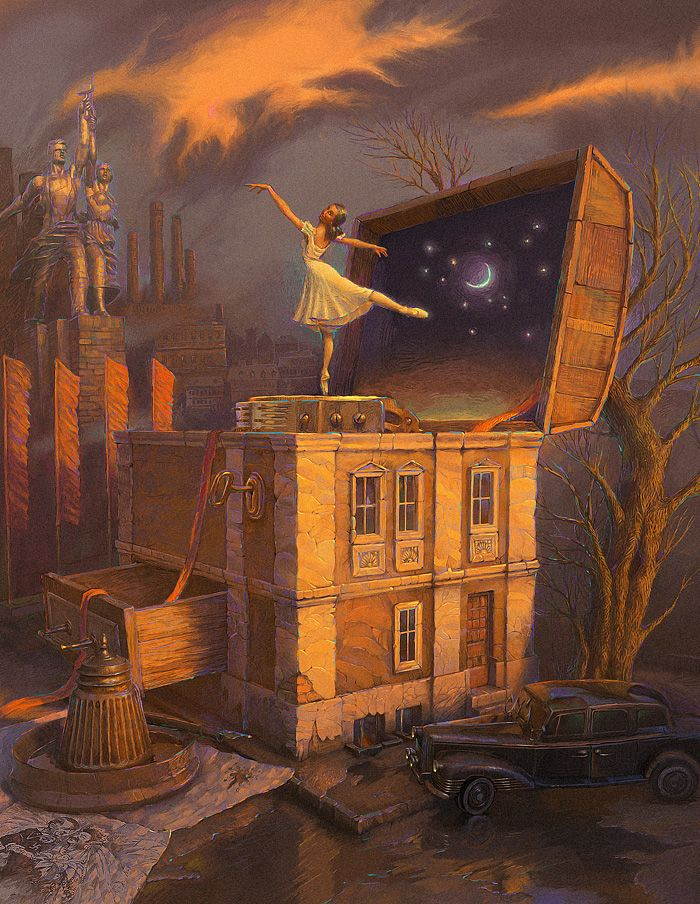
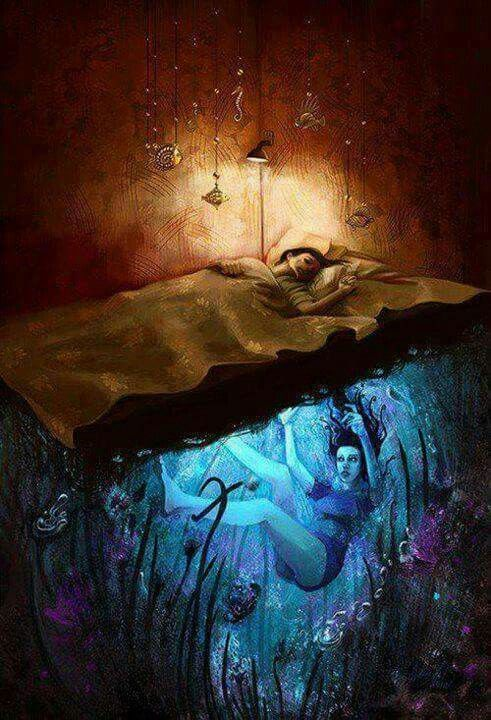
“The painting at the top: Andrew Ferez, a surreal Russian illustrator”
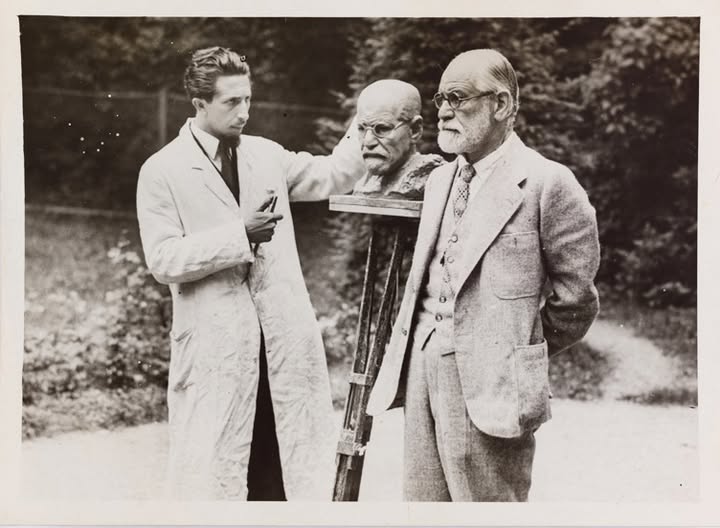
In July 1931, the sculptor Oscar Nemon created a bust of Sigmund Freud. Freud posed for Nemon in a garden in Pötzleinsdorf, Vienna, captured here by an unknown photographer.
Source: Freud Museum London

Ad 4) Sources of psychological irritation

When we discussed the relationship of dreams to waking life and the origin of dream material, we learned that it is the view of dream researchers—both the earliest and the most recent—that people dream about what occupies them during the day and what interests them while awake. This interest, carried over from waking life into sleep, constitutes not only a psychological link connecting the dream to real life but also provides a source of dreams that should not be underestimated; alongside the stimuli that become significant during sleep—namely, those acting upon the sleeper—it should suffice to explain the origin of all dream images. However, we have also heard the objection to the above claim—namely, that the dream detaches the sleeper from the interests of the day, and that we—for the most part—only dream of the things that gripped us most deeply during the day once they have lost their immediate relevance to waking life. Thus, in analysing dream life, one constantly gains the impression that it is impermissible to lay down general rules without introducing qualifications such as “often,” “as a rule,” or “mostly,” and without preparing for the validity of exceptions.

If waking interests, together with internal and external sleep stimuli, sufficed to account for the aetiology of dreams, we ought to be able to give a satisfactory explanation for the origin of every element within a dream; the riddle of dream sources would be solved, leaving only the task of distinguishing the respective contributions of psychic and somatic dream stimuli in individual dreams. In reality, however, such a complete resolution of a dream has never been achieved; anyone who has attempted it has almost invariably been left with a substantial number of dream elements whose origins could not be determined. Evidently, waking interests as a psychic source of dreams do not go as far as one might expect, given the confident assertions that people continue to pursue their daily business in their dreams.

No other sources of psychological dreams are known. Thus, all explanations of dreams found in the literature—with the possible exception of Scherner’s, to be mentioned later—leave a significant gap regarding the derivation of the imagery most characteristic of the dream. Faced with this difficulty, the majority of authors have tended to minimise as much as possible the psychological component of dream formation, which is so elusive. While they do distinguish—as a primary classification—between dreams triggered by nervous stimuli and those arising from association (the latter deriving exclusively from reproduction; Wundt, p. 365), they cannot shake the doubt as to “whether they occur without an initiating somatic stimulus” (Volkelt, p. 127). The characteristic of the pure association dream also fails: “In true association dreams, such a firm core is no longer present. Here, the loose grouping penetrates even the centre of the dream. The imaginative life, already freed from reason and intellect, is no longer held together by those more weighty bodily and mental arousals and is thus left to its own colorful pushing and shoving, its own loose, chaotic tumbling” (Volkelt, p. 118). Wundt then attempts to downplay the psychological component of dream excitation by stating that “the phantasms of dreams are probably wrongly regarded as mere hallucinations. Most dream representations are likely in reality illusions, in that they originate from the faint sensory impressions that never cease during sleep” (pp. 359 ff.). Weygandt adopted this view and generalised it. He claims that for all dream representations, “their immediate cause is sensory stimuli; only then do reproductive associations follow” (p. 17). Tissié goes even further in suppressing the psychic sources of stimuli (p. 183): “Dreams of absolute psychic origin do not exist,” and elsewhere (p. 6): “The thoughts of our dreams come from outside…”

Authors who, like the influential philosopher Wundt, occupy an intermediate position do not fail to note that in most dreams, somatic stimuli and the—unknown or recognised as matters of daytime interest—psychic instigators of the dream interact.

We shall learn later that the riddle of dream formation can be solved by uncovering an unsuspected source of psychic stimulation. For the moment, we need not be surprised by the tendency to overestimate the role of stimuli originating outside mental life in the formation of dreams. Not only are these stimuli easily identified and even verifiable through experimentation, but the somatic view of the origin of dreams also aligns entirely with the prevailing school of thought in psychiatry today. While the brain’s dominion over the organism is emphasised most strongly, anything that might demonstrate the independence of mental life from demonstrable organic changes—or spontaneity in its manifestations—alarms psychiatrists today, as if acknowledging such things would inevitably bring back the era of natural philosophy and the metaphysical soul. The psychiatrist’s mistrust has, as it were, placed the psyche under guardianship, demanding that none of its stirrings betrays a capacity of its own. Yet this attitude reveals nothing so much as a lack of confidence in the durability of the causal link extending between the physical and the mental. Even when investigation reveals the mental as the primary cause of a phenomenon, deeper inquiry will eventually trace the path all the way to the organic basis of the mental. Yet where the mental represents the limit of our current knowledge—what ought to be the final station—it need not be denied on that account.

It will continue. I might update my condition here shortly: it’s been about 10 days since my surgery, but I still don’t feel fully well. Still, I need to improve, as I have to work on Tuesday! Take care, everyone.🙏✌

Concise, Straightforward, yet Meaningfully Rich!

Standard

In these moments, my thoughts are preoccupied with worry, discomfort and concern. It’s not about my own condition but about our beloved daughter-in-law, who has been diagnosed with meningitis. Therefore, I just impart a profound insight from Carl Jung that resonates deeply. 🙏💖

My friends, it is wise to nourish the soul; otherwise, you breed dragons and devils in your heart.
~Carl Jung, The Red Book, p. 232

There is always a Beginning to Grasp the Whole! P 8

Standard

Dream Stimuli and Dream Sources (Traumreize und Traumquellen)

Hello, friends! Building on my previous post, I want to share a new insight from Freud’s dream analysis. He emphasizes the crucial role dreams play and their profound impact on our lives. I’ve often observed that during sleep and dreaming, my body feels more sensitive than when I am awake.
In dreams, our souls are much more attuned to our bodies’ condition and our traumas.
As Dr Jung said:
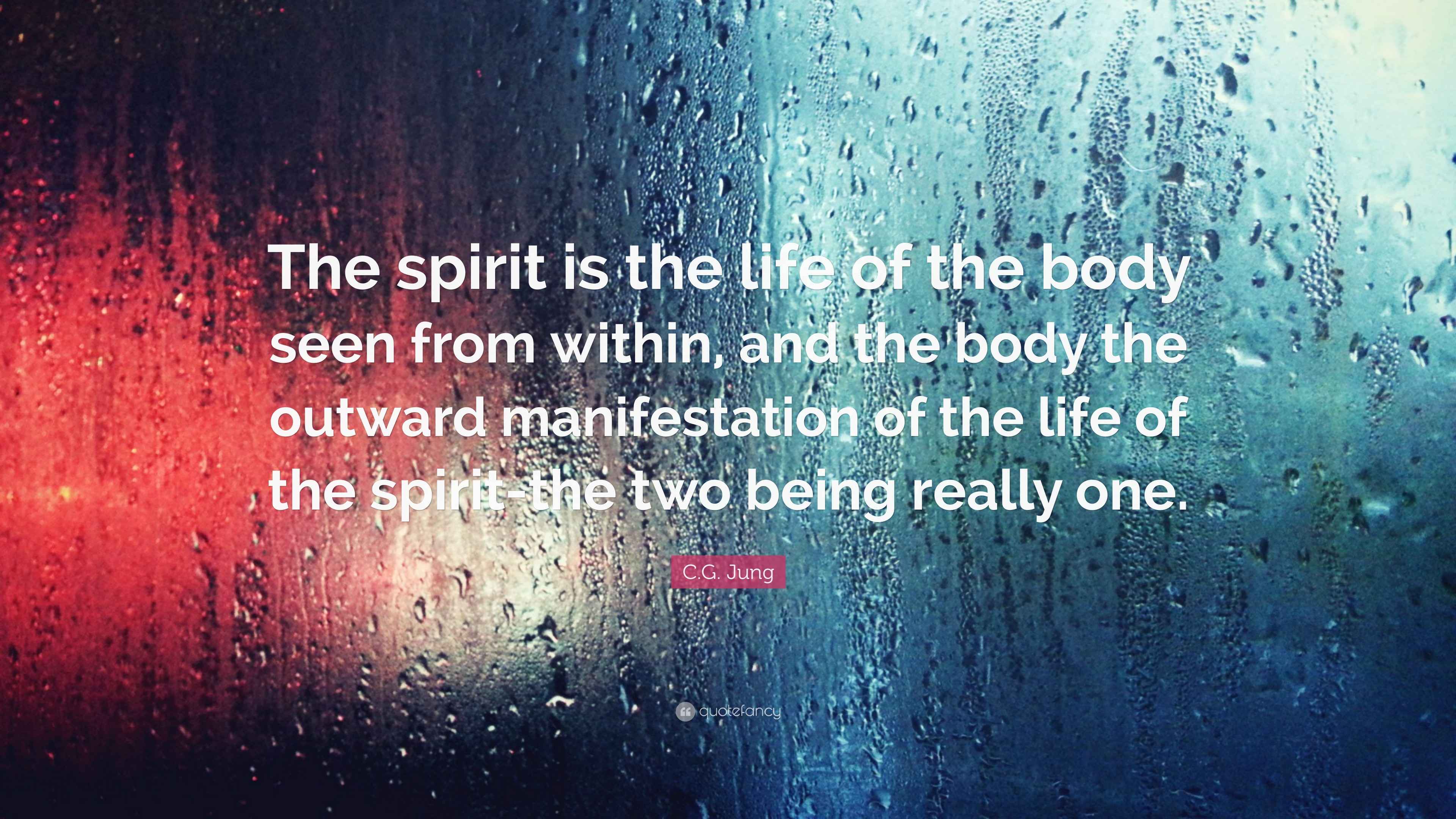
“For what is the body? The body is merely the visibility of the soul, the psyche, and the soul is the psychological experience of the body. So it is really one and the same thing.”
~Carl Jung, Zarathustra Seminar, Page 355.
And:
Soul and body are not two things. They are one.
~Carl Jung, Zarathustra Seminar, Page 355

Ad 3) Internal, organic bodily stimulus

If we look for the sources of dreams not outside the organism but within it, we must remember that almost all our internal organs—which, in a healthy state, scarcely make us aware of their existence—become sources of usually unpleasant sensations in states of irritation or illness. These sensations must be placed on the same level as the external stimuli that cause pain or other sensations. These are very old observations that led Strümpell, for example, to state (p. 107): “In sleep, the soul attains a much deeper and broader sensory awareness of its corporeality than in the waking state, and is compelled to receive and be affected by certain sensory impressions originating from parts and changes in its body of which it was unaware while awake.” Aristotle himself considered it entirely possible that one might be alerted in a dream to the onset of a disease that is not yet perceptible in the waking state (by virtue of the amplification the dream accords to impressions; see p. 13 above), and medical authors—who were certainly far from believing in any prophetic gift of dreams—have acknowledged this significance of dreams, at least with regard to the early warning signs of illness. (Cf. M. Simon, p. 31, and many earlier authors.)

There appears to be no shortage of authenticated examples of such diagnostic functions of dreams, even in recent times. For instance, Tissié—citing Artigues (Essai sur la valeur séméiologique des rêves[Treatise on the Semiotic Value of Dreams])—reports the case of a forty-three-year-old woman who, while seemingly in perfect health, was troubled by anxiety dreams for several years; a medical examination later revealed the onset of a heart condition to which she soon succumbed.

Established disorders of the internal organs evidently act as dream-precipitating factors for a considerable number of people. Attention is often drawn to the prevalence of anxiety dreams among those suffering from heart and lung diseases; indeed, many authors place such emphasis on this connection between dream life and physical ailment that I may here content myself with a mere reference to the literature (Radestock, Spitta, Maury, M. Simon, Tissié). Tissié even suggests that diseased organs leave a characteristic imprint on dream content. The dreams of cardiac patients are usually very brief and end with a sudden, startled awakening; the scenario of death under gruesome circumstances almost invariably plays a role in their content. Patients with lung disease dream of suffocation, crowding, and flight, and they are subject in striking numbers to the familiar nightmare—which, incidentally, Börner was able to induce experimentally by having subjects lie face down and covering their respiratory openings. In cases of digestive disorders, dreams contain imagery related to eating and disgust. Finally, the influence of sexual arousal on dream content is palpable in everyone’s experience and provides the strongest support for the entire theory of dream formation triggered by organic stimuli.

When one examines the literature on dreams, it is also quite unmistakable that certain authors (Maury, Weygandt) were led to study the problems of dreaming by the influence of their own pathological conditions on the content of their dreams.

Incidentally, the addition to the sources of dreams drawn from these indisputably established facts is not as significant as one might suppose. After all, dreaming is a phenomenon that occurs in healthy individuals—perhaps in everyone, and perhaps every night—and for which organic disease is evidently not an essential condition. For us, however, the question is not where specific dreams originate, but rather what the source of stimulation might be for the ordinary dreams of normal people.

Yet only one further step is needed to arrive at a source of dreams more abundant than any before it and seemingly inexhaustible. If it is established that the interior of the body, when diseased, becomes a source of dream stimuli, and if we grant that the mind during sleep—cut off from the outside world—can pay greater attention to the body’s interior, then it is natural to assume that the organs need not actually be diseased in order to transmit excitations to the sleeping mind, excitations that somehow turn into dream images. What we perceive only dimly in the waking state—as a general bodily sensation defined merely by its quality, to which, in the physicians’ view, all organ systems contribute—would, if it exerted a powerful influence at night and became active through its individual components, be the most potent and, at the same time, the most common source for the generation of dream images. The remaining task would then be to investigate the rules by which these organic stimuli are transformed into dream images.

We have here touched on the theory of dream formation that has become the preferred one among medical authors. The obscurity in which the core of our being—the moi splanchnique, as Tissié calls it—is hidden from our knowledge, and the obscurity surrounding the origin of dreams, are too closely related not to be linked. Moreover, the line of reasoning that identifies vegetative organic sensation as the source of dreams has another attraction for the physician: it allows for an etiological connection between dreams and mental disorders—phenomena that show such striking similarities—since alterations in general somatic sensation and stimuli arising in the internal organs are also considered to be of far-reaching significance in the genesis of psychoses. It is therefore not surprising that the theory of somatic stimulation can be traced to more than one originator who proposed it independently.

~Carl Jung; The Spiritual Problem of Modern Man; CW 10: 195.

For many authors, Schopenhauer’s line of reasoning, developed in 1851, became decisive. Our worldview arises within us because our intellect casts the impressions it receives from outside into the forms of time, space, and causality. Stimuli originating within the organism—specifically from the sympathetic nervous system—at most exert an unconscious influence on our mood during the day.
At night, however, once the overpowering effect of daytime impressions has faded, those impressions rising from within can command attention—much as, at night, we can hear the trickling of a spring that the noise of the day had made inaudible. Yet how else is the intellect to respond to these stimuli than by carrying out its own characteristic function? It therefore transforms the stimuli into forms filling space and time—forms that move along the thread of causality—and thus the dream is born. Scherner and, later, Volkelt sought to examine more deeply the relationship between bodily stimuli and dream images; we shall reserve our assessment of their work for the section on dream theories.

In a particularly rigorous study, the psychiatrist Krauß traced the origin of dreams—as well as deliriums and delusions—back to the same source: the organically conditioned sensation. It is scarcely possible to conceive of any part of the organism that could not serve as the starting point for a dream or a delusional image. However, the organically conditioned sensation “can be divided into two categories: 1) that of general bodily states (coenesthesias), and 2) that of specific sensations inherent to the principal systems of the vegetative organism—of which we have distinguished five groups: a) muscular sensations, b) pneumatic, c) gastric, d) sexual, and e) peripheral.” (P. 33 of the second article.)

Krauß describes the process by which dream images arise from bodily stimuli as follows: the sensation that has been aroused, in accordance with some law of association, evokes a related mental image and combines with it to form an organic entity; however, consciousness relates to this entity differently than it normally would. For it pays no attention to the sensation itself but directs its focus entirely toward the accompanying mental images, which is precisely why this phenomenon could go unrecognised for so long (pp. 11 ff.). Krauß also uses a specific term for this process: the “transubstantiation” of sensations into dream images (p. 24).

While the influence of organic bodily stimuli on dream formation is almost universally acknowledged today, the question of the law governing the relationship between the two receives widely varying—and often obscure—answers. Within the framework of the bodily stimulus theory, the specific task of dream interpretation is to trace a dream’s content back to the organic stimuli that caused it; yet, unless one accepts the rules of interpretation discovered by Scherner, one is often confronted with the awkward fact that the source of the organic stimulus reveals itself through nothing other than the content of the dream itself.

However, there is a fairly consistent interpretation of various forms of dreams—called “typical” because they recur in so many people with very similar content. These include the well-known dreams of falling from a height, losing teeth, flying, and the embarrassment of being naked or scantily clad. The latter is said to arise simply from noticing, while asleep, that one has kicked off the bedclothes and is lying exposed. The dream of losing teeth is attributed to “dental irritation”—though this does not necessarily imply a pathological state of excitation in the teeth. According to Strümpell, the dream of flying is an apt image used by the psyche to interpret the quantity of stimulation arising from the rising and falling of the lungs, at a moment when tactile sensation in the chest has faded to the point of unconsciousness. It is this latter circumstance that mediates the sensation associated with the idea of ​​floating. The sensation of falling from a height is said to arise when—after conscious awareness of tactile pressure has been lost—an arm drops against the body, or a drawn-up knee suddenly straightens; this restores the sensation of tactile pressure to consciousness, while the transition to conscious awareness is psychically embodied as a dream of falling (Strümpell, p. 118). The weakness of these plausible explanatory attempts evidently lies in the fact that, without further evidence, they allow various groups of organic sensations either to vanish from mental perception or to force themselves upon it, simply in order to create the constellation favourable to the explanation. Incidentally, I shall have occasion later to return to these typical dreams and their origins.

M. Simon has attempted to derive certain rules regarding the influence of organic stimuli on the determination of dream content by comparing a series of similar dreams. He states (p. 34): If, during sleep, an organic system that normally participates in the expression of an affect enters—due to some other cause—the state of excitation into which it is otherwise thrown by that affect, then the resulting dream will contain ideas appropriate to that affect.

Another rule states (p. 35): If an organic system is active, excited, or disturbed during sleep, the dream will produce images related to the performance of the organic function carried out by that system.

Mourly Vold undertook the task of experimentally demonstrating, within a specific area, the influence on dream formation posited by the theory of somatic stimuli. He conducted experiments in which he altered the positions of the sleeper’s limbs and compared the resulting dreams with these modifications. He presents the following propositions as his findings.

  1. The position of a limb in a dream roughly corresponds to its position in reality; that is, one dreams of a static state of the limb that matches the actual one.
  2. When one dreams of the movement of a limb, that movement always takes a form in which one of the positions assumed during its execution corresponds to the actual position.
  3. One may also attribute the position of one’s own limb in a dream to another person.
  4. One may also dream that the movement in question is impeded.
  5. In the dream, the limb in the position concerned may appear as an animal or a monster, establishing a certain analogy between the two.
  6. The position of a limb in a dream can give rise to thoughts related to that limb; for instance, if one is occupied with one’s fingers, one dreams of numbers.
    From such findings, I would conclude that even the theory of somatic stimuli cannot entirely eliminate the apparent freedom involved in determining the dream images to be evoked.

It will continue, though I don’t yet know exactly when. On Monday I’m heading off again—not far this time, just to a nearby hospital for another surgery!
My last break (holiday) was a mix of heaven and hell. For about two weeks now, I’ve been spending a huge amount of time in the bathroom, and it’s absolutely no fun at all!!
Thank you all. Be safe and well. 🙏🤗💖