

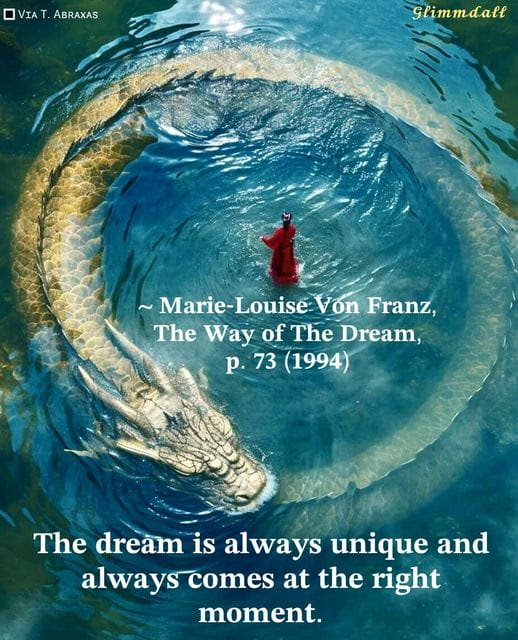
“Every dream, if it is really understood, not only with the intellect but really emotionally understood, has such a shot-like “Aha” effect upon one. If you do not have that, then you have not understood the dream yet…Every understood dream is like a slight electric shock into higher consciousness.” ~ Marie-Louise von Franz, Alchemical Active Imagination, pp. 55-56
Dreams: Portals to an Unfamiliar Realm! For centuries, dreams have captivated humans, acting as both a source of awe and enigma. Every night, when we sleep, we enter a realm beyond reality—a space where logic gives way to imagination and the impossible becomes normal. This mysterious world has its own rules, landscapes, and inhabitants, often reflecting our deepest fears, hopes, and desires.
The true essence of dreams remains unknown. Researchers and philosophers have long debated their origins and significance. Some believe dreams are the mind’s way of processing memories and emotions, while others see them as glimpses into the subconscious that reveal our innermost thoughts. Regardless of their purpose, dreams remind us that parts of ourselves—and possibly reality—are still unexplored and mysterious.
Dreams encourage us to explore our inner world and foster curiosity and self-awareness. Night after night, they show us that life is more intricate and fascinating than it appears during our waking hours. Through dreams, we glimpse a world beyond our understanding—one that often fills us with wonder or reminds us of things we’ve forgotten.
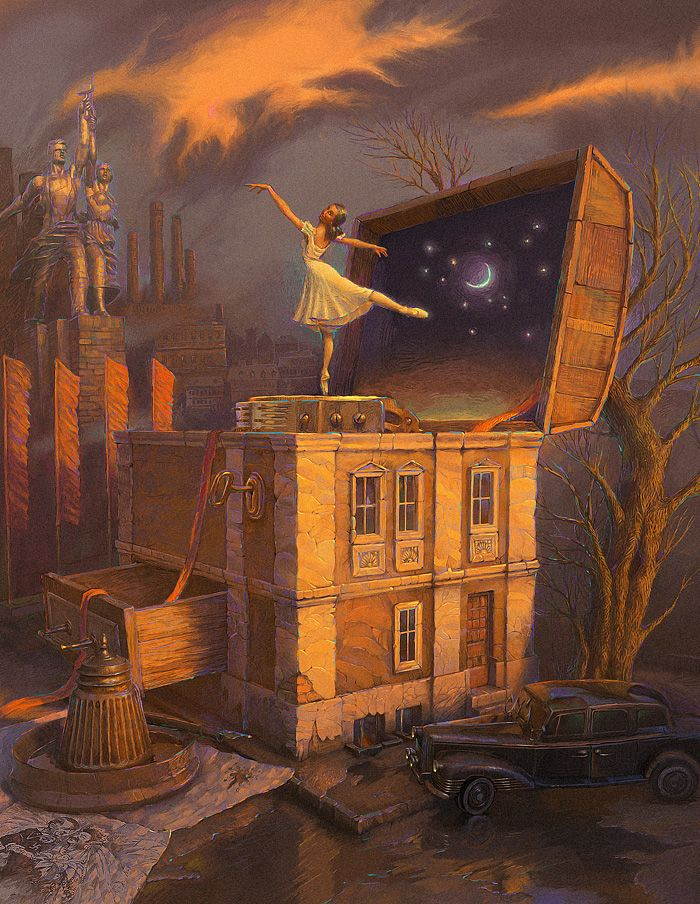
The psychological characteristics of dreams (Die psychologischen Besonderheiten des Traumes)
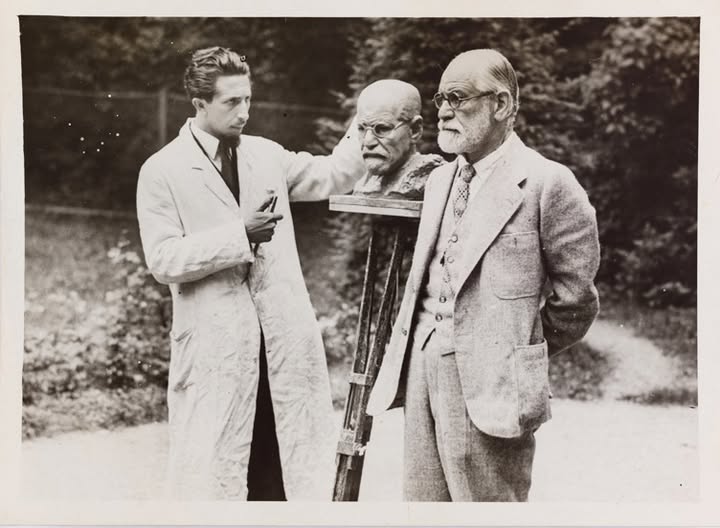
In this section of Freud’s book, Interpretation of Dreams, he examines the unique qualities and behaviors of dreams from a psychological viewpoint. Freud states that dreams possess distinctive characteristics that differentiate them from waking thoughts.
Since this section is lengthy, I will divide it into several parts in my translation. I hope you enjoy reading it. 🙏💖
In the scientific study of dreams, we proceed from the assumption that dreams are products of our own mental activity. Yet, the finished dream appears to us as something alien—something we feel so little urge to claim as our own creation that we are just as likely to say “Me had a dream” (mir hat geträumt) as “I dreamed” (ich habe geträumt). What is the source of this “mental alienness” of the dream? Based on our discussions regarding the sources of dreams, we might conclude that dreams do not stem from the material that finds its way into dream content; for the most part, this material is common to both dream and waking life. One might ask whether it is, in fact, alterations in the psychological processes occurring during the dream that give rise to this impression, and thus attempt to outline the dream’s psychological characteristics.
No one has emphasised the fundamental difference between dreaming and waking life more strongly, or drawn more far-reaching conclusions from it, than G. Th. Fechner in certain remarks within his Elements of Psychophysics (Vol. II, p. 520). He argues that “neither the simple depression of conscious mental life below the principal threshold nor the withdrawal of attention from external influences suffices to explain the distinctive characteristics of the dream state as opposed to waking life. Rather, he argues that the arena of dreams differs from that of waking mental imagery. “If the arena of psychophysical activity were the same during sleep and wakefulness, then, in my view, the dream could be nothing more than a continuation of waking mental imagery maintained at a lower level of intensity, and would necessarily share its content and form. But the reality is quite different.”
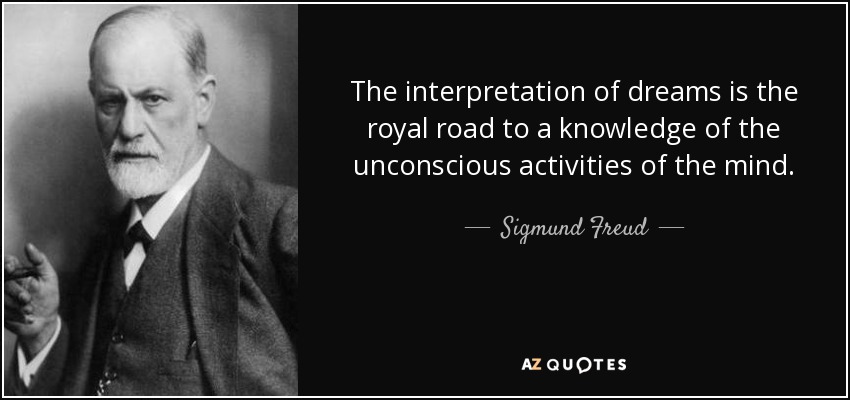
It has likely not become clear what Fechner meant by such a relocation of mental activity; nor, to my knowledge, has anyone else pursued the path whose trail he indicated in that remark. One would presumably have to rule out an anatomical interpretation in terms of physiological brain localisation, or even one referring to the histological layering of the cerebral cortex. Yet the idea might one day prove ingenious and fruitful if applied to a mental apparatus composed of several agencies arranged in sequence.
Other authors have contented themselves with highlighting one or another tangible psychological peculiarity of dream life and using it, for instance, as a starting point for more far-reaching attempts at explanation.
It has rightly been noted that one of the principal characteristics of dream life manifests itself as early as the process of falling asleep and can be described as a phenomenon that ushers in sleep. According to Schleiermacher (p. 351), the defining feature of the waking state is that the activity of thought proceeds in terms of concepts rather than images. Now, the dream thinks primarily in images, and one can observe that, as sleep approaches—and to the same extent that voluntary activities become difficult—involuntary mental images emerge, all of which belong to the class of visual images. The inability to perform the kind of mental work we perceive as intentional, combined with the emergence of images regularly associated with this state of mental drift—these are two characteristics that remain with the dream, and that we must recognise as essential features of dream life during psychological analysis. We have learned that these images—hypnagogic hallucinations—are identical in content to dream images.
Thus, the dream thinks predominantly in visual images, though not exclusively so. It also operates with auditory images and, to a lesser extent, with impressions from the other senses. Much is also simply thought or imagined in the dream (likely represented by traces of word-presentations), just as in the waking state. Yet the only elements of content characteristic of the dream are those that behave like images—that is, those that more closely resemble perceptions than memory-images. Setting aside the debates regarding the nature of hallucinations—discussions well known to psychiatrists—we can state, in agreement with all expert authors, that the dream hallucinates, that it replaces thoughts with hallucinations. In this respect, there is no difference between visual and auditory presentations; it has been observed that the memory of a sequence of notes with which one falls asleep transforms, as one drifts off, into a hallucination of that same melody, only to give way again—upon the return to consciousness (which may alternate several times with dozing)—to the quieter and qualitatively different memory-image.
The transformation of a mental image into a hallucination is not the only way in which a dream deviates from a corresponding waking thought.
From these images, the dream constructs a situation; it presents something as present and dramatises an idea—to use Spitta’s expression (p. 145). However, the characterisation of this aspect of dream life is only complete if one adds the fact that, while dreaming—as a rule (exceptions require special explanation)—one believes oneself to be experiencing events rather than thinking about them, and thus accepts the hallucinations with complete conviction. The critical realisation that one has not actually experienced anything, but merely thought—or dreamed—in a peculiar way, arises only upon waking. This characteristic distinguishes the genuine sleep dream from daydreaming, which is never confused with reality.
To be continued!
————————————————————-
Here is another quick health update: I visited my doctor—not just because I felt weak, but because my head would spin whenever I read or looked at anything online. I was experiencing vertigo. He ran blood tests and found high inflammation. I need to start antibiotics. We all must stay strong!
Looking forward to seeing what the next steps bring!


You must be logged in to post a comment.