

Dream Stimuli and Dream Sources (Traumreize und Traumquellen)
While reading and translating this study from Freud’s work on dreams, I was reminded of an episode of Star Trek: The Next Generation, “Night Terrors,” due to its similarities to REM sleep. Of course, Freud was unaware of this concept; REM sleep was officially identified in 1953 by Eugene Aserinsky and Nathaniel Kleitman at the University of Chicago. Aserinsky, then a graduate student, observed rapid eye movements during sleep in both infants and adults and linked these active sleep phases to vivid dreaming.
Anyway, in the classic Star Trek: The Next Generation episode “Night Terrors” (Season 4, Episode 17), the USS Enterprise crew becomes trapped in a space anomaly called a Tyken’s Rift. This Rift prevents them from entering REM sleep, leading to widespread paranoia, intense hallucinations, and aggressive behaviour unless they find a remedy. As a result, they are unable to sleep or dream and begin to daydream.
Rapid Eye Movement (REM) sleep is a unique sleep phase marked by quick eye movements, increased brain activity, and vivid dreams. It happens several times each night, making up 20-25% of an adult’s sleep. REM sleep is essential for both mental and physical health, boosting cognitive abilities such as memory, learning, and emotional regulation by helping the brain process and organise information, consolidate memories, and discard unnecessary data. Good REM sleep enhances problem-solving, creativity, and emotional stability. It also plays a role in physical recovery, especially in brain development during infancy and childhood. Disruptions to REM sleep are associated with mood disorders, memory issues, and weakened immune function. Long-term REM deprivation may lead to irritability, concentration problems, and increased stress sensitivity. Overall, REM sleep is crucial for brain function, emotional health, and physical well-being.
So, let’s now return to Freud’s concerns about dreams, stimuli, and their sources. (previous)
Ad 2) Internal (subjective) sensory excitation (Ad 2) Innere (subjektive) Sinneserregung)
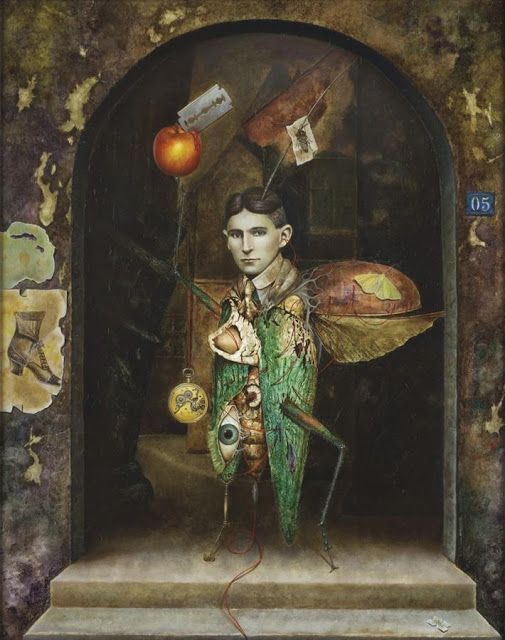
Despite all objections, one must admit that the role of objective sensory excitations during sleep as dream stimuli is indisputable. If, in terms of their nature and frequency, these stimuli appear insufficient to explain all dream images, one is prompted to look for other sources of dreams that operate analogously. I do not know where the idea first arose of invoking internal (subjective) excitations within the sense organs alongside external sensory stimuli; it is a fact, however, that this is done with varying degrees of emphasis in all recent accounts of dream aetiology. “Furthermore,” says Wundt (p. 363), “subjective visual and auditory sensations—those known to us from the waking state as the ‘light chaos’ of the dark visual field, as ringing or buzzing in the ears, etc., and among them especially subjective retinal excitations—play a significant role in dream illusions, explaining the dream’s curious tendency to conjure up before the eye a multitude of similar or identical objects. We see countless birds, butterflies, fish, colourful beads, flowers, and the like spread out before us. Here, the ‘light dust’ of the dark visual field has assumed fantastic shapes; the numerous points of light that compose it are embodied in the dream as an equal number of individual images, which, owing to the mobility of the light chaos, are perceived as moving objects. – It is likely here, too, that the dream’s strong tendency towards a wide variety of animal forms has its roots, as the richness of their shapes readily adapts to the specific forms of these subjective light images.”
As a source of dream images, subjective sensory excitations evidently have the advantage of not being dependent on external chance, as objective ones are.
They are, so to speak, at the disposal of any explanation that requires them. However, they fall short of objective sensory stimuli in that it is difficult, or even impossible, to obtain the kind of confirmation of their role as dream-instigators that observation and experiment yield for the latter. The primary evidence for the dream-inducing power of subjective sensory excitations comes from so-called hypnagogic hallucinations, which Johannes Müller described as “fantastic visual phenomena.” These are often highly vivid, shifting images that tend to appear during the period of falling asleep—quite regularly in many people—and may persist for a time even after the eyes are opened. Maury, who was deeply influenced by them, devoted a detailed study to them and asserted their connection—or rather, their identity—with dream images (a view also held, incidentally, by Johannes Müller). According to Maury, their emergence requires a certain mental passivity, a relaxation of attentional tension (pp. 59 et seq.). Yet it suffices to lapse into such a state of lethargy for even a second—given the appropriate predisposition—to experience a hypnagogic hallucination, from which one may wake up again, until this interplay of drifting off to sleep, repeated several times, finally concludes. If one wakes up after a relatively short time, as Maury notes, it is often possible to identify the very same images in the dream that had appeared as hypnagogic hallucinations before falling asleep (p. 134). That is what happened to Maury once with a series of grotesque figures—featuring distorted expressions and peculiar hairstyles—that pestered him with incredible persistence as he drifted off to sleep, and which he recalled dreaming about upon waking. On another occasion, while suffering from hunger due to a strict diet he had imposed on himself, he saw—hypnagogically—a bowl and a hand armed with a fork, taking some food from the bowl. In his dream, he found himself at a lavishly spread table and heard the sounds the diners made with their forks. Yet another time, as he fell asleep with irritated, aching eyes, he experienced a hypnagogic hallucination of microscopic characters that he had to decipher one by one with great effort; upon being woken after an hour, he recalled a dream featuring an open book printed in tiny type, which he had been obliged to read through laboriously.
Much like these images, auditory hallucinations of words, names, and similar sounds can also occur hypnagogically and then repeat themselves in the dream—acting, as it were, like an overture announcing the leitmotifs of the opera that begins with it. G. Trumbull Ladd, a more recent observer of hypnagogic hallucinations, follows the same path as Joh. Müller and Maury. Through practice, he managed to rouse himself abruptly from sleep—without opening his eyes—two to five minutes after drifting off; this allowed him to compare the retinal sensations, which were just fading, with the dream images persisting in his memory.
He asserts that a close relationship between the two was evident in every instance: the luminous points and lines of the retina’s intrinsic light provided, as it were, the outline or schematic framework for the dream figures perceived by the mind. For example, a dream in which he saw lines of clear print—which he proceeded to read and study—corresponded to an arrangement of luminous retinal points in parallel lines. To use his words: the clearly printed page he had read in his dream dissolved into an object that, to his waking perception, resembled a fragment of an actual printed sheet viewed—from too far away to discern details—through a tiny hole in a piece of paper. Ladd—without, incidentally, underestimating the central role of the phenomenon—suggests that hardly any visual dream occurs within us that does not draw upon the material of the retina’s internal states of excitation. This applies particularly to dreams occurring shortly after falling asleep in a dark room.
A sequel will continue, though I can’t say when I’ll be able to do this or any other post! Thank you all. 💖🙏






You must be logged in to post a comment.