Does fantasy lead to escape, or to the embracing of a new perspective? In other words, does it support psychic growth or impede it? That distinction is often complicated by paradox, but it helps to ask ourselves, “Is concentrating on this fantasy or daydream opening my creative possibilities, or is this sapping my ego strength in the real world?” ~Marion Woodman
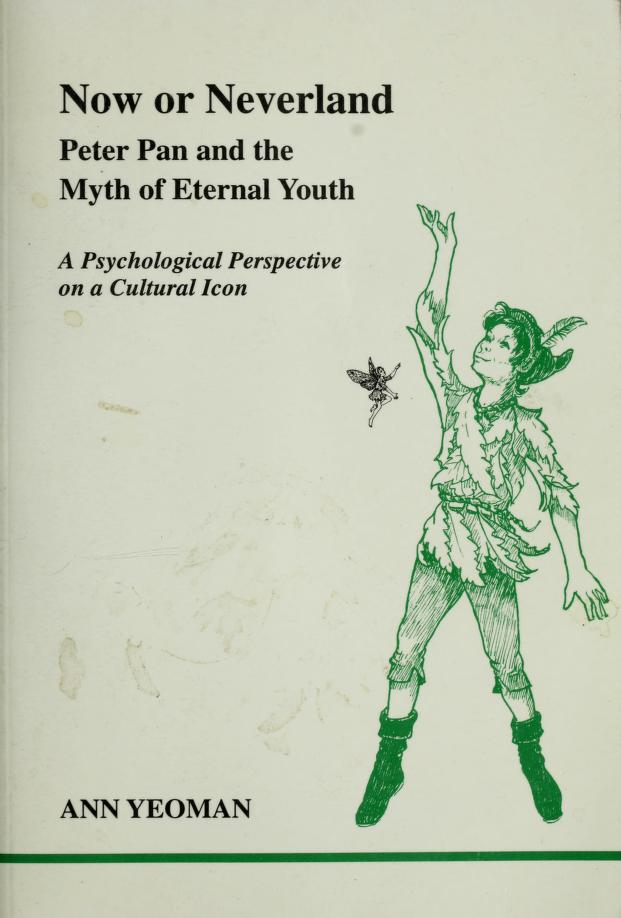
This excerpt begins Marion Woodman‘s foreword from Ann Yeoman’s book, Now or Neverland, which I read some time ago, thanks to Deborah Gregory‘s recommendation, and I am very grateful for it.
Frankly, when I began reading this book, I felt at home; I saw myself as a puer aeternus, struggling to stay balanced on life’s rollercoaster.
Traditionally, the term ‘puer aeternus’ (Latin for ‘eternal boy’) is used to describe a child-god who remains eternally young. In Carl Jung’s psychology, it refers to an older person whose emotional life remains stuck in adolescence, often referred to as the “Peter Pan syndrome”. Jung suggests that the puer lives a “provisional life” due to a fear of being trapped. They seek independence, resist boundaries, and find restrictions intolerable. In Greek mythology, the term ‘puer aeternus’ originates from the Metamorphoses, an epic poem by Roman poet Ovid (43 BC – c. 17 AD) that explores Greek and Roman myths. Ovid refers to the child-god Iacchus as “puer aeternus” and praises his role in the Eleusinian mysteries. Iacchus is linked to Dionysus and Eros. The puer represents a deity of vegetation, resurrection, and divine youth, similar to Tammuz, Attis, and Adonis.
Senex is a Latin term that literally means “old man.” It can also be used to describe: a wise, elderly person, an archetype. The wise older person (also known as senex, sage, or sophos) is an archetype outlined by Carl Jung, as well as a familiar literary figure, often portrayed as a stock character. Such a figure can be a profound philosopher renowned for wisdom and sound judgment.
Marie-Louise Von Franz summarised her view of the puer as follows: None of his reactions are particularly personal or special. He becomes a type—the type of the puer aeternus. He becomes an archetype, and if you become that, you are not at all original… He is merely the archetype of the eternal-youth god, and, therefore, he has all the features of the god: he has a nostalgic longing for death, he thinks of himself as being something special, and he is the one sensitive being among all the other tough sheep. He will have a problem with an aggressive, destructive shadow that he will not want to live with and generally projects. There is nothing special whatsoever. The worse the identification with the youthful god, the less individual the person, although he himself feels so special. (Puer Aeternus, pp. 121f) Another type of puer that does not display the charm of eternal youth, nor does the archetype of the divine youth shine through him. On the contrary, he lives in a continual sleepy daze, and that, too, is a typical adolescent characteristic… The sleepy daze is only an outer aspect, however, and if you can penetrate it, you will find that a lively fantasy life is being cherished within. (Puer Aeternus, p.2)
Reflecting on my childhood, after my father passed away and my mother kept it a secret from my brother Al and me, I became very introverted. Once I learned the truth, I simply didn’t want to grow up. Al and I drew closer because of our mother’s lie, and over time, during our youth, we swapped roles as eternal children. Initially, I wanted to remain a child forever, while Al, aware of our father’s death almost from the moment it happened, tried to act as a mature older brother to look after me.
As we entered puberty, our roles underwent significant changes. I developed a strong sexual desire much earlier and believed I had to act like a man to attract girls, while Al began creating his own solitary world. For many years, this condition persisted. Although I was accepted into Al’s world and was part of it, I was the one who had to maintain contact with the outside world. As a result, I assumed the role of the senex, but I longed for my puer aeternus and tried to keep it concealed yet protected.
Let’s conclude this now, and I look forward to discussing this topic further in the next part. 🖖🙏
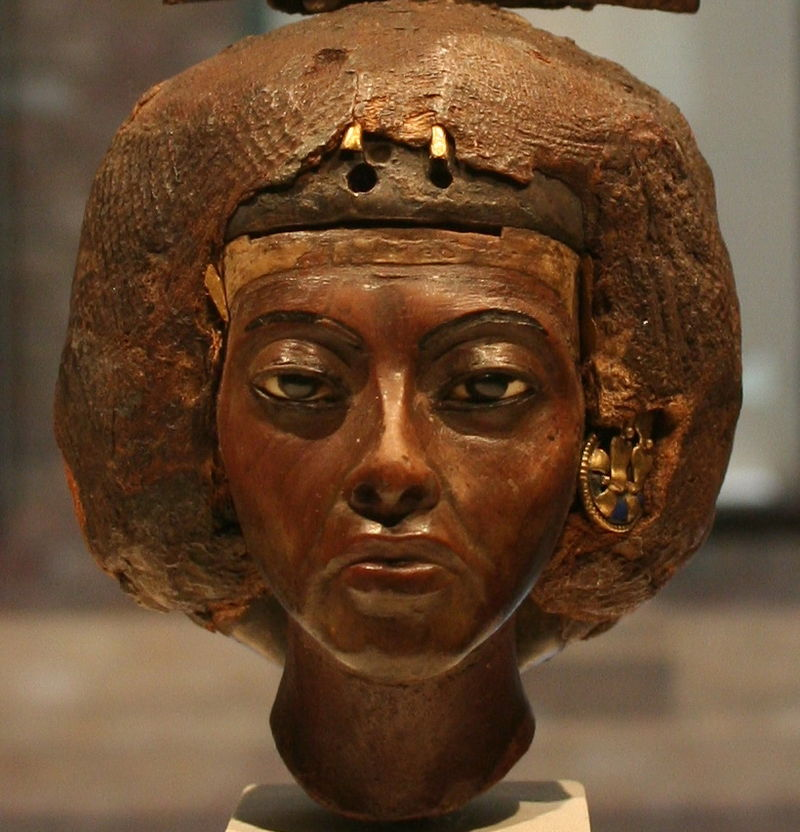
Ägyptisches Museum (Egyptian Museum), Berlin (Wikimedia)
Queen Tiye, recognised for her intellect and formidable character, earned the respect of foreign dignitaries, who were keen to interact with her directly. She maintained an active presence in foreign relations and became the first Egyptian queen whose name was inscribed on official documents.
Head of Queen Tiye. Egyptian Museum, Cairo. JE 38257
Here is an impressive presentation by Marie Grillot about a captivating piece of art represented by a magnificent statue that resonates with us through her story.
Wishing you all the best for the Easter holidays. 💖🙏
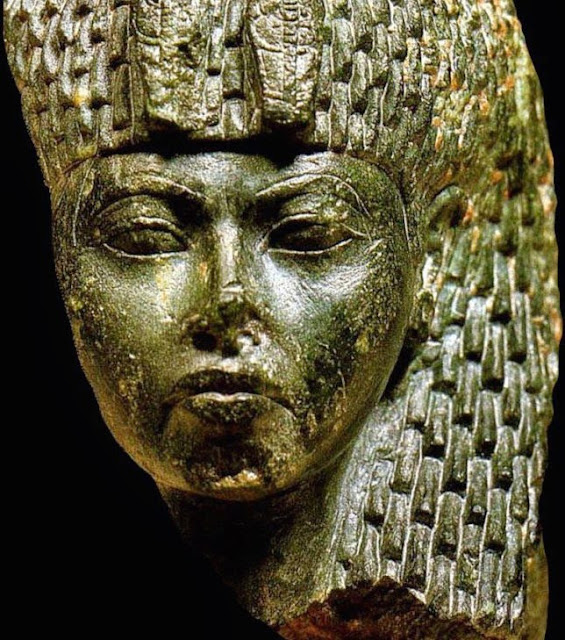
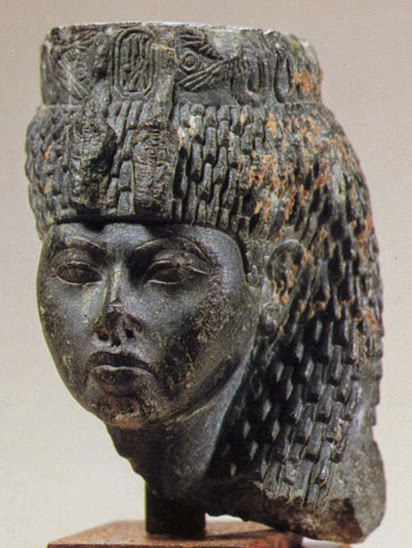
Head of a statuette of Queen Tiye – dark green schistose steatite – New Kingdom – 18th Dynasty Discovered in 1905 by William Matthew Flinders Petrie in the Temple of Hathor at Serabit el-Khadim (Sinai) Egyptian Museum, Cairo – JE 38257
In 1905, the English Egyptologist William Matthew Flinders Petrie led an expedition to the Sinai Peninsula. He was particularly interested in the site of the temple of Serabit el-Khadim. Built during the reign of Snefu for workers who came to work in the turquoise mines, it remained in use until the New Kingdom. The sanctuary is dedicated to the goddess Hathor, “mistress of turquoise,” and the eastern falcon god Sopdu.
The excavation season is expected to yield the discovery of a small female head, measuring 7.2 cm, in a very dark stone.
Head of a statuette of Queen Tiye – dark green schistose steatite – New Kingdom – 18th Dynasty Discovered in 1905 by William Matthew Flinders Petrie in the Temple of Hathor at Serabit el-Khadim (Sinai) Egyptian Museum, Cairo – JE 38257
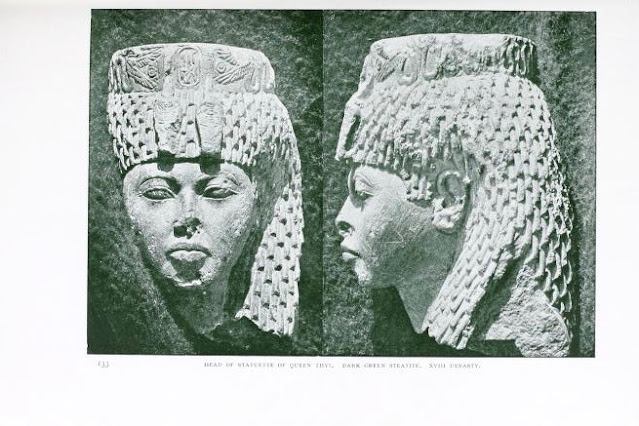
Here is an excerpt from W.M.F. Petrie’s description in his 1906 report “Researches in Sinai”: “A queen has left here one of the most striking portraits ever carved in Egypt. The very famous Queen Thyi, wife of the great Amenhotep III, was hitherto known from a few carved reliefs, but not yet from such a portrait in the round. Strangely, such a remote spot should have preserved this representation, which we have identified from the cartouche in the middle of the crown. The schistose stone is dark green steatite.
The entire statuette must have measured about a foot in height. Unfortunately, we have found no fragments other than the head. The great dignity of the face is combined with a fascinating uprightness. The delicacy of the contours of the eyes and cheekbones testifies to the quality of execution. The lips, whose curious curve curves downwards, are complete and delicate, yet express a disdain devoid of malice. They are, most certainly, a likeness to the truth… The ear is pierced, as is also the case with her son Akhenaten. The crown she wore was probably with gold inlays. The two-winged cobras stretch their length in loops around the head, until they meet at the back; while in the middle of the forehead, they support the cartouche with the name of the great queen of Upper and Lower Egypt. This piece alone was worth all the rest of our earnings for the year; it is now in the Cairo Museum.”
“Head of statuette of Queen Tiye – Dark green steatite” (Egyptian Museum, Cairo JE 38257) published here by William Matthew Flinders Petrie in “Researches in Sinai” (1906), plate 133 – p. 127
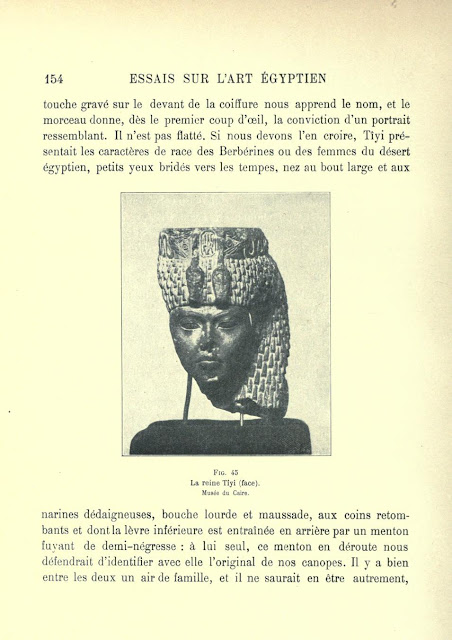
In his book “Essays on Egyptian Art” published in 1912, Gaston Maspero describes it thus: “The right wing of the wig is missing, and the nose has suffered from an unfortunate shock on the left nostril, without however losing the essential part of its shape: a cartouche engraved on the front of the hairstyle tells us the name, and the piece gives, at first glance, the conviction of a portrait likeness. It is not flattering. If we are to believe him, Tiyi presented the racial characteristics of the Berberines or the women of the Egyptian desert, small eyes slanted towards the temples, noses with a wide tip and disdainful nostrils, a heavy and sullen mouth, with drooping corners and whose lower lip is pulled back by a receding chin.”
Head of a statuette of Queen Tiye – dark green schistose steatite – New Kingdom – 18th Dynasty Discovered in 1905 by William Matthew Flinders Petrie in the Temple of Hathor at Serabit el-Khadim (Sinai) Egyptian Museum, Cairo JE 38257 – Published here by Gaston Maspero in “Essays on Egyptian Art”, 1912
What femininity, what willpower, what pride, and what presence! The personality that emanates from this little face is visibly inspiring… And it is touching, even moving, to see how much each Egyptologist is keen to decipher it…
Head of a statuette of Queen Tiye – dark green schistose steatite – New Kingdom – 18th Dynasty Discovered in 1905 by William Matthew Flinders Petrie in the Temple of Hathor at Serabit el-Khadim (Sinai) Egyptian Museum, Cairo – JE 38257 – Museum photo
Thus, for Mohamed Saleh and Hourig Sourouzian (“Official Catalogue of the Egyptian Museum in Cairo”): “The oval face with high cheekbones, almond-shaped eyes and a thick, almost disillusioned mouth is that of a determined and serious woman, who exudes a high spirituality despite her apparent youth.”
In “The Wonders of the Egyptian Museum in Cairo,” Francesco Tiradritti provides the following interpretation: “The corners of the mouth, curved downwards, give the whole face an air of gravity that was often interpreted as an allusion to the decisive and inflexible temperament of Tiyi.”
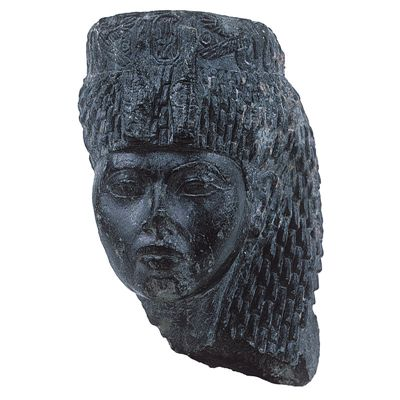
Head of a statuette of Queen Tiye – dark green schistose steatite – New Kingdom – 18th Dynasty Discovered in 1905 by William Matthew Flinders Petrie in the Temple of Hathor at Serabit el-Khadim (Sinai) Egyptian Museum, Cairo JE 38257 (museum photo)
Jean-Pierre Corteggiani’s analysis (“Egypt of the Pharaohs at the Cairo Museum”) is also not devoid of realism: “There is something haughty, if not contemptuous, in this young and energetic face of a woman who is both highly aware of her rank and proud to have managed to occupy it.”
There are many known representations of the queen, the most famous of which are those in the Egyptian Museum in Berlin (ÄM 21834 – yew wood head found in 1904 in Medinet Gourab), those in the Louvre (N 2312, E 25493 – glazed steatite – Salt Collection), as well as those in the Metropolitan Museum of Art in New York (26.7.1396 yellow jasper, discovered in Amarna from the Carnarvon Collection), without forgetting, of course, the imposing statuary group where she appears seated alongside her husband and with three of their daughters (atrium of the Cairo Museum – ref. GM 610 – JE 33906).
Head of Queen Tiye – yew wood statue in the round discovered in 1904 in Medinet Gourab Berlin Museum – ÄM 21834 (museum photo)
Tiyi lived in the New Kingdom; she was the daughter of Youya and Touya, whom Pierre Tallet (“12 Queens of Egypt Who Changed History”) describes as follows: “Youya was from Akhmim in Middle Egypt and held the titles of director of the royal stables and divine father; her mother Touya was a ‘royal ornament’ and singer of Amun.” She was therefore close to the Court…
“In the palace, rumour had preceded the event: Tiyi would be queen… she was and assumed this role with exceptional talent,” relates Christian Leblanc in his “Queens of the Nile.” And he continues: “Announced beyond the borders by an issue of large commemorative scarabs, the marriage of Tiyi with Amenhotep III was celebrated with great pomp in Memphis… Very quickly, Tiyi had a great influence on the government of the country. Through her strong personality, she exercised a role as confidante and political advisor to her husband.” It appears that her role also continued during the reign of her son, Amenhotep IV, also known as Akhenaten.
Head of a statuette of Queen Tiye – dark green schistose steatite – New Kingdom – 18th Dynasty Discovered in 1905 by William Matthew Flinders Petrie in the Temple of Hathor at Serabit el-Khadim (Sinai) Egyptian Museum, Cairo – JE 38257
The one who was adorned with so many laudatory titles: “Noble lady”, “Great favourite”, “Great royal wife”, “Sovereign of the Two lands”, “Who fills the palace with love”, died between the 12th and 15th year of her son’s reign.
Head of a statuette of Queen Tiye – dark green schistose steatite – New Kingdom – 18th Dynasty Discovered in 1905 by William Matthew Flinders Petrie in the temple of Serabit el-Khadim (Sinai) Egyptian Museum, Cairo JE 38257 – museum photo
The quality of this stone portrait is therefore “up to” the great lady that she was… We must salute the sculptor who was able to render her character traits so accurately and so finely and who, in a way, helps us to better “perceive” the subtle personality of the sovereign…
Presented under number 4257 of the “Visitor’s Guide to the Cairo Museum” (Gaston Maspero, 1915), it was recorded in the museum’s Journal of Entries under reference JE 38257.
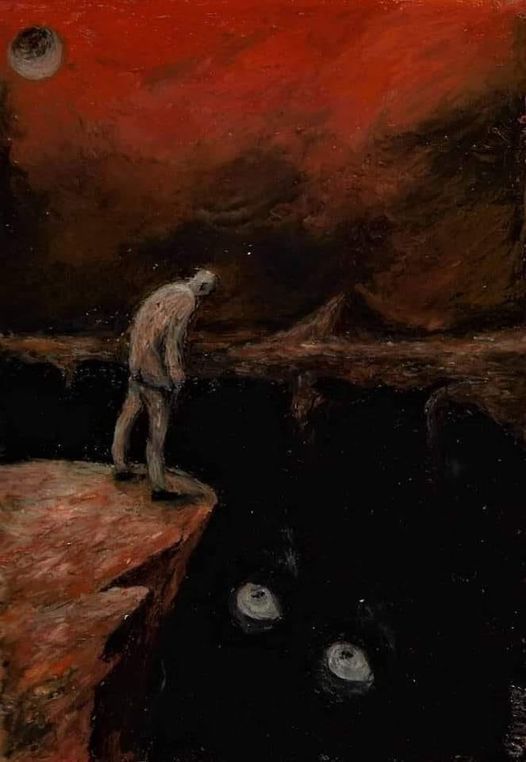
“Whoever fights with monsters should be careful not to become a monster himself. When you gaze long into an abyss, it also gazes into you.” ~Friedrich Nietzsche, Jenseits von Gut und Böse (1886) ch. 4, no. 146
Actually, I need to rest and post less frequently than before, but this short essay by adorable Laura London, an excellent Jungian expert at X (formerly Twitter), invigorated me. I couldn’t resist sharing it with you.
For many, contemplating and analyzing death is uncomfortable or even frightening. However, when we psychologically examine the world around us, we observe everything as dualistic, such as warm and cold, dark and light, love and hate, joy and grief… and, of course, life and death; neither can exist without the other!
There is no reason for many young people to think about death, except for some like me who are confronted with it by losing a part of their parent or both. However, as we reach a certain age, this challenge becomes unavoidable. Fear is not a solution, as we will inevitably confront the other side. Therefore, it is better to attempt to understand or envision it as much as possible. Reading this essay soothes the soul!
This quote from Jung is one of my favourites because it offers a breakthrough in our understanding of death.
Now, let’s read a tiny Colletti of Jung’s explanation on this issue, with heartfelt thanks to Laura London, which also included an introduction to an excellent book by Richard Wilhelm.
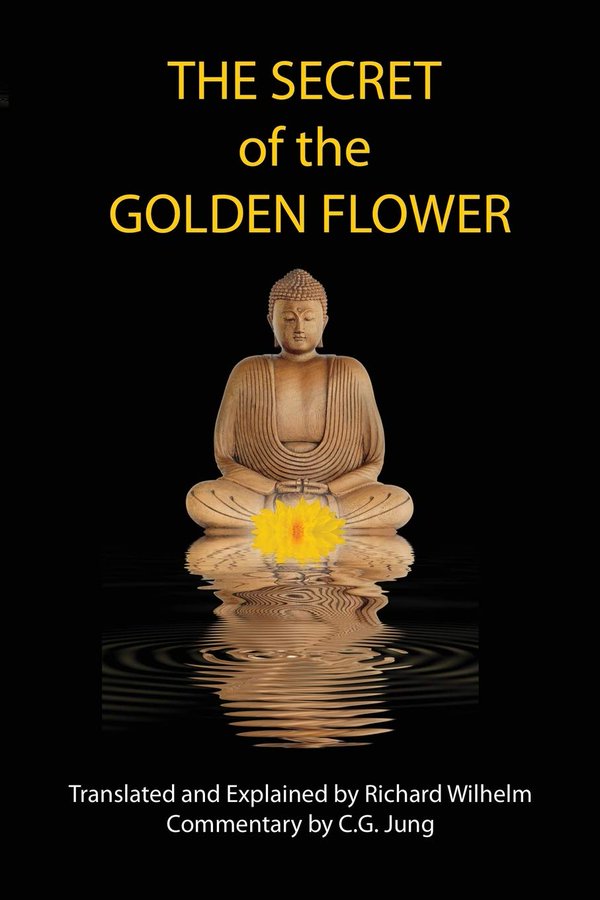
“From 1929 to 1934, #Jung presented his more mature thoughts about the mystery of death in three separate essays.⁵ In one of these essays, he stated that ‘anyone should draw the conclusion that the psyche, in its deepest reaches, participates in a form of existence beyond space and time, and thus partakes of what is inadequately and symbolically described as ‘eternity’’ [CW 8, par. 815]. Because of this, he also stated that as a doctor, I make every effort to strengthen the belief in immortality, especially with older patients … For … death is not an end but a goal, and life’s inclination towards death begins as soon as the meridian is passed’ [CW 13, par. 68]. Jung argued that the crisis of the second half of life is a sign that ‘nature prepares itself for death’ [CW 8, par. 808], hence, ‘it is hygienic … to discover in death a goal towards which one can strive’ [CW 8, par. 792], since ‘dying … has its onset long before actual death’ [CW 8, par. 809]. Jung concluded that ‘the #unconscious is all the more interested in how one dies; that is, whether the attitude of #consciousness is adjusted to dying or not’ [par. 809]. Death, then, became not only a goal for Jung but also a reality that could enrich life. Death begins before it happens, in midlife, so how one lives with death and how one approaches that goal became for Jung of paramount importance. In 1928, Jung received a copy of The Secret of the Golden Flower, a Chinese Taoist-alchemical text that, together with a dream he had which was set in Liverpool [Memories, Dreams, Reflections, pp. 220–223], confirmed to him that the goal of the #individuation process is the self, ‘the archetype of wholeness’ [CW 9ii, par. 351].”
⁵ “Commentary on ‘The Secret of the Golden Flower’” (1929); “The Stages of Life” (1930); “The Soul and Death” (1934).
~Luis Moris, Jungian psychoanalyst, “Jung’s Confrontation with Death: An Introduction, Confronting Death, pp. 7-8
🌼 You can watch my interview with Jungian psychoanalyst Luis Moris, editor of the book Confronting Death, in Episode 139 of Speaking of Jung.
Throughout human history, numerous hints—such as books, signs, or symbols—have sought to reveal the truth or, at the very least, refresh our forgotten memories. However, we often appear too naive or too lazy to make the effort to understand.
Here is one: although we may be able to read and decipher it, we must also discern the underlying meaning—”reading between the lines!”—and therein lies the key!
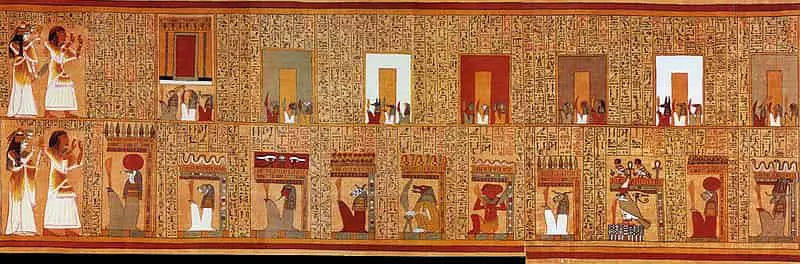
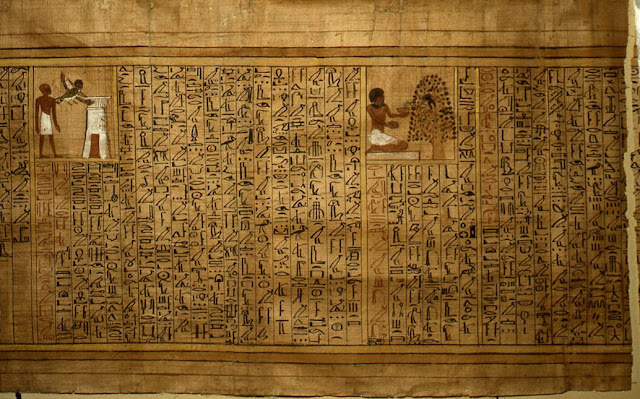
In the upper register, Ani and his wife face the “Seven Gates of the House of Osiris.” Below are ten of the twenty-one “Mysterious Portals of the House of Osiris in the Field of Reeds.” They are all protected by fearsome guardians. (from Historicaleve)
So, let’s continue engaging and aim to gather more information. Here is Marie Grillot‘s brilliant report on this topic for its purpose!
The Book of the Dead by Kha, Architect of the Place of Truth
Book of the Dead of Kha and Merit – plant fiber/papyrus, ink, pigments New Kingdom – 18th Dynasty – reigns of Amenhotep II, Thutmose IV, Amenhotep III – circa 1425 – 1353 BC from their tomb – TT 8 – discovered on February 15, 1906, in the necropolis of Deir el-Medina by Ernesto Schiaparelli and Francesco Ballerini of the Italian Archaeological Mission of the Turin Museum exhibited at the Museo Egizio in Turin – Inv. No.: Suppl. 8316/03 = Suppl.8438 – museum photo
“In use from the beginning of the New Kingdom to the Roman period, the Book of the Dead, of which a ‘canonical’ version appeared in the Saite period, could be written on leather, on the mummy’s own bandages, on pieces of funerary furniture or, particularly at Deir el-Medina, on the walls of the vault, but it was almost always on a papyrus roll, bearing the name and titles of the deceased, that the various chapters that constituted it succeeded one another. Their titles being written in red ink – the literal meaning of the term ‘rubric’ – these were written in cursive hieroglyphs, in hieratic, then in demotic, and were almost always, especially in the New Kingdom, accompanied by beautiful painted ‘vignettes’ that make the Book of the Dead the oldest illuminated book in the world” indicates Jean-Pierre Corteggiani in “Ancient Egypt and its Gods”.
The “Book of the Dead” was originally called the “Book for going out during the day”. This “recent” name is due to the Egyptologist Richard Lepsius, who, in 1842, while translating a papyrus kept in the Turin Museum, called it “Todtenbuch” (“Book of the Dead”).
Book of the Dead of Kha and Merit – plant fiber/papyrus, ink, pigments New Kingdom – 18th Dynasty – reigns of Amenhotep II, Thutmose IV, Amenhotep III – circa 1425 – 1353 BC from their tomb – TT 8 -discovered on February 15, 1906 in the necropolis of Deir el-Medina by Ernesto Schiaparelli and Francesco Ballerini of the Italian Archaeological Mission of the Turin Museum exhibited at the Museo Egizio in Turin – Inv. No.: Suppl. 8316/03 = Suppl.8438 – museum photo
Paul Barguet, who also made a translation published by Éditions du Cerf, recalls its “divine” genesis: “The god Thoth is said to be the mythical author of the magic formulas of the Book of the Dead (or “Book to go out at/the day”, a title preferred by Jean-Louis de Cénival). Each time a deceased person recites a formula, he is theoretically the author since he reactivates it at the moment of pronunciation. But the formulas of the Book of the Dead were indeed written a very first time. The Egyptian priests identified this first author. In their minds, it was a divinity, not expressly named, but originating from Hermopolis. It would then seem that it was the god Thoth. This first paternity is rarely mentioned in the Book of the Dead, but it exists in the formula sections 30B, 64, 137A and 148″…
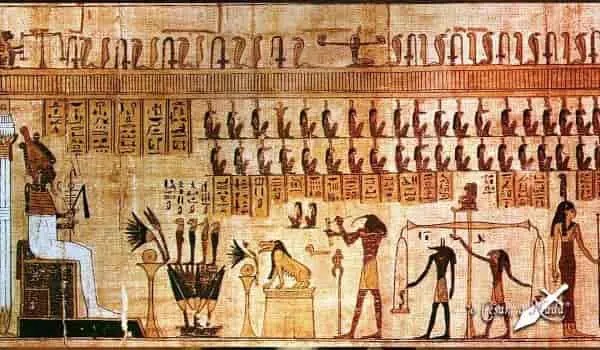
This precious collection, intended to ensure the well-being of the deceased and to be a true guide to eternal life, was placed in the tombs of the royal sphere and in those of individuals. It contained prayers for the divinities, religious and magical texts, listed the formulas allowing one to cross the doors to access the afterlife, to be “justified”, to face dangers and threats, to benefit from offerings, to feed oneself, to go out on earth during the day after having, during the night, crossed the underground world of Osiris…
Book of the Dead of Kha and Merit – plant fiber/papyrus, ink, pigments New Kingdom – 18th Dynasty – reigns of Amenhotep II, Thutmose IV, Amenhotep III – circa 1425 – 1353 BC from their tomb – TT 8 – discovered on February 15, 1906, in the necropolis of Deir el-Medina by Ernesto Schiaparelli and Francesco Ballerini of the Italian Archaeological Mission of the Turin Museum exhibited at the Museo Egizio in Turin – Inv. No.: Suppl. 8316/03 = Suppl.8438 – museum photo
In “The Egyptians,” Françoise Dunand and Roger Lichtenberg specify that the one who knows the formulas “will go to earth among the living… He will go out every day, he wants, and return to his tomb without being arrested… Thus, while the body remains in the tomb, the soul, ba (represented as a bird with a human head), is supposed to leave it to wander at will on earth and then find it again”…
The total number of formulas stated is sometimes indicated as 150, 165, or even 194; this difference is probably due to the periods… The copies that have come down to us are not all identical; they vary in fact in the number of formulas as well as in that of the “vignettes”. Thus, Florence Maruejol, the ancient Egyptians, asked “the scribes of the Houses of Life for a choice of chapters. Or it is the scribes themselves who make the selection… The shortest measures 1 or 2 meters in length, the majority reach about fifteen meters, and the longest exceed 25 meters. The chapters are generally illustrated by vignettes drawn in line or painted by an artist who takes over from the scribe”.
Book of the Dead of Kha and Merit – plant fiber/papyrus, ink, pigments New Kingdom – 18th Dynasty – reigns of Amenhotep II, Thutmose IV, Amenhotep III – circa 1425 – 1353 BC from their tomb – TT 8 – discovered on February 15, 1906, in the necropolis of Deir el-Medina, by Ernesto Schiaparelli and Francesco Ballerini of the Italian Archaeological Mission of the Turin Museum exhibited at the Museo Egizio in Turin – Inv. No.: Suppl. 8316/03 = Suppl.8438 – museum photo
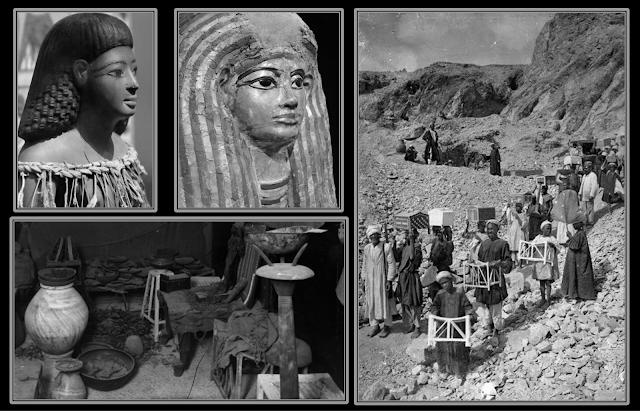
The “Book of the Dead” of Kha, architect of the Place of Truth, was found in the tomb he shared with his beloved wife, Merit. Discovered on February 15, 1906, in the northern circus of the necropolis of Deir el-Medina, by Ernesto Schiaparelli and Francesco Ballerini of the Italian archaeological mission of the Turin Museum, it contained more than 500 objects that constitute highly instructive testimonies of the life of a couple of the New Kingdom who had been particularly successful in this ‘microcosm’ that was then the community of artisans.
Left, top: Statuette of the architect Kha-wood – Museo Egizio Turin, S. 8335 Funeral mask of his wife Merit – painted and gilded stucco cardboard – Museo Egizio Turin, S 8473 Left bottom: The inviolate tomb of Kha and Merit – 18th dynasty – TT 8 Deir el-Medineh – when it was discovered on February 15, 1906, by the Italian Archaeological Mission of the Turin Museum led by Ernesto Schiaparelli and Francesco Ballerini Right: Artifacts coming out of the tomb – photos Museo Egizio
Curiously, their “Book of the Dead” was not “rolled up” but was found folded and placed on the intermediate coffin of Kha, who died after his wife. “Composed of 38 sheets of papyrus, stuck together for almost 14 meters in total length… it lists 33 formulas arranged from left to right, often accompanied by abundantly illustrated vignettes. The introductory scene shows Kha and Merit before the god Osiris enthroned under a canopy facing a richly decorated pedestal table; this scene synthesizes the axis around which the concept of death is articulated in ancient Egypt, that is to say the encounter with the god Osiris, sovereign of the world of the dead, whose judgment determines access or not to eternal life” specifies Enrico Ferraris in the “Museo Egizio”…
The following sheets (all 35 centimeters wide) contain other formulas related to the funeral procession, the ritual of opening the mouth, protecting the deceased, amulets, etc.
Book of the Dead of Kha and Merit – plant fiber/papyrus, ink, pigments New Kingdom – 18th Dynasty – reigns of Amenhotep II, Thutmose IV, Amenhotep III – circa 1425 – 1353 BC from their tomb – TT 8 – discovered on February 15, 1906, in the necropolis of Deir el-Medina by Ernesto Schiaparelli and Francesco Ballerini of the Italian Archaeological Mission of the Turin Museum exhibited at the Museo Egizio in Turin – Inv. No.: Suppl. 8316/03 = Suppl.8438 – museum photo
Dated 1425 – 1353 BC, from the reigns of Amenhotep II, Thutmose IV, and Amenhotep III, this “Book of the Dead” was registered in the Museo Egizio – S. 8316/03 = S.8438. In the work cited above, Enrico Ferraris notes “strong formal and sequential analogies with the copy found in the tomb of Yuya and Tuya, parents of Queen Tiye, wife of Amenhotep III, which could suggest the use of a reference model shared by the workshops that wrote these two funerary papyri…
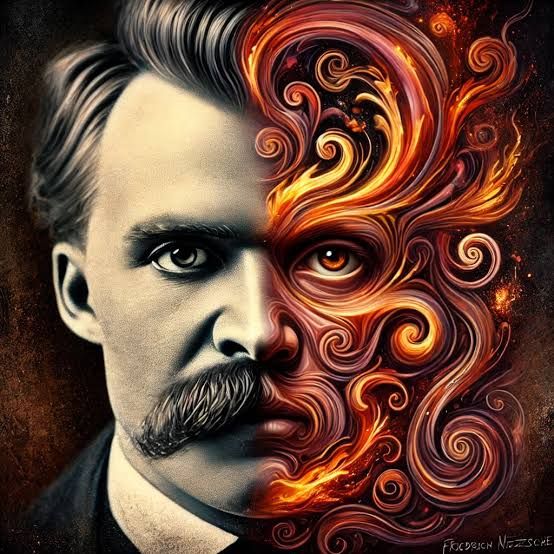
Recently, I saw a critical performance of Richard Wagner on German TV about his racism, presented by an Italian or Spanish artist whose name I have forgotten. However, this reminded me of Nietzsche’s distancing himself from Wagner due to his disgust towards specific individuals, even though Nietzsche was in love with his sister, Cosima. (The reason may also be that Nietzsche had a very close relationship with a man named Paul Rée, who was Jewish.) For Nietzsche, the Tribschen period was far from idyllic. It was challenging as he constantly tested himself to meet Wagner’s expectations. He began writing his first book while regularly visiting the Wagners’ home in Tribschen, anxious about whether his work would satisfy Wagner. This era was marked by aspiration, vulnerability, and self-testing for Nietzsche. He was essentially an apprentice to a genius, experiencing a vital rite of passage in his creative journey.
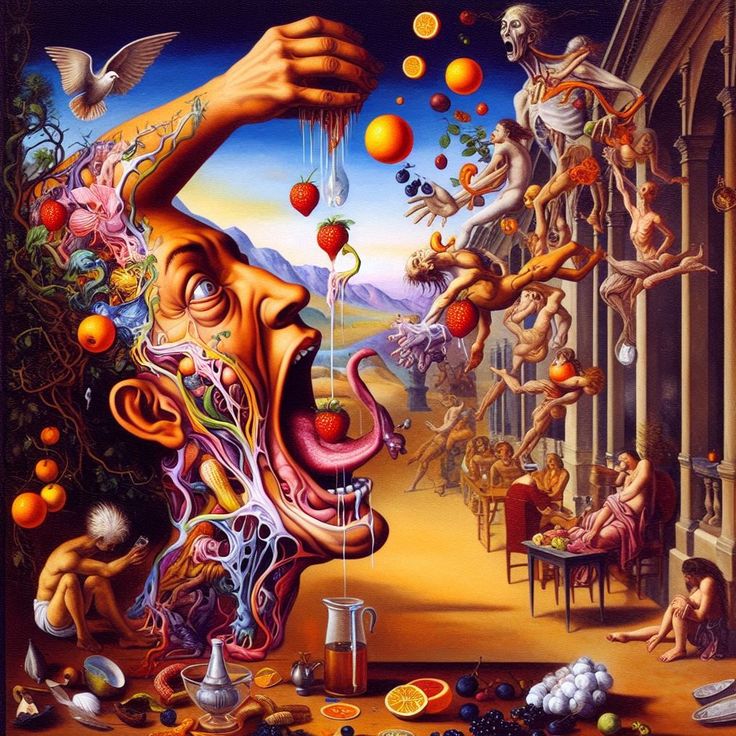
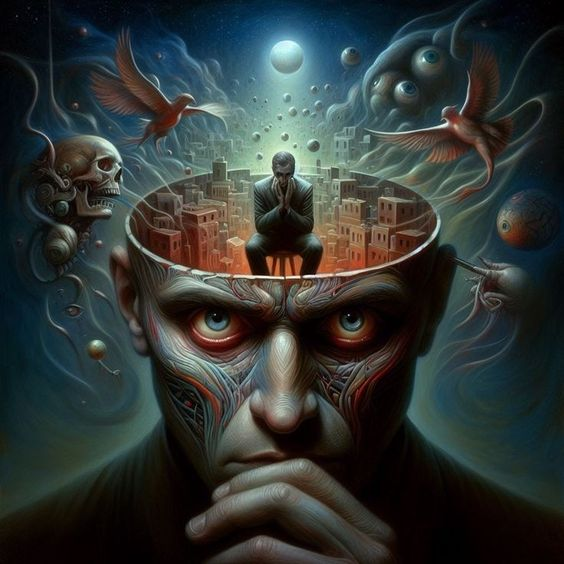
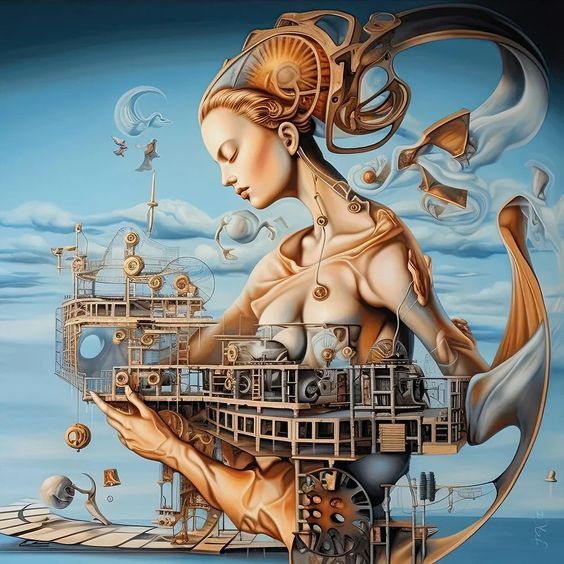
Free AI Art (On the top: Surreal Abstract Painting.)
Neither Nietzsche nor Wagner understood one another realistically. Nietzsche saw Wagner as a benevolent father but felt disappointed by his egotism. Conversely, Wagner viewed Nietzsche as a loyal son who became a rebellious thinker. Both pursued psychological needs that overshadowed their friendship and intimacy.
Anyway, I found two paragraphs I’ve translated from one of his books, Menschliches, Allzumenschliches (Human, All Too Human). I present them to you because I believe they are very relevant to our “political” society today.
From the Book “Human, All Too Human”, Volume One
(No. 458) Guiding Spirits and their Tools.
We see great statesmen and generally all those who have to use many people to carry out their plans, sometimes proceed in this way, sometimes in that way: either they select very finely and carefully the people who suit their plans and then give them relatively great freedom because they know that the nature of these chosen people will lead them to where they themselves want them to go, or they choose poorly, even take what comes to hand, but form something suitable for their purposes out of every ton. This last type is the more violent; it also requires submissive tools, its knowledge of human nature is usually much less, and its contempt for human nature is greater than that of the first-mentioned minds. Still, the machine they construct generally works better than the machine from the workshop of the former.
Spiral to the Hole
(No. 460) The Great Man of the Masses.
The recipe for what the masses call a great man is easy to give. Whatever the circumstances, get them something they find very pleasant, or first put it into their heads that this and that would be very pleasant, and then give it to them. But not immediately at any price: you have to fight for it with the greatest effort or seem to be fighting for it. The masses must have the impression that there is a powerful, even indomitable willpower; at least, it must seem to be there. Everyone admires a strong will because no one has it, and everyone says to themselves that if they had it, there would be no limits to them and their egoism. If it turns out that such a firm will achieve something that the masses find very pleasant, people admire it once again and wish themselves luck instead of listening to the wishes of its greed. Moreover, he has all the qualities of the masses: the less they are ashamed of him, the more popular he is. So, He is violent, jealous, exploitative, scheming, flattering, grovelling, conceited (narcissist) or anything, depending on the circumstances.
A brief update: My challenging circumstances remain the same, but I’m relieved that my boss has exited the hospital. His blood tests are standard, yet he still cannot return to work. Therefore, I must continue managing things as the acting boss! I am always grateful for your support and companionship, and I wish you all a lovely weekend.🙏💖
Sorry! I can’t simply ignore this issue or stop worrying about the current situation. Perhaps it’s because I was born and raised in a dictatorship, which gives me a deeper understanding of the coming danger than many of my friends here, who have mostly been born and live in freedom.
The question is, when a nation feels disappointed with its situation and confused about its future, how easily can its patriotism be aroused and nationalism used to heal its social wounds? It is not related to a country’s political governing and social freedom, as we observe it occurring in both directories and Western democratic nations. I often wonder why people tend to embrace nationalism during moments of last-ditch pride, frequently seen in contexts like football national cups (a common occurrence in South America), historical racism (as observed in German history), or in leaning on their ancient heritage (as seen with figures like Mussolini in Italy and the Persians, which still resonates today).
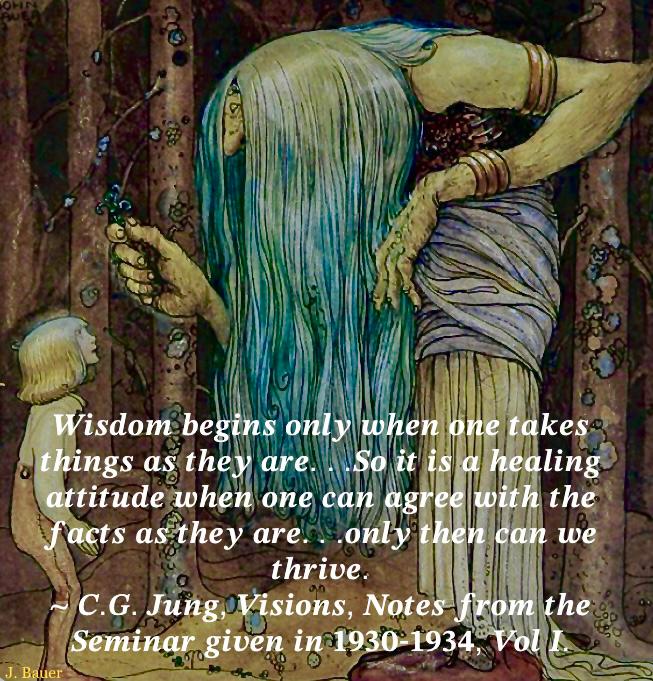
Through scientific understanding, our world has become dehumanized. Man feels himself isolated in the cosmos. He is no longer involved in nature and has lost his emotional participation in natural events, which hitherto had a symbolic meaning for him… He no longer has a bush-soul identifying him with a wild animal. His immediate communication with nature is gone forever, and the emotional energy it generated has sunk into the unconscious. (C. G. Jung 1948/1980, para 585)
In today’s world, and likely in the years to come, politics will inevitably influence our lives, whether we want it to or not. I don’t intend to denigrate anyone, but when a single individual holds leadership in one of the most influential roles in the world with vast authority, it raises alarms about the potential for tyranny. And I’m sure all friends here must admit that no one will be immune to that seduction!
The word “democracy” originates from the Greek terms “demos,” meaning “people,” and “kratos,” meaning “power.” Therefore, democracy can be understood as the “power of the people”—a form of governance that relies on the people’s will. The idea of democracy derives its moral strength – and popular appeal – from two fundamental principles: 1- Individual Autonomy: This principle asserts that no one should be subject to rules others impose. People should be able to control their own lives within reasonable limits. 2- Equality: This principle holds that everyone should have the same opportunity to influence society’s decisions. Essentially, it emphasizes the disempowerment of concentrated power held by a single individual, transforming governance into a system where leaders serve the population rather than rule over them.
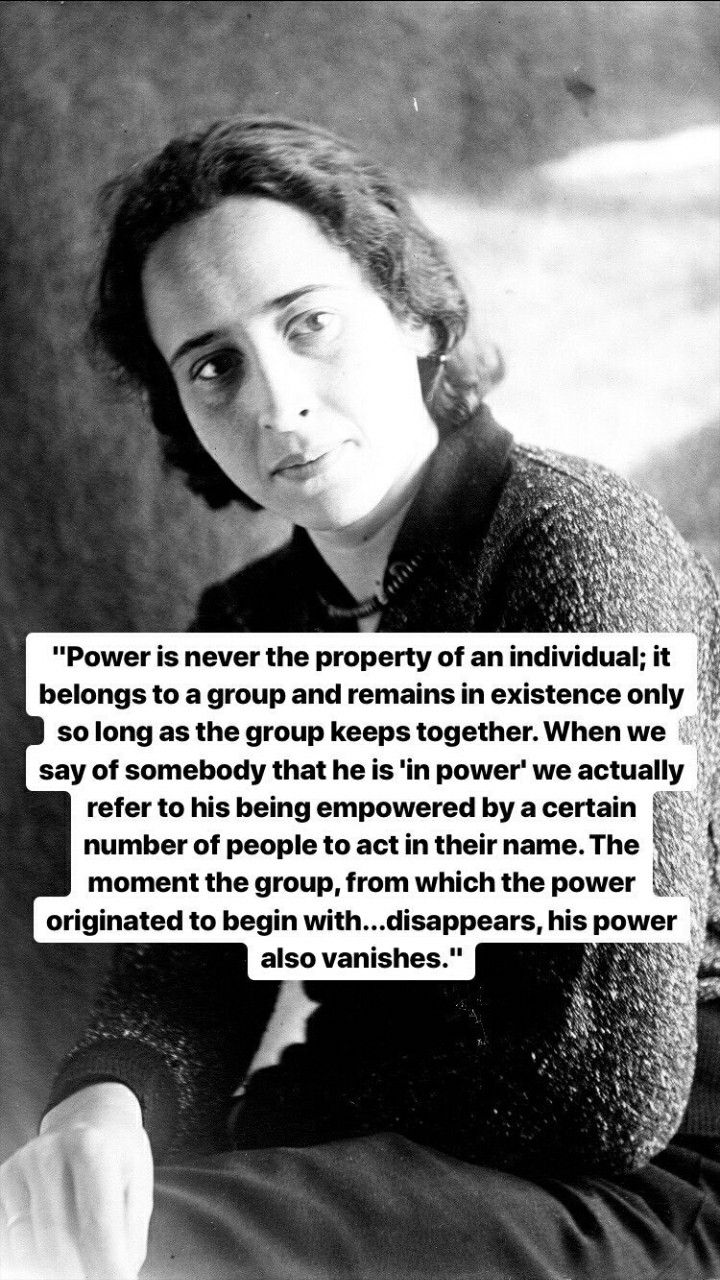
Lyndsey Stonebridge explains in her book “We Are Free To Change The World” (Hannah Arendt’s Lessons of Love and Disobedience): >In Arendt’s sense, having a free mind means turning away from dogma, political certainties, theoretical comfort zones, and satisfying ideologies. It means learning instead to cultivate the art of staying true to reality’s hazards, vulnerabilities, mysteries, and perplexities because, ultimately, that is our best chance of remaining human.< She also reflects that fundamental questions about the human condition are not beside the point in dire political times; they are the point. How can we think straight amidst cynicism and mendacity? What is there left to love, to cherish, to fight for? How can we act to secure it best? What fences and bridges do we need to build to protect freedom, and which walls do we need to destroy?
Hannah Arendt closely examined the regimes of Hitler and Stalin, their functionaries, the ideology of scientific racism, and the role of propaganda in creating what she described as “a curiously varying mixture of gullibility and cynicism.” This mixture is how individuals are expected to respond to their leaders’ ever-changing lies. In her 1951 work, “Origins of Totalitarianism,” she elaborated that this combination of gullibility and cynicism is prevalent across all levels of totalitarian movements:
In an ever-changing, incomprehensible world, the masses had reached the point where they would simultaneously believe everything and nothing, think that everything was possible and nothing was true… The totalitarian mass leaders based their propaganda on the correct psychological assumption that, under such conditions, one could make people believe the most fantastic statements one day and trust that if the next day they were given irrefutable proof of their falsehood, they would take refuge in cynicism; instead of deserting the leaders who had lied to them, they would protest that they had known all along that the statement was a lie and would admire the leaders for their superior tactical cleverness.
It is important to recognize the significant danger of trusting someone who makes promises. Why do such individuals often resort to constant and blatant lying? One reason is that it serves as a way to control their subordinates completely. These followers may feel compelled to abandon their own integrity to echo outrageous falsehoods, subsequently becoming tied to the leader through feelings of shame and complicity. Professor Jacob T. Levy from McGill University highlights the insights of prominent thinkers like George Orwell, Hannah Arendt, and Vaclav Havel. He notes that they can help us identify a specific type of falsehood. He states that “saying something obviously untrue and forcing your subordinates to repeat it earnestly in their own words is a shocking demonstration of power over them. This practice was widespread in totalitarian regimes.”
“You can read my lips… Repeat my words as I repeat them! Doesn’t this sound familiar? Arendt and others noted— as Levy writes— that “being forced to repeat an obvious lie makes it clear that you’re powerless.” She also identified how an avalanche of lies can render a populace unable to resist, a phenomenon we now refer to as ” “gaslighting”:
The result of a consistent and total substitution of lies for factual truth is not that the lie will now be accepted as truth and truth be defamed as a lie, but that the sense by which we take our bearings in the real world—and the category of truth versus falsehood is among the mental means to this end—is being destroyed.
However, time will reveal how a people or a nation can differentiate between right and wrong and how much their practice of democracy can help them recognize truth and falsehood. Democracy is not a gift that can be simply given; it requires thorough training to achieve its ultimate goal.
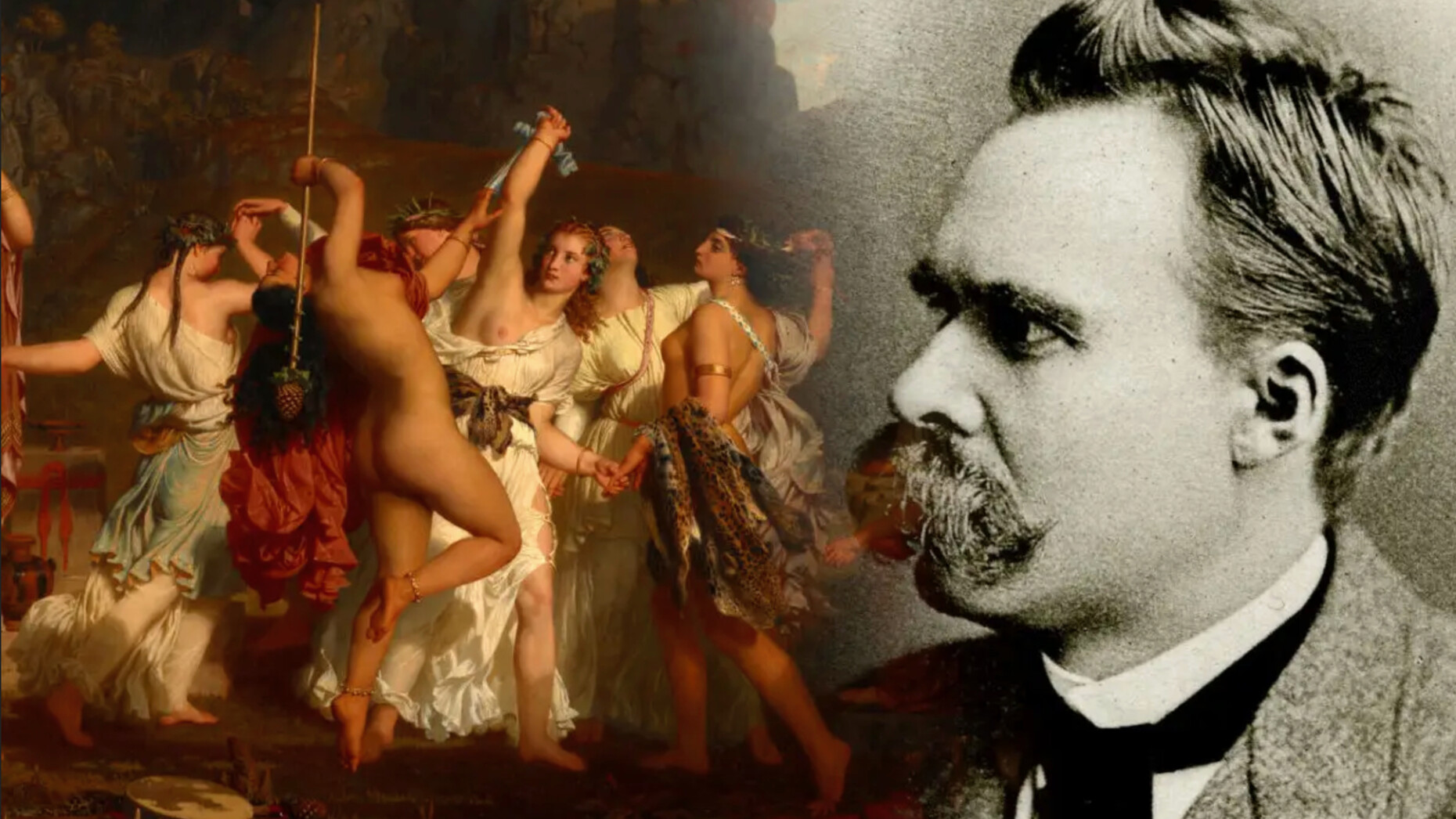
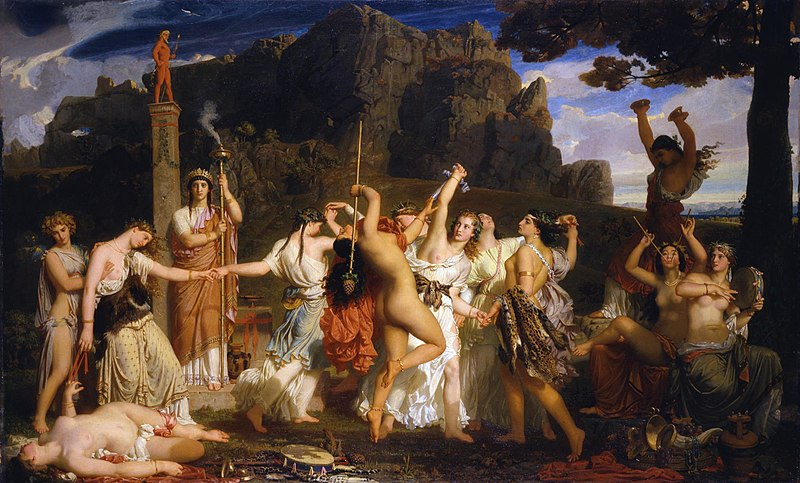
The Dance of the Bacchants, by Charles Gleyre and Friedrich Nietzsche (Artwork: Mark Rothko)
Recently, I read a post on FB from a good friend, Scott D. Smith, about how we might have to get through Nietzsche to understand Dr. Jung better! I agree totally; though Dr. Jung’s works are not philosophical but psychological, Nietzsche has an immense influence on Jung’s doctrine work and his psychological analysis in general.
Nietzsche admired Greece and Greek mythology, often quoting Schopenhauer and using Hegelian ideas to discuss art. He connected ancient Greek tragedy with Richard Wagner’s opera. Let’s see what he meant by Dionysian.
Dionysus, the Greek god of wine and music, is associated with the Dionysian, a state of self-forgetting where individuals unite with others and nature. According to Nietzsche, the Apollonian and the Dionysian are essential to art creation. Dionysian art, particularly music, represents madness and drunkenness, appealing to primal human desires and mystical unity with nature. In “The Birth of Tragedy” (1872), Nietzsche introduced the terms Apollonian and Dionysian to describe contrasting forces in art. The Apollonian represents a calm, rational art, while the Dionysian embodies intense emotion and ecstasy. Nietzsche believed these forces could come together to create a unique art form, as seen in the Greek tragedies of Aeschylus and Sophocles.
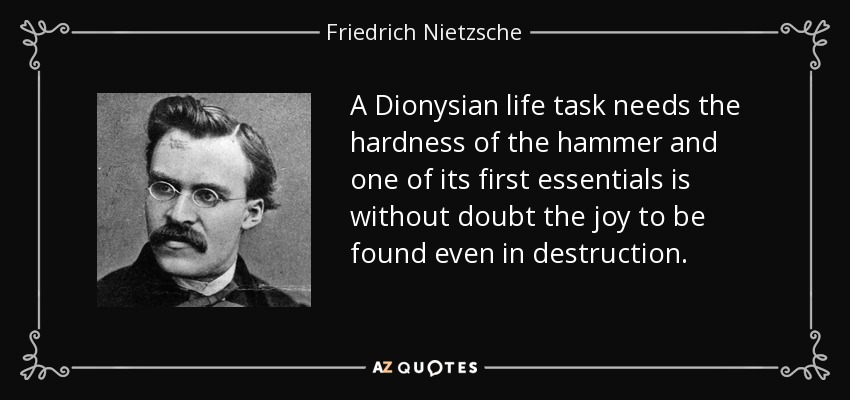
“The saying Yes to life even in its strangest and hardest problems; the will to life, rejoicing over its inexhaustibility even in the very sacrifice of its highest types – that is what I call Dionysian.”
Charles Gleyre La Danse des bacchantes. Wikimedia The Dance of the Bacchantes, the last painting by Gleyre exhibited publicly in Paris (at the Salon of 1849)
I believe his thoughts are timeless, as humans almost permanently experience the same failures based on ignorance. Here he speaks:
“Now we see the struggle, pain, the destruction of appearances as necessary because of the abundance of countless forms pressing into life because of the boundless fecundity of the world will…That primal Dionysian delight experienced even in the presence of pain is common to music and tragic myth.” “Dionysian art wants to convince us of the eternal delight of existence… Now struggle, pain, and destruction… are seen as necessary…Despite terror and pity we rejoice in living not as individuals but as part of the life force with whose procreative lust, we have become one.” “the world is becoming and perishing, creation and destruction, without any moral content, in eternal innocence.” “Now, sure of united victory, We celebrate the feast of feasts: Friend Zarathustra has come, the guest of guests! Now the world is full of laughter, the gruesome curtain is rent, The wedding day has come for light and darkness.” Nietzsche: Disciple of Dionysus
Sometimes, our strengths push us so far that we can no longer bear our weaknesses and decline from them.
Of course, we happen to predict this way out, but we can’t change anything. And then we become cruel in that which we ought to guard within ourselves, and our greatness makes us barbarous.
This experience, which we are ultimately forced to pay for with our lives, symbolizes bad people’s effect on others and their time.
With the best they possess—they have within themselves—with that which only they can accomplish, they destroy too many weak, uncertain, unformed, and hesitant beings with the best they have and thus become harmful.
And it can even happen that they do nothing but cause harm because this oldest part of themselves is suddenly emptied, so to speak, only by beings who suffocate their logic and individuality in a glass of strong drink.
And they get drunk to such a point that they can’t help but break their whole body – hands, legs – in all the ways that their drunkenness will lead them.
“‘Man is evil‘ – all the wisest have told me that to comfort me. Ah, if only it were still true today! For evil is man’s best strength. ‘Man must become better and more evil’ – thus, I teach. The most evil is necessary for the “Übermensch’s” best. It may have been good for that preacher of the little people to suffer and be burdened by man’s sin. But I rejoice in great sin as my great consolation. – But such things are not said for long ears. Neither does every word suit every mouth. These are subtle, remote things: sheep’s hooves should not reach for them!” Thus Spoke Zarathustra:
Let us think of the idea in its most terrible form: “existence as it is, without meaning or purpose, but inevitably returning, without a finale into nothingness: ‘the eternal return’. That is the extreme form of nihilism: nothingness (the ‘senseless’) eternal!”
And here, I add one of his poems, Last Will, translated from German.
Last Will
To die thus, as I once saw him die -, the friend who cast divine lightning and glances into my dark youth. Mutinous and deep, a dancer in battle -, the most cheerful among warriors, the most difficult among victors, Fate resting upon his doom, hard, thoughtful, premeditated – trembling that he had won, rejoicing that he had won while dying – commanding as he died- and he commanded that man should destroyed… To die thus, as I once saw him die: Victorious, Destroying…
Thank you, as always, for your presence and stopping by. Have a peaceful weekend, everybody.🙏💖✌
Today, I want to share something familiar, maybe ordinary, yet an important issue: Marriage! Of course, we can translate it into the modern language as a partnership, friendship, bedmate or lifemate, etc. But the main point is how much a couple should merge into each other, how close they must be and how deep.
Rene Magritte; Perfect Woman
I’ve had various experiences in the realm of relationships. I’ve had many different connections with different women, and you can imagine how much effort it took to understand the intricacies of this adorable gender. However, my current wife is the first and only one I’ve married. It took me about twenty-three years until to say “yes” and marry her and two more years to move in together. It wasn’t easy for either of us, but we’ve slowly but surely learned to respect each other’s boundaries and individualities over the years. We share one Life but have our own dreams, all while maintaining love and respect for each other.
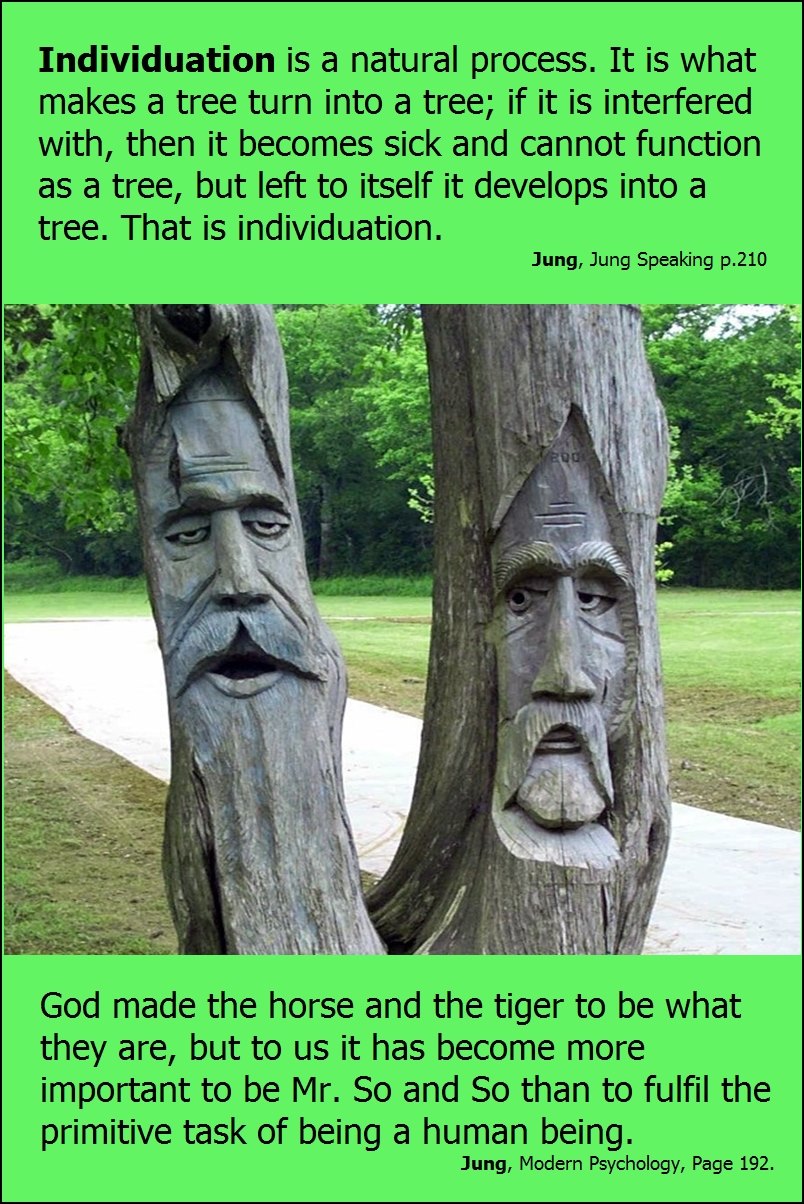
I have spent my life trying to understand the crucial topic in psychology called individuality. I finally succeeded with the help of Dr. Jung. It is essential for discovering and proving my uniqueness.
As it turns out, Kahlil Gibran also agrees with me. Here, I share a part of his book, “The Prophet”, about Marriage. I hope you enjoy reading it. Thanks, and have a peaceful weekend.
Sing and dance together and be joyous, but let each one of you be alone. Even as the strings of a lute are alone, though they quiver with the same music.
“Love is the only freedom in the world because it so elevates the spirit that the laws of humanity and the phenomena of nature do not alter its course_” Text and art by Kahlil Gibran
On Marriage, From the Book “The Prophet”
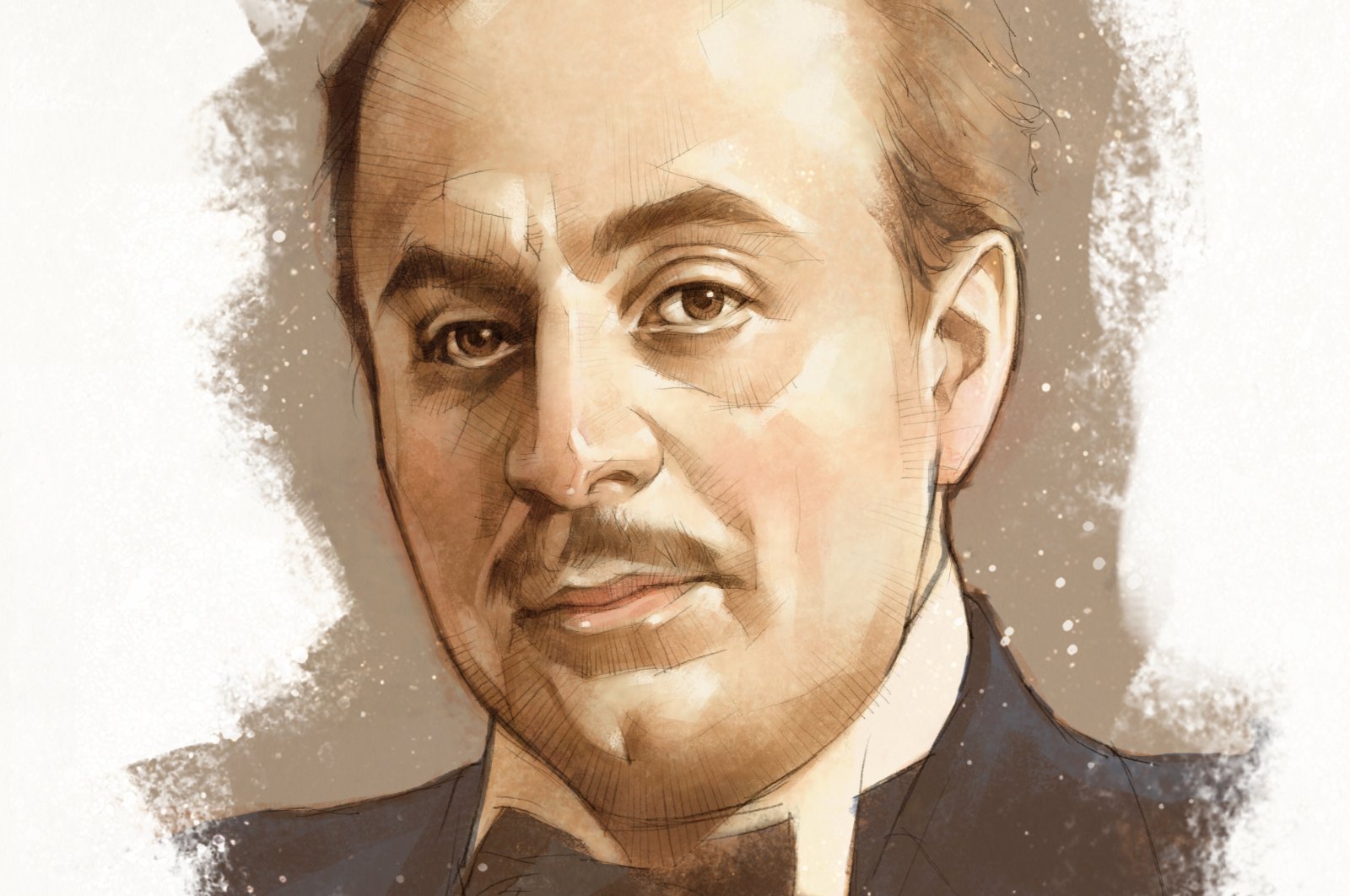
An illustration of Khalil Gibran. (Shutterstock)
Then Almitra spoke again and said: And what of Marriage, master? And he answered, saying: You were born together, and together you shall be forevermore. You shall be together when the white wings of death scatter your days. Aye, you shall be together even in the silent memory of God. But let there be spaces in your togetherness. And let the winds of the heavens dance between you. Love one another, but make not a bond of love: Let it rather be a moving sea between the shores of your souls. Fill each other’s cup but drink not from one cup. Give one another of your bread but eat not from the same loaf. Sing and dance together and be joyous, but let each one of you be alone. Even as the strings of a lute are alone, they quiver with the same music. Give your hearts, but not into each other’s keeping. For only the hand of Life can contain your hearts. And stand together, yet not too near together: For the pillars of the temple stand apart, And the oak tree and the cypress grow not in each other’s shadow.
When my brother, Al, was in the hospital to undergo surgery to remove a tumour from his brain, one of the professors told him that we humans know almost nothing ( just ten per cent) about how our brains work – The rest is still a puzzle! Therefore, unexplained phenomena, such as strange things like seeing ghosts, daydreams, or schizophrenia, are always fascinating topics for inquisitive minds.
According to Dr Carl Jung: …in schizophrenia, the complexes have become disconnected and autonomous fragments, which either do not reintegrate back to the psychic totality, or, in the case of remission, are unexpectedly joined together again as if nothing happened” (1939).
Franz Kafka Dreams >Wrestling matches every night<
During our trip to Serbia (I will write a post about it soon), I brought along some books as I do on any trip. This time, I discovered some surprises. While renovating the apartment, I found a book I couldn’t remember owning. Upon picking it up, I found a shopping receipt in the book dating back to 1995. It was clear that the book belonged to Al. Apart from a few novels, Franz Kafka wrote thousands of letters about his thoughts, dreams, and daydreams, and I was excited to have this particular book. The book is in German, and I translated a description and one of his letters about his dreams. I often considered the similarities between Kafka and Dostoevsky, as the latter frequently had daydreams like a schizophrenic. In this dream, Dostoevsky is interestingly present! I hope you will enjoy it.
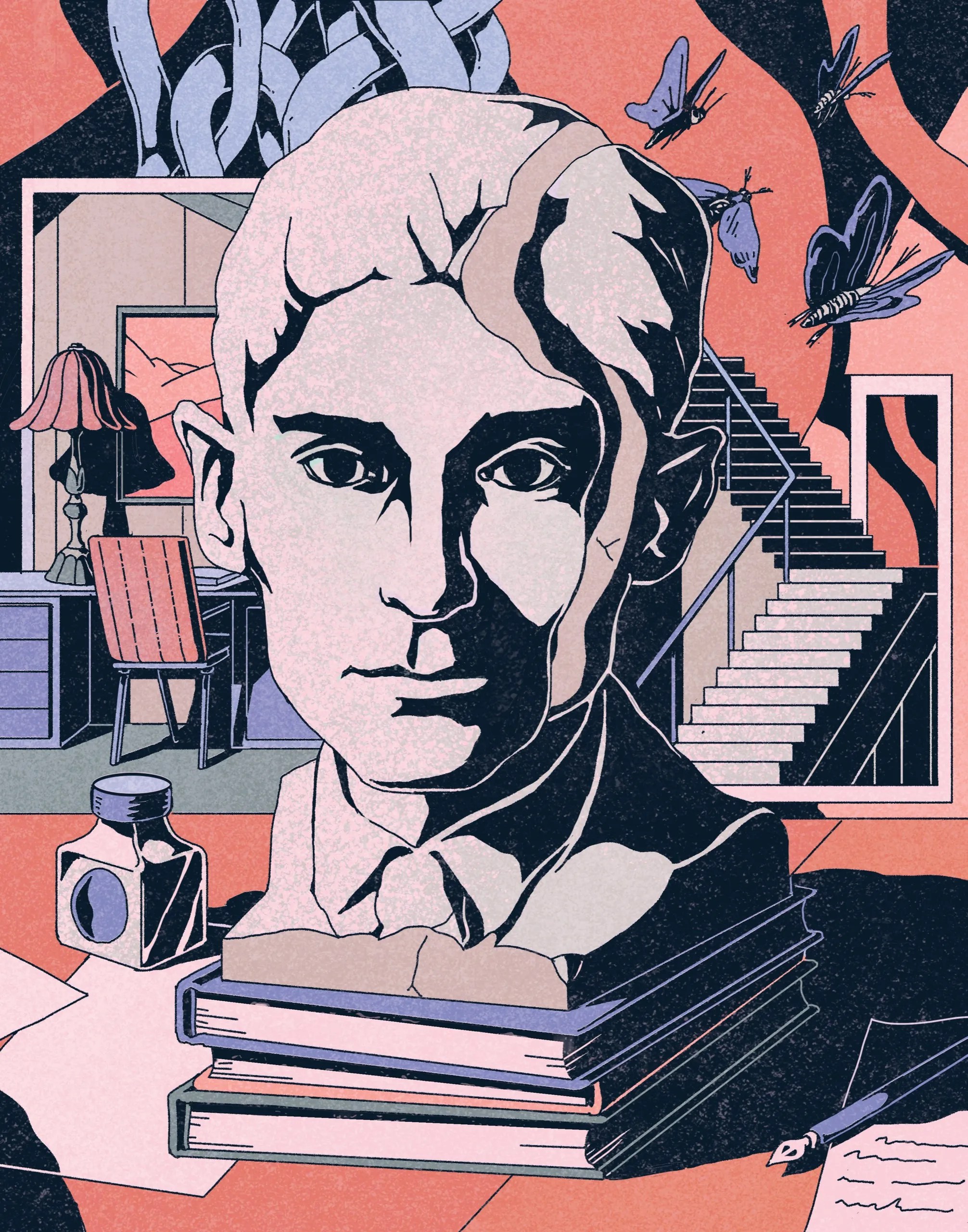
The New Yorker
According to Jean-Paul, dreams substantially affect a poet because he is used to fantasy. In contrast, Kafka’s dreams intensified his daytime fears. Taken out of context, his dreams form an interesting “storybook” of events and changes involving real people and places from his life. Kafka’s descriptive notes allow the reader to relive each dream-like episode as if watching a film vividly. This collection also serves as a documentary, presenting the dreams chronologically and reproducing Kafka’s comments on the phenomenon of dreams and dreaming.
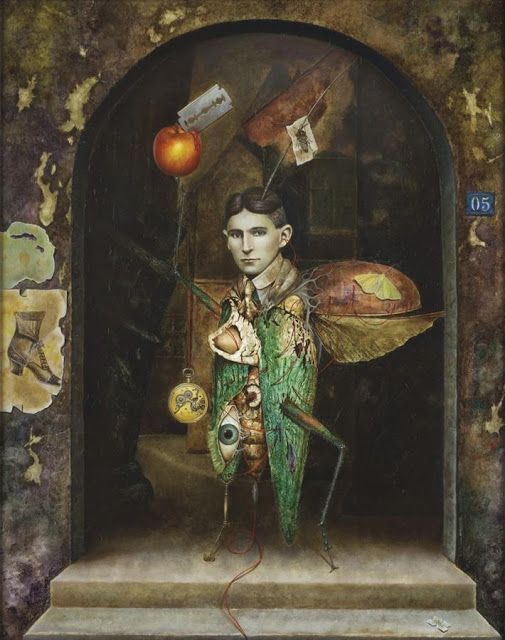
Frank Kortan – THE METAMORPHOSiS
Gregor Samsa woke up one morning to find himself transformed into a monstrous vermin. Franz Kafka’s “The Metamorphosis” challenges readers to accept this transformation as real, denying the possibility of dismissing it as merely a dream. This may frustrate those who rely on reason to understand the world and expect literature to assist them in this endeavour. In 1916, Franz Herwig criticized the rejection of realism and its associated positive aspects in an essay about the authors of the series “The Judgement Day,” in which Kafka’s story appeared. Gregor Samsa’s story “The Metamorphosis” challenges our understanding of reality and urges us to see the world in a new light. Kafka emphasizes that incomprehensible forces are shaping our lives, which may be more influential than we can rationally explain. According to his commentary on the story “The Judgement,” which he wrote in one go from ten o’clock in the evening to six o’clock in the morning, this is the only way to write in such a context—with a complete openness of body and soul! In this type of writing, the usual censorship of the mind is primarily eliminated. Everything can be risked, and a great fire is prepared for everyone for the strangest ideas, in which they perish and rise again.
Dream! [To Milena Jesenska, August 1920; M 170-172]
Today, I think I dreamt of you for the first time since I’ve been in Prague. A dream towards morning, short and heavy, still caught up in sleep after a bad night. I know little about it. You were in Prague; we were walking along Ferdinand Street, a little opposite Vilimek, in the direction of the quay; some acquaintances of yours were walking past on the other side; we turned to look at them; you spoke of them, perhaps there was also talk of Krasa [I know he is not in Prague, I will find out his address]. You said as usual, but there was something incomprehensible, indescribable about rejection in it; I didn’t mention it but cursed myself, thereby only expressing the curse that was on me. Because we were in the coffee house, probably in the Kaffee Union (it was on the way, and it was also the coffee house from Reiner’s last evening), a man and a girl were sitting at our table, but I couldn’t remember them. Then, there was a man who looked very similar to Dostoyevsky but young, with a deep black beard and hair. Everything, for example, the eyebrows and the bulges over the eyes, were incredibly strong. Then you were there, and I. Again, nothing betrayed your aloof manner, but the rejection was there.
Painting: Jorge Ignacio Nazabal
Your face was – I could not look away from the tormenting oddity – powdered, and it was overly obvious, clumsy, bad; it was probably hot, and so whole powder lines had formed on your cheeks; I can still see them in front of me. Again and again, I leaned forward to ask why you were powdered; when you noticed that I wanted to ask, you asked obligingly – the rejection was simply not noticeable – >What do you want?< But I could not ask, I did not dare, and yet I somehow suspected that being powdered was a test for me, a crucial test, that I should ask, and I wanted to but did not dare. And so the sad dream rolled over me. At the same time, the Dostoyevsky man tormented me. His behaviour towards me was similar to yours but still a little different. When I asked him something, he was very friendly, sympathetic, leaned over, and open-hearted. Still, when I didn’t know what to ask or say – this happened every moment – he would withdraw with a jerk, sink into a book, know nothing more about the world and especially not about me, disappear into his beard and hair. I don’t know why I found this unbearable, again and again – I couldn’t do anything else – I had to pull him over to me with a question and again and again, I lost him through my own fault! 💖🙏🤗
The Imagen at top: Youri Ivanov – Artiste Russe (Russian)
This year is the 100th anniversary of Kafka’s death, and I thought it would be a good opportunity to write about my impressions of him and his works. Of course, I must mention that it does not have to be his specific birthday or the day he died; I never search the web to find out about an event and write about it, as some are doing on WordPress! The main reason is that I have known him and his works since I was young and always appreciated his solitude before society. Second, I see and hear many documentaries and TV series here in Germany for his anniversary, as the Germans always welcome a genius who writes in their language into their art world. Therefore, to put it bluntly, I had to write this article first in German and translate it into English. Because these days, I hear and read his works all in that language.
Franz Kafka (1883 – 1924), a German-language Bohemian writer, was born in Prague as the son of a middle-class Jewish merchant family.
As per literary scholar Reiner Stach, who studied Franz Kafka for over two decades and published a three-volume Kafka biography with S. Fischer Verlag, Kafka himself was uncertain about his historical classification. Stach quotes Kafka’s famous saying, “I am the end or the beginning.” Kafka intended to express that he may represent the end of a long tradition of classical literature, coming from Goethe, Kleist, and perhaps Flaubert, who was already modern and is an endpoint here. Alternatively, he may start something completely new from the fragments he inherited from tradition instead of falling apart.
Max Brod once said that Kafka was more ambitious than his talent. Maybe he’s right! He helped him, believed in him, and encouraged him to write his thoughts as books.
Franz Kafka and Max Brod
As one of his numerous lovers, Milena Jesenská, a Czech journalist and writer who was non-Jewish and married, once said to him: I have never met a person like you, and I assume it that’s because there has never existed anyone like you.
He explained it himself:
The enormous world that I have in my head. But how to free me and free them without tearing? And I would rather tear it up a thousand times than hold it back or bury it in me. That’s why I’m here; that’s very clear to me. (Sokel, Walter H. 2001). Man cannot live without a permanent trust in something indestructible within himself, though both that indestructible something and his own trust in it may remain permanently concealed. (Gray, Ronald 1973)
The drama (on stage) is more exhausting than the novel because we see everything that we otherwise only read about. (Source: Kafka, diaries. October 28, 1911)
The fortune that flatters you most is most likely to deceive you.
Franz Kafka was convinced that his writing was inadequate, although he had much more to say. In his short story collection, A Hunger Artist, he wrote: “Forgive me everything,” whispered the hunger artist. Only the supervisor, pressing his ear against the cage, understood him. “Certainly,” said the supervisor, tapping his forehead with his finger to indicate to the staff the state the hunger artist was in, “we forgive you.” “I always wanted you to admire my fasting,” said the hunger artist. “But we do admire it,” said the supervisor obligingly. “But you shouldn’t admire it,” said the hunger artist. “Well then, we don’t admire it,” said the supervisor, “but why shouldn’t we admire it?” “Because I had to fast. I can’t do anything else,” said the hunger artist.
He died of Tuberculosis, or better to say, the cause of death seemed to be starvation: the condition of Kafka’s throat made eating too painful for him. By the way, Kafka’s mental health was a topic of debate. Marino Pérez-Álvarez suggests schizophrenia based on his diaries and “The Metamorphosis”. Alessia Coralli and Antonio Perciaccante diagnosed borderline personality disorder, worsened by Kafka’s insomnia complaints. Joan Lachkar developed a model describing Kafka’s fears of abandonment, anxiety, depression, and parasitic dependency needs in “The Metamorphosis“. Meanwhile, Manfred M. Fichter believes Kafka was anorexic.
But in my opinion, it’s all doctors prattling! Kafka had (like a few other known artists and geniuses like Dostoevsky, Mozart, Carl Jung, Van Gogh and…) a sensitive mind and soul who looked immense, broader and more profound in human society and the man itself, so deep that the artist himself cannot discern it. He was a Mozart in the matter of literature! Kafka’s writing, whether a letter or a book, had a wealth of words and topics to recount. In his book Der Process (The Trial), he doesn’t criticize only the political system; K, the main character, is a victim of not being understood by his population. He writes about the trial of his own solitude, his isolation in society and his strangeness towards others.
He even asked Dora Diamant, his faithful companion in his last days in his dying bed, and wanted her to burn all his works after his death!
He died shortly before his 41st birthday in a private sanatorium outside Vienna. A week later, on June 11, 1924, he was buried in a simple ceremony at Prague’s New Jewish Cemetery.
In his final days, he asked his doctor for a lethal dose of morphine. When the doctor refused, he told his doctor: if you don’t do it, you will be my murderer!






















You must be logged in to post a comment.