Kahlil Gibran on Laws

Standard

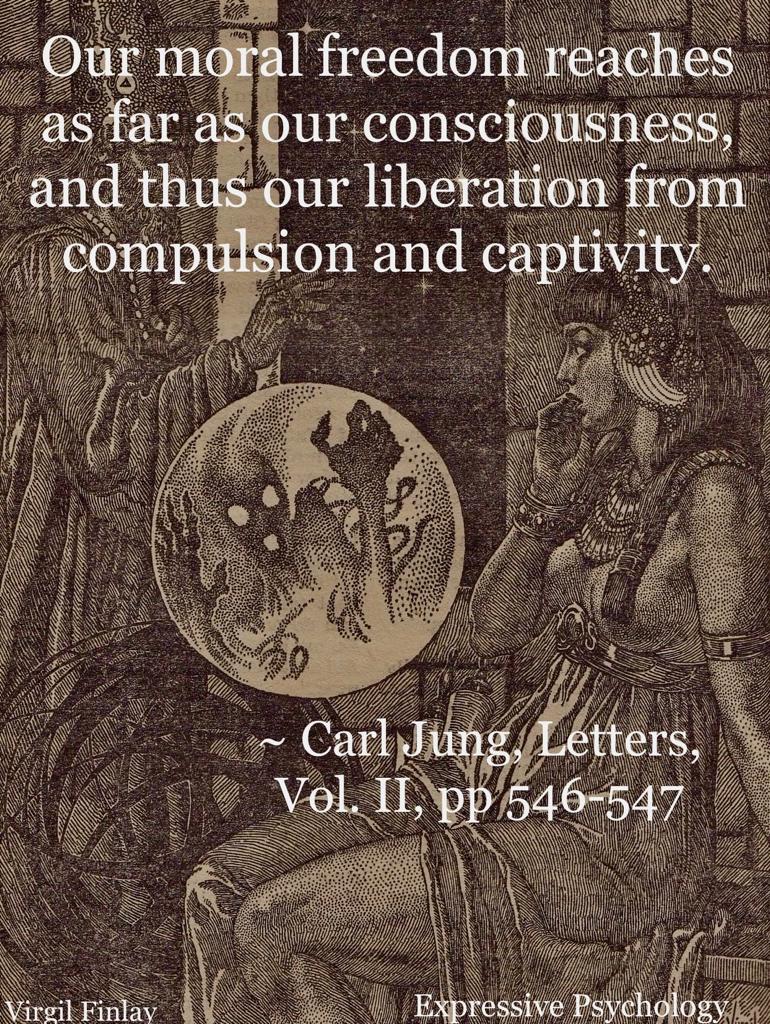
Our moral freedom reaches as far as our consciousness and, thus, our liberation from compulsion and captivity. ~Carl Jung, Letters Vol. II, pages 546-547 (from C.J. Depth Psychology)

By Petra Glimmdall 💖🙏

These days, because of my activities in helping the Iranian people, I have been deeply involved in establishing a fair and just system based on sound laws to help the Iranian people. However, finding a suitable constitution for a young nation (in the term of democracy) is not easy. It is not only the laws that make society fair; every individual must learn how to live in a democratic society.

Understanding freedom depends on the laws and anti-laws we legislate! Kahlil Gibran has an excellent explanation. I hope you enjoy it.

From The Prophet

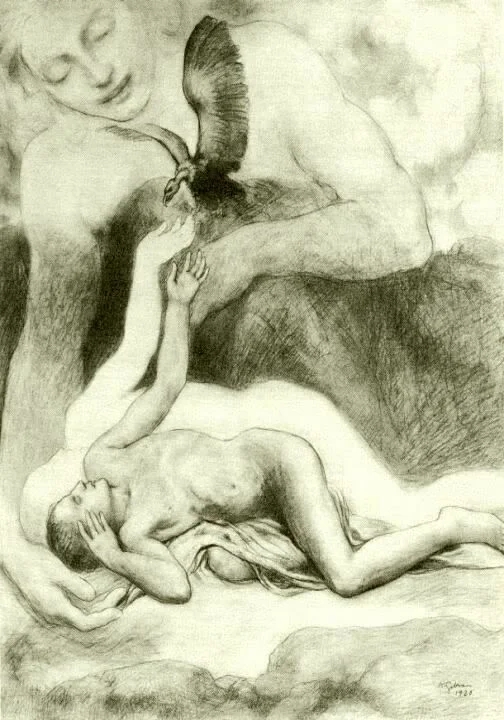
Painting by Kahlil Gibran 1883-1931 – Tutt’Art@

People of Orphalese, you can muffle the drum, and you can loosen the strings of the lyre, but who shall command the skylark not to sing?

Then the lawyer said, but what of our laws, master?
And he answered:
You delight in laying down laws,
Yet you delight more in breaking them.
Like children playing by the ocean who build sand towers with constancy and then destroy them with laughter.
But while you build your sand towers, the ocean brings more sand to the shore, and when you destroy them, the ocean laughs with you.
Verily, the ocean always laughs with the innocent.

But what of those to whom life is not an ocean, and man-made laws are not sand towers,
But to whom life is a rock, and the law a chisel with which they would carve it in their own likeness?
What of the cripple who hates dancers?
What of the ox who loves his yoke and deems the elk and deer of the forest stray and vagrant thin?

What of the old serpent who cannot shed his skin
and calls all others naked and shameless?
And of him who comes early to the wedding feast and, when over-fed and tired, goes his way, saying that all feasts are violations and all feasters are lawbreakers?

What shall I say of these save that they, too, stand in the sunlight, but with their backs to the sun?
They see only their shadows, and their shadows are their laws.
And what is the sun to them but a caster of shadows?
And what is it to acknowledge the laws but to stoop down and trace their shadows upon the earth?
But you who walk facing the sun, what images drawn on the earth can hold you?
You who travel with the wind, what weather vane shall direct your course?
What man’s law shall bind you if you break your yoke but upon no man’s prison door?
What shall you fear if you dance but stumble against no man’s iron chains?
And who is he that shall bring you to judgment if you tear off your garment yet leave it in no man’s path?

People of Orphalese, you can muffle the drum and loosen the strings of the lyre, but who shall command the skylark not to sing?

Thank you! 🙏💕💥

Huxley’s or Orwell’s. The Main Concept Comes to The Same End! (P. 4)

Standard

“Whereas the truth is that the State in which the rulers are most reluctant to govern is always the best and most quietly governed, and the State in which they are most eager, the worst.” ― Plato, The Allegory of the Cave

These days, there is a huge need for us to look more profoundly into the world around us and be aware of all that is happening, even if it hurts! As I wanted to retake a look at my archive, the following of the previous articles (1, 2, 3) suddenly fell on my lap.

I believe there is no reason to be afraid of expressing critical opinions. However, some governments or regimes in the world may hold opposing views. It shows for sure that we are on the right path!

Most people are not just comfortable in their ignorance, but hostile to anyone who points it out.” ― Plato, The Allegory of the Cave.

Or, I can provide a more straightforward example!

Apart from what Dr. Jung said, I have shared some quotes from Plato first. I think he is a novice in this way of philosophy because, unlike Aristotle, he didn’t accept compromising arguments and tried to find a way towards the truth, even if it was bitter or unpleasant. However, my prominent persons are these two geniuses: Orwell and Huxley.

Remaining open-minded and considering all possibilities is essential, even if it may sound like a conspiracy theory. The threat of getting caught up in the minutiae of our everyday lives is increasing, and we risk becoming trapped in a cage of our own making. Therefore, we better unlock our mind potential!
I have no issue reiterating that Orwell and Huxley are among the most valuable thinkers we can learn from.

FmXGFftXoAUtZiu

“What Orwell feared were those who would ban books. What Huxley feared was that there would be no reason to ban a book, for no one wanted to read one. Orwell feared those who would deprive us of information. Huxley feared those who would give us so much that we would be reduced to passivity and egoism. Orwell feared that the truth would be concealed from us. Huxley feared the truth would be drowned in a sea of irrelevance. “Orwell feared we would become a captive culture. Huxley feared we would become a trivial culture, preoccupied with some equivalent of the feelies, the orgy porgy, and the centrifugal bumblepuppy. However, it seems that the Orwell vision didn’t work out, and the Huxley vision is more beneficial.

via FT.com


As Orwell’s vision may partly be limited to various parts of the world, Huxley’s narrative seems to envision and capture today’s world more powerfully, as his vision is more in tune with today’s challenging problems. Global consumerist culture is prevalent, and the impact of social class stratification in many cultures is strongly felt, especially during the COVID-19 pandemic (the completely disparate experiences of the pandemic by the rich and the poor). A massive emphasis on pleasure, hedonism, and mere happiness rather than the culture of questioning and critical thinking could be observed in many societies of today’s world.

Here is a 16-minute clip to better catch his concept.

In a letter that Huxley wrote to Orwell, he refers to:

Partly because of the prevailing materialism and respectability, nineteenth-century philosophers and men of science were unwilling to investigate the odder facts of psychology for practical men, such as politicians, soldiers and policemen, to apply in the field of government. Thanks to the voluntary ignorance of our fathers, the advent of the ultimate revolution was delayed for five or six generations. Another lucky accident was Freud’s inability to hypnotize successfully and his consequent disparagement of hypnotism. This delayed the general application of hypnotism to psychiatry for at least forty years. But now psychoanalysis is combined with hypnosis; hypnosis has been made easy and indefinitely extensible through barbiturates, which induce a hypnoid and suggestible state in even the most recalcitrant subjects.

You can read Huxley’s full letter here: via Letters of Note

The Image at the top: Vladimir Moldavsky

I hope I didn’t get on your nerves by ringing the bell of awakening in this hard life! Heartfelt thanks for reading!🙏💖🥰