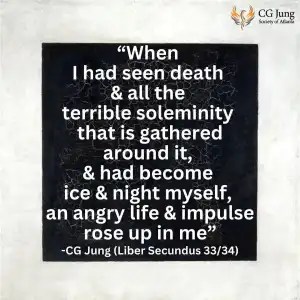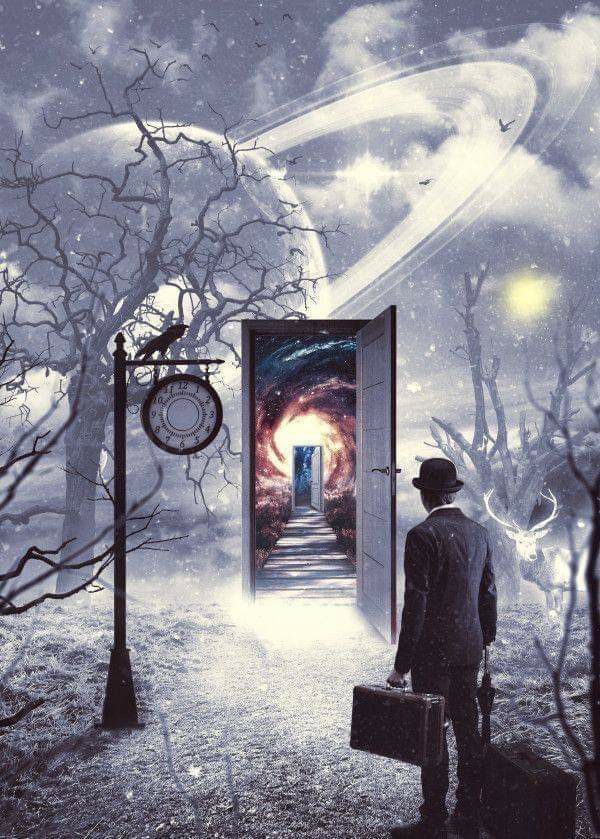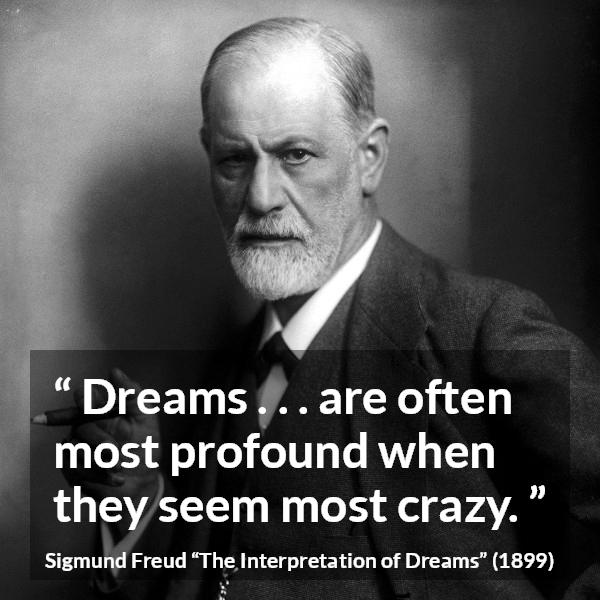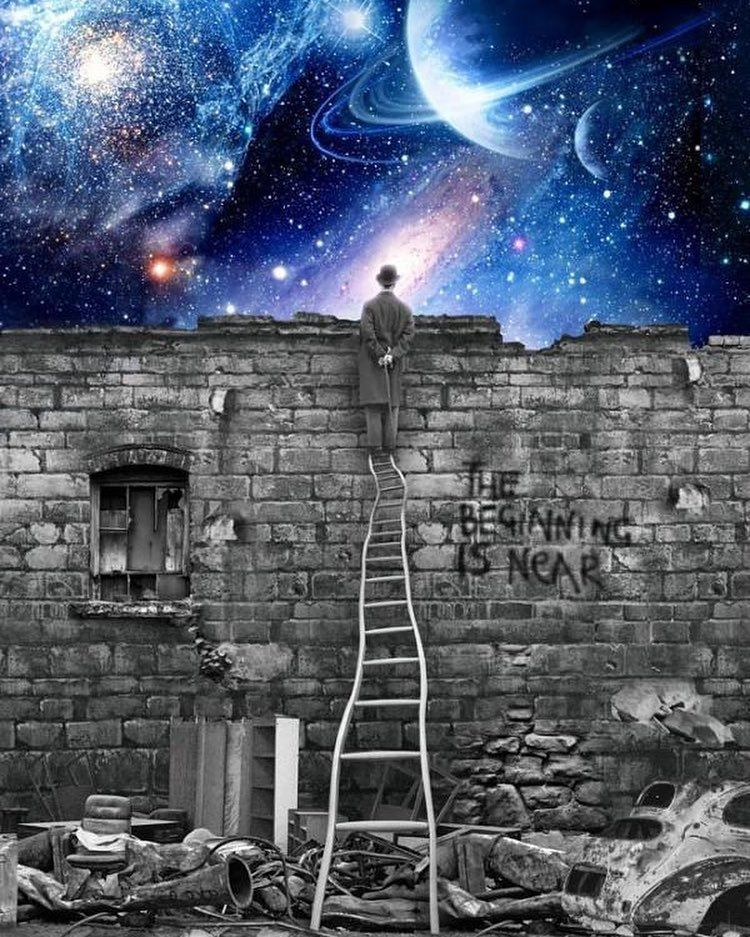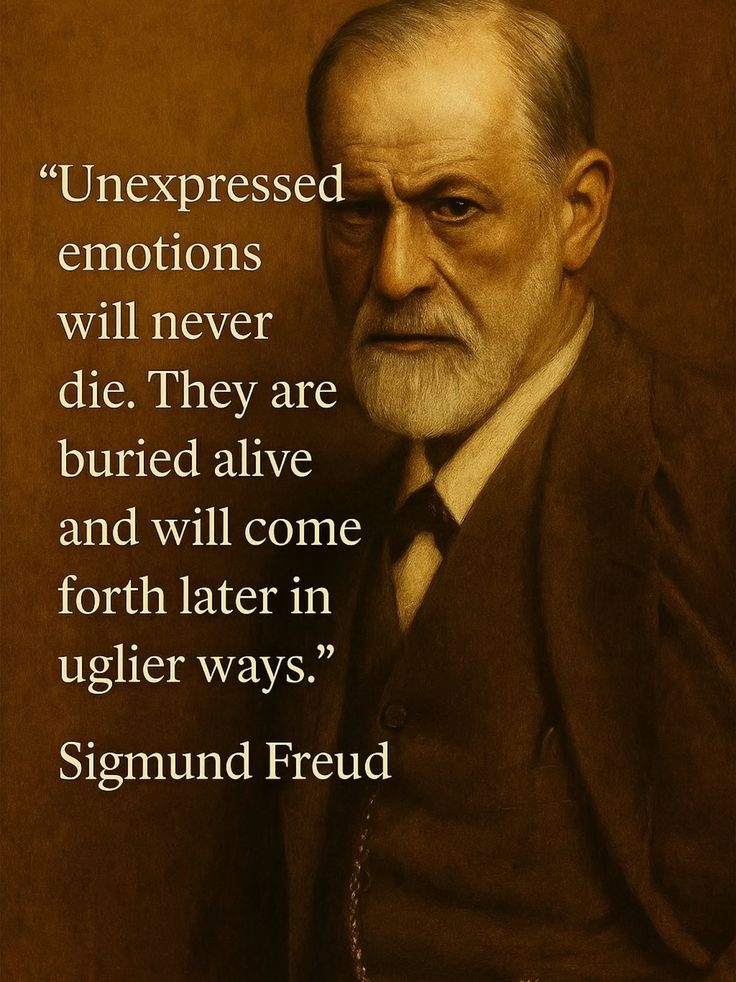
Searching for the Eternal Girl/Boy P. 2 Puella Aeterna/Puer Aeternus and Corne/Senex

Standard

The dynamic principle of fantasy is play, a characteristic also of the child, and as such, it appears inconsistent with the principle of serious work. But without this playing with fantasy, no creative work has ever yet come to birth. The debt we owe to the play of imagination is incalculable. It is, therefore, short-sighted to treat fantasy, on account of its risky or unacceptable nature, as a thing of little worth.
~Carl Jung; Psychological Types Ch. 1; Page 82.
Fantasy is the creative function—the living form is a result of fantasy. Fantasy is a pre-stage of the symbol, but it is an essential characteristic of the symbol that it is not mere fantasy.
~Carl Jung, 1925 Seminar, Page 11
Source: Carl Jung Depth Psychology

Continuing from the first part of my blog, I recall the days when Al and I created our own worlds, feeling utterly disconnected from the outside world. My childhood was filled with dreams and wishes, driven by my imagination and a touch of fantasy. Perhaps it was my name that ignited my desire to make my wishes come true, with a hint of magic.

On the other hand, I didn’t want to be treated like a child. I don’t know what the issue was; maybe it was because I’d been isolated at that age. I mean, there we were, a group of five boys, Al and me, including three cousins, all nearly the same age. One of the cousins, Ham, who was around Al’s age, about two years older than me, and the other two were roughly two years younger than me, and I was stuck in the middle.

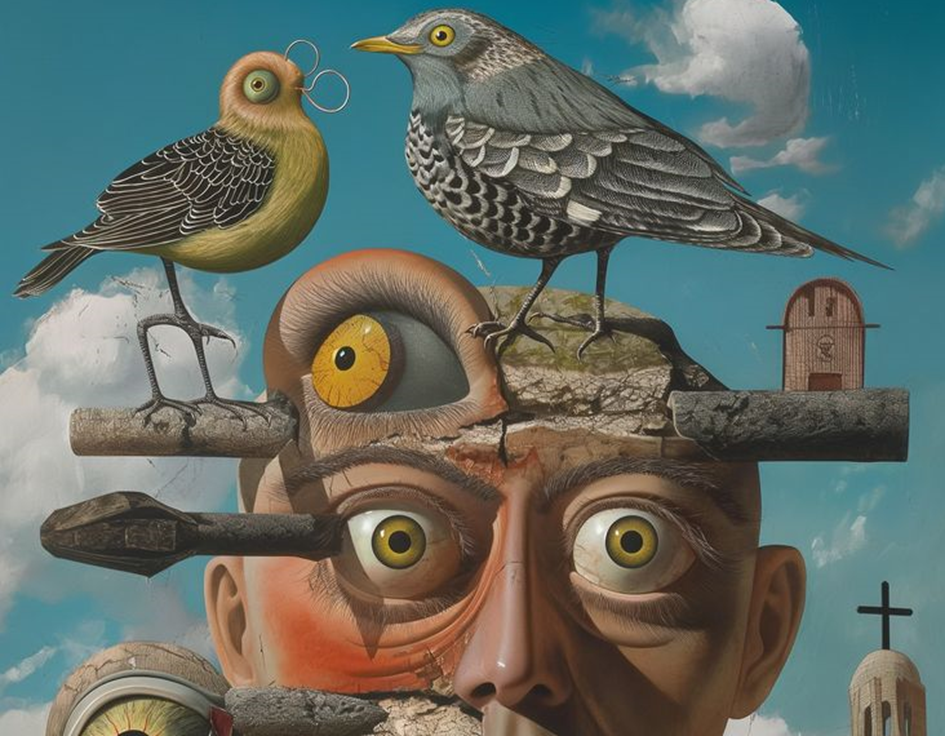
Dream Catcher by Michael Cheval

As I remember, one evening in Mashhad, when we were visiting our aunt, we were playing hide and seek — a game like ‘catch me if you can find me!’ I was so engrossed in the game that I didn’t notice Al and Ham were missing. At first, when I caught my breath from running around to find a hiding spot, I thought, ‘What’s going on with me?’ and scolded myself for acting like a child. But then I got angry when I found out Al and Ham weren’t playing with us – they were off to see a movie, and I wanted to be there with them so badly! In the evening, when we gathered again, Al and Ham began by making a reference and a joke about the movie, which I remember was called Madame. This made me feel jealous and sad. It was so obvious that my mother recognised it and tried to comfort me, but to me, her effort was like giving milk to a crying infant! So I felt even more alone and forsaken.

In Ann Yeoman’s book, we can read:
…In terms of personality traits, a strong emotional attachment to what we may call the mother-realm manifests on the one hand in a certain preciousness, a sense of specialness and difference, a fictional example of which we see in James Joice’s young hero Stephen, who is always “on the fringe,” a little apart from his fellows, an isolate. On the other hand, when out of the province of the mother and, metaphorically, the reach of the mother’s watchful eye, the mother’s son experiences an incapacity to stand on his own and embrace the risks, challenges and unpredictable fullness of life, or realise the courage “to live, to err, to fall, to triumph, to recreate life out of life,”> to cite Joice once again>(A Portrait of the Artist as a Young Amn, p. 172).
As a result, the puer remains dissociated from his feelings. In order to shield himself unconsciously from suffering, he protects himself from the possibility of abandonment, rejection and disappointment with an array of defences which prevent him from fully committing himself to life in the first place.
Jung describes the neurosis of such a “mother’s boy” in terms of a “secret conspiracy between mother and so…. [in which] each helps the other to betray life” He continues:

Where does the guilt lie? With the mother, or with the son? Probably with both. The unsatisfied longing of the son for life and the world ought to be taken seriously. There is in him a desire to touch reality, to embrace the earth and fructify the field of the world.
But he makes no more than a series of fitful starts, for his initiative as well as his staying power are crippled by the secret memory that the world and happiness may be had as a gift from the mother. The fragment of the world which he, like every man, must encounter again and again is never quite the right one, since it does not fall into his lap, does not meet him halfway, but remains resistant, has to be conquered, and submits only to force.
It makes demands on the masculinity of a man, on his ardour, above all on his courage and resolution when it comes to throwing his whole being into the scales. For this, he would need a faithless Eros, one capable of forgetting his mother and undergoing the pain of relinquishing the first love of his life.
~Carl Jung, The Syzygy, Anima & Animus, Aion, CW 9ii, par. 20-21

I may laugh at that event now, but as I recall every detail, it seems it left a particular impression on me. I know I wanted to be noticed and taken seriously. However, my mother, as she always had, saw me as her lost daughter. That’s why, when I finally found my solitude, it was mostly when I woke early in the morning in my bed and looked out of the window into the street, where the summer breeze made the leaves of the poplar tree dance. I immersed myself in my fantasy world and let my imagination run freely.

I will definitely try to write another episode.🙏💖

A Collaborative Fusion of two Great Poets Exploring Human Curiosity. Could the answer lie in dreams?

Standard

It’s a lovely day today, and it feels like summer is making one last bid to say goodbye. I was out in the garden, but not sunbathing – I had to mow the lawn! As tenants, these sorts of tasks are our responsibility.
And now, after giving the flat a good vacuum, I thought it was a good time to write a post.

Tomorrow is Leonard Cohen‘s birthday, and I thought it would be a great chance to celebrate with a poem by Pablo Neruda as a tribute.
The theme is human curiosity (the ‘Whys!’), how little we know, and, as Leonard Cohen suggests, why not stand on your own two feet and be your own individual?

There’s no doubt that they’re still alive, truly in our hearts, thanks to their lasting arts and wisdom.

Through a closed mouth, the flies enter
by Pablo Neruda:

Why, with those red flames at hand,
Are rubies so ready to burn?

Why does the heart of the topaz
reveal a yellow honeycomb?
Why does the rose amuse itself
by hanging the colour of its dreams?
Why does the emerald shiver
like a drowned submarine?

Why does the sky grow pale
under the June stars?
Where does the lizard’s tail
Get its fresh supply of paint?
Where is the underground fire
That revives the carnations?

Where does the salt acquire
The transparency of its glance?
Where did the coal sleep
That it awoke so dark?
And where, where does the tiger buy
Its stripes of mourning, its stripes of gold?

When did the jungle begin
to breathe its own perfume?
When did the pine tree realise
its own sweet-smelling consequence?
When did the lemons learn
The same laws as the sun?

When did smoke learn to fly?
When do roots converse?
What is water like in the stars?
Why is the scorpion poisonous?
Is the elephant benign?

What is the tortoise brooding on?
Where does shade withdraw to?
What song does the rain repeat?
When are the birds going to die?
And why should leaves be green?

What we know is so little,
and what we presume so much,
So slowly do we learn
that we ask questions, then die.
Better for us to keep our pride
for the city of the dead
on the day of the departed,
And there, when the wind blows through
the holes in your skull,
It will unveil to you such mysteries,
whispering the truth to you
through the spaces that were your ears.

I shall forever remember those days when Al and I closed many doors one after another to society, and by listening to Cohen’s songs, we immersed ourselves in our solitude.

Have a great time, everyone. 🙏💖🤗

Source: “Through a closed mouth the flies enter” from EXTRAVAGARIA by Pablo Neruda, translated by Alastair Reid. Copyright © 1958 Pablo Neruda and Fundación Pablo Neruda. Translation copyright © 1974 by Alastair Reid. Used by permission of Farrar, Straus and Giroux and Fundación Pablo Neruda.

Searching for the Eternal Girl/Boy P. 1 Puella Aeterna/Puer Aeternus and Corne/Senex

Standard

Does fantasy lead to escape, or to the embracing of a new perspective? In other words, does it support psychic growth or impede it? That distinction is often complicated by paradox, but it helps to ask ourselves, “Is concentrating on this fantasy or daydream opening my creative possibilities, or is this sapping my ego strength in the real world?” ~Marion Woodman

This excerpt begins Marion Woodman‘s foreword from Ann Yeoman’s book, Now or Neverland, which I read some time ago, thanks to Deborah Gregory‘s recommendation, and I am very grateful for it.

Frankly, when I began reading this book, I felt at home; I saw myself as a puer aeternus, struggling to stay balanced on life’s rollercoaster.

Traditionally, the term ‘puer aeternus’ (Latin for ‘eternal boy’) is used to describe a child-god who remains eternally young. In Carl Jung’s psychology, it refers to an older person whose emotional life remains stuck in adolescence, often referred to as the “Peter Pan syndrome”. Jung suggests that the puer lives a “provisional life” due to a fear of being trapped. They seek independence, resist boundaries, and find restrictions intolerable. In Greek mythology, the term ‘puer aeternus’ originates from the Metamorphoses, an epic poem by Roman poet Ovid (43 BC – c. 17 AD) that explores Greek and Roman myths. Ovid refers to the child-god Iacchus as “puer aeternus” and praises his role in the Eleusinian mysteries. Iacchus is linked to Dionysus and Eros. The puer represents a deity of vegetation, resurrection, and divine youth, similar to Tammuz, Attis, and Adonis.

Senex is a Latin term that literally means “old man.” It can also be used to describe: a wise, elderly person, an archetype. The wise older person (also known as senex, sage, or sophos) is an archetype outlined by Carl Jung, as well as a familiar literary figure, often portrayed as a stock character. Such a figure can be a profound philosopher renowned for wisdom and sound judgment.

Marie-Louise Von Franz summarised her view of the puer as follows:
None of his reactions are particularly personal or special. He becomes a type—the type of the puer aeternus. He becomes an archetype, and if you become that, you are not at all original… He is merely the archetype of the eternal-youth god, and, therefore, he has all the features of the god: he has a nostalgic longing for death, he thinks of himself as being something special, and he is the one sensitive being among all the other tough sheep. He will have a problem with an aggressive, destructive shadow that he will not want to live with and generally projects. There is nothing special whatsoever. The worse the identification with the youthful god, the less individual the person, although he himself feels so special. (Puer Aeternus, pp. 121f)
Another type of puer that does not display the charm of eternal youth, nor does the archetype of the divine youth shine through him. On the contrary, he lives in a continual sleepy daze, and that, too, is a typical adolescent characteristic… The sleepy daze is only an outer aspect, however, and if you can penetrate it, you will find that a lively fantasy life is being cherished within. (Puer Aeternus, p.2)

Reflecting on my childhood, after my father passed away and my mother kept it a secret from my brother Al and me, I became very introverted. Once I learned the truth, I simply didn’t want to grow up. Al and I drew closer because of our mother’s lie, and over time, during our youth, we swapped roles as eternal children. Initially, I wanted to remain a child forever, while Al, aware of our father’s death almost from the moment it happened, tried to act as a mature older brother to look after me.

As we entered puberty, our roles underwent significant changes. I developed a strong sexual desire much earlier and believed I had to act like a man to attract girls, while Al began creating his own solitary world. For many years, this condition persisted. Although I was accepted into Al’s world and was part of it, I was the one who had to maintain contact with the outside world. As a result, I assumed the role of the senex, but I longed for my puer aeternus and tried to keep it concealed yet protected.

Let’s conclude this now, and I look forward to discussing this topic further in the next part. 🖖🙏

My (Carl Jung’s) Most Difficult Experiment [P. 2]

Standard

What fascinates me about Jung is his commitment to self-exploration and his use of analysis to discover his Self through the interpretation of dreams. He dedicated his life to this pursuit with genuine honesty and sincerity. Today, I present another section of The Red Book, Liber Novus, by Carl Jung, from Sonu Shamdasani’s Reader’s Edition.🙏

The following month, on a train journey to Schaffhausen, Jung experienced a waking vision of Europe being devastated by a catastrophic flood, which was repeated two weeks later, on the same journey. Commenting on this experience in 1925, he remarked: “I could be taken as Switzerland fenced in by mountains and the submergence of the world could be the debris of my former relationships.” This led him to the following diagnosis of his condition: “I thought to myself, ‘If this means anything, it means that I am hopelessly off.’ ” (Introduction to Jungian Psychology, pp. 47-48). After this experience, Jung feared that he would go mad.
(Barbara Hannah recalls that “Jung used to say in later years that his tormenting doubts as to his own sanity should have been allayed by the amount of success he was having at the same time in the outer world, especially in America” [C. G. Jung: His Life and Work. A Biographical Memoir/ New York: Perigree, 1976/, p. 109]. )
He recalled that he first thought that the images of the vision indicated a revolution, but as he could not imagine this, he concluded that he was “menaced with a psychosis.” (Memories, p. 200). After this, he had a similar vision:

In the following winter, I was standing at the window one night and looked North. I saw a blood-red glow, like the flicker of the sea seen from afar, stretched from East to West across the northern horizon. And at that time, someone asked me what I thought about global events in the near future. I said that I had no thoughts, but saw blood, rivers of blood (Draft, p. 8).

In the year directly preceding the outbreak of war, apocalyptic imagery was widespread in European arts and literature. For example, in 1912, Wassily Kandinsky wrote of a coming universal catastrophe.
From 1912 to 1914. Ludwig Meidner painted a series of works known as the Apocalyptic Landscapes, featuring scenes of destroyed cities, corpses, and turmoil (Gerda Bauer and Ines Wagemann, Ludwig Meidner: Zeichner, Maler, Literat 1884-1966 / Stuttgart: Verlag Gerd Hatje, 1991). Prophecy was in the air!
In 1899, the renowned American medium Leonora Piper predicted that in the coming century, a terrible war would erupt in various parts of the world, purging the world and revealing the truths of spiritualism. In 1918, Arthur Conan Doyle, the spiritualist and author of the Sherlock Holmes stories, viewed this as prophetic (A. C. Doyle, The New Revelation and the Vital Message / London: Psychic Press, 1918, p. 9).

Dream _ A Great Work Of Art Is Like A Dream.
Artwork: Henri Rousseau
From the Carl Jung depth psychology site

In Jung’s account of the fantasy on the train in Liber Novus, the inner voice said that what the fantasy depicted would become completely real. Initially, he interpreted this subjectively and prospectively, that is, as depicting the imminent destruction of his world. His reaction to this experience was to undertake a psychological self-investigation. In this epoch, self-experimentation was used in medicine and psychology. Introspection had been one of the main tools of psychological research.

Jung came to realise that Transformations and Symbols of the Libido “could be taken as myself and that an analysis of it leads inevitably into an analysis of my own unconscious processes” (Introduction to Jungian Psychology, p. 28). He had projected his material onto that of Miss Frank Miller, whom he had never met. Up to this point, Jung had been an active thinker and had been averse to fantasy: “as a form of thinking I held it to be altogether impure, a sort of incestuous intercorse, thoroughly immoral from an intellectual viewpoint” (Ibid.). He now turned to analyse his fantasies, carefully noting everything. He had to overcome considerable resistance in doing this: “Permitting fantasy in myself had the same effect as would be produced on a man if he came into his workshop and found all the tools flying about doing things independently of his will” (Ibid.). In studying his fantasies, Jung realised that he was examining the myth-creating function of the mind (MP, p. 23).

Jung picked up the brown notebook, which he had set aside in 1902, and began writing in it (The subsequent notebooks are black, hence Jung referred to them as the Black Books). He noted his inner states in metaphors, such as being in a desert with an unbearably hot sun (that is, consciousness). In the 1925 seminar, he recalled that it occurred to him that he could write down his reflections in a sequence. He was “writing autobiographical material, but not as an autobiography” (Introduction to Jungian Psychology, p. 48).
From the time of the Platonic dialogues onward, the dialogical CE, St. Augustine wrote his Soliloquies, which presented an extended dialogue between himself and “Reason,” who instructed him. They commenced with the following lines:

When I had been pondering many different things to myself for a long time, and had for many days been seeking my own Self and what my own good was, and what evil was to be avoided, there suddenly spoke to me – what was it? I myself or someone else, inside or outside me? (This is the very thing I would love to know but don’t.) [St. Augustine, Soliloquies and Immorality of the Soul, ed. and tr. Gerald Watson (Warminster: Aris & Phillips, 1990), p. 23. Watson notes that Augustine “had been through a period of intense strain, close to nervous breakdown, and the Soliloquies are a form of therapy, an effort to cure himself by talking, or rather writing” /p. v/).]

While Jung was writing in Black Book 2:

I said to myself, “What is this I’m doing? This certainly is not science. What is it?” Then a voice said to me, “That is art!” This made the strangest sort of impression upon me, because it was not in any sense my impression that what I was writing was art. Then I came to this: “Perhaps my unconscious is forming a personality that is not I, but which is insisting on coming through to expression.” I don’t know why exactly, but I knew to a certainty that the voice that had said my writing was art had come from a woman … Well, I said very emphatically to this voice that what I was doing was not art, and I felt a great resistance grow up in me. No voice came through, however, and I kept on writing. This time, I caught her and said, “No, it is not”, and I felt as though an argument would ensue. {Ibid., p. 42. In Jung’s account, it appears that his dialogue took place in the autumn of 1913, although this is not certain, as the dialogue itself does not occur in the Black Book, and no other manuscript has yet come to light. If this dating is followed, and in the absence of the other material, it would appear that the material of the voice is referring to the November entries in Black Book 2, and not the subsequent text of Liber Novus or the paintings.}

To be continued!💖

The image on top: Pang Torsuwan -WHILE YOU WERE SLEEPING!

To A Lost Father Love!

Standard

And yet, for the first time, I share an anniversary celebration of my father’s aniverssary. Of course, this Thursday is Good Friday, and in Germany, it is also recognised as Father’s Day. Therefore, I shall seize this opportunity to share something about him.

I must admit that I have few memories of my father’s life, as I was only seven when he passed away. However, some scenes remain in my mind—some joyful and a few burdensome. He was a dedicated writer who prioritised his work above all else, even above his love for family. I would say something between Charles Dickens and Dostoevsky!

Of course, I don’t want to say he didn’t love us. He was deeply in love with my mother and generally friendly toward his sons, although he was often preoccupied with work internally. Still, his books were the dearest things in his mind, and he enjoyed travelling extensively in Iran and Europe. Therefore, despite his fame and wealth, he was always broke! One of his colleagues at the newspaper where he worked told us that one day he came in and said he had sold his children! Of course, he meant he sold the rights to his best-selling books!!

I once lost his ID after I had it in my possession, and I don’t know where I left it. Therefore, I searched the Web and found something about him: he was famous then! Although I didn’t find his birthday, only his birth year, and he would be over a century old this year.

At his brother’s wedding.

Here we go:

FAZEL, Javad (Moḥammad-Javād Fāżel Lārijāni; b. Lārijān, 1914; d. Tehran, August 19 1961), noted serial writer and a pioneering figure in simplifying and popularising religious texts. His father, Mirza Abu’l-Ḥasan Fāżel Lārijāni, was an eminent preacher in Āmol (q.v.), in northern Iran, and died when Javad was nine years old. Javad was brought up in a religious environment. His father introduced him to religious studies while attending Pahlavi Primary School in Āmol. In 1932, after finishing secondary education in Tehran, Fazel pursued religious studies at Islamic seminaries under Sheikh Moḥammad Aštiāni. He worked for the Ministry of Education in 1938, teaching literature and educational psychology at the Teachers’ Training School in Āmol for one year. Fazel graduated from Tehran University’s Faculty of Theology and Jurisprudence in 1945 and later became a translator at the Ministry of Agriculture until his death at 47 (M. Fāżel, p. 21). He also taught Persian literature in various secondary schools (M. Fāżel, p. 98).

In 1942, he joined Eṭṭelāʿāt-e Haftegi, a weekly journal of the oldest Tehran daily newspaper, Eṭṭelāʿāt, founded by ʿAbbās Masʿudi in 1923. He published most of his serialised stories there and also contributed to Badiʿ, a magazine established by Jamāl-al-Din Badiʿzāda in March 1943. That same year, Fazel became a member of the pro-German Paykār Party, founded by Ḵosrow Eqbāl, and wrote for its official publication, Nabard, edited by Jahāngir Tafażżoli. However, his affiliation with Paykār only lasted four months.

And here is something for my pride: Fazel’s straightforward literary style earned him a broad audience. His accessible translations of religious texts were utilised by politically active theologians and laypeople, such as Mortażā Moṭahari and ʿAli Šariʿati, who sought to engage Iranians with modern interpretations of Islamic teachings (Saʿid-Elāhi, p. 75). However, Fazel’s ‘free’ translations were criticised for lacking accuracy and fidelity to the original texts (Šahidi, p. 5).

Some are to be disappointed! But who cares? He wasn’t a devout Muslim, yet he believed in a mystical Islam. This perspective influenced his translations, incorporating his own thoughts and feelings.


With the advent of the Islamic Revolution in 1979, Fazel’s romantic stories were no longer in demand, but his religious texts gained vast popularity and were reprinted several times. Even his scattered articles were collected and published in quick succession, notable among them Zendegi-e por-mājarā-ye Moḵtār (Mokhtar’s adventurous life, 2000) and Qeṣaṣ-al anbiāʾ (Stories of the prophets, 2001).

Regrettably, my father has sold all or most of the rights to his best-selling books to publishers. Consequently, I have no claim to those rights.

His final hours at a cousin’s wedding, with Al beside him.

In addition to religious texts, Fazel also translated several European novels into Persian, notable among them Ḵun o Šaraf (Blood and Honour, 1949), by Maurice Dekobra (1885-1973), Yek qalb-e āšofta (A Broken Heart, 1956), by Stefan Zweig (1881-1942), and Jāsusa (Spy, 1958) by Paul Bourget (1852-1935).

Fazel married in 1950. His wife, Mozayyan (Mosstofi) Fazel, depicted their life story together in Dāstān-e yek zendegi (A life story, 1964), which includes several of Fazel’s love letters to her. (And here is what I once wrote about their love story!). They had two sons: ʿAlaʾ-al-Din and Abu’l-Ḥasan. Javad Fazel died of cerebral thrombosis on August 19, 1961, and was buried in the Ebn Bābawayh (q.v.) cemetery near Tehran.

And yes, this passage is from the Encyclopaedia Iranica website, where you can read the full report. He passed away while Al and I were asleep. The next day, my mother made a mistake and lied to us, saying he had gone on a journey abroad. Alas, she ought to reveal the truth about his journey beyond the other side. It caused significant trauma for both of us in our lives of youth, but that is another story!

Here are some images of his Persian romans.

How We Can Welcome Death!

Standard
“Whoever fights with monsters should be careful not to become a monster himself. When you gaze long into an abyss, it also gazes into you.”
~Friedrich Nietzsche, Jenseits von Gut und Böse (1886) ch. 4, no. 146

Actually, I need to rest and post less frequently than before, but this short essay by adorable Laura London, an excellent Jungian expert at X (formerly Twitter), invigorated me. I couldn’t resist sharing it with you.

For many, contemplating and analyzing death is uncomfortable or even frightening. However, when we psychologically examine the world around us, we observe everything as dualistic, such as warm and cold, dark and light, love and hate, joy and grief… and, of course, life and death; neither can exist without the other!

There is no reason for many young people to think about death, except for some like me who are confronted with it by losing a part of their parent or both. However, as we reach a certain age, this challenge becomes unavoidable. Fear is not a solution, as we will inevitably confront the other side. Therefore, it is better to attempt to understand or envision it as much as possible. Reading this essay soothes the soul!

This quote from Jung is one of my favourites because it offers a breakthrough in our understanding of death.

Now, let’s read a tiny Colletti of Jung’s explanation on this issue, with heartfelt thanks to Laura London, which also included an introduction to an excellent book by Richard Wilhelm.

“From 1929 to 1934, #Jung presented his more mature thoughts about the mystery of death in three separate essays.⁵ In one of these essays, he stated that ‘anyone should draw the conclusion that the psyche, in its deepest reaches, participates in a form of existence beyond space and time, and thus partakes of what is inadequately and symbolically described as ‘eternity’’ [CW 8, par. 815]. Because of this, he also stated that as a doctor, I make every effort to strengthen the belief in immortality, especially with older patients … For … death is not an end but a goal, and life’s inclination towards death begins as soon as the meridian is passed’ [CW 13, par. 68]. Jung argued that the crisis of the second half of life is a sign that ‘nature prepares itself for death’ [CW 8, par. 808], hence, ‘it is hygienic … to discover in death a goal towards which one can strive’ [CW 8, par. 792], since ‘dying … has its onset long before actual death’ [CW 8, par. 809]. Jung concluded that ‘the #unconscious is all the more interested in how one dies; that is, whether the attitude of #consciousness is adjusted to dying or not’ [par. 809]. Death, then, became not only a goal for Jung but also a reality that could enrich life. Death begins before it happens, in midlife, so how one lives with death and how one approaches that goal became for Jung of paramount importance. In 1928, Jung received a copy of The Secret of the Golden Flower, a Chinese Taoist-alchemical text that, together with a dream he had which was set in Liverpool [Memories, Dreams, Reflections, pp. 220–223], confirmed to him that the goal of the #individuation process is the self, ‘the archetype of wholeness’ [CW 9ii, par. 351].”

⁵ “Commentary on ‘The Secret of the Golden Flower’” (1929); “The Stages of Life” (1930); “The Soul and Death” (1934).

~Luis Moris, Jungian psychoanalyst, “Jung’s Confrontation with Death: An Introduction, Confronting Death, pp. 7-8

🌼 You can watch my interview with Jungian psychoanalyst Luis Moris, editor of the book Confronting Death, in Episode 139 of Speaking of Jung.

My God, My God, Why Have You Forsaken Me?!

Standard

Or, Living With Three U. Bags;
Don’t Let Me Down!

“Now, from the sixth hour, there was darkness over the whole land until the ninth hour. And about the ninth hour, Jesus cried out loudly, saying, ‘Eli, Eli, lema sabachthani? ‘ that is, ‘My God, my God, why have you forsaken me? Matthew 27:45-47 (also Mark 15:33-34)

No, I have not become religious, nor am I comparing myself to Jesus on the cross! I’ve just always been fortunate that my guardian angel has protected and supported me through troubling times. But this year, I feel she has ultimately let me down, and I wonder why!
After much consideration, I have decided to provide a brief update—not because I seek sympathy or believe everyone is wondering where I am! It is simply to maintain our connection. I also apologise for my infrequent presence on your sites, such as likes, comments, etc.

This illustration depicts a man wearing a robe and carrying a urine bag hooked to a catheter.

Well, everything seemed stable to me, which gave me hope—but it turned out not to be! I have struggled with a catheter in my stomach for the last two months, and after visiting the doctor to replace it, everything went awry, and I had to be taken to hospital with a fever of 40 degrees. There, I underwent several treatments with antibiotics and had two additional catheters placed in my kidneys; now, I have to do a threesome several times!


My PSA blood levels have risen in the hospital, causing a significant delay. The doctors need to determine whether these levels are due to my inflammation or if I have prostate cancer. I left the hospital a few weeks ago and am currently at home. Although my blood levels were down last week, they have increased again, necessitating a sample to be taken from my prostate. A neighbour suggested that these three catheters could also cause inflammation, which might be the cause. Still, I assume that testing for suspected cancer is more beneficial for the doctors, right?

The latest update is that, after consulting with the other doctors at the hospital, my doctor called to inform me that my PSA level is not overly concerning just yet. They plan to proceed with the surgery as scheduled, which will take place at the end of April. This means I will need to struggle with my three catheters for the next six weeks!

Look after yourselves everyone, and have a great time!

Fifty + Years Loneliness XIII, Or Desperate Or Might Being Frantic Sometimes! (Just an add!)

Standard

A Foreword and Update!

Today (on Saturday!😮), I had to take my boss’s place, and I have just got back home, but I need to head out again soon!😜 I hadn’t planned to post anything but came across an old article I wrote years ago. So, I thought I’d share it with you before it goes stale. I hope you enjoy it somehow!🙏💖

Please don’t be shocked; this will not be an endless story! I have just a feeling that my last post about my yelping was, after all, too emotional and not clear enough.

To contemplate thereabout, I have to look at my past and review my life, but to avoid the immense length, I try to write it in a list form. First, I thank all my dear friends for their feedback, and especially among them, for their valuable suggestions.

My life is like a labyrinth; explaining this with my broken tongue (pen) is difficult.

1- It might be because of our mother’s lie to Al and me about our father’s death, which I had to carry for almost two months till I found it out by myself.

2- The next point is that Al and I were almost alone in our childhood. Our mother had to find a job to pay our father’s debt; though he was a famous writer and could be rich, he could never be a moneymaker. We had a big house with a broad yard, and you could imagine how frightening it would be for two children, nine & eleven-year-old to stay home in the evening, waiting for their mother to come home.

3- There, eternity loneliness develops, don’t you think? We have kept each other like the guardian angel, especially Al, because he was older than me, older in the year, and significantly older in mind.

4- The years passed, and we, Al and I, had made a wall to protect us. A wall, but not against our mother, a wall against the society in which we lived. That was a must, to avoid the stranger in our world. Oh yes, we have made a world just for us and nobody else. And it made us like foreigners in our own country.

5- It went all through our age of puberty, and there came the time of our mother’s death. She was married to another man then, and we (unfortunately) couldn’t accept him as a replacement for our father. Therefore, the wall grew taller and taller. The solitude casts our life.

6- We had a lot of experiences those days, so you might think twice about looking for people with walls around. I might tell you that in such countries under dictatorship and also the pressure of its traditions, the only way to escape to freedom is drugs. We had tried all possible and impossible stuff for many, many years. I can be proud to announce that I had all the drops in my veins, and now I am free of all.

7- Now about me: I have learned from my parents’ way of life that there had to be a genius to live with (in the form of a Couple. Two genius to live together… I don’t think that it might be advisable. I felt so because I had noticed how genius Al was. Therefore, I dedicated all my energy to my brother Al because I was convinced of his ability to create art. In Iran, I worked to earn money, managed a house, and all that was needed. It was, for me, a matter of course, even in our addiction period. (I was the one who could get the stuff.)

8- In all these happenings, I have forgotten to find my own identity! I know many people out there want to show me how to find it, but please stop! You have no idea!! I noticed that people, especially these days, want to give advice. (That is always calming to show the way to others) Thank you so much, but I think I am too far to see further. I might not know where I am going, but I am on my way.

9- Just to keep it short, since I lost my brother to serve him, I had to find my identity and what I am good for: I could be a musician, I could be an actor, I remember, as I gave up to make music and worked as a taxi driver, Al told me; Hey, don’t you want to continue composing? Then try writing! I thought, oh god, writing… how can I do that! I know that he knew we were both the offspring of artists. Therefore, we had to do art!

Buy me a Coffee!😁🙏

Choose an amount

€5.00
€15.00
€100.00

Or enter a custom amount


Your contribution is appreciated.

(Buy me a Coffee!)

“Celebrating a New Birthday, While Still Embracing the Good Old Days.”

Standard

Jai guru deva, OM (Nothing’s Gonna Change My World!)

Foreword!
This year is a leap year, which makes the Gregorian calendar a bit confusing compared to the Persian calendar. While the Persian calendar also includes a leap year, the extra day falls at the end of the last month of the Persian year and marks the end of (next) winter. In contrast, the extra day in the Gregorian calendar has already transitioned by February, when we reached the leap year.
After researching, I discovered that my brother Al’s birthday is tomorrow. Unfortunately, I won’t have time to celebrate it then. So, I’ve decided to post this celebration today, and I’m sure Al won’t mind!

If we consider earthly time, he would be seventy-two; however, if one leaves the earth, time (and place)—at least in this variant—will no longer exist. However, as I still hear these tiktoks of the erosive passage of earthy time and count them, I return to these events to refresh my memories.

One of the memories that lingers in my mind is undoubtedly the Beatles. We grew up with them, and I clearly remember how, in the early sixties, we eagerly collected every new poster of theirs to hang on our room walls. This was somewhat unusual in Iran then, as most other youths listened to Iranian music. So, in our own way, we were odd!!!

Later, one of their songs, “Two Of Us,” became one of our favourites because it was about the “two” of us. I believe every lost child wants to find their way back home.

And I still hold onto those memories, learning from his wisdom; he was always a few steps ahead of me.

Honestly, I didn’t plan to post anything this weekend because I didn’t have time to come up with an idea. However, Al’s birthday inspired me to write a post. Additionally, tomorrow marks the anniversary of John Lennon’s shooting, so I’ve combined these two events in my thoughts. I believe Al and John share many points in common.

May their souls rest in peace.
Nothing’s gonna change your worlds!
Happy earthy birthday, dear peculiar brother.

Back again from Extraneous, with Kafka and a Daydream!

Standard

When my brother, Al, was in the hospital to undergo surgery to remove a tumour from his brain, one of the professors told him that we humans know almost nothing ( just ten per cent) about how our brains work – The rest is still a puzzle! Therefore, unexplained phenomena, such as strange things like seeing ghosts, daydreams, or schizophrenia, are always fascinating topics for inquisitive minds.

According to Dr Carl Jung: …in schizophrenia, the complexes have become disconnected and autonomous fragments, which either do not reintegrate back to the psychic totality, or, in the case of remission, are unexpectedly joined together again as if nothing happened” (1939).

Franz Kafka Dreams >Wrestling matches every night<

During our trip to Serbia (I will write a post about it soon), I brought along some books as I do on any trip. This time, I discovered some surprises. While renovating the apartment, I found a book I couldn’t remember owning. Upon picking it up, I found a shopping receipt in the book dating back to 1995. It was clear that the book belonged to Al. Apart from a few novels, Franz Kafka wrote thousands of letters about his thoughts, dreams, and daydreams, and I was excited to have this particular book. The book is in German, and I translated a description and one of his letters about his dreams. I often considered the similarities between Kafka and Dostoevsky, as the latter frequently had daydreams like a schizophrenic. In this dream, Dostoevsky is interestingly present! I hope you will enjoy it.

The New Yorker

According to Jean-Paul, dreams substantially affect a poet because he is used to fantasy. In contrast, Kafka’s dreams intensified his daytime fears. Taken out of context, his dreams form an interesting “storybook” of events and changes involving real people and places from his life. Kafka’s descriptive notes allow the reader to relive each dream-like episode as if watching a film vividly. This collection also serves as a documentary, presenting the dreams chronologically and reproducing Kafka’s comments on the phenomenon of dreams and dreaming.

Frank Kortan – THE METAMORPHOSiS

Gregor Samsa woke up one morning to find himself transformed into a monstrous vermin. Franz Kafka’s “The Metamorphosis” challenges readers to accept this transformation as real, denying the possibility of dismissing it as merely a dream. This may frustrate those who rely on reason to understand the world and expect literature to assist them in this endeavour. In 1916, Franz Herwig criticized the rejection of realism and its associated positive aspects in an essay about the authors of the series “The Judgement Day,” in which Kafka’s story appeared. Gregor Samsa’s story “The Metamorphosis” challenges our understanding of reality and urges us to see the world in a new light. Kafka emphasizes that incomprehensible forces are shaping our lives, which may be more influential than we can rationally explain. According to his commentary on the story “The Judgement,” which he wrote in one go from ten o’clock in the evening to six o’clock in the morning, this is the only way to write in such a context—with a complete openness of body and soul! In this type of writing, the usual censorship of the mind is primarily eliminated. Everything can be risked, and a great fire is prepared for everyone for the strangest ideas, in which they perish and rise again.

Dream!
[To Milena Jesenska, August 1920; M 170-172]

Today, I think I dreamt of you for the first time since I’ve been in Prague. A dream towards morning, short and heavy, still caught up in sleep after a bad night. I know little about it. You were in Prague; we were walking along Ferdinand Street, a little opposite Vilimek, in the direction of the quay; some acquaintances of yours were walking past on the other side; we turned to look at them; you spoke of them, perhaps there was also talk of Krasa [I know he is not in Prague, I will find out his address]. You said as usual, but there was something incomprehensible, indescribable about rejection in it; I didn’t mention it but cursed myself, thereby only expressing the curse that was on me. Because we were in the coffee house, probably in the Kaffee Union (it was on the way, and it was also the coffee house from Reiner’s last evening), a man and a girl were sitting at our table, but I couldn’t remember them. Then, there was a man who looked very similar to Dostoyevsky but young, with a deep black beard and hair. Everything, for example, the eyebrows and the bulges over the eyes, were incredibly strong. Then you were there, and I. Again, nothing betrayed your aloof manner, but the rejection was there.

Painting: Jorge Ignacio Nazabal

Your face was – I could not look away from the tormenting oddity – powdered, and it was overly obvious, clumsy, bad; it was probably hot, and so whole powder lines had formed on your cheeks; I can still see them in front of me. Again and again, I leaned forward to ask why you were powdered; when you noticed that I wanted to ask, you asked obligingly – the rejection was simply not noticeable – >What do you want?< But I could not ask, I did not dare, and yet I somehow suspected that being powdered was a test for me, a crucial test, that I should ask, and I wanted to but did not dare. And so the sad dream rolled over me. At the same time, the Dostoyevsky man tormented me. His behaviour towards me was similar to yours but still a little different. When I asked him something, he was very friendly, sympathetic, leaned over, and open-hearted. Still, when I didn’t know what to ask or say – this happened every moment – he would withdraw with a jerk, sink into a book, know nothing more about the world and especially not about me, disappear into his beard and hair. I don’t know why I found this unbearable, again and again – I couldn’t do anything else – I had to pull him over to me with a question and again and again, I lost him through my own fault! 💖🙏🤗

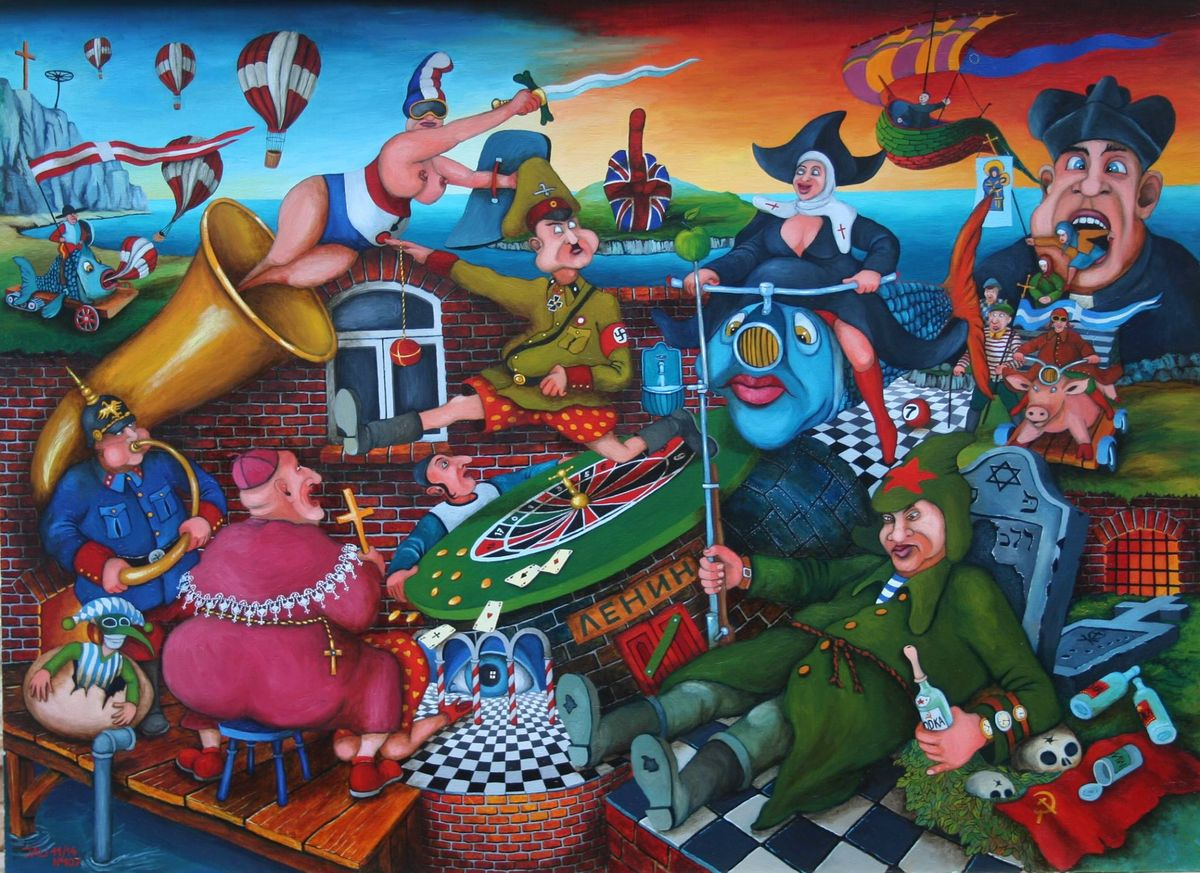
The Imagen at top:  Youri Ivanov – Artiste Russe (Russian)