How We Can Welcome Death!
Standard
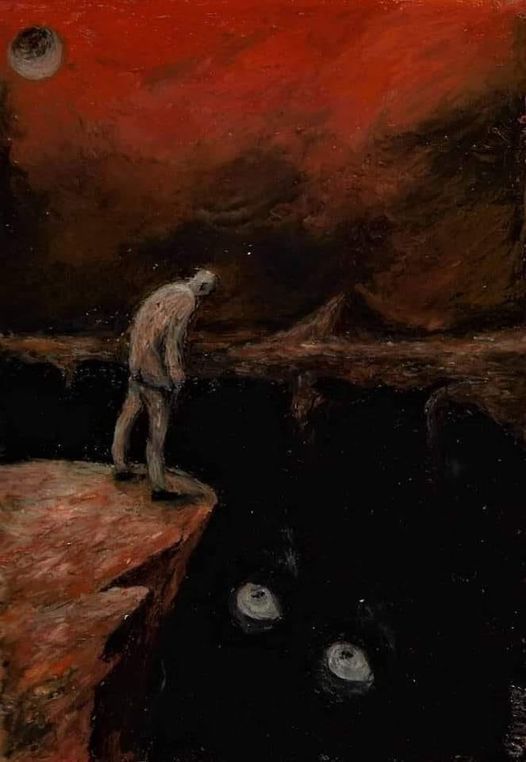
“Whoever fights with monsters should be careful not to become a monster himself. When you gaze long into an abyss, it also gazes into you.”
~Friedrich Nietzsche, Jenseits von Gut und Böse (1886) ch. 4, no. 146

Actually, I need to rest and post less frequently than before, but this short essay by adorable Laura London, an excellent Jungian expert at X (formerly Twitter), invigorated me. I couldn’t resist sharing it with you.

For many, contemplating and analyzing death is uncomfortable or even frightening. However, when we psychologically examine the world around us, we observe everything as dualistic, such as warm and cold, dark and light, love and hate, joy and grief
 and, of course, life and death; neither can exist without the other!

There is no reason for many young people to think about death, except for some like me who are confronted with it by losing a part of their parent or both. However, as we reach a certain age, this challenge becomes unavoidable. Fear is not a solution, as we will inevitably confront the other side. Therefore, it is better to attempt to understand or envision it as much as possible. Reading this essay soothes the soul!

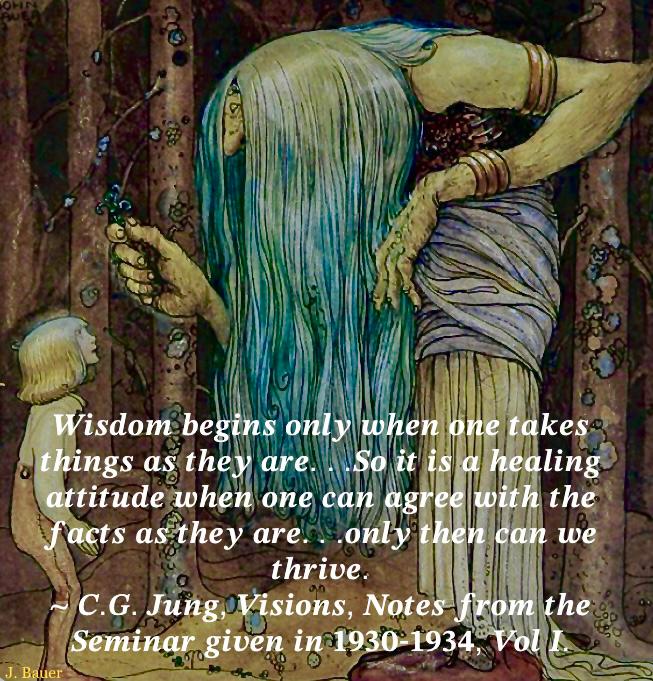
This quote from Jung is one of my favourites because it offers a breakthrough in our understanding of death.

Now, let’s read a tiny Colletti of Jung’s explanation on this issue, with heartfelt thanks to Laura London, which also included an introduction to an excellent book by Richard Wilhelm.

“From 1929 to 1934, #Jung presented his more mature thoughts about the mystery of death in three separate essays.⁔ In one of these essays, he stated that ‘anyone should draw the conclusion that the psyche, in its deepest reaches, participates in a form of existence beyond space and time, and thus partakes of what is inadequately and symbolically described as ‘eternity’’ [CW 8, par. 815]. Because of this, he also stated that as a doctor, I make every effort to strengthen the belief in immortality, especially with older patients 
 For 
 death is not an end but a goal, and life’s inclination towards death begins as soon as the meridian is passed’ [CW 13, par. 68]. Jung argued that the crisis of the second half of life is a sign that ‘nature prepares itself for death’ [CW 8, par. 808], hence, ‘it is hygienic 
 to discover in death a goal towards which one can strive’ [CW 8, par. 792], since ‘dying 
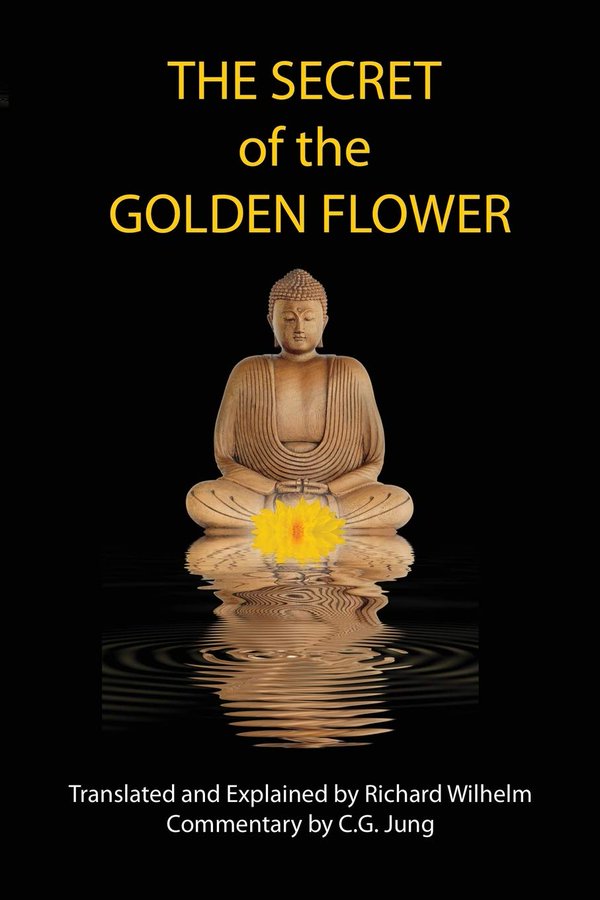
 has its onset long before actual death’ [CW 8, par. 809]. Jung concluded that ‘the #unconscious is all the more interested in how one dies; that is, whether the attitude of #consciousness is adjusted to dying or not’ [par. 809]. Death, then, became not only a goal for Jung but also a reality that could enrich life. Death begins before it happens, in midlife, so how one lives with death and how one approaches that goal became for Jung of paramount importance. In 1928, Jung received a copy of The Secret of the Golden Flower, a Chinese Taoist-alchemical text that, together with a dream he had which was set in Liverpool [Memories, Dreams, Reflections, pp. 220–223], confirmed to him that the goal of the #individuation process is the self, ‘the archetype of wholeness’ [CW 9ii, par. 351].”

⁔ “Commentary on ‘The Secret of the Golden Flower’” (1929); “The Stages of Life” (1930); “The Soul and Death” (1934).

~Luis Moris, Jungian psychoanalyst, “Jung’s Confrontation with Death: An Introduction, Confronting Death, pp. 7-8

đŸŒŒ You can watch my interview with Jungian psychoanalyst Luis Moris, editor of the book Confronting Death, in Episode 139 of Speaking of Jung.

My God, My God, Why Have You Forsaken Me?!

Standard

Or, Living With Three U. Bags;
Don’t Let Me Down!

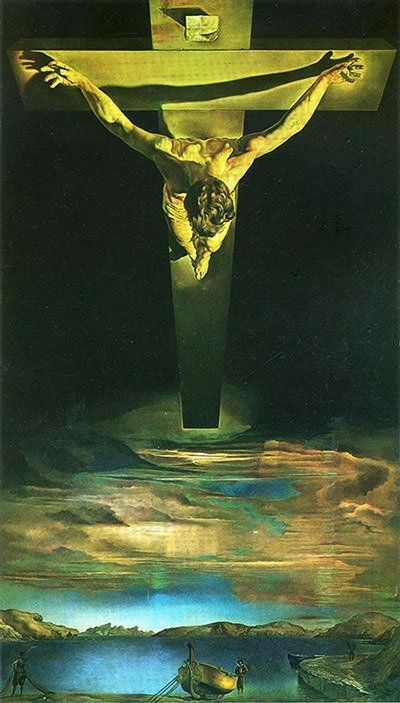
“Now, from the sixth hour, there was darkness over the whole land until the ninth hour. And about the ninth hour, Jesus cried out loudly, saying, ‘Eli, Eli, lema sabachthani? ‘ that is, ‘My God, my God, why have you forsaken me? Matthew 27:45-47 (also Mark 15:33-34)

No, I have not become religious, nor am I comparing myself to Jesus on the cross! I’ve just always been fortunate that my guardian angel has protected and supported me through troubling times. But this year, I feel she has ultimately let me down, and I wonder why!
After much consideration, I have decided to provide a brief update—not because I seek sympathy or believe everyone is wondering where I am! It is simply to maintain our connection. I also apologise for my infrequent presence on your sites, such as likes, comments, etc.

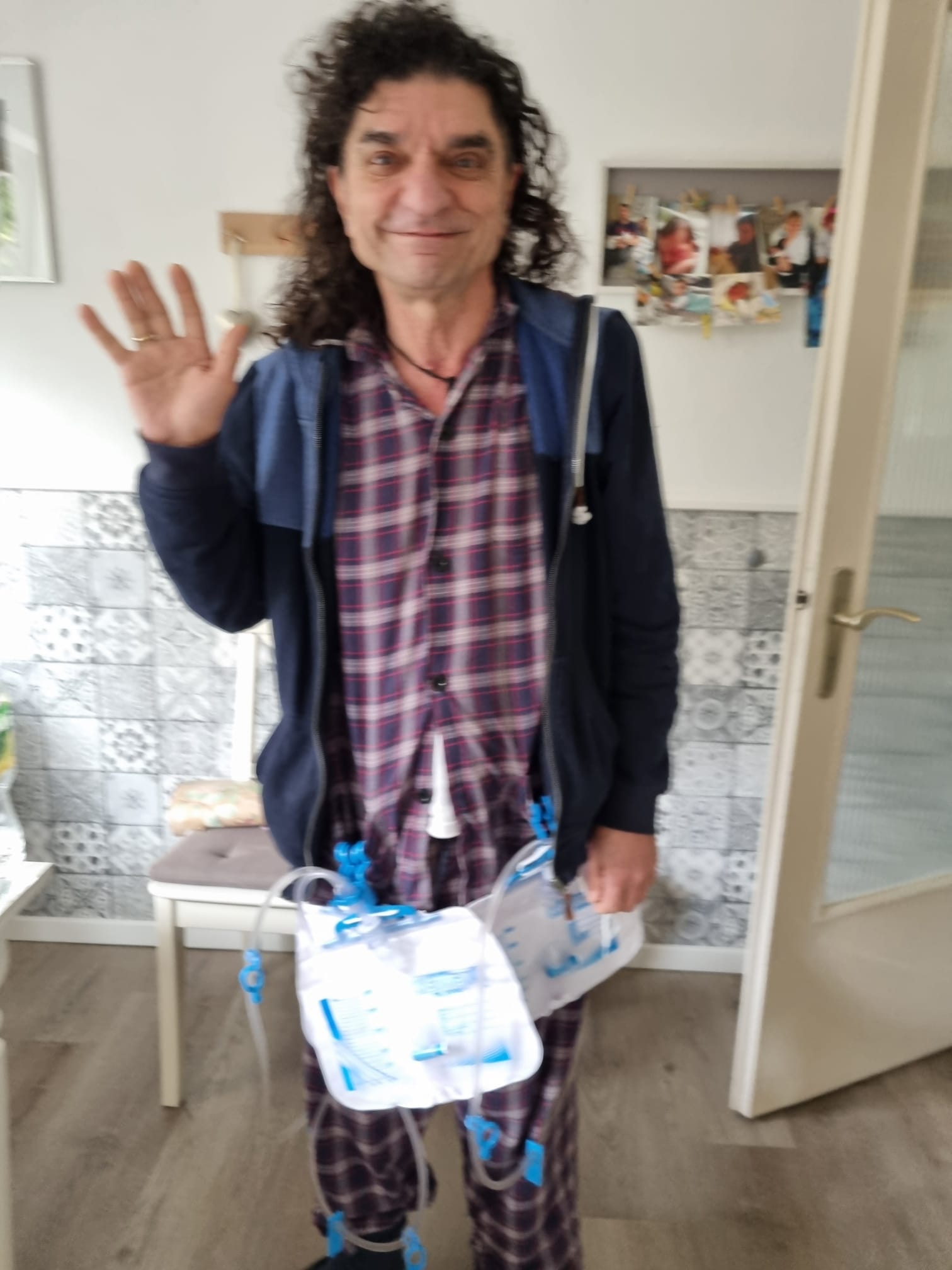
This illustration depicts a man wearing a robe and carrying a urine bag hooked to a catheter.

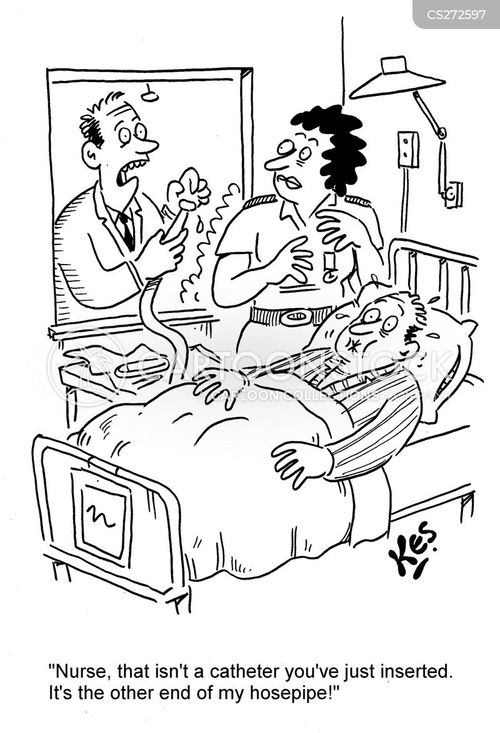
Well, everything seemed stable to me, which gave me hope—but it turned out not to be! I have struggled with a catheter in my stomach for the last two months, and after visiting the doctor to replace it, everything went awry, and I had to be taken to hospital with a fever of 40 degrees. There, I underwent several treatments with antibiotics and had two additional catheters placed in my kidneys; now, I have to do a threesome several times!


My PSA blood levels have risen in the hospital, causing a significant delay. The doctors need to determine whether these levels are due to my inflammation or if I have prostate cancer. I left the hospital a few weeks ago and am currently at home. Although my blood levels were down last week, they have increased again, necessitating a sample to be taken from my prostate. A neighbour suggested that these three catheters could also cause inflammation, which might be the cause. Still, I assume that testing for suspected cancer is more beneficial for the doctors, right?

The latest update is that, after consulting with the other doctors at the hospital, my doctor called to inform me that my PSA level is not overly concerning just yet. They plan to proceed with the surgery as scheduled, which will take place at the end of April. This means I will need to struggle with my three catheters for the next six weeks!

Look after yourselves everyone, and have a great time!

Fifty + Years Loneliness XIII, Or Desperate Or Might Being Frantic Sometimes! (Just an add!)

Standard

A Foreword and Update!

Today (on Saturday!😼), I had to take my boss’s place, and I have just got back home, but I need to head out again soon!😜 I hadn’t planned to post anything but came across an old article I wrote years ago. So, I thought I’d share it with you before it goes stale. I hope you enjoy it somehow!🙏💖

Please don’t be shocked; this will not be an endless story! I have just a feeling that my last post about my yelping was, after all, too emotional and not clear enough.

To contemplate thereabout, I have to look at my past and review my life, but to avoid the immense length, I try to write it in a list form. First, I thank all my dear friends for their feedback, and especially among them, for their valuable suggestions.

My life is like a labyrinth; explaining this with my broken tongue (pen) is difficult.

1- It might be because of our mother’s lie to Al and me about our father’s death, which I had to carry for almost two months till I found it out by myself.

2- The next point is that Al and I were almost alone in our childhood. Our mother had to find a job to pay our father’s debt; though he was a famous writer and could be rich, he could never be a moneymaker. We had a big house with a broad yard, and you could imagine how frightening it would be for two children, nine & eleven-year-old to stay home in the evening, waiting for their mother to come home.

3- There, eternity loneliness develops, don’t you think? We have kept each other like the guardian angel, especially Al, because he was older than me, older in the year, and significantly older in mind.

4- The years passed, and we, Al and I, had made a wall to protect us. A wall, but not against our mother, a wall against the society in which we lived. That was a must, to avoid the stranger in our world. Oh yes, we have made a world just for us and nobody else. And it made us like foreigners in our own country.

5- It went all through our age of puberty, and there came the time of our mother’s death. She was married to another man then, and we (unfortunately) couldn’t accept him as a replacement for our father. Therefore, the wall grew taller and taller. The solitude casts our life.

6- We had a lot of experiences those days, so you might think twice about looking for people with walls around. I might tell you that in such countries under dictatorship and also the pressure of its traditions, the only way to escape to freedom is drugs. We had tried all possible and impossible stuff for many, many years. I can be proud to announce that I had all the drops in my veins, and now I am free of all.

7- Now about me: I have learned from my parents’ way of life that there had to be a genius to live with (in the form of a Couple. Two genius to live together
 I don’t think that it might be advisable. I felt so because I had noticed how genius Al was. Therefore, I dedicated all my energy to my brother Al because I was convinced of his ability to create art. In Iran, I worked to earn money, managed a house, and all that was needed. It was, for me, a matter of course, even in our addiction period. (I was the one who could get the stuff.)

8- In all these happenings, I have forgotten to find my own identity! I know many people out there want to show me how to find it, but please stop! You have no idea!! I noticed that people, especially these days, want to give advice. (That is always calming to show the way to others) Thank you so much, but I think I am too far to see further. I might not know where I am going, but I am on my way.

9- Just to keep it short, since I lost my brother to serve him, I had to find my identity and what I am good for: I could be a musician, I could be an actor, I remember, as I gave up to make music and worked as a taxi driver, Al told me; Hey, don’t you want to continue composing? Then try writing! I thought, oh god, writing
 how can I do that! I know that he knew we were both the offspring of artists. Therefore, we had to do art!

Buy me a Coffee!😁🙏

Choose an amount

€5.00
€15.00
€100.00

Or enter a custom amount


Your contribution is appreciated.

(Buy me a Coffee!)

“Celebrating a New Birthday, While Still Embracing the Good Old Days.”

Standard

Jai guru deva, OM (Nothing’s Gonna Change My World!)

Foreword!
This year is a leap year, which makes the Gregorian calendar a bit confusing compared to the Persian calendar. While the Persian calendar also includes a leap year, the extra day falls at the end of the last month of the Persian year and marks the end of (next) winter. In contrast, the extra day in the Gregorian calendar has already transitioned by February, when we reached the leap year.
After researching, I discovered that my brother Al’s birthday is tomorrow. Unfortunately, I won’t have time to celebrate it then. So, I’ve decided to post this celebration today, and I’m sure Al won’t mind!

If we consider earthly time, he would be seventy-two; however, if one leaves the earth, time (and place)—at least in this variant—will no longer exist. However, as I still hear these tiktoks of the erosive passage of earthy time and count them, I return to these events to refresh my memories.

One of the memories that lingers in my mind is undoubtedly the Beatles. We grew up with them, and I clearly remember how, in the early sixties, we eagerly collected every new poster of theirs to hang on our room walls. This was somewhat unusual in Iran then, as most other youths listened to Iranian music. So, in our own way, we were odd!!!

Later, one of their songs, “Two Of Us,” became one of our favourites because it was about the “two” of us. I believe every lost child wants to find their way back home.

And I still hold onto those memories, learning from his wisdom; he was always a few steps ahead of me.

Honestly, I didn’t plan to post anything this weekend because I didn’t have time to come up with an idea. However, Al’s birthday inspired me to write a post. Additionally, tomorrow marks the anniversary of John Lennon’s shooting, so I’ve combined these two events in my thoughts. I believe Al and John share many points in common.

May their souls rest in peace.
Nothing’s gonna change your worlds!
Happy earthy birthday, dear peculiar brother.

Back again from Extraneous, with Kafka and a Daydream!

Standard

When my brother, Al, was in the hospital to undergo surgery to remove a tumour from his brain, one of the professors told him that we humans know almost nothing ( just ten per cent) about how our brains work – The rest is still a puzzle! Therefore, unexplained phenomena, such as strange things like seeing ghosts, daydreams, or schizophrenia, are always fascinating topics for inquisitive minds.

According to Dr Carl Jung: 
in schizophrenia, the complexes have become disconnected and autonomous fragments, which either do not reintegrate back to the psychic totality, or, in the case of remission, are unexpectedly joined together again as if nothing happened” (1939).

Franz Kafka Dreams >Wrestling matches every night<

During our trip to Serbia (I will write a post about it soon), I brought along some books as I do on any trip. This time, I discovered some surprises. While renovating the apartment, I found a book I couldn’t remember owning. Upon picking it up, I found a shopping receipt in the book dating back to 1995. It was clear that the book belonged to Al. Apart from a few novels, Franz Kafka wrote thousands of letters about his thoughts, dreams, and daydreams, and I was excited to have this particular book. The book is in German, and I translated a description and one of his letters about his dreams. I often considered the similarities between Kafka and Dostoevsky, as the latter frequently had daydreams like a schizophrenic. In this dream, Dostoevsky is interestingly present! I hope you will enjoy it.

The New Yorker

According to Jean-Paul, dreams substantially affect a poet because he is used to fantasy. In contrast, Kafka’s dreams intensified his daytime fears. Taken out of context, his dreams form an interesting “storybook” of events and changes involving real people and places from his life. Kafka’s descriptive notes allow the reader to relive each dream-like episode as if watching a film vividly. This collection also serves as a documentary, presenting the dreams chronologically and reproducing Kafka’s comments on the phenomenon of dreams and dreaming.

Frank Kortan – THE METAMORPHOSiS

Gregor Samsa woke up one morning to find himself transformed into a monstrous vermin. Franz Kafka’s “The Metamorphosis” challenges readers to accept this transformation as real, denying the possibility of dismissing it as merely a dream. This may frustrate those who rely on reason to understand the world and expect literature to assist them in this endeavour. In 1916, Franz Herwig criticized the rejection of realism and its associated positive aspects in an essay about the authors of the series “The Judgement Day,” in which Kafka’s story appeared. Gregor Samsa’s story “The Metamorphosis” challenges our understanding of reality and urges us to see the world in a new light. Kafka emphasizes that incomprehensible forces are shaping our lives, which may be more influential than we can rationally explain. According to his commentary on the story “The Judgement,” which he wrote in one go from ten o’clock in the evening to six o’clock in the morning, this is the only way to write in such a context—with a complete openness of body and soul! In this type of writing, the usual censorship of the mind is primarily eliminated. Everything can be risked, and a great fire is prepared for everyone for the strangest ideas, in which they perish and rise again.

Dream!
[To Milena Jesenska, August 1920; M 170-172]

Today, I think I dreamt of you for the first time since I’ve been in Prague. A dream towards morning, short and heavy, still caught up in sleep after a bad night. I know little about it. You were in Prague; we were walking along Ferdinand Street, a little opposite Vilimek, in the direction of the quay; some acquaintances of yours were walking past on the other side; we turned to look at them; you spoke of them, perhaps there was also talk of Krasa [I know he is not in Prague, I will find out his address]. You said as usual, but there was something incomprehensible, indescribable about rejection in it; I didn’t mention it but cursed myself, thereby only expressing the curse that was on me. Because we were in the coffee house, probably in the Kaffee Union (it was on the way, and it was also the coffee house from Reiner’s last evening), a man and a girl were sitting at our table, but I couldn’t remember them. Then, there was a man who looked very similar to Dostoyevsky but young, with a deep black beard and hair. Everything, for example, the eyebrows and the bulges over the eyes, were incredibly strong. Then you were there, and I. Again, nothing betrayed your aloof manner, but the rejection was there.

Painting: Jorge Ignacio Nazabal

Your face was – I could not look away from the tormenting oddity – powdered, and it was overly obvious, clumsy, bad; it was probably hot, and so whole powder lines had formed on your cheeks; I can still see them in front of me. Again and again, I leaned forward to ask why you were powdered; when you noticed that I wanted to ask, you asked obligingly – the rejection was simply not noticeable – >What do you want?< But I could not ask, I did not dare, and yet I somehow suspected that being powdered was a test for me, a crucial test, that I should ask, and I wanted to but did not dare. And so the sad dream rolled over me. At the same time, the Dostoyevsky man tormented me. His behaviour towards me was similar to yours but still a little different. When I asked him something, he was very friendly, sympathetic, leaned over, and open-hearted. Still, when I didn’t know what to ask or say – this happened every moment – he would withdraw with a jerk, sink into a book, know nothing more about the world and especially not about me, disappear into his beard and hair. I don’t know why I found this unbearable, again and again – I couldn’t do anything else – I had to pull him over to me with a question and again and again, I lost him through my own fault! đŸ’–đŸ™đŸ€—

The Imagen at top:  Youri Ivanov – Artiste Russe (Russian)

Whoever Searches Finds Nothing, but Whoever does not Search will be Found.

Standard

Franz Kafka wrote that line up there and then continued; this is how it works when searching for God, and on love, it is no different.

A writer as a pioneer: Franz Kafka’s literature established a unique style.
© picture alliance/akg/Archiv K. Wagenbach

This year is the 100th anniversary of Kafka’s death, and I thought it would be a good opportunity to write about my impressions of him and his works. Of course, I must mention that it does not have to be his specific birthday or the day he died; I never search the web to find out about an event and write about it, as some are doing on WordPress!
The main reason is that I have known him and his works since I was young and always appreciated his solitude before society. Second, I see and hear many documentaries and TV series here in Germany for his anniversary, as the Germans always welcome a genius who writes in their language into their art world. Therefore, to put it bluntly, I had to write this article first in German and translate it into English. Because these days, I hear and read his works all in that language.

Franz Kafka (1883 – 1924), a German-language Bohemian writer, was born in Prague as the son of a middle-class Jewish merchant family.

As per literary scholar Reiner Stach, who studied Franz Kafka for over two decades and published a three-volume Kafka biography with S. Fischer Verlag, Kafka himself was uncertain about his historical classification. Stach quotes Kafka’s famous saying, “I am the end or the beginning.” Kafka intended to express that he may represent the end of a long tradition of classical literature, coming from Goethe, Kleist, and perhaps Flaubert, who was already modern and is an endpoint here. Alternatively, he may start something completely new from the fragments he inherited from tradition instead of falling apart.

Max Brod once said that Kafka was more ambitious than his talent. Maybe he’s right! He helped him, believed in him, and encouraged him to write his thoughts as books.

Franz Kafka and Max Brod

As one of his numerous lovers, Milena JesenskĂĄ, a Czech journalist and writer who was non-Jewish and married, once said to him: I have never met a person like you, and I assume it that’s because there has never existed anyone like you.

He explained it himself:

The enormous world that I have in my head. But how to free me and free them without tearing? And I would rather tear it up a thousand times than hold it back or bury it in me. That’s why I’m here; that’s very clear to me. (Sokel, Walter H. 2001).
Man cannot live without a permanent trust in something indestructible within himself, though both that indestructible something and his own trust in it may remain permanently concealed. (Gray, Ronald 1973)

The drama (on stage) is more exhausting than the novel because we see everything that we otherwise only read about. (Source: Kafka, diaries. October 28, 1911)

The fortune that flatters you most is most likely to deceive you.

Franz Kafka was convinced that his writing was inadequate, although he had much more to say. In his short story collection, A Hunger Artist, he wrote:
“Forgive me everything,” whispered the hunger artist. Only the supervisor, pressing his ear against the cage, understood him. “Certainly,” said the supervisor, tapping his forehead with his finger to indicate to the staff the state the hunger artist was in, “we forgive you.” “I always wanted you to admire my fasting,” said the hunger artist. “But we do admire it,” said the supervisor obligingly. “But you shouldn’t admire it,” said the hunger artist. “Well then, we don’t admire it,” said the supervisor, “but why shouldn’t we admire it?” “Because I had to fast. I can’t do anything else,” said the hunger artist.

Writer Franz Kafka in front of the family home; the Oppelt House on the Old Town Square in Prague. Czech Republic. Photograph. 1922.
Kafka stands in front of the Oppelt House on Old Town Square in Prague, the family’s residence, in 1922. At this time, he wrote “Research of a Dog”, among other things.
© picture alliance / IMAGNO/Votava

He died of Tuberculosis, or better to say, the cause of death seemed to be starvation: the condition of Kafka’s throat made eating too painful for him. By the way, Kafka’s mental health was a topic of debate. Marino PĂ©rez-Álvarez suggests schizophrenia based on his diaries and “The Metamorphosis”. Alessia Coralli and Antonio Perciaccante diagnosed borderline personality disorder, worsened by Kafka’s insomnia complaints. Joan Lachkar developed a model describing Kafka’s fears of abandonment, anxiety, depression, and parasitic dependency needs in “The Metamorphosis“. Meanwhile, Manfred M. Fichter believes Kafka was anorexic.

But in my opinion, it’s all doctors prattling! Kafka had (like a few other known artists and geniuses like Dostoevsky, Mozart, Carl Jung, Van Gogh and
) a sensitive mind and soul who looked immense, broader and more profound in human society and the man itself, so deep that the artist himself cannot discern it. He was a Mozart in the matter of literature! Kafka’s writing, whether a letter or a book, had a wealth of words and topics to recount. In his book  Der Process (The Trial), he doesn’t criticize only the political system; K, the main character, is a victim of not being understood by his population. He writes about the trial of his own solitude, his isolation in society and his strangeness towards others.

He even asked Dora Diamant, his faithful companion in his last days in his dying bed, and wanted her to burn all his works after his death!

He died shortly before his 41st birthday in a private sanatorium outside Vienna. A week later, on June 11, 1924, he was buried in a simple ceremony at Prague’s New Jewish Cemetery.

How profoundly Dr Jung interpret the death;

In his final days, he asked his doctor for a lethal dose of morphine. When the doctor refused, he told his doctor: if you don’t do it, you will be my murderer!