The Mystery Of “Mana Personality” Part Six

Standard

Translated from volumes published by Lorenz Jung based on the edition “Gesammelte Werke” dtv.de The Symbols of Transformation (1952) and Aion (1950)

Continuing the concept of Mana-Personality, Dr. Jung advises us not to underestimate the unconscious mind and even offers a prescription for better managing this issue. (I dearly share here the last parts, 12345, if someone wants to check out!)🙏

As I read more from Dr. Jung, I find that the issues he discusses do not pertain to a specific time period; they are fundamental and timeless, as we can clearly observe them in the present.

So, I believe following his concepts can heal our ailing society. He did an excellent job of helping us understand our inner unknown.
Let’s read another chapter of this Mana riddle.

Individuation
The Mana Personality (P6)

The Mana personality develops historically into a heroic figure and a god-man (according to popular belief, the highest Christian king could cure epilepsy with his Mana by laying on hands), whose earthly figure is the priest. The analysts can tell us something about how much the doctor is still a man-personality. Insofar as the “I” apparently draws the power belonging to the anima to itself, the ego becomes a mana personality. This development is an almost regular occurrence. I have never seen a more or less advanced development process of this kind where identification with the archetype of the Mana personality did not take place, at least temporarily. And it is the most natural thing in the world that should happen this way because not only you do expect it yourself, but everyone else expects it too. One can hardly help but admire oneself a little because one has seen deeper than others, and the others have such a need to find somewhere a tangible hero or a superior wise man, a leader and father, an unquestionable authority, that they are very willing to build temples and burn incense to even petty gods. It is not just the lamentable foolishness of the uncritical followers but a psychological law of nature that what was before will always be again. And this will always be the case as long as consciousness does not interrupt the naive concretization of the archetypes. I do not know whether it is desirable for consciousness to alter the eternal laws; I only know that it sometimes alters them and that this measure is a vital necessity for certain people, which, however, does not prevent them from placing themselves on the throne of the father in order to make the old rule come true once again. Indeed, it is difficult to see how one could escape the overwhelming power of the archetypes.

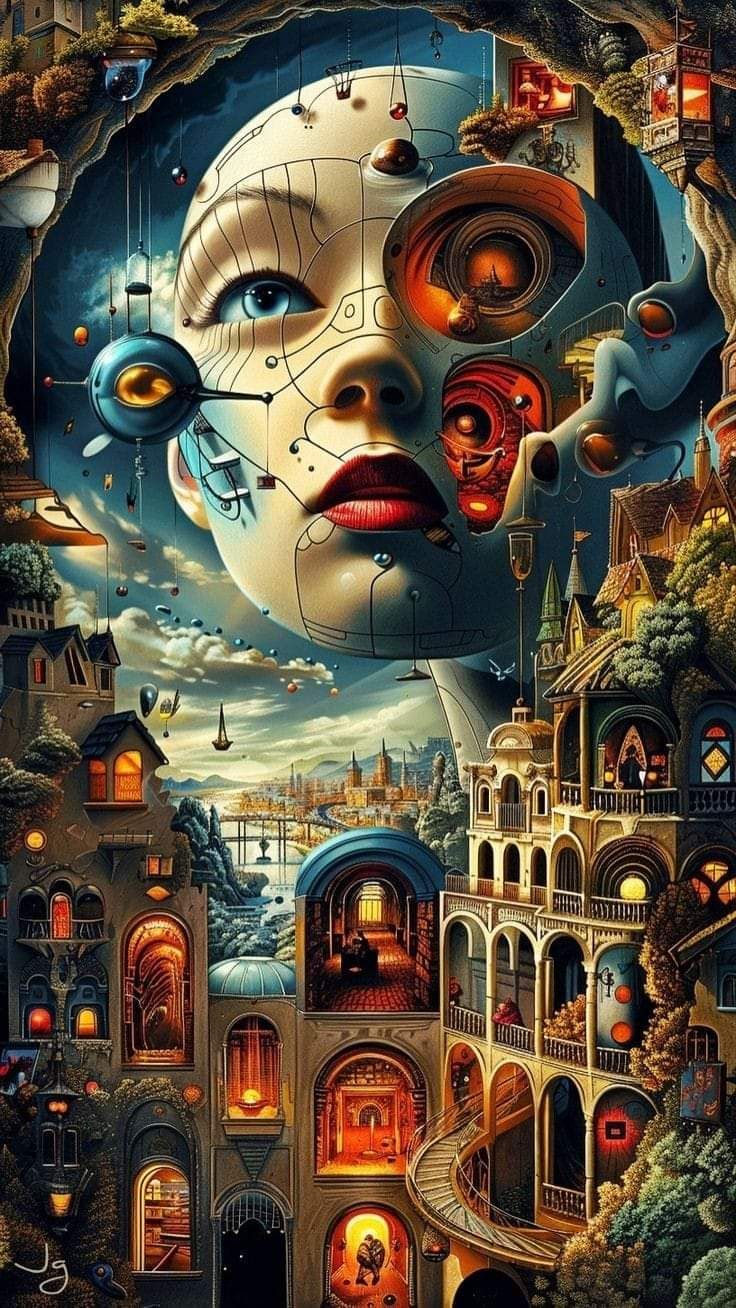
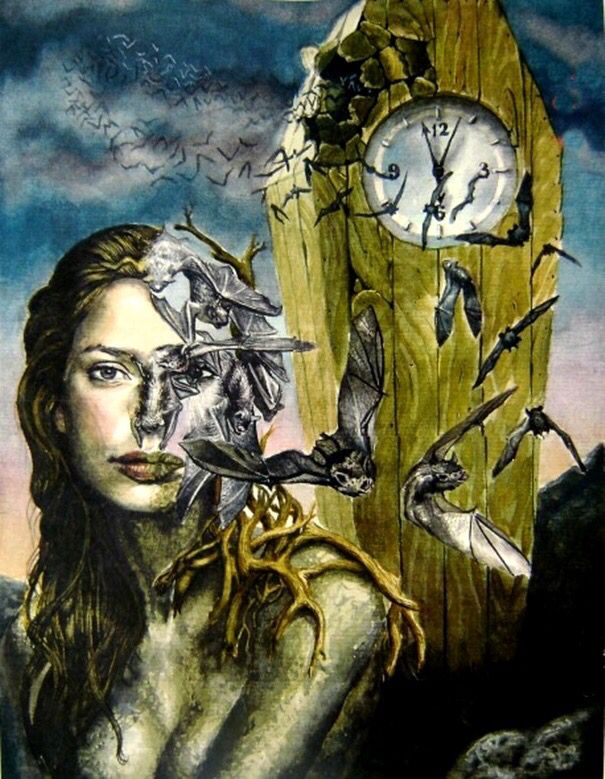
Johfra Bosschart Occult Surrealist

I don’t believe that one can escape this overwhelming power. One can only change one’s attitude towards it and thereby prevent oneself from naively falling into an archetype and then being forced to play a role at the expense of one’s humanity. Being obsessed with an archetype turns a person into a mere collective figure, a kind of Mask behind which humanity can no longer develop but instead increasingly atrophies. One must, therefore, be aware of the danger of falling prey to the dominant Mana personality. The danger is not only that one becomes the FatherMask oneself but also that one falls prey to this Mask if someone else wears it. In this sense, master and student are the same.

The dissolution of the anima means that one has gained insight into the driving forces of the unconscious, but not that we have rendered these forces ineffective ourselves. They can attack us again in a new form at any time. And they will inevitably do so again if there is a gap in the conscious attitude. Power stays against power. When the “I” assumes power over the unconscious, the unconscious reacts with a subtle attack, in this case, with the dominance of the Mana personality, whose enormous prestige captivates the “I”. The only way to protect oneself against this is to fully admit one’s own weakness in the face of the forces of the unconscious. In this way, we do not oppose the unconscious with power, and as a result, we do not provoke the unconscious either.

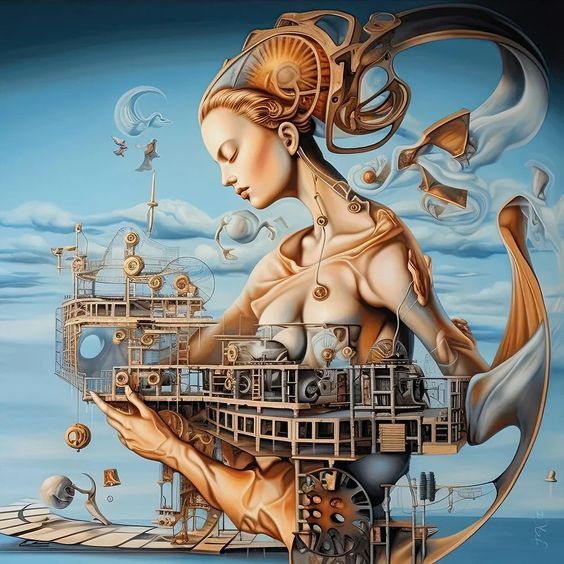
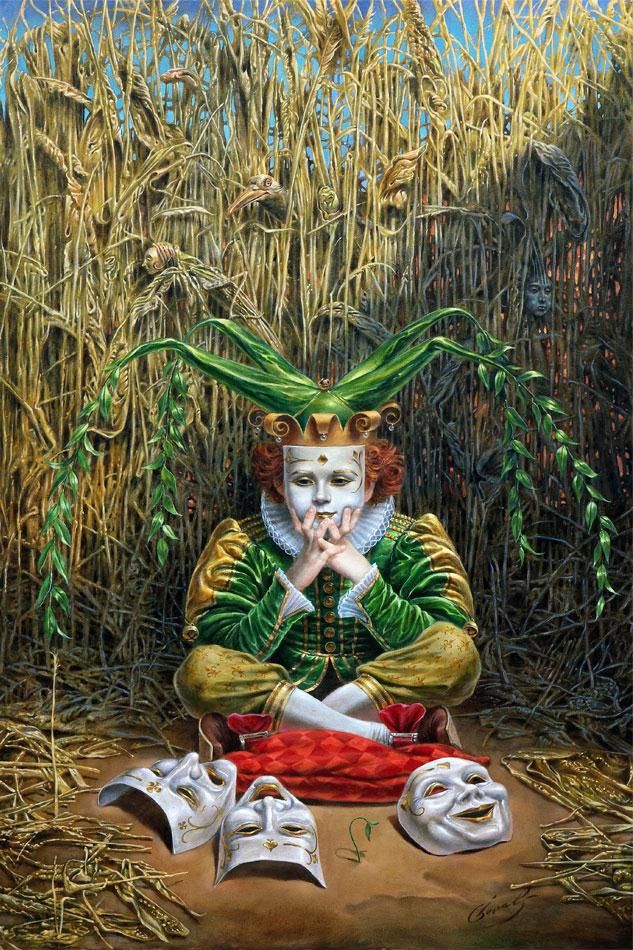
Illustration: Nikolai Zaitsev

It may sound strange to the reader when I speak of the unconscious, so to speak, in a personal way. I do not want to provoke condemnation by thinking of the unconscious as personal. The unconscious consists of natural processes that lie beyond the human-personal. Only our consciousness is >personal<. So when I talk about >provoking<, I don’t mean that the unconscious is somehow offended and – like the old gods – does something to someone out of jealousy or vengeance. I often mean something like a psychological diet error that upsets my digestion. The unconscious reacts automatically, like my stomach, which figuratively takes revenge on me. If I assume power over the unconscious, that is a psychological dietary error, an unsatisfactory attitude that is best avoided in the interest of one’s own well-being. My unpoetic comparison is, however, a little too mild considering the far-reaching and devastating moral effects of a disturbed unconscious. In this respect, I would prefer to speak of the vengeance of offended gods.

To be continued! 💕🖖💖

Back again from Extraneous, with Kafka and a Daydream!

Standard

When my brother, Al, was in the hospital to undergo surgery to remove a tumour from his brain, one of the professors told him that we humans know almost nothing ( just ten per cent) about how our brains work – The rest is still a puzzle! Therefore, unexplained phenomena, such as strange things like seeing ghosts, daydreams, or schizophrenia, are always fascinating topics for inquisitive minds.

According to Dr Carl Jung: …in schizophrenia, the complexes have become disconnected and autonomous fragments, which either do not reintegrate back to the psychic totality, or, in the case of remission, are unexpectedly joined together again as if nothing happened” (1939).

Franz Kafka Dreams >Wrestling matches every night<

During our trip to Serbia (I will write a post about it soon), I brought along some books as I do on any trip. This time, I discovered some surprises. While renovating the apartment, I found a book I couldn’t remember owning. Upon picking it up, I found a shopping receipt in the book dating back to 1995. It was clear that the book belonged to Al. Apart from a few novels, Franz Kafka wrote thousands of letters about his thoughts, dreams, and daydreams, and I was excited to have this particular book. The book is in German, and I translated a description and one of his letters about his dreams. I often considered the similarities between Kafka and Dostoevsky, as the latter frequently had daydreams like a schizophrenic. In this dream, Dostoevsky is interestingly present! I hope you will enjoy it.

The New Yorker

According to Jean-Paul, dreams substantially affect a poet because he is used to fantasy. In contrast, Kafka’s dreams intensified his daytime fears. Taken out of context, his dreams form an interesting “storybook” of events and changes involving real people and places from his life. Kafka’s descriptive notes allow the reader to relive each dream-like episode as if watching a film vividly. This collection also serves as a documentary, presenting the dreams chronologically and reproducing Kafka’s comments on the phenomenon of dreams and dreaming.

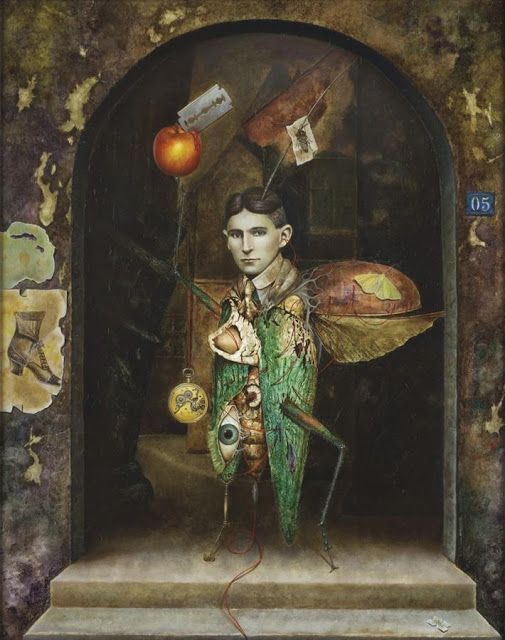
Frank Kortan – THE METAMORPHOSiS

Gregor Samsa woke up one morning to find himself transformed into a monstrous vermin. Franz Kafka’s “The Metamorphosis” challenges readers to accept this transformation as real, denying the possibility of dismissing it as merely a dream. This may frustrate those who rely on reason to understand the world and expect literature to assist them in this endeavour. In 1916, Franz Herwig criticized the rejection of realism and its associated positive aspects in an essay about the authors of the series “The Judgement Day,” in which Kafka’s story appeared. Gregor Samsa’s story “The Metamorphosis” challenges our understanding of reality and urges us to see the world in a new light. Kafka emphasizes that incomprehensible forces are shaping our lives, which may be more influential than we can rationally explain. According to his commentary on the story “The Judgement,” which he wrote in one go from ten o’clock in the evening to six o’clock in the morning, this is the only way to write in such a context—with a complete openness of body and soul! In this type of writing, the usual censorship of the mind is primarily eliminated. Everything can be risked, and a great fire is prepared for everyone for the strangest ideas, in which they perish and rise again.

Dream!
[To Milena Jesenska, August 1920; M 170-172]

Today, I think I dreamt of you for the first time since I’ve been in Prague. A dream towards morning, short and heavy, still caught up in sleep after a bad night. I know little about it. You were in Prague; we were walking along Ferdinand Street, a little opposite Vilimek, in the direction of the quay; some acquaintances of yours were walking past on the other side; we turned to look at them; you spoke of them, perhaps there was also talk of Krasa [I know he is not in Prague, I will find out his address]. You said as usual, but there was something incomprehensible, indescribable about rejection in it; I didn’t mention it but cursed myself, thereby only expressing the curse that was on me. Because we were in the coffee house, probably in the Kaffee Union (it was on the way, and it was also the coffee house from Reiner’s last evening), a man and a girl were sitting at our table, but I couldn’t remember them. Then, there was a man who looked very similar to Dostoyevsky but young, with a deep black beard and hair. Everything, for example, the eyebrows and the bulges over the eyes, were incredibly strong. Then you were there, and I. Again, nothing betrayed your aloof manner, but the rejection was there.

Painting: Jorge Ignacio Nazabal

Your face was – I could not look away from the tormenting oddity – powdered, and it was overly obvious, clumsy, bad; it was probably hot, and so whole powder lines had formed on your cheeks; I can still see them in front of me. Again and again, I leaned forward to ask why you were powdered; when you noticed that I wanted to ask, you asked obligingly – the rejection was simply not noticeable – >What do you want?< But I could not ask, I did not dare, and yet I somehow suspected that being powdered was a test for me, a crucial test, that I should ask, and I wanted to but did not dare. And so the sad dream rolled over me. At the same time, the Dostoyevsky man tormented me. His behaviour towards me was similar to yours but still a little different. When I asked him something, he was very friendly, sympathetic, leaned over, and open-hearted. Still, when I didn’t know what to ask or say – this happened every moment – he would withdraw with a jerk, sink into a book, know nothing more about the world and especially not about me, disappear into his beard and hair. I don’t know why I found this unbearable, again and again – I couldn’t do anything else – I had to pull him over to me with a question and again and again, I lost him through my own fault! 💖🙏🤗

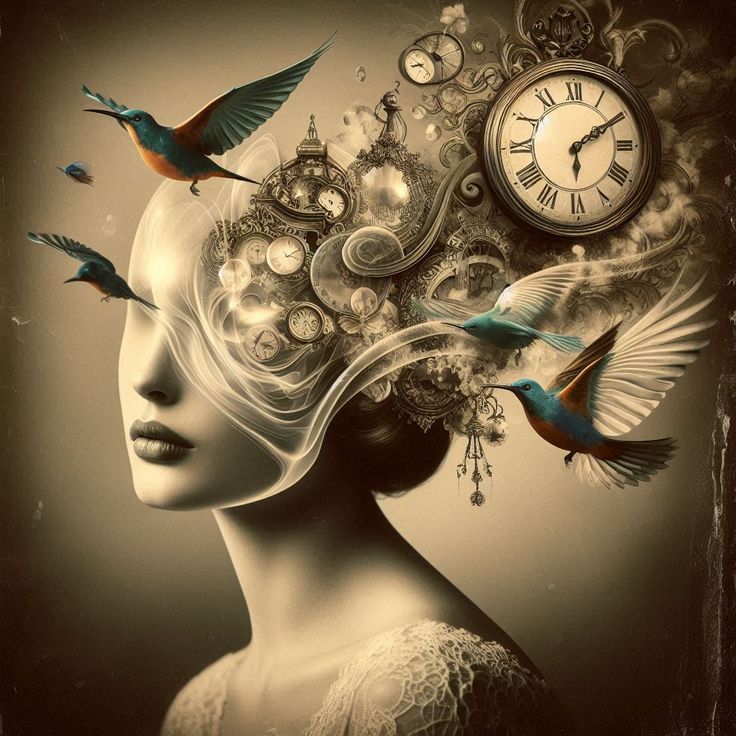
The Imagen at top:  Youri Ivanov – Artiste Russe (Russian)

The Mystery Of “Mana Personality” Part Three

Standard

Translated from volumes published by Lorenz Jung based on the edition “Gesammelte Werke” dtv.de The Symbols of Transformation (1952) and Aion (1950)

Mana-personality. A personified archetypal image of a supernatural force.

The Mana-personality is a dominant of the collective unconscious, the well-known archetype of the mighty man in the form of hero, chief, magician, medicine-man, saint, ruler of men and spirits, and the friend of God.[The Mana-Personality,” CW 7, par. 377.]

Mana is a Melanesian word referring to a bewitching or numinous quality in gods and sacred objects.

Historically, the Mana-Personality evolves into the hero and the godlike being, whose earthly form is the priest. How very much the doctor is still Mana is the whole plaint of the analyst! [Ibid., par. 389.]

Art by thecyclopssun

A Mana-Personality embodies this magical power. In individual psychology, Jung used it to describe the inflationary effect of assimilating autonomous unconscious contents, particularly those associated with anima and animus. (The text and the image are from Carl Jung’s Depth Psychology by my brilliant friend Lewis Lafontaine.)

I started with these specific sections of my friend’s website to better understand this enigmatic topic. Personally, I find Mana to be funny, attractive, amusing, intriguing, and, at the same time, very monstrous.

And now, after sharing parts one and two, I present part three, which is a short one so as not to bore you, or better to say, because of the preparations for my trip! I will be taking a two-week vacation, and the internet connection can be difficult on this trip. But after that, I promise to share a larger and more interesting part when I return!!💖

Individuation
The Mana Personality (P3)

In contrast, our pitifully limited “I”, if it possesses even a spark of self-knowledge, can only withdraw and quickly abandon any illusion of power and importance. It was an illusion: the “I” has not overcome the anima and, therefore, has not acquired its Mana. The consciousness has not become master of the unconscious, but the anima has lost its domineering presumption to the extent that the “I” has been able to come to terms with the unconscious. This conflict, however, was not a victory of consciousness over the unconscious but the establishment of a balance between the two worlds.

The ‘magician’ could only take possession of the “I” because the “I” dreamed of a victory over the anima. This was an attack, and every attack by the “I” would be followed by an attack by the unconscious.

>In a transformed figure
I exercise grim power. <
(Goethe: Faust II, Act 5, Scene 4, in Works in ten volumes, Vol. 4, 1961)

Faust surrounded by his Illustration, to Goethe’s Faust by Harry Clarke 1925

Therefore, if the “I” abandons its claim to victory, the obsession by the magician automatically ceases. But where does the Mana go? Who or what becomes Mana if even the magician can no longer perform magic? We now know that neither the conscious nor the unconscious has Mana, for it is certain that if the “I” does not claim power, then no obsession arises, which means that the unconscious has also lost its supremacy. In this state, the Mana must have fallen into the hands of Something that is conscious and unconscious, or neither conscious nor unconscious. This Something is the sought-after “centre” of the personality, that indescribable Something between the opposites, or the unifier of the opposites, or the result of the conflict, or the “achievement” of the energetic tension, the development of the personality, a most individual step forward, the next stage.

I do not expect the reader to follow the rapid overview of the whole problem in every detail. He should consider it a kind of exposition, the more detailed intellectual elaboration of which I will give in the following…

To be continued! I wish you all a great time.💖🙏💖🌹

PS: As the World Wide Web chaos happened yesterday, I hope our flight stays intact!!😁😅🙏

The Mystery Of “Mana Personality” Part Two

Standard

Translated from volumes published by Lorenz Jung based on the edition “Gesammelte Werke” dtv.de The Symbols of Transformation (1952) and Aion (1950)

Recently, on X (Twitter), during one of Perian’s talks titled “The Way of Democratic Talk,” someone mentioned that social morals are crucial for keeping people mindful of their behaviour towards others. I responded that social morals are relative and not constant; throughout human history, they have consistently changed after wars or revolutions. I prefer to use the word “conscience.” Another friend said she would stick with “morals” because she was tired of having a guilty conscience. I replied that conscience is based on inner awareness and individuality and, therefore, has a more substantial and profound foundation, strengthening our consciousness as individuals.

Anyway, it was a prologue to noticing that words like consciousness, ego, anima, and their influential product, Mana, are important to take seriously. Mana may sound strange and unknown, but we all have it inside us!

Jung has always attempted to clarify that good and evil exist within every human and has made significant efforts to help us realize that it all depends on us to recognize these and find the balance between them.

Illustration at the top: NIKOLAY ZAITSEV

Here, in the continuation of the first part, I share some more words from this magical Mana.

Individuation
The Mana Personality (P2)

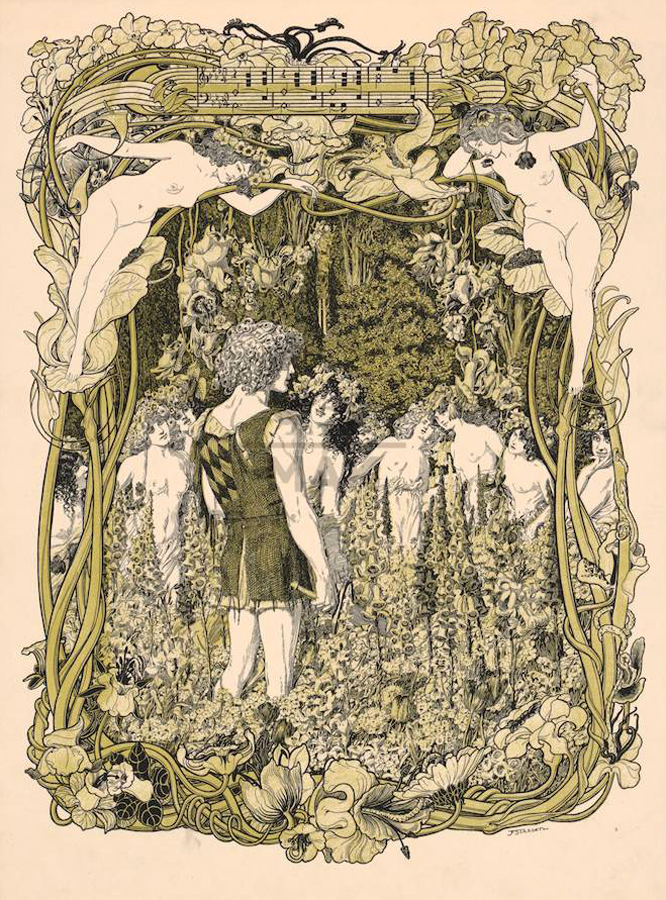
‘Parsifal’ illustrations for Richard Wagner’s opera by Franz Stassen.

Who has now come to terms with the anima? Apparently, the conscious “I”, and therefore the “I”, has taken over the Mana. In this way, the conscious “I” becomes the Mana personality. The Mana personality, however, is a Dominant of the collective unconscious, the well-known archetype of the mighty man in the form of the hero, the chief, the magician, the medicine man and saint, the lord of men and spirits, the friend of God.

This is now a male collective figure that emerges from the dark background and takes possession of the conscious personality. This psychological danger is of a subtle nature; by inflating consciousness, it can destroy everything that has been gained through the confrontation with the anima. It is, therefore, of no minor practical importance to know that in the hierarchy of the unconscious, the anima is only the lowest level and one of the possible figures and that its overcoming creates another collective figure that now takes over its Mana. In reality, it is the figure of the magician – as I will call her in short – that draws the Mana, that is, the autonomous value of the anima to itself. Only insofar as I am unconsciously identical with this figure can I imagine that I myself possess the Mana of the anima. But under these circumstances, I will do so infallibly.

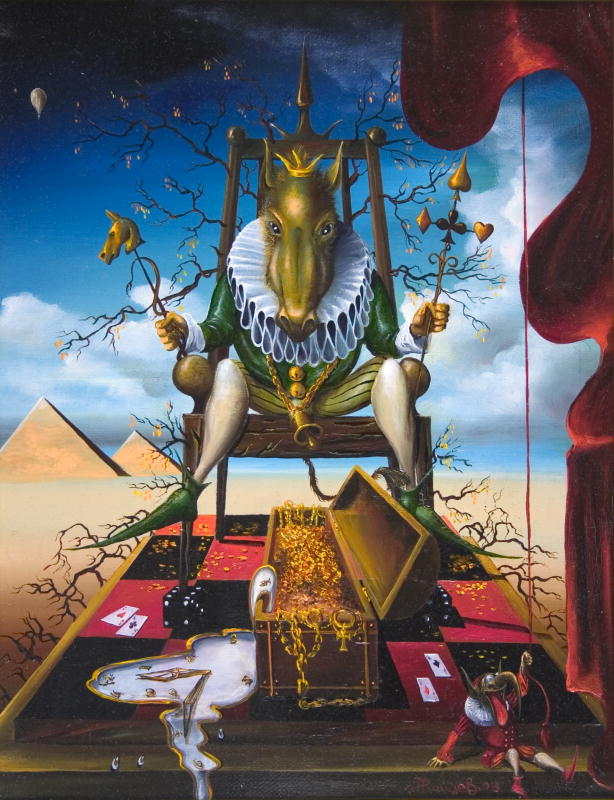
SD World _ Youri Ivanov _ Jouris Kunst

The figure of the magician has a no less dangerous equivalent for women: it is a maternal, superior figure, the great mother, the all-merciful one who understands everything and forgives everything and always wanted the best, who always lived for others and never sought her own, the discoverer of great love, just as it is the herald of the ultimate truth. And just as great love is never appreciated, great wisdom is never understood either. And they can’t stand each other at all.

There must be a serious misunderstanding here because it is undoubtedly a case of inflation. The “I” has appropriated something that does not belong to it. But how did it appropriate this Mana? If it really was the ego that overcame the anima, then the Mana also belongs to it, and then the conclusion is correct: one has become significant. But why does this significance, the Mana, not affect others? That would be an essential criterion! It does not work because one has not become significant but has simply merged with an archetype, another unconscious figure. So, we must conclude that “I” has not overcome the anima and, therefore, has not acquired the Mana. It is just that a new merger has occurred, with a figure of the same sex that corresponds to the father’s imago and has perhaps even greater power.

From the power that binds all beings,
The person who overcomes himself frees himself<

(Goethe: The Mysteries. A Fragment, in. Works in ten volumes, Vol. 7, 1962)

Thus, he becomes a superman, superior to all powers, a demigod, perhaps even more. ‘I and the Father are one’, this powerful confession in all its terrible ambiguity stemming from precisely this psychological moment.

To be continued! 🙏💖

The Mystery of “Mana Personality” Part One

Standard

Translated from volumes published by Lorenz Jung based on the edition “Gesammelte Werke” dtv.de The Symbols of Transformation (1952) and Aion (1950)

Another challenge? Yes! I have decided to present a perhaps tricky but important topic; of course, I will try to make it as understandable as possible. I believe Dr. Jung’s theories and thoughts are not difficult to understand. They may seem strange, or rather, they are still new to us, which might make them seem difficult to comprehend. However, they are essential because they show us how to understand our undiscovered inner soul, which we might never notice deeply. Often, we look for problems outside of ourselves.

I understand his concerns about whether he adequately and comprehensively explains his lessons, although he never intended to present himself as a teacher. This may be due to the monstrous and sinister issues he has researched and discovered.
“The only real danger that exists is man himself,” he says. “He is the great danger, and we are pitifully unaware of it.” He has seen this danger and tried to show us how to recognize and handle it.

In November of 1960, seven months before his death, C.G. Jung suffered what he called “the lowest ebb of feeling I ever experienced.” He explained the sentiment in a letter to Eugene Rolfe:
I had to understand that I was unable to make the people see what I’ve been after. I am practically alone. There are a few who understand this and that, but almost nobody sees the whole… I have failed in my foremost task: to open people’s eyes to the fact that man has a soul, and there is a buried treasure in the field, and that our religion and philosophy are in a lamentable state.

I will do my best and hope that what he tries to convey to us will become more understandable. The topic of Mana might be an unknown subject, though very familiar to all of us. It is with us, man or woman, from childhood to old age. (I decided to translate the original Jung’s words myself because, as I found out, some online translations are incorrect due to false interpretations. Yes, it is hard work, but trustfully!)
Here is just a foretaste because it will take some parts more than one post! So, let’s begin:

According to Jung, the ‘Mana Personality’ represents an archetypal phase of the individuation process of remarkable interest in psychological, hermeneutic, and theoretical terms. This figure is characterized by a high initiate potential that fosters the approximation of the Self’s consciousness.

Individuation
The Mana Personality

Klingsor verflucht Kundry (Gemälde von Franz Stassen)

My starting material for the following discussion is those cases in which what was presented as the next goal in the previous chapter was achieved, namely the overcoming of the anima as an autonomous complex and its transformation into a function of the relationship of the conscious to the unconscious. By achieving this goal, it is possible to free the ego from all its entanglements with collectivity and the collective unconscious. Through this process, the anima loses the demonic power of the autonomous complex, i.e. it can no longer exercise possession as it is depotentiated. It is no longer the guardian of unknown treasures, it is no longer Kundry, the demonic messenger of the Grail of a divine-animal nature, no longer the >Mistress-Soul<, but a psychological function of an intuitive nature, of which one could say with the primitive: >He goes into the forest to talk to the spirits<, or: >My snake spoke to me<, or expressed in mythological infantile language: >The little finger told me.<

Those of my readers who are familiar with Rider Haggard‘s description of the ‘She-who-must-be-obeyed‘ will certainly remember the magical powers of this personality. She is a mana personality, a being full of occult, magical qualities (Mana) endowed with mystical knowledge and powers. All these attributes, of course, arise from the naive projection of unconscious self-knowledge, expressed in less poetic terms, which would be something like this: ‘I recognize that there is a psychic factor at work within me which can escape my conscious will most incredibly. It can put extraordinary ideas into my head, cause me unwanted and unwelcome moods and effects, induce me to perform astonishing actions for which I cannot take responsibility, disturb my relations with other people in an irritating way, and so on. I feel powerless in the face of this fact, and what is worse, I am in love with her, so I have yet to admire her. < (Poets often call this the artistic temperament; unpoetic ones excuse themselves in other ways.)

If the factor >Anima< loses its Mana, where has it gone? Evidently, the person who mastered the anima has acquired that Mana, in accordance with the primitive idea that the person who kills the Mana person absorbs its Mana.

Being continued! 😉😅

PS: I’m writing this post between doing the laundry, mowing the lawn and cleaning the windows, and unfortunately, I had to skip the second post; I’m completely exhausted! (I always wonder how some people can produce posts every hour!!). Thank you all, and have a lovely weekend.🙏💖🤗

The Psychology of The Child Archetype (P4)

Standard

The Function of The Archetype

I laid awake for at least three hours last night! In fact, I fell asleep initially but woke up after about two hours, and my thoughts started working. It’s not the first time I’ve been lying awake more often lately. The reason is not any concern about private life; however, there are enough issues to consider, and not limited to my birthplace, Iran and its young freedom fighters; what worries me is the future of humanity as a whole. A theory develops in my head!

These days, I’m very busy with the world’s condition. I see how humanity is on a downward spiral and think about what could be the reason, and it forced me to theorize!

I see greed and hate. I see children suffering due to the thoughtlessness and mistakes of their parents, and politics makes it worse. While I might bite my tongue, I ask myself, is it not better to die as a child than to grow up and continue fighting? How can someone believe that peace can be achieved by bombarding a folk? How is it possible to forget one’s pain of losing the mother, father, or entire family? Those who sow hatred will reap vengeance!

I observe how people chase after happiness as it slips away, and I believe that our obsession with money, possessions, and accumulating more and more has caused us to lose sight of what truly matters – enjoying life.
I believe that enjoyment lies in the limitation of having!
As Lao Tzu said: Have little, and you will gain. Have much, and you will be confused.

The entire statement is instructive:
Bend, and you will be whole. Curl, and you will be straight. Keep empty, and you will be filled. Grow old, and you will be renewed.
Have little, and you will gain. Have much, and you will be confused.
“Tao Te Ching: Chapter 22” by Lao Tzu

What we often forget is that the child in us never dies! I have previously shared some information on this topic (as it is part 4). In Part 1, I provided a translated summary of “The Archetype as a Past State.” Now, I would like to share Dr. Jung’s thesis on Child Archetypes: “The Function of the Archetype”, which may help us understand and awaken in adulthood.
To begin with, I will provide a brief introduction to Archetypes.

(Archetypes are not myths themselves but rather components of myths due to their typical nature. They are present in myths, fairy tales, dreams, and even psychotic fantasy products. In an individual, archetypes appear as unreal manifestations of unconscious processes. In myths, they are traditional forms of mostly inestimable age. These myths are usually tribal, transmitted from generation to generation through retelling. The primitive mind state differs from the civilized one primarily in that consciousness is much less developed in extent and intensity. The spontaneity of the act of thinking lies in the unconscious.)

Carl Jung: The Integration of The Personality, P. 285

The Function of the Archetype (On the psychology of the child archetype (1940): In the Pantheon Akademische Verlagsanstallt, Amsterdam and Leipzig 1940, under the title “The Divine Child.)

The child motif not only represents something that has been and is long past but also something present. That means it is not just a remnant but a currently functioning system intended to meaningfully compensate for or correct the inevitable one-sidedness and extravagances of consciousness. The essence of consciousness is concentration on relatively few contents, which are, if possible, increased to a level of complete clarity. Consciousness has a necessary consequence and prerequisite, the exclusion of other contents that are currently equally capable of consciousness. This exclusion inevitably causes a certain one-sidedness in the content of consciousness. Since the differentiated consciousness of civilized people is now given an effective instrument for the practical implementation of its contents in the form of the dynamics of the will, the greater the development of the will, the greater the danger of straying into one-sidedness and of digressing into lawlessness and rootlessness.

On the one hand, this is the possibility of human freedom, but on the other hand, it is also the source of endless instinctual contradictions. Primitive humans are, therefore, characterized – from the point of view of instinct, like animals – by neophobia and attachment to tradition. To our liking, it is embarrassingly backward while we praise progress. On the one hand, our progressiveness makes many of the most beautiful wish fulfillments possible. Still, on the other hand, an equally gigantic Promethean debt accumulates, which from time to time requires repayment in the form of fateful catastrophes. How long has humanity dreamed of flying, and now we have already arrived at aerial bombardments! Today, people laugh at the Christian hope for the afterlife and often fall into chiliasms, which are a hundred times more unreasonable than the idea of a joyful afterlife! Differentiated consciousness is always threatened by uprooting, which is why compensation is required through the still-existing childhood state.

Carl Jung Foreword: The Inner World Of The Child – Carl Jung Depth Psychology

However, from the standpoint of progress, compensation symptoms are formulated in unflattering terms, such as inertia, backwardness, scepticism, nagging, conservatism, timidity, pettiness, etc. But insofar as humanity has a high degree of ability to get rid of its own foundations, it can also allow itself to be carried away uncritically by dangerous one-sidedness and even catastrophe. The retarding ideal is always more primitive, more natural (in a good or bad sense) and more “moral” insofar as it adheres faithfully to the traditional law. The progressive ideal is always more abstract, unnatural, and “immoral,” which requires disloyalty to tradition. Progress forced by will is always hard and cramped. Although backwardness is close to naturalness, it is constantly threatened by an embarrassing awakening. The older view was aware that progress is only possible ‘Deo Concedente’, with which it identifies itself through the possession of opposite consciousness and repeats the ancient >rites d’entrée et de sortie< to a higher level. But the more consciousness differentiates, the greater the danger of its separation from the root state. The complete separation occurs when the ‘Deo Concedente’ is forgotten. It is now a psychological principle that a part of the soul that has been split off from consciousness is only apparently inactivated, but in reality, leads to an obsession of the personality, whereby its objective is distorted in the sense of the part of the soul that has been split off. Suppose the childlike state of the collective soul is repressed to the point of complete exclusion. In that case, the unconscious content takes control of the conscious goal, whereby its realization is inhibited, falsified or even destroyed. However, viable progress only comes about through the cooperation of both. (Archetypen, dtv.)

Children are our fellowship for the future, and our responsibility is to leave a legacy that fosters their growth and development. Thank you for reading.🙏💖🙏

Carl Jung, The Red Book; Soul and God

Standard
Francisco de Holanda – De aetatibus mundi imagines – 1545

I won’t bore you with a lengthy account of my personal life. Still, I will mention that my wife and I had to take care of our cute grandchildren all week due to the lack of support from the German government for kindergarten care and education (the two issues are assumed to be unimportant!). We are also facing a death (redemption!) in the family, which I will write about later.

Amidst all the chaos, I found solace in reading my “holy book”, The Red Book, by Dr. Jung, attempting to nourish my soul. I hope you can find some comfort in reading it, too.🙏

[H I ii(r) 2] Cap. ii (P. 130, 131, 132; Liber Primus, A Reader’s Edition)

On the second night, I called out to my soul (Nov. 14, 1913):

I am weary, my soul, my wondering has lasted too long, my search for myself outside myself. Now, I have gone through events and found you behind them, for I made discoveries on my erring through events, humanity, and the world. I found men. And you, my soul, I found again, first in images within men and then you yourself. I found you where I least expected you. You climbed out of a dark shaft. You announced yourself to me in advance in dreams (which were dark to me and which I sought to grasp in my own inadequate way). They burned in my heart, drove me to all the boldest acts of daring, and forced me to rise above myself. You let me see truths of which I had no previous inkling. You let me undertake journeys whose endless length would have scared me if the knowledge of them had not been secure in you.

I wandered for many years, so long that I forgot that I possessed a soul (I belonged to men and things. I did not belong to myself {Black Book 2}). Where were you all this time? Which Beyond sheltered you and gave you sanctuary? Oh, you must speak through me, that my speech and I are your symbol and expression! How should I decipher you?

Who are you, child? My dreams have represented you as a child and as a maiden (and I found you again only through the soul of the woman {Black Book 2}). I am ignorant of your mystery (Look! I bear a wound that is as yet not healed: my ambition to make an impression {Black Book 2}). Forgive me if I speak as in a dream, like a drunkard – are you God? Is God a child, a maiden? (I must tell myself most clearly: does He use the image of a child that lives in everyman’s soul? Were Horus, Tags, and Christ not children? Dionysus and Heracles were also divine children. Did Christ, the God of man, not called himself the son of man? What was his innermost thought when doing so? Should the daughter of man be God’s name {Black Book 2})? Forgive me if I bobble. No one else hears me. I speak to you quietly, and you know that I am neither a drunkard nor someone deranged, and my heart twists in pain from the wound, whose darkness delivers speeches full of mockery: “You are lying to yourself! You spoke so as to deceive others and make them believe in you. You want to be a prophet and chase after your ambition.” The wound still bleeds, and I am far from being able to pretend that I do not hear the mockery.

How strange it sounds to me to call you a child, you who still hold the all-without-end in your hand (how thick the earlier darkness was! How impetuous and egoistic my passion was, subjugated by all the diamonds of ambition, the desire for glory, greed, uncharitableness, and zeal! How ignorant I was at the time! Life tore me away, and I deliberately moved away from you, and I have done so far all these years. I recognise how good all of this was, but I thought you were lost, even though I sometimes thought I was lost. But you were not lost. I went on the way of the day. You went invisibly with me and guided me step by step, putting the pieces together meaningfully {Black Book 2}) and letting me see the whole in each part.

You took away where I thought to take hold and gave me where I did not expect anything. Time and again, you brought about fate from new and unexpected quarters. Where I sowed, you robbed me of the harvest, and where I did not sow, you gave it to me again where I would never have foreseen it. You upheld my belief when I was alone and near despair. At every decisive moment, you let me believe in myself.

I appreciate your being here. Have a lovely weekend.🙏💖🤗🌹🦋

The Everyday Boredom of Life!

Standard

I’m not sure if any of you have experienced a feeling like I did a few days ago. It’s hard to put into words, but I will try: I had a few things I wanted to remember and sort out in my head, but I wasn’t sure if they were just dreams or had actually happened!

Have you ever had moments when you couldn’t tell if something that happened the previous day was real or just a dream? It reminded me of schizophrenia, which was quite frightening. It’s like having a blurred line between reality and imagination, making it challenging to distinguish what’s real and what’s not. The reason for all this may be a dream I had the night before.

That night, I had a dream I can still recall. In the dream, I saw Robbie Williams, who had released an album that wasn’t a hit! The album was dull, and he was pretty upset about it, though he always had great help from his mate Guy Chambers. I haven’t ever been a big fan of his and haven’t purchased any of his singles. I have only heard his songs on the radio and listened to them once, and not more. That’s why I find it strange that he appeared in my dream.

Painting by Santiago Caruso

Next, a young girl appeared during my dream and offered me her new album. I liked that, though she said she would mix it up with Robbie Williams’ album. Truthfully, they matched perfectly together and became a great hit!

When I told my wife about that, she said it was time for me to begin writing music again! Her advice refers to my earlier time in Germany.

It was around the early ’90s when I used to play guitar on the streets, and as I had only music in my head, I attempted composing, and I managed to write a few songs, which I recorded using an MC (my friends who are my age would know what I am referring to!). The recordings included drums, rhythm guitar, solos, and vocals. I played all these by myself in my tiny room those days with the help of two cassette recorders; poor me! You should see how talented I was!! I suppose this MC is in our basement, in a plastic bag, spending the last minutes of her life.

The main subject I aim to cover is our everyday lives and how boring they can be. Therefore, I took my recent post from Facebook with a quote by Marie-Louise von Franz on this topic. I will compare it with the life of an artist who can live without any single sign of being bored.

Illustration by Wojtek Siudmak – Matter.

Boredom is a symptom of life being dammed up, that one does not know how to get what one has within oneself into reality. — Marie-Louise von Franz, The Problem of the Puer Aeternus

While considering my own, my wife’s, or my friend’s everyday lives, I often ponder why everything seems so mundane. Even the weekends, which should be a time for rest and enjoyment, can sometimes feel dull and uneventful, especially for those who work tirelessly throughout the week. One does plan to enjoy a meeting, going to Cinema to watch a good movie, or driving for a side trip, the time runs out fast like the wind, and it is again the damnd Monday! Of course, it might be because I am retired now and have a view from a distance.
I believe that the problem is the lack of creativity. Most people end up in jobs they have never chosen or desired; they do that only to make money. Don’t you think these repeated days doing almost the same thing make it no fun anymore? However, for an artist, every new day is a challenge in creating new art.

The pointé is here in Dr. Jung’s words; even then, I comprehended it much better now.

Via Quozio

How can an artist’s life not be boring?

As a child, I had different career aspirations, such as becoming a pilot, free of borders or terrain. Still, in my youth, my only wish was to be a music composer, and every morning, I would go to my studio to make a new song. That’s why I think the lucky people who make art or do something similar will never feel bored!

I am convinced that we all were created to create, and art is our way of creating. Therefore, when we are forced to do something else without lust and passion, which, unfortunately, has become common in society, the outcomes are wasted fruits.

After pouring out my heart with the hope that I will achieve my goal of conveying my message to you, I want to mention that next week is the Easter holiday, and I will probably be absent and miss your kind reactions and feedback. However, I might try to post using the WP timer! Let’s see what happens; until then, I appreciate your visits and hope you have a lovely time, everybody. 🤗💖💥🖖

The illustration at the top is by Micha Lobi.

Women’s Day? Women’s World! The Man’s Unrevealed Better Half!

Standard
Egyptian civilization. Papyrus. Scene of creation. The sky-goddess Nut, covered with stars, is generated by Geb, the god of the earth. Reconstruction of a fresco from a tomb at Thebes, Valley of the Kings. Cairo, Istituto Del Papiro

As we all know, yesterday marked International Women’s Day, and many posts were published on this topic. I apologize for being late to the celebration; I was until now occupied with my grandson, Ilias! This is the first time I have decided to participate in this acknowledgement match, not just because of a lack of time but because I have some reservations about celebrating a cause on a single day and then forgetting about it for the rest of the year. Perhaps it’s true that those in charge choose to memorialize and celebrate under a specific title to alleviate their guilt instead of resolving the issues. However, I believe in using this special day to awaken their consciousness and galvanize them into action.

How well described Marion Woodman about the core of the issue.

via Petra Glimmdall 🙏💖

I have frequently written about women’s missing rights and opportunities in society, and I have noticed that progress is being made. A recent example is the approval of a new law by the French parliament to add the right to abortion to their constitution. Bravo! Viva France!

Liberté, Égalité, Fraternité:

The concept is that if we believe in the duality of everything: cold – warm, above – below, bright – dark, woman – man, etc. Then, they not only mutually prove each other’s existence but also complement each other’s evolution. To comprehend these concepts, we should ponder twice (as the Germans say: Nachdenken!). Coldness would hold no significance if we always had everything cold and were unaware of warmth. Similarly, if we were constantly surrounded by brightness without ever experiencing darkness, we would never be able to comprehend the value of brightness. And it would be the same about feminine and masculine: Anima & Animus.

C. G. Jung introduced terms to describe specific functions of the human “soul” and “mind” ( Anima and Animus, Latin). I have published a partitional post about this issue before. Anima names the feminine unconscious factor in a man, while animus applies to the corresponding masculine factor in a woman’s unconscious.

I believe these are suitable lessons that will make us aware of how to help each other along the difficult path towards achieving the goal or the Self. This is how we can help each other because without encountering the other side, we are incomplete!

However, I have to repeat myself sadly, of man’s blindness as his stupid vanity has damaged a perhaps brave new world!

via Petra Glimmdall 🙏💖

The Odyssey of Carl Jung

Standard

Or a Sequel to THE WAY OF WHAT IS TO COME.

I am an orphan, alone; nevertheless, I am found everywhere. I am one but opposed to myself. I am a youth and an old man at one and the same time. I have known neither father nor mother because I have had to be fetched out of the deep like a fish or fell like a white stone from heaven. In woods and mountains, I roam, but I am hidden in the innermost soul of man. I am mortal for everyone, yet I am not touched by the cycle of aeons.

Illustrated by Petra Glimmdall 💖🙏

C. G. Jung, Memories, Dreams, Reflections, p.227. (Bollingen Tower)

I made this part separately to show how instructive Dr Jung is, even though he didn’t want to teach! After describing his dreams, with the last one ending full of hope with him standing in front of a tree bearing leaves but no fruit, which then transforms into sweet grapes full of healing juice, Dr Jung, although humble, shares his wisdom and knowledge from his vast experience. Despite his insistence that he never intends to teach or give lessons, we can appreciate the profound wisdom contained within his words.

Title image:  “Bleeding Light” By Jeffrey Smith.

Drawings by Jane Adams

Liber Primus fol.i(v)

In reality, now, it was so: At the time when the great war broke out between the peoples of Europe, I found myself in Scotland, compiled by the war to choose the fastest ship and shortest road home. I encountered the colossal cold that froze everything; I met up with the flood, the sea of blood, and found my barren tree whose leaves the frost had transformed into a remedy. And I plucked the ripe fruit and gave it to you, and I do not know what I poured out for you, what bittersweet intoxicating drink left an aftertaste of blood on your tongues.

Believe me (my friends): It is no teaching and no instruction that I give you. On what basis should I presume to teach you? I provide you with news of this man’s way but not of your own way. My path is not your path; therefore, I / cannot teach you! (CF. the contrast to John 14:6: “Jesus said unto him, I am the way, the truth and the life: no man cometh unto the father but by me.) The way is within us, but not in Gods, nor in teachings, nor in laws. Within us is the way, the truth, and the life.

Woe betide those who live by way of examples! Life is not with them. If you live according to an example, you thus live the life of that example, but who should live your own life if not yourself? So live yourselves. (This is not a law, but notice of the fact that the time of example and law, and of the straight line drawn in advance, has become overripe”p.10)

The signposts have fallen; unblazed trails lie before us. (My tongue shall wither if I serve up laws if I prattle to you about teaching. Those who seek such will leave my table hungry!) Do not be greedy to gobble up the fruits of foreign fields. Do you not know that you yourselves are the fertile acre which bears everything that avails you?

Salvador_dali-self-portrait_1954

Yet, who today knows this? Who knows the way to eternally fruitful climes of the soul? You seek the way through mere appearances, you study books and give an ear to all kinds of opinions. What good is all that?
There is only one way, and that is your way. (only one law exists, and that is your law. Only one truth exists, and that is your truth”p.10)

May each go their own way!

I will be no saviour, no lawgiver, no master teacher unto you. You are no longer little children. (One should not turn people into sheep, but sheep into people. The spirit of the depth demands this, who is beyond present and past. Speak and write for those who want to listen and read. But do not run after someone so you do not soil the dignity of humanity- it is a rare good. A sad demise in dignity is better than an undignified healing. Whoever wants to be a doctor of the soul sees people as being sick. He offends human dignity. It is presumptuous to say that man is sick. Whoever wants to be the soul’s shepherd treats people like sheep. He violates human dignity. It is insolent to say that people are like sheep. Who gives you the right to say that man is sick and a sheep? Give them human dignity so they may find their ascendancy or downfall, their way”p. 11)

Art by Josephine Wall

Giving laws, bettering, making things easier, has all become wrong and evil. May each one seek out their own way. This way leads to mutual love in the community. Men will come to see and feel the similarity and community of their ways.
Laws and teachings held in common compel people to solitude so that they may escape the pressure of undesirable contact, but solitude makes people hostile and venomous.

Therefore, give people dignity and let each of them stand apart so that each may find their own fellowship and love it.
Power stands against power, contempt against contempt, love against love. Give humanity dignity and trust that life will find a better way.
The one eye of the Godhead is blind, the one ear of the Godhead is deaf, and the order of its being is crossed by chaos. So be patient with the crippleness of the world and do not overvalue its consummate beauty. (This is all, my dear friends, that I can tell you about the grounds and aims of my message, which I am burdened with like the patient donkey with a heavy load. He is glad to put it down!”p.12)

🙏💖🌟