Edgar Allan Poe and Herman Melville

Standard

Hello friends!

I am back for a while from my holiday trip, although I am not fully recovered from a cold I caught a week ago, which I am still fighting to get rid of (it seems my immune system has been damaged after that problem earlier this year!). I didn’t plan to make a post today, but when I came across an article about the relationship between Poe and Melville, which I didn’t know about, I thought I would share it with you. Indeed, I should mention that I once published an article on Allan Poe; here it is!

As a new New Yorker, I once travelled across three boroughs to Woodlawn Cemetery to visit Herman Melville’s grave. I didn’t worship him as a hero but as a friend. Through the words of Professor Angela O’Donnell, who says that reading great writers is like having a conversation with them and fosters intimacy, I promised to visit often. Still, I was distracted by city life and never went back. However, a friend of another 19th-century American author never missed a visit.
The Baltimore Sun reports that, for decades, an anonymous “Poe Toaster” left three roses and a bottle of cognac at Edgar Allan Poe’s grave every January 19th. His mystery remains unsolved, as does Poe’s own death.

On October 7, 1849, the literary community remembered Edgar Allan Poe, a master of the macabre whose death remains shrouded in mystery. Although his anniversary has passed, his short, tragic life and death remain deeply saddening. He was found delirious on Baltimore’s streets, and the exact cause of his death remains unclear, speculated to be linked to alcoholism, rabies, or other health issues.

In the days leading up to his death, Poe grappled with personal turmoil and bouts of depression, reflecting the dark themes prevalent in his writing. His life mirrored the tragedies he explored—loss, madness, and mortality.

As we remember Poe, we not only honour his legacy as a pioneering voice in Gothic literature but also reflect on the profound connections between art and the struggles of existence, inviting us to confront the deeper aspects of the human condition he so eloquently captured.

The relationship between Edgar Allan Poe and Herman Melville is a compelling exploration of two iconic figures in American literature, whose works have shaped literary history. Both authors are monumental, yet their life paths and artistic styles diverged significantly, revealing profound themes of existentialism and the complexities of the human experience.

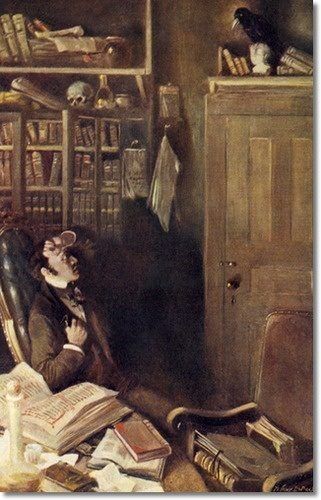
Edgar Allan Poe, born in 1809 in Boston, faced a tumultuous early life marked by personal tragedies. Orphaned as a child, he experienced the pain of loss that profoundly influenced his writing. His struggles with poverty and alcoholism fueled the dark themes in his work. Masterfully crafted tales such as “The Raven,” “The Tell-Tale Heart,” and “The Fall of the House of Usher” explore death, madness, and despair, establishing Poe as a master of horror and Gothic literature.
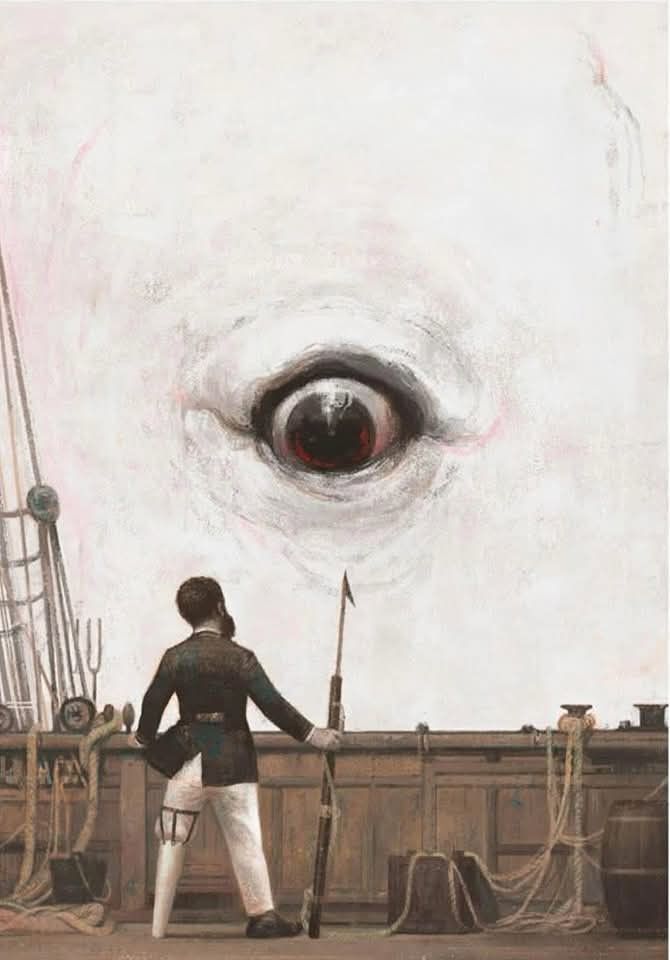
In contrast, Herman Melville, born in 1819 in New York City, enjoyed a more privileged upbringing that was disrupted by his father’s early death. This formative loss set him on a path of adventure at sea, which culminated in his magnum opus, “Moby-Dick.” Melville’s works engage with grand themes of nature and humanity, showcasing a narrative style that embodies the complexities of existence and human ambition.

Despite their differences, Melville and Poe respected each other’s literary talents. Poe’s sharp critiques of Melville’s early works, such as “Typee,” acknowledged Melville’s gift while highlighting differences in their narrative styles. Poe favoured compact storytelling, while Melville embraced sprawling narratives laden with existential questions.

Both writers engaged with themes of death and isolation, particularly evident in Melville’s Captain Ahab, who mirrors the psychological depths of Poe’s characters. Their respective narratives challenge audiences to confront profound aspects of the human condition. Timing also affected their careers; though Poe achieved fame earlier, Melville’s “Moby-Dick” was initially overlooked, though it would eventually be recognised as a key literary work.

Ultimately, the legacies of both authors flourished posthumously, with Poe celebrated for his innovative contributions to literature and Melville emerging as a foundational figure. This interplay between the two writers encourages contemporary readers to explore the connections that define their works.

In conclusion, the relationship between Poe and Melville offers a striking study of contrasting yet complementary voices in American literature. Their distinct views on existential despair and the human experience create a rich tapestry that continues to inspire and intrigue, leaving a lasting impact on generations of writers and readers alike.

Thanks, and have a good time, everybody.
A Collaborative Fusion of two Great Poets Exploring Human Curiosity. Could the answer lie in dreams?

Standard

It’s a lovely day today, and it feels like summer is making one last bid to say goodbye. I was out in the garden, but not sunbathing – I had to mow the lawn! As tenants, these sorts of tasks are our responsibility.
And now, after giving the flat a good vacuum, I thought it was a good time to write a post.

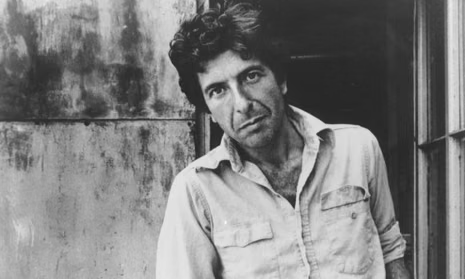
Tomorrow is Leonard Cohen‘s birthday, and I thought it would be a great chance to celebrate with a poem by Pablo Neruda as a tribute.
The theme is human curiosity (the ‘Whys!’), how little we know, and, as Leonard Cohen suggests, why not stand on your own two feet and be your own individual?

There’s no doubt that they’re still alive, truly in our hearts, thanks to their lasting arts and wisdom.

Through a closed mouth, the flies enter
by Pablo Neruda:

Why, with those red flames at hand,
Are rubies so ready to burn?

Why does the heart of the topaz
reveal a yellow honeycomb?
Why does the rose amuse itself
by hanging the colour of its dreams?
Why does the emerald shiver
like a drowned submarine?

Why does the sky grow pale
under the June stars?
Where does the lizard’s tail
Get its fresh supply of paint?
Where is the underground fire
That revives the carnations?

Where does the salt acquire
The transparency of its glance?
Where did the coal sleep
That it awoke so dark?
And where, where does the tiger buy
Its stripes of mourning, its stripes of gold?

When did the jungle begin
to breathe its own perfume?
When did the pine tree realise
its own sweet-smelling consequence?
When did the lemons learn
The same laws as the sun?

When did smoke learn to fly?
When do roots converse?
What is water like in the stars?
Why is the scorpion poisonous?
Is the elephant benign?

What is the tortoise brooding on?
Where does shade withdraw to?
What song does the rain repeat?
When are the birds going to die?
And why should leaves be green?

What we know is so little,
and what we presume so much,
So slowly do we learn
that we ask questions, then die.
Better for us to keep our pride
for the city of the dead
on the day of the departed,
And there, when the wind blows through
the holes in your skull,
It will unveil to you such mysteries,
whispering the truth to you
through the spaces that were your ears.

I shall forever remember those days when Al and I closed many doors one after another to society, and by listening to Cohen’s songs, we immersed ourselves in our solitude.

Have a great time, everyone. 🙏💖🤗

Source: “Through a closed mouth the flies enter” from EXTRAVAGARIA by Pablo Neruda, translated by Alastair Reid. Copyright © 1958 Pablo Neruda and Fundación Pablo Neruda. Translation copyright © 1974 by Alastair Reid. Used by permission of Farrar, Straus and Giroux and Fundación Pablo Neruda.

Kahlil Gibran On Marriage!

Standard

Today, I want to share something familiar, maybe ordinary, yet an important issue: Marriage! Of course, we can translate it into the modern language as a partnership, friendship, bedmate or lifemate, etc.
But the main point is how much a couple should merge into each other, how close they must be and how deep.

 Rene Magritte; Perfect Woman

I’ve had various experiences in the realm of relationships. I’ve had many different connections with different women, and you can imagine how much effort it took to understand the intricacies of this adorable gender. However, my current wife is the first and only one I’ve married. It took me about twenty-three years until to say “yes” and marry her and two more years to move in together. It wasn’t easy for either of us, but we’ve slowly but surely learned to respect each other’s boundaries and individualities over the years. We share one Life but have our own dreams, all while maintaining love and respect for each other.

I have spent my life trying to understand the crucial topic in psychology called individuality. I finally succeeded with the help of Dr. Jung. It is essential for discovering and proving my uniqueness.

With thanks to Lewis Lafontaine

As it turns out, Kahlil Gibran also agrees with me. Here, I share a part of his book, “The Prophet”, about Marriage. I hope you enjoy reading it. Thanks, and have a peaceful weekend.

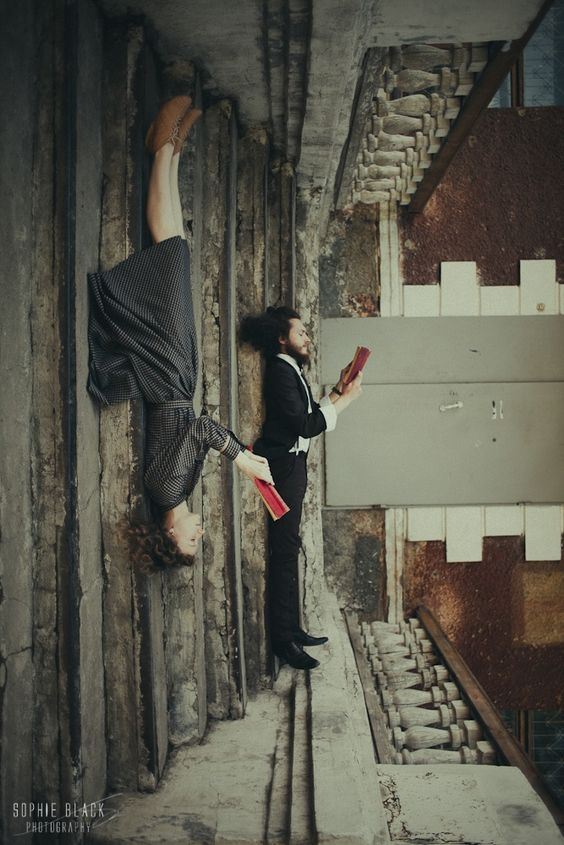
Image on top: Wings // Sophie Black#surreal #Photography

Sing and dance together and
be joyous, but let each one of you
be alone.
Even as the strings of a lute are alone,
though they quiver with the same music.

“Love is the only freedom in the world because it so elevates the spirit that the laws of humanity and the phenomena of nature do not alter its course_” Text and art by Kahlil Gibran

On Marriage, From the Book “The Prophet”

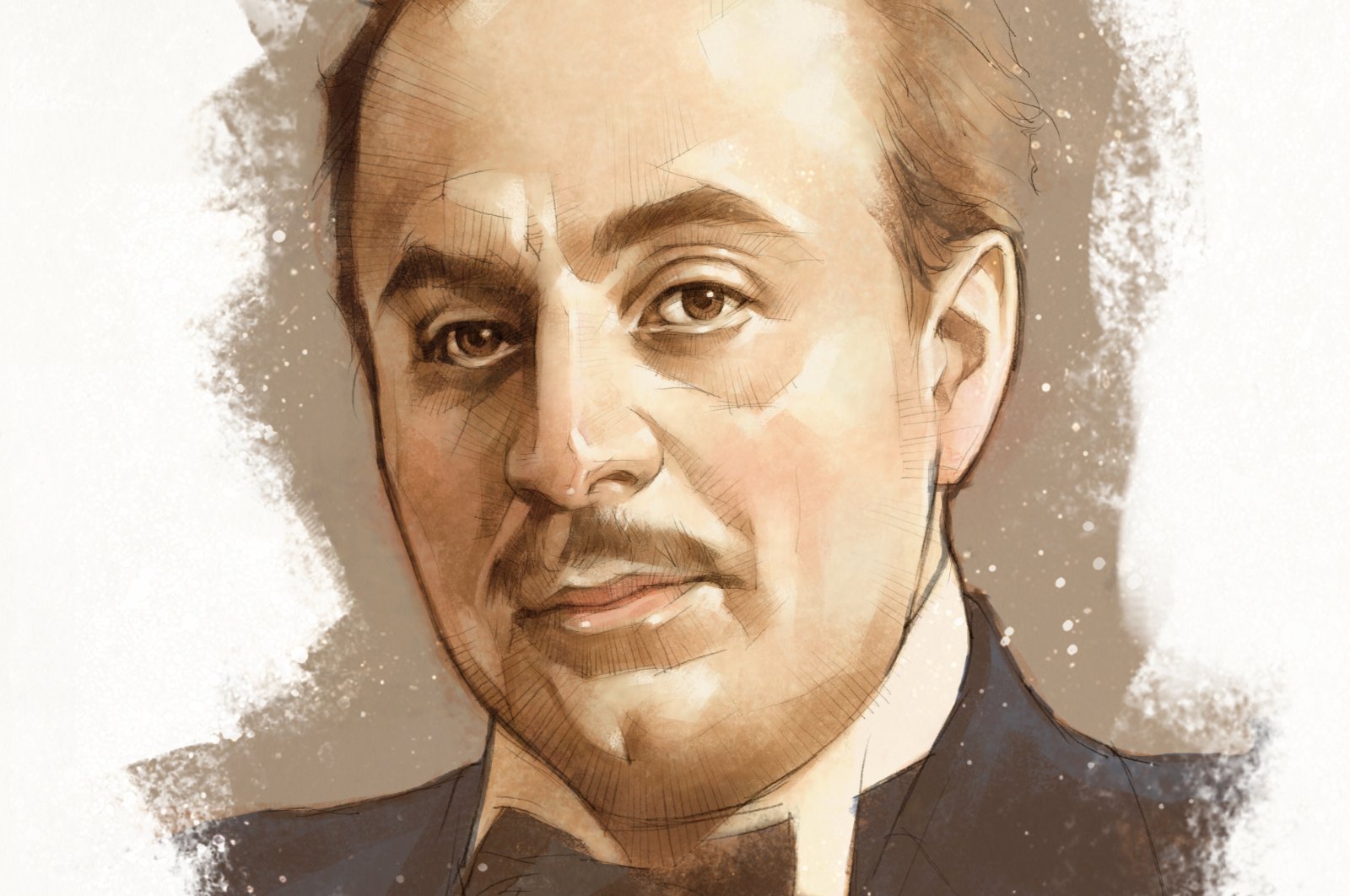
An illustration of Khalil Gibran. (Shutterstock)

Then Almitra spoke again and said: And what of Marriage, master?
And he answered, saying: You were born together, and together you shall be forevermore.
You shall be together when the white wings of death scatter your days.
Aye, you shall be together even in the silent memory of God.
But let there be spaces in your togetherness.
And let the winds of the heavens dance between you.
Love one another, but make not a bond of love:
Let it rather be a moving sea between the shores of your souls.
Fill each other’s cup but drink not from one cup.
Give one another of your bread but eat not from the same loaf.
Sing and dance together and be joyous, but let each one of you be alone.
Even as the strings of a lute are alone, they quiver with the same music.
Give your hearts, but not into each other’s keeping.
For only the hand of Life can contain your hearts.
And stand together, yet not too near together:
For the pillars of the temple stand apart,
And the oak tree and the cypress grow not in each other’s shadow.

Heart Mother Nature!

Standard

Actually, at the beginning of the week, I planned another challenging task: translating a work from Carl Jung. Still, I did have to settle for a short article because my wife’s sister-in-law, whom I might have mentioned before with a tumour in her head spending her last days, has finally found salvation.

In the artist’s series of interesting environmental renditions, man and his creations are of the Earth. Nothing man-made cannot be swallowed by the mossy green land on which it rests. Sometimes, even man is part of the emerald landscape that engulfs and supports architecture and makes objects. So, is it a struggle to keep afloat or an agreement to work as one?
Avramidis’ thought-provoking paintings will be on display as part of his first UK solo exhibition entitled Caretakers at Jacob’s Island Gallery through October 20, 2012.

Honestly, I am not a nature expert and know little about the names of plants or flowers. I don’t know if they ever know my name! However, I know my wife, Regina, is an expert; her highest enjoyment is walking between the flowers and the trees. Therefore, I suggested walking in a beautiful part of our town to try calming her sad heart (as I have enough experience with losing loved ones!). The city where we live is not a nice one at all, but a lot of green areas surround the environment.

So, in Ralph Waldo Emerson’s words, NaturNaturees a noble human need, namely the love for Beauty. The ancient Greeks called the world a word that means ornament, beauty.

Ralph G. Emerson referred to nature as the “Universal Being”; he believed there was a spiritual sense of the natural world around him. Depicting this sense of “Universal Being,” Emerson states, “The aspect of natureNatureevout.
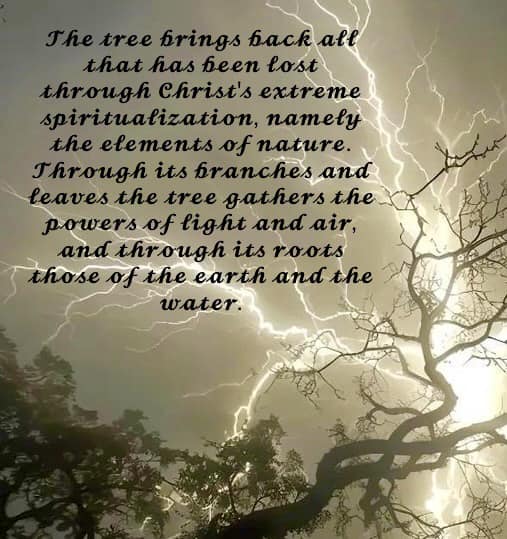
Tʜᴇ ᴛʀᴇᴇ ʙʀɪɴɢs ʙᴀᴄᴋ ᴀʟʟ ᴛʜᴀᴛ ʜᴀs ʙᴇᴇɴ ʟᴏsᴛ ᴛʜʀᴏᴜɢʜ Cʜʀɪsᴛ’s ᴇxᴛʀᴇᴍᴇ sᴘɪʀɪᴛᴜᴀʟɪᴢᴀᴛɪᴏɴ, ɴᴀᴍᴇʟʏ ᴛʜᴇ ᴇʟᴇᴍᴇɴᴛs ᴏғ ɴᴀᴛᴜʀᴇ. Tʜʀᴏᴜɢʜ ɪᴛs ʙʀᴀɴᴄʜᴇs ᴀɴᴅ ʟᴇᴀᴠᴇs ᴛʜᴇ ᴛʀᴇᴇ ɢᴀᴛʜᴇʀs ᴛʜᴇ ᴘᴏᴡᴇʀs ᴏғ ʟɪɢʜᴛ ᴀɴᴅ ᴀɪʀ, ᴀɴᴅ ᴛʜʀᴏᴜɢʜ ɪᴛs ʀᴏᴏᴛs ᴛʜᴏsᴇ ᴏғ ᴛʜᴇ ᴇᴀʀᴛʜ ᴀɴᴅ ᴛʜᴇ ᴡᴀᴛᴇʀ. ~ C.G. Jᴜɴɢ Lᴇᴛᴛᴇʀ ᴛᴏ V. Wʜɪᴛᴇ, Lᴇᴛᴛᴇʀs, Vᴏʟ II (1951-1961
Pic Ƒяσм Ƭ. Aвяαχαѕ, via Petra Glimmdall

Anyway, this time, I have more pictures than words to share, and I think there is not much to say as the images speak for themselves. Here are the photos I took during our walk.

I believe there is no need to be a plant expert, as we are partly created by Mother Nature. Still, we must be aware of our essence and keep it safe as far as possible.

By the way, I got a message from WP that I have reached 1k followers! As I gratefully wonder how it could happen, I must confess that I am just happy that many of these friendly people don’t care about my humble posts or write comments; otherwise, I would be bushed!😜🙏💖

Khalil Gibran on Love

Standard

There have been many attempts to define the extraordinary feeling of love, but it is not an easy task. I know that, as I have also grappled with it repeatedly. Here, I would like to present Khalil Gibran’s approach. I hope you will enjoy it.🙏💖

The illustration on the top by Jeramondo Djeriandi

From The Prophet

Love gives naught but itself
and takes naught but from itself.
Love processed not nor would it be possessed;
For love is sufficient unto love.

Khalil Gibran Speaks of Love

Then said Almitra, Speak to us of Love.
And he raised his head and looked upon
the people, and there fell a stillness upon
them. And with a great voice he said:
When love beckons to you, follow him,
Though his ways are hard and steep.

And when his wings enfold you yield to him,
Though the sword hidden among his pinions may wound you.
And when he speaks to you believe in him,
Though his voice may shatter your dreams as
the north wind lays waste the garden.

For even as love crowns you so shall he crucify you.
Even as he is for your growth so is he for your
pruning.
Even as he ascends to your height and
caresses your tenderest branches that quiver in the
sun,
So shall he descend to your roots and shake
them in their clinging to the earth.

Like sheaves of corn he gathers you unto himself.
He threshes you to make you naked.
He sifts you to free you from your husks.
He grinds you to whiteness.
He kneads you until you are pliant;

And then he assigns you to his sacred
fire, that you may become sacred bread for
God’s sacred feast.

All these things shall love do unto you
that you may know the secrets of your
heart, and in that knowledge become a
fragment of Life’s heart.

But if in your fear you would seek only love’s peace
and love’s pleasure,
Then it is better for you that you cover
your nakedness and pass out of love’s
threshing-floor,
Into the seasonless world where you shall laugh,
but not all of your laughter,
and weep, but not all of your tears.

Love gives naught but itself and takes naught but from itself.
Love possesses not nor would it be possessed;
For love is sufficient unto love.

When you love you should not say,
“God is in my heart,” but rather, “I am
in the heart of God.”
And think not you can direct the course
of love, for love, if it finds you worthy,
directs your course.

Love has no other desire but to fulfil itself.
But if you love and must needs have desires, let these be your desires:
To melt and be like a running brook that
sings its melody to the night.
To know the pain of too much tenderness.
To be wounded by your own understanding of love;
And to bleed willingly and joyfully.
To wake at dawn with a winged heart
and give thanks for another day of loving;
To rest at the noon hour and meditate
love’s ecstasy;
To return home at eventide with gratitude; And then sleep to with a prayer for the beloved in your heart and a song of praise
upon your lips.

I ask for silence! Pablo Neruda

Standard
Remedios Varo: The Phenomenon

After my last post, I felt a little done, so I came across one of my drafts, which I thought would fit with that: living, dying, and growing again! I hope you will enjoy it.💖

PABLO NERUDA (DESIGN FOR TED)

Pablo Neruda – I ask for silence

From the book’s collection of poems

Now, leave me alone.
Now, get used to it without me.
I am going to close my eyes
And I only want five things,
five favourite roots.
One is endless love.
The second thing is to experience autumn.
I can’t be without the leaves
fly and return to earth.
The third thing is the grave winter,
the rain that I loved, the caress
of fire in the wild cold.
Fourthly, summer
round like a watermelon.
The fifth thing is your eyes,
My beloved Matilda,
I don’t want to sleep without your eyes,
I don’t want to live without you looking at me:
I change the spring
why you keep looking at me.
Friends, that’s all I want.
It’s almost nothing and almost everything.
Now if you want you can go.
I have lived so long that one day
they will have to forget me by force,
erasing myself from the slate:
my heart was endless.
But why do I ask for silence?
Don’t think I’m going to die:
The opposite happens to me:
It happens that I’m going to live.
It happens that I am and that I continue.
It will not be, then, but within
grain will grow from me,
first, the grains that break
the earth to see the light,
but Mother Earth is dark:
and inside me, I am dark:
I am like a fountain in whose waters
the night leaves its stars
and continues alone through the field.
It’s about how much I’ve lived
that I want to live as long.
I never felt so in harmony,
I have never had so many kisses.
Now, as always, it’s early.
The light flies with its bees.
Leave me alone with the day.
I ask permission to be born.

The Future is Feminine!

Standard
Museum of Fine Arts, Boston
‘Satan Watching the Caresses of Adam and Eve’; watercolour by William Blake for John Milton’s Paradise Lost, 1808

During one of my workdays, I had a guest in my car – an intelligent woman who left a lasting impression on me with her profound awareness. We delved into a conversation about various topics such as God, the world, and eventually, my birthland, Iran. I shared my views on equality between men and women. Then I dared to discuss Femininity, Anima, Animus, and Dr Jung’s idea of their existence, which are present in every human. She listened attentively, found my words intriguing, and even agreed somewhat. However, she expressed her preference for being a “pure woman” and did not desire to have any masculine traits in herself!

I believe the current wave of feminism is a form of emancipation fueled by frustration toward men. This frustration stems from the fact that men have dominated the world’s history. However, I wanted to discuss this further to convince her to understand my perspective.
Unfortunately, we arrived at her destination before we finished, and she got out of the car and left.

I have gathered here some words and quotes on femininity, body and soul, which I believe has very little to do with gender (as Marion Woodman says so well), and we might need a vested development to comprehend it.

The Body and The Soul

The Garden of Love – William Blake
I went to the Garden of Love and saw what I had never seen: A Chapel was built in the midst, Where I used to play on the green. And the gates of this Chapel were shut, and “Thou shalt not” writ over the door; So I turned to the Garden of Love that so many sweet flowers bore; and I saw it was filled with graves, and tomb-stones where flowers should be; and Priests in black gowns were walking their rounds, And binding with briars my joys & desires.
“Do what you will; this world’s a fiction and is made up of contradiction.” William Blake (UK 1757-1827) Infant Joy – Infant Sorrow – by William Blake

Ascension by William Blake

William and Marion

“William Blake says the body is ‘that portion of soul discerned by the five senses’ I live with that idea. I sit and look out my window here in Canada, and the autumn trees are golden against the blue sky. I can feel their “food” coming into my eyes and going down, down, down, interacting inside, and I fill up with gold. My soul is fed. I see, I smell, I taste, I hear, I touch. Through the orifices of my body, I give, and I receive. I am not trying to capture what is absent. It’s that interchange between the embodied soul and the outside world that is the dynamic process. That’s how growth takes place. That is life.”

~Marion Woodman, Conscious Femininity, P. 44-45

The Worship of the Serpent: The Awakening of Eve and the Generation of Nature The Symbol of the Serpent

Award-winning author Teri Degler quoted:

“….embodying the divine feminine is critically important for our times. (Teri Degler: The Divine Feminine Fire)

It shows you how to accomplish this by getting to know your body, bringing your body and your dreams together, and uniting body and soul. Marion Woodman, author of Dancing in the Flames

This issue might have a long way to go, and as I am involved in something more primitive like the situation in Iran, I can see those women who are beyond all boundaries and fighting for their rights; I discern light at the end of the tunnel! Thank you all for your interest. Have a lovely weekend, everybody.🙏💖🥰

Aquí Me Quedo (I’ll stay here)

Standard

Honestly, I wasn’t sure if I could write a second post this week, as I arrived Thursday late back home from the trip to Southern Germany, and I was almost flat after a long drive with many car crashes and some pile-ups (thank goodness we were just spectators in the traffic jam). Yet, I know a specific resistance within me calls for expressing my feelings for freedom and justice. Therefore, I decided to share some artwork from Victor Jara, one of my favourites in the matter of resistance, in company with another warrior, Pablo Nerud.

I discovered Victor Jara and his music in the early 1970s when Chile began its transition towards democracy. Following the fall of the Shah’s regime, I learned more about his work. Victor Jara was undoubtedly a legend, and I loved his music.
He composed music for Pablo Neruda’s poems. He performed at a ceremony honouring him when Neruda was awarded the Nobel Prize in Literature in 1972, so we have two masters of art here to speak about human rights!

By Rec79 – Own work

I am sharing this with you because there is a lot of talk about separatism in Iran at the moment, which is causing fear that Iran will be split up. However, this justification is baseless because all the people and ethnicities of Iran are united in seeking human rights and fair politics. Here, Pablo Neruda, through Victor Jara’s music and voice, says what it’s all about!

Aquí Me Quedo (I’ll stay here)

I do not want the country divided
Not even bled by seven knives
I want the light of Chile raised
About the new house built

I do not want the country divided
We all fit in my land
And those who believe they are prisoners
They go away with their melody

The rich have always been foreigners
Let them go to Miami with their aunts
I do not want the country divided
They go away with their melody

I do not want the country divided
We all fit in my land
I stay to sing with the workers
In this new history and geography

And in this song, one of his masterpieces, he humbly highlights the importance of rights and justice!

I do not sing for singing
Yo no canto por cantar

not even for having a good voice,
ni por tener buena voz,

I sing because the guitar
canto porque la guitarra

It makes sense and reason.
tiene sentido y razón.

It has a heart of earth
Tiene corazón de tierra

and dove wings,
y alas de palomita,

It’s like holy water
es como el agua bendita

holy glories and sorrows.
santigua glorias y penas.

This is where my song fits
Aquí se encajó mi canto

as Violeta said
como dijera Violeta

working guitar
guitarra trabajadora

with the smell of spring.
con olor a primavera.

It’s not a rich man’s guitar
Que no es guitarra de ricos

not anything that looks like
ni cosa que se parezca

my song is from the scaffolding
mi canto es de los andamios

to reach the stars,
para alcanzar las estrellas,

that the song has meaning
que el canto tiene sentido

when it beats in the veins
cuando palpita en las venas

of the one who will die singing
del que morirá cantando

the true truths,
las verdades verdaderas,

not fleeting flattery
no las lisonjas fugaces

nor foreign fame
ni las famas extranjeras

but the song of a market
sino el canto de una lonja

to the bottom of the earth.
hasta el fondo de la tierra.

That’s where everything comes
Ahí donde llega todo

and where it all begins
y donde todo comienza

I sing that it has been brave
canto que ha sido valiente

It will always be a new song.
siempre será canción nueva.

I wish you a happy Easter filled with leisure and joy. Stay safe and stay tuned. 💖🙏🌹💕💥🍷

Yalda: A Persian Winter Solstice!

Standard

Actually, I attended to share an extensive article today. Still, as I found out yesterday that I had to undertake a marathon with my grandchildren until midday today, I grabbed an hour yesterday afternoon when my wife took them to get some flour from the store to bake cookies to write these words. I usually turn out all connections to the world when I have the kid with me. I hope I can utter my mind comprehended enough.

As I look back into my posts, I see two posts I have written about this Persian’s traditional old ceremony. The first one, proudly to inform my friends about one of the oldest Persian festivals, and the second one, a painful hint to this elderly celebration which has been smeared with blood and suffering. Although with the hope that it would be a peaceful one this year, what a false assumption! Someone once said: If we look at this deeply, we see the differences between the old Persian rituals & festivals and all the celebrations in Islamic Iran after the Arabs occupied Persia. In ancient Persian the rituals and feasts, contrary to the Arabs, adorn love, light, and cosiness.

However, on every Yalda night, the Iranian winter solstice tradition, observers gather with family in a warm, cosy room and read or take an omen of fortune from FAL-E HAFEZ (Omens of Hafez) by Hafez Shirazi’s sonnets and quatrains (Ghazals). As I remember from my childhood, it was a nut and nutcracker, and the oldest woman in the family told beautiful fairytales to greet the returning sun. I am sure that this tradition will continue indefinitely under any circumstances; as I noticed on the web, they have even this year celebrated with grief and pride for their loss but with great hope to conquer evil.

Illustration by Mahdis Nikou @mahdisnikou via Inger Nordvik

It becomes clear that this fight for their right will be a war of attrition, even though it will come at the cost of bloodshed, but the secret to success is in synergy and solidarity. Together, we stand; divided, we fall!

Anyway, with my heartfelt regards, I send my best wishes to all of you, dear friend. Have a blessed Yule, Merry Christmas, and have a lovely time with your loved ones.🙏💖🌹🎅

The image at the top: via HiPersia