http://Pinterest The Tao, the middle way, is the way without problems and without conflict. The serpent path is the only way by which we can find our instinct and the instinctive way has no problems and no conflicts. Conflicts and problems all belong to the conscious which discriminates. So it is a great release when we find our instinct..~Carl Jung, C.G. Jung, ETH, Page .226
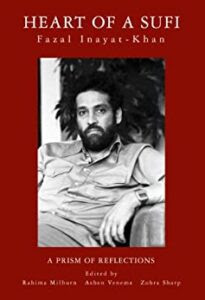
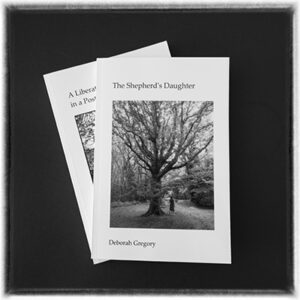
Is the truth in the orient? Instinctively it seems to be. Although the truth can be anywhere, even in the stars or even within us. We might just be honest to ourselves! There are a lot of reasons to think so, the newest Jean Raffa’s contribution has deeply touched me ( https://jeanbenedictraffa.com/2021/03/02/reviews-of-two-books-with-heart/ ), and I was overwhelmed as I read it. One of these two books is known worthy to us (The Shepherd’s Daughter, by Deborah Gregory http://www.theliberatedsheep.com/). And the other one is Heart of a Sufi, by http://Rahima Milburn, Ashen Venema http://Ashen Venema (I think we know Ashen well), Zohra Sharp, and both books are about the love and the wisdom of its curing. And also, I must not forget to remind the latest book by Jean Raffa: The Soul’s Twins, http://The Soul’s Twins , highly recommended.
Yes! I am from Orient and, even if I was grown up free, with a touch of western culture, I have kept all the acknowledgement of their wisdom in my heart. It is always interesting how the genius in the West is fascinated by the wisdom of the East. Like Dr Jung, and as I avouch myself as a Jungian and have happily been obliged to these adorable Ladies as friends.
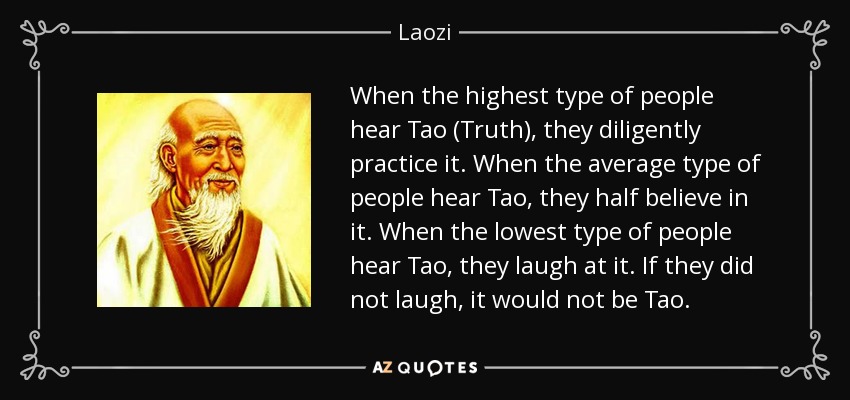
http://AZ Quotes When the highest type of people hear Tao (Truth), they diligently practice it. When the average type of people hear Tao, they half believe in it. When the lowest type of people hear Tao, they laugh at it. If they did not laugh, it would not be Tao.
Here is a magnificent poem by Tao Tzu which I’d like to share with you, enjoy 🙏🤗💖
“Man follows the earth. The earth follows the sky. The sky follows the tao. The tao follows what is natural. ”~ Lao Tzu
TWENTY-FIVE Something formed enigmatically, Born before heaven and earth. In the silence and the vacuum, It stands alone unchanged, Always moving here. Maybe she is the mother of myriad things. I do not know its name. Let’s call it tao. Not finding a better description, I say great.
Being great, it rolls. Roll away. He walks away, he comes back.
That is why “the tao is great” The sky is great “ The earth is great; the lord is also great”. These are the four great forces of the universe,
Man follows the earth. The earth follows the sky. The sky follows the tao. The tao follows what is natural.
In case anyone missed it: (The Tao Te Ching, along with the Zhuangzi, is a fundamental text for both philosophical and religious Taoism. It also strongly influenced other schools of Chinese philosophy and religion, including Legalism, Confucianism, and Buddhism, which was largely interpreted through the use of Taoist words and concepts when it was originally introduced to China. Many artists, including poets, painters, calligraphers, and gardeners, have used the Tao Te Ching as a source of inspiration. Its influence has spread widely outside East Asia and it is among the most translated works in world literature.)
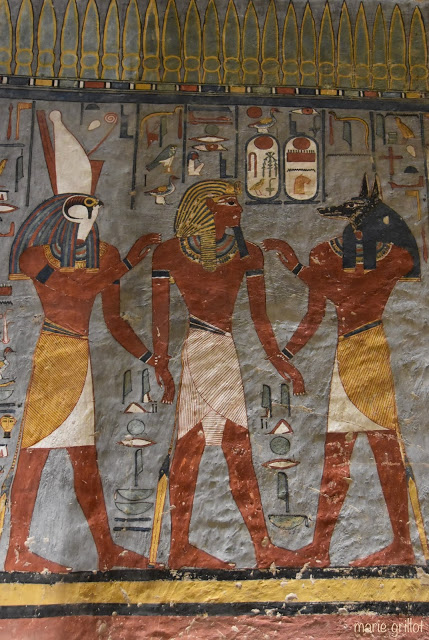
Pharaoh is welcomed into the afterlife by Anubis and Horus Tomb of Ramses I – Valley of the Kings – KV 16 – 19th Dynasty Discovered on October 11, 1817, by Giovanni Battista Belzoni on behalf of Consul Henry Salt Pharaon est accueilli dans l’au-delà par Anubis et Horus Tombe de Ramsès Ier – Vallée des Rois – KV 16 – XIXe dynastie Découverte le 11 octobre 1817 par Giovanni Battista Belzoni pour le compte du Consul Henry Salt
It is always good news to see a reopening of a Tomb in Egypt because there had been a lot closed, for any reason, in the last decades. And of course, in these Corona-related times, reopening makes good sense!
And yet, let’s have a look at what we’d see of such magic. With forever thanks to Marie Grillot. http://Marie Grillot
At the beginning of the year 2021, on January 2 precisely, Khaled el-Anani, Minister of Tourism and Antiquities and Mostafa Waziri “reopened” the tomb of Ramses I to the public. Referenced KV 16, it is located in the south-eastern wadi of the Valley of the Kings and it is, with that of Tutankhamun, one of the smallest in the necropolis. As Ali Reda Mohamed, inspector in charge of the site told us, it had been closed since 2008 for restoration by an Egyptian team.
On the Ministry’s page, Mostafa Waziri presented the work done: “The floors have been restored and the walls have been cleaned of bird and bat droppings”. He added that: “The existing inscriptions have been restored and cleaned up and the soot has been removed.”
A member of the Egyptian restoration team cleaning the sarcophagus – photo Ali Reda MohamedTomb of Ramses I – Valley of the Kings – KV 16 – 19th DynastyDiscovered on October 11, 1817, by Giovanni Battista Belzoni on behalf of Consul Henry Salt
The sarcophagus has also benefited from the care of restorers, and the lighting system has been improved. This hypogeum was discovered on October 11, 1817 (a week before that of Sethi I), by Giovanni Battista Belzoni, who was then working on behalf of Consul Henry Salt. He had instructed a team of about twenty fellahs to carry out surveys in the Valley… “Around noon, I was told that the entrance to the tomb discovered the day before, and had been widened enough so that we could enter it… I entered first, in the opening which had just been drilled to see if the way was passable. After having traversed a passage, thirty-two feet long and eight wide, I descended a staircase of thirty-eight feet and arrived in a fairly large room, adorned with beautiful paintings “. The key for reading the hieroglyphs is not yet known. Its “owner” will only be identified afterwards.
Signage panel with a plan of the tomb of Ramses I – Valley of the Kings KV 16 – 19th dynasty Discovered on October 11, 1817 by Giovanni Battista Belzoni on behalf of Consul Henry Salt Tombe de Ramsès Ier – Vallée des Rois KV 16 – XIXe dynastie Découverte le 11 octobre 1817 par Giovanni Battista Belzoni pour le compte du Consul Henry Salt
The tomb is of a simple, rectilinear architectural plan, with a stepped entrance followed by a sloping corridor that leads to a second staircase directly serving the burial chamber.
The walls are decorated with scenes from the “Book of Doors”. The high-quality paintings stand out against a grey-blue background. The decorative style is reminiscent of that of the tomb of his predecessor, Horembeb.
Ramses I facing the god Nefertum Tomb of Ramses I – Valley of the Kings KV 16 – 19th Dynasty Discovered on October 11, 1817, by Giovanni Battista Belzoni on behalf of Consul Henry Salt Ramsès Ier face au dieu Nefertoum Tombe de Ramsès Ier – Vallée des Rois KV 16 – XIXe dynastie Découverte le 11 octobre 1817 par Giovanni Battista Belzoni pour le compte du Consul Henry Salt
“The entrance to the sepulchral chamber, guarded by two figures of the goddess Maât, who welcome the deceased, the king is represented in the presence of the Memphite gods Ptah and Nefertum, and the deities of Abydos, represented by the djed pillar of Osiris and the Knot of Isis. On the sidewalls, several scenes from the Book of Door evoke the nocturnal journey of the Sun. The back wall combines an Osirian scene on the right, and a solar scene, on the left. On the left, the king is shown in a position of jubilation, surrounded by the Souls of Pe and Nekhen. The mythical ancestors of royalty: “This, analyzes Claude Obsomer in his Ramses II “.
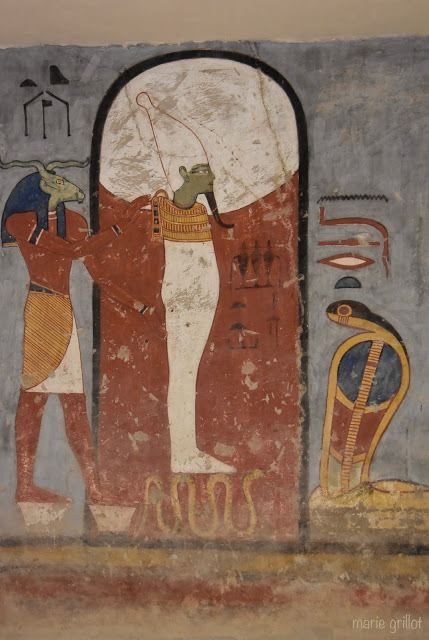
In a niche, Osiris is represented standing between a ram-headed deity and the serpent goddess Neseret Tomb of Ramses I – Valley of the Kings KV 16 – 19th Dynasty Discovered on October 11, 1817, by Giovanni Battista Belzoni on behalf of Consul Henry Salt
The bedroom has three small “annexe” rooms. In the one dug in the southwest wall, there is a very beautiful scene representing Osiris standing between a divinity with the head of a ram and the serpent goddess Neseret.
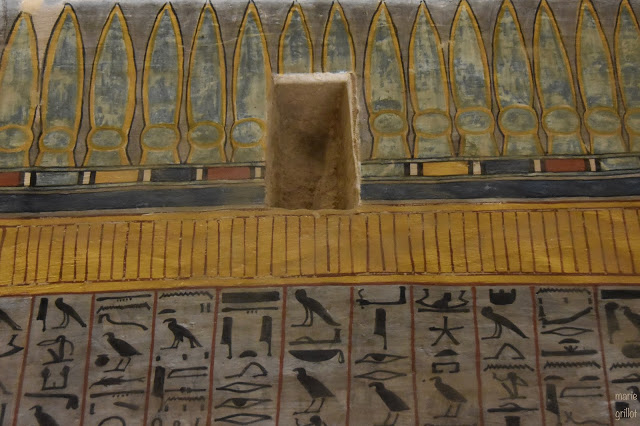
One of the niches intended to accommodate the “magic bricks” Tomb of Ramses I – Valley of the Kings KV 16 – 19th Dynasty Discovered on October 11, 1817 by Giovanni Battista Belzoni on behalf of Consul Henry Salt L’une des niches destinées à accueillir les “briques magiques”” Tombe de Ramsès Ier – Vallée des Rois KV 16 – XIXe dynastie Découverte le 11 octobre 1817 par Giovanni Battista Belzoni pour le compte du Consul Henry Salt
We note, in height, the presence of four small niches intended to accommodate the “magic bricks”. Most of the room is occupied by an imposing red granite sarcophagus, which still has its lid, and which is decorated with hieroglyphs and figures, including a very touching protective Isis.
The imposing red granite sarcophagus Tomb of Ramses I – Valley of the Kings KV 16 – 19th Dynasty Discovered on October 11, 1817 by Giovanni Battista Belzoni on behalf of Consul Henry Salt Tombe de Ramsès Ier – Vallée des Rois KV 16 – XIXe dynastie Découverte le 11 octobre 1817 par Giovanni Battista Belzoni pour le compte du Consul Henry Salt
If Belzoni indicates that this sarcophagus contained two mummies, it was not there the royal remains. “Pa-Ramessou”, a soldier from the Delta, was chosen to succeed Horemheb. He became pharaoh, under the name of Ramses I, around 1306-1307 BC He was then about fifty years old and his reign was short: 1 year 4 months according to Manetho (which would explain partly the small size of his grave and the fact that it was not completed).
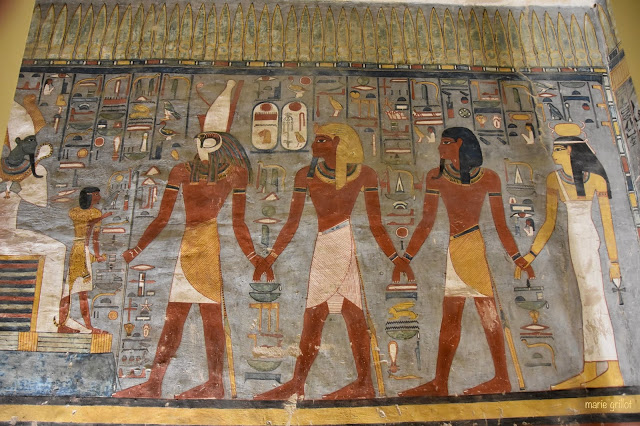
A priest standing in front of Osiris prepares to receive Ramses I led by Horus, Atum and Neith. Tomb of Ramses I – Valley of the Kings KV 16 – 19th Dynasty Discovered on October 11, 1817, by Giovanni Battista Belzoni on behalf of Consul Henry Salt Un prêtre debout devant Osiris se prépare à recevoir Ramsès Ier conduit par Horus, Atoum et Neith Tombe de Ramsès Ier – Vallée des Rois KV 16 – XIXe dynastie Découverte le 11 octobre 1817 par Giovanni Battista Belzoni pour le compte du Consul Henry Salt
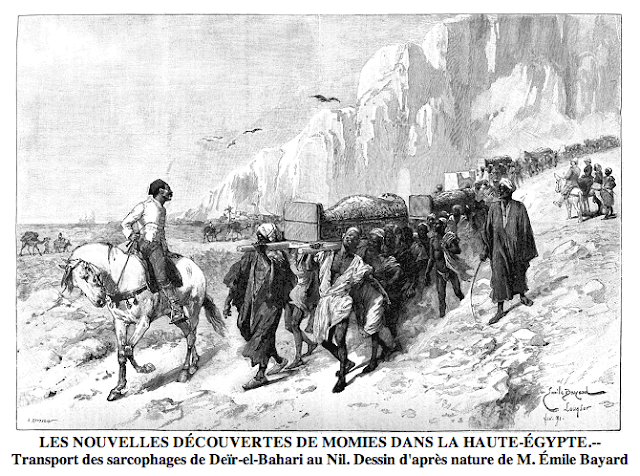
His mummy was found in the hiding place of the royal mummies (DB 320), where he had been sheltered, along with others, during the XXIst Dynasty, by the high priest Herihor who then ruled the Theban region. This collective tomb was unearthed near Deir el-Bahari by the Abd el-Rassoul family in 1871, then by the Antiquities Service in July 1881. All the mummies were then transported to the Boulaq Museum.
“Rediscovery”, in July 1881, by the Department of Antiquities, of the Cachette des Mummies Royales (DB 320)
discovered in 1871 by the Abd el-Rassoul Brothers near Deir el-Bahari
But the mummy of Ramses I had not yet found rest. It seems that afterwards, it was sold to an American, then passed through an Ontario museum before being exhibited at the Michael Carlos Museum in ‘Atlanta …
It was not until 2003 that the mummy of the founder of the 19th dynasty and the long line of Ramessides will finally be returned to Egypt. Since March 2004, it has been exhibited at the Louqsor Museum, in the hall to the glory of ancient Thebes.
Marie Grillot
sources :
Voyage to Egypt and Nubia, G. Belzoni, Pygmalion, 1979
Luxor Illustrated Guide, Tombs, Temples & Museum, Kent Weeks
The Valley of the Kings, a guide to the best sites, Alberto Siliotti, Gründ
Ramses II, Claude Obsomer, Pygmalion, 2012
Topographical Bibliography of Ancient Egyptian hieroglyphic texts, reliefs and paintings, Porter & Moss, Second Edition, Tome II, p. 534-535, Griffith Institute, Ashmolean Museum, Oxford, 1994
The complete valley of the kings, Nicholas Reeves, Richard H. Wilkinson: Thames and Hudson, 1997
Yes! It might not look like as usual, but I want in the sixth chapter of my memories, to share one of our unforgettable period of time. Honestly, I have to thank two of my adorable friends Lin & Deborah Gregory http://Deborah Gregory ,https://theliberatedsheep.com for awakening this memory in me, and I say unforgettable, because it was shortly after changing the regime in Iran, ca. Summer 79. After Khomeini sent his rogues into the streets to close, amongst the newspapers, the vinyl record stores with force, and we had no chance to get our regular music-shopping.
But, I must tell you that Iran has at least a positive side, and it is that in any condition under every dictatorship, you can find everything in the market that you want, forbidden or not! So there we were; Al and I went to the market, for the search of the newest, for example, Moody Blues, as we didn’t hear of them lately. And our connection knew it, told us that there’s something new with Justin Hayward (the frontman by MB) and there is a lot of Moody Blues style there. His offer, of course, was in the form of a recorded MC (the old Music Cassette, if some can remember it), with no information, only the cover photo. And thanks to the imaginary power, we try to phantasy the scenes in this musical.
Of course, the title: The War of the Worlds was known by us, literature, as it is a science fiction novel by English author H. G. Wells, http://H. G. Wells and it was most memorably dramatised in a 1938 radio programme http://1938 radio programme directed by and starring Orson Welles that allegedly caused public panic among listeners who did not know the Martian invasion was fictional. In 1953 came the first theatrical film of The War of the Worlds, produced by George Pal, directed by Byron Haskin, and starring Gene Barry which we had watched on TV.
But now, there’s a fascinating musical version by Jeff Wayne http://Jeff Wayne – Wikipedia, especially with the using of Tar (a Persian instrument), which I didn’t know.
You know, Al and I were both interested in such issues, Aliens. As we had some introductions: The Encounter of the First to the Second kind (in the Summer of 1978). (I am not sure about the Third!). Now finally, I found the real visual of this musical from our imagination. What a pity that Al is not here to watch it with me.
Just a purpose: what if the story of the Bible, or in all the other holy books, are somehow true, and we all are damned in our form (the soul in a packet: Boddy) to suffer and learn what we had NOT learned.
Just put it bluntly, I will never believe that we, in this Earthling form, can ever get out of our space… out of our home Earth.
In any case, this musical is a Masterwork. When we just hear the voice of Richard Burton at the beginning, it is a privilege.
No one would have believed, in the last years of the nineteenth century, that human affairs were being watched from the timeless worlds of space. No one could have dreamed that we were being scrutinised as someone with a microscope studies creatures that swarm and multiply in a drop of water. Few men even considered the possibility of life on other planets. And yet, across the gulf of space, minds immeasurably superior to ours regarded this earth with envious eyes, and slowly, and surely, they drew their plans against us…
I don’t know, but the human in somehow much colder and solitude.
I’m not wondering if the priest’s name would be Netanyahu!! Just let enjoy this brilliant musical work. Here is a wonderful and complete version.
Or, How The CIA Overthrew Iran’s Democracy In 4 Days.
An old story but, still current surely!
I wish we had never had Oil under our soil! I think that if it would be so, we, as the Persian folk, could have more chance to find our autonomy and own freedom.
This book, by Stephen Kinzler, http://Stephen Kinzer is a heart-breaking tell for the people who love democracy. And it also calms my heart because there will be found such great people in the USA, (a country with one of the best constitutions in human rights history) who has such compassion with our tragedy. Oh yes! I believe that it was a tragedy. Because it has destroyed all the hope of a free Iran in the future. From that time, the western powers planned to control all the uprising acts of every kind. As we have seen, the Islamic Revolution of the year 1979 in Iran with its Charlatans as leaders and good faith naive intellectuals who have been massacred at the end!
It must be not wondering that I write something about political issues because as far as I began to think autonomic, got active, along with my brother Al, in such political events in Iran. I mean: with activating the brain, one begins to create, which means to be an artist, and Art and Freedom are inseparable.
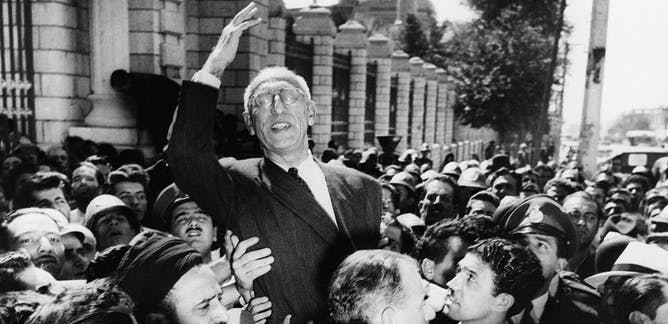
Anyway, the CIA had finally released their documents on the coup against Mossadegh and his government, which was, of course, something obvious for all the true intellectuals. But it is good for the world to understand how it had gone.
Aug. 21, 1953: A resident of Tehran washes “Yankee Go Home” from a wall in the capital city of Iran. The new Prime Minister Fazlollah Zahedi requested the cleanup after the overthrow of his predecessor.
In the political history of Iran, there occurred more than one revolution for democracy but, what happened in the time of Dr Mossadegh, was an uprising against the interest of the mighty western countries and their predominance. Shah was an inexperienced young prince and had great respect for Mossadegh, though his Ego and his lust to be on the top, forced him to sell his country. Dr Mossadegh was unique, not only as a politician but also as a human. We will never find a duplicate.
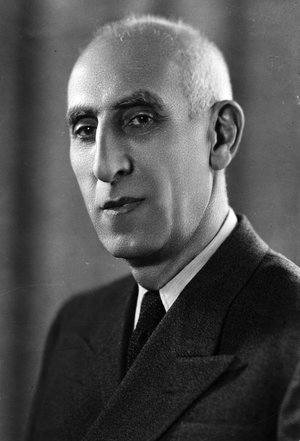
Mohammad Mosaddegh (Persian: محمد مصدق; 16 June 1882 – 5 March 1967) was an Iranian politician who served as the 35th Prime Minister of Iran, holding office from 1951 until 1953, when his government was overthrown in the 1953 Iranian coup d’état orchestrated by the United States’ Central Intelligence Agency and the United Kingdom’s MI6.
An author, administrator, lawyer and prominent parliamentarian, his administration introduced a range of social and political measures such as social security, land reforms and higher taxes including the introduction of taxation of the rent on land. His government’s most significant policy, however, was the nationalization of the Iranian oil industry, which had been built by the British on Persian lands since 1913 through the Anglo-Persian Oil Company (APOC/AIOC), later known as British Petroleum (BP) … more; https://en.wikipedia.org/wiki/Mohammad_Mosaddegh
Al and I got know Dr Mossadegh through our mother’s saying, who told us about our father’s sympathise with him and told us about how father was against a coalition with Mullahs, and he was unfortunately right because they had a great deal in Mossadegh’s overthrown. Now, let’s have a look at the declaration on this operation: PS: I have to add here that Mossadegh, after fruitless negotiations with Great Britain, took the case to court (to The Hague, Holland) and won.
On Aug. 19, 2013, the CIA publicly admitted for the first time its involvement in the 1953 coup against Iran’s elected Prime Minister Mohammad Mossadegh.
August 19, 1953: Massive protests broke out across Iran, leaving almost 300 dead in firefights in the streets of Tehran. Iranian Prime Minister Mohammad Mossadegh was soon overthrown in a coup orchestrated by the CIA and British intelligence. The Shah was reinstalled as Iran’s leader.
The documents provided details of the CIA’s plan at the time, which was led by senior officer Kermit Roosevelt Jr., the grandson of U.S. President Theodore Roosevelt. Over the course of four days in August 1953, Roosevelt would orchestrate not one, but two attempts to destabilize the government of Iran, forever changing the relationship between the country and the U.S. In this episode, we go back to retrace what happened in the inaugural episode of NPR’s new history podcast, Throughline.
Mohammad Mossadegh was a beloved figure in Iran. During his tenure, he introduced a range of social and economic policies, the most significant being the nationalization of the Iranian oil industry. Great Britain had controlled Iran’s oil for decades through the Anglo-Iranian Oil Co. After months of talks the prime minister broke off negotiations and denied the British any further involvement in Iran’s oil industry. Britain then appealed to the United States for help, which eventually led the CIA to orchestrate the overthrow of Mossadegh and restore power to Mohammad Reza Pahlavi, the last Shah of Iran.
Mosaddegh became aware of the plots against him and grew increasingly wary of conspirators acting within his government. According to Dr. Donald N. Wilber, who was involved in the plot to remove Mossadegh from power, in early August, Iranian CIA operatives pretending to be socialists and nationalists threatened Muslim leaders with “savage punishment if they opposed Mossadegh,” thereby giving the impression that Mossadegh was cracking down on dissent earlier than planned, and stirring anti-Mossadegh sentiments within the religious community. A referendum to dissolve parliament and give the prime minister power to make law was submitted to voters, and it passed with 99 percent approval, 2,043,300 votes to 1300 votes against. According to Mark J. Gasiorowski, “There were separate polling stations for yes and no votes, producing sharp criticism of Mosaddeq” and that the “controversial referendum…gave the CIA’s precoup propaganda campaign to show up Mosaddeq as an anti-democratic dictator an easy target”. On or around 16 August, Parliament was suspended indefinitely, and Mosaddeq’s emergency powers were extended.
Declassified documents released by the CIA in 2017 revealed that – after the Shah had fled to Italy – CIA headquarters believed the coup to have failed. They sent a cable calling off operations to Roosevelt on 18 August 1953, but Roosevelt ignored it.
According to Stephen Kinzer, author of the book All the Shah’s Men, Roosevelt quickly seized control of the Iranian press by buying them off with bribes and circulating anti-Mossadegh propaganda. He recruited allies among the Islamic clergy, and he convinced the shah that Mossadegh was a threat. The last step entailed a dramatic attempt to apprehend Mossadegh at his house in the middle of the night. But the coup failed. Mossadegh learned of it and fought back. The next morning, he announced victory over the radio.
A 1950 photo of Kermit Roosevelt Jr., grandson of U.S. President Theodore Roosevelt, and a former Central Intelligence Agency official.
Mossadegh thought he was in the clear, but Roosevelt hadn’t given up. He orchestrated a second coup, which succeeded. Mossadegh was placed on trial and spent his life under house arrest. The shah returned to power and ruled for another 25 years until the 1979 Iranian Revolution. The 1953 coup was later invoked by students and the political class in Iran as a justification for overthrowing the shah.
On 21 December 1953, Mossadegh was sentenced to three years’ solitary confinement in a military prison, well short of the death sentence requested by prosecutors. After hearing the sentence, Mossadegh was reported to have said with a calm voice of sarcasm: “The verdict of this court has increased my historical glories. I am extremely grateful you convicted me. Truly tonight the Iranian nation understood the meaning of constitutionalism.”
He had fought for a free and democratic Iran as he’d believed in it, though I am convinced that we have still a lot to learn.
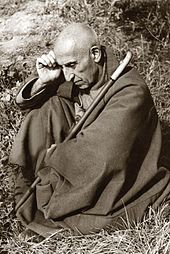
Mossadegh was kept under house arrest at his Ahmadabad residence, until his death on 5 March 1967. He was denied a funeral and was buried in his living room, despite his request to be buried in the public graveyard, beside the victims of the political violence on 30 Tir 1331 (21 July 1952). http://www.mohammadmossadegh.com/biography/30-tir/
With his end, the democracy and all the will of the few intelligent people who had fought for freedom for an autonomous Iran had ended. The betrayal of the Shah, who had preferred to stay on his glamourous thrown, had disappointed and dispersed all the good-willing comrades. I can only share my sadness with this Masterwork by Barber’s Adagio (http://Samuel Barber) for Strings, Op.11. You might also know it in Oliver Stone’s movie: Platoon. http://Oliver Stone
If you would like to read more on the 1953 coup, here’s a list:
Have you ever had a day in which you have no idea? I have it today! It is like that there is all emptiness and nothing moves in the mind. It might because of sleepless nights or, better to say poorly sleep. I have this often. I sleep for about four hours but am suddenly awake, and It takes about one or two hours until I fall asleep again. And in this period, my sleep is very light and shallow.
Last night, I had the same problem and, in the early morning, in my light sleep, I had a dream, and I thought I’d just write it down.; I dreamed of a man who felt lonely because he had found himself as a stranger in this world. As I might say, he convinced that the people around him would not understand his thoughts and feelings. Of course, it has nothing to do with unfriendliness or to be unkind. He just felt not to be understood. But in social media, he was luckier. He had found some few friends who could understand him, and he was happy about it. One of them, a woman, realized him well and got aware of him. He had noticed it heartily and was much appreciated.
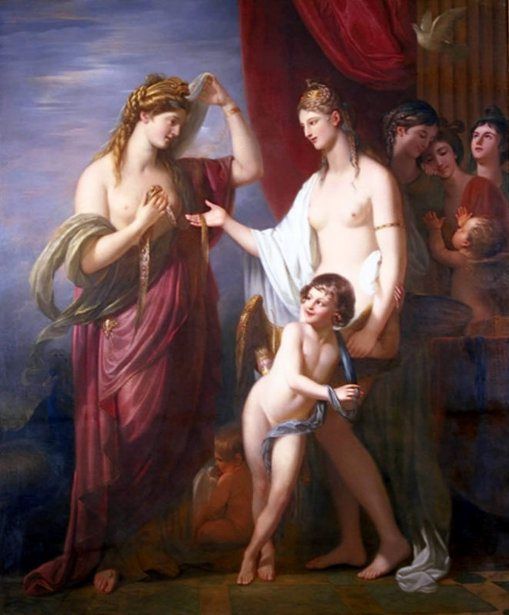
Juno Borrowing the Girdle of Venus, 1771, Benjamin West http://Pinterest
Believe me, I was awake again and again but, when I slept the dream went on, as I’m watching a movie! Anyway, this Lady became a vantage point for him. She and her words worked like a basis or a platform, on which, when he felt lost, he could find back again.
http://Louvre Antoine COYPEL (Paris, 1661-Paris, 1722) Man Resting in the Lap of a Woman 1716-17 original COYPEL Antoine française Fonds des dessins et miniatures
They got nearer to each other, of course, visually, and they had more acknowledgement and had more connections on different media. He knew in between that she coupled with another lady, and he liked it. He knew the strength of his Anima and had some experiences with this case. In his youth, he knew a girl who had invited him to spend a night with her and her girlfriend, and he did gladly accept it. Wow, that was a night, he would say; unforgettable! And later some other more. Therefore, he was delighted to know both ladies now and was very proud of being accepted into this triangle.
Anyhow, it was a dream with a happy end, and I did share my second post! The title of this, actually, is a page that belonged to my brother, those days in the time of the revolution, in a famous magazine in Iran. I will come back to this later.
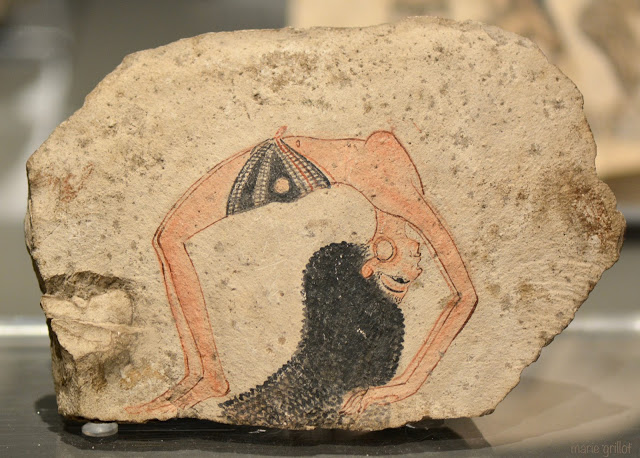
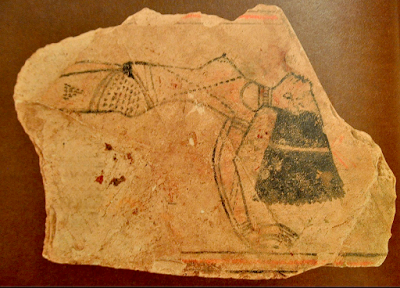
Ostracon “The dancer – or the ballerina – of Turin” – Painted limestone – New Kingdom – 19th dynasty Origin unknown but probably Deir el-Medineh Museo Egizio Turin – C 7052 – by acquisition of the Drovetti Collection in 1824 ostracon représentant une danseuse dans une position acrobatique – calcaire – 11, 5 cm – XIXe – XXedynastie – provenance deir el-medineh museo egizio turin (C7052)
This fascinating piece of art located in the Egyptian Museum of Turin. And like the Museum in Cairo, it’s wholly dedicated to Egyptian art. It is a small and fragile object of 25 x 15, a drawing on limestone.
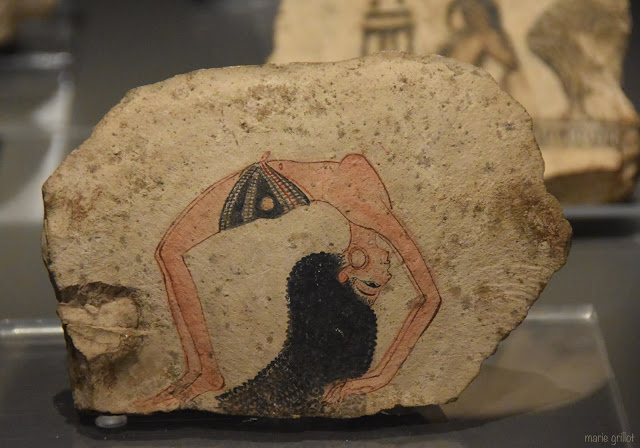
The limestone shard on which the artist drew what has become famous as the “Turin Dancer” or “Turin Museum Ballerina” measures 10.5 cm in height and 16.8 cm in length. The designer “made the most of the rounded shape of the ostracon to organize its composition. The ballerina’s body, which occupies the centre of the stone, describes a curve parallel to the contours of the ostracon. The young woman makes the bridge by resting only the tiptoes and the hands on the ground. At the angle, drawn by the knees on the left side, meets the angle of the elbows on the opposite side. The chest in the extension of the head breaks the line which connects the arms to the abdomen. The delicacy of the limbs opposes the thickness of the black, curly hair which seems to drag the head towards the ground. “
Ostracon “The dancer – or the ballerina – of Turin” – Painted limestone – New Kingdom – 19th dynasty Origin unknown but probably Deir el-Medineh Museo Egizio Turin – C 7052 – by acquisition of the Drovetti Collection in 1824 Ostracon “La danseuse – ou la ballerine – de Turin” – Calcaire peint – Nouvel Empire – XIXe dynastie Provenance inconnue mais probablement Deir el-Medineh Museo Egizio Turin – C 7052 – par acquisition de la Collection Drovetti en 1824
In “Stone Notebooks – The Art of Ostraca in Ancient Egypt”, Anne Mimault-Gout gives us a description, just as admiringly, of this work of art: “Among the representations of dancers and musicians, the most famous of the figured ostraca is that of the dancer making the bridge ‘The ballerina of the museum of Turin’, the work of a master. Her supple body, superbly thin and elegant, performs an acrobatic movement. She wears only a tiny loincloth and a large ring at the ear: the breast is generous, and the mass of long curly hair invades the space created between the legs and the arms. “
As for Eleni Vassilika she interprets, with great sensitivity, this “suspended” moment: “She is represented when she bends backwards, perfectly in profile, and not in the usual rigid standing posture, with the shoulders frontal and legs in profile. The contours of the leg and the arms on the background are also depicted realistically. The dancer’s wavy hair is loose and flowing, but the earrings, which do not fall, defy gravity. The liveliness and artistic quality of the drawing of this almost iconic sketch testify to a high level of skill and suggests that it may have been the work of a royal craftsman who worked in the Valley of the Kings “.
Ostracon “The dancer – or the ballerina – of Turin” – Painted limestone – New Kingdom – 19th dynasty Origin unknown but probably Deir el-Medineh Museo Egizio Turin – C 7052 – by acquisition of the Drovetti Collection in 1824
The faithful rendering of the anatomy, the superb form of the young woman, the vivacity induced by her acrobatic position: everything in this sketch made over 3000 years ago is full of life and energy and holds us under its control. charm!
This work, which – it must be emphasized that’s only a “draft” – testifies to the extraordinary mastery that the artisans of the pharaonic era had achieved. A Mastery which, expressed as well on small media like this one, or else, on the colossal statuary, or the walls of the tombs.
Ostraca (in the singular: ostracon) are shards, debris or fragments of limestone, or even of terracotta which were, in antiquity, used by artists as graphic supports for their “essays”. The papyrus was in fact too expensive at the time and reserved for more ‘noble’ uses … Thus the ostraca, which they found in profusion in the sides of the mountain, were they the support on which they worked their preparatory sketches, on which they practised, started again, before reaching excellence and finally being admitted to work in situ in the royal tombs.
Ostracon “The dancer – or the ballerina – of Turin” – Painted limestone – New Kingdom – 19th dynasty Origin unknown but probably Deir el-Medineh Museo Egizio Turin – C 7052 – by acquisition of the Drovetti Collection in 1824
It is also on these ostraca, that they allowed themselves to give free rein to their imagination and their own creativity, far from the canons and codes which were imposed on them, or “vignettes” which they had to faithfully reproduce. Thus, many of them offer us fresh and charming subjects, such as fables or satirical drawings, a whole sympathetic bestiary, as well as some intimate and even erotic scenes …
Most of the ostraca recorded today come from the current site of Deir el-Medineh. Founded at the beginning of the XVIIIth dynasty under the reign of Thutmose I, this village was a “royal institution” and then called “Set Maât her imenty Ouaset” (“The place of Truth, in the west of Thebes”). It extended and enlarged several times, especially under the reigns of Thutmose III and the first Ramessides.
There lived, in the shelter of high walls, the members of the community of craftsmen (architects, scribes, designers, painters, sculptors, quarrymen, simple workers …) who worked “in teams” and “in workshops” in the digging and the decoration of the residences of the eternity of the Valley of the Kings, the Valley of the Queens and, it seems, other more distant necropolises… “It is by analyzing the Theban tombs of the XVIIIth dynasty that we were able to deduce the existence of different workshops. We know, thanks to a recent discovery, that a group of artists or a workshop based in Deir el-Medineh, had probably been active in Saqqara, in the north of Egypt.”
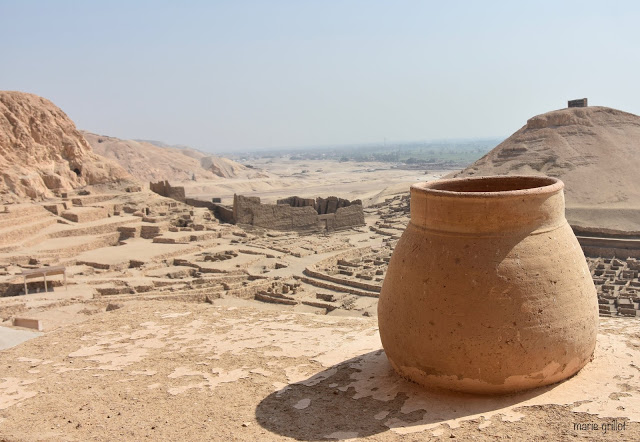
The village of the craftsmen of the Place de Vérité: Deir el-Medineh today
“Rediscovered” in the 19th century, the village of Deir el-Medineh saw a “parade” of many ‘researchers’, then Egyptologists: Bernardino Drovetti, Henry Salt, Karl Richard Lepsius, Auguste Mariette, Gaston Maspero… Ernesto Schiaparelli will undertake excavations there in 1905, then the German Georg Christian Julius Möller. The site concession will then be definitively awarded to Ifao in 1917; for thirty years, from 1922 to 1951, Bernard Bruyère will methodically explore the site and make important and wonderful discoveries.
The dancer’s ostracon arrived in Turin in 1824 through the acquisition by His Majesty the King of Sardinia of the first “Drovetti” collection. It is now exhibited at the Museo Egizio under reference C 7052.
If it is sometimes indicated as having an ‘unknown provenance’, it is, however, most often indicated as coming from Deir el-Medineh, which according to its style seems very probable.
A magnificent dancer’s ostracon discovered in 1949 -1950 in Deir el-Medineh by Bernard Bruyère for the IFAO
We cannot help but compare it to an ostracon dated from the 19th – 20th dynasty – almost similar although less successful – discovered by Bernard Bruyère in 1949-1950, in the large well of Deir el-Medineh.
How not end with this analysis, that issued in the guide to the Museo Egizio, an analysis, to which it is impossible not to adhere: “It seems more and more obvious, that the artists of Deir el-Medineh, employed by the State, have left a strong imprint on their works and are at the origin of a singular artistic style which has not finished, fascinating us! “
Notebooks de pierre – The art of ostracas in ancient Egypt, Anne Mimault-Gout, Hazan, 2002 Museo Egizio, Fondazione Museo delle Antichità Egizie di Torino, Franco Cosimo Panini Editore, 2016 Art treasures of Museo Egizio, Eleni Vassilika, Allemandi & Co Museo Egizio guide, Franco Cosimo Panini editions The Egyptian Museum Turin, Federico Garolla Editore Egyptian Art in the Museum of Turin, Ernest Scamuzzi, Hachette, 1966 The artists of pharaoh, Deir el Medineh and the Valley of the Kings, Louvre, 2002 A World History of Art , Hugh Honor, John Fleming
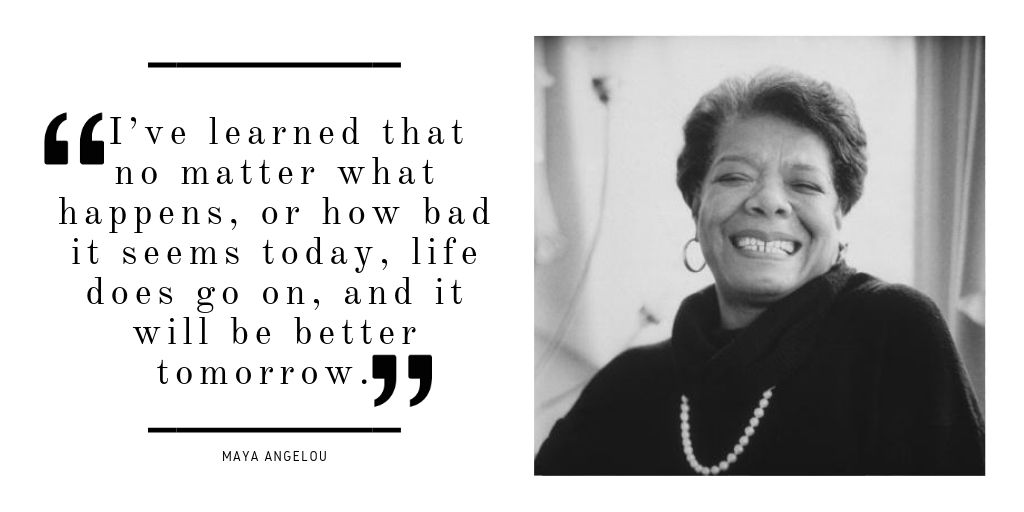
Amen! What great advice in our situation these days. I must confess that I know her newly by the media and not in her lifetime. But as the German says: später besser als nie (later better than never.) Yes, I know her now and stunned how wise she was (is), we can feel her wisdom in her poets, and her books. Let’s read her thoughts, her wisdom, and her poet. With a great thank to https://searchingthemeaningoflife.wordpress.com/ 🙏🙏💖
Maya Angelou was an American poet, memoirist, and civil rights activist. She published seven autobiographies, three books of essays, several books of poetry, and is credited with a list of plays, movies, and television shows spanning over 50 years. She received dozens of awards and more than 50 honorary degrees. Wikipedia
You can write me in history With your bitter, crooked lies You can drag me into the dirt itself But still, like dust, I will climb high.
Does my euphoria upset you? Why do you surround me with darkness? Maybe why do I walk like I own oil wells that overflow from my living room?
Just like the moons and like the suns With the certainty of the tide Just like the hopes that come from above I will still rise .
Did you want to see me break? Covered head and lowered eyes? Shoulders falling down like tears Weak from my angry screams?
Does my tall stature offend you? Do not you find it very difficult That I laugh like I have gold mines Digging in my backyard?
You can shoot me with your words You can slaughter me with your eyes You can kill me with your hatred But still, like air, I will rise high.
Does my sexuality bother you? Are you surprised Where I dance like wearing diamonds The moment my thighs merge?
Beyond the huts of the shame of history I rise Over a past rooted in pain I rise I am a black ocean, wavy and open Exhaling I grow up and withstand the tide
Leaving behind nights of fear and terror I rise In a sunset that is wonderfully bright I rise Carrying the gifts that my ancestors bequeathed to me I am the dream and the hope of the slave. I rise I rise I rise
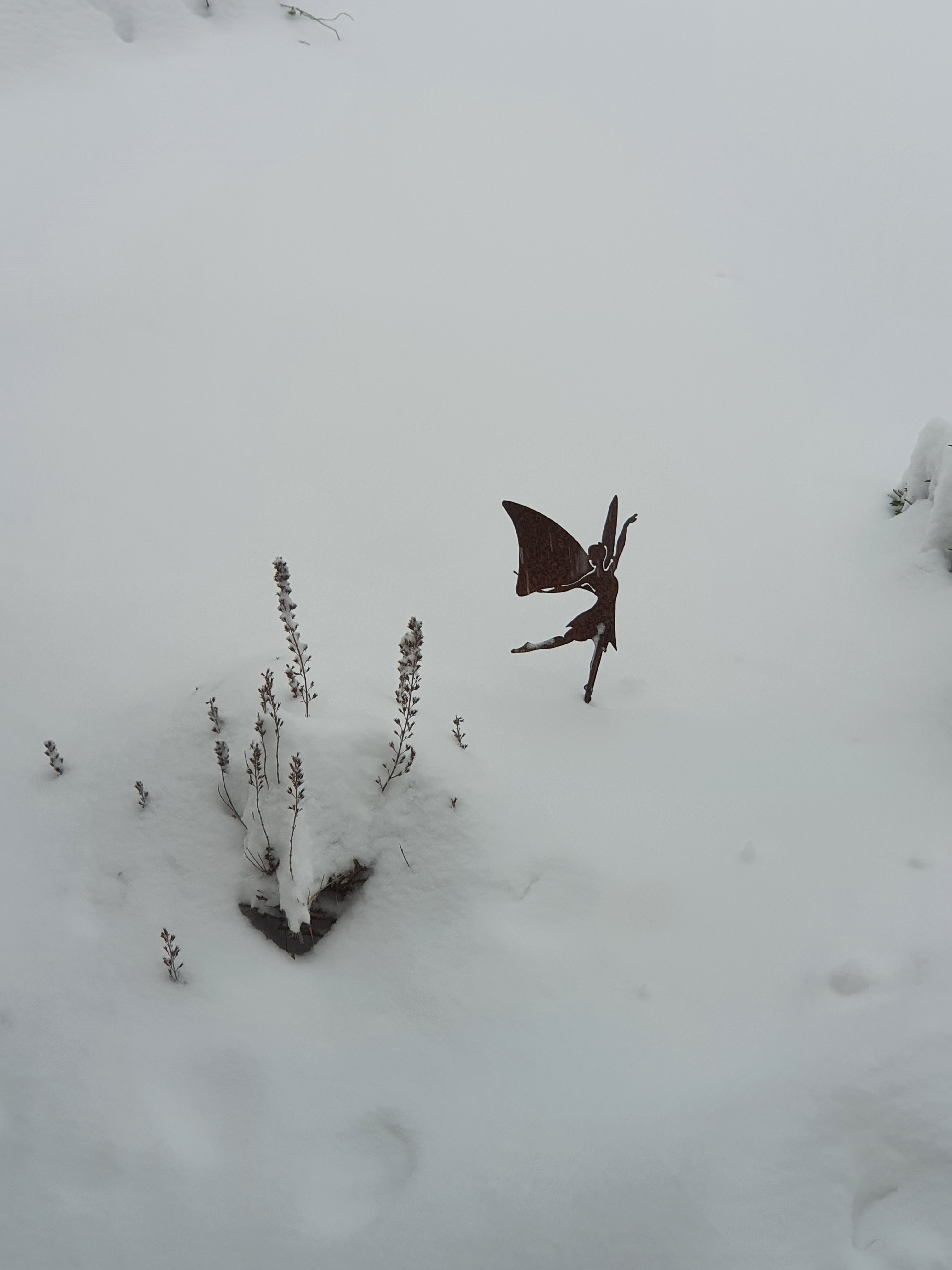
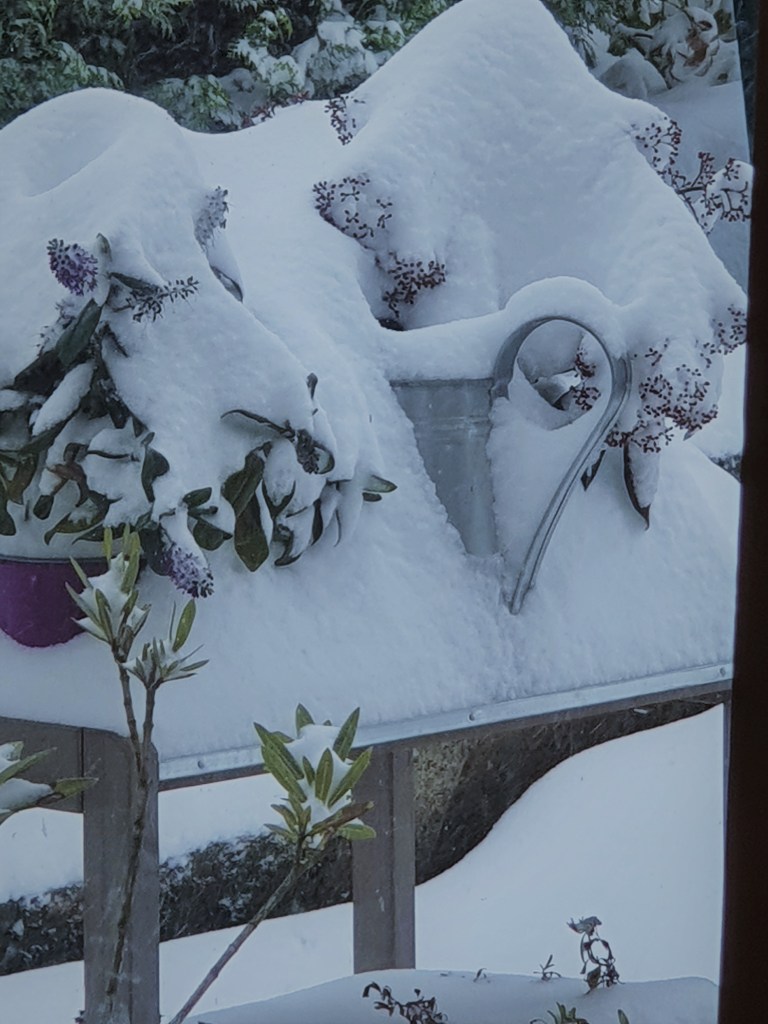
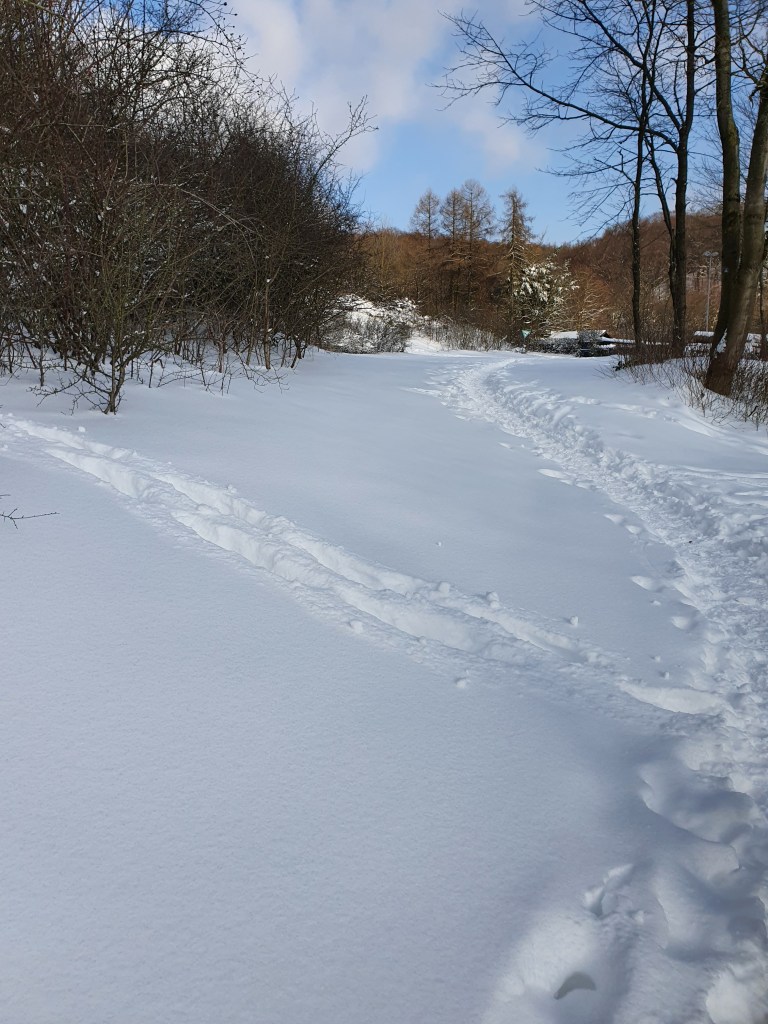
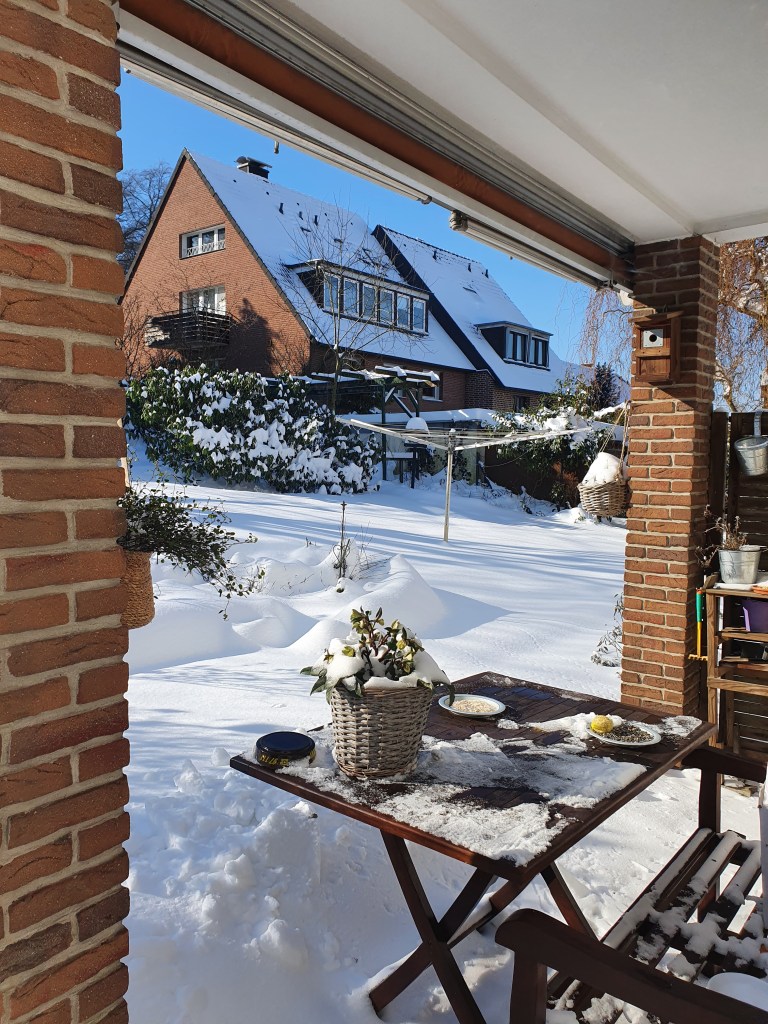
It might be not a phenomenal issue to get so much snow. I know there are many countries in which snowing every winter a great deal, and have eminently cold weather; like Canada, as I’ve heard it goes to ca. -45 degrees Celsius. But for us in Europe, It became rarer in the last decades and even worse in the latest years as it was mostly rainy and stormy. But this year it seems that nature finds her way back to her old manner (because of Corona?). For example, a winter as you would expect, with all the trimmings and with its beauty for sure.
The weather has become fickle. We notice it whenever we look out of the window; it is running somehow crazy. There is no doubt that the climate is changing.
Of course, I don’t want to discuss the scientific reasons; why is it so, or who is guilty. I only do believe in this changing. As we can see in the History of Earth and Meteorology, these changes have been happening since the Earth exists and it is a fact!
And another fact is that I believe we humans are separating us farther away from mother nature. In the beginning, we weren’t so, it may be caused by our progress in technology, (I don’t want to use the word; “Civilization” because,to be civilized means to me, being human intelligent, and not the sort of artificial.) to make a more artificial life for humans; who mostly are the laziest and the most comfortable creatures! I do my best not to belong to that sort, here is the proof; another walk into the snowy cold but the hearty warm beauty. 😉😅
It might be not like in California for sure, but might be a dream, like California Dreamin’. 🤗
Long ago, I have seen a movie named Dersu Uzala. I don’t know if you have seen it too. A story of a man, a human who belonged to nature, or he was an ingredient of nature. it’s a calm narrative of life, with its high and low into the end. Let’s read the story:
The film is based on the 1923 memoir Dersu Uzala (which was named after the native trapper) by Russian explorer Vladimir Arsenyev, about his exploration of the Sikhote-Alin region of the Russian Far East over the course of multiple expeditions in the early 20th century. It shot almost entirely outdoors in the Russian Far East wilderness; the film explores the theme of a native of the forests, who is fully integrated into his environment, leading a style of life that will inevitably be destroyed by the advance of civilization. It is also about the growth of respect and deep friendship between two men of profoundly different backgrounds, and about the difficulty of coping with the loss of strength and ability that comes with old age. Dersu Uzala, from 1975 by Akira Kurosawa http://Akira Kurosawahttp://Dersu Uzala (1975 film) – Wikipedia
To be such a person like Dersu Uzala means to observe more our environment, more listen to nature, the wind, the trees, the birds, open-mindedly.
To put it bluntly, I am not a freaky vegan or someone who wherever he sees a tree, wants to hug it. I always try to use everything more naturally than using machines and keep my mind creative. I think if we don’t exaggerate, life will be more effortless and make much more fun. Anyway, we can just be waiting and look forward to what will happen next!
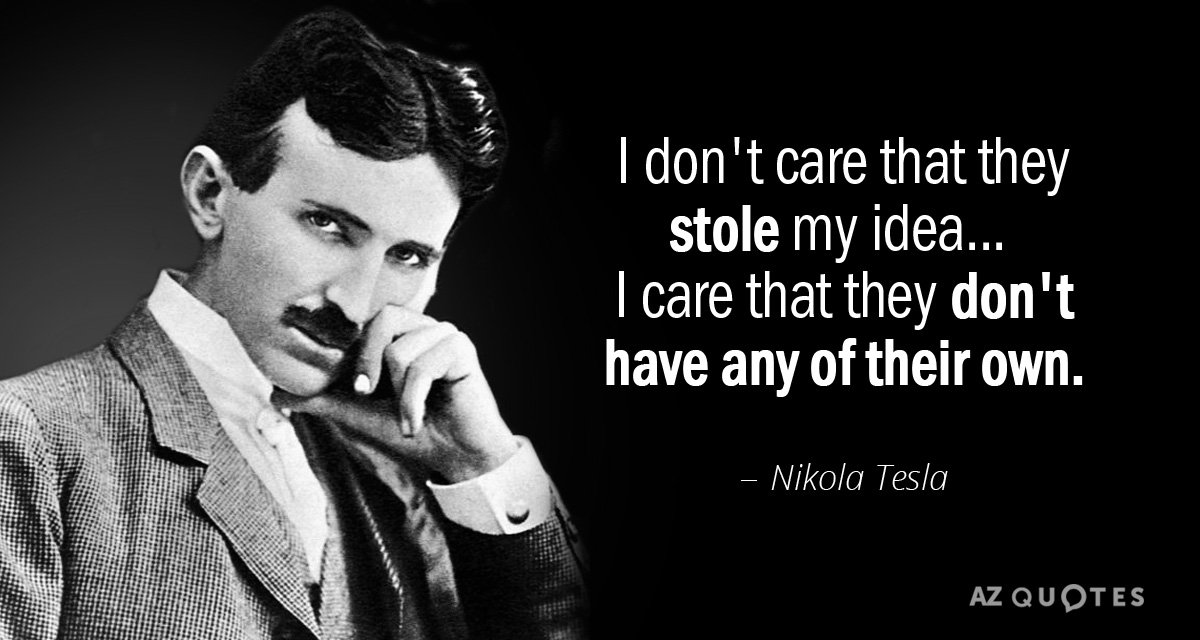
They’re maybe not a lot, but a few geniuses as exceptional, leave weight in our history: like Mozart, Einstein, Leonardo da Vinci, Jung … And we must add Nikola Tesla in this list too. He is definitely a genius, though remains unknown, somehow! I suppose the reason is that we still don’t understand his brilliant mind.
And I am convinced that some of his ideas still sound like science fiction for us!
I don’t want to compare Tesla with Edison, as I never do Jung with Freud. But when someone becomes famous in his/her life with ambitious work, there is always a certain conservatism at play which causes to stop when the one reached a certain point. The reason is fear of failure.
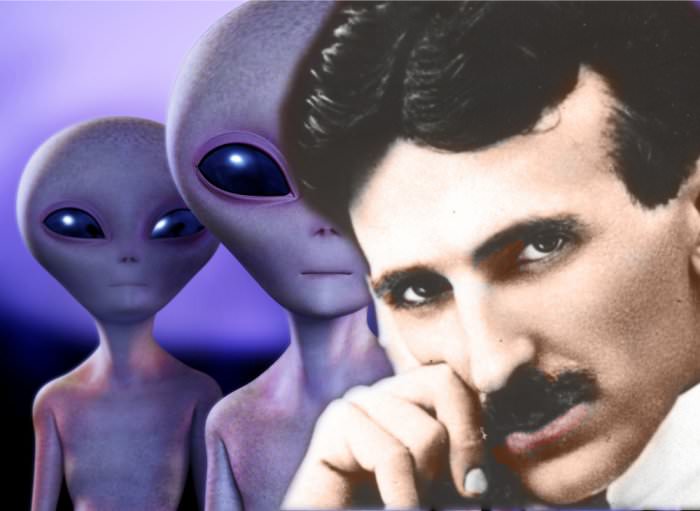
There, we can identify where the ingeniousness between other thinkers and who is the real genius. And Nikola Tesla is one of them without a doubt. But if he had any connection with ETs, or was he one of them? I don’t know. I am only sure that part of us, humans, is not earthy, though a few know about it. 😉
Anyway, I have recently found this old article in my inbox and want to share with you, worth to read. I hope you enjoy it. Have a leisurely weekend. 🤗💖🙏
Nikola Tesla was one of the greatest minds of all time and was considered to be the father of the 21st century. There were rumors that Tesla received his inventions from E.T. sources. Was this the main reason every step Tesla made was monitored by the elite?
Hidden in plain sight
Many devices that we use today contain Tesla’s patents, ideas, concepts. Most people have no idea that Tesla is behind these inventions. However, we rarely hear his name mentioned, especially in school books. His genius was often too much both for ordinary people and the elite. From bankers like JP Morgan to politicians, jealous, scientists, and others, the goal was to not only stop him from bringing these inventions to humanity but to steal them while keeping it out of the public eye.
His research was a threat to everything humanity was allowed to know. Could there have been something hidden about Tesla that was an even bigger threat?
Tesla’s entrance into this world
Tesla’s birth is mentioned in many stories, especially in the region of the Balkans. Tesla was born on July 10th, 1856 in a village in what was then Austro-Hungarian empire which is modern-day Croatia. His mother had a midwife helping her that night when Nikola was about to be born. There was relentless thunder outside. The story goes on to say that the midwife was very scared, but Tesla’s mother told her not to be afraid, that her child would be a very important person. When the midwife started getting used to relentless thunder outside the house, she asked Tesla’s mother how she knew the baby would be a very important person. Tesla’s mother responded that she did not know how but she simply knew.
His very birth was an interesting event because later Tesla literally played with thunder in his experiments and was born during similar circumstances. Just like his mother knew that her child would become an important person, Tesla simply knew what to do and would create complete devices in his mind before experiments. Another interesting thing is that his father was a Serb Orthodox priest and his son was anything but his father in terms of understanding the universe.
Tesla was also born in a region that was not particularly known for anything at that time. If you believe many Tesla followers that Tesla himself was an alien who incarnated in this world, the question is why he chose the family and the region for his birth and why there was such a storm while he was being born.
The period in which Tesla was born coincided with the old Zoharic prophecy about the opening of the gates of wisdom upon the earth. Coincidentally, Einstein was born during this time as well.
Tesla’s childhood
The “genius who lit the world”, as some call him, witnessed a terrible accident at the age of seven. In 1863 Tesla’s brother Danijel was killed in a riding accident. Tesla was in a state of shock and was reported to have started seeing visions. Many people have said that Tesla suffered from lifelong mental illnesses caused by the loss of his brother. A more logical explanation is that this shock served as a trigger in Tesla’s mind (as it happens to many people who witness terrible things) and that it prepared him for the unique way of using his mind.
Tesla’s life was very dramatic. At an early age he showed the superiority of his mind and was fascinated with thunderstorms and lightning. It is possible that this was also caused by the impressions of the storm when he was born. Nikola was fascinated with electricity and was absolutely determined that he would harness the power of the Universe to help humanity.
Tesla’s downloads
In 1882, the idea of a brushless AC motor simply came to him as Tesla was walking. He sketched the images in the sand. That is the first story about how he would simply have an idea in an instant, create the whole design in his head, and then simply start building it from scratch.
When Tesla moved to New York in 1884, he was hired as an engineer at Thomas Edison’s headquarters. Edison was impressed with Tesla and told Tesla he would give him 50 thousand dollars for a better design of his DC dynamos. Tesla experimented for months. However, when he presented his solution, Edison did not give Tesla any money and Tesla quit.
Tesla then decided to work alone and ideas kept coming one after another. In 1887 and 1888 he was granted more than 30 patents for his inventions. George Westinghouse, Edison’s major competitor, was very interested in Tesla’s work. What followed is one of the greatest and strangest stories of all time.
Tesla kept creating more and more, sleeping only two hours at night. Tesla would stay awake 22 hours a day, taking a nap 15 – 20 minutes for every four hours awake. This started when he was very young. When he was studying in Graz, Austria, Tesla became very good at playing billiards. Sometimes he would play more than 48 hours in a stretch. Also, once Tesla worked in his laboratory for 84 hours without any rest or sleep.
To the people around him this was simply incredible. Tesla had unusual amounts of energy and would get complete schematics in an instant. All this and much more points to two possible conclusions: Tesla was an E.T. or Tesla was able to contact them and the invisible realms and that is how he would get his ideas and energy.
Probably the most famous Tesla quote regarding his communication with other realms is:
“My brain is only a receiver. In the Universe there is a core from which we obtain knowledge, strength, and inspiration. I have not penetrated into the secrets of this core, but I know that it exists.“
Tesla openly stated that his brain was a receiver and that the knowledge came from a core. Was he trying to mask the fact that he was communicating with an E.T. race that many say he was a part of? It is possible, but it is certainly much easier to explain his incredible work to the public in this way, saying that he was doing something that Da Vinci and Einstein were also famous for – communication with other realms.
Another quote is very interesting:
“My method is different. I do not rush into actual work. When I get a new idea, I start at once building it up in my imagination and make improvements and operate the device in my mind. When I have gone so far as to embody everything in my invention, every possible improvement I can think of, and when I see no fault anywhere, I put into concrete form the final product of my brain.”
The whole process explained in his words, an invention in his brain without any drawing, experiments, something most people can only dream of, yet so natural to Tesla. Was it possible because he communicated with E.T.’s, other realms, the core as he called it?
Intelligent electrical signals from space
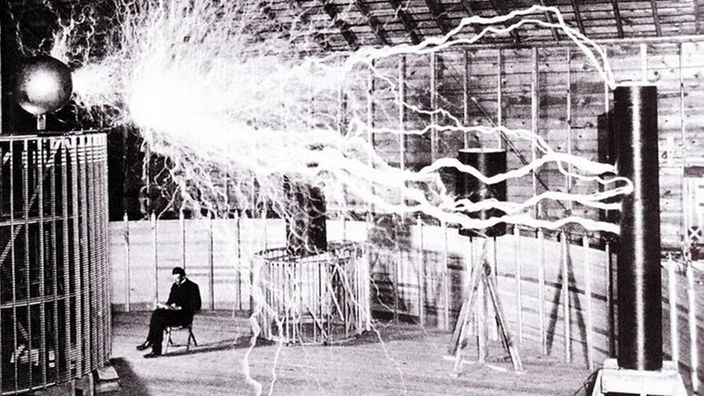
Nikola Tesla built a laboratory in Colorado Springs, Colorado, in 1899, to experiment with high frequency electricity and other phenomena. In that laboratory he received and recorded cosmic radio waves on his sensitive instruments. He announced that he received extraterrestrial radio signals. The scientific community in 1899 did not believe him, because knowledge of cosmic radio signals did not exist at that time.
Here is what Tesla said about the signals:
“I can never forget the first sensations I experienced when it dawned upon me that I had observed something possibly of incalculable consequences to mankind. I felt as though I were present at the birth of a new knowledge or the revelation of a great truth.
My first observations positively terrified me as there was present in them something mysterious, not to say supernatural, and I was alone in my laboratory at night; but at that time the idea of these disturbances being intelligently controlled signals did not yet present itself to me.
The changes I noted were taking place periodically and with such a clear suggestion of number and order that they were not traceable to any cause known to me. I was familiar, of course, with such electrical disturbances as are produced by the sun, Aurora Borealis, and earth currents, and I was as sure as I could be of any fact that these variations were due to none of these causes.
The nature of my experiments precluded the possibility of the changes being produced by atmospheric disturbances, as has been rashly asserted by some. It was sometime afterward when the thought flashed upon my mind that the disturbances I had observed might be due to an intelligent control. Although I could not at the time decipher their meaning, it was impossible for me to think of them as having been entirely accidental. The feeling is constantly growing on me that I had been the first to hear the greeting of one planet to another. A purpose was behind these electrical signals.”
This is very revealing- Tesla openly stated that he had the feeling that he had been the first to hear the greeting of one planet to another. Here Tesla went further and replaced the core that he had mentioned with a direct link with E.T. life. It seems that to an open mind person it cannot be any clearer.
At the time, it was surmised by prominent scientists that Mars would be a likely haven for intelligent life in our solar system, and Tesla at first thought these signals may be originating from the red planet. He would later change this viewpoint as he became more adept at translating the mysterious signals. Near the end of his life, Tesla had developed several inventions that allegedly could send powerful amounts of energy to other planets.
“The signals are too strong to have traveled the great distances from Mars to Earth,” wrote Tesla. “So I am forced to admit to myself that the sources must come from somewhere in nearby space or even the moon. I am certain however, that the creatures that communicate with each other every night are not from Mars, or possibly from any other planet in our solar system.”
Tesla said he had flashes, some kind of light, and then he would get his ideas. He never said that the images in his mind were holographic, but some researchers claim that it was exactly what was going on in his mind. It may have been similar to what computers do today when they create models, rotate them, and analyze all possibilities needed to complete the task.
Tesla wrote letters to friends in which he talked about mysterious signals. He was convinced that the communication was with E.T’s. Tesla was not very popular in those days and many newspapers mocked him for saying that he was in contact with some kind of space intelligence. What the press wrote was almost certainly ordered by those who did not want Tesla to succeed in his intentions. So what better way to belittle him than say that he was a mad scientist who thought he was in contact with aliens? It often works in our so-called modern age, so it definitely worked such a long time ago.
The first clean energy
When speaking of Tesla, we cannot forget about Wardenclyffe Tower that was located in Long Island, New York. The tower was 187 feet to the top and 120 feet into the ground. What Tesla had in mind were various wireless transmitter points all over Earth. Tesla wanted to move energy from one tower to the next wirelessly. No, we are not talking about wireless technology like we have today, which is very toxic and harmful. This was clean energy to be used interplanetary.
Researchers at MIT managed to transmit power wirelessly only 100 years after Tesla and at a much shorter distance. 100 years is a lot of time and it is hard to believe that it took so much time for scientists to imitate Tesla to some extent.
Tesla wanted to give free energy to humanity but the Tower was demolished in 1908. J.P. Morgan was the founder of the project. When he discovered what Tesla’s intentions were, he did everything to stop him. Tesla also invented beam weapons, wireless power transmission, antigravity devices, anti-war shields, and a plethora of other suppressed inventions.
Can we prove that Tesla had contact with alien intelligence? If we take a closer look at what Tesla did, said, and created, we can at least say that he had the ability to tune into the core that he talked about.
His life was full of drama, sci-fi-like stories, synchronicities, and many interesting things and events. But is there proof that Tesla had ET contact? If we accept the fact that we live within the visible light in that tiny fraction of what we call space, we can also accept that some consider our reality to be a projection in our minds. Proof is just in the physical realm that we decode, but Tesla was not limited by visible light. His genius can almost certainly be attributed to his communication with other realms and probably aliens themselves.
Tesla was the most brilliant scientist that Earth has probably ever had, and he was not afraid to say that he believed in spirituality. This is not even common in the science community today. He was a spiritual scientist in communication with other realms and possibly E.T.’s- and left a legacy behind of bewilderment and awe in the true history of humankind.
About the author: Omar Fehimović was born in Sarajevo, Yugoslavia (modern-day Bosnia and Herzegovina) in 1971. At an early age he felt attracted to what we call reality and wanted to know more about it having a strong sensation that our reality was not what most people thought it was. During his elementary school days he felt a strong connection to the English language and Nikola Tesla, the electric genius who was born not far from where Omar was born. He became interested in the occult and esoteric having read so much about Tesla and he started researching many subjects in his 20s. Having become proficient in English at a very early age, he was able to expand his knowledge even more. In 2009 he became a free-lance interpreter, continuing his research in his free time. The current focus of his research is hidden meanings in the English language and modern culture, the Saturn-Moon Matrix and the afterlife. He can be contacted at his e-mail: sarajevo1971@yahoo.com or on Facebook: Omar Fehimović
In5D PATREON: https://www.patreon.com/in5d See our In5D articles the day before they’re released, AD FREE, on Patreon for a minimal donation!
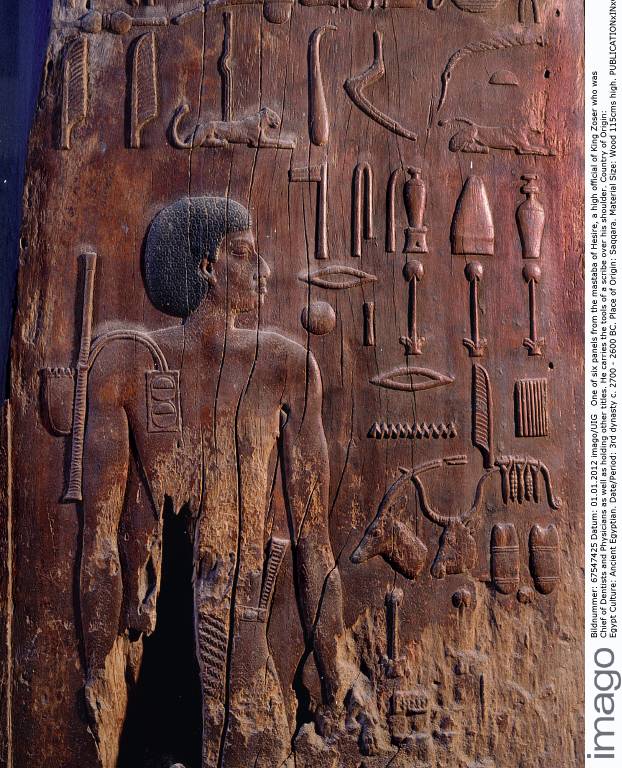
http://Imago Images One of six panels from the mastaba of Hesire, a high official of King Zoser who was Chief of Dentists and Physicians as well as holding other titles. He carries the tools of a scribe over his shoulder. Country of Origin: Egypt Culture: Ancient Egyptian. Date/Period: 3rd dynasty c. 2700 – 2600 BC. Place of Origin: Saqqara. Material Size: Wood 115cms high. PUBLICATIONxINxGERxSUIxAUTxHUNxONLY Copyright: WernerxForman 951_05_55401375 One of Six Panels from The Mastaba of Hesire a High Official of King Zoser Who what Chief of dentists and Physicians As Well As Holding Other titles he carries The Tools of a Scribe Over His Shoulder Country of ORIGIN Egypt Culture Ancient Egyptian Date Period 3rd Dynasty C 2700 2600 BC Place of ORIGIN Saqqara Material Size Wood High PUBLICATIONxINxGERxSUIxAUTxHUNxONLY Copyright WernerxForman 951_05_55401375
This time, we have a special fund in magic Egypt. The Stele on woods! ( decorated Lebanese cedar panels) which, Hesy-re lets to be imported and worked in such quantity.
The Mastaba of Hesy-re is an ancient Egyptian tomb complex in the great necropolis of Saqqara in Egypt. It is the final resting place of the high official Hesy-re, who served in office during the Third Dynasty under King Djoser (Netjerikhet). His large mastaba is renowned for its well-preserved wall paintings and relief panels made from imported Lebanese cedar, which are today considered masterpieces of Old Kingdom wood carving. The mastaba itself is the earliest example of a painted tomb from the Old Kingdom and the only known example from the Third Dynasty. The tomb was excavated by the Egyptologists Auguste Mariette http://Auguste Mariette and James Edward Quibell http://James Edward Quibell.. https://en.wikipedia.org/wiki/Mastaba_of_Hesy-Re
What we have here are six beautiful worked panels of woods. Now let’s read the brilliant description by Marie Grillot, http://Marie Grillot about this fascinating fund. With heartfelt thanks. 🙏💖 via https://egyptophile.blogspot.com/
The wooden panels from the mastaba of Hésiré discovered in 1860 by Auguste Mariette in Saqqarah were exhibited at the Boulaq Museum (ref .: 1037 – 1038 – 1039) Photograph by MM. Delié and Béchard, taken from the Album of the Musée de Boulaq
In 1859, Auguste Mariette returned to Cairo where he was “confirmed at the head of historical monuments and the museum”. His projects are numerous and the sites he is opening in the Delta, in Thebes or Saqqarah, are up to his ambitions. They will bring some very beautiful discoveries. In particular, in 1860, he discovered, in Saqqarah, in the mastaba C8, the statue of Ka-Aper (Kaaper), the very famous Sheikh el-Beled!
The same year, north of the pyramidal complex of Pharaoh Djoser – where 140 mastabas will be unearthed – will be discovered that of Hésiré (Hosi, Hésyra, Hésy-Rê, Hézirê).
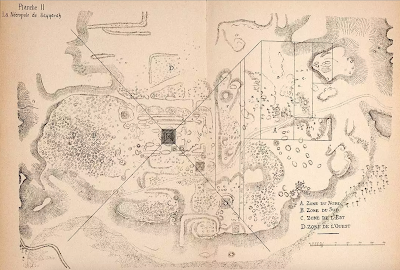
Necropolis of Saqqara – Plan taken from “The Mastabas of the Old Empire”, Auguste Mariette, Paris, 1889
In “The Mastabas of the Old Empire”, Auguste Mariette and Gaston Maspero recall that the mastabas generally consist of: “five parts which are the exterior of the tomb, the interior itself, the serdab, the well, the vault underground”. In this book, the pages devoted specifically to the mastaba of Hesiré – referenced A3 – contain only drawings. No details are given on the exact circumstances of the discovery.
The scribe Hésiré represented on one of the panels of his mastaba discovered in 1860 by Auguste Mariette in Saqqarah Third Dynasty – 2649-2575 BC. J.-C. Cairo Museum – JE 28504 = CG 1426 – CG 1427 – CG 1428
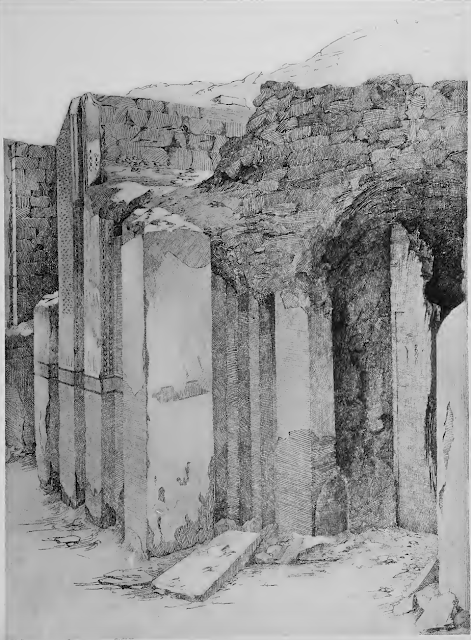
Hesire’s eternal home is dated to the Third Dynasty, around 2700 BC. In its original state, the mastaba was 43 m long, 22 m wide and 5 m high. It was made of hardened mud bricks. The inner and outer walls were completely covered with limestone in white. The structure of the inner chamber consisted of a long corridor and several rooms and chapels. “
Eleven niches are hollowed out in the west wall: they are decorated with magnificent wooden panels, rectangular, more than a meter high and 40 cm wide. They are sculpted with incomparable precision, finesse and art. These panels were to play: “the role of false doors which represent the deceased in the Hereafter, awaiting his offerings”. They were fixed: “by wedges driven into the upper part of the panels”.
The wooden panels of the mastaba of Hesire discovered in 1860 by Auguste Mariette in Saqqarah Third Dynasty – 2649-2575 BC. J.-C. Cairo Museum – JE 28504 = CG 1426 – CG 1427 – CG 1428
In “Egyptian Art in the Age of the Pyramids”, it is specified that: “the first five were found by Mariette and transported to the museum in 1866”.
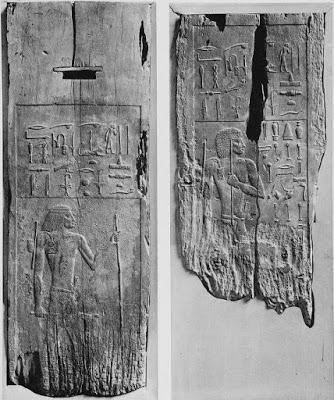
Two other wooden panels by Hésiré presented in “Excavations at Saqqara” (1911-1912). The Tomb of Hesy, JE Quibell, Cairo, 1913
A sixth was discovered 45 years later by James Edward Quibell who resumed excavations of the mastaba in 1911-1912. As for the other five, only fragments remained: “which unfortunately he will not take the trouble to save”.
A wooden panel in position, from a pencil drawing by FH Darke “Excavations at Saqqara (1911-1912). The Tomb of Hesy”, JE Quibell, Cairo, 1913
Under the numbers 1037 – 1038 – 1039, three of these panels are presented by Gaston Maspero in the “Visitor’s Guide to the Boulaq Museum”: “These three panels were embedded in as many stelae in the form of a false door. A fourth panel, more mutilated than the others, is exposed (n ° 913) on the kind of shelf which reigns at the back of the room (!). The scribe Hosi, seated or standing, is the only person represented. He has a rough face. , the features accentuated by age: the hieroglyphics carved above his head give us his name and his titles … Inscriptions and figures are cut with extraordinary hand surety: the artist who executed this work did not give it up. nothing to the one who carved the Sheik el-Beled. “
The wooden panels of the mastaba of Hesire discovered in 1860 by Auguste Mariette in Saqqarah Third Dynasty – 2649-2575 BC. J.-C. Boulaq Museum (ref .: 1037 – 1038 – 1039) then Cairo Museum – JE 28504 = CG 1426 – CG 1427 – CG 1428
The panels presented to Boulaq must correspond to those recorded in the Journal of Entries of the Egyptian Museum in Cairo JE 28504, and in the General Catalog CG 1426 – CG 1427 – 1428.
Hesire is represented standing, seated, in various postures, with different wigs or outfits. The panels seem to tell, “in the comic strip”, so many important moments of his life, haloed with the glory of his attributions. The stiffness of the attitude makes one feel with more force the importance of his rank and the solemnity of his functions.
During the Universal Exhibition of 1878, inaugurated on May 1 in Paris, Auguste Mariette will choose to exhibit the three panels. They then constituted the oldest pieces illustrating the pharaonic antiquities presented at the Trocadero Palace.
In the catalogue he will write for this event, “Exposition Universelle de Paris, 1878. The Gallery of Ancient Egypt at the Trocadero retrospective exhibition, brief description, by Auguste Mariette-Bey …”, he will explain about admirably, and with a beautiful sensitivity, the reasons for his choice underlining the exceptional character of the work. “Compared to the style of other monuments of the Old Kingdom, the style of the panels in Egyptian art in fact takes the place of what is called elsewhere the archaic style. The finesse of the engraving, the unusual grouping of hieroglyphics and the rare forms of several of them, the hitherto unique arrangement of the utensils that the character carries in his hands, are in fact distinctive features which show us in the three panels extraordinarily ancient monuments. especially the character of the head, whose bony cheeks and strongly aquiline nose have absolutely nothing that recalls the full face, the round nose, the thick and smiling lips of the other statues of the old Empire. “
On January 25, 2021, the Ministry of Antiquities announced that: “within the general framework of the ‘Launch of the restoration project of the wooden panels of the Egyptian Museum in Tahrir’, under the title ‘Towards new horizons to assess the situation, the restoration and reappearance at the museum ‘, the Egyptian museum launched the restoration project of the wooden panels of Hassi Ra, exhibited on the ground floor of the museum, in cooperation with the French Institute of Oriental Archeology (IFAO). The second phase of the project will consist of the study of their “new exhibition” at the museum, their “reinstallation” having to recall the context of their “original” presentation in the Mastaba …





























 lampmagician

You must be logged in to post a comment.