My (Carl Jung’s) Most Difficult Experiment [P. 3]

Standard

“We need a force not to start conflicts but to protect our nation and freedom. Therefore, making military service more attractive could draw more young people”. Said German Bundeskanzler Friedrich März a few days ago.
I wonder how and with what we can make being a soldier attractive. A soldier’s role involves killing; how can we make that aspect attractive?

I remember the 1960s and 1970s, during the Cold War and Vietnam War, when crowds gathered to protest against conflicts and advocate for peace. Over time, Western governments began to prioritise peace more and engaged in disarmament talks, seeking peaceful coexistence. Yet today, they focus on strengthening their military to defend peace and freedom!

What’s happening? Isn’t there enough war worldwide? Is Germany yearning for the glorious days of the 1930s? The facts appear this way!

However, this has always occurred whenever politicians become oblivious to the horrific machinery of war. Therefore, it might be meaningful to consider two of Jung’s dreams from before WWI, as excerpted from his autobiography. “Memories, Dreams, Reflections” describes Carl Jung’s dreams from 1913 to 1914. With thanks to Lewis Lafontaine. 🙏

In October [1913], while I was alone on a journey, I was suddenly seized by an overpowering vision: I saw a monstrous flood covering all the northern and low-lying lands between the North Sea and the Alps.
When it came to Switzerland, I saw that the mountains grew higher and higher to protect our country.
I realised that a frightful catastrophe was in progress.
I saw the mighty yellow waves, the floating rubble of civilisation, and the drowned bodies of uncounted thousands.
Then the whole sea turned to blood.
This vision lasted about one hour.
I was perplexed and nauseated, and ashamed of my weakness.

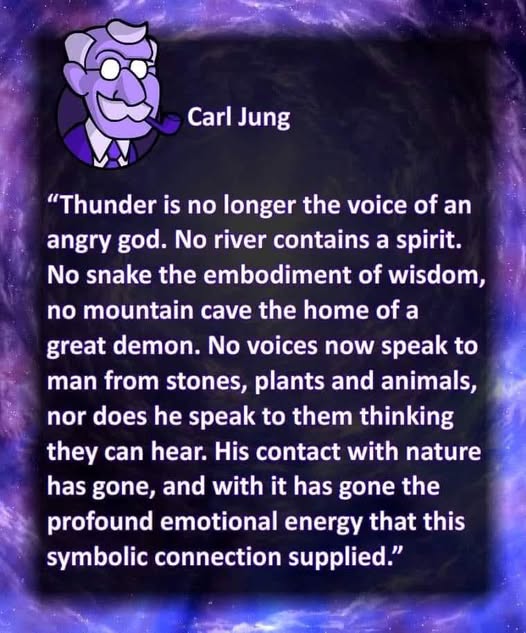
Thunder is no longer the voice of a god, nor is lightning his avenging missile.
No river contains a spirit, no tree makes a man’s life, no snake is the embodiment of wisdom, and no mountain still harbours a great demon.
Neither do things speak to him nor can he speak to things, like stones, springs, plants and animals.”
~ Carl Jung, CW 18, Para 585

Two weeks passed; then the vision recurred, under the same conditions, even more vividly than before, and the blood was more emphasised.
An inner voice spoke. “Look at it well; it is wholly real, and it will be so. You cannot doubt it.”
That winter, someone asked me what I thought were the political prospects of the world in the near future.
I replied that I had no thoughts on the matter, but that I saw rivers of blood.
I asked myself whether these visions pointed to a revolution, but I could not really imagine anything of the sort.
And so I concluded that they had to do with me myself, and decided that a psychosis menaced me.
The idea of war did not occur to me at all.
Soon afterwards, in the spring and early summer of 1914, I had a thrice-repeated dream that in the middle of summer an Arctic cold wave descended and froze the land to ice.
I saw, for example, the entire region of Lorraine and its canals frozen, and the whole area totally deserted by human beings.
All living green things were killed by frost.
This dream came in April and May, and for the last time in June 1914.
In the third dream, frightful cold had again descended from out of the cosmos.
This dream, however, had an unexpected end. There stood a leaf-bearing tree, but without fruit (my tree of life, I thought), whose leaves had been transformed by the effects of the frost into sweet grapes full of healing juices.
I plucked the grapes and gave them to a large, waiting crowd…

On August 1, World War I broke out!

Now, let’s continue with the next section, following (1, 2), about Dr Jung’s dreams and examining how a forecaster can predict potential human self-destructive plans. As mentioned in Part Two, Jung described hearing a strange woman’s voice in his mind and tried to analyse it.

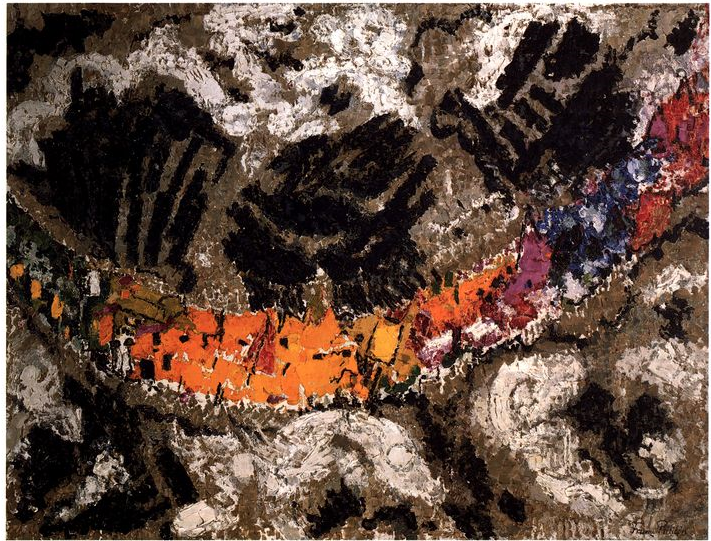
He believed the voice was “the soul in the primitive sense,” known as the anima, and stated that he employed his analysis to write letters to his anima, experiencing it as both a ghost and a woman. He remembered this voice as that of a Dutch patient from 1912 to 1918, who convinced a colleague that he was a misunderstood artist. The woman had thought the unconscious was art, but Jung had maintained it was a natural phenomenon. The woman was likely Maria Moltzer, and the psychiatrist was Jung’s friend Franz Riklin, who shifted from analysis to painting, studying Augusto Giacometti in 1913. Riklin’s art was semi-figurative and abstract, with a notable 1915/6 work, Verkündigung, in Zürich, donated by Moltzer in 1945. Giacometti found Riklin’s psychological insights exciting, calling him a modern magician.
Franz Beda Riklin Verkündigung 1915, Wikimedia

The November entries in Black Book 2 depict Jung’s return to his soul. He recalled dreams that led him to his scientific career and recent dreams bringing him back to his soul. In 1925, he noted his first writing phase ended in November: ” Not knowing what would come next, I thought perhaps more introspection was needed… I devised such a boring method by fantasising that I was digging a hole, and by accepting this fantasy as perfectly real. ” This experiment occurred on December 12, 1913 (See Liber Primus, chapter 5, p. 147).

To be continued …………

Thank you for reading! I don’t want to spoil your mood, but sometimes thinking more deeply can help us and prepare us for the worst. While I am on my way to spend the holidays, please note that responses to comments, if any, may be delayed.🙏💖

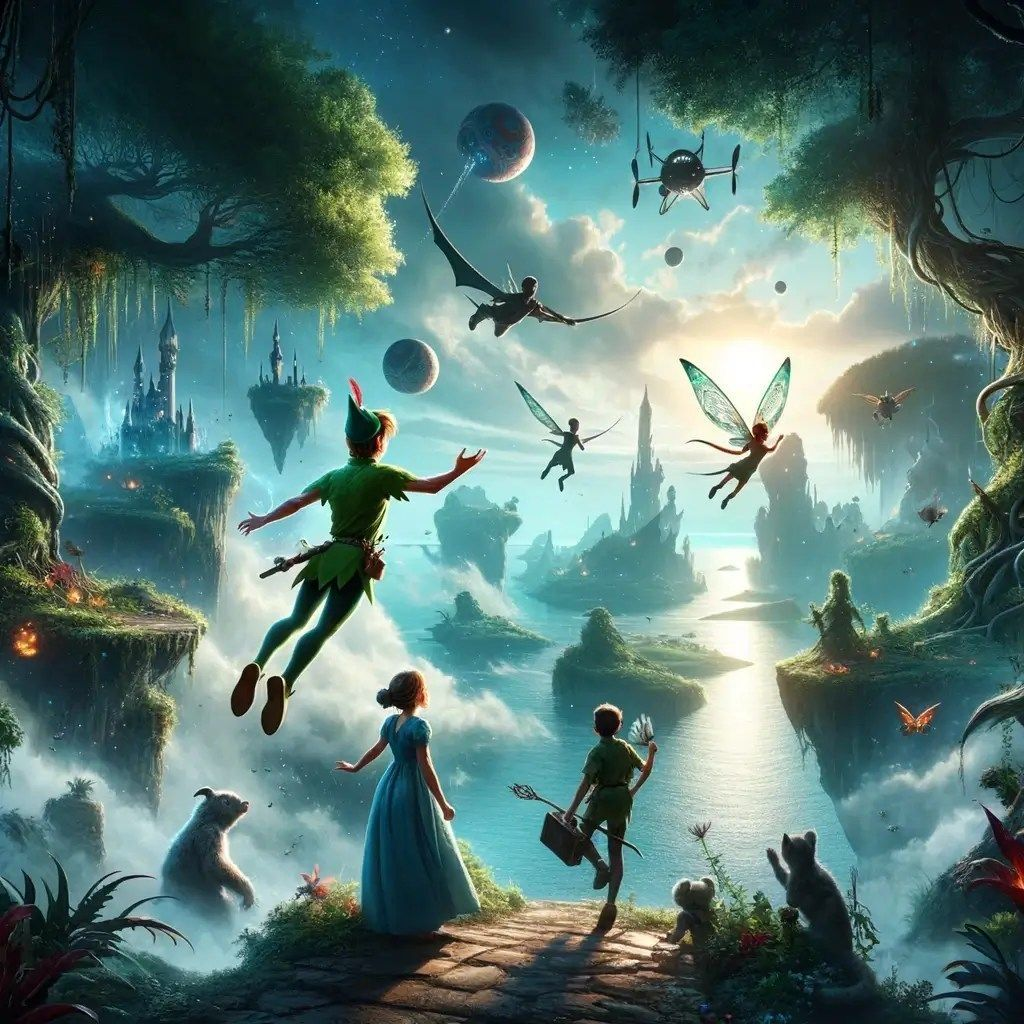
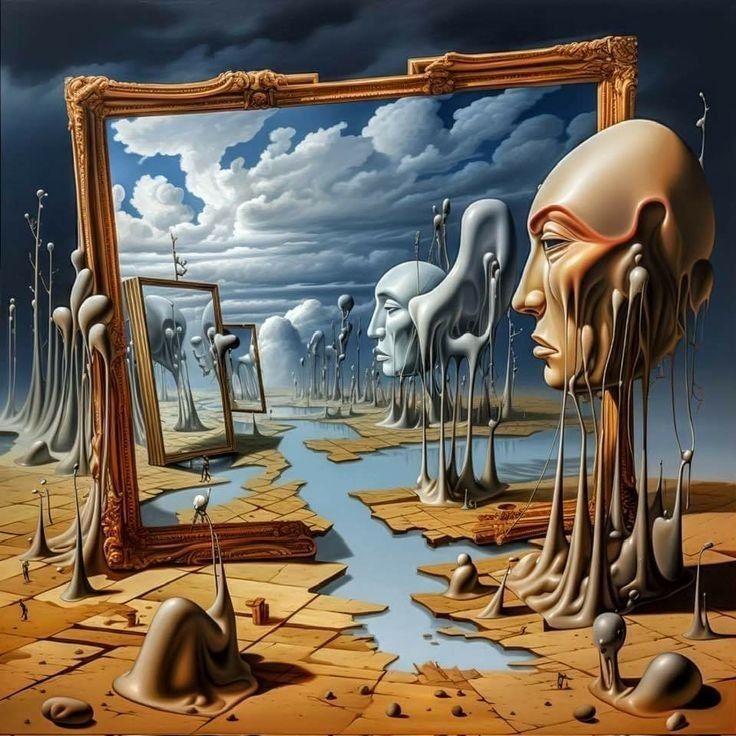
Illustration art at the top: Dali-Inspired Dreamscape

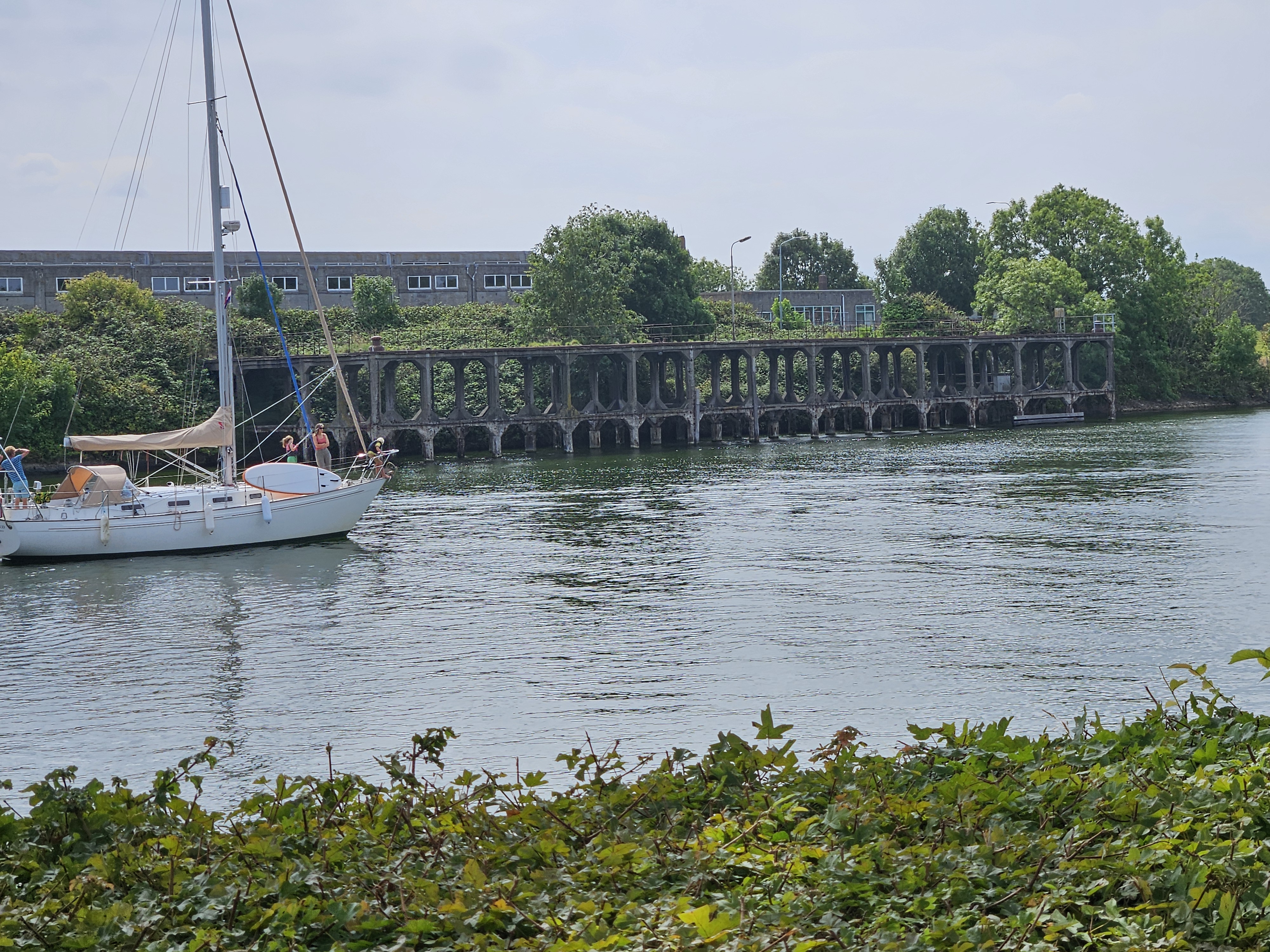
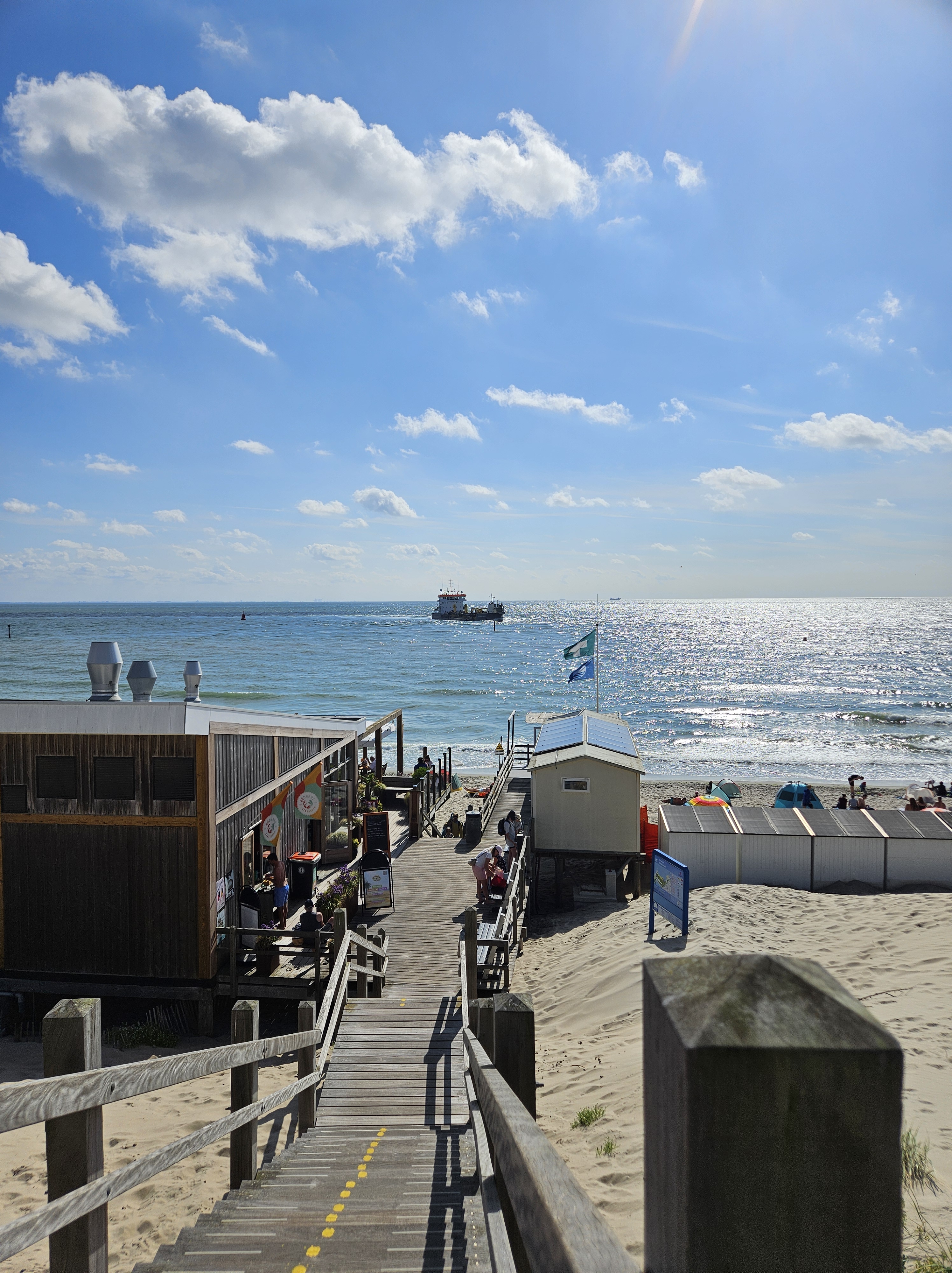
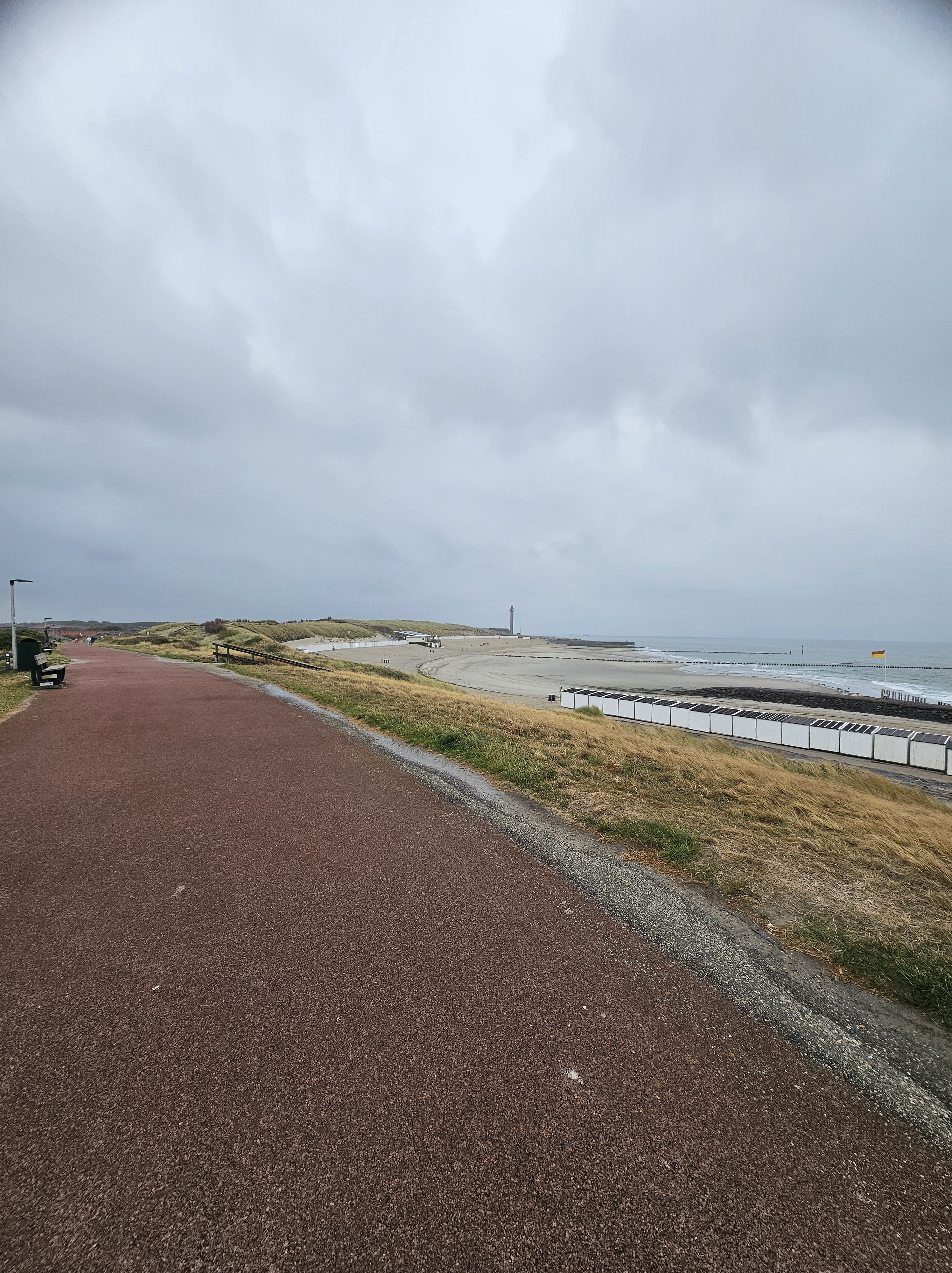
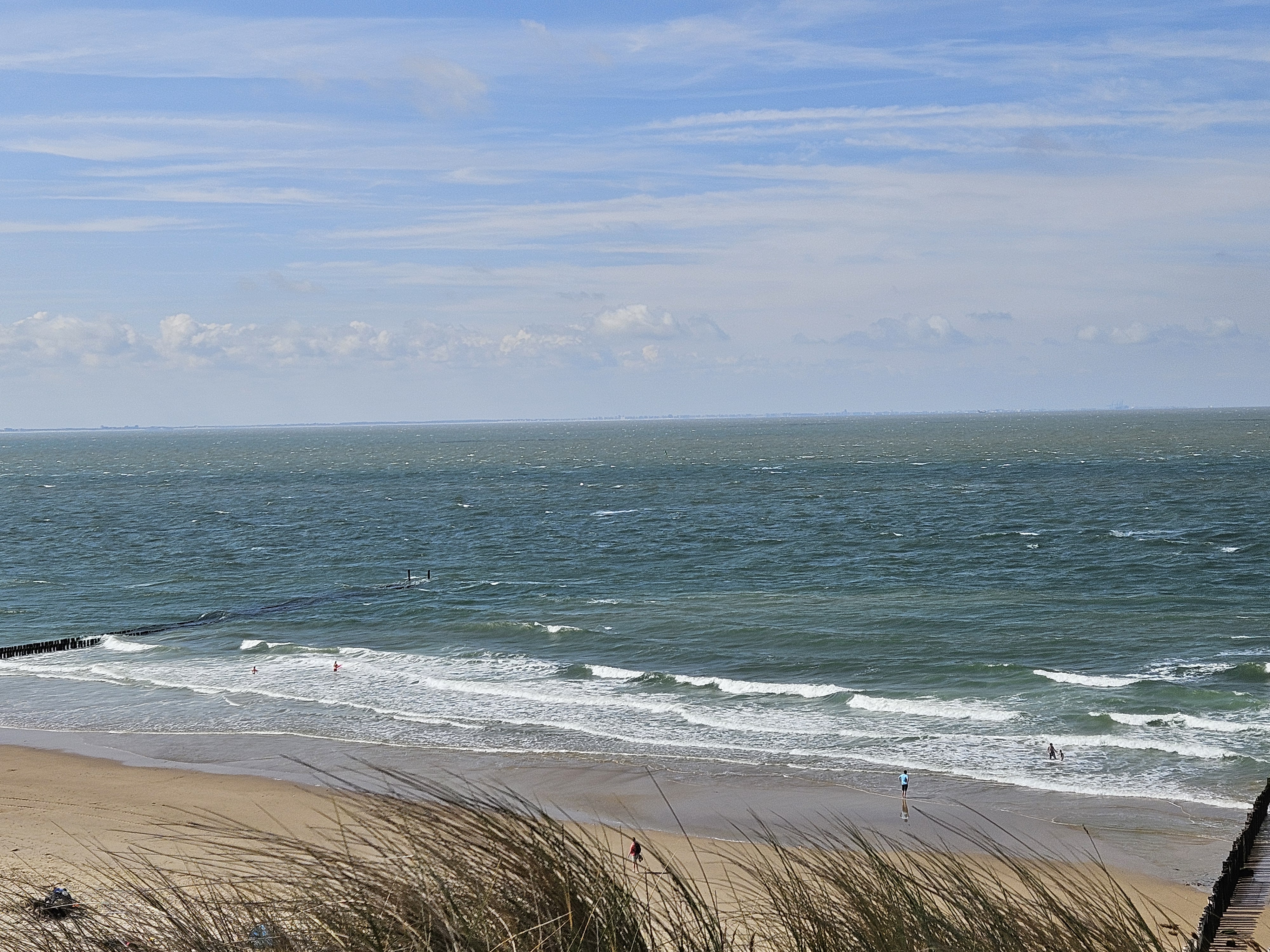
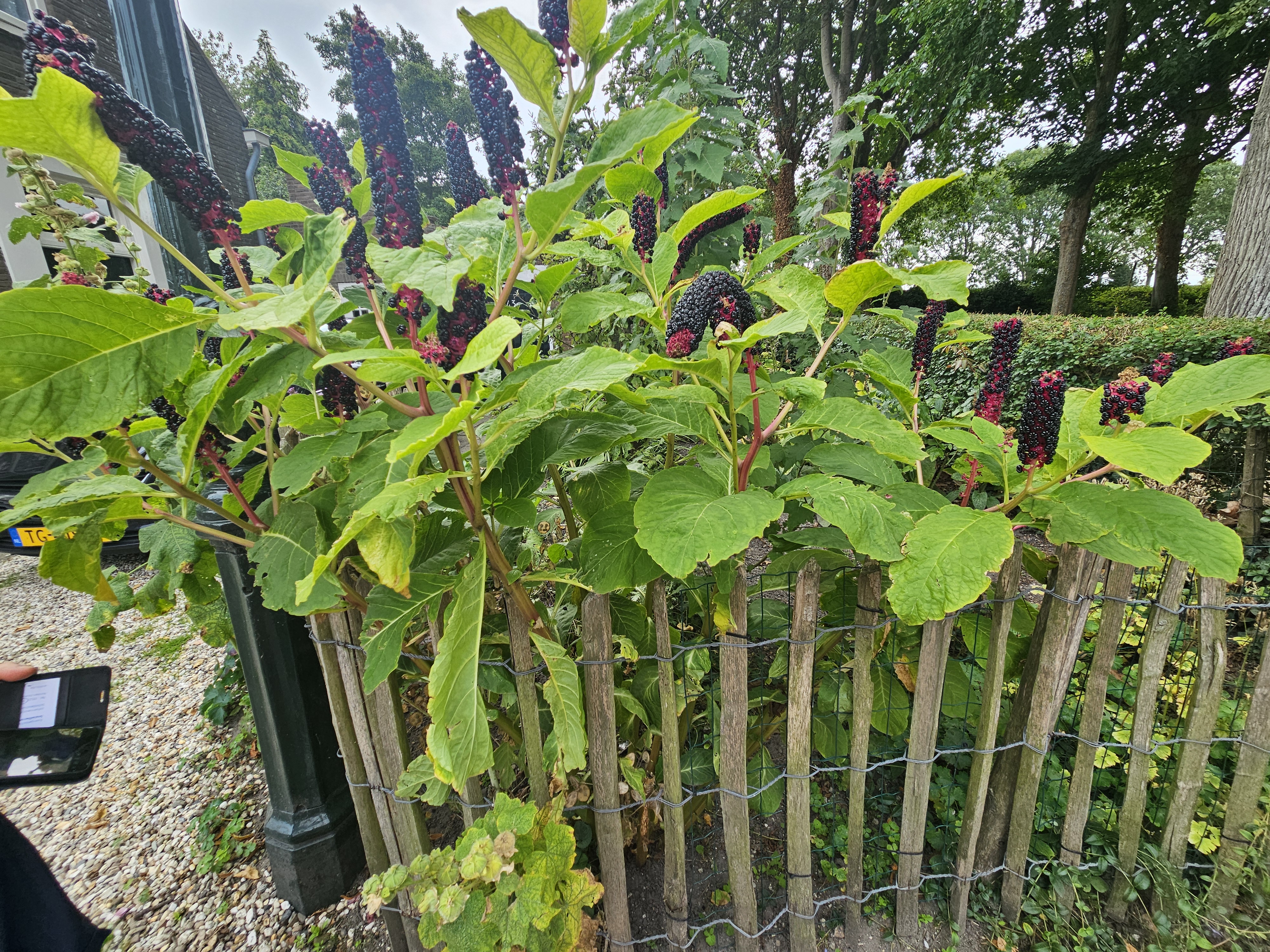
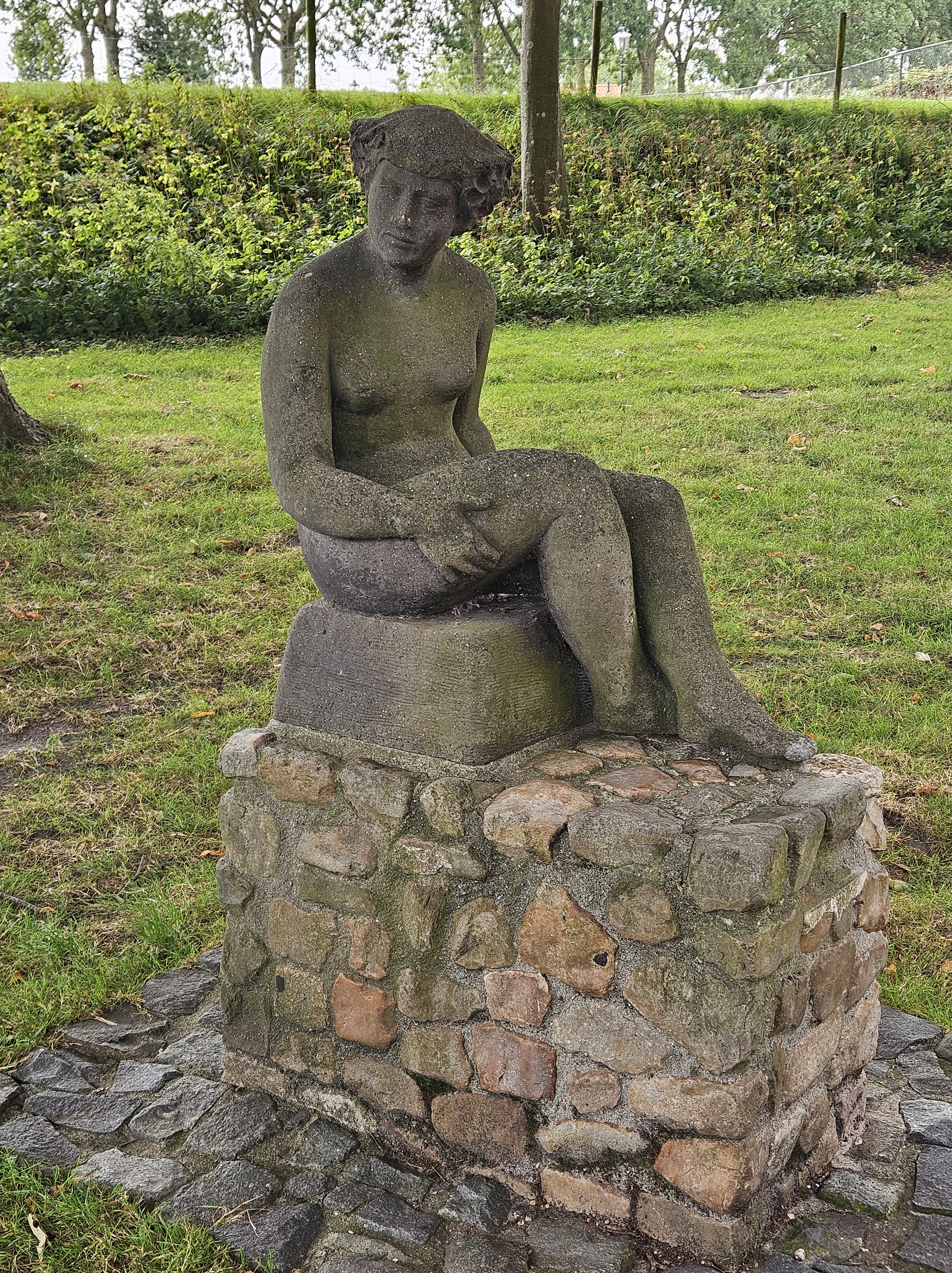
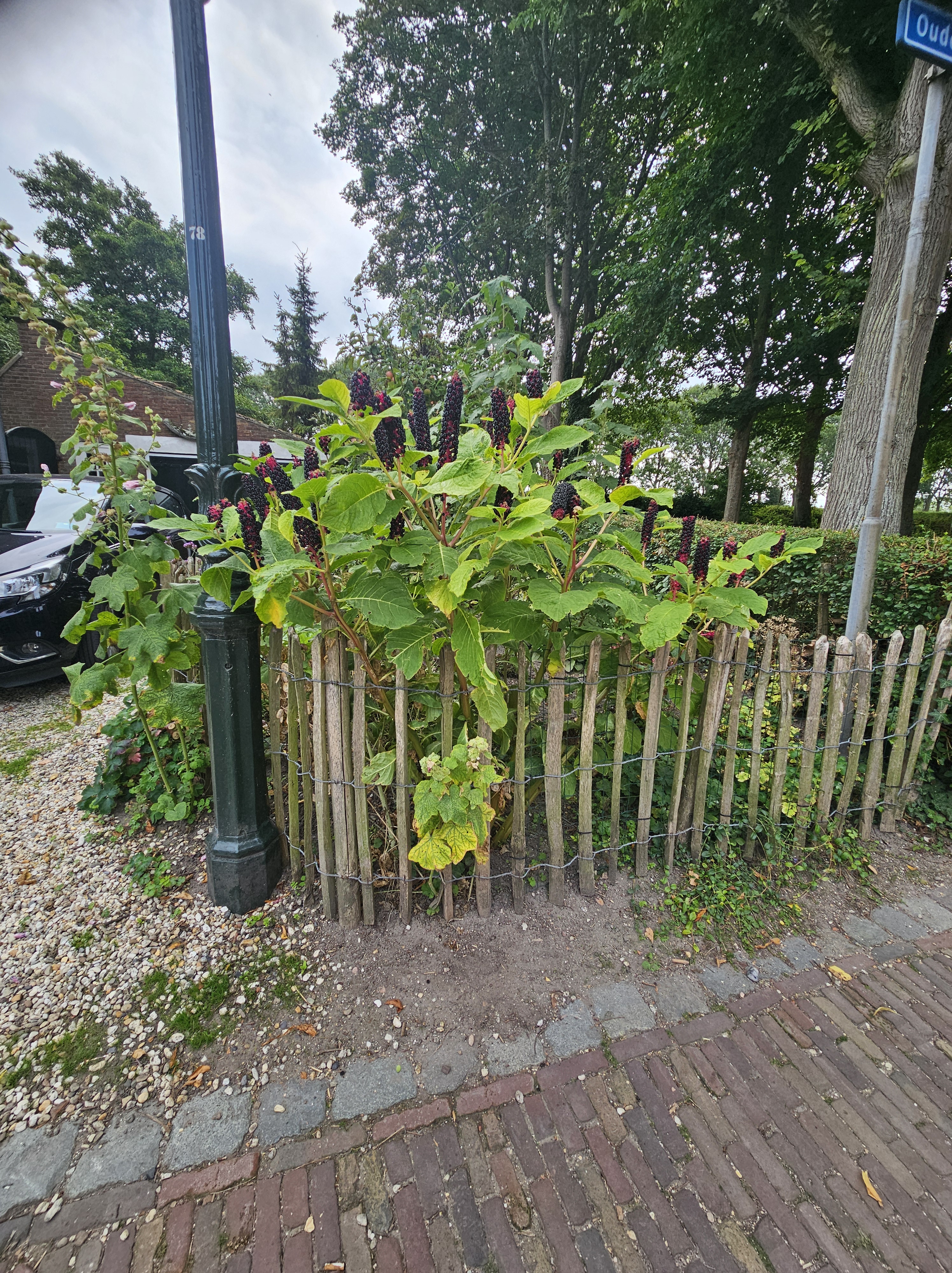
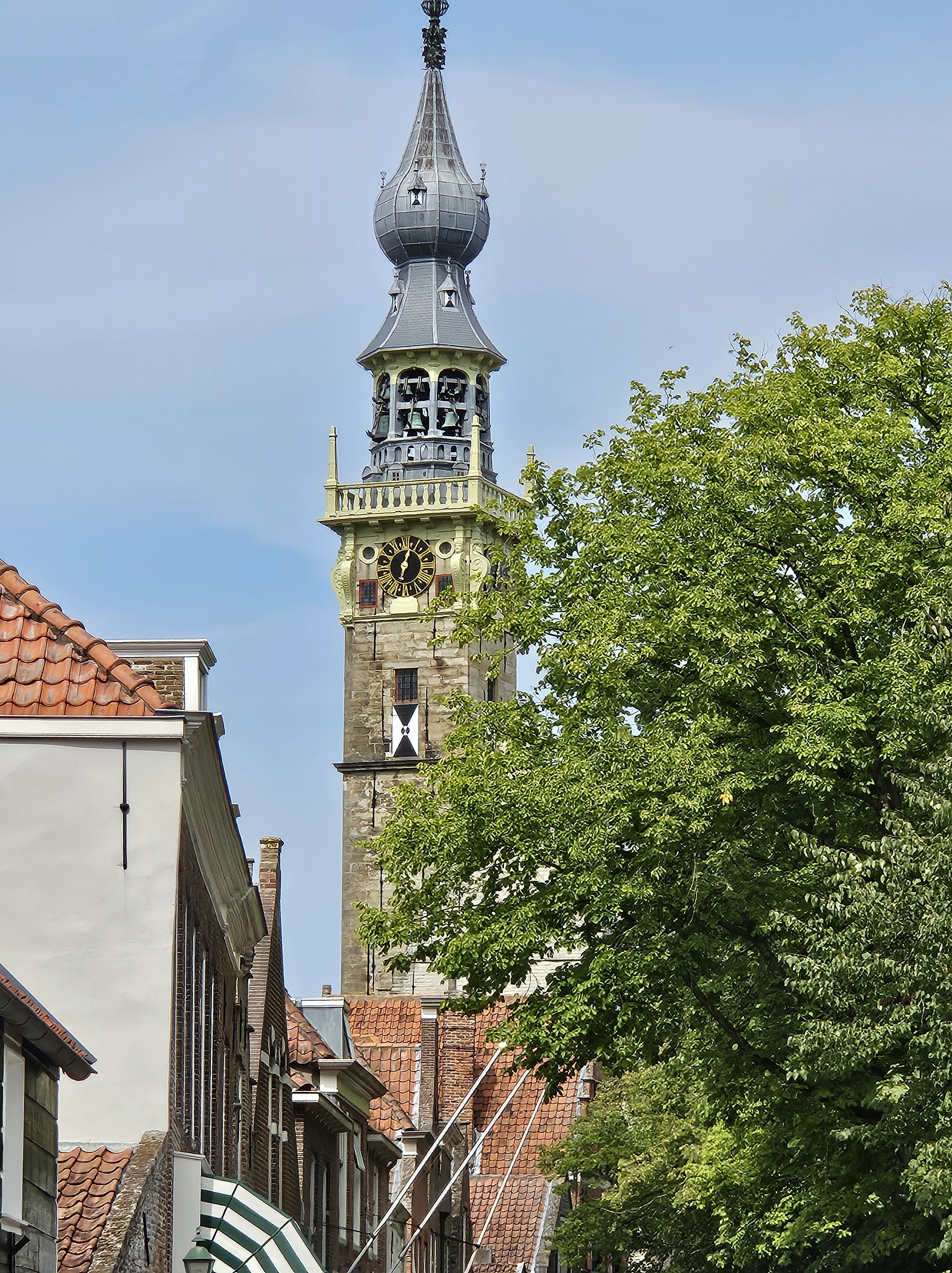
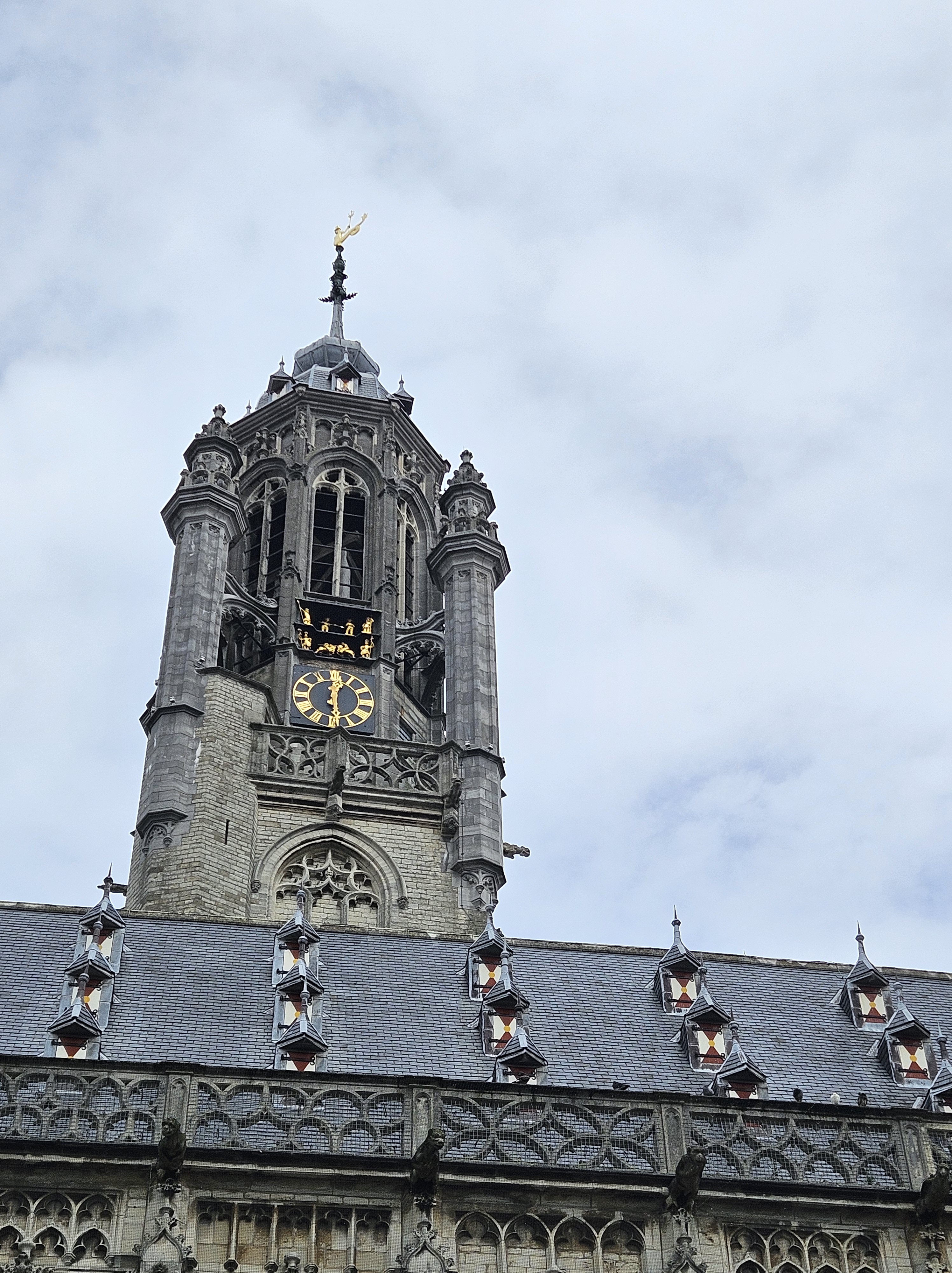
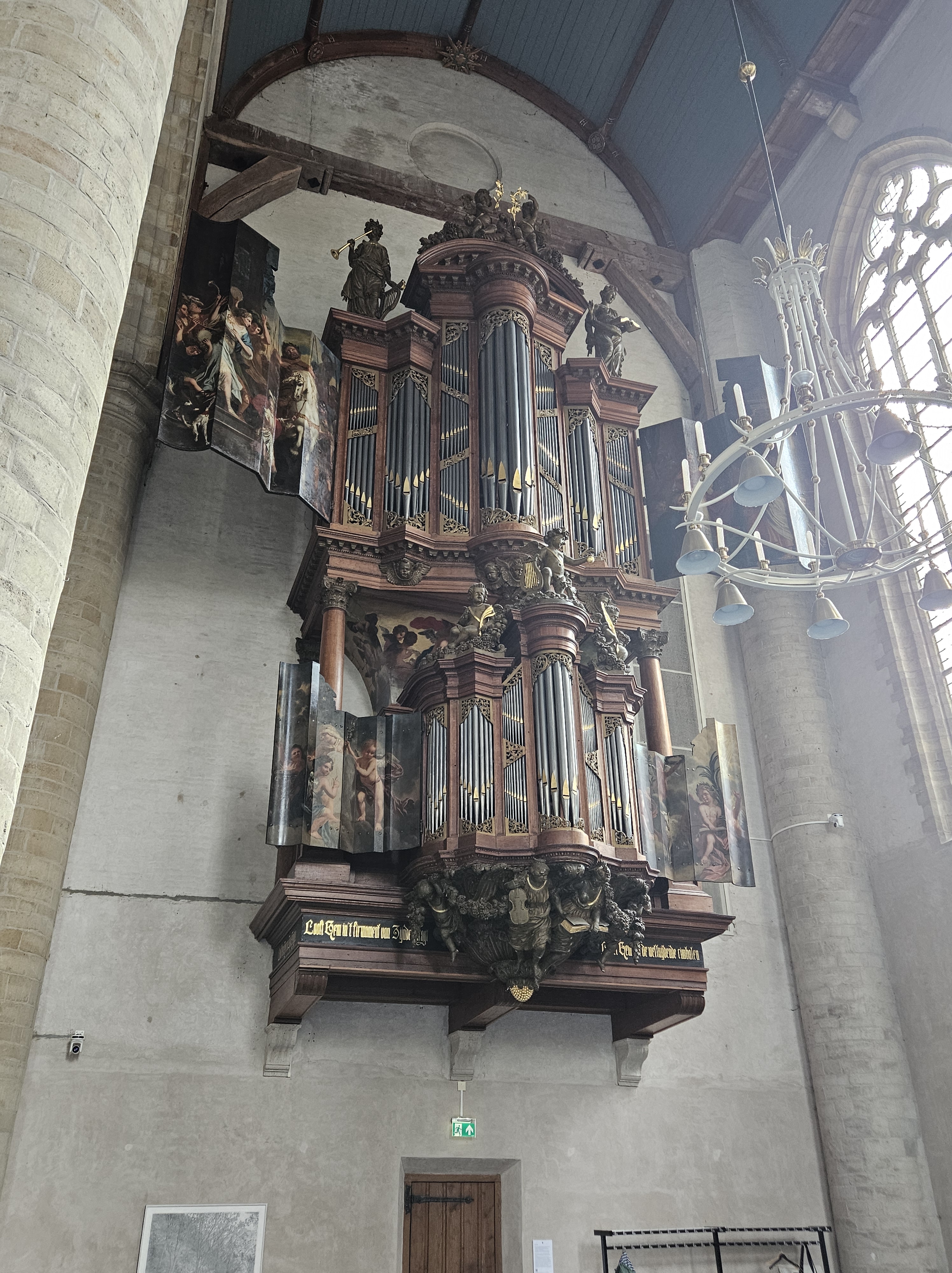
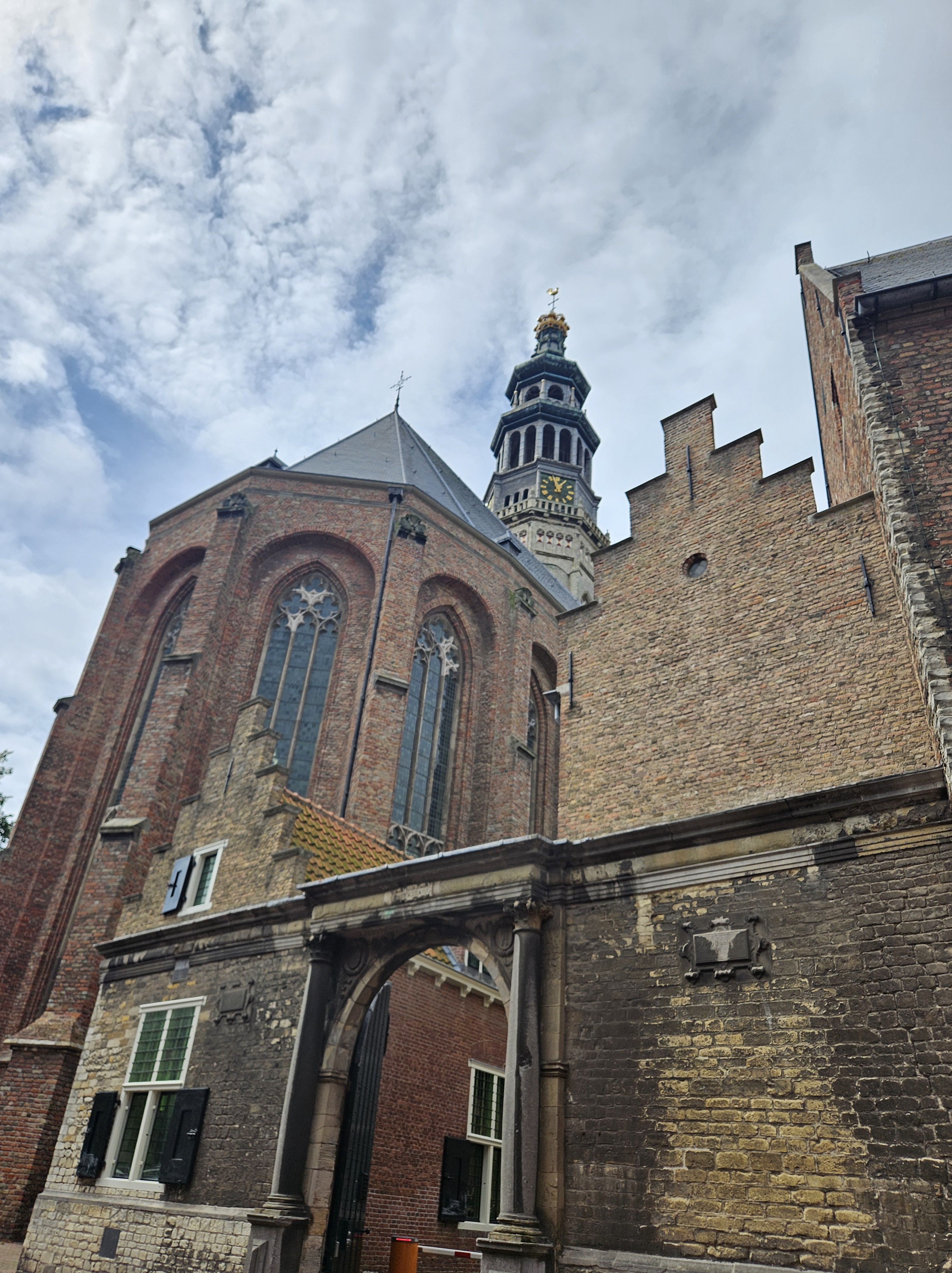
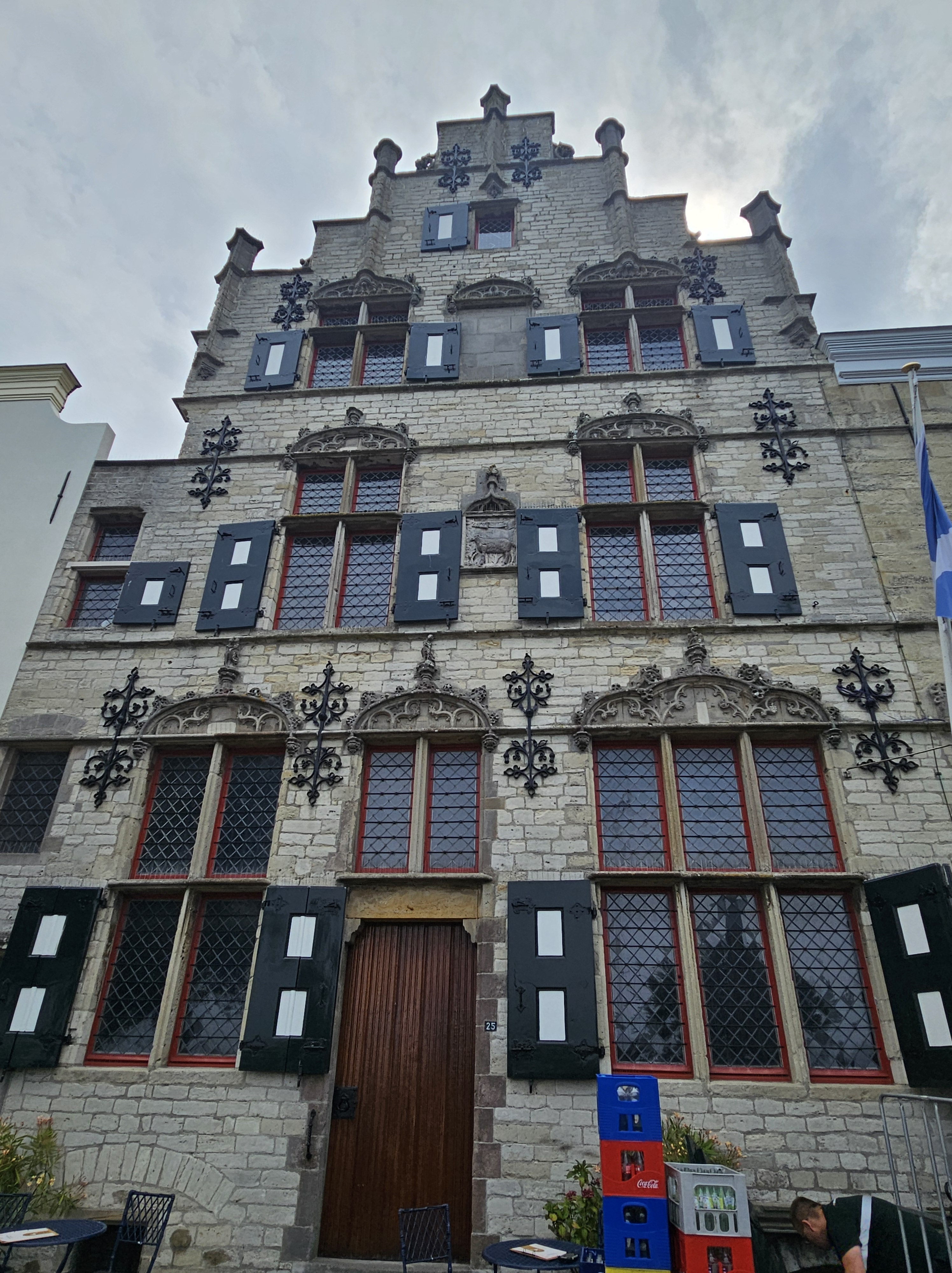
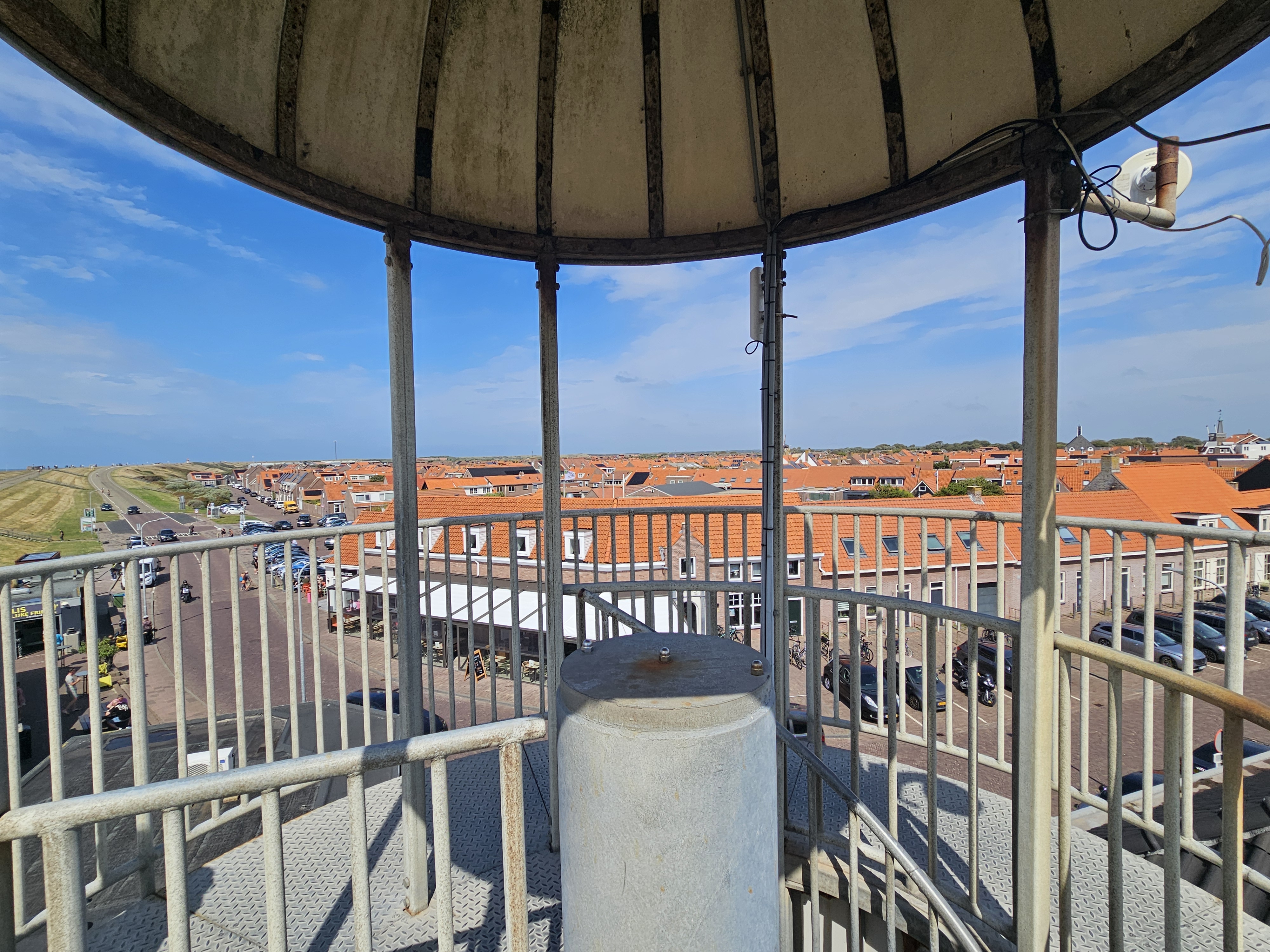
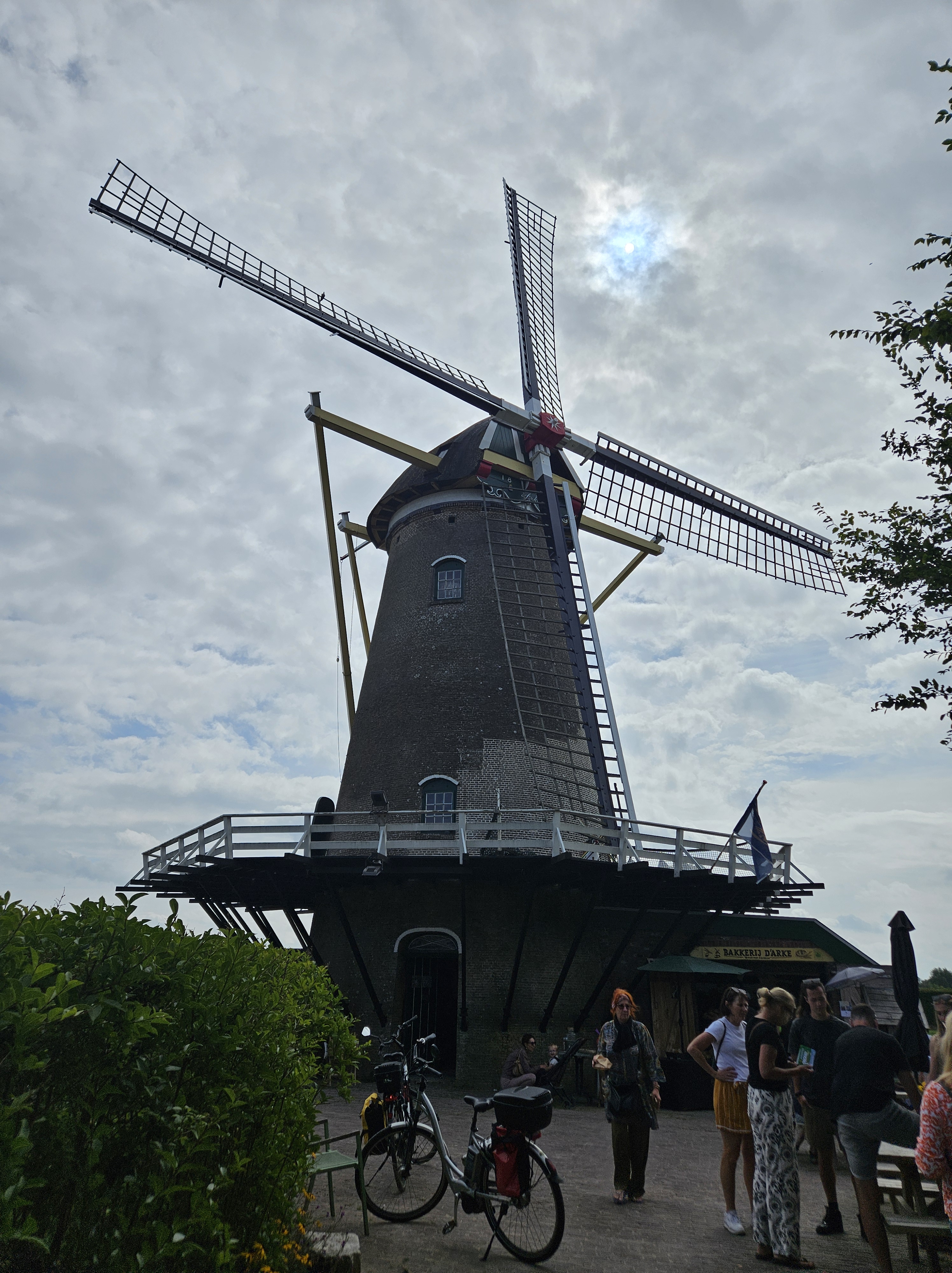
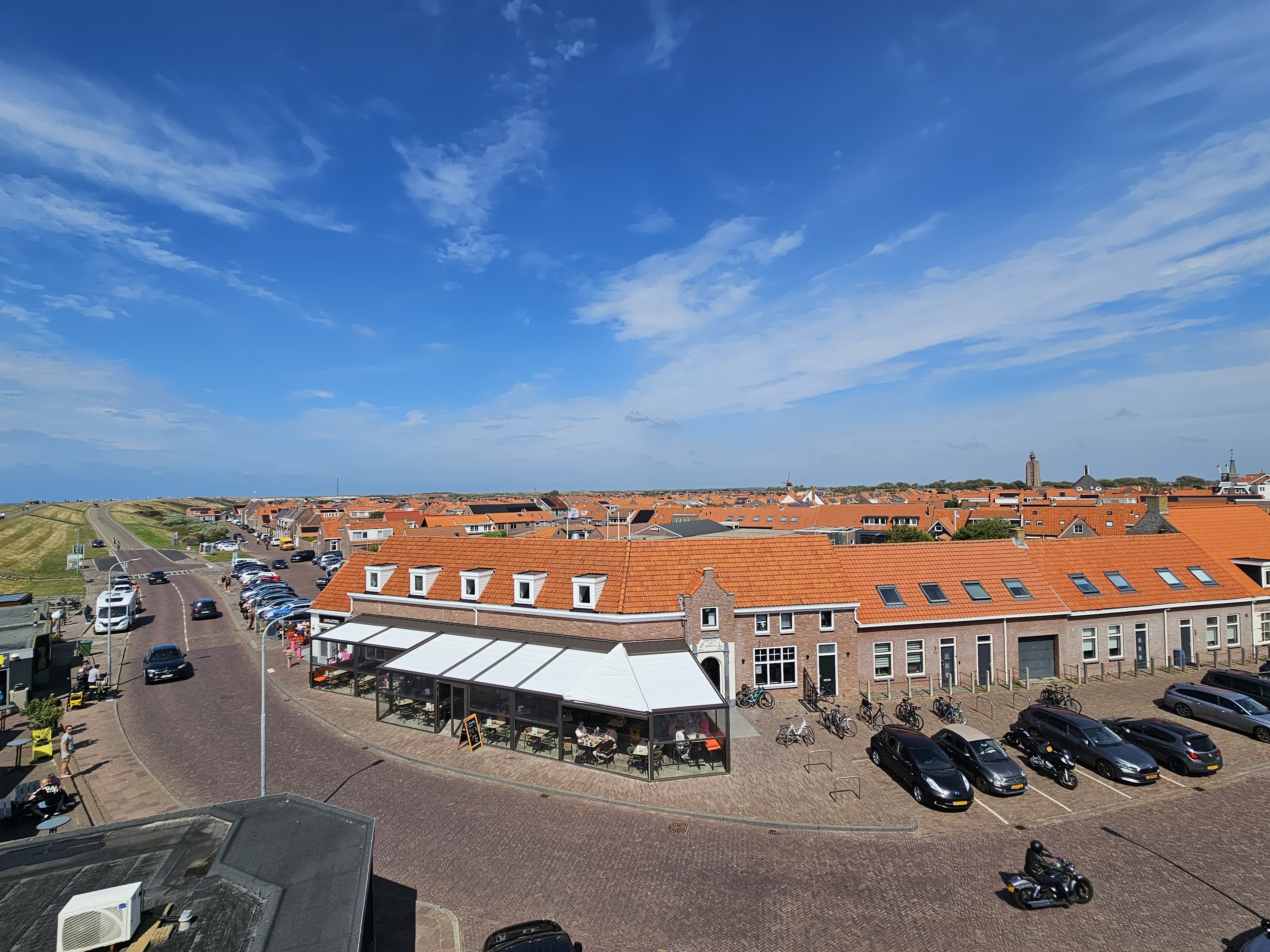
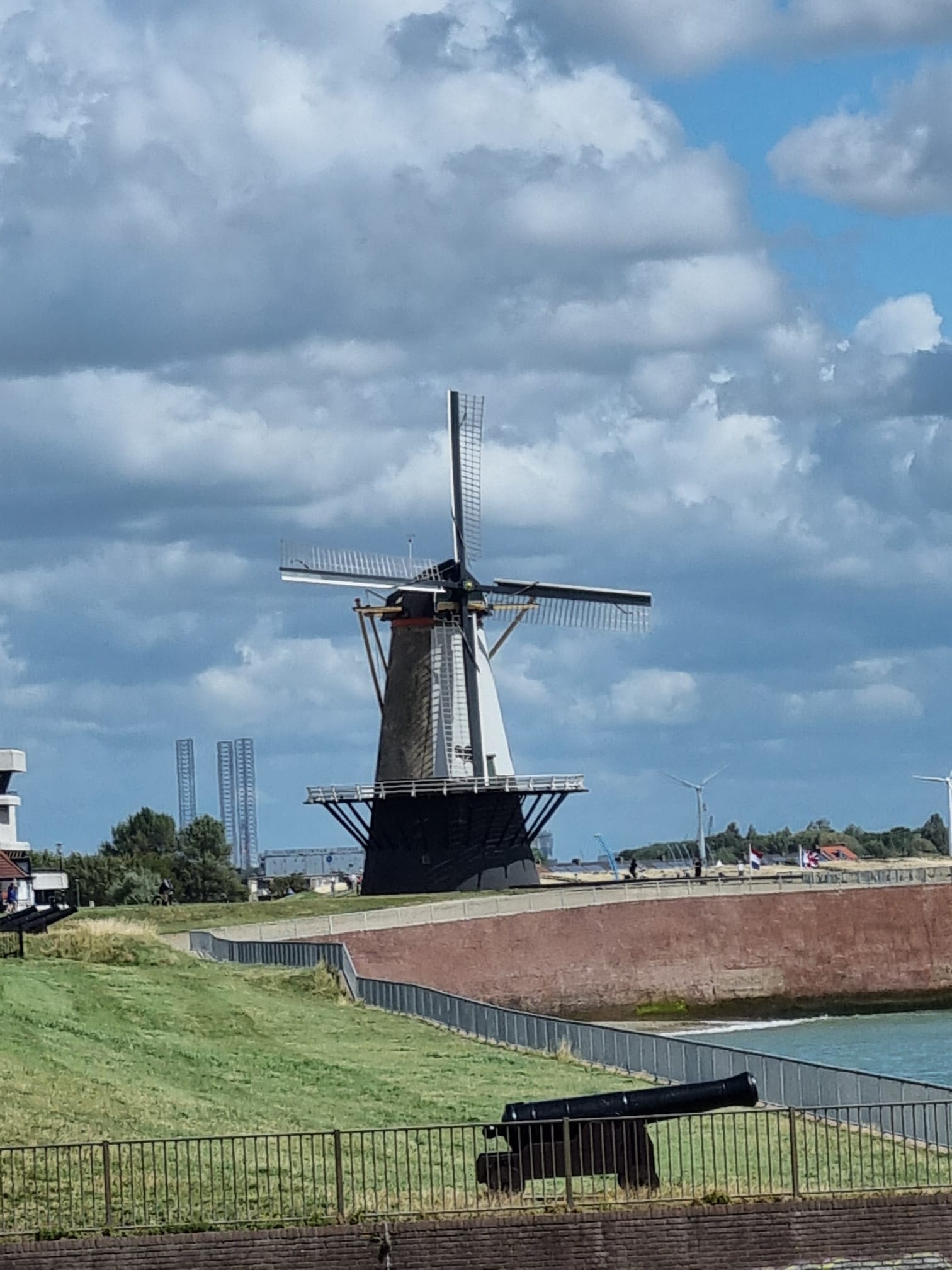
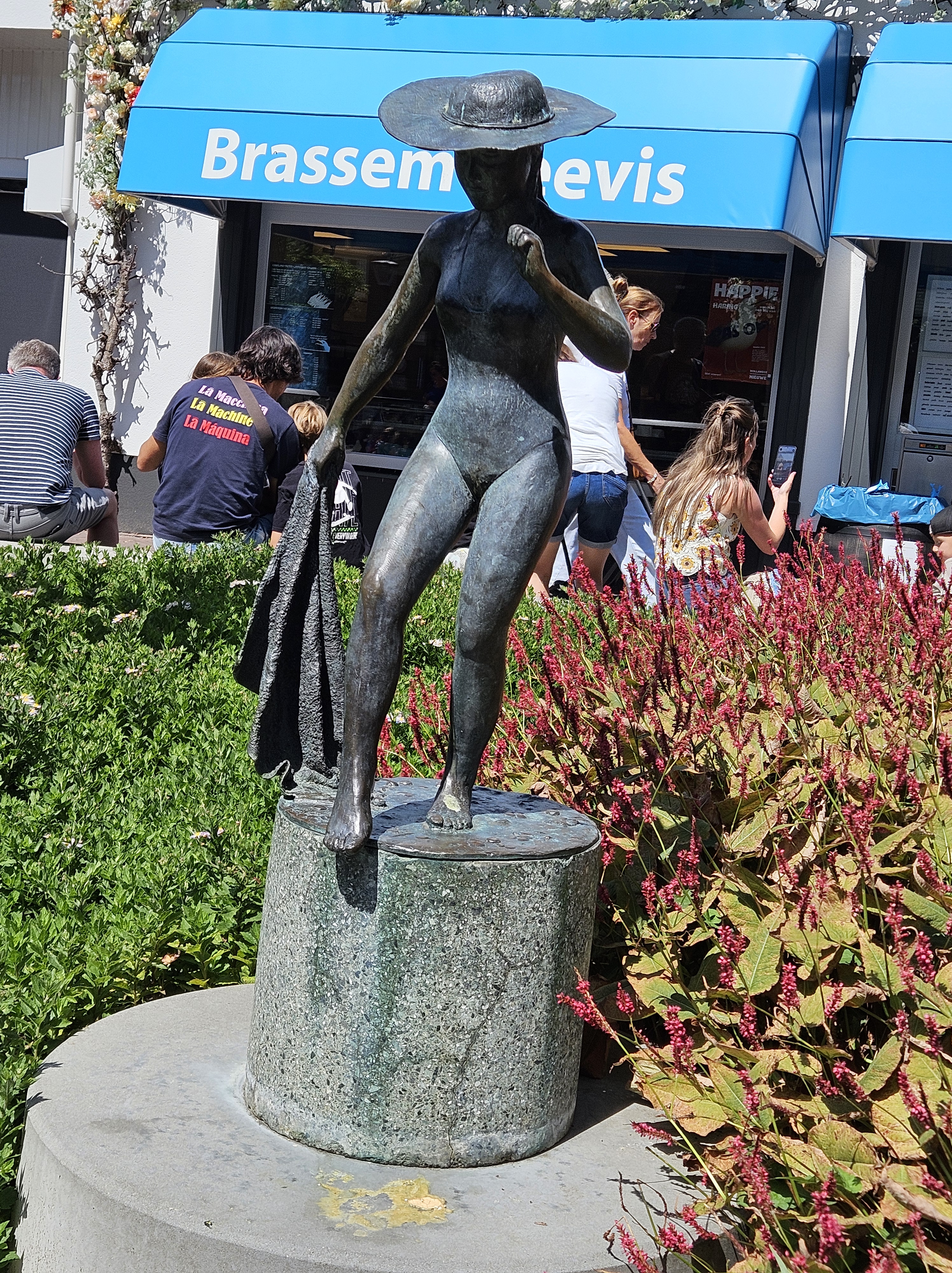
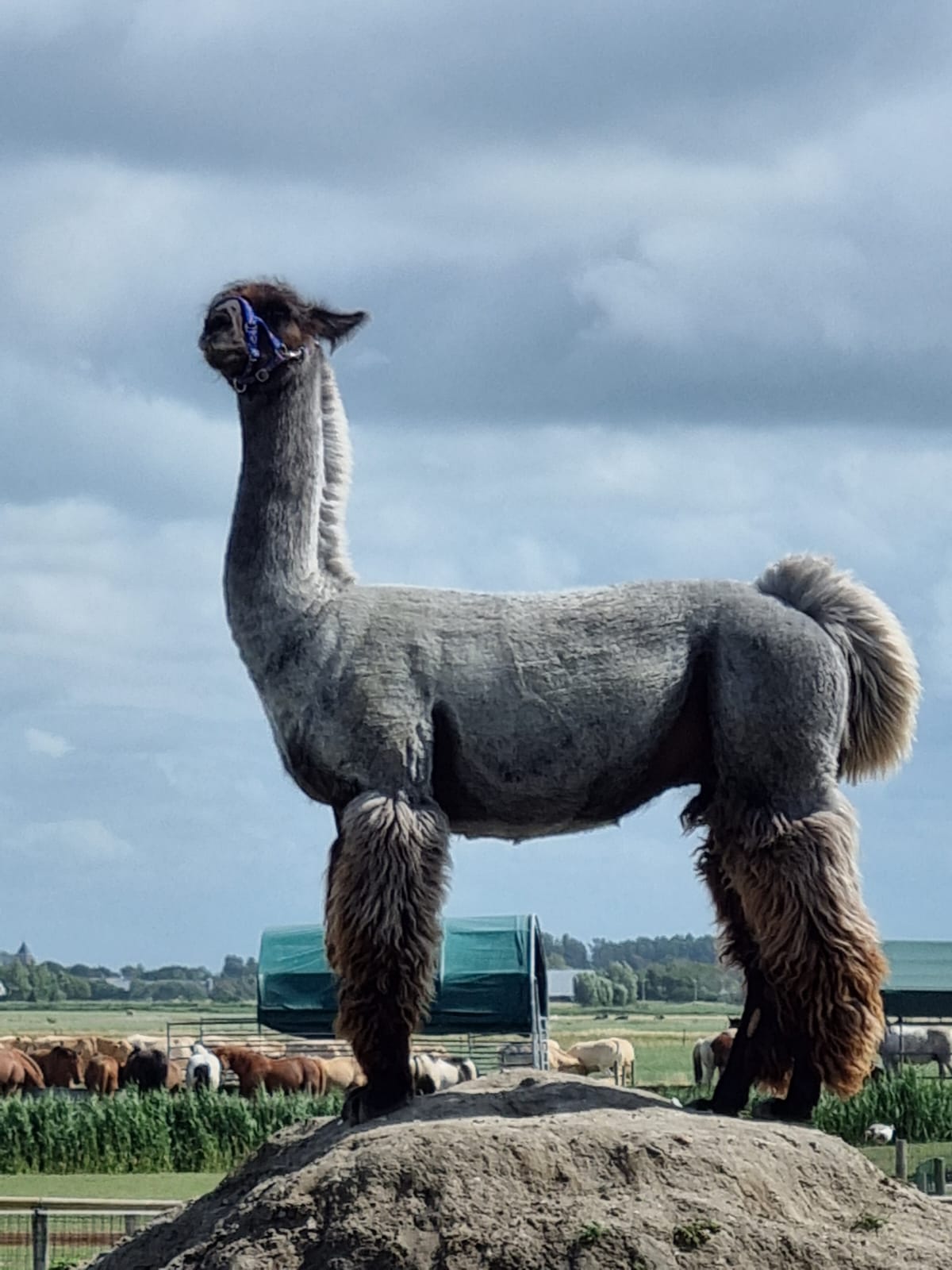
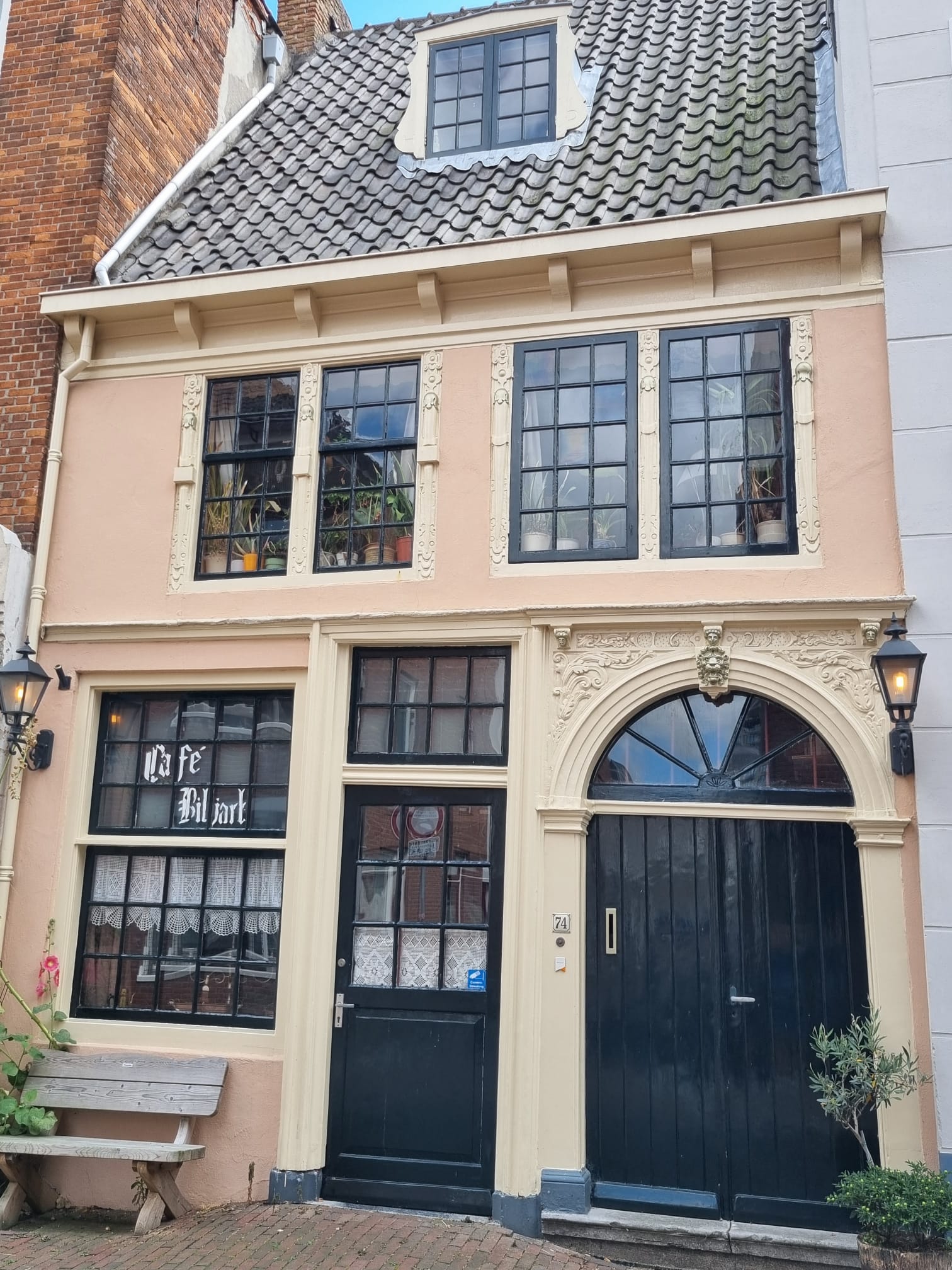
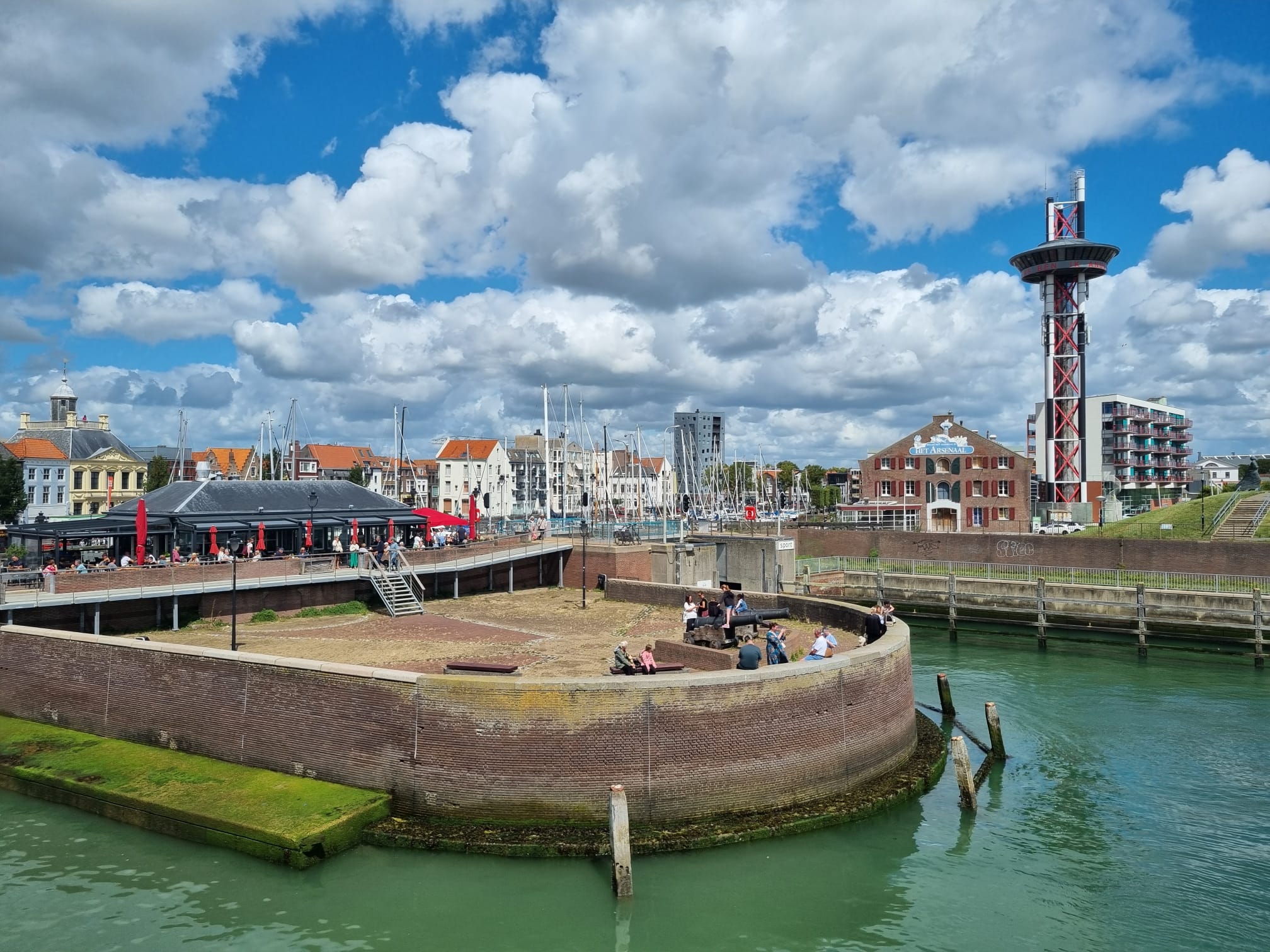
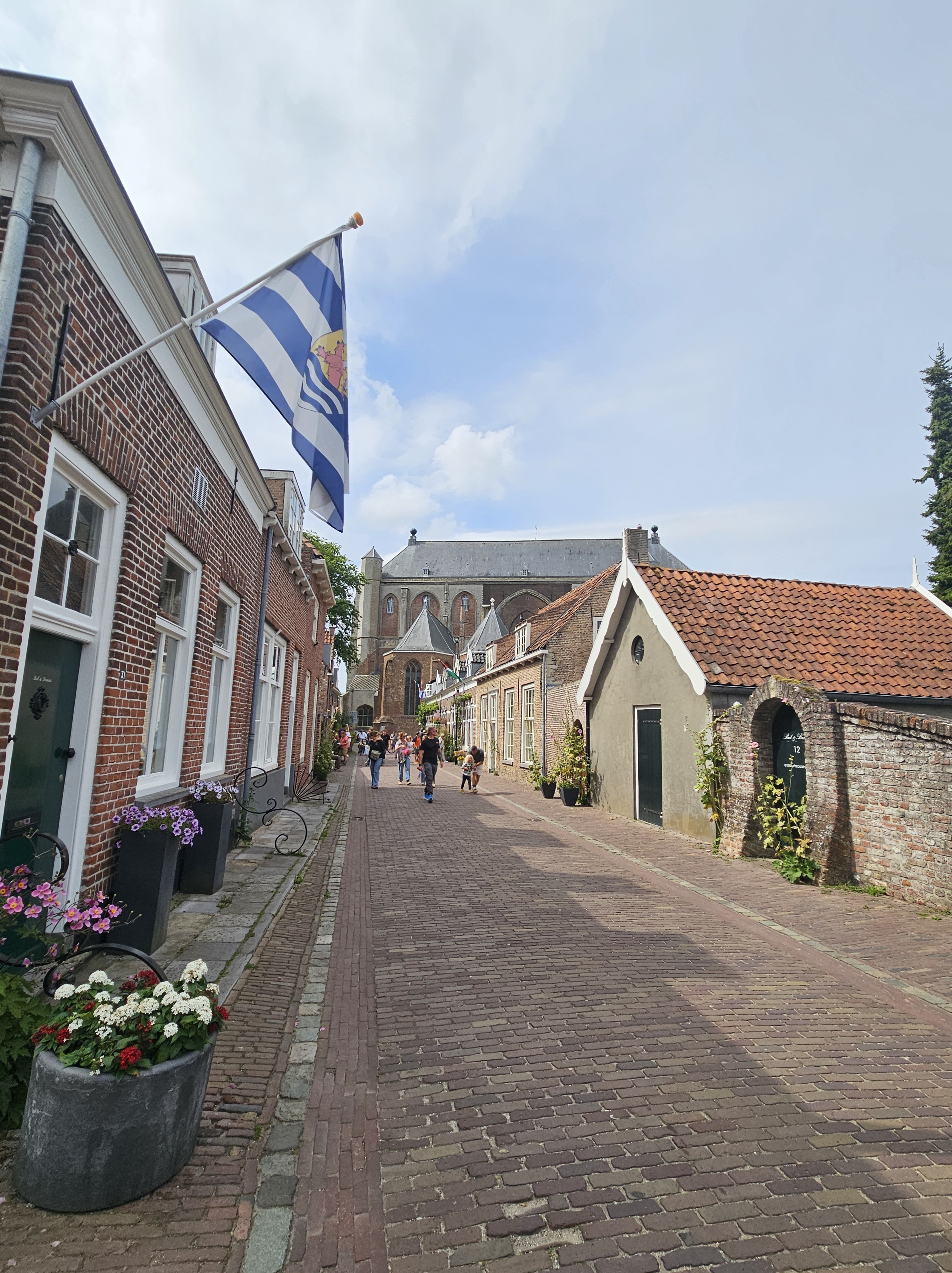
A trip to Westkapelle, Netherlands, during a Chilly Summer.

Standard

Foreword:
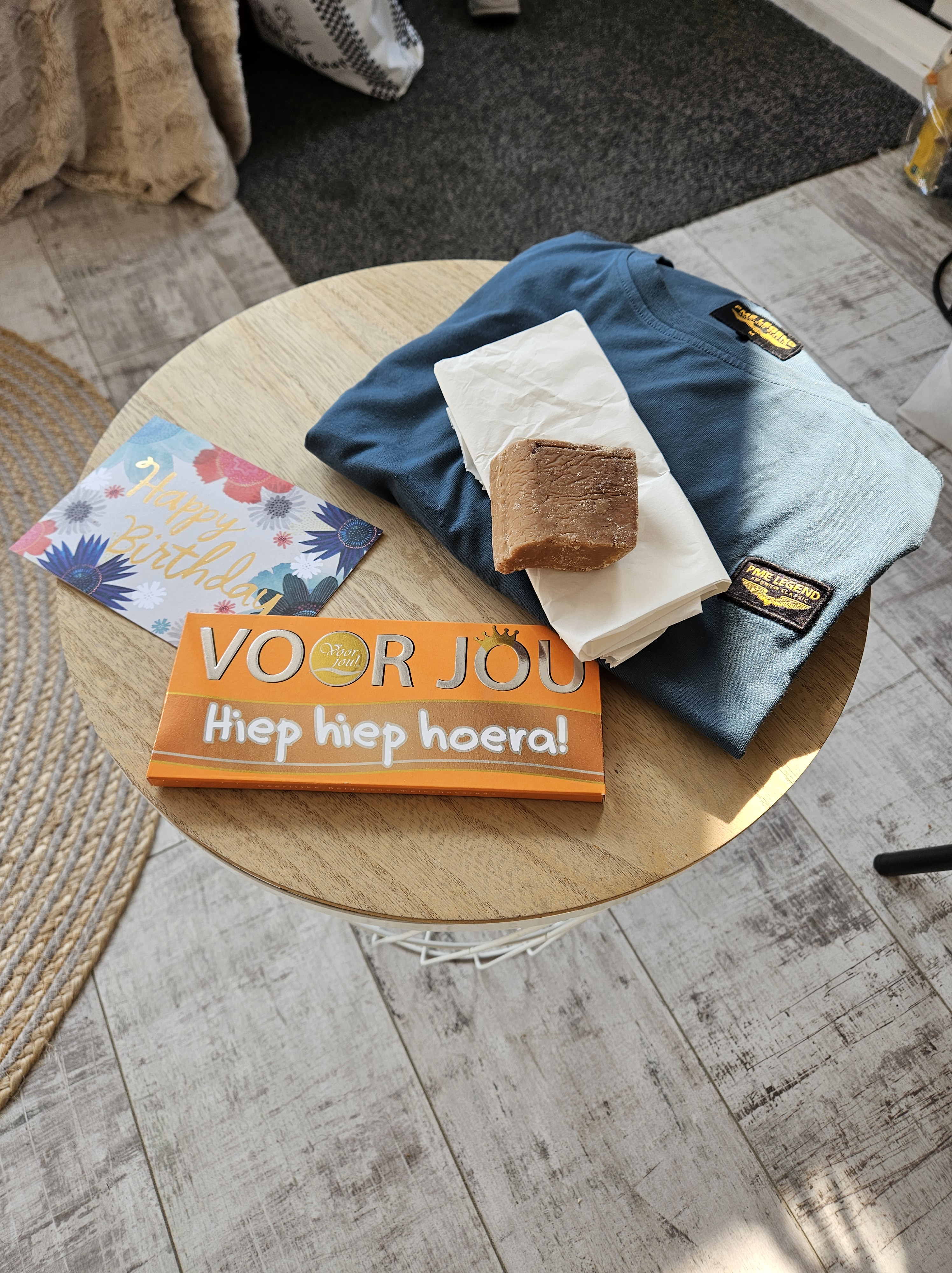
I spent most of the day, from early morning to the afternoon, at a birthday party hosted by my wife’s colleague. Since I will be visiting a friend next week and won’t be at home, I thought I’d share my “two” posts today. Here is the second one!

I believe I posted my last travel report quite some time ago; therefore, I have decided to pause sharing deep, tragic, and pensive ones and instead share something amusing! Although this trip could have been more enjoyable if summer had truly arrived, unfortunately, the temperature refused to rise above twenty degrees, and the wind stubbornly refused to change its direction from north to south.

Actually, we, or rather my lovely wife (!), aim to plan vacations in sunny, warm destinations—what we miss most during the year in Germany. This year, because of my health issues, she organised a trip to Holland so we could return home quickly if needed. As you likely know, good weather in northern Europe can be quite unpredictable. It often depends on luck, but unfortunately, we didn’t have any this time!

I even developed a thirty-degree fever after we ran back to our apartment in the rain and storm following dinner at a restaurant, and I was lying flat for two days!

Of course, it wasn’t all bad; we also enjoyed some sunshine, especially on my birthday. The great gods, Zeus, Poseidon, or Boreas (the god of the cold north wind and winter), protected us and allowed the sun to shine while the wind rested.

As usual, we wandered around, exploring different sites, including cathedrals, even though there were only a few in the small village of Westkapelle.

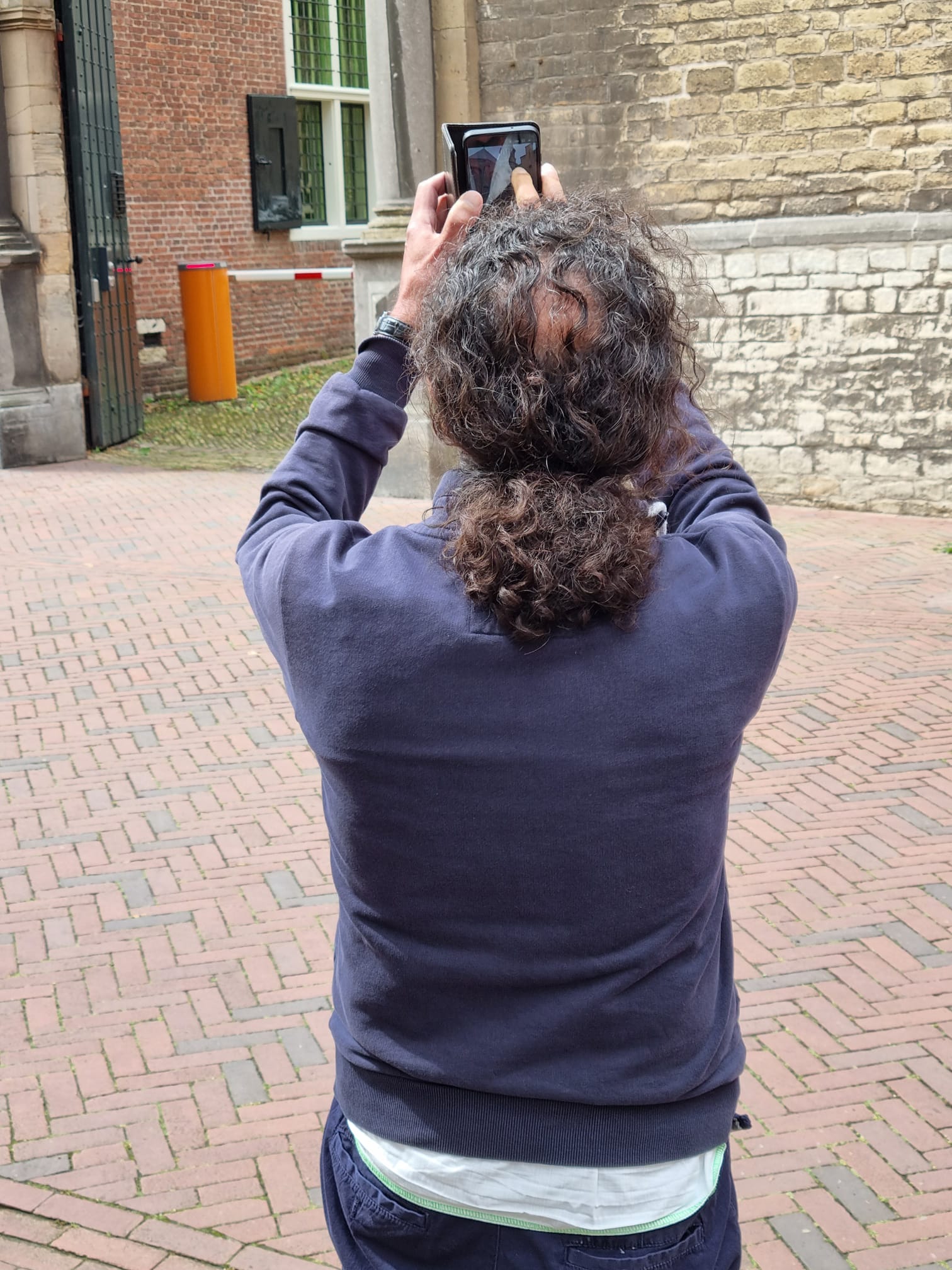
Finally, I must admit that it wouldn’t have been possible without a bike tour! And, as you might notice, I’ve lost some hair from the wind!

Wishing everyone a fantastic time! Take care of yourselves, and remember there’s a whole world beyond the internet waiting to be explored. Enjoy your treats, but be mindful not to overdo it!

Searching for the Eternal Girl/Boy P. 2 Puella Aeterna/Puer Aeternus and Corne/Senex

Standard

The dynamic principle of fantasy is play, a characteristic also of the child, and as such, it appears inconsistent with the principle of serious work. But without this playing with fantasy, no creative work has ever yet come to birth. The debt we owe to the play of imagination is incalculable. It is, therefore, short-sighted to treat fantasy, on account of its risky or unacceptable nature, as a thing of little worth.
~Carl Jung; Psychological Types Ch. 1; Page 82.
Fantasy is the creative function—the living form is a result of fantasy. Fantasy is a pre-stage of the symbol, but it is an essential characteristic of the symbol that it is not mere fantasy.
~Carl Jung, 1925 Seminar, Page 11
Source: Carl Jung Depth Psychology

Continuing from the first part of my blog, I recall the days when Al and I created our own worlds, feeling utterly disconnected from the outside world. My childhood was filled with dreams and wishes, driven by my imagination and a touch of fantasy. Perhaps it was my name that ignited my desire to make my wishes come true, with a hint of magic.

On the other hand, I didn’t want to be treated like a child. I don’t know what the issue was; maybe it was because I’d been isolated at that age. I mean, there we were, a group of five boys, Al and me, including three cousins, all nearly the same age. One of the cousins, Ham, who was around Al’s age, about two years older than me, and the other two were roughly two years younger than me, and I was stuck in the middle.

Dream Catcher by Michael Cheval

As I remember, one evening in Mashhad, when we were visiting our aunt, we were playing hide and seek — a game like ‘catch me if you can find me!’ I was so engrossed in the game that I didn’t notice Al and Ham were missing. At first, when I caught my breath from running around to find a hiding spot, I thought, ‘What’s going on with me?’ and scolded myself for acting like a child. But then I got angry when I found out Al and Ham weren’t playing with us – they were off to see a movie, and I wanted to be there with them so badly! In the evening, when we gathered again, Al and Ham began by making a reference and a joke about the movie, which I remember was called Madame. This made me feel jealous and sad. It was so obvious that my mother recognised it and tried to comfort me, but to me, her effort was like giving milk to a crying infant! So I felt even more alone and forsaken.

In Ann Yeoman’s book, we can read:
…In terms of personality traits, a strong emotional attachment to what we may call the mother-realm manifests on the one hand in a certain preciousness, a sense of specialness and difference, a fictional example of which we see in James Joice’s young hero Stephen, who is always “on the fringe,” a little apart from his fellows, an isolate. On the other hand, when out of the province of the mother and, metaphorically, the reach of the mother’s watchful eye, the mother’s son experiences an incapacity to stand on his own and embrace the risks, challenges and unpredictable fullness of life, or realise the courage “to live, to err, to fall, to triumph, to recreate life out of life,”> to cite Joice once again>(A Portrait of the Artist as a Young Amn, p. 172).
As a result, the puer remains dissociated from his feelings. In order to shield himself unconsciously from suffering, he protects himself from the possibility of abandonment, rejection and disappointment with an array of defences which prevent him from fully committing himself to life in the first place.
Jung describes the neurosis of such a “mother’s boy” in terms of a “secret conspiracy between mother and so…. [in which] each helps the other to betray life” He continues:

Where does the guilt lie? With the mother, or with the son? Probably with both. The unsatisfied longing of the son for life and the world ought to be taken seriously. There is in him a desire to touch reality, to embrace the earth and fructify the field of the world.
But he makes no more than a series of fitful starts, for his initiative as well as his staying power are crippled by the secret memory that the world and happiness may be had as a gift from the mother. The fragment of the world which he, like every man, must encounter again and again is never quite the right one, since it does not fall into his lap, does not meet him halfway, but remains resistant, has to be conquered, and submits only to force.
It makes demands on the masculinity of a man, on his ardour, above all on his courage and resolution when it comes to throwing his whole being into the scales. For this, he would need a faithless Eros, one capable of forgetting his mother and undergoing the pain of relinquishing the first love of his life.
~Carl Jung, The Syzygy, Anima & Animus, Aion, CW 9ii, par. 20-21

I may laugh at that event now, but as I recall every detail, it seems it left a particular impression on me. I know I wanted to be noticed and taken seriously. However, my mother, as she always had, saw me as her lost daughter. That’s why, when I finally found my solitude, it was mostly when I woke early in the morning in my bed and looked out of the window into the street, where the summer breeze made the leaves of the poplar tree dance. I immersed myself in my fantasy world and let my imagination run freely.

I will definitely try to write another episode.🙏💖

A Collaborative Fusion of two Great Poets Exploring Human Curiosity. Could the answer lie in dreams?

Standard

It’s a lovely day today, and it feels like summer is making one last bid to say goodbye. I was out in the garden, but not sunbathing – I had to mow the lawn! As tenants, these sorts of tasks are our responsibility.
And now, after giving the flat a good vacuum, I thought it was a good time to write a post.

Tomorrow is Leonard Cohen‘s birthday, and I thought it would be a great chance to celebrate with a poem by Pablo Neruda as a tribute.
The theme is human curiosity (the ‘Whys!’), how little we know, and, as Leonard Cohen suggests, why not stand on your own two feet and be your own individual?

There’s no doubt that they’re still alive, truly in our hearts, thanks to their lasting arts and wisdom.

Through a closed mouth, the flies enter
by Pablo Neruda:

Why, with those red flames at hand,
Are rubies so ready to burn?

Why does the heart of the topaz
reveal a yellow honeycomb?
Why does the rose amuse itself
by hanging the colour of its dreams?
Why does the emerald shiver
like a drowned submarine?

Why does the sky grow pale
under the June stars?
Where does the lizard’s tail
Get its fresh supply of paint?
Where is the underground fire
That revives the carnations?

Where does the salt acquire
The transparency of its glance?
Where did the coal sleep
That it awoke so dark?
And where, where does the tiger buy
Its stripes of mourning, its stripes of gold?

When did the jungle begin
to breathe its own perfume?
When did the pine tree realise
its own sweet-smelling consequence?
When did the lemons learn
The same laws as the sun?

When did smoke learn to fly?
When do roots converse?
What is water like in the stars?
Why is the scorpion poisonous?
Is the elephant benign?

What is the tortoise brooding on?
Where does shade withdraw to?
What song does the rain repeat?
When are the birds going to die?
And why should leaves be green?

What we know is so little,
and what we presume so much,
So slowly do we learn
that we ask questions, then die.
Better for us to keep our pride
for the city of the dead
on the day of the departed,
And there, when the wind blows through
the holes in your skull,
It will unveil to you such mysteries,
whispering the truth to you
through the spaces that were your ears.

I shall forever remember those days when Al and I closed many doors one after another to society, and by listening to Cohen’s songs, we immersed ourselves in our solitude.

Have a great time, everyone. 🙏💖🤗

Source: “Through a closed mouth the flies enter” from EXTRAVAGARIA by Pablo Neruda, translated by Alastair Reid. Copyright © 1958 Pablo Neruda and Fundación Pablo Neruda. Translation copyright © 1974 by Alastair Reid. Used by permission of Farrar, Straus and Giroux and Fundación Pablo Neruda.

Searching for the Eternal Girl/Boy P. 1 Puella Aeterna/Puer Aeternus and Corne/Senex

Standard

Does fantasy lead to escape, or to the embracing of a new perspective? In other words, does it support psychic growth or impede it? That distinction is often complicated by paradox, but it helps to ask ourselves, “Is concentrating on this fantasy or daydream opening my creative possibilities, or is this sapping my ego strength in the real world?” ~Marion Woodman

This excerpt begins Marion Woodman‘s foreword from Ann Yeoman’s book, Now or Neverland, which I read some time ago, thanks to Deborah Gregory‘s recommendation, and I am very grateful for it.

Frankly, when I began reading this book, I felt at home; I saw myself as a puer aeternus, struggling to stay balanced on life’s rollercoaster.

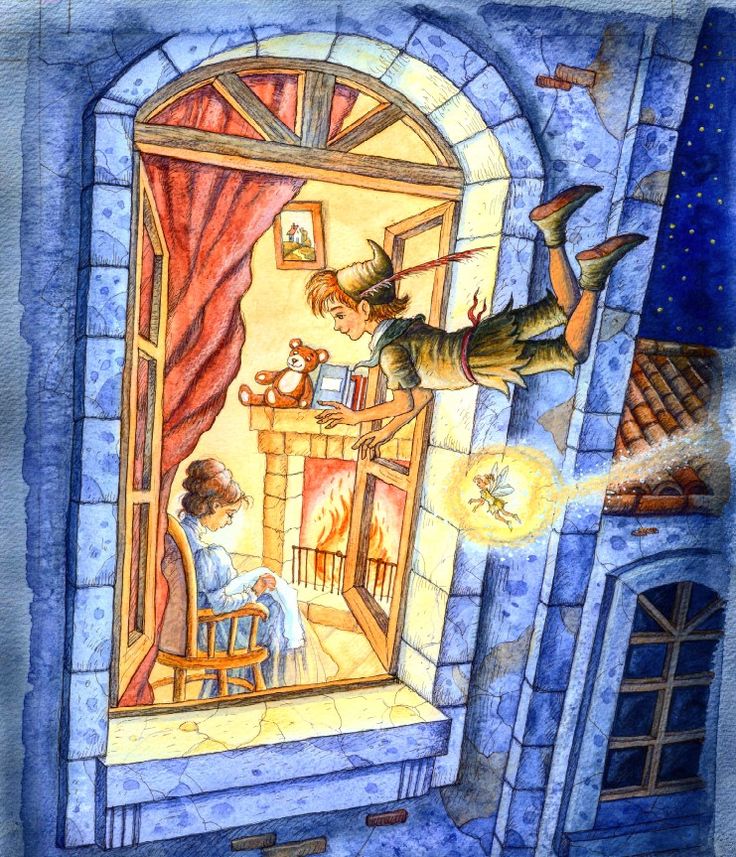
Traditionally, the term ‘puer aeternus’ (Latin for ‘eternal boy’) is used to describe a child-god who remains eternally young. In Carl Jung’s psychology, it refers to an older person whose emotional life remains stuck in adolescence, often referred to as the “Peter Pan syndrome”. Jung suggests that the puer lives a “provisional life” due to a fear of being trapped. They seek independence, resist boundaries, and find restrictions intolerable. In Greek mythology, the term ‘puer aeternus’ originates from the Metamorphoses, an epic poem by Roman poet Ovid (43 BC – c. 17 AD) that explores Greek and Roman myths. Ovid refers to the child-god Iacchus as “puer aeternus” and praises his role in the Eleusinian mysteries. Iacchus is linked to Dionysus and Eros. The puer represents a deity of vegetation, resurrection, and divine youth, similar to Tammuz, Attis, and Adonis.

Senex is a Latin term that literally means “old man.” It can also be used to describe: a wise, elderly person, an archetype. The wise older person (also known as senex, sage, or sophos) is an archetype outlined by Carl Jung, as well as a familiar literary figure, often portrayed as a stock character. Such a figure can be a profound philosopher renowned for wisdom and sound judgment.

Marie-Louise Von Franz summarised her view of the puer as follows:
None of his reactions are particularly personal or special. He becomes a type—the type of the puer aeternus. He becomes an archetype, and if you become that, you are not at all original… He is merely the archetype of the eternal-youth god, and, therefore, he has all the features of the god: he has a nostalgic longing for death, he thinks of himself as being something special, and he is the one sensitive being among all the other tough sheep. He will have a problem with an aggressive, destructive shadow that he will not want to live with and generally projects. There is nothing special whatsoever. The worse the identification with the youthful god, the less individual the person, although he himself feels so special. (Puer Aeternus, pp. 121f)
Another type of puer that does not display the charm of eternal youth, nor does the archetype of the divine youth shine through him. On the contrary, he lives in a continual sleepy daze, and that, too, is a typical adolescent characteristic… The sleepy daze is only an outer aspect, however, and if you can penetrate it, you will find that a lively fantasy life is being cherished within. (Puer Aeternus, p.2)

Reflecting on my childhood, after my father passed away and my mother kept it a secret from my brother Al and me, I became very introverted. Once I learned the truth, I simply didn’t want to grow up. Al and I drew closer because of our mother’s lie, and over time, during our youth, we swapped roles as eternal children. Initially, I wanted to remain a child forever, while Al, aware of our father’s death almost from the moment it happened, tried to act as a mature older brother to look after me.

As we entered puberty, our roles underwent significant changes. I developed a strong sexual desire much earlier and believed I had to act like a man to attract girls, while Al began creating his own solitary world. For many years, this condition persisted. Although I was accepted into Al’s world and was part of it, I was the one who had to maintain contact with the outside world. As a result, I assumed the role of the senex, but I longed for my puer aeternus and tried to keep it concealed yet protected.

Let’s conclude this now, and I look forward to discussing this topic further in the next part. 🖖🙏

Divine Earrings for a Truly Extraordinary Pharaoh

Standard

These earrings are the most striking of the four pairs found in Tutankhamun’s tomb. The ducks with outstretched wings create a circular shape, and their feet hold the shen symbol. The head is made of translucent blue glass, while the wing is crafted in cloisonné.

Earrings-of-Tutankhamun-with-Duck-Heads via https://egypt-museum.com/

Hanging below the duck are gold and blue glass beads, each featuring five uraei (rearing cobras). The earrings show a high level of aesthetic sophistication, and the duck held a particular erotic significance.

Let’s appreciate and enjoy Marie Grillot‘s vivid portrayal of this captivating divine gem.

(It’s clear I am not happy about naming a character in this article, but I am committed to getting the translation right; just to mention!)

Tutankhamun’s Blue Bird Earrings

via égyptophile

Bluebird Earrings – Gold, glass, quartz, travertine, faience – 18th Dynasty
From the treasure chamber of Tutankhamun’s tomb, discovered in November 1922
by Lord Carnarvon and Howard Carter in the Valley of the Kings (KV 62)
Ref.: Carter 269a(1) – JE 61969-a – GEM 485

These “bluebird earrings,” as Christiane Desroches Noblecourt aptly called them, and these “gold-encrusted earrings in the shape of an ousekh necklace with a blue glass falcon,” as Zahi Hawass describes them, are one of five pairs found in Tutankhamun’s treasure.

The “Blue Bird” Earrings – gold, glass, quartz, travertine, faience – 18th Dynasty
In the rectangular box 269a, placed in chest 269
From the treasure chamber of Tutankhamun’s tomb, discovered in November 1922
by Lord Carnarvon and Howard Carter in the Valley of the Kings (KV 62)
Ref.: Carter 269a(1) – JE 61969-a – GEM 485-a
The Griffith Institute – Tutankhamun: Anatomy of an Excavation
The Howard Carter Archives – Photographs by Harry Burton

They had all been deposited in a rectangular box (number 269a) placed in a charming wooden chest (number 269). Shaped like a cartouche, it is topped with a flat lid, decorated with the king’s birth name written in delicate colored hieroglyphs. It can be identified, “in situ”, in the photos taken by Harry Burton in the “Treasury Room” whose “official opening” took place on February 17, 1923.

With a height of 12.1 cm and a width of 4.4 cm, these earrings are made of “gold, glass paste, translucent blue glass and pale orange-white-blue melted glass” for Christiane Desroches Noblecourt. At the same time, Zahi Hawass sees, instead, in the gold inlays, besides the glass, quartz, travertine and earthenware…

Bluebird Earrings – Gold, glass, quartz, travertine, faience – 18th Dynasty
From the treasure chamber of Tutankhamun’s tomb, discovered in November 1922
by Lord Carnarvon and Howard Carter in the Valley of the Kings (KV 62)
Ref.: Carter 269a(1) – JE 61969-a – GEM 485-a
Published here in the exhibition catalogue “Tutankhamun and His Time” (1963)

Their heavy and imposing suspension system consists of two tubes, one sliding inside the other, which are passed through the lobe involving an extensive “perforation”. These two elements “are decorated on both sides: at the rear, a hemispherical boss (0.85 cm, diam.) of translucent quartz lined with pigment; at the front, a hemispherical boss (0.95 cm, diam.) of translucent quartz supported by a pigment, forming a solar disk, with two uraei” specify Howard Carter and Alfred Lucas.

The central element consists of a bird with outstretched wings curved inwards, which makes them meet almost forming a circle. They are, like the body, worked according to the cloisonné method… For Zahi Hawass: “The wings of the falcon, and the details at the place where they meet, form a large collar called usekh”.

Bluebird Earrings – Gold, glass, quartz, travertine, faience – 18th Dynasty
From the treasure chamber of Tutankhamun’s tomb, discovered in November 1922
by Lord Carnarvon and Howard Carter in the Valley of the Kings (KV 62)
Ref.: Carter 269a(1) – JE 61969-a – GEM 485-a

The bird’s head, which does not resemble that of a falcon, cannot but raise questions, just as it raised questions for Howard Carter: “It is interesting to note that the sun falcon, Herakhtes, has, for some inexplicable reason, the head of a mallard (Anas boscas) in semi-translucent blue glass”…

The bird’s legs are almost horizontal and the talons enclose a shen sign, a symbol of eternity…

The “Blue Bird” Earrings – gold, glass, quartz, travertine, faience – 18th Dynasty – at the time of their discovery
from the treasure chamber of Tutankhamun’s tomb, discovered in November 1922
by Lord Carnarvon and Howard Carter in the Valley of the Kings (KV 62)
ref.: carter 269a(1) – JE 61969-a – GEM 485-a
The Griffith Institute – Tutankhamun: Anatomy of an Excavation
The Howard Carter Archives – Photographs by Harry Burton

Under its tail, a slightly curved gold plate, decorated with pellets, serves as a hook for the lower part of the loops. It is composed of curious “flexible hanging appendages, composed of openwork plates with a geometric pattern interlaced by five rows of blue and gold cylindrical beads, ending in five uraei heads” (“Tutankhamun and his era”)… When discovered, as Harry Burton’s photos show, these “tassels” were fragmentary and in poor condition… A successful restoration has restored them to their original appearance.

Howard Carter noted that these ear ornaments had signs of wear, indicating that they had been worn, most likely until adolescence, by the young king… He did note, during the examination of Tutankhamun’s mummy, that his earlobes were pierced. In “The Tomb of Tutankhamun – The Annexe and Treasury”, he adds this interesting detail: “The gold mask that covered his head also had pierced earlobes, but the holes had been carefully filled with small discs of thin gold leaf, suggesting a desire to conceal this fact”…

Bluebird Earrings – Gold, glass, quartz, travertine, faience – 18th Dynasty
From the treasure chamber of Tutankhamun’s tomb, discovered in November 1922
by Lord Carnarvon and Howard Carter in the Valley of the Kings (KV 62)
Ref.: Carter 269a(1) – JE 61969-a – GEM 485-a
The Griffith Institute – Tutankhamun: Anatomy of an Excavation
The Howard Carter Archives – Photographs by Harry Burton

This pair of earrings, Carter 269a(1), has been transferred to the Egyptian Museum in Cairo, where it was recorded in the Journal of Entries under the reference JE 61969. Its new reference at the Grand Egyptian Museum in Giza is GEM 485-a.

It should be noted that one of the earrings was featured in the exhibition “Tutankhamun, the Pharaoh’s Treasure”, whose initial worldwide tour, which began in 2018, was reduced to Los Angeles, Paris, and London due to the pandemic.

Marie Grillot

Sources:

The Griffith Institute – Tutankhamun: Anatomy of an Excavation – The Howard Carter Archives – Description in Murray-Nuttall Handlist – Pair of ear-rings – JE 61969; Card/Transcription No.: 269a1-1
http://www.griffith.ox.ac.uk/gri/carter/269a(1)-c269a1-1.html
http://www.griffith.ox.ac.uk/gri/carter/269a(1)-p1471.html
Christiane Desroches Noblecourt, Life and Death of a Pharaoh, Hachette, 1963
Christiane Desroches Noblecourt, Tutankhamun and His Time, Petit Palais, Paris, 17 February-July 1967, Ministry of State for Cultural Affairs, 1967
Cyril Aldred, Jewels of the Pharaohs, ed. Thames & Hudson Ltd., London, 1978
Nicholas Reeves, Tutankhamun: Life, Death, and Discovery of a Pharaoh, Editions Errance, 2003
Howard Carter, The Tomb of Tutankhamun, Volume 3: The Annexe and Treasury, Bloomsbury, London, 2014
Marc Gabolde, Tutankhamun: Pygmalion, 2015
Zahi Hawass, Exhibition Catalogue “Tutankhamun: Treasures of the Golden Pharaoh,” IMG Melcher Media, 2018

Don’t Look Back, or Should You?!

Standard

The first layer we encounter in the unconscious is what Jung called the shadow, usually those parts of ourselves we don’t like, don’t know, or don’t want to know. The shadow can be repressed within us, like a cancer, or projected outward onto others as qualities we dislike most in a person or group. The negative shadow can present us with a shortcoming to be overcome. The positive can show us a meaningful part of ourselves that we should recognise and live out.

~Carl Jung, Wounded Healer of the Soul, Claire Dunne

With thanks to SOPHIACYCLES (Bea Gonzalez)

Feeling Like a Stranger!

Standard

Honestly, I hadn’t intended to post today, but lately I feel like a stranger in the visual world, whether among Iranians and their struggles for freedom or here, among friends.
This isn’t because of feelings of abandonment or being unwelcome; it’s simply due to the constant activity by you and others, which I observe every day, and I can’t keep up! Certainly, I’m referring to those who post every hour, and I wonder how they manage their real lives. I’d love to hear some tips on that.😉
Anyway, while feeling like a stranger, I was inspired to find a beautiful poem by Bella Grim (even though I am not particularly poetic!), and I thought I would share it with you, along with a masterful song by Leonard Cohen. I hope you will enjoy it.

Feeling like a Stranger

By Bella Grim

When I’m me.
I’m right here.
It’s quiet, unless I do something about it.
It’s boring, unless I fill the air.
It’s humiliating if I let it be.
It’s complicated.
Unless I solve the problem

When they see
Non believe
It’s loud unless I share
But they frown around

It’s me.
Just me to do something about
Just a little way above

It’s fun when I’m me
It’s like flying in the sea
It’s freeing if I want it
It’s exciting if I let it be.

It. Is. Me.

In the Search for Happiness: Where are Humans Heading?

Standard

Hello everyone! Today, I want to share some thoughts that have been on my mind for a while about our world—a chaotic place—and explore the reasons behind it.

Many ideas and thoughts were swirling in my mind, and since I am not sufficiently professional to keep them all there, I hesitated to write this. However, after reading an article by The Borderline Crisis, a highly recommended blog, it encouraged me to share my thoughts.

As we watch and ponder, the world and its inhabitants hurriedly head towards an abyss filled with wars and violence, driven by an unknown purpose. The wealthy continue to grow richer, while the poor become increasingly poorer. Every compassionate person wonders about the cause and reason. That was also my question, and I realised it all comes down to money. Or, more accurately, it can be best described as capitalism. Hold on!!! Please don’t walk away; I am not a communist and have no intention of promoting such ideas. I fully agree with Bertrand Russell, who stated:

“I dislike Communism because it is undemocratic and Capitalism because it favours exploitation.“
— Bertrand Russell, Unarmed Victory (1963), p. 14

Thus, concerns regarding communism and its foundational principles have diminished, while capitalism continues to gain greater influence. Why is that? Essentially, communism has shot itself in the foot by taking on a form of dictatorship, which has contributed to its decline throughout history. On the other hand, after World War II, capitalism managed to contain communism by offering people equity capital through the conventional bourgeois approach, thereby generating a fear of communism.

They created opportunities for the lower class by enabling partial instalment payments, allowing them to own possessions, and helping to dispel the notions that deprived them of their belongings. They might be burdened with their mortgage for life, but they have some possessions, such as their own house, car, TV, washing machine, etc. This approach gained popularity worldwide, including in Europe and even in Iran before the 1979 revolution. We adopted an American-style lifestyle, characterised by luxury and instalment-based spending!

This approach has been cleverly devised to encourage pride in possessions and stimulate a desire for more. I see it as a fundamental aspect of capitalism, as it drives competition among neighbours, cities, or nations to increase their assets. Consequently, people become fixated on winning more and acquiring larger and better possessions.

I call it Greed! This trait isn’t found in nature but only among humans. I noticed it wasn’t present in the communist world, as I observed when interacting with my East German customers, whom I took to visit doctors during my daily work. They all expressed satisfaction with their lives in the former GDR. One of them, a tiny older woman, told me she lived peacefully with her neighbours, free of stress, feeling a genuine sense of community and helpfulness among friends and comrades. Even one of the younger people I met at a disco one evening, who recently escaped to the West, told me that everything wasn’t too bad there. She mentioned that travelling abroad was somewhat challenging due to restrictions, but she was eager to experience and connect with different cultures.

Nevertheless, the actual outcome of reunifying East and West Germany has shown how capitalism can significantly disrupt the peaceful life of a population, exposing them to the allure and splendour of Western society, yet leaving them in a state of longing. You may be aware that after the USSR’s withdrawal from East Germany, Western investors closed all remaining factories and manufacturing facilities. This was done to conceal from the capitalist world that factories in the communist system were still operational and that life was proceeding normally there. By the way, the education system has failed under the communist dictatorship, as shown by how individuals in East Germany can swiftly adopt fascist tendencies from a corrupt communist system.

Yes! Capitalism seeks to make you see and believe only in its world and nothing else. Accordingly, the modern bourgeoisie wields enormous power to keep people conservative and instils in them a fear of losing their possessions.

Capitalism is like a worm lurking in every part of our lives, often unnoticed. This allows it to operate while we concentrate on our own concerns, such as increasing profits! Even within the art world, artists are rarely solely focused on creating their work without also considering its sale and marketing. The traditional model, where an artist creates and a manager handles everything else, is outdated. I don’t mean to suggest that all managers are honest, but it does help artists who need a quiet life to focus on their art. You are all artists, aiming to display your work here. However, if you look around, you might realise that this way of life has consumed your thoughts so completely that you no longer feel longing or curiosity about the world’s happenings. You have been completely absorbed in your own concerns related to your personal domain.

On the other hand, the craving for increased luxury and comfort remains constant. Capitalism knows no limits and is frequently used by millionaires to display wealth, which can lead middle-class individuals to develop an excessive obsession. Since not everyone can achieve millionaire status, this seemingly out-of-reach desire often results in anger, frustration, dissatisfaction, and sometimes depression. This may lead to feelings of impatience, envy, increased sensitivity, and an abrupt loss of patience. You might have observed that people in the streets shout at each other over trivial matters, drive aggressively, and honk their horns frequently. I believe this behaviour stems from capitalism.

Here is an excellent explanation of capitalism I came across, not on X but somewhere else I can’t recall.

The key question is: what steps should we take? I believe our initial move should be to build a society rooted in accessible, high-quality education and robust, free healthcare, as many societal problems originate from these sectors. Following that, we need to develop a proper social democratic system—one that Rosa Luxemburg aimed to reinforce in the early 20th century, not the shallow versions currently promoted by some political parties.

I’m not discussing a proletariat dictatorship; a free society is the most important of all. I referenced Rosa Luxemburg to demonstrate my commitment to freedom, as Luxemburg followed a similar path:

She celebrated the Russian Revolution, but in a posthumously published manuscript, she sharply criticised the authoritarian policies of the Bolsheviks, advocating for democratic freedoms and famously stating, “Freedom is always and exclusively freedom for the one who thinks differently.”

She has been revered by many on the left as a martyr for the revolution. At the same time, her theories, particularly her emphasis on spontaneity and democracy, were strongly criticised by the Leninist and Stalinist traditions of orthodox communism.

In a genuine social democracy, we can devalue prices and quantities, thereby promoting a more quality-oriented lifestyle. In the capitalist world, we observe every day that prices are steadily rising, and I wonder why!

We don’t require a luxurious, speedy car or a mansion to live; these are just materials that our souls don’t need. If we carefully reflect on our lives, we will surely identify moments of genuine relaxation. I think those times are when we need fewer things and find happiness with less. Lao-Tzu offered some insightful thoughts on living with less:

  • “One who is content is rich.”
  • “He who accumulates much treasure has much to lose.”
  • “The greatest gift is contentment.”

Here is an excellent explanation I took from my esteemed teacher and friend, Jean Raffa, from her recent article, concerning the essence of our existence.:

Our culture profits from our yearning by promising surface solutions like money, power, safety, appearance, possessions, and sex. These things satisfy your instincts for the short term. But beneath the world’s cacophonous clamour, the yearning remains. Who, amidst the hubbub, can hear the quiet voices of those who would direct you to the inner world? It’s hard to believe anything there could fulfil your needs. Harder still to pull yourself away from outer demands you’re trying desperately to fulfil. You have no time. And even if you did, how would you begin? You don’t know the way. Who would guide you? It’s too humiliating to ask for help. “I was not looking for my dreams to interpret life, but rather for my life to interpret my dreams.” ~Susan Sontag

And finally, who could articulate it more eloquently than Carl Jung:

“Your vision will become clear only when you can look into your own heart. Who looks outside, dreams; who looks inside, awakes.”

~Carl Jung, Letters Volume I, Page 33.

Image credit at the top; snugsomeone (Maciej) | DeviantArt

A Delicate, Feminine Perception of Ancient Egypt

Standard

Ancient Egyptian history is undeniably captivating, and exploring it with a hint of femininity makes it even more alluring.

By Myrtle Florence Broome (Self Portrait). Original publication: unknown immediate source- Wiki. Fair use!

Myrtle Florence Broome (22 February 1888 – 27 January 1978) was a British Egyptologist and artist renowned for her illustrated collaboration with Amice Calverley on the Temple of Seti I at Abydos, as well as her paintings that captured the essence of Egyptian village life during the 1920s and 1930s. She was born on 22 February 1888 in Muswell Hill, London, to Eleanor Slater and Washington Herbert Broome. Broome studied art at a school in Bushey founded by Sir Hubert von Herkomer. From 1911 to 1913, she attended University College London, where she earned a Certificate in Egyptology under the guidance of Sir Flinders Petrie and Margaret Murray.

Broome, Myrtle Florence; Egyptian Girl with a Harp; Bushey Museum and Art Gallery;

I was pleasantly surprised to come across this old post from the égyptophile site, and am excited to share this beautiful story about two women and their love for ancient Egyptian magic with you.

Broome, Myrtle Florence; A Young Egyptian Woman in Finery with Jewellery; Bushey Museum and Art Gallery;

Therefore, I included the slogan of the Iranian women’s and men’s revolution, #WomanLifeFreedom, in this post, as it symbolises not only the struggle for freedom in Iran but also resonates worldwide.

By Marie Grillot, with my sincere thanks.

Myrtle Florence Broome, Egyptologist and… artist

via égyptophile

Florence Broome, Egyptologist and Painter
London, February 22, 1888 – Bushey, January 27, 1978 – Self-portrait on the right
and, on the left, a copy of her extraordinary work at Abydos:
“King Sethos receives life and dominion from the goddess Saosis” (detail)

Along with Nina de Garis Davies, Marcelle Baud, and Amice Calverley, Myrtle Florence Broome is undoubtedly one of the most gifted copyists to have worked in Egypt during the first half of the 20th century.

Myrtle was born in London’s Muswell Hill neighbourhood on February 22, 1888, into a family of music book publishers. However, it was in Bushey, Hertfordshire, that she spent much of her life, and it was there that she studied at the Beaux-Arts, developing her talents for drawing and painting.

In 1911, she joined University College London, where she studied Egyptology under the guidance of two eminent professors, Flinders Petrie and Margaret Murray, who would become the first female Egyptologists.

During the two years of classes taught by Margaret Murray, what she ironically called “the gang” was formed: it included Myrtle Broome, Guy and Winfried Brunton, Reginald (Rex) Engelbach, and Georginan Aitken, all of whom went on to have distinguished careers in Egyptology (Rex would become curator of the Cairo Museum of Antiquities).

Margaret Murray’s influence on Myrtle was undoubtedly significant, and it seems likely that she encouraged her to develop and exploit her artistic talents professionally.

Myrtle Florence Broome (left) and Amice Calverley posing in front of their “copies”

In 1927, Myrtle was at the Qau el-Kebir site, where she conducted epigraphic surveys of Middle Kingdom tombs and copied their scenes.

In 1929, she was recruited by the Egypt Exploration Society and joined Amice Calverley at Abydos. This marked the beginning of a fruitful, beautiful, and enriching collaboration that would culminate in a deep and lasting friendship.

They will spend eight seasons together, eight excellent seasons in the temple and the Osereion. The task is complex, and the concentration is extreme because recording the scenes requires very particular attention, with no room left for personal interpretation. All this in rather “primitive” working conditions, sometimes perched on ladders more than 10 m above the ground and in often oppressive heat! The Abydos team is very quickly enriched by a Canadian Egyptologist and an Austrian photographer who also do excellent work, while good humour reigns.

James Henry Breasted was at a loss for words to praise their talent and admitted that it seemed impossible to find more expert and brilliant women.

The result was published in four volumes edited between 1933 and 1958 by the Egypt Exploration Society of London and the Oriental Institute of the University of Chicago, with the financial support of John D. Rockefeller Jr. A remarkable work, of unparalleled quality, and—but?—so beautiful that it remained, in a way, almost confidential for fear of damaging the plates!

Myrtle Florence Broome’s house during her work at Abydos

The time spent in Abydos was undoubtedly one of the happiest periods of Myrtle’s life. In the small, low-rise house she lived in—and which we can see in one of her paintings—she had: “a housekeeper whom she nicknamed Nannie and a villager, called Sadiq, who served as her advisor, bodyguard, and personal assistant. Life was frugal, however, and Myrtle took great care not to exceed their allotted budget.”

Accompanied by Sadiq, Amice, and Myrtle, they took several short trips in Amice’s car to the Red Sea, Kharga, and Dakhla. Myrtle’s paintings vividly depict the desert’s colours, with shades of pink, brown, and subtle hints of golden beige.

Amice Calverley on a painting by Myrtle Florence Broome, created during one of their many “expeditions” to Egypt
(c) Bushey Museum and Art Gallery; Supplied by The Public Catalogue Foundation

We feel that she loved these landscapes infinitely, that she was imbued with their colours and their light. One of her paintings is particularly touching and gives a beautiful idea of what their escapades must have been like: we see Amice sitting on a mat, near her car, taking notes in the middle of the desert! We must put ourselves in context: these two women were adventurers and pioneers!

Myrtle Florence Broome, “The Pharaoh Seti I worshipping the god Osiris
from the Temple of Seti I at Abydos”

Their joint mission to Abydos ended due to World War II, but they remained close until Amice’s death in April 1959.

During these seasons away from home, Myrtle wrote many letters to her family; they constitute a beautiful testimony to her life, her perspective on things, and her way of sharing them. Some of her correspondence has been deposited at the Griffith Institute in Oxford.

Myrtle Florence Broome and her dogs at Abydos

From Egypt, she brought back not only paintings, but also photographs from which one can only realise that, in addition to her immense talents and her incredible intelligence, she was also a charming woman. Her very successful self-portrait confirms this, showing us a regular face with a certain nobility in its bearing and an expressive, frank gaze. Of her love life, we know little except for a barely sketched romance with a policeman, which she immediately renounced, convinced that “in any case, it could not have worked.”

Upon her return to England in 1937, she apparently devoted herself entirely to her parents, and especially to her ailing father…

Myrtle “passed away” on January 27, 1978… And suppose you still want to know more about this artist. In that case, you can consult her archives on the Griffith Institute website or refer to the book, published in November 2020 by AUC Press: “An Artist in Abydos: The Life and Letters of Myrtle Broome” by Lee Young, with a preface by Peter Lacovara.

Marie Grillot

Myrtle Florence Broome, Egyptian Village Scenes

Sources :
M.L. Bierbrier, editor, “Who Was Who in Egyptology”, third revised edition, London, 1995. Calverley, Amice Mary (1896-1959)”
“Obituary notice: Myrtle Florence Broome (1887-1978)”, by John Ruffle
“The Temple of King Sethos I at Abydos copied by Amice M. Calverley, with the Assistance of Myrtle F. Broome and edited by Alan H. Gardiner”, London: The Egypt Exploration Society; Chicago: University of Chicago Press, 1933-58, Vols. 1-4
“The Life of Margaret Alice Murray: A Woman’s Work in Archaeology”, Kathleen L. Sheppard
“Amice Calverley”, Journal of Egyptian Archaeology 45 (1959),85-87, Janet Leveson-Gower

Collection Broome MSS – Myrtle Florence Broome Collection https://archive.griffith.ox.ac.uk/index.php/broome-correspondence

“An Artist in Abydos, The Life And Letters Of Myrtle Broome”, by Lee Young, Foreword By Peter Lacovara, AUC Press, November 2020, 248 p.