In Solitude with a Chaotic Mind!

Standard

It makes no sense! Sorry to start with these words, but I am truly on the verge of exhaustion. I am trying to keep my mind clear to write stories on my site as usual, though I have not succeeded as I hoped.
Actually, it is not only the massacre of my compatriots in my birthland causing chaos in my mind, but also my thoughts and opinions on these events, which differ greatly from those of others, who, like me, have been living in exile for many years.
However, there’s a difference: other Iranians in exile have carried their country and traditions with them, but I left them behind and fled from what Khomeini called the “thirty-six million counterintelligence organisation!!” I abandoned my limited thoughts from my past to find a new life, or more precisely, to develop a new, broader way of thinking.

In the early stages of the 1979 revolution, when Tehran’s major newspapers called Khomeini the Leader (Imam) and many intellectuals and advocates of freedom supported this, Al and I differentiated ourselves by stopping our support.
We debated the wrongfulness of this action, while others argued, “Let the Shah be dethroned, then Khomeini will be out of the way!”
It reminded me of Dr Sigmund Freud, who, in the mid-1930s, said one must stop this ill-minded (Adolf Hitler), but nobody listened!

Al and I have always kept a distance from society, so I am accustomed to solitude. However, I find it puzzling that since the Women-Live-Freedom Revolution began, more Iranians have been including me in their online groups. While I feel honoured, I often disagree with their actions but cannot openly communicate my views due to my speech impediment.
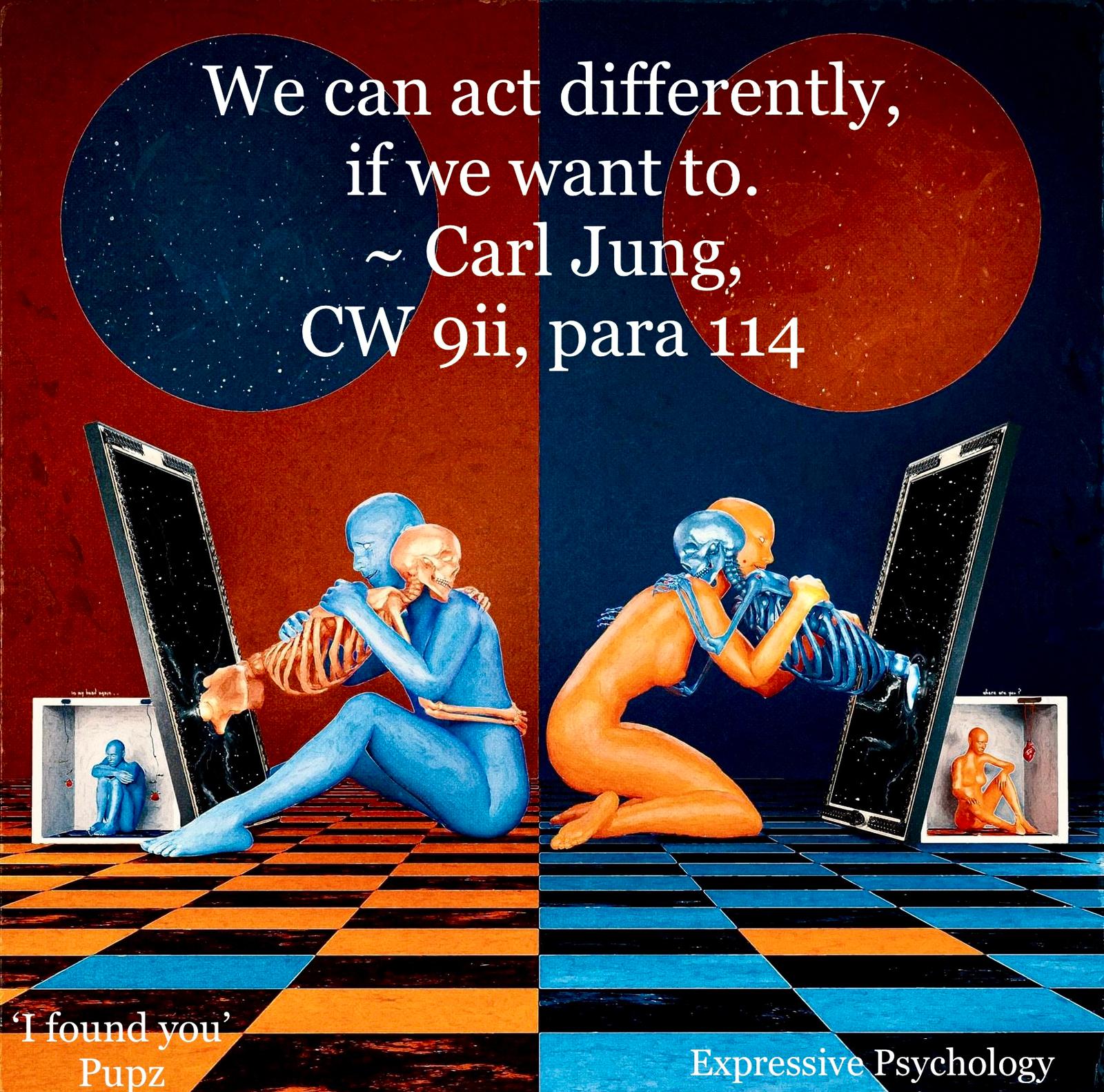
Swimming against the stream remains challenging, even though it has become my routine. I am grateful for Dr Jung’s valuable support in helping me manage that burden and how to carry that weight.

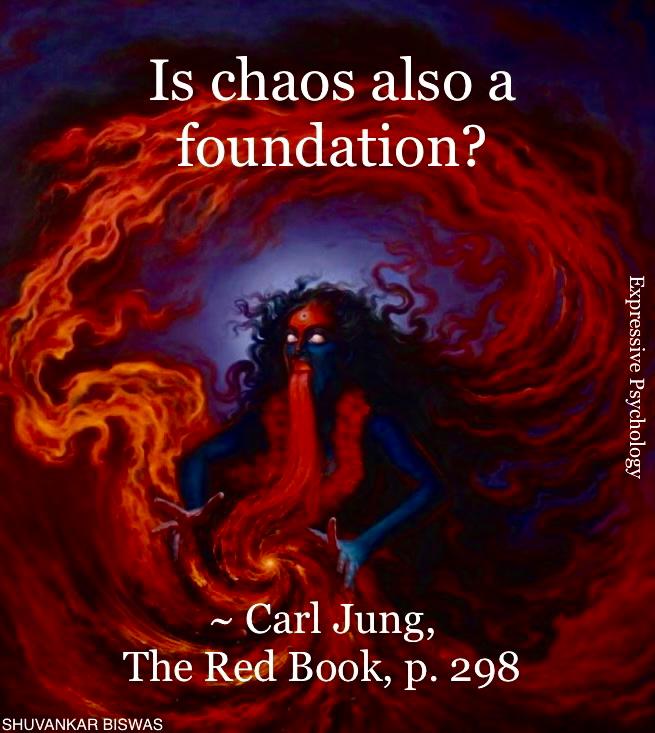
Dr Jung famously said, “In all chaos there is a cosmos, in all disorder a secret order.” He believed that the unconscious, which often seems chaotic to the conscious mind, actually has a deeper structure. Instead of viewing chaos only as destruction, Jung saw it as essential for creativity and growth. When old mental frameworks break down, it allows new, more integrated ones to form. Overthinking and mental chaos can sometimes mirror the shadow—those unconscious, repressed parts of ourselves. To explore this chaos, we must confront these disowned aspects, not just try to control thoughts. Jung’s goal wasn’t to push the mind into perfect order but to integrate its chaotic parts to achieve wholeness.

Anyway, I think I can share my thoughts more openly here because I believe you understand better!

I’m including my short essay, which I’ve shared multiple times in those groups, but it seems like either friends don’t grasp the points or simply don’t want to.

This relates to the primary question that preoccupied me: not just a warning about the awakening seen in all these events, but also an understanding of who the real enemy truly is.
Knowing the real enemy!

Throughout all these years of the Iranian uprising, I have wondered if it is clear to the opposition who or what the real enemy is: the Revolutionary Guards, the entire Islamic regime, or Khamenei himself. I am not sure if these are the real enemies – especially the last one, as we, the old-timers who were in Iran during the revolution, should have known Khamenei well. He came as a Hojjatoleslam, remained a Hojjatoleslam, and then became the leader through Rafsanjani.
Anyway, many questions remain unanswered for me, and I continue to think about them until they become clear.
In fact, the change or so-called political opening under the Shah’s regime began in the mid-seventies. I remember that this space started with television, from children’s programs to theatre performances, with the slogan: “We will wake you up!” Television also began showing full-length films that had previously been censored or banned. The street demonstrations were for freedom and a free press and were not religious in nature. However, following the Cinema Rex fire and Khomeini’s trip from Iraq to France, these events were framed in religious terms.
I believe that at that time, Western influence took over the revolution to protect it from leftist ideologies and Soviet interference. Even reputable newspapers such as Kayhan and Ettelaat referred to Khomeini as the Imam, and, unfortunately, the intellectual community supported this move, hoping to spread the revolution. Ultimately, it led them to lose focus on the revolution’s main principles.
Of course, we are aware of the process of how the revolution progressed and won. But here a question arises: how is it possible for the West to lead the revolution as a religious action under the rule of the mullahs, but not to consider its own subsequent interests? America and Britain spent money and overthrew the government of Dr Mossadegh in a coup. Still, suddenly, in the 57 revolution, they abandoned everything and left the future of Iran to fate with a mullah government? Did they think that simply preventing the revolution from falling into the hands of the leftists, regardless of what would happen next, was enough?
I can never imagine such a thing! I believe that this was a long-term plan to take control of Iran, to create a regime under its command, without any ideology, and simply to destroy the country and kill the future geniuses and thinkers, as we have been witnessing for years. Yes! I believe that this regime has no ideology; as we remember from the very beginning, they purged the intruders by assassinating or bombing and killing the ideologues and their leaders.
And this monkey game of endangering Iran’s nuclear program is simply a tactic to spread fear and panic, with the aim of greater success and greater influence.
I conclude that our primary enemy is the same as it has always been, and the only way to fight this dangerous and eternal enemy is to remain awake and aware.

Thanks, everyone, for reading and hopefully understanding my perspective.🙏💖
Politics: a Dirty Game… Just as Always!

Standard

I believe in them more than they believe in themselves.
Franz Kafka

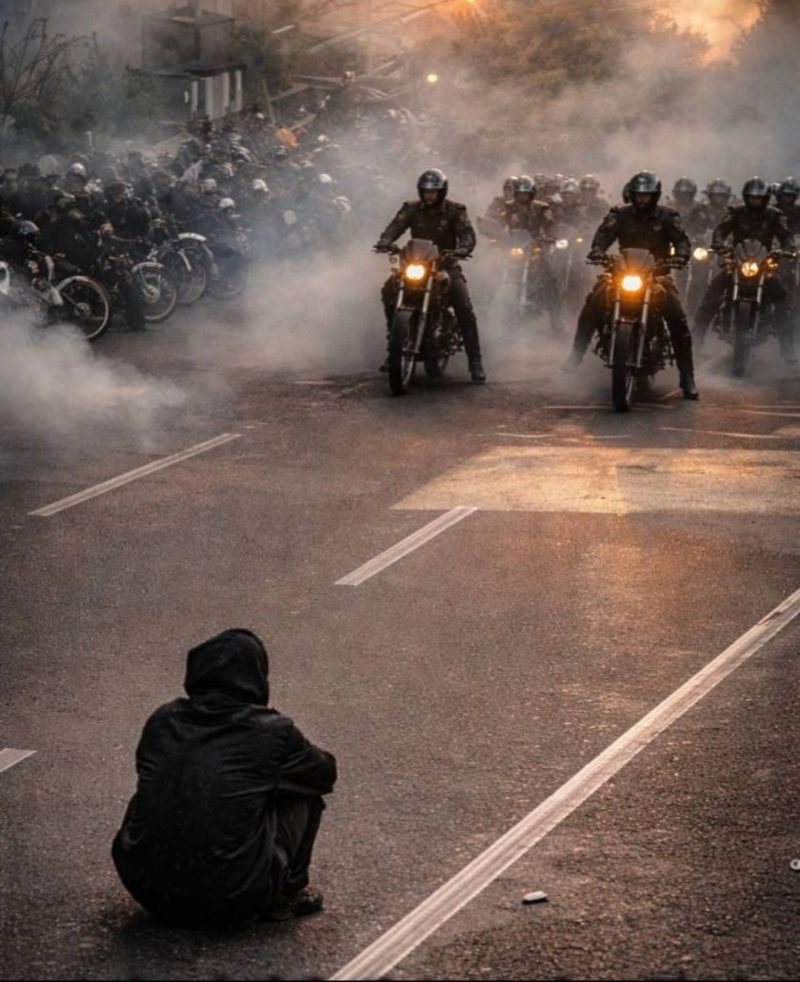
I stayed silent throughout these days, despite the pain in my heart. With my wet, excited eyes, I observed the events in Iran. I saw large crowds of young people, both girls and boys, demonstrating courageously and risking their lives—more than during the last forty years of uprisings—fighting against the Mullahs’ regime tyranny for freedom. But what a dream! As I heartbreakingly knew, the influential figures behind the scenes never allowed a free Iranian state to emerge, and they employ the same tactics as they did with the 1953 coup against the Mossadegh government.

From the beginning of the Mullah regime’s rule, I realised it was simply another Western invention. It appeared different: instead of backing America, it called for its death, but ultimately, the result was the same- control was maintained! And unfortunately, I see the West, with their puppet loudmouth as the front, trying to install another puppet in power in Iran to keep control and reap benefits.

That’s unfortunate: so much bloodshed without any reward! Willy Brandt, the former German Chancellor, once asked: ‘Must one practise democracy, or should one dare to embrace it?’ The real question is: practising for how long and at what cost? Certainly, friends and activists outside Iran may disagree or be hesitant to agree with my perspective. I understand that my view is blunt and unsettling, but the truth is undeniably tough to face.

I didn’t want to dwell on these disappointing events, but when my dear friend Resa asked how I felt, I decided to write a few words, and I leave it to you to judge the role of the great politicians in power. Also, I don’t want to share many photos or videos as they can deeply affect anyone who watches them. 🙏

Are you now riding the Chariots of the Gods to Return to the Stars? Erich von Däniken; A Tribute!

Standard

Erich von Däniken: The Ancient Astronaut Theorist

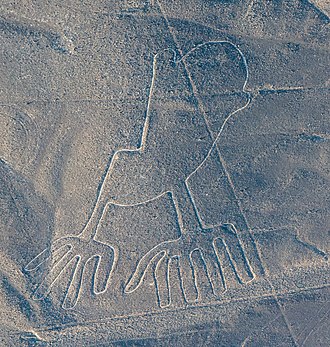
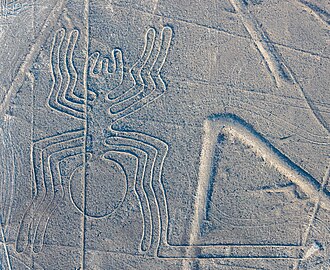
Erich von Däniken (born 14 April 1935 in Zofingen, Switzerland; died 10 January 2026) became one of the most controversial and successful writers of the 20th century. He gained worldwide recognition with his 1968 bestseller “Chariots of the Gods?”—a book that offered a radical reinterpretation of ancient history and archaeology. Däniken’s main thesis is that ancient extraterrestrial visitors contacted early civilisations, which explains structures such as the Egyptian pyramids, the Nazca Lines, and the Easter Island heads as either built using alien technology or as tributes to alien visitors. He proposes that gods described in religious texts are actually misinterpreted encounters with highly advanced extraterrestrials.

Von Däniken’s work has had a notable yet controversial impact. “Chariots of the Gods?” sold millions worldwide and sparked an entire genre of “ancient astronaut” literature and media. His ideas have captivated the public and influenced pop culture, from documentaries to science fiction. However, his theories are largely rejected by the scientific and archaeological communities. Critics point out that he often misuses archaeological data, ignores conventional explanations for ancient accomplishments, and underestimates the skills of ancient civilisations. Scholars argue that his theories rely on selective evidence, logical errors, and a basic misunderstanding of scholarly methods. Many also note that his ideas subtly undermine the achievements of ancient peoples, particularly non-European cultures.

Despite facing extensive academic criticism, von Däniken continues to be a cultural icon. His work raises lasting questions about our interpretation of history and highlights humanity’s fascination with extraterrestrial life. Whether regarded as a visionary challenging conventional views or accused of pseudoscience, Erich von Däniken has undeniably influenced popular culture and public discussions about ancient mysteries.

Al and I first encountered him, or rather his books, in the early seventies. In Iran, as I may have mentioned earlier, it is possible to find any book translated into Persian, even though the readership is limited; publishers endeavour to publish as many as they can.

We were genuinely intrigued and, as expected, valued his opinions on the space gods. Years later, in Bern, Switzerland, we met him in person at a three-day conference on Aliens, Abductions, and the eyewitnesses of those events. Interestingly, he was delighted to meet two brothers from Iran who spoke German, and they managed to recount their encounters with extraterrestrials.

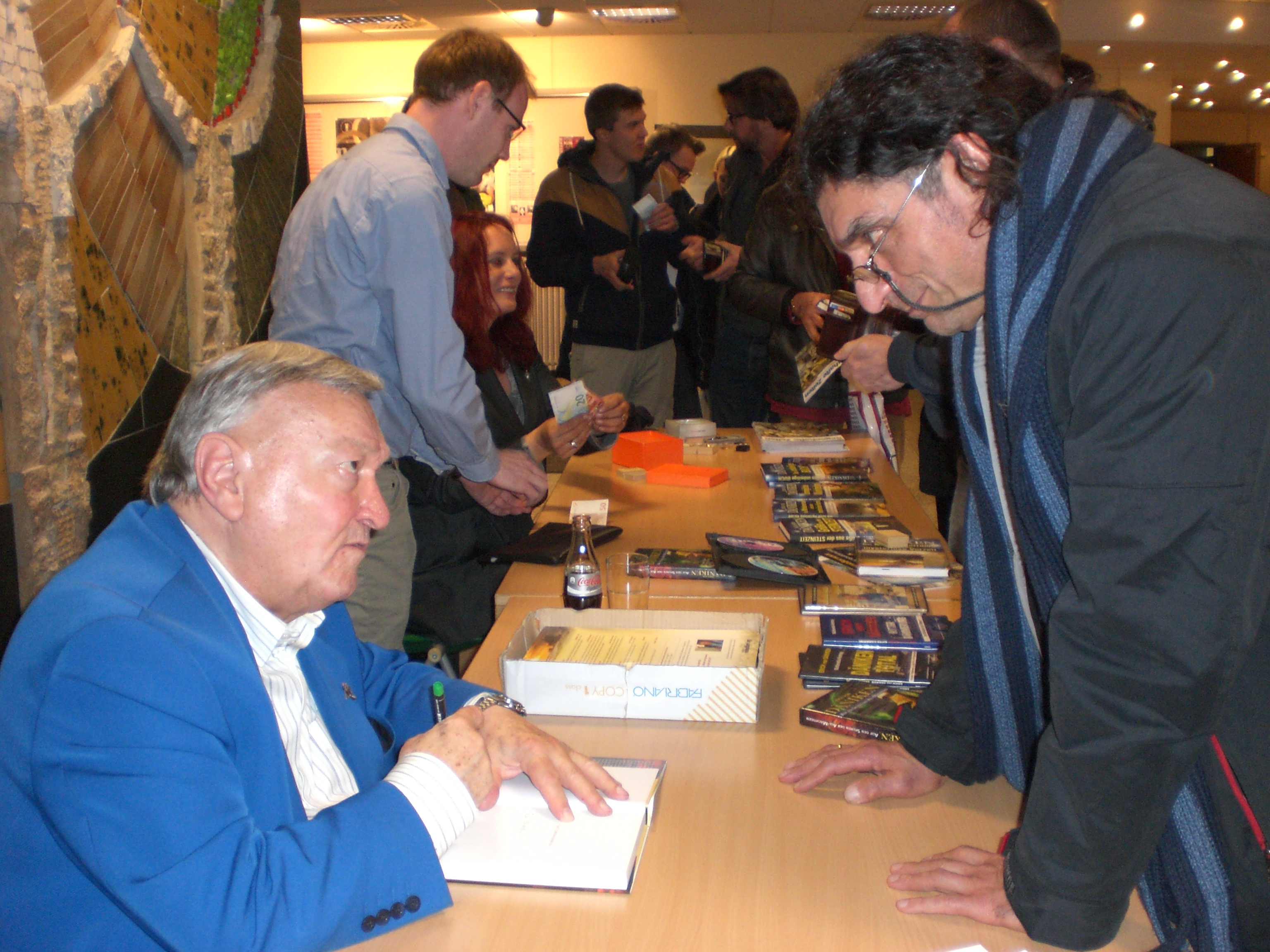
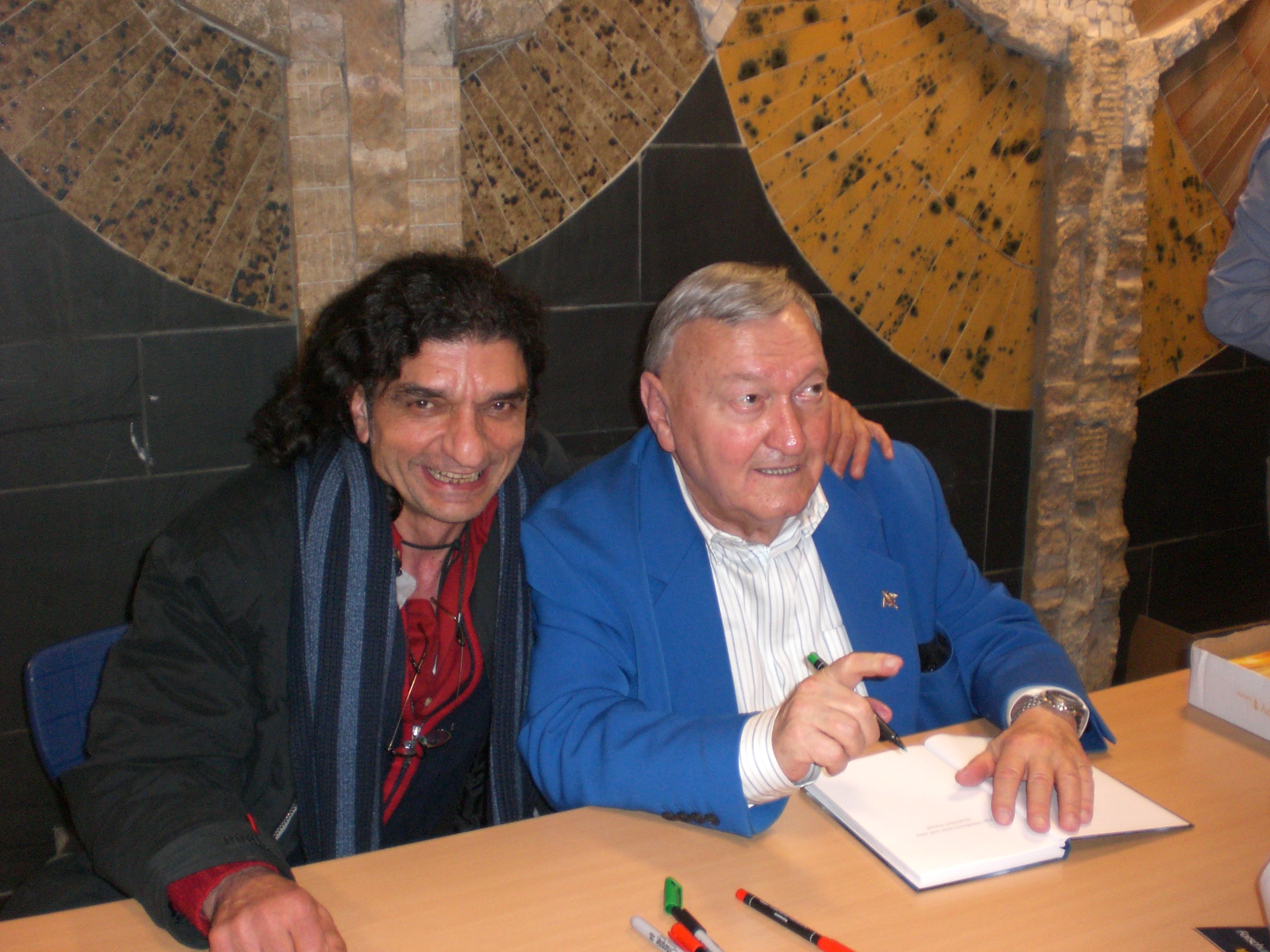
In the spring of 2016, my lovely wife bought some surprise tickets for us to drive to Menden, a town not too far away, to meet the archaeologists and mythologists she knew I was connected with on Facebook and was fascinated by their work, like Robert Bauval, David Roll, Graham Hancock, Brien Foerster… and, of course, Erich von Däniken. There, I met him again, though alone because Al had already passed between the stars. I tried to introduce myself when I saw him, but astonishingly, he recognised me immediately and asked about Al, my brother! That was my last encounter with him, and I cherish having known him so well.

“Wherever the spirit would go, they would go, and the wheels would rise along with them, because the spirit of the living creatures was in the wheels. When the creatures moved, they also moved; when the creatures stood still, they also stood still; and when the creatures rose from the ground, the wheels rose along with them, because the spirit of the living creatures was in the wheels.” Ezekiel 1:20-21

One of his most recognised theories relates to the prophet Ezekiel. Erich von Däniken’s Ezekiel theory is a well-known example of his “ancient astronaut” hypothesis. Von Däniken interpreted Ezekiel’s vision of the Merkabah, or wheeled chariot, as a spacecraft used by an advanced civilisation to travel through space and establish contact, rather than as a divine vision.

In the Book of Ezekiel, the prophet describes seeing a wheeled chariot descending from the sky. Von Däniken noted that the original Hebrew text does not mention God; the term was added later. Ezekiel’s account of the landing of the wheeled chariot closely resembles a spacecraft, with the windstorm, lightning flashes, and bright lights reminiscent of a spaceship arriving.

Ezekiel describes a scene, ‘a wheel within a wheel’, with fiery lights and movement, depicting something coming from the north as a large cloud with “flashing lightning and brilliant light around it.’ The prophet also describes four “living creatures” with wings and complex faces, which are often interpreted as alien pilots or robotic beings accompanying the craft.

For von Däniken, Ezekiel’s biblical account of God’s appearance on Mount Sinai was nothing more than a spaceship landing. This interpretation appeared in his 1968 bestseller Chariots of the Gods?, which sold over 70 million copies worldwide.

In the 1970s, von Däniken’s theory influenced NASA scientist Josef F. Blumrich, who initially regarded Ezekiel’s vision as a space shuttle. This inspired Blumrich to write a book that sought to challenge von Däniken’s ideas, thereby creating a conflict with his own thesis.

Erich von Däniken passed away at age 90 on 11 January 2026 in a hospital in central Switzerland. With his death, the world has lost an unconventional and courageous theorist of ancient human mysteries.

My (Carl Jung’s) Most Difficult Experiment [p. 4]

Standard

I had a dream a few weeks ago, and surprisingly, I still remember it clearly. Usually, I forget my dreams the moment I wake up, but this one is vividly etched in my mind. In the dream, a bird flew elegantly through my room. She looked like a hummingbird, but much larger. She stared at me as she was facing the window. I suspected that I knew her well.

She gazed at me for a while before flying away; I don’t know where, but somehow she disappeared right before my eyes.

It reminded me of a dream Dr Jung once described. However, his bird was transformed into a child and could speak; mine did not, but I believed she was wise and knew many things.

Carl Jung’s dream of a white bird transforming into a girl, often a dove or gull, was a key vision from his Black Book. It signalled his break with Freud, marked his dive into deep psychological work, and symbolised the soul’s link to the spirit world, spiritual change, and the union of opposites within the Self. Featured in The Red Book, the dream showed birds as messengers of the soul, bridging conscious and unconscious, representing freedom, wisdom, and the’ higher self”.

I would now like to reiterate his dream, which I presented in the first part, because it is remarkable.

I dreamt at that time (it was shortly after Christmas 1912) that I was sitting with my children in a marvellous and richly furnished castle apartment – an open columned hall – we were seated at a round table, whose top was a marvellous dark green stone. Suddenly, a gull or a dove flew in and sprang lightly onto the table. I admonished the children to be quiet so they would not scare away the beautiful white bird. Suddenly, this bird turned into an eight-year-old blond child and ran around, playing with my children in the marvellous columned colonnades. Then, the child suddenly turned into the gull or dove. She said the following to me: “Only in the first hour of the night can I become human while the male dove is busy with the twelve dead.” With these words, the bird flew away, and I awoke. (Black Book 2, pp. 17-18)

Key Elements of Jung’s Bird Dream:
The White Bird: Symbolises the soul, spirit, or divine feminine (Anima), depicted as a dove or gull.
Transformation: The bird turning into an eight-year-old blond girl playing with his children represents the soul’s embodiment and interaction with earthly life.
The Message: “Only in the first hours of the night can I transform myself into a human being, while the male Dove is busy with the twelve dead” highlights the unconscious’s link to the spiritual realm and the soul’s hidden work.
Context: This dream from around 1912 helped Jung realise the collective unconscious archetypes and influenced his relationship with Toni Wolff.
Broader Jungian Bird Symbols:
Archetypal Connection: Birds link earthly and spiritual realms, symbolising transcendence, consciousness, and freedom.
The Self: Birds often symbolise the Self, representing wholeness and inner guidance.
Individuation: Birds symbolise Jung’s concept of individuation—integrating archetypes to achieve wholeness.
Language of Birds: In dreams, birds speak a symbolic language that reveals hidden meanings and psychic realities.

Jung’s bird dream was a profound encounter with his own unconscious, initiating his personal myth-making and laying the groundwork for his analytical psychology.

I know that one day, if I am still alive, I will continue this never-ending story, though there is another “never-ending story” in which I am fully involved! Enjoy your peaceful lives. ✌💕🥰

2026 Has Begun with Plenty of Activity!

Standard

Hello again, naturally!
I simply want to wish you all a joyful New Year filled with love and peace. I had intended to finish an article I began a few weeks ago, but right now I am fully occupied with the current events in Iran. This situation seems quite serious this time (hopefully!).
However, as I observe the events, the other parts of the world handle it very carefully, as I haven’t heard any news about it on German TV, until the “President of all time”, Trump, told the Mullah’s regime: Don’t kill people, otherwise I will get you!
That was like a green light for the global “Free Press?!” to discuss and highlight this event in their coverage. Even the late Shah’s prodigal son has spoken out (after remaining silent all this time) and thanked Trump for his threat.

So, this year seems promising; let’s hope for the best! Take care, stay healthy, and stay blessed.

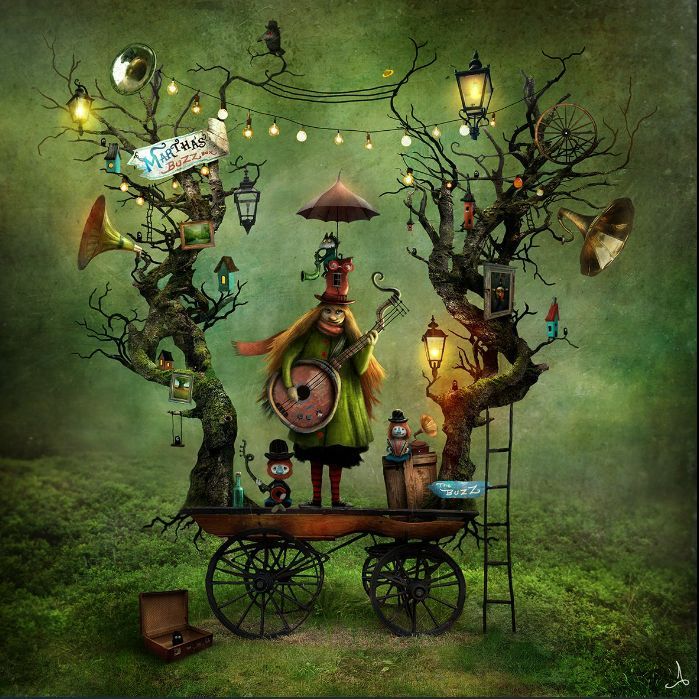
The image at the top: a digital artwork titled Martha’s Buzz by Swedish illustrator Alexander Jansson.

The Enchanting Power of Music!

Standard

This is my final post of the year, and I reflected on the joy of carrying music into the new year; may it be a year filled with peace, love, and music.

Music, a universal language, has played a crucial role in human civilisation, shaping emotions, cultures, and societies for centuries. It can evoke feelings and memories, reduce stress, and uplift mood, supporting mental well-being. Music influences cultures, brings communities together, and promotes social cohesion through events like ceremonies, concerts, and festivals. It connects generations, displays creativity, and allows us to express ourselves and build connections. Moreover, music is a significant educational resource, transmitting stories and messages across generations via lyrics and melodies. National anthems, protest songs, and lullabies inspire, motivate, and offer comfort to people from all backgrounds. Overall, music’s significance extends beyond entertainment; it fosters emotional health, strengthens bonds, and enriches cultural traditions. It remains a vital aspect of the human experience, deserving of recognition and preservation.

Rainy Blues, Painting by Michael Cheval. 2024

We all, more or less, consciously or unconsciously, listen to music every day. Since the songs are created by humans rather than artificial means, they primarily affect our mood.
I grew up surrounded by music because my mother loved it. My older brother, Soroosh, who brought home many LPs and singles, taught Al and me numerous songs, bands, and songwriters.

I don’t know about you, but I prefer listening to music on recorders or vinyl in my home rather than in a concert hall. You know, in this way, I can immerse myself more deeply in each note or sound and feel the composer’s emotions.
It reminds me of a film I saw many years ago: Luchino Visconti’s Conversation Piece (Italian: Gruppo di famiglia in un interno), starring Burt Lancaster and Helmut Berger, etc. In which Professor (Burt Lancaster) says the same to Konrad (Helmut Berger).

However, I didn’t come across that part!😁😅

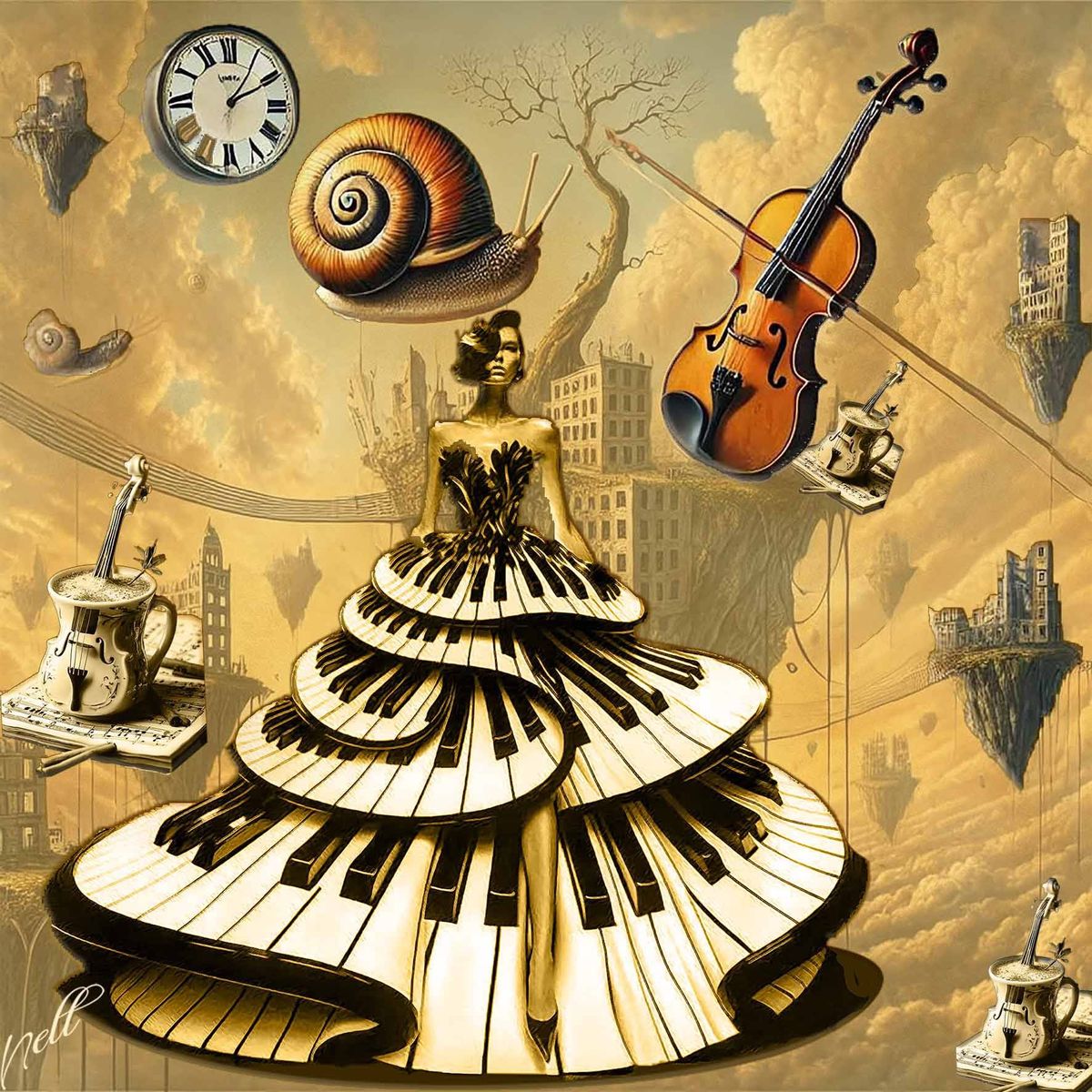
I came across these illustrations of classical music, created with modern techniques or AI, to show how melodies express emotion. I found them quite fascinating.

And here’s a surprising twist: artificial intelligence shows it understands art far better than humans!

I hope you enjoy them! Wishing you, wherever you are, a wonderful Silvester Eve and a joyful start to the New Year, filled with peace and love. Take good care! 💖🌟🥰🥂

The World of Fairy Tales: A Parallel World Second to Ours?

Standard
via Petra Glimmdall

In my view, during Christmas, fairy tales feel more meaningful and relevant than at any other time. I’m not sure why; perhaps because love and forgiveness are more apparent, and the longing, wishing, and hidden desires gain greater strength to make dreams come true.

We often believe fairy tales are purely imaginary, but what is truly real? Who can definitively prove that events involving elves, gnomes, fairies, leprechauns, gorgons, mermaids, and similar beings have never occurred? We can’t be certain, but fairies are an excellent gift for enhancing and refining our “Weltanschauung,” or worldview.

Fairy tales have captivated audiences for centuries, creating worlds of wonder and possibility that spark the imagination. Usually set in enchanted realms with talking animals, brave heroes, and clever villains, they do more than entertain—they inspire us to dream beyond reality’s boundaries. Central to every fairy tale is the power of imagination. Through fantastical adventures and impossible feats, they encourage us to envision worlds where anything is possible. Castles floating in the clouds, animals speaking with wisdom, and ordinary characters changing their fates with a clever wish or brave act—all stimulate creativity and expand our view of what the world could become. Additionally, fairy tales offer a safe space to explore complex emotions, moral challenges, and the victory of good over evil. They teach important life lessons while nurturing imagination, empathy, and resilience. Ultimately, fairy tales show us that with imagination, even the toughest challenges can be overcome, and that magic exists in everyday life.

Now, as Christmas Eve approaches, let our imagination take flight—fly freely to Neverland and Wonderland; may we find joy and peace.

Wishing everyone a peaceful and serene Christmas Eve. Sweet dreams to all!😉🥰🙏💖

Keep Quiet, and Listen; Silence Speaks!

Standard

Last night
I begged the Wise One to tell me
the secret of the world.
Gently, gently, he whispered,
“Be quiet,
the secret cannot be spoken,
It is wrapped in silence.”

Rumi

I wonder if any of you, my dear friends, have noticed how this hurried pace of life is affecting us globally, with people rushing unconsciously, often unaware of their surroundings or the noise around them. It seems time is passing faster than it used to, and this perception isn’t related to age, contrary to some beliefs. In both modern and traditional contexts, we often overlook an essential aspect: silence. I particularly notice this when I step into the forest, pause, and listen quietly.

Silence holds significant value that is often overlooked in our noisy world. It creates a space for reflection, helping us process our thoughts and emotions without external distractions. During quiet moments, creativity can flourish, fostering deeper thinking and the development of new ideas. Additionally, silence can foster a sense of peace and calm. In a hectic environment, pausing to embrace silence can refresh the mind and spirit, ease stress, and sharpen decision-making. In conversations, silence can be powerful, as listening is a sign of intelligence. It enables thoughtful responses and promotes meaningful dialogue. By embracing silence, we can enhance our listening skills and better understand others. Ultimately, silence’s value is in its ability to connect us with ourselves and others, encouraging introspection and stronger relationships. Whether through meditation, nature, or solitude, embracing silence can enrich our lives in many ways.

After sharing a quote from Rumi, I would like to offer a poem by Pablo Neruda. I hope you enjoy them and might relish a moment of silence to cherish.

Keeping Quiet
By Pablo Neruda


Trans. Alastair Reid

Now we will count to twelve
And we will all keep still
for once on the face of the earth,
let’s not speak in any language;
let’s stop for a second,
and not move our arms so much.

It would be an exotic moment
without rush, without engines;
We would all be together
in a sudden strangeness.

Fishermen in the cold sea
would not harm whales
and the man gathering salt
would not look at his hurt hands.

Those who prepare for green wars,
wars with gas, wars with fire,
victories with no survivors,
would put on clean clothes
and walk about with their brothers
in the shade, doing nothing.

What I want should not be confused
with total inactivity.
Life is what it is about.
I want no truck with death.

If we were not so single-minded
about keeping our lives moving,
and for once could do nothing,
perhaps a huge silence
might interrupt this sadness
of never understanding ourselves
and of threatening ourselves
with death.
Perhaps the earth can teach us,
as when everything seems dead
and later proves to be alive.

Now I’ll count up to twelve.
And you keep quiet, and I will go.

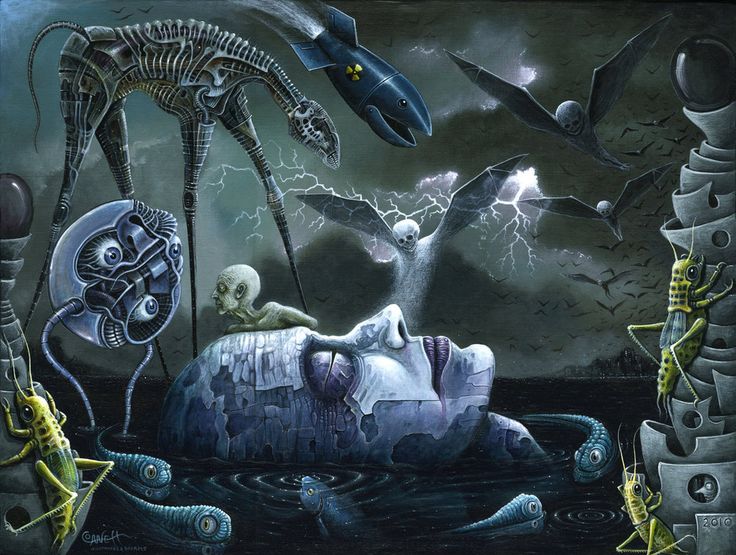
Title image: Dreamscapes and nightmares by the artist R.S. Connett.

Thank you. Peace and Love.

Another Joy on Al’s Birthday, Along with the Remembrance of the Fortieth Anniversary in exile.

Standard

Recently, I’ve been overwhelmed by memories and dreams that take me back to the past, recalling the unforgettable times when Al and I faced our ups and downs and challenging moments.

I avoid saying things like “happy heavenly birthday” because birthdays are truly earthly, not heavenly! In heaven, every day might be a birthday!
And I believe it’s simply a traditional custom to use these anniversaries as reminders. However, I remember Al daily and in everything I do, and I can’t help but think of him and his lessons.

One of these memories is our arrival in Germany after fleeing Iran, and this time, it feels somehow significant because it marked the fortieth anniversary. We arrived at Düsseldorf airport in the evening on October 19th.

Although we had a close friend in the city, we didn’t want to trouble him. We considered renting a hotel room, but it was too costly. An airport staff member overheard us and suggested, “Why not sleep on a couch at the airport for the night?” We appreciated the kind idea, and even if it wasn’t as comfortable as a hotel, it was free!

Before we carried out that experiment, we took a walk through the large airport. As I clearly remember, in the department where packages are received, two older women were trying to manoeuvre their luggage onto a trolley, although the suitcases seemed too heavy for them.
Al reacted quickly and helped them load the items onto the trolley. One of the women, thankfully, took some coins from her purse and offered them to Al, but he refused immediately and turned away. They were quite surprised, and I later learned that such acts are common in Germany, although Al felt a bit offended. Honestly, that money could have been useful to us, but Al was very proud, and it didn’t suit his class!

Anyway, that was a remarkable memory of that period, and I thought I would share it here, on his seventy-third earthly birthday. Yes, as I might repeat, every day is a birthday in heaven, as well as Christmas!

Happy Birthday, Al, my beloved brother. 💖

Observing the Depths from Below!

Standard

I am a forest, and a night of dark trees: but he who is not afraid of my darkness will find banks full of roses beneath my cypresses. The higher we soar, the smaller we appear to those who cannot fly.
~Friedrich Nietzsche, Thus Spoke Zarathustra

Understanding duality and the existence of opposites is essential for comprehending both our world and ourselves. Today, I often see the phrase ‘We are good & They are bad’ being misused and exploited. Good and evil are present within everyone!

Duality promotes understanding of the balance and tension between opposing elements, showing that complexity and harmony come from these interactions. Jung extensively studied duality, viewing it not just as external contrasts like light versus dark, cold versus warm, or above versus below, but as essential components of the human psyche and the process of individuation.

Jung says: Roots of Life reach into Hell. A core idea in Jung’s view of human existence is the concept of Duality and the Principle of Opposites. He argued that the psyche operates under the “principle of opposites,” meaning that every psychological concept or experience—such as light, warmth, consciousness, or life—inevitably has its opposite, like darkness, cold, unconsciousness, or death. The ongoing tension between these opposing forces is vital for psychological development and transformation. Dualities are not always entirely opposite; instead, they often depend on each other and define one another. For instance, light derives meaning only through its contrast with darkness. Many philosophies, including Taoism, highlight that these opposites are interconnected and mutually dependent, creating a balanced whole (yin and yang).

Jung’s psychology focuses on a fundamental duality between the conscious mind—associated with light, warmth, and awareness—and the unconscious, linked to darkness, coldness, and forgotten elements. The unconscious includes repressed or unknown parts, with the ‘shadow’ representing darker aspects we often reject or ignore. Recognising and accepting the shadow is crucial for achieving psychological wholeness.
The process of individuation involves integrating these opposites, acknowledging and reconciling them, rather than suppressing one side.
Jung explored myths, dreams, and alchemy, which frequently symbolised these dualities—such as sun/moon, king/queen, above/below—as part of psychic development. He saw alchemy as a metaphor for merging the conscious and unconscious components of the psyche.

Jung’s idea of duality illustrates how opposites are essential and creative elements of the mind. Concepts like light and dark, cold and warm, or the branches of a tree reaching upward and downward symbolise both external facts and internal truths. Personal development requires embracing these dualities to achieve a more integrated and authentic self.

An 1847 depiction of the Norse Yggdrasil as described in the Icelandic Prose Edda by Oluf Olufsen Bagge. Via Carl Jung Depth Psychology

He perceives the tree of life, whose roots extend into Hell and whose top reaches Heaven. He no longer distinguishes between right and wrong, holy and unholy, genuine and false, or good and evil. The only difference he recognises is between below and above: he sees that the tree of life grows from the ground upward, with its crown at the top, clearly separate from the roots. This view is unquestionable to him, and it guides his path to salvation.
To unlearn all distinctions except that of direction is part of your salvation. This liberates you from the old curse of knowing good and evil. Although you separated good from evil based on your best judgment, aiming only for the good and denying the evil you did- and struggled to accept it- your roots no longer drew dark nourishment from below, causing your tree to weaken and wither.
Therefore, the ancients said that after Adam ate the apple, the tree of paradise withered. Your life needs the dark. But knowing it is evil makes acceptance impossible, leading to suffering and confusion. You cannot accept it as evil, or your sense of goodness will reject you. Nor can you deny it, because you
know both good and evil. This knowledge of good and evil became an insurmountable curse.

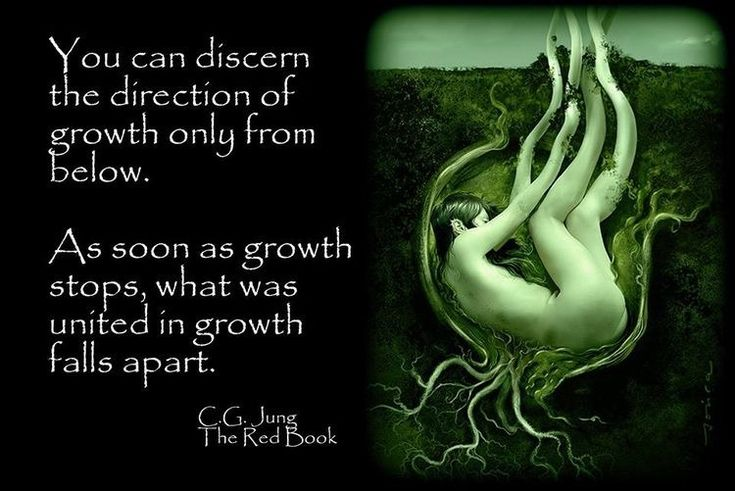
But if you return to primal chaos and recognise that which hangs stretched between the two unbearable poles of fire, you will notice that you can no longer conclusively separate good and evil, neither through feeling nor through knowledge, but that you can discern the direction of growth only from below to above. You thus forget the distinction between good and evil, and you no longer know it as long as your tree grows from below to above. But as soon as growth stops, what was united in growth falls apart, and once more you recognise good and evil.
You can never deny your knowledge of good and evil to yourself, so that you could betray your good in order to live evil. For as soon as you separate good and evil, you recognise them. They are united only in growth. But you grow if you stand still in the greatest doubt, and therefore, steadfastness in great doubt is a veritable flower of life.
He who cannot bear doubt does not bear himself. Such a one is doubtful; he does not grow, and hence he does not live. Doubt is the sign of both the strongest and the weakest. The strong have doubt, but doubt has the weak.

Therefore, the weakest is close to the strongest, and if he can say to his doubt: “I have you,” then he is the strongest. But no one can say yes to their doubt unless they endure wide-open chaos. Because there are so many among us who can talk about anything, pay heed to what they live. What someone says can be very much or very little. Thus, examine his life.

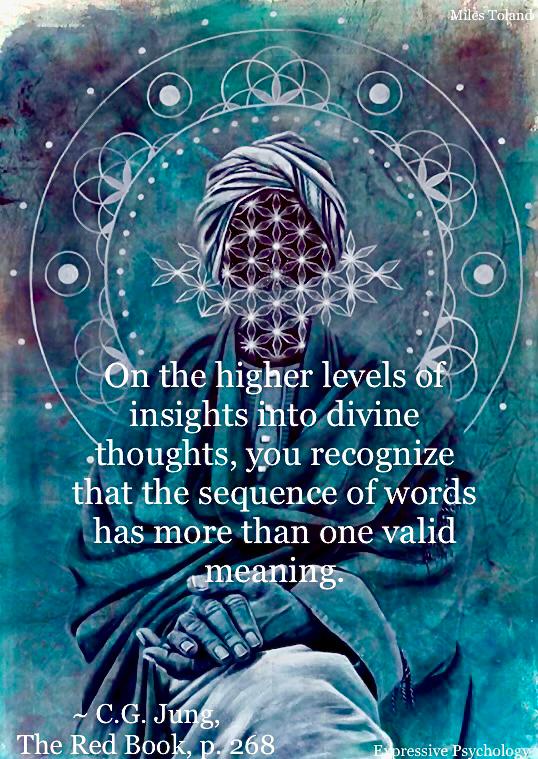
My speech is neither light nor dark, since it is the speech of someone who is growing. ~Carl Jung, Red Book, Page 301

Thank you for taking the time to read. 🙏