The Mystery Of “Mana Personality” Part Eight

Standard

Translated from volumes published by Lorenz Jung based on the edition “Gesammelte Werke” dtv.de The Symbols of Transformation (1952) and Aion (1950)

via MagicShirtsDesigns

Greeting all! Today, I share the penultimate or the second to last episode of Dr. Jung’s extensive explanation of the mystery of Mana.
This time, he speaks in a way that may simplify the meaning of Mana and its production, with examples that we might confront every day of life (indeed!) concerning religions, society, and private occurrences!

We all know how important and influential religion is in human life. There have been and still are wars caused by religions (as it is more apparent when people from the same tribe with the same roots and similar faith cruelly kill each other)! However, religions may not be the main perpetrators. The problem may lie deep in the dark corners of human nature.

Mana-Personality is one of these unknown forces that we must understand.

My God is a child, so wonder not that the spirit of this time in me is incensed to mockery and scorn. There will be no one who will laugh at me as I laughed at myself. ~Carl Jung, Liber Novus, Page 234.
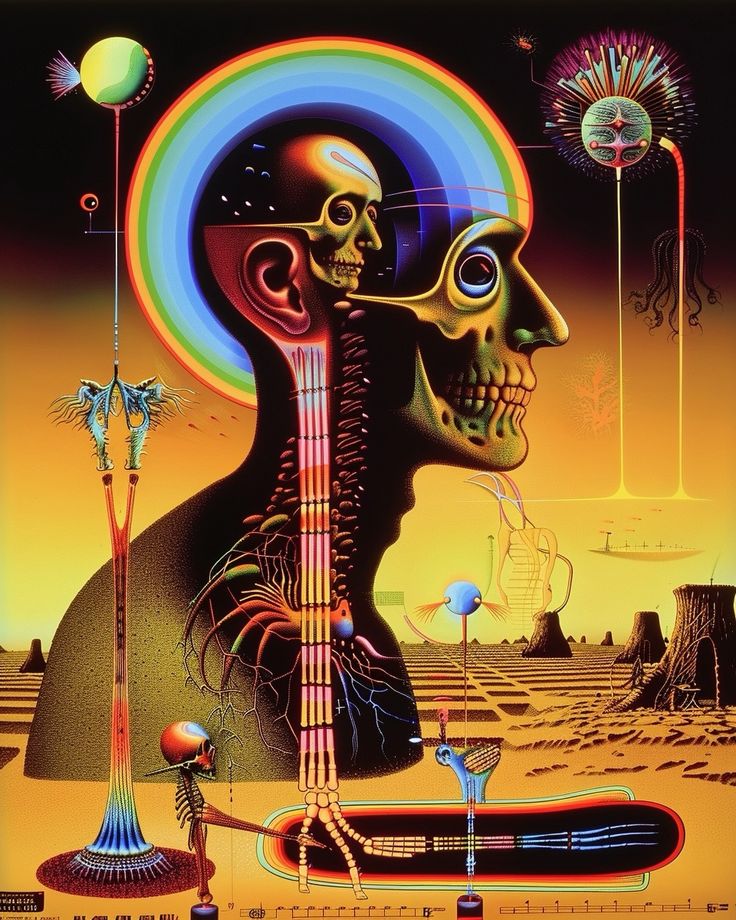
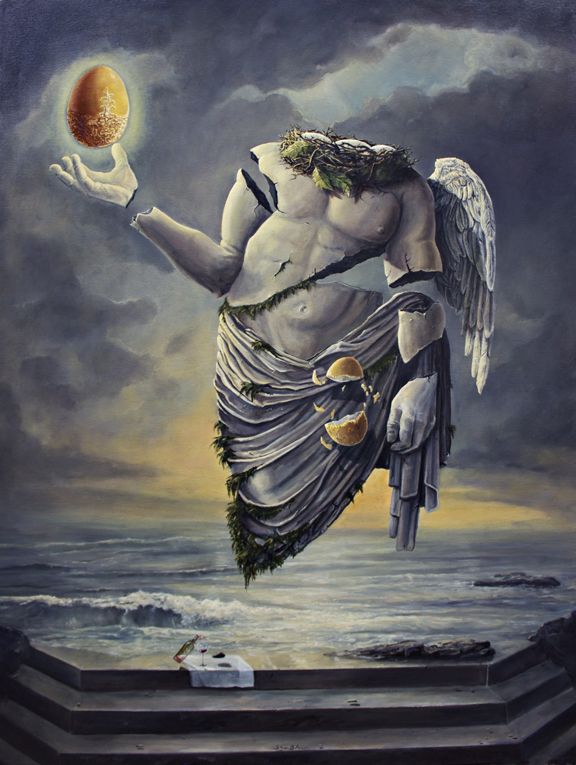
Illustration: thecyclopssun

You might remember that I actively assist my Iranian friends as they strive for freedom. However, I am feeling very pessimistic right now as I look at the situation and intricacy progression in the Middle East and see how the lobbyists in the West (i.e., the US, no matter if the next President will be Harris or Trump) are trying to take advantage of Iran’s future. Reading Jung helps me better understand the core of this issue and learn more.

I also learned something useful from my dear friend Luisa Zambrotta. (She has an excellent Website with many brilliant sequence stories you might not miss.) instead of numbering her stories one after another, she only uses the word “Previous” to help readers jump to the latest post if they want to. So I did it, too!🙏

The underlying scheme, the quaternio, i.e., the psychological equation of primordial dynamis (prima causa) with gods and their mythology, time and space, is a psychological problem of the first order.

So, let’s continue to delve further into the topic of Mana!

Individuation
The Mana Personality (P8)

The Mana Personality is, on the one hand, a superior knower and, on the other hand, a superior wanter. By becoming aware of the content underlying this personality, we are able to deal with the fact that, on the one hand, we have learned something more than others and, on the other hand, we want something more than others. This unpleasant relationship with the gods is known to have struck poor Angelus Silesius so deeply that he returned headlong from his hyper-Protestantism, bypassing the now uncertain Lutheran stopover in the deepest womb of the black mother—unfortunately to the detriment of his lyrical talent and nervous health.

And yet Christ and, after him, Paul struggled with precisely these problems, which is still clearly evident from many traces. Meister Eckhart, Goethe in Faust, and Nietzsche in Zarathustra have brought this problem closer to us again. Goethe and Nietzsche try it with the idea of ​​control, the former with the magician and ruthless man of will who takes on the devil, the latter with the master race and the superior wise man, without the devil and without God. According to Nietzsche, man stands alone, like himself, neurotic, financially supported, without God or the world. This is not an ideal possibility for a real person who has a family and has to pay taxes. Nothing can prove the reality of the world away; there is no miraculous way around it. Nothing can also prove the effect of the unconscious away. Or can the neurotic philosopher prove to us that he does not have a neurosis? He cannot even prove it to himself. Therefore, our souls stand between significant influences from within and without, and somehow, we must do justice to both. We can only do this according to our individual abilities. Therefore, we must reflect on ourselves, not on “what one should” but on what one can and what one must do. Thus, the dissolution of the Mana Personality through awareness of its contents naturally leads us back to ourselves as beings and living something that is kept between two world views and their darkness. Still, all the more clearly, it clamped in the perceived forces. This ‘something’ is alien to us and yet so close, completely our own and yet unknowable to us, a virtual centre of such a mysterious constitution that it can demand everything, kinship with animals and with gods, with crystals and stars, without surprising us, without even arousing our deformity. This something demands all of that, and we have nothing in our hands that we can reasonably oppose this demand, and it is even healing to hear this voice.
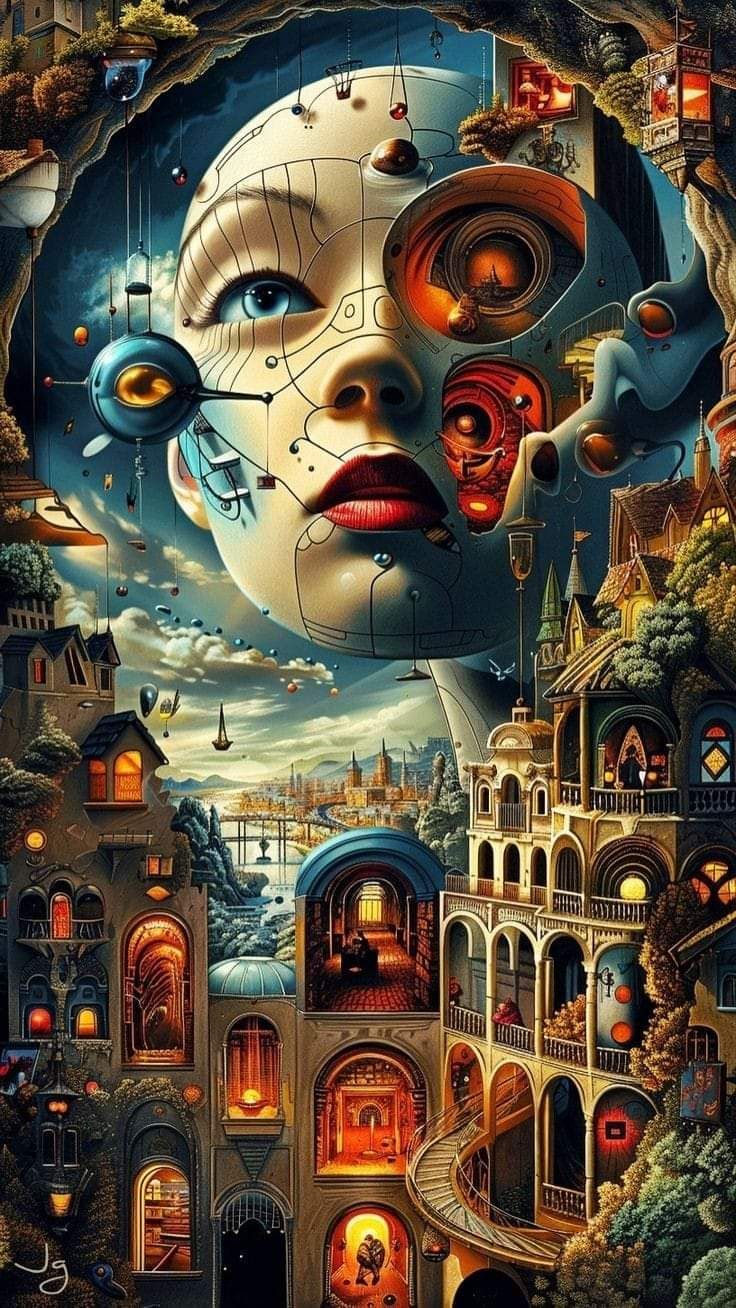
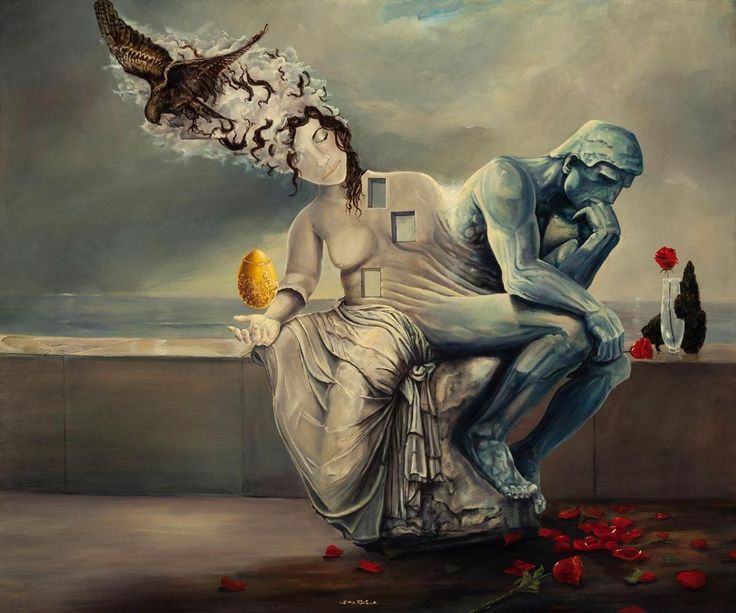
Art by Jeramondo Djeriandi (@djeriandi)

I have called this centre the Self. Intellectually, the Self is nothing but a psychological concept, a construct intended to express an entity that is unknowable to us and that we cannot grasp as such, for it is beyond our comprehension, as is clear from its definition. It might just as well be called the “God within us.” The beginnings of our whole psychic life seem to spring inextricably from this point, and all the highest and final goals seem to converge towards it. This paradox is inevitable, as it always is when we attempt to characterize something that lies beyond the power of our understanding.

I hope that it has become clear enough to the attentive reader that the Self has as much to do with the “I” as the sun has to do with the Earth. The two cannot be mixed up. Nor is it a question of the deification of man or the degradation of God. What lies beyond our human understanding is, in any case, inaccessible to it. When we use the concept of a god, we are simply formulating a certain psychological fact, namely the independence and superiority of specific psychic contents, which is expressed in their ability to thwart the will, to obsess (calm) the consciousness and to influence moods and actions. One might be outraged that an inexplicable mood, a nervous disorder or even an uncontrollable vice is in some way a manifestation of God. But it would be an irreplaceable loss for religious experience if such things, even terrible things, were artificially separated from the number of autonomous psychic contents. It is an apotropaic euphemism (a good thing for a bad thing, to avert its disfavour) to dismiss such things with a “nothing but” explanation. This would only repress them and, as a rule, would only result in a false advantage, a slightly modified illusion. The personality does not become enriched by this but rather impoverishes and becomes stagnant. What appears to be evil or at least senseless and worthless to today’s experience and knowledge can appear to be a source of the best to a higher level of expertise and knowledge, whereby everything naturally depends on the use one makes of one’s devils. Declaring it meaningless requires the personality of the shadow corresponding to it, and thus, it loses its form. The ‘living figure’ needs deep shadows to appear three-dimensional. Without the shadow, it remains a flat illusion of- or a more or less well-behaved child.

With this, I am alluding to a problem that is far more significant than the few simple words seem to express: Humanity is, for the most part, still psychologically in a state of childhood – a stage that cannot be skipped. The vast majority need authority, guidance and the law. This fact must not be overlooked. The Paulistic overcoming of the law is only possible for those who know how to put the soul in place of conscience. Very few are capable of this (>Many are called, but few are chosen.<), and these few only take this path out of inner compulsion, not to say necessity, for this path is as narrow as the edge of a knife.

To be continued! 🤗🙏💖
The Way We Go!

Standard
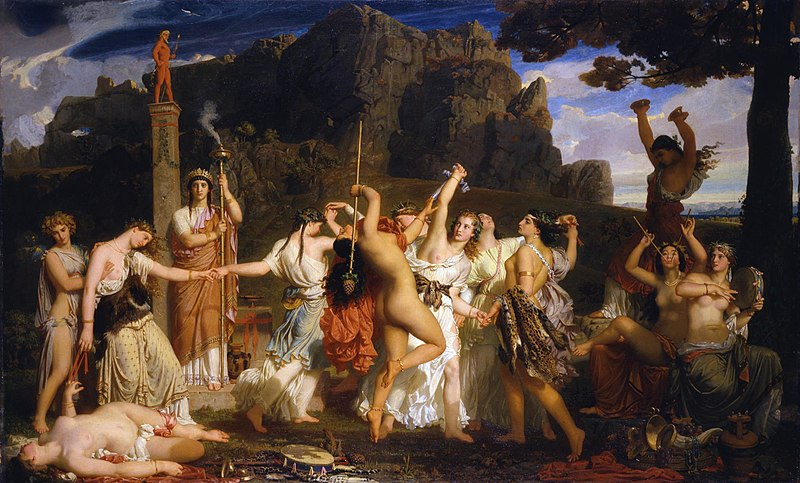
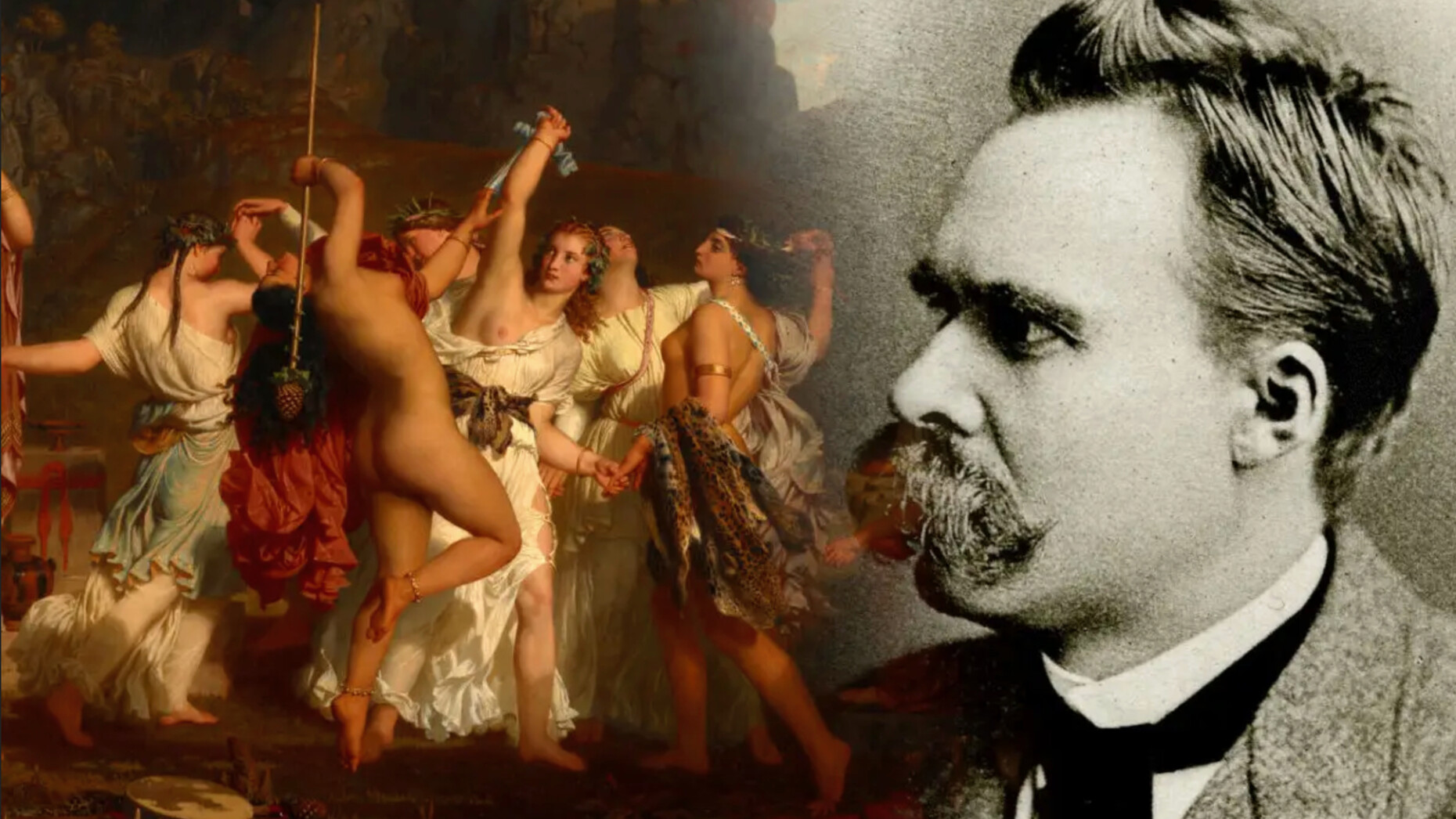
The Dance of the Bacchants, by Charles Gleyre and Friedrich Nietzsche (Artwork: Mark Rothko)

Recently, I read a post on FB from a good friend, Scott D. Smith, about how we might have to get through Nietzsche to understand Dr. Jung better! I agree totally; though Dr. Jung’s works are not philosophical but psychological, Nietzsche has an immense influence on Jung’s doctrine work and his psychological analysis in general.

Nietzsche admired Greece and Greek mythology, often quoting Schopenhauer and using Hegelian ideas to discuss art. He connected ancient Greek tragedy with Richard Wagner’s opera. Let’s see what he meant by Dionysian.

Dionysus, the Greek god of wine and music, is associated with the Dionysian, a state of self-forgetting where individuals unite with others and nature. According to Nietzsche, the Apollonian and the Dionysian are essential to art creation. Dionysian art, particularly music, represents madness and drunkenness, appealing to primal human desires and mystical unity with nature.
In “The Birth of Tragedy” (1872), Nietzsche introduced the terms Apollonian and Dionysian to describe contrasting forces in art. The Apollonian represents a calm, rational art, while the Dionysian embodies intense emotion and ecstasy. Nietzsche believed these forces could come together to create a unique art form, as seen in the Greek tragedies of Aeschylus and Sophocles.

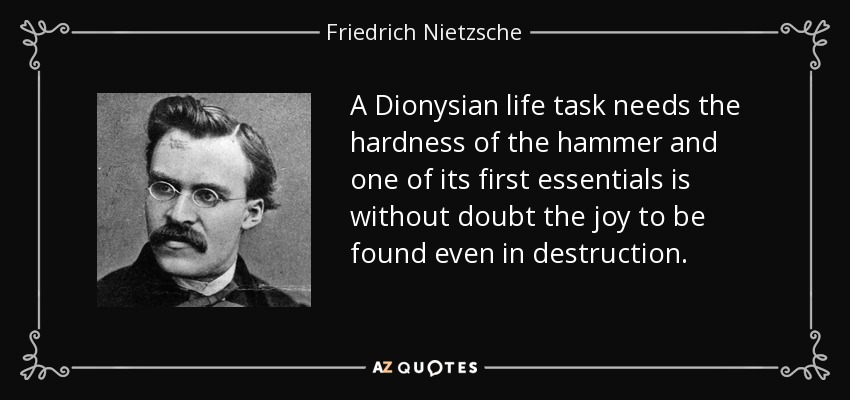
“The saying Yes to life even in its strangest and hardest problems; the will to life, rejoicing over its inexhaustibility even in the very sacrifice of its highest types – that is what I call Dionysian.”

Charles Gleyre La Danse des bacchantes. Wikimedia
The Dance of the Bacchantes, the last painting by Gleyre exhibited publicly in Paris (at the Salon of 1849)

I believe his thoughts are timeless, as humans almost permanently experience the same failures based on ignorance. Here he speaks:

“Now we see the struggle, pain, the destruction of appearances as necessary because
of the abundance of countless forms pressing into life because of the boundless
fecundity of the world will…That primal Dionysian delight experienced even in
the presence of pain is common to music and tragic myth.”
“Dionysian art wants to convince us of the eternal delight of existence… Now
struggle, pain, and destruction… are seen as necessary…Despite terror and pity
we rejoice in living not as individuals but as part of the life force with whose
procreative lust, we have become one.”
“the world is becoming and perishing, creation and destruction, without any
moral content, in eternal innocence.”
“Now, sure of united victory,
We celebrate the feast of feasts:
Friend Zarathustra has come, the guest of guests!
Now the world is full of laughter, the gruesome curtain is rent,
The wedding day has come for light and darkness.”
Nietzsche: Disciple of Dionysus

Sometimes, our strengths push us so far that we can no longer bear our weaknesses and decline from them.

Of course, we happen to predict this way out, but we can’t change anything. And then we become cruel in that which we ought to guard within ourselves, and our greatness makes us barbarous.

This experience, which we are ultimately forced to pay for with our lives, symbolizes bad people’s effect on others and their time.

With the best they possess—they have within themselves—with that which only they can accomplish, they destroy too many weak, uncertain, unformed, and hesitant beings with the best they have and thus become harmful.

And it can even happen that they do nothing but cause harm because this oldest part of themselves is suddenly emptied, so to speak, only by beings who suffocate their logic and individuality in a glass of strong drink.

And they get drunk to such a point that they can’t help but break their whole body – hands, legs – in all the ways that their drunkenness will lead them.

Source: kwize

‘Man is evil‘ – all the wisest have told me that to comfort me. Ah, if only it were still true today! For evil is man’s best strength. ‘Man must become better and more evil’ – thus, I teach. The most evil is necessary for the “Übermensch’s” best. It may have been good for that preacher of the little people to suffer and be burdened by man’s sin. But I rejoice in great sin as my great consolation. – But such things are not said for long ears. Neither does every word suit every mouth. These are subtle, remote things: sheep’s hooves should not reach for them!” Thus Spoke Zarathustra:

Let us think of the idea in its most terrible form: “existence as it is, without meaning or purpose, but inevitably returning, without a finale into nothingness: ‘the eternal return’. That is the extreme form of nihilism: nothingness (the ‘senseless’) eternal!”

And here, I add one of his poems, Last Will, translated from German.

Last Will

To die thus,
as I once saw him die -,
the friend who cast divine lightning and glances
into my dark youth.
Mutinous and deep,
a dancer in battle -,
the most cheerful among warriors,
the most difficult among victors,
Fate resting upon his doom, hard, thoughtful, premeditated –
trembling that he had won,
rejoicing that he had won while dying –
commanding as he died-
and he commanded that man should destroyed…
To die thus,
as I once saw him die:
Victorious, Destroying…

Thank you, as always, for your presence and stopping by. Have a peaceful weekend, everybody.🙏💖✌

The Giant Colossi of Pharaoh Amenhotep III Facing the Rising Sun!

Standard

As the Greek geographer, Strabo might mean these giant volumes were singing or speaking, or, as Tacitus says, like the “sound of a human voice,” or as Pausanias evokes, the sound of “a string of a cithara or lyre that breaks.” In any case, Memnon greets each morning, at sunrise, the appearance of Eos (Dawn), his mother.

Colossi-of-Memnon-Egypt-Tours-Portal-1

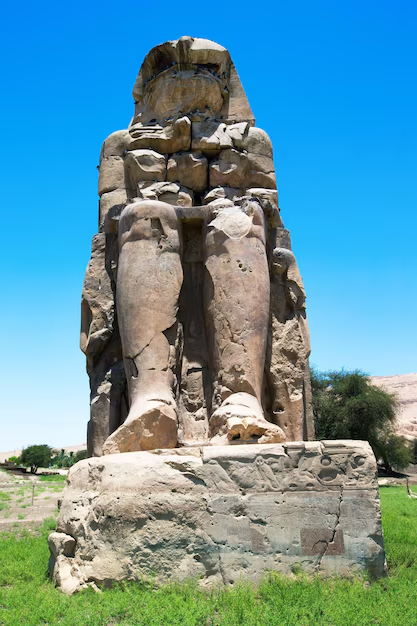
The Colossi of Memnon are two massive stone statues of the Pharaoh Amenhotep III, standing in front of the ruined Mortuary Temple of Amenhotep III, the largest temple in the Theban Necropolis. Via Wik.

Now, let’s delve into the captivating tale of these two enormous statues with sincere gratitude to Marie Grillot and the late beloved Marc Chartier.🙏💖🙏💖

It was at the time when Memnon sang…

These two colossi of Amenhotep III stood in front of the 1st pylon
of his temple of millions of years, the Amenophium, on the west bank of Thebes.
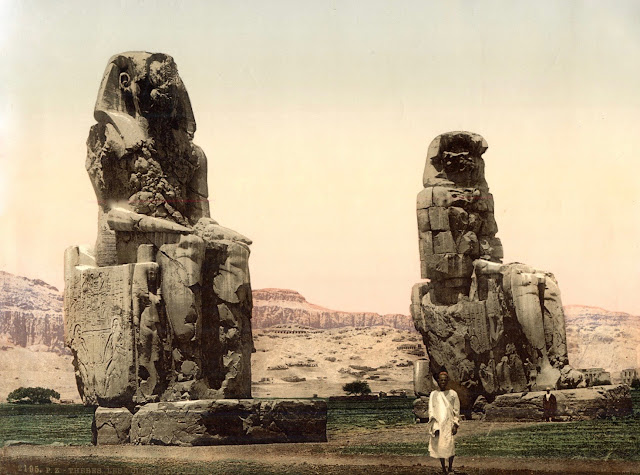
“The Colossus of Memnon” is the one in the north (on the right); it was the only one to sing in antiquity
Photochrome “The Colossi of Memnon”, Photoglob Zurich, circa 1897

via égyptophile

What is called “The Colossi of Memnon” are more “rightly” two monumental stone statues (between 17 and 20 m high) representing Amenhotep III, seated on his throne, facing the rising sun. They stood on the forecourt of his temple of millions of years, the “Amenophium”, on either side of the door of the first pylon. Masterfully designed by the great architect Amenhotep, son of Hapu, it was, in the middle of the 18th dynasty, the richest and largest cult complex on the West Bank.

“Nebmaâtrê” personally describes: “He made it as a monument for his father Amon, Master of the Thrones of the Two Lands. A splendid temple was made for him on the west bank of Thebes, a fortress of eternity forever, of beautiful white sandstone. Entirely covered with gold, its pavement is adorned with silver, all its doors are of electrum, built very wide, and great and perfect forever” …

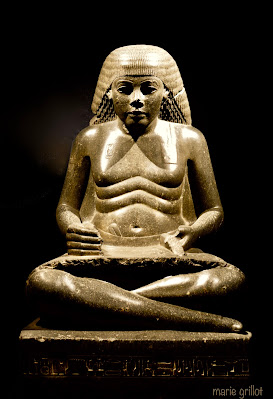
Statue of Amenhotep, son of Hapu, architect of the temple of millions of years of Amenhotep III, the Amenophium, on the west bank of Thebes Luxor Museum – JE 44862

But… “sic transit gloria mundi”… Having fallen into decline and then abandonment around the 20th dynasty, its splendour has gone… Its walls and pylons of raw bricks have crumbled while its stones were reused for other buildings. The processional avenue and the surrounding fence have disappeared, the columns have collapsed, the statues have been mutilated, hammered, thrown to the ground or recovered by successors… In 27 BC, a terrible earthquake painfully weakened it, and the impact of the Nile floods was devastating. The pillaging of the 19th century, the rise of the water table and the fire of 1996 dealt it the final blows of grace…

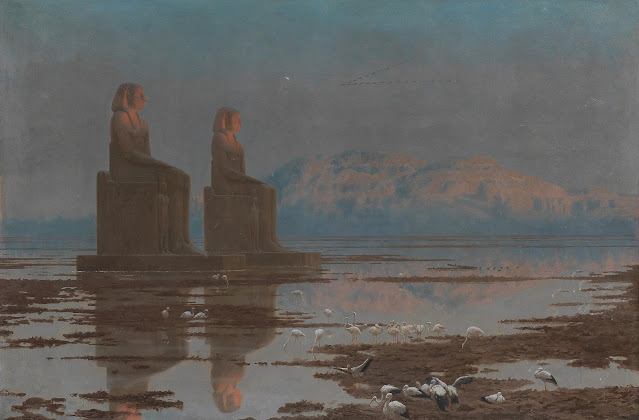
The plain of Thebes during the flooding of the Nile, 1900, Jean-Léon Gérôme, Inv. 2015-029
© Musée cantonal des Beaux-Arts de Lausanne

Its glorious past survived only through the presence of these two badly damaged statues for centuries. Only the northern one (on the right) will be—and must be—identified as THE “Colossus of Memnon.”

In antiquity, it was the most degraded of the two, the most cracked, and it is, in a certain way, this “sad state” that will earn it a celebrity will transcend borders… Eclipsing Amenhotep III, the sun pharaoh, the “Memnon” singing in the early morning will become a myth, a divinity!

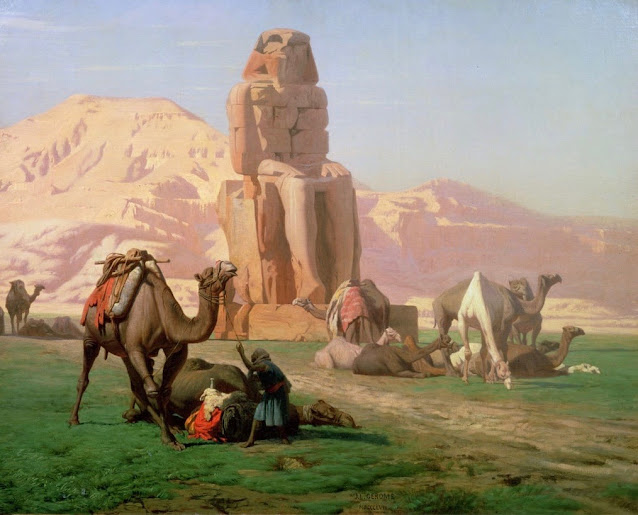
The Colossus of Memnon, 1857, Jean-Léon Gérôme, Private collection

Indeed, the Greek geographer Strabo (64 BC—between 21 and 25 AD) notes that, according to a local legend, the statue begins to “sing” at sunrise. He also certifies having heard the phenomenon himself without being able to specify the cause. The sound is like “a noise similar to that produced by a small sharp blow.”

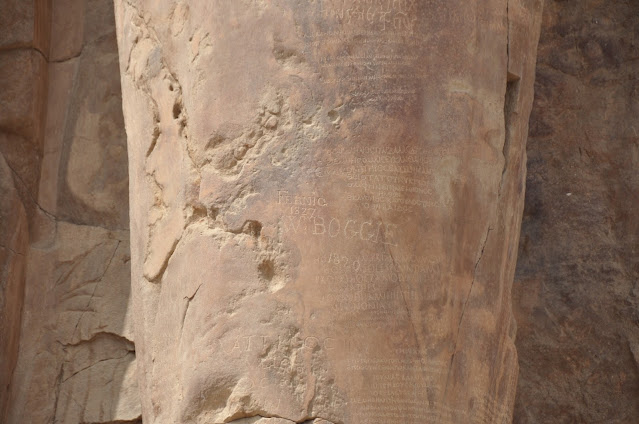
Other testimonies of this phenomenon, very often “immortalized” by graffiti on the monument, will multiply, as diverse as the human imagination can be inventive but concordant on the same observation: the colossus “speaks” or “sings.” Tacitus speaks of the “sound of a human voice,” and Pausanias evokes the sound of “a string of a cithara or lyre that breaks.” Memnon greets each morning, at sunrise, the appearance of Eos (Dawn), his mother.

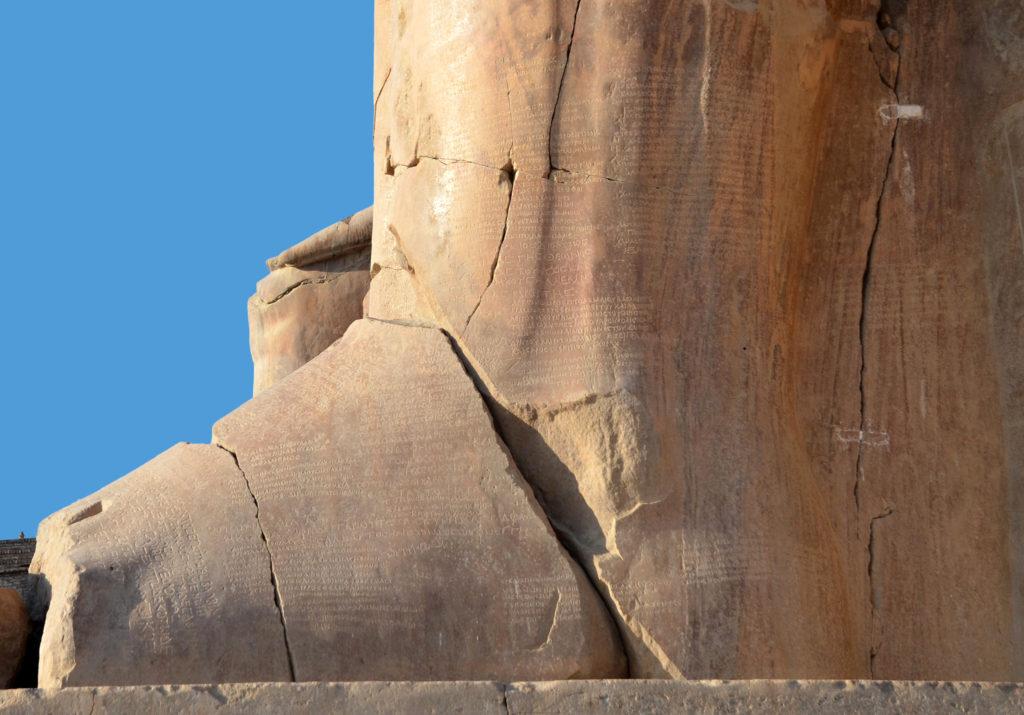
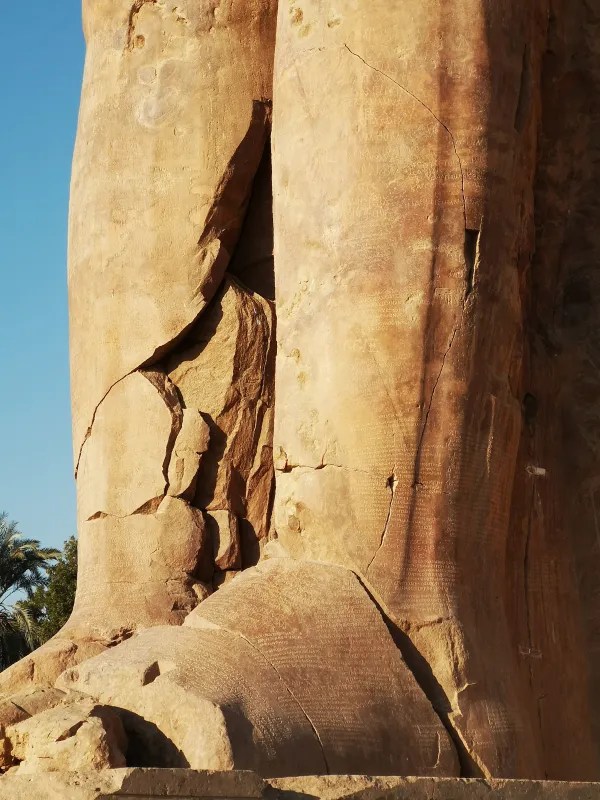
Graffiti on one of the legs of the “colossus of Memnon” (the northern one, on the right). He was the only one to sing in antiquity.
These two colossi of Amenhotep III stood in front of the 1st pylon
of his temple of millions of years, the Amenophium, on the west bank of Thebes.

Some scholars of the Egyptian Campaign will take note of these various testimonies, privileging reason over fabrication to thwart certain stratagems and the “charlatanism of the priests” intended to feed popular credulity. “It must be noted, in general, that the statue of Memnon has been spoken, with more emphasis, the further away one has moved from the primitive institution of the cult rendered to it. Whatever the nature of the sound coming from the shattered colossus, one cannot doubt that it is the result of a pious fraud. One could indulge here in a host of conjectures, all equally probable, on the mechanism that the priests of Egypt used to produce it…” (Jean-Baptiste Prosper Jollois, Édouard de Villiers du Terrage).

Thebes. The Colossi called “of Memnon”, a drawing by Dominique Vivant Denon
published in “Journey in Lower and Upper Egypt”, Paris, 1802

In the name of an “objective” science, insensitive to the impulses of popular beliefs, Jean-Antoine Letronne, member of the Committee of Historical and Scientific Works, devoted an entire study to the “vocal statue of Memnon”…

As for Baron Taylor, he wrote in 1839 with a certain clarity that “all that is mysterious in the sounds of the statue of Memnon could well have been only a simple effect of the action of the sun on the stone”…

The Colossi of Memnon, at Thebes, during the Inundation, 19th century
(The Colossi of Memnon, at Thebes, during the Inundation, 19th century), lithograph by David Roberts

In 1840, in the chapter of his “General Overview of Egypt” devoted to minerals, Antoine Barthélémy Clot-Bey provided the following geological explanation: “The agatiferous siliceous breccia of Syene is a stone which is also of great interest. The statue of Memnon, so famous in antiquity, was carved from this type of breccia to the composition of which it doubtless owed the marvellous property which it enjoyed, of making harmonious sounds at sunrise”… This interpretation seems plausible, even if the provenance of the stone remains uncertain… According to Jean-François Champollion, they were “each formed from a single block of breccia sandstone, transported from the quarries of the Upper Thebaid (editor’s note: southern part of the Thebaid), and placed on immense bases of the same material”… But, according to Kent Weeks, the two statues “were sculpted in a beautiful orthoquartzite, a tough stone and very difficult to engrave, brought by boat from the nearby quarries of Heliopolis 700 km to the north (editor’s note: namely Gebel el-Ahmar), or from a quarry in the south – there is no certainty on this matter. Egyptologists believe this stone was chosen because of its red colour, associated with solar worship”.

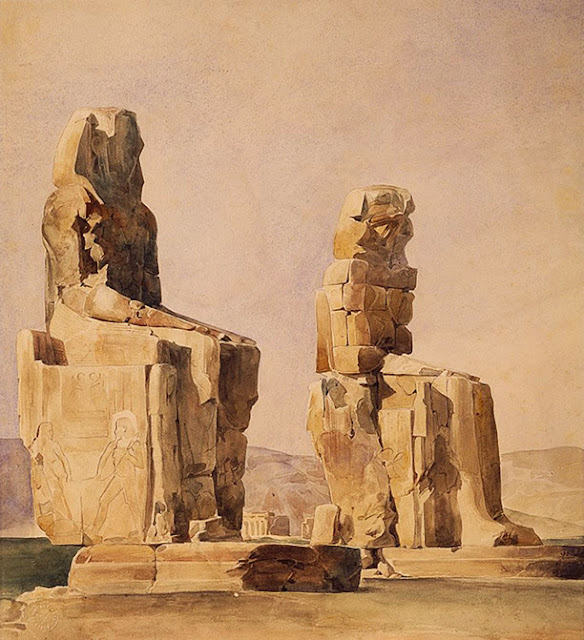
Colossi of Memnon, 1840, Charles Gleyre
Cantonal Museum of Fine Arts, Lausanne.

At the very beginning of the 3rd century, the colossus fell silent. We owe its silence to Septimius Severus, who “before the end of his journey in Egypt in the autumn of 200, wished to see the memorable Memnon and, to restore its dignity, decreed its restoration”. Several courses of blocks gave shape to the torso on which the head was placed… but “From then on, it must be believed that the ‘song’ of the son of the Dawn was never heard again. Nevertheless, his mythical fame crossed the centuries” specifies Christian Leblanc in “Le Bel Occident”…

From this long and incredible story and the various interpretations it has given rise to, there is one note on which we can only agree: the colossus who sang… has made a lot of people talk about him while associating his “twin” with his fame…

These two colossi of Amenhotep III stood in front of the 1st pylon
of his temple of millions of years, the Amenophium, on the west bank of Thebes.
“The Colossus of Memnon” is the one in the north (on the right); it was the only one to sing in antiquity.

Since 1998, a multidisciplinary European-Egyptian team has been working in Kom el-Hettan on “The Colossi of Memnon and Amenhotep III temple conservation project”. Led by the extraordinary Egyptologist Hourig Sourouzian, it deploys its expertise, know-how and energy to restore this temple’s dignity and grandeur. The different sectors of the Amenophium are identified, the pavements reappear, the bases of the columns are cleared, dozens of Sekhmet emerge from the ground, and the royal statues are reassembled…

Thus, It is pleasant to think that if Memnon were to feel the desire to sing again, it could only be a hymn of recognition for his rebirth!

Marie Grillot & Marc Chartier

Sources:

Jean Baptiste Prosper Jollois, Édouard de Villiers du Terrage, René Edouard Devilliers du Terrage, Description générale de Thèbes : contenant une exposition détaillée de l’état actuel de ses ruines, et suivie de recherches critiques sur l’histoire et sur l’étendue de cette première capitale de l’Égypte, 1813 Jean-François Champollion, Lettres écrites d’Égypte et de Nubie en 1828 et 1829, (16e lettre), Paris, 1833 Jean Antoine Letronne, La statue vocale de Memnon considérée dans ses rapports avec l’Égypte et la Grèce – étude historique faisant suite aux recherches pour servir à l’histoire de l’Égypte pendant la domination des Grecs et des Romains, Imprimerie Royale, Paris, 1833 https://books.google.fr/books?id=k26BIIn7C5UC&printsec=frontcover&hl=fr&source=gbs_ge_summary_r&cad=0#v=onepage&q&f=false Baron Taylor, Louis Reybaud, Syria, Egypt, Palestine and Judea considered under their historical and archaeological aspect…, Paris, 1838 https://gallica.bnf.fr/ark:/12148/bpt6k1040108x.image Antoine Barthélémy Clot-Bey, General overview of Egypt, Fortin Masson et Cie Libraires Editeurs, Paris, 1840 http://www.lacabalesta.it/biblioteca/ClotBey/AperGenEgypte/clotbey1_02.html#nat_01 Jean-Antoine Lettrone, Collection of Greek and Latin inscriptions of Egypt, Royal Printing Office, 1842
André and Étienne Bernand, Greek and Latin inscriptions of the Colossus of Memnon, IFAO, Cairo, 1960
André Bernand, The singing statues of Amenhotep III, Clio, 2001 https://www.clio.fr/BIBLIOTHEQUE/pdf/pdf_les_statues_chantantes_damenophis_iii.pdf Amenophis III, the sun pharaoh, Réunion des musées nationaux, 1993
Kent Weeks, Illustrated Guide Luxor, tombs, temples and museums, White Star Publishers, 2005
Galand David, The song of the statue: the myth of Memnon in the 19th century, Loxias 22, 2008 http://revel.unice.fr/loxias/index.html?id=2439. Christian Leblanc, Angelo Sesana, The Beautiful West of Thebes Imentet Neferet, From the Pharaonic era to modern times – A history revealed by toponymy, L’Harmattan, 2022
The colossi of Memnon and Amenhotep III temple conservation project – Hourig Sourouzian, articles available on Academia https://independent.academia.edu/HourigSourouzian

Kahlil Gibran On Marriage!

Standard

Today, I want to share something familiar, maybe ordinary, yet an important issue: Marriage! Of course, we can translate it into the modern language as a partnership, friendship, bedmate or lifemate, etc.
But the main point is how much a couple should merge into each other, how close they must be and how deep.

 Rene Magritte; Perfect Woman

I’ve had various experiences in the realm of relationships. I’ve had many different connections with different women, and you can imagine how much effort it took to understand the intricacies of this adorable gender. However, my current wife is the first and only one I’ve married. It took me about twenty-three years until to say “yes” and marry her and two more years to move in together. It wasn’t easy for either of us, but we’ve slowly but surely learned to respect each other’s boundaries and individualities over the years. We share one Life but have our own dreams, all while maintaining love and respect for each other.

I have spent my life trying to understand the crucial topic in psychology called individuality. I finally succeeded with the help of Dr. Jung. It is essential for discovering and proving my uniqueness.

With thanks to Lewis Lafontaine

As it turns out, Kahlil Gibran also agrees with me. Here, I share a part of his book, “The Prophet”, about Marriage. I hope you enjoy reading it. Thanks, and have a peaceful weekend.

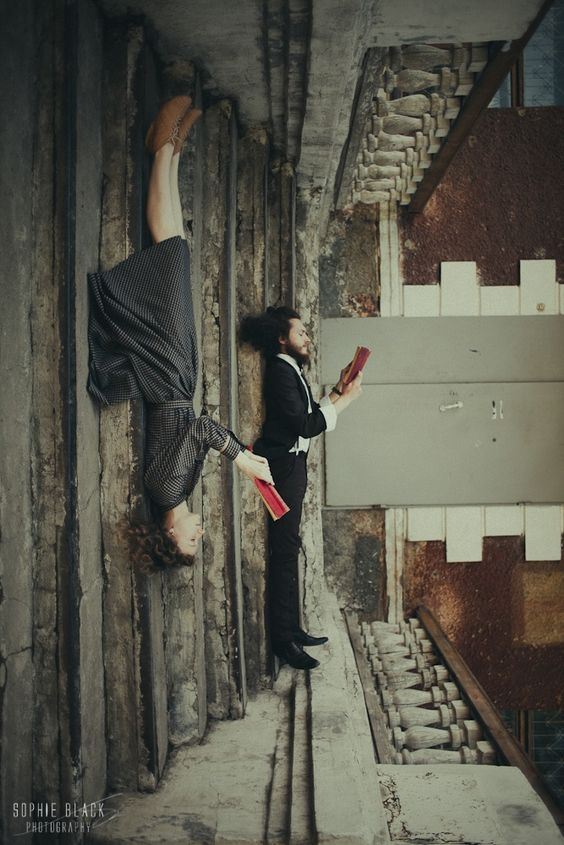
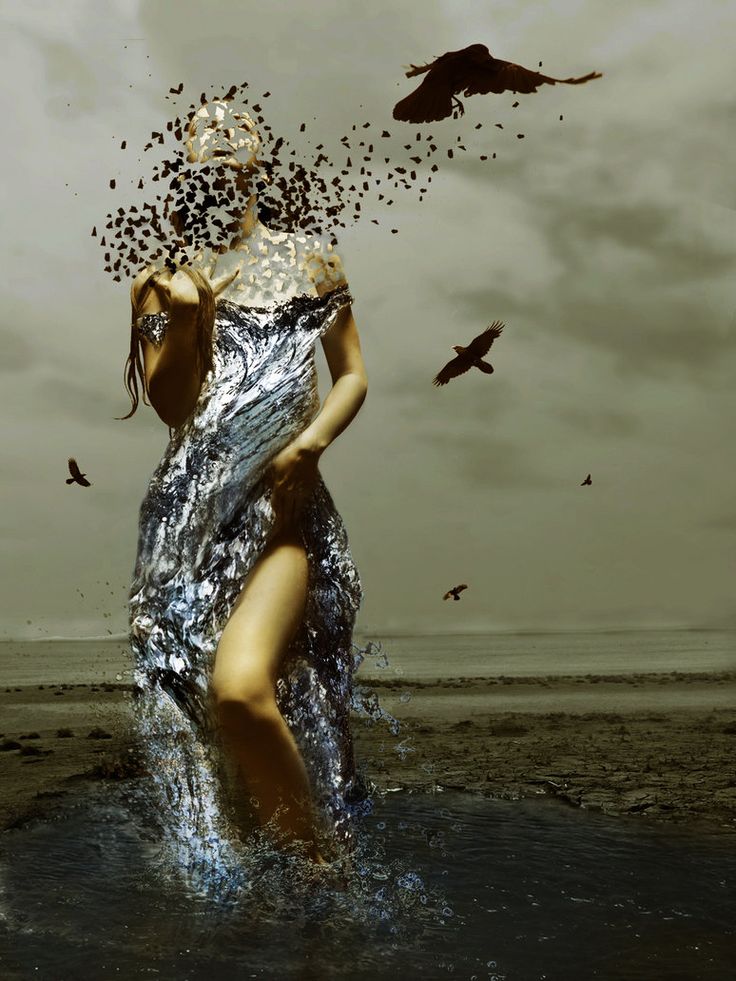
Image on top: Wings // Sophie Black#surreal #Photography

Sing and dance together and
be joyous, but let each one of you
be alone.
Even as the strings of a lute are alone,
though they quiver with the same music.

“Love is the only freedom in the world because it so elevates the spirit that the laws of humanity and the phenomena of nature do not alter its course_” Text and art by Kahlil Gibran

On Marriage, From the Book “The Prophet”

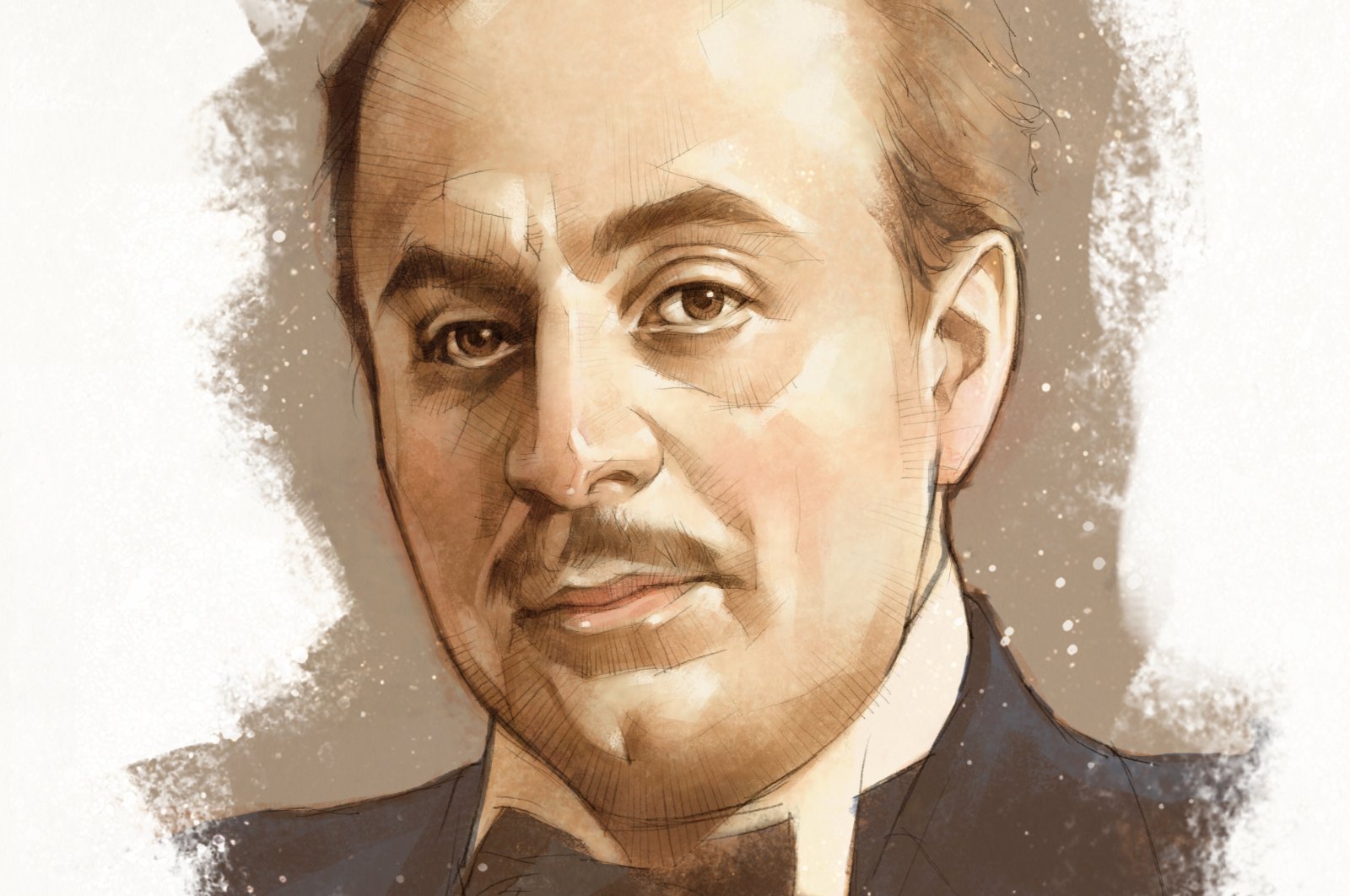
An illustration of Khalil Gibran. (Shutterstock)

Then Almitra spoke again and said: And what of Marriage, master?
And he answered, saying: You were born together, and together you shall be forevermore.
You shall be together when the white wings of death scatter your days.
Aye, you shall be together even in the silent memory of God.
But let there be spaces in your togetherness.
And let the winds of the heavens dance between you.
Love one another, but make not a bond of love:
Let it rather be a moving sea between the shores of your souls.
Fill each other’s cup but drink not from one cup.
Give one another of your bread but eat not from the same loaf.
Sing and dance together and be joyous, but let each one of you be alone.
Even as the strings of a lute are alone, they quiver with the same music.
Give your hearts, but not into each other’s keeping.
For only the hand of Life can contain your hearts.
And stand together, yet not too near together:
For the pillars of the temple stand apart,
And the oak tree and the cypress grow not in each other’s shadow.

The Mystery Of “Mana Personality” Part Seven

Standard

Translated from volumes published by Lorenz Jung based on the edition “Gesammelte Werke” dtv.de The Symbols of Transformation (1952) and Aion (1950)

Here, I present another aspect of “Mana—Personality,” and honestly, I’m getting more and more excited to delve deeper and deeper into the subject! (The past episodes: 1, 2, 3, 4, 5, 6,)
In this part, Jung continues explaining the concept of Mana and its impact on our lives from childhood to adulthood. He describes our inner try of separation from our parents, the process of growing up within a religious context, and the acknowledgement of God. He also provides an excellent explanation of our attitudes and behaviours towards authority figures and those in power.

Individuation
The Mana Personality (P7)

By distinguishing the “I” from the archetype of the Mana Personality, one is now compelled – just as in the case of the anima – to make conscious those unconscious contents which are specific to the Mana Personality. Historically, the Mana Personality is always in possession of the secret name or of the special knowledge or the prerogative of a special action (quod licet Jovi, non licet bovi), in a word: of Individual Distinction. Becoming aware of the content that builds up the archetype of the Mana Personality means for the man the second and true liberation from the father, for the woman from the mother and thus the first feeling of her own individuality. This part of the process corresponds precisely to the intention of the concrete primitive initiations up to baptism, namely the separation from the >carnal< (or >animal<) parents and the rebirth >in novam infantiam<, into the state of immortality and spiritual childhood, as formulated by certain ancient mystery religions, including Christianity.

One may not identify with the Mana Personality, opting to view it as an extramundane ‘Father in Heaven’ embodying Absoluteness, which many find significant; if faith is achieved, this leads to an absolute dominance of the unconscious, causing the entire world to flow toward it.

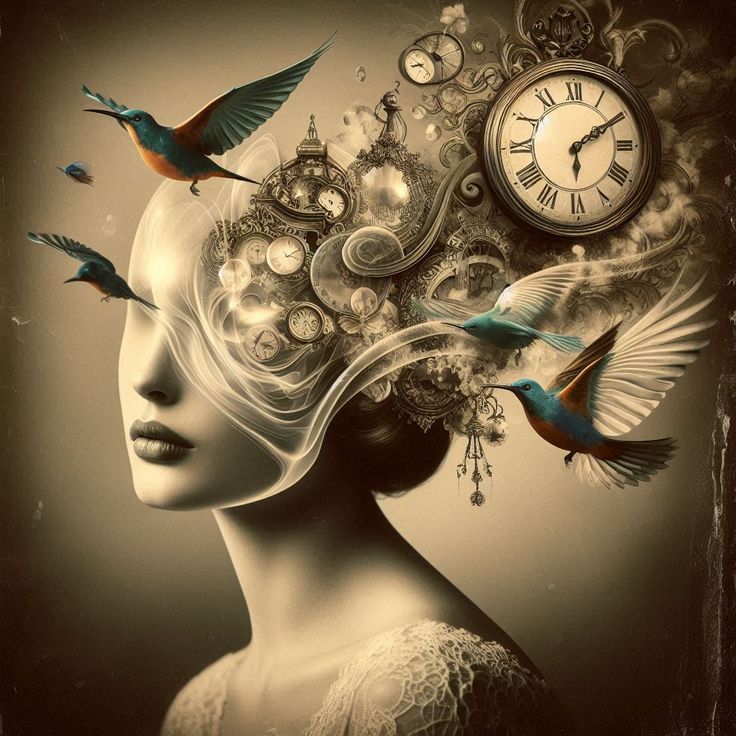
The title image and this one by G R Z A ࿐

(Absolute means “detached”. To declare God to be absolute is to place him outside of all connection with man. Man cannot act on him, and he cannot act on man. Such a God would be a completely irrelevant thing. One can, therefore, only reasonably speak of a God who is relative to humans as is to God. The Christian conception of God as a “Father in heaven” expresses the relativity of God in exquisite form. Quite apart from the fact that man can make out less about God than an ant can about the contents of the British Museum, this urge to declare God absolute arises only from the fear that God might become ‘psychological’. That would, of course, be dangerous. An absolute God, on the other hand, is of no concern to us at all, whereas a “psychological” God would be real. This God could reach man. The Church seems to be a magical instrument to protect man from this eventuality, for it is said that “it is a fearful thing to fall into the hands of the living God”.)

The logical consequence of this is that only a miserable, inferior, useless and sin-laden bunch of people remains. As is well known, this solution has become a historical worldview. Since I am only moving on psychological ground here and have no inclination to dictate my eternal truths to the universe, I must critically note that if I push all the highest value onto the side of the unconscious and construct a summum bonum from it, I have found myself in the unpleasant position of also inventing a devil of equal weight and size who maintains the psychological balance of my summum bonum. But under no circumstances will my modesty allow me to identify myself with the devil. That would be too presumptuous and would also put me in unbearable opposition to my highest values. But I cannot afford that, given my moral deficit.

That I feed the hungry, that I forgive an insult, that I love my enemy in the name of Christ — all these are undoubtedly great virtues.
~C.G. Jung, Memories, Dreams, Reflections
Carl Jung Depth Psychology

For psychological reasons, I would, therefore, recommend not constructing a God from the archetype of the Mana Personality, that is, not making it concrete, because, in this way, I avoid projecting my values ​​and non-values ​​onto God and the devil, and, in this way I preserve my human dignity, my own specific weight, which I need so much in order not to become the unresisting plaything of unconscious powers. When you deal with the visible world, you have to be crazy to assume that you are the master of this world. Here, the principle of non-resistance to all superior factors is naturally followed up to a certain individual limit. At this point, even the most peaceful citizen becomes a bloody revolutionary. Our bowing to law and state is a recommendable model for our general attitude toward the collective unconscious. (>Give to Caesar what is Caesar’s, and to God what is God’s. <) Our bowing would not be difficult up to this point. But there are also factors in the world to which our conscience does not necessarily say yes, and we bow before them. Why? It is practically more beneficial than the opposite. Likewise, there are factors in the unconscious where we have to be nothing but clever. (>Do not resist evil. < >Make friends for yourselves in the huts of unjust mammon. < >The children of the world are cleverer than the children of light<, ergo: >Be wise as serpents and gentle as doves. <)

To be continued! 💖🙏🤗

Hallelujah and Happy Heavenly Birthday, Leonard Cohen

Standard

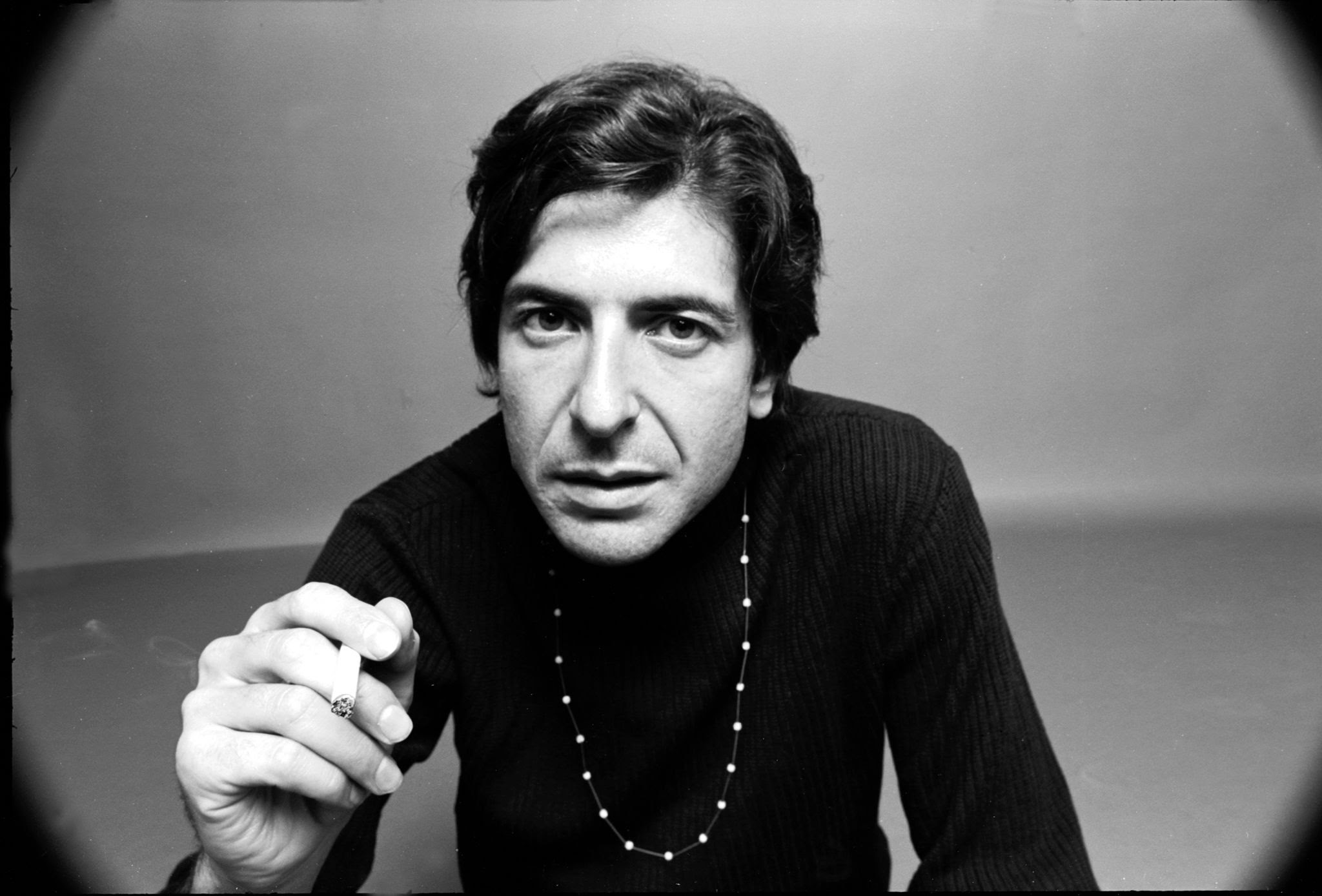
Today is the birthday of an excellent and extraordinary man (he would be ninety today).
He was a specialist in the philosophy of love and hate, in patience and passion, expressing it through poetry and songs. He had profound insights into society, and with his poems, he dug deeply into the human psychological mind and narrated it through his verses.

Although he is well known, I add it as the custom introduction: Leonard Norman Cohen (September 21, 1934 – November 7, 2016) was a Canadian singer-songwriter, poet, and novelist. His work commonly explores themes such as faith and mortality, isolation and depression, betrayal and redemption, social and political conflict, and sexual and romantic love, desire, regret, and loss.

I’ve been listening to all the dissension…
I’ve been listening to all the pain…
And I feel that no matter what I do for you…
It’s going to come back again.
But I think that I can heal it…
I’m a fool, but I think I can heal it…
With this song…

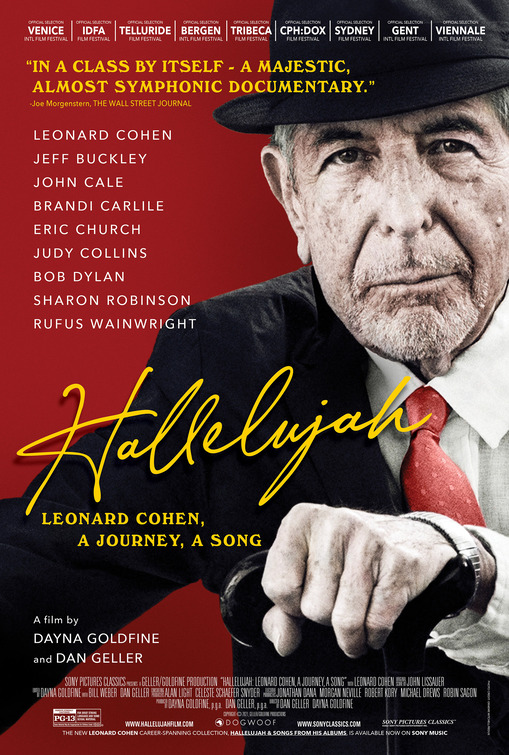
To be honest, I’ve intended to write an article about Cohen and the film “Hallelujah: Leonard Cohen, A Journey, A Song” for a long time, since I saw this movie last year in the cinema), but time failed, and then I thought, well, his ninetieth birthday is also a good pretext.

And honestly, again, I am not a great fan of this song! I just went to see this film because it was Leonard Cohen, which was enough rationale. But what caught my attention was that: first, this song is much older than I assumed, and second, many famous musicians had performed it before Cohen did it himself!

Hallelujah: Leonard Cohen, A Journey, A Song (The Movie)

Poster design by Callan Advertising

Cohen wrote “Hallelujah” in 1983, using “an old Casio keyboard”, as someone reported. Cohen once said, “To find that song, that urgent song, takes a lot of versions, work, and sweat.” He recalled being in his underwear, banging his head on the floor of New York City’s Royalton Hotel until he finally thought the song was up to snuff.

“Hallelujah” was initially influenced by religion, reflecting Cohen’s Jewish background and making allusions to King David and Bathsheba (“The secret chord that David played”) and Samson and Delilah. As different versions emerged, the song became more spiritual and sometimes included sexual references. For instance, lines such as “When David played, his fingers bled” were omitted in some versions. Cohen noted his first meeting with Dominique Issermann in his notebooks. She recalled, “We used to have coffee together in the morning before he began working on ‘Hallelujah.’ He would play various versions for me. But it’s such a puzzle, such a symbolic poem. It’s obscure – like a bird flying around the room.

Here is a link to see some of Cohen’s pictures by Dominique Issermann: https://www.dominiqueissermann.com/leonard-cohen-tour


Dance me to your beauty with a burning violin
Dance me through the panic ’til I’m gathered safely in
Lift me like an olive branch and be my homeward dove
Dance me to the end of love…

He was a great friend of Al and me in our youth in Iran; he helped us to endure injustice and protected us as a good companion. I still appreciate it.

Finally, as his songs always carry a message, I chose the most beautiful and relevant one for our lives today: “Passing Through!” Wishing everyone a wonderful weekend.💖🙏🤗🌹

I saw Jesus on the cross on a hill called Calvary
“Do you hate mankind for what they done to you?”
He said, “Talk of love not hate, things to do, it’s getting late
I’ve so little time and I’m only passin’ through.”
Passin’ through, passin’ through
Sometimes happy, sometimes blue
Glad that I ran into you
Tell the people that you saw me passin’ through
(Come a little closer, friend)
I saw Adam leave the garden with an apple in his hand
I said “Now you’re out, what are you gonna do?”
“Plant some crops and pray for rain, maybe raise a little Cain
I’m an orphan now, and I’m only passin’ through, so are you”
Passin’ through, passin’ through
Sometimes happy, sometimes blue
Glad that I ran into you
Tell the people that you saw me passin’ through
I was with Washington at Valley Forge, shivering in the snow
I said, “How come the men here suffer like they do?”
“Men will suffer, men will fight, even die for what is right
Even though they know they’re only passin’ through”
Passin’ through, passin’ through
Sometimes happy, sometimes blue
Glad that I ran into you
Tell the people that you saw me passin’ through
I was at Franklin Roosevelt’s side on the night before he died
He said, “One world must come out of World War Two” (ah, the fool)
“Yankee, Russian, white or tan,” he said, “a man is still a man
We’re all on one road, and we’re only passin’ through”
Passin’ through, passin’ through
Sometimes happy, sometimes blue
Glad that I ran into you
Tell the people that you saw me passin’ through
Let’s do it one more time
Passin’ through, passin’ through
Sometimes happy, sometimes blue
Glad that I ran into you
Tell the people that you saw me passin’ through

A Holy Beetle for a Young Pharaoh’s Divine Fortune

Standard

This impressive piece is another fascinating treasure, not because of the quantity of it by using jewellery to make it but because of its inner precious spiritual quality.

The scarab beetle was a revered symbol in ancient Egyptian culture, associated with gods like Jepri and Ra. Tutankhamun, an Egyptian pharaoh, had a gold scarab bracelet adorned with precious stones like turquoise and lapis lazuli. The Egypt-museum.com report describes the bracelet as having an incredible design.

Via Meisterdrucke


Scarab bracelets, resembling scarab beetles, were popular in ancient Egypt. They were made of gold or precious stones and believed to ward off bad luck and evil spirits. Both men and women wore them as stylish jewellery representing spiritual and religious convictions.

Here, we read the story and discovery of this magnificent treasure, which should have belonged to the young Pharaoh, Tutankhamun, by our adorable lady Marie Grillot.

Tutankhamun’s scarab bracelet as a child

via égyptophile

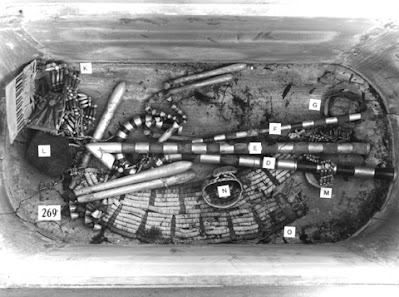
Bracelet decorated with a scarab – gold, lapis lazuli, carnelian, turquoise, quartzite – New Kingdom – 18th Dynasty
from the tomb of Tutankhamun (KV 62) discovered in November 1922 by Lord Carnarvon and Howard Carter
Carter 269-n – JE 62360 – photo from the Egyptian Museum

According to Howard Carter’s estimate, “at least sixty per cent of the finest ‘unattached’ jewellery had disappeared” from Tutankhamun’s tomb, taken by looters who, in antiquity, violated the tomb on at least two occasions.

As terrible as this observation is, we can only rejoice that two hundred jewels have reached us! Made by the best goldsmiths of the Theban workshops, they fill us with their beauty and originality and captivate us with their luxury and brilliance.

Bracelet decorated with a scarab – gold, lapis lazuli, carnelian, turquoise, quartzite – – New Kingdom – 18th Dynasty
from the tomb of Tutankhamun (KV 62) discovered in November 1922 by Lord Carnarvon and Howard Carter
Carter 269-n – JE 62360 – photo from the Egyptian Museum
Featured here in “Tutankhamun: His tomb and his treasures”, IES Edwards, 1976

The symbolism they carry is omnipresent, whether through the motif represented, the properties of the stone used, or even the magical effectiveness linked to the association of colours, all of which combine and charge them with virtues and protective powers.

This gold bracelet with a lapis lazuli scarab is a beautiful example and particularly moves us. Indeed, its small diameter (5.4 cm) and the signs of wear it bears testify to the fact that the young pharaoh wore it in his youth… And the fact that it also accompanies him in his afterlife is just as moving…

Bracelet decorated with a scarab – gold, lapis lazuli, carnelian, turquoise, quartzite – New Kingdom – 18th Dynasty
from the tomb of Tutankhamun (KV 62) discovered in November 1922 by Lord Carnarvon and Howard Carter
Carter 269-n – JE 62360 – photo from the Egyptian Museum
Featured here in “Discovering Tutankhamun”, Zahi Hawass

“A gold and lapis lazuli scarab crowns this bracelet, which is small enough for the child Tutankhamun to wear. On each side of the scarab are inlaid mandrake fruits with sexual connotations and poppies,” explains Zahi Hawass in “Discovering Tutankhamun.”

In “The Wonders of the Egyptian Museum in Cairo”, Silvia Einaudi gives a beautiful description, of which there is an extract: “A hinge and a clasp join the two semicircles that compose it. Its upper part, whose surface gradually widens, supports a large scarab, whose back, reproduced in the most minor details, is formed of inlaid lapis lazuli set in gold sockets and whose abdomen is entirely gold. The legs are executed with precision and realism: the front legs are provided with a five-pointed rostra, while the hind legs end in hooks. The surface on which the insect is fixed is surrounded by a continuous row of tiny gold grains, bordered on the outside by lapis lazuli, gold, turquoise and carnelian segments. The two parts of the bracelet that surmount the hinge and the clasp are occupied by a delicate composition of inlaid floral motifs, which fills the small trapezoidal space in a balanced way: a yellow quartzite flower is flanked by two carnelian buds; two small gold rosettes separate their stems. The lower part of the bracelet is decorated on the outside with four parallel rows of tiny gold grains.

Bracelet decorated with a scarab – gold, lapis lazuli, carnelian, turquoise, quartzite – New Kingdom – 18th Dynasty
from the tomb of Tutankhamun (KV 62) discovered in November 1922 by Lord Carnarvon and Howard Carter
Carter 269-n – JE 62360

In “Jewels of the Pharaohs”, Cyril Aldred analyses the floral motif thus: “The two trapezoidal spacers are filled with a floral design of a mandrake fruit flanked by two poppy buds and daisies”.

In “The Gold of the Pharaohs”, Christiane Ziegler gives us details on the materials and fine stones used, allowing us to better decipher the choice made by the goldsmiths during its design…

First of all, gold, whose brilliance brings it closer to that of the sun… Reputed to be unalterable, it is thus assimilated to the flesh of the gods. As for lapis lazuli, she explains: “In ancient myths, it constituted the beard and hair of the gods and possessed virtues comparable to those of turquoise”. Turquoise “méfékat”, with its luminous blue-green colour, evoked: “the growth of young shoots in spring and was synonymous with vitality and joy. Its presence in funeral equipment undoubtedly conferred on the deceased the joy of rebirth”. As for carnelian “Héréset”, it: “possessed the invigorating virtues of blood” and was thus linked to life…

Bracelet decorated with a scarab – gold, lapis lazuli, carnelian, turquoise, quartzite – New Kingdom – 18th Dynasty
from the tomb of Tutankhamun (KV 62) discovered in November 1922 by Lord Carnarvon and Howard Carter
Carter 269-n – JE 62360 

As for the most essential element, the scarab, finely worked in a deep and luminous blue lapis lazuli, is the symbol of renewal, of rebirth. Its representation is persistent in Egyptian jewellery, especially in the young king’s finery.

In her “Dictionary of Egyptian Mythology”, Isabelle Franco specifies, “The scarab is the bearer of a renewed energy which preludes all existence; it presides over the transformations which lead to all maturity. It is the animal attribute of Khepri. The sign of the scarab is used to write the word kheper, which evokes the idea of ​​birth but also of returning.”

The discoverers of Tutankhamun’s tomb: Lord Carnarvon (left) and Howard Carter, near KV 62
(photo (Harry Burton?) taken between November 1922 and April 1923)

The young king “came back to life” in November 1922, thanks to the perseverance of Howard Carter and Lord Carnarvon, who discovered his tomb in the heart of the Valley of the Kings, finally bringing him out of the oblivion the centuries had left him.

The bracelet decorated with a lapis lazuli scarab (Carter 269-n – JE 62360) was
in the wooden box inlaid in the shape of a cartridge (Carter 269 / JE 61490 / GEM 242)
Provenance: The tomb of Tutankhamun (KV 62) discovered in November 1922 by Lord Carnarvon and Howard Carter
The Griffith Institute – Tutankhamun: Anatomy of an Excavation
The Howard Carter Archives – Photographs by Harry Burton

It took seven long weeks to empty the antechamber, and the official opening of the burial chamber took place on February 17, 1923. On that same day, as they continued their extraordinary exploration, they noticed “A low door, on the right, which gave access to another, smaller room. (…) This door had neither been blocked nor sealed. A single glance was enough to make us understand that it was this which contained the real treasures of the tomb …” (Howard Carter)

This bracelet was found in this room, precisely in a dark wooden box in the shape of a cartouche, whose lid reproduces the name of Tutankhamun in a delicate coloured rebus. Harry Burton’s photos, identified as it, are placed on the ground in front and to the left of the gilded wooden naos protected by the four goddesses.

The bracelet decorated with a lapis lazuli scarab (Carter 269-n – JE 62360) was
in the wooden box inlaid in the shape of a cartridge (Carter 269 / JE 61490 / GEM 242)
Provenance: The tomb of Tutankhamun (KV 62) discovered in November 1922 by Lord Carnarvon and Howard Carter
The Griffith Institute – Tutankhamun: Anatomy of an Excavation
The Howard Carter Archives – Photographs by Harry Burton

This box, number Carter 269, contained wonders! The various jewels and artefacts it contained received this number, followed by a letter as a reference. Thus, this bracelet received the number “269 n,” and it was then registered in the Journal of Entries of the Cairo Museum JE 62360 … while waiting for the new referencing that will be given to it by the Grand Egyptian Museum, where it will soon be exhibited …

Marie Grillot

Sources:

Egyptian Museum, Cairo – Tutankhamun’s bracelet with a scarab http://www.globalegyptianmuseum.org/record.aspx?id=15044 Howard Carter, The Tomb of Tutankhamun, Volume 3: The Annex and Treasury, Bloomsbury Academic, 2014 Jean Capart, Tutankhamun, Vromant & Cie Printers-Publishers, 1923 http://gallica.bnf.fr/ark:/12148/bpt6k5611389t/f60.texte Nicholas Reeves, Tutankhamun, life, death and discovery of a pharaoh, Editions Errance, 2003
Christiane Desroches Noblecourt, Tutankhamun and his time, catalogue of the exhibition Petit Palais, Paris, February 17-July 1967, Ministry of State for Cultural Affairs
Christiane Desroches Noblecourt, Life and Death of a Pharaoh, Hachette, 1963
Zahi Hawass, Discovering Tutankhamun, Editions du Rocher, 2015
Zahi Hawass, Tutankhamun, Treasures of the Golden Pharaoh, exhibition catalogue, IMG Melcher Media, 2018
Francesco Tiradritti, Treasures of Egypt – The wonders of the Egyptian Museum in Cairo, Gründ, 1999
Cyril Aldred, Jewels of the Pharaohs, Ed. Thames & Hudson Ltd. London, 1978
Iorwerth Eiddon Stephen Edwards, Tutankhamun: his tomb and his treasures, The Metropolitan Museum of Art, 1977
Christiane Ziegler, The Gold of the Pharaohs – 2500 Years of Goldsmithing in Ancient Egypt, catalogue of the summer 2018 exhibition at the Grimaldi Forum in Monaco,
The Griffith Institute – Tutankhamun: Anatomy of an Excavation – The Howard Carter Archives – Photographs by Harry Burton http://www.griffith.ox.ac.uk/php/am-makepage1.php?&db=burton&view=gall&burt=&card=269&desc=&strt=3&what=Search&cpos=51&s1=imagename&s2=cardnumber&s3=&dno=25 Émile Vernier Egyptian jewellery and jewellery, MIFAO, Cairo, 1907 https://archive.org/details/MIFAO2/mode/2up https://archive.org/details/MIFAO2/page/n1/mode/2up Thomas Garnet Henry James, Howard Carter, The path to Tutankhamun, TPP, 1992

How Fragile We Are!

Standard

I wasn’t sure if I wanted to write this story at first, but after reading the heartfelt verses of “So What” by my wise friend Mike Steeden, I felt encouraged enough to write it. Mike’s poem felt very familiar to me!

It is Tuesday, and I must write my usual weekend posts earlier because this coming weekend will be jam-packed with a mixture of moans and revel, grief and joy!! On Saturday, we (must) drive southwards to another town to participate in Regina’s sister’s birthday party. Still, the day before that, on Friday, there is the funeral of a 25-year-old young man, the son of a long-time close friend of my wife and me, who was found dead last week in his apartment.
Of course, this incident belongs to the inner circle of acquaintances, so I decided to preserve everyone’s anonymity. Unfortunately, similar stories occur frequently, but I believe this one is noteworthy due to specific details worth sharing.

I have known the mother of this boy since the early nineties; a beautiful girl and a close friend of my wife (still a girlfriend of mine at the time) with full wishes looking to the future. After a while, she married a bit older gentleman, with the dream of having a family with children. It didn’t happen because, after some medical research, they discovered that the required sperm were too slow to reach the egg. As a result, they decided to opt for using donor sperm from foreign donors (Artificial Insemination). When she talked to me about her decision, I shared my opinion and asked if it was important for her to specify the origin of the sperm, such as whether it belonged to a German donor or not. She let me enjoy her beautiful smile awhile and told me she preferred to take a pure German sample; she added that, in all honesty, she knew my son as cute and sweet (he was about nine those days) but very strenuous and demanding. She believed it was because of his mixed heritage, with me as a non-German and Regina as a German. So, she thought that a straight mix would give a better result!

Anyway, the child was born a very handsome boy, although the mother’s dream didn’t go as well as it should have. After a short time, the man lost his feelings toward his wife and, most of all, toward his non-son! The couple separated, and everyone went their own way. The man found another woman, and the woman first tried it alone, and after a short affair with my brother Al, married another man with two children. I didn’t get much information about the boy, but I did hear that Al believed the boy was a genius because of his strange behaviour; he could hear the boy banging his head on the wall at night! As the boy got older, he went to school and seemed to be doing fine. However, as he became a teenager, I found out from my wife that he became addicted to drugs.

I remember once she, the mother, confided in me about her despair and asked me if I could talk to him and tell him about my experiences with drugs and how I managed to quit. I did it, of course, even though I knew it would never work because every addicted person has their own way of being involved with this devil and must find their own soul’s path to be rescued. I could only try to analyze it with his father complex, as he never had a good relationship with his non-father. Maybe it would be better if he knew the truth about his real father or how he himself has been made. That might be the reason why he never wanted to quit drugs.

Long story short, She had tried numerous methods to help her son overcome his addiction, visiting doctors, hospitals, and various aid institutions for healing. However, again and again, after a while, he relapsed, and the cycle continued, becoming a seemingly never-ending story. Till then, another purchase was a big plan to send him to a new version of quitting. He asked his mother to give him a sum for meeting his girlfriend in another town before he got to the hospital. She trusted him, but he repurchased some stuff, got into his apartment, and (apparently, as I believe) put an end to his sad story with a golden shot!

That was a short story about the brief life of a young man who was brought up into life with such great efforts and wishes, but he faded away as ado about nothing! As the holy books say, we humans are the highest of creatures, a confection of love, lust, greed, needs, and before all dreams, but so incredibly fragile!

Illustrations and paintings by Sky Black Art.

An addendum
Now, it is Friday, and I’m writing this after I return from the funeral; there was a vast audience I never expected. It made me mirthful, and I do believe if the boy knew to have so many fans would choose another way! I send my heartfelt blessing to his soul.🙁😐💖

PS: And as I reached Saturday today, I must hurry to the birthday party. It seems like I’m playing a part in the movie “Four Weddings and a Funeral”! Tomorrow, there’s another planned event: the communion celebration for my daughter-in-law’s sister, but that’s another story!!😜

The Mystery Of “Mana Personality” Part Six

Standard

Translated from volumes published by Lorenz Jung based on the edition “Gesammelte Werke” dtv.de The Symbols of Transformation (1952) and Aion (1950)

Continuing the concept of Mana-Personality, Dr. Jung advises us not to underestimate the unconscious mind and even offers a prescription for better managing this issue. (I dearly share here the last parts, 12345, if someone wants to check out!)🙏

As I read more from Dr. Jung, I find that the issues he discusses do not pertain to a specific time period; they are fundamental and timeless, as we can clearly observe them in the present.

So, I believe following his concepts can heal our ailing society. He did an excellent job of helping us understand our inner unknown.
Let’s read another chapter of this Mana riddle.

Individuation
The Mana Personality (P6)

The Mana personality develops historically into a heroic figure and a god-man (according to popular belief, the highest Christian king could cure epilepsy with his Mana by laying on hands), whose earthly figure is the priest. The analysts can tell us something about how much the doctor is still a man-personality. Insofar as the “I” apparently draws the power belonging to the anima to itself, the ego becomes a mana personality. This development is an almost regular occurrence. I have never seen a more or less advanced development process of this kind where identification with the archetype of the Mana personality did not take place, at least temporarily. And it is the most natural thing in the world that should happen this way because not only you do expect it yourself, but everyone else expects it too. One can hardly help but admire oneself a little because one has seen deeper than others, and the others have such a need to find somewhere a tangible hero or a superior wise man, a leader and father, an unquestionable authority, that they are very willing to build temples and burn incense to even petty gods. It is not just the lamentable foolishness of the uncritical followers but a psychological law of nature that what was before will always be again. And this will always be the case as long as consciousness does not interrupt the naive concretization of the archetypes. I do not know whether it is desirable for consciousness to alter the eternal laws; I only know that it sometimes alters them and that this measure is a vital necessity for certain people, which, however, does not prevent them from placing themselves on the throne of the father in order to make the old rule come true once again. Indeed, it is difficult to see how one could escape the overwhelming power of the archetypes.

Johfra Bosschart Occult Surrealist

I don’t believe that one can escape this overwhelming power. One can only change one’s attitude towards it and thereby prevent oneself from naively falling into an archetype and then being forced to play a role at the expense of one’s humanity. Being obsessed with an archetype turns a person into a mere collective figure, a kind of Mask behind which humanity can no longer develop but instead increasingly atrophies. One must, therefore, be aware of the danger of falling prey to the dominant Mana personality. The danger is not only that one becomes the FatherMask oneself but also that one falls prey to this Mask if someone else wears it. In this sense, master and student are the same.

The dissolution of the anima means that one has gained insight into the driving forces of the unconscious, but not that we have rendered these forces ineffective ourselves. They can attack us again in a new form at any time. And they will inevitably do so again if there is a gap in the conscious attitude. Power stays against power. When the “I” assumes power over the unconscious, the unconscious reacts with a subtle attack, in this case, with the dominance of the Mana personality, whose enormous prestige captivates the “I”. The only way to protect oneself against this is to fully admit one’s own weakness in the face of the forces of the unconscious. In this way, we do not oppose the unconscious with power, and as a result, we do not provoke the unconscious either.

Illustration: Nikolai Zaitsev

It may sound strange to the reader when I speak of the unconscious, so to speak, in a personal way. I do not want to provoke condemnation by thinking of the unconscious as personal. The unconscious consists of natural processes that lie beyond the human-personal. Only our consciousness is >personal<. So when I talk about >provoking<, I don’t mean that the unconscious is somehow offended and – like the old gods – does something to someone out of jealousy or vengeance. I often mean something like a psychological diet error that upsets my digestion. The unconscious reacts automatically, like my stomach, which figuratively takes revenge on me. If I assume power over the unconscious, that is a psychological dietary error, an unsatisfactory attitude that is best avoided in the interest of one’s own well-being. My unpoetic comparison is, however, a little too mild considering the far-reaching and devastating moral effects of a disturbed unconscious. In this respect, I would prefer to speak of the vengeance of offended gods.

To be continued! 💕🖖💖

A Humble, Wise Words by Dr. Carl Gustav Jung (Let’s Knowing Him Better!)

Standard
….the man who adopts the standpoint of Eros finds his compensatory opposite in the will to power, and that of the man who puts the accent on power is Eros.

Dr. Jung once expressed his sadness because he wasn’t sure if his message reached people and if they comprehended it. He was an extraordinary man with incredible imagination and insight into the world, people, and their inner unknown. However, his genius mind was too vast for many to understand, and he often felt alone. He also said that if a man knows more than others, he becomes lonely!

While translating and publishing the series about Mana-Personality, I often encountered Jung’s humble, honest, and profoundly wise words. I thought it would be great to share some of his explanations about his intentions and efforts to help us better understand his message.

carljungdepthpsychologysite.blog
via Lewis Lafontaine

His works, as we know, have become very popular now. I noticed it when I kept trying to buy more of his books (complete works 1, 2, 3, etc.). They are (for me!) quite expensive. Of course, I may have downloaded some of them from the internet, but as I prefer to hold the book in my hand, I reached for the collections he published in such small but fine pieces. One of them is this book, “The Relation Between “I” and the Unconscious”, which I have shared some translations. This time, I want to share with you the preface of this book to get to know him better. I found his explanation with such honest words fascinating and touching, and I hope you will feel the same way I did.

Preface to the Second Edition

This little book originally arose from a lecture that I published under the title ‘La Structure de l’Inconscient’ (cf. The Structure of the Unconscious, CW 7.) in the Archives de Psychology in December 1916 (vol. 16, p. 152). It was also published under the title ‘The Conception of the Unconscious’ in my ‘Collected Papers on Analytical Psychology’ (2nd ed., 1917). I mention this fact because I want to show that the present work is not a one-off phenomenon but the expression of an effort that has extended over decades to understand the peculiar character and course of the > drame intérieur <, the process of transformation of the unconscious soul, and to present it – at least in its main features. This idea of ​​the independence of the unconscious, which distinguishes my view so fundamentally from that of Freud, dawned on me as early as 1902 when I was studying the psychological development of a young somnambulist (cf. On the Psychology and Pathology of So-called Occult Phenomena, GW 1.).

In a lecture at the Zurich town hall, >The Content of Psychosis< (CW3), I approached this idea from a different angle. In 1912, I presented some of the main parts of the process using an individual example, and at the same time, I showed the historical and ethical parallels of this apparently universal psychic process (cf. Transformations and Symbols of the Libido, 1912. See also the 1952 version, which was extensively revised and expanded by Jung: Symbols of Transformation, GW 5.). In the essay mentioned above, La Structure de l’Inconscient, I attempted for the first time to give a summary of the whole process. It was a mere attempt of whose inadequacy I was only too convinced. The difficulties of the material were so great, however, that I could not imagine that I could do them any justice by the explanations in a single essay. I, therefore, left it at the ‘preliminary report’, with the firm intention of taking up this subject again at a later opportunity. Twelve years of further experience enabled me then in 1928 to thoroughly revise my formulations of 1916, and the result of these efforts was this present little book. This time, I tried mainly to describe the relationship of ego consciousness to the unconscious process. Following this intention, I have been particularly concerned with those phenomena which can be described as reactions of the conscious personality to the influences of the unconscious. In this way, I have attempted to approach the unconscious process indirectly. However, these investigations have not yet reached a satisfactory conclusion, as the answer to the main question of the nature and essence of the unconscious process has not yet been found. I did not dare tackle this difficult task without the greatest possible experience. Its solution is reserved for the future.

The reader of this booklet will forgive me if I ask him to regard it – when he reads it – as a serious attempt on my part to intellectually grasp a new and as yet unexplored area of ​​experience. It is not a matter of a sophisticated system of thought but of formulating psychic experience complexes, which have never before been the subject of scientific consideration. Since the soul is an irrational given and cannot be equated with a more or less divine reason according to the old model, it is not surprising that in psychological experience, we very often come across processes and experiences that do not correspond to our reasonable expectations and are consequently rejected by our rationalistic consciousness. Such an attitude is, of course, unsuitable for psychological observation because it is highly unscientific. One must not try to dictate to nature if one wants to observe its undisturbed workings.

I am trying to summarize 28 years of psychological and psychiatric experience, which is why my little book can make a specific claim to being taken seriously. Of course, I could not say everything in this one presentation. The reader will find a continuation of the last chapter in the book >The Secret of the Golden Blossom< (see the commentary on The Secret of the Golden Blossom, GW 13.), which I published together with my late friend Richard Wilhelm. I did not want to omit to refer to this publication because Eastern philosophy has been concerned with inner psychological processes for many centuries and is, therefore, of inestimable value for our psychological research precisely because of the much-needed comparative material.

In October 1934 Carl Gustav Jung

In the end, here is a short description of uttering one’s acknowledgement based on knowing and believing. Socrates said, “I know that I don’t know!” Let’s hear Dr. Jung’s words about this!
Thank you all for being there.🤗🙏💖