
When my brother, Al, was in the hospital to undergo surgery to remove a tumour from his brain, one of the professors told him that we humans know almost nothing ( just ten per cent) about how our brains work – The rest is still a puzzle! Therefore, unexplained phenomena, such as strange things like seeing ghosts, daydreams, or schizophrenia, are always fascinating topics for inquisitive minds.
According to Dr Carl Jung: …in schizophrenia, the complexes have become disconnected and autonomous fragments, which either do not reintegrate back to the psychic totality, or, in the case of remission, are unexpectedly joined together again as if nothing happened” (1939).

Franz Kafka Dreams >Wrestling matches every night<
During our trip to Serbia (I will write a post about it soon), I brought along some books as I do on any trip. This time, I discovered some surprises. While renovating the apartment, I found a book I couldn’t remember owning. Upon picking it up, I found a shopping receipt in the book dating back to 1995. It was clear that the book belonged to Al. Apart from a few novels, Franz Kafka wrote thousands of letters about his thoughts, dreams, and daydreams, and I was excited to have this particular book. The book is in German, and I translated a description and one of his letters about his dreams. I often considered the similarities between Kafka and Dostoevsky, as the latter frequently had daydreams like a schizophrenic. In this dream, Dostoevsky is interestingly present! I hope you will enjoy it.
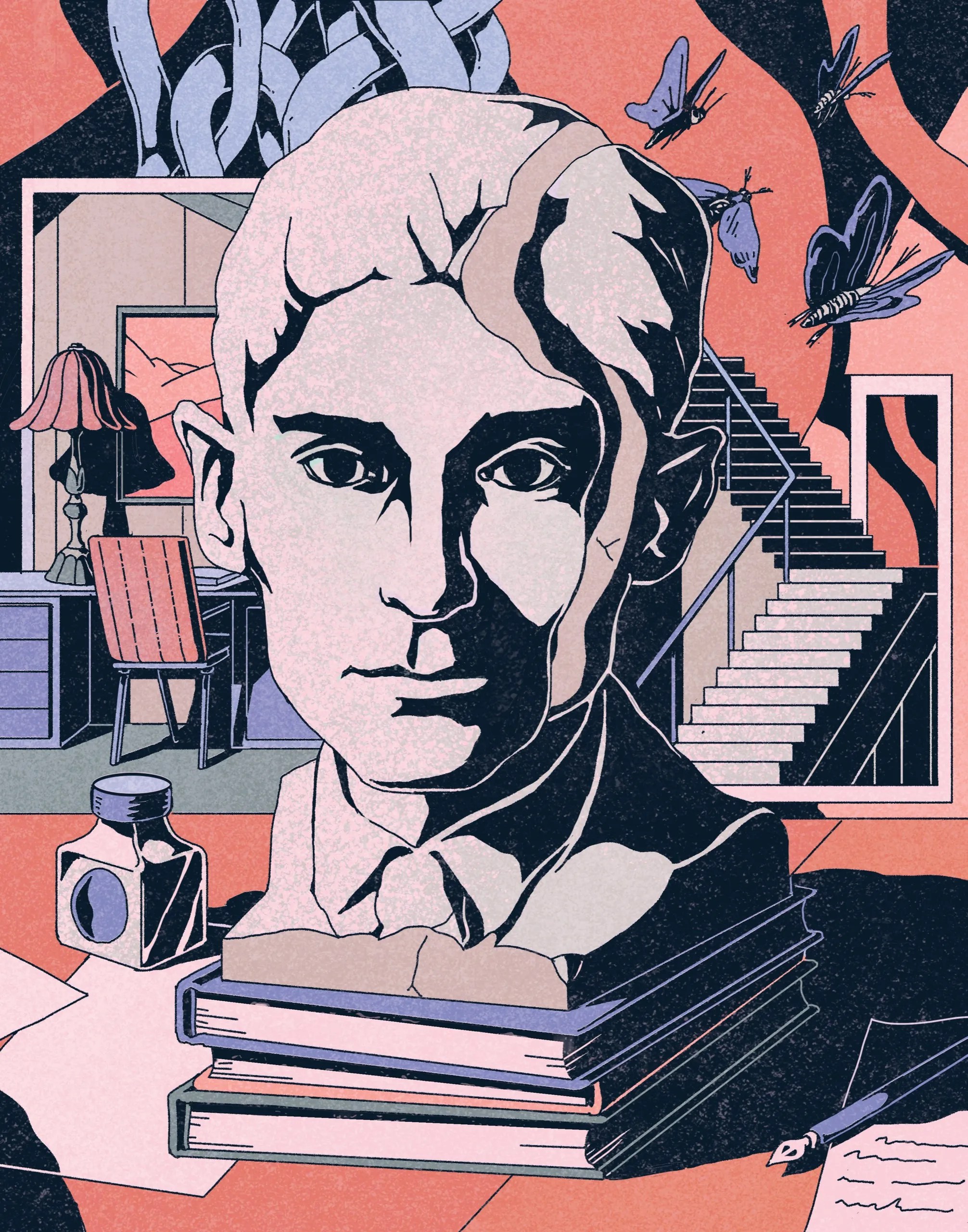
According to Jean-Paul, dreams substantially affect a poet because he is used to fantasy. In contrast, Kafka’s dreams intensified his daytime fears. Taken out of context, his dreams form an interesting “storybook” of events and changes involving real people and places from his life. Kafka’s descriptive notes allow the reader to relive each dream-like episode as if watching a film vividly. This collection also serves as a documentary, presenting the dreams chronologically and reproducing Kafka’s comments on the phenomenon of dreams and dreaming.
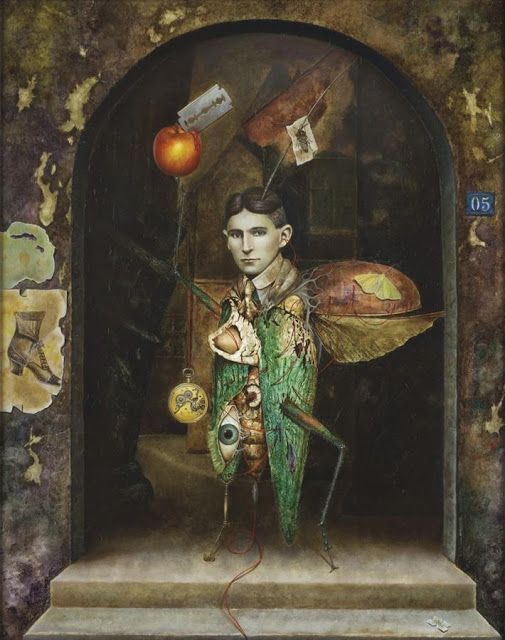
Gregor Samsa woke up one morning to find himself transformed into a monstrous vermin. Franz Kafka’s “The Metamorphosis” challenges readers to accept this transformation as real, denying the possibility of dismissing it as merely a dream. This may frustrate those who rely on reason to understand the world and expect literature to assist them in this endeavour. In 1916, Franz Herwig criticized the rejection of realism and its associated positive aspects in an essay about the authors of the series “The Judgement Day,” in which Kafka’s story appeared. Gregor Samsa’s story “The Metamorphosis” challenges our understanding of reality and urges us to see the world in a new light. Kafka emphasizes that incomprehensible forces are shaping our lives, which may be more influential than we can rationally explain. According to his commentary on the story “The Judgement,” which he wrote in one go from ten o’clock in the evening to six o’clock in the morning, this is the only way to write in such a context—with a complete openness of body and soul! In this type of writing, the usual censorship of the mind is primarily eliminated. Everything can be risked, and a great fire is prepared for everyone for the strangest ideas, in which they perish and rise again.
Dream!
[To Milena Jesenska, August 1920; M 170-172]
Today, I think I dreamt of you for the first time since I’ve been in Prague. A dream towards morning, short and heavy, still caught up in sleep after a bad night. I know little about it. You were in Prague; we were walking along Ferdinand Street, a little opposite Vilimek, in the direction of the quay; some acquaintances of yours were walking past on the other side; we turned to look at them; you spoke of them, perhaps there was also talk of Krasa [I know he is not in Prague, I will find out his address]. You said as usual, but there was something incomprehensible, indescribable about rejection in it; I didn’t mention it but cursed myself, thereby only expressing the curse that was on me. Because we were in the coffee house, probably in the Kaffee Union (it was on the way, and it was also the coffee house from Reiner’s last evening), a man and a girl were sitting at our table, but I couldn’t remember them. Then, there was a man who looked very similar to Dostoyevsky but young, with a deep black beard and hair. Everything, for example, the eyebrows and the bulges over the eyes, were incredibly strong. Then you were there, and I. Again, nothing betrayed your aloof manner, but the rejection was there.
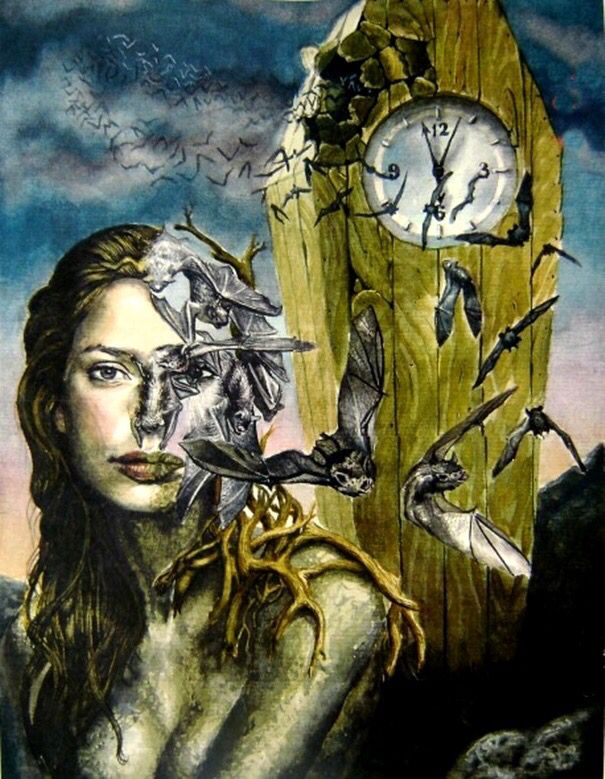
Your face was – I could not look away from the tormenting oddity – powdered, and it was overly obvious, clumsy, bad; it was probably hot, and so whole powder lines had formed on your cheeks; I can still see them in front of me. Again and again, I leaned forward to ask why you were powdered; when you noticed that I wanted to ask, you asked obligingly – the rejection was simply not noticeable – >What do you want?< But I could not ask, I did not dare, and yet I somehow suspected that being powdered was a test for me, a crucial test, that I should ask, and I wanted to but did not dare. And so the sad dream rolled over me. At the same time, the Dostoyevsky man tormented me. His behaviour towards me was similar to yours but still a little different. When I asked him something, he was very friendly, sympathetic, leaned over, and open-hearted. Still, when I didn’t know what to ask or say – this happened every moment – he would withdraw with a jerk, sink into a book, know nothing more about the world and especially not about me, disappear into his beard and hair. I don’t know why I found this unbearable, again and again – I couldn’t do anything else – I had to pull him over to me with a question and again and again, I lost him through my own fault! 💖🙏🤗
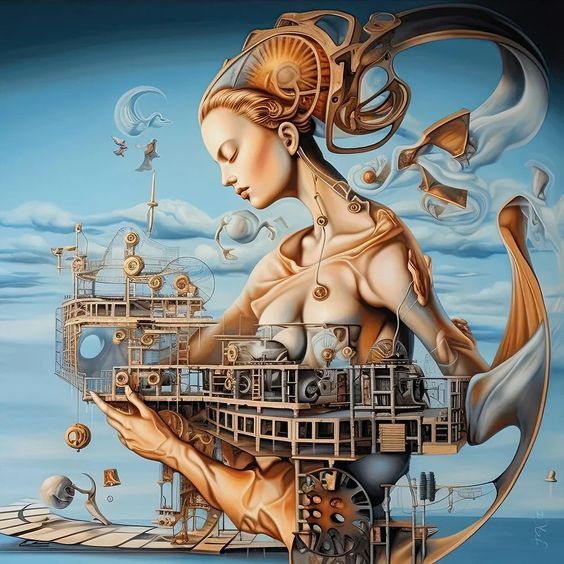
The Imagen at top: Youri Ivanov – Artiste Russe (Russian)


 lampmagician
You must be logged in to post a comment.