As I reflect on my past life, the passing years prompt me to recall memories, and I see how I wish to revisit specific moments to alter them or improve them. I have led an adventurous life (as you may recall from my series of posts about my memories), and I acknowledge that I have made numerous mistakes, which I deeply regret. However, with guidance from great thinkers, I have learned to view these mistakes from a different perspective: The Value of Experience!
It is a prevalent issue for people around the world to avoid making mistakes. I, myself, am one of those who strive for perfection, and I recognise that it is misguided! Johann Wolfgang von Goethe says, “Geschlagener Quark macht breit, nicht fest!” (Beaten curd becomes broad, not strong!)
“If we look at the problems raised by Aristotle, we are astonished at his gift of observation. What incredible eyes the Greeks had for many things! Only they committed the mistake of being overhasty, of passing straightway from the phenomenon to the explanation of it, and thereby produced specific theories that are pretty inadequate. But this is the mistake of all time, and is still made in our own day.”
From Maxims & Reflections, Johann Wolfgang von Goethe; Science, 559
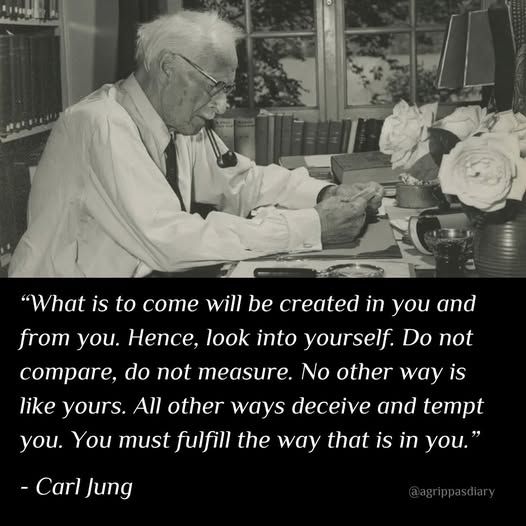
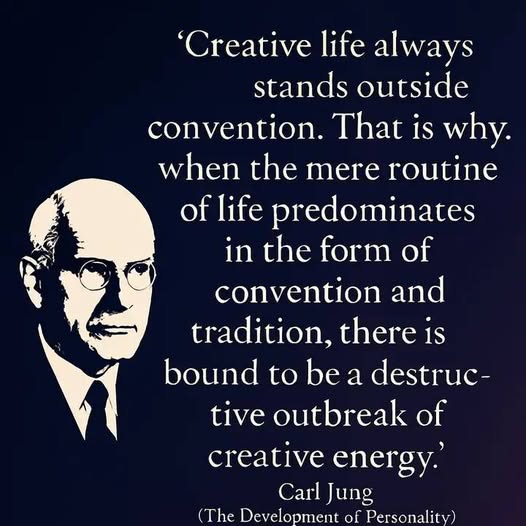
Additionally, Carl Gustav Jung reminds us that we can make mistakes and learn from them.
Whatever we look at, and however we look at it, we see only through our own eyes. For this reason, science is never made by one man but by many. The individual merely offers their contribution, and in this sense, I dare to speak only of my way of seeing things. ~Carl Jung, Modern man in Search of a Soul, p.84.
Plato proposed that absolute knowledge can be gained through acquaintance, meaning through intellectual insight into the otherworldly Forms. Jung shared a similar notion regarding acquaintance with the archetypes of the “unus mundus” (one world), representing the primordial, unified reality from which all things originate. Nevertheless, in contrast to Plato, Jung asserted that archetypes cannot be perceived directly. Instead, we can comprehend their psychic significance, gaining at least a hint of absolute knowledge.
I believe we can make mistakes, but after each one, we should take a step back and carefully examine how and where it happened, then try to approach the experience more thoughtfully. Experience teaches us more than thousands of books ever could!
Jung inspired individuals to engage with the world and savour life, rather than rely solely on theoretical knowledge from books. He regarded the unconscious mind as a treasure trove of experiences accessible through reflection and symbolic language. Ultimately, Jung’s work emphasises that while books and knowledge are valuable, they shouldn’t overshadow the importance of direct experience and self-reflection. Genuine growth and understanding flourish when we engage with our surroundings and explore our inner lives.
Sometimes a tree tells you more than can be read in books. ~ C.G. Jung; Letters Volume 1; Page 179.
Experience, not books, is what leads to understanding. ~Carl Jung, CW 12, Para 564
Thank you for reading; have a lovely holiday! 🙏🤗🌹💕
This relief stele from Princess Nefertiabet’s tomb (G 1225) in Giza depicts her and other relatives of the king, including Nefertiabet, daughter of Khufu. She is shown seated, facing to the right, depicted with a long wig and a panther-skin garment.
An offering table before her holds customary reeds and various food items. Below are linen and ointment on the left, and bread, beer, oryx, and bull on the right. A linen list is displayed beside the slab.
Stele of Princess Nefertiabet and her food offerings Egypt Museum
Now, I would like to share an excellent description of the discovery of this beautiful ancient artwork by the brilliant Marie Grillot.
The stele of Nefertiabet: from its mastaba in Giza to the Louvre Museum
Stele depicting Princess Nefertiabet before her funeral meal – painted limestone – reign of Khufu (4th Dynasty) Discovered by Montague Ballard in 1902 in mastaba G 1225 at Giza Entered into the Louvre Museum in 1938 by the gift of L., I. and A. Curtis – E 15591
In 1901-1902, Montague Ballard, a British brewer, obtained an excavation permit at the Giza site. He stayed there for only a very short time, but it was long enough to make some interesting discoveries. In 1902, in the western cemetery, he discovered a mastaba, which would be referenced as G 1225, that notably contained the “Stele of Nefertiabet,” named after its “owner.”
Most of the artefacts discovered during his mission were subsequently dispersed. Three pieces from the mastaba ended up in Arthur Sambon’s collection. They were then put up for sale on May 25, 1914, in Paris by the expert Jacob Hirsch. The stele seems to correspond to the object presented under No. 2 of the “Stone Sculptures of Egyptian Art.” Did it then pass into other hands? In any case, it was later found in the possession of an aesthete and art lover: Atherton Curtis.
Born in New York in 1863, he settled in Paris in 1904, where he “brought and continually increased his collection.” In “La Grande Nubiade,” Christiane Desroches Noblecourt recalls: “Among the most prestigious donors (to the Louvre), not only for the Egyptian department but for all the others, was Atherton Curtis. He wanted to add to his name that of Louise, his first wife, who died prematurely, and that of the second, who was also passionate about all antiquities, Ingeborg.” The stele entered the Louvre in 1938 through the “Curtis Bequest.” It was during the November 8, 1938 meeting of the Council of National Museums that Charles Boreux, Curator of the Department of Egyptian Antiquities, informed “the Council of the immediate gift, by Mr. and Mrs. Atherton Curtis, of three magnificent pieces of sculpture included in the donation subject to usufruct that they made to the Louvre a few months earlier. These are a painted limestone group representing King Amenhotep and Queen Nofertiti, a group from the Old Kingdom, and finally a polychrome bas-relief in the name of Princess Nofritabtj.” He died in 1943, and the stele was then permanently housed at the Louvre, registered under the reference E 15591.
Measuring 37.70 cm high, 52.50 cm wide, and 8.30 cm thick, it is made of painted limestone. It belongs to the category known as “slab stelae,” which are in fact “slabs embedded in the walls of funerary chapels” and which represent the oldest reliefs in Giza.
While the scene depicted is relatively common in Old Kingdom funerary iconography, its quality and the finesse of its execution remain exceptional. This suggests that it was likely executed in the workshops of Pharaoh Khufu. This could also be explained by the fact that Nefertiabet was either “the daughter or sister of the great pharaoh” or, according to another interpretation, “probably a sister of King Khufu and a daughter of Snefru.”
The rectangular surface is surrounded by a plain band standing out in slight relief. Nefertiabet is depicted alone facing her eternal meal. She is on the left side, seated on a delightful bull-legged stool, the back of which is decorated with a papyrus umbel.
Slim, fine, slender, her “yellow skin colour is well preserved,” and she is particularly elegant. Her panther-skin dress is held together, on the left, by “seven red shoulder knots, all applied with paint,” while on the right, the shoulder is bare. The garment stops above the ankles, revealing the bracelets that adorn them, while her bare feet rest flat on the ground.
Stele depicting Princess Nefertiabet before her funeral meal – painted limestone – reign of Khufu (4th Dynasty) Discovered by Montague Ballard in 1902 in mastaba G 1225 at Giza Entered into the Louvre Museum in 1938 by the gift of L., I. and A. Curtis – E 15591 This stele, walled up in the chapel of her tomb in Giza, magically ensured the eternal nourishment of the deceased, a relative of King Khufu.
Her perfectly profiled face is highlighted by a long, black, tripartite wig, which covers a large part of her forehead but leaves her ears visible. Her large eyes are rimmed with kohl, and her nose and mouth are of ideal proportions; only her neck, adorned with a necklace, appears a little short. “The face expresses the ideal of feminine beauty at the time of the pyramids: slightly rounded forehead, fine, straight nose, delicately contoured lips and nostrils, and a rounded throat” (Christiane Ziegler, “Egypt at the Louvre”).
Her left arm rests, hand flat, on her right breast, while her right arm is held alongside her body, hand outstretched towards “a white stone footed tray, placed on a cylindrical terracotta support, and covered with slices of cake with a golden crust and white crumb”.
The quality of the carved and painted hieroglyphs that “document” the stele is of total perfection, as proven by the precision of execution of the libation ewer, the animal heads, and even the birds,…
Above Nefertiabet’s head, “an inscription in large hieroglyphs enhanced with colour specifies her name and title; one will particularly admire the reed and the duck, meaning respectively ‘king’ and ‘daughter’… All around (the pedestal table) hieroglyphic signs and images immortalise the offerings necessary for her survival that the inscription wishes her thousands of: duck with its head cut off; head, foreleg and rib of beef; jug of wine. Above the table, two lines of hieroglyphs, arranged in a frame, list the products of the funerary ritual (incense, ointment, green and black makeup) as well as fruits and drinks: figs, jujubes, carobs, beer, and wine. The entire right-hand side is occupied by lists listing thousands of pieces of fabric, undoubtedly necessary for mummification, with their quality and length, as specified by Christiane Ziegler in the work cited above.
One might rightly wonder how this stele, which dates from 2590-2565 BC and is therefore more than 4,500 years old, has reached us in such a well-preserved state. Here is part of the explanation: “This stele was sealed on the outer wall of its tomb in Giza, at the foot of the Great Pyramid. Later walled up, it was protected from the wear and tear of time and men.
In his study “Slab Stelae of the Giza Necropolis” published in 2003, Peter Der Manuelian specifies however that: “The remains of the original mud-brick chapel have not been preserved and the exact location of the slab stela could not be determined due to the destruction of this part of the mastaba wall by Ballard”…
But at the Louvre, in the heart of the prestigious Parisian museum – precisely on the first floor of the Sully wing, in room 635 dedicated to the Old Kingdom – Nefertiabet remains very much alive, adorned with everything fundamental to ensure her a long, very long eternity…
Stele of Nefertiabet https://collections.louvre.fr/ark:/53355/cl010005261 Jacob Hirsch, Expert, Catalogue of Works of Art and High Curiosities…, Faience…, Saxon Porcelain,… Egyptian and Greek Sculptures…, Persian Manuscripts…, Old Paintings… Forming the Collection of Mr. Arthur Sambon… Sale: May 25-28, 1914, Imprimerie Georges Petit, Paris, 1914 https://gallica.bnf.fr/ark:/12148/bpt6k12478139/f12.item.r=tombeau Charles Boreux, The Atherton Curtis Donation, Bulletin des musées de France, November 1938 http://gallica.bnf.fr/ark:/12148/bpt6k58649569/f8.image.r=curtis?rk=21459;2 Christiane Desroches Noblecourt, The Great Nubian or the Journey of an Egyptologist, Stock, 1992 Guillemette Andreu, Marie-Hélène Rutschowscaya, Christiane Ziegler, Ancient Egypt at the Louvre, Hachette, 1997 Christiane Ziegler, Egyptian Art in the Age of the Pyramids, Réunion des musées nationaux, 1999, p. 20, 207-208, notice no. 54. Peter Der Manuelian, Slab Stelae of the Giza Necropolis, The Peabody Museum of Natural History of Yale University, The University of Pennsylvania Museum of Archaeology and Anthropology, New Haven and Philadelphia, 2003 http://giza.fas.harvard.edu/search-results/?q=1225 Morris L. Bierbrier, Who Was Who in Egyptology, London, Egypt Exploration Society, 2012 Campbell Price, Ancient Egypt, Pocket Museum, Thames & Hudson, 2018
An Essay on the Valuable Contributions of Pam Lazos.
Time of no time (AI modified)
For many years, I held back from reblogging other posts. However, this time, it’s not just due to my limited involvement; Pam generously offered me this opportunity, and I sincerely hope it contributes a little to this invaluable work, but also it’s truly because of this excellent book by the incredibly insightful writer and thinker Pam Lazos. She doesn’t merely glance at things; she truly comprehends the depth of what’s unfolding in our environment. As I pressed the Reblog button, WordPress provided a blank space for me to write! I then copied and pasted the original link here, and I hope it works!
It is highly recommended for those wishing to become more informed and stay vigilant.
And yet, for the first time, I share an anniversary celebration of my father’s aniverssary. Of course, this Thursday is Good Friday, and in Germany, it is also recognised as Father’s Day. Therefore, I shall seize this opportunity to share something about him.
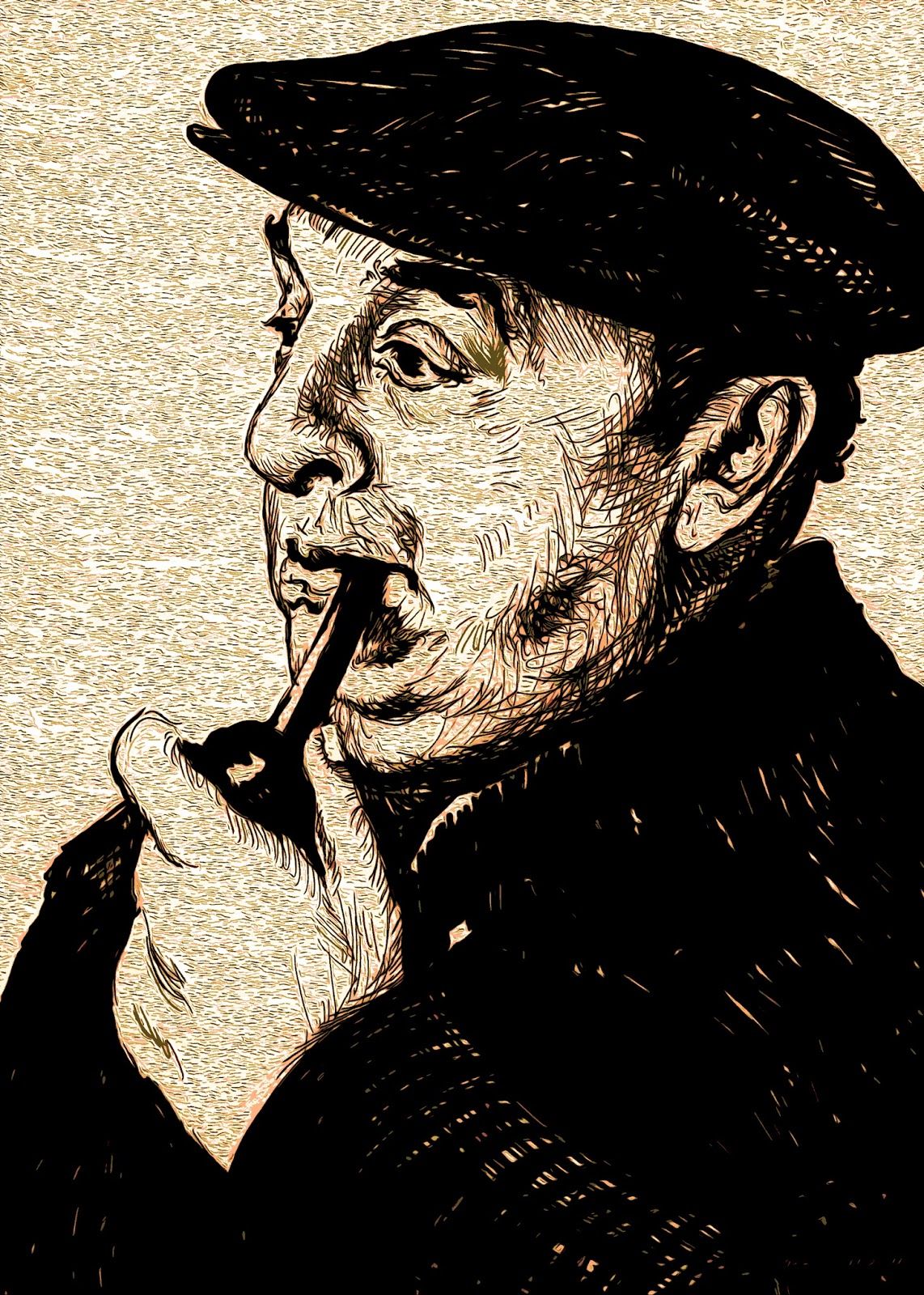
I must admit that I have few memories of my father’s life, as I was only seven when he passed away. However, some scenes remain in my mind—some joyful and a few burdensome. He was a dedicated writer who prioritised his work above all else, even above his love for family. I would say something between Charles Dickens and Dostoevsky!
Of course, I don’t want to say he didn’t love us. He was deeply in love with my mother and generally friendly toward his sons, although he was often preoccupied with work internally. Still, his books were the dearest things in his mind, and he enjoyed travelling extensively in Iran and Europe. Therefore, despite his fame and wealth, he was always broke! One of his colleagues at the newspaper where he worked told us that one day he came in and said he had sold his children! Of course, he meant he sold the rights to his best-selling books!!
I once lost his ID after I had it in my possession, and I don’t know where I left it. Therefore, I searched the Web and found something about him: he was famous then! Although I didn’t find his birthday, only his birth year, and he would be over a century old this year.
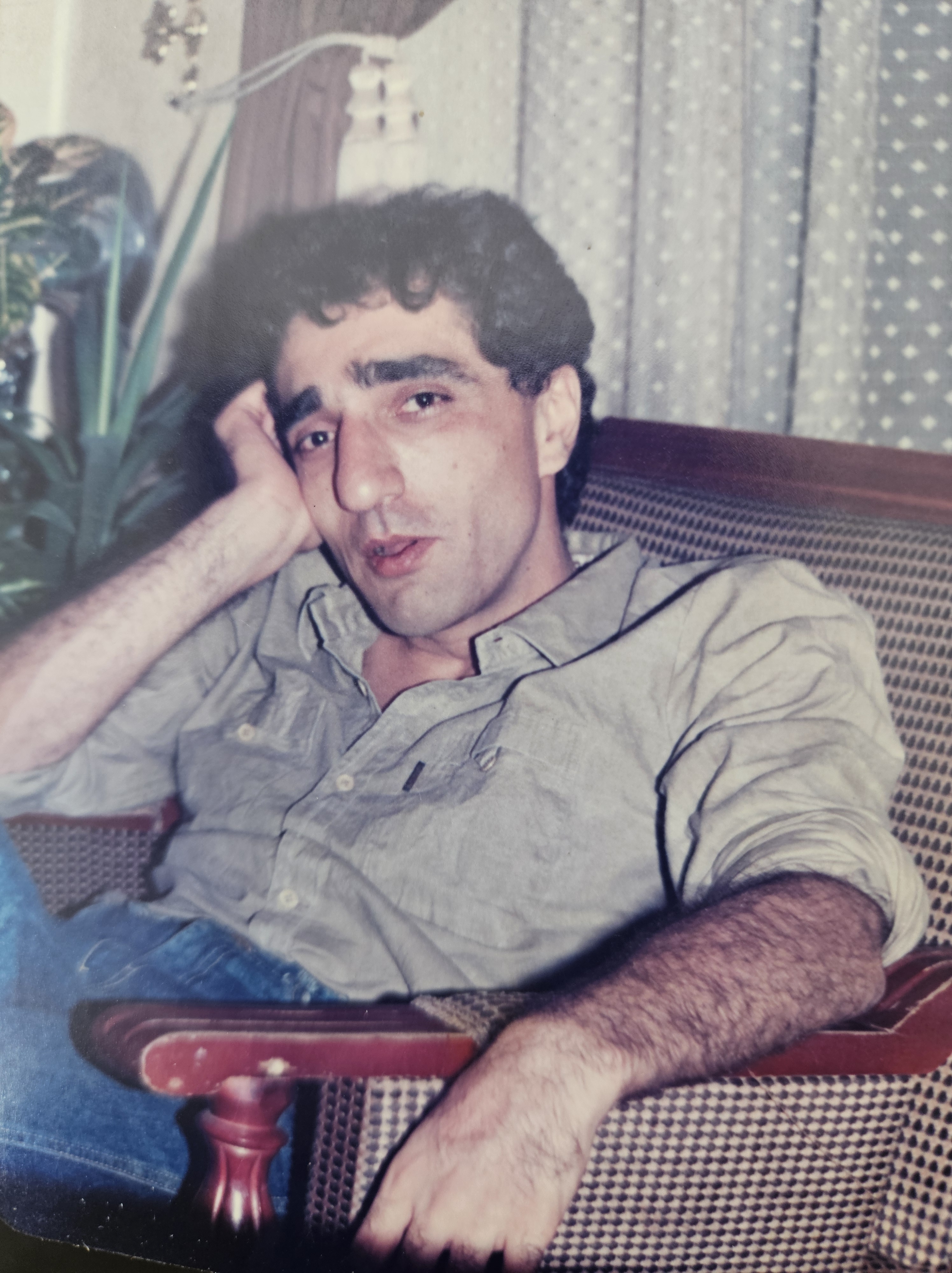
At his brother’s wedding.
Here we go:
FAZEL, Javad (Moḥammad-Javād Fāżel Lārijāni; b. Lārijān, 1914; d. Tehran, August 19 1961), noted serial writer and a pioneering figure in simplifying and popularising religious texts. His father, Mirza Abu’l-Ḥasan Fāżel Lārijāni, was an eminent preacher in Āmol (q.v.), in northern Iran, and died when Javad was nine years old. Javad was brought up in a religious environment. His father introduced him to religious studies while attending Pahlavi Primary School in Āmol. In 1932, after finishing secondary education in Tehran, Fazel pursued religious studies at Islamic seminaries under Sheikh Moḥammad Aštiāni. He worked for the Ministry of Education in 1938, teaching literature and educational psychology at the Teachers’ Training School in Āmol for one year. Fazel graduated from Tehran University’s Faculty of Theology and Jurisprudence in 1945 and later became a translator at the Ministry of Agriculture until his death at 47 (M. Fāżel, p. 21). He also taught Persian literature in various secondary schools (M. Fāżel, p. 98).
In 1942, he joined Eṭṭelāʿāt-e Haftegi, a weekly journal of the oldest Tehran daily newspaper, Eṭṭelāʿāt, founded by ʿAbbās Masʿudi in 1923. He published most of his serialised stories there and also contributed to Badiʿ, a magazine established by Jamāl-al-Din Badiʿzāda in March 1943. That same year, Fazel became a member of the pro-German Paykār Party, founded by Ḵosrow Eqbāl, and wrote for its official publication, Nabard, edited by Jahāngir Tafażżoli. However, his affiliation with Paykār only lasted four months.
And here is something for my pride: Fazel’s straightforward literary style earned him a broad audience. His accessible translations of religious texts were utilised by politically active theologians and laypeople, such as Mortażā Moṭahari and ʿAli Šariʿati, who sought to engage Iranians with modern interpretations of Islamic teachings (Saʿid-Elāhi, p. 75). However, Fazel’s ‘free’ translations were criticised for lacking accuracy and fidelity to the original texts (Šahidi, p. 5).
Some are to be disappointed! But who cares? He wasn’t a devout Muslim, yet he believed in a mystical Islam. This perspective influenced his translations, incorporating his own thoughts and feelings.
With the advent of the Islamic Revolution in 1979, Fazel’s romantic stories were no longer in demand, but his religious texts gained vast popularity and were reprinted several times. Even his scattered articles were collected and published in quick succession, notable among them Zendegi-e por-mājarā-ye Moḵtār (Mokhtar’s adventurous life, 2000) and Qeṣaṣ-al anbiāʾ (Stories of the prophets, 2001).
Regrettably, my father has sold all or most of the rights to his best-selling books to publishers. Consequently, I have no claim to those rights.
His final hours at a cousin’s wedding, with Al beside him.
In addition to religious texts, Fazel also translated several European novels into Persian, notable among them Ḵun o Šaraf (Blood and Honour, 1949), by Maurice Dekobra (1885-1973), Yek qalb-e āšofta (A Broken Heart, 1956), by Stefan Zweig (1881-1942), and Jāsusa (Spy, 1958) by Paul Bourget (1852-1935).
Fazel married in 1950. His wife, Mozayyan (Mosstofi) Fazel, depicted their life story together in Dāstān-e yek zendegi (A life story, 1964), which includes several of Fazel’s love letters to her. (And here is what I once wrote about their love story!). They had two sons: ʿAlaʾ-al-Din and Abu’l-Ḥasan. Javad Fazel died of cerebral thrombosis on August 19, 1961, and was buried in the Ebn Bābawayh (q.v.) cemetery near Tehran.
And yes, this passage is from the Encyclopaedia Iranica website, where you can read the full report. He passed away while Al and I were asleep. The next day, my mother made a mistake and lied to us, saying he had gone on a journey abroad. Alas, she ought to reveal the truth about his journey beyond the other side. It caused significant trauma for both of us in our lives of youth, but that is another story!
Here are some images of his Persian romans.
NazaninsavageFlameLove and tearsUniqueIn this worldHomelandThe lost onesMemory
First, I want to thank all my friends for their sympathy and compassion shown in my post before my surgery.
However, as I read it myself, I wasn’t sure my suffering might be misunderstood, leading everyone to think I was yowling due to physical pain. I need to mention that I wrote about my soul’s suffering! To put it bluntly, I was concerned about my kidneys, which were the primary focus for the doctors, and whether they would function or if I would need dialysis. Having transported many such patients to their therapy in my job, I know it is not a life worth living. Therefore, I would refuse any treatment like this and allow my own body to poison me to death. But I am not alone, and I can’t imagine how my family—wife, son, or grandchildren—could ever endure this tragedy.
Anyway, I’m past the surgery now and free from those horrible catheters. However, there is some uncertainty in my blood, which causes my blood levels to fluctuate. It seems I’m over the hill, though, and if these blood levels also stabilise, I’ll be over the rainbow!!
Finally, I will only let you preview one scene while I experienced it myself; surprisingly, this happened the day after I returned home. When I came home the first day, I was utterly exhausted. I had something to eat and then slept. On the second day, my wife had to go to work, so I was alone, lying on the couch for a while. I noticed a lovely sunny evening on the terrace, and I decided to step outside and enjoy sitting on the bench in front of the garden.
As I listened to the silence of nature, I closed my eyes. Suddenly, something rushed into my mind—some memory, some dream—in which I had once wished to be free of those catheters, sitting on the bench at home. There, I began to cry! It surprised me because I have always found it challenging to cry, but this time, my tears flowed like a waterfall! At that moment, I understood how heavy my suffering was.
I am now trying to regain my energy, as I lost it entirely this year. I wish you all health and prosperity. 🙏
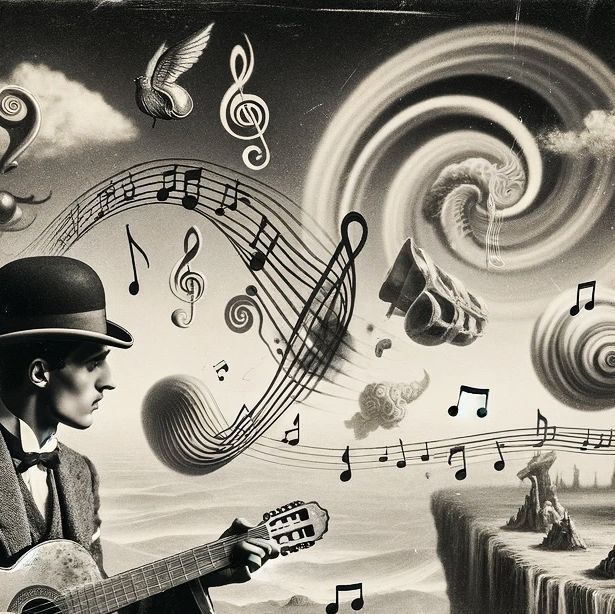
Regarding foresight, few individuals possess this ability, or perhaps it exists in everyone, yet most fail to recognise it. I knew some of my relatives, and one of my aunts had mastered it. She had seen ghosts in her large, old house, conversed with them, and could perceive events (in dreams) before they occurred. My brother Al also possessed such a gift, particularly in the final years of his life when he underwent surgery on his head to remove a tumour. I do not know if it is a gift, a curse, or a blessing; nonetheless, I would treasure that.
I, myself, have a small example: I had a dream in which one of my customers, an elderly woman I had driven to the doctor for many years but could no longer assist because she needed special transport, urgently called me to ask if I could pick her up and take her to her doctor. I wondered why I had dreamt of her after all this time. Two days after my dream, while driving a guest from her neighbourhood, she told me she recognised me as the person who had driven her friend from next door for a long time and asked if I knew she had passed away. I said no and asked when it had happened. She replied it was the night before last, the same night I had dreamt of her!
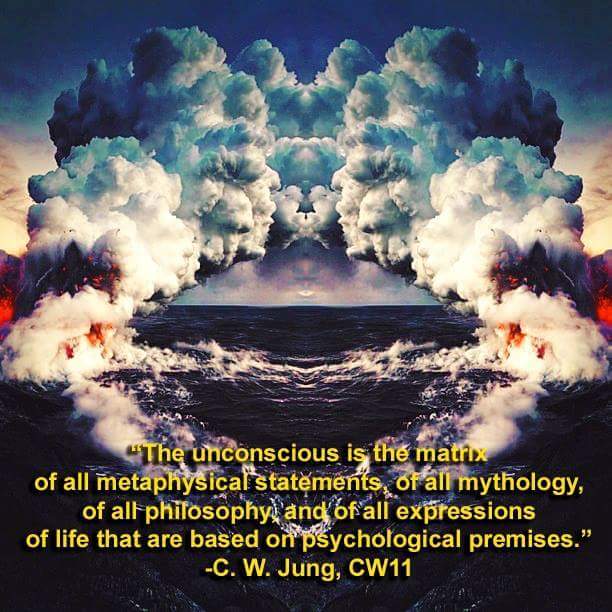
Dream analysis stands or falls with [the hypothesis of the unconscious]. Without it, the dream appears to be merely a freak of nature, a meaningless conglomerate of memory fragments left over from the day’s happenings. ~Carl Jung “Modern Man in Search of a Soul”, p.2, Psychology Press
Now, let us read about one of the great minds in this field: Carl Gustav Jung. He was among the most sensitive and intuitive visionaries of all time. Here, he talks about his dreams, odd and extraordinary dreams. Once, he was even afraid that he had schizophrenia.
<Although it is from The Red Book, which everyone might have or may have even read, I believe many still do not notice the fineness in the “Introduction” at the beginning of the book, as I find it fascinating.>
From Carl Jung’s “The Red Book, Liber Novus: A Reader’s Edition,” by Sonu Shamdasani. (Introduction)
In 1912, Jung had some significant dreams that he did not understand. He gave particular importance to two of these, which, as he felt, showed the limitations of Freud’s conceptions of dreams. The first follows:
I was in a southern town, on a rising street with narrow half-landings. It was twelve o’clock midday–bright sunshine. An old Austrian customs guard or someone similar passes by me, lost in thought. Someone says, “That is one who cannot die. He died already 30 – 40 years ago but has not yet managed to decompose.”
I was very surprised. Here, a striking figure came, a knight of powerful build clad in yellowish armour. He looks solid and inscrutable, and nothing impresses him. On his back, he carries a red Maltese cross. He has continued to exist since the 12th century, and he takes the same route daily between 12 and 1 o’clock midday. No one marvelled at these two apparitions, but I was extremely surprised.
I hold back my interpretive skills. As regards the old Austrian, Freud occurred to me; as regards the knight, I myself.
Inside, a voice calls, “It is all empty and disgusting.” I must bear it. (Black Book 2, pp. 25-26)
Jung found this dream oppressive and bewildering, and Freud was unable to interpret it.
(In 1925, he gave the following interpretation to this dream: “The meaning of the dream lies in the principle of the ancestral figure: not the Austrian officer – obviously he stood for the Freudian theory – but the other, the Crusader, is an archetypal figure, a Christian symbol living for the twelfth century, a symbol that does not really live today, but on the other hand in not wholly dead either. It comes out of the time of Meister Eckhart, the time of the culture of the Knights, when many ideas blossomed, only to be killed again, but they are coming to life again now. However, when I had this dream, I did not know this interpretation” (Introduction to Jungian Psychology, p. 42).
Around half a year later, Jung had another dream:
I dreamt at that time (it was shortly after Christmas 1912) that I was sitting with my children in a marvellous and richly furnished castle apartment – an open columned hall – we were sitting at a round table, whose top was a marvellous dark green stone. Suddenly, a gull or a dove flew in and sprang lightly onto the table. I admonished the children to be quiet so they would not scare away the beautiful white bird. Suddenly, this bird turned into a child of eight years, a small blond child, and ran around playing with my children in the marvellous columned colonnades. Then, the child suddenly turned into the gull or dove. She said the following to me: “Only in the first hour of the night can I become human while the male dove is busy with the twelve dead.” With these words, the bird flew away, and I awoke. (Black Book 2, pp. 17-18)
In Black Book 2, Jung noted that it was this dream that made him decide to embark on a relationship with a woman he had met three years earlier (Toni Wolff, Ibid., p. 17). In 1925, he remarked that this dream “was the beginning of a conviction that the unconscious did not consist of inert material only, but that there was something living down there (Introduction to Jungian Psychology, p. 42). He added that he thought of the story of the Tabula Smaragdina (emerald tablet), the twelve apostles, the signs of the Zodiac, and so on, but that he “could make nothing out of the dream except that there was a tremendous animation of the unconscious. I knew no technique for getting to the bottom of this activity; all I could do was just wait, keep on living, and watch the fantasies.”
I include this footnote to highlight his insatiable greed and relentless pursuit to decipher the meaning behind his dream and how he developed the interpretation.
Ibid., pp. 40-41. E. A. Benner noted Jung’s comments on this dream: “At first, he thought ‘twelve dead men’ referred to the twelve days before Christmas, for that is the dark time of the year, when traditionally witches are about. To say ‘before Christmas’ is to say before the sun lives again, for Christmas day is at the turning point of the year when the sun’s birth was celebrated in the Mithraic religion… Only much later did he relate the dream to Hermes and the twelve doves” (Meeting with Jung: Conversations recorded by E.A. Brenner during the years 1946-1961 [London: Anchor Press,1982; Zürich, Daimon Verlag, 1985], p. 93). In 1951, in “The Psychological Aspects of the Kore”, Jung presented some material from Liber Novus (describing them all as part of a dream series) in an anonymous form (“case Z.”), tracing the transformations of the anima. He noted that this dream “shows the anima as a elflike, i.e., only partially human. She can just as well be a bird, which means that she may belong wholly to nature and can vanish (i.e., become unconscious) from the human sphere (i.e., consciousness)” (CW9, I, § 371). See also Memories, pp. 195-96.
These dreams led him to analyse his childhood memories, but this did not resolve anything. He realised that he needed to recover the emotional tone of childhood. He recalled that as a child, he used to like to build houses and other structures, and he took this up again.
While he was engaged in this self-analytic activity, he continued to develop his theoretical work. At the Munich Psycho-Analytical Congress in September 1913, he spoke on psychological types. He argued that there were two basic movements of the libido: extraversion, in which the subject’s interest was oriented towards the outer world, and introversion, in which the subject’s interest was directed inward. Following from this, he posited two types of people, characterised by the predominance of one of these tendencies. The psychologies of Freud and Adler were examples of the fact that psychologies often took what was true of their type as generally valid. Hence, what was required was a psychology that did justice to both of these types (“On the question of psychological types,” CW 6).
Although this captivating story continues, I will share it in parts to facilitate understanding and enjoyment. Thank you for taking the time to read!
PS: In case someone interested, I will try to write about my new condition in a separate post. 🙏💖
The burial chamber was below ground and housed and protected the body and spirit. The mortuary chapel was above ground and was accessible to visitors who would perform rites and make offerings of food and drink for the dead person.
Egyptian burial chambers resembled secret galleries meant to remain unseen, filled with stunning artwork for an elite audience—the gods. Art could transport individuals, connecting the mortal and the immortal, freeing them from the silence of death.
Tomb art was sacred and magical, controlling chaotic forces threatening universal order. Whether mass-produced or commissioned, painting, sculpture, carving, and writing upheld order by invoking the gods to ensure safe passage and eternal sustenance for the deceased in the afterlife. Tombs in ancient Egypt
However, despite all this, here is a brilliant article by Marie Grillot about an undamaged treasure of ancient Egypt.
Mask of General Oundebaounded – gold – 21st Dynasty Discovered in his tomb (NRT III) in Tanis in 1946 by Pierre Montet and his team Egyptian Museum, Cairo – JE 87753
The untouched tomb of General Oundebaounded was discovered in Tanis in 1946 by the team of Pierre Montet, known as “The Man from Tanis. “
It was Pierre Lézine, an architect newly arrived on the mission, who noticed a particular spot in the tomb of Psusennes I where the thickness of a wall appeared abnormal.
Under the initially sceptical eye of his colleagues, he undertook additional surveys that confirmed his intuitions.
In “The Discovery of the Treasures of Tanis”, Georges Goyon recounts: “It was then that a tiny room appeared, with no exit, containing, intact, as if embedded in its socket, a beautiful pink granite sarcophagus. The limestone walls were covered with brightly coloured paintings depicting ritual scenes and inscriptions.” This sarcophagus would turn out to be a ‘re-use’: having initially been dedicated to a priest of Amun of Thebes, it had been modified for its new ‘occupant’…
Detail of the east wall of the Oundebaounded burial chamber (NRT III) – Montet Archives, 1946
Pierre Montet explains: “The Oundebaounded vault contained only the sarcophagus and the four canopic jars. Everything was in the sarcophagus. The mummy, dressed in its finery, was first enclosed in a silver coffin, and this in a gilded wooden coffin. When the gilded wooden coffin had been introduced into the granite basin, three paterae and a cup were placed on the lid, as well as a sword, a sceptre, and several walking sticks. The extreme humidity that reigns throughout the necropolis caused the complete destruction of everything made of wood. The gilded wooden coffin was nothing more than a pile of dead leaves. The silver coffin itself was partly eaten away.”
The pink granite sarcophagus of Oundebaounded (left), on display outside the French Mission house in Tanis
On his face was this magnificent mask, reminiscent of Sheshonq II’s. 22 cm high, it is carved from a thick sheet of gold and decorated with glass paste inlays. In ancient Egypt, gold was imbued with power: this metal was not only assimilated to the flesh of the gods, but it was also supposed to ensure the protection of the deceased.
Mask of General Oundebaounded – gold – 21st Dynasty Discovered in his tomb (NRT III) in Tanis in 1946 by Pierre Montet and his team Egyptian Museum, Cairo – JE 87753
In “The Wonders of the Egyptian Museum in Cairo,” Silvia Einaudi gives this beautiful description: “The mask covered the face, neck, and ears of the sovereign, and stopped at the forehead where six perforated tabs allowed it to be attached to the mummy’s head. The eyes, miraculously intact, are made of glass paste of different colours inserted into the metal cavities: white for the eyeball and black for the pupil. The eyebrows and the outline of the eyes were made using the same technique. The nose is almost perfectly shaped. The lips are narrow and full. The ears are not symmetrical, and the left is more prominent than the right. The mask is an idealised portrait of Oundebaounded, depicted as a young man with a serene and tranquil expression, underlined by a barely marked smile.
Examination of the General’s mummy revealed that he had joined the Ialou Fields when he was about fifty years old. Georges Goyon specifies that he was: “of slender build, perhaps of Nubian race, as evidenced by the long bones and relatively small head.”
General Oundebaounded’s swimming hook – silver and gold – 21st Dynasty Discovered in his tomb (NRT III) in Tanis in 1946 by Pierre Montet and his team Exhibited at the Egyptian Museum in Cairo – JE 87742
For eternity, he was surrounded by gold jewellery, amulets, precious dishes (among them the magnificent patera with swimmers), statuettes, … all of an extreme quality and a wealth worthy of a pharaoh… Who was he to enjoy such recognition?
The name of this close government associate was not unknown to the mission members, as several of his funerary statuettes, made of bronze and earthenware, had been found, as early as 1939, near the sarcophagus of the Pharaoh Sheshonq. Furthermore, a sword bearing his name had also been deposited near Psusennes.
Georges Goyon presents him to us thus: “He was not a person of royal blood, but a high priest of Khonsu and Chief of the Archers of Pharaoh. He was also invested with the important title of Superior of the Prophets-of-all-the-gods, which seemed to correspond to that of minister of worship. It was King Psusennes I who had elevated him to these high functions…. One of his most curious titles was that of “Sole-appointed-to-the-praise-of-the-great”, whose duty was to present the holders to the king during the reward ceremonies.”
Mask of General Oundebaounded – gold – 21st Dynasty Discovered in his tomb (NRT III) in Tanis in 1946 by Pierre Montet and his team Egyptian Museum, Cairo – JE 87753
One can imagine the aura Oundebaounded must have held at court, and thus understand why he was buried so close to the sovereigns…
The entire treasure contained in his tomb was sent shortly after, under police escort, to the Cairo Museum. The funerary mask was recorded in the Journal of Entries under reference JE 87753.
It is interesting to note that Pierre Montet reports that statuettes – ushabtis – bearing the General’s name were found on the antiques market. “Sixteen servants were nevertheless soon recovered in the trade… In total, we currently know of around forty listed in other Institutes and private collections.”
Georges Goyon, The Discovery of the Treasures of Tanis, 1987 Tanis: Gold of the Pharaohs, exhibition catalogue, Paris, Galeries nationales du Grand Palais, March 26 – July 20, 1987 Francesco Tiradritti, Treasures of Egypt – The Wonders of the Egyptian Museum in Cairo National Geographic, Treasures of Ancient Egypt at the Cairo Museum
Next week, I have my surgery appointment, and before I go under the surgeon’s knife, as the Germans say, I wanted to say “a short” goodbye. Since I know most of you are doing very well, as I receive your posts every day, every hour, you can send your positive thoughts towards my surgical table in between!
There are no words to describe the suffering and pain I endured, as I understand that one must experience it oneself to truly grasp its affliction. I hope that none of you experience that! What I can say with certainty is that I have gained invaluable insights. I learned about my weaknesses and the extent of my power. I have discovered how low one can go and where the steps are to climb up.
It is by going down into the abyss that we recover the treasure of life. Where you stumble, there lies your treasure. ~Joseph Campbell
I learned about my deep depression, where tiny fairies would converse with me. I’ve learned to remain resilient despite all challenges, echoing Ernest Hemingway’s words: “A man can be destroyed but not defeated.” Additionally, one of his characters, Harry Morgan, states in “To Have and Have Not”: “A man alone ain’t got no chance,” yet he persistently strives to do his best! Of course, I had support from my adorable wife, son, and a few friends. Nevertheless, during my most challenging times, it was ultimately up to me to endure that pain alone. I’m very stubborn about seeking help!
As I conclude my post, I would like to acknowledge my mentor, Dr. Jung, and his perspective on suffering:
Your ideas bring you up against a general cultural problem, which is infinitely complicated.
What is true in one place is untrue in another.
“Suffering is the swiftest steed that bears you to perfection,” and the contrary is also true.
“Breaking in” can be discipline, and this is needed for the emotional chaos of man, though at the same time it can kill the living spirit, as we have seen only too often.
In my opinion, there is no magical word that could finally unravel this whole complex of questions; nor is there any method of thinking or living or acting which would eliminate suffering and unhappiness.
If a man’s life consists half of happiness and half of unhappiness, this is probably the optimum that can be reached, and it remains forever an unresolved question whether suffering is educative or demoralising.
In any case, it would be wrong to give oneself up to relativism and indifferentism.
Whatever can be bettered in a given place at a given time should certainly be done, for it would be sheer folly to do otherwise.
Man’s fate has always swung between day and night.
There is nothing we can do to change this.
Yours sincerely,
C.G. Jung ~Carl Jung, Letters Vol. II, Page 248.
I hope everyone enjoys a tranquil and relaxing time; take care and stay healthy. 🙏💖🌹
Ägyptisches Museum (Egyptian Museum), Berlin (Wikimedia)
Queen Tiye, recognised for her intellect and formidable character, earned the respect of foreign dignitaries, who were keen to interact with her directly. She maintained an active presence in foreign relations and became the first Egyptian queen whose name was inscribed on official documents.
Head of Queen Tiye. Egyptian Museum, Cairo. JE 38257
Here is an impressive presentation by Marie Grillot about a captivating piece of art represented by a magnificent statue that resonates with us through her story.
Wishing you all the best for the Easter holidays. 💖🙏
Head of a statuette of Queen Tiye – dark green schistose steatite – New Kingdom – 18th Dynasty Discovered in 1905 by William Matthew Flinders Petrie in the Temple of Hathor at Serabit el-Khadim (Sinai) Egyptian Museum, Cairo – JE 38257
In 1905, the English Egyptologist William Matthew Flinders Petrie led an expedition to the Sinai Peninsula. He was particularly interested in the site of the temple of Serabit el-Khadim. Built during the reign of Snefu for workers who came to work in the turquoise mines, it remained in use until the New Kingdom. The sanctuary is dedicated to the goddess Hathor, “mistress of turquoise,” and the eastern falcon god Sopdu.
The excavation season is expected to yield the discovery of a small female head, measuring 7.2 cm, in a very dark stone.
Head of a statuette of Queen Tiye – dark green schistose steatite – New Kingdom – 18th Dynasty Discovered in 1905 by William Matthew Flinders Petrie in the Temple of Hathor at Serabit el-Khadim (Sinai) Egyptian Museum, Cairo – JE 38257
Here is an excerpt from W.M.F. Petrie’s description in his 1906 report “Researches in Sinai”: “A queen has left here one of the most striking portraits ever carved in Egypt. The very famous Queen Thyi, wife of the great Amenhotep III, was hitherto known from a few carved reliefs, but not yet from such a portrait in the round. Strangely, such a remote spot should have preserved this representation, which we have identified from the cartouche in the middle of the crown. The schistose stone is dark green steatite.
The entire statuette must have measured about a foot in height. Unfortunately, we have found no fragments other than the head. The great dignity of the face is combined with a fascinating uprightness. The delicacy of the contours of the eyes and cheekbones testifies to the quality of execution. The lips, whose curious curve curves downwards, are complete and delicate, yet express a disdain devoid of malice. They are, most certainly, a likeness to the truth… The ear is pierced, as is also the case with her son Akhenaten. The crown she wore was probably with gold inlays. The two-winged cobras stretch their length in loops around the head, until they meet at the back; while in the middle of the forehead, they support the cartouche with the name of the great queen of Upper and Lower Egypt. This piece alone was worth all the rest of our earnings for the year; it is now in the Cairo Museum.”
“Head of statuette of Queen Tiye – Dark green steatite” (Egyptian Museum, Cairo JE 38257) published here by William Matthew Flinders Petrie in “Researches in Sinai” (1906), plate 133 – p. 127
In his book “Essays on Egyptian Art” published in 1912, Gaston Maspero describes it thus: “The right wing of the wig is missing, and the nose has suffered from an unfortunate shock on the left nostril, without however losing the essential part of its shape: a cartouche engraved on the front of the hairstyle tells us the name, and the piece gives, at first glance, the conviction of a portrait likeness. It is not flattering. If we are to believe him, Tiyi presented the racial characteristics of the Berberines or the women of the Egyptian desert, small eyes slanted towards the temples, noses with a wide tip and disdainful nostrils, a heavy and sullen mouth, with drooping corners and whose lower lip is pulled back by a receding chin.”
Head of a statuette of Queen Tiye – dark green schistose steatite – New Kingdom – 18th Dynasty Discovered in 1905 by William Matthew Flinders Petrie in the Temple of Hathor at Serabit el-Khadim (Sinai) Egyptian Museum, Cairo JE 38257 – Published here by Gaston Maspero in “Essays on Egyptian Art”, 1912
What femininity, what willpower, what pride, and what presence! The personality that emanates from this little face is visibly inspiring… And it is touching, even moving, to see how much each Egyptologist is keen to decipher it…
Head of a statuette of Queen Tiye – dark green schistose steatite – New Kingdom – 18th Dynasty Discovered in 1905 by William Matthew Flinders Petrie in the Temple of Hathor at Serabit el-Khadim (Sinai) Egyptian Museum, Cairo – JE 38257 – Museum photo
Thus, for Mohamed Saleh and Hourig Sourouzian (“Official Catalogue of the Egyptian Museum in Cairo”): “The oval face with high cheekbones, almond-shaped eyes and a thick, almost disillusioned mouth is that of a determined and serious woman, who exudes a high spirituality despite her apparent youth.”
In “The Wonders of the Egyptian Museum in Cairo,” Francesco Tiradritti provides the following interpretation: “The corners of the mouth, curved downwards, give the whole face an air of gravity that was often interpreted as an allusion to the decisive and inflexible temperament of Tiyi.”
Head of a statuette of Queen Tiye – dark green schistose steatite – New Kingdom – 18th Dynasty Discovered in 1905 by William Matthew Flinders Petrie in the Temple of Hathor at Serabit el-Khadim (Sinai) Egyptian Museum, Cairo JE 38257 (museum photo)
Jean-Pierre Corteggiani’s analysis (“Egypt of the Pharaohs at the Cairo Museum”) is also not devoid of realism: “There is something haughty, if not contemptuous, in this young and energetic face of a woman who is both highly aware of her rank and proud to have managed to occupy it.”
There are many known representations of the queen, the most famous of which are those in the Egyptian Museum in Berlin (ÄM 21834 – yew wood head found in 1904 in Medinet Gourab), those in the Louvre (N 2312, E 25493 – glazed steatite – Salt Collection), as well as those in the Metropolitan Museum of Art in New York (26.7.1396 yellow jasper, discovered in Amarna from the Carnarvon Collection), without forgetting, of course, the imposing statuary group where she appears seated alongside her husband and with three of their daughters (atrium of the Cairo Museum – ref. GM 610 – JE 33906).
Head of Queen Tiye – yew wood statue in the round discovered in 1904 in Medinet Gourab Berlin Museum – ÄM 21834 (museum photo)
Tiyi lived in the New Kingdom; she was the daughter of Youya and Touya, whom Pierre Tallet (“12 Queens of Egypt Who Changed History”) describes as follows: “Youya was from Akhmim in Middle Egypt and held the titles of director of the royal stables and divine father; her mother Touya was a ‘royal ornament’ and singer of Amun.” She was therefore close to the Court…
“In the palace, rumour had preceded the event: Tiyi would be queen… she was and assumed this role with exceptional talent,” relates Christian Leblanc in his “Queens of the Nile.” And he continues: “Announced beyond the borders by an issue of large commemorative scarabs, the marriage of Tiyi with Amenhotep III was celebrated with great pomp in Memphis… Very quickly, Tiyi had a great influence on the government of the country. Through her strong personality, she exercised a role as confidante and political advisor to her husband.” It appears that her role also continued during the reign of her son, Amenhotep IV, also known as Akhenaten.
Head of a statuette of Queen Tiye – dark green schistose steatite – New Kingdom – 18th Dynasty Discovered in 1905 by William Matthew Flinders Petrie in the Temple of Hathor at Serabit el-Khadim (Sinai) Egyptian Museum, Cairo – JE 38257
The one who was adorned with so many laudatory titles: “Noble lady”, “Great favourite”, “Great royal wife”, “Sovereign of the Two lands”, “Who fills the palace with love”, died between the 12th and 15th year of her son’s reign.
Head of a statuette of Queen Tiye – dark green schistose steatite – New Kingdom – 18th Dynasty Discovered in 1905 by William Matthew Flinders Petrie in the temple of Serabit el-Khadim (Sinai) Egyptian Museum, Cairo JE 38257 – museum photo
The quality of this stone portrait is therefore “up to” the great lady that she was… We must salute the sculptor who was able to render her character traits so accurately and so finely and who, in a way, helps us to better “perceive” the subtle personality of the sovereign…
Presented under number 4257 of the “Visitor’s Guide to the Cairo Museum” (Gaston Maspero, 1915), it was recorded in the museum’s Journal of Entries under reference JE 38257.
Sorry, it’s me again! I intended to share a brief message on Facebook, and I thought, why not just do it on my site, too? So here it is: We must look deeply around us and think twice. I send you all immense gratitude and wish you a lovely weekend.😁🤗💖🙏🦋🌹
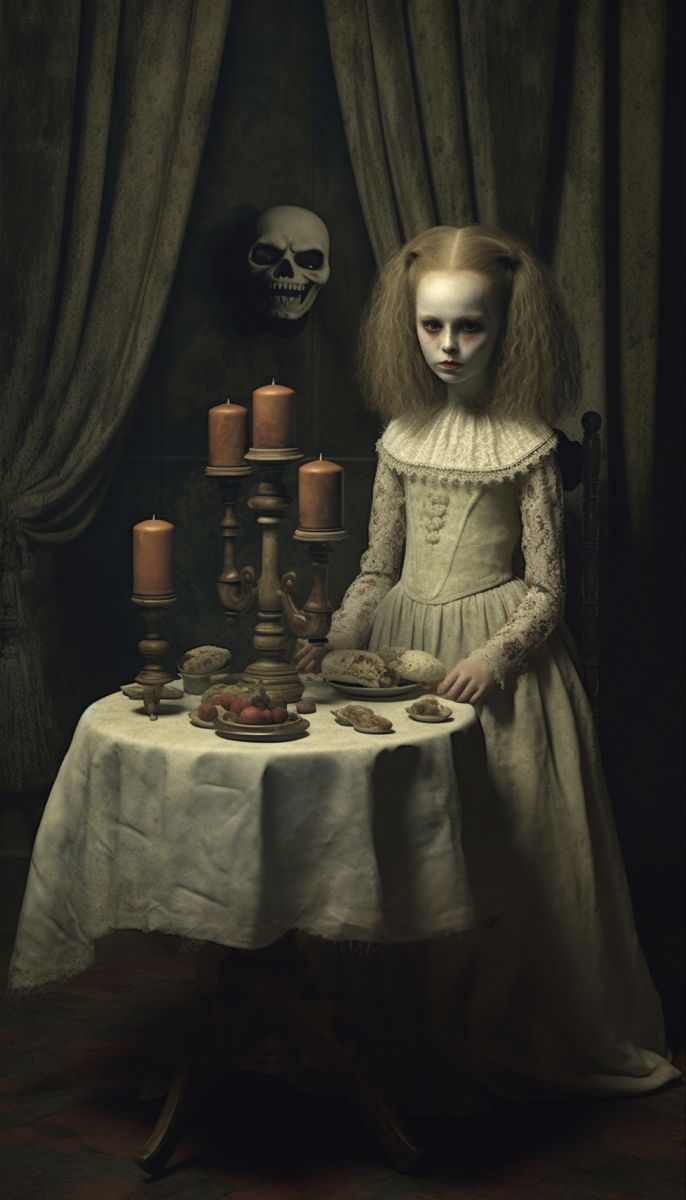
Title image; Art by Andrew Ferez
From Collected Works of C.G. Jung, Volume 7: Two Essays in Analytical Psychology,
I must recall at this point a serious misunderstanding to which my readers often succumb, and doctors most commonly. They invariably assume, for reasons unknown, that I never write about anything except my method of treatment. This is far from being the case. I write about psychology. I must, therefore, expressly emphasize that my method of treatment does not consist in causing my patients to indulge in strange fantasies for the purpose of changing their personality and other nonsense of that kind. I merely put it on record that there are certain cases where such a development occurs, not because I force anyone to it, but because it springs from inner necessity. For many of my patients, these things are and must remain double Dutch. Indeed, even if it were possible for them to tread this path, it would be a disastrously wrong turning, and I would be the first to hold them back. The way of the transcendent function is an individual destiny. But on no account should one imagine that this way is equivalent to the life of a psychic anchorite, to alienation from the world. Quite the contrary, for such a way is possible and profitable only when the specific worldly tasks which these individuals set themselves are carried out in reality. Fantasies are no substitute for living; they are fruits of the spirit which fall to him who pays his tribute to life.
The shirker experiences nothing but his own morbid fear, and it yields him no meaning. Nor will this way ever be known to the man who has found his way back to Mother Church. There is no doubt that the mysterium magnum is hidden in her forms, and in these, he can live his life sensibly. Finally, the normal man will never be burdened, either, with this knowledge, for he is everlastingly content with the little that lies within his reach. Wherefore I entreat my reader to understand that I write about things which actually happen and am not propounding methods of treatment. ~Carl Jung, CW 7, Pages 223-224
You must be logged in to post a comment.