I suppose I have no need to interview Ingmar Bergman to you, at least to you, who is an art-cinema fan and gladly watching the classy old movies made by great directors, and Bergman belongs to them for sure. I have once posted an article about one of his Masterworks: Wild Strawberries, in which he shows the deep lines of the life of an old man and its injuries. ( If one is interested: here )
This time here is another masterwork of him: Persona, again about the inner soul, and this one about the woman’s soul, or female identities: Elisabeth, Alma, or even Elektra. The Persona.
Let’s take a look at the story and its making-of:
Ingmar Bergman had always been a master of the intense chamber drama. But, having abandoned his search for God in the early 1960s, his growing despondency with the state of the world and the condition of cinema prompted him to move towards a new subjectivity and fascination with the metaphysical.
In 1965, he was hospitalised with double pneumonia and penicillin poisoning. To occupy his time, he composed a ‘sonata for two instruments’ around Nurse Alma and her patient, Elisabet Vogler, a famous actor who becomes mute during a stage performance of Elektra. However, as Alma (played in the film by Bibi Andersson) tries to coax Elisabet (Liv Ullmann) into the conversation, she confides long-held secrets and feels betrayed when they are exposed in a letter.
Characterized by elements of psychological horror, Persona has been the subject of much critical analysis, interpretation and debate. Taking cues from August Strindberg’s 1889 play The Stronger, Bergman chose the title Persona as this was both the Greek word for ‘mask. The film’s exploration of duality, insanity and personal identity has been interpreted as reflecting the Jungian theory of persona and dealing with issues related to filmmaking, vampirism, homosexuality, motherhood, abortion and other subjects.
(Persona’s title reflects the Latin word for “mask” and Carl Jung‘s theory of persona, an external identity separate from the soul (“alma“). Jung believed that people project public images to protect themselves, and can come to identify with their personae. An interviewer asked Bergman about the Jungian connotations of the film’s title, acknowledging an alternative interpretation that it references persona masks worn by actors in ancient drama, but saying that Jung’s concept “admirably” matched the film. Bergman agreed, saying that Jung’s theory “fits well in this case”. Coates also connected masks to themes of identity and duality: “The mask is Janus-faced”.)
He also picked Elisabet’s surname carefully, as Albert Emanuel Vogler had sapped the energy of others for his artistic endeavours in his earlier film, The Magician (1958).
The experimental style of its prologue and storytelling has also been noted. The enigmatic film has been called the Mount Everest of cinematic analysis; according to film historian Peter Cowie, “Everything one says about Persona may be contradicted; the opposite will also be true”. More here
Persona is a 1966 Swedish psychological drama film, written and directed by Ingmar Bergman and starring Bibi Andersson and Liv Ullmann. The story revolves around a young nurse named Alma (Andersson) and her patient, well-known stage actress Elisabet Vogler (Ullmann), who has suddenly stopped speaking. They move to a cottage, where Alma cares for Elisabet, confides in her and begins having trouble distinguishing herself from her patient.
I will come on him (Bergman) again in a later post, as I adore him a lot. 🤗🙏💖
Today, I am exhausted from a stressful week behind me. Therefore, let me steal my own contribution from my Facebook page, which I shared some days ago. It might even be interesting for some friends who’d missed it.
I had to go to the shopping district to get the book (the Booted Cat, by Brother Grimm), which my wife had ordered for Mila, our granddaughter because she slept with us last night. That was an occasion for me to take a walk in the woods in the neighbourhood.
The weather was excellent. On my way back home, It occurs to me to take a pic or two, like to keep a memory from this beautiful day. And with inspiration from a friend of mine: Deborah Gregory, I chose a poem from the great Persian poet, Hafiz, to decorate my recordings.
I wanna just to add a nice little thing to this: When I finished taking photos, I saw some people in the distance were standing and talking. When I came nearer, I noticed two dogs were in companion, and one of them, standing in the front watching at me intensively. When I got closer, the dog ran towards me and barked once loudly! I immediately knelt because I had experiences in such a situation. The best way to avoid being attacked by an unfamiliar dog is kneeling. He ran past me and stopped, turned back and looked at me. I told him: come here, buddy! He jumped up to me and started licking my face. The people were all thrilled. I believe that they have not expected such a reaction from a stranger-looking man and not even such a loving utterance from their dog to me. Anyway, the owner of the dog told me that the dog’s been just nine months old and apologized for the dirt on my sweater from the dog’s paws. I told him there’s no problem, that is all soil and not dirt! How I love dogs, they already know themself.
And…
The sad news I have got newly, that Graeme Edge, Drummer and Co-Founder of the Moody Blues, Died at 80. As you know, I loved and grew up with them. Therefore, I share this song as a remembrance of him. Thank you, Graeme, for these all fascinating rhythms.
Graeme Edge, left, with his fellow members of the Moody Blues, exemplars of the prog-rock movement, in 1971. The others, from left, were Ray Thomas, John Lodge, Mike Pinder and Justin Hayward.Credit…Chris Walter/Getty Images. via the new york times
How is it we are here, on this path we walk, In this world of pointless fear, filled with empty talk, Descending from the apes as scientist-priests all think, Will they save us in the end, we’re trembling on the brink.
Men’s mighty mine-machines digging in the ground, Stealing rare minerals where they can be found. Concrete caves with iron doors, bury it again, While a starving frightened world fills the sea with grain.
Her love is like a fire burning inside, Her love is so much higher it can’t be denied, She sends us her glory, it’s always been there, Her love’s all around us, it’s there for you and me to share.
Men’s mighty mine-machines digging in the ground, Stealing rare minerals where they can be found. Concrete caves with iron doors, bury it again, While a starving frightened world fills the sea with grain.
How is it we are here How is it we are here How is it we are here
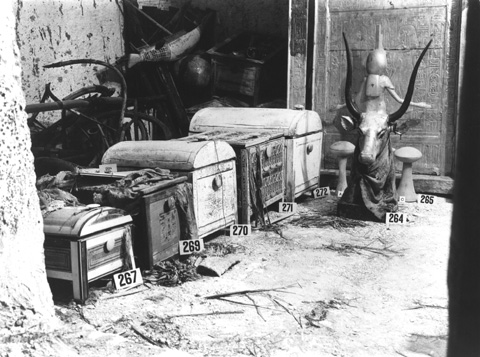
Howard Carter, (born May 9, 1874, Swaffham, Norfolk, England—died March 2, 1939, London), is a British archaeologist, a genius at the point of locating and making discoveries in the history of ancient Egypt. He made one of the richest and most-celebrated contributions to Egyptology: the discovery (1922) of the largely intact tomb of King Tutankhamen. Howard Carter made the discovery of a lifetime, but it was also the decades he spent excavating in Egypt that changed the field — and the world — forever.
“By 1922, Lord Carnarvon had become dissatisfied with the lack of results after several years of finding little. After considering withdrawing his funding, Carnarvon agreed, after a discussion with Carter, that he would fund one more season of work in the Valley of the Kings. Carter returned to the Valley of Kings and investigated a line of huts that he had abandoned a few seasons earlier. The crew cleared the huts and rock debris beneath. On 4 November 1922, their young water boy accidentally stumbled on a stone that turned out to be the top of a flight of steps cut into the bedrock. Carter had the steps partially dugout until the top of a mud-plastered doorway was found. The doorway was stamped with indistinct cartouches (oval seals with hieroglyphic writing). Carter ordered the staircase to be refilled and sent a telegram to Carnarvon, who arrived from England two-and-a-half weeks later on 23 November, accompanied by his daughter Lady Evelyn Herbert…” Wikipedia

Let’s find out more about this “D” day, by Marie Grillot, in her description of this great find. With Thanks! 🙏💖
Howard Carter (London 9-5-1874 – 2-3-1939), thanks to funding from his patron and friend Lord Carnarvon, discovers, on November 4, 1922, in the Valley of the Kings, Tutankhamun’s tomb right: Tutankhamun’s Ushabti, in wood and gold leaf, wearing an ebony khepresh, and holding the crook and the flail housing 318-a – JE 60830 – GEM 176
For this new mission, which was to begin in the Valley of the Kings, on November 1, 1922, Howard Carter had left London on October 5. After having crossed France, the next day, he had embarked, in Marseilles, on the S.S. “China”.
Arrived at Port Said on the 11th in the early morning, he reached Cairo in the afternoon. He will spend more than two weeks there, the necessary time to honour a few appointments, and especially, to “hunt” at antique dealers! He will get his supplies, in particular, at Robert Nahman and at Nicolas Tano, where among his acquisitions are a small earthenware hedgehog. Ans also an aragonite flask made of two ducks, a mirror, a Harpocratic bronze. These pieces are, for the most part, intended to enrich the collection of Lord Carnarvon.

On the 27th, he left for Louqsor by night train and, on his arrival, took a connection for Erment. He indeed wishes to find his old friend, Arthur Callender, who lives there. They certainly have a lot to say to each other. Howard Carter will not reach the west bank of Luxor, by boat, until the 29th.
The finders of Tutankhamun’s tomb Lord Carnarvon (left) and Howard Carter (right) Photomontage on display in Castle Carter – Carter House – seen behind them
He then finds the home built by Lord Carnarvon: Carter House – Castle Carter. It rises proudly on the hill of Elwat-el-Diban in the north of the Assassif: at the crossroads of the road, which leads to the Valley of the Kings.
In “The Path to Tutankhamun”, it is related that he arrives there with an acquisition of a completely different nature: a canary in a golden cage… “His servant Abdel followed him carrying the canary, the guards and the reis greeted him immediately, and at the sight of the golden bird, they said to him: ‘Mabrouk – it is a golden bird that will bring good luck. This year we will find, inshallah, a tomb full of gold. . Where is the part of the truth? Where is the part of the legend?
We can imagine the joy that Howard Carter must feel in being at his home …But this feeling is certainly tarnished by the memory of the previous mission of February, not very fruitful, that carried out near the grave of Siptah …Added to this are the events of the summer, which had failed to jeopardize the continuation of its collaboration with his patron and friend …
Lord Carnarvon (right) and Howard Carter will discover Tutankhamun’s tomb on November 4, 1922
“In the summer of 1922, Carter and Carnarvon had a long and important discussion in the magnificent library of Highclere Castle. The patron had decided to stop funding the work in the Valley of the Kings. Too few results had led him to the conclusion that these excavations were futile, expensive and tiring. Carter, who could take over the concession, informed the Lord that he was determined to continue exploring the valley, even if it meant doing it alone with the help of his own money. Carnarvon knew that Carter had no fortune and, faced with so much pugnacity on the part of the latter and impressed by his conviction, the aristocrat, affected, resolved to finance a final campaign. How accurate is this somewhat melodramatic relationship of the interview conveyed by Sir Alan Gardiner? No one, without a doubt, will never know “relates with relevance and sensitivity”. Marc Gabolde in his excellent” Tutankhamun “…

Howard Carter is aware of the pressure weighing on his shoulders: this new mission must bear fruit… and, for that, he must search in the right place!
Valley of the Kings: Tutankhamun’s tomb shortly after the discovery it is located, in the foreground of this photo, behind the three soldiers
In “Under the Gaze of the Gods”, Christiane Desroches-Noblecourt mentions that he (Carter) went to Deir el-Medineh to obtain advice from Bernard Bruyère for better targeting the sector to prospect. Bruyère welcomed and comforted him: “Do not forget that at the foot of the tomb of Ramses VI, there are walls of raw earth which are the remains of the huts. Where the workers who were digging the tomb of the Pharaoh stored their instruments at night. You picked them up and photographed them. That’s good! Now, blow them up and look at what’s underneath. ‘ Carter refused, but Bruyère insisted a lot “.
Omission on the part of one, modesty on the part of the other? Carter does not mention this interview in his diary… And, in his article entitled “The extraordinary treasure hunt” published in the “Nouvelles Littéraires – Spécial Toutankhamon”, of February 1967, Bernard Bruyère does not make any reference to it either, expressing, on the contrary, his surprise: “We were a little surprised to see him, at dawn on November 4, place his team at the foot of the Ghafir hut and start digging in front of the entrance from the tomb of Ramses VI “.
The finders of Tutankhamun Lord Carnarvon’s tomb (left) and Howard Carter near KV 62 (photo (Harry Burton?) taken between November 1922 and April 1923)
He also shares the memory of a lunch he attended at the Winter Palace in April 1922. At the end of the 1921-1922 excavation campaign, Lord Carnarvon had invited, in the presence of Pierre Lacau, director of the Service of Antiquities, the main Egyptologists present in Thebes… The speech the Lord gave then seemed to augur the end of his excavations in the Valley of the Kings…However, at the end of lunch, as an aside, after a discussion, visibly animated and passionate with their Reis, Carter and Carnarvon would have spoken with Pierre Lacau. The latter apparently admitted, “that the ten-year concession, from 1913 to 1923 granted to Carnarvon and Carter could, at a pinch, include a final campaign of excavations and that consequently works, would resume at the beginning of autumn “…
If we become aware of these waltzes-hesitations that reigned then, we can only realize that it was very near that the tomb of the young king would never be discovered at that time …
But fate was on… Howard Carter will note in his diary; the first three days of November: “Beginning of operations in the Valley of the Kings. I started by continuing the old excavation, where it left off at the NE angle of the entrance to the tomb of Ramses VI, and digging trenches to the south. In this place, there were old stone huts of the workers of the Necropolis, built a little less than a meter above the bedrock…When we cleared them, they turned out to continue under the front of the entrance to the tomb of Ramses VI, in a southerly direction, and connected to other similar huts… These old huts were soon cleared of the rubbish that covered them.
After I noted the plan, they were destroyed to be able to prospect underneath, a job that took us until November 4th… “…
“The extraordinary treasure hunt” by Bernard Bruyère, published in the “Nouvelles Littéraires – Spécial Toutankhamon” of February 1967 (my most sincere thanks to M. Gabolde who so obligingly brought this document to my knowledge)
Under the gaze of the gods, Christiane Desroches-Noblecourt, Albin Michel, 2003
Life and Death of a Pharaoh, Christiane Desroches-Noblecourt, Hachette, 1963
The fabulous discovery of the tomb of Tutankhamun, Howard Carter
The tomb of Tutankhamun, Howard Carter
Tutankhamun, Life, Death and Discovery of a Pharaoh, Nicholas Reeves, 1990, Thames
Tutankhamun, Jean Capart, 1923
Discover Tutankhamun, Zahi Hawass, Editions du Rocher, 2015
Mother, oh mother! She was a hungry person for books and the movies. As I mentioned here and there in my memories, she was a dreamer, full of feelings, emotions, touch and delicateness. Al and I have taken all her loving things in us. She has taught us how to love and live in a book or a movie. She’d always known which movie was currently on screen, but after our father died, she couldn’t go alone to the cinemas. Back then, anyway, and still now, in Iran, women couldn’t go to the cinema alone. Therefore, she was sad to miss them, although she was lucky sometimes to have us as her companion.
Our father, at the beginning of our educations, sent us to a private school. He became very famous those days and wanted that his sons to benefit from it. It wasn’t that special, though, as I can remember. But we were two special students there, for sure!
Every early in the morning, a bus came to pick us up to bring to the school. We both were not such “running for the school” boys. Of course, later I began to like it, but Al never. Once, after Father’ death, I remember we went up the street to catch the bus, and it had a delay. Al was happy and suggested going back home. Then hurry! I gave it back to him because when we’d walked back, I saw the bus’s come around.
Anyway, Mum was at home. We told her that the bus hadn’t come and to our surprise not only did she not get angry, she asked us if we wanted to go to the cinema with her! And the movie was the famous “The Sound of Music”, and I fell in love with Brigitta von Trapp(Angela Cartwright)!
And here is the song for the freedom lovers.
Another one was the famous Dr Dolittle, which we have a companion of the whole family; uncles and aunts, cousins and cousins. An amusing musical.
These films, which we watched together, all have an extra length. This one, of course, was special: We three, Mum, Al and me, were invited, as a family of a famous writer (my father), to a premiere screening of this admirable musical: My Fair Lady. There was even in so-called “Interact” (in such extra-long movies, there was a pause about ten to fifteen minutes), some champagne! Of course, Al and I got some juice…
Oh Eliza, Oh Eliza! Of course, we are Men, but nothing without you…
Of course, we have kept watching movies and dreaming along, as Mum would do, after her leaving. I have still many video cassettes from all these times, in which Al and I recorded them. Honestly, when I watch them, I live in them, as I have learned from Mum; Live on and let the music play.
Right now, I have to be prepared to go to a disco, after an age! Once, when I came to Germany, I became a dancer as I let my energy free to run. Therefore I’ve become a famous dancer in all discos in this area! But am I, after so many times? What? You say I can? OK, you mean well. I can hear you! But I got old, and unfortunately, that’s the way it is. Have a lovely weekend, dear friends.
Klimt often used decorative patterns in his paintings. Die Umarmung (“The Embrace”) – detail from the Palais Stoclet in Brussels.
I saved this painting by Klimt from my previous post. It says a lot about what we’re really missing these days.
Please don’t be upset if I get back on this, somehow unpleasant, subject. I know that quite a few of my friends don’t even like to think about it. But I believe it is an essential factor in our current time and to handle it is unavoidable.
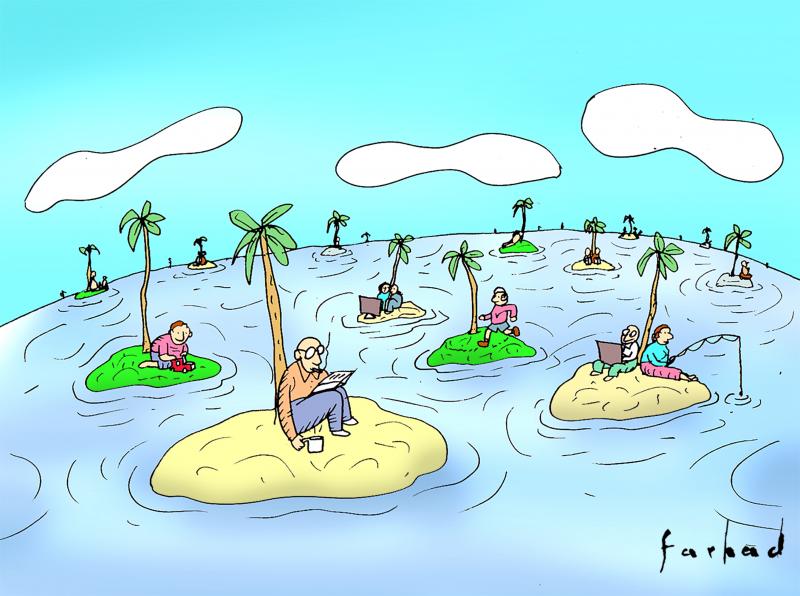
I don’t really know how to begin to talk about my thoughts all about this issue. Why should I have doubt? What is happening to us? We are becoming more and more alienated.
Lately, I have to work more often as a retired for earn money because the expense of living is going up, and my pension isn’t enough. I think it’s general affected! Of course, this is not a surprise. What I want to say is the behaviour and reflection of the people in these days.
The elders are cool! They don’t worry about what the news from the government is clamour every day about the measures. When I want to pick up the passengers, I tell them that they have a free choice to take front-seat or backseat. The older ones take the front seat gladly. They mean that in front-seat it is more space. Of course, until recently, the young people also Have had no problem sitting in the front seat.
But last time, I had a guest, a young woman in my taxi from a hospital, who sat in the backseat and wanted to the city. She wore such a thick (FFC) mask, and in the whole trip (about ten minutes), she coughed! Every few seconds: oh, oh, oh! I didn’t say anything until we reached the point where she wanted to get off. When she wanted to pay me, I turned to her and saw her young beautiful face behind this huge mask. At this moment, I couldn’t stop my feeling of compassion and said: when you go out, please take off this horrible mask, you can take a breath in the fresh air then.
Her answer was quick: I don’t do that! I am a nurse, and I believe in this virus!! I was not just surprised but even shocked. It sounded to me like we’re talking about the existence of God, And I expect a nun to gainsay her beliefs. I mentioned that I heard her coughing all the time, and I just wanted her well being. But she didn’t need my advice, she said and repeated: she’s a nurse and believe in it.
I am sad and terrified. It seems that we’re diverging tremendously. What a pity! I wish we’d remember our trust and need for each other. I do hug every loving buddy of my own. There are no inhibitions for me. I hope you’ll do it as well.
Here is a research about how important is Hugging. I give a big HUG to you all until the good days come back again! 🤗🤗💖
RESEARCH: The importance of embracing in the digital age
Work of modern art exhibition in Thessaloniki June 2017
In a world where hugs are shrinking, scientists point to the benefits of touching the body and soul MARIANINA PATSA
Non-touch epidemic. The hugs we give are diminishing as we communicate more and more through the internet. Adults in big cities limit the time they spend with their loved ones. The seniors of the metropolises spend a partial 5 days a week without seeing or touching the “soul” that the speech says. But being hugged is essential for our quality of life, mental and physical health.
A hug protects, says a similar study by researchers at Carnegie Mellon University and confirms the fact that the more we hug, the less likely we are to get sick. “Touch increases the number of cells in the first line of the immune system. Serotonin (ie the body’s natural – antidepressant hormone) is also increased. So those who receive more hugs are more protected from inflammation and infections that threaten the health of our bodies.
Tiffany Field, the founder of the Touch Research Institute at Miami Medical School, is studying neglected touch and its effects on health. “We know from science what happens under the skin when pressure receptors are stimulated. “Heart rate slows down, blood pressure drops and stress hormone decreases, cortisol, ” he told the Guardian.
But the benefits do not end there as ” another person’s touch soothes the effects of social exclusion,” according to new UCL research. “We have shown for the first time that a gentle touch from a stranger can reduce feelings of social exclusion following a social rejection,” said study lead author Mariana von Mohr (UCL Clinical, Education & Health Psychology). The discovery follows recent findings that emotional social contact can be encoded by a special physiological system that connects the skin to the brain. Only three other studies have directly examined the effects of touch encouragement on social interactions.
But not all touches are the same: Researchers have found that those who received a faster and more “neutral” touch had reduced feelings of social exclusion compared with those who received a hug or a touch that was the result of real emotion. Of course, neither of them managed to completely eliminate the negative consequences of social exclusion, but one has to start somewhere.
Via a very knowledgeable and wise friend of mine Laurent Tremblay
I do not agree for many reasons, like for the one, if this “kills himself” means suicide. Usually, it is not the “I” alone who kills itself, but a painful pathological complex that takes over the “I”. And if you want control over yourself to the point to destroy yourself, obviously, a control complex is already taking control of you.
What is your opinion?
Do or do not. There is no try! Said Yoda in Star Wars, Ep. 5. If you have watched it or are a fan of these series, you may know what I’m talking about. This is not such a committing suicide, but It is a battle with the self.
And how wondrous Shakespeare shows in his works the inner challenge of humans. Always when his characters confront the evil, their own evil. I must think of Hamlet, who suddenly got the truth from his dead father’s soul about the terrible thing that happened to him, and there the tragedy begins. Here comes a question: To Be or Not To Be
Hamlet is thinking about life and death. It is the great question that Hamlet is asking about human existence in general and his own existence in particular – a reflection on whether it’s better to be alive or to be dead.
In this scene in which Hamlet says his famous narration: “to be or not to be” (as some take it for having fun), he brings up the choice for living on or not. As he continues:
That is the question; whether ’tis nobler in the mind to suffer, the slings and arrows of outrageous fortune, Or to take arms against a sea of troubles? And by opposing end them. to die, to sleep- no more – and by a sleep to say we end the headache and the thousand natural shocks… You surely know it well.
A Masterwork by the Russian director Grigori Kozintsev, which I saw in the early ’70s, of course, was synchronised in Persian.
This “putting an end” is, of course, for a moment: the idea of killing himself and solving the problem. It’s not for a painful psychological complex, but this is only a big shock, which man must master, and it can be not so easy!
We all have two sides: the light and the dark. Or let the Master speak:
And finally, I think it is a severe and heavy subject, and we must give an immense effort to find out how to understand it. But in my opinion, it is to find the balance. There is a duality in everything, and balance is the only solution.
The music might be helpful! Here is Moody Blues with (Question of) Balance. Have a peaceful weekend, everybody. 🤗🙏💖
“The Balance”
After he had journeyed, And his feet were sore, And he was tired, He came upon an orange grove And he rested And he lay in the cool, And while he rested, he took to himself an orange and tasted it, And it was good. And he felt the earth to his spine, And he asked, and he saw the tree above him and the stars, And the veins in the leaf, And the light, and the balance. And he saw magnificent perfection, Whereon he thought of himself in balance, And he knew he was.
Just open your eyes, And realize, the way it’s always been. Just open your mind And you will find The way it’s always been. Just open your heart And that’s a start.
And he thought of those he angered, For he was not a violent man, And he thought of those he hurt For he was not a cruel man And he thought of those he frightened For he was not an evil man, And he understood. He understood himself.
Upon this, he saw that when he was of anger or knew hurt or felt fear, It was because he was not understanding, And he learned compassion.
And with his eye of compassion. He saw his enemies like unto himself, And he learned love. Then, he was answered.
Just open your eyes, And realize, the way it’s always been. Just open your mind And you will find The way it’s always been. Just open your heart And that’s a start.
Let’s again have another opportunity to adore the land of Egypt, the magic land. Here I want to share with you about Ahmose-Nefertari, “The Wife of the God”.
Ahmose-Nefertari was the first Egyptian queen to hold the title of “God’s First Wife of Amun”.
Pharaoh Amenhotep I with his mother Queen Ahmose-Nefertari. (18th dynasty of Egypt) Scan from old book Culturgeschichte by K. Faulmann (1881). By see above, Public Domain,https://commons.wikimedia.org/w/index.php?curid=429092
Was Queen Ahmose Nefertari the mother of Ancient Egypt’s glittering 18th dynasty? The 17th dynasty in Ancient Egypt was a time of turmoil and conflict. It was a time in Egypt known as the Second Intermediate Period when Lower Egypt was ruled by a group of invaders called the Hyksos, who were an Asiatic people. They were also known as ‘the Shepherd Kings” or “Desert Princes.” It was the Hyksos that introduced the chariot and the horse into Egypt. The Hyksos had initially infiltrated the Eastern Delta and created their capital at Avaris. They extended their rule as far as Middle Egypt, but never gained control of Lower Egypt which remained under the control of the Kings in Thebes. It was the last couple of these Theban Kings of the 17th dynasty who went to war and expelled the Hyksos invaders. But one of the truly remarkable things about this period is some of the strong and talented women who helped to rule the country and defeat the invaders, (more here)
As we see, the feminine part of the human being has left a strong influence on our history. This is an important issue, from which we can learn a lot.
Here are details of this artistic silhouette of the Wife of Amun: The Goddess. By Marie Grillot, with heartfelt thanks. 🙏💖
The silhouette of Queen Ahmes-Nefertari stands out against a blue-grey background and seems to be shrouded in foliage: perhaps she is represented under a canopy, or an arbour, from which bind bindweed twigs fall. Indeed the “Convolvulus” took, in the Pharaonic era, a function not only nourishing but also protective. “At the late Ramesside period, we see forms of ‘convolvulus’ with five lobes, surrounding royal personalities”, specify Frédéric Dupont and Cyril Malouet in their study on this plant.
The sovereign, turned to her right, is recognizable by her black skin. “If we tried to explain this black colour in the past, by the fact that the queen must have been Nubian, we know it since that this thesis was rejected by the examination of her mummy, whose white pigmentation of the skin shows, that ‘ she was not from this region. “specifies Christian Leblanc in his” Queens of the Nile “.
Florence Quentin (“The Great Sovereigns of Egypt”) analyzes the representations of Ahmès-Nefertari as follows: “She is represented with a complexion declined in shades ranging from the deepest black to green or dark red, one of her distinctive marks – venerated in this seemingly obscure, even dark aspect, for she is none other in the eyes of her successors, but one of the manifestations of the Great Mother protecting her children beyond death, just as much as the goddess of rebirth, the embodiment of fertility, like the fertilizing silt of the Nile “.
In front of her face is drawn her cartridge. Her tripartite wig is covered with the remains of a vulture, the headdress of the royal mothers, surmounted by a mortar in which are stuck two straight feathers against which is plated, at the base, a red solar disk.
Her dark complexion meant that the artist had to “adapt” her colours; thus the eyebrows, the eyes, the lips, the folds of the neck, as well as her earrings and bracelets are treated in white.
She is adorned with a large ousekh necklace, which uses the same tones as her headdress. They are also found in the flexible vegetable sceptre that she squeezes with her right hand, arm folded under her breast. His left-hand embraces a lotus stem with a blooming flower, a symbol of rebirth.
She is dressed in a long, loose-fitting white linen dress, the transparency of which hints at her shapes, the contours of which are traced in red. The garment, which has sleeves ending at the elbow, appears to be pleated at the top. It is attached under the chest by a belt that falls in two coloured sections: one in shades of blue with white and blue circular patterns and the other, red with almost identical patterns but slightly larger. And, the charming and lovely detail: the end of each side ends with the pattern and colour of the other …
“Ahmes-Nefertari is shown here in a flowing, pleated dress; typical of depictions of elite women from the Ramesside period. (circa 1295-1069 BC) rather than how long the queen was alive. She wears the vulture headdress of the goddess Mut, wife of Amun of Thebes, surmounted by a solar disk and ostrich feathers. The cobra on her crown and the flail in one hand indicates her royal status. The lotus flower was often held by deceased women, representing the rebirth: “specifies the British Museum”.
This fragment of the scene, measuring 45 cm by 20 cm, is incomplete. It comes from the Theban tomb TT 113, which is precisely in the sector of el-Khokha. Its owner, Kynebou, was an ouab priest of the secrets of the domain of Amun. He exercised his functions during the reign of Ramses VIII, and the representation of the queen, deified in her tomb, is the testimony that she was still venerated, alongside Amenhotep I, four centuries after their death.
The Porter & Moss states: “The tomb is now largely destroyed; this register is shown intact, in a drawing by Robert Hay (BL Addmss 29822 f. 117): the owner of the tomb makes offerings to Amenhotep I, Ahmose Nefertari (in a sanctuary), and a Djed-clad pillar “.
Ahmès-Nefertari represented here in the tomb of Ameneminet – TT 277 – Gurnet-Muraï
In “Twelve queens of Egypt”, Pierre Tallet brings these interesting details on the representations of the sovereign in Thebes: “We record her presence in forty-eight Theban tombs, and she appears on several occasions in the bas-reliefs of Karnak, memorial temples of Seti I and Ramses II on the west bank. There are still about twenty votive statues in his image and many mentions of him in jewellery, graffiti, ostraca. In all of this material, Ahmès Néfertari is regularly mentioned with her titles of a royal wife and royal mother: She also appears as ‘the Wife of the God’ and takes on the aspect of a divinity who borrows from Hathor some of her distinctive features, working for the protection of the dead in the afterlife “.
This fragment (along with two others) was acquired in 1868 from Robert James Hay by the British Museum, where it is exhibited under the reference EA37994.
Reines du Nil, Christian Leblanc, The Library of the Untraceable, 2009
The great sovereigns of Egypt, Florence Quentin, Perrin, 2021
12 queens of Egypt who changed history, Pierre Tallet
TOPOGRAPHICAL BIBLIOGRAPHY OF ANCIENT EGYPTIAN HIEROGLYPHIC TEXTS, RELIEFS, AND PAINTINGS I. THE THEBAN NECROPOLIS PART 1. PRIVATE TOMBS BY THE LATE BERTHA PORTER AND ROSALIND LB MOSS, B.Sc. (OxoN.), FSA, AssistedURNE by ETHEL W. SECOND EDITION REVISED AND AUGMENTED GRIFFITH INSTITUTE ASHMOLEAN MUSEUM OXFORD
Honestly, I didn’t want to get back on this issue again, but this almost new occurrence made me react to it and share my thoughts. As I might mention before, I had a great expectation of freedom (especially freedom of the press) in western countries because of my job as a journalist. But it came out, slowly but surely, that it is not the fact. Of course, I don’t mean that here in the West, something like dictatorism prevails. But there is a power, which is much stronger than any dictator, and that is money.
There is some journalist for sure, who still are working heartily and honestly for digging out the truth. They still do not belong to the top. At the top, they will have responsibilities to governments! And that is the point that I don’t feel good about it.
There have been a few examples over the years I’ve lived and witnessed here, but now it’s something brand new. Bild magazine (Bild Zeitung) is famous for issues on gossip. I think there are some similarities in the world. And there is no wonder that it also does with the machos and man’s world.
We must thank here the New York Times Magazine, which helped to rescue the German free press! Otherwise, it might never come out. You know, unfortunately, the Germans are somehow tamed, and the millionaires like Axel Springer publisher knows it well. Therefore, The truth remained hidden.
The editor, Julian Reichelt, had been accused of abusing his power involving a relationship with a junior employee at Bild, a tabloid owned by the media giant Axel Springer.
Bild, a center-right tabloid that has fed popular anger at Chancellor Angela Merkel and her Covid-19 restrictions, dismissed the editor in chief, Julian Reichelt, after The New York Times reported on details of Mr. Reichelt’s relationship with a trainee, who testified during an independent legal investigation that in 2018 he had summoned her to a hotel near the office for sex and asked her to keep a payment secret. Hours after Mr. Reichelt was ousted, the newsmagazine Der Spiegel published allegations that Mr. Reichelt had abused his position to pursue relationships with several women on his staff.
Mr. Reichelt took a leave of absence in March after Der Spiegel, a German newsmagazine, reported that Axel Springer was investigating allegations of abuse of power and complaints that he had relationships with female employees.
Twelve days later, he returned after the investigation, conducted with help from the Freshfields law firm, concluded that Mr. Reichelt had mixed his personal and professional lives but had not broken any laws. The investigation found no evidence of sexual harassment or coercion, Axel Springer said at the time.
The courageous warrior, who didn’t give up, was of course a woman. Thank Goddess! She had stubbornly fought until the truth came out.
But the reporter who had written that investigation,,Juliane Löffler, had the lead byline on an article published Monday in the magazine Der Spiegel, which first broke the news this spring of the investigation into Mr. Reichelt. The article described Mr. Reichelt as a man “obsessed with power” who had a “pattern” of both promoting and seducing young women at Bild.
The magazine also raised further questions about Axel Springer’s internal investigation, which had promised anonymity to women who testified. Nonetheless, one of the women received a message from a “confidant” of Mr. Reichelt, urging her not to speak to investigators, Der Spiegel reported.
The Frankfurter Rundschau, based in Frankfurt am Main, one of the regional newspapers owned by the Ippen Media company that had planned to publish the investigation, ran an editorial on Monday calling the decision damaging to their relationship of trust with their readers.
The German Journalists’ Association criticized Ippen’s decision not to publish the investigation. But journalists discussing the reporting also raised questions about why the world of German publishing had struggled to have its own MeToo reckoning, and why it took attention from American media to prompt this action.
As the German media world focused on the turmoil at Axel Springer, the staff of Politico, whose acquisition by Springer is expected to close as soon as this week, was largely focused elsewhere. Journalists there are considering forming a union, and organizers have set a deadline of this month to gather support.
His sexual relationships with women on his staff were known in Bild’s office, Der Spiegel reported.
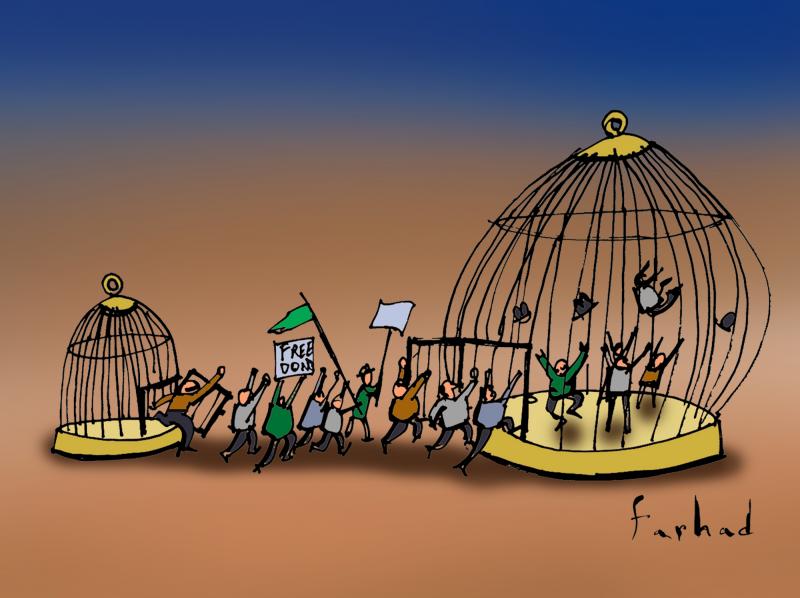
That is a stony path: the way in freedom and democracy. And when there is much powerful influence, it will be hard. But we have to conquer fear because we will be successful.
I heard only his name, those days in Iran when I have been studying arts and inner architecture. We had to learn colours and how to work with them. I have known him and his masterworks truly here in Germany.
To understand the role of Gustav Klimt artwork in Vienna, take a brief look at the artist’s life: Gustav Klimt (1862 to 1918) is one of Europe’s most famous Jugendstil (Art Nouveau) painters and incorporates the Austrian style of Art Nouveau (Jugendstil). As such, he has become one of the most popular representatives of Vienna art. At the end of the 19th century, Klimt co-founded the artists’ group Wiener Secession, a rebel group of young artists who parted from the conservative Austrian Artists’ Association (Künstlerhaus). Throughout his time in Vienna, Klimt worked in six different studios. His last studio, located at Klimt Villa in Hietzing, is open to the public.
He is one of the most advanced painters who have mastered geometry and the appropriate colour of the painting.
Here is a well-done video by Great art explained, in which James Payne discusses ‘The Kiss’. (der Kuss)
Allegorical painting by Gustav Klimt
This central late work by Gustav Klimt is one of his great allegories, in which he uses a bold composition to thematize the cycle of human life. The first sketches on paper were made in 1908, the execution in oil from 1910. On the occasion of the first presentation at the International Art Exhibition in Rome, in 1911, Klimt received the gold medal. For reasons that were not known in detail, he decided to fundamentally revise the picture in 1915. Klimt achieves the dissonant entanglement of life and death through the formal and motivic contrasting of a stream of naked human bodies: enveloped in colourful ornaments and flowers, mother and child, an old woman and a pair of lovers – on the right, and the solitary figure of death in dark clothes on the left side. The original probably has had a gold-coloured background but turns grey in the final version, death – wrapped in a blue ornamented cloak, and with a raised small red club, which appears dynamic and alive, designed in bright colours. It is also condensed with further figures and ornaments.(Here in original)
I would just like briefly to report on my break and hope you won’t be so bored! That was actually my plan to set myself back a bit and to reduce the pressure on my mind. But as if! That was a stressful, exhausting time.Not only because I had to work to earn the needed money, but also because of other issues (difficulties) that came upon me without grace.One of them was that I had to take care of my grandchildren more often. As a dear grandpa, of course, that’s always a wish for me and of every grandpa to do it, but at my age sometimes it’s very exhausting, especially when I had to do it alone! Phew, they have such claims! And then my young neighbour from the top floor came along, who wanted at any case, to cut the branches of the trees in the garden and as I am not the one who sits quietly and watch, I had to join in! Besides, my dear wife, Regina, has planned to go south for an “alkaline fasting”. Of course, I couldn’t let her drive that far without really wanting to prepare our ten-year-old car. That meant that I had to drag the winter tires from the cellar into the car and drive to the car service station. I tell you: I had such a feeling when I went to bed, I fell like a log on the mattress. Well, I know and appreciate some adorable friends who have wished me a good rest and maybe even missed me. But unfortunately, I cannot speak of any recovery, maybe next time!!
Now I want to celebrate Nietzsche, Friedrich Wilhelm, who was born on October 15, 1844. He was a philosopher, cultural critic, composer, poet, writer, and philologist, and for sure, with a controversial soul who was hated and loved by many.
“The higher we soar, the smaller we appear to those who cannot fly.”
And
“But the worst enemy you can meet will always be yourself; you lie in wait for yourself in caverns and forests. Lonely one, you are going the way to yourself! And your way goes past yourself, and your seven devils! You will be a heretic to yourself and witch and soothsayer and fool and doubter and unholy one and villain. You must be ready to burn yourself in your own flame: how could you become new if you had not first become ashes?”
Here, I have a piece to share with you from our Greek friends, Searching The Meaning Of Life, to have another look at this Genius. <And it is always useful such a lesson, when the freedom of man become tight!> Happy birthday and thanks for your insane genius.
Our treasure is in the hive of our knowledge. And we always go there since we are winged insects of nature and collectors of the honey of the mind.
Like Schopenhauer, (and C.G.Jung), Nietzsche was interested in his youth, in the range of Eastern philosophies converging in India. The heir to a long spiritual tradition-oriented towards his knowledge, Ramana Maharsi was perhaps the last “great guru” to work with the instrument that makes us human: the mind.
Ramana encouraged his students to form the question: “Who am I?”. As soon as he learned that he had advanced cancer, he reassured his students, telling them, “I am not going anywhere. “Where could I go?”
Nietzsche compares the conquest of intellect to a bee, flying to the hive to create the purest honey, while Maharshi described the journey to the interior of each: “Like a pearl fisherman tying a stone in the middle of the belt, and sinks to the bottom of the sea to collect them, so each of us must be armed with “the renunciation of all”, to dive inside ourselves and acquire the pearl of ourselves “.
And to find this pearl, one does not need to go on a pilgrimage to India or engage in complicated spiritual exercises. It is enough to look inside of own calmly.
The most obscene word and the most vulgar letter is better and nobler than silence!
Most psychological warfare begins with what is not said rather than what is said. Let us recall the following scene: A got angry with B and cut him off since the latter forgot to wish him a happy birthday. At first, A may have wanted to say to him, “Listen, do you not know what the day it was yesterday?” the silence. B finally got angry with A, because he suddenly stopped answering his phone calls, while the only time he managed to talk to him, he seemed to be unhappy. A has a childish situation but much more common than one can imagine.
How many couples are angry at misunderstandings that take days or months to come to light? Is not the lack of communication the root of many conflicts at work?
Not saying things on time is an important stressor for those around us, as it creates a multitude of interpretations that end up against us.
Nietzsche, who was certainly not one of those whose tongues were hairy, teaches us that it is better to express what we feel – even if we do not find the right words – than to offend the other with our silence.
“The Regarding of the certainties that shape our reality, there is a modern narrative, ‘The Fairytale Company’, which talks about the danger of being imprisoned by our beliefs, as Nietzsche warns.
Once upon a time, there was a man who lived next to a public street and sold some delicious buns. The work was going so well that this man neither listened to the radio, nor read newspapers, nor paid much attention to television. His work was going so well that he was able to invest in advertising. People were buying their buns. And each time he got better and better and each time he invested more in his work.
In the summer he was visited by his son, who had returned from university where he was doing his master’s degree in business administration. The son, seeing the whole opening in means, lands and buns, said to him: -Father, do you not listen to the radio and do not read newspapers? We are in a huge crisis. All this is sinking.
The father thought: “My son has studied. He is informed. He knows what he’s talking about. “
So buy fewer ingredients to reduce bun production. He reduced a lot of expenses and curbed his advertising investment. Sales were declining day by day and after a while the business began to be in deficit. The man called his son at the university and told him:
You were right my son. “We are in a very big crisis.”
The man who would think of himself as absolutely good would be spiritually stupid.
If our conscience makes us human, then imperfection is a distinctive feature of our species.We humans spend most of our time correcting mistakes – it is enough to read any newspaper – rather than making things of value.
Accepting this element of human character helps us to be humble and even more importantly, makes us realize the vast field before us for improvement. Every failure or mistake teaches us at the same time how to achieve the best. Rigid people, who try to do everything well, already suffer the consequences of their imperfect actions. They tend to blame others for what they do badly and lose their temper when someone points out a mistake they may have made.
Nietzsche’s spiritual contribution is this: We can not always aspire to be good and do everything well, as long as we are willing to do things a little better today than we did yesterday.
The Japanese have a word, wabi-sabi, which defines the art of imperfection , in that which is incomplete, irregular and temporary there is beauty and life, because it contains the longing of nature to perfect itself.
Allan Percy: “Nietzsche: 99 Lessons in Everyday Philosophy” (2nd)
You must be logged in to post a comment.