After a long while, I must reblog this; a history of thoughts, to see every corner of our minds…There is a teacher who talks about our ways in today education!
PS: with the FFB or C masks, I can’t breathe!
Back to school after Christmas break: new rules, old madness. Post-Christmas on-line staff meetings have reached unbelievable levels of senselessness this year. Here is a sheer example.
Principal (smiling): Welcome back to school. Can you hear me? Yes? Good. I have had some problems with my connection this morning……So, we are gathered here today to implement the new dispositions from the Ministry of Education which have just been dispatched……
Teacher WhatsApp chat:
(Maria) : Here is yet another scam! To be sure. Ready?😤
Prologue: (Play your part as Opa and Oma (Grandpa & ma).
Sometimes it’s strenuous being grandparents when the grandchild has been grown a little older and enjoyed more staying with them. It’s maybe because you do your best to make her happy.
However, you can breathe a sigh of relief when she goes back to her parents, but after a while, you miss her excessively!
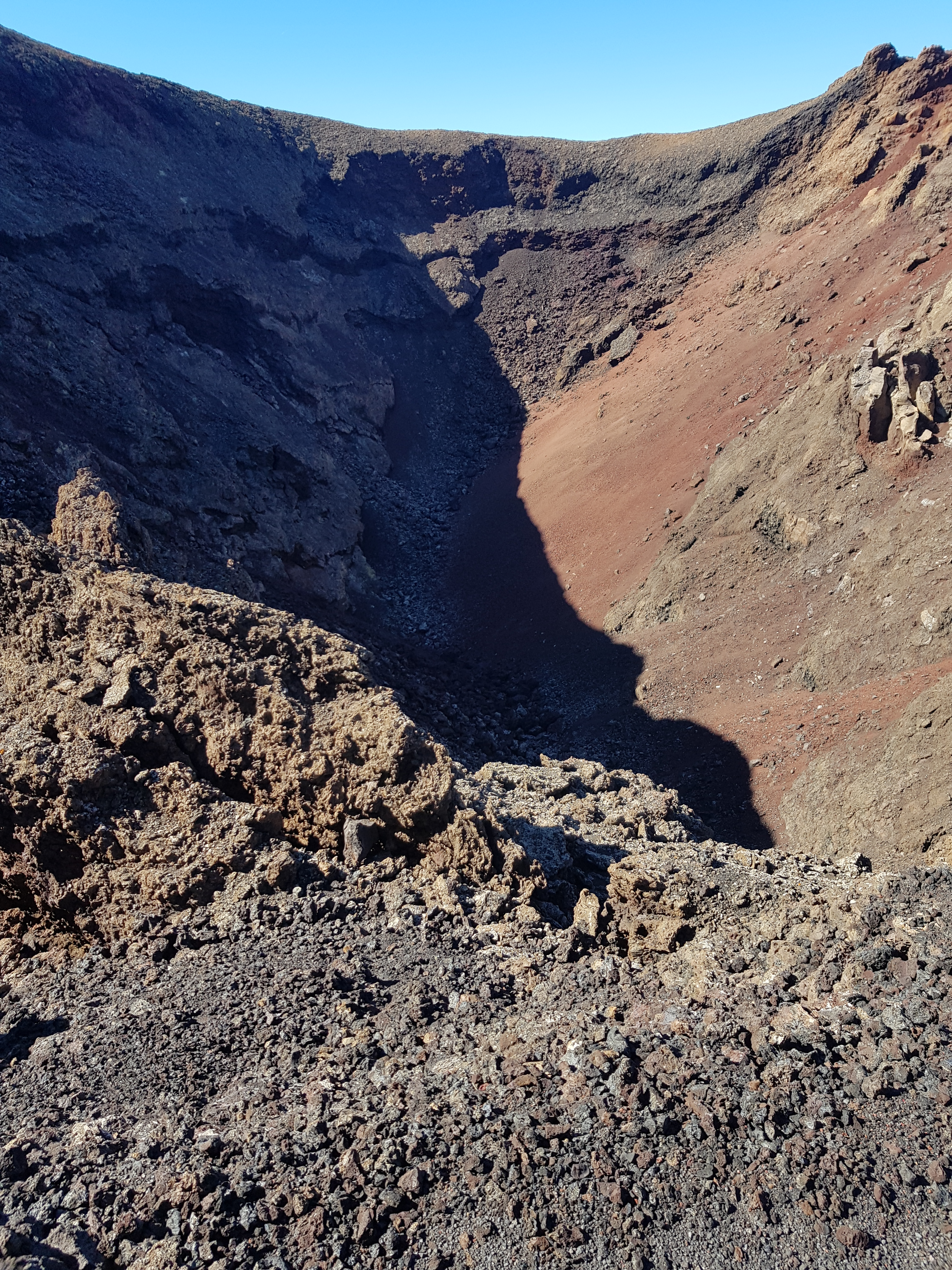
Now, let’s get on the volcanoes! Our first plan was to rent a car to participate in the volcano tour. Renting a car was complicated enough as the production of new automobiles has become less in the last years, you can hardly find one. However, we’ve got a car, or better to say, a cart, to have our tours around. (Regina has always had many plans!)
It was an exciting experience. We drove to a parking lot, and there we had to get into one of the buses, which took us around the hills and mountains on a narrow street and let us look at the so many volcanoes.
I have recorded a short clip:
Here we can have a better view with my adorable wife’s pics.
Especially when the driver, in a short break, offered Regina his help to take some pictures with her mobile-phone:
Anyway, it was a one-for-all tour. There were explanations in three languages; Spain, English, and German, which you may notice in the video. (no French! je ne sais pas pourquoi?), and the tour ended with Johann Strauss’s Also Sprach Zarathustra. What for me as a Jungian is self-evident! It is also good here, I think, to finish this with a Masterwork of all time in cinema. I will try for the third section. 🙏🤗💖
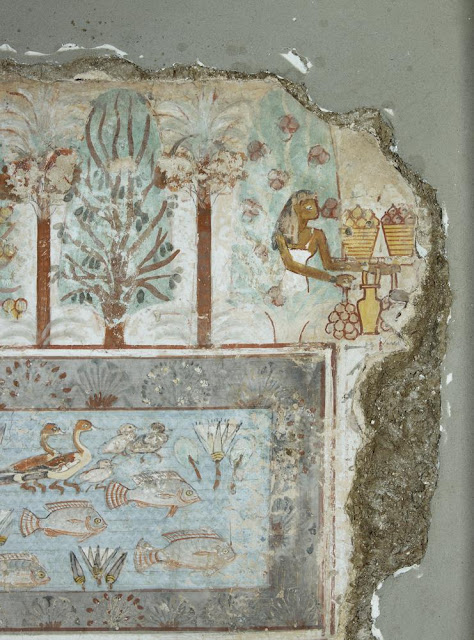
We see here that middle-ranking officials can be so important in ancient Egypt. Why? We might never know it; although the exact location of that Tomb is now lost, several wall paintings from the Tomb were acquired by the British Museum as the greatest treasure where they are now on display.
Nebamun was a middle-ranking official “scribe and grain accountant” during the period of the New Kingdom in ancient Egypt. He is thought to have lived c. 1350 BCE and worked at the vast temple complex near Thebes where the state-god Amun was worshipped. Wikipedia
Let’s enjoy this brilliant description by Marie Grillot, who helps us to see between the lines of the painting. 🙏💖
Fragment of a polychrome painting representing the garden and the pool of Nebamun – painted plaster Provenance: Tomb of Nebamun – Theban Necropolis (location lost today) Discovered in 1820 by Giovanni d’Anastasi on behalf of Consul Henry Salt Salt Collection acquired by the British Museum in 1821 – Reference EA 37983 – museum photo
The rectangular pool is lined with papyrus, blueberries and mandrakes that bloom in unison in a delicious and subtle monochrome. The wave, of a tender blue enlivened by wavelets of a more sustained tone, is dotted with open lotuses or in buds. A varied fauna evolves in perfect harmony: ducks and birds whose colours reflect the difference of species rub shoulders with fish with fins and gills materialized in ochre-brown.
The pond is part of a wooded area made up of several species of fruit trees: sycamores, fig-trees, date palms or doum… Some fruits have already fallen while others are still attached to the branches: their colour ranging from yellow to dark brown testifies to their degree of maturation…
Fragment of a polychrome painting representing the garden and the pool of Nebamun – painted plaster Provenance: Tomb of Nebamun – Theban Necropolis (location lost today) Discovered in 1820 by Giovanni d’Anastasi on behalf of Consul Henry Salt Salt Collection acquired by the British Museum in 1821 – Reference EA 37983 – museum photo
The overall view is geometric and harmonious. However, the “perspective” in which the scene takes place does not fail to surprise us: the basin, for example, is seen both from the “top” and from the side, in-depth… The explanation is that the space is “represented according to the laws of aspect, a concept proposed by Emma Brunner-Traut. The element consists in deconstructing a scene, a character, … to show them under all their facets, combining the diversity of points of view, or under their elements considered as the most characteristic”…
Such a place – which must have been the prerogative of noble residences – seems ideal for recharging one’s batteries, enjoying the shade and freshness of the foliage with the lapping of the water, a few rustling of wings and the song of a bird. According to his codes, if the artist has been able to restore its “earthly” aspect, it is also necessary to consider the more “subtle” dimension linked to life in the au beyond, to the divine… Indeed, “in addition to the totality of the constituent elements, it is also necessary to show an organized universe (that is to say where Maât reigns)”, specifies Thierry Benderitter.
Fragment of a polychrome painting representing the garden and the pool of Nebamun – painted plaster Provenance: Tomb of Nebamun – Theban Necropolis (location lost today) Discovered in 1820 by Giovanni d’Anastasi on behalf of Consul Henry Salt Salt Collection acquired by the British Museum in 1821 – Reference EA 37983 – museum photo
On the other hand, the British Museum has attached itself to the reading of a scene – small but full of meaning – in the upper right corner: “a Goddess leans out of a tree and offers fruits and drinks to Nebamon (now lost). Artists accidentally painted her skin red at first, then repainted it yellow, the correct colour for a Goddess’s skin. On the left, a sycamore-fig tree speaks and greets Nebamon as the owner of the garden; his words are recorded in the hieroglyphs “…
Nebamun was a scribe and accountant of wheat in the granary of divine offerings in the temple of Amun at Karnak in the New Kingdom during the reigns of Thutmose IV and Amenhotep III.
Fragment of a polychrome painting representing the garden and the pool of Nebamun – painted plaster Provenance: Tomb of Nebamun – Theban Necropolis (location lost today) Discovered in 1820 by Giovanni d’Anastasi on behalf of Consul Henry Salt Salt Collection acquired by the British Museum in 1821 – Reference EA 37983 – museum photo
Therefore, his position was significant enough to have his eternal home on the west bank of Thebes. It was discovered in 1820 by Giovanni d’Athanasi… “Yanni” had entered the service of the British consul general Henry Salt when he was barely 20 years old to assist Giovanni Battista Belzoni. When he left in 1819, he replaced him in the field, then supplying the consul’s collections while building his own…
Henry Salt (Lichfield, UK – 14-6-1780 – Alexandria, Egypt – 30-10-1827) diplomat, consul of England in Egypt from 1816 to 1835, collector of antiquities
For him to be “on the job”, Salt had built for him a small fortress at Gournah. He thus lived among the villagers whom he employed for his excavations… Is it thanks to this “proximity” that he discovered the Tomb of Nebamon? We cannot say… but unfortunately, proven is that its location – even if it is instead located in the necropolis of Dra Abu el-Naga – is regrettably lost today…
Eleven panels painted on plaster were taken from the chapel and sold by Consul Salt to the British Museum in 1821. This 64 cm high and 72 cm wide was recorded under (the reference) EA 37983.
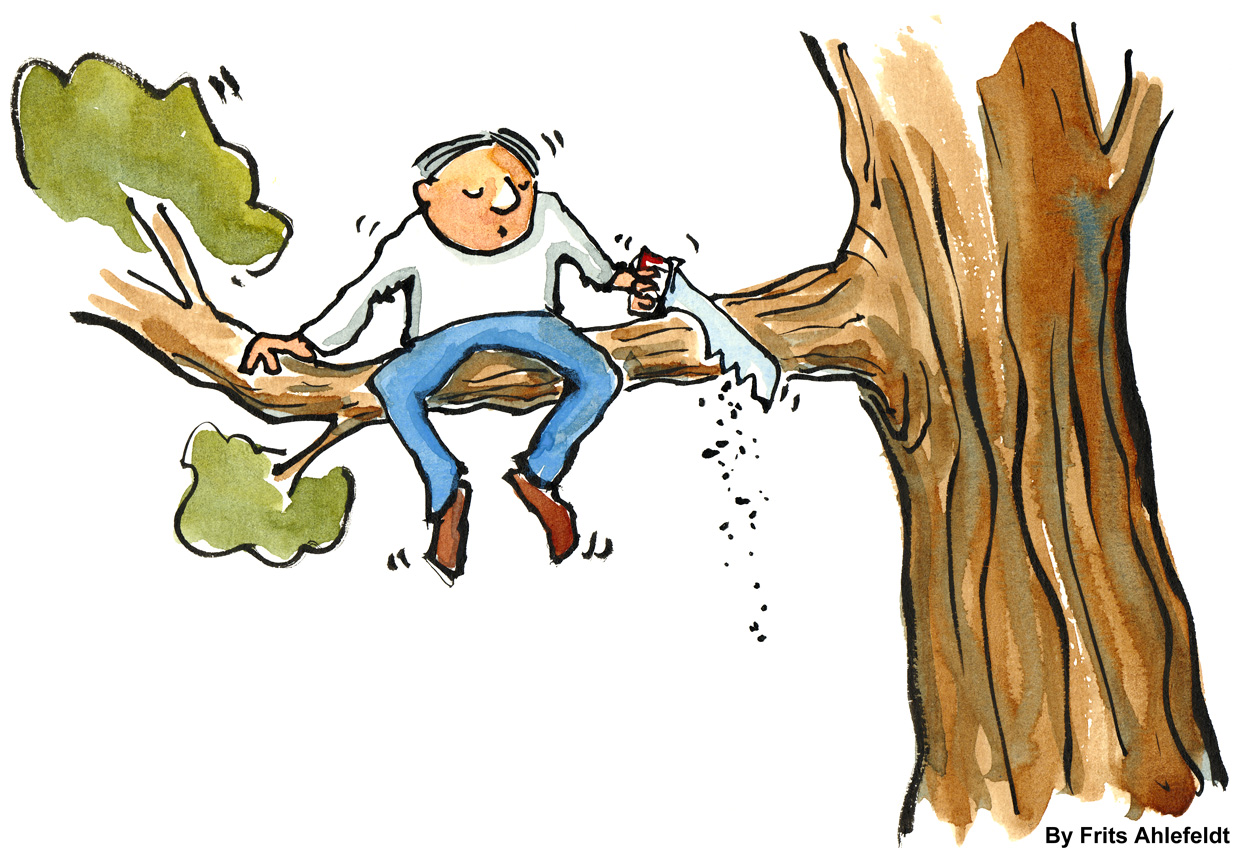
Please don’t get chilled when you see the word: “Spiracy” up there. I haven’t put the “con.” before that but “Sea”! Although, As if the meaning will be the same in the end. As we will learn more and more, slowly but surely, it seems that we are sawing the branch on which we sit!
In the last days of our trip, our son Raphael sent us a pic from reportage on Netflix with a note; “you might like to watch”. And we did it two days ago.
It is a documentary made by Ali Tabrizi, a 27 Youngman from England (with Persian origin) who dared to create this stunning one and a half-hour film as a disclosure. (Additive: We can see hardly any intellectual one staying in Iran!)
If you have subscribed to Netflix, watch this well done and, at the same time, horrifying reportage. I mean “horrifying” only because of the bitter truth hidden before our eyes.
That is worth watching disclosure about something that rarely comes to the topic. It makes our eyes open and expands or broadens our thoughts.
I am almost sure that our adorable friends, Pam Lazos and Susan Scott, and others who have some activities to keep life safe on this planet, will be interested in watching it.
Seaspiracy is a 2021 documentary film about the environmental impact of fishing directed by and starring Ali Tabrizi, a British filmmaker. The film examines various human impacts on marine life and advocates for ending fish consumption. Wikipedia
I don’t want to say I hope you’ll enjoy it, but I hope you will watch it!
Today afternoon, we are invited to a small birthday party of our granddaughter, Mila (she became three years old last Thursday). I will go there and hug her and congratulate her anniversary, though, in the back of my mind, I wonder how her future will look like, and it worries me!
First, I must mention it is not any birthday or other anniversary of someone! My mind engaged with The Beatles these days because of their new documentary movie: Get Back. Although unfortunately, it’s on the Disney channel, and I can’t watch it because I’m not registered there. However, I watch the video clips from that movie now and then and remember my youth as we grew up with them.
Of course, it is not something new, but what hit my mind to write this post is remembering Billy Preston and his influence on The Beatles.
Billy Preston was one principal emphasis in the Beatles works, especially in the later albums. Some people say he was the fifth Beatles, but I believe George Martin was the fifth Beatles and led their songs in such magnificent and tuned sound for many years. Notwithstanding, Billy Preston gave a unique soul to the songs, notably, their latest works despite all of these.
He had a turbulent life, as many artists should have? He worked with so many famous musicians. In addition to his successful solo career, with several funks and R&B hits, Preston gigged for a host of all-time greats: Ray Charles, Little Richard, Sam Cooke, Miles Davis, Aretha Franklin, the Rolling Stones…the list goes on.
He also had intoxication problems, and I think he had suffered a lot too under his sexual orientation;
As an adult, Preston’s star was tarnished by addiction, arrests and self-sabotaging behaviour that his manager, Joyce Moore, and half-sister Lettie, said was most deeply rooted in his mother’s refusal to believe that he was being sexually abused by the pianist of summer touring company, and later a local pastor.
It’s part of a lurid, longer tale, calling to mind other promising, oft-prodigious young talents who never managed to get out from under damage inflicted by adults when they were children.
A year later, he entered America’s living rooms. He appeared on The Nat King Cole Show, below, to duet with TV’s first national Black variety show host on “Blueberry Hill,” a 40s tune Fats Domino had popularized earlier in the decade. Which I never knew!
“You have a very excellent career ahead of you,” Cole predicts, following their performance.
Daughter Natalie Cole later enthused that the celebrated crooner “lets this kid have all the glory,” though the self-possessed pre-teen holds his own ably, alternating between organ and his own impressive pipes.
Within the year, Cole and Preston shared the big screen, and a memorable part, when they were cast as “The Father Of The Blues” W.C. Handy, as a child and adult, in the 1958 movie St Louis Blues.


César Manrique pintando en el estudio de su casa de Tahíche. Lanzarote, 1985 Spiegel
Prologue Yes! That’s me, back again from my vacation. However, it was an adventure more than a holiday journey. Because, as you already know by now, we both, my wife and I, are not that good and submissive! Therefore, regrettably, I would say; that was a brave act of ours!
(“PS 2 times in millions!!: I had been dreaming that I had turned off my M. Phone for suspected two last days in our holidays, just for a breathe. I tell you, when I came back, there were thousands of Emails and notifications and… Hush; it wasn’t a dearm!”) 😭





On the other side, It’s beautiful and, especially for me, an unusual Silvester time under such a clear sky and warm (ca 22 C.) climate. And as we’d noticed, how easily the Spanish people do with the new crisis. It was also outstanding. Of course, as I have promised, I will share my pictures and experiences about this short trip, but let me begin with a visit to the house and museum of a great artist, Cesar Manrique, whom I’d honestly never heard of before.
First, I must add here that something saddened and aggrieved me after I read his biography, to know that he took part in the Spanish Civil War end of the 30s but to my surprise on the side of Franco! Perhaps that could be described as his youthful naivety. I would do that because the arts and artists can never belong to or even exist in any fascist regime. With that, I calm my heart and dare to say that he was a great artist in a suitable place and at the right time.
In his biography, the writer describes his feeling as follows:
He participated as a volunteer in the Spanish Civil War on Franco’s side. His war experience was atrocious, and he refused to talk about it. In the summer of 1939, once the war was over, César returned to Arrecife. He bore still wearing his military uniform. After greeting his mother and siblings, he went up on the flat roof, took off his clothes, angrily stepped over them, sprayed them with petroleum and burned them. (From his Biography.)
What piqued my interest was the way of life those days (in the 70s) and how people with art and artists could live so happily and free.

I think it was how I always wanted to live, and luckily, despite residing in Iran and being so far away from the centre of the events, I had got a lot of that and could dream of being there. When I was looking at his works and the pictures, and the fascinating architecture of his house, made into volcanic mountains and chilled lava, I was just fascinated and stunned!
Here is an excellent recording of this house.
And his way to approach the art:
César Manrique Cabrera (24 April 1919 – 25 September 1992) was a Spanish artist, sculptor, architect and nature activist from Lanzarote. Wikipedia
Anyway, as I was enjoying this loving life, I wondered in the back of my mind how unlucky is the new generation didn’t experience this wonderful life.
I will continue for sure, after I’ve got the pictures taken by the master of photography, of course, my wife. 😉🤗
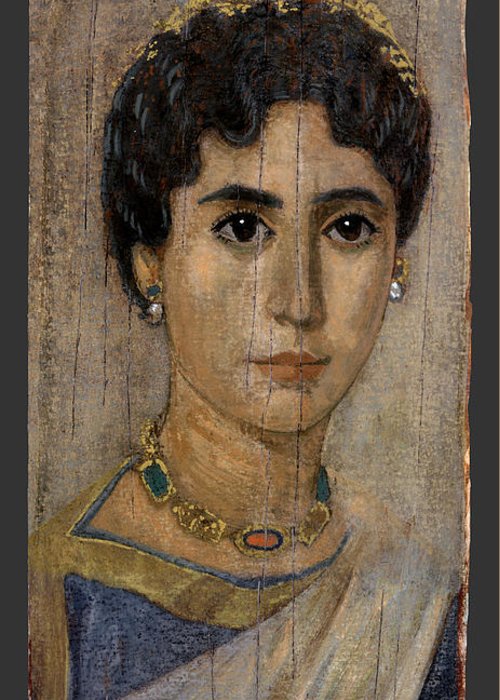
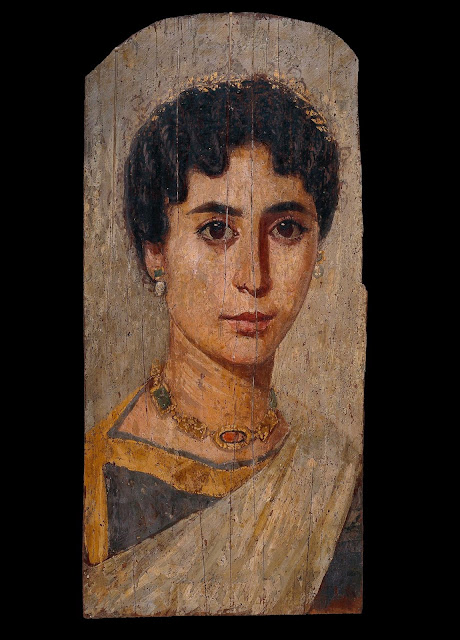
There are lots of such portraits! (s. here) It seems that it was a favourite pastime back then. Or a try to leave a beautiful reminder behind? Here is one of these beauties; let’s enjoy reading this brilliant explanation by Marie Grillot. 🙏💖
Her “class”, distinction, and nobility have stood the test of time: beautiful and elegant during her lifetime, she will remain so for eternity …
Her gaze is frank and straight, even if, on scrutinizing it more closely, his large brown eyes seem to hide an unfulfilled question deep within them. The round, dark iris stands out from the white gaze, which looks slightly damp. It is animated by a subtle dot of white paint, giving it a spark of life. Thin and short eyelashes are treated individually. The eyebrows, with well-defined implantation, follow the shape of a circumflex accent.
The nose is delicate and straight; its edge is underlined by a more marked paint touch. The furrow’s hollow leading to the lips is surrounded by a light white line.
The mouth is attractive with its lips with a cupid’s arch asserted and with their fine labial commissures. Tinted with a discreet pink, they seem to want to sketch a smile …
The brown hair, nicely wavy, leaves the part of the forehead visible. It’s gathered certainly, in a bun at the neck’s nape and is adorned with a thin gold crown or a tiara. This is not the only adornment. Indeed: “The woman wears square emerald earrings set in gold with pearl pendants. Around her neck is a heavy necklace composed of a large emerald in a rectangular frame and a large one. Red oval stone, possibly carnelian, flanked by two rectangular gold plaques. All the frames are made in gold leaf “.
This distinguished woman, who poses elegantly three-quarter length, obviously had as much taste for choosing her dress as her jewellery… “Her clothes are most unusual: a blue-purple tunic, with a golden clavus that continues in a decorative band under the neck where it is edged with gold leaf; and over the shoulder, a creamy white coat, almost the same colour as the background, is draped in the manner of contemporary statuary “(extracts from” Ancient Faces: Mummy Portraits from Roman Egypt “, Susan Walker and Morris Bierbrier).
She lived in the 2nd century AD and undoubtedly belonged to a wealthy class, perhaps even the elite. Indeed, only the wealthiest could afford quality funeral rituals. After having been Greek, Egypt became Roman… and cosmopolitan: Egyptians, Greeks and Romans mingled. The new “masters of the land” adopted the funeral customs of Pharaonic Egypt, and the Romans introduced the art of portraiture.
This type of portrait was produced during the model’s lifetime by itinerant painters who never signed their works … Even if they remained in anonymity, have been they then “known”, renowned? We whispered the name of the best, the most talented; was it “good taste” to be “immortalized by so and so? These questions keep their question marks …
The support for these portraits – which will, during mummification, be placed on the face of the deceased – is most often a plank of wood (lime, fig, cedar or sycamore) which has been smoothed and coated beforehand. The sketch is then executed in red or black. “Then, the portrait was carried out using mineral and vegetable pigments bound with heated wax (encaustic), which allows a slow and meticulous work resulting in small close touches for the face. On the other hand, the neck, the hairstyle and the clothing are treated with broad strokes of the brush “.
44.2 cm high and 20.7 cm wide, painted “with encaustic”, on a linden board, this portrait called “of Fayoum ‘” comes more precisely from Er-Rubayat, north of Hawara. In “Ancient Faces: Mummy Portraits from Roman Egypt”, the authors specify that: “The portraits associated with the cemetery of Er-Rubayat were mainly acquired in the 1880s by the Viennese merchant Theodor Graf, who exhibited them in several places in Europe and America, acclaimed by the public, selling them to various institutions and private collectors… “.
Sir Robert Ludwig Mond (September 9, 1867 – October 22, 1938)
This is the case with the generous patron Robert Ludwig Mond (Farnworth, UK, 9-9-1867 – Paris, 22-10-1938), then bequeathed to the British Museum. He entered it in 1939 under the number EA65346.
Don’t wonder that the picture above is in French. Since my childhood, I have known Santa Claus as Papa Noel! Maybe because French significantly influences our Persian language.
I was unsure if I could post anything this weekend, but I know that I will be in Spain next weekend! 😮 Therefore, I try to do something. Oh yes! My adorable and crazy wife had dared to keep her habits (travelling in every condition) and booked a flight to Lanzarote; even though there is big chaos in the world, let’s see. Life is not that easy, and we must make the best of it.
Of course, I will try to share my experiences and give a travel report if all goes well, and wishing you all my friends a nice, cosy, and warm-hearted celebration with all my heart.
And I’ve just got to get a message to you, hold on, hold on. One more hour and my life will be through, hold on! With love. 🙏💖🙏💖
I have always been excited about ticklish or prickly stories or movies. Therefore, I have seen all the Alfred Hitchcock’s, almost all the movie seriesDracula’s and many other creepy films, and read a lot of thrillers like Agatha Christie’s or Sir Arthur Conan Doyle’s.
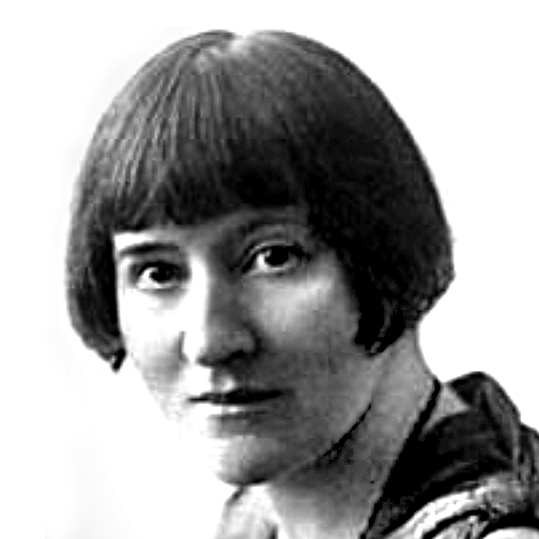
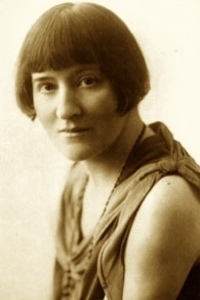
I am amazed at how many women there are as thriller authors, Agatha Christie (as mentioned), Dorothy L Sayers, Ann Cleeves, Ruth Rendell, and many others for sure. Even Metta Fuller Victor’s The Dead Letter, published by “Seeley Register” in serial form between 1866 and 1867, is widely recognised as the first detective novel written by a woman. And, of course, I must add J. K. Rowling to this list.
As we read; She was favourably compared to Edgar Allan Poe, Agatha Christie and Dorothy L Sayers.
Sheffield Hallam student Alex Csurko, who is embarking on a PhD into Ethel, believes her father’s invention may have been the genesis of her brilliance.
“The amazing thing about Ethel is that, despite writing all her life, she wasn’t truly recognised until she was in her 60s,” he said.
“Maybe it took her move to London before she was introduced to the right people?” “We know from the 1911 census that, aged 35, she was still living at home with her parents – by which time she’d already had dozens of poems and short stories published in the press – over 100 in her lifetime,” he said.
That is something that seldom happens to men; I might not wonder? Since when did it all go wrong? I can still remember it!!
She was not so successful as Agatha Christie, may because she was, as Mr Csurko said: “Ethel simply wasn’t prepared to play the fame game which made stars of other writers. “In an interview with critic Peter Cheyney, she said: ‘I was not born. I have never been educated and have no tastes or hobbies. This is my story, and I’m sticking to it.” He said that in many reviews, Ethel was alternately described as “spikey”, “witty”, and “sarcastic”. By 1938 she hit stardom when Alfred Hitchcock chose to adapt her detective thriller The Wheel Spins – about a young woman on a train and her missing companion – into his film The Lady Vanishes. “The Lady Vanishes was Hitchcock’s last British-made film, and I think it’s fair to say it was the one which made Hollywood studios sit up and take notice of him. Said Mr Csurko.
However, while the legacy of other writers such as Agatha Christie has lived on, Ethel’s reputation has faded into the background.
“I think there is an easy explanation for this,” said Mr Csurko. “Ethel simply wasn’t prepared to play the fame game which made stars of other writers.
“She was brilliant in her own time, but when you consider the likes of Agatha Christie started a decade before her and carried on until the 70s, there’s just not the volume of work to compare them fairly,” Mr Csurko said.
Ethel would have two more novels adapted for the big screen – Midnight House was filmed as The Unseen, and The Spiral Staircase was based on her novel Some Must Watch.
Ethel died of ovarian cancer in 1944. Intriguingly and quite macabrely, her will demonstrated her lifelong fear of being buried alive, which can be read in her 1935 novel The First Time He Died.
The will read: “I give and bequeath unto Annis Dora White [her sister] all that I possess on condition she pays a qualified surgeon to plunge a knife into my heart after death.”
Thanks, this girl and the others, for giving us men something to consider!
PS: Next week is the birth of an extraordinary one. Therefore, I must see if I find an opportunity to post something new… Have a great time, everyone. 🙏💖👍🙏💖
That was in the early 70s when I read “Dubliners.” A collection of James Joyce’s short stories from 1914. Of course, it translated into the Persian language because my English was not so good so far as now is (if we’d call it good now!), and I was thankful for that.
One exciting thing that I can mention here about Iranians is that despite the majority of the population being illiterate, we had a significant part in one of the most famous streets in Tehran, full of bookshops. All the books from everywhere globally, written by well-known or known or unknown writers, and all translated!
To translate books is an art in itself; The excellent translator must have many abilities to do their job: Knowing both languages perfectly and having enough writing skills. We had a few of that kind and many who were not convincing. And this Dubliners was, unfortunately, one of the latter.
I know reading Joyce is not easy; maybe that’s why the good translators didn’t want to try this one. Notwithstanding, I have read it, excruciating but to the end. Of course, it is a great book, as I reread it in the original language some years ago. One of the stories is “The Dead“. It is by far the most extended story in the collection and, at 15,952 words, is almost long enough to be described as a novella.
The name: “The Dead” is an interesting choice by Joyce; I mean, the story could have another name: a family fiesta, or the people among themselves, or whatsoever. It deals with themes of love and loss and raises questions about the nature of the Irish identity. But he has chosen this name for it. He could want to show us how people are so busy with their everyday lives that they forget there might be an end! At the end of the story, Gabriel Conroy’s wife, Gretta, tells him about a boyfriend from her youth and his early death, and Gabriel has an epiphany about life and death and human connection.
T. S. Eliot called “The Dead” one of the greatest short stories ever written. And Joyce biographer and critic Richard Ellmann wrote: “In its lyrical, melancholy acceptance of all that life and death offer, ‘The Dead’ is a linchpin in Joyce’s work.
Anyway, my purpose is that I have recently watched the made movie from the story.
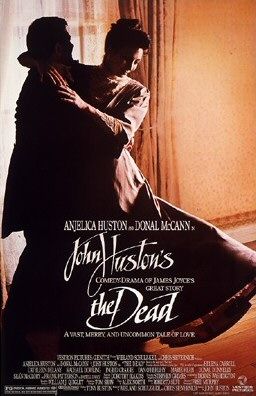
In 1987, it was adapted into the film The Dead, directed by John Huston, starring Anjelica Huston as Gretta Conroy and Donal McCann as Gabriel Conroy. One can expect an excellent adaptation from Huston, who had many brilliant works, like The Misfits, The Man Who Would Be King, Moby Dick, etc.?
Lately, when I suggested to my wife that we’d watch this movie together, she was confused and thought it would be all about dying, but it wasn’t that gruesome, and she liked it. Anyhow, it is highly recommended, and you might like it too.









































 lampmagician
You must be logged in to post a comment.