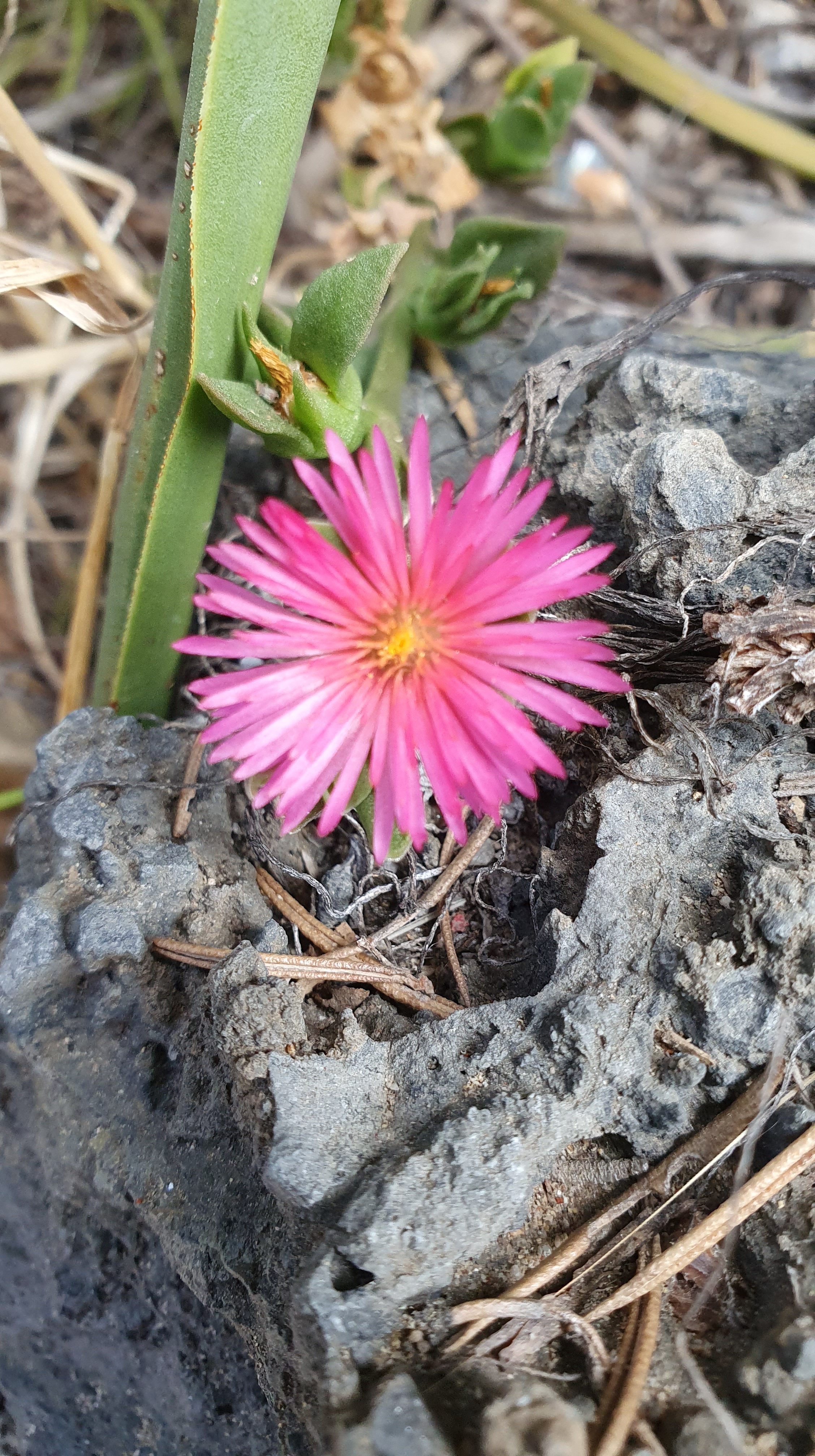
I remember on a cold, foggy evening, as the misty meadow spread in the yard, we sat in the room, listening to Melanie’s song, Leftover Wine, in one of her concerts, which was playing from the cassette recorder. When she had ended her song, the audience clapped, and suddenly, someone shouted, ” We Love You! ” And she said in her extraordinary hoarse voice, ” It is so lovely sometimes somebody says something! “
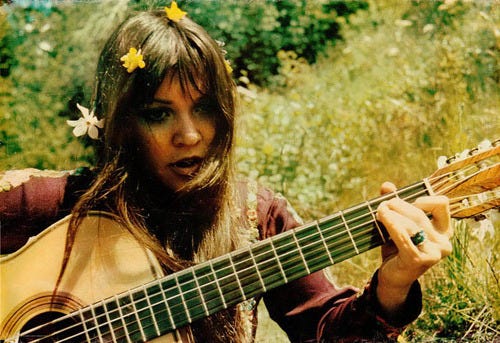
Melanie Anne Safka Schekeryk, professionally known as Melanie or Melanie Safka, was an American singer-songwriter.
“I don’t know how much you have heard of her or know her songs, but Al and I got to know Melanie during Woodstock. It was probably the most remarkable collection of half a million seekers of love, freedom, and peace who proved it was possible to live all in peace together. And she was one of them.


I left my body’: during Woodstock, turned a 22-year-old nobody into a superstar.
I’m the one I found the birthday of the sun But all things change And I think it’s the birthday of the rain
If I never said goodbye To all that I’ve known I would never be alone But still, I will not cry…
A few days ago, when I saw a ten-by-ten cm announcement in the newspaper about her death, it felt like something had stabbed my heart.”
She was a messenger of love and peace and nothing else throughout her life, and she profoundly impacted our lives, which still lingers in my mind. We had almost all of their songs on cassettes and maybe one or two vinyl records, and she had always warmed our hearts with her beautiful, hoarse and heart-touching voice among her deep-meaning poems.
Although saying goodbye might be the saddest thing, she had sung sad songs often, but her last words were always ” love, ” love, love, and being alive.
“The Saddest Thing”
And the saddest thing Under the sun above Is to say goodbye To the ones you love
All the things that I have known Be came my life my very own But before you know, you say goodbye Oh, good time, goodbye It’s time to cry But I will not weep nor make a scene Just say, “thank you Life for having been.”
And the hardest thing Under the sun above Is to say goodbye to the ones you love No, I will not weep nor make a scene I’m gonna say, “thank you Life for having been.”
And the loudest cry Under the sun above Is to silent goodbye From the ones you love
Let’s not say goodbye to this flower cause she stays with us with her hoarse voice and beautiful poems about the sun, life and love.💖🙏🌹🌻💥🌞
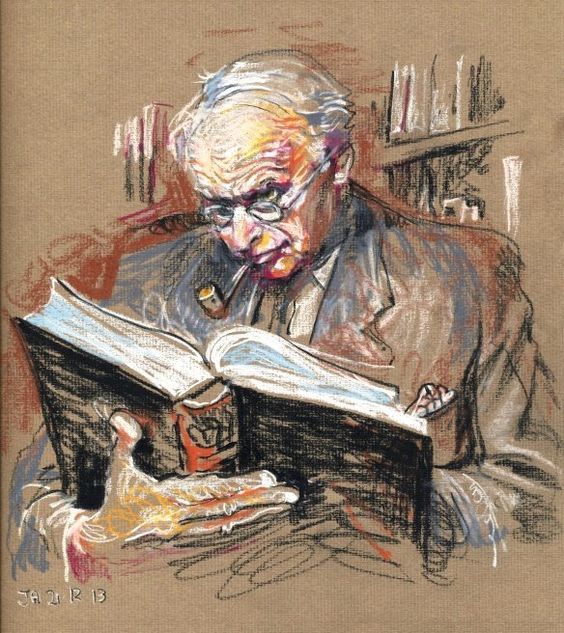
Our moral freedom reaches as far as our consciousness and, thus, our liberation from compulsion and captivity. ~Carl Jung, Letters Vol. II, pages 546-547 (from C.J. Depth Psychology)
By Petra Glimmdall 💖🙏
These days, because of my activities in helping the Iranian people, I have been deeply involved in establishing a fair and just system based on sound laws to help the Iranian people. However, finding a suitable constitution for a young nation (in the term of democracy) is not easy. It is not only the laws that make society fair; every individual must learn how to live in a democratic society.
Understanding freedom depends on the laws and anti-laws we legislate! Kahlil Gibran has an excellent explanation. I hope you enjoy it.
From The Prophet
Painting by Kahlil Gibran 1883-1931 – Tutt’Art@
People of Orphalese, you can muffle the drum, and you can loosen the strings of the lyre, but who shall command the skylark not to sing?
Then the lawyer said, but what of our laws, master? And he answered: You delight in laying down laws, Yet you delight more in breaking them. Like children playing by the ocean who build sand towers with constancy and then destroy them with laughter. But while you build your sand towers, the ocean brings more sand to the shore, and when you destroy them, the ocean laughs with you. Verily, the ocean always laughs with the innocent.
But what of those to whom life is not an ocean, and man-made laws are not sand towers, But to whom life is a rock, and the law a chisel with which they would carve it in their own likeness? What of the cripple who hates dancers? What of the ox who loves his yoke and deems the elk and deer of the forest stray and vagrant thin?
What of the old serpent who cannot shed his skin and calls all others naked and shameless? And of him who comes early to the wedding feast and, when over-fed and tired, goes his way, saying that all feasts are violations and all feasters are lawbreakers?
What shall I say of these save that they, too, stand in the sunlight, but with their backs to the sun? They see only their shadows, and their shadows are their laws. And what is the sun to them but a caster of shadows? And what is it to acknowledge the laws but to stoop down and trace their shadows upon the earth? But you who walk facing the sun, what images drawn on the earth can hold you? You who travel with the wind, what weather vane shall direct your course? What man’s law shall bind you if you break your yoke but upon no man’s prison door? What shall you fear if you dance but stumble against no man’s iron chains? And who is he that shall bring you to judgment if you tear off your garment yet leave it in no man’s path?
People of Orphalese, you can muffle the drum and loosen the strings of the lyre, but who shall command the skylark not to sing?
Peoples and Fatherlands, Para. 242 (Or a word about a common Europe!)
In Iran, I put a lot of value on the West and its people, especially the Europeans. After WWII, the engagement by England and France to make a common Europe, which came to fruition by Germany and France, made me sincerely wish to belong to this intellectual and cultivated community. I had a dream in Iran of seeing people in all of Europe holding books in their hands as they walked on the streets, and yet, when we escaped and arrived in Germany, I realized that it was a dream after all! Great expectations? It might be; in any case, I still had high expectations from European society. But as I followed this beloved idea wholeheartedly, I became increasingly upset. I found those gatherings of the European governments, apart from significant fundamental differences in understanding freedom, a group under solid influence by lobbyists trying to get their own wins on their business.
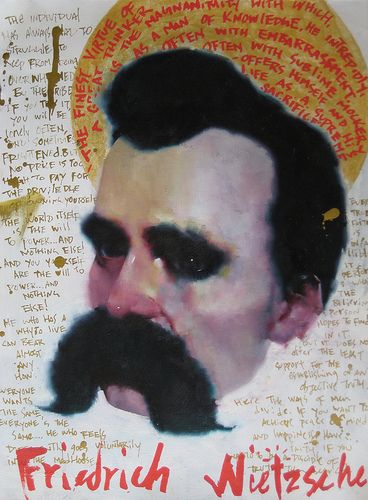
Long story short, I want to present the opinion of the great philosopher Friedrich Nietzsche here. As we will notice, he recognized, however tough, the problems of this idea and predicted them beforehand.
Translated from “Werke in vier Bänden, Band 3, Jenseits von Gut und Böse”
Call it “civilization”, “humanization”, or “progress,” where the distinction of Europeans is now sought. Let’s simply call it, without praising or blaming, with a personal formula, the democratic movement of Europe: behind all the moral and political backgrounds that are pointed out with such a formula, an enormous philosophical process is taking place that is becoming more and more fluid – the process of similarity between Europeans, their growing detachment from the conditions under which climatically and class-bound races arise, their increasing independence from every particular milieu that for centuries wants to inscribe itself in soul and body with the same demands – i.e. the slow emergence of an essentially supranational and nomadic type of human being who, physiologically speaking, has a maximum of the art of adaptation and – strength as its typical distinction. This process of becoming a European can be delayed in speed by significant relapses. However, perhaps because of this, it gains and grows in intensity and depth – the now still raging Storm and Stress of the “national feeling” belongs here, as does the anarchism that has just emerged -: this process probably leads to results that its naive promoters and eulogists, the apostles of “modern ideas”, least want to count on. The same new conditions under which, on average, a levelling and mediation of people will emerge – a valuable, industrious, multi-purpose and employable herd animal; humans -are highly capable of giving rise to exceptional people with the most dangerous and attractive qualities. While that power of adaptation, which constantly tries out changing conditions and begins a new work with every gender, almost with every decade, does not make the power of the type possible at all, as the overall impression of such future Europeans will probably be that of many talkative, poor-willed and extremely employable jobs that require the master, the commanding one, like daily bread; while the democratization of Europe amounts to the creation of a type prepared for slavery in the finest sense: In individual and exceptional cases, the strong person will have to become stronger and more prosperous than he has perhaps ever been before – thanks to the unprejudiced nature of his training, thanks to the enormous diversity of practice, art and mask. I wanted to say that the democratization of Europe is simultaneously an involuntary event for the breeding of tyrants – the word understood in every sense, including the spiritual one.
It is unimaginable that this Stele is over five thousand years old. Thanks to human curiosity and the joy of discovery, fascinating artefacts continued to appear.
Djet, also known as Wadj and Zet, was the fourth pharaoh of the First Dynasty and Djer’s successor. Djet’s Horus name means “Horus Cobra” or “Serpent of Horus. “.
Here, we read the story of this huge ancient stele by brilliant Marie Grillot, which shows humans merging with the divines.
This large limestone stele, with a current height of 1.43 m and a width of 0.65 m, is one of the oldest monuments in the Egyptian department of the Louvre Museum.
It is dated 3100 – 2900 BC. It comes from the tomb of one of the founding sovereigns of the 1st dynasty and thus bears witness, with elegance and sobriety, to a page of history 5000 years old.
It was discovered in 1895 – 1896 by Émile Amélineau. This Egyptologist, a graduate of the École Pratique des Hautes Études where his teachers included Gaston Maspero and Eugène Grébaut, and also a member of the French Archaeological Mission in Cairo, returned to Egypt in November 1895 to carry out research excavations on a site that he does not yet know… “It was not without great apprehension that I agreed to go and excavate the necropolis of Abydos: the shadow of the great Mariette seemed to guard it against any rash attempt, and I knew, having read his works, that he had searched it for eighteen years. From then on, I wondered what I could discover in such circumstances because I had never been to Abydos… Therefore, I set to work with ardour, and he relates this ardour I preserved during the five months that “the campaign lasted, despite many setbacks and disappointments ” in “The New Excavations of Abydos”.
“Map of the Abydos necropolis, according to Mariette” – published by Émile Amélineau in “New excavations of Abydos … full account of the excavations description of the monuments and objects discovered” in 1899
In the necropolis of El-Araba el-Madfouna, “Oumm el-Qaab” (the “Mother of jugs” or “Mother of pots”), of which Jacques de Morgan had granted him the concession, he brought numerous tombs to light – with the help of more than 450 workers! – and several royal burials from the “Thinite” period (- 3100 – 2700 BC). “To the west of the large hill, almost perpendicular to the tomb of Osiris and in the first line”, he relates, he discovers that of the one he will identify as “the Serpent King, whom others have called Dja, or even Djet”. Son and successor of Djer, he was the fourth sovereign of the 1st dynasty and the father of Den, to whom he left power.
This royal tomb – later referenced as “Z” – notably contained this stele, broken into three pieces. “The lower fragment, undecorated, must have been left on site. The stele, which measured 2.50 meters or 2.60 meters in its original state, was significantly more slender. Sculpted in relief on a recessed background, the name of the sovereign is written, one of his names rather, since the kings of the time generally had two,” specifies Jean-Louis de Cenival in “A century of French excavations in Egypt, 1880 -1980”.
Stele of the Serpent King – limestone – circa 3100 – 2900 BC – discovered at Abydos, in the royal tomb (“Z”) of Djet Necropolis of El-Araba el-Madfouna – Oumm el-Qaab – by Émile Amélineau during the excavations of 1895 – 1896 Department of Egyptian Antiquities of the Louvre Museum E 11007 (by acquisition in November 1904 in Drouot of lot 303 of the Amélineau sale) published by Émile Amélineau in “The new excavations of Abydos, Report of the excavations of Abydos, 1896-1898”)
In “Ancient Egypt at the Louvre”, Christiane Ziegler makes this enlightening reading: “The sovereign image of a large falcon dominates that of a snake framed by the enclosure of a fortress; the whole reads like a royal name, the name of the Serpent King. The falcon is the personification of the god Horus, protector of royalty. The serpent is the hieroglyph reading DJ or the sign used to write the name of the cobra. The enclosure is the image of the palace, with its raw brick walls reminiscent of a fortress with defence towers; the walls, pierced with high doors, present a succession of projections and recesses crowned with a cornice “.
For Georges Bénédite (“The so-called stele of the Serpent King” ): “It is logical to consider the building illustrated by the serekh as the residence of the Double, that is to say, the Tomb”… In “The Serekh as an Aspect of the Iconography of Early Kingship”, Alexandra A. O’Brien gives us these precious explanations: “The serekh is a way of writing the king’s name. It is generally made up of three elements: at the bottom, a part of the facade in a niche; above, a panel on which the king’s name is written; and, seated on it, a falcon. This is the ‘classic’ model. Sometimes, the falcon is joined by a Sethian animal, replaced by another, completely absent, or joined by a second falcon. This may seem like a simple motive, as the implication of each element is quite easy to explain. The facade of the niches probably represents a large building associated with the king – his palace perhaps or his tomb, and either would serve to represent the wealth, power and authority of the monarch”…
During these three excavation missions from 1895 to 1898, Émile Amélineau discovered hundreds, even thousands of artefacts. According to the legislation in force (law on antiquities of 1891), they were distributed between Egypt and the “digger” during a “division carried out in Abydos under the supervision of Jquier, who replaced Morgan, who was bedridden at this period”, specifies Marc Étienne in “Émile Amélineau (1850-1915). The misunderstood scholar”.
The missions have been financed by a company of shareholders (bankers, collectors, etc.), and they expect a fair return on their investments… On his return to France, Émile Amélineau is responsible for selling the artefacts to be able to compensate them. But, faced with the difficulties encountered and the sales deadlines, which promise to be long, he will be forced to reimburse the investors, thus becoming the owner of all the objects brought back. The transactions he then pursued, notably with the Louvre to which he hoped to sell the entire collection, for obscure reasons, did not succeed… Finally, the Egyptologist decided to put his collection up for public sale at the Hôtel Drouot in Paris on November 3 and 4, 1904… “Due to the clauses of the shareholders’ company, three groups were formed by the remains unearthed during the excavations; this is what Amélineau designated in 1904 in the preface to the sales catalogue by the terms ‘first, second and third collection’, designating respectively the product of the excavations of the campaigns of winter 1895 – spring 1896, winter 1896 – spring 1897 and finally winter 1897 – spring 1898 (Amélineau sale, 1904)” specifies Marc Étienne.
At this sale, the Louvre Museum will acquire this stele of King Serpent, presented under number 303. Thus, it will enter its collections under inventory number E 11007.
Amélineau sale – Egyptian antiquities found in Abydos. Ivories, carved wood, enamelled earthenware, amulets, scarabs, funerary statuettes, gold and bronze objects, flint, terracotta, and pottery, various sculptures, hard stone vases and cups, steles, tables, and fragments with hieroglyphic inscriptions, etc. Hôtel Drouot Paris, February 8-9, 1904 https://gallica.bnf.fr/ark:/12148/bpt6k1247688b/f6.item
Christiane Desroches Noblecourt, Jean Vercoutter, A century of French excavations in Egypt, 1880 – 1980, cat. exp. (Paris, Musée d’Art et d’Essai, Palais de Tokyo, May 21 – October 15, 1981), Cairo, French Institute of Oriental Archeology (IFAO), 1981, p. 6, illus. p. 6, no. 2 Alexandra A. O’Brien, The Serekh as an Aspect of the Iconography of Early Kingship, Journal of the American Research Center in Egypt Flight. 33, 1996, pp. 123-138 (16 pages) https://www.jstor.org/stable/40000610
Guillemette Andreu, Marie-Hélène Rutschowscaya, Christiane Ziegler, Ancient Egypt at the Louvre, Paris, Hachette, 1997, p. 43; 250-251 Marc Etienne, Émile Amélineau (1850-1915). The misunderstood scholar, Archéonil, 17, 2007, p. 27-38, p. 30, fig. 4 https://www.persee.fr/doc/arnil_1161-0492_2007_num_17_1_929
I don’t know about you, my dear friends, but for me, time is running like a rabbit trying to get its latest carrot! The latest week was the worst: first, I visited a lawyer, maybe to get more pension from the state because mine is below the existential limit, but no chance because my adorable wife still is working, and it must be enough for both of us! And next to it, my beloved page, which I made to send my WP articles to Facebook, doesn’t belong to me any more! I have no idea why it is so, but you, who are on FB, know it happens daily! Anyway, I try to keep silent and calm! What else can I do? Of course, I’ll gladly accept if somebody has an idea for Facebook’s issue!
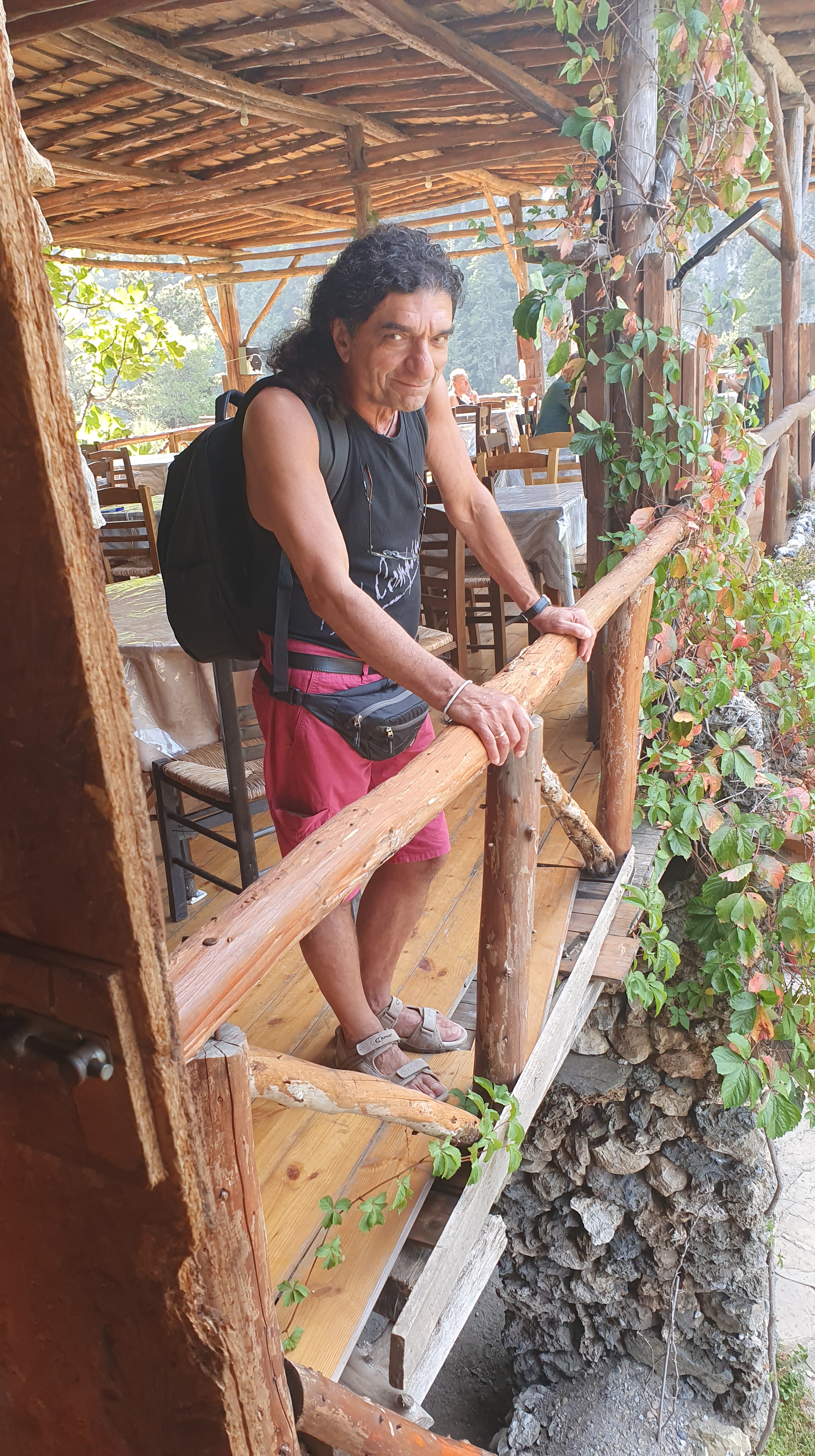
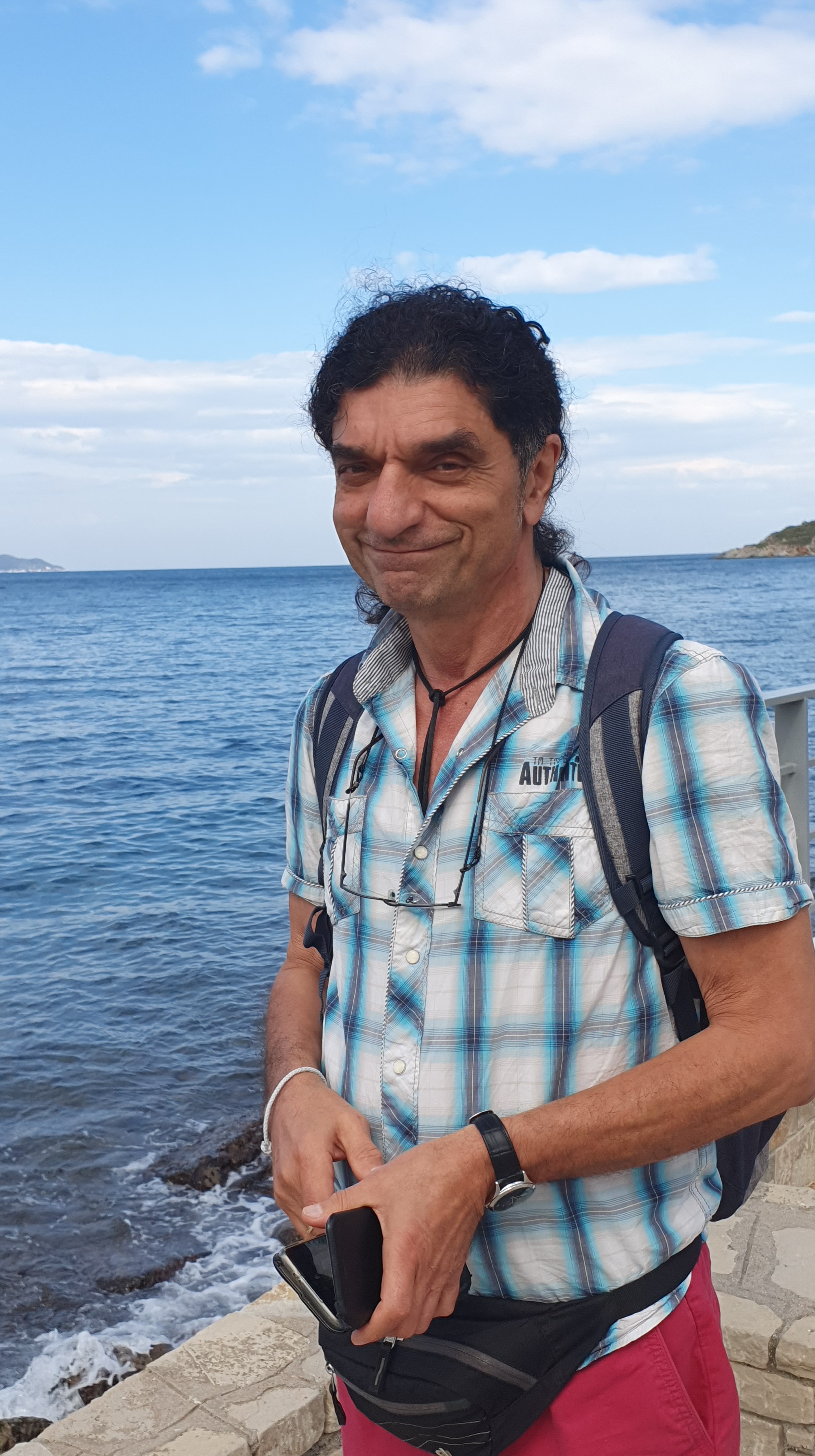
So! Now, let’s travel to the Ilias territories, Samos. This trip was different from the previous ones. First, as Regina told me, we had an occasion to spend our vacation in Samos; I was happy because I am always happy to be in Greece, as it might be my actual land. But there were some rumours about foreigners on the island. With the foreigner, I mean the big European problem with the refugees from all around the world towards Europe.
As I wrote in the first part, I was a bit worried about the conflict between rich and poor, though I prepared myself for every kind of conflict. I said once that I fully understand their situation, but I am a man of comprehensiveness and take the issues as they are. Anyway, we arrived at the equipment, and the first encounter was at the beach, where some families of these refugees were present. I only needed some eye contact to show them what was happening there. It was for me not the best, but it must be so, for they were, as I assumed, not enough cultured to understand the matter.
As I mentioned, I was also a refugee. But I knew where I was, what I was, why I was somewhere else, and how to handle it. That is the point, the main point of our existence! And I am happy to have known this.
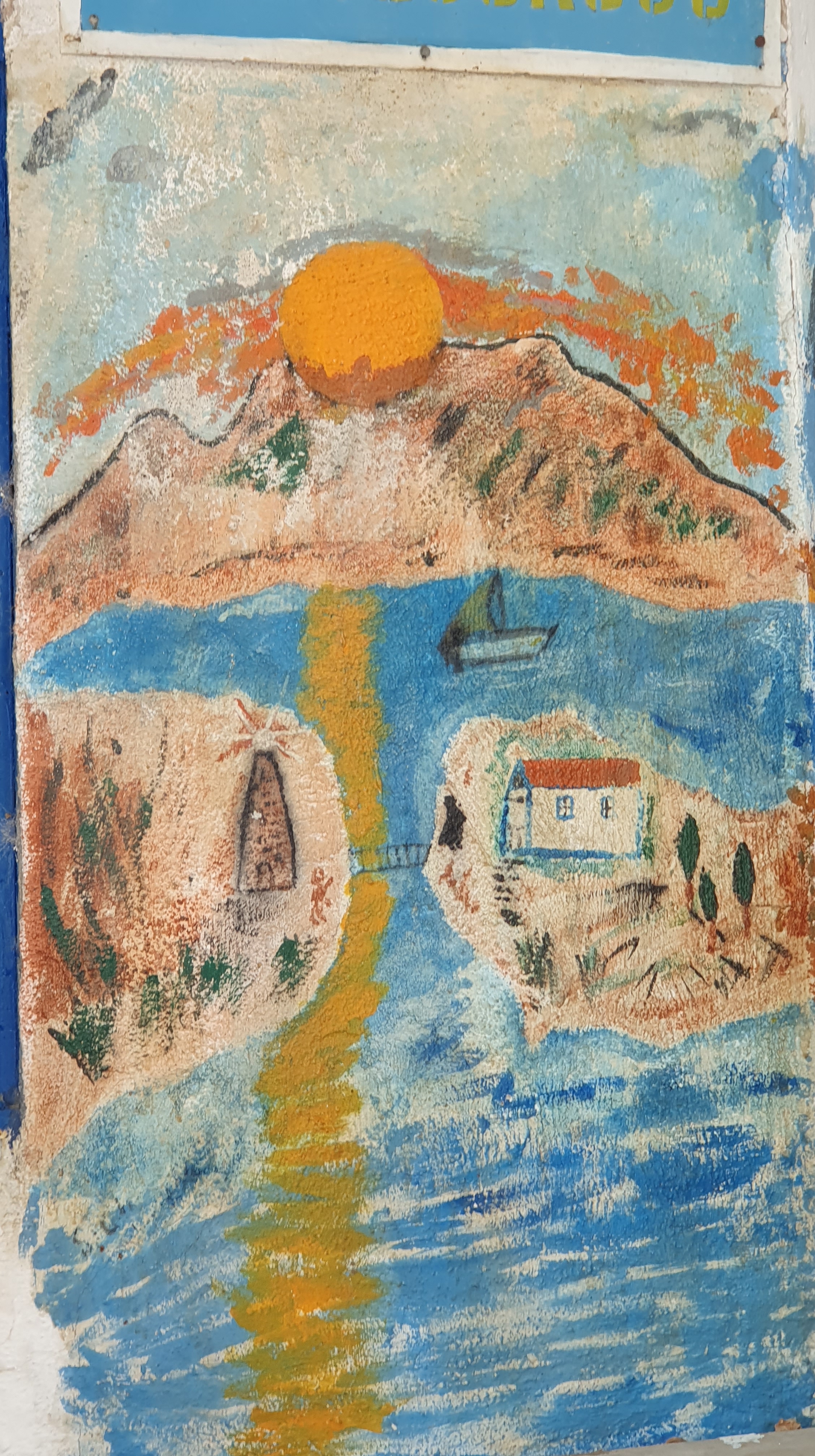
Whatever, it repeated itself several times. Once, a few boys even stole our care items from a bag. They said they were thirsty, but there was only sunscreen inside! You might imagine it was unpleasant for me, but I had to react to these idiotic acts. So! Enough talking; let’s enjoy the pictures.
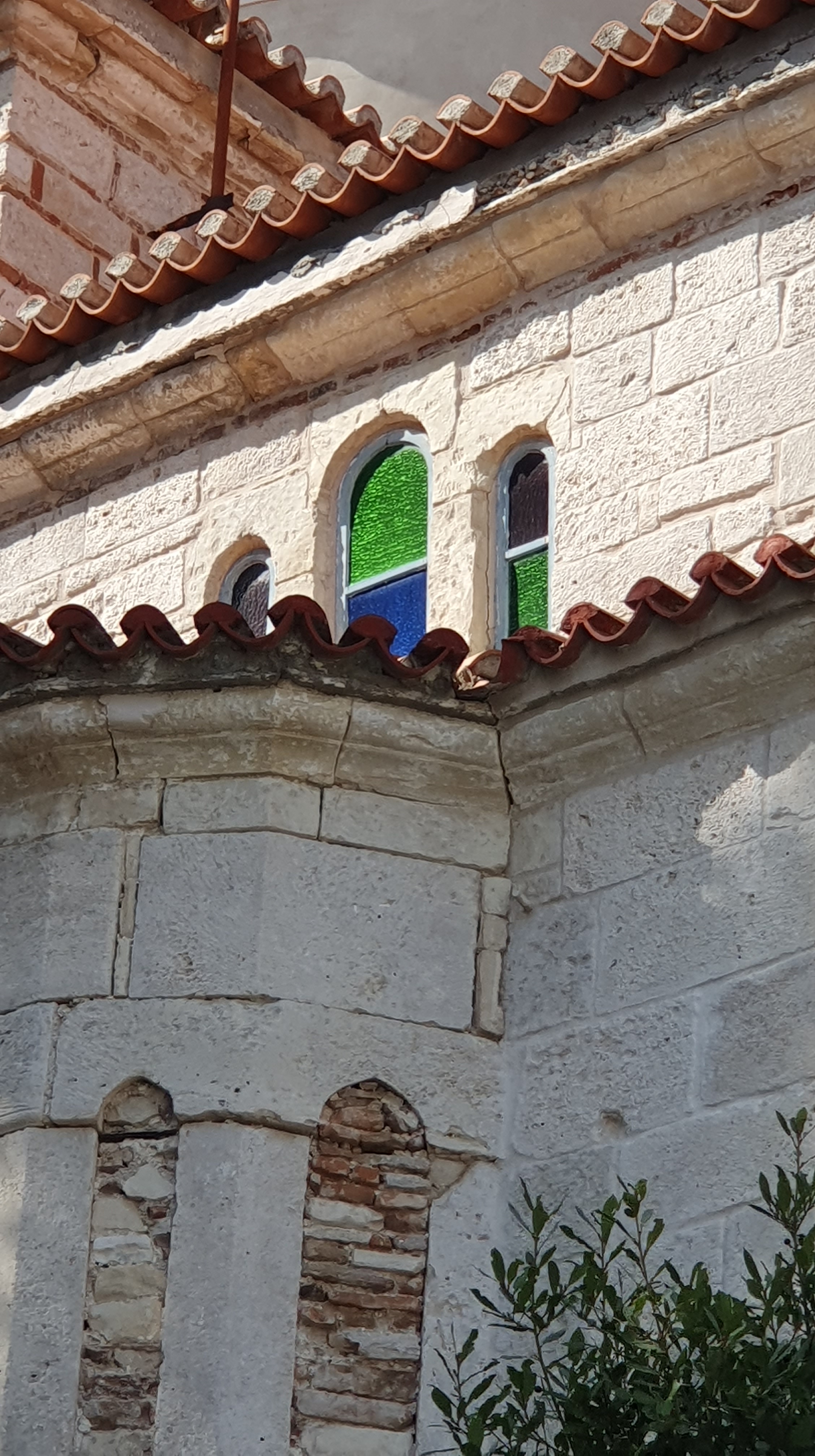
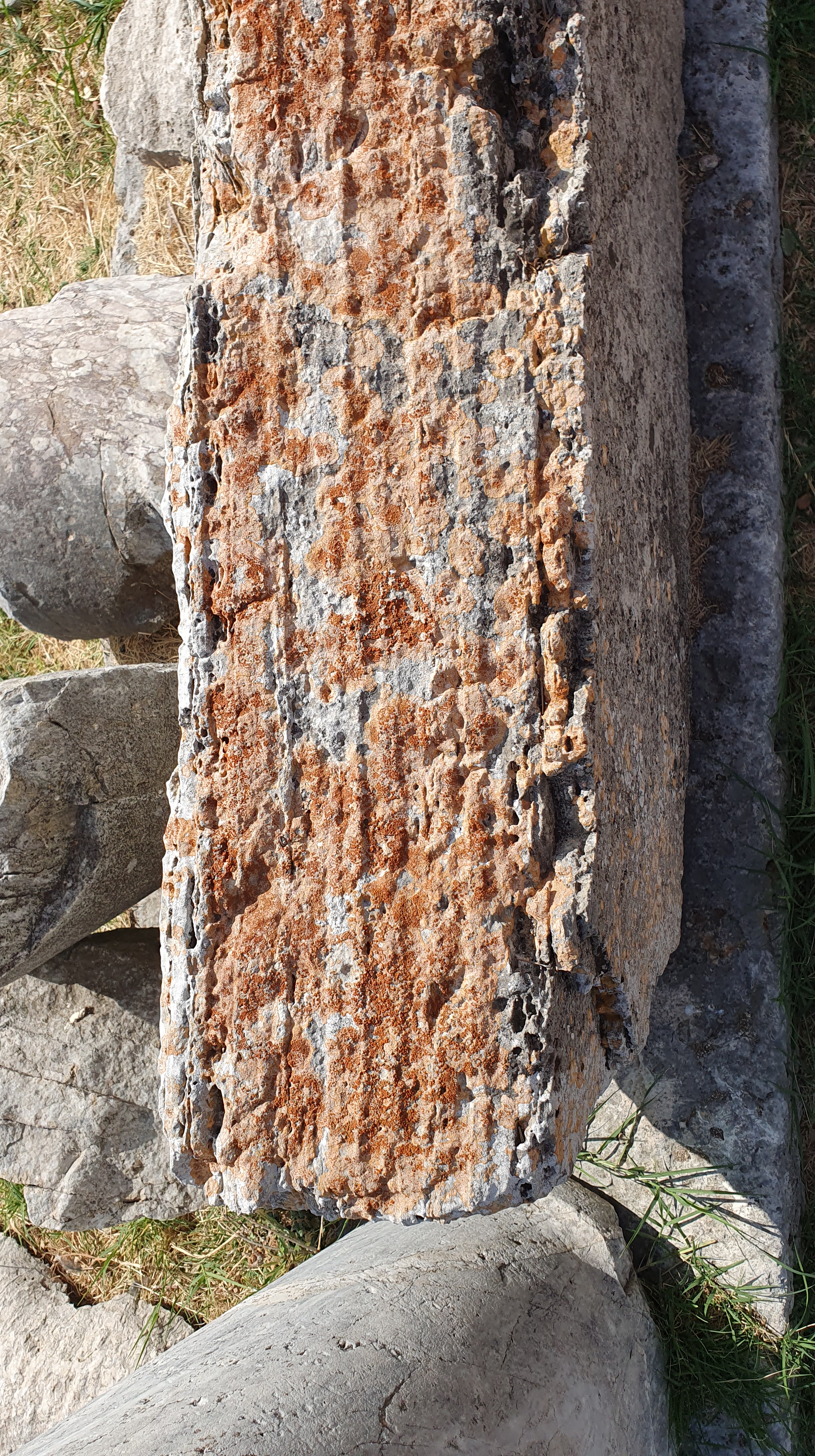
The Heraion of Samos:
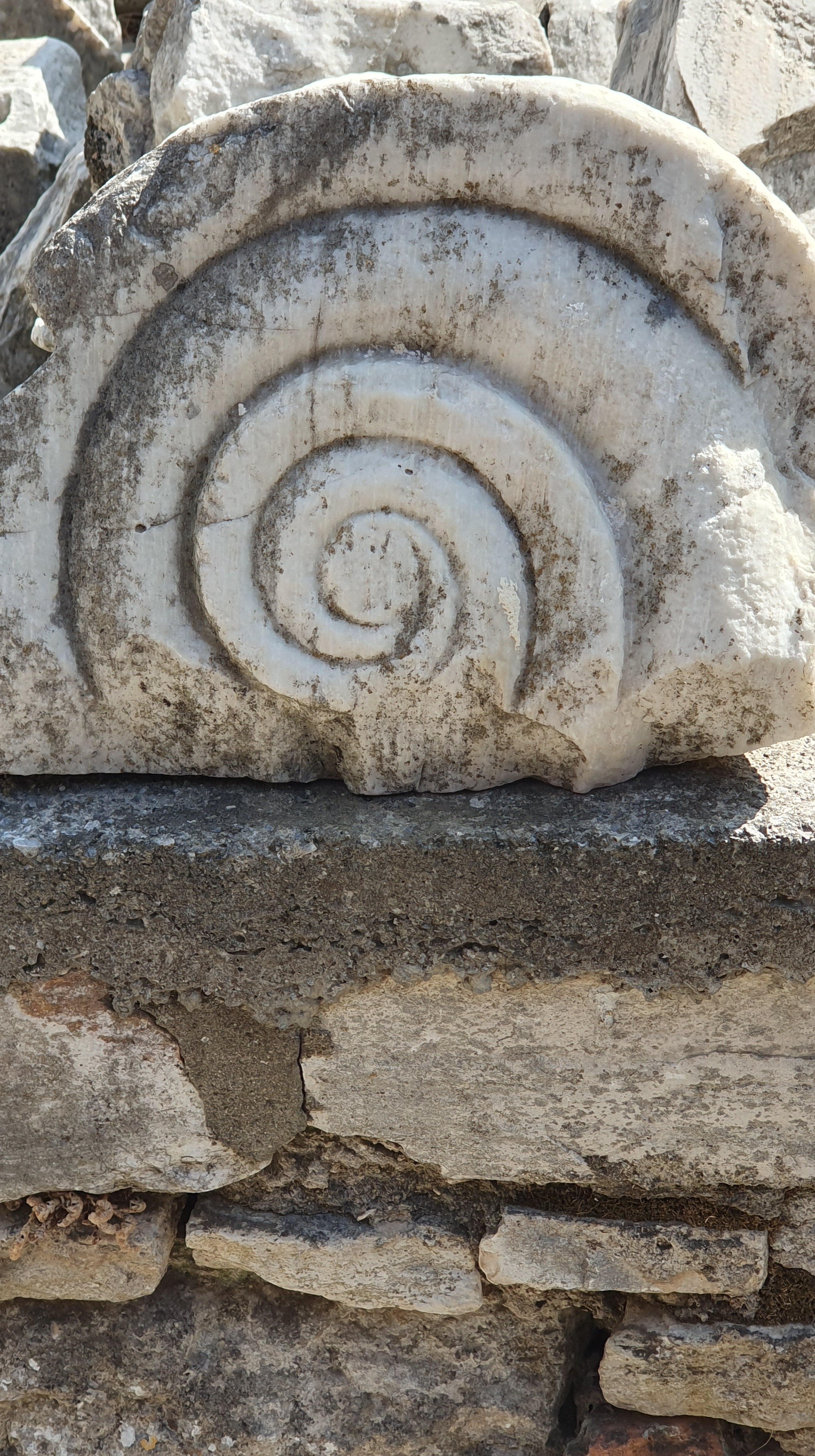
The territories of the Heraion of Samos were a large sanctuary to the goddess Hera on the island of Samos, Greece, 6 km southwest of the ancient city of Samos (modern Pythagoreion).
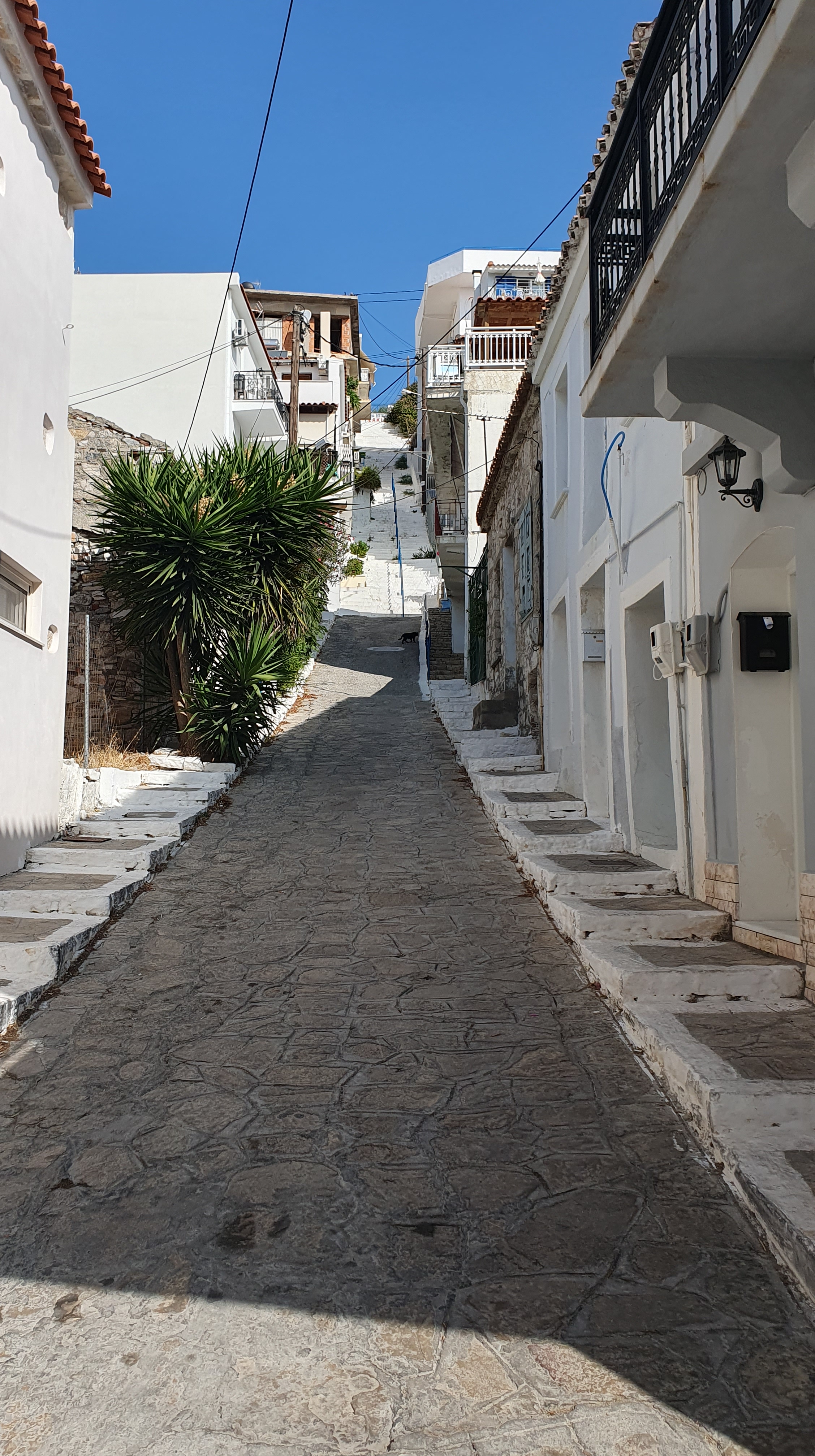
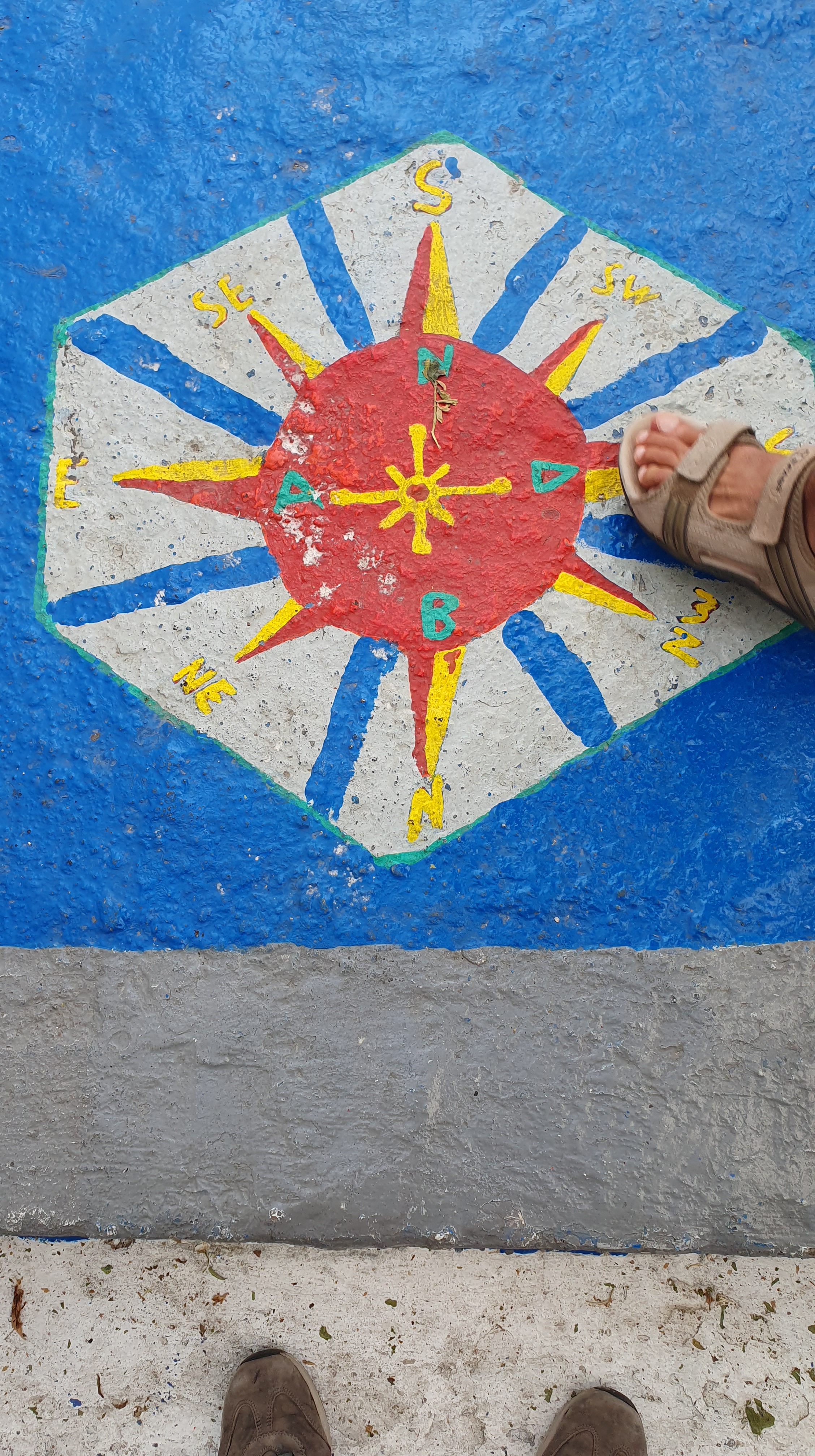
And a blue street you might love as blue as it is!
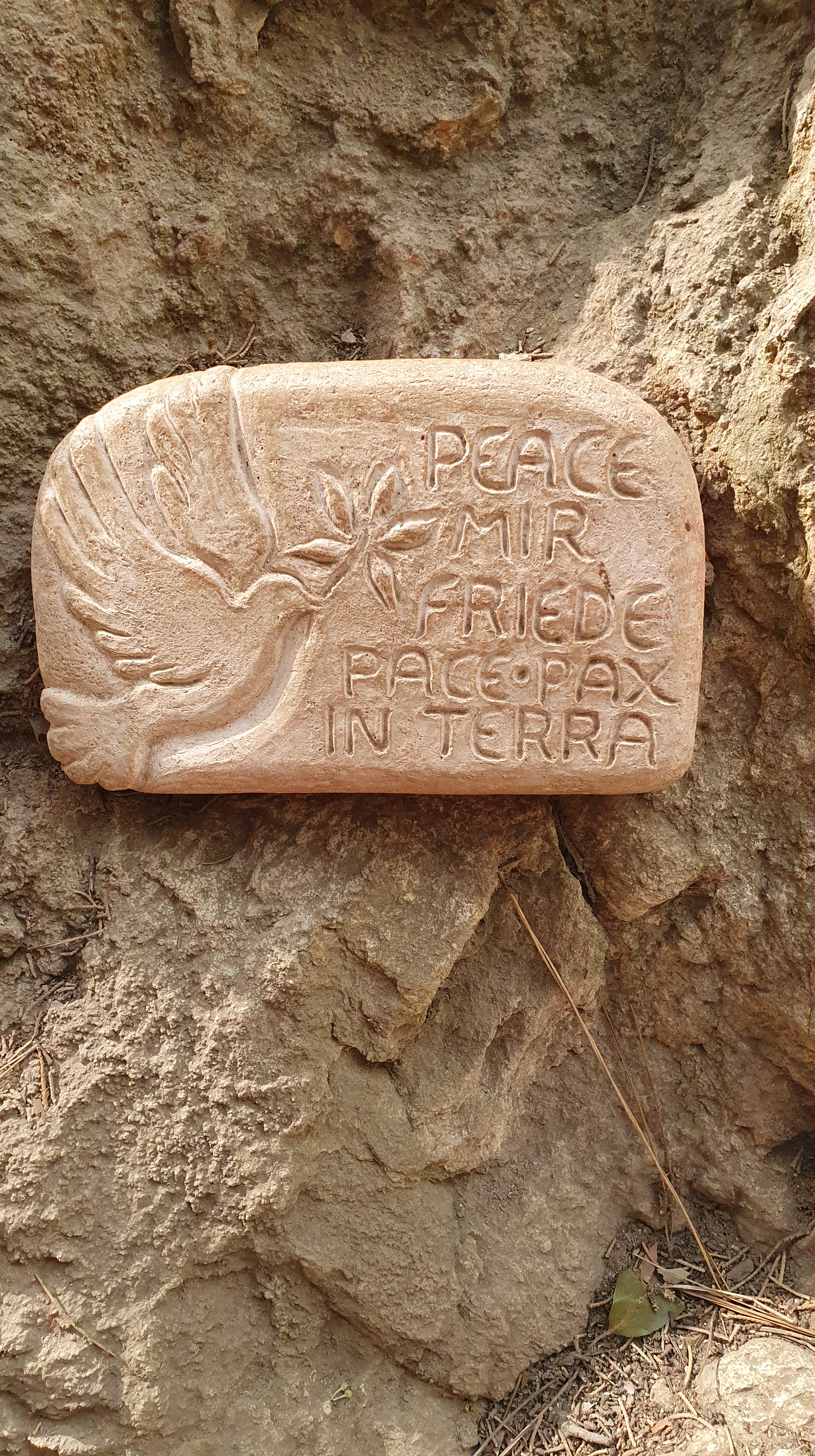
And some more… Have a lovely time, thanks.✌🙏🌹💥💖
Oops! I think there could be some more in the future! Cheers.😉🤗
The Red Book by C. G. Jung, Liber Primus fol. i(v)
As I continue to read Carl Jung’s book, The Red Book, I find myself wondering how his words are so relatable to me. They touch me deeply and feel familiar. I do not speak often and tend to keep to myself. However, I want to learn how to express myself more creatively using images. I long to see a sign of mercy that will give me hope and belief, even though I still wish to have visions like Jung had.
He conversed with the spirits, the spirit of the time, the spirit of depth, talking about the Supreme Meaning by the fact that he is laughter and worship; a bloody laughter and a bloody worship. A sacrificial blood binds the poles. Jung has his humanity for help: What solitude, he said, what a coldness of destruction you lay upon me when you speak such! Reflect on the destruction of being and the streams of blood from the terrible sacrifice that the depth demands (Referring to Jung’s vision). Dr Jung had visions which became a reality throughout his time. He was excited, not sure if schizophrenia was threatening him. However, every genius seems to have this ability, as my brother Al had it.
As we observe the world today, starting wars easily, bombing, and killing have become routine occurrences, it might not be necessary for us to have the kind of visions that Dr. Jung had in his time. However, his words hold significance since they reflect a deeper insight into the human psyche.
“But the spirit of the depths uttered: No one can or should halt sacrifice. Sacrifice is not destruction; sacrifice is the foundation stone of what is to come… “The mercy that happened to me gave me belief, hope, and sufficient daring not to resist the spirit of the depths further but so utter his words. But before I could pull myself together to really do it, I needed a visible sign that would show me that the spirit of the depths in me was, at the same time, the ruler of the depths of world affairs.
It happened in October 1813, when I was living alone on a journey. During the day, I was suddenly overcome by a vision in broad daylight: I saw a terrible flood that covered all the northern and low-lying lands between the North Sea and the Alps. It reached from England up to Russia and from the coast of the North Sea right up to the Alps. I saw yellow waves swimming through rubble and the death of countless thousands.
The vision lasted two hours; it confused me and made me ill. I was not able to interpret it. Two weeks passed, then the vision returned, still more violent than before, and an inner voice spoke: “”Look at it; it is completely real, and it will come to pass. You cannot doubt this.“” I wrestled again for two hours with this vision, but it held me fast. It left me exhausted and confused. And I thought my mind had gone crazy.
Jung discussed this vision on several occasions, stressing different details like in his 1925 seminar Introduction to Jungian Psychology (p. 44f), to Mircea Eliade, and Memories (pp. 199-200):
{Jung’s versions were frightening as he saw even a sea of blood over the northern lands. He explains: }
As a psychiatrist, I became worried, wondering if I was not on the way to “doing a schizophrenia,” as we said in the language of those days… I was just preparing a lecture on schizophrenia to be delivered at a congress in Aberdeen, and I kept saying to myself: “I’ll be speaking of myself! Very likely, I’ll go mad after reading out this paper.” The congress was to take place in July 1914 – exactly the same period when I saw myself in my three dreams voyaging on the Southern seas. On July 31st, immediately after my lecture, I learned from the newspapers that war had broken out. Finally, I understood. And when I disembarked in Holand on the next day, nobody was happier than I. Now, I was sure that no schizophrenia was threatening me. I understood that my dreams and my visions came to me from the subsoil of the collective unconscious. What remained for me to do now was to deepen and validate this discovery. And this is what I have been trying to do for forty years.
The fire from the egg in Carl Jung’s Red book
In the year 1914, in the month of June, at the beginning and end of the month, and at the beginning of July, I had the same dream three times: I was in a foreign land, and suddenly, overnight and right in the middle of the summer, a terrible cold descended from space. All seas and rivers were ice-locked, and every green living thing had frozen. The second dream was thoroughly similar to this. But the third dream at the beginning of July went as follows: I was in a remote English land. It was necessary that I return to my homeland with a fast ship as speedily as possible. I reached home quickly. In my homeland, I found that in the middle of summer, a terrible cold had fallen from space, which had turned every living thing into ice. There stood a leaf-bearing but fruitless tree, whose leaves had turned into sweet grapes full of healing juice through the working of the frost (like the ice wine). I picked some grapes and gave them to a great waiting throng.
[Draft: This was my dream. All my efforts to understand it were in vain. I laboured for days. Its impression, however, was powerful (p.9). Jung also recounted this dream in Memories].
Can we interpret the end of his dream, where sweet grapes are present, as a positive outcome of human madness? Who knows! Anyhow, hope dies last.🙏💖
Source: The Red Book by C. G. Jung, Liber Novus, A Reader’s Edition; Sonu Shamdasani
Today, I want to write about one of my favourite topics: women or femininity. And, of course, about how much losses the men have caused because of this selfish arrogance! Maybe some male readers are annoyed by my pronunciation, but it’s the truth, and it’s never too late to wake up. De facto, men are often subconsciously inspired by women, even if they don’t realize it consciously.
The other day, I watched a film, Little Women. It is a 2019 American coming-of-age period drama film written and directed by Greta Gerwig. The story is based on the 1868 novel by Louisa May Alcott and revolves around the lives of four sisters – Meg, Jo, Beth, and Amy – who lived in Concord, Massachusetts, during the late nineteenth century. It was somehow long-breathing, I mean not dull, but too much time wasted in between! In the matter of movies, I have an even better suggestion: Elisa & Marcela— a 2019 Spanish biographical romantic drama film directed by Isabel Coixet. It is about the first same-sex marriage in Spain, although it shows the subsequent suffering.
What hit me in the eye by the latter one was the man’s rules, which preside over the world: Women were not to have any ideas, any self-decision, even they had no right to earn money; they only might accept “some limited” presents! I turned around on the couch twice when I heard it! How fool can the man be? I think it is the one-million-dollar question that nobody can really answer!?
After making a brief statement, I have a story to share with all the men here, including myself. The story aims to inspire and enlighten us all. The pictures and versions we see around us are not created by men but by women who possess incredible creativity. They are the ones who give birth to our offspring, and it’s only fitting that we acknowledge and appreciate their outstanding contributions. They teach us to keep our eyes open!
André Breton, a prominent figure of the Surrealist movement and the author of its first manifesto, once wrote that “the problem of woman is the most marvellous and disturbing problem in all the world.” However, his statement was not referring to the injustice and lack of recognition experienced by his female colleagues.
Marquee Surrealists like Breton, Dalí, Man Ray, Magritte, and Ernst relegated the women in their circle to the role of muses and symbols of erotic femininity rather than acknowledging them as artists in their own right.
During a recent retrospective at the Museum of Modern Art, Méret Oppenheim stated in Behind the Masterpiece’s introduction to “The Fantastic Women of Surrealism” that it was the female Surrealists’ responsibility to break free from the limited roles that society and their male counterparts had imposed on them.
A woman isn’t entitled to think to express aggressive ideas.
The first artist featured on Behind the Masterpiece needs no introduction. Frida Kahlo is undoubtedly one of the most recognized female artists in the world. She was a woman who lived by her own rules, creating poetic and often raw imagery as she explored her own physical and mental pain:
I paint self-portraits because I paint my own reality. I paint what I need to. Painting completed my life. I lost three children, and painting substituted for all of this… I am not sick; I am broken. But I am happy to be alive as long as I can paint.
Right: Papilla Estelar (Star Maker) (1958) Left: Remedios Varo, La Ilamada (The Call), 1961. Courtesy of the National Museum of Women in the Arts.
The Art Institute of Chicago is currently exhibiting a collection featuring Remedios Varo, who, along with Leonora Carrington, according to the National Museum of Women in the Arts, were considered the “femmes-enfants” or “child-women” to the much older and renowned male artists in their lives.
Their friendship outlasted their romantic attachments to Surrealist luminaries Ernst and the poet Benjamin Péret, and Carrington honoured it in her novel, The Hearing Trumpet.
Leonora Carrington Self-portraitHallucination (Homage to surrealist artist Leonora Carrington)
Carrington’s work is about tone and colour, and Varo’s is about line and form.
The artistic identity of Dorothea Tanning was separate from that of her husband, Max Ernst, despite their association in the art world.
Alyce Mahon, an art history professor at the University of Cambridge and co-curator of the Tate Modern exhibit, discusses the work of an artist whose body underwent several transformations throughout her career. Unfortunately, the artist’s first major museum showcase was held after her death. Mahon highlights the deceptive femininity of Tanning’s soft sculptures:
“Eine Kleine Nachtmusik” (1943)
Tanning’s pin cushion art challenges conventional associations of sewing and craft with women by transforming the humble object into a fetish. Her first creation, made in 1965 from velvet and placed with a voodoo doll, encourages us to think differently by taking something familiar and making it strange.ng something familiar and making it uncanny and weird.
Tanning refused to accept the label of “woman artist,” seeing it as no more sensible than “man artist” or “elephant artist.”
Put that in your pipe and smoke it, Sigmund Freud!
The concept of the subconscious mind was central to Surrealism, but its creator’s statement about women was controversial.
Remedios Varo Bordando el manto terrestre (Embroidering the Earth’s Mantle), 1961 Gallery Wendi Norris
Oppenheim’s best-known work is object, the fur-lined teacup, saucer, and spoon. One might wonder what he would have thought of it.
Josh Rose’s essay for Khan Academy’s AP/College Art History course explains how visitors of the Museum of Modern Art declared it the “quintessential” Surrealist object during the “Fantastic Art, Dada, and Surrealism” exhibition of 1936-37.of 1936-37.
Oppenheim disappeared from the artistic scene for over a decade and destroyed much of her work. When she returned, she started to reclaim her intent. In her acceptance speech for an award, she expressed her belief that women must take their freedom and reject imposed taboos.
The question is: Will men ever become more aware and conscious? Thanks for your support.🙏💖
Jean-François Champollion, a genius who discovered the code of the ancient Egyptian language, also known as Champollion le jeune, was a French philologist and orientalist known primarily as the decipherer of Egyptian hieroglyphs and a founding figure in the field of Egyptology. He is one of the most valuable personalities who helped humanity- along with great support from his brother Jacques-Joseph Champollion- to take a big step towards understanding the human past.
Rosetta stone~ British Museum, London ~ photo by Gloria Bolton
Just imagine these words (holography) written on this vast stone were not decipherable. But now we are not illiterate anymore!
Here, we read an exciting introduction by Marie Grillot about a brilliant Egyptologist and her research on this genius of decoding ancient language. PS: I wish there could also be a translated clip!
Jean-François Champollion in Egypt: an interview with Karine Madrigal
Jean-François Champollion, “The Younger”, decipherer of hieroglyphs, founder of Egyptology Figeac, December 23, 1790 – Paris, March 4, 1832 Portrait representing him in Egyptian clothing, made by Salvatore Cherubini in Medinet Habou, in July 1829 – acquired by the Musée Champollion de Vif in June 2022
“Jean-François Champollion in Egypt”: an interview with Egyptologist Karine Madrigal (centre) directed and filmed in Malqatta by Marie Grillot & Pascal Pelletier
To discuss “Jean-François Champollion in Egypt”, it is in Louqsor that we found the Egyptologist Karine Madrigal…
Since July 2010, she has been studying the 60 volumes of archives of the Champollion brothers deposited in the Departmental Archives of Isère. Through this incredibly rich source, nothing that links the two brothers is foreign to her…
On the one hand, Jacques-Joseph Champollion-Figeac, the eldest, and on the other, Jean-François Champollion, known as “the young one”. Twelve years separate them, Jacques-Joseph will be the godfather of his younger brother and… his pygmalion… He will help and assist him in his education, studies, research, and obsessive quest to understand writing from ancient Egypt.
The Champollion “brothers”: Jean-François Champollion “the Younger” on the left and Jacques-Joseph Champollion “Figeac” on the right Paintings by Victorine-Angélique-Amélie de Rumilly were exhibited at the Musée de Vif in Isère.
This hard work led to the presentation, on September 27, 1822, at the Académie des Inscriptions et Belles-Lettres in Paris, of his famous “Letter to Mr. Dacier”, which would be the founding act of the decipherment of hieroglyphs and, by the same, will sign the birth of a new discipline, Egyptology…
Jean-François was then 32 years old… In 1824, he was sent on a mission to the Turin Museum to establish the catalogue of the Drovetti Collection. Then, he returned to Italy in 1826 to appraise the Salt Collection. There, he met Ippolito Rosellini, who became his student and disciple. On May 15, 1826, he was appointed curator of the Egyptian section of the Charles X Museum (future Louvre Museum).
But what he wants more than anything is to go to Egypt to carry out a scientific mission… and this project will finally come to fruition…
The Franco-Tuscan Expedition, sponsored by Charles X and the Grand Duke of Tuscany, left Toulon on July 31, 1828, aboard “L’Eglé” and landed on the Egyptian coast on August 18, 1828. It is managed on the French side by Jean-François Champollion and on the Tuscan side by Ippolito Rosellini…
From July 1828 to December 1829, they explored the various ancient sites, from Alexandria to Abu Simbel and even as far as Wadi Halfa… During these eighteen months, the fourteen members – “scholars and technicians” – will have to learn to live and work together… As for the famous decipherer discovering his “promised land”, he finds himself surprised that his deciphering system works “in situ” and on monuments from all periods…
Thanks to Karine Madrigal’s excellent knowledge, combined with her passion and her undeniable talent as a “storyteller”, it is with joy that we relive, with her, this great and rich adventure from the beginnings of Egyptology…
This interview, prepared and produced by Marie Grillot, was filmed by Pascal Pelletier for Guinée-nouvelles and the Association for the Safeguarding of the Ramesseum (ASR). It was filmed at the French Archaeological Mission of Thebes West house in Malqatta, which Christian Leblanc was kind enough to make available… You can view it by clicking on the photo below:
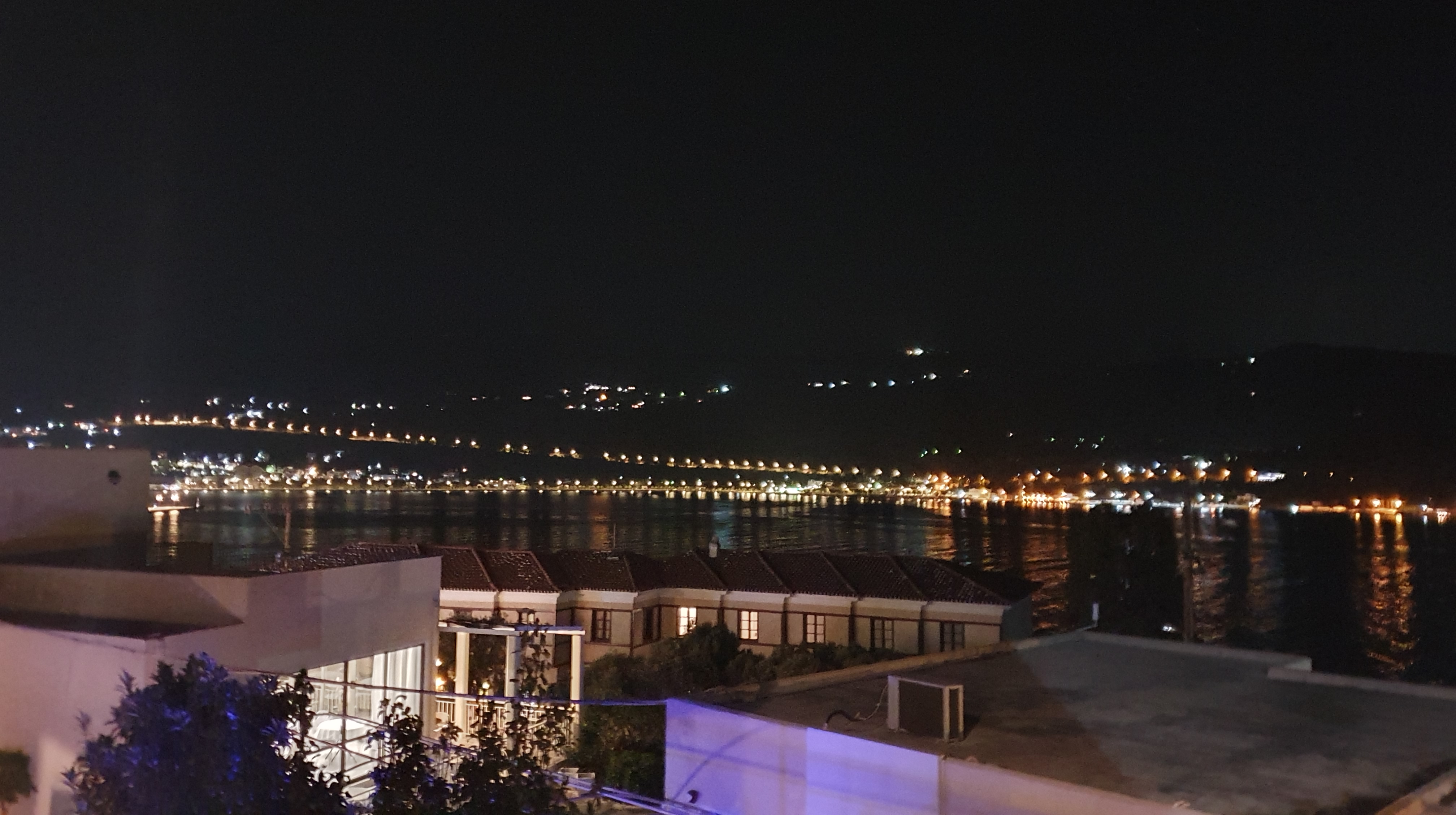
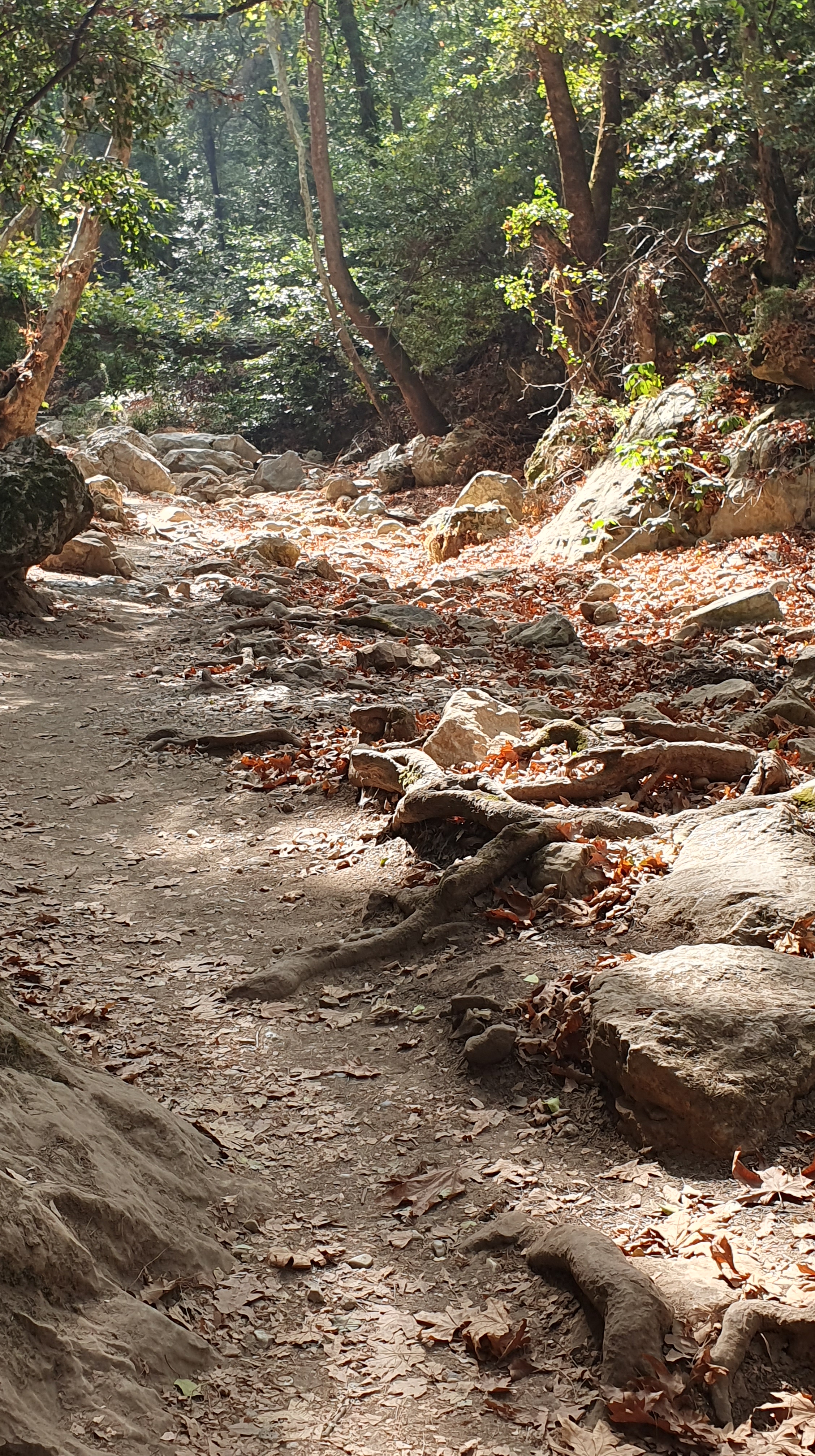
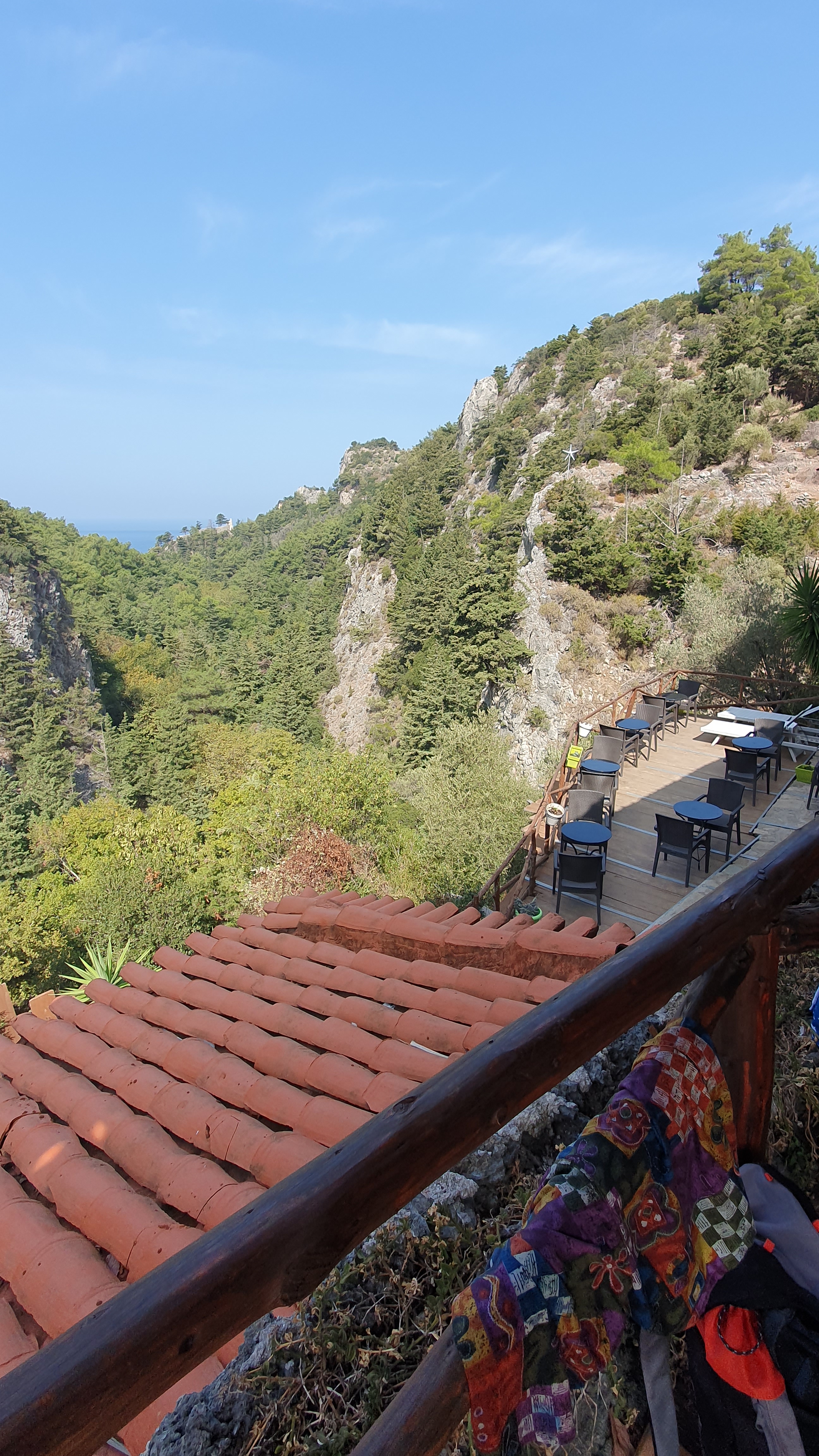
To breathe a sigh of relief, I present you a travel report from my last vacation to Samos, Greece. And as I looked at the pictures, I thought it would take more than one post! And by the way, it wasn’t irrelevant that I added the word nuisance to the title; I’ll explain later what I meant by that.
First, let’s look at my views when we flew from Dusseldorf up into the dawn in the sky very early in the morning.
I love travelling to Greece. It’s a beautiful country with kind and honourable people. However, what I found to be a nuisance during my visits was the presence of refugees from various parts of the world who were also resettled there. I know it may sound shameful as I am also a refugee. Still, if we examine the situation honestly, there is a conflict between two very different conditions that deeply affect the present scenario.
I am discussing cultural differences and culture shock. Whenever I go on vacation, I have mixed emotions as I observe the tourist world, which I cannot really belong to due to financial constraints. However, I manage to travel on a budget by saving money elsewhere (for instance, I use my clothes for a long time as they are functional!). Therefore, I don’t belong to the affluent tourist society, although I mingle with them. This time, the situation created a lot of confusion, and I felt very uncomfortable seeing such a mix of poverty and wealth. I will elaborate more on this topic later in the following sections. Now, I must prepare to go to my granddaughter’s fifth birthday celebration. It’s hard to believe how quickly time passes! Here are some more pictures, and heartfelt thanks for your being here.🙏💖🦋
“I must admit that I am still contemplating the mysteries of life. At this time, I wanted to share Socrates’ thoughts about the soul with you. But before that, some time ago, when the Iranian groups on Twitter (now X) were still more united (unfortunately, many differences have separated them!), one of our topics to discuss was whether AI could create art. The main question is: how much do we know about art? How much do we believe that art has a soul possessing such an intangible quality and AI can produce it as we do?
Honestly, I am worried about using AI because humans are naturally very lazy and comfortable; that’s why they like to be pampered! If you look at the story of this development, like the Alexas in the sitting room to the self-driving cars, it shows what will happen next.
Like our other muscles, our brains must be trained continuously to maintain our creativity and cognitive abilities. Otherwise, we risk losing our mental faculties. Nonetheless, we must observe what these “machines”, which we might have invented, will do!
The birth of the star child in 2001_ A Space Odyssey 1968
Actually, we are talking about what we don’t know exactly how it works: Soul, Creation, Art!? It made me wonder if we can differentiate between these in a world created by Mother Nature and how we attempt to do so with equal ability, though I believe art is a part of the creator’s essence, gifted us to use in our own creations.
Act 2, scene 2 of Hamlet
The question is whether we have forgotten something we should remember. Is it possible that our souls have lived before they entered our bodies? Socrates believed in some form of reincarnation, in which our souls know of their previous existence before they come into our bodies. These were his final words before facing the court, as conveyed by Plato.”
[… oh souls and before, before they were a man they were, without bodies, and they had consciousness. Plato Phaedo 76 c ]
[…. or are they remembered, or learn to remember if they are. Plato Phaedo 76 a ]
“So, Simmia, our souls existed before, without the human form, separate from the body and possessing knowledge”. Plato of Phaedus
How well Dr Jung found this lost connection to our buried memories under our consciousness!
The idea is that the soul is immortal, as Plato claims in “Plato Phaedo, or Phaedrus 74-76. In the dialogue, Socrates discusses the nature of the afterlife on his last day before being executed by drinking hemlock.
Phaedo presents four distinct arguments supporting the immortality of the soul, namely, the Argument from Opposites, the Theory of Recollection, the Argument from Affinity, and the final Argument. However, we focus on whether humans can create perfection or whether artificial intelligence (AI) is perfect. In my opinion, perfection does not exist in our lives, or at least not how we imagine it. Even gods seem to make mistakes! Despite humans’ constant pursuit of perfection, imperfection has a certain allure.
by Paolo Uberti
In any case, I believe that AI cannot create art like “wo-man-kind” can. For example, we can understand this fact when we observe the Mona Lisa, read Dostoevsky, read or watch Shakespeare, or read Rilke…! We have got a worthy gift, which we might awake to life and use it.
anthropomorphic human dinosaur as a black person by ZelrikAnnual Collective Mind by Shari3Dfashion monkey, city, 4k by BacababAI may see humans in more different forms: so, so, or so!!
I must confess I am a perfectionist. It’s not easy, I know. Perhaps this trait stems from my childhood traumas. However, I believe imperfection is natural and necessary. In the following, I have added a paragraph for those interested who might like to read.
Let’s see how Plato argues this:
The “Imperfection Argument” (Phaedo 74-76)
This is an argument for the existence of Forms and our possession of a priori concepts. Plato bases the debate on the imperfection of sensible objects and our ability to make judgments about those sensible objects. (The Forms are supposed to be the perfect objects that the sensible only imperfectly approximate).
The argument in Phaedo 74-76 concerns the concept of Equality, but it could equally well be given concerning several different concepts (any concept that might have some claim to being an a priori concept).
The argument tries to show that we cannot abstract the concept of Equality from our sense experience of equal objects. For;
We never experience (in sense-perception) objects that are really, precisely equal, and We must already have the concept of Equality to judge the things we encounter in sense-perception to be approximately, imperfectly, equal. The argument can be schematized as follows:
We perceive sensible objects to be F. But every sensible object is, at best, imperfectly F. That is, it is both F and not F (in some respect – shades of Heraclitus??). It falls short of being perfectly F. We are aware of this imperfection in the objects of perception. So, we perceive objects to be imperfectly F. To perceive something as imperfectly F, one must consider something perfectly F, something that the imperfectly F things fall short of. (For example, we have an idea of Equality that all sticks, stones, etc., only imperfectly exemplify.) So we have in mind something that is perfectly F. Thus, there is something that is perfectly F (e.g., Equality) that we have in mind in such cases. Therefore, there is such a thing as the F itself (e.g., the Equal itself), distinct from any sensible object.
You must be logged in to post a comment.