The Women of Surrealist Art.

Standard
Raíces (Frida Kahlo, 1943)

Today, I want to write about one of my favourite topics: women or femininity. And, of course, about how much losses the men have caused because of this selfish arrogance! Maybe some male readers are annoyed by my pronunciation, but it’s the truth, and it’s never too late to wake up. De facto, men are often subconsciously inspired by women, even if they don’t realize it consciously.

The other day, I watched a film, Little Women. It is a 2019 American coming-of-age period drama film written and directed by Greta Gerwig. The story is based on the 1868 novel by Louisa May Alcott and revolves around the lives of four sisters – Meg, Jo, Beth, and Amy – who lived in Concord, Massachusetts, during the late nineteenth century. It was somehow long-breathing, I mean not dull, but too much time wasted in between! In the matter of movies, I have an even better suggestion: Elisa & Marcela— a 2019 Spanish biographical romantic drama film directed by Isabel Coixet. It is about the first same-sex marriage in Spain, although it shows the subsequent suffering.

What hit me in the eye by the latter one was the man’s rules, which preside over the world: Women were not to have any ideas, any self-decision, even they had no right to earn money; they only might accept “some limited” presents! I turned around on the couch twice when I heard it! How fool can the man be? I think it is the one-million-dollar question that nobody can really answer!?

After making a brief statement, I have a story to share with all the men here, including myself. The story aims to inspire and enlighten us all. The pictures and versions we see around us are not created by men but by women who possess incredible creativity. They are the ones who give birth to our offspring, and it’s only fitting that we acknowledge and appreciate their outstanding contributions. They teach us to keep our eyes open!

André Breton, a prominent figure of the Surrealist movement and the author of its first manifesto, once wrote that “the problem of woman is the most marvellous and disturbing problem in all the world.” However, his statement was not referring to the injustice and lack of recognition experienced by his female colleagues.

Marquee Surrealists like Breton, Dalí, Man Ray, Magritte, and Ernst relegated the women in their circle to the role of muses and symbols of erotic femininity rather than acknowledging them as artists in their own right.
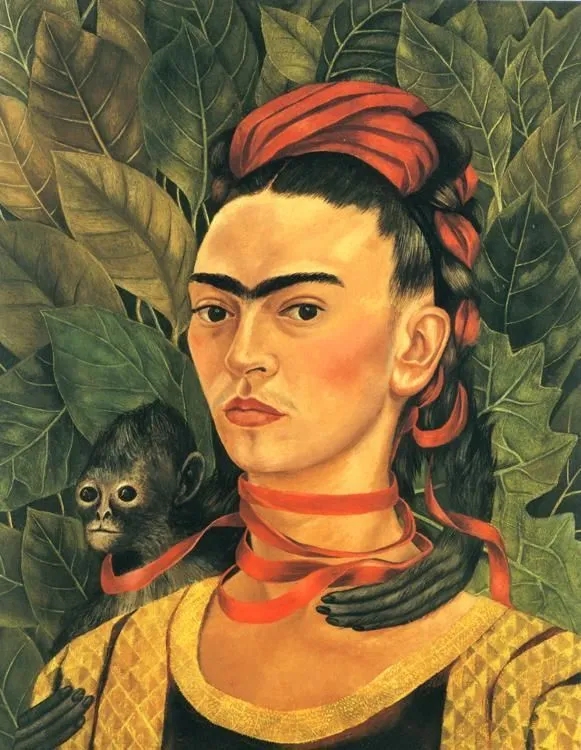
Self Portrait With Monkey, 1940
Frida Kahlo

During a recent retrospective at the Museum of Modern Art, Méret Oppenheim stated in Behind the Masterpiece’s introduction to “The Fantastic Women of Surrealism” that it was the female Surrealists’ responsibility to break free from the limited roles that society and their male counterparts had imposed on them.

A woman isn’t entitled to think to express aggressive ideas.

The first artist featured on Behind the Masterpiece needs no introduction. Frida Kahlo is undoubtedly one of the most recognized female artists in the world. She was a woman who lived by her own rules, creating poetic and often raw imagery as she explored her own physical and mental pain:

I paint self-portraits because I paint my own reality. I paint what I need to. Painting completed my life. I lost three children, and painting substituted for all of this… I am not sick; I am broken. But I am happy to be alive as long as I can paint.

Right: Papilla Estelar (Star Maker) (1958)
Left: Remedios Varo, La Ilamada (The Call), 1961. Courtesy of the National Museum of Women in the Arts.

The Art Institute of Chicago is currently exhibiting a collection featuring Remedios Varo, who, along with Leonora Carrington, according to the National Museum of Women in the Arts, were considered the “femmes-enfants” or “child-women” to the much older and renowned male artists in their lives.

Their friendship outlasted their romantic attachments to Surrealist luminaries Ernst and the poet Benjamin Péret, and Carrington honoured it in her novel, The Hearing Trumpet.

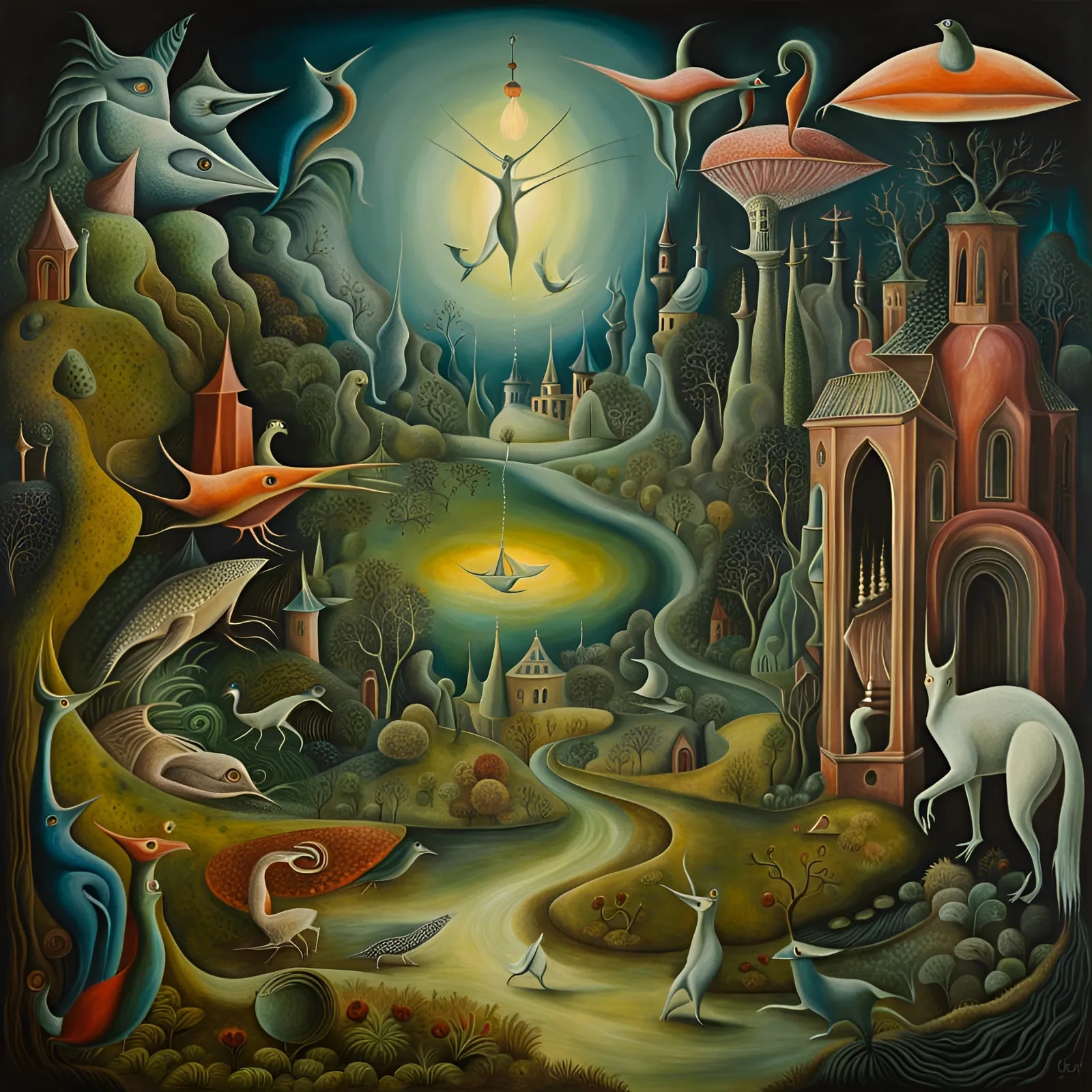
Their work showcases a shared interest in alchemy, astrology, and the occult approached from different angles, according to Stefan van Raay, author of Surreal Friends: Leonora Carrington, Remedios Varo, and Kati Horna:

Carrington’s work is about tone and colour, and Varo’s is about line and form.

The artistic identity of Dorothea Tanning was separate from that of her husband, Max Ernst, despite their association in the art world.

Alyce Mahon, an art history professor at the University of Cambridge and co-curator of the Tate Modern exhibit, discusses the work of an artist whose body underwent several transformations throughout her career. Unfortunately, the artist’s first major museum showcase was held after her death. Mahon highlights the deceptive femininity of Tanning’s soft sculptures:
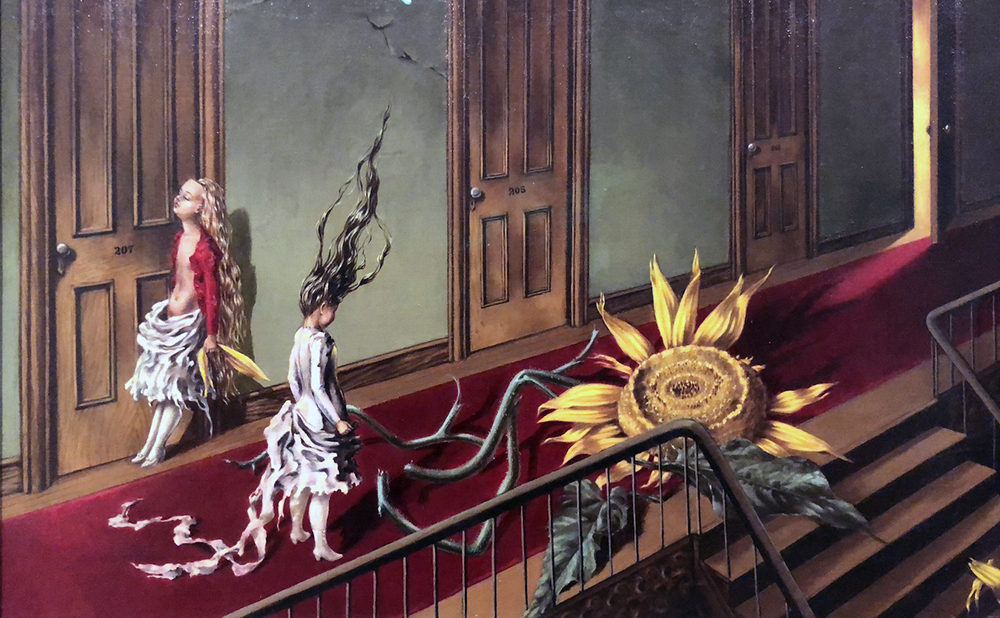
“Eine Kleine Nachtmusik” (1943)

Tanning’s pin cushion art challenges conventional associations of sewing and craft with women by transforming the humble object into a fetish. Her first creation, made in 1965 from velvet and placed with a voodoo doll, encourages us to think differently by taking something familiar and making it strange.ng something familiar and making it uncanny and weird.

Tanning refused to accept the label of “woman artist,” seeing it as no more sensible than “man artist” or “elephant artist.”

Put that in your pipe and smoke it, Sigmund Freud!

The concept of the subconscious mind was central to Surrealism, but its creator’s statement about women was controversial.

Remedios Varo
Bordando el manto terrestre (Embroidering the Earth’s Mantle), 1961
Gallery Wendi Norris

Oppenheim’s best-known work is object, the fur-lined teacup, saucer, and spoon. One might wonder what he would have thought of it.

Josh Rose’s essay for Khan Academy’s AP/College Art History course explains how visitors of the Museum of Modern Art declared it the “quintessential” Surrealist object during the “Fantastic Art, Dada, and Surrealism” exhibition of 1936-37.of 1936-37.

Oppenheim disappeared from the artistic scene for over a decade and destroyed much of her work. When she returned, she started to reclaim her intent. In her acceptance speech for an award, she expressed her belief that women must take their freedom and reject imposed taboos.

The question is: Will men ever become more aware and conscious? Thanks for your support.🙏💖

Sources:

Discover Leonora Carrington, Britain’s Lost Surrealist Painter

A Brief Animated Introduction to the Life and Work of Frida Kahlo

The Forgotten Women of Surrealism: A Magical, Short Animated Film

Open Culture

Jean-François Champollion, The Finder of the Key of Ancient Egypt Language.

Standard

Jean-François Champollion, a genius who discovered the code of the ancient Egyptian language, also known as Champollion le jeune, was a French philologist and orientalist known primarily as the decipherer of Egyptian hieroglyphs and a founding figure in the field of Egyptology. He is one of the most valuable personalities who helped humanity- along with great support from his brother Jacques-Joseph Champollion- to take a big step towards understanding the human past.

Rosetta stone~ British Museum, London ~ photo by Gloria Bolton

Just imagine these words (holography) written on this vast stone were not decipherable. But now we are not illiterate anymore!

Here, we read an exciting introduction by Marie Grillot about a brilliant Egyptologist and her research on this genius of decoding ancient language.
PS: I wish there could also be a translated clip!

Jean-François Champollion in Egypt: an interview with Karine Madrigal

via; égyptophile

Jean-François Champollion, “The Younger”, decipherer of hieroglyphs, founder of Egyptology
Figeac, December 23, 1790 – Paris, March 4, 1832
Portrait representing him in Egyptian clothing, made by Salvatore Cherubini in Medinet Habou,
in July 1829 – acquired by the Musée Champollion de Vif in June 2022
“Jean-François Champollion in Egypt”: an interview with Egyptologist Karine Madrigal (centre)
directed and filmed in Malqatta by Marie Grillot & Pascal Pelletier

To discuss “Jean-François Champollion in Egypt”, it is in Louqsor that we found the Egyptologist Karine Madrigal…

Since July 2010, she has been studying the 60 volumes of archives of the Champollion brothers deposited in the Departmental Archives of Isère. Through this incredibly rich source, nothing that links the two brothers is foreign to her…

On the one hand, Jacques-Joseph Champollion-Figeac, the eldest, and on the other, Jean-François Champollion, known as “the young one”. Twelve years separate them, Jacques-Joseph will be the godfather of his younger brother and… his pygmalion… He will help and assist him in his education, studies, research, and obsessive quest to understand writing from ancient Egypt.

The Champollion “brothers”: Jean-François Champollion “the Younger” on the left and Jacques-Joseph Champollion “Figeac” on the right
Paintings by Victorine-Angélique-Amélie de Rumilly were exhibited at the Musée de Vif in Isère.

This hard work led to the presentation, on September 27, 1822, at the Académie des Inscriptions et Belles-Lettres in Paris, of his famous “Letter to Mr. Dacier”, which would be the founding act of the decipherment of hieroglyphs and, by the same, will sign the birth of a new discipline, Egyptology…

Jean-François was then 32 years old… In 1824, he was sent on a mission to the Turin Museum to establish the catalogue of the Drovetti Collection. Then, he returned to Italy in 1826 to appraise the Salt Collection. There, he met Ippolito Rosellini, who became his student and disciple. On May 15, 1826, he was appointed curator of the Egyptian section of the Charles X Museum (future Louvre Museum).

But what he wants more than anything is to go to Egypt to carry out a scientific mission… and this project will finally come to fruition…

The Franco-Tuscan Expedition, sponsored by Charles X and the Grand Duke of Tuscany, left Toulon on July 31, 1828, aboard “L’Eglé” and landed on the Egyptian coast on August 18, 1828. It is managed on the French side by Jean-François Champollion and on the Tuscan side by Ippolito Rosellini…

From July 1828 to December 1829, they explored the various ancient sites, from Alexandria to Abu Simbel and even as far as Wadi Halfa… During these eighteen months, the fourteen members – “scholars and technicians” – will have to learn to live and work together… As for the famous decipherer discovering his “promised land”, he finds himself surprised that his deciphering system works “in situ” and on monuments from all periods…

The Franco-Tuscan expedition to Egypt – Jean-François Champollion, seated, centre
and standing to his left holding a sketch, Ippolito Rosellini
Painting by Giuseppe Angelli © National Archaeological Museum of Florence – 19th century, between 1834 and 1836

Thanks to Karine Madrigal’s excellent knowledge, combined with her passion and her undeniable talent as a “storyteller”, it is with joy that we relive, with her, this great and rich adventure from the beginnings of Egyptology…

This interview, prepared and produced by Marie Grillot, was filmed by Pascal Pelletier for Guinée-nouvelles and the Association for the Safeguarding of the Ramesseum (ASR). It was filmed at the French Archaeological Mission of Thebes West house in Malqatta, which Christian Leblanc was kind enough to make available… You can view it by clicking on the photo below:

              Published 4 weeks ago by Marie Grillot

Libellés: expédition franco-Toscane Ippolito Rosellini Jacques-Joseph Champollion Figeac Karine MadrigalJean-François Champollion Lettre à M. Dacier

A Journey to Samos and Other Nuisance! P. 1

Standard


To breathe a sigh of relief, I present you a travel report from my last vacation to Samos, Greece. And as I looked at the pictures, I thought it would take more than one post! And by the way, it wasn’t irrelevant that I added the word nuisance to the title; I’ll explain later what I meant by that.

First, let’s look at my views when we flew from Dusseldorf up into the dawn in the sky very early in the morning.

I love travelling to Greece. It’s a beautiful country with kind and honourable people. However, what I found to be a nuisance during my visits was the presence of refugees from various parts of the world who were also resettled there. I know it may sound shameful as I am also a refugee. Still, if we examine the situation honestly, there is a conflict between two very different conditions that deeply affect the present scenario.

I am discussing cultural differences and culture shock. Whenever I go on vacation, I have mixed emotions as I observe the tourist world, which I cannot really belong to due to financial constraints. However, I manage to travel on a budget by saving money elsewhere (for instance, I use my clothes for a long time as they are functional!). Therefore, I don’t belong to the affluent tourist society, although I mingle with them. This time, the situation created a lot of confusion, and I felt very uncomfortable seeing such a mix of poverty and wealth. I will elaborate more on this topic later in the following sections. Now, I must prepare to go to my granddaughter’s fifth birthday celebration. It’s hard to believe how quickly time passes! Here are some more pictures, and heartfelt thanks for your being here.🙏💖🦋

Can AI Have a Soul to Create Art?

Standard

“I must admit that I am still contemplating the mysteries of life. At this time, I wanted to share Socrates’ thoughts about the soul with you. But before that, some time ago, when the Iranian groups on Twitter (now X) were still more united (unfortunately, many differences have separated them!), one of our topics to discuss was whether AI could create art. The main question is: how much do we know about art? How much do we believe that art has a soul possessing such an intangible quality and AI can produce it as we do?

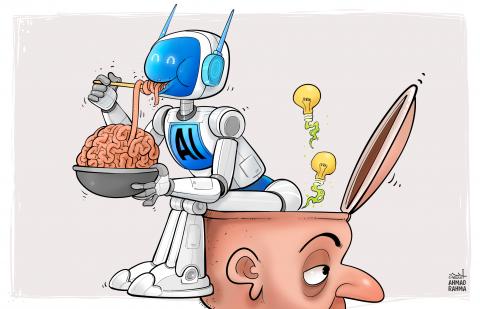
Honestly, I am worried about using AI because humans are naturally very lazy and comfortable; that’s why they like to be pampered! If you look at the story of this development, like the Alexas in the sitting room to the self-driving cars, it shows what will happen next.

Like our other muscles, our brains must be trained continuously to maintain our creativity and cognitive abilities. Otherwise, we risk losing our mental faculties.
Nonetheless, we must observe what these “machines”, which we might have invented, will do!

The birth of the star child in 2001_ A Space Odyssey 1968

Actually, we are talking about what we don’t know exactly how it works: Soul, Creation, Art!? It made me wonder if we can differentiate between these in a world created by Mother Nature and how we attempt to do so with equal ability, though I believe art is a part of the creator’s essence, gifted us to use in our own creations.

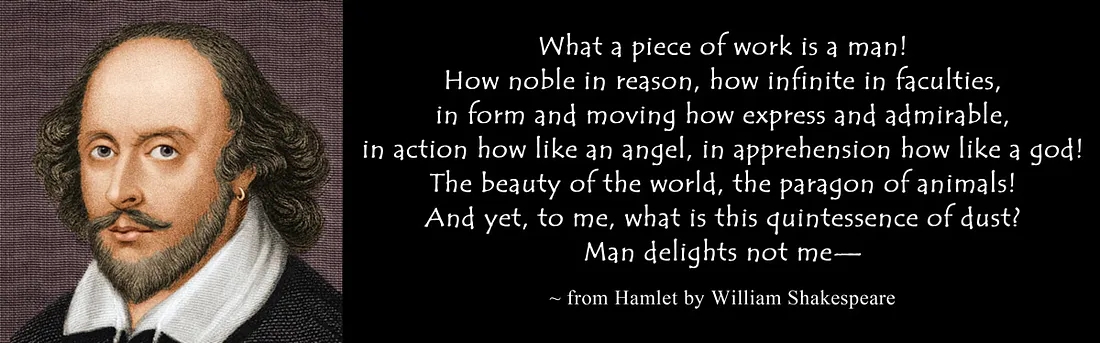
Act 2, scene 2 of Hamlet

The question is whether we have forgotten something we should remember. Is it possible that our souls have lived before they entered our bodies? Socrates believed in some form of reincarnation, in which our souls know of their previous existence before they come into our bodies. These were his final words before facing the court, as conveyed by Plato.”

[… oh souls and before, before they were a man they were, without bodies, and they had consciousness. Plato Phaedo 76 c ]

[…. or are they remembered, or learn to remember if they are. Plato Phaedo 76 a ]

So, Simmia, our souls existed before, without the human form, separate from the body and possessing knowledge”. Plato of Phaedus

How well Dr Jung found this lost connection to our buried memories under our consciousness!


The idea is that the soul is immortal, as Plato claims in “Plato Phaedo, or Phaedrus 74-76. In the dialogue, Socrates discusses the nature of the afterlife on his last day before being executed by drinking hemlock.

Phaedo presents four distinct arguments supporting the immortality of the soul, namely, the Argument from Opposites, the Theory of Recollection, the Argument from Affinity, and the final Argument. However, we focus on whether humans can create perfection or whether artificial intelligence (AI) is perfect. In my opinion, perfection does not exist in our lives, or at least not how we imagine it. Even gods seem to make mistakes! Despite humans’ constant pursuit of perfection, imperfection has a certain allure.

by Paolo Uberti

In any case, I believe that AI cannot create art like “wo-man-kind” can. For example, we can understand this fact when we observe the Mona Lisa, read Dostoevsky, read or watch Shakespeare, or read Rilke…! We have got a worthy gift, which we might awake to life and use it.

I must confess I am a perfectionist. It’s not easy, I know. Perhaps this trait stems from my childhood traumas. However, I believe imperfection is natural and necessary. In the following, I have added a paragraph for those interested who might like to read.

Let’s see how Plato argues this:

The “Imperfection Argument” (Phaedo 74-76)                

This is an argument for the existence of Forms and our possession of a priori concepts. Plato bases the debate on the imperfection of sensible objects and our ability to make judgments about those sensible objects. (The Forms are supposed to be the perfect objects that the sensible only imperfectly approximate).

The argument in Phaedo 74-76 concerns the concept of Equality, but it could equally well be given concerning several different concepts (any concept that might have some claim to being an a priori concept).

The argument tries to show that we cannot abstract the concept of Equality from our sense experience of equal objects. For;

We never experience (in sense-perception) objects that are really, precisely equal, and
We must already have the concept of Equality to judge the things we encounter in sense-perception to be approximately, imperfectly, equal.
The argument can be schematized as follows:

We perceive sensible objects to be F.
But every sensible object is, at best, imperfectly F. That is, it is both F and not F (in some respect – shades of Heraclitus??). It falls short of being perfectly F.
We are aware of this imperfection in the objects of perception.
So, we perceive objects to be imperfectly F.
To perceive something as imperfectly F, one must consider something perfectly F, something that the imperfectly F things fall short of. (For example, we have an idea of Equality that all sticks, stones, etc., only imperfectly exemplify.)
So we have in mind something that is perfectly F.
Thus, there is something that is perfectly F (e.g., Equality) that we have in mind in such cases.
Therefore, there is such a thing as the F itself (e.g., the Equal itself), distinct from any sensible object.

Source: University of Washington

I appreciate your kind interest. 🙏💖

The Supreme Meaning!

Standard

Liber Primusfol.i(v) p. 120, Reader’s Edition

I am getting older (does not everybody do this?!), though I feel this ageing more and more as I’m heading towards my seventieth of that day in which I’ve opened my eyes to the sun. That’s why one may contemplate deeply about religion and the purpose of life, striving to understand and grasp the concept of God, as I am daring to do today.

When I became acquainted with C.G. Jung, I realized that I had found a guide who could help me think more clearly to find answers to my questions. I don’t know about you, but I believe that when ageing, one feels more solitude and begins to enjoy it. However, it’s important to note that he is not a saviour but rather a teacher who can point the way and offer valuable insights through his writings, particularly in his Red Book.

For me, the Red Book by Carl Jung is like the holy book. I may say it is like the Bible for a Christian, or the Koran for a Muslim, and the same as the Torah for a Jew, etc. The difference between them is that Dr Jung never tries to make statements of one particular God as their messenger but tries to define how a god can be definite! Here comes the concept: Supreme Meaning! The melting of sense and nonsense. And I think that this aspect needs a broad view.

The supreme meaning is great and small; it is as wide as the space of the starry Heaven and as narrow as the cell of the living body. C.G. Jung, The Red Book: Liber Novus.

I present you a small part, a page, of his words of knowledge on this concept. I hope it opens one or more doors in your life as it did for mine.

Portrait by Olga KURKINA

The spirit of the depths took my understanding and all my knowledge and placed them at the service of the inexplicable and the paradoxical. He rubbed me of speech and wrote me for everything that was not in his service, namely the melting together of sense and nonsense, which produces the supreme meaning.
But the supreme meaning is the path, the way and the bridge to what is to come. That is the God yet to come. It is not the coming God himself, but his image which appears in the supreme meaning.
(1)

God is an image, and those who worship him must worship him in the image of the supreme meaning. The supreme meaning is not a meaning and not an absurdity; it is image and force in one, magnificence and force together.

The supreme meaning is the beginning and the end. It is the bridge of going across and fulfilment. (2)

The other Gods died of their temporality, yet the supreme meaning never dies; it turns into meaning and then into absurdity, and out of the fire and blood of their collision, the supreme meaning rises up rejuvenated anew.

The image of God has a shadow. The supreme meaning is real and casts a shadow. For what can be actually corporeal and have no shadow?

The shadow is nonsense. It lacks force and has no continued existence through itself. But nonsense is the inseparable and undying brother of the supreme meaning.

Like plants, so men also grow, some in the light, others in the shadows. There are many who need the shadows and not the light.

The image of God throws a shadow that is just as great as itself.

The supreme meaning is great and small; it is as wide as the space of starry Heaven and as narrow as the cell of the living body.

1- In Transformations and Symbol of the Libido (1912), Jung interpreted God as a symbol of the libido (CW B, §111). In this subsequent work, Jund laid great emphasis on the distinction between the God image and the metaphysical existence of God (cf. passages added to the revised retitled 1952 edition, Symbols of Transformation, CW 5, § 95)

2- The terms Hinübergehen (going across, passing over), Übergang (transition), Untergang (down-going, downfall), and Brücke (bridge) feature in Nietzsche’s Zarathustra in relation to the passage from man to the Übermensch (superman). For example, “What is great in man is that he is a bridge and not a goal; what can be loved in man is that he is a “going-across” and a “downfall”. //I love those who do not know how to live except their lives be a “downfall”, for they are those who are going over”(tr. R. Hollingdale [Harmondsworth: Penguin, 1984], p. 44, tr. mod; words are asunderlined in Jung’s copy).

Top image by Ettore Aldo Del Vigo

Thank you for your support. 💖🙏🌹

The Ba-Bird And Its Secret!

Standard

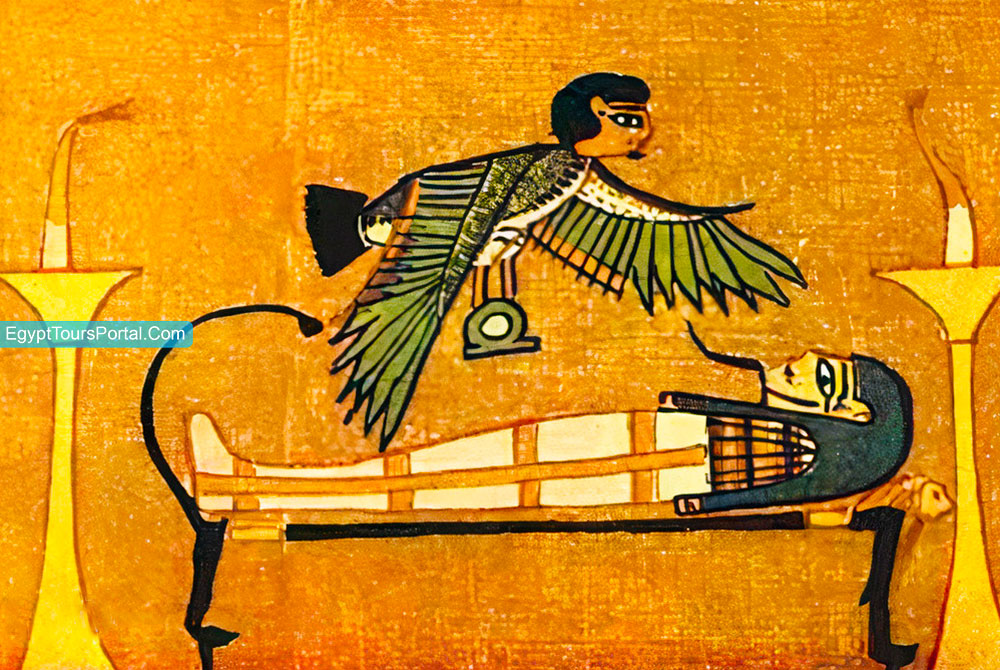
3 Elements to the Egyptian concept of the soul: Ka, Ba, and Akh .___ ((Ka)) is the life force or spiritual double of the person. The royal Ka symbolized a pharaoh’s right to rule___((Ba)) is represented as a human-headed bird that leaves the body when a person dies.___((Akh)) was a concept of the dead that varied over the long history of ancient Egyptian belief, was associated with thought, but not as an action of the mind; rather, it was intellect as a living entity.

“May it see my corpse; may it rest on my mummy, Which will never be destroyed or perish.” PAPYRUS OF ANI, New Kingdom, Dynasty XVIII, Collection of The British Museum.

Our topic in this article is the Ba, the master of soul and body, and we have the chance to read an excellent interview by Marie Grillot with brilliant Michèle Juret and an introduction of her book about the secret of this bird and all we can get to know about it.

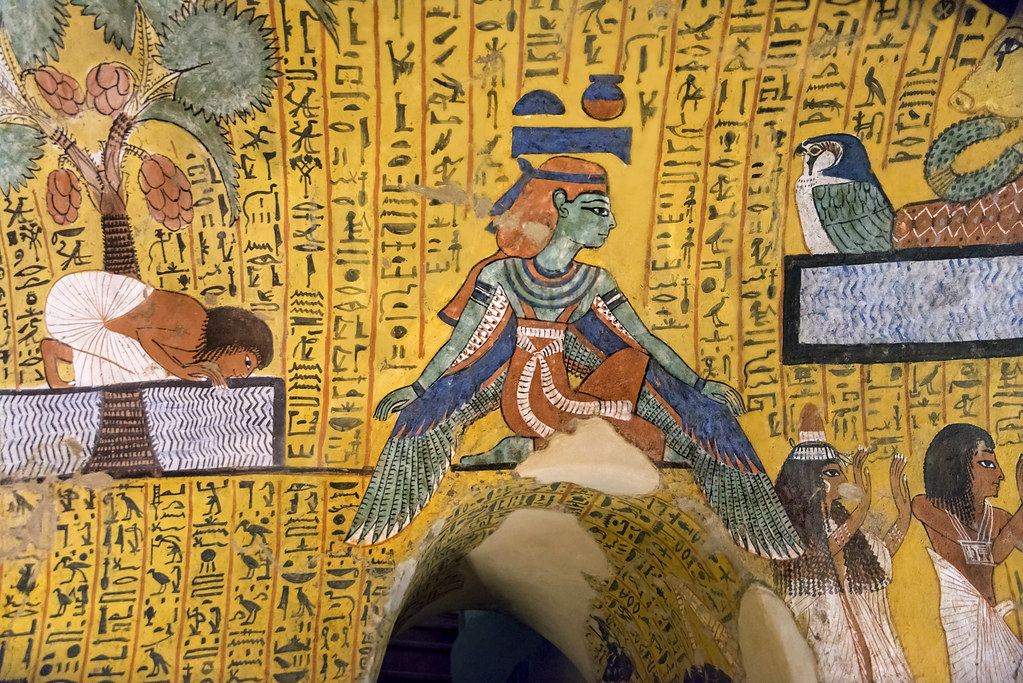
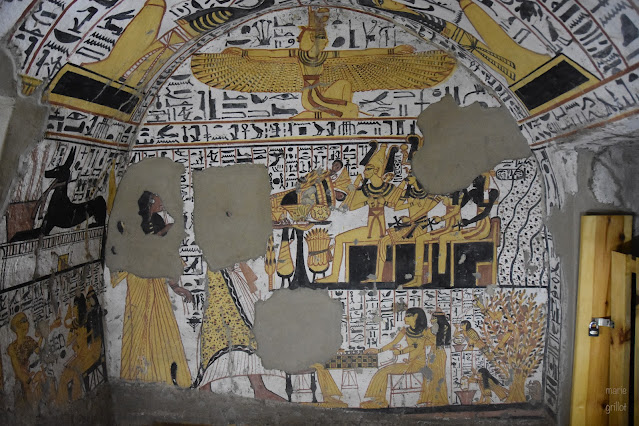
Tomb of Irynefer Deir el-Medina (Flickr)

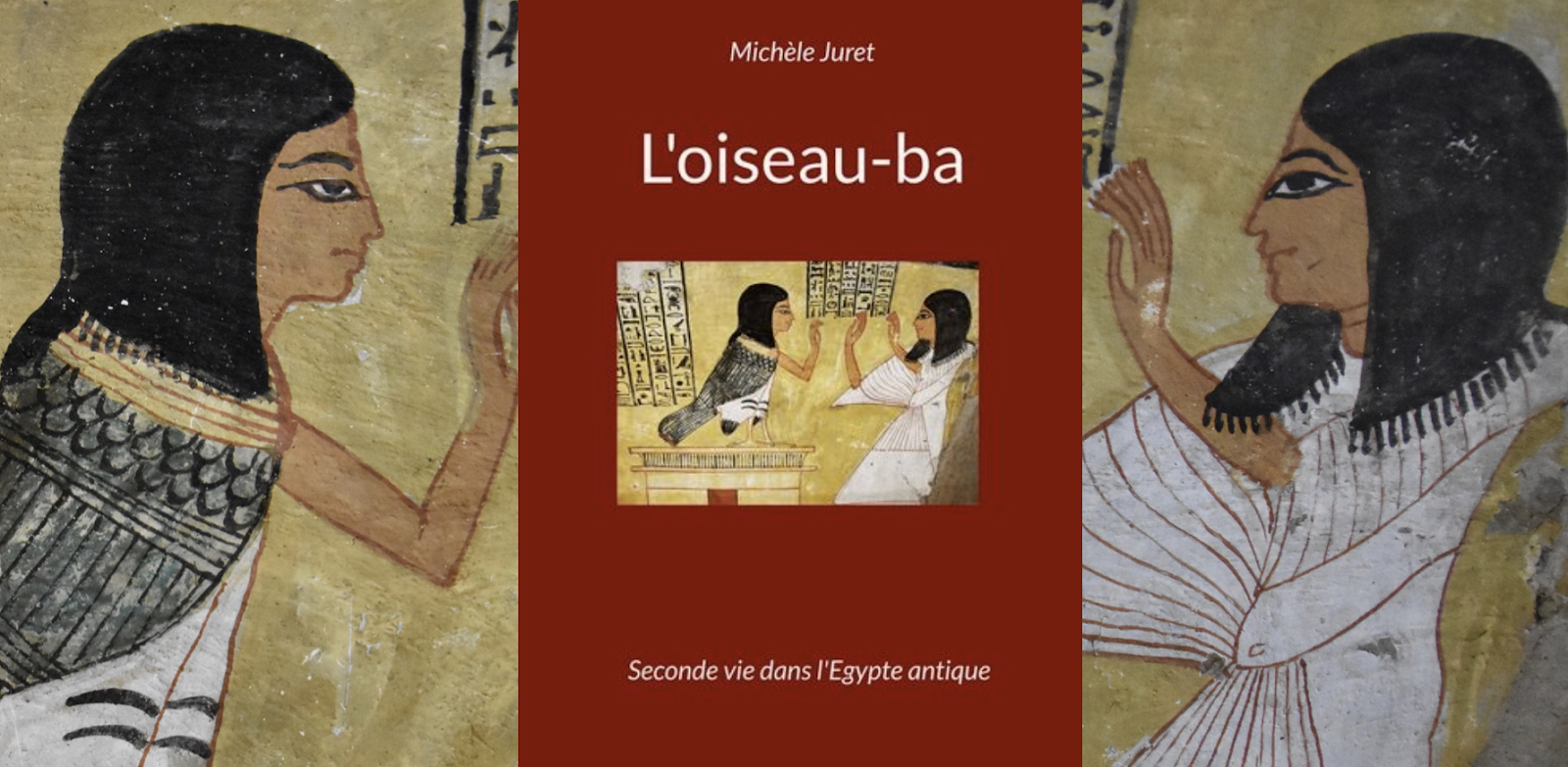
“The ba-bird, second life in ancient Egypt”: the new work by Michèle Juret

via: égyptophile

Inherkaou and his “ba”, represented in the burial chamber of the tomb of this team leader for the Master of the Deux-Terres
TT 359 – Deir el-Medina – 20th dynasty – Ramses III Ramses IV
“The ba-bird, Second Life in Ancient Egypt” by Michèle Juret – published by Books on Demand

A graduate of the École du Louvre and curator of the Montgeron Museum, Michèle Juret is notably “the” biographer of the Egyptologist Etienne Drioton, the last French director of the Egyptian Antiquities Service.

With her new publication: “The Ba-bird, Second Life in Ancient Egypt”, she devotes herself to a theme that is particularly dear to her since it was, from 2002, the subject of her research dissertation. Driven by her interest and passion for this entity flying “between two worlds”, she has never stopped researching and “taming” its multiple and diverse representations… Evoked in several chapters of the “Book of the Dead”, the ba-bird is found on the walls of tombs, on coffins, papyri, steles, statues, offering tables, or even on pectorals and amulets…
As meticulously as it is applied, this well-documented study allows us to understand better this conception of “ba” so intimately – and specifically – linked to ancient Egypt…

Michèle Juret, author of “The Ba-bird, Second Life in Ancient Egypt”
published by Books on Demand in May 2022

MG-EA: To understand what a “ba-bird” is, we must certainly first understand the importance of this “ba” entity in the conception of the personality of the ancient Egyptians.

Michèle Juret: First of all, I would like to thank you, Marie Grillot, for this interview, which allows us to discuss the essentials of this work, namely the observation of the iconography of the ba in the light of the funerary texts.
As you say, it is first necessary to understand the importance of this fundamental entity, a guarantee of survival.

For the ancient Egyptians, the individual is made up of various elements:
The body, immobilized by death, will remain in the grave.
Ka, the vital force, draws its energy from food.
The Akh, celestial spirit, magical power, can be beneficial or evil.
The shadow will enjoy a certain independence.
We commonly translate the ba by the word soul, although the concept is much more complex. An important element is that it is of divine nature. The Alter-ego of the deceased is essential to his survival.

MG-EA: The ba-bird generally presents itself as a composite, anthropo-cephalous being, that is to say, with a human head and a bird’s body: when did it appear, in this form, in the iconography?

Michèle Juret: This half-avian/half-human appearance is the culmination of a slow evolution. From the Old Kingdom, the king’s ba, named in the Pyramid Texts, appears in hieroglyphic writing as a wader with a loop at the base of the neck. In Middle Kingdom texts, it is seen as a bird with the head of the living (human) without this image appearing in the writing. Finally, some amulets and masks decorated with feathers date from this period, and then the rishi sarcophagi will become milestones towards this figure of an anthropo-cephalous bird that we will commonly encounter from the New Kingdom onwards.

Irynefer and her “ba”, represented in the burial chamber of the tomb of this servant in the Place of Truth.
TT 290 – Deir el-Medina – 19th dynasty – Ramesses II

MG-EA: Indispensable to the survival of the being that death has immobilized the ba-bird, he enjoys total freedom… He can enter and leave the grave in, you write, “a moving interdependence with the deceased”? He thus becomes the guarantor of his “post-mortem” future?

Michèle Juret: Indeed, Le ba enjoys total freedom. He will be able to leave the tomb, climb into Ra’s boat, benefit from its rays, drink the regenerating water of the tree goddess, benefit from the food offerings… Every evening, he will rejoin the body of his deceased; their survival depends on their reunion… Observing this iconography transports us into an almost magical world. We follow the entity in its daily comings and goings, alone or accompanying its deceased, maintaining its own life through food offerings or providing this food for the deceased’s ka. Finally, it unites with it in an interdependent guarantee of survival.

Bird-ba of Youya – painted limestone – 18th dynasty – from his tomb KV 46
Cairo Museum – CG 51176

MG-EA: Evoked and invoked in several chapters of the Book of the Dead, associated with the cycle of the sun, it is itself endowed with several “becomings”?

Michèle Juret: Yes, in fact, several futures are possible for him. We have just mentioned the best and most probable, the second life as an alter-ego of the deceased. Let us remember that the post-mortem fate of the ancient Egyptians is complex. A solar destiny will allow him to follow Ra in his boat or a stellar one among the stars, and finally, an Osirian destiny will allow him to cultivate the fields of Ialou. How can we reconcile these notions, which seem contradictory? The ba-bird becomes the answer to this question and the link between these different post-mortem futures. His destiny is divine.

But he could be led towards another destiny linked to that of the heart, a very important element.

The texts also evoke the presence of the ba at the weighing of the heart, a scene of judgment also called psychostasis. In chapter 125 of the Book of the Dead, it is attested through Thoth’s words: “I have examined the heart of Osiris Ani while his ba presents himself, stands as a witness about him…” In the vignette from this papyrus, we see the ba-bird witnessing this judgment. Its future is linked to that of the heart. The Book of Caves gives a version of its annihilation if the heart is declared guilty. While this would be separated from the deceased and thrown into one cauldron, the ba and the shadow would be thrown into another. The deceased would be among the damned, those who no longer have a soul. Like that of the body, the destiny of the ba is linked to that of the heart key of life.

“Birds-ba” represented at the bottom right of this scene from the burial chamber of the tomb of Nebenmâat.
servant of the Place of Truth – TT 219 – Deir el-Medina – 19th dynasty

MG-EA: Your research, targeted on the “ba-birds” of individuals from the New Kingdom, was based on a vast literature and the study of numerous of their representations: their iconography is rich and evolving, and the location where they take place, always full of meaning?

Michèle Juret: Yes, as you say, these representations are loaded with meaning. It was important to bring the iconography closer to the funerary texts. There, we find the reading keys. The analysis of the documentation fully reflects the different situations they express. Furthermore, the location of certain scenes on the tombs’ walls was not chosen randomly but determined according to the theme evoked.

MG-EA: You not only studied their adornments and hairstyle, but to refine their description and relate them to existing species, you also had to develop ornithological talents?

Michèle Juret: Ornaments and hairstyles allowed me, in some instances, to put forward a possible desire to identify with the deceased.
Furthermore, observing the bodily appearance of these birds, another aspect of this study, highlighted different options in the choice of species depending on the chapters of the Book of the Dead that they illustrate. This observation proved fascinating, and I ventured to put forward some hypotheses. Unfortunately, I didn’t have the “ornithologist talents” you mentioned. A specialist from the Natural History Museum helped me a lot with this identification.

Raya and his “ba”, represented in the tomb of this Fourth Prophet of Amon
TT 159 – Dra Abou el-Naga – 19th dynasty

MG-EA: Would you not be tempted, now, to take an interest in the “ba-birds” of the pharaohs and queens?

Michèle Juret: Obviously, it’s a subject that also deserves to be addressed. In this study, I was tempted to quickly evoke the ba-bird of Tutankhamun and especially that of Queen Nefertari, an extraordinary example. On the one hand, its extremely composite body appearance combines both falconiform and anseriform characteristics, two birds with solar connotations. On the other hand, its profile, resembling that of the queen and its crown, the remains of a vulture surmounted by the modius, reinforce this idea of a desire to identify the ba-bird with its deceased.

Nefertari and her “ba”, represented in the antechamber of the queen’s tomb
TT 66 – Deir el-Medina – 19th dynasty – Ramesses II

This iconography fully reflects the importance of the ba in the Egyptian’s concerns for his post-mortem future. It will also be able to completely replace itself and become, in its place, as a substitute, the active element. Survival is in him. This is perfectly expressed on the stele of Neferhotep, which caught the attention of Etienne Drioton…

Comments collected by Marie Grillot

Michèle Juret, The ba-bird, second life in ancient Egypt.”
188 pages – Publisher: Books on Demand
Publication date: 12.05.2022                         https://www.bod.fr/librairie/loiseau-ba-michele-juret-9782322420131?fbclid=IwAR1z_prPOSx43ielkTm-o03OaqR-FWrdg6Ky9eBk1Zdyh1eOqSVOI0NMiuU

Published 6th October 2022 by Marie Grillot

If You Forget Me!

Standard

By Pablo Neruda

“I would like to bid farewell to the old year by sharing a great poem by Pablo Neruda since this is my last post for the year. I know that some of my friends share posts daily or a few even hourly, but I do not have that much free time. Therefore, I would like to take this opportunity to wish everyone a happy New Year’s Eve and a healthy new year.” Viva Freedom!🙏🤗💖

Benito Cerna, 1960 ~ Figurative painter

I want you to know
one thing.

You know how this is:
if I look
at the crystal moon, at the red branch
of the slow autumn at my window,
if I touch
near the fire
the impalpable ash
or the wrinkled body of the log,
everything carries me to you,
as if everything that exists,
aromas, light, metals,
were little boats
that sail
toward those isles of yours that wait for me.

Well, now,
if, little by little, you stop loving me
I shall stop loving you little by little.

If suddenly
you forget me
do not look for me,
for I shall already have forgotten you.

If you think it long and mad,
the wind of banners
that passes through my life,
and you decide
to leave me at the shore
of the heart where I have roots,
remember
that on that day,
at that hour,
I shall lift my arms
and my roots will set off
to seek another land.

But
if each day,
each hour,
you feel that you are destined for me
with implacable sweetness,
if each day, a flower
climbs up to your lips to seek me,
ah, my love, ah, my own,
in me, all that fire is repeated,
in me, nothing is extinguished or forgotten,
my love feeds on your love, beloved,
and as long as you live, it will be in your arms
without leaving mine.

Huxley’s or Orwell’s. The Main Concept Comes to The Same End! (P. 4)

Standard

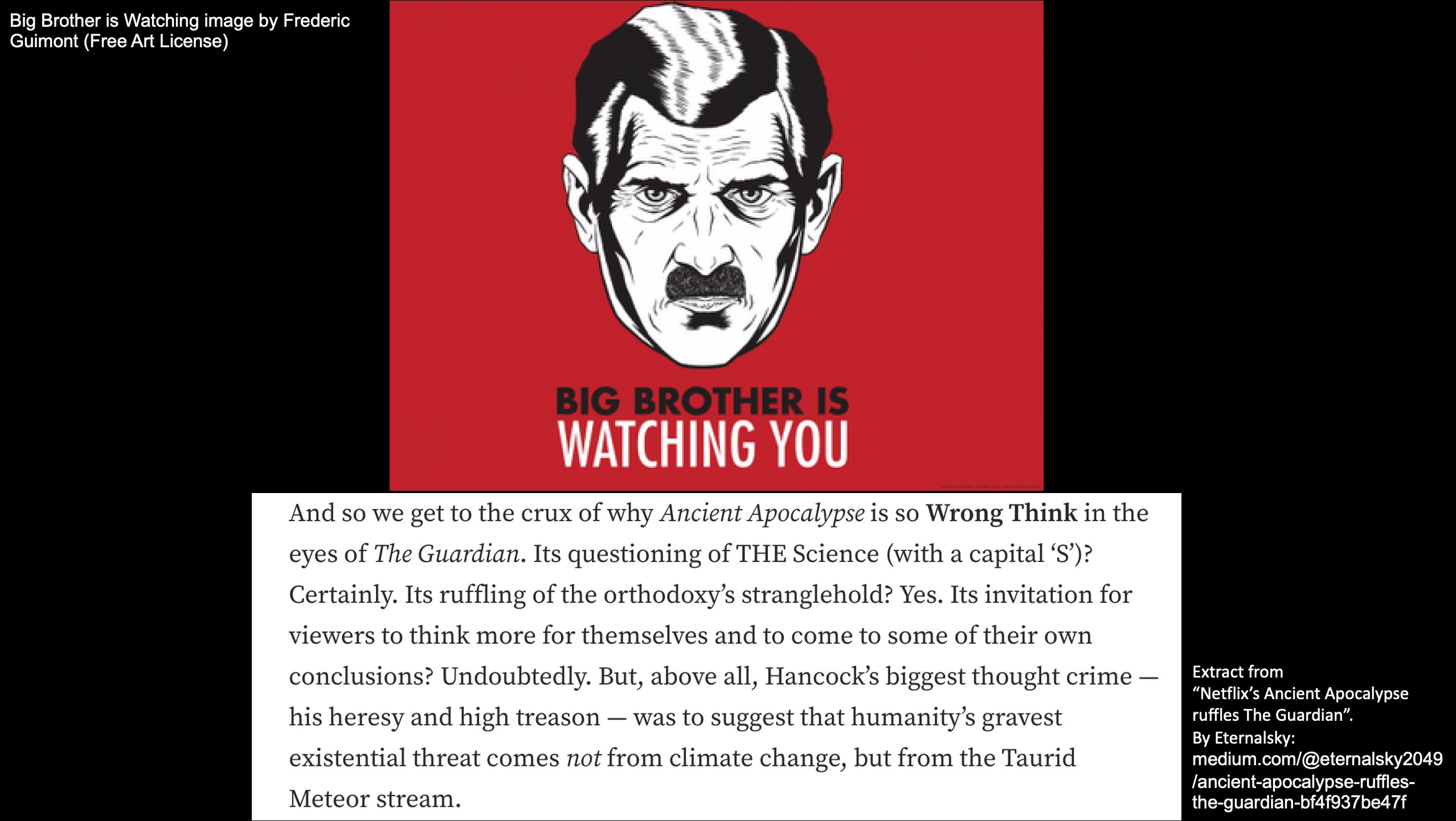
“Whereas the truth is that the State in which the rulers are most reluctant to govern is always the best and most quietly governed, and the State in which they are most eager, the worst.” ― Plato, The Allegory of the Cave

These days, there is a huge need for us to look more profoundly into the world around us and be aware of all that is happening, even if it hurts! As I wanted to retake a look at my archive, the following of the previous articles (1, 2, 3) suddenly fell on my lap.

I believe there is no reason to be afraid of expressing critical opinions. However, some governments or regimes in the world may hold opposing views. It shows for sure that we are on the right path!

Most people are not just comfortable in their ignorance, but hostile to anyone who points it out.” ― Plato, The Allegory of the Cave.

Or, I can provide a more straightforward example!

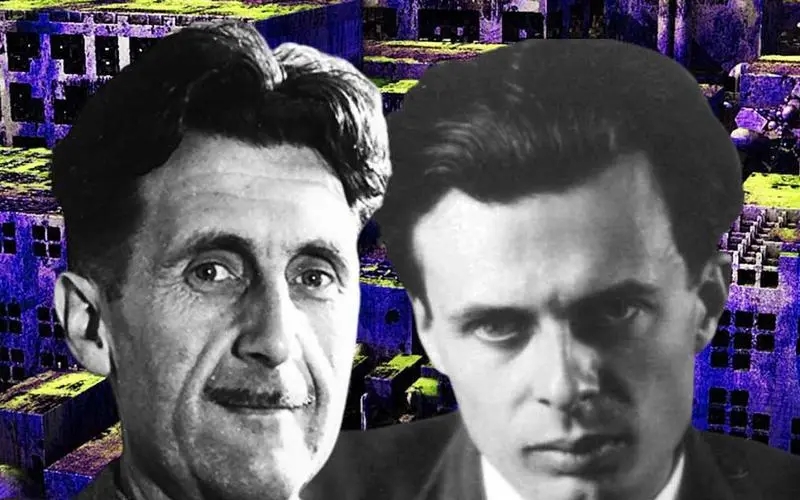
Apart from what Dr. Jung said, I have shared some quotes from Plato first. I think he is a novice in this way of philosophy because, unlike Aristotle, he didn’t accept compromising arguments and tried to find a way towards the truth, even if it was bitter or unpleasant. However, my prominent persons are these two geniuses: Orwell and Huxley.

Remaining open-minded and considering all possibilities is essential, even if it may sound like a conspiracy theory. The threat of getting caught up in the minutiae of our everyday lives is increasing, and we risk becoming trapped in a cage of our own making. Therefore, we better unlock our mind potential!
I have no issue reiterating that Orwell and Huxley are among the most valuable thinkers we can learn from.

FmXGFftXoAUtZiu

“What Orwell feared were those who would ban books. What Huxley feared was that there would be no reason to ban a book, for no one wanted to read one. Orwell feared those who would deprive us of information. Huxley feared those who would give us so much that we would be reduced to passivity and egoism. Orwell feared that the truth would be concealed from us. Huxley feared the truth would be drowned in a sea of irrelevance. “Orwell feared we would become a captive culture. Huxley feared we would become a trivial culture, preoccupied with some equivalent of the feelies, the orgy porgy, and the centrifugal bumblepuppy. However, it seems that the Orwell vision didn’t work out, and the Huxley vision is more beneficial.

via FT.com


As Orwell’s vision may partly be limited to various parts of the world, Huxley’s narrative seems to envision and capture today’s world more powerfully, as his vision is more in tune with today’s challenging problems. Global consumerist culture is prevalent, and the impact of social class stratification in many cultures is strongly felt, especially during the COVID-19 pandemic (the completely disparate experiences of the pandemic by the rich and the poor). A massive emphasis on pleasure, hedonism, and mere happiness rather than the culture of questioning and critical thinking could be observed in many societies of today’s world.

Here is a 16-minute clip to better catch his concept.

In a letter that Huxley wrote to Orwell, he refers to:

Partly because of the prevailing materialism and respectability, nineteenth-century philosophers and men of science were unwilling to investigate the odder facts of psychology for practical men, such as politicians, soldiers and policemen, to apply in the field of government. Thanks to the voluntary ignorance of our fathers, the advent of the ultimate revolution was delayed for five or six generations. Another lucky accident was Freud’s inability to hypnotize successfully and his consequent disparagement of hypnotism. This delayed the general application of hypnotism to psychiatry for at least forty years. But now psychoanalysis is combined with hypnosis; hypnosis has been made easy and indefinitely extensible through barbiturates, which induce a hypnoid and suggestible state in even the most recalcitrant subjects.

You can read Huxley’s full letter here: via Letters of Note

The Image at the top: Vladimir Moldavsky

I hope I didn’t get on your nerves by ringing the bell of awakening in this hard life! Heartfelt thanks for reading!🙏💖🥰

Yalda: A Persian Winter Solstice!

Standard

Actually, I attended to share an extensive article today. Still, as I found out yesterday that I had to undertake a marathon with my grandchildren until midday today, I grabbed an hour yesterday afternoon when my wife took them to get some flour from the store to bake cookies to write these words. I usually turn out all connections to the world when I have the kid with me. I hope I can utter my mind comprehended enough.

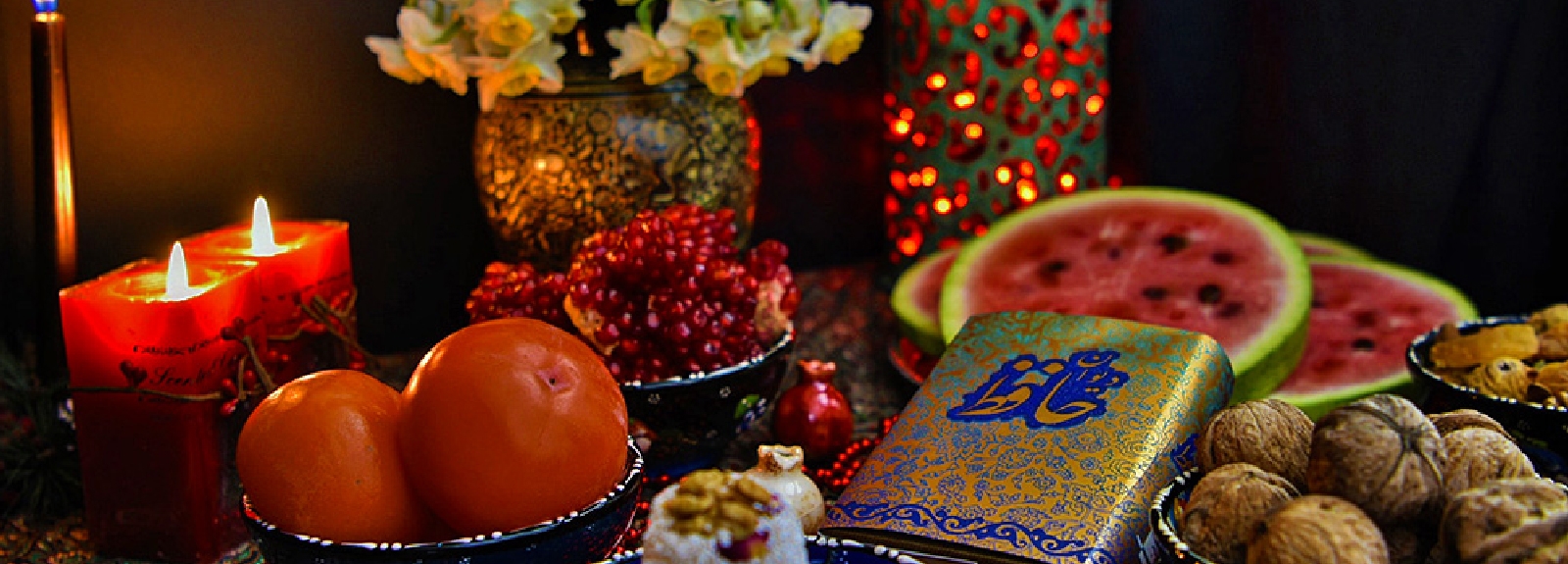
As I look back into my posts, I see two posts I have written about this Persian’s traditional old ceremony. The first one, proudly to inform my friends about one of the oldest Persian festivals, and the second one, a painful hint to this elderly celebration which has been smeared with blood and suffering. Although with the hope that it would be a peaceful one this year, what a false assumption! Someone once said: If we look at this deeply, we see the differences between the old Persian rituals & festivals and all the celebrations in Islamic Iran after the Arabs occupied Persia. In ancient Persian the rituals and feasts, contrary to the Arabs, adorn love, light, and cosiness.

However, on every Yalda night, the Iranian winter solstice tradition, observers gather with family in a warm, cosy room and read or take an omen of fortune from FAL-E HAFEZ (Omens of Hafez) by Hafez Shirazi’s sonnets and quatrains (Ghazals). As I remember from my childhood, it was a nut and nutcracker, and the oldest woman in the family told beautiful fairytales to greet the returning sun. I am sure that this tradition will continue indefinitely under any circumstances; as I noticed on the web, they have even this year celebrated with grief and pride for their loss but with great hope to conquer evil.

Illustration by Mahdis Nikou @mahdisnikou via Inger Nordvik

It becomes clear that this fight for their right will be a war of attrition, even though it will come at the cost of bloodshed, but the secret to success is in synergy and solidarity. Together, we stand; divided, we fall!

Anyway, with my heartfelt regards, I send my best wishes to all of you, dear friend. Have a blessed Yule, Merry Christmas, and have a lovely time with your loved ones.🙏💖🌹🎅

The image at the top: via HiPersia

Anuket, The Patron Deity of the Nile River

Standard

As we continue researching the precious heritages of ancient Egypt, we find more and more feminine Myths of the Goddesses!
Here is another one: Anuket, Anouket, Anukis, the Goddess of Nil.

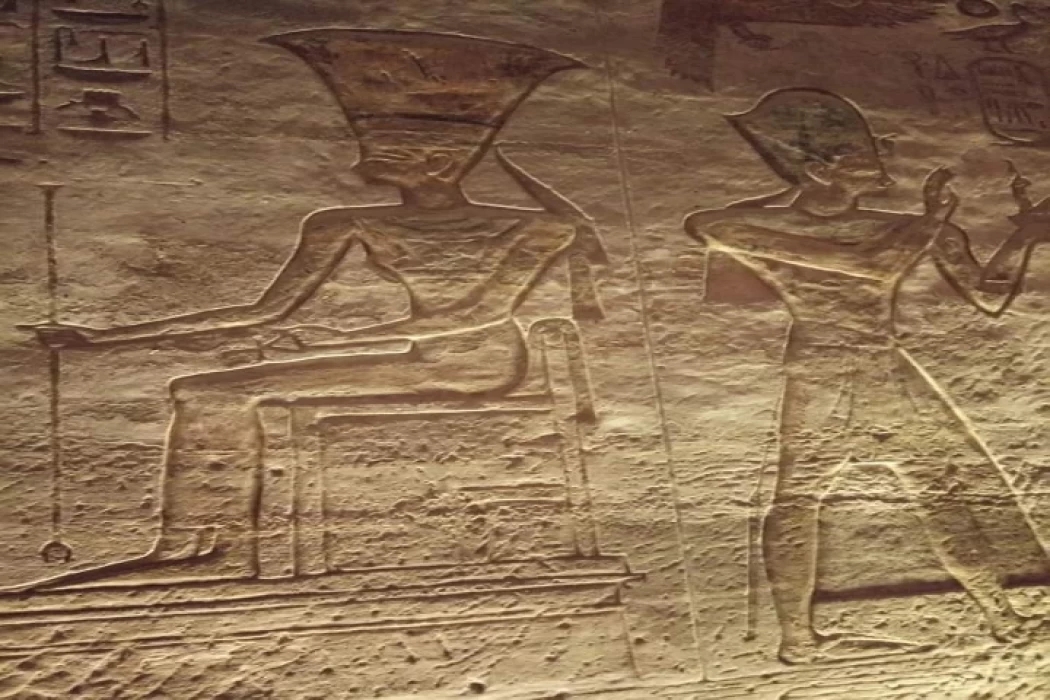
Anuket (or Anukis, her Greek name) is a Nubian goddess, represented as a lady with a crown of feathers or reeds, with a sceptre, and the well-known ankh of Ancient Egyptian culture. Her name means “she who embraces”, and she was venerated in Sehel and Elephantine. Cairo

Anuket, in Egyptian religion, is the patron deity of the Nile River. Anuket is usually depicted as a beautiful woman wearing a crown of reeds and ostrich feathers and accompanied by a gazelle. She was initially a Nubian deity.

Here, we read an article about a beautiful emblem of this fascinating Goddess by the brilliant Marie Grillot.
I wish everybody a leisurely and peaceful Merry Christmas.💖🌹🥰

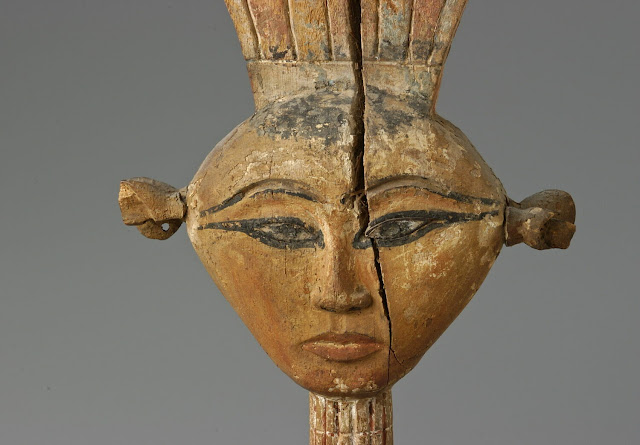
This emblem of Anouket in the Louvre attests to her cult in Deir-Medineh

via égyptophile

“Two-faced” emblem of Anouket (Anoukis) – painted wood (tamarisk and shea) – 19th dynasty (around 1295 – 1186 BC)
from Deir el-Medineh – Department of Egyptian Antiquities of the Louvre Museum – N 3534
by acquisition of the Salt Collection in 1826 (Salt n°559) – © 2006 Musée du Louvre / Christian Décamps

Associated with the god Khnum and the goddess Satis, Anouket (Anoukis) is the third divinity of the triad of the First Cataract, or Elephantine triad. She is generally presented as “the daughter of the divine couple” or even “the wife of the god”.

In “Ancient Egypt and its Gods”, Jean-Pierre Corteggiani specifies that one of her titles is: “Mistress of To-Seti, that is to say of Nubia; she is sometimes called the Nubian, although there is no evidence that it actually originated in this region, one of its functions is to guard the southern border of Egypt… And he adds, “As a text from the temple of Edfu clearly explains, if it is up to Satis, assimilated to Sothis, to raise the beneficial flow, it falls to Anoukis (Anouqis) the equally essential task of reduce and thus allow, after the flood has receded, seeds to germinate and vegetation to grow on the land released by the waters.” Therefore, it depends on the food and subsistence of an entire people, a whole country… This can explain the reason for the spread of its cult towards the north, notably to Deir el-Medineh, where it was probably introduced “by the workers who worked in the granite quarries of Aswan.

“Two-faced” emblem of Anouket (Anoukis) – painted wood (tamarisk and shea) – 19th dynasty (around 1295 – 1186 BC)
from Deir el-Medineh – Department of Egyptian Antiquities of the Louvre Museum – N 3534
by acquisition of the Salt Collection in 1826 (Salt n°559) – © 2006 Musée du Louvre / Christian Décamps

Between the high walls of “Set Maât her imenty Ouaset” (“the Place of Truth to the west of Thebes”, today’s Deir el-Medineh), they lived between 60 and 120 families dedicated to digging and decorating tombs of royal necropolises. They had stone houses covered with palm leaf roofs, their own necropolis, and places of worship. Amon, Ptah, Meretseger, and Hathor were celebrated there, but other divinities also had their place. Indeed, as Guillemette Andreu points out in “The Artists of Pharaon”, “Khnoum and his two consorts, Satis and Anoukis, enjoyed great favour in the community, without us knowing if a particular sanctuary was built for them. Likely, one of the numerous devotional chapels located north of the site was occasionally used as a place of worship, but these cults appear essentially private and domestic.

“Two-faced” emblem of Anouket (Anoukis) – painted wood (tamarisk and shea) – 19th dynasty (around 1295 – 1186 BC)
from Deir el-Medineh – Department of Egyptian Antiquities of the Louvre Museum – N 3534
by the acquisition of the Salt Collection in 1826 (Salt n°559)
published here by Dominique Valbelle in BIFAO 75, 1975

This “two-faced” emblem of Anouket made “For the ka of the servant in the Place of truth, Pached, acquitted”, testifies to this cult. On the other hand, in their “Guide to Deir el-Medina”, Guillemette Andreu and Dominique Valbelle recall that “the procession of the emblem of Anouqet is represented in the chapel of the tomb of the team leader Neferhotep”.

Two things are striking in the representations of Anouket: her very particular headdress, we will come back to it, and, more strikingly, her resemblance to Hathor. “As D. Valbelle has shown, this object, whose appearance evokes that of a hathoric sistrum, illustrates a syncretism between Ânouket of Elephantine and Hathor of Diospolis Parva in the context of a local cult in Deir el- Medineh” recalls Christophe Barbotin in “Egyptian statues of the New Kingdom”.

“Two-faced” emblem of Anouket (Anoukis) – painted wood (tamarisk and shea) – 19th dynasty (around 1295 – 1186 BC)
from Deir el-Medineh – Department of Egyptian Antiquities of the Louvre Museum – N 3534
by acquisition of the Salt Collection in 1826 (Salt n°559) – © 2006 Musée du Louvre / Christian Décamps

It is made from tamarisk wood, is 27.5 cm high and 13.5 cm wide, and rests on a shea tree base. The support, comparable to a fluted column, is surrounded by horizontal lines. The head surmounts it – in fact, two heads, reproduced identically, “back to back” – of the Goddess. Her face takes the shape of a diamond with rounded contours. The widest part is at the level of the cow’s ears and the thinnest at the chin level. Her large eyes, stretched with a line of makeup, are painted black with a large dark iris, which leaves little space for the white of the eye. They are topped over their entire length by very arched eyebrows, hollow and encrusted with a black material. The nose is flat, and the mouth with drooping corners displays a slight difference on the two sides, one of the upper lip being thinner. The left side of one of the two faces is marked with a long and painful scar.

“Two-faced” emblem of Anouket (Anoukis) – painted wood (tamarisk and shea) – 19th dynasty (around 1295 – 1186 BC)
from Deir el-Medineh – Department of Egyptian Antiquities of the Louvre Museum – N 3534
by acquisition of the Salt Collection in 1826 (Salt n°559) – © 2006 Musée du Louvre / Christian Décamps

Anouket’s main attribute, which makes her immediately identifiable, is her high and generous headdress made of ostrich feathers. Christophe Barbotin precisely describes this: “The mortar, painted red with vertical white lines, is topped with feathers with traces of blue and red paint (seven feathers on each side, three on each edge). It is placed on a black-painted cap visible at the top of each face but not on the sides. The top of the feathers constitutes a perfectly flat surface.

“Two-faced” emblem of Anouket (Anoukis) – painted wood (tamarisk and shea) – 19th dynasty (around 1295 – 1186 BC)
from Deir el-Medineh – Department of Egyptian Antiquities of the Louvre Museum – N 3534
by acquisition of the Salt Collection in 1826 (Salt n°559) – © 2006 Musée du Louvre / Christian Décamps

This Anouket emblem dates from the 19th dynasty (c. 1295 – 1186 BC). It arrived at the Louvre Museum in 1826 through the acquisition by Charles X – for the sum of 250,000 francs – of the collection of the British consul Henry Salt. Jean-François Champollion will also go to Livorno to draw up a descriptive inventory of the 4014 objects, this one bearing the number 559. In his “Descriptive note of the Egyptian monuments of the Charles X Museum” (1827), he will present it under A.136, “Painted wood. Symbolic head of the goddess Anouké”. Today, it is exhibited in the Sully wing, in room 336, dedicated to the Nile, under inventory number N 3534.

Marie Grillot

Sources:

Anouket Emblem https://collections.louvre.fr/ark:/53355/cl010024883              Jean-Pierre Corteggiani, Ancient Egypt and its gods – Illustrated dictionary, Fayard 2007
Sylvie Guichard, Jean-François Champollion, Descriptive notice of the Egyptian monuments of the Charles 87-88, illus. p. 88, A. 136
Guillemette Andreu, The artists of Pharaon. Deir el-Medina and the Valley of the Kings, RMN; Brepols, 2002, p. 273, ill. p. 272, no. 221a                                 -Andreu, Guillemette; Valbelle, Dominica, Guide to Deir el-Medina. A village of artists, Cairo, French Institute of Oriental Archeology (IFAO), 2022, p. 150, fig. 131                     – Barbotin, Christophe, Egyptian statues of the New Kingdom, 1, Royal and divine statues, [Louvre Museum, Paris], Paris, Louvre éditions / éditions Khéops, 2007, p. 146-147, figs. 1-15 p. 238-241, no. 85
Dominique Valbelle, Testimonies of the New Kingdom on the cults of Satis and Anoukis at Elephantine and at Deir el-Médineh, Bulletin of the French Institute of Oriental Archeology (BIFAO), 75, 1975, p. 123-145,                                           https://www.ifao.egnet.net/bifao/75/7/, p. 141-145, figs. 7, pl. XXI-XXIIII, Doc. 10          Jean-François Champollion, Descriptive notice of the Egyptian monuments of the Charles X Museum, Paris, Imprimerie de Crapelet, 1827, p. 7, A.136      https://gallica.bnf.fr/ark:/12148/bpt6k1040365n

Publié il y a 15th October par Marie Grillot

Libellés: 1826 Anoukis bois Collection Salt Deir el-Medineh Emblème; Anouket karité Louvre N 3534 Salt n°559 tamaris