
To breathe a sigh of relief, I present you a travel report from my last vacation to Samos, Greece. And as I looked at the pictures, I thought it would take more than one post! And by the way, it wasn’t irrelevant that I added the word nuisance to the title; I’ll explain later what I meant by that.
First, let’s look at my views when we flew from Dusseldorf up into the dawn in the sky very early in the morning.
I love travelling to Greece. It’s a beautiful country with kind and honourable people. However, what I found to be a nuisance during my visits was the presence of refugees from various parts of the world who were also resettled there. I know it may sound shameful as I am also a refugee. Still, if we examine the situation honestly, there is a conflict between two very different conditions that deeply affect the present scenario.
I am discussing cultural differences and culture shock. Whenever I go on vacation, I have mixed emotions as I observe the tourist world, which I cannot really belong to due to financial constraints. However, I manage to travel on a budget by saving money elsewhere (for instance, I use my clothes for a long time as they are functional!). Therefore, I don’t belong to the affluent tourist society, although I mingle with them. This time, the situation created a lot of confusion, and I felt very uncomfortable seeing such a mix of poverty and wealth. I will elaborate more on this topic later in the following sections. Now, I must prepare to go to my granddaughter’s fifth birthday celebration. It’s hard to believe how quickly time passes! Here are some more pictures, and heartfelt thanks for your being here.πππ¦
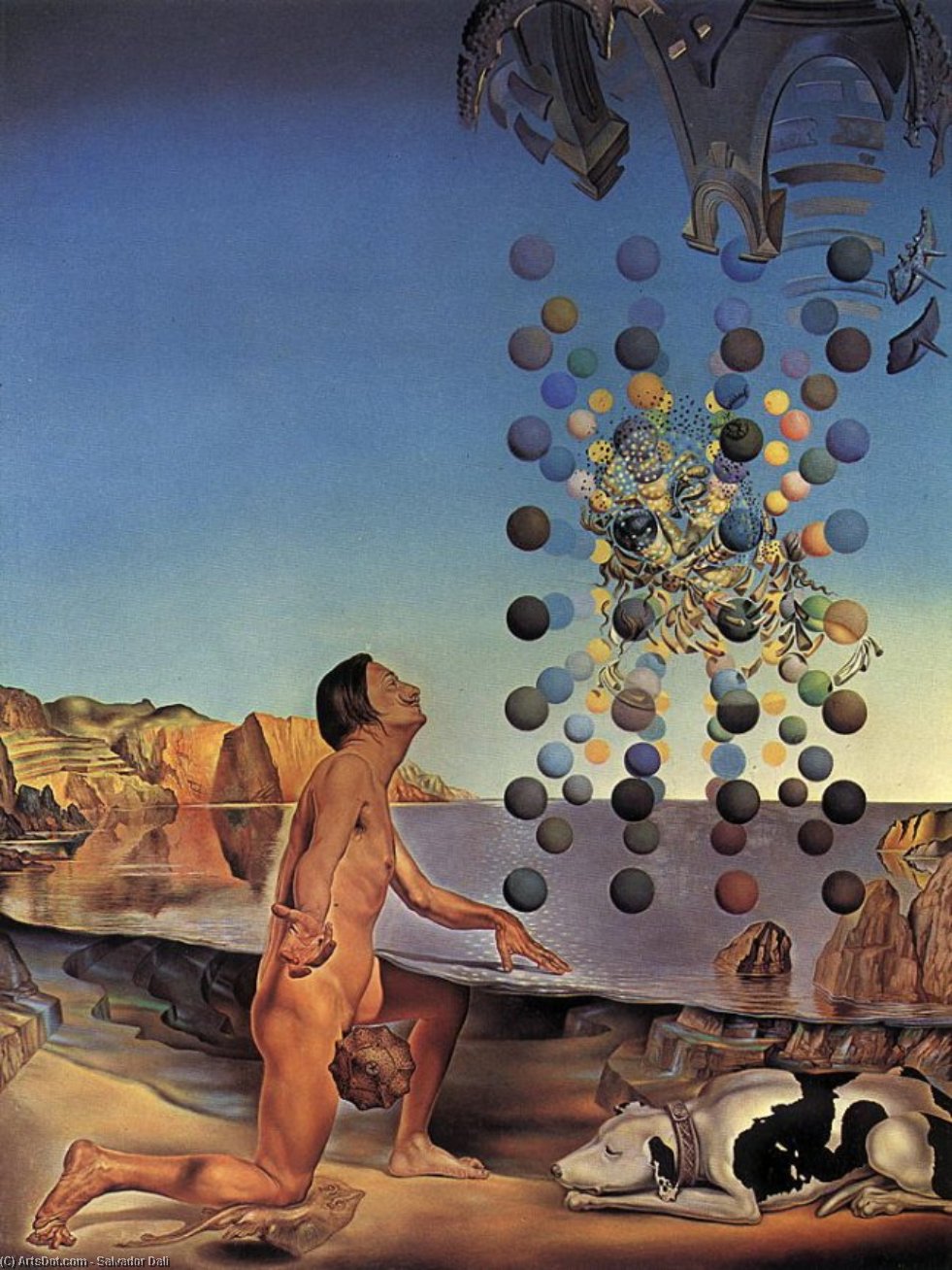
“I must admit that I am still contemplating the mysteries of life. At this time, I wanted to share Socrates’ thoughts about the soul with you. But before that, some time ago, when the Iranian groups on Twitter (now X) were still more united (unfortunately, many differences have separated them!), one of our topics to discuss was whether AI could create art. The main question is: how much do we know about art? How much do we believe that art has a soul possessing such an intangible quality and AI can produce it as we do?
Honestly, I am worried about using AI because humans are naturally very lazy and comfortable; that’s why they like to be pampered! If you look at the story of this development, like the Alexas in the sitting room to the self-driving cars, it shows what will happen next.
Like our other muscles, our brains must be trained continuously to maintain our creativity and cognitive abilities. Otherwise, we risk losing our mental faculties. Nonetheless, we must observe what these “machines”, which we might have invented, will do!
The birth of the star child in 2001_ A Space Odyssey 1968
Actually, we are talking about what we don’t know exactly how it works: Soul, Creation, Art!? It made me wonder if we can differentiate between these in a world created by Mother Nature and how we attempt to do so with equal ability, though I believe art is a part of the creator’s essence, gifted us to use in our own creations.
Act 2, scene 2 of Hamlet
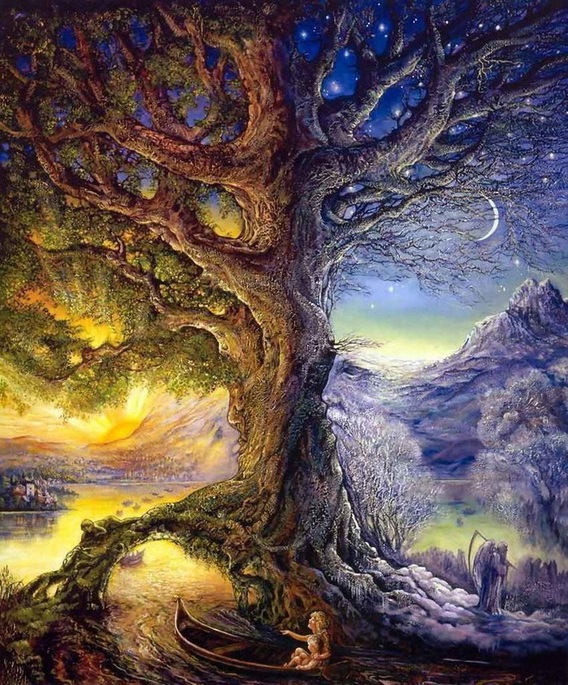
The question is whether we have forgotten something we should remember. Is it possible that our souls have lived before they entered our bodies? Socrates believed in some form of reincarnation, in which our souls know of their previous existence before they come into our bodies. These were his final words before facing the court, as conveyed by Plato.”
[… oh souls and before, before they were a man they were, without bodies, and they had consciousness. Plato Phaedo 76 c ]
[β¦. or are they remembered, or learn to remember if they are. Plato Phaedo 76 a ]
“So, Simmia, our souls existed before, without the human form, separate from the body and possessing knowledge”. Plato of Phaedus
How well Dr Jung found this lost connection to our buried memories under our consciousness!
The idea is that the soul is immortal, as Plato claims in “Plato Phaedo, or Phaedrus 74-76. In the dialogue, Socrates discusses the nature of the afterlife on his last day before being executed by drinking hemlock.
Phaedo presents four distinct arguments supporting the immortality of the soul, namely, the Argument from Opposites, the Theory of Recollection, the Argument from Affinity, and the final Argument. However, we focus on whether humans can create perfection or whether artificial intelligence (AI) is perfect. In my opinion, perfection does not exist in our lives, or at least not how we imagine it. Even gods seem to make mistakes! Despite humans’ constant pursuit of perfection, imperfection has a certain allure.
by Paolo Uberti
In any case, I believe that AI cannot create art like “wo-man-kind” can. For example, we can understand this fact when we observe the Mona Lisa, read Dostoevsky, read or watch Shakespeare, or read Rilke…! We have got a worthy gift, which we might awake to life and use it.
anthropomorphic human dinosaur as a black person by ZelrikAnnual Collective Mind by Shari3Dfashion monkey, city, 4k by BacababAI may see humans in more different forms: so, so, or so!!
I must confess I am a perfectionist. It’s not easy, I know. Perhaps this trait stems from my childhood traumas. However, I believe imperfection is natural and necessary. In the following, I have added a paragraph for those interested who might like to read.
Let’s see how Plato argues this:
The “Imperfection Argument” (Phaedo 74-76)ββββββββββββββββ
This is an argument for the existence of Forms and our possession of a priori concepts. Plato bases the debate on the imperfection of sensible objects and our ability to make judgments about those sensible objects. (The Forms are supposed to be the perfect objects that the sensible only imperfectly approximate).
The argument in Phaedo 74-76 concerns the concept of Equality, but it could equally well be given concerning several different concepts (any concept that might have some claim to being an a priori concept).
The argument tries to show that we cannot abstract the concept of Equality from our sense experience of equal objects. For;
We never experience (in sense-perception) objects that are really, precisely equal, and We must already have the concept of Equality to judge the things we encounter in sense-perception to be approximately, imperfectly, equal. The argument can be schematized as follows:
We perceive sensible objects to be F. But every sensible object is, at best, imperfectly F. That is, it is both F and not F (in some respect – shades of Heraclitus??). It falls short of being perfectly F. We are aware of this imperfection in the objects of perception. So, we perceive objects to be imperfectly F. To perceive something as imperfectly F, one must consider something perfectly F, something that the imperfectly F things fall short of. (For example, we have an idea of Equality that all sticks, stones, etc., only imperfectly exemplify.) So we have in mind something that is perfectly F. Thus, there is something that is perfectly F (e.g., Equality) that we have in mind in such cases. Therefore, there is such a thing as the F itself (e.g., the Equal itself), distinct from any sensible object.
I am getting older (does not everybody do this?!), though I feel this ageing more and more as I’m heading towards my seventieth of that day in which I’ve opened my eyes to the sun. That’s why one may contemplate deeply about religion and the purpose of life, striving to understand and grasp the concept of God, as I am daring to do today.
When I became acquainted with C.G. Jung, I realized that I had found a guide who could help me think more clearly to find answers to my questions. I don’t know about you, but I believe that when ageing, one feels more solitude and begins to enjoy it. However, it’s important to note that he is not a saviour but rather a teacher who can point the way and offer valuable insights through his writings, particularly in his Red Book.
For me, the Red Book by Carl Jung is like the holy book. I may say it is like the Bible for a Christian, or the Koran for a Muslim, and the same as the Torah for a Jew, etc. The difference between them is that Dr Jung never tries to make statements of one particular God as their messenger but tries to define how a god can be definite! Here comes the concept: Supreme Meaning! The melting of sense and nonsense. And I think that this aspect needs a broad view.
The supreme meaning is great and small; it is as wide as the space of the starry Heaven and as narrow as the cell of the living body. C.G. Jung, The Red Book: Liber Novus.
I present you a small part, a page, of his words of knowledge on this concept. I hope it opens one or more doors in your life as it did for mine.
The spirit of the depths took my understanding and all my knowledge and placed them at the service of the inexplicable and the paradoxical. He rubbed me of speech and wrote me for everything that was not in his service, namely the melting together of sense and nonsense, which produces the supreme meaning. But the supreme meaning is the path, the way and the bridge to what is to come. That is the God yet to come. It is not the coming God himself, but his image which appears in the supreme meaning. (1)
God is an image, and those who worship him must worship him in the image of the supreme meaning. The supreme meaning is not a meaning and not an absurdity; it is image and force in one, magnificence and force together.
The supreme meaning is the beginning and the end. It is the bridge of going across and fulfilment. (2)
The other Gods died of their temporality, yet the supreme meaning never dies; it turns into meaning and then into absurdity, and out of the fire and blood of their collision, the supreme meaning rises up rejuvenated anew.
The image of God has a shadow. The supreme meaning is real and casts a shadow. For what can be actually corporeal and have no shadow?
The shadow is nonsense. It lacks force and has no continued existence through itself. But nonsense is the inseparable and undying brother of the supreme meaning.
Like plants, so men also grow, some in the light, others in the shadows. There are many who need the shadows and not the light.
The image of God throws a shadow that is just as great as itself.
The supreme meaning is great and small; it is as wide as the space of starry Heaven and as narrow as the cell of the living body.
1- In Transformations and Symbol of the Libido (1912), Jung interpreted God as a symbol of the libido (CW B, Β§111). In this subsequent work, Jund laid great emphasis on the distinction between the God image and the metaphysical existence of God (cf. passages added to the revised retitled 1952 edition, Symbols of Transformation, CW 5, Β§ 95)
2- The terms HinΓΌbergehen (going across, passing over), Γbergang (transition), Untergang (down-going, downfall), and BrΓΌcke (bridge) feature in Nietzsche’s Zarathustra in relation to the passage from man to the Γbermensch (superman). For example, “What is great in man is that he is a bridge and not a goal; what can be loved in man is that he is a “going-across” and a “downfall”. //I love those who do not know how to live except their lives be a “downfall”, for they are those who are going over”(tr. R. Hollingdale [Harmondsworth: Penguin, 1984], p. 44, tr. mod; words are asunderlined in Jung’s copy).
3 Elements to the Egyptian concept of the soul: Ka, Ba, and Akh .___ ((Ka)) is the life force or spiritual double of the person. The royal Ka symbolized a pharaoh’s right to rule___((Ba)) is represented as a human-headed bird that leaves the body when a person dies.___((Akh)) was a concept of the dead that varied over the long history of ancient Egyptian belief, was associated with thought, but not as an action of the mind; rather, it was intellect as a living entity.
βMay it see my corpse; may it rest on my mummy, Which will never be destroyed or perish.β PAPYRUS OF ANI, New Kingdom, Dynasty XVIII, Collection of The British Museum.
Our topic in this article is the Ba, the master of soul and body, and we have the chance to read an excellent interview by Marie Grillot with brilliant Michèle Juret and an introduction of her book about the secret of this bird and all we can get to know about it.
Inherkaou and his “ba”, represented in the burial chamber of the tomb of this team leader for the Master of the Deux-Terres TT 359 – Deir el-Medina – 20th dynasty – Ramses III Ramses IV “The ba-bird, Second Life in Ancient Egypt” by MichΓ¨le Juret β published by Books on Demand
A graduate of the Γcole du Louvre and curator of the Montgeron Museum, MichΓ¨le Juret is notably “the” biographer of the Egyptologist Etienne Drioton, the last French director of the Egyptian Antiquities Service.
With her new publication: “The Ba-bird, Second Life in Ancient Egypt”, she devotes herself to a theme that is particularly dear to her since it was, from 2002, the subject of her research dissertation. Driven by her interest and passion for this entity flying “between two worlds”, she has never stopped researching and “taming” its multiple and diverse representationsβ¦ Evoked in several chapters of the “Book of the Dead”, the ba-bird is found on the walls of tombs, on coffins, papyri, steles, statues, offering tables, or even on pectorals and amuletsβ¦ As meticulously as it is applied, this well-documented study allows us to understand better this conception of “ba” so intimately – and specifically – linked to ancient Egyptβ¦
MichΓ¨le Juret, author of βThe Ba-bird, Second Life in Ancient Egypt” published by Books on Demand in May 2022
MG-EA: To understand what a “ba-bird” is, we must certainly first understand the importance of this “ba” entity in the conception of the personality of the ancient Egyptians.
Michèle Juret: First of all, I would like to thank you, Marie Grillot, for this interview, which allows us to discuss the essentials of this work, namely the observation of the iconography of the ba in the light of the funerary texts. As you say, it is first necessary to understand the importance of this fundamental entity, a guarantee of survival.
For the ancient Egyptians, the individual is made up of various elements: The body, immobilized by death, will remain in the grave. Ka, the vital force, draws its energy from food. The Akh, celestial spirit, magical power, can be beneficial or evil. The shadow will enjoy a certain independence. We commonly translate the ba by the word soul, although the concept is much more complex. An important element is that it is of divine nature. The Alter-ego of the deceased is essential to his survival.
MG-EA: The ba-bird generally presents itself as a composite, anthropo-cephalous being, that is to say, with a human head and a bird’s body: when did it appear, in this form, in the iconography?
MichΓ¨le Juret: This half-avian/half-human appearance is the culmination of a slow evolution. From the Old Kingdom, the king’s ba, named in the Pyramid Texts, appears in hieroglyphic writing as a wader with a loop at the base of the neck. In Middle Kingdom texts, it is seen as a bird with the head of the living (human) without this image appearing in the writing. Finally, some amulets and masks decorated with feathers date from this period, and then the rishi sarcophagi will become milestones towards this figure of an anthropo-cephalous bird that we will commonly encounter from the New Kingdom onwards.
Irynefer and her “ba”, represented in the burial chamber of the tomb of this servant in the Place of Truth. TT 290 – Deir el-Medina – 19th dynasty – Ramesses II
MG-EA: Indispensable to the survival of the being that death has immobilized the ba-bird, he enjoys total freedomβ¦ He can enter and leave the grave in, you write, “a moving interdependence with the deceased”? He thus becomes the guarantor of his “post-mortem” future?
MichΓ¨le Juret: Indeed, Le ba enjoys total freedom. He will be able to leave the tomb, climb into Ra’s boat, benefit from its rays, drink the regenerating water of the tree goddess, benefit from the food offeringsβ¦ Every evening, he will rejoin the body of his deceased; their survival depends on their reunionβ¦ Observing this iconography transports us into an almost magical world. We follow the entity in its daily comings and goings, alone or accompanying its deceased, maintaining its own life through food offerings or providing this food for the deceased’s ka. Finally, it unites with it in an interdependent guarantee of survival.
Bird-ba of Youya – painted limestone – 18th dynasty – from his tomb KV 46 Cairo Museum – CG 51176
MG-EA: Evoked and invoked in several chapters of the Book of the Dead, associated with the cycle of the sun, it is itself endowed with several βbecomingsβ?
Michèle Juret: Yes, in fact, several futures are possible for him. We have just mentioned the best and most probable, the second life as an alter-ego of the deceased. Let us remember that the post-mortem fate of the ancient Egyptians is complex. A solar destiny will allow him to follow Ra in his boat or a stellar one among the stars, and finally, an Osirian destiny will allow him to cultivate the fields of Ialou. How can we reconcile these notions, which seem contradictory? The ba-bird becomes the answer to this question and the link between these different post-mortem futures. His destiny is divine.
But he could be led towards another destiny linked to that of the heart, a very important element.
The texts also evoke the presence of the ba at the weighing of the heart, a scene of judgment also called psychostasis. In chapter 125 of the Book of the Dead, it is attested through Thoth’s words: “I have examined the heart of Osiris Ani while his ba presents himself, stands as a witness about him⦔ In the vignette from this papyrus, we see the ba-bird witnessing this judgment. Its future is linked to that of the heart. The Book of Caves gives a version of its annihilation if the heart is declared guilty. While this would be separated from the deceased and thrown into one cauldron, the ba and the shadow would be thrown into another. The deceased would be among the damned, those who no longer have a soul. Like that of the body, the destiny of the ba is linked to that of the heart key of life.
“Birds-ba” represented at the bottom right of this scene from the burial chamber of the tomb of NebenmΓ’at. servant of the Place of Truth – TT 219 – Deir el-Medina – 19th dynasty
MG-EA: Your research, targeted on the “ba-birds” of individuals from the New Kingdom, was based on a vast literature and the study of numerous of their representations: their iconography is rich and evolving, and the location where they take place, always full of meaning?
MichΓ¨le Juret: Yes, as you say, these representations are loaded with meaning. It was important to bring the iconography closer to the funerary texts. There, we find the reading keys. The analysis of the documentation fully reflects the different situations they express. Furthermore, the location of certain scenes on the tombs’ walls was not chosen randomly but determined according to the theme evoked.
MG-EA: You not only studied their adornments and hairstyle, but to refine their description and relate them to existing species, you also had to develop ornithological talents?
MichΓ¨le Juret: Ornaments and hairstyles allowed me, in some instances, to put forward a possible desire to identify with the deceased. Furthermore, observing the bodily appearance of these birds, another aspect of this study, highlighted different options in the choice of species depending on the chapters of the Book of the Dead that they illustrate. This observation proved fascinating, and I ventured to put forward some hypotheses. Unfortunately, I didnβt have the βornithologist talentsβ you mentioned. A specialist from the Natural History Museum helped me a lot with this identification.
Raya and his “ba”, represented in the tomb of this Fourth Prophet of Amon TT 159 – Dra Abou el-Naga – 19th dynasty
MG-EA: Would you not be tempted, now, to take an interest in the βba-birdsβ of the pharaohs and queens?
MichΓ¨le Juret: Obviously, itβs a subject that also deserves to be addressed. In this study, I was tempted to quickly evoke the ba-bird of Tutankhamun and especially that of Queen Nefertari, an extraordinary example. On the one hand, its extremely composite body appearance combines both falconiform and anseriform characteristics, two birds with solar connotations. On the other hand, its profile, resembling that of the queen and its crown, the remains of a vulture surmounted by the modius, reinforce this idea of a desire to identify the ba-bird with its deceased.
Nefertari and her “ba”, represented in the antechamber of the queen’s tomb TT 66 – Deir el-Medina – 19th dynasty – Ramesses II
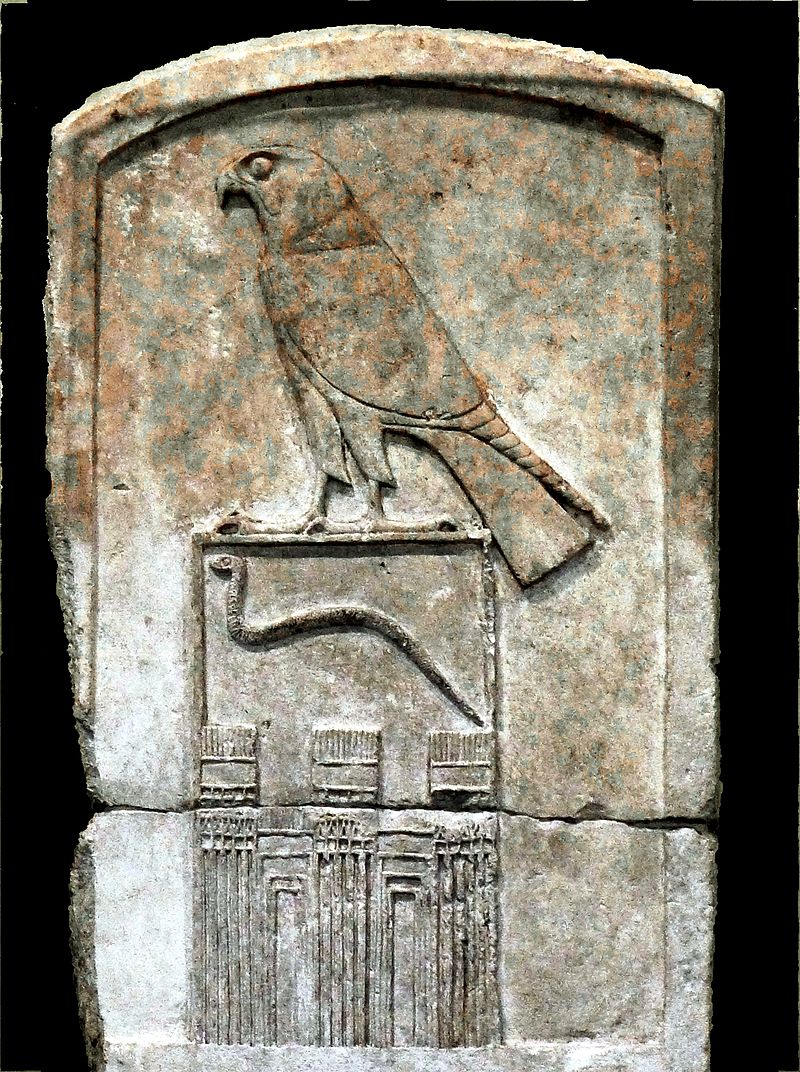
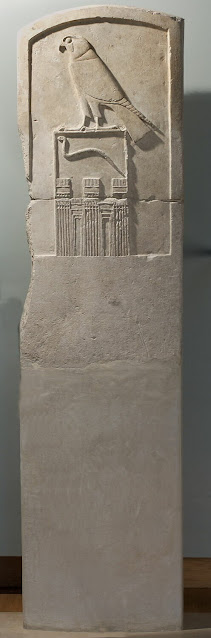
This iconography fully reflects the importance of the ba in the Egyptian’s concerns for his post-mortem future. It will also be able to completely replace itself and become, in its place, as a substitute, the active element. Survival is in him. This is perfectly expressed on the stele of Neferhotep, which caught the attention of Etienne Driotonβ¦
“I would like to bid farewell to the old year by sharing a great poem by Pablo Neruda since this is my last post for the year. I know that some of my friends share posts daily or a few even hourly, but I do not have that much free time. Therefore, I would like to take this opportunity to wish everyone a happy New Year’s Eve and a healthy new year.” Viva Freedom!ππ€π
Benito Cerna, 1960 ~ Figurative painter
I want you to know one thing.
You know how this is: if I look at the crystal moon, at the red branch of the slow autumn at my window, if I touch near the fire the impalpable ash or the wrinkled body of the log, everything carries me to you, as if everything that exists, aromas, light, metals, were little boats that sail toward those isles of yours that wait for me.
Well, now, if, little by little, you stop loving me I shall stop loving you little by little.
If suddenly you forget me do not look for me, for I shall already have forgotten you.
If you think it long and mad, the wind of banners that passes through my life, and you decide to leave me at the shore of the heart where I have roots, remember that on that day, at that hour, I shall lift my arms and my roots will set off to seek another land.
But if each day, each hour, you feel that you are destined for me with implacable sweetness, if each day, a flower climbs up to your lips to seek me, ah, my love, ah, my own, in me, all that fire is repeated, in me, nothing is extinguished or forgotten, my love feeds on your love, beloved, and as long as you live, it will be in your arms without leaving mine.
“Whereas the truth is that the State in which the rulers are most reluctant to govern is always the best and most quietly governed, and the State in which they are most eager, the worst.”Β βΒ Plato, The Allegory of the Cave
These days, there is a huge need for us to look more profoundly into the world around us and be aware of all that is happening, even if it hurts! As I wanted to retake a look at my archive, the following of the previous articles (1, 2, 3) suddenly fell on my lap.
I believe there is no reason to be afraid of expressing critical opinions. However, some governments or regimes in the world may hold opposing views. It shows for sure that we are on the right path!
“Most people are not just comfortable in their ignorance, but hostile to anyone who points it out.”Β βΒ Plato, The Allegory of the Cave.
Apart from what Dr. Jung said, I have shared some quotes from Plato first. I think he is a novice in this way of philosophy because, unlike Aristotle, he didn’t accept compromising arguments and tried to find a way towards the truth, even if it was bitter or unpleasant. However, my prominent persons are these two geniuses: Orwell and Huxley.
Remaining open-minded and considering all possibilities is essential, even if it may sound like a conspiracy theory. The threat of getting caught up in the minutiae of our everyday lives is increasing, and we risk becoming trapped in a cage of our own making. Therefore, we better unlock our mind potential! I have no issue reiterating that Orwell and Huxley are among the most valuable thinkers we can learn from.
FmXGFftXoAUtZiu
“What Orwell feared were those who would ban books. What Huxley feared was that there would be no reason to ban a book, for no one wanted to read one. Orwell feared those who would deprive us of information. Huxley feared those who would give us so much that we would be reduced to passivity and egoism. Orwell feared that the truth would be concealed from us. Huxley feared the truth would be drowned in a sea of irrelevance. “Orwell feared we would become a captive culture. Huxley feared we would become a trivial culture, preoccupied with some equivalent of the feelies, the orgy porgy, and the centrifugal bumblepuppy. However, it seems that the Orwell vision didn’t work out, and the Huxley vision is more beneficial.
As Orwell’s vision may partly be limited to various parts of the world, Huxley’s narrative seems to envision and capture today’s world more powerfully, as his vision is more in tune with today’s challenging problems. Global consumerist culture is prevalent, and the impact of social class stratification in many cultures is strongly felt, especially during the COVID-19 pandemic (the completely disparate experiences of the pandemic by the rich and the poor). A massive emphasis on pleasure, hedonism, and mere happiness rather than the culture of questioning and critical thinking could be observed in many societies of today’s world.
Here is a 16-minute clip to better catch his concept.
In a letter that Huxley wrote to Orwell, he refers to:
Partly because of the prevailing materialism and respectability, nineteenth-century philosophers and men of science were unwilling to investigate the odder facts of psychology for practical men, such as politicians, soldiers and policemen, to apply in the field of government. Thanks to the voluntary ignorance of our fathers, the advent of the ultimate revolution was delayed for five or six generations. Another lucky accident was Freud’s inability to hypnotize successfully and his consequent disparagement of hypnotism. This delayed the general application of hypnotism to psychiatry for at least forty years. But now psychoanalysis is combined with hypnosis; hypnosis has been made easy and indefinitely extensible through barbiturates, which induce a hypnoid and suggestible state in even the most recalcitrant subjects.
Actually, I attended to share an extensive article today. Still, as I found out yesterday that I had to undertake a marathon with my grandchildren until midday today, I grabbed an hour yesterday afternoon when my wife took them to get some flour from the store to bake cookies to write these words. I usually turn out all connections to the world when I have the kid with me. I hope I can utter my mind comprehended enough.
As I look back into my posts, I see two posts I have written about this Persian’s traditional old ceremony. The first one, proudly to inform my friends about one of the oldest Persian festivals, and the second one, a painful hint to this elderly celebration which has been smeared with blood and suffering. Although with the hope that it would be a peaceful one this year, what a false assumption! Someone once said: If we look at this deeply, we see the differences between the old Persian rituals & festivals and all the celebrations in Islamic Iran after the Arabs occupied Persia. In ancient Persian the rituals and feasts, contrary to the Arabs, adorn love, light, and cosiness.
However, on every Yalda night, the Iranian winter solstice tradition, observers gather with family in a warm, cosy room and read or take an omen of fortune from FAL-E HAFEZ (Omens of Hafez) by Hafez Shirazi’s sonnets and quatrains (Ghazals). As I remember from my childhood, it was a nut and nutcracker, and the oldest woman in the family told beautiful fairytales to greet the returning sun. I am sure that this tradition will continue indefinitely under any circumstances; as I noticed on the web, they have even this year celebrated with grief and pride for their loss but with great hope to conquer evil.
It becomes clear that this fight for their right will be a war of attrition, even though it will come at the cost of bloodshed, but the secret to success is in synergy and solidarity. Together, we stand; divided, we fall!
Anyway, with my heartfelt regards, I send my best wishes to all of you, dear friend. Have a blessed Yule, Merry Christmas, and have a lovely time with your loved ones.πππΉπ
As we continue researching the precious heritages of ancient Egypt, we find more and more feminine Myths of the Goddesses! Here is another one: Anuket, Anouket, Anukis, the Goddess of Nil.
Anuket (or Anukis, her Greek name) is a Nubian goddess, represented as a lady with a crown of feathers or reeds, with a sceptre, and the well-known ankh of Ancient Egyptian culture. Her name means “she who embraces”, and she was venerated in Sehel and Elephantine. Cairo
Anuket, in Egyptian religion,Β is the patron deity of the Nile River. Anuket is usually depicted as a beautiful woman wearing a crown of reeds and ostrich feathers and accompanied by a gazelle. She was initially a Nubian deity.
Here, we read an article about a beautiful emblem of this fascinating Goddess by the brilliant Marie Grillot. I wish everybody a leisurely and peaceful Merry Christmas.ππΉπ₯°
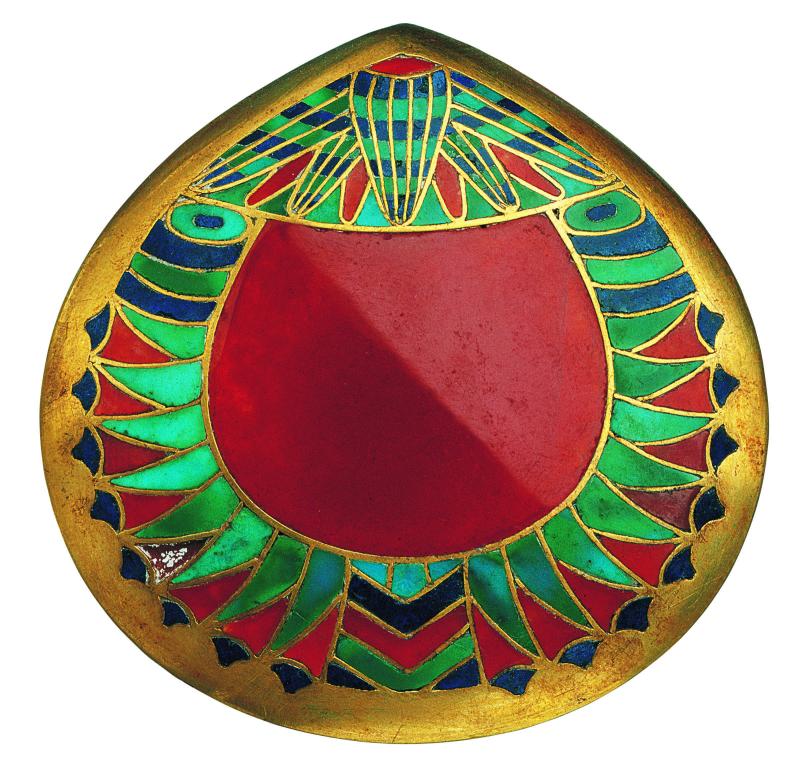
This emblem of Anouket in the Louvre attests to her cult in Deir-Medineh
Associated with the god Khnum and the goddess Satis, Anouket (Anoukis) is the third divinity of the triad of the First Cataract, or Elephantine triad. She is generally presented as “the daughter of the divine couple” or even “the wife of the god”.
In βAncient Egypt and its Godsβ, Jean-Pierre Corteggiani specifies that one of her titles is: βMistress of To-Seti, that is to say of Nubia; she is sometimes called the Nubian, although there is no evidence that it actually originated in this region, one of its functions is to guard the southern border of Egyptβ¦ And he adds, “As a text from the temple of Edfu clearly explains, if it is up to Satis, assimilated to Sothis, to raise the beneficial flow, it falls to Anoukis (Anouqis) the equally essential task of reduce and thus allow, after the flood has receded, seeds to germinate and vegetation to grow on the land released by the waters.” Therefore, it depends on the food and subsistence of an entire people, a whole countryβ¦ This can explain the reason for the spread of its cult towards the north, notably to Deir el-Medineh, where it was probably introduced “by the workers who worked in the granite quarries of Aswan.
Between the high walls of “Set MaΓ’t her imenty Ouaset” (“the Place of Truth to the west of Thebes”, today’s Deir el-Medineh), they lived between 60 and 120 families dedicated to digging and decorating tombs of royal necropolises. They had stone houses covered with palm leaf roofs, their own necropolis, and places of worship. Amon, Ptah, Meretseger, and Hathor were celebrated there, but other divinities also had their place. Indeed, as Guillemette Andreu points out in “The Artists of Pharaon”, “Khnoum and his two consorts, Satis and Anoukis, enjoyed great favour in the community, without us knowing if a particular sanctuary was built for them. Likely, one of the numerous devotional chapels located north of the site was occasionally used as a place of worship, but these cults appear essentially private and domestic.
“Two-faced” emblem of Anouket (Anoukis) – painted wood (tamarisk and shea) – 19th dynasty (around 1295 – 1186 BC) from Deir el-Medineh – Department of Egyptian Antiquities of the Louvre Museum – N 3534 by the acquisition of the Salt Collection in 1826 (Salt nΒ°559) published here by Dominique Valbelle in BIFAO 75, 1975
This “two-faced” emblem of Anouket made “For the ka of the servant in the Place of truth, Pached, acquitted”, testifies to this cult. On the other hand, in their “Guide to Deir el-Medina”, Guillemette Andreu and Dominique Valbelle recall that “the procession of the emblem of Anouqet is represented in the chapel of the tomb of the team leader Neferhotep”.
Two things are striking in the representations of Anouket: her very particular headdress, we will come back to it, and, more strikingly, her resemblance to Hathor. “As D. Valbelle has shown, this object, whose appearance evokes that of a hathoric sistrum, illustrates a syncretism between Γnouket of Elephantine and Hathor of Diospolis Parva in the context of a local cult in Deir el- Medineh” recalls Christophe Barbotin in “Egyptian statues of the New Kingdom”.
It is made from tamarisk wood, is 27.5 cm high and 13.5 cm wide, and rests on a shea tree base. The support, comparable to a fluted column, is surrounded by horizontal lines. The head surmounts it – in fact, two heads, reproduced identically, “back to back” – of the Goddess. Her face takes the shape of a diamond with rounded contours. The widest part is at the level of the cow’s ears and the thinnest at the chin level. Her large eyes, stretched with a line of makeup, are painted black with a large dark iris, which leaves little space for the white of the eye. They are topped over their entire length by very arched eyebrows, hollow and encrusted with a black material. The nose is flat, and the mouth with drooping corners displays a slight difference on the two sides, one of the upper lip being thinner. The left side of one of the two faces is marked with a long and painful scar.
Anouket’s main attribute, which makes her immediately identifiable, is her high and generous headdress made of ostrich feathers. Christophe Barbotin precisely describes this: “The mortar, painted red with vertical white lines, is topped with feathers with traces of blue and red paint (seven feathers on each side, three on each edge). It is placed on a black-painted cap visible at the top of each face but not on the sides. The top of the feathers constitutes a perfectly flat surface.
As I must run immediately to the first ballet performance of my almost five-year-old granddaughter, Mila, I only share my second post, a part of one of my favourite ballets of all time. I hope you enjoy it.π€
Here is the complete version if you like to watch it!π₯°π€
“Without the true masculine spirit and true feminine love within, no inner life exists. To be free is to break the stone images and allow life and love to flow… ~Marion Woodman; taken from a beautiful poem by a brilliant poet, rhymester, and valuable friend of mine: Deborah Gregory.
I have resumed an (other) old series of my posts that I believe has become increasingly relevant in light of a recent webinar on X (formerly Twitter), where Iranian participants discussed the challenges faced by individuals of different genders and sexualities (LGBT+) in Iran. However, I refrained from discussing Dr. Jung’s theories on Anima and Animus, as I knew they were unfamiliar with this topic. During meetings, I don’t speak much due to my taciturn nature. Instead, I act as a microphone for my friend who lives in Iran and cannot clearly talk in the meetings.
In this particular webinar about gender, I noticed how important it is to know about the Jungian ideas about our species and the terms Anima and Animus in all of us, whether masculine or feminine. Marion Woodman says: “The word’ feminine,’ as I understand it, has very little to do with gender, nor is woman the custodian of femininity. Both men and women are searching for their pregnant virgin. She is the part of us who is outcast, the part who comes to consciousness through going into darkness, mining our leaden darkness, until we bring her silver out.”
Yes! Such terms are too early for a nation which is still under pressure from the masculine’s religious domain. I was surprised to hear discussions about such issues in a country still heavily influenced by traditional religious beliefs. That became possible because of the efforts of Shadi Amin, an LGBT+ activist at 6rang.org.ππ
Work by Petra Glimmdall π
To notice it is a big problem even in the West: I know many men here in Germany, where I live, who make jokes about the subject, and gay is a swear word for them! Of course, freedom, which is common in the West, can’t mean that the people have understood it profoundly. It can be difficult to grasp the concept fully, even though I have noticed numerous misconceptions in the Jungian groups on Facebook, and I see how many falsehoods have lost their way there!
In this scenario, it is crucial to maintain an open mindset and not be limited by fundamental rules and principles. I am not suggesting that one must always be “modern,” but rather that we should exercise our imagination. We should put aside our fears and dive into the world of fantasy.
After death, it is unimaginable that there would be feminine or masculine ghosts, for souls do not have a gender.
I’d like to share another explanation from Jung on this topic. As humans, we are filled with fears, anxieties, desires, and aspirations. Jung says in on this:
But there is something to be said about the fear of the other side that is peculiar to us Westerners. This fear is not entirely unjustified, not to mention the fact that it is real. We readily understand the child’s and the primitive’s fear of the vast, unknown world. We have the same fear in our childlike inner side, where we also touch a vast, unknown worldβ¦ The fear is now justified insofar as the rational worldview (Weltanschauung) with its much-believed (because doubtful) scientific and moral certainties is being shaken by the data from the other side. There are truths that will only be true the day after tomorrow, those that were true yesterday, and those that will not be true at any time.
However, we can open many doors once we learn to embrace our inner selves and overcome the fear of the unknown. After reaching milestones one, two, three, and four, the next milestone could be number five – Last but not least!
anima and animus by polina sladkova
>”But I could imagine that someone would use such a technique out of a kind of holy curiosity, a boy perhaps who doesn’t want to put on wings because his feet are lame but because he longs for the sun. An adult, however, for whom too many illusions have been shattered, will probably only be forced to submit to this inner humiliation and abandonment and will once again endure the child’s fears. It is no small matter to stand between a day world of shattered ideals and unbelievable values and a night world of seemingly senseless fantasy. In fact, the uncanny aspect of this point of view is so significant that there is probably no one who would not reach for certainty, even if it were a “reach backwards” – for example, the mother who protected his (the son’s) childhood from night terrors. Those who are afraid need a dependency, like the weak, need support. That is why even the primitive spirit created the religious doctrine, embodied in magicians and priests, out of the most profound psychological necessity. “Extra ecclesiam nulla Salus” (“Outside the Church, there is no salvation”) – is still a valid truth today – for those who can drawback on it. For the few who cannot, there is only dependence on someone – a humbler and prouder dependency, weaker and more robust support than any, It seems to me. What shall one say of the Protestant? He has neither church nor priest; he only has God – but even God becomes doubtful.”<
Work by Petra Glimmdall π
>”The reader will probably ask himself in astonishment, but what does the anima produce that one needs such reassurances to deal with her? I would commend my reader for studying a comparative history of religions so that he feels the accounts dead to us with the emotional life felt by those who lived those religions. This will give him an idea of what lives on the other side. The old religions, with their sublime and ridiculous, benevolent and cruel symbols, did not arise out of thin air but out of this human soul as it lives in us now. All those things, their archetypes, live in us and can break out at any time with devastating force, namely in the form of mass suggestion, against which the individual is defenceless. Our terrible gods have only changed their name; they now rhyme with “ism”. Or does anyone have the voice to say that the World War or Bolshevism was an ingenious invention? Just as we live outwardly in a world where something similar can arise at any time, albeit only in the form of an idea, but no less dangerous and unreliable. Non-adjustment to this inner world is an omission just as fatal as ignorance and incompetence in the outer world. It is also only a tiny fraction of humanity, living chiefly on that densely populated peninsula of Asia projecting towards the Atlantic Ocean, who call themselves ‘the educated’, who, through a defective contact with nature, have conceived the idea that religion is a kind of peculiar mental disorder of inexplicable purpose. Seen from a safe distance, somewhat from Central Africa or Tibet, it appears as if this fraction had projected an unconscious “mental derangement” onto the still instinctively healthy peoples.”<
You must be logged in to post a comment.