👇👇👇👇👇👇 http://Hermes in the Forest of Symbols https://symbolreader.net/2020/02/09/hermes-in-the-forest-of-symbols/
A fascinating read 🤗🙏🧡 By; symbolreader

👇👇👇👇👇👇 http://Hermes in the Forest of Symbols https://symbolreader.net/2020/02/09/hermes-in-the-forest-of-symbols/
A fascinating read 🤗🙏🧡 By; symbolreader
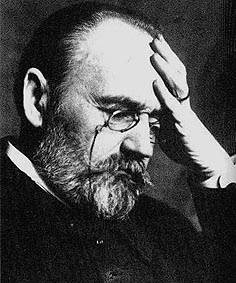
« Anti-Semitic young people, is there such a thing? So there are new brains, new souls, that this poisonous fool (antisemitism) has already unbalanced? What sadness, what anxiety, for the twentieth century that is about to begin! «
A great author, a great man 👍❤
Dreyfus is innocent ✌
« Des jeunes gens antisémites, ça existe donc cela ? Il y a donc des cerveaux neufs, des âmes neuves, que cet imbécile poison a déjà déséquilibrés ? Quelle tristesse, quelle inquiétude, pour le vingtième siècle qui va s’ouvrir ! »
Émile Zola (1840 -1902) in Lettre à la jeunesse, 1897, est un romancier, nouvelliste et journaliste français. Il est considéré aujourd’hui comme l’un des romanciers français le plus connu et le plus publié au monde. Ses œuvres – dont Les Rougon-Macquart – seront adaptées de nombreuses fois au cinéma ou à la télévision. On pensera notamment à Germinal réalisé par Claude Berri en 1993 avec le chanteur Renaud dans le rôle d’Etienne Lantier et de Miou-Miou dans celui de la Maheude. Vers la fin de sa vie, il signera dans le journal L’Aurore, un article devenu depuis célèbre : « J’accuse… ! » pour la défense du capitaine Dreyfus. Zola mourra d’une intoxication au…
View original post 201 more words
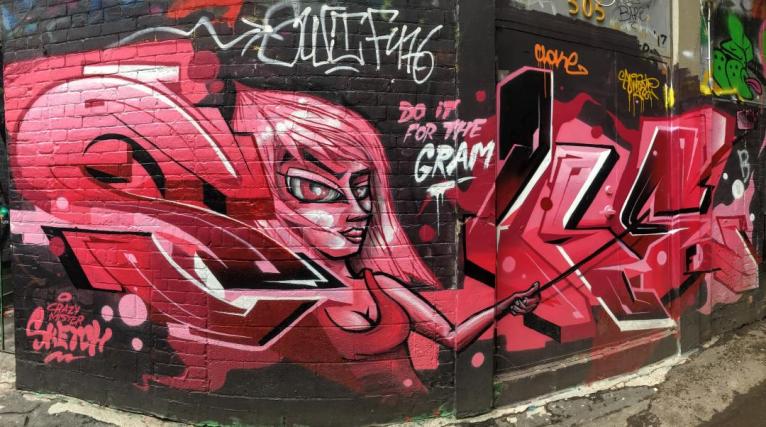
Fascinating Arts 🙏👍❤
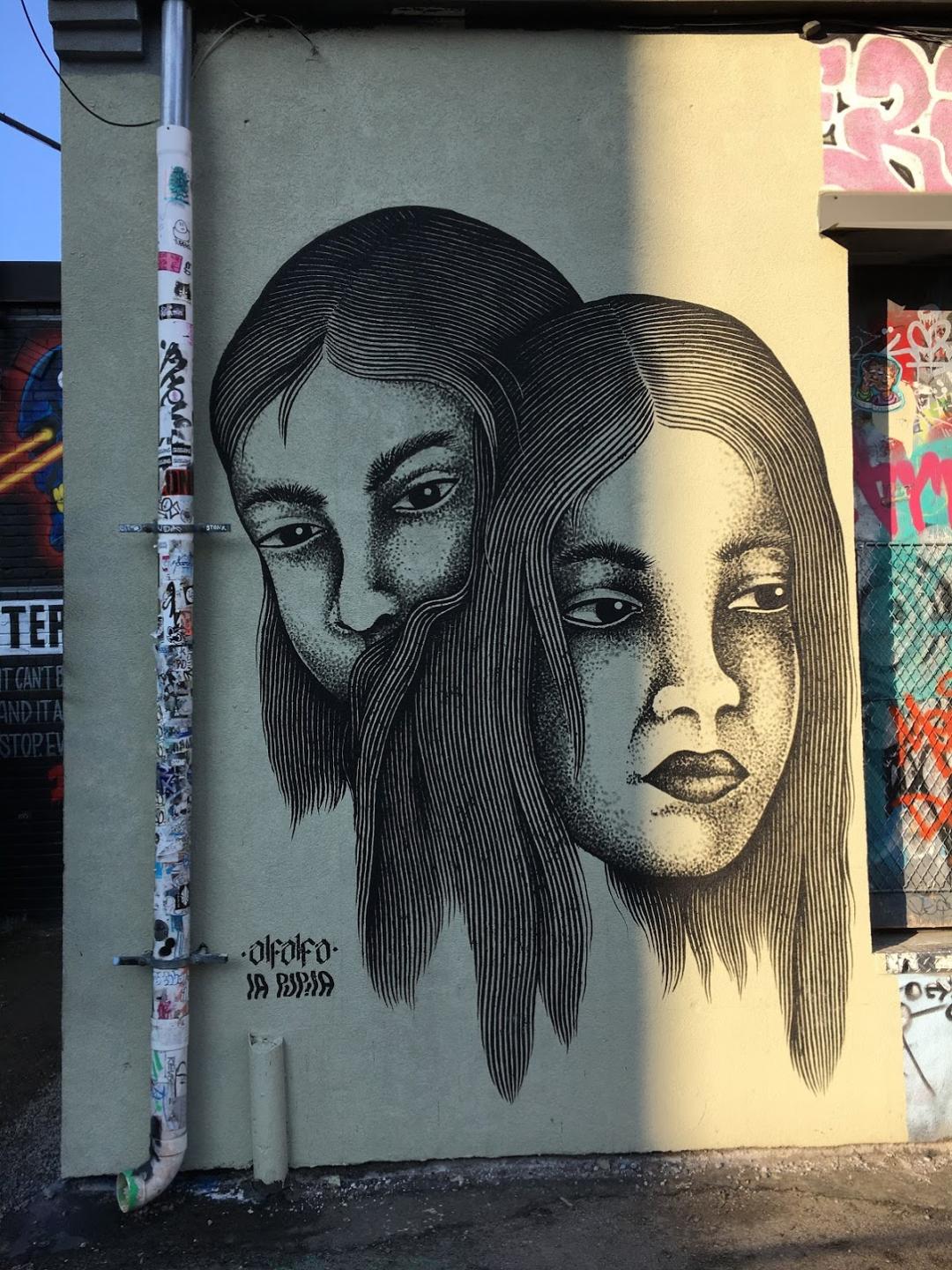
These are some random faces I really like.
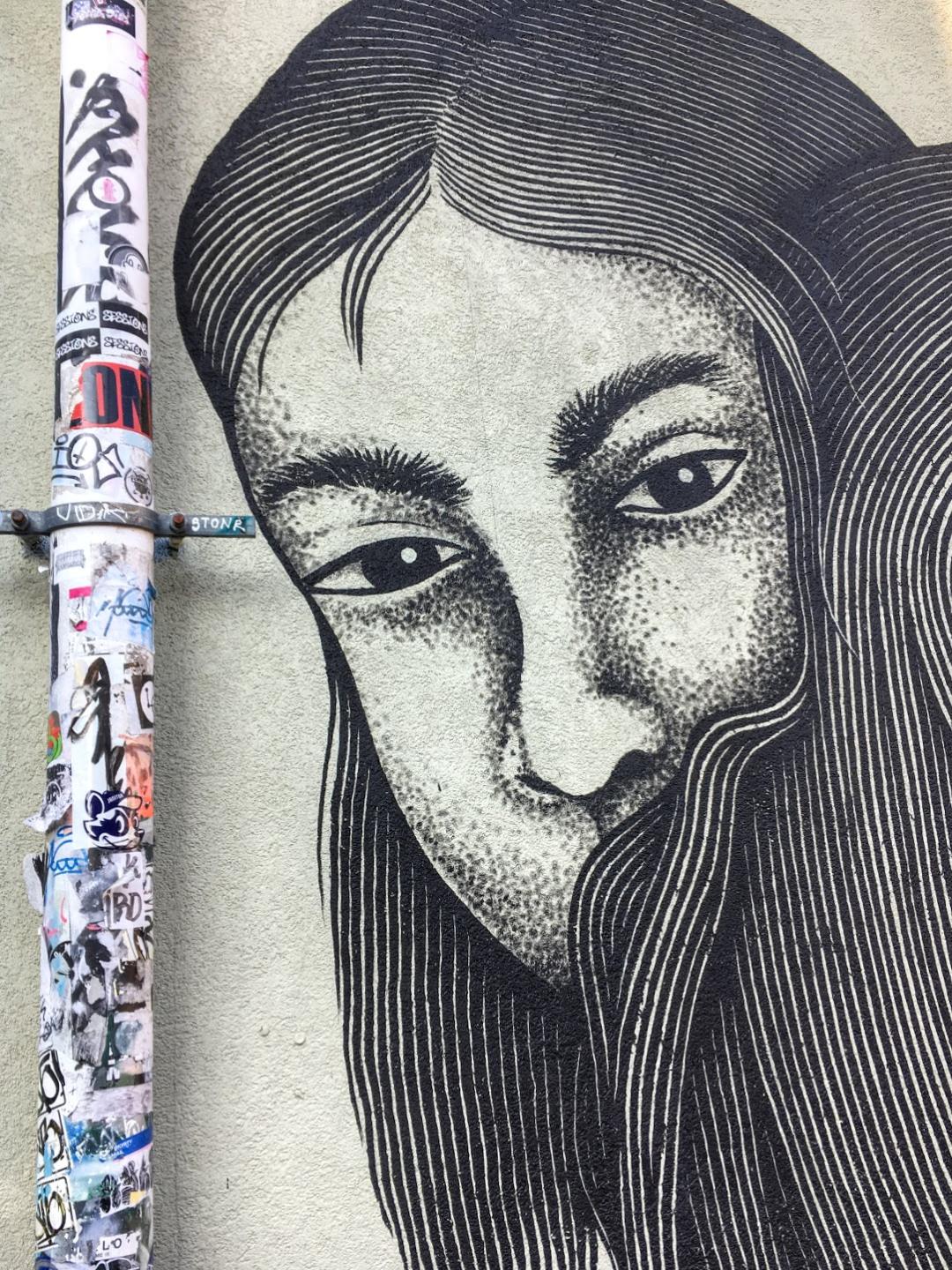
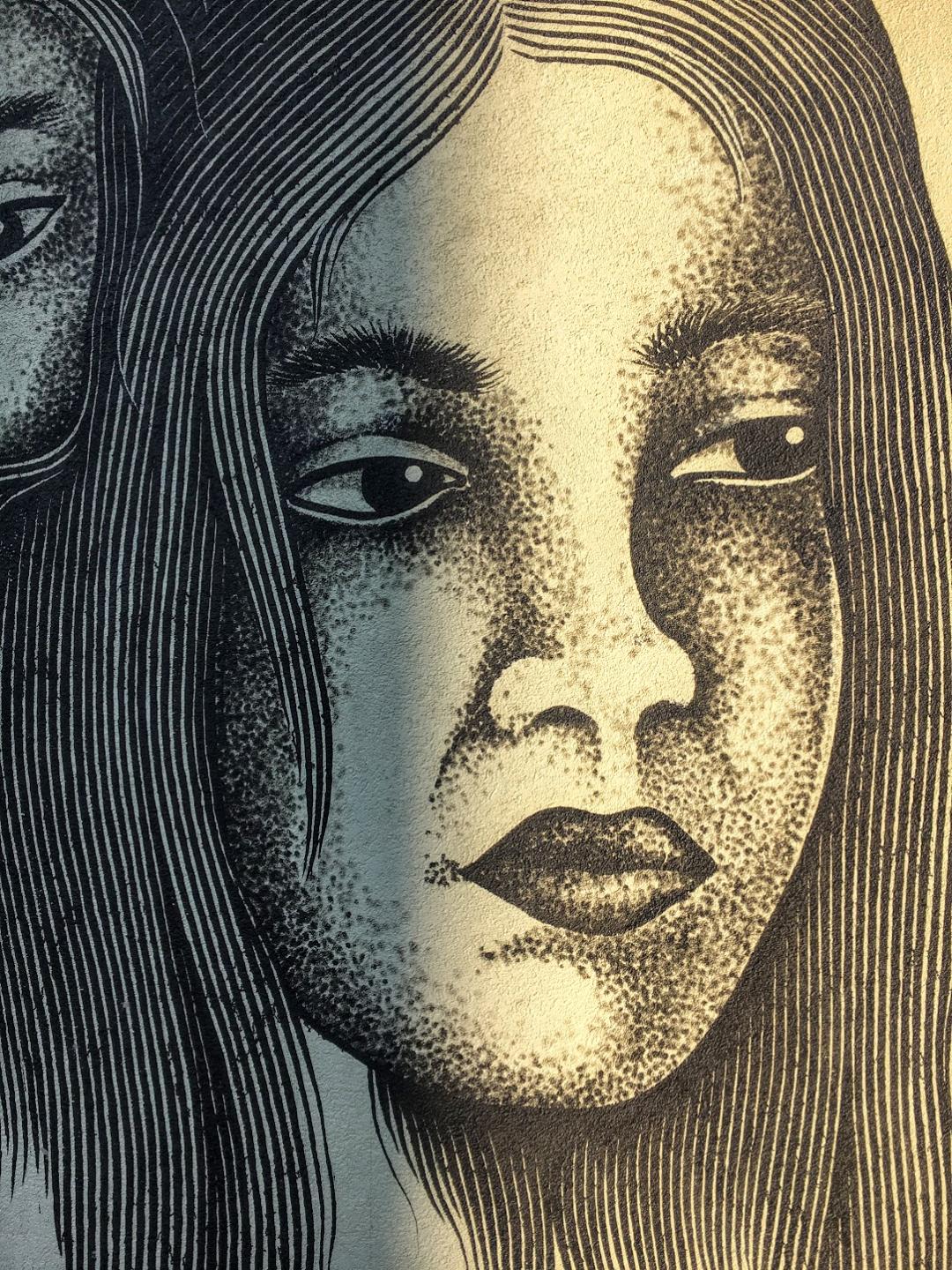
The sun can mess up the shot, or have an interesting effect.
The next pic is sent to us from Alex Morris.
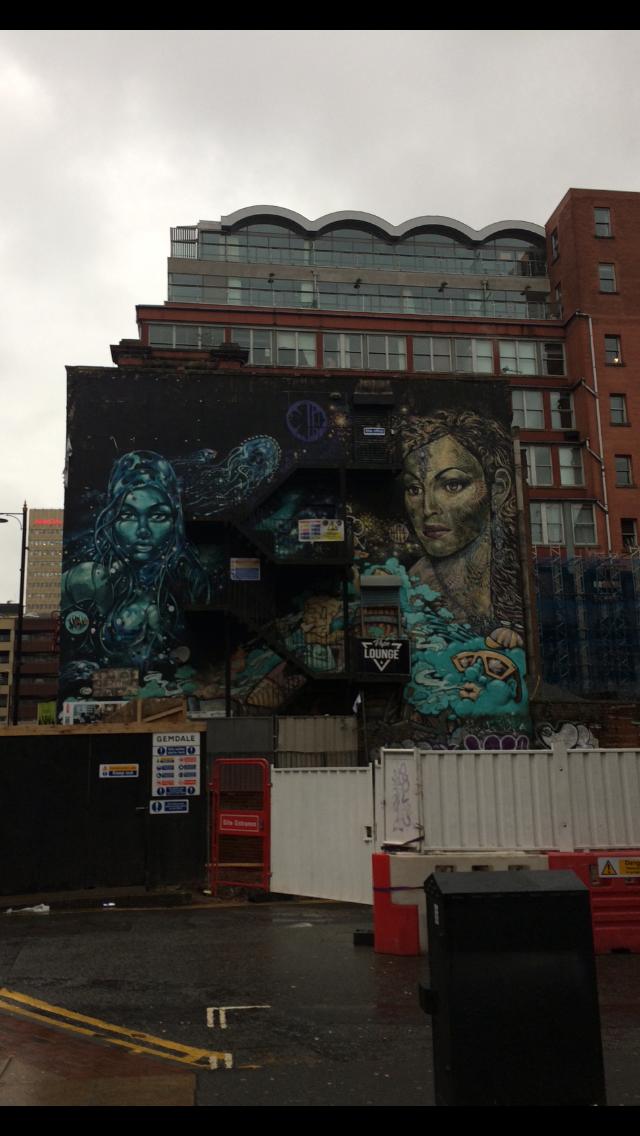
It’s a fabulous mural from Manchester, U.K. Thank you, Alex!
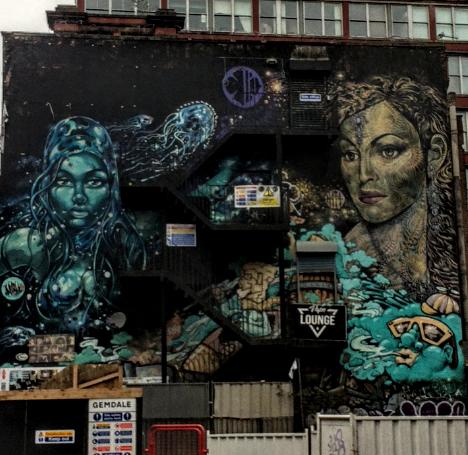
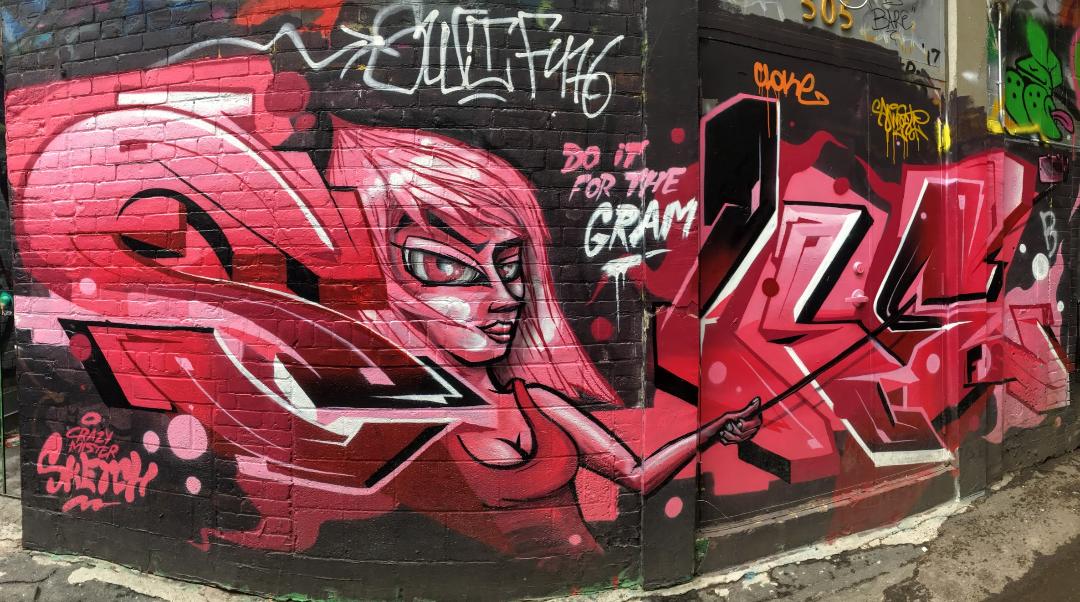
Elicsr in Graffiti Alley.

The drawing below is from Chris Franklin. If you click on it, it will take you another quite wonderful drawing of his.
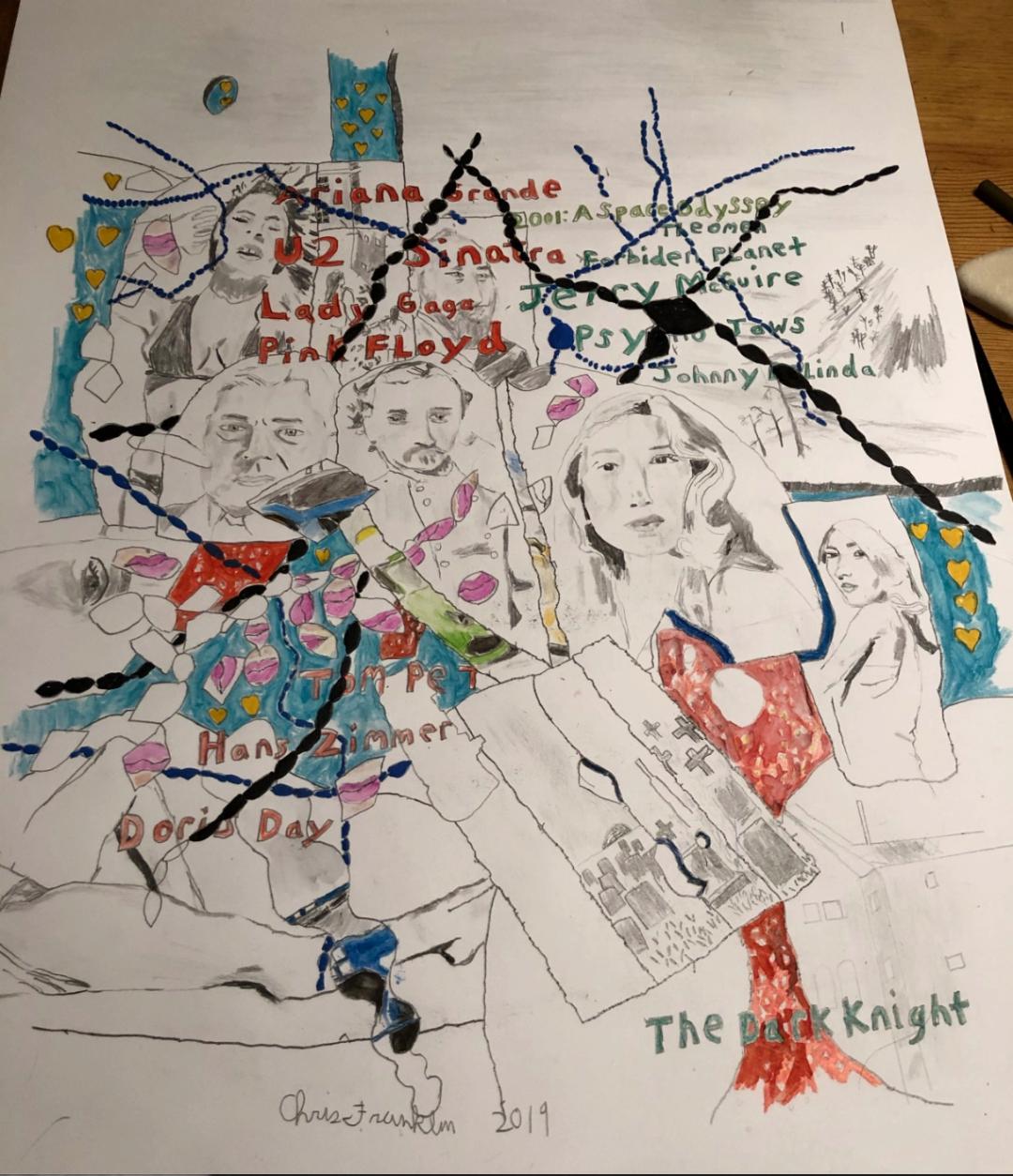
Back in the alley.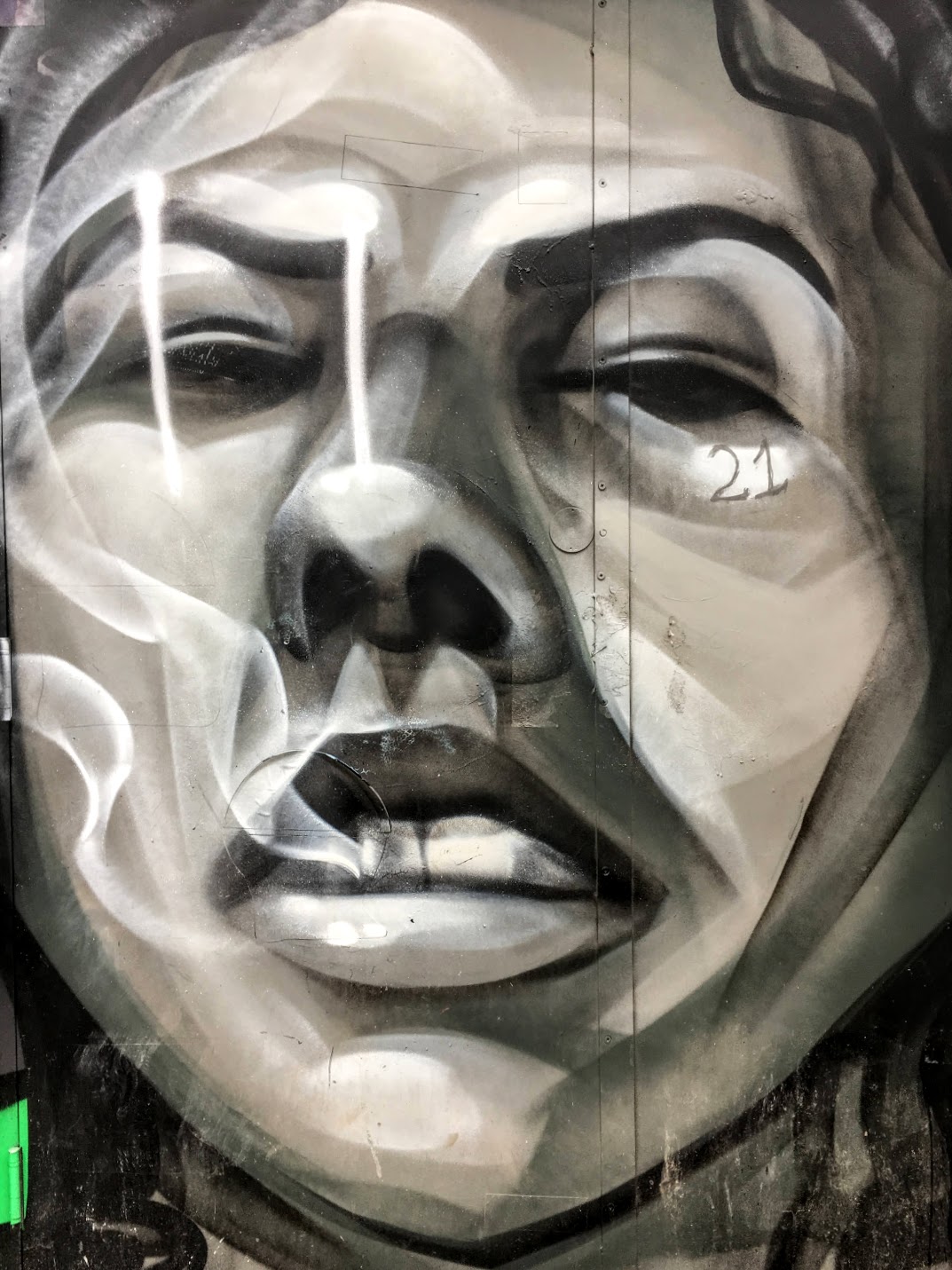
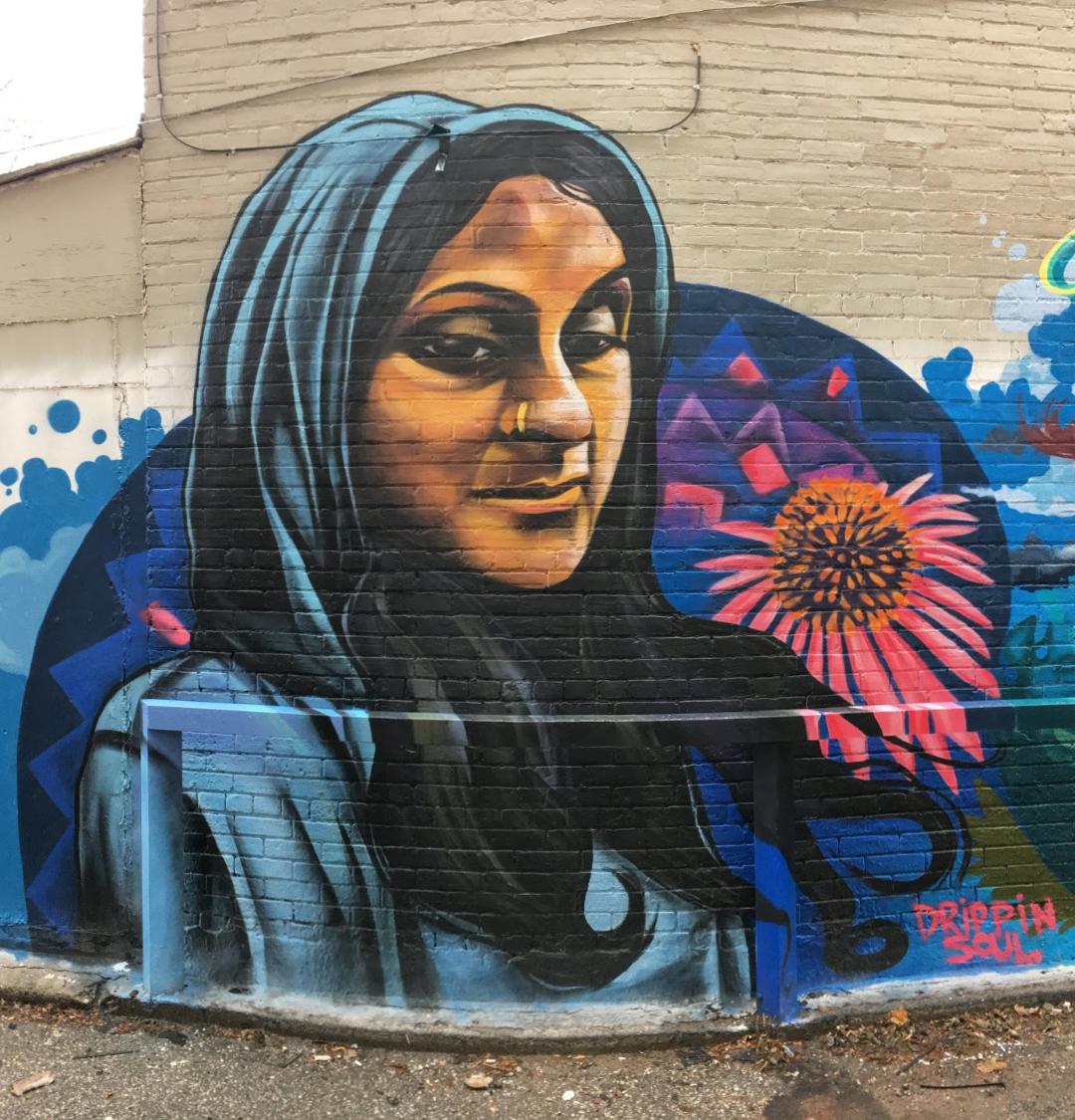
Pics taken by Resa (unless otherwise credited) – 2019 -2020
Toronto, Canada
Artists:


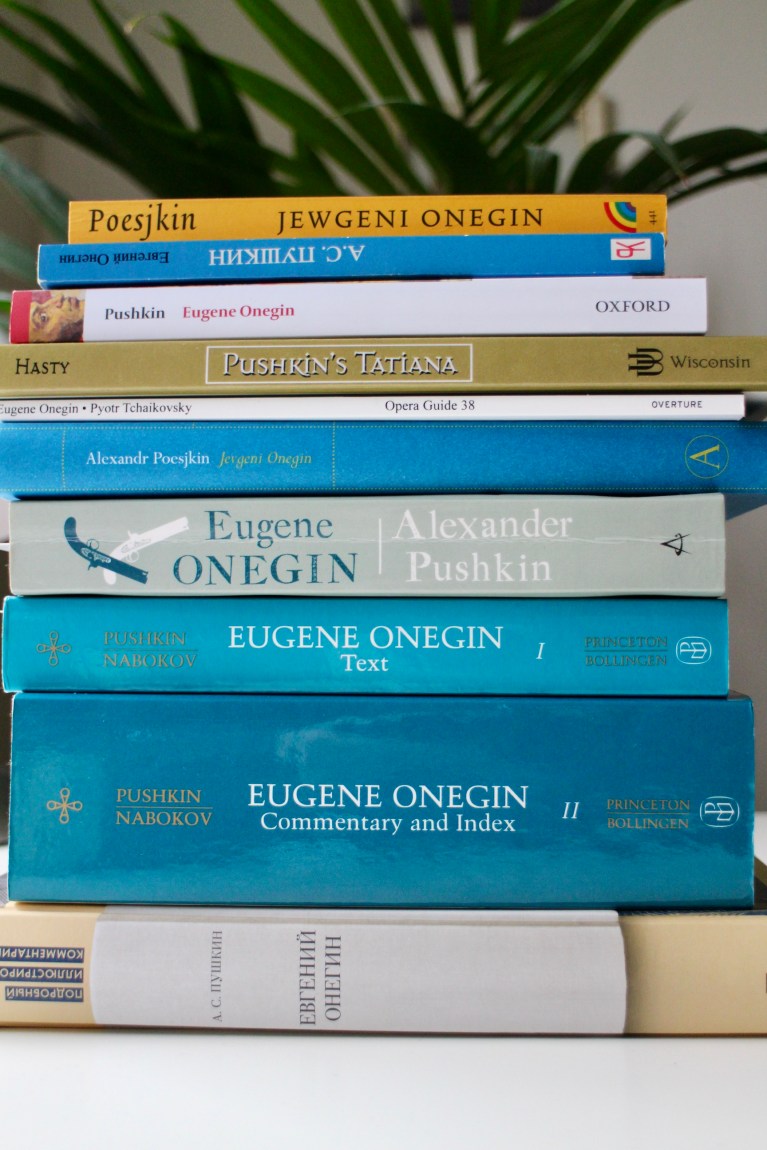
A Great Poem in a Novel form, fascinating 🙏❤🥰❤🥰🙏
PS: I love also the queen of spades ❤❤🙏
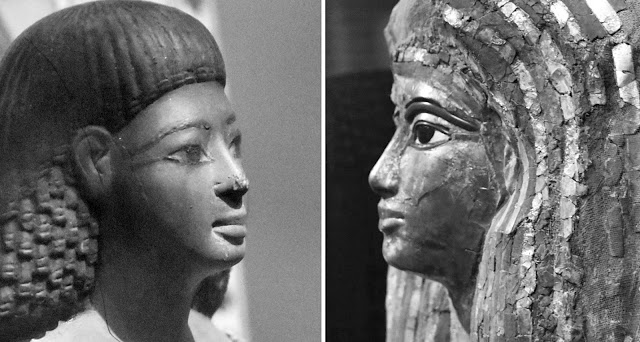
We can surely never stop being amazed by this fantastic magical Egypt. And nowhere is another fabulous discovery to be stunned. With heartfelt thanks to Marie Grillot 🙏🧡🙏🧡
via https://egyptophile.blogspot.com/ Translated from French.
From 1903 to 1906, Ernesto Schiaparelli, at the head of the Italian archaeological mission, and his collaborator Francesco Ballerini, excavated in the Valley of the Queen’s necropolis of queens, princesses, princes of the New Empire. They will discover thirteen tombs, including those of the princes Amonherkhepshef and Khaemouaset which are open today to the public.
In 1905, they began excavations on the nearby site of Deir el-Medineh, the site “which presents the enormous interest of preserving important vestiges of the village and the graves of the workers who, in the New Empire, arranged the royal tombs in the Valley of the Kings and that of the Queen’s”.

Founded at the beginning of the 18th dynasty under the reign of Thutmosis Iᵉʳ, then extended and enlarged several times, notably under the reigns of Thutmosis III and the first Ramessides, “Set Maât her imenty Ouaset” (the “Place of Truth in the West of Thebes “) was surrounded by high walls. For almost 500 years, “between 40 to 120 households” lived there in stone houses covered with a palm leaf roof, also have places of worship and a necropolis. The community members were mainly architects, scribes, painters, sculptors, ordinary workers, …
When the Italian mission arrives, it decides to conduct large-scale excavations, employing up to 250 workers! Schiaparelli first explores the northern part of the necropolis: he discovers there the chapel of the tomb of Maia, painter of the end of the 18th dynasty (after the reign of Akhenaten, around 1330-1320 BC). ).
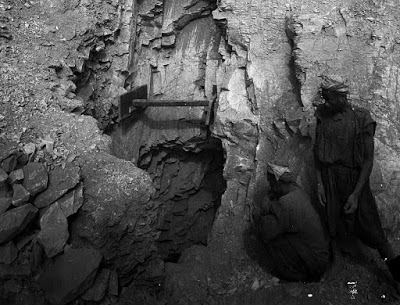
It is on February 15, 1906, after a month of intense work that is discovered “in the northern circus of the necropolis of Deir el-Medina, the untouched tomb of Kha”. If the mud-brick chapel of Kha was already known, it was a great surprise that the tomb was found “in the isolated cliffs which surround the village and not in the immediate vicinity of the chapel, as was usually the case”.
Sensing an important discovery, the Italian mission takes care to prevent the service of antiquities… Arthur Edward Pearse Brome Weigall was appointed shortly before by Gaston Maspero to replace Howard Carter as chief inspector of antiquities, responsible for the protection and the management of the antiquities of Upper Egypt. Based in Luxor, he will oversee the extraordinary event.
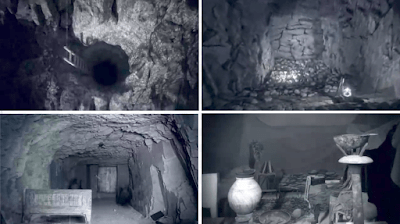
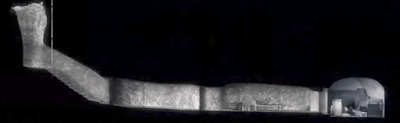
Here is part of his story: “We reached the entrance to the tomb by descending a flight of steep and steep steps, cluttered with debris. At the end of this entrance, we arrived on a passage oriented towards the hill which was blocked by a wall of large stones. After taking photographs and removing the stones, we found ourselves in a tunnel, long and low, then blocked by a second wall which was a few meters in front of us… These two walls being intact, we realized that we were about to see what no living man had ever seen before … “
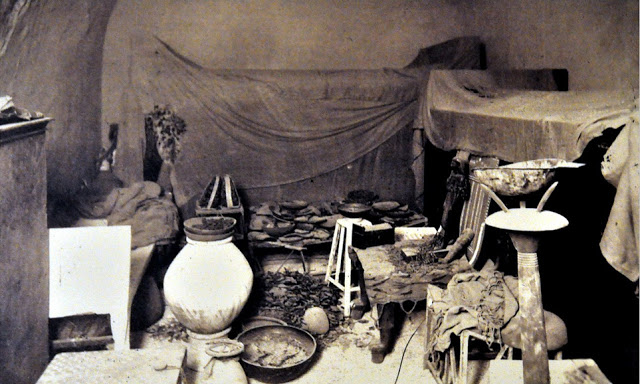
Even if they expect to discover wonders, what is offered to them after opening the door takes their breath away … “All of the funeral equipment was perfectly ordered and positioned. The main elements were covered with dust that had solidified. The floor was carefully swept by the last to leave the place. A lamppost with a wooden papyrus column supporting a saucer made of copper alloy still contained the ashes of its last flames… The tomb and its contents reflected the personal wealth of the owners, their special position in society and the history of their lives. It suggested the vision of a prosperous house from the 18th dynasty, as “packaged” to be reused in the afterlife. “
There is no doubt that the architect Kha, “director of works”, and his wife Mérit were, during their lifetime, eminent figures!”A tomb of such magnificence must have taken years of preparation, a process that Kha certainly oversaw in person while he was still alive.”It turned out that his dear wife Mérit lost her life before him. “The afflicted widower then assigned him his own sarcophagus.”
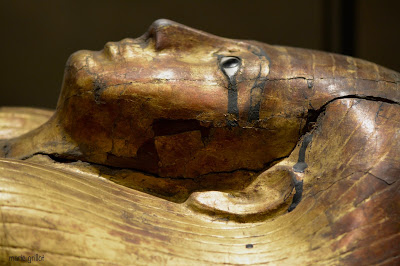
In addition to the two coffins of Merit, and the three coffins of Kha – placed one inside the other – the tomb will deliver clothes, household linen, the instruments and tools of work of Kha, the toilet boxes, as well as the Merit wig, as well as its work-box…
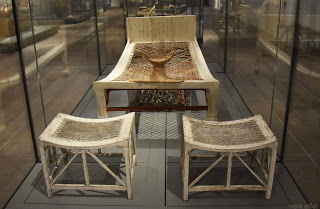
It is also a whole pantry for the afterlife which is revealed, thus providing important information on the food of the time: pieces of bread of different shapes, dishes of food, bags of ropes containing the doum palm fruits, a moving dish of carob compote, onions, salt blocks…

There is no shortage of dishes, as well as magnificent jars for storing liquids.
The senet game of Kha is particularly moving: in this context of the tomb, “the senet game was terribly serious because according to chapter XVII of the Book of the dead, the winner of the game came out like a living Ba spirit. “
The long list of the contents of the tomb cannot be exhaustive.
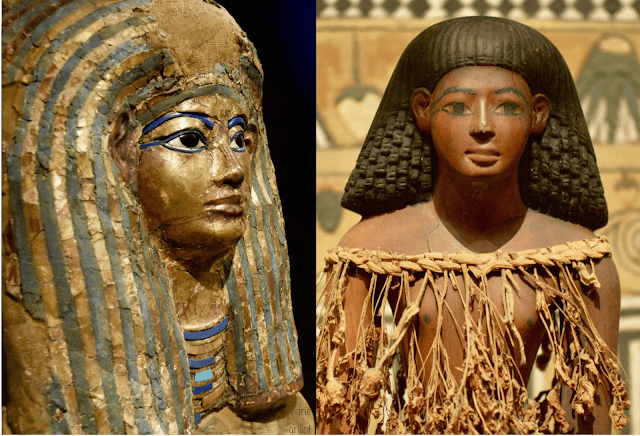
But it would be unforgivable not to mention three particularly touching pieces: the magnificent funerary mask of Merit, the lovely wooden statuette of Kha, as well as the papyrus from the Book of the Dead which takes place over 13 meters!
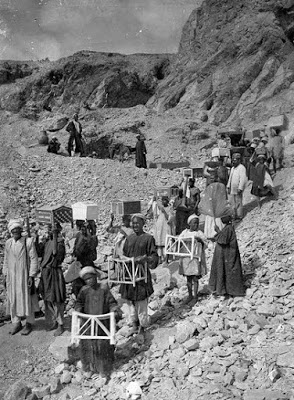
The funeral treasure of Kha and Merit then takes the path to the Egyptian Museum in Turin, directed by Ernesto Schiaparelli since 1894.
Since then, it has never ceased to delight, to amaze and marvel the thousands of visitors.
A new museography space, perfectly studied, was dedicated to it in 2015. Enriched with photographic testimonies which relate the discovery, it is now fully highlighted.
sources
Art Treasures from the Museo Egizio, Eleni Vassilika, Allemandi & Co
Museo Egizio guide, Franco Cosimo Panini Publishing
The Egyptian Museum in Turin, Federico Garolla Editore
Pharaoh Artists, Deir el-Medina and the Valley of the Kings, the Louvre, 2002
Who Was Who in Egyptology, Bierbier ML, London, Egypt Exploration Society
Researchers from 1798-1945 Past: Learning from archeology , Eve Gran-Aymarich
” Schiaparelli: great name of Egyptology ” ( “égyptophile”)
” Francesco Ballerini, Italian pioneer of Egyptology ” ( “égyptophile”)
” Deirelmedina “
” Topographical bibliography of ancient Egyptian hieroglyphic texts, reliefs and paintings I – The Theban necropolis – 1. share private tombs ” by the late Bertha Porter and Rosalind Moss lb, b.sc . (oxon.), Ethel fsa assisted by w. Burne – 2nd Edition Griffith Institute Ashmolean Museum Oxford
“Excavations of Schiaparelli. Holdings Francesco Ballerini “CEFB, Como (Italy)
MIFAO 73 : Vandier Abbadie, Joan; Jordan, Genevieve – “Two Tombs of Deir el Medina (1) Chapel Kha (2) The tomb of the royal scribe Amenemopet (1939)”
A letter from Albert Einstein to his daughter: On the universal power of love
“In the late 1980s, Einstein’s daughter Lieserl donated 1,400 letters, written by her father, to the Hebrew University, ordering them not to publish their contents until two decades after his death. This is one of them.“When I proposed the theory of relativity, few understood me, and what I will now reveal will conflict with the misunderstanding and prejudice of the world.
I ask you to keep the letters for as long as it takes, years, decades until society is advanced enough to accept what I will explain below.
There is an extremely powerful force that, to date, science has not found an official explanation for. It is a force that encompasses and governs everyone, it is behind every phenomenon that works in the universe and has not yet been identified by us. This world power is LOVE.
When scientists searched for a unified theory of the universe they forgot the most powerful invisible force. Love is a light that illuminates those who give and receive. Love is gravity because it makes people feel attracted to others. Love is power because it multiplies the best we have, and allows humanity not to be erased by its blind selfishness. Love unfolds and reveals. For love, we live and die. Love is God and God is Love.
This power explains everything and gives meaning to life. This is the variable we have long overlooked, perhaps because we are afraid of love because it is the only energy in the universe that man has not learned to drive at will.
To give visibility to love, I made a simple replacement to my most famous equation. If instead of E = mc2, we accept that the energy to heal the world can be attained through love when multiplied by the speed of light in the square, we conclude that love is the most powerful force there is because it does not have limits.
After the failure of humanity to use and control the other forces of the universe that have turned against us, it is imperative to feed on another kind of energy …
If we want our species to survive, if we want to find the meaning of life, if we want to save the world and every conscious being that lives in it, love is the one and only answer.
Maybe we are not yet ready to make a love bomb, a device powerful enough to completely destroy the hatred, selfishness and greed that are destroying the planet.
However, each person carries within him a small but powerful love generator whose energy is waiting to be released.
When we learn to give and receive this universal energy, dear Lieserl, we will have affirmed that love conquers everything, is able to transcend everything, for love is the quintessence of life.
I am deeply saddened that I have not been able to express what I have in my heart, which strikes a life for you. It may be too late to apologize, but as time is relative, I must tell you that I love you and that thanks to you I have come to the final answer! «.
Your father,
Albert Einstein”


“Στα τέλη της δεκαετίας του 1980, η κόρη του Αϊνστάιν, Lieserl δώρισε 1.400 επιστολές, που γράφτηκαν από τον πατέρα της , στο Εβραϊκό Πανεπιστήμιο, με εντολή να μην δημοσιεύσουν το περιεχόμενό τους, μέχρι δύο δεκαετίες μετά το θάνατό του. Αυτή είναι μία από αυτές.
«Όταν πρότεινα τη θεωρία της σχετικότητας, ελάχιστοι με κατάλαβαν, και αυτό που θα αποκαλύψω τώρα θα συγκρουστεί με την παρανόηση και την προκατάληψη του κόσμου.
View original post 479 more words
There is a man who talks from my soul; as he feels the solitude so do I.
I can understand what he’d gotta fight through his childhood and always confronted with the questions which hardly could be answered. And how could a child to do so!
He is one of my favorite person on this planet.
A great article by a signora, what else. just enjoy reading 😊🧡🙏
Translated from Italian.
By Sandra Saporito https://www.eticamente.net/author/sandra
via https://www.eticamente.net/
“I was a birth of nature launched towards the unknown, maybe towards something new or even towards nothing, leave it to develop from the deep, obey my destiny and do my own will, this was my task.”
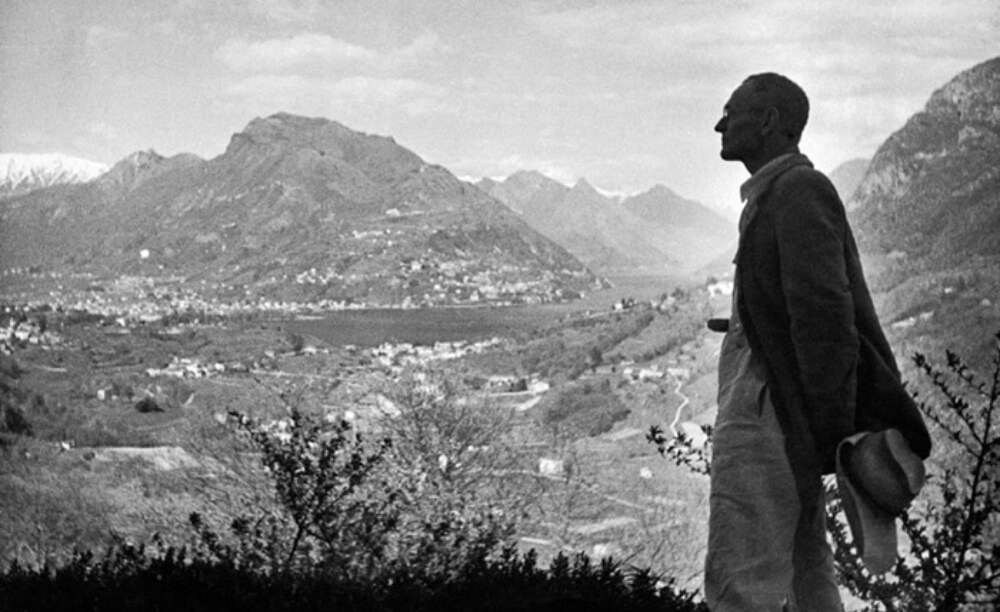
Di Sandra Saporito -14 Luglio 2019
Hermann Hesse, artist and Nobel Prize winner for literature, was born on July 2, 1877, in Germany, in a pietist family who gave him a very rigid education, where art did not have its place and was considered superficial.
Hermann Hesse wrote one day to his sister Adelaide: “It often happened that mom and dad expressed approval for a poem or a musical composition, adding however immediately that all this, of course, was only atmosphere, only empty beauty, only art, without ever to draw on a high value such as morality, will, character, etc. This theory ruined my existence and I detached myself from it with no possibility of return. “
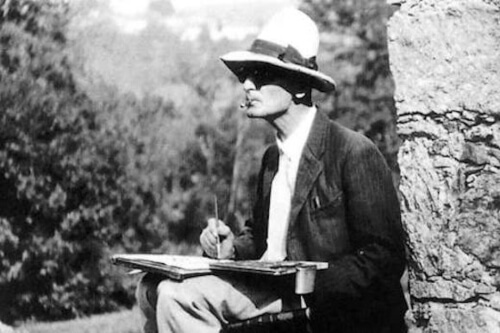
This did not prevent him from becoming an artist, with a capital “A”, not so much because he was a writer, poet, aphorist and painter at the same time but because his art was rich in meanings that went far beyond the purely aesthetic aspect of the work: imbued with moral, philosophical and psychological meanings that exalted both the disturbances and the profound transformations with which his inner life was rich, some of his works, markedly influenced by his psychoanalytic sessions with CG Jung, described the inner journey to discovery of the Self and the mysteries of existence.
His works are rich in teachings but today I would like to talk to you about the life of this great writer and the lessons that his life has left us as a legacy.
Hermann Hesse developed a totally different vision of art from that of his parents, to the point of making it the pillar of his life. Although he had little hope that art could change society, he felt that it could profoundly change man.
“Art, the fulfillment of inner satisfaction, meant connecting with a profound and essential sense associated with the term” home “. But this house was not his parents’ house. It was rather a return to something intangible, tied to an intuition, but unique to each individual. It was a return and a journey at the same time and could only be achieved through art, or through the hard training of oneself. “Writes Barbara Spadini on the relationship between Hermann Hesse and art.
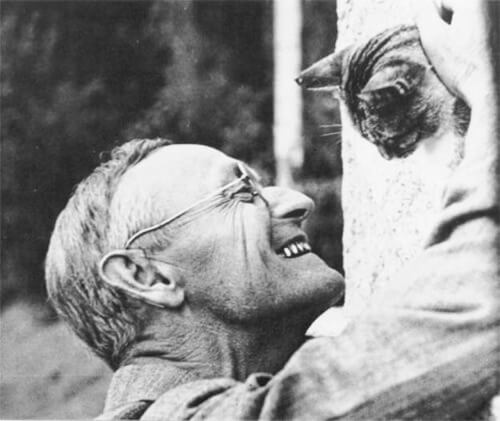
It was through this means repudiated by his family that Hermann Hesse developed a visceral desire to discover his identity and discover the mysteries of the world; which he did thanks to Jungian analytical psychology, the study of Buddhism, Hinduism and Gnosticism, art and philosophy.
Although he acted in stark contrast to his parents’ ideology, his family background had a great influence on him: he was aware of the influence his family tree had on his life.
He was in fact influenced by the life of his grandparents, whose name he bore: “To tell my story I have to start from the distant beginning. If it were possible for me, I would have to go back much further, to the very early years of my childhood, and even further into the distance of my origin. “
Art helps to become better human beings
Through his novels and poems, full of autobiographical elements, Hermann Hesse recalled the episodes of the past that had caused him pain by making writing an instrument of self-analysis, of reflection on the world and of inner evolution.
Its protagonists lived in the imagination what the author had experienced: fears about the future related to war and violence perpetrated on human beings in the name of ideologies of power, internal tensions related to religion and its prohibitions, existential questions on the meaning of life and the search for inner peace despite the inner evils that did not give him peace: he had suffered from years of depression.

The plot of his works often highlighted how much the individual and the collective were linked, the reflection on identity moved back and forth towards a collective dimension that in turn influenced the individual for better or worse, bringing him both to virtue and vice, with the awareness that life is made up of these two antagonistic forces.
The most beautiful works can arise from the crisis
Through art and writing, in particular, Hermann Hesse gave voice to those inner storms that he managed to govern thanks to the movement of his feather: writing became a tool to express the hidden side of identity, art was transformed into a bridge between invisible and manifest that allowed to channel and sublimate the impulses of the unconscious: pain was transmuted into art thanks to ink.
In Demian, a training novel, written in 1919, Hermann Hesse wrote some passages of his conversations with Dr. Lang, collaborator of C. G. Jung with whom he made a psychoanalytic path to get out of a state of deep crisis. This path gave him the inspiration to write the novel: “But all [the conversations], even the most humble ones, hit the same point inside me with light and constant hammering, all contributed to form me, to break eggshells from everyone of which I raised my head a little higher, a little freer until the yellow bird with the beautiful head of a bird of prey erupted from the shattered shell of the world. “
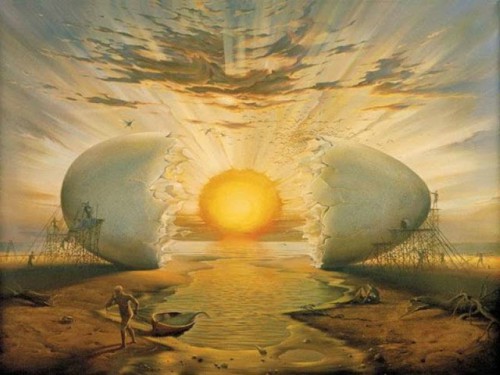
This pained feather allowed him to develop a literary style that earned him a Nobel Prize in 1946 “For his inspired writing which in growing boldness and penetration exemplifies classical humanitarian ideals, and for the high quality of the style”.
In hindsight it is curious to note how much his works have influenced the minds of his readers, debunking his initial belief: art, in reality, changing men, can really help change society. A tree will certainly not be able to change the face of a forest but its fruits, trees in power, will certainly be able to do so with the passing of many seasons.
by Sandra “Eshewa” Saporito
Autrice e operatrice in discipline bio-naturali
www.risorsedellanima.it
Hi, Friends. I’m just full in my mind these days; There are many things in front of me, or better to say; I have a lot of plan to do!
At first, the gum has been survived and the surgery had been succeeding. But the soul has an injury which is more important and pains more than the buddy’s pain;
My main plan is to fly to the USA to meet my brother in law and his all daughters+son for maybe the last time in my life, because, my brother; Soroosh, is some older than me and it is our last chance to see each other.
Therefore, I thought it is possible;

I had to do this since many years ago but because of my full-hours work, I couldn’t plan a long trip, but now, as I am going to be retired in this year, I have thought to make it now, or never.
But as I tried to get the visa for the Us, I feel like I’m locked out from the normal visitors; as my wife got her visa already through ESTA. and I’m not authorized in this way.
It might sound not so terrifying but for me it is because, we; my wife and me, have sent our applications in the same manner at the same time, the only difference in between, it was the born country, my wife; Germany and mine, Iran.
Anyhow, I will try to make an appointment to the embassy in Berlin and try to do my best. My love for America stays tuned, only I must ponder what happened to this root of freedom.
You might remember how it was once in those days, good days 😊🙏💖😊
Freedom… Freedom… Freedom… Freedom Sometimes, I feel, like I’m almost gone. Sometimes I feel, like I’m almost gone.
“I must be great, or nothing.” incredible 😊🙏💖💖
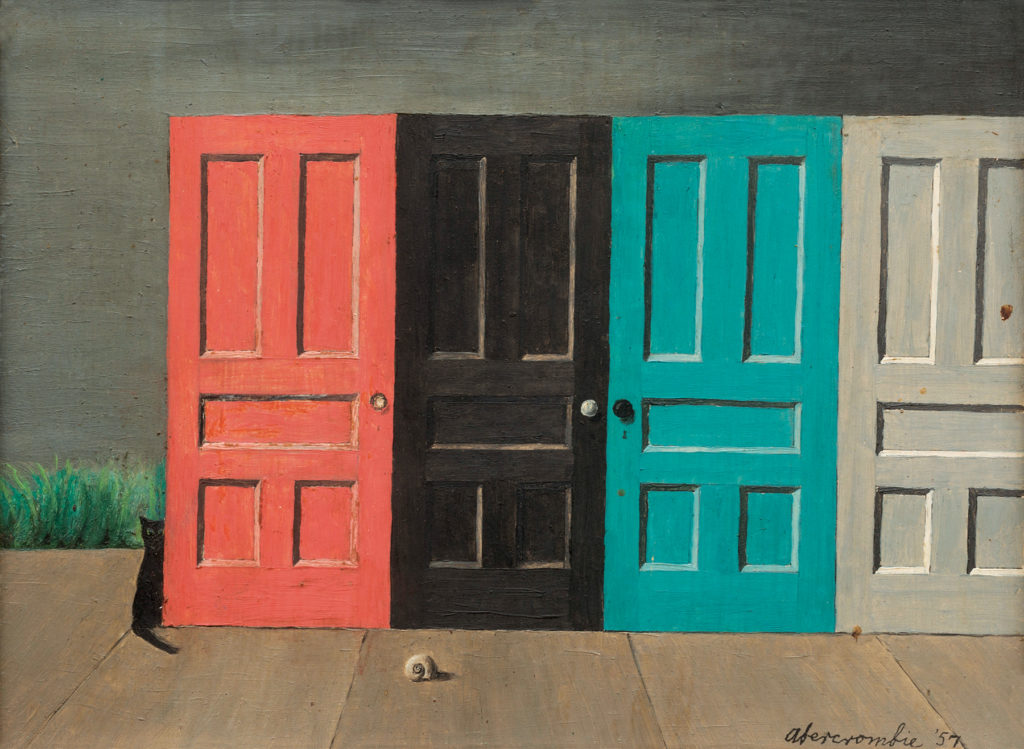 Gertrude Abercrombie-Untitled 1957
Dubbed ‘Queen of Chicago’ by her intimates, Gertrude Abercombie was a mid 20th Century bohemian, saloniste, jazz devotee and Surrealist painter. The weekly salons she held with her second husband, the music critic Frank Sandford, in a large house in Hyde Park neighbourhood of Chicago, was frequented by such jazz luminaries as Charlie Parker, Miles Davis, Sarah Vaughan and Dizzie Gillespie, who was a particularly close friend.
The improvisational techniques of be-bop certainly seemed to have influenced her paintings, which feature a small number of elements and motifs repeated throughout her career in an unusual and innovative manner. Cats, snail shells, owls, doors, leafless trees and a solitary female figure, always a hypercritical self portrait, frequently recur against a somber night sky barely lit by the distant moon. The mood is usually mysterious and elusive with occasionally a hint of Southern Gothic, however Design for Death, which…
View original post 122 more words


 lampmagician
You must be logged in to post a comment.