Hello, my chuckaboos! Welcome back to the #steampunk riverboat, The Delta Pearl.
This week’s random reader things
I could have used this as a “thing” last time, but it seemed more important this time. What? Paddlewheel! Two readers left it as a “random thing.” One was Ginger, of Murphy’s Law. Thanks for your loyal support, my chuckaboo! The other reader to leave “paddlewheel” was Kevin Cooper. Check out his blog and music.
Wait! There are more reader things. Both are perfect for this Steam Era story. Sally Cronin supplied a mangle. Fraggle (aka photographer C.J. Hyslop) gave us a skirt lifter.
Thanks to Dan Antion and for letting me use some of his photos.
I have a strange feeling today! Some of such a day in which I confusingly stare at the monitor but I see not the events that are happening now but there is my past life which is running before my eyes.
And then I saw this short poem by Forough Farrokhzad, one of the greatest Persian poetess and it hit my eyes and heart.
Wishing you all a leisurely weekend ❤ ❤
Who said that time is gold I tasted it by and by Time is like alcohol; burns second to the second, when you got drunk You open your eyes and see that your life has been gone and there’s been remained; you and a hangover of a lost life.
چه کسی گفت زمان طلاست من مزه مزه اش کردم زمان عینه الکل ثانیه ثانیه می سوزاند مست که شدی چشمانت را باز میکنی و میبینی عمرت گذشت و تو مانده ای و خماری یک عمر از دست رفته.
To be a little more serious about it, today’s topic is demonology; specifically, the demons found in Le Veritable Dragon Rouge, also known as The Grand Grimoire. Le Veritable Dragon Rouge, which is the French title, translates to the True Red Dragon.
Now, depending on your level of Biblical literacy, you may recognize the Red Dragon from the closing book of the New Testament, Revelation:
And behold a great red dragon, having seven heads and ten horns, and seven crowns upon his heads. And his tail drew the third part of the stars of heaven, and did cast them to the earth.
— (Rev. 12:3-4, KJV)
Likewise, depending on your interest in art, you might be aware of the Great Red Dragon paintings done by the poet, artist and mystic William Blake:
According to the Völsunga Sagas of The Valkyries we discover that they must answer to Odin and do his bidding or they will suffer the consequences such as one defiant Valkyrie named Brynhildr or Brünnhilde who bestowed the victory of a battle to Agnarr instead of Odin. Odin punished her for her betrayal towards him by pricking her with the thorn of sleep which induced an everlasting slumber. (Some claim this is the original Sleeping Beauty legend that the children’s story may have evolved from.)
Brynhildr was protected by several shields encircling her with a wall of fire. According to the tale she was eventually awakened by a kiss from Sigurdr or Sigurd whom she had previously shared with him the meaning of the runes.
Photo below:The Ledberg Rune stone designated as Ög 181 under Rundata,located in Östergötland, Sweden. Translation: Bisi placed this stone in memory of Þorgautr…
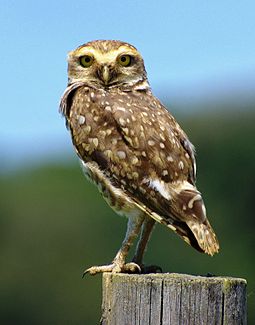
Do you like Owls? I love them. They sit majestically upon tree branches, barns, on top of roofs and old split rail fences. Recently, I noticed an article from audubon.org regarding a wisdom of Burrowing Owls that began to nest and plant themselves in a Florida neighborhood, Marcos Island that was most likely a natural bird sanctuary until people decided to build it up to reside there.
Some folks have kind hearts and welcomed the owls with open arms making the owls stay comfortable for them. Here is the article written on August 14th 2019 by Roger Williams called Burrowing Owls Are the Family Next door in this Florida Boom Town,
These burrowing owls look adorable yet they are wild. One can adopt an owl on their website. Remember Owls are to be respected, please do not disturb their habitat if you come across one. Burrowing Owls…
The name is surely familiar to whom they are; at first interested in Islands traditions (as I love it madly!) or they who has been falling in love in this and the others song from the movie; The Graduate Like me 😀
As I watch this movie (with my brother Al of course, we have did almost everything together ❤ ) I was about 18 years old, and I would say it was a right time to see this! Exactly for my age though, it wasn’t fit for the country in which I was born; I could understand the problems of Benjamin Braddock, and I fell in love with this movie, not only in the moving pictures but also in the soundtrack The Graduate (soundtrack) by my ever lovely pair; Simon & Garfunkel
Actually this movie and the songs were talking about my thoughts, problems and the uncertainty.
But also about youth. Gals & love
Yes, I got to know these two wonderful musicians and I am so lucky because, I have a lot of memories, wonderful memories with my brother on these both; we all four 🙂 ❤
Anyway; the main reason for me to write this, is the fascinating description in a wonderful melodic version of this traditional song which Simon & Garfunkel made an unforgettable music on this unforgettable tail ❤
Oh My goodness, those days were so easy, so full of emotions, so full of love and tensions, so full of dreams ❤
During the late Middle Ages the seaside town of Scarborough, in Yorkshire, was an important venue for tradesmen from all over England. It was host to a huge 45-day trading event starting on 15 August, which was exceptionally long for a fair in those times. Merchants came to it from all areas of England, Norway, Denmark, the Baltic states, and the Byzantine Empire. Scarborough Fair originated from a royal charter granted by King Henry III of England on 22 January 1253. The charter, which gave Scarborough many privileges, stated “The Burgesses and their heirs forever may have a yearly fair in the Borough, to continue from the Feast of the Assumption of the Blessed Virgin Mary until the Feast of St Michael next following”. (On the modern Roman Catholic calendar, the equivalent dates are 15 August–29 September.) Naturally, such a large occasion attracted a lot more than just tradesmen; they needed to be entertained and fed and therefore large crowds of buyers, sellers, and pleasure-seekers attended the fair. Prices were determined by supply and demand, with goods often being exchanged through the barter system. Records show that from 1383 due to another fair in neighbouring Seamer, Scarborough’s prosperity slumped.[1]
In the early 17th century, competition from other towns’ markets and fairs and increasing taxation saw further collapse of the Fair until it eventually became financially untenable. The market was revived again in the 18th century, but due to intense competition Scarborough Fair finally ended in 1788.
The traditional “Scarborough Fair” no longer exists, but a number of low-key celebrations take place every September to mark the original event. Scarborough Fair in July 2006, witnessed medieval jousting competitions hosted by English Heritage in addition to the usual attractions.
The fair features in the traditional English ballad “Scarborough Fair“.
Lyrics
As a popular and widely distributed song from 1946 to 1968, the song had many versions. The one here, intended as a duet by a man and a woman, includes the place after which it is named:
Tell her to make me a cambric shirt, Parsley, sage, rosemary, and thyme; Without any seam or needlework, Then she shall be a true love of mine.
Tell her to wash it in yonder well, Parsley, sage, rosemary, and thyme; Where never sprung water or rain ever fell, And she shall be a true lover of mine.
Tell her to dry it on yonder thorn, Parsley, sage, rosemary, and thyme; Which never bore blossom since Adam was born, Then she shall be a true lover of mine.
Female part:
Now he has asked me questions three, Parsley, sage, rosemary, and thyme; I hope he’ll answer as many for me, Before he shall be a true lover of mine.
Tell him to buy me an acre of land, Parsley, sage, rosemary, and thyme; Between the salt water and the sea sand, Then he shall be a true lover of mine.
Tell him to plough it with a ram’s horn, Parsley, sage, rosemary, and thyme; And sow it all over with one peppercorn, And he shall be a true lover of mine.
Tell him to sheer’t with a sickle of leather, Parsley, sage, rosemary, and thyme; And bind it up with a peacock’s feather, And he shall be a true lover of mine.
Tell him to thrash it on yonder wall, Parsley, sage, rosemary, and thyme, And never let one corn of it fall, Then he shall be a true lover of mine.
When he has done and finished his work. Parsley, sage, rosemary, and thyme: Oh, tell him to come and he’ll have his shirt, And he shall be a true lover of mine.
Alternative refrains
The oldest versions of “The Elfin Knight” (circa 1650) contain the refrain “my plaid away, my plaid away, the wind shall not blow my plaid away”. Slightly more recent versions often contain one of a group of related refrains:
Sober and grave grows merry in time
Every rose grows merry with time
There’s never a rose grows fairer with time
Yesterday holds memories in time
These are usually paired with “Once (s)he was a true love of mine” or some variant. “Parsley, sage, rosemary, and thyme” may simply be an alternate rhyming refrain to the original based on a corruption of “grows merry in time” into “rosemary and thyme”.
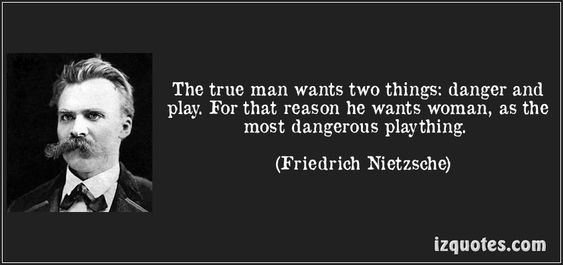
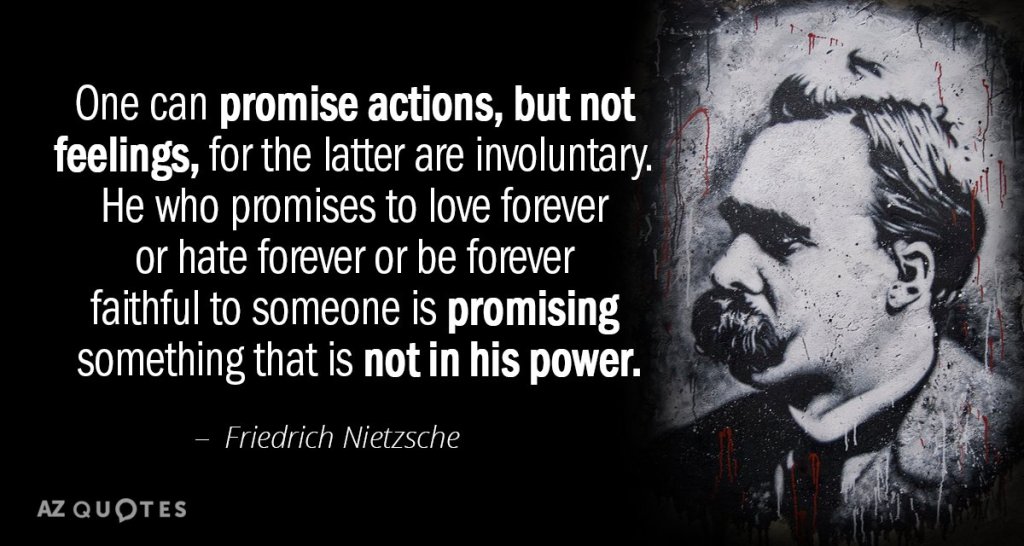
As I try to take the benefit of my golden Saturday, minute by minute, let me show my deeply feeling for this fascinating complex of the soul; Fredric Nietzsche. Stunningly, I’m knowing him again and again as a Macho, about at the beginning to an opened minded man as new!
the first record;
And the second record;
I fell in love with the philosophy as I might once write, was a book which I’ve got in hand from my brother named; The History of the Philosophy. Plato’s Socrates Socrates · Republic (Plato) was not new for me but there were some new ones: Spinoza Baruch Spinoza was my first love, and it went further with Schopenhauer Arthur Schopenhauer , Nietzsche Friedrich Nietzsche , Kant Kant , Russel Bertrand Russell, Sartre Sartre etc.
To put it bluntly, I think that philosophy is the door to open the dark side of the soul, to recognize the self, to think: Cogito ergo sum;;
And the last but not least;
Here is a nice animation to introduce him in another line; Acceptance! The Acceptance is not to give up! 🙂 ❤
The idea of acceptance has found much, well… acceptance in our therapeutic culture, by way of Elisabeth Kübler-Ross’ five stages of grief, 12-step programs, the wave of secular mindfulness practices, the body-acceptance movement, etc. All of these interventions into depressed, bereaved, guilt-ridden, and/or anxious states of mind have their own aims and methods, which sometimes overlap, sometimes do not. But what they all share, perhaps, for all the struggle involved, is a general sense of optimism about acceptance.
One cannot say this definitively about the Stoic idea of amor fati—the instruction to “love one’s fate”—though you might be persuaded to think otherwise if you google the term and come up with a couple dozen popularizations. Yes, there’s love in the name, but the fate we’re asked to embrace may just as well be painful and debilitating as pleasurable and uplifting. We cannot change what has happened to us, or much control what’s going to happen, so we might as well just get used to it, so to speak.
If this isn’t exactly optimism in the sense of “it gets better,” it isn’t entirely pessimism either. But it can become a grim and joyless fatalistic exercise. Yet, as Friedrich Nietzsche used the term—and he used it with much relish—amor fati means not only accepting loss, suffering, mistakes, addictions, appearances, or mental and emotional turbulence; it means accepting all of it—everything and everyone that causes both pain and pleasure, as Alain de Botton says above, “with strength and an all-embracing attitude that borders on a kind of enthusiastic affection.”
“I do not want to wage war against what is ugly,” he wrote in The Gay Science, “I do not want to accuse; I do not even want to accuse those who accuse.” Readers of Nietzsche may find themselves picking up any one of his books, including The Gay Science, to see him doing all of the above, constantly, on any random page. But his is never a systematic philosophy, but an expression of passion and attitude, inconsistent in its parts but, as a whole, surprisingly holistic. “My formula for greatness in a human being,” he writes in Ecce Homo, “is amor fati”
That one wants nothing to be different, not forward, not backward, not in all eternity. Not merely bear what is necessary, still less conceal it… but love it.
Although the concept may remind us of Stoic philosophy, and is very often discussed in those terms, Nietzsche saw such thought—as he understood it—as gloomy, ascetic, and life-denying. His use of amor fati goes beyond mere resignation to something more radical, and very difficult for the human mind to stomach, to use a somewhat Nietzschean figure of speech. “It encompasses the whole of world history (including the most horrific episodes),” notes a Leiden University summary, “and Nietzsche’s own role in this history.” Above all, he desired, he wrote, to be a “Yes-sayer.”
Is amor fati a remedy for regret, dissatisfaction, the endlessly restless desire for social and self-improvement? Can it banish our agony over history’s nightmares and our personal records of failure? De Botton thinks so, but one never really knows with Nietzsche—his often satirical exaggerations can turn themselves inside out, becoming exactly the opposite of what we expect. Yet above all, what he always turns away from are absolute ideals; we should never take his amor fati as some kind of divine commandment. It works in dialectical relation to his more vigorous critical spirit, and should be applied with a situational and pragmatic eye. In this sense, amor fati can be seen as instrumental—a tool to bring us out of the paralysis of despair and condemnation and into an active realm, guided by a radically loving embrace of it all.
“Death, in my opinion, is nothing but the separation of two things that were united before. Of soul and body, ” Plato
Sometimes I ask myself if I wanted to believe in Reincarnation and wanted to live again on this Earth!
It is not only because of my “not so easy life which I’ve almost behind me” but also it’s because of my pessimistic look at the development of humanity. It’s as I’m convinced by my searching through the history of Man; this development is not upwards but downwards! Don’t you think so?
But in the matter of fact, there remain such questions as: where are we come from, who we actually are and What the hell are we doing here on this “might still existing” paradise?
Here, I found another great post by {Searching The Meaning Of Life} as I try to translate from Greek. I hope your enjoyments 🙂 sincerely 🙏💖
“We come from a dark abyss, we end up in a dark abyss: in the bright space we call it Life. As soon as we are born, the return begins. At the same time start and return. We die every moment. That is why many have argued: The purpose of life is death. But as we are born, the quest to create, synthesize, make life material begins. We are born every moment. That is why many have argued: The purpose of ephemeral life is immortality. ” N. Kazantzakis ascetic
Life and death are the two poles of the same coin, of ONE LIFE, as the ancient wise men used to say. We, as lovers of wisdom, are enough to accept their views to realize the very course of evolution itself.
But what is death? Is this something after the end of earth life? Why are we born? Who we are; Where do we come from and where do we go?
All of the above questions call for philosophy, religions in essence, and the science of psychology itself to answer.
Let’s try to unwind the skein. Let’s get things in order.
“Death, in my opinion, is nothing but the separation of two things that were united before. Of soul and body, “said Uncle Plato.
All the ancient peoples, the Sumerians, the American Indians, the Egyptians, the Indians, the Chinese, the Japanese and the Greeks believed in reincarnation. Great personalities such as Pythagoras, Plato, Aristotle, Confucius, Lao Tzu, Buddha and more modern ones such as Nietzsche, Schopenhauer and others have confirmed this old theory.
Reincarnation, then, is an ancient doctrine, which shows us the interplay of life and death in human existence. Before we move on, let us meditate on the very nature that teaches us the existence of cycles … Every new spring succeeds in the end of winter … every new day at death of the night … Man, as an integral part of nature, participates in its rhythms and, following them; lives, dies, dies and lives again in this world.
Reincarnation teaches us that the human soul, or spiritual energy, is the carrier of change. It changes material presence every time and so lives different lives in the flow of evolution. After all, the very purpose of the Law of Reincarnation, is to perfect the being. Through successive reincarnations the human spirit is perfected, acquiring the necessary experience and knowledge, and thus is increasingly elevated to the source of spiritual light from which it came.
But what is the unchanging, the reincarnated, and the one that changes with every life? Again, we will go back to the depths of antiquity, collecting all the elements that humanity has inherited. So do the internal traditions convey that man, as an evolving being, has an Eternal and indestructible part of Heavenly origin, the Spirit, or the Ego, and another perishable, literary and earthly part, subject to life changes. We call this second part personality (the word ‘persona’ really does not mean the mask of the ancient Greeks? Remember the masks that Halil Gibran refers to in his work ‘The Madman’). So the ancient wise men said that man consists of a perishable personality, which is fourfold, with four material “faces” and an immortal spirit, which does not wear out if it has no material substance. The Ego or otherwise the Self of the ancient Greeks (remember again the Delphic saying “know him” that leads us to know our true Self beyond the “masks”).
So we used to say that what traditions say is being reincarnated is the Spirit, who each time acquires a new personality (or, alternatively, changes clothes worn out, as Krishna points out to Arzuna in the Bhagavat Gita, a work of paramount importance to them). that will enable him through his own life to gain new experiences, knowledge and experiences that will enrich and help develop the consciousness of the individual ego.
Every personality (let’s note that it includes our physical body, our vital energy, our emotions and our subjective mind) in every life has a certain duration. At some point, he is born and at some point, he dies. Thus the soul “rises” to another world, to another dimension. In the East this dimension is called Devachan and can be compared to Paradise, the Champs Elysee’s of the Ancient Greeks, the Scandinavian Balch, the Amed of Egypt … There the human entity spends a certain amount of time resting and processing everything school of life “until it has to” go down “(I go up and down it is relative, but these concepts have always been used to indicate the transition from one dimension to another) on earth, in the material world,
In this way, the process of reincarnation is described in this way. Whether there are various “levels” to which souls are sent or otherwise gone (Dante described these spaces as multi-storey universes) is a very big question.
Moreover:
“Birth is sleep, forgetfulness
and the soul that is born within us,
the star of life but the bright one,
elsewhere she’s gone to bed,
and its east is elsewhere.
Not even naked,
Not completely drowning in oblivion,
we are born into this life,
but like windswept clouds,
sent by God, our first source. ”
“Feelings of Immortality Through Thyme of Childhood”
William Wordsworth
Following those who have realized all of the above we understand:
“One of my children is death and birth,
a heartache and sweetness,
one I’m leaving algae and I’m coming,
one was hello and I found it good. ”
“Reference to Greco” N. Kazantzakis.
BIBLIOGRAPHY
• KARMA, ANNIE BESANT, THEOSOPHICAL PUBLICATIONS
• ASKETIKI, N. KAZANTZAKIS, EDITIONS E. KAZANTZAKIS
• REFERENCE TO GRECO, N. KAZANTZAKIS, EDITIONS E. KAZANTZAKIS
• METENKARSOS, IRVING S. COOPER, THEOSOPHICAL PUBLICATIONS
• SELECTION OF SPEECHES IN NEW Acropolis, GA PLANAS, NEW Acropolis Publications
• THE 3 CENTERS OF MYSTERY, GA PLANAS, NEW Acropolis Editions
• LIFE AFTER LIFE, CAROL NEIMAN & EMILY GOLDMAN, ISOPTRON EDITIONS
• THE SECRET TEACHING OF PLATONA, SAVVAS PATTAKOS, NEW Acropolis Editions
• THE LIFE AFTER DEATH, LIVRAGA, NEW Acropolis Editions


 Pixabay (altered image)



 William Blake…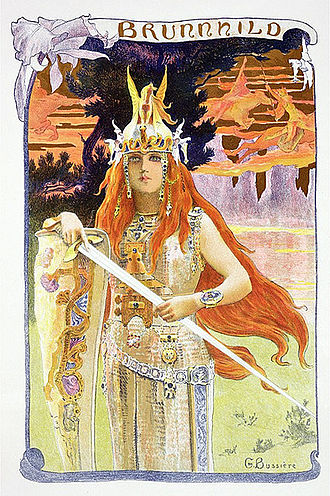





 lampmagician
You must be logged in to post a comment.