The Way of What is to Come.

Standard

The Red Book by C. G. Jung, Liber Primus fol. i(v)

As I continue to read Carl Jung’s book, The Red Book, I find myself wondering how his words are so relatable to me. They touch me deeply and feel familiar. I do not speak often and tend to keep to myself. However, I want to learn how to express myself more creatively using images. I long to see a sign of mercy that will give me hope and belief, even though I still wish to have visions like Jung had.

He conversed with the spirits, the spirit of the time, the spirit of depth, talking about the Supreme Meaning by the fact that he is laughter and worship; a bloody laughter and a bloody worship. A sacrificial blood binds the poles. Jung has his humanity for help: What solitude, he said, what a coldness of destruction you lay upon me when you speak such! Reflect on the destruction of being and the streams of blood from the terrible sacrifice that the depth demands (Referring to Jung’s vision). Dr Jung had visions which became a reality throughout his time. He was excited, not sure if schizophrenia was threatening him. However, every genius seems to have this ability, as my brother Al had it.

As we observe the world today, starting wars easily, bombing, and killing have become routine occurrences, it might not be necessary for us to have the kind of visions that Dr. Jung had in his time. However, his words hold significance since they reflect a deeper insight into the human psyche.

Carl Jung On Psychosis
Carl Jung Depth Psychology

Let’s read what he speaks about his visions:

“But the spirit of the depths uttered: No one can or should halt sacrifice. Sacrifice is not destruction; sacrifice is the foundation stone of what is to come…
“The mercy that happened to me gave me belief, hope, and sufficient daring not to resist the spirit of the depths further but so utter his words. But before I could pull myself together to really do it, I needed a visible sign that would show me that the spirit of the depths in me was, at the same time, the ruler of the depths of world affairs.

It happened in October 1813, when I was living alone on a journey. During the day, I was suddenly overcome by a vision in broad daylight: I saw a terrible flood that covered all the northern and low-lying lands between the North Sea and the Alps. It reached from England up to Russia and from the coast of the North Sea right up to the Alps. I saw yellow waves swimming through rubble and the death of countless thousands.

Carl Jung: “On Pictures In Psychiatric Diagnosis” – Carl Jung Depth Psychology

The vision lasted two hours; it confused me and made me ill. I was not able to interpret it. Two weeks passed, then the vision returned, still more violent than before, and an inner voice spoke: “”Look at it; it is completely real, and it will come to pass. You cannot doubt this.“” I wrestled again for two hours with this vision, but it held me fast. It left me exhausted and confused. And I thought my mind had gone crazy.

Jung discussed this vision on several occasions, stressing different details like in his 1925 seminar Introduction to Jungian Psychology (p. 44f), to Mircea Eliade, and Memories (pp. 199-200):

{Jung’s versions were frightening as he saw even a sea of blood over the northern lands. He explains: }

As a psychiatrist, I became worried, wondering if I was not on the way to “doing a schizophrenia,” as we said in the language of those days… I was just preparing a lecture on schizophrenia to be delivered at a congress in Aberdeen, and I kept saying to myself: “I’ll be speaking of myself! Very likely, I’ll go mad after reading out this paper.” The congress was to take place in July 1914 – exactly the same period when I saw myself in my three dreams voyaging on the Southern seas. On July 31st, immediately after my lecture, I learned from the newspapers that war had broken out. Finally, I understood. And when I disembarked in Holand on the next day, nobody was happier than I. Now, I was sure that no schizophrenia was threatening me. I understood that my dreams and my visions came to me from the subsoil of the collective unconscious. What remained for me to do now was to deepen and validate this discovery. And this is what I have been trying to do for forty years.

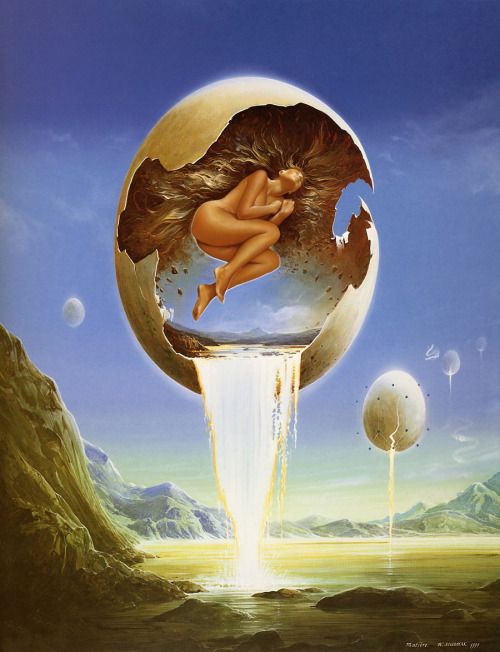
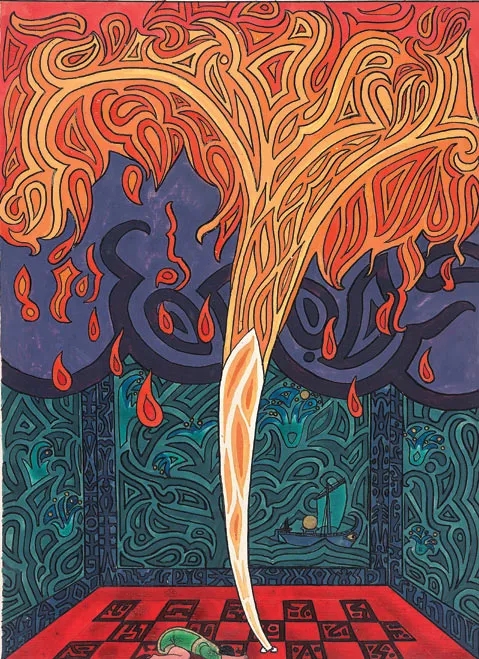
The fire from the egg in Carl Jung’s Red book

In the year 1914, in the month of June, at the beginning and end of the month, and at the beginning of July, I had the same dream three times: I was in a foreign land, and suddenly, overnight and right in the middle of the summer, a terrible cold descended from space. All seas and rivers were ice-locked, and every green living thing had frozen.
The second dream was thoroughly similar to this. But the third dream at the beginning of July went as follows: I was in a remote English land. It was necessary that I return to my homeland with a fast ship as speedily as possible. I reached home quickly. In my homeland, I found that in the middle of summer, a terrible cold had fallen from space, which had turned every living thing into ice. There stood a leaf-bearing but fruitless tree, whose leaves had turned into sweet grapes full of healing juice through the working of the frost (like the ice wine). I picked some grapes and gave them to a great waiting throng.

[Draft: This was my dream. All my efforts to understand it were in vain. I laboured for days. Its impression, however, was powerful (p.9). Jung also recounted this dream in Memories].

Can we interpret the end of his dream, where sweet grapes are present, as a positive outcome of human madness? Who knows! Anyhow, hope dies last.🙏💖

Source: The Red Book by C. G. Jung, Liber Novus, A Reader’s Edition; Sonu Shamdasani

Title illustration by Mariusz Lewandowski

The Supreme Meaning!

Standard

Liber Primusfol.i(v) p. 120, Reader’s Edition

I am getting older (does not everybody do this?!), though I feel this ageing more and more as I’m heading towards my seventieth of that day in which I’ve opened my eyes to the sun. That’s why one may contemplate deeply about religion and the purpose of life, striving to understand and grasp the concept of God, as I am daring to do today.

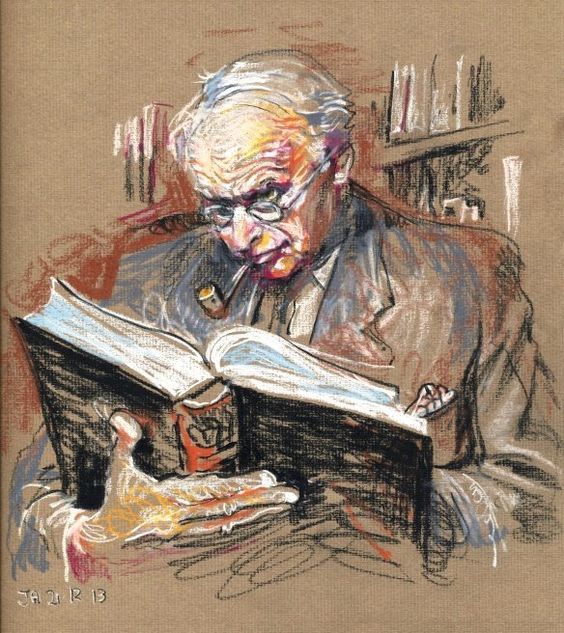
When I became acquainted with C.G. Jung, I realized that I had found a guide who could help me think more clearly to find answers to my questions. I don’t know about you, but I believe that when ageing, one feels more solitude and begins to enjoy it. However, it’s important to note that he is not a saviour but rather a teacher who can point the way and offer valuable insights through his writings, particularly in his Red Book.

For me, the Red Book by Carl Jung is like the holy book. I may say it is like the Bible for a Christian, or the Koran for a Muslim, and the same as the Torah for a Jew, etc. The difference between them is that Dr Jung never tries to make statements of one particular God as their messenger but tries to define how a god can be definite! Here comes the concept: Supreme Meaning! The melting of sense and nonsense. And I think that this aspect needs a broad view.

The supreme meaning is great and small; it is as wide as the space of the starry Heaven and as narrow as the cell of the living body. C.G. Jung, The Red Book: Liber Novus.

I present you a small part, a page, of his words of knowledge on this concept. I hope it opens one or more doors in your life as it did for mine.

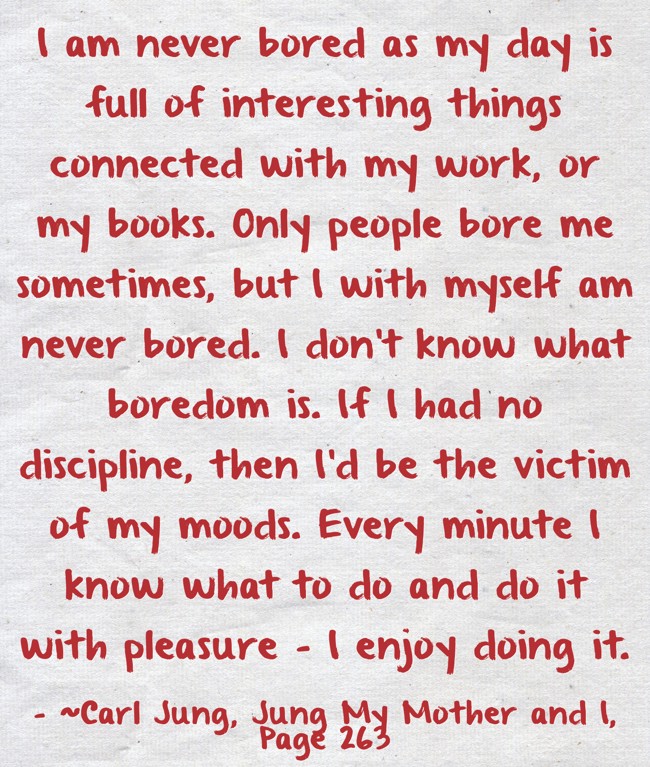
Portrait by Olga KURKINA

The spirit of the depths took my understanding and all my knowledge and placed them at the service of the inexplicable and the paradoxical. He rubbed me of speech and wrote me for everything that was not in his service, namely the melting together of sense and nonsense, which produces the supreme meaning.
But the supreme meaning is the path, the way and the bridge to what is to come. That is the God yet to come. It is not the coming God himself, but his image which appears in the supreme meaning.
(1)

God is an image, and those who worship him must worship him in the image of the supreme meaning. The supreme meaning is not a meaning and not an absurdity; it is image and force in one, magnificence and force together.

The supreme meaning is the beginning and the end. It is the bridge of going across and fulfilment. (2)

The other Gods died of their temporality, yet the supreme meaning never dies; it turns into meaning and then into absurdity, and out of the fire and blood of their collision, the supreme meaning rises up rejuvenated anew.

The image of God has a shadow. The supreme meaning is real and casts a shadow. For what can be actually corporeal and have no shadow?

The shadow is nonsense. It lacks force and has no continued existence through itself. But nonsense is the inseparable and undying brother of the supreme meaning.

Like plants, so men also grow, some in the light, others in the shadows. There are many who need the shadows and not the light.

The image of God throws a shadow that is just as great as itself.

The supreme meaning is great and small; it is as wide as the space of starry Heaven and as narrow as the cell of the living body.

1- In Transformations and Symbol of the Libido (1912), Jung interpreted God as a symbol of the libido (CW B, §111). In this subsequent work, Jund laid great emphasis on the distinction between the God image and the metaphysical existence of God (cf. passages added to the revised retitled 1952 edition, Symbols of Transformation, CW 5, § 95)

2- The terms Hinübergehen (going across, passing over), Übergang (transition), Untergang (down-going, downfall), and Brücke (bridge) feature in Nietzsche’s Zarathustra in relation to the passage from man to the Übermensch (superman). For example, “What is great in man is that he is a bridge and not a goal; what can be loved in man is that he is a “going-across” and a “downfall”. //I love those who do not know how to live except their lives be a “downfall”, for they are those who are going over”(tr. R. Hollingdale [Harmondsworth: Penguin, 1984], p. 44, tr. mod; words are asunderlined in Jung’s copy).

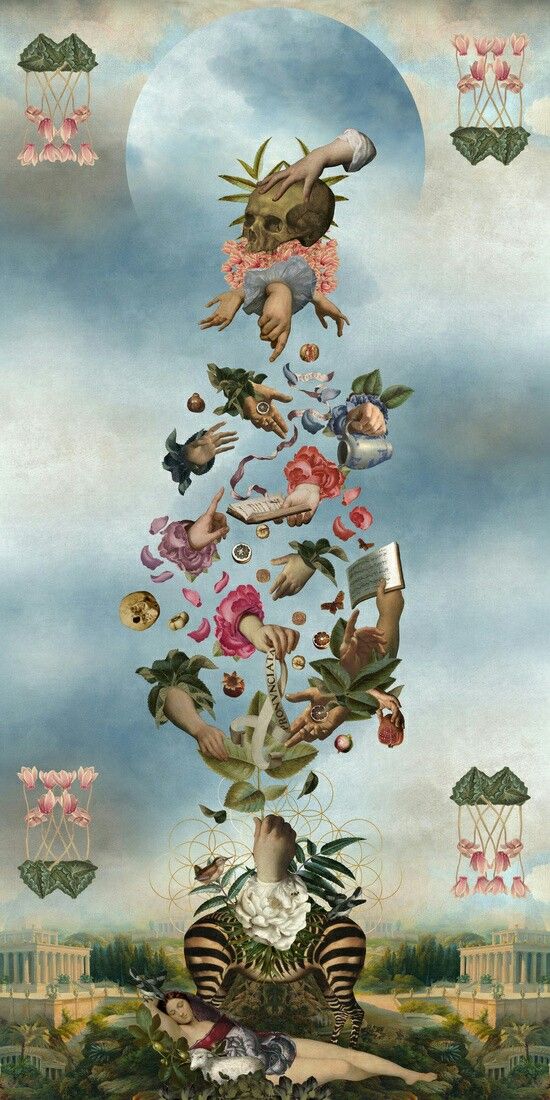
Top image by Ettore Aldo Del Vigo

Thank you for your support. 💖🙏🌹

The individuation; Anima and Animus. Carl Jung (P. 5)

Standard

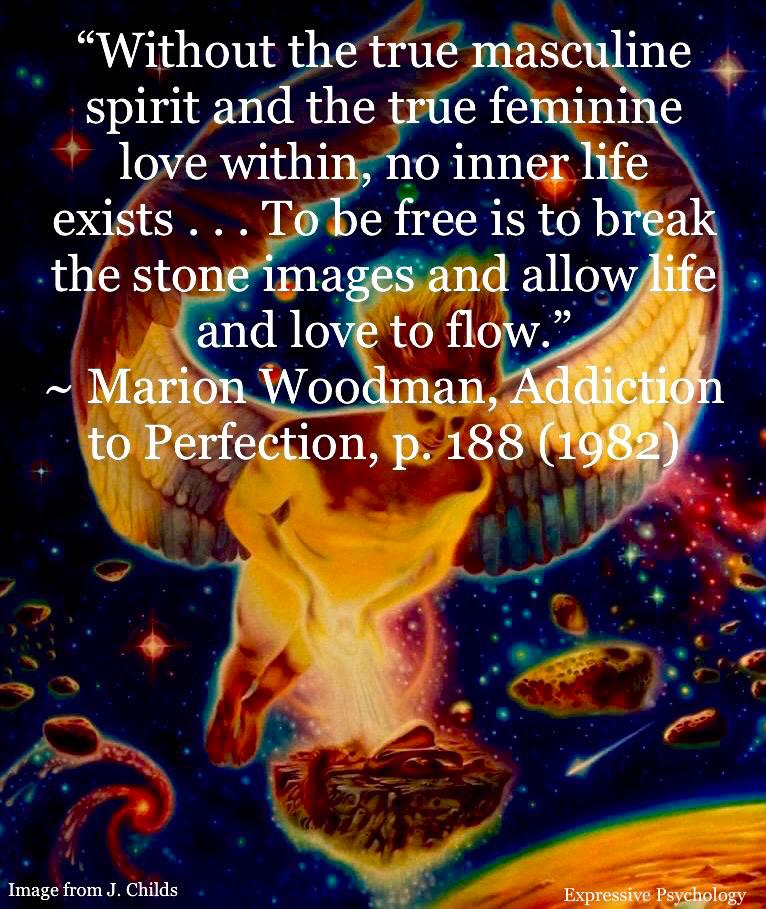
“Without the true masculine spirit and true feminine love within, no inner life exists. To be free is to break the stone images and allow life and love to flow… ~Marion Woodman; taken from a beautiful poem by a brilliant poet, rhymester, and valuable friend of mine: Deborah Gregory.

I have resumed an (other) old series of my posts that I believe has become increasingly relevant in light of a recent webinar on X (formerly Twitter), where Iranian participants discussed the challenges faced by individuals of different genders and sexualities (LGBT+) in Iran. However, I refrained from discussing Dr. Jung’s theories on Anima and Animus, as I knew they were unfamiliar with this topic. During meetings, I don’t speak much due to my taciturn nature. Instead, I act as a microphone for my friend who lives in Iran and cannot clearly talk in the meetings.

In this particular webinar about gender, I noticed how important it is to know about the Jungian ideas about our species and the terms Anima and Animus in all of us, whether masculine or feminine.
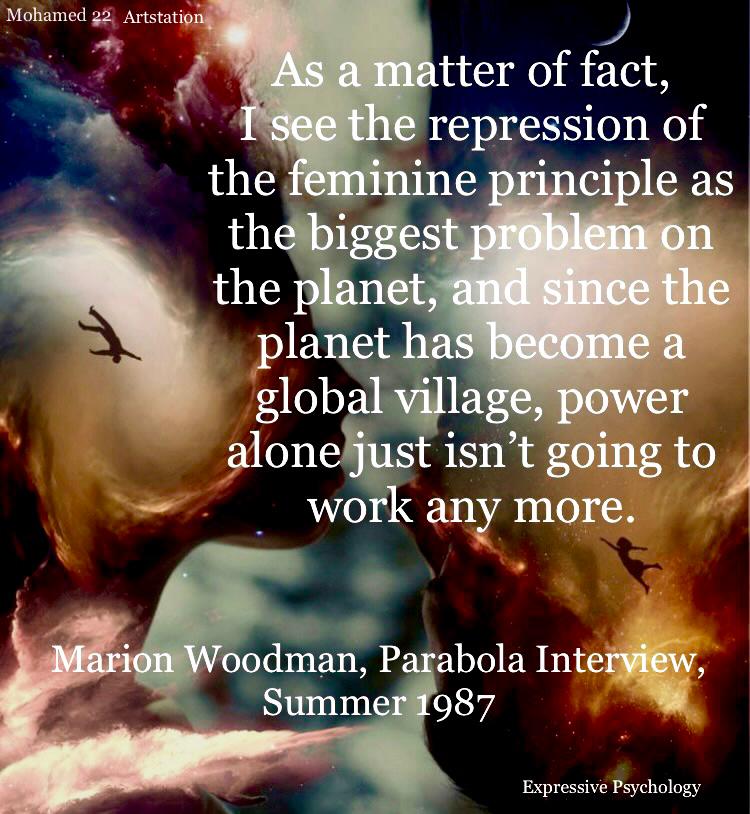
Marion Woodman says:
“The word’ feminine,’ as I understand it, has very little to do with gender, nor is woman the custodian of femininity. Both men and women are searching for their pregnant virgin. She is the part of us who is outcast, the part who comes to consciousness through going into darkness, mining our leaden darkness, until we bring her silver out.”

Yes! Such terms are too early for a nation which is still under pressure from the masculine’s religious domain. I was surprised to hear discussions about such issues in a country still heavily influenced by traditional religious beliefs. That became possible because of the efforts of Shadi Amin, an LGBT+ activist at 6rang.org.💖🙏

Work by Petra Glimmdall 💖

To notice it is a big problem even in the West: I know many men here in Germany, where I live, who make jokes about the subject, and gay is a swear word for them! Of course, freedom, which is common in the West, can’t mean that the people have understood it profoundly. It can be difficult to grasp the concept fully, even though I have noticed numerous misconceptions in the Jungian groups on Facebook, and I see how many falsehoods have lost their way there!

In this scenario, it is crucial to maintain an open mindset and not be limited by fundamental rules and principles. I am not suggesting that one must always be “modern,” but rather that we should exercise our imagination. We should put aside our fears and dive into the world of fantasy.

After death, it is unimaginable that there would be feminine or masculine ghosts, for souls do not have a gender.

I’d like to share another explanation from Jung on this topic. As humans, we are filled with fears, anxieties, desires, and aspirations. Jung says in on this:

But there is something to be said about the fear of the other side that is peculiar to us Westerners. This fear is not entirely unjustified, not to mention the fact that it is real. We readily understand the child’s and the primitive’s fear of the vast, unknown world. We have the same fear in our childlike inner side, where we also touch a vast, unknown world…
The fear is now justified insofar as the rational worldview (Weltanschauung) with its much-believed (because doubtful) scientific and moral certainties is being shaken by the data from the other side.
There are truths that will only be true the day after tomorrow, those that were true yesterday, and those that will not be true at any time.

However, we can open many doors once we learn to embrace our inner selves and overcome the fear of the unknown. After reaching milestones one, two, three, and four, the next milestone could be number five – Last but not least!

anima and animus by polina sladkova

>”But I could imagine that someone would use such a technique out of a kind of holy curiosity, a boy perhaps who doesn’t want to put on wings because his feet are lame but because he longs for the sun. An adult, however, for whom too many illusions have been shattered, will probably only be forced to submit to this inner humiliation and abandonment and will once again endure the child’s fears. It is no small matter to stand between a day world of shattered ideals and unbelievable values and a night world of seemingly senseless fantasy. In fact, the uncanny aspect of this point of view is so significant that there is probably no one who would not reach for certainty, even if it were a “reach backwards” – for example, the mother who protected his (the son’s) childhood from night terrors. Those who are afraid need a dependency, like the weak, need support. That is why even the primitive spirit created the religious doctrine, embodied in magicians and priests, out of the most profound psychological necessity. “Extra ecclesiam nulla Salus” (“Outside the Church, there is no salvation”) – is still a valid truth today – for those who can drawback on it. For the few who cannot, there is only dependence on someone – a humbler and prouder dependency, weaker and more robust support than any, It seems to me. What shall one say of the Protestant? He has neither church nor priest; he only has God – but even God becomes doubtful.”<

Work by Petra Glimmdall 💖

>”The reader will probably ask himself in astonishment, but what does the anima produce that one needs such reassurances to deal with her? I would commend my reader for studying a comparative history of religions so that he feels the accounts dead to us with the emotional life felt by those who lived those religions. This will give him an idea of what lives on the other side. The old religions, with their sublime and ridiculous, benevolent and cruel symbols, did not arise out of thin air but out of this human soul as it lives in us now. All those things, their archetypes, live in us and can break out at any time with devastating force, namely in the form of mass suggestion, against which the individual is defenceless. Our terrible gods have only changed their name; they now rhyme with “ism”. Or does anyone have the voice to say that the World War or Bolshevism was an ingenious invention? Just as we live outwardly in a world where something similar can arise at any time, albeit only in the form of an idea, but no less dangerous and unreliable. Non-adjustment to this inner world is an omission just as fatal as ignorance and incompetence in the outer world. It is also only a tiny fraction of humanity, living chiefly on that densely populated peninsula of Asia projecting towards the Atlantic Ocean, who call themselves ‘the educated’, who, through a defective contact with nature, have conceived the idea that religion is a kind of peculiar mental disorder of inexplicable purpose. Seen from a safe distance, somewhat from Central Africa or Tibet, it appears as if this fraction had projected an unconscious “mental derangement” onto the still instinctively healthy peoples.”<

Work by Petra Glimmdall 💖

Thank you for your visit. 🙏💖🤗

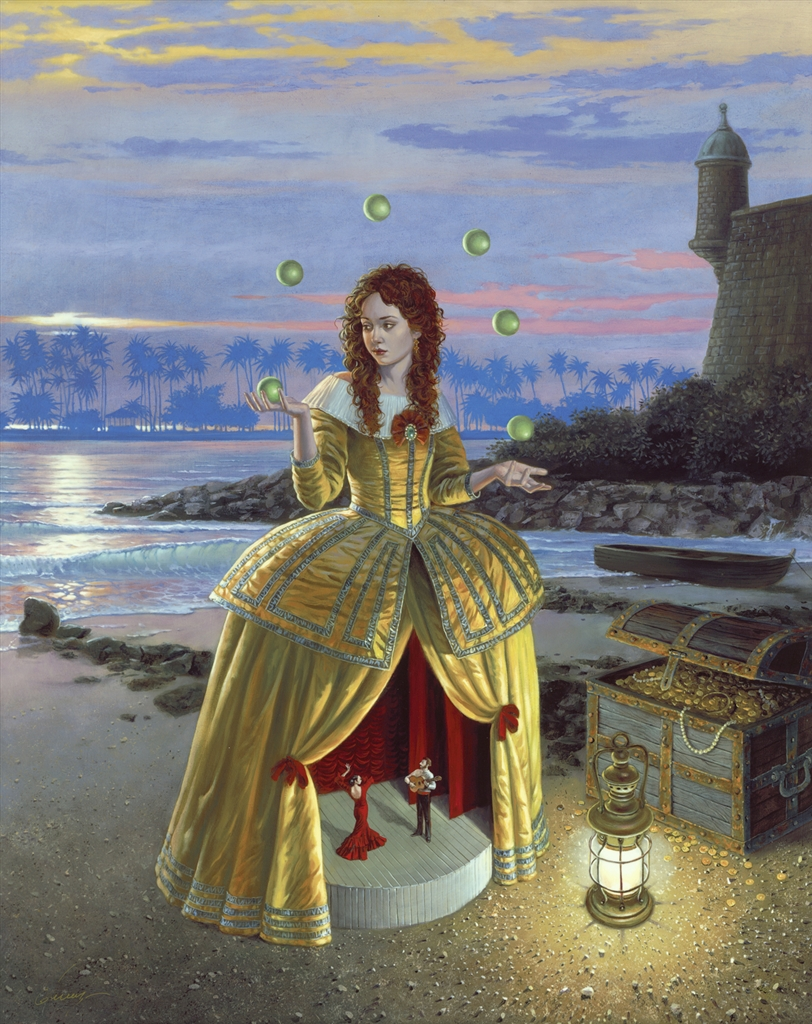
The image on top: Michael Cheval