
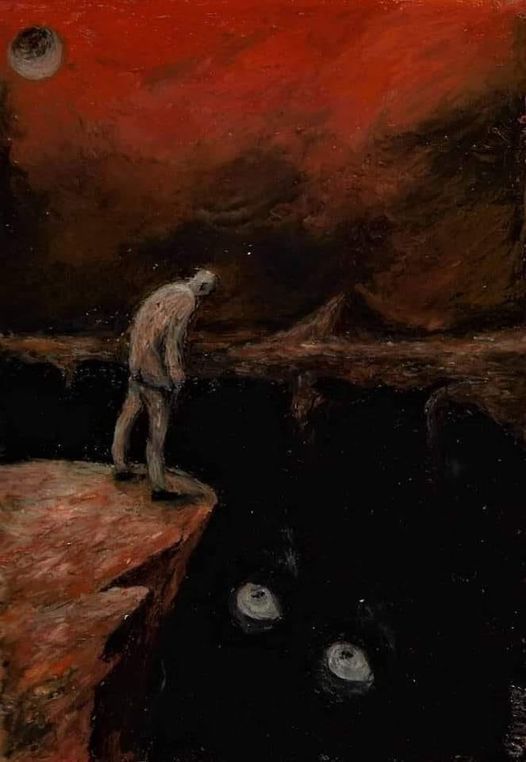
~Friedrich Nietzsche, Jenseits von Gut und Böse (1886) ch. 4, no. 146
Actually, I need to rest and post less frequently than before, but this short essay by adorable Laura London, an excellent Jungian expert at X (formerly Twitter), invigorated me. I couldn’t resist sharing it with you.
For many, contemplating and analyzing death is uncomfortable or even frightening. However, when we psychologically examine the world around us, we observe everything as dualistic, such as warm and cold, dark and light, love and hate, joy and grief… and, of course, life and death; neither can exist without the other!
There is no reason for many young people to think about death, except for some like me who are confronted with it by losing a part of their parent or both. However, as we reach a certain age, this challenge becomes unavoidable. Fear is not a solution, as we will inevitably confront the other side. Therefore, it is better to attempt to understand or envision it as much as possible. Reading this essay soothes the soul!

This quote from Jung is one of my favourites because it offers a breakthrough in our understanding of death.
Now, let’s read a tiny Colletti of Jung’s explanation on this issue, with heartfelt thanks to Laura London, which also included an introduction to an excellent book by Richard Wilhelm.
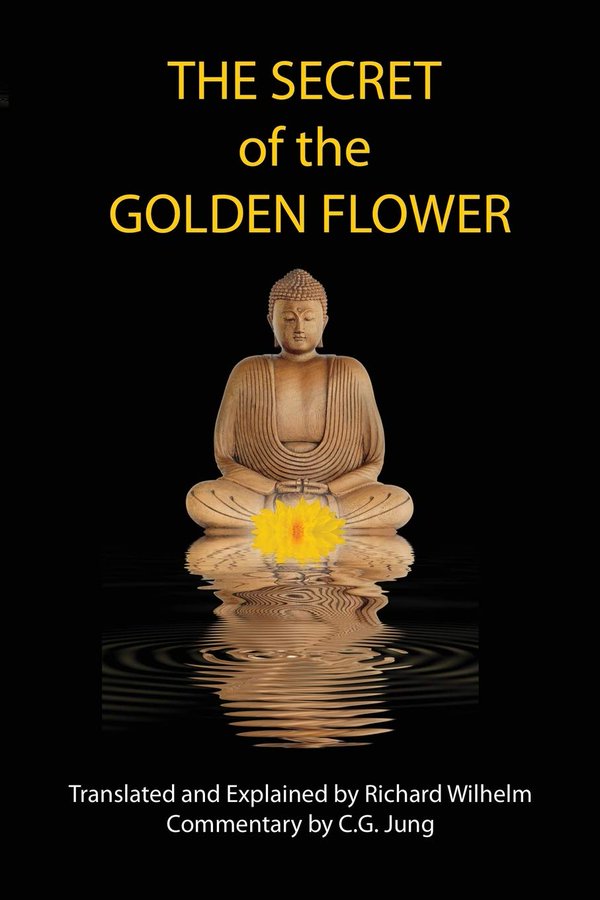
“From 1929 to 1934, #Jung presented his more mature thoughts about the mystery of death in three separate essays.⁵ In one of these essays, he stated that ‘anyone should draw the conclusion that the psyche, in its deepest reaches, participates in a form of existence beyond space and time, and thus partakes of what is inadequately and symbolically described as ‘eternity’’ [CW 8, par. 815]. Because of this, he also stated that as a doctor, I make every effort to strengthen the belief in immortality, especially with older patients … For … death is not an end but a goal, and life’s inclination towards death begins as soon as the meridian is passed’ [CW 13, par. 68]. Jung argued that the crisis of the second half of life is a sign that ‘nature prepares itself for death’ [CW 8, par. 808], hence, ‘it is hygienic … to discover in death a goal towards which one can strive’ [CW 8, par. 792], since ‘dying … has its onset long before actual death’ [CW 8, par. 809]. Jung concluded that ‘the #unconscious is all the more interested in how one dies; that is, whether the attitude of #consciousness is adjusted to dying or not’ [par. 809]. Death, then, became not only a goal for Jung but also a reality that could enrich life. Death begins before it happens, in midlife, so how one lives with death and how one approaches that goal became for Jung of paramount importance. In 1928, Jung received a copy of The Secret of the Golden Flower, a Chinese Taoist-alchemical text that, together with a dream he had which was set in Liverpool [Memories, Dreams, Reflections, pp. 220–223], confirmed to him that the goal of the #individuation process is the self, ‘the archetype of wholeness’ [CW 9ii, par. 351].”
⁵ “Commentary on ‘The Secret of the Golden Flower’” (1929); “The Stages of Life” (1930); “The Soul and Death” (1934).
~Luis Moris, Jungian psychoanalyst, “Jung’s Confrontation with Death: An Introduction, Confronting Death, pp. 7-8
🌼 You can watch my interview with Jungian psychoanalyst Luis Moris, editor of the book Confronting Death, in Episode 139 of Speaking of Jung.
 lampmagician
You must be logged in to post a comment.