A Deeper Look into Our Sufferings Reflection!

Standard

Next week, I have my surgery appointment, and before I go under the surgeon’s knife, as the Germans say, I wanted to say “a short” goodbye. Since I know most of you are doing very well, as I receive your posts every day, every hour, you can send your positive thoughts towards my surgical table in between!

There are no words to describe the suffering and pain I endured, as I understand that one must experience it oneself to truly grasp its affliction. I hope that none of you experience that!
What I can say with certainty is that I have gained invaluable insights. I learned about my weaknesses and the extent of my power. I have discovered how low one can go and where the steps are to climb up.
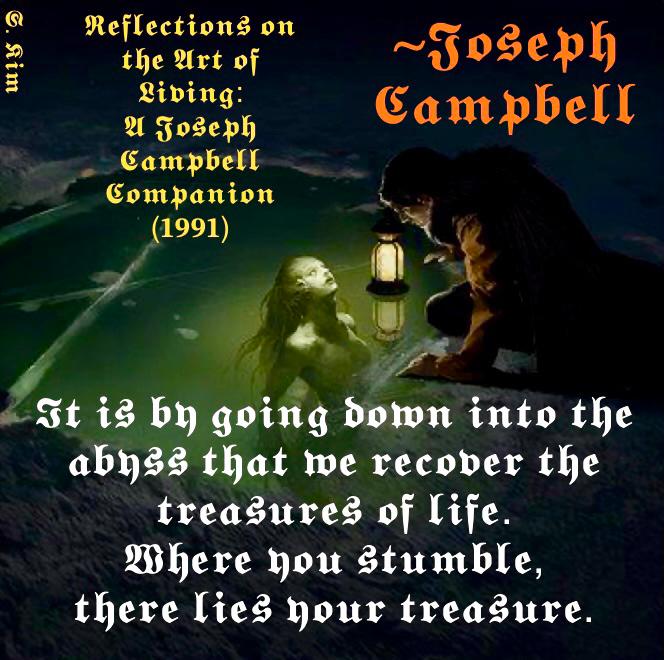
It is by going down into the abyss that we recover the treasure of life. Where you stumble, there lies your treasure.
~Joseph Campbell

I learned about my deep depression, where tiny fairies would converse with me. I’ve learned to remain resilient despite all challenges, echoing Ernest Hemingway’s words: “A man can be destroyed but not defeated.” Additionally, one of his characters, Harry Morgan, states in “To Have and Have Not”: “A man alone ain’t got no chance,” yet he persistently strives to do his best! Of course, I had support from my adorable wife, son, and a few friends. Nevertheless, during my most challenging times, it was ultimately up to me to endure that pain alone. I’m very stubborn about seeking help!

As I conclude my post, I would like to acknowledge my mentor, Dr. Jung, and his perspective on suffering:

via: Carljungdepthpsychologysite.blog With heartfelt thanks to my friend and teacher, Lewis Lafontaine.

Letters of C. G. Jung: Volume 2, 1951-1961

Dear Herr N., 28 April 1955

Your ideas bring you up against a general cultural problem, which is infinitely complicated.

What is true in one place is untrue in another.

“Suffering is the swiftest steed that bears you to perfection,” and the contrary is also true.

“Breaking in” can be discipline, and this is needed for the emotional chaos of man, though at the same time it can kill the living spirit, as we have seen only too often.

In my opinion, there is no magical word that could finally unravel this whole complex of questions; nor is there any method of thinking or living or acting which would eliminate suffering and unhappiness.

If a man’s life consists half of happiness and half of unhappiness, this is probably the optimum that can be reached, and it remains forever an unresolved question whether suffering is educative or demoralising.

In any case, it would be wrong to give oneself up to relativism and indifferentism.

Whatever can be bettered in a given place at a given time should certainly be done, for it would be sheer folly to do otherwise.

Man’s fate has always swung between day and night.

There is nothing we can do to change this.

Yours sincerely,

C.G. Jung ~Carl Jung, Letters Vol. II, Page 248.

I hope everyone enjoys a tranquil and relaxing time; take care and stay healthy. 🙏💖🌹

On the Following Night, However, I Had a Vision.

Standard

Hi everybody. Since Wednesday, our furnace has broken down, and my plans have been disrupted! I wanted to write some posts, but my brain is almost frozen! That’s why I took an old post from my other site (I really don’t know who created it; I didn’t!), which I also took from my valued friend, Lewis Lafontaine and his blog.🙏

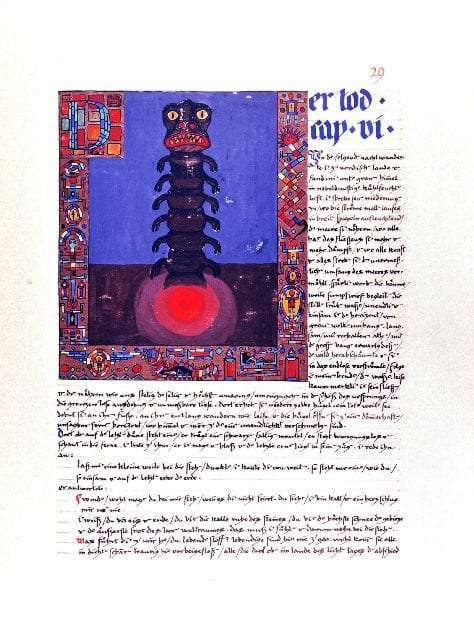
So, here is an extraordinary vision from Carl Jung’s remarkable book, The Red Book. I hope you will enjoy it, and I wish you all a thrilled New Year.

Title image: Angel by Samuel Bak

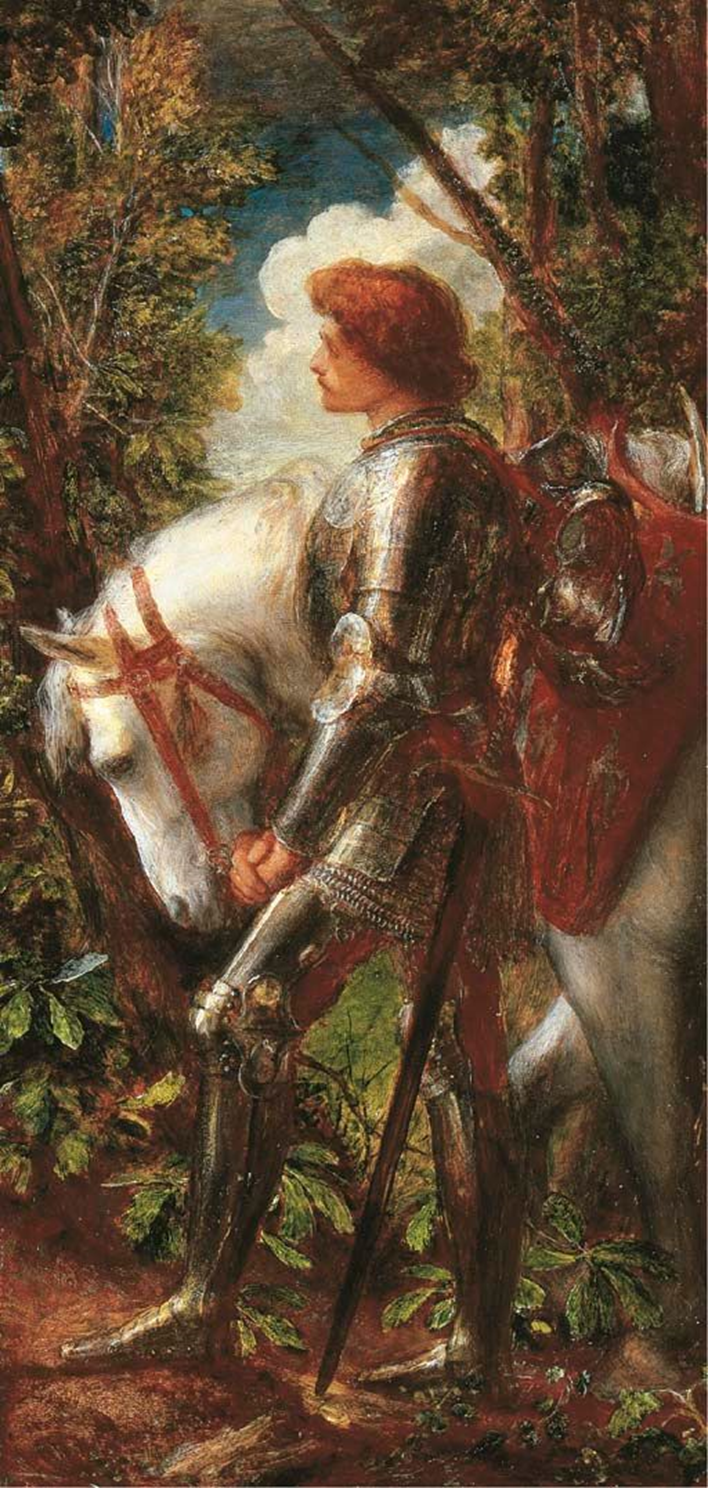
Sir Galahad, source: George Frederic Watts

As he came around the following night, however, I had a vision: I was with a youth in the high mountains. It was before daybreak, and the Eastern sky was already light.

Then Siegfried’s horn resounded over the mountains with a jubilant sound. We knew that our mortal enemy was coming.

We were armed and lurked beside a narrow rocky path to murder him. Then, we saw him coming high across the mountains on a chariot made of the bones of the dead.

He drove boldly and magnificently over the steep rocks and arrived at the narrow path where we waited in hiding.

As he came around the turn ahead of us, we fired at the same time, and he fell slain. Thereupon, I turned to flee, and a terrible rain swept down.

But after this, I went through a torment unto death, and I felt certain that I must kill myself if I could not solve the riddle of the murder of the hero.

Then the spirit of the depths came to me and spoke these words:

“The highest truth is one and the· same with the absurd.” This statement saved me, and like rain after a long, hot spell, it swept away everything in me which was too highly tensed.

From The Red Book, via Carl Jung Depth Psychology

Then I had a second vision: I saw a merry garden clad in white silk, with forms walked, all covered in coloured light, some reddish, the others blueish and greenish.

I know; I have stridden across the depths. Through guilt, I have become a newborn.

We also live in our dreams; we do not live only by day. Sometimes, we accomplish our greatest deeds in dreams. On that night, my life was threatened since I had to kill my lord and God, not in single combat, since who among mortals could kill a God in a duel? You can reach your God only as an assassin if you want to overcome him.

But this is the bitterest for mortal men: our Gods want to be overcome since they require renewal. If men kill their princes, they do so because they cannot kill their Gods and because they do not know that they should kill their Gods in themselves.

If God grows old, he becomes a shadow, nonsense, and he goes down. The greatest truth becomes the greatest lie, and the brightest day becomes the darkest night. As day requires night and night requires day, so meaning requires absurdity, and absurdity requires meaning.

Day does not exist through itself; night does not exist through itself.

The reality that exists through itself is day and night.

So, the reality is meaning and absurdity.

Noon is a moment, midnight is a moment, morning comes from night, evening turns into night, but evening comes from the day, and morning turns into day.

So meaning is a moment and a transition from absurdity to absurdity, and absurdity is only a moment and a transition from meaning to meaning.

Oh, the German hero, Siegfried, blond and blue-eyed, had to fall by my hand, the most loyal and courageous!

He had everything in himself that I treasured as the greater and more beautiful; he was my power, my boldness, my pride.

I would have gone under in the same battle, and so only assassination was left to me. If I wanted to go on living, it could only be through trickery and cunning.

Judge not! Think of the blond savage of the German forests, who had to betray the hammer-brandishing thunder to the pale Near-Eastern God nailed to the wood like a chicken marten.

The courageous were overcome by a certain contempt for themselves.

But their life force bade them go on living, and they betrayed their beautiful wild Gods, their holy trees and their awe of the German forests.

What does Siegfried mean for the Germans! What does it tell us that the Germans suffer Siegfried’s death!

That is why I almost preferred to kill myself in order to spare him. But I wanted to go on living with a new God.

After death on the cross, Christ went into the underworld and became Hell. So he took on the form of the Antichrist, the dragon.

The image of the Antichrist, which has come down to us from the ancients, announces the new God, whose coming the ancients had foreseen.

Gods are unavoidable. The more you flee from God, the more surely you fall into his hand.

The rain is the great stream of tears that will come over the people; the tearful flood of released tension after the constriction of death had encumbered the people with horrific force.

It is the mourning of the dead in me, which precedes burial and rebirth.

The rain is the fructifying of the earth; it begets the new wheat, the young, germinating God. ~Carl Jung, The Red Book, Pages 241-242

The Mystery Of “Mana Personality” Part Nine

Standard

Translated from volumes published by Lorenz Jung based on the edition “Gesammelte Werke” dtv.de The Symbols of Transformation (1952) and Aion (1950)

Today, I share the final part of the translation of Mana-Personality. It was full of joy for me to learn more and even better from his works because I had to read them word by word to achieve an understandable translation. I hope it was the same for you.

We often wonder why there are so many injustices, differences, and failures in human progress (decline?). Is God flawed? Dr. Jung suggests that God must be imperfect; otherwise, we cannot reach Him.

In the figure of the divine hero, God himself wrestles with his own imperfect, suffering, living creation; he even takes its suffering condition upon himself and, by this sacrificial act, accomplishes the opus magnum of salvation and victory over death.

Credit Text and Image Carl Jung Depth Psychology 🙏

He, instead, talks about the importance of the Self and Individuality.

He personally also admits that his explanation is sensitive to experiences that some may not have practised. He emphasizes:

I am deeply aware that in this work, I have not made any ordinary demands on the understanding of my reader. I have made every effort to smooth the path to understanding. Still, I have not been able to remove one great difficulty, namely the fact that the experiences underlying my explanations are probably unknown to most people and, therefore, strange...

Still, he tries to enlighten us on the matter based on his experiences.

Image credit Carl Jung Depth Psychology

Previous

Now, let’s move on to the final chords:

Individuation
The Mana Personality (P9)

The conception of God as an autonomous, psychological content makes God a moral problem – and that is, admittedly, very uncomfortable. But if this problem does not exist, then God is not real either because he does not intervene in our lives anywhere. Then, he is a historical conceptual bogeyman or a philosophical sentimentality.

If we leave the idea of ​​a “divine” out of the equation and speak only of autonomous contents, we may remain intellectually and empirically correct, but we thereby conceal a note that psychologically cannot be missed. If we use the idea of ​​a “divine”, we are thereby aptly expressing the peculiar way in which we experience the effects of autonomous content. We can also use the term “demonic” as long as we do not imply that we have reserved a concrete God somewhere who completely corresponds to our wishes and ideas. However, our intellectual sleight of hand tricks do not help us to create a being according to our wishes in reality, just as the world does not adapt to our expectations. If we, therefore, attribute the effects of autonomous contents with the attribute “divine”, we thereby acknowledge their relative superiority. And this superior is the power that has forced a man of all ages to think of the most unthinkable things and to inflict the greatest suffering on himself in order to do justice to those effects. This power is as real as hunger and fear of death.

The Self could be characterized as a kind of compensation for the conflict between inside and outside. This formulation may not be a lousy fit insofar as the Self has the character of something that is a result, an achieved goal, something that has only gradually come about and has become possible through much effort. Thus, the Self is also the goal of life, for it is the complete expression of the combination of destinies that we call the individual, and not just of the individual human being, but of a whole group in which one completes the other to form the complete picture.

With the sensation of the Self as something irrational, indefinable, to which the ego is not opposed and not subject, but rather attached and around which it rotates, as the earth rotates around the sun, the goal of individuation is achieved. I use the word “sensation” to describe the perceptual character of the relationship between “I” and Self. There is nothing recognizable in this respect because we are unable to say anything about the contents of the Self. The “I” is the only content of the Self that we know. The individualized “I” perceives itself as the object of an unknown and superior subject. It seems to me that the psychological statement reaches its extreme end here because the idea of ​​a Self is in and of itself a transcendent postulate that can be justified psychologically but cannot be proven scientifically. The step beyond science is an absolute requirement of the psychological development described here because, without this postulate, I could not adequately formulate the empirically occurring psychological processes. The Self, therefore, claims at least the value of a hypothesis corresponding to that of the atomic structure. And – should we still be enclosed in an image here – then it is something overwhelmingly alive, the interpretation of which is beyond my capabilities. I do not doubt that it is an image, but one in which we are still contained.

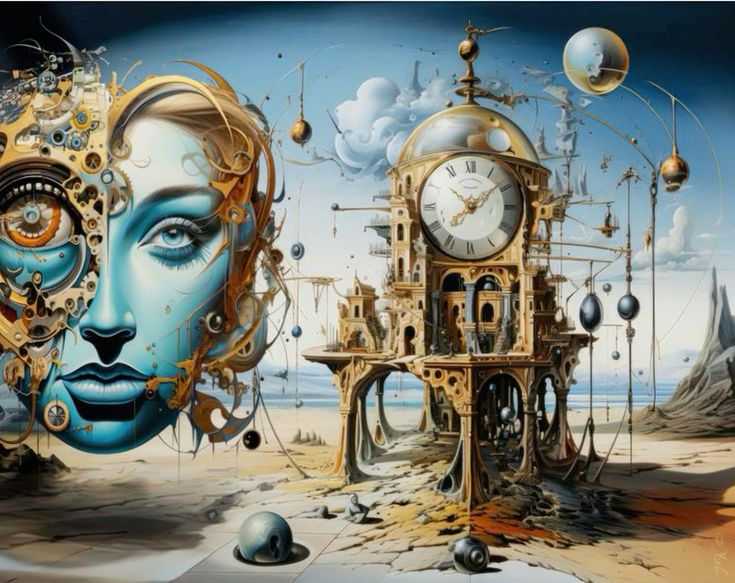
Youri Ivanov _ DIGITAL GRAPHIC ART _ SD World 141

I am deeply aware that in this work, I have not made any ordinary demands on the understanding of my reader. I have made every effort to smooth the path to understanding. Still, I have not been able to remove one great difficulty, namely the fact that the experiences underlying my explanations are probably unknown to most people and, therefore, strange. As a result, I cannot expect my readers to follow all of my conclusions. Although every author naturally enjoys understanding their audience, interpreting my observations is less important to me than pointing out a broad area of ​​experience that has hardly been explored, which I would like to make accessible to many through this book. In this area, which has been so obscure up to now, it seems to me that the answers are recumbent to many puzzles that the psychology of consciousness has never even come close to solving. I do not wish to claim under any circumstances to have formulated these answers definitively. I am, therefore, quite content if my paper can be regarded as a tentative attempt at an answer.

I sincerely appreciate your support and interest. Thank you!🤗🙏💖

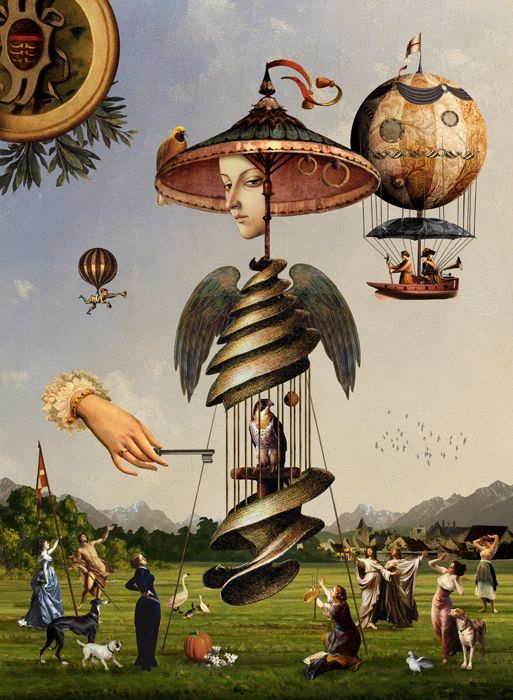
The title image: Maiden Voyage of the Airship Falcon” by Alexei Gurl

The Mystery Of “Mana Personality” Part Two

Standard

Translated from volumes published by Lorenz Jung based on the edition “Gesammelte Werke” dtv.de The Symbols of Transformation (1952) and Aion (1950)

Recently, on X (Twitter), during one of Perian’s talks titled “The Way of Democratic Talk,” someone mentioned that social morals are crucial for keeping people mindful of their behaviour towards others. I responded that social morals are relative and not constant; throughout human history, they have consistently changed after wars or revolutions. I prefer to use the word “conscience.” Another friend said she would stick with “morals” because she was tired of having a guilty conscience. I replied that conscience is based on inner awareness and individuality and, therefore, has a more substantial and profound foundation, strengthening our consciousness as individuals.

Anyway, it was a prologue to noticing that words like consciousness, ego, anima, and their influential product, Mana, are important to take seriously. Mana may sound strange and unknown, but we all have it inside us!

Jung has always attempted to clarify that good and evil exist within every human and has made significant efforts to help us realize that it all depends on us to recognize these and find the balance between them.

Illustration at the top: NIKOLAY ZAITSEV

Here, in the continuation of the first part, I share some more words from this magical Mana.

Individuation
The Mana Personality (P2)

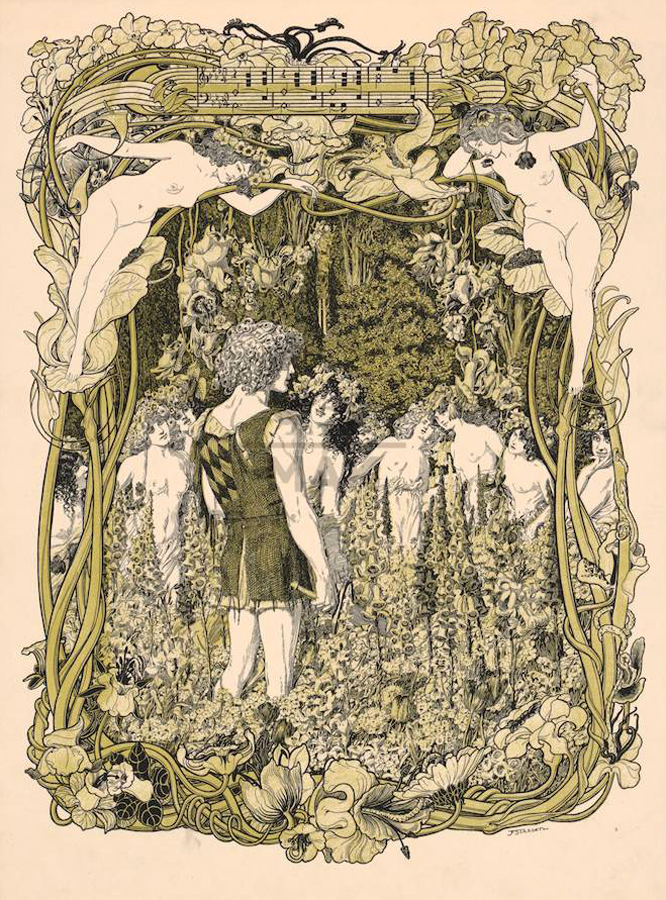
‘Parsifal’ illustrations for Richard Wagner’s opera by Franz Stassen.

Who has now come to terms with the anima? Apparently, the conscious “I”, and therefore the “I”, has taken over the Mana. In this way, the conscious “I” becomes the Mana personality. The Mana personality, however, is a Dominant of the collective unconscious, the well-known archetype of the mighty man in the form of the hero, the chief, the magician, the medicine man and saint, the lord of men and spirits, the friend of God.

This is now a male collective figure that emerges from the dark background and takes possession of the conscious personality. This psychological danger is of a subtle nature; by inflating consciousness, it can destroy everything that has been gained through the confrontation with the anima. It is, therefore, of no minor practical importance to know that in the hierarchy of the unconscious, the anima is only the lowest level and one of the possible figures and that its overcoming creates another collective figure that now takes over its Mana. In reality, it is the figure of the magician – as I will call her in short – that draws the Mana, that is, the autonomous value of the anima to itself. Only insofar as I am unconsciously identical with this figure can I imagine that I myself possess the Mana of the anima. But under these circumstances, I will do so infallibly.

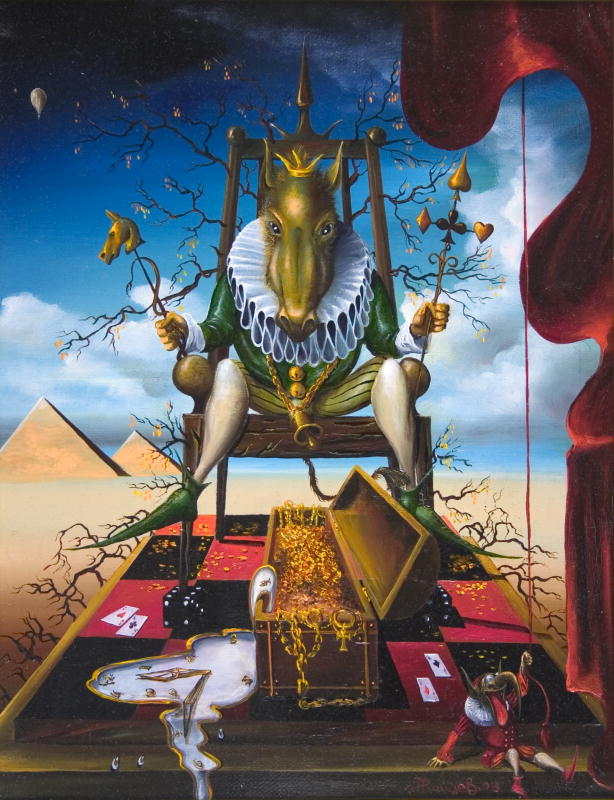
SD World _ Youri Ivanov _ Jouris Kunst

The figure of the magician has a no less dangerous equivalent for women: it is a maternal, superior figure, the great mother, the all-merciful one who understands everything and forgives everything and always wanted the best, who always lived for others and never sought her own, the discoverer of great love, just as it is the herald of the ultimate truth. And just as great love is never appreciated, great wisdom is never understood either. And they can’t stand each other at all.

There must be a serious misunderstanding here because it is undoubtedly a case of inflation. The “I” has appropriated something that does not belong to it. But how did it appropriate this Mana? If it really was the ego that overcame the anima, then the Mana also belongs to it, and then the conclusion is correct: one has become significant. But why does this significance, the Mana, not affect others? That would be an essential criterion! It does not work because one has not become significant but has simply merged with an archetype, another unconscious figure. So, we must conclude that “I” has not overcome the anima and, therefore, has not acquired the Mana. It is just that a new merger has occurred, with a figure of the same sex that corresponds to the father’s imago and has perhaps even greater power.

From the power that binds all beings,
The person who overcomes himself frees himself<

(Goethe: The Mysteries. A Fragment, in. Works in ten volumes, Vol. 7, 1962)

Thus, he becomes a superman, superior to all powers, a demigod, perhaps even more. ‘I and the Father are one’, this powerful confession in all its terrible ambiguity stemming from precisely this psychological moment.

To be continued! 🙏💖

Carl Jung, The Red Book; Soul and God

Standard
Francisco de Holanda – De aetatibus mundi imagines – 1545

I won’t bore you with a lengthy account of my personal life. Still, I will mention that my wife and I had to take care of our cute grandchildren all week due to the lack of support from the German government for kindergarten care and education (the two issues are assumed to be unimportant!). We are also facing a death (redemption!) in the family, which I will write about later.

Amidst all the chaos, I found solace in reading my “holy book”, The Red Book, by Dr. Jung, attempting to nourish my soul. I hope you can find some comfort in reading it, too.🙏

[H I ii(r) 2] Cap. ii (P. 130, 131, 132; Liber Primus, A Reader’s Edition)

On the second night, I called out to my soul (Nov. 14, 1913):

I am weary, my soul, my wondering has lasted too long, my search for myself outside myself. Now, I have gone through events and found you behind them, for I made discoveries on my erring through events, humanity, and the world. I found men. And you, my soul, I found again, first in images within men and then you yourself. I found you where I least expected you. You climbed out of a dark shaft. You announced yourself to me in advance in dreams (which were dark to me and which I sought to grasp in my own inadequate way). They burned in my heart, drove me to all the boldest acts of daring, and forced me to rise above myself. You let me see truths of which I had no previous inkling. You let me undertake journeys whose endless length would have scared me if the knowledge of them had not been secure in you.

I wandered for many years, so long that I forgot that I possessed a soul (I belonged to men and things. I did not belong to myself {Black Book 2}). Where were you all this time? Which Beyond sheltered you and gave you sanctuary? Oh, you must speak through me, that my speech and I are your symbol and expression! How should I decipher you?

Who are you, child? My dreams have represented you as a child and as a maiden (and I found you again only through the soul of the woman {Black Book 2}). I am ignorant of your mystery (Look! I bear a wound that is as yet not healed: my ambition to make an impression {Black Book 2}). Forgive me if I speak as in a dream, like a drunkard – are you God? Is God a child, a maiden? (I must tell myself most clearly: does He use the image of a child that lives in everyman’s soul? Were Horus, Tags, and Christ not children? Dionysus and Heracles were also divine children. Did Christ, the God of man, not called himself the son of man? What was his innermost thought when doing so? Should the daughter of man be God’s name {Black Book 2})? Forgive me if I bobble. No one else hears me. I speak to you quietly, and you know that I am neither a drunkard nor someone deranged, and my heart twists in pain from the wound, whose darkness delivers speeches full of mockery: “You are lying to yourself! You spoke so as to deceive others and make them believe in you. You want to be a prophet and chase after your ambition.” The wound still bleeds, and I am far from being able to pretend that I do not hear the mockery.

How strange it sounds to me to call you a child, you who still hold the all-without-end in your hand (how thick the earlier darkness was! How impetuous and egoistic my passion was, subjugated by all the diamonds of ambition, the desire for glory, greed, uncharitableness, and zeal! How ignorant I was at the time! Life tore me away, and I deliberately moved away from you, and I have done so far all these years. I recognise how good all of this was, but I thought you were lost, even though I sometimes thought I was lost. But you were not lost. I went on the way of the day. You went invisibly with me and guided me step by step, putting the pieces together meaningfully {Black Book 2}) and letting me see the whole in each part.

You took away where I thought to take hold and gave me where I did not expect anything. Time and again, you brought about fate from new and unexpected quarters. Where I sowed, you robbed me of the harvest, and where I did not sow, you gave it to me again where I would never have foreseen it. You upheld my belief when I was alone and near despair. At every decisive moment, you let me believe in myself.

I appreciate your being here. Have a lovely weekend.🙏💖🤗🌹🦋

The Everyday Boredom of Life!

Standard

I’m not sure if any of you have experienced a feeling like I did a few days ago. It’s hard to put into words, but I will try: I had a few things I wanted to remember and sort out in my head, but I wasn’t sure if they were just dreams or had actually happened!

Have you ever had moments when you couldn’t tell if something that happened the previous day was real or just a dream? It reminded me of schizophrenia, which was quite frightening. It’s like having a blurred line between reality and imagination, making it challenging to distinguish what’s real and what’s not. The reason for all this may be a dream I had the night before.

That night, I had a dream I can still recall. In the dream, I saw Robbie Williams, who had released an album that wasn’t a hit! The album was dull, and he was pretty upset about it, though he always had great help from his mate Guy Chambers. I haven’t ever been a big fan of his and haven’t purchased any of his singles. I have only heard his songs on the radio and listened to them once, and not more. That’s why I find it strange that he appeared in my dream.

Painting by Santiago Caruso

Next, a young girl appeared during my dream and offered me her new album. I liked that, though she said she would mix it up with Robbie Williams’ album. Truthfully, they matched perfectly together and became a great hit!

When I told my wife about that, she said it was time for me to begin writing music again! Her advice refers to my earlier time in Germany.

It was around the early ’90s when I used to play guitar on the streets, and as I had only music in my head, I attempted composing, and I managed to write a few songs, which I recorded using an MC (my friends who are my age would know what I am referring to!). The recordings included drums, rhythm guitar, solos, and vocals. I played all these by myself in my tiny room those days with the help of two cassette recorders; poor me! You should see how talented I was!! I suppose this MC is in our basement, in a plastic bag, spending the last minutes of her life.

The main subject I aim to cover is our everyday lives and how boring they can be. Therefore, I took my recent post from Facebook with a quote by Marie-Louise von Franz on this topic. I will compare it with the life of an artist who can live without any single sign of being bored.

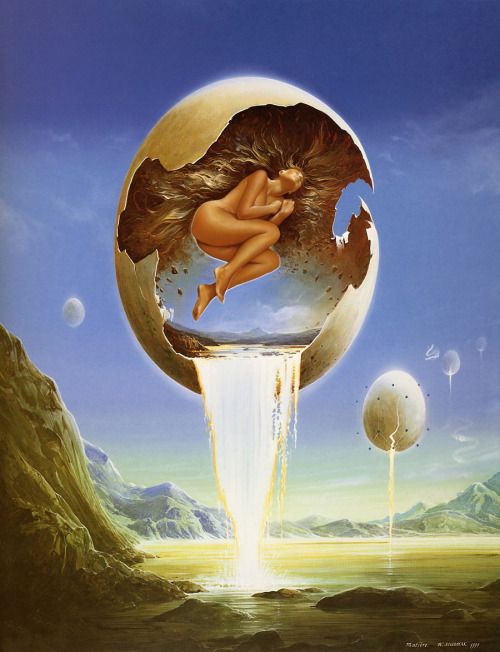
Illustration by Wojtek Siudmak – Matter.

Boredom is a symptom of life being dammed up, that one does not know how to get what one has within oneself into reality. — Marie-Louise von Franz, The Problem of the Puer Aeternus

While considering my own, my wife’s, or my friend’s everyday lives, I often ponder why everything seems so mundane. Even the weekends, which should be a time for rest and enjoyment, can sometimes feel dull and uneventful, especially for those who work tirelessly throughout the week. One does plan to enjoy a meeting, going to Cinema to watch a good movie, or driving for a side trip, the time runs out fast like the wind, and it is again the damnd Monday! Of course, it might be because I am retired now and have a view from a distance.
I believe that the problem is the lack of creativity. Most people end up in jobs they have never chosen or desired; they do that only to make money. Don’t you think these repeated days doing almost the same thing make it no fun anymore? However, for an artist, every new day is a challenge in creating new art.

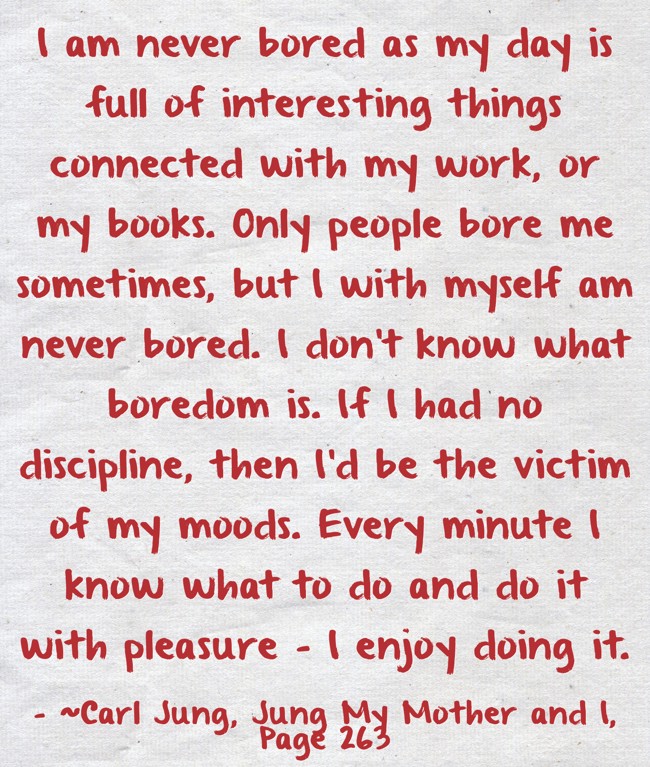
The pointé is here in Dr. Jung’s words; even then, I comprehended it much better now.

Via Quozio

How can an artist’s life not be boring?

As a child, I had different career aspirations, such as becoming a pilot, free of borders or terrain. Still, in my youth, my only wish was to be a music composer, and every morning, I would go to my studio to make a new song. That’s why I think the lucky people who make art or do something similar will never feel bored!

I am convinced that we all were created to create, and art is our way of creating. Therefore, when we are forced to do something else without lust and passion, which, unfortunately, has become common in society, the outcomes are wasted fruits.

After pouring out my heart with the hope that I will achieve my goal of conveying my message to you, I want to mention that next week is the Easter holiday, and I will probably be absent and miss your kind reactions and feedback. However, I might try to post using the WP timer! Let’s see what happens; until then, I appreciate your visits and hope you have a lovely time, everybody. 🤗💖💥🖖

The illustration at the top is by Micha Lobi.

The Odyssey of Carl Jung

Standard

Or a Sequel to THE WAY OF WHAT IS TO COME.

I am an orphan, alone; nevertheless, I am found everywhere. I am one but opposed to myself. I am a youth and an old man at one and the same time. I have known neither father nor mother because I have had to be fetched out of the deep like a fish or fell like a white stone from heaven. In woods and mountains, I roam, but I am hidden in the innermost soul of man. I am mortal for everyone, yet I am not touched by the cycle of aeons.

Illustrated by Petra Glimmdall 💖🙏

C. G. Jung, Memories, Dreams, Reflections, p.227. (Bollingen Tower)

I made this part separately to show how instructive Dr Jung is, even though he didn’t want to teach! After describing his dreams, with the last one ending full of hope with him standing in front of a tree bearing leaves but no fruit, which then transforms into sweet grapes full of healing juice, Dr Jung, although humble, shares his wisdom and knowledge from his vast experience. Despite his insistence that he never intends to teach or give lessons, we can appreciate the profound wisdom contained within his words.

Title image:  “Bleeding Light” By Jeffrey Smith.

Drawings by Jane Adams

Liber Primus fol.i(v)

In reality, now, it was so: At the time when the great war broke out between the peoples of Europe, I found myself in Scotland, compiled by the war to choose the fastest ship and shortest road home. I encountered the colossal cold that froze everything; I met up with the flood, the sea of blood, and found my barren tree whose leaves the frost had transformed into a remedy. And I plucked the ripe fruit and gave it to you, and I do not know what I poured out for you, what bittersweet intoxicating drink left an aftertaste of blood on your tongues.

Believe me (my friends): It is no teaching and no instruction that I give you. On what basis should I presume to teach you? I provide you with news of this man’s way but not of your own way. My path is not your path; therefore, I / cannot teach you! (CF. the contrast to John 14:6: “Jesus said unto him, I am the way, the truth and the life: no man cometh unto the father but by me.) The way is within us, but not in Gods, nor in teachings, nor in laws. Within us is the way, the truth, and the life.

Woe betide those who live by way of examples! Life is not with them. If you live according to an example, you thus live the life of that example, but who should live your own life if not yourself? So live yourselves. (This is not a law, but notice of the fact that the time of example and law, and of the straight line drawn in advance, has become overripe”p.10)

The signposts have fallen; unblazed trails lie before us. (My tongue shall wither if I serve up laws if I prattle to you about teaching. Those who seek such will leave my table hungry!) Do not be greedy to gobble up the fruits of foreign fields. Do you not know that you yourselves are the fertile acre which bears everything that avails you?

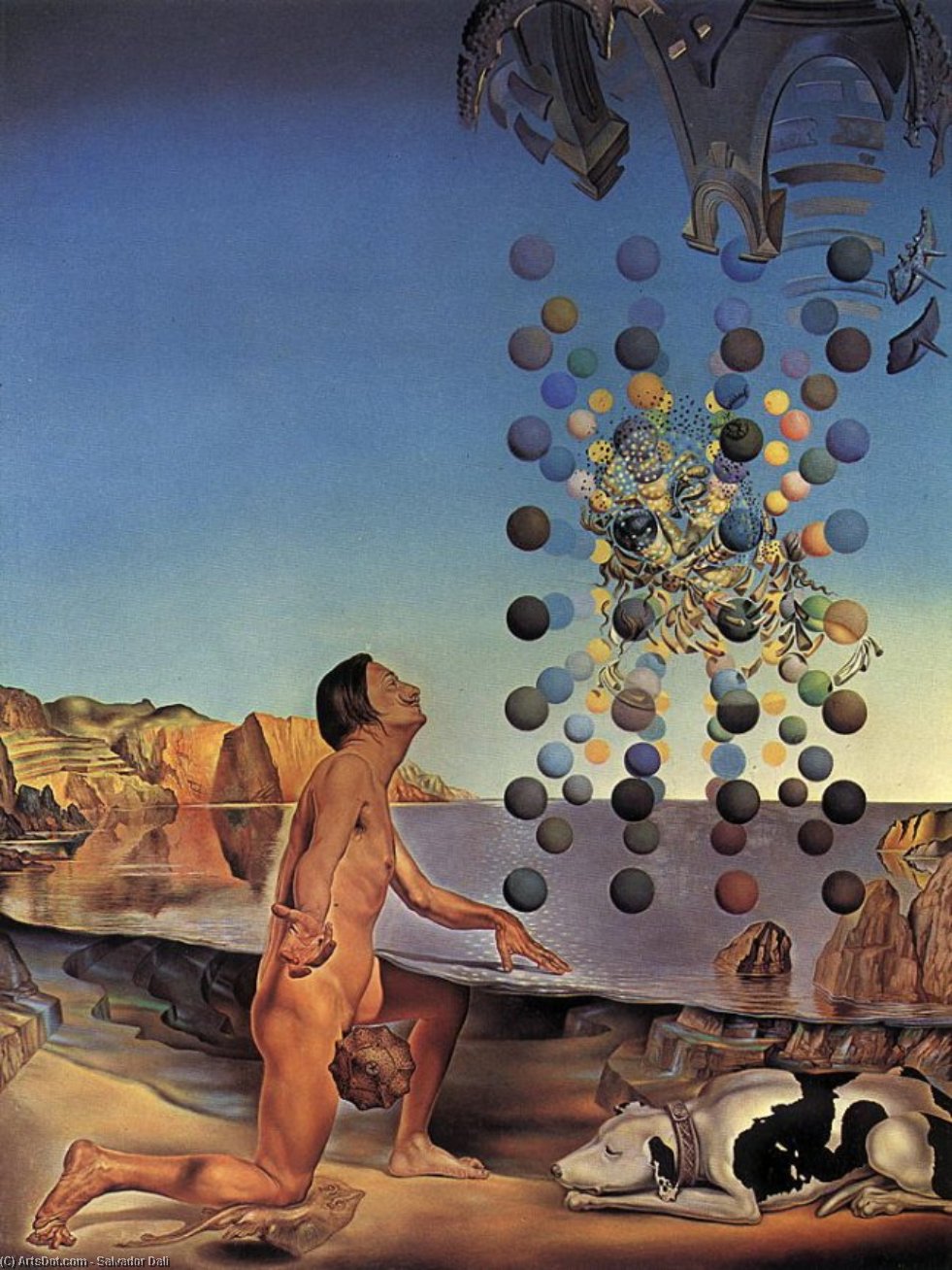
Salvador_dali-self-portrait_1954

Yet, who today knows this? Who knows the way to eternally fruitful climes of the soul? You seek the way through mere appearances, you study books and give an ear to all kinds of opinions. What good is all that?
There is only one way, and that is your way. (only one law exists, and that is your law. Only one truth exists, and that is your truth”p.10)

May each go their own way!

I will be no saviour, no lawgiver, no master teacher unto you. You are no longer little children. (One should not turn people into sheep, but sheep into people. The spirit of the depth demands this, who is beyond present and past. Speak and write for those who want to listen and read. But do not run after someone so you do not soil the dignity of humanity- it is a rare good. A sad demise in dignity is better than an undignified healing. Whoever wants to be a doctor of the soul sees people as being sick. He offends human dignity. It is presumptuous to say that man is sick. Whoever wants to be the soul’s shepherd treats people like sheep. He violates human dignity. It is insolent to say that people are like sheep. Who gives you the right to say that man is sick and a sheep? Give them human dignity so they may find their ascendancy or downfall, their way”p. 11)

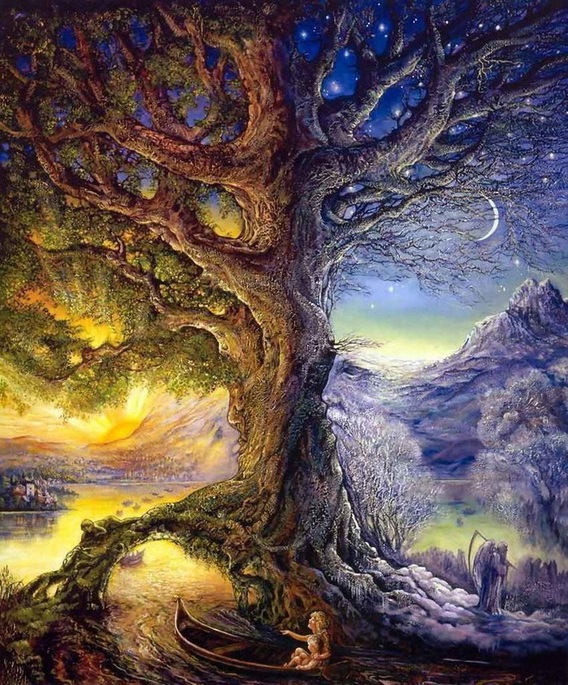
Art by Josephine Wall

Giving laws, bettering, making things easier, has all become wrong and evil. May each one seek out their own way. This way leads to mutual love in the community. Men will come to see and feel the similarity and community of their ways.
Laws and teachings held in common compel people to solitude so that they may escape the pressure of undesirable contact, but solitude makes people hostile and venomous.

Therefore, give people dignity and let each of them stand apart so that each may find their own fellowship and love it.
Power stands against power, contempt against contempt, love against love. Give humanity dignity and trust that life will find a better way.
The one eye of the Godhead is blind, the one ear of the Godhead is deaf, and the order of its being is crossed by chaos. So be patient with the crippleness of the world and do not overvalue its consummate beauty. (This is all, my dear friends, that I can tell you about the grounds and aims of my message, which I am burdened with like the patient donkey with a heavy load. He is glad to put it down!”p.12)

🙏💖🌟