Lady Triệu – A Legend of the Vietnamese Resistance Movement

Standard

MythCrafts Team's avatarMyth Crafts

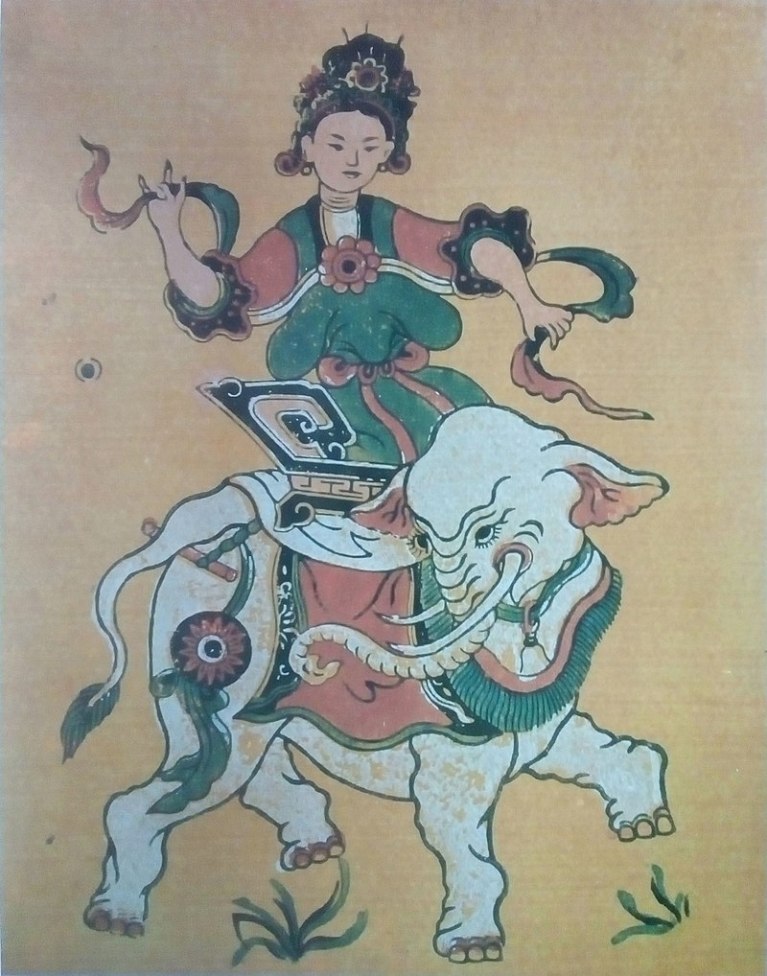
Triệu Thị Trinh was born in the Nông Cống district of Vietnam in 225, a time where the Chinese occupied much of Vietnam, persecuting the native inhabitants of the land. From a young age Triệu Thị Trinh was left alone with her older brother, orphans trying to survive. Her elder brother married, and Triệu Thị Trinh having no other options was forced to live with them in their house. She was continually mistreated by her sister in law, a mean woman who would do her best to provoke Triệu Thị Trinh and abuse her at every given opportunity.

One day Triệu Thị Trinh snapped in response, and killed her sister-in-law in a fit of anger. Scared at the repercussions she would face, Triệu Thị Trinh fled to the hills and made herself a camp.

After much searching, her older brother discovered her hide-away and begged Triệu Thị Trinh to return…

View original post 504 more words

Atalanta Fugiens

Standard

Cakeordeath's avatarcakeordeathsite

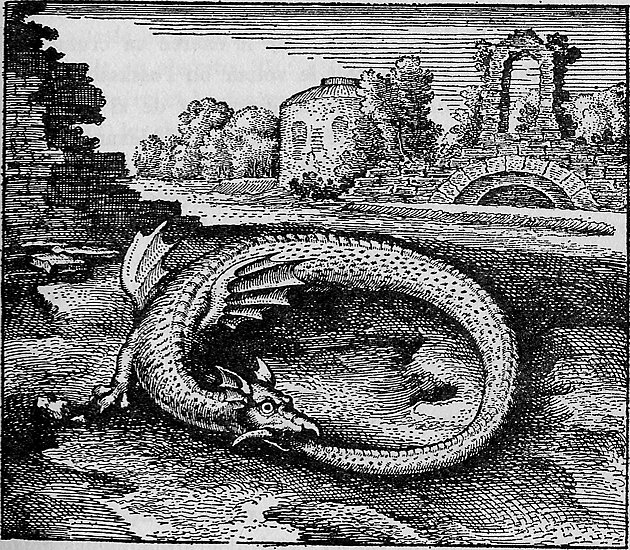
Michael_Maier_Atalanta_Fugiens_Emblem_14 Michael Maier -Atalanta Fugiens Emblem 14

The German physician and alchemist Michael Maier served as a counsellor to the occult besotted Holy Roman Emperor Rudolf II in Prague, Capital of Bohemia, however the forces that would lead to the Thirty Years War were conspiring against the Emperor and Maier was forced to leave, first to England, where he composed a song for the royal wedding of Frederick V of the Palantine to Elizabeth Stuart, the daughter of James I, and then back to Germany in 1616, settling in Frankfurt am Main.

Atalanta Fugiens (Atalanta Fleeing)was published in 1617 by Johann Theodor de Bry in Oppenheim. de Bry published numerous works by authors aligned with the Rosicrucian movement and/or followers of the Swiss physician and occultist Paracelsus (incidentally also known as the ‘father of toxicology’).

An early example of a multi-media project, Atalantais comprised of 50 discourses, each accompanied…

View original post 68 more words

As Above, So Below

Standard

Cakeordeath's avatarcakeordeathsite

5a0d38c66efde73d99c08c8b7355cf97[1] Tabula Smaragdina-Matthew Merian 1612 In her post on Hermes (► “Hermes & Writing in Ancient Greece”: “Collaboration with Alan Severs”✍️.-,) the wonderful Aquileana mentions the syncretic figure of Hermes Trismegistus (Hermes the Thrice Great, on account of being the greatest priest, the greatest philosopher and the greatest king). This figure who at various periods has been considered divine, semi-divine or legendary is nowadays shrouded in obscurity yet it once was a name to conjure with. As Aquileana has outlined the Greek-Egyptian deity in her post I will dealing exclusively with the Hermes Trismegistus who was the purported author of the Corpus Hermeticum and the Emerald Tablet.

In 1463 the great Florentine banker, power broker and patron of the arts Cosimo de Medici heard from his agent Leonardo de Pistoia that he had recently acquiredthe Corpus Hermeticum, part of the treasures rescued before the sack of Constantinople…

View original post 711 more words

Seven Eagles

Standard

Cakeordeath's avatarcakeordeathsite

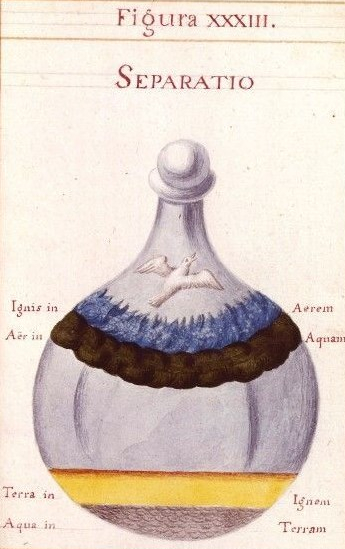
Figure XII-Sapientia Veterum Figure XII-Sapientia Veterum

The 40 illustrations of the Sapientia Veterum Philosophorum are among the finest and most striking of later (18th Century) alchemical art. Stanislas Klossowski De Rola, Balthus son and resident occult adviser to the Chelsea set in Swinging London, notes that it deserves to be seen in full, however I am unfortunately only able to present a limited number of images.

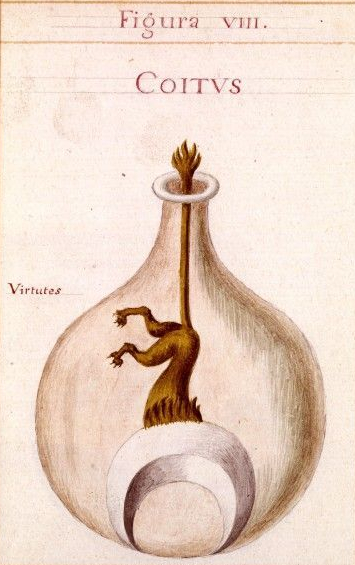
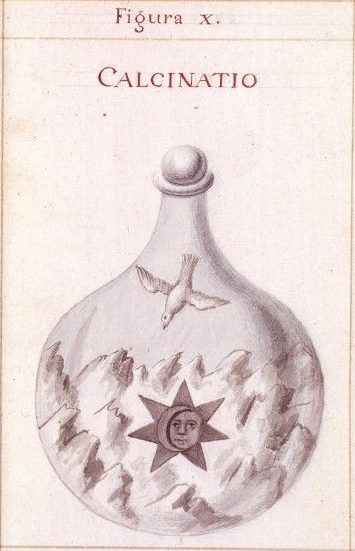
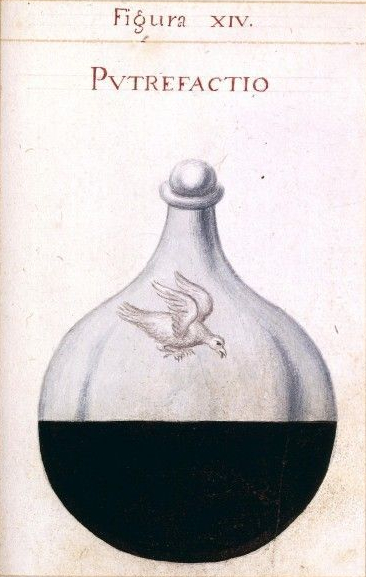
Reducing the royal art to only essential imagery, (glass vessel, dove, lion, rain, sun and moon), Sapientia shows the process of conjuration and separation of the elements in the ascent and descent of the dove, which occurs seven times in the manuscript. This transmigration of matter where the fixed is rendered volatile and the volatile fixed result in the so-called eagles, of which seven precede the exaltation of the Quintessence.

Figure VI Figure VI

Figure VII Figure VII

Figure VIII Figure VIII

Figure X Figure X

Figure XIV Figure XIV

Figure XXIX Figure XXIX

Figure XXXIII-Sapinetia Veretum Figure XXXIII

View original post

About me :)

Standard

Hi adorable friends. As I’m seeing and reading your wonderful posts, I see also that many of you have written a description about yourself.

Therefore, I’ve just thought to write a little to introduce myself;

My name is Aladin (or Written Alaedin because of the sound! 😉 Fazel, still looking for miracle lamp 😁

I was born in Tehran, Iran (Persian I’d like to say) , in a very strange and complicated family, with a father as a professional writer and a mother as a professional book-lover. They both were in a whole a lot in love with each other though, for my father, as every artist might be, the love of his wife wasn’t enough and as his books were mostly social romans with a main focus to love, there were many young female fans who were sending many love letters to him and he had indeed enjoyed them all. Yes my mother knew it and endured it. And even though as one time these letters weren’t enough coming, my mother had begun to write him as an ananum aspired fan, to help him strengthen his writing. that’s of course another story, I was always wondering about her love to my father.

I was not very talented in writing, as my brother was. He has got the whole of father’s writings craft as I, nevertheless, have also grown up between a bunch of books, was more interested in painting and playing music. Unfortunately, our life hadn’t run as one could wish, it became a traumatic life.

Anyway, long talk short sense 😉 I have used my talents, made music, played as an actor on the stage, worked as a journalist but finally, there were no chance to practice them in Iran after revolution in 1979, my brother and I came to Germany and I’m living here since 1985.

Of course, I didn’t want to write my curriculum vitae, just to let you know a little about me. 🙏💖🤞

Chimney Sweepers

Standard

a great post in a wonderful way from those days which let us know and feel about it. Thank you, Stefania, ❤ ❤ “When my mother died I was very young,
And my father sold me while yet my tongue
Could scarcely cry ” ‘weep! ‘weep! ‘weep! ‘weep!”
So your chimneys I sweep & in soot I sleep.”

etinkerbell's avatare-Tinkerbell

During the Industrial Revolution  thousands of  desperate people came to the cities seeking work, but those lucky who managed to find one soon realized that the average wage would have kept them in poverty for the rest of their lives. Justices were given authority over the children of poor families, and began to assign them to apprenticeships to provide them with work, food and shelter.

For master chimney sweeps, these small, defenseless children of powerless or absent parents were the perfect victims to be exploited in their business.

“When my mother died I was very young,
And my father sold me while yet my tongue
Could scarcely cry ” ‘weep! ‘weep! ‘weep! ‘weep!”
So your chimneys I sweep & in soot I sleep.”

Their apprenticeships lasted seven years or even more, but being generally unsupervised, once the papers were signed, the children were completely left under the power of their…

View original post 942 more words

Offering

Standard

And the #Spring lives for ever ❤❤

House of Heart's avatar

If I could return to your sanctuary I would bring one last offering.  Those words you loved,  that you spoke a thousand times  or wrote just once.  I would place them near,  let those tender verses lie down beside you.
Wild Wood

A trampled path winds

its way through the

reaching arms of evergreen

to a misty wild wood where my

heart lies down with yours.

White tail deer nibble goldenrod

and lift the veil of solitude.

Spring showers and wild flowers

flourish there  where

April lives forever.

art © Joan Egert

In Memory

World Poetry Day

View original post

Norline on the beach

Standard

Ibonoco's avatarNews from Ibonoco

POUR NORLINE
Cette plage restera vide
pour de nouvelles aubes couleur ardoise
des lignes que le ressac efface
sans cesse avec son éponge,
et quelqu’un d’autre viendra
de la maison encore endormie,
une tasse à café chauffant dans sa main
comme autrefois mon corps se lovait sur le tien,
pour mémoriser ce passage
d’une sterne sirotant le sel,
comme quand on aime une ligne
sur une page, et qu’il est difficile de la tourner.

TO NORLINE
This beach will remain empty
for more slate-coloured dawns
of lines the surf continually
erases with its sponge,
and someone else will come
from the still-sleeping house,
a coffee mug warming his palm
as my body once cupped yours,
to memorize this passage
of a salt-sipping tern,
like when some line on a page
is loved, and it’s hard to turn
Traduit de l’anglais par Thierry Gillybœuf.

Derek Walcott (1930 – 2017) , in

View original post 71 more words

St. Patrick’s Day & The Four Leaf Clover

Standard

Nifty Buckles Folklore's avatarNifty Buckles

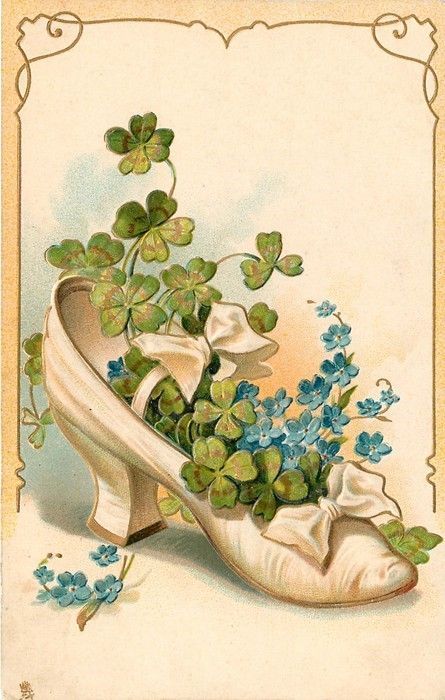
Shamrock, Gaelic seamarog is the little seamar  a three leaf clover, a trefoil.

Pagan version: Ancient bards professed that it was an object of reverence with the legendary race of Tuath-de-Danaan. The triple spiral symbol, or Triskelion, occurs at several ancient megalithic and Neolithic sites in Ireland. It is carved into the rock of a stone lozenge near the main entrance of the prehistoric Newgrange monument in County Meath, Ireland. Newgrange, which was built around 3200 BC, predated the Celtic arrival in Ireland but has long since been incorporated into Celtic culture.

According to Academic Folklorist Jack Santino hypothesized that “The shamrock was probably associated with the earth and assumed by the Druids to be symbolic of the regenerative powers of nature .”

The Druids revered the Shamrock for its connection to the earth and Since 1640, picking a four-leaf clover will bring you good luck. A description from…

View original post 690 more words

The Origins and Nature of the Cult of Mithras

Standard

P. James Clark's avatarThe Classical Astrologer

BBC4’s In Our Time looks into the mystery religion Mithraism

View original post