As we saw the last time, Longnü made her first appearance in a Buddhist Sutra, the Lotus Flower. In that text, she was transformed by the Buddha into a man to become a Bodhisattva; the irony of this tale being that her own associated Bodhisattva, Avalokateshvara, had already been culturally transformed into a female, now known as Guānyīn .
Story 2:
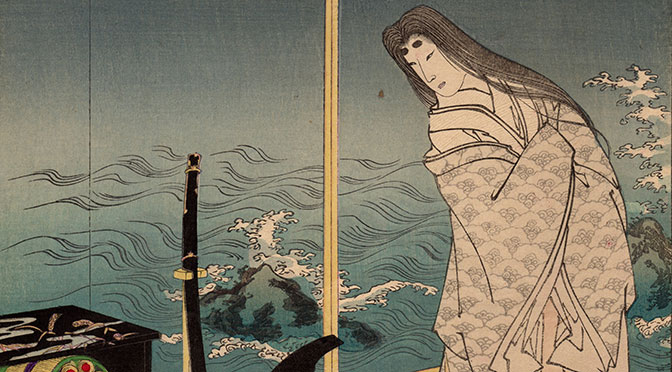
The first folklore tale of Longnü occurs in the Complete Tale of Avalokiteśvara and the Southern Seas (Nánhǎi Guānyīn Quánzhuàn); here she plays a subtle part, rescuing her brother from certain death.
Her brother, Sudhana, had gone swimming, and taken the form of a fish, a carp to be precise. In this form he was caught by a fisherman, and being on land, was unable to transform back into his dragon form.
The fisherman took Sudhana to the market to be butchered. However, given his…
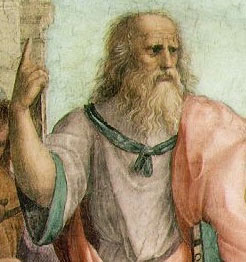
Plato features in my second book The Labyrinthine Journey, and it was his dialogues Critias and Timaeus, that inspired the premise of my story and the enduring legend of Atlantis.
Plato from the School of Athens by Raphael, 1509 Wikipedia
I’m still celebrating the launch of A Ghost in the Kitchen.
Sheiks and Shebas, welcome back to Jazz Age Wednesdays. Thanks again to everyone who supported and visited my book launch for A Ghost in the Kitchen.
It’s hard to choose a category for this latest novel, or any of the stories about Pip and her friends. Above all esle, there’s whimsy. Yet there’s also the 1920s setting, mystery, food, and there’s speculative fiction or magic realism — whichever you choose to call the ghosts.
From the Renaissance to Fantasy
Two of the ghosts were inspired by real-world people in history. However, their time was long before the Roaring Twenties. One of those is pos-i-lutely potent poltergiest of the title, Maestro Martino. His real life counterpart was Martino de Rossi (or Martino of Como, or Martino de Rubeis, called Maestro Martino). That…
Good morning, lovely readers!What follows is a continuation of my previous three installments of free fiction–a dialogue between me and Wynne, a character from my Shield Maidens of Idana fantasy series.Today we walk with Wynne as she evades Prydwen, The Man of the Golden Hound Crest, and learn that maybe, just maybe, there is hope for her love, the smithy’s son Morthwyl.
Is that when you decided to join the Shield Maidens?
The Shield Maidens? Oh, Galene, if I had thought of them sooner… yet I was not of age, and the King’s Stronghold seemed to only make use of men, at least in Cairbail. But King’s presence or not,Tradeis Law, be it done with the crown’s blessing, or not.
For the next three years, life in Cairbail flowed with the Gasirad: it sparkled with life, it stunk with decay. It all depended on where you stood:…
It is a really interesting question; I’d answer: Yes!
As we might know and history would show us, it is so and it has been all the time. We are all involved with the social fact as we are living in the mass of public!
…The cause of human-being coming to exist, however, is not clear. The only clearness is that this form of existence seems not to be what was required to be. This would be a case to discuss about, if we made a general consideration of human behavior and the path of indulgence and trespass that he has gone through his chronicle, in a serious way. To make it possible, the undeniable hostility between mankind and nature in general (in the order that one’s life means the other’s death), seems to be a proper clue for getting into a process which began when the first ape, if ever, in quest for meat climbed down his home-tree, and while missing his body hair and the other animal means, his mutation began. But this, either because of his mental disability or gradual lack of all necessary outfits (strong instinct and proper quality of senses, claws, teeth and body-cover) should have gone as a chaotic beginning, where our poor descending predecessor had no way but to somehow regain his missing necessary strength for survival. And since there was no natural way remained for this recovery process, he began to manipulate as well as to imitate nature, or in other words, he commenced to run for an unnatural life. It is simple to conceive that an abrupt fear took the new creature totally up, so that he felt himself defenseless and naked in confrontation with his apparently brutal and cruel environment. This is most likely that another result could or even had to be obtained if this misfortune in Man’s initial touch with nature had not obstructed the process. And this is also possible that a project had once been planned to create a special and extraordinary species to be able to engender an intellectual kind of harmony among the natural parts and elements on this planet.
This is a part of a roman “The Season of Limbo” which, my brother Al wrote in the 90’s.
Of course, it isn’t the whole of the article but, as you should mention it; it is something social therefore political. I mean; as we all once decided to live safety together as a social community on this almost unfamiliar terrain, we have chosen the communion way of life and as the art in us, is the communion way of our expression only as an idea to make it better!
As I lived in Iran, the great Political Idols for me were the artists in countries like: In the south Americas, or and so on!
finally; long talk short sense, I think the artists are growing up in the very society as they live, therefore, their arts come from their soul and I think that is the main point; Creation by one’s soul.
truly, I found this article and the memories of those days in which we were fighting against the dictatorship of the Shah’s regime (it wasn’t so fur worst as it is now!) and these activities like; Neruda, Garcia Marques, Milan Kundera, Ernest Hemingway, even Shakespeare were all the political activist. We all are Artists, who are trying to make a reason for our beings.
Does politics belong in art? The question arouses heated debate about creative freedom and moral responsibility. Assumptions include the idea that politics cheapens film, music, or literature, or that political art should abandon traditional ideas about beauty and technique. As engaging as such discussions might be in the abstract, they mean little to nothing if they don’t account for artists who show us that choosing between politics and art can be as much a false dilemma as choosing between art and love.
In the work of writers as varied as William Blake, Muriel Rukeyser, James Baldwin, and James Joyce, for example, themes of protest, power, privilege, and poverty are inseparable from the sublimely erotic—all of them essential aspects of human experience, and hence, of literature. Foremost among such political artists stands Chilean poet Pablo Neruda, who—as the TED-Ed video above from Ilan Stavans informs us—was a romantic stylist, and also a fearless political activist and revolutionary.
Neruda won the Nobel Prize for Literature in 1971, and, among his many other literary accomplishments, he “rescued 2,000 refugees, spent three years in political exile, and ran for president of Chile.” Neruda used “straightforward language and everyday experience to create lasting impact.” He began his career writing odes and love poems filled with candid sexuality and sensuous description that resonated with readers around the world.
Neruda’s international fame led to a series of diplomatic posts, and he eventually landed in Spain, where he served as consul in the mid-1930s during the Spanish Civil War. He became a committed communist, and helped relocate hundreds of fleeing Spaniards to Chile. Neruda came to believe that “the work of art” is “inseparable from historical and political context,” writes author Salvatore Bizzarro, and he “felt that the belief that one could write solely for eternity was romantic posturing.”
Yet his lifelong devotion to “revolutionary ideals,” as Stavans says, did not undermine his devotion to poetry, nor did it blinker his writing with what we might call political correctness. Instead, Neruda became more expansive, taking on such subjects as the “entire history of Latin America” in his 1950 epic Canto General.
Neruda died of cancer just weeks after fascist dictator Augusto Pinochet seized power from elected president Salvador Allende in 1973. Today, he remains a beloved figure for activists, his lines “recited at protests and marches worldwide.” And he remains a literary giant, respected, admired, and adored worldwide for work in which he engaged the struggles of the people with the same passionate intensity and imaginative breadth he brought to personal poems of love, loss, and desire.




 Plato from the School of Athens by Raphael, 1509 Wikipedia


 lampmagician
You must be logged in to post a comment.