

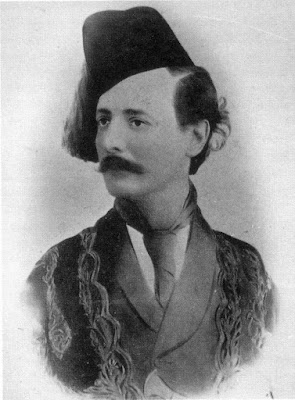
Eckhart Tolle (born Ulrich Leonard Tölle, , February 16, 1948) is a German-born spiritual teacher. Honestly, I got to know him by his quotes which were permanently shared in the media.First, I noticed his first name made me making mistake with Meister Eckhart, until I found out that he changed that from Ulrich to Eckhart; according to his respect to the German philosopher and mystic, Meister Eckhart.
Although, he made an effort in a spiritual manner to find the way to the self. Here is a description of this point:
One night in 1977, at the age of 29, after having suffered from long periods of depression, Tolle says he experienced an “inner transformation”. That night he awakened from his sleep, suffering from feelings of depression that were “almost unbearable,” but then experienced a life-changing epiphany. Recounting the experience, he says,
I couldn’t live with myself any longer. And in this, a question arose without an answer: who is the ‘I’ that cannot live with the self? What is the self? I felt drawn into a void! I didn’t know at the time that what really happened was that the mind-made self, with its heaviness and problems, that lives between the unsatisfying past and the fearful future, collapsed. It dissolved. The following day I woke up, and everything was so peaceful. The peace was there because there was no self. Just a sense of presence or “beingness,” just observing and watching.
Tolle recalls walking in London the following day and finding that “everything was miraculous, deeply peaceful. Even the traffic.” The feeling continued, and he felt a strong underlying sense of peace in any situation.
I can understand his feeling because I know Germans and Brits! To put it bluntly, When a German travelled to England, would find lots more!!

Anyway, here is his finding out about the “so-called” complaining. The Germans say; Meckerei (grumbling). And I think it can be beneficial.

Nothing is personal. Everyone behaves according to their level of consciousness. When you say, “this and that did this to me,” that doesn’t mean the other person addressed what he personally did to you. But some people take it all personally. For example, when you drive your car, someone stands before you and blocks your way. Why take it personally? The other person doesn’t even know you, but the ego interprets the situation and says, “he blocked my way, mine”, while the other person always drives like that.
The ego likes to complain and say, “others did this and that to me”. And the more one complains about what others have done to one, the stronger becomes “my (they have done it)”, i.e. the ego. This mechanism is unconscious.
The reasons can be many, but the ego always interprets things as if others cannot please us – either they are doing something they shouldn’t, or they are not doing something they should, but always in relation to “me”. “. This is why the ego likes to complain about different things that others do. And the more it complains, the more we are right and others wrong.
The world is full of people who give us cause for complaint. And life does this not to break your nerves but to make you more conscious. It’s not like an evil demon gathered these people around you to make you miserable.
Your expectations of others to behave in a certain way makes you unhappy.
But you have to “catch” yourself complaining about others when you’re doing it to break out of this pattern. The ego will then feel that you haven’t fed it – and indeed it is – it will feel like it’s shrinking. “If I don’t complain,” the ego would say, “I get smaller and less,” because every time you complain, your ego inflates, and you feel yourself becoming “more.”
And the more emotional the complaint, the more you feel like you’re blowing up like a balloon. And often, anger can accompany the complaint. This is a great way to practice not complaining. At first, it will seem like something is missing, but then you will feel inner peace.
Of course, many will now ask themselves, “should I let myself be used by others and do what they want with me?”. Of course not. If you need to say something to the other person, you will say it, but without complaining. Suppose you are waiting for a technician to come to your house to fix an error. You call him once; he tells you he will come at this or that time, and he doesn’t come. Then you can contact him and say “I was waiting for you, but you didn’t come, I’ll get someone else, thanks for listening to me”. Complaining to him doesn’t help him. You won’t make him more aware. And the only “benefit” you get from the complaint is that you strengthen your identification with your false self.
You can really be thankful for all these people who make you more aware. When you realize you are complaining, you can observe your mind, turn your attention inward, and consider whether those thoughts are helpful. That is, even if you’re not overtly complaining, see if your mind keeps complaining by thinking of the appropriate views. Because you can’t say it, you can feel it. When you spot such thoughts, ask yourself if they make you happier or more satisfied or if your life would be better and more accessible without them.
*The text is an excerpt from a taped speech by Eckhart Tolle.
Source: Aytepignosi
Images; Fly Me to the Moon by Ishyndar on DeviantArt / Amino App / Complex
It is, n any case, a dangling conversation. Have a lovely weekend, friends.💖🤗💖





































 lampmagician

,_f.118_-_BL_Add_MS_29822.jpg)
You must be logged in to post a comment.