The Mystery Of “Mana Personality” Part Two

Standard

Translated from volumes published by Lorenz Jung based on the edition “Gesammelte Werke” dtv.de The Symbols of Transformation (1952) and Aion (1950)

Recently, on X (Twitter), during one of Perian’s talks titled “The Way of Democratic Talk,” someone mentioned that social morals are crucial for keeping people mindful of their behaviour towards others. I responded that social morals are relative and not constant; throughout human history, they have consistently changed after wars or revolutions. I prefer to use the word “conscience.” Another friend said she would stick with “morals” because she was tired of having a guilty conscience. I replied that conscience is based on inner awareness and individuality and, therefore, has a more substantial and profound foundation, strengthening our consciousness as individuals.

Anyway, it was a prologue to noticing that words like consciousness, ego, anima, and their influential product, Mana, are important to take seriously. Mana may sound strange and unknown, but we all have it inside us!

Jung has always attempted to clarify that good and evil exist within every human and has made significant efforts to help us realize that it all depends on us to recognize these and find the balance between them.

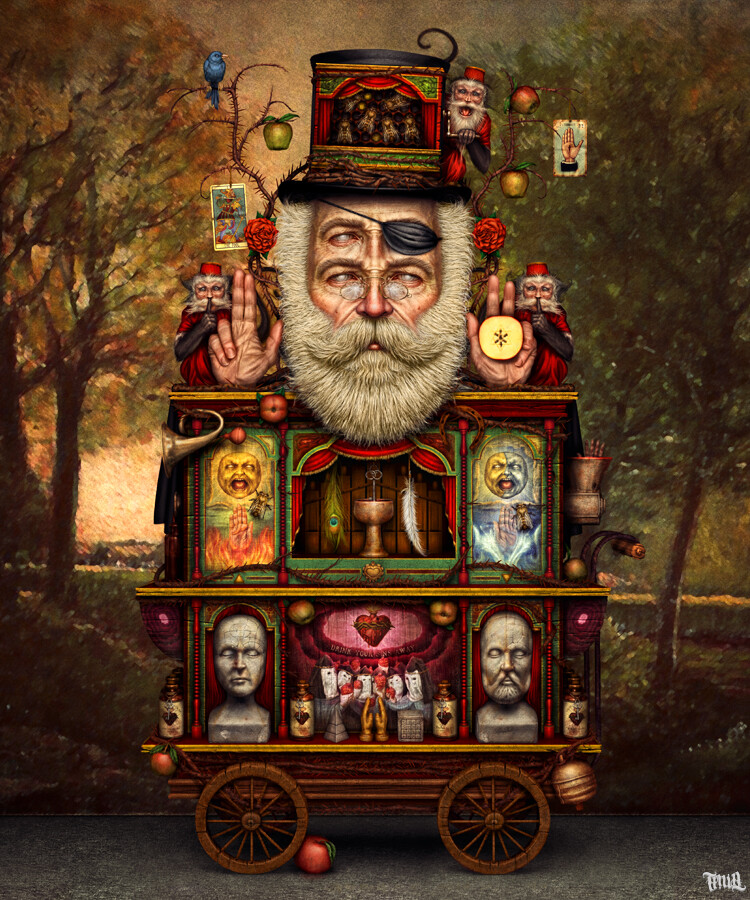
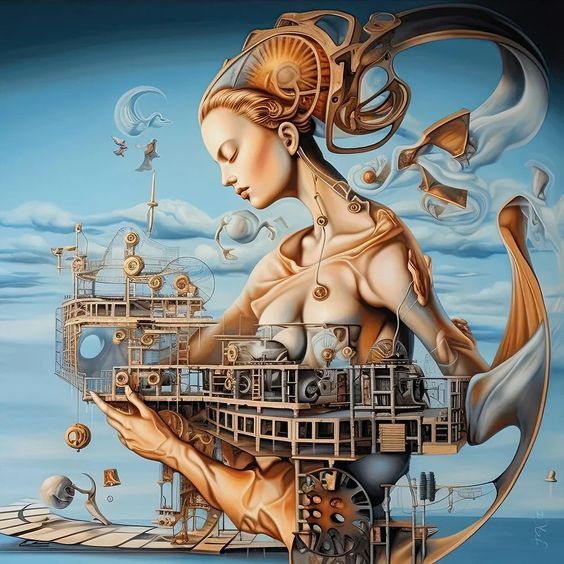
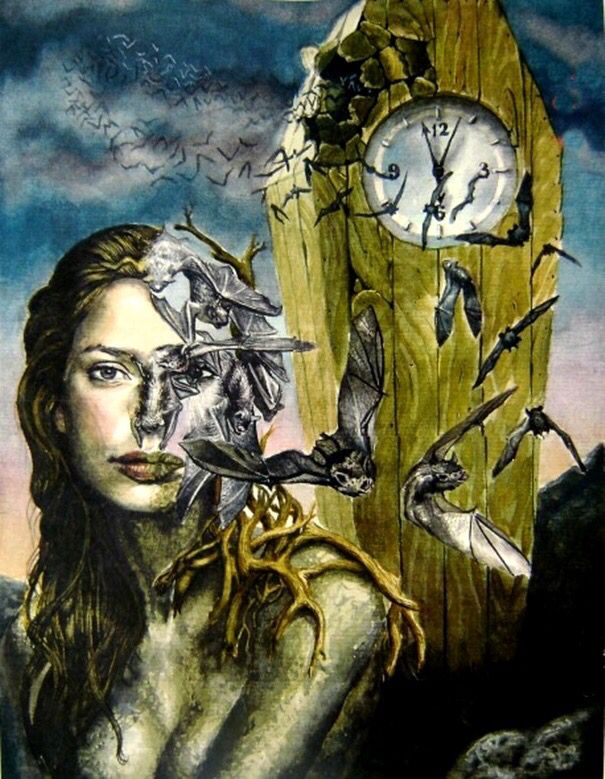
Illustration at the top: NIKOLAY ZAITSEV

Here, in the continuation of the first part, I share some more words from this magical Mana.

Individuation
The Mana Personality (P2)

‘Parsifal’ illustrations for Richard Wagner’s opera by Franz Stassen.

Who has now come to terms with the anima? Apparently, the conscious “I”, and therefore the “I”, has taken over the Mana. In this way, the conscious “I” becomes the Mana personality. The Mana personality, however, is a Dominant of the collective unconscious, the well-known archetype of the mighty man in the form of the hero, the chief, the magician, the medicine man and saint, the lord of men and spirits, the friend of God.

This is now a male collective figure that emerges from the dark background and takes possession of the conscious personality. This psychological danger is of a subtle nature; by inflating consciousness, it can destroy everything that has been gained through the confrontation with the anima. It is, therefore, of no minor practical importance to know that in the hierarchy of the unconscious, the anima is only the lowest level and one of the possible figures and that its overcoming creates another collective figure that now takes over its Mana. In reality, it is the figure of the magician – as I will call her in short – that draws the Mana, that is, the autonomous value of the anima to itself. Only insofar as I am unconsciously identical with this figure can I imagine that I myself possess the Mana of the anima. But under these circumstances, I will do so infallibly.

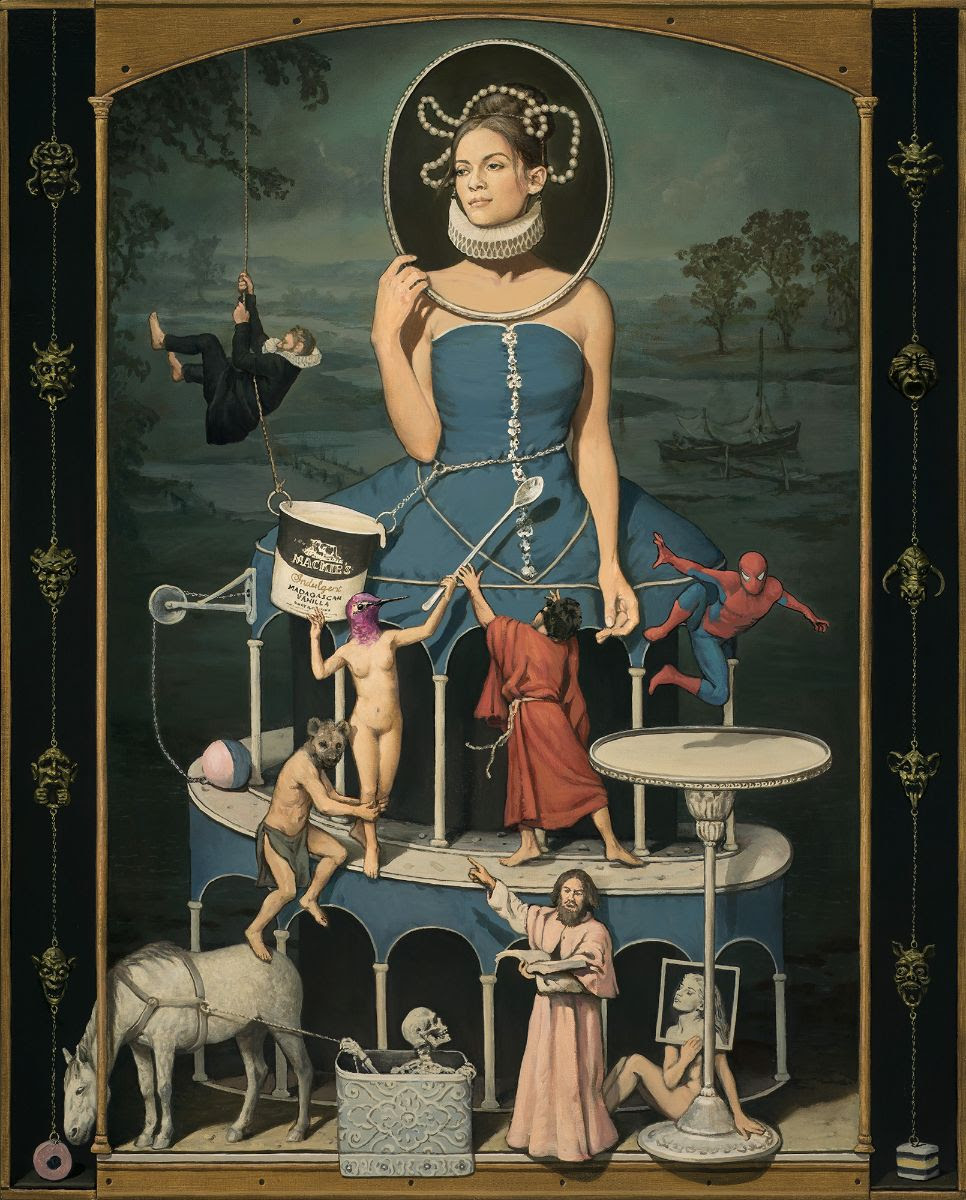
SD World _ Youri Ivanov _ Jouris Kunst

The figure of the magician has a no less dangerous equivalent for women: it is a maternal, superior figure, the great mother, the all-merciful one who understands everything and forgives everything and always wanted the best, who always lived for others and never sought her own, the discoverer of great love, just as it is the herald of the ultimate truth. And just as great love is never appreciated, great wisdom is never understood either. And they can’t stand each other at all.

There must be a serious misunderstanding here because it is undoubtedly a case of inflation. The “I” has appropriated something that does not belong to it. But how did it appropriate this Mana? If it really was the ego that overcame the anima, then the Mana also belongs to it, and then the conclusion is correct: one has become significant. But why does this significance, the Mana, not affect others? That would be an essential criterion! It does not work because one has not become significant but has simply merged with an archetype, another unconscious figure. So, we must conclude that “I” has not overcome the anima and, therefore, has not acquired the Mana. It is just that a new merger has occurred, with a figure of the same sex that corresponds to the father’s imago and has perhaps even greater power.

From the power that binds all beings,
The person who overcomes himself frees himself<

(Goethe: The Mysteries. A Fragment, in. Works in ten volumes, Vol. 7, 1962)

Thus, he becomes a superman, superior to all powers, a demigod, perhaps even more. ‘I and the Father are one’, this powerful confession in all its terrible ambiguity stemming from precisely this psychological moment.

To be continued! 🙏💖

A Magnificent Divine Falcon to Protect Wise Amenemopé’s Treasures.

Standard

Usermaatre Amenemope was an ancient Egyptian pharaoh of the 21st Dynasty who ruled between 1001 and 992 BC or 993 and 984 BC. His tomb is one of only two entirely intact royal burials known from ancient Egypt, the other being that of Psusennes I. “His Instruction” (That is about thirty chapters (more than ten commands!)) is a literary work from ancient Egypt, most likely composed during the Ramesside Period. It contains thirty chapters of advice for successful living, attributed to the scribe Amenemope, son of Kanakht, as a legacy for his son.

Treasure of Tanis, the golden mortuary mask of Pharaoh Amenemope. Egypt Musem

The pharaohs of Egypt were associated with Horus since the pharaoh was considered the earthly embodiment of the god. From around 3100 BCE, he was given a memorable royal “Horus name.” The falcon, representing divine kingship, symbolized the king as the earthly manifestation of Horus.

Here is the captivating story, by the brilliant Marie Grillot, of this incredible discovery.💖🙏

A falcon carrying Amenemopé’s cartridges in its talons

Via égyptophile

Falcon pendant – gold and cloisonné glass paste
21st Dynasty – reign of Amenemopé (c. 1000 BC)
from Tanis, the tomb of Amenemopé – NRT III – discovered by Pierre Montet on April April 16
on display at the Egyptian Museum in Cairo – JE 86036 (museum photo)

In May 1929, the Egyptian government awarded Pierre Montet the concession for Tanis, now known as “Sân el-Hagar”, which lies in the “Tanitic branch” of the Nile Delta, over 100 km northeast of Cairo.

In 1722, Père Sicard identified this city as the ancient Tsa’ani” (“Tso’an” in Hebrew, “Tjaani” for the Copts, Greekized as “Djanet”). The scholars of the Commission d’Egypte partially excavated it, first by Jean-Jacques Rifaud (on behalf of consul Drovetti) and then by Auguste Mariette.

Pierre Montet’s excavations at Tanis

Its ruins, covering more than 400 hectares, witness its “activity” from the Old Kingdom to Roman times. However, the rulers of Dynasties XXI to XXIII marked its golden age by choosing it as their religious and funerary capital. By mirror effect, it became the “Thebes of the North”…

Pierre Montet’s team, summarily installed on this isolated and desolate site, worked with patience and perseverance for around ten years before the time came for the “rewards”. It was inaugurated in March 1939 with the discovery of the tomb of Chechonq II… From then on, the necropolis would yield many other treasures…

Elevation view of tomb NRT III containing the tombs of Psusennes I, his wife Moutnedjemet,
then their son Amenemopé, another son of king Ânkhefenmout, the king’s chief general Oudjebaoundjed,
and in the antechamber, the sarcophagus of Sheshonq II – Royal Necropolis of Tanis

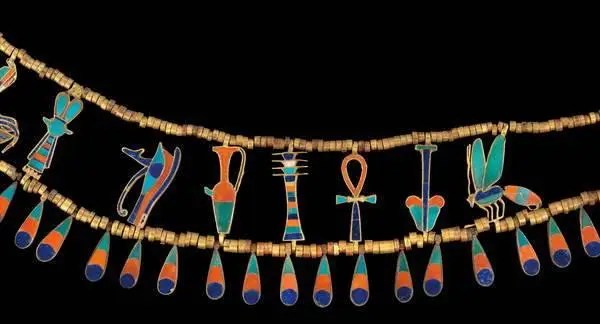
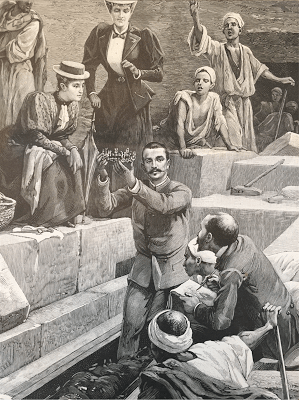
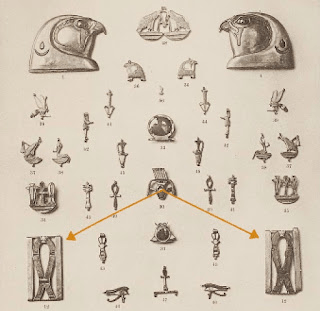
Thus, in “Tanis – Twelve years of excavations in a forgotten capital of the Egyptian Delta”, the Egyptologist Pierre Montet recounts the extraordinary day of the discovery of the tomb of Pharaoh Amenemopé: “The entrance was opened on April April 16). His Majesty King Farouk, who had arrived the day before in Saan, where he had erected a city of tents, was present, as was Canon Drioton, Director of the Egyptian Antiquities Service, and a young Egyptian Egyptologist, Professor Abou Bekr. The vault was furnished in much the same way as that of Psousennès: a granite sarcophagus at the bottom, canopic vases, metal vases, a large sealed jar, funerary statuettes and a vast gilded wooden chest that had collapsed due to the effects of time and humidity in the front half. Once these objects had been safely removed, the sarcophagus lid was placed in their place. Much less opulent than Psousannes, the new ruler had made do with a single stone sarcophagus and a wooden anthropoid coffin lined with gold. Wood was reduced to almost nothing. The gold plates were removed. Needless to say, the mummy had suffered enormously. His ornaments, less numerous than those of Psousennès, nevertheless constitute a wonderful collection: a gold mask, two necklaces, two pectorals, two scarabs, lapis and chalcedony hearts, bracelets and rings, a large cloisonné gold falcon with outstretched wings…”.

Falcon pendant – gold and cloisonné glass paste
21st Dynasty – reign of Amenemopé (c. 1000 BC)
from Tanis, the tomb of Amenemopé – NRT III – discovered by Pierre Montet on April April 16
on display at the Egyptian Museum in Cairo – JE 86036 (museum photo)

The hawk, which seems to soar powerfully into the sky, is 10.5 cm high and 37.5 cm wide. The head and legs are in gold, while the rest of the body is in gold cloisonné with pâte de verre in shades of green, perfectly simulating the shimmer of the feathers.

In “Les trésors du musée égyptien”(The Treasures of the Egyptian Museum), Silvia Einaudi describes it as follows: “The falcon is depicted in flight with its wings spread. The head, turned to the left, is made of solid gold. The beak, eye, neck and decorative motif on the cheek are in dark pâte de verre. The raptor’s wings, body and tail are executed using the cloisonné technique: glass paste in delicate shades of pink and green is inlaid with gold, giving life to a simple polychromy. The wing feathers radiate outwards, forming two rows.
On the other hand, the body is decorated with a teardrop motif that continues right down to the tail. The legs, also in solid gold, hold the ‘shen’ signs, a symbol of eternity, to which two gold plates bearing the sovereign’s name are attached. The hieroglyphs inside the cartouches are executed in coloured glass paste inlaid with gold. The plate on the right bears the pharaoh’s coronation name: ‘Usermaatra Setepenamon, beloved of Osiris and Ro-Setau (Memphis necropolis)’; on the left, his birth name: ‘Ménémopé Meramon, beloved of Osiris, lord of Abydos'”.

Amenemopé’s vault at its opening – Drawing by E. Pons
Source: Pierre Montet, “Tanis”, Payot, 1942

Amenemopé, pharaoh of the 21st Dynasty, reigned from Tanis around 1001-992 BC. The successor of Psusennes I, he was, as the book mentioned above states: “buried in the latter’s tomb, in a granite-covered room originally created to house the remains of Moutnedjemet, wife and sister of Psusennes I”. We can only wonder why this small vault was chosen as his burial place when he “had” his own tomb referenced NRT IV (NRT = Nécropole Royale de Tanis).

Face of the pharaoh Amenemopé – gold leaf (upper surviving part of his gilded wooden sarcophagus)
21st Dynasty – reign of Amenemopé (c. 1000 BC)
from Tanis, the tomb of Amenemopé – NRT III – discovered by Pierre Montet on April April 16
on display at the Egyptian Museum in Cairo – JE 86059

On May 3, May 3, in a truck protected by the army, Amenemopé’s treasure made its way to the Egyptian Museum in Tahrir Square. The falcon-shaped pendant was registered in the Journal des Entrées under reference: JE 86036.

As for Pierre Montet’s team, the dramatic events of the Second World War forced them to end their quest for the past of Tanis and turn their attention to the tragic present. Excavations will not resume until the end of the conflict…

Marie Grillot

Sources : 

The Hawk of King Amenemope http://www.globalegyptianmuseum.org/record.aspx?id=15530 Pierre Montet, Tanis – Twelve years of excavations in a forgotten capital of the Egyptian Delta, Payot, Historical Library, 1942
Pierre Montet, The royal necropolis of Tanis according to recent discoveries, Reports of the Academy of Inscriptions and Belles-Lettres sessions, 89th year, N. 4, 1945. pp. 504-517, Perseus https://www.persee.fr/doc/crai_0065-0536_1945_num_89_4_77901 Georges Goyon, The discovery of the treasures of Tanis, Pygmalion, 1987
Jean Yoyotte, Tanis l’or des pharaons, exhibition catalog Paris, National Galleries of the Grand Palais, March 26 – July 20, 1987, Association Française d’Action Artistique, 1987
Henri Stierlin, Christiane Ziegler, Tanis Trésors des pharaons, Seuil, 1987
Francesco Tiradritti, Treasures of Egypt – The wonders of the Egyptian Museum in Cairo, Gründ, 1999
Pharaons – Catalog of the exhibition presented at the Institute of the Arab World in Paris, from OctobeOctober 15 to April April 10, IMA, Flammarion, 2005

Posted 5th MaMarch 5by Marie Grillot

The Mystery of “Mana Personality” Part One

Standard

Translated from volumes published by Lorenz Jung based on the edition “Gesammelte Werke” dtv.de The Symbols of Transformation (1952) and Aion (1950)

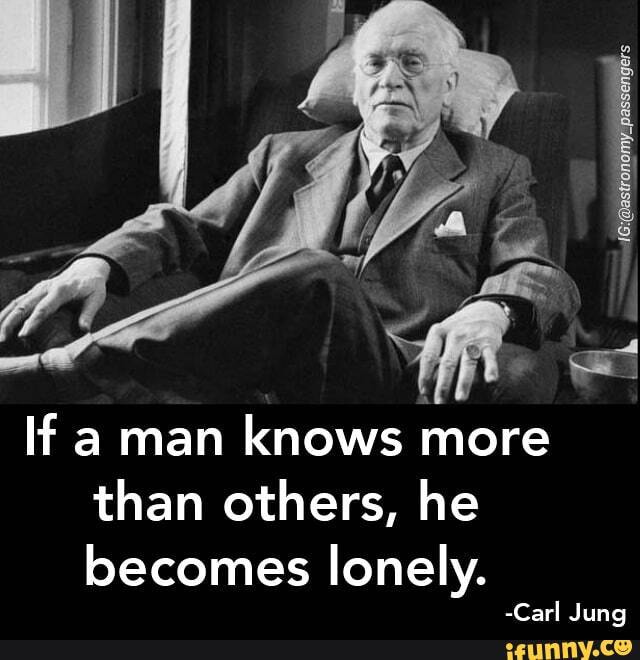
Another challenge? Yes! I have decided to present a perhaps tricky but important topic; of course, I will try to make it as understandable as possible. I believe Dr. Jung’s theories and thoughts are not difficult to understand. They may seem strange, or rather, they are still new to us, which might make them seem difficult to comprehend. However, they are essential because they show us how to understand our undiscovered inner soul, which we might never notice deeply. Often, we look for problems outside of ourselves.

I understand his concerns about whether he adequately and comprehensively explains his lessons, although he never intended to present himself as a teacher. This may be due to the monstrous and sinister issues he has researched and discovered.
“The only real danger that exists is man himself,” he says. “He is the great danger, and we are pitifully unaware of it.” He has seen this danger and tried to show us how to recognize and handle it.

In November of 1960, seven months before his death, C.G. Jung suffered what he called “the lowest ebb of feeling I ever experienced.” He explained the sentiment in a letter to Eugene Rolfe:
I had to understand that I was unable to make the people see what I’ve been after. I am practically alone. There are a few who understand this and that, but almost nobody sees the whole… I have failed in my foremost task: to open people’s eyes to the fact that man has a soul, and there is a buried treasure in the field, and that our religion and philosophy are in a lamentable state.

I will do my best and hope that what he tries to convey to us will become more understandable. The topic of Mana might be an unknown subject, though very familiar to all of us. It is with us, man or woman, from childhood to old age. (I decided to translate the original Jung’s words myself because, as I found out, some online translations are incorrect due to false interpretations. Yes, it is hard work, but trustfully!)
Here is just a foretaste because it will take some parts more than one post! So, let’s begin:

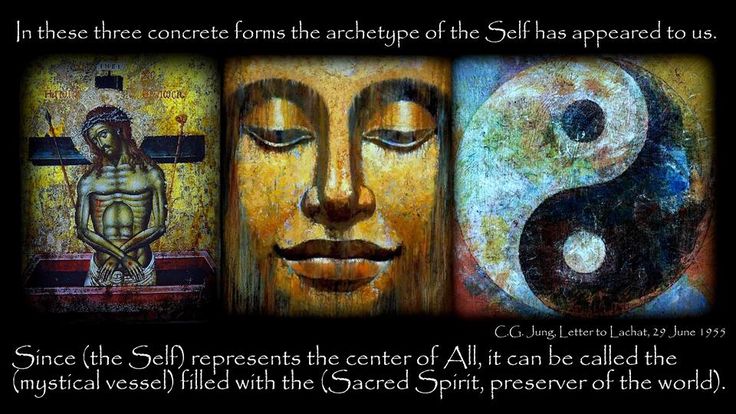
According to Jung, the ‘Mana Personality’ represents an archetypal phase of the individuation process of remarkable interest in psychological, hermeneutic, and theoretical terms. This figure is characterized by a high initiate potential that fosters the approximation of the Self’s consciousness.

Individuation
The Mana Personality

Klingsor verflucht Kundry (Gemälde von Franz Stassen)

My starting material for the following discussion is those cases in which what was presented as the next goal in the previous chapter was achieved, namely the overcoming of the anima as an autonomous complex and its transformation into a function of the relationship of the conscious to the unconscious. By achieving this goal, it is possible to free the ego from all its entanglements with collectivity and the collective unconscious. Through this process, the anima loses the demonic power of the autonomous complex, i.e. it can no longer exercise possession as it is depotentiated. It is no longer the guardian of unknown treasures, it is no longer Kundry, the demonic messenger of the Grail of a divine-animal nature, no longer the >Mistress-Soul<, but a psychological function of an intuitive nature, of which one could say with the primitive: >He goes into the forest to talk to the spirits<, or: >My snake spoke to me<, or expressed in mythological infantile language: >The little finger told me.<

Those of my readers who are familiar with Rider Haggard‘s description of the ‘She-who-must-be-obeyed‘ will certainly remember the magical powers of this personality. She is a mana personality, a being full of occult, magical qualities (Mana) endowed with mystical knowledge and powers. All these attributes, of course, arise from the naive projection of unconscious self-knowledge, expressed in less poetic terms, which would be something like this: ‘I recognize that there is a psychic factor at work within me which can escape my conscious will most incredibly. It can put extraordinary ideas into my head, cause me unwanted and unwelcome moods and effects, induce me to perform astonishing actions for which I cannot take responsibility, disturb my relations with other people in an irritating way, and so on. I feel powerless in the face of this fact, and what is worse, I am in love with her, so I have yet to admire her. < (Poets often call this the artistic temperament; unpoetic ones excuse themselves in other ways.)

If the factor >Anima< loses its Mana, where has it gone? Evidently, the person who mastered the anima has acquired that Mana, in accordance with the primitive idea that the person who kills the Mana person absorbs its Mana.

Being continued! 😉😅

PS: I’m writing this post between doing the laundry, mowing the lawn and cleaning the windows, and unfortunately, I had to skip the second post; I’m completely exhausted! (I always wonder how some people can produce posts every hour!!). Thank you all, and have a lovely weekend.🙏💖🤗

Another Year passed, and Another Step Further to Rejoin!

Standard

Behind the smile, there’s danger and a promise to be told
You’ll never get old
Life’s fantasy, to be locked away
And still, to think you’re free, you’re free, we’re free…

“Die Young” Ronnie James Dio; Black Sabbath

Today is once again my brother Al’s anniversary, and I am lucky this is on Wednesday, so I have the chance to write a few words about our memories.
I have often said I feel my brother Al’s presence with me all the time, but it is somehow extra emotional when the time of his farewell comes back again and again. For example, these last ten days, I could remember his last days in the hospital as I could stay with him till the end.

I spent a lot of time trying to find new pictures of him because I don’t like to repeat myself! During this search, memories of the past came rushing into my head like a raging sea from a storm, overwhelming my whole mind and soul and warming my heart by those loving times, as memories linger forever.

Time it was
And what a time it was
It was . . .
A time of innocence
A time of confidences
Long ago . . . it must be . . .
I have a photograph
Preserve your memories
They’re all that’s left you
Simon & Garfunkel, Old Friends from Bookends

At the peak, I selected some verses from Ronnie James Dio’s “Die Young” because Al died “young” at fifty-four, even though the lyrics encourage living for the present and dying young! Both of us (probably Al more so) adored Dio’s songs, especially his voice and lyrics. Ronnie had been battling cancer when Al and I attended one of his final concerts, and we never knew that Al would pass away before him!

Here is another Al’s loving person, Rumi, who tell the right words:

“ON THE DAY I DIE
On the day I die, when I’m being carried
toward the grave, don’t weep. Don’t say,
He’s gone! He’s gone. Death has nothing to do with going away. The sun sets and the moon sets, but they’re not gone.
Death is a coming together.
The tomb looks like a prison, but it’s really
release into the union.
The human seed goes down into the ground like a bucket into
the well where Joseph is.
It grows and comes up full of some unimagined beauty.
Your mouth closes here and immediately
opens with a shout of joy there.

Thank you for staying with me! 💖🙏

Happy Solstice & The Yellow Full Moon!

Standard

As you all might notice, I am not in my usual rhythm! I have had guests since yesterday and have hardly had time to share my weekend posts! However, I wish all my dear friends a lovely weekend in the time of summer solstice and a stunning yellow full moon; I wonder if this happens often. I hope it is a sign of fortune. 💖🌟🌞

The image on top: KinukoCraft by Kadir Nelson Painter and illustrator

Here, dear Leonard Cohen describes how I feel. Love you all!

Let’s Drink a Divine Brewed Beer by Goddesses. Cheers!

Standard
Banquet scene from the tomb chapel of Nebamun, 14th century BC. Its imagery of music and dancing alludes to Hathor. Source: Wikimedia Commons.

Honestly, when I first saw the statue of the woman below in the main article, I thought it depicted a woman washing clothes in a jar. But as I read the article, I had to admit my failure: she actually makes beer! It is funny that many men, such as in Germany, think beer is a man’s business. Then look! Here we go; in ancient Egypt, the women, and even the Goddesses, brewed beers.

Yes! It is fascinating to know that there was more than one beer Goddess in ancient Egypt: Nephthys (She was associated with mourning, the night/darkness, service (specifically temples), childbirth, the dead, protection, magic, health, embalming, and beer.) The others were Menqet (The Egyptians worshipped the Goddess of beer, Menqet, and celebrated sun God Ra’s daughter, Sekhmet, whose bloodthirsty ways were calmed by beer. According to Egyptian mythology, Menqet was the Goddess of beer and ruled over the Place of Reeds.) and Tenenet (Tjenenyet), as both latter mentioned in this article.

We read here the description of this amazing story by brilliant Marie Grillot and Marc Chartier. Cheers!!

Beer Brewer for Eternity…

via égyptophile

Statuette of a woman preparing beer – painted limestone – 5th dynasty
discovered in 1931 in the mastaba of Mersou-ankh in Giza
by Professor Sélim Bey Hassan on behalf of the Antiquities Service
Egyptian Museum in Cairo – JE 66624

In 1931, while continuing the excavations undertaken in 1929 on behalf of the Antiquities Service in the sector concerning: “the ascending routes of the Pyramid of Chephren to the north and the Pyramid of Mycerinus to the south”, Professor Sélim Bey Hassan discovers the mastaba of Mersou-ankh.

Plan of the Cairo University excavations at the Giza site

The mastaba of this chief of the Rà-wèr domains will turn out to contain numerous statues.

Among them is that of this brewer, discovered in serdab no. 1, facing a triple statue representing the tomb’s owner.

It is made of painted limestone and stands 28 cm high. It represents a woman leaning over a large jar. She wears a black, mid-length wig, while her natural hair forms a fringe on her forehead. The face is generous, the cheeks are full, the eyes and eyebrows are marked with black, the nose is wide, and the mouth seems to be smiling. A necklace in blue and white tones adorns her neck.

Her breasts are exposed, and the light-coloured, almost transparent garment she wears begins at the waist and goes down to below the knee.

Statuette of a woman preparing beer – painted limestone – 5th dynasty
discovered in 1931, in the mastaba of Mersou-ankh in Giza, by Professor Sélim Bey Hassan
on behalf of the Antiquities Department – Egyptian Museum in Cairo – JE 66624 – museum photo

The arms are relatively robust, and the hands are not visible. They are busy kneading the dough in the sieve placed on the pottery jar. “She kneads the ingredients used to make beer in the Old Kingdom, namely barley loaves, water and date liqueur,” explains Rosanna Pirelli in “Treasures of Egypt – The Wonders of the Egyptian Museum in Cairo.

To understand the method of production, we refer to the information provided in Thierry Benderitter’s description of certain scenes of the mastaba of Ty in Saqqara on his indispensable site, Osirisnet.net, and to Sylvia Couchoud’s sDynastyeer in Pharaonic Egypt.

Statuette of a woman preparing beer – painted limestone – 5th dynasty
discovered in 1931, in the mastaba of Mersou-ankh in Giza, by Professor Sélim Bey Hassan
on behalf of the Antiquities Department – Egyptian Museum in Cairo – JE 66624

The base ingredient is sprouted barley. “It is crushed in flat-bottomed containers with a mortar and filtered using increasingly fine sieves. Wheat flour is added. With this mixture, once moistened, oblong pieces of dough are made and poured into hot moulds until the crust is golden while ensuring that the inside remains raw and that the malt enzymes are not destroyed. The half-cooked bread is then crumbled in a bowl and mixed with a sweet liquid obtained with dates. The mixture is kneaded, stirred, filtered with a large strainer and collected in jugs where it will ferment. When the fermentation is finished, the beer obtained is transferred into amphorae closed with a. plug of straw and damp clay, or with a small plate and a little plaster.”

Four types of beers have been referenced: zythum (literally “barley wine,” a widely used light beer), Dizythum (a double beer), Carmi (a sweet beer), and Korma (a ginger beer).

Jean-Pierre Corteggiani (“Ancient Egypt and its gods”) specifies the importance of beer in ancient Egypt: “Personified by the goddesses Tenemet and Menqet, who are responsible for brewing it, beer plays a significant role in the divine world. It is obviously part of the offerings made to the gods and goddesses, particularly Hathor, since, like wine, it can induce intoxication.

The goddesses Menqet and Tenenet are responsible for brewing beer.

Menqet is often represented with two jugs in her hands, associated with Âqyt, who personifies bread. With bread, it’s beer – not wine! – which the Egyptians wished to have for eternity.

The deceased wished not to lack anything in his afterlife… Thus, as we can read in the “Official Catalog of the Egyptian Museum in Cairo”: “the figurines of servants at work reproduce in the round themes previously developed in bas relief. The statuary of the tombs is enriched by a small world of brewers, millers, pastry chefs, potters or butchers, who continue their daily service in the tomb. Generally of a mediocre style, these figurines are nevertheless quite expressive and represent their professional practice well. The first known limestone models date back to the 4th Dynasty, but the vast majority occurred in the 5th.

Statuette of a woman preparing beer – painted limestone – 5th dynasty discovered in 1931, in the mastaba of Mersou-ankh in Giza, by Professor Sélim Bey Hassan
on behalf of the Antiquities Department – Egyptian Museum in Cairo – JE 66624

This brewer is displayed at the Egyptian Museum in Cairo under the reference JE 66624.

Marie GrillotMarc Chartier

Sources:
Statuette of a Female Brewer http://www.globalegyptianmuseum.org/record.aspx?id=14885 Statuette of a woman preparing beer https://egyptianmuseumcairo.eg/emc/artefacts/old-kingdom-serving-statues/ Francesco Tiradritti, Treasures of Egypt – The Wonders of the Egyptian Museum in Cairo
Mohamed Saleh, Hourig Sourouzian, Official Catalogue of the Egyptian Museum in Cairo, Verlag Philippe von Zabern, 1997
Jean-Pierre Corteggiani, Ancient Egypt and its gods, Fayard, 2007
National Geographic, Treasures of Ancient Egypt at the Cairo Museum
Beer: a drink known in ancient Egypt https://egyptophile.blogspot.com/2016/04/la-biere-une-boisson-connue-et-deifiee.html

Mom, there are many Roses this Year in the Garden!

Standard

A Tribute to my dear Mum, Mozayan (Mozy)

This is my first time writing a tribute to my mother on WP. To put it bluntly, I hadn’t done it before because I was unsure about the exact time; I can’t find my mother’s ID again as I am sure I have had it in my hands once. So I asked my brother-in-law and looked at Wikipedia about my father, hoping my mother’s name would also be mentioned there! After all, my father was a famous writer of his time. So, I found the time of her passing away would be today, in 1972.

She was undeniably beautiful and often caught the attention of many men. However, living with such beauty in a primitive society made it difficult for her to embrace her individuality. She had a hard time, especially after our father’s death. However, she made a considerable effort to raise us, and I will always appreciate her love.

She had leukaemia and passed away at the age of fifty-nine. I will never forget the scene when, after a long wait, you entered the house with plastic swords in your arms from the time of King Arthur, which was one of our wishes to have them.

You will never be forgotten; your compassion and love will accompany us forever. 💖💖🙏🕊

Heart Mother Nature!

Standard

Actually, at the beginning of the week, I planned another challenging task: translating a work from Carl Jung. Still, I did have to settle for a short article because my wife’s sister-in-law, whom I might have mentioned before with a tumour in her head spending her last days, has finally found salvation.

In the artist’s series of interesting environmental renditions, man and his creations are of the Earth. Nothing man-made cannot be swallowed by the mossy green land on which it rests. Sometimes, even man is part of the emerald landscape that engulfs and supports architecture and makes objects. So, is it a struggle to keep afloat or an agreement to work as one?
Avramidis’ thought-provoking paintings will be on display as part of his first UK solo exhibition entitled Caretakers at Jacob’s Island Gallery through October 20, 2012.

Honestly, I am not a nature expert and know little about the names of plants or flowers. I don’t know if they ever know my name! However, I know my wife, Regina, is an expert; her highest enjoyment is walking between the flowers and the trees. Therefore, I suggested walking in a beautiful part of our town to try calming her sad heart (as I have enough experience with losing loved ones!). The city where we live is not a nice one at all, but a lot of green areas surround the environment.

So, in Ralph Waldo Emerson’s words, NaturNaturees a noble human need, namely the love for Beauty. The ancient Greeks called the world a word that means ornament, beauty.

Ralph G. Emerson referred to nature as the “Universal Being”; he believed there was a spiritual sense of the natural world around him. Depicting this sense of “Universal Being,” Emerson states, “The aspect of natureNatureevout.
Tʜᴇ ᴛʀᴇᴇ ʙʀɪɴɢs ʙᴀᴄᴋ ᴀʟʟ ᴛʜᴀᴛ ʜᴀs ʙᴇᴇɴ ʟᴏsᴛ ᴛʜʀᴏᴜɢʜ Cʜʀɪsᴛ’s ᴇxᴛʀᴇᴍᴇ sᴘɪʀɪᴛᴜᴀʟɪᴢᴀᴛɪᴏɴ, ɴᴀᴍᴇʟʏ ᴛʜᴇ ᴇʟᴇᴍᴇɴᴛs ᴏғ ɴᴀᴛᴜʀᴇ. Tʜʀᴏᴜɢʜ ɪᴛs ʙʀᴀɴᴄʜᴇs ᴀɴᴅ ʟᴇᴀᴠᴇs ᴛʜᴇ ᴛʀᴇᴇ ɢᴀᴛʜᴇʀs ᴛʜᴇ ᴘᴏᴡᴇʀs ᴏғ ʟɪɢʜᴛ ᴀɴᴅ ᴀɪʀ, ᴀɴᴅ ᴛʜʀᴏᴜɢʜ ɪᴛs ʀᴏᴏᴛs ᴛʜᴏsᴇ ᴏғ ᴛʜᴇ ᴇᴀʀᴛʜ ᴀɴᴅ ᴛʜᴇ ᴡᴀᴛᴇʀ. ~ C.G. Jᴜɴɢ Lᴇᴛᴛᴇʀ ᴛᴏ V. Wʜɪᴛᴇ, Lᴇᴛᴛᴇʀs, Vᴏʟ II (1951-1961
Pic Ƒяσм Ƭ. Aвяαχαѕ, via Petra Glimmdall

Anyway, this time, I have more pictures than words to share, and I think there is not much to say as the images speak for themselves. Here are the photos I took during our walk.

I believe there is no need to be a plant expert, as we are partly created by Mother Nature. Still, we must be aware of our essence and keep it safe as far as possible.

By the way, I got a message from WP that I have reached 1k followers! As I gratefully wonder how it could happen, I must confess that I am just happy that many of these friendly people don’t care about my humble posts or write comments; otherwise, I would be bushed!😜🙏💖
Khalil Gibran on Love

Standard

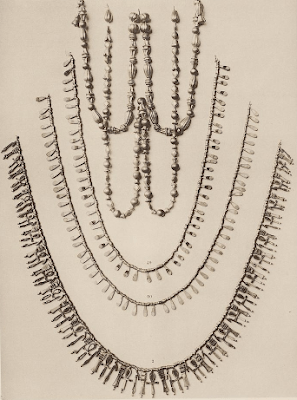
There have been many attempts to define the extraordinary feeling of love, but it is not an easy task. I know that, as I have also grappled with it repeatedly. Here, I would like to present Khalil Gibran’s approach. I hope you will enjoy it.🙏💖

The illustration on the top by Jeramondo Djeriandi

From The Prophet

Love gives naught but itself
and takes naught but from itself.
Love processed not nor would it be possessed;
For love is sufficient unto love.

Khalil Gibran Speaks of Love

Then said Almitra, Speak to us of Love.
And he raised his head and looked upon
the people, and there fell a stillness upon
them. And with a great voice he said:
When love beckons to you, follow him,
Though his ways are hard and steep.

And when his wings enfold you yield to him,
Though the sword hidden among his pinions may wound you.
And when he speaks to you believe in him,
Though his voice may shatter your dreams as
the north wind lays waste the garden.

For even as love crowns you so shall he crucify you.
Even as he is for your growth so is he for your
pruning.
Even as he ascends to your height and
caresses your tenderest branches that quiver in the
sun,
So shall he descend to your roots and shake
them in their clinging to the earth.

Like sheaves of corn he gathers you unto himself.
He threshes you to make you naked.
He sifts you to free you from your husks.
He grinds you to whiteness.
He kneads you until you are pliant;

And then he assigns you to his sacred
fire, that you may become sacred bread for
God’s sacred feast.

All these things shall love do unto you
that you may know the secrets of your
heart, and in that knowledge become a
fragment of Life’s heart.

But if in your fear you would seek only love’s peace
and love’s pleasure,
Then it is better for you that you cover
your nakedness and pass out of love’s
threshing-floor,
Into the seasonless world where you shall laugh,
but not all of your laughter,
and weep, but not all of your tears.

Love gives naught but itself and takes naught but from itself.
Love possesses not nor would it be possessed;
For love is sufficient unto love.

When you love you should not say,
“God is in my heart,” but rather, “I am
in the heart of God.”
And think not you can direct the course
of love, for love, if it finds you worthy,
directs your course.

Love has no other desire but to fulfil itself.
But if you love and must needs have desires, let these be your desires:
To melt and be like a running brook that
sings its melody to the night.
To know the pain of too much tenderness.
To be wounded by your own understanding of love;
And to bleed willingly and joyfully.
To wake at dawn with a winged heart
and give thanks for another day of loving;
To rest at the noon hour and meditate
love’s ecstasy;
To return home at eventide with gratitude; And then sleep to with a prayer for the beloved in your heart and a song of praise
upon your lips.

Holy Was The Birth in The Holy Egypt

Standard

Of course, every holy book and religious ritual teaches that giving birth and having offspring is a highly important human act on this earth. No wonder, then, that it would go in the same way in ancient Egypt.

Most ancient Egyptian women laboured and delivered their babies on the cool roof of the house or in an arbour or confinement pavilion, a structure of papyrus-stalk columns decorated with vines.

isis_giving_birth, via Canada.inc

In the Yogi method, the best way to bear a child is in the water! I believe if we let the newborn child into the water immediately, they would feel happy and free and could more easily grasp their changing world perception.

Childbirth scene, Kom Ombo Temple, partial relief
Photo by G. Blanchard (2006)
via Visualizing Birth

The standard childbirth practice in ancient Egypt has long been known from papyrus texts. It looked more natural as the woman delivered her baby while squatting on two large bricks, each colourfully decorated with scenes to invoke the magic of gods for the health and happiness of mother and child.

Let’s read this interesting report by the brilliant Marie Grillot about an enchanting find and the story of constant upspring in Old Egypt!

On this ostracon, a maternity scene more than 3000 years old…

via égyptophile

Figured ostracon representing a mother breastfeeding her child and her servant – limestone – 19th – 20th dynasty – from Deir el-Medineh
Department of Egyptian Antiquities of the Louvre Museum – E 25333 (previously at the Fouad I Agricultural Museum in Cairo
then in the collection of Moïse Lévy de Benzion, then in that of Robert Streitz, who donated it to the Parisian Museum in 1952)
photo © 2002 Louvre Museum / Georges Poncet

Several figured ostraca* from Deir el-Medineh illustrate this extraordinary, touching moment of motherhood, more precisely of the mother breastfeeding her newborn. The gesture, the tenderness, and the concentrated attention paid to the nurturing function remain immutable across the centuries.

This scene, dating from the 19th – 20th dynasty, is reproduced on a piece of limestone 15 cm high and 11.7 cm wide. The three characters are drawn in red ocher while their complexion is painted in yellow ocher and their hair in black.

It takes place in a beautiful plant setting, under a canopy, supported by columns (only one is visible on the right, the left part being lacunar), covered with lanceolate leaves of bindweed or convolvulus. “The leaves of bindweed have a symbolic meaning with a sexual connotation: they are often present in scenes relating to love and the renewal of life”, explains Anne-Mimault-Gout (“Les artistes de Pharaon”).

Figured ostracon representing a mother breastfeeding her child and her servant – limestone – 19th – 20th dynasty – from Deir el-Medineh
Department of Egyptian Antiquities of the Louvre Museum – E 25333 (previously at the Fouad I Agricultural Museum in Cairo
then in the collection of Moïse Lévy de Benzion, then in that of Robert Streitz, who donated it to the Parisian Museum in 1952)
photo © 2002 Louvre Museum / Georges Poncet

Emma Brunner-Traut calls this kiosk “the birthing arbour” and thinks “that it was a temporary building, raised in the open air for the moment of childbirth and that the mother remained there for 14 days until her purification”…

This birth pavilion sheltered the difficult hours of suffering inherent in childbirth, just as it witnessed the intense emotion linked to the miracle of giving life… Its aim was also, most certainly, to benefit the young, give birth calmly, rest and protect her, as well as the child, from potential external risks or dangers. In “Carnets de Pierre”, Anne-Mimault Gout evokes the interesting idea that: “These pavilions were perhaps the ancestors of the mammisis of the Greco-Roman temples, the birth chapels”.

Sitting on a curved stool equipped with a comfortable cushion, the mother is shown, turned to the right and naked, adorned only with a large necklace. Her body, leaning forward, seems to envelop and protect the infant she is breastfeeding. Unfortunately, the time has partly tarnished and erased its representation…

Figured ostracon representing a mother breastfeeding her child and her servant – limestone – 19th – 20th dynasty – from Deir el-Medineh
Department of Egyptian Antiquities of the Louvre Museum – E 25333 (previously at the Fouad I Agricultural Museum in Cairo
then in the collection of Moïse Lévy de Benzion, then in that of Robert Streitz, who donated it to the Parisian Museum in 1952)
photo © 2002 Louvre Museum / Georges Poncet

Her undone, untamed hairstyle —typical of that of women giving birth in ancient Egypt—attracts the eye. The hair raised in a totally anarchic manner on the head probably reflects the fact that during these extraordinary days, all the attention was focused on the child, to the detriment of the care given to his physical appearance…

As if to remind her that her new role as the mother should not make her forget her femininity, the young servant in front of her hands her a mirror and a kohol case. These toiletry accessories are, according to Anne Mimault-Gout, “charged with an erotic connotation linked, through beauty, to rebirth”. Young, his thin, slender body is naked. Her hair is tied in a ponytail on the top of her head, falling in a pretty curl over her shoulder. For J. Vandier d’Abbadie, “this hairstyle and the pronounced elongation of the profile evoke the iconography of Syro-Palestinian divinities – in particular, Anat and Astarte -, that is to say, that these young girls with high heads would be young asian maids”…

Figured ostracon representing a mother breastfeeding her child and her servant – limestone – 19th – 20th dynasty – from Deir el-Medineh
Department of Egyptian Antiquities of the Louvre Museum – E 25333 (previously at the Fouad I Agricultural Museum in Cairo,
then in the collection of Moïse Lévy de Benzion, then in that of Robert Streitz, who donated it to the Parisian Museum in 1952)
published here in Jeanne Vandier d’Abbadie “Deux ostraca figurés”, BIFAO, 1957 (p. 21-34, p. 22-23, fig. 2)

In her fascinating study “Postpartum purification and relief rites in ancient Egypt” (all of whose rich analyses, unfortunately, cannot be cited here), Marie-Lys Arnette returns to the rites represented on these figurative ostraca of the Ramesside period representing “gynoecium scenes”, as J. Vandier d’Abbadie calls them… “The actions that these scenes depict are indeed rites since they are very close formally to the representations of offerings made to the dead or the gods and follow the same codes: The beneficiary is seated while the officiant approaches them, standing and holding the objects they are about to offer in their hands. These scenes concern the period following birth, and the rites which appear there must allow the purification and aggregation of the mother. It is a question of representing the reliefs, the sequence we can attempt to restore – in a necessarily incomplete manner because the analysis depends on scant documentation”…

These representations are very precious because they are among the only ones that allow us to understand the intimacy of women… But what was their goal? E. Brunner-Traut, in particular, “suggests seeing ex-votos there. We can indeed consider these objects as having been used, in one way or another, in cults linked to fertility, but it is impossible to specify this use further”…

Figured ostracon representing a mother breastfeeding her child and her servant – limestone – 19th – 20th dynasty – from Deir el-Medineh
Department of Egyptian Antiquities of the Louvre Museum – E 25333 (previously at the Fouad I Agricultural Museum in Cairo,
then in the collection of Moïse Lévy de Benzion, then in that of Robert Streitz, who donated it to the Parisian Museum in 1952)
published here in Jacques Vandier d’Abbadie “Catalogue of figured ostraca of Deir el Médineh” II.2, n°2256-2722, IFAO, Cairo, 1937

This ostracon, which comes from Deir el-Medineh, is described by Jacques Vandier d’Abbadie in his “Catalogue of figured ostraca, 1937” under the number 2339. It is indicated as having previously been at the Fouad I Agricultural Museum in Cairo. It was then found in the collection of Moïse Lévy de Benzion, owner of a famous store in Cairo, who then offered it at auction under number 36 of his sale on March 14, 1947, in Zamalek. Robert Streitz, a Belgian architect based in Cairo, then purchased it. He kept it for several years before donating it in 1952 to the Department of Egyptian Antiquities of the Louvre Museum. It was registered there under the inventory number E 25333.

Marie Grillot

*Ostraca (singular: ostracon): Shards, silver or fragments of limestone, or even terracotta, which were, in antiquity, used by artisans to practice. This type of “support”, which they found in abundance on the sides of the mountain, allowed them to make and redo their drawings or writings until they reached excellence and were finally admitted to work “in situ” in the residences of ‘eternity.

They are generally classified into two categories: inscribed (hieroglyph, hieratic, demotic, etc.) or figured (drawing, sculpture).

Sources:

Figured ostracon – E 25333 https://collections.louvre.fr/ark:/53355/cl010004032 Jacques Vandier d’Abbadie, Catalog of figured ostraca of Deir el Médineh II.2, n°2256-2722, IFAO, Cairo, 1937 https://archive.org/details/DFIFAO2.2/page/n1/mode/2up Bernard Bruyère, Report on the excavations of Deir el Médineh (1934-1935). Third part. The village, public dumps, the rest station at the Valley of the Kings pass, Cairo, Printing office of the French Institute of Oriental Archeology (IFAO), (Excavations of the French Institute of Oriental Archeology = FIFAO; 16), p. 131-132, 1939 https://ia600606.us.archive.org/30/items/FIFAO16/FIFAO%2016%20Bruyère%2C%20Bernard%20-%20Le%20village%2C%20les%20discharges%20public%2C%20la%20station%20de %20rest%20du%20col%20de%20la%20valley%20des%20kings%20%281939%29%20LR.pdfEmma Brunner-Traut, Die altägyptischen Scherbenbilder (Bildostraka) der Deutschen Museen und Sammlungen, Franz Steiner, Wiesbaden, 1956 Jeanne Vandier d’Abbadie, Two figured ostraca, Bulletin of the French Institute of Oriental Archeology (BIFAO), 1957, p. 21-34, p. 22-23, fig. 2, IFAO, Cairo, 1957 https://archive.org/details/DFIFAO2.2 https://archive.org/details/DFIFAO2.2/page/n69/mode/2up Emma Brunner-Traut, Egyptian Artists’ Sketches. Figured ostraka from the Gayer-Anderson Collection in the Fitzwilliam Museum Cambridge, Cambridge, 1979

The donors of the Louvre, Paris, Musée du Louvre, 1989

Perfumes and cosmetics in ancient Egypt, exhibition catalogue, Cairo, Marseille, Paris, 2002, p. 99, 139, ESIG, 2002

Anne Minault-Gout, Stone notebooks: the art of ostraca in ancient Egypt, p. 36-37, Hazan, 2002

Guillemette Andreu, The artists of Pharaon. Deir el-Medina and the Valley of the Kings, exhibition catalog, Paris, Turnhout, RMN, Brepols, p. 113, no. 53, 2002

Guillemette Andreu, The Art of Contour. Drawing in ancient Egypt, exhibition catalog, Somogy éditions d’Art, p. 320, ill. p. 320, no. 168, 2013

Marie-Lys Arnette, Postpartum purification and relief rites in ancient Egypt, Bulletin of the French Institute of Oriental Archeology (BIFAO), 114, 2015, p. 19-72, p. 30-31, fig. 2, IFAO, Cairo 2015

Hanane Gaber, Laure Bazin Rizzo, Frédéric Servajean, At work, we know the craftsman… of Pharaon! A century of French research in Deir el-Medina (1917-2017), exhibition catalogue, Silvana Editoriale, p. 36, 2017