
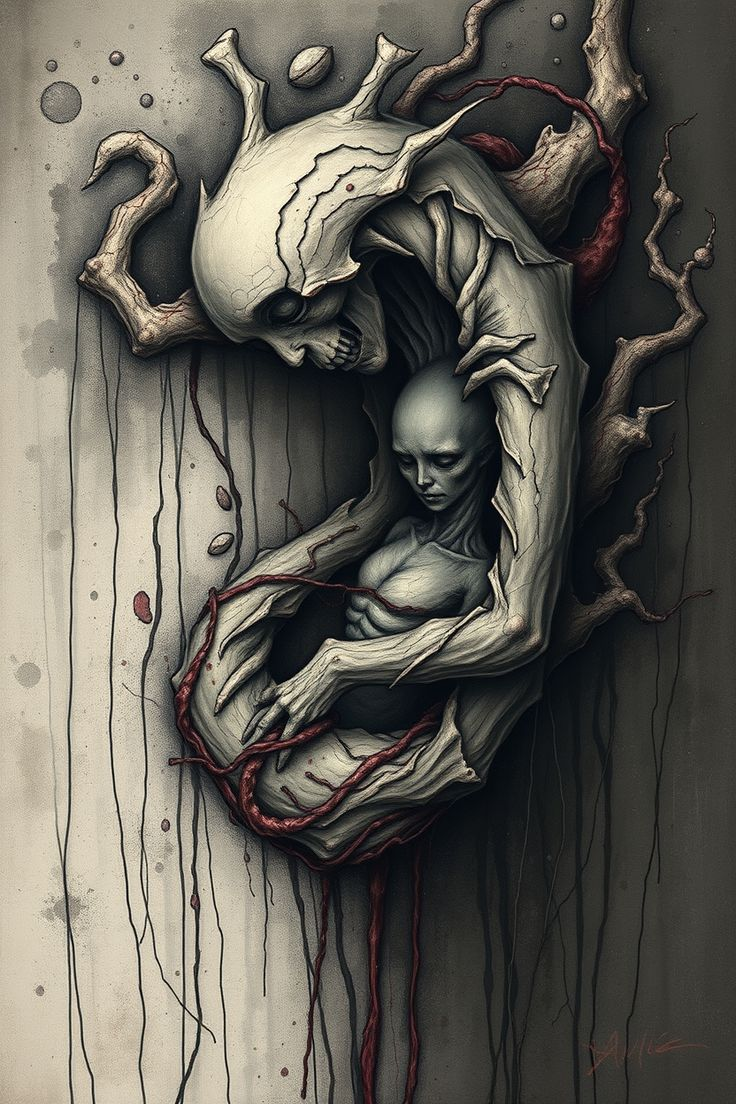
The longing to return to the womb — to the very origin of existence — reflects a deep, universal desire for renewal. It embodies a conscious wish to turn back time and retreat into the ultimate sanctuary where life’s struggles and regrets have not yet taken hold. Recently, I have noticed I often wake up with memories of scenes or songs from a TV series that Al and I enjoyed in our youth; for example, today I woke up with the theme song from the 60s Batman TV show, and I wonder how it entered my mind, since I haven’t heard it in ages! I then ask myself: Is this a desire to return to that joyful, simple time, or even more, to go back to the basics and start anew?
The womb symbolises comfort, safety, and innocence. The desire to return often signifies a wish to escape the burdens and complexities accumulated over a lifetime. In psychoanalysis, returning to the mother’s womb may sometimes be viewed as a sign of incest. However, it also reflects a longing for the simplicity and purity that existed before self-awareness and responsibilities—before choices and their consequences shape our identities. Nonetheless, this longing goes beyond mere escapism. It reflects the human yearning for change and a fresh start. Although we acknowledge that a literal return isn’t feasible, the desire reveals our profound wish to leave past mistakes behind and start anew. It acts as a cry for self-forgiveness and the bravery to reinvent ourselves—building on the wisdom gained from our experiences rather than erasing them.
Ultimately, the desire to return to the womb is not about going backwards but about renewal. It acts as a reminder that, although we can’t literally start over, we can seek personal rebirth—discovering new purpose and hope at each stage of life. This may also evoke memories of those days and the happiness I now long for.
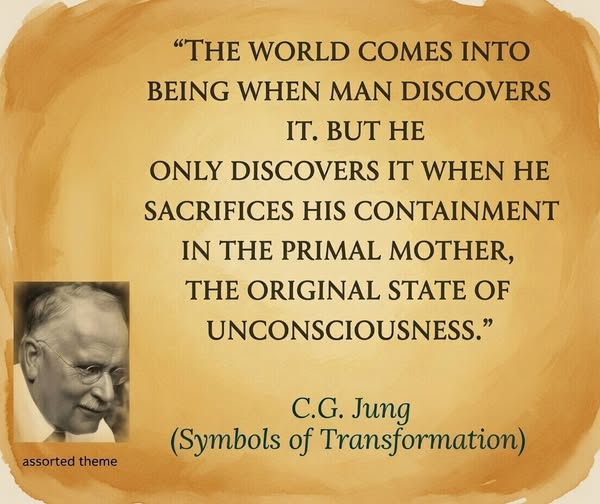
Jung’s investigation of incest in Transformations and Symbols of the Libido (1912) caused a rift with Freud. He describes the archetype’s dual nature as both “spiritual” and rooted in the “organic–material substrate” (“On the Nature of the Psyche” par. 380), allowing him to formulate a concept of libido that combines Freud’s sexual perspective with a broader view. In Freud’s view, libido is fundamentally sexual; incest symbolises a link from Oedipal desire to the taboo and the formation of the superego. Although Jung does not deny the actual occurrence of incest (McGuire 505–506), he highlights its symbolic role in expressing libido creatively rather than focusing on its biological aspect. As he proceeds, the foundation of incest is thus:
The strange idea of becoming a child again, of returning to the parental shelter, and of entering the mother in order to be reborn through her. But the way to this goal lies through incest, i.e. the necessity of finding some way into the mother’s body. One of the simplest ways would be to impregnate the mother and beget oneself in identical form all over again. But here the incest prohibition intervenes; consequently [myths develop new mother–analogies] for the purpose of canalising the libido into new forms and preventing it from regressing to actual incest [. . .]. It is not incestuous cohabitation that is desired, but rebirth [. . .]. The effect of the incest taboo and of the attempts at canalisation is to stimulate the creative imagination, which gradually opens up possible avenues for the self–realisation of libido. In this way, the libido becomes imperceptibly spiritualised.
~Carl Jung, “Symbols of the Mother and of Rebirth” par. 332)
Thank you for staying by. 🙏💖
 lampmagician
Are you shore that’s not my wife? A fine blog it its. All the best, Mike
LikeLiked by 1 person
She is the queen, the Mother Nature of all time. Thank you, brother; always your little brother. PS: Sending my best regards to Shirley. Sincerely Aladin🤗🙏💖
LikeLiked by 1 person
This is tremendous! I love eating breakfast while reading your blog posts on Saturdays!
LikeLike