There are surely fascinating buildings with beautiful arts all over the eyes can see though, I’d thank Cid, the rescuer, to stop the Arabic on wards marsh in through the west! I accept that we can find many original funds in the Islamic countries but the main reason, in my opinion, is, that Islam at their beginning, were highly tolerant. that’s because of their unsureness on having more believers on their sides. Therefore, the Arabs made it very easy; just saying “Allah-o-Akbar” God is great, and Mohammad is his only prophet, is enough, everything was solved! And everybody could or even should do what he (never she’d of course!) was ever doing. I surely don’t want to loathe some folk or so, it’s written in the history; the Arabs have no arts but Talking Poesie, they made a lot with their language because they were much proud of their language and it is their right to feel so; the Arabic language is one of the most perfect language in the world. though, surely not the only language which God must know. as they meant! Anyway, I wanted just to remember that the countries which the Arabs, after Islam overcome, had their Arts, Philosophies, Astronomic, Architectures, and so on. I admit this wonderful post heartily as ever đđđđđ
Month: August 2019
The problem of change in Heraclitus, Parmenides and Empedocles
StandardAs we can surely believe in one thing is; Changing! I hear it every day as the people talking about those days in the past and how everything was much more beautiful, the man was more human and the life was much easier and nicer than no; why everything is rapidly changing and sadly in a negative mood!!?
I am an oldie’s lover! I think the human is losing its taste, as we look at the kind of our creation in building houses, cars, even making arts, are witless, dull. Don’t you think so? The old design of cars or architectures, even clothes or any kind of arts. The old-time was fantastic!
Of course please don’t think that I am a conservative bloody reactionary one, I love changes but only in a “getting better” direction! đ I’m just a fan of the old fashion đ
Let’s have a look at the great Greek Philosophers and their opinion about the changes, with a great thank to SearchingTheMeaningOfLife đđ
By https://searchingthemeaningoflife.wordpress.com/author/searchingthemeaningoflife/
The three Miles philosophers (Thalis, Anaximander, and Anaximenes) as we have seen believed in one – and only – primary element from which everything had emerged. But how could an element suddenly change shape and become something completely different? This problem can be called the problem of change.
These questions were addressed, among other things, by the so-called Eleatics philosophers, who took their name from the Greek colony of Elea in southern Italy. The Eleatics lived around 500 BC, and the most famous among them was Parmenides (540-480 BC).
Parmenides: the philosopher of ” is” and of reason

Parmenides believed that everything that existed was always there. This idea was very popular in ancient Greece. They considered it almost self-evident. Nothing can be born of nothing, Parmenides said. And all that exists cannot disappear and be lost forever.
Parmenides, however, went even further. He considered no change at all possible. In his opinion, nothing could change and become something other than it was.
He saw, of course, that in nature everything was constantly changing. His senses were aware of these changes in things. But he could not bring them into harmony with what his logic dictated. So, having found himself in a dilemma, if he had to trust his senses or his logic, he decided in favor of logic.
We’ve all heard the phrase, “I don’t believe this unless I see it with my own eyes.” Parmenides refused to give faith, even to what he saw: He thought that our senses give us a false picture of the world, a picture that does not fit with what our logic tells us. And as a philosopher, he considered it his duty to reveal all the “illusions” that gave us a false impression of the world and reality.
This strong belief in human reason was named Rationalist “ÎżÏΞολογÎčÏÎŒÏÏ”. A rationalist is a man who fully trusts the human mind as the source of our knowledge of the world.
Parmenides argued that the unity of things in the world is not based on a common underlying physical substance, but on their own entity. Parmenides abandons the so-called embodiment of Ionian physiologists and inaugurates metaphysics and ontology.
Parmenides passed as the philosopher who supported the stillness of the being and denied the multiplicity and diversity of the sensible world. The accusations that are most often thrown at his philosophy are primarily about being too indifferent to the sensory perception of reality that his contemplation entails. The fact that the senses may be a bad guide for anyone who decides to see the essence of things is a commonplace in ancient thought.
The basic position of Parmenides contemplation is that “the being is unborn and unborn, complete and unified and unstable and perfect”
Plato in one of his most important works, the dialogue Parmenides, refers precisely to his personality and his theory of being. Even opposes the Parmenides, the philosopher is in Heraclitus, the philosopher of becoming.
Heraclitus: the philosopher of ” becoming” and of change

Heraclitus lived about the same time as Parmenides (ca. 540-480 BC). Heraclitus was from Ephesus and considered changes as the most basic and important characteristic of nature. We can say that, unlike Parmenides, Heraclitus showed confidence in his senses and in what they said to him.
“Everything is flowing,” Heraclitus said. Everything is in motion, and nothing lasts forever. That is why we cannot enter “twice in the same river”. By the time we get out and about again, we ourselves and the waters of the river will have changed.
Heraclitus also observed that the world is sealed by constant contradictions. If we didn’t get sick, then we wouldn’t know what health means. If we were not hungry, then we would not rejoice in satiating. If there was never a war, then we could not appreciate the value of peace. And if winter never came, then we wouldn’t even watch the coming of spring.
Both Good and Evil have their place within the whole and are equally necessary, Heraclitus said. Without this endless game of contrasts, the world would cease to exist.
He used the word “god” but he certainly did not mean the gods of myths. For Heraclitus, God – the divine element – is something that encloses the whole world. God is revealed to man through the constant alteration and change of nature.
Instead of the word “god”, Heraclitus uses the ancient Greek word “reason”, which means logical. Even though we humans do not always think the same way, even though our logic is not always the same, Heraclitus believed that there is a kind of “universal logic” that directs everything into nature. This “universal logic”, the “mind of the Universe”, dominates everything, and all people must respect its sovereignty.
Most, however, insist on living according to their own individual logic. That is why Heraclitus did not greatly appreciate his fellow humans. Their views resembled “children’s toys” in his eyes.
In all the changes and changes and contrasts in nature, Heraclitus saw unity, integration. This “something”, which is found in everything and is the foundation of everything, called it “god” or “word”.
His phrases had a density that made them inaccessible to the general public, hence the name of ” Heraclitus the Dark One “. Also, this nickname is due to its tendency to isolate itself and not seek to have contact with its fellow human beings – very often even reaching for their disdain and rejection. On many occasions, he had even publicly spoken in a particularly derogatory way about great thinkers and poets of his time.
Heraclitus believed that people’s behavior was judged by the truth of the word, so people should understand it, be perfect in it, and live according to secular law.
In particular, people do not understand the truth they have learned because they think that truth is their personal opinion. Thus, the conflict with the truth. The intention of the philosopher is to lead people to confession, that is, to the agreement of individual and universal discourse, of personal opinion with truth, which is the unity of all things.
Mob movement and change;
Heraclitus believed that the world was a constantly moving current. His view was illustrated by the image of the river. If the world looks like a river whose waters are constantly flowing, then its unstoppable movement is the only way to exist, that is, the world.
The world is not made up of things that are always the same, but events that can be constantly different, without the world losing its identity. Everyone is involved in the cosmic movement, as is the change in direction it entails and the stability of the rate of movement and change.
â The teaching of the Ephesian philosopher can be concentrated on the following suggestions:
- The world is in constant motion and its constant change is a constant feature of its course.
- The world is not a static building, created by somebody, either god or man, but an eternal living fire, constantly flashing in moderation and regular proportions.
- O ÎșÏÏÎŒÎżÏ ÎČÏÎŻÏÎșΔÏαÎč ÏÏ ÎœÎ”ÏÏÏ ÏΔ ÎșαÏÎŹÏÏαÏη ÏÏÏÏαΟηÏ. O ÏÏÎ»Î”ÎŒÎżÏ Î”ÎŻÎœÎ±Îč Îż ÏαÏÎÏÎ±Ï ÎșαÎč Îż ÎČαÏÎčλÎčÎŹÏ ÏλÏΜ.
- All the conflicting forces in the world end up in harmony. This war is not without order. There are a constant regularity and law that governs all movements, changes and opposing moments of things.
â The influence of Heraclitus’ ideas
Of particular importance was the influence of Heraclitus’ ideas on later philosophers. Democritus, Plato, the Stoics, Spinoza, and above all Hegel draw on elements of his work. Of the most modern Nietzsche admits to the Ephesus philosopher, he does not conceal his view of Heraclitus and proclaims with complete sincerity: “The world has eternal need of truth, therefore it has eternal need of Heraclitus”.
Empedocles composes the two different views of Parmenides and Heraclitus
Parmenides and Heraclitus were somehow on the two opposite ends. Parmenides’s logic saw that nothing could change, while Heraclitus’s experiences found, with the same certainty, that everything in nature was undergoing constant change.
Which of the two was right?
Should we trust the voice of our logic (Parmenides) or is it better to believe our senses (Heraclitus)?
Both Parmenides and Heraclitus both hold two positions
Parmenides says:
- that nothing can be changed
- that, therefore, the impressions that reach us through our senses must be wrong.
Heraclitus, on the other hand, says:
- that everything is changing (“everything is right”) and
- that the impressions that reach us through our senses are true and correspond to reality.
We can hardly imagine two philosophers disagreeing the most! But which of the two is right? Eventually, the one who managed to get out of the net, where philosophy was confused, was Empedocles (ca. 499-434 BC) from the Akragantes of Sicily.

Empedocles thought that they were both right about one point of their thinking, but wrong about the other.
For Empedocles, the whole difference was that philosophers regarded the self-evident origin of their thinking as the existence of only one primary element. If this were indeed the case, then the abyss between the senses and logic would be a bridle for centuries.
Water cannot, of course, take the form of a fish or a butterfly. Water cannot be changed. Clean water is and always is pure water.
So Parmenides was right to say that nothing changes.
At the same time, however, Empedocles agreed with Heraclitus, who said that we must trust our senses. We have to believe in what we see. And what we see is an endless series of changes in nature.
Empedocles, therefore, came to the conclusion that the hypothesis of one element must be abandoned. Neither air nor water can transform itself into roses or butterflies. So nature cannot overcome them with just one primary element.
Empedocles, for his part, believed that nature had four primary elements or “roots”, as he himself called them. These four roots were, in his view, earth, water, air and fire.
In particular, Empedocles declared that the universe is composed and decomposed of four unchanging “rhizomes”: water (Nistes), earth (Edonews), air (Hera) and fire (Zeus). Each generation and deterioration is the result of mixing and separating the four rhizomes in different proportions each time, depending on the form that is born or worn. Thus, the being (rhizomes) does not change (the view of the practitioners), but also the genesis and the deterioration are real processes (the view of the individual).
Empedocles did not, of course, choose air, water, earth and fire by chance. Before him, many philosophers had tried to prove that the primary element was air or water or fire. Thales and Anaximenes had emphasized that water and air are very important elements in nature. The Greeks also considered fire to be very important. They saw the primary role that the sun played in life in general, and they knew that humans and animals were shut off by the heat.
Therefore, all changes in nature occur because these four primary elements are reunited and separated to unite in a different way. Because everything in this world consists of earth, water, fire and air. Only the mixture is always different. When an animal or flower dies, the four elements divide, and this change can be watched with the naked eye. Air, however, and fire, water and earth remain unchanged, no matter how much the mixtures undergo them.
So it’s not true that “everything” is changing. In essence, nothing changes. Quite simply, four elements are merged and separated again to mix again in a different way.
Let’s imagine a painter. When he has only one color – red, say – in his palette, he cannot paint green trees. But if it has yellow, red, blue and black, it can blend in and achieve hundreds of different colors.
One question, however, remains open: what is it that drives the elements to unite to create a new life? And what is it that ensures that the “blend”, the flower, for example, dissolves again?
Ambedoklis believed that two different forces act in nature. He called these forces Philatelia and Nicos. Friendship, love, is the power that unites elements and composes new ‘blends’. Nick, the controversy, is the power that separates them again.
Empedocles, therefore, distinguished between elements and forces. This is well worth keeping in mind. Because even today, science distinguishes basic elements from natural forces. Modern science claims to be able to explain all natural phenomena by means of interactions between basic elements and certain physical forces.
source: https://sciencearchives.wordpress.com /
virtual certainty
StandardOnly memories remain â€â€đâ€
Old Celtic Custom: Telling of The Bees
StandardWhat would we do without bees? Their one of Gaiaâs major pollinators. Researchers today claim without bees humanity will cease to exist. Bees and bee keeping have been around since antiquity. Bees were known to help newly departed souls bridge from our world to the underworld by the Aegean/Greek civilization.
Bees were sought out by folks to provide honey with itâs health properties to make cough syrup or sweeten tea and breads. Honey was used in mead and the wax of the honey comb used to make candles. Royal jelly has been touted for itsâ nutritional benefits.
Below: Gold plaques engraved with winged bee goddesses from the Thriae, 3 virginal nymph sisters, Naiads in Greek mythology who were known as protectors of bees. These gold plaques were discovered in Camiros, Rhodes, 7th century BCE now displayed at the British Museum in London UK

In the UK, Germany, parts of EuropeâŠ
View original post 711 more words
Carl Jung: Carl Jung on âComplexes.
StandardSince some time ago I have mentioned that I have two sides on WordPress and I don’t know why! Can’t remember how I made it but anyway, here with a help by dear friend Byung A. Fallgren, I found a nice post of mine đ I just re-blog it đđ thank you Byung đâ€
via:Â Â http://carljungdepthpsychology.blogspot.de/
It might be a coincidence but I was thinking about this term these days as I thought about my youth when we, as young intellectuals. were discussing our âInnere Weisheitâ (inner wisdom), as weâd learned by Freud and his analysis about Complexes.Weâd just translate this asâ inside devilâ who or which laying inside us and surely itâd come from our inner unknown; unconsciousness. As it has been known as matherâs or fatherâs complex. But I think that Jung has got this point more opened and widely, I know myself that I have carried many complexes from my youth with me because I had a very complicated childhood. But itâs just good to know this; [Ich bin Bewusst!] What I mean is; to be or try to know own complexes as we know everybody has its own!

Everyone knows nowadays that people âhave complexes.â
What is not so wellâŠ
View original post 453 more words
A Path With Heart
StandardA true & worthy word đ Divine is our Path đâ€â€đ
Let Me Be
Standardwhen the wind blows,
Let me come into the storm â€đâ€
the sun who shines
without expectation.
A breeze that shapes soft
passages where you travel
uncertainty.
Let me be the wind,
breathing lilting melodies
that set your heart in motion.
In the night I will be
the moon, the swell and pull
of tides that draw you to me.
Ascend on a windscape strung
with stars the earth so far below.

Carl Jung: Forever Jung
Standard
Oh yes! Forever Jung (Young) as the name says by itself!
A great article here about a man who stays standing still all through the generations. â€
via https://www.vision.org/themes/custom/sophia/img/vision-logo.png
by Gina Stepp
FALL 2011Society and CultureBIOGRAPHY
Carl Gustav Jung is best known as one of the fathers of modern psychotherapy alongside his erstwhile associates Sigmund Freud and Alfred Adler. He introduced such terms as introversion and extraversion, the collective unconscious, archetypes and synchronicity into the popular vocabulary. But beyond that, most people today probably know little about the man. Understanding something of his profound influence, however, is critical for anyone who wants to better understand the current state of Western culture.
After his departure from Freudâs Vienna Psychoanalytic Society in 1910, Jung founded an approach he named Analytical Psychology, many tenets of which have not only led some to refer to him as a âfounding father of the New Ageâ but also prevented much of the scientific community from taking him seriously.
Stung by his lack of acceptance as a scientist, Jung hated being called a mystic, a label which nevertheless clung to him throughout his life and beyond. Even his secretary, Aniela JaffĂ©, acknowledged that âthe clear analogies that exist between mysticism and Jungian psychology cannot be overlooked,â although she insisted that âthis fact in no way denies its scientific basis.â
Likewise Gary Lachman notes in his 2010 biography that despite Jungâs assertion to the contrary, âhe would, by his own definition, be a mystic.â He openly admitted to having paranormal experiences and participating in sĂ©ances. Lachman also attributes the psychologistâs reputation as a mystic to the fact that he claimed special, secret knowledge or gnosis ânot obtained through the normal methods of cognition.â In fact, âJungâs link to Gnosticism was so significant,â observes Lachman, âthat one of the Gnostic scrolls making up the [Nag Hammadi] library was purchased by the Jung Foundation in 1952 and named the âJung Codexâ in honor of the man many saw as a modern Gnostic.â
âRecollection of the outward events of my life has largely faded or disappeared. But my encounters with the âotherâ reality, my bouts with the unconscious, are indelibly engraved upon my memory.â C.G. JUNG, MEMORIES, DREAMS, REFLECTIONS (1961)
Jungâs use of religious terms has sometimes encouraged the misconception that his idea of spirituality is somehow compatible with a biblical view; but in Jungâs writings, the subjects of God, Christ and religion in general were invariably presented as mythology.
So who was this ambitious loner? Most biographies focus on the relational history of their subjectsâthe families into which they are born and the later encounters that influenced their development, but a sketch of Carl Gustav Jungâs life, by necessity, is bound to have a slightly different focus. The experiences that had the most profound effect on him were, by his own account, those that occurred within himself; people and the physical trappings of everyday life were relatively uninteresting to him.
âThe very things that make up a sensible biography,â said Jung in the autobiography he dictated to JaffĂ©, had become for him mere âphantasmsâ compared to oneâs inner developments. These consisted of his experiences in the form of dreams, visions (some might characterize them as hallucinations), interplay between his two inner âselvesâ (one of which, dubbed âNo. 2,â he described as an authoritative 18th-century character with a white wig, who traveled in a coach and wore buckled shoes), and other active imaginings that formed inner pathways to what he would later term âindividuation,â or the process of becoming who we are by integrating the conscious with the unconscious.
Nevertheless some aspects of a sensible biography of Jung can be collected and narrated. His birth on July 26, 1875, for instance, was certainly no phantasm, at least so far as his mother, Emilie Preiswerk Jung, must have been concerned. Carl was her fourth child, but two daughters had been stillborn and another son had died soon after birth. The childrenâs father, Paul, was a Protestant minister, but he was unhappy both in his profession and in his marriage, which could not have been pleasant for his wife either. Described as depressed, and more interested in the occult than in showing any affection to her son, Emilie had to be hospitalized for a period after suffering a breakdown when Carl was about three, an event that made a lasting impression on him. Jung records that he was never able to trust women again.
He grew up essentially an only child, and the arrival of his sister Gertrude when he was 9 changed little. Jung says, âI played alone, and in my own way. Unfortunately I cannot remember what I played; I recall only that I did not want to be disturbed.â Lachman observes that this preference for isolation âstayed with Jung throughout his life.â Albert Oeri, a lifelong friend, remarked retrospectively that he and Jung were initially brought together to play because their fathers were âold school friendsâ and both men hoped their sons would also form a close relationship. This hope was at first dashed, however; Carl continued to concentrate on his solitary pursuit, refusing to notice Albert. âHow is it that after some fifty-five years I remember this meeting at all?â Oeri mused. âProbably because I had never come across such an asocial monster before.â
Even after his marriage to Emma Rauschenbach and his ensuing fatherhood, Jung retained his general disinterest in others. In A Life of Jung, Ronald Hayman notes that while Jung sometimes went sailing with his son Franz (perhaps more out of a love of sailing than out of any particular interest in his son), he generally kept his daughters at armâs length. On one rare occasion when he included them on a boat trip, he bought them a treat. âLook,â exclaimed eight-year-old Marianne to her mother, âFranzâs father bought me a little cake!â Emma took advantage of the occasion to explain to her daughter that Jung was her father too.
Jungâs wife and five children learned to accustom themselves to the wide range of his eccentricities. In addition to being required to accept one of his mistresses as a member of the household, they also lived with the paranormal phenomena which seemed to increase in the household when Jung would shut himself away in privacy to practice âactive imaginationââinducing a state somewhere between waking and sleeping (hypnagogia), in which he would commune with his inner voices in order to resolve any conflicts between the conscious and the unconscious. Jungâs autobiographical descriptions of the visions he experienced in this state might come across as somewhat bizarre to many readers, particularly considering the fact that his ambition was to be seen as a man of science.
âIt seems to me as if that alienation which so long separated me from the world has become transferred into my own inner world, and has revealed to me an unexpected unfamiliarity with myself.â C.G. JUNG, MEMORIES, DREAMS, REFLECTIONS (1961)
However, his apparent affinity with the spirit world had a long and even familial history. His mother was the daughter of a Hebrew scholar who maintained a chair in his study for the convenience of his dead first wifeâs ghost. He was visited by other figures as well, and it was Emilieâs job to shoo them away so he could work on his sermons. Eventually Emilie herself developed âmediumistic powers,â including a second personality who was observed regularly by young Carl in the years leading up to the apparent emergence of his own âNo. 2.â Jung records that between his eighth and eleventh year, âthe nocturnal atmosphereâ at home âhad begun to thicken.â Describing the events as âincomprehensible and alarming,â Jung says: âFrom the door to my motherâs room came frightening influences. At night Mother was strange and mysterious. One night I saw coming from her door a faintly luminous, indefinite figure whose head detached itself from the neck and floated along in front of it, in the air, like a little moon. Immediately another head was produced and again detached itself. This process was repeated six or seven times.â
Considering such experiences together with Jungâs subsequent interests and practices throughout his lifeâincluding his clearly Gnostic late-life work, Answer to Job (1952)âone assertion Lachman records him as having made in a 1957 interview seems extraordinary. On that occasion Jung declared, âEveryone who says that I am a mystic is just an idiot.â
But then, by his own estimation, Jung was not the best one to summarize his life. âI am incapable of determining ultimate worth or worthlessness,â his autobiography records; âI have no judgment about myself and my life. There is nothing I am quite sure about. I have no definite convictionsânot about anything, really. I know only that I was born and exist, and it seems to me that I have been carried along.â Despite his uncertainty on this issue, Jung nevertheless expressed his conviction of some kind of continuity of being, whether through reincarnation or something else. Many of the concepts he coined for his particular philosophy, at any rate, do seem destined to remain a part of the popular vocabulary.
SELECTED REFERENCES
- Ronald Hayman, A Life of Jung (1999).
- Aniela Jaffé, Was C.G. Jung a Mystic?and Other Essays (1989).
- C.G. Jung, Memories, Dreams, Reflections, recorded and edited by Aniela Jaffé, (1961, 1995).
- Gary Lachman, Jung the Mystic: The Esoteric Dimensions of Carl Jungâs Life and Teachings (2010).
- AlbertOeri, âSome Youthful Memories,â in C.G. Jung Speaking: Interviews and Encounters, edited by William McGuire and R.F.C. Hull (1977).
Related content;
- Special Report Ideas That Shaped Modern Thought
- Special Report Three Guys From Vienna
- People: Who Needs Them?

The curious Mantis
StandardHi Friends, I am a little bit lazy today, therefore, I just used some wonderful posts from some wonderful friends to re-blog them đ
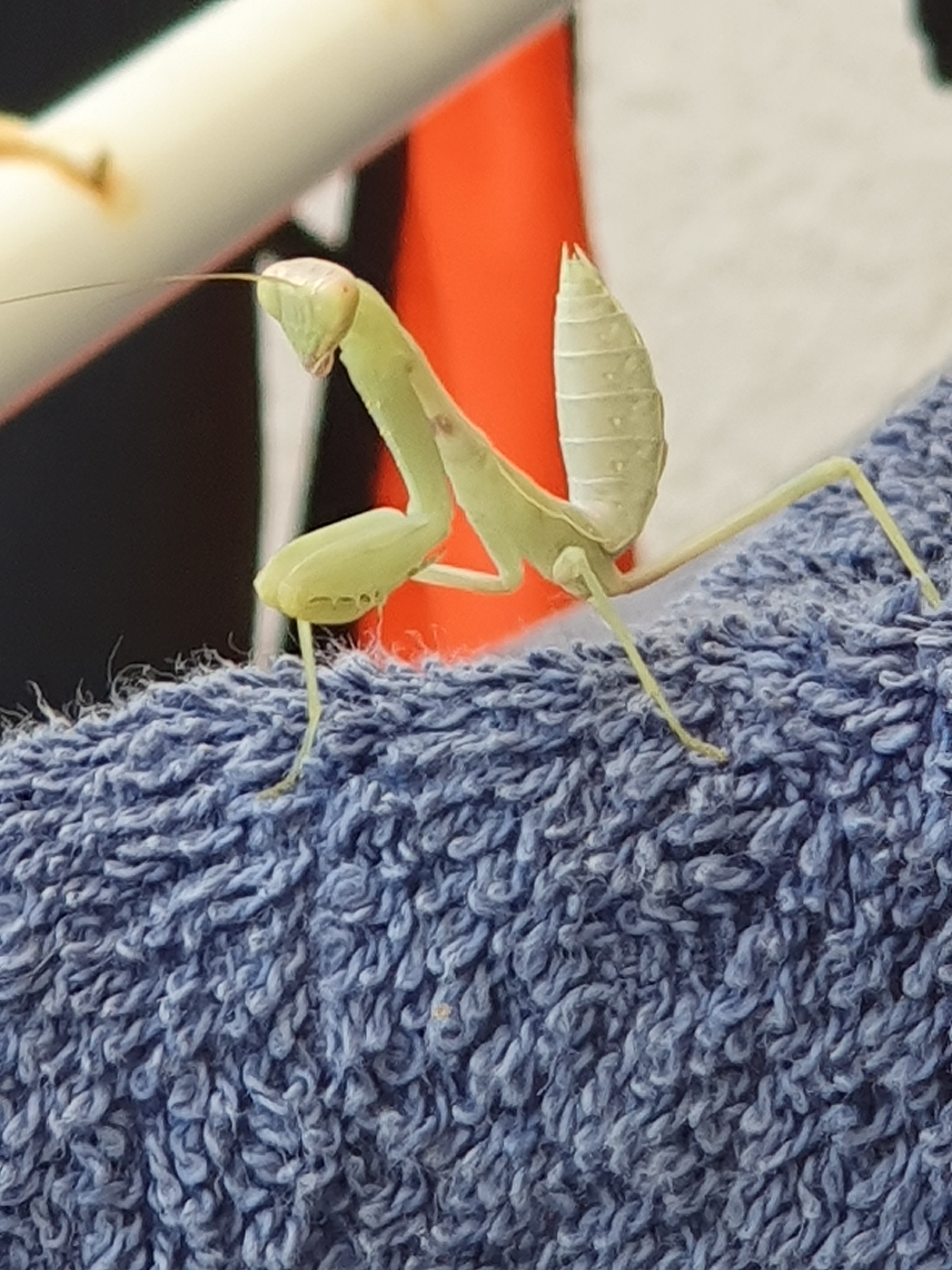
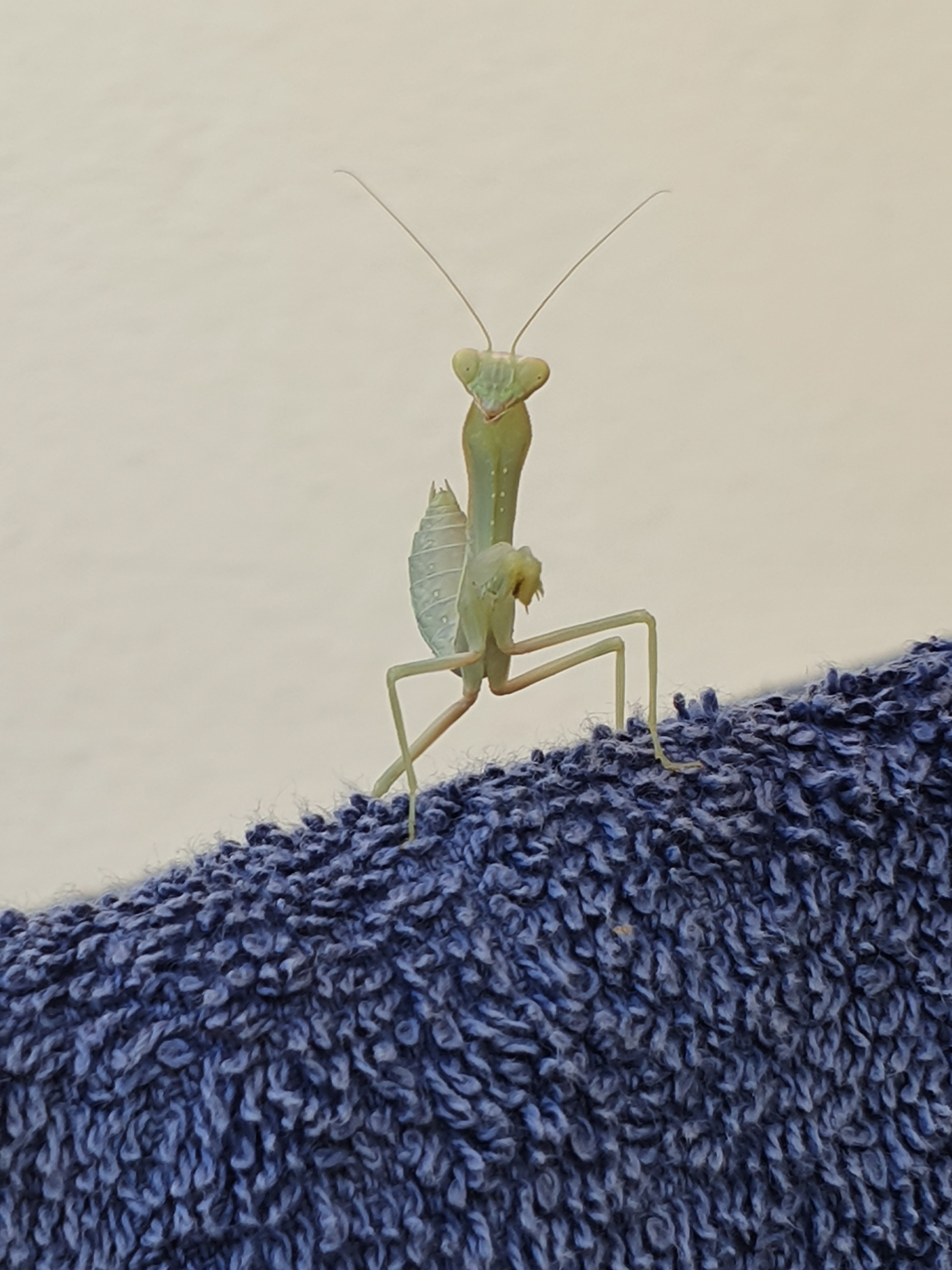
But this can I still share with you; The beautiful and curious Mantis who visited us in July at the beginning of our holidays on Thassos, Greece.
She was looking so intensive and so attentively that I couldn’t stop recording.
I hope you’d like it and wish you all a leisure weekend †â€
You must be logged in to post a comment.