
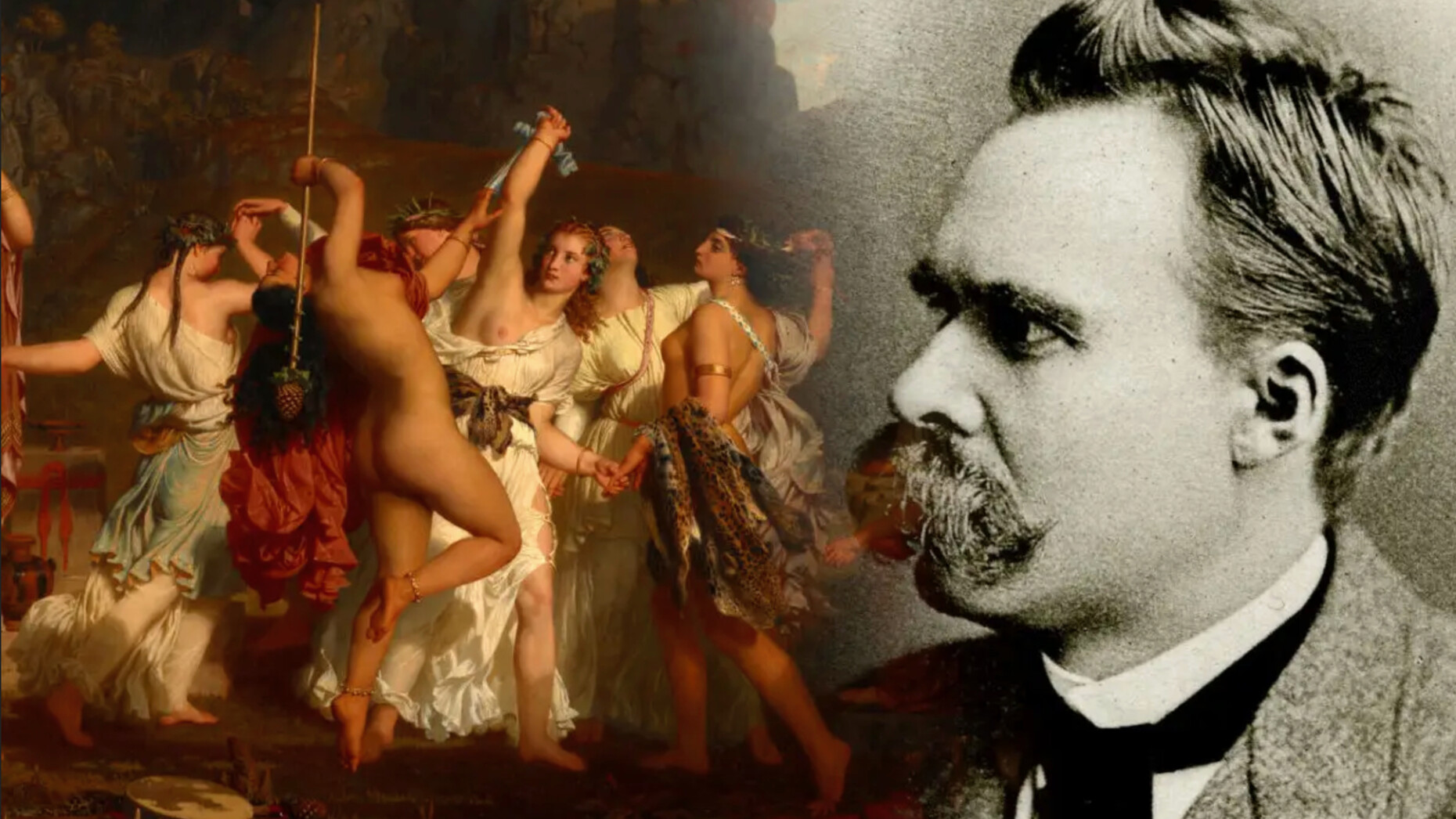
Recently, I read a post on FB from a good friend, Scott D. Smith, about how we might have to get through Nietzsche to understand Dr. Jung better! I agree totally; though Dr. Jung’s works are not philosophical but psychological, Nietzsche has an immense influence on Jung’s doctrine work and his psychological analysis in general.
Nietzsche admired Greece and Greek mythology, often quoting Schopenhauer and using Hegelian ideas to discuss art. He connected ancient Greek tragedy with Richard Wagner’s opera. Let’s see what he meant by Dionysian.
Dionysus, the Greek god of wine and music, is associated with the Dionysian, a state of self-forgetting where individuals unite with others and nature. According to Nietzsche, the Apollonian and the Dionysian are essential to art creation. Dionysian art, particularly music, represents madness and drunkenness, appealing to primal human desires and mystical unity with nature.
In “The Birth of Tragedy” (1872), Nietzsche introduced the terms Apollonian and Dionysian to describe contrasting forces in art. The Apollonian represents a calm, rational art, while the Dionysian embodies intense emotion and ecstasy. Nietzsche believed these forces could come together to create a unique art form, as seen in the Greek tragedies of Aeschylus and Sophocles.
“The saying Yes to life even in its strangest and hardest problems; the will to life, rejoicing over its inexhaustibility even in the very sacrifice of its highest types – that is what I call Dionysian.”
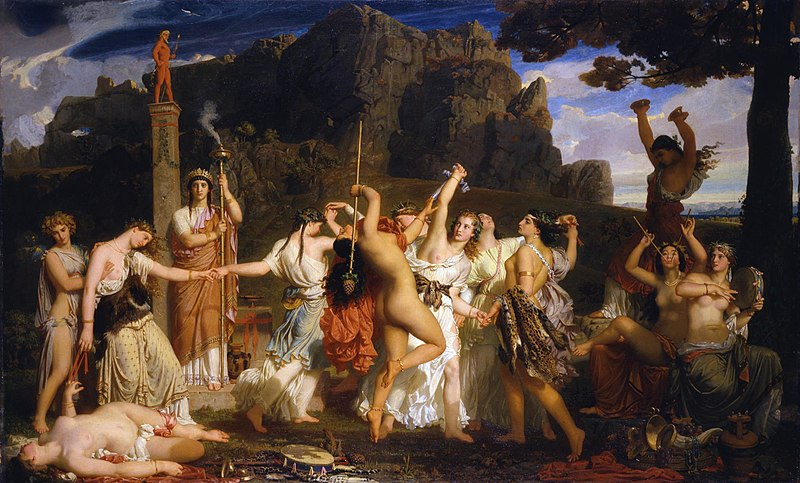
The Dance of the Bacchantes, the last painting by Gleyre exhibited publicly in Paris (at the Salon of 1849)
I believe his thoughts are timeless, as humans almost permanently experience the same failures based on ignorance. Here he speaks:
“Now we see the struggle, pain, the destruction of appearances as necessary because
of the abundance of countless forms pressing into life because of the boundless
fecundity of the world will…That primal Dionysian delight experienced even in
the presence of pain is common to music and tragic myth.”
“Dionysian art wants to convince us of the eternal delight of existence… Now
struggle, pain, and destruction… are seen as necessary…Despite terror and pity
we rejoice in living not as individuals but as part of the life force with whose
procreative lust, we have become one.”
“the world is becoming and perishing, creation and destruction, without any
moral content, in eternal innocence.”
“Now, sure of united victory,
We celebrate the feast of feasts:
Friend Zarathustra has come, the guest of guests!
Now the world is full of laughter, the gruesome curtain is rent,
The wedding day has come for light and darkness.”
Nietzsche: Disciple of Dionysus
Sometimes, our strengths push us so far that we can no longer bear our weaknesses and decline from them.
Of course, we happen to predict this way out, but we can’t change anything. And then we become cruel in that which we ought to guard within ourselves, and our greatness makes us barbarous.
This experience, which we are ultimately forced to pay for with our lives, symbolizes bad people’s effect on others and their time.
With the best they possess—they have within themselves—with that which only they can accomplish, they destroy too many weak, uncertain, unformed, and hesitant beings with the best they have and thus become harmful.
And it can even happen that they do nothing but cause harm because this oldest part of themselves is suddenly emptied, so to speak, only by beings who suffocate their logic and individuality in a glass of strong drink.
And they get drunk to such a point that they can’t help but break their whole body – hands, legs – in all the ways that their drunkenness will lead them.

“‘Man is evil‘ – all the wisest have told me that to comfort me. Ah, if only it were still true today! For evil is man’s best strength. ‘Man must become better and more evil’ – thus, I teach. The most evil is necessary for the “Übermensch’s” best. It may have been good for that preacher of the little people to suffer and be burdened by man’s sin. But I rejoice in great sin as my great consolation. – But such things are not said for long ears. Neither does every word suit every mouth. These are subtle, remote things: sheep’s hooves should not reach for them!” Thus Spoke Zarathustra:
Let us think of the idea in its most terrible form: “existence as it is, without meaning or purpose, but inevitably returning, without a finale into nothingness: ‘the eternal return’. That is the extreme form of nihilism: nothingness (the ‘senseless’) eternal!”
And here, I add one of his poems, Last Will, translated from German.
Last Will
To die thus,
as I once saw him die -,
the friend who cast divine lightning and glances
into my dark youth.
Mutinous and deep,
a dancer in battle -,
the most cheerful among warriors,
the most difficult among victors,
Fate resting upon his doom, hard, thoughtful, premeditated –
trembling that he had won,
rejoicing that he had won while dying –
commanding as he died-
and he commanded that man should destroyed…
To die thus,
as I once saw him die:
Victorious, Destroying…
Thank you, as always, for your presence and stopping by. Have a peaceful weekend, everybody.🙏💖✌
 lampmagician
You must be logged in to post a comment.