
Translated from volumes published by Lorenz Jung based on the edition “Gesammelte Werke” dtv.de The Symbols of Transformation (1952) and Aion (1950)

Greeting all! Today, I share the penultimate or the second to last episode of Dr. Jung’s extensive explanation of the mystery of Mana.
This time, he speaks in a way that may simplify the meaning of Mana and its production, with examples that we might confront every day of life (indeed!) concerning religions, society, and private occurrences!
We all know how important and influential religion is in human life. There have been and still are wars caused by religions (as it is more apparent when people from the same tribe with the same roots and similar faith cruelly kill each other)! However, religions may not be the main perpetrators. The problem may lie deep in the dark corners of human nature.
Mana-Personality is one of these unknown forces that we must understand.
My God is a child, so wonder not that the spirit of this time in me is incensed to mockery and scorn. There will be no one who will laugh at me as I laughed at myself. ~Carl Jung, Liber Novus, Page 234.
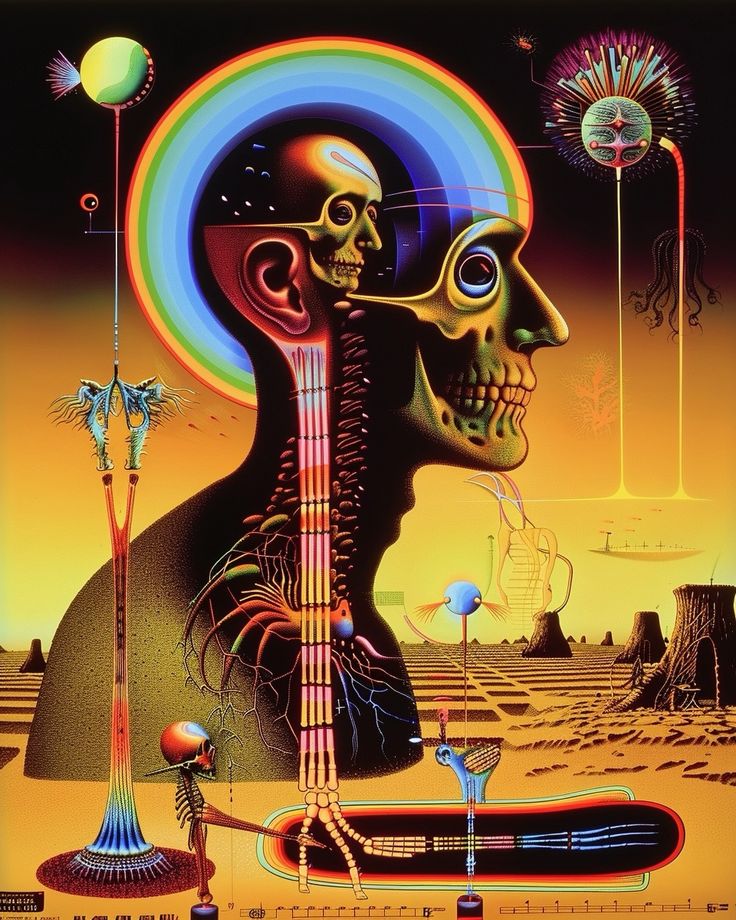
You might remember that I actively assist my Iranian friends as they strive for freedom. However, I am feeling very pessimistic right now as I look at the situation and intricacy progression in the Middle East and see how the lobbyists in the West (i.e., the US, no matter if the next President will be Harris or Trump) are trying to take advantage of Iran’s future. Reading Jung helps me better understand the core of this issue and learn more.
I also learned something useful from my dear friend Luisa Zambrotta. (She has an excellent Website with many brilliant sequence stories you might not miss.) instead of numbering her stories one after another, she only uses the word “Previous” to help readers jump to the latest post if they want to. So I did it, too!🙏
The underlying scheme, the quaternio, i.e., the psychological equation of primordial dynamis (prima causa) with gods and their mythology, time and space, is a psychological problem of the first order.

So, let’s continue to delve further into the topic of Mana!
Individuation
The Mana Personality (P8)
The Mana Personality is, on the one hand, a superior knower and, on the other hand, a superior wanter. By becoming aware of the content underlying this personality, we are able to deal with the fact that, on the one hand, we have learned something more than others and, on the other hand, we want something more than others. This unpleasant relationship with the gods is known to have struck poor Angelus Silesius so deeply that he returned headlong from his hyper-Protestantism, bypassing the now uncertain Lutheran stopover in the deepest womb of the black mother—unfortunately to the detriment of his lyrical talent and nervous health.
And yet Christ and, after him, Paul struggled with precisely these problems, which is still clearly evident from many traces. Meister Eckhart, Goethe in Faust, and Nietzsche in Zarathustra have brought this problem closer to us again. Goethe and Nietzsche try it with the idea of control, the former with the magician and ruthless man of will who takes on the devil, the latter with the master race and the superior wise man, without the devil and without God. According to Nietzsche, man stands alone, like himself, neurotic, financially supported, without God or the world. This is not an ideal possibility for a real person who has a family and has to pay taxes. Nothing can prove the reality of the world away; there is no miraculous way around it. Nothing can also prove the effect of the unconscious away. Or can the neurotic philosopher prove to us that he does not have a neurosis? He cannot even prove it to himself. Therefore, our souls stand between significant influences from within and without, and somehow, we must do justice to both. We can only do this according to our individual abilities. Therefore, we must reflect on ourselves, not on “what one should” but on what one can and what one must do. Thus, the dissolution of the Mana Personality through awareness of its contents naturally leads us back to ourselves as beings and living something that is kept between two world views and their darkness. Still, all the more clearly, it clamped in the perceived forces. This ‘something’ is alien to us and yet so close, completely our own and yet unknowable to us, a virtual centre of such a mysterious constitution that it can demand everything, kinship with animals and with gods, with crystals and stars, without surprising us, without even arousing our deformity. This something demands all of that, and we have nothing in our hands that we can reasonably oppose this demand, and it is even healing to hear this voice.
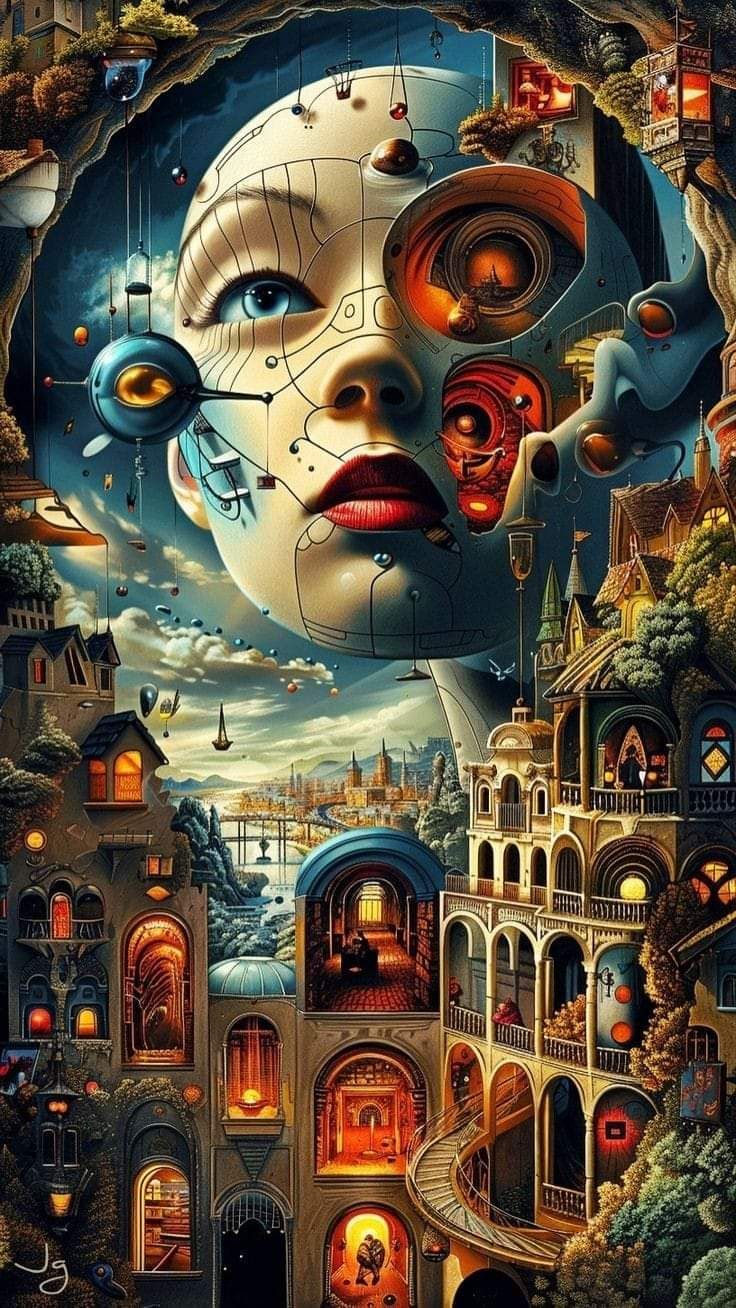
I have called this centre the Self. Intellectually, the Self is nothing but a psychological concept, a construct intended to express an entity that is unknowable to us and that we cannot grasp as such, for it is beyond our comprehension, as is clear from its definition. It might just as well be called the “God within us.” The beginnings of our whole psychic life seem to spring inextricably from this point, and all the highest and final goals seem to converge towards it. This paradox is inevitable, as it always is when we attempt to characterize something that lies beyond the power of our understanding.
I hope that it has become clear enough to the attentive reader that the Self has as much to do with the “I” as the sun has to do with the Earth. The two cannot be mixed up. Nor is it a question of the deification of man or the degradation of God. What lies beyond our human understanding is, in any case, inaccessible to it. When we use the concept of a god, we are simply formulating a certain psychological fact, namely the independence and superiority of specific psychic contents, which is expressed in their ability to thwart the will, to obsess (calm) the consciousness and to influence moods and actions. One might be outraged that an inexplicable mood, a nervous disorder or even an uncontrollable vice is in some way a manifestation of God. But it would be an irreplaceable loss for religious experience if such things, even terrible things, were artificially separated from the number of autonomous psychic contents. It is an apotropaic euphemism (a good thing for a bad thing, to avert its disfavour) to dismiss such things with a “nothing but” explanation. This would only repress them and, as a rule, would only result in a false advantage, a slightly modified illusion. The personality does not become enriched by this but rather impoverishes and becomes stagnant. What appears to be evil or at least senseless and worthless to today’s experience and knowledge can appear to be a source of the best to a higher level of expertise and knowledge, whereby everything naturally depends on the use one makes of one’s devils. Declaring it meaningless requires the personality of the shadow corresponding to it, and thus, it loses its form. The ‘living figure’ needs deep shadows to appear three-dimensional. Without the shadow, it remains a flat illusion of- or a more or less well-behaved child.
With this, I am alluding to a problem that is far more significant than the few simple words seem to express: Humanity is, for the most part, still psychologically in a state of childhood – a stage that cannot be skipped. The vast majority need authority, guidance and the law. This fact must not be overlooked. The Paulistic overcoming of the law is only possible for those who know how to put the soul in place of conscience. Very few are capable of this (>Many are called, but few are chosen.<), and these few only take this path out of inner compulsion, not to say necessity, for this path is as narrow as the edge of a knife.
To be continued! 🤗🙏💖
 lampmagician
You must be logged in to post a comment.