The longing to return to the womb — to the very origin of existence — reflects a deep, universal desire for renewal. It embodies a conscious wish to turn back time and retreat into the ultimate sanctuary where life’s struggles and regrets have not yet taken hold. Recently, I have noticed I often wake up with memories of scenes or songs from a TV series that Al and I enjoyed in our youth; for example, today I woke up with the theme song from the 60s Batman TV show, and I wonder how it entered my mind, since I haven’t heard it in ages! I then ask myself: Is this a desire to return to that joyful, simple time, or even more, to go back to the basics and start anew?
The womb symbolises comfort, safety, and innocence. The desire to return often signifies a wish to escape the burdens and complexities accumulated over a lifetime. In psychoanalysis, returning to the mother’s womb may sometimes be viewed as a sign of incest. However, it also reflects a longing for the simplicity and purity that existed before self-awareness and responsibilities—before choices and their consequences shape our identities. Nonetheless, this longing goes beyond mere escapism. It reflects the human yearning for change and a fresh start. Although we acknowledge that a literal return isn’t feasible, the desire reveals our profound wish to leave past mistakes behind and start anew. It acts as a cry for self-forgiveness and the bravery to reinvent ourselves—building on the wisdom gained from our experiences rather than erasing them.
Ultimately, the desire to return to the womb is not about going backwards but about renewal. It acts as a reminder that, although we can’t literally start over, we can seek personal rebirth—discovering new purpose and hope at each stage of life. This may also evoke memories of those days and the happiness I now long for.
Jung’s investigation of incest in Transformations and Symbols of the Libido (1912) caused a rift with Freud. He describes the archetype’s dual nature as both “spiritual” and rooted in the “organic–material substrate” (“On the Nature of the Psyche” par. 380), allowing him to formulate a concept of libido that combines Freud’s sexual perspective with a broader view. In Freud’s view, libido is fundamentally sexual; incest symbolises a link from Oedipal desire to the taboo and the formation of the superego. Although Jung does not deny the actual occurrence of incest (McGuire 505–506), he highlights its symbolic role in expressing libido creatively rather than focusing on its biological aspect. As he proceeds, the foundation of incest is thus:
The strange idea of becoming a child again, of returning to the parental shelter, and of entering the mother in order to be reborn through her. But the way to this goal lies through incest, i.e. the necessity of finding some way into the mother’s body. One of the simplest ways would be to impregnate the mother and beget oneself in identical form all over again. But here the incest prohibition intervenes; consequently [myths develop new mother–analogies] for the purpose of canalising the libido into new forms and preventing it from regressing to actual incest [. . .]. It is not incestuous cohabitation that is desired, but rebirth [. . .]. The effect of the incest taboo and of the attempts at canalisation is to stimulate the creative imagination, which gradually opens up possible avenues for the self–realisation of libido. In this way, the libido becomes imperceptibly spiritualised. ~Carl Jung, “Symbols of the Mother and of Rebirth” par. 332)
Since I will be away from tomorrow until Saturday, visiting a friend and attending a concert together, I’ll just say hello and goodbye with my best wishes.
It will be a welcome change of pace in these turbulent times, though my friend is also Iranian, so there will definitely be some deep discussions.
Dr Jung’s philosophy (thoughts) suggests that a “break” often serves as an invitation to explore the unconscious, encouraging a shift from merely doing to a state of being.
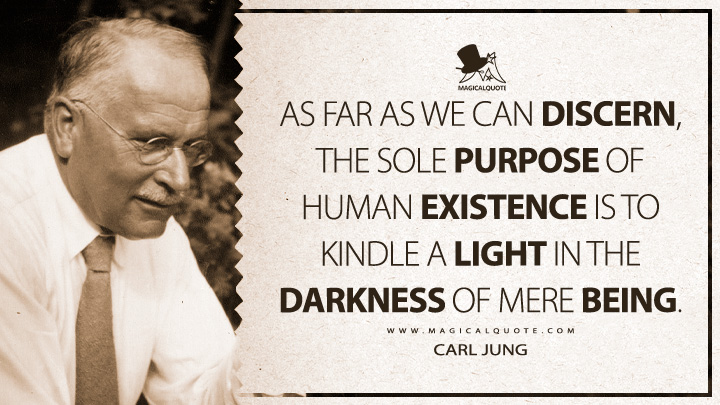
“As far as we can discern, the sole purpose of human existence is to kindle a light in the darkness of mere being”.
Dr Jung’s insight about the nature of existence is thoughtfully highlighted at the conclusion of his Life and Death chapter in Memories, Dreams, and Reflections:
Our age has shifted all emphasis to the here and now, and thus brought about a daemonization of man and his world. The phenomenon of dictators and all the misery they have wrought springs from the fact that man has been robbed of transcendence by the shortsightedness of the super-intellectuals. Like them, he has fallen victim to unconsciousness. But man’s task is the exact opposite: to become conscious of the contents that press upward from the unconscious. Neither should he persist in his unconsciousness, nor remain identical with the unconscious elements of his being, thus evading his destiny, which is to create more and more consciousness. As far as we can discern, the sole purpose of human existence is to kindle a light in the darkness of mere being. It may even be assumed that just as the unconscious affects us, so the increase in our consciousness affects the unconscious. ~Carl Jung, MDR, Page 326.(Via carljungdepthpsychologysite.blog, with thanks)
The band we’re meeting is called UFO, and they’re roughly my age, although the videos below are from their earlier years.
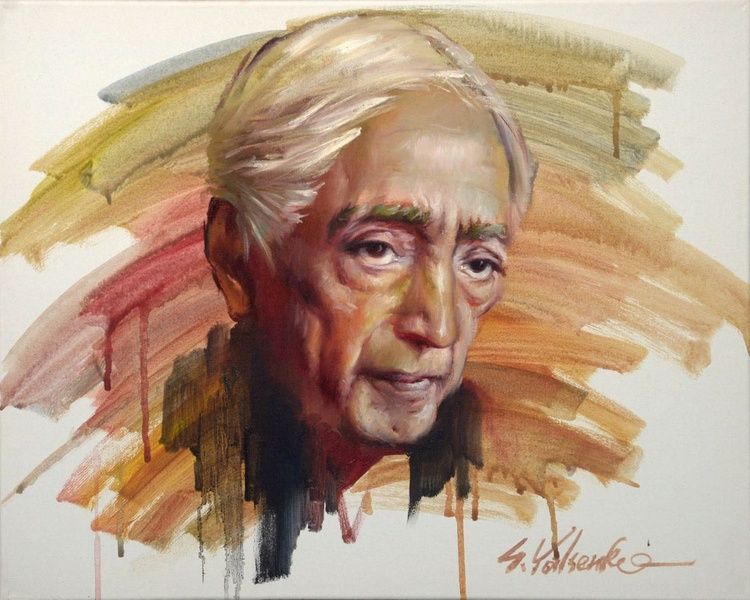
I think it’s time to set aside our current critical perspective on life for a moment and take a deeper look. Jiddu Krishnamurti can gently guide us and help us see things anew.
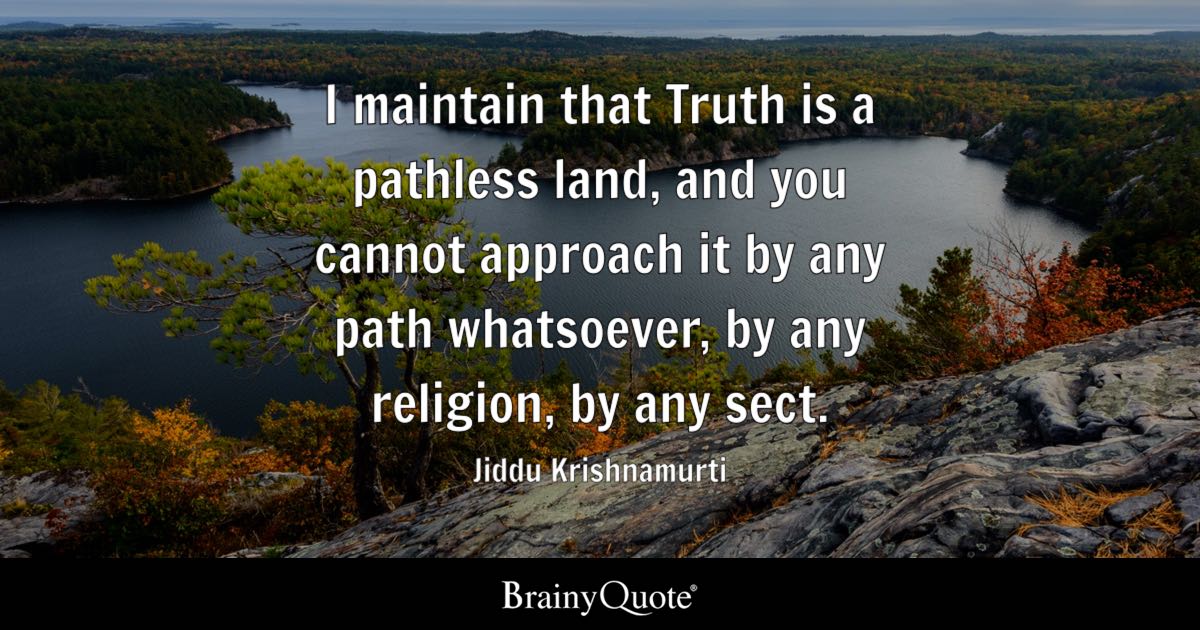
Jiddu Krishnamurti (1895-1986) was a prominent spiritual teacher and philosopher, famous for his rejection of organised religion, gurus, and spiritual authorities, including his own. Born in colonial India, his life changed when members of the Theosophical Society recognised him as the expected “World Teacher.” In 1929, at age 34, he disbanded his organisation, stating that “truth is a pathless land” and no belief system ensures understanding. Over more than sixty years, Krishnamurti travelled globally, giving talks on the mind, consciousness, and suffering. His teachings emphasised direct observation and awareness, urging questioning of authority to achieve psychological freedom. He believed that the separation between the observer and the observed causes conflict. He encouraged living without fear, exploring love and relationships, and transforming consciousness. His legacy includes books, talks, and schools, inspiring individuals to seek truth from within rather than externally.
Jiddu Krishnamurti’s Parables and Poems
Jiddu Krishnamurti’s parables and poems are central to his teachings, offering glimpses of truth through imagery and metaphor rather than through direct argument. These works appeal to intuition and feeling, promoting immediate perception, often inspired by nature—such as a flower blooming or a bird flying—while highlighting his core idea that truth is perceived directly rather than through thought or belief. They do not explain but point, creating space for sudden insights beyond words. His poems share this sense of immediacy; they are simple, unembellished, emerging from attentive presence—watching, listening, and being aware. Their language is calm, observing without a separate observer, often dissolving the boundary between seer and seen, reflecting his teaching that authentic perception occurs only when the self is absent. These works are essential because they echo his main message: transformation arises through direct insight, not through knowledge. Instead of enriching conceptual understanding, they invite us to set aside concepts, to observe, listen, and remain present without interpretation. His literary works might be his most genuine expression—offering not solutions but gateways to experience.
Once upon a time, when there was great understanding and in a world full of rejoicing, there lived a gentlewoman full of years. One day, she found herself in a temple before an altar made by human hands. She was crying bitterly to heaven, and none was there to comfort her, till in the long last, a friend of God took notice of her and asked the reason for her tears. “God must have forgotten me. My husband is gracious and well. My children are full and strong. Many servants are there to care for us. All things are well with me, and mine own. God has forgotten us.” The friend of God replied, “God never forgets His children.” When she came home, she found her son dead. She never cried. “God remembers me and mine own.”
Every step we take in life lays the foundation for the experiences we gather. Krishnamurti soon recognised these and attempted to share his experience with us.
A HYMN
I have stood in Thy holy presence. I have seen the splendour of Thy face. I prostrate at Thy sacred feet. I kiss the hem of Thy garment, I have felt the glory of Thy beauty. I have seen Thy serene look. Thy wisdom has opened my closed eyes. Thine eternal peace has transfigured me. Thy tenderness, the tenderness of a mother to her child, The teacher to his pupil, I have felt. Thy compassion for all things, living and non-living, the animate and inanimate, I have felt. Thy joy, indescribable, has thrilled me. Thy voice has opened in me many voices. Thy touch has awakened my heart. Thine eyes have opened mine eyes. Thy glory has kindled the glory in me. Master of Masters, I have longed, yea, yearned for this happy hour, when I should stand in Thy holy presence. At last, it has been granted unto me.
I am happy. I am peaceful, peaceful as the bottom of a deep, blue lake. I am calm, calm as the snow-clad mountain-top above the storm clouds. I have longed for this hour; it has come. I shall follow humbly in Thy footsteps along that path which Thy holy feet have trodden. I shall humbly serve the world, the world for which Thou hast suffered, sacrificed and toiled. I shall bring that peace into the world. I have longed for this happy hour; it has come.
Thine image is in mine heart. Thy compassion is burning in me. Thy wisdom guides me. Thy peace enlightens me. Thy tenderness has given me the power to sacrifice. Thy love has given me energy. Thy glory pervades my entire being.
I have yearned for this hour; it has come, in all the splendour of a glorious spring. I am as young as the youngest. I am as old as the oldest. I am happy as a blind lover, for I have found my love. I have seen. I can never be blind, though a thousand years pass. I have seen Thy divine face everywhere, in the stone, in the blade of grass, in the giant pines of the forest, in the reptile, in the Hon, in the criminal, in the saint. I have longed for this magnificent moment; it came and
I have grasped it. I have stood in Thy presence. I have seen the splendour of Thy face. I prostrate at Thy sacred feet. I kiss the hem of Thy garment.
Thanks a lot for visiting and for your time in reading! 🙏💖🙏
With a warm greeting to all my friends, I didn’t want to keep writing critical articles repeatedly, although I see no way to look away from all these terrible happenings around me, and around you all, for sure.
Although this topic is quite old—one that Al and I came across in our youth as we distanced ourselves from the masses—we initially believed it was a characteristic of the Third World due to inadequate education systems. However, later observing in the West, we realised it is very common there as well. Therefore, I decided to analyse it, at least for my own understanding, to explore how it might be possible:
As I observe the world and its phenomena, I repeatedly notice the absence of consideration, recklessness, and ignorance shown by many people, and above all, the lack of individuality.
It is not a matter of living in the third world, which we might argue is due to poor education or oppressive rulers! That already happens in the free world!
I think people are getting lazier, aiming for a more comfortable life without the stress of thinking, decision-making, or solitude, which leads to a loss of their individuality. As AI advances, the significance of the self-mind diminishes; the artificial mind assumes creative functions, rendering learning unnecessary.
They often prefer to be part of a crowd that takes them somewhere, no matter the outcome. This reduces the need to use the mind, enabling everyone to enjoy life effortlessly and without deep understanding; making judgments becomes simpler.
I’ve often met people with such judgments; they use these to solve problems that require thought or research to discover the truth, and then they feel proud of their ingenuity.
In this chaos, a deep examination of issues quickly leads to dismissal, labelling as an outsider and a foreigner, and, subsequently, isolation.
Benjamin Franklin’s expression is quite adept: “We are all born ignorant, but one must work hard to remain stupid.”!
The main profit, naturally, goes to the politician. Populism comes to the fore; the bigger the mouth and the louder the voice, the more it draws the crowds, because there is a greater resemblance among them; the stupid always gravitate towards the same type!
I am witnessing the severe turmoil in Iran. The son of Iran’s late Shah, echoing President Trump, urged people to protest against the Mullahs’ regime. “We are coming!” they both declared. Many took to the streets, risking their lives, and thousands have lost their lives. Yet, no one has offered them support. Now, helping the Iranian people is forgotten, as President Trump proudly discusses a deal with the murderous regime!!
One no longer faces the agony of decision – no more being spoiled for choice! They lose their individuality and dreams. Imagination wanes, and visions grow shallow. And those who manage to protect their minds from such propaganda and attempt to stay aware of their own thoughts will be marginalised and become outsiders.
The loneliness began with the experiences of my early dreams, and reached its climax at the time I was working on the unconscious. If a man knows more than others, he becomes lonely. But loneliness is not necessarily inimical to companionship, for no one is more sensitive to companionship than the lonely man, and companionship thrives only when each individual remembers his individuality and does not identify himself with others. ~Carl Jung, MDR, Pages 355-356
In this video, the narrator references Carlo M. Cipolla‘s ideas on stupidity and on people deemed stupid. This seems to serve as an overall summary.
“Stupidity is an indiscriminate privilege of all human groups and is uniformly distributed according to a constant proportion.” And, “non-stupid individuals underestimate the potential for damage by stupid people and fail to recognise the cost of dealing with them.” ~Carlo M. Cipolla
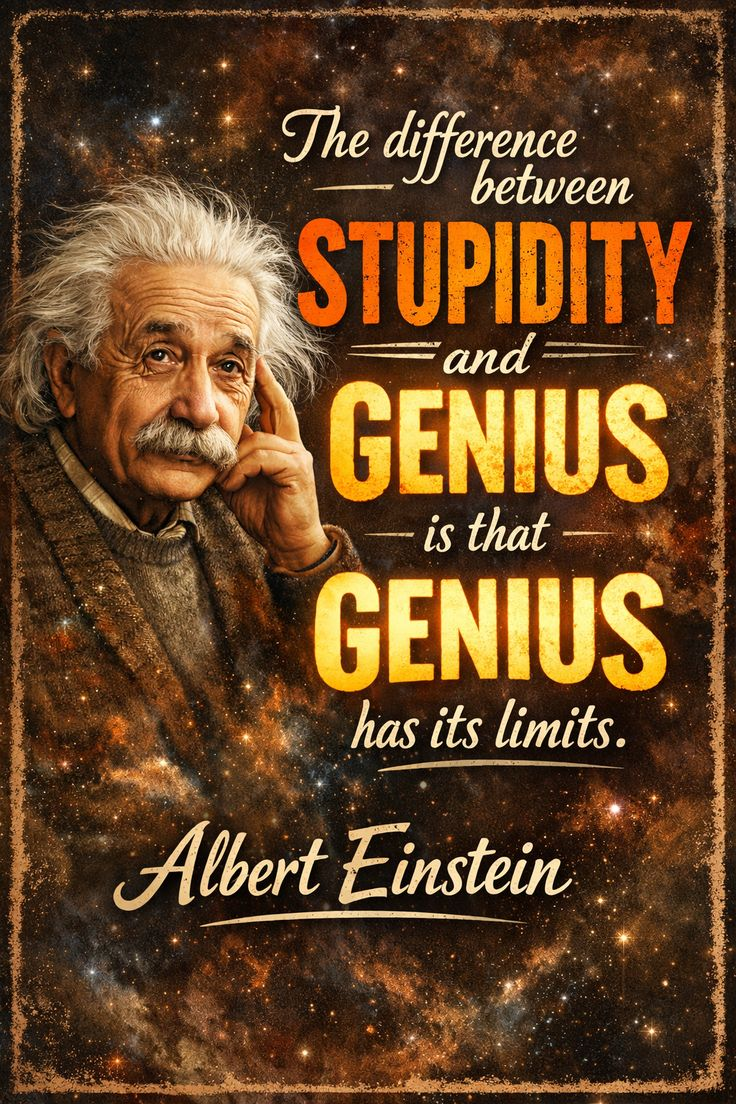
“The difference between stupidity and genius is that genius has its limits”!! ~Albert Einstein
I must admit that I am at least pleased to be here, among such wonderful friends, who give me hope for a better future for humanity! Take care and stay vigilant.🙏✌️
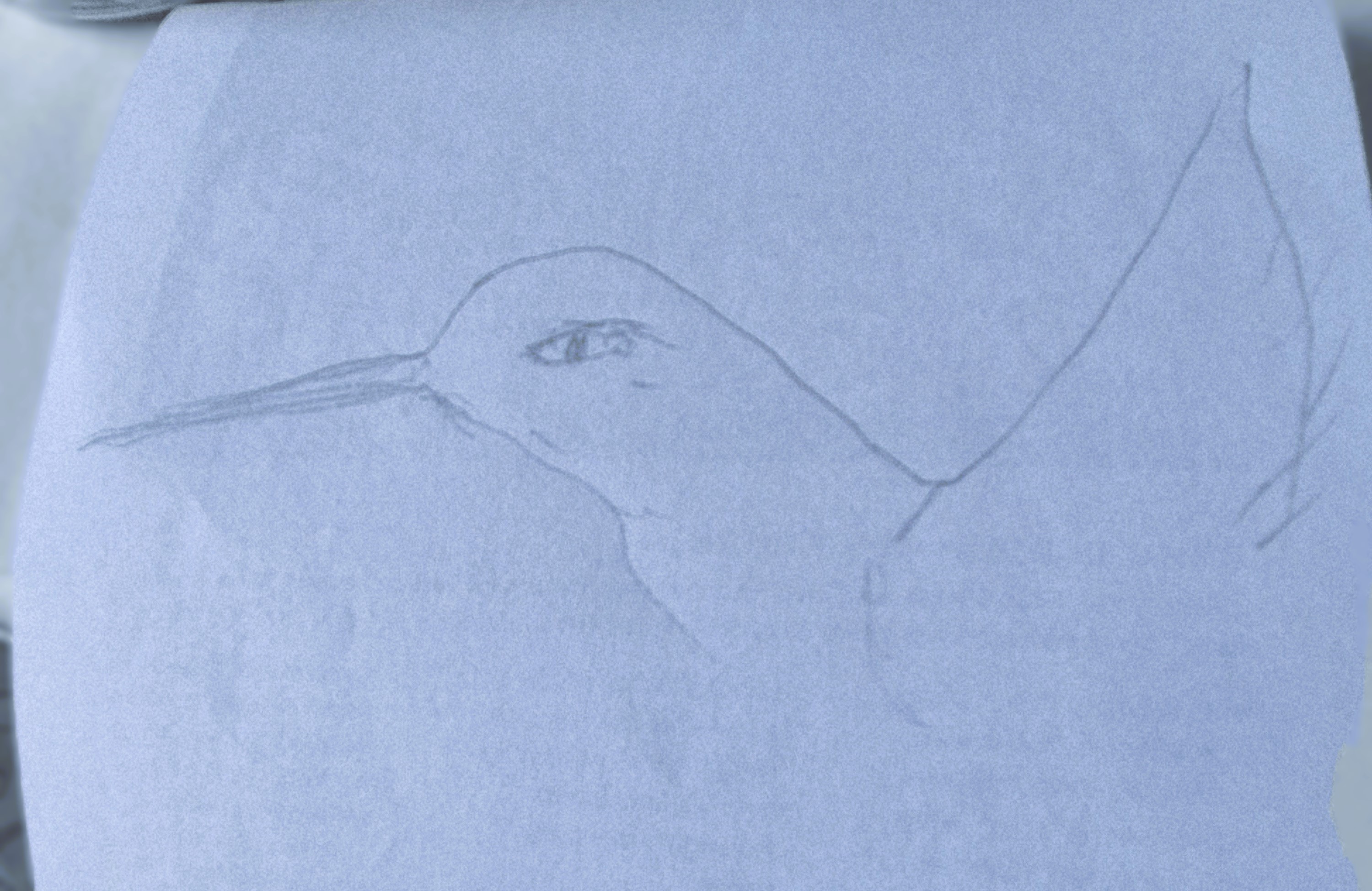
I had a dream a few weeks ago, and surprisingly, I still remember it clearly. Usually, I forget my dreams the moment I wake up, but this one is vividly etched in my mind. In the dream, a bird flew elegantly through my room. She looked like a hummingbird, but much larger. She stared at me as she was facing the window. I suspected that I knew her well.
That is what I kept in my mind and can recall. I used to be better at it earlier; I think I am lacking patience now!
She gazed at me for a while before flying away; I don’t know where, but somehow she disappeared right before my eyes.
It reminded me of a dream Dr Jung once described. However, his bird was transformed into a child and could speak; mine did not, but I believed she was wise and knew many things.
Carl Jung’s dream of a white bird transforming into a girl, often a dove or gull, was a key vision from his Black Book. It signalled his break with Freud, marked his dive into deep psychological work, and symbolised the soul’s link to the spirit world, spiritual change, and the union of opposites within the Self. Featured in The Red Book, the dream showed birds as messengers of the soul, bridging conscious and unconscious, representing freedom, wisdom, and the’ higher self”.
I would now like to reiterate his dream, which I presented in the first part, because it is remarkable.
I dreamt at that time (it was shortly after Christmas 1912) that I was sitting with my children in a marvellous and richly furnished castle apartment – an open columned hall – we were seated at a round table, whose top was a marvellous dark green stone. Suddenly, a gull or a dove flew in and sprang lightly onto the table. I admonished the children to be quiet so they would not scare away the beautiful white bird. Suddenly, this bird turned into an eight-year-old blond child and ran around, playing with my children in the marvellous columned colonnades. Then, the child suddenly turned into the gull or dove. She said the following to me: “Only in the first hour of the night can I become human while the male dove is busy with the twelve dead.” With these words, the bird flew away, and I awoke. (Black Book 2, pp. 17-18)
Key Elements of Jung’s Bird Dream: The White Bird: Symbolises the soul, spirit, or divine feminine (Anima), depicted as a dove or gull. Transformation: The bird turning into an eight-year-old blond girl playing with his children represents the soul’s embodiment and interaction with earthly life. The Message: “Only in the first hours of the night can I transform myself into a human being, while the male Dove is busy with the twelve dead” highlights the unconscious’s link to the spiritual realm and the soul’s hidden work. Context: This dream from around 1912 helped Jung realise the collective unconscious archetypes and influenced his relationship with Toni Wolff. Broader Jungian Bird Symbols: Archetypal Connection: Birds link earthly and spiritual realms, symbolising transcendence, consciousness, and freedom. The Self: Birds often symbolise the Self, representing wholeness and inner guidance. Individuation: Birds symbolise Jung’s concept of individuation—integrating archetypes to achieve wholeness. Language of Birds: In dreams, birds speak a symbolic language that reveals hidden meanings and psychic realities.
Jung’s bird dream was a profound encounter with his own unconscious, initiating his personal myth-making and laying the groundwork for his analytical psychology.
I know that one day, if I am still alive, I will continue this never-ending story, though there is another “never-ending story” in which I am fully involved! Enjoy your peaceful lives. ✌💕🥰
Put your hand on a hot stove for a minute, and it seems like an hour. Sit with a pretty girl for an hour, and it seems like a minute. That’s relativity. ~Albert Einstein
I was always sceptical about the concepts of time and space. As I explored Einstein’s theory of relativity, I realised that it encompasses not just time and space, but everything else as well, including happiness.
Indeed, it pertains to an individual’s life circumstances or, more precisely, it is linked to them. For example, someone living a stress-free and trouble-free life may experience a lack of happiness, but when faced with tough times, they may find happiness more readily.
My life has been filled with challenges, but this year has been especially tough. As you know, I had issues with my lower abdomen and underwent three surgeries to fix it, or so I thought. However, a problem arose when I went to the toilet, which caused concern, and I visited my doctor. After the examination, he stated that an apparent mistake had occurred during the last operation, a part had been injured, and I would require another procedure. I won’t go into the details, but after some anxious days, I’ve managed to secure a scheduled appointment for next Wednesday, as the procedure needs to be done soon to prevent kidney issues.
I gathered some insights and words from my teacher, Carl Jung, who held that the psyche and cosmos are fundamentally timeless. Working with Einstein and Pauli, he examined a concept of timelessness that goes beyond linear clock time. Jung proposed that accurate understanding involves transcending causality because time in the psyche and reality is relative. Although our conscious mind perceives time linearly, embracing a sense of timelessness can enhance learning. His goal was to unify physical and psychic realities and how they interact.
He believed in a psychological “relativity of time,” where perception is subjective and affected by inner states. He connected this to synchronicity, implying that the psyche and material world are not always ruled by linear cause-and-effect but can relate in other ways. Jung pointed out that, similar to the space-time continuum in modern physics, the unconscious also exhibits “indistinctness” or psychic relativity, which blurs the boundaries between time and space.
For Jung: “[Synchronicity] cannot be a question of cause and effect, but of a falling together in time, a kind of simultaneity. Because of this quality of simultaneity, I have chosen the term ‘synchronicity’ to designate a hypothetical factor equal in rank to causality as a principle of explanation.” Jung, C. G. (1952). The Structure and Dynamics of the Psyche; Synchronicity: An Acausal Connecting Principle, in CW, Vol. 8.
Now, what about happiness? I tell you this: when I go to the toilet and manage to pee, I feel the entire joy of life again and find happiness!
Humour plays a vital role, and hope remained until the very end. In my seventy years, I have enjoyed good health and no surgeries, but this year I face my fourth operation. Here’s to a brighter year ahead. Wishing you all health and prosperity.
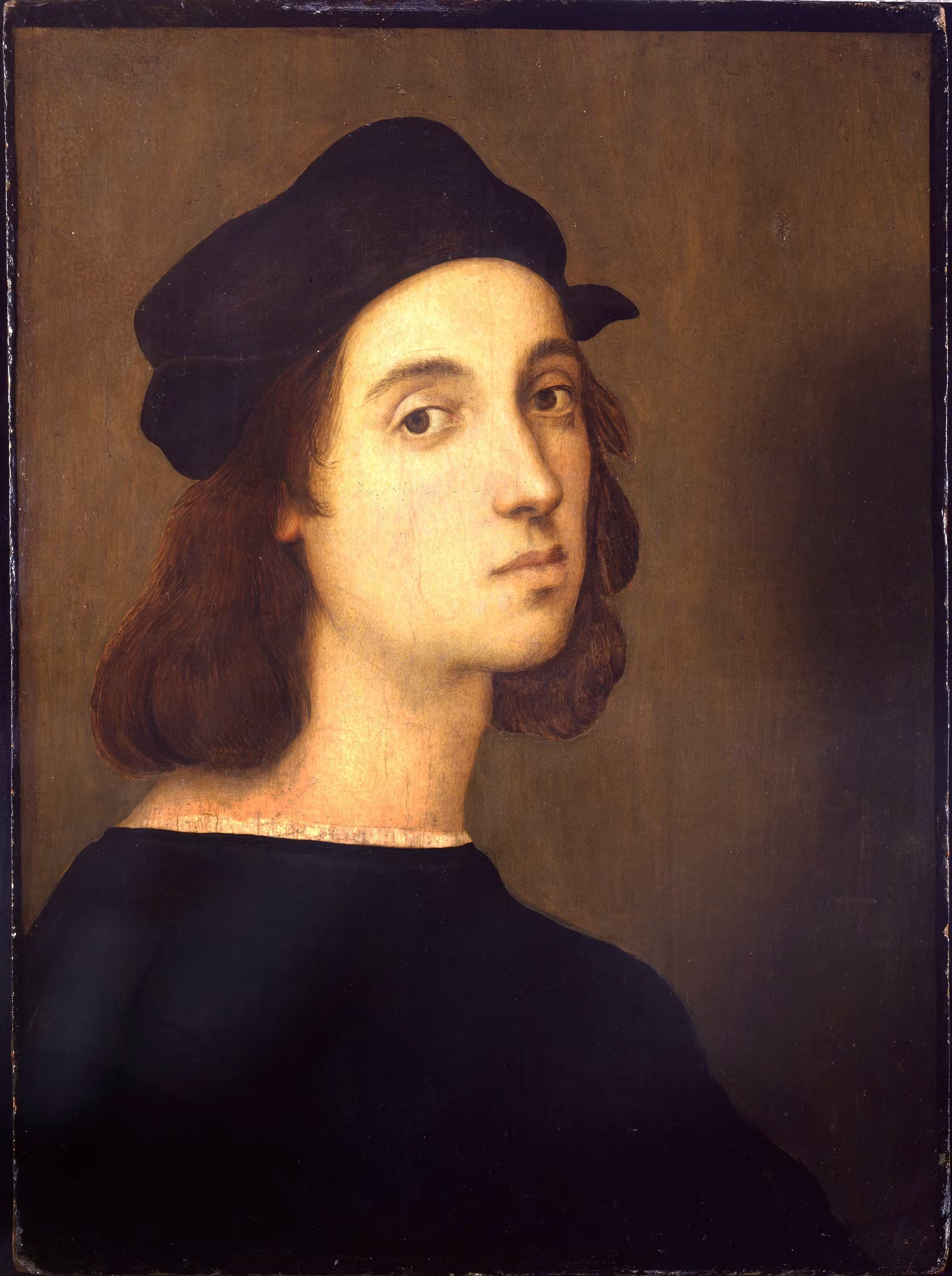
Raphael’s self-portrait | Uffizi GalleriesSelbstbildnis des Leonardo da Vinci Leonardo da Vinci, um 1512 Biblioteca Reale, TurinPortrait by Daniele da Volterra, c. 1545
Raffaello Sanzio, Leonardo da Vinci, and Michelangelo are legendary figures of the Renaissance, each contributing uniquely to the era’s art and thought. Raffaello is celebrated for his balanced compositions and perspective, especially in The School of Athens, embodying ideals of knowledge and beauty. Leonardo da Vinci, a true polymath, excelled in painting, science, and anatomy, with works such as the Mona Lisa and The Last Supper showcasing his innovative methods and deep understanding of human emotion. Michelangelo, renowned for his sculptures and paintings, created masterpieces such as the Statue of David and the Sistine Chapel ceiling, which reflect his keen insight into human anatomy and emotion. These artists collectively represented the Renaissance spirit, merging art, science, and philosophy, and their enduring legacies continue to inspire us.
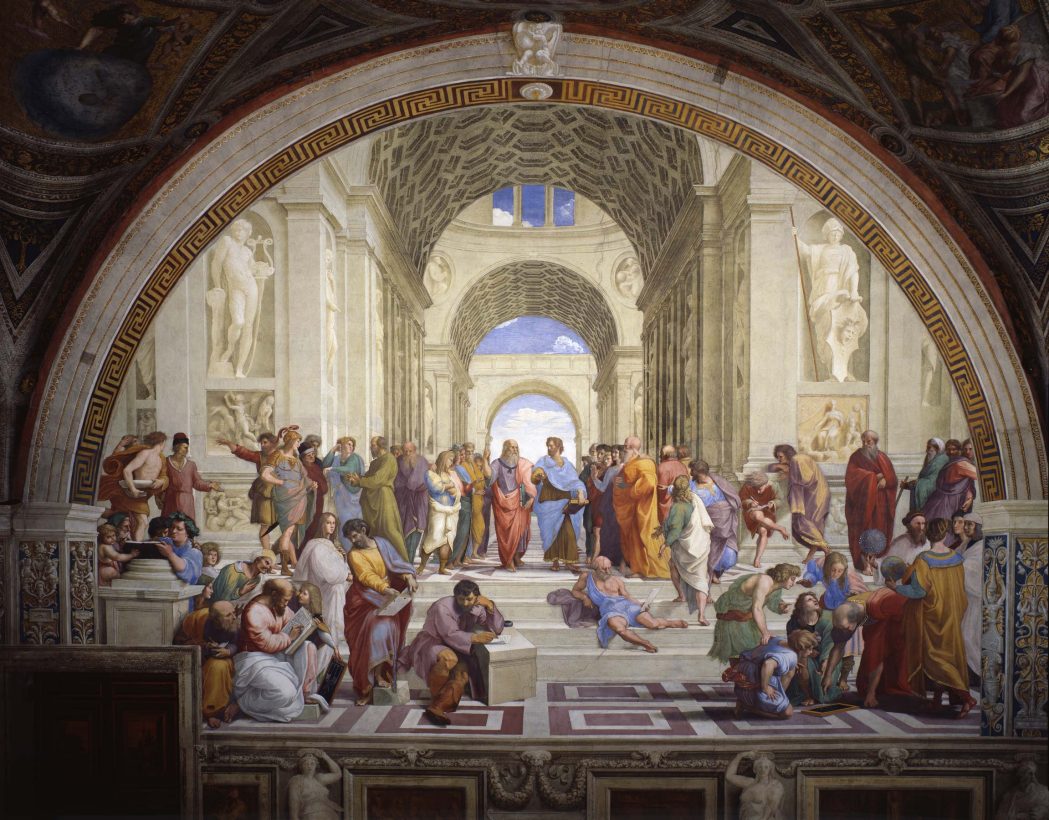
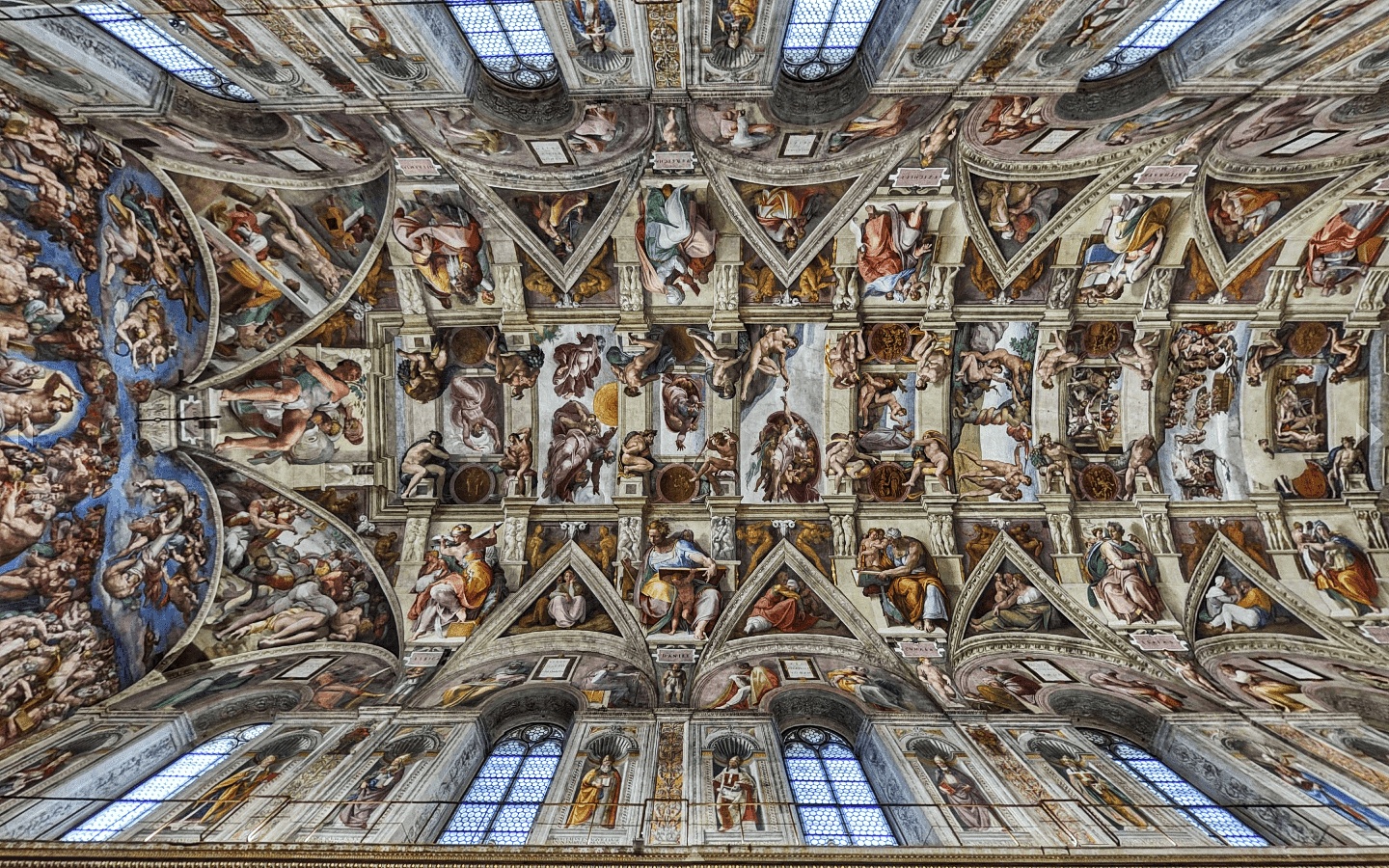
But what is the most interestingly depicted in art history during the Renaissance? Two masterworks tell their own story: Raffaello’s ‘School of Athens’ and Michelangelo’s ‘Sistine Chapel ceiling.’
Indeed, Leonardo da Vinci’s Last Supper should not be overlooked, as it is a Renaissance masterpiece that captures the moment after Jesus reveals that one of his apostles will betray him. Raffaello’s The School of Athens also employs one-point perspective, similar to da Vinci’s method: the composition is centred on a single vanishing point with all lines converging on Jesus, highlighting him as the focal point. However, it’s a different story!
I previously covered that topic, mainly from a philosophical angle rather than focusing on developing the art self. Now, let’s explore this masterpiece creatively and artistically.
Raffaello’s masterpiece, The School of Athens, exemplifies the Renaissance by highlighting its core principles of knowledge, philosophy, and beauty. This famous fresco depicts a gathering of history’s greatest thinkers, including Plato and Aristotle, each representing distinct philosophical perspectives. Plato, resembling Leonardo da Vinci, represents idealism and the importance of ideas, while Aristotle stands for empirical observation. Figures like Socrates, Ptolemy, and Euclid enrich the discussion. Raffaello’s masterful use of perspective draws viewers into a vibrant intellectual hub of the Renaissance. The influence of Michelangelo is evident, demonstrating outstanding artistic talent. The School of Athens celebrates individual genius and the collaborative spirit of the Renaissance, a time when art, science, and humanism thrived.
Raffaello’s ‘School of Athens’ and Michelangelo’s ‘Sistine Chapel ceiling’ are iconic Renaissance masterpieces. ‘School of Athens’ portrays philosophers amidst impressive architecture, symbolising art, philosophy, and science.
Michelangelo’s ceiling is renowned for dramatic scenes like ‘Creation of Adam’, showcasing his skill and religious themes.
Both works are culturally and historically significant, reflecting Renaissance intellectual and artistic progress.
Here’s a video titled “How to read ‘The School of Athens’ – a triumph of Renaissance art” from Aeon, a recommended site. In Great Art Explained, UK curator and video essayist James Payne explores Raphael’s The School of Athens (1509-11), a Renaissance icon. He highlights its location in the Pope’s private Vatican library, symbolising philosophy alongside theology, poetry, and law. Payne describes how Raphael’s composition merges Classical and Christian ideas, showing their interconnectedness in the quest for truth.
I hope you enjoy it and wish everyone a wonderful weekend. 🤗💖
Hello everyone! Today, I want to share some thoughts that have been on my mind for a while about our world—a chaotic place—and explore the reasons behind it.
Many ideas and thoughts were swirling in my mind, and since I am not sufficiently professional to keep them all there, I hesitated to write this. However, after reading an article by The Borderline Crisis, a highly recommended blog, it encouraged me to share my thoughts.
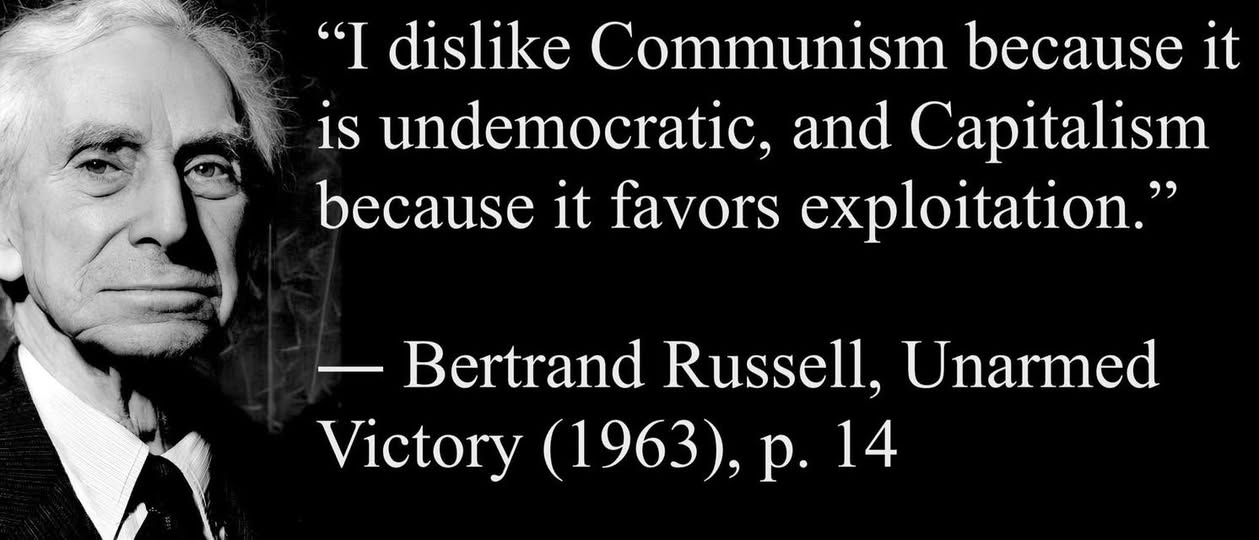
As we watch and ponder, the world and its inhabitants hurriedly head towards an abyss filled with wars and violence, driven by an unknown purpose. The wealthy continue to grow richer, while the poor become increasingly poorer. Every compassionate person wonders about the cause and reason. That was also my question, and I realised it all comes down to money. Or, more accurately, it can be best described as capitalism. Hold on!!! Please don’t walk away; I am not a communist and have no intention of promoting such ideas. I fully agree with Bertrand Russell, who stated:
“I dislike Communism because it is undemocratic and Capitalism because it favours exploitation.“ — Bertrand Russell, Unarmed Victory (1963), p. 14
Thus, concerns regarding communism and its foundational principles have diminished, while capitalism continues to gain greater influence. Why is that? Essentially, communism has shot itself in the foot by taking on a form of dictatorship, which has contributed to its decline throughout history. On the other hand, after World War II, capitalism managed to contain communism by offering people equity capital through the conventional bourgeois approach, thereby generating a fear of communism.
They created opportunities for the lower class by enabling partial instalment payments, allowing them to own possessions, and helping to dispel the notions that deprived them of their belongings. They might be burdened with their mortgage for life, but they have some possessions, such as their own house, car, TV, washing machine, etc. This approach gained popularity worldwide, including in Europe and even in Iran before the 1979 revolution. We adopted an American-style lifestyle, characterised by luxury and instalment-based spending!
This approach has been cleverly devised to encourage pride in possessions and stimulate a desire for more. I see it as a fundamental aspect of capitalism, as it drives competition among neighbours, cities, or nations to increase their assets. Consequently, people become fixated on winning more and acquiring larger and better possessions.
I call it Greed! This trait isn’t found in nature but only among humans. I noticed it wasn’t present in the communist world, as I observed when interacting with my East German customers, whom I took to visit doctors during my daily work. They all expressed satisfaction with their lives in the former GDR. One of them, a tiny older woman, told me she lived peacefully with her neighbours, free of stress, feeling a genuine sense of community and helpfulness among friends and comrades. Even one of the younger people I met at a disco one evening, who recently escaped to the West, told me that everything wasn’t too bad there. She mentioned that travelling abroad was somewhat challenging due to restrictions, but she was eager to experience and connect with different cultures.
Nevertheless, the actual outcome of reunifying East and West Germany has shown how capitalism can significantly disrupt the peaceful life of a population, exposing them to the allure and splendour of Western society, yet leaving them in a state of longing. You may be aware that after the USSR’s withdrawal from East Germany, Western investors closed all remaining factories and manufacturing facilities. This was done to conceal from the capitalist world that factories in the communist system were still operational and that life was proceeding normally there. By the way, the education system has failed under the communist dictatorship, as shown by how individuals in East Germany can swiftly adopt fascist tendencies from a corrupt communist system.
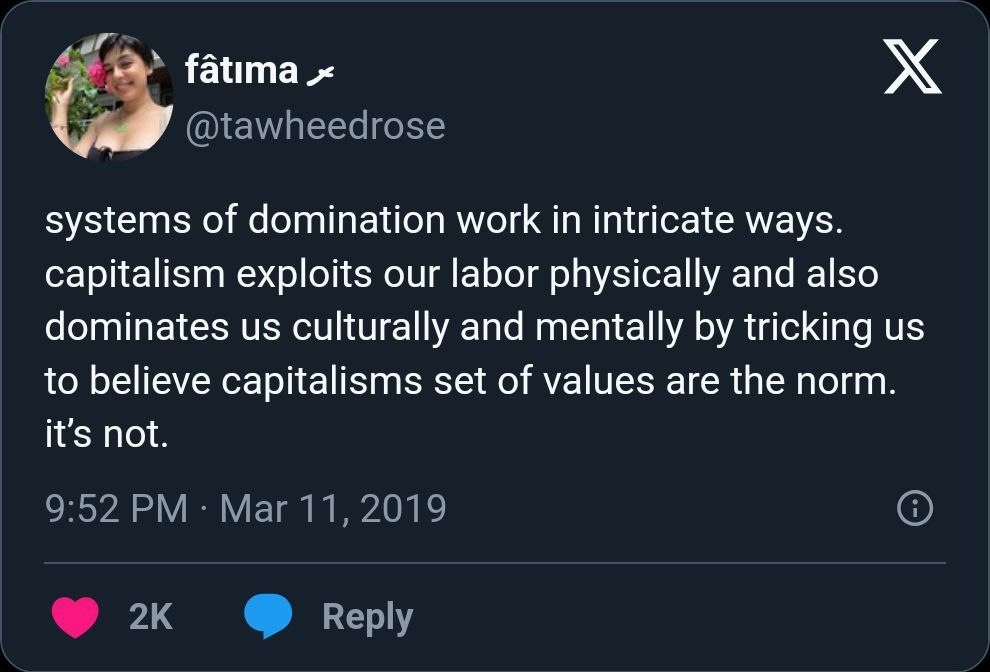
Yes! Capitalism seeks to make you see and believe only in its world and nothing else. Accordingly, the modern bourgeoisie wields enormous power to keep people conservative and instils in them a fear of losing their possessions.
Capitalism is like a worm lurking in every part of our lives, often unnoticed. This allows it to operate while we concentrate on our own concerns, such as increasing profits! Even within the art world, artists are rarely solely focused on creating their work without also considering its sale and marketing. The traditional model, where an artist creates and a manager handles everything else, is outdated. I don’t mean to suggest that all managers are honest, but it does help artists who need a quiet life to focus on their art. You are all artists, aiming to display your work here. However, if you look around, you might realise that this way of life has consumed your thoughts so completely that you no longer feel longing or curiosity about the world’s happenings. You have been completely absorbed in your own concerns related to your personal domain.
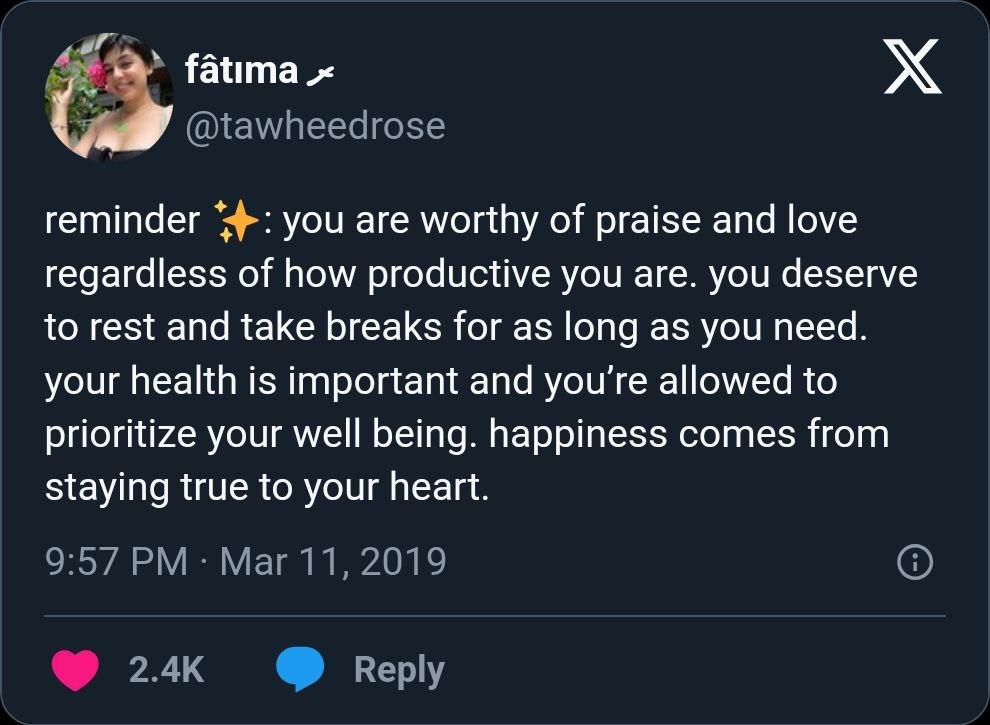
On the other hand, the craving for increased luxury and comfort remains constant. Capitalism knows no limits and is frequently used by millionaires to display wealth, which can lead middle-class individuals to develop an excessive obsession. Since not everyone can achieve millionaire status, this seemingly out-of-reach desire often results in anger, frustration, dissatisfaction, and sometimes depression. This may lead to feelings of impatience, envy, increased sensitivity, and an abrupt loss of patience. You might have observed that people in the streets shout at each other over trivial matters, drive aggressively, and honk their horns frequently. I believe this behaviour stems from capitalism.
Here is an excellent explanation of capitalism I came across, not on X but somewhere else I can’t recall.
The key question is: what steps should we take? I believe our initial move should be to build a society rooted in accessible, high-quality education and robust, free healthcare, as many societal problems originate from these sectors. Following that, we need to develop a proper social democratic system—one that Rosa Luxemburg aimed to reinforce in the early 20th century, not the shallow versions currently promoted by some political parties.
I’m not discussing a proletariat dictatorship; a free society is the most important of all. I referenced Rosa Luxemburg to demonstrate my commitment to freedom, as Luxemburg followed a similar path:
She celebrated the Russian Revolution, but in a posthumously published manuscript, she sharply criticised the authoritarian policies of the Bolsheviks, advocating for democratic freedoms and famously stating, “Freedom is always and exclusively freedom for the one who thinks differently.”
She has been revered by many on the left as a martyr for the revolution. At the same time, her theories, particularly her emphasis on spontaneity and democracy, were strongly criticised by the Leninist and Stalinist traditions of orthodox communism.
In a genuine social democracy, we can devalue prices and quantities, thereby promoting a more quality-oriented lifestyle. In the capitalist world, we observe every day that prices are steadily rising, and I wonder why!
We don’t require a luxurious, speedy car or a mansion to live; these are just materials that our souls don’t need. If we carefully reflect on our lives, we will surely identify moments of genuine relaxation. I think those times are when we need fewer things and find happiness with less. Lao-Tzu offered some insightful thoughts on living with less:
“One who is content is rich.”
“He who accumulates much treasure has much to lose.”
“The greatest gift is contentment.”
Here is an excellent explanation I took from my esteemed teacher and friend, Jean Raffa, from her recent article, concerning the essence of our existence.:
Our culture profits from our yearning by promising surface solutions like money, power, safety, appearance, possessions, and sex. These things satisfy your instincts for the short term. But beneath the world’scacophonous clamour, the yearning remains. Who, amidst the hubbub, can hear the quiet voices of those who would direct you to the inner world? It’s hard to believe anything there could fulfil your needs. Harder still to pull yourself away from outer demands you’re trying desperately to fulfil. You have no time. And even if you did, how would you begin? You don’t know the way. Who would guide you? It’s too humiliating to ask for help. “I was not looking for my dreams to interpret life, but rather for my life to interpret my dreams.” ~Susan Sontag
And finally, who could articulate it more eloquently than Carl Jung:
“Your vision will become clear only when you can look into your own heart. Who looks outside, dreams; who looks inside, awakes.”
~Carl Jung, Letters Volume I, Page 33.
Image credit at the top; snugsomeone (Maciej) | DeviantArt
“Living with these things all the time, I can see how there are certain universal patterns for these manifestations. A shaman among the Navajo or in the Congo will say things that sound remarkably similar to those of Nicholas Cusanus, Thomas Aquinas, or C. G. Jung, leading one to realise that these ranges of experiences are common to the human race. There are some people who close themselves away from them, some people who open themselves to them …” -Joseph Campbell “Living Myths: A Conversation with Joseph Campbell,” Parabola, Volume I, Issue 2, Spring 1976, p. 70
In this tumultuous world, where corrupt leaders continue to pursue their plans for the “New World Order,” the most prudent approach is to allow our strained minds to be guided by the wisdom of eminent thinkers and to find solace in uniting our bewildered souls.
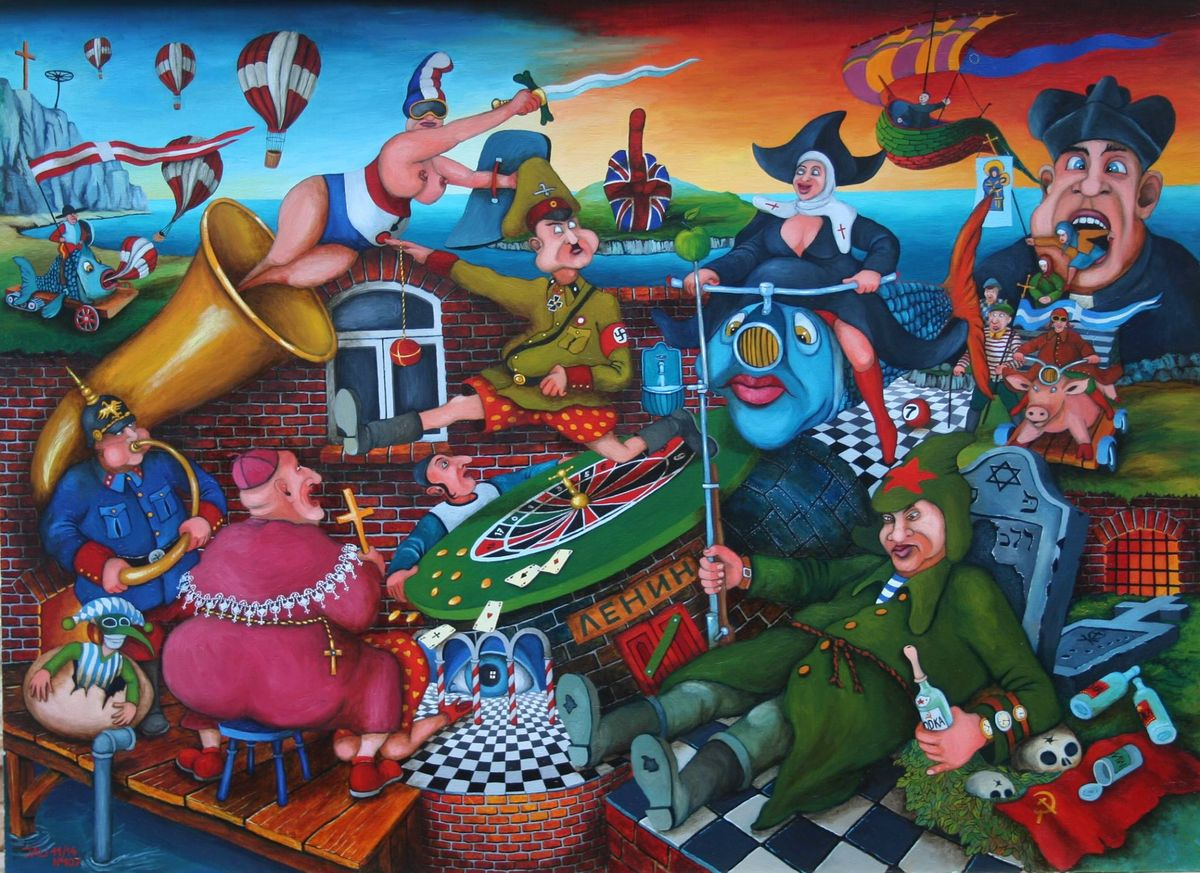
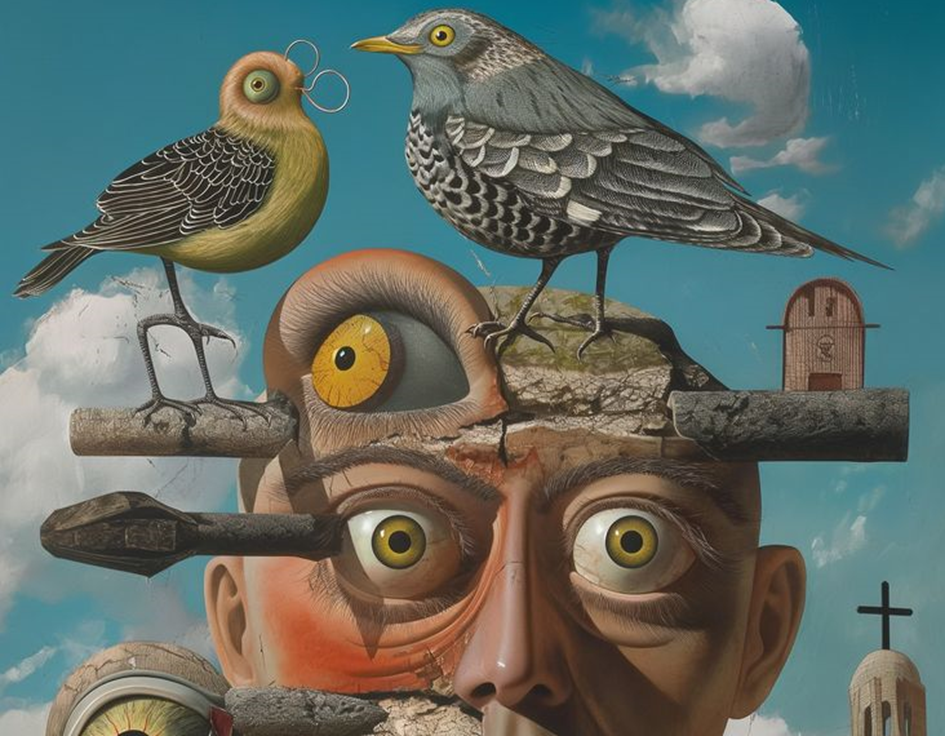
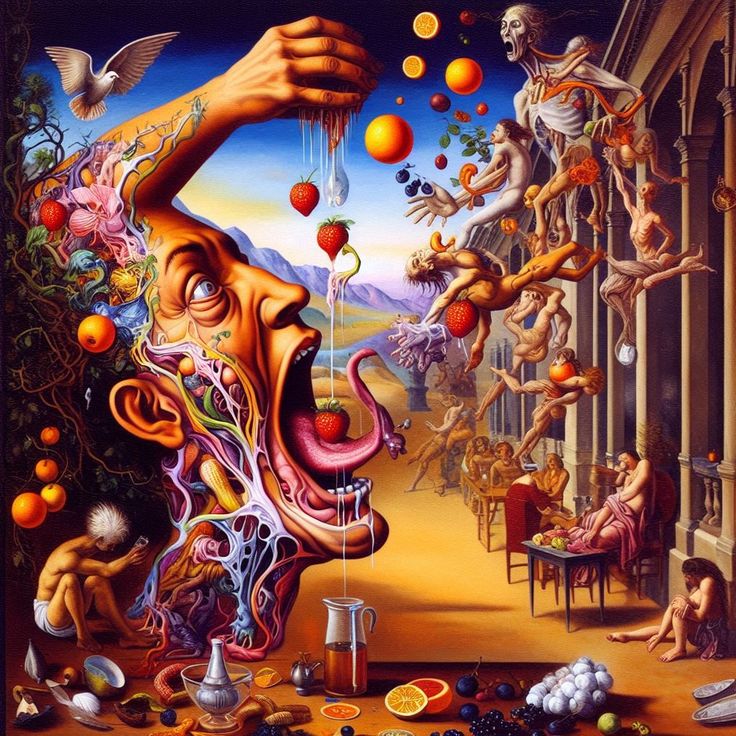
Surreal Abstract Painting (“Dadaism in nature” or “Psychedelic Surrealism”. )
My anger has subsided somewhat since last week, given how my words might have been taken. Nevertheless, I’m completely drained and fed up! Especially after that so-called ceasefire, which is like leaving an injured monster in a room with inocent people and locking the door!
These days, death has become the norm. We can see that the lives (of others, of course!) are not so important, but as we all know, the grim reaper is lurking, waiting for us all, regardless of our wealth or status, around the world. So, it’s essential to remember this.
That’s why I turn to myth, as an addendum to my recent post, and death!
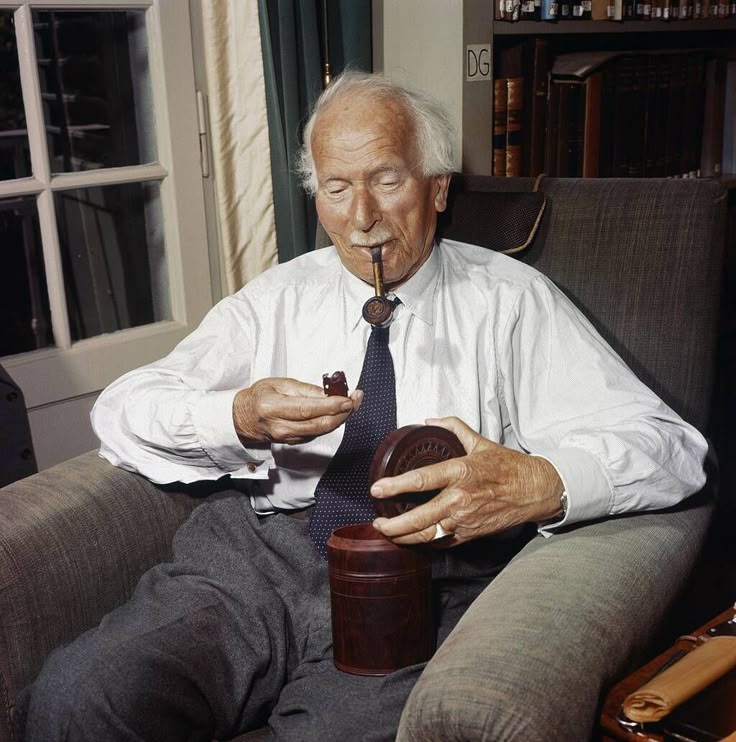
Carl Gustav Jung around 1960 in his house in Zurich. (Photo RUE DES ARCHIVES)
Here are some words by Carl Jung:
For example, I do not know for what reason the universe has come into being, and I shall never know. Therefore, I must drop this question as a scientific or intellectual problem. But if an idea about it is offered to me—in dreams or in mythic traditions—I ought to take note of it. …They (The foreknowledge) may be in accord with reality, and then again they may not. I have, however, learned that the views I have been able to form based on such hints from the unconscious have been most rewarding. Naturally, I am not going to write a book of revelations about them, but I will acknowledge that I have a “myth” that encourages me to look deeper into this whole realm. “Myths are the earliest form of science.” When I speak of things after death, I am speaking out of inner prompting and can go no farther than to tell you dreams and myths related to this subject.Naturally, one can contend from the start that myths and dreams concerning the continuity of life after death are merely compensating fantasies inherent in our natures—all life desires eternity. The only argument I can adduce in answer to this is the myth itself.
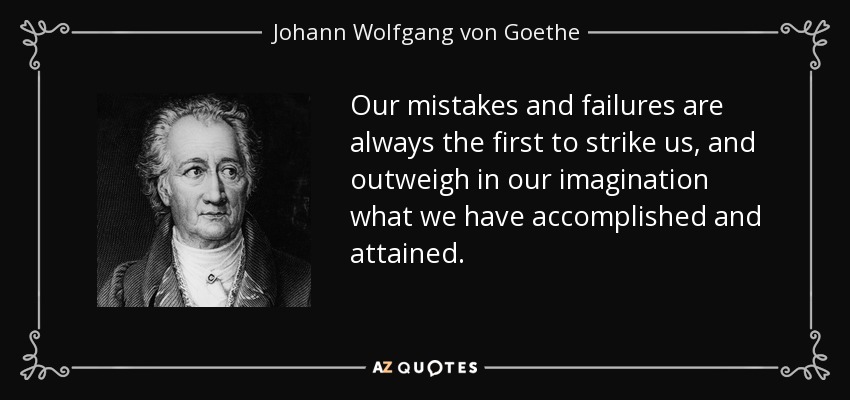
As I reflect on my past life, the passing years prompt me to recall memories, and I see how I wish to revisit specific moments to alter them or improve them. I have led an adventurous life (as you may recall from my series of posts about my memories), and I acknowledge that I have made numerous mistakes, which I deeply regret. However, with guidance from great thinkers, I have learned to view these mistakes from a different perspective: The Value of Experience!
It is a prevalent issue for people around the world to avoid making mistakes. I, myself, am one of those who strive for perfection, and I recognise that it is misguided! Johann Wolfgang von Goethe says, “Geschlagener Quark macht breit, nicht fest!” (Beaten curd becomes broad, not strong!)
“If we look at the problems raised by Aristotle, we are astonished at his gift of observation. What incredible eyes the Greeks had for many things! Only they committed the mistake of being overhasty, of passing straightway from the phenomenon to the explanation of it, and thereby produced specific theories that are pretty inadequate. But this is the mistake of all time, and is still made in our own day.”
From Maxims & Reflections, Johann Wolfgang von Goethe; Science, 559
Additionally, Carl Gustav Jung reminds us that we can make mistakes and learn from them.
Whatever we look at, and however we look at it, we see only through our own eyes. For this reason, science is never made by one man but by many. The individual merely offers their contribution, and in this sense, I dare to speak only of my way of seeing things. ~Carl Jung, Modern man in Search of a Soul, p.84.
Plato proposed that absolute knowledge can be gained through acquaintance, meaning through intellectual insight into the otherworldly Forms. Jung shared a similar notion regarding acquaintance with the archetypes of the “unus mundus” (one world), representing the primordial, unified reality from which all things originate. Nevertheless, in contrast to Plato, Jung asserted that archetypes cannot be perceived directly. Instead, we can comprehend their psychic significance, gaining at least a hint of absolute knowledge.
I believe we can make mistakes, but after each one, we should take a step back and carefully examine how and where it happened, then try to approach the experience more thoughtfully. Experience teaches us more than thousands of books ever could!
Jung inspired individuals to engage with the world and savour life, rather than rely solely on theoretical knowledge from books. He regarded the unconscious mind as a treasure trove of experiences accessible through reflection and symbolic language. Ultimately, Jung’s work emphasises that while books and knowledge are valuable, they shouldn’t overshadow the importance of direct experience and self-reflection. Genuine growth and understanding flourish when we engage with our surroundings and explore our inner lives.
Sometimes a tree tells you more than can be read in books. ~ C.G. Jung; Letters Volume 1; Page 179.
Experience, not books, is what leads to understanding. ~Carl Jung, CW 12, Para 564
Thank you for reading; have a lovely holiday! 🙏🤗🌹💕













You must be logged in to post a comment.