The World of Fairy Tales: A Parallel World Second to Ours?

Standard
via Petra Glimmdall

In my view, during Christmas, fairy tales feel more meaningful and relevant than at any other time. I’m not sure why; perhaps because love and forgiveness are more apparent, and the longing, wishing, and hidden desires gain greater strength to make dreams come true.

We often believe fairy tales are purely imaginary, but what is truly real? Who can definitively prove that events involving elves, gnomes, fairies, leprechauns, gorgons, mermaids, and similar beings have never occurred? We can’t be certain, but fairies are an excellent gift for enhancing and refining our “Weltanschauung,” or worldview.

Fairy tales have captivated audiences for centuries, creating worlds of wonder and possibility that spark the imagination. Usually set in enchanted realms with talking animals, brave heroes, and clever villains, they do more than entertain—they inspire us to dream beyond reality’s boundaries. Central to every fairy tale is the power of imagination. Through fantastical adventures and impossible feats, they encourage us to envision worlds where anything is possible. Castles floating in the clouds, animals speaking with wisdom, and ordinary characters changing their fates with a clever wish or brave act—all stimulate creativity and expand our view of what the world could become. Additionally, fairy tales offer a safe space to explore complex emotions, moral challenges, and the victory of good over evil. They teach important life lessons while nurturing imagination, empathy, and resilience. Ultimately, fairy tales show us that with imagination, even the toughest challenges can be overcome, and that magic exists in everyday life.
Now, as Christmas Eve approaches, let our imagination take flight—fly freely to Neverland and Wonderland; may we find joy and peace.

Wishing everyone a peaceful and serene Christmas Eve. Sweet dreams to all!😉🥰🙏💖

The Child Inside Us!

Standard

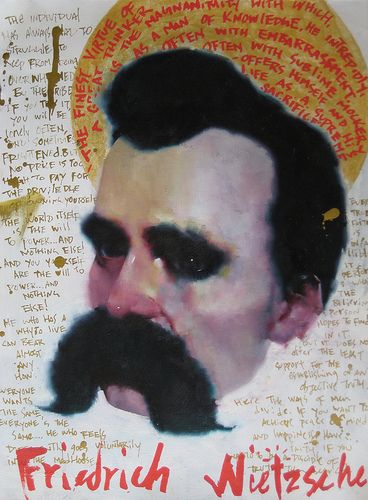
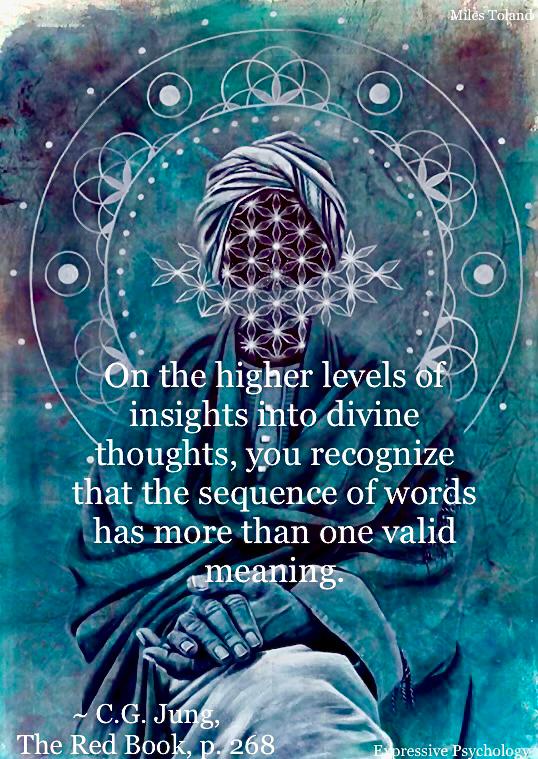
What matter is with you? Regina, my wife, asked me a few days ago. I looked at her with confusion and asked what she meant. She said she was referring to my lack of enthusiasm towards my work; I used to be excitedly busy with my WordPress and would run to my room every morning to write a new story, but she noticed that I had lost that passion lately. After considering this, I had to admit that she was right. I seem to be losing the drive and motivation to create new stories. As I analysed myself, like so often I do, I have noticed that I am (too much) involved in very high themes with such great individuals like Dr Jung, Nietzsche, Gibran, etc., and I feel a bit exhausted, “intermingle with the greats is not everybody’s job!”

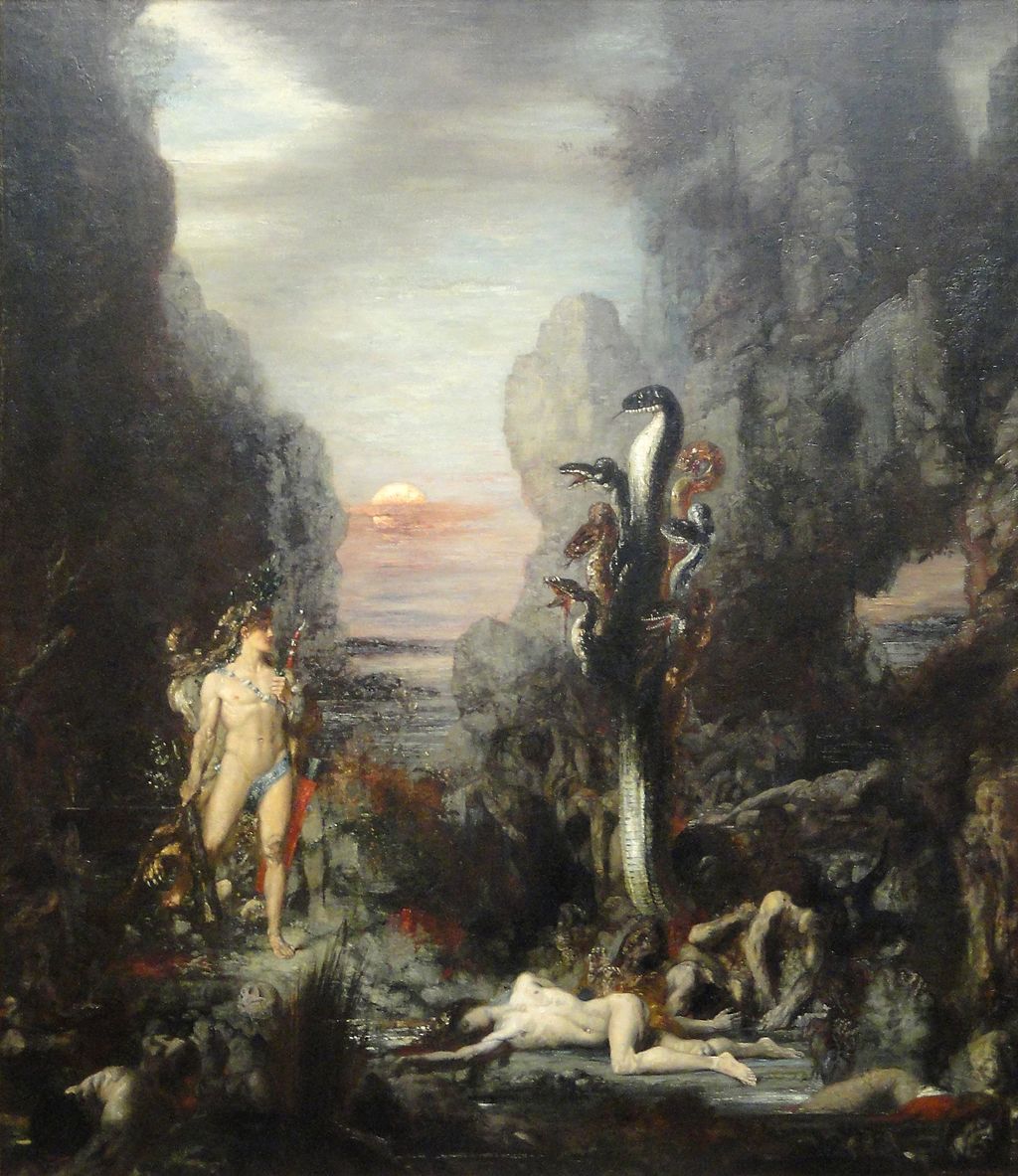
Hercules and the Lernaean Hydra, 1875-1876, by Gustave Moreau – Art Institute of Chicago

I believe that one’s expectations are crucial in determining success. I have noticed that with each article I write, I tend to push myself to do better and aim higher, which might be good. (I must thank YOU, all my lovely friends, who inspired me so much).🙏💖🙏
But, I have also realized that sometimes I may have gone too far, just like Icarus, whose wings melted in the sun’s rays and fell. This is where the book ‘Great Expectations’ by Charles Dickens becomes relevant. We must be honest with ourselves and know where we stand.
Ultimately, happiness is not an unachievable goal but a state of inner peace and calmness.

Hence, I decided to come down and take it more easily. Although this new post is from Nietzsche, as I stumbled upon lately, it is a short text and relevant today: losing the child inside us! This child gives us the imagination to have fantasies. Nietzsche noticed it centuries ago, and it is didactic.

Artwork at the top: Farzad Golpayegani – Beautiful Bizarre artist directory

Illustration by
Akira Beard

The Free Spirit, from Beyond Good and Evil, par. 31, by Friedrich Nitzsche

I had to work on translation to make Nietzsche’s complex grammar more understandable!😉

At a young age, one worships and despises without that art of nuance, which is the best gain in life, and one has to pay a fair amount of punishment for having attacked people and things with Yes and No in this way. Everything is set up so that the worst of all tastes, the taste for the unconditional, is cruelly fooled and abused until people learn to put a little art into their feelings and rather dare to try something artistic, like the right ones do Artists of Life do. The anger and awe that characterizes youth does not seem to rest until it has manipulated people and things so that it can be vented on them – youth is itself something more counterfeit and deceitful. Later, when the young soul, tormented by loud disappointments, finally turns back suspiciously on itself, still hot and wild, even in its suspicion and remorse: How angry they are now, tearing themselves apart impatiently, how taking revenge for their long self-delusion as if they had been voluntary blindness! In this transition, one punishes oneself by distrusting the feelings; one tortures one’s enthusiasm through doubt; one even feels one’s good conscience as a danger, as it were as a self-concealment and a weariness of one’s finer honesty; and above all, they take orientation, fundamentally oriented against ‘youth’. – A decade later, they realize that all of this was still -youth!