And yet, for the first time, I share an anniversary celebration of my father’s aniverssary. Of course, this Thursday is Good Friday, and in Germany, it is also recognised as Father’s Day. Therefore, I shall seize this opportunity to share something about him.
I must admit that I have few memories of my father’s life, as I was only seven when he passed away. However, some scenes remain in my mind—some joyful and a few burdensome. He was a dedicated writer who prioritised his work above all else, even above his love for family. I would say something between Charles Dickens and Dostoevsky!
Of course, I don’t want to say he didn’t love us. He was deeply in love with my mother and generally friendly toward his sons, although he was often preoccupied with work internally. Still, his books were the dearest things in his mind, and he enjoyed travelling extensively in Iran and Europe. Therefore, despite his fame and wealth, he was always broke! One of his colleagues at the newspaper where he worked told us that one day he came in and said he had sold his children! Of course, he meant he sold the rights to his best-selling books!!
I once lost his ID after I had it in my possession, and I don’t know where I left it. Therefore, I searched the Web and found something about him: he was famous then! Although I didn’t find his birthday, only his birth year, and he would be over a century old this year.
At his brother’s wedding.
Here we go:
FAZEL, Javad (Moḥammad-Javād Fāżel Lārijāni; b. Lārijān, 1914; d. Tehran, August 19 1961), noted serial writer and a pioneering figure in simplifying and popularising religious texts. His father, Mirza Abu’l-Ḥasan Fāżel Lārijāni, was an eminent preacher in Āmol (q.v.), in northern Iran, and died when Javad was nine years old. Javad was brought up in a religious environment. His father introduced him to religious studies while attending Pahlavi Primary School in Āmol. In 1932, after finishing secondary education in Tehran, Fazel pursued religious studies at Islamic seminaries under Sheikh Moḥammad Aštiāni. He worked for the Ministry of Education in 1938, teaching literature and educational psychology at the Teachers’ Training School in Āmol for one year. Fazel graduated from Tehran University’s Faculty of Theology and Jurisprudence in 1945 and later became a translator at the Ministry of Agriculture until his death at 47 (M. Fāżel, p. 21). He also taught Persian literature in various secondary schools (M. Fāżel, p. 98).
In 1942, he joined Eṭṭelāʿāt-e Haftegi, a weekly journal of the oldest Tehran daily newspaper, Eṭṭelāʿāt, founded by ʿAbbās Masʿudi in 1923. He published most of his serialised stories there and also contributed to Badiʿ, a magazine established by Jamāl-al-Din Badiʿzāda in March 1943. That same year, Fazel became a member of the pro-German Paykār Party, founded by Ḵosrow Eqbāl, and wrote for its official publication, Nabard, edited by Jahāngir Tafażżoli. However, his affiliation with Paykār only lasted four months.
And here is something for my pride: Fazel’s straightforward literary style earned him a broad audience. His accessible translations of religious texts were utilised by politically active theologians and laypeople, such as Mortażā Moṭahari and ʿAli Šariʿati, who sought to engage Iranians with modern interpretations of Islamic teachings (Saʿid-Elāhi, p. 75). However, Fazel’s ‘free’ translations were criticised for lacking accuracy and fidelity to the original texts (Šahidi, p. 5).
Some are to be disappointed! But who cares? He wasn’t a devout Muslim, yet he believed in a mystical Islam. This perspective influenced his translations, incorporating his own thoughts and feelings.
With the advent of the Islamic Revolution in 1979, Fazel’s romantic stories were no longer in demand, but his religious texts gained vast popularity and were reprinted several times. Even his scattered articles were collected and published in quick succession, notable among them Zendegi-e por-mājarā-ye Moḵtār (Mokhtar’s adventurous life, 2000) and Qeṣaṣ-al anbiāʾ (Stories of the prophets, 2001).
Regrettably, my father has sold all or most of the rights to his best-selling books to publishers. Consequently, I have no claim to those rights.
His final hours at a cousin’s wedding, with Al beside him.
In addition to religious texts, Fazel also translated several European novels into Persian, notable among them Ḵun o Šaraf (Blood and Honour, 1949), by Maurice Dekobra (1885-1973), Yek qalb-e āšofta (A Broken Heart, 1956), by Stefan Zweig (1881-1942), and Jāsusa (Spy, 1958) by Paul Bourget (1852-1935).
Fazel married in 1950. His wife, Mozayyan (Mosstofi) Fazel, depicted their life story together in Dāstān-e yek zendegi (A life story, 1964), which includes several of Fazel’s love letters to her. (And here is what I once wrote about their love story!). They had two sons: ʿAlaʾ-al-Din and Abu’l-Ḥasan. Javad Fazel died of cerebral thrombosis on August 19, 1961, and was buried in the Ebn Bābawayh (q.v.) cemetery near Tehran.
And yes, this passage is from the Encyclopaedia Iranica website, where you can read the full report. He passed away while Al and I were asleep. The next day, my mother made a mistake and lied to us, saying he had gone on a journey abroad. Alas, she ought to reveal the truth about his journey beyond the other side. It caused significant trauma for both of us in our lives of youth, but that is another story!
Here are some images of his Persian romans.
NazaninsavageFlameLove and tearsUniqueIn this worldHomelandThe lost onesMemory
The burial chamber was below ground and housed and protected the body and spirit. The mortuary chapel was above ground and was accessible to visitors who would perform rites and make offerings of food and drink for the dead person.
Egyptian burial chambers resembled secret galleries meant to remain unseen, filled with stunning artwork for an elite audience—the gods. Art could transport individuals, connecting the mortal and the immortal, freeing them from the silence of death.
Tomb art was sacred and magical, controlling chaotic forces threatening universal order. Whether mass-produced or commissioned, painting, sculpture, carving, and writing upheld order by invoking the gods to ensure safe passage and eternal sustenance for the deceased in the afterlife. Tombs in ancient Egypt
However, despite all this, here is a brilliant article by Marie Grillot about an undamaged treasure of ancient Egypt.
Mask of General Oundebaounded – gold – 21st Dynasty Discovered in his tomb (NRT III) in Tanis in 1946 by Pierre Montet and his team Egyptian Museum, Cairo – JE 87753
The untouched tomb of General Oundebaounded was discovered in Tanis in 1946 by the team of Pierre Montet, known as “The Man from Tanis. “
It was Pierre Lézine, an architect newly arrived on the mission, who noticed a particular spot in the tomb of Psusennes I where the thickness of a wall appeared abnormal.
Under the initially sceptical eye of his colleagues, he undertook additional surveys that confirmed his intuitions.
In “The Discovery of the Treasures of Tanis”, Georges Goyon recounts: “It was then that a tiny room appeared, with no exit, containing, intact, as if embedded in its socket, a beautiful pink granite sarcophagus. The limestone walls were covered with brightly coloured paintings depicting ritual scenes and inscriptions.” This sarcophagus would turn out to be a ‘re-use’: having initially been dedicated to a priest of Amun of Thebes, it had been modified for its new ‘occupant’…
Detail of the east wall of the Oundebaounded burial chamber (NRT III) – Montet Archives, 1946
Pierre Montet explains: “The Oundebaounded vault contained only the sarcophagus and the four canopic jars. Everything was in the sarcophagus. The mummy, dressed in its finery, was first enclosed in a silver coffin, and this in a gilded wooden coffin. When the gilded wooden coffin had been introduced into the granite basin, three paterae and a cup were placed on the lid, as well as a sword, a sceptre, and several walking sticks. The extreme humidity that reigns throughout the necropolis caused the complete destruction of everything made of wood. The gilded wooden coffin was nothing more than a pile of dead leaves. The silver coffin itself was partly eaten away.”
The pink granite sarcophagus of Oundebaounded (left), on display outside the French Mission house in Tanis
On his face was this magnificent mask, reminiscent of Sheshonq II’s. 22 cm high, it is carved from a thick sheet of gold and decorated with glass paste inlays. In ancient Egypt, gold was imbued with power: this metal was not only assimilated to the flesh of the gods, but it was also supposed to ensure the protection of the deceased.
Mask of General Oundebaounded – gold – 21st Dynasty Discovered in his tomb (NRT III) in Tanis in 1946 by Pierre Montet and his team Egyptian Museum, Cairo – JE 87753
In “The Wonders of the Egyptian Museum in Cairo,” Silvia Einaudi gives this beautiful description: “The mask covered the face, neck, and ears of the sovereign, and stopped at the forehead where six perforated tabs allowed it to be attached to the mummy’s head. The eyes, miraculously intact, are made of glass paste of different colours inserted into the metal cavities: white for the eyeball and black for the pupil. The eyebrows and the outline of the eyes were made using the same technique. The nose is almost perfectly shaped. The lips are narrow and full. The ears are not symmetrical, and the left is more prominent than the right. The mask is an idealised portrait of Oundebaounded, depicted as a young man with a serene and tranquil expression, underlined by a barely marked smile.
Examination of the General’s mummy revealed that he had joined the Ialou Fields when he was about fifty years old. Georges Goyon specifies that he was: “of slender build, perhaps of Nubian race, as evidenced by the long bones and relatively small head.”
General Oundebaounded’s swimming hook – silver and gold – 21st Dynasty Discovered in his tomb (NRT III) in Tanis in 1946 by Pierre Montet and his team Exhibited at the Egyptian Museum in Cairo – JE 87742
For eternity, he was surrounded by gold jewellery, amulets, precious dishes (among them the magnificent patera with swimmers), statuettes, … all of an extreme quality and a wealth worthy of a pharaoh… Who was he to enjoy such recognition?
The name of this close government associate was not unknown to the mission members, as several of his funerary statuettes, made of bronze and earthenware, had been found, as early as 1939, near the sarcophagus of the Pharaoh Sheshonq. Furthermore, a sword bearing his name had also been deposited near Psusennes.
Georges Goyon presents him to us thus: “He was not a person of royal blood, but a high priest of Khonsu and Chief of the Archers of Pharaoh. He was also invested with the important title of Superior of the Prophets-of-all-the-gods, which seemed to correspond to that of minister of worship. It was King Psusennes I who had elevated him to these high functions…. One of his most curious titles was that of “Sole-appointed-to-the-praise-of-the-great”, whose duty was to present the holders to the king during the reward ceremonies.”
Mask of General Oundebaounded – gold – 21st Dynasty Discovered in his tomb (NRT III) in Tanis in 1946 by Pierre Montet and his team Egyptian Museum, Cairo – JE 87753
One can imagine the aura Oundebaounded must have held at court, and thus understand why he was buried so close to the sovereigns…
The entire treasure contained in his tomb was sent shortly after, under police escort, to the Cairo Museum. The funerary mask was recorded in the Journal of Entries under reference JE 87753.
It is interesting to note that Pierre Montet reports that statuettes – ushabtis – bearing the General’s name were found on the antiques market. “Sixteen servants were nevertheless soon recovered in the trade… In total, we currently know of around forty listed in other Institutes and private collections.”
Georges Goyon, The Discovery of the Treasures of Tanis, 1987 Tanis: Gold of the Pharaohs, exhibition catalogue, Paris, Galeries nationales du Grand Palais, March 26 – July 20, 1987 Francesco Tiradritti, Treasures of Egypt – The Wonders of the Egyptian Museum in Cairo National Geographic, Treasures of Ancient Egypt at the Cairo Museum
I must confess I dream of such an encounter with a divine goddess, and I should not be a king!
This relief adorns the well-preserved tomb of King Seti I (KV17) in the Valley of the Kings. Hathor, Lady of the West, welcomes Seti and presents her menat necklace as a symbol of protection. Her wig is adorned with cow horns, her sacred animal, and a solar disk indicating her status as Ra’s daughter. The hieroglyphic text above identifies her using a falcon symbol in a temple, reading Hwt-Hr, meaning ‘House of Horus’.
The Goddess Hathor and Seti I painted reliefs on a pillar in Seti I’s tomb, Thebes, New Kingdom, Dynasty XIX, Egypt.
We read a splendid description of this enchanting and divine encounter by the exceptional Marie Grillot. Enjoy!
Hathor and Seti I: a divine and royal face-to-face!
What intensity, what symbiosis in this divine and royal face-to-face! This “painting” of fine painted limestone, 226.5 cm high and 105 cm wide, brings together the goddess Hathor and Seti I under the sign of the sky – and elegance. As Christiane Ziegler so aptly points out in “Ancient Egypt at the Louvre”: “The scene is treated with the refinement characteristic of the time of Seti I: careful bas-relief, the richness of warm colours, transparency of pleats, the perfection of details for the stone-encrusted front or the pearl net adorning the divine tunic whose motifs take up the names of Seti I.”
This dress, punctuated with geometric patterns and bordered with alternating-coloured rectangular braid, magnificently highlights the slender body of Hathor, “patron saint of the Theban necropolis.” Ravishing finery adorns her neck and limbs: a gorget, bracelets, armillae, periscelides, all in perfect taste. Her earring caresses her cheek in the shape of an upright serpent (not without announcing the one Nefertari wore in several representations of her tomb). Her face, of absolute purity, is illuminated by a stretched eye, surrounded by kohol and surmounted by an eyebrow which corresponds precisely to the stretching of the line of eyeshadow… Her “ruffled” vertically striated wig is available in two tones. It is enhanced with a gold-coloured headband above the forehead and, a little lower down, with this red ribbon tied on the nape of the neck so particular to goddesses. Her head is surmounted by a simple mortar in the centre, which is stuck in two cow horns enclosing the solar disk. On the other side stretches a cobra, whose head can be seen on the front and the tail on the back.
Seti I, son of Ramses I, the second king of the 19th Dynasty, who reigned over the Dual Land for eleven years, is depicted in full ceremonial dress. His magnificent black wig is encircled by the rearing cobra with its coiled body. His feet are shod with gold sandals. His clothing is made of the finest linen, and his loincloth features a superb front. Bordered with ribbons are composed of vertical bands with a herringbone pattern and ends with a frieze surrounded by two cobras.
His right arm is stretched along his body, and his hand clasps the goddess’s left hand. “One will notice the very Egyptian symmetry of the composition and the unusual gesture of the joining hands” (Christiane Ziegler, “Ancient Egypt at the Louvre”). His left arm is bent, and his hand thus reaches the height of Hathor’s, who, making the same gesture, extends her menat necklace towards him as a sign of protection.
“The menat is a necklace with a counterweight, both an ornament and a musical instrument. Specific to the goddess Hathor, it served to transmit her fluid. The counterweight is clearly associated with the idea of rebirth and transition rites, while the gesture is clearly jubilee,” analyze Christiane Ziegler and Jean-Luc Bovot in “Art and Archaeology, Ancient Egypt.” This magnificent relief comes from the entrance to the fourth corridor (the transition point to the underworld) of the pharaoh’s tomb. Giovanni Battista Belzoni unearthed it in the Valley of the Kings on October 18, 1817. It extends 137 m into the Theban mountain via seven long corridors serving 10 rooms! It is certainly one of the most beautiful and “completely” decorated in the royal necropolis. C’est aussi l’une de celles où la qualité des peintures atteint la plus haute perfection… Le découvreur est subjugué par la beauté de ce qui s’offre à ses yeux : “Je jugeai, par les peintures du plafond et par les hiéroglyphes en bas-relief que l’on distinguait à travers les décombres que nous étions maîtres de l’entrée d’une tombe magnifique”. La clé de lecture des hiéroglyphes n’étant pas encore résolue, il est alors impossible de savoir à qui appartient cette demeure d’éternité. Ainsi, dans un premier temps sera-t-elle appelée “tombe Belzoni” ou encore “tombe de l’Apis”, en référence à la “carcasse de taureau embaumé avec de l’asphalte” qui y fut trouvée. C’est bien plus tard qu’elle sera attribuée au père de Ramsès II puis référencée KV 17.
With the invaluable help of Alessandro Ricci, Giovanni Battista Belzoni documented the most beautiful scenes from the hypogeum. He exhibited them, starting in May 1821, at the Egyptian Hall Piccadilly in London and then 1822 at the Chinese Baths in Paris.
Jean-François Champollion, who was among the visitors, was apparently left “speechless with admiration” when he visited the “larger-than-life main room”… It was at about the same time, on September 14, 1822, that the brilliant code-breaker exclaimed, “I HAVE MY CASE”! After years of work, he had just understood the extremely complex principle of Egyptian writing, which was at once ideographic, alphabetic and phonetic… On September 27, in his famous “Letter to Mr. Ironside”, he presented the results of his research to the Academy of Inscriptions and Belles-Lettres.
Seven years later, in 1829, while he was in the Valley of the Kings with the Franco-Tuscan Expedition, he could finally enter the tomb… “In the tomb of Sety I, J.-Fr. Champollion and I. Rosellini could not resist, faced with the beauty but also the risk of seeing them amputated or destroyed, to have two painted bas-reliefs detached from the embrasures of a corridor door, which would be shared, upon their return, by the Louvre (B7/N124) and Florence (inv. no. 2468) museums. These panels, of extraordinary finesse, represent the king standing in the company of the goddess Hathor,” specifies Christian Leblanc in his “Regards croisés sur la civilisation égyptienne”. In her “Champollion”, Karine Madrigal recalls that: “To justify this act, Champollion explains to his friend Dubois that he ‘dared, in the interest of art, to carry a profane saw into the coolest of all the royal tombs of Thebes'”…
Jean-François Champollion, “The Younger,” decipherer of hieroglyphs, founder of Egyptology (Figeac, December 23, 1790 – Paris, March 4, 1832) Portrait depicting him in Egyptian dress, painted by Salvatore Cherubini in Medinet Habu, July 1829 Acquired by the Champollion Museum in Vif in June 2022
This is how this bas-relief will take the “path” to France. Jean-François Champollion will personally oversee its transport and loading in Alexandria. “On November 8, the twenty or so crates of antiquities and the sarcophagus intended for the Charles X Museum were placed in a safe place in the holds of the Astrolabe” (Alain Faure, “Le savant déchiffré”). Under the command of Verninac de Saint Maur, the corvette left the port on December 6, 1829, to sail towards the French coast. It docked in Toulon on December 23. The corvette transported the precious objects to Le Havre, where a barge finally took them to the great Parisian museum via the Seine.
Relief of Seti I and Hathor https://collections.louvre.fr/ark:/53355/cl010009693 Jean-François Champollion, Monuments of Egypt and Nubia: plates / based on drawings executed on site under the direction of Champollion the Younger, and the handwritten descriptions he wrote, published under the auspices of Mr Guizot and Mr Thiers, Ministers of Public Instruction and the Interior, by a special commission composed of Messrs. Silvestre de Sacy, Letronne, Biot, Champollion-Figeac, Paris, Didot, 1845, plate 251 Champollion the Younger, Letters Written from Egypt and Nubia in 1828 and 1829, Publisher Didier, Paris, 1868 http://gallica.bnf.fr/ark:/12148/bpt6k103771z/f345.item.r=septembre%201829.texteImage Jacques Vandier, Summary Guide to the Louvre Museum, The Department of Egyptian Antiquities, Éditions des Musées Nationaux, Paris, 1961, p. 20 Bertha Porter, Rosalind L.B. Moss, Topographical Bibliography of Ancient Egyptian Hieroglyphic Texts, Reliefs, and Paintings, 1.2, The Theban Necropolis. Royal Tombs and Smaller Cemeteries, Oxford, At the Clarendon Press, 1964, p. 539 http://www.griffith.ox.ac.uk/topbib/pdf/pm1-2.pdf Giovanni Battista Belzoni, Journey to Egypt and Nubia, Pygmalion, 1979 Jean Lacouture, Champollion, A Life of Enlightenment, Grasset, 1988 Jean-Jacques Fiechter, Harvest of the Gods, Julliard, 1994 Guillemette Andreu, Marie-Hélène Rutschowscaya, Christiane Ziegler, Ancient Egypt at the Louvre, Louvre Museum, Hachette, Paris, 1997, p. 137-140 Guillemette Andreu, Patricia Rigault, Claude Traunecker, The ABCs of Ancient Egypt, Paris, Flammarion, 1999, p. 51 Christiane Ziegler, Sophie Labbé-Toutée, Pharaoh, Exhibition Catalogue, Paris, Arab World Institute, 15-10-2004 – 10-4-2005, Paris, Flammarion, 2004, p. 261 Alain Faure, Champollion, the Scholar Deciphered, Fayard, 2004 Christiane Ziegler, Jean-Luc Bovot, Small Manuals from the École du Louvre, Art and Archaeology, Ancient Egypt, École du Louvre, Réunion des Musées Nationaux – Grand Palais, 2011, p. 227 Sylvie Guichard, Jean-François Champollion, Descriptive Notice of the Egyptian Monuments of the Charles X Museum, Paris, Louvre Editions – Editions Khéops, Paris, 2013, p. 51 Christian Leblanc, Crossed Perspectives on Egyptian Civilization, Selected Pages of Archaeology and History, L’Harmattan, Paris, 2024 https://www.editions-harmattan.fr/catalogue/livre/regards-croises-sur-la-civilisation-egyptienne/76432 Karine Madrigal, Champollion, Ellipses, 2024 Theban Mapping Project – KV 17 – Sety I https://thebanmappingproject.com/tombs/kv-17-sety-i
“When he arose, he took the young Child and His mother by night and departed for Egypt, and was there until the death of Herod the Great, that it might be fulfilled which was spoken by the Lord through the prophet, saying, Out of Egypt I called My Son” (Matthew 2:12-23). The Bible identifies Egypt as the refuge the Holy Family sought while fleeing Judea.
According to Coptic tradition, St. Mark is believed to have brought Christianity to Egypt around 50 CE. A small Christian community began to form in Alexandria during the late first century and expanded significantly by the end of the second century. Certain similarities in beliefs aided the acceptance of Christianity among Egyptians, including the dual nature of the Egyptian god Osiris as both human and divine, the resurrection of Osiris, and the divine triad consisting of Osiris, Isis, and Horus.
Paradise landscape with the animas entering Noah’s ark.*oil on copper.*26.5 x 35.6 cm.*signed verso: 1596 / Brueghel (Wikimedia Common)
The ancient Egyptians, classical Greeks, and Romans primarily shaped the Coptic period in Egypt. This influence is evident in Coptic art, particularly in textiles that often feature ancient Egyptian symbols and motifs, such as the ankh, representing life. The ankh served as an alternative to the Christian cross; certain textiles display both symbols. Nevertheless, Coptic art predominantly reflects the more substantial impact of Greek and Roman traditions.
I’ve been unwell and facing difficulties lately (wearing out my apparatus and equipment in old age!), so I haven’t been able to post regularly. However, now that my illness is in a stillstand modus, I’m giving it a try!
Here, I present Marie Grillot‘s captivating account of the Christian Copts’ arrival in Egypt, their artistry, and their harmonious, peaceful way of life.
Mary, Noah’s Ark and Jacob, depicted on the dome of the Chapel of Peace in Bagawat. “The central image shows the patriarch and his family in the ark. Two doves overlap between the praying Mary and the ship. The alliance with Noah finds its fulfilment with the Annunciation” – Christian necropolis of Bagawat – Kharga Oasis – 5th – 6th centuries.
A little over a kilometre northwest of the temple of Hibis, in the oasis of Kharga, stretches a ridge about twenty meters high on the edge of the desert. It is the remains of a site from the very beginning of Christianity in Egypt.
This is the Bagawat necropolis, which was active from the 2nd to the 7th century. It is so unique that it is sometimes referred to as Coptic, Roman, Byzantine, or even Greco-Coptic or Romano-Byzantine.
Christian necropolis of Bagawat – Kharga Oasis – 2nd – 7th centuries
The middle of the first century of our era witnessed the arrival of Christianity, which caused proselytism to spread along the Nile… The edicts of Theodosius I, promulgated in 380 and then 391, led to the banning of pagan rites and the official closure of temples. The Copts, the first Christians in Egypt, affirmed their new faith and beliefs, engendering a new iconography and architecture… From its beginnings, Coptic art would draw inspiration from different cultures: Roman, Byzantine, Greek, and even Pharaonic.
During its 500 years of “activity,” in addition to digging hundreds of scattered pit tombs, the necropolis will see the construction of 263 chapels, examples of proto-Coptic art, surrounding a church built around the 4th century. As in Roman and Byzantine cemeteries, they are arranged along streets. Although they differ in size and specific details of their architectural structure, they restore an extremely harmonious overall unity.
Christian necropolis of Bagawat – Kharga Oasis – 2nd – 7th centuries
“The funerary chapels are built of mud brick, in most cases originally covered with white plaster on the outside and inside. Externally, they present an architectural mixture of classical and ancient Egyptian motifs, often with a “cavetto” type cornice and classical forms of engaged columns with Corinthian capitals. They are generally square and covered with domes on pendentives or, less frequently, rectangular with barrel vaults. In a few cases, the remains of wooden roofs are visible. On each of the three walls of the Chapel, except the entrance wall, there is usually a niche, while a few chapels have a projecting apse at the eastern end. These apsidal ends are either circular or octagonal. Some of the larger buildings consist of a double Chapel of two square compartments, while a few have front courts surrounded by a wall of columns and engaged arches,” analyzes Albert M. Lythgoe in “The Oasis of Kharga”.
In “Enciclopedia dell’ Arte Antica” (1973), H. Torp describes “two basic types of construction. The first is very simple, with a square or rectangular plan and with a roof of wooden beams. The other type is square, covered with a dome. Of the first type, there are a little over a hundred tombs; of the second, a little less. The other mausoleums are variants or combinations of these two types, except for a limited number of circular or rectangular mausoleums with a barrel vault, as well as five large structures composed of several rooms, partially covered with vaults or a roof”.
The painters who worked in Bagawat were the vectors of diverse influences, which they combined, adapted and enriched, thus making this necropolis an exceptional place.
In “The Necropolis of el-Bagawat in Kharga Oasis”, A. Fakhry indicates that twenty-two of these chapels have “painted decorations, but only seven contain figurative art, the others showing only painted crosses or the like”.
Three chapels are particularly notable for their paintings.
The Chapel of Peace – Christian Necropolis of Bagawat – Kharga Oasis – 5th-6th centuries
The Chapel of Peace (No. 30) dates from the 5th and 6th centuries. For experts, its decoration is unique in early Christian art. The biblical themes, with characters (from the front!), are treated in shades of ochre, purple and red while respecting the perspectives the dome-shaped structure certainly made difficult to execute. This is a “unique register of sophisticated representations of biblical figures ‘labelled’ Greco-Coptic which includes allegorical images of peace, prayers and rigour alongside Daniel, Jacob, Noah, Mary, …”
The style and quality of the paintings “reflect a level of technical skill far superior to that of other surviving decorations from the necropolis. The artist who painted them appears to have had formal training” (Matthew Martin).
The Chapel of the Exodus Christian necropolis of Bagawat – Kharga Oasis – 5th-6th centuries
The Chapel of the Exodus (No. 80), whose centre of the dome is decorated with vine branches and filled with birds and naive trees, owes its name to its representations linked to the Hebrews’ departure from Egypt. It is declined in several scenes, such as Noah’s Ark, Daniel in the lion’s den, the three Jews in the furnace, the martyrdom of Isaiah, and episodes from the stories of Jonah and Job…
Chapel No. 25 – Christian Necropolis of Bagawat – Kharga Oasis – 5th-6th centuries
As for chapel no. 25, it offers magnificent white birds “standing on globes which support with their outstretched wings a solar disk covering the dome raised in the centre of the room.”
Thus, the domes and apses of the tombs and chapels contain “some masterpieces of Coptic painting, illustrating themes from the Old Testament and early Christianity, in a Hellenistic and Roman style. Wealthy Greeks certainly commissioned the paintings represented. Most of the frescoes are painted in red and purple tones, in a naive style but executed with great detail” (Hervé Beaumont, “The Necropolis of El-Bagawat” – Egypt: the guide to Egyptian civilizations, from the pharaohs to Islam).
Bagawat is an exceptional place, both architecturally and pictorially. It turns out to be, in a way, at the confluence of influences from the beginning of the Christian era…
It once again proves that religion is an immense source of inspiration for artists: to magnify their faith, they draw from the depths of themselves treasures of imagination and creativity to honour and glorify what is highest…
The lifelike statue of Ka’aper the Scribe is the oldest life-size wooden statue from Ancient Egypt.
Today, I am sharing this invaluable fine art from ancient Egypt with you. Kaaper or Ka’aper (fl. c. 2500 BC), also commonly known as Sheikh el-Beled, was an ancient Egyptian scribe and priest who lived between the late 4th and early 5th Dynasties. Although his rank was not among the highest, he is well known for his famously exquisite wooden statue. A wooden statue of a woman, commonly considered to be Kaaper’sKa’aper wife, also came from the same mastaba (CG 33). Wiki.
Although the statue of that priest is famous enough, there is another tiny masterpiece: a statue of a woman, a noble lady, from the same mastaba. This is also a wooden statue, commonly considered to be Kaaper’s wife (CG 33).
Here is a report by the brilliant Marie Grillot about the delicate artistry of this statue. Enjoy reading, and Merry Christmas!
Statue of the wife of Ka-âper (Kaaper – Sheikh el-beled) – wood – Old Kingdom – 5th Dynasty (2513 – 2506 BC) discovered by Auguste Mariette in 1860 at Saqqara, in the Mastaba C8 Egyptian Museum of Cairo CG 33 – photo of the museum
Wooden statuary was only beginning at the end of the 4th Dynasty, and this Statue is undoubtedly among the very first referenced female representations…
Carved in the round, dark brown wood, it was initially covered with a “fine patina of painted stucco”, which has now disappeared.
The face of the noble lady is rather round; her eyes are stretched, and her mouth is closed.
She wears a mid-length hairstyle covering her ears. As Mohamed Saleh and Hourig Sourouzian explain in their “Official Catalogue of the Egyptian Museum in Cairo”, it is “streaked with locks that end in small curls, and divided by a middle parting”. They also specify that “this wig is commonly found in female representations of the Old Kingdom”.
Statue of the wife of Ka-âper (Kaaper – Sheikh el-beled) – wood – Old Kingdom – 5th Dynasty (2513 – 2506 BC) discovered by Auguste Mariette in 1860 at Saqqara, in the Mastaba C8 Egyptian Museum of Cairo CG 33 – photo of the museum
Her neck is adorned with a wide necklace of the usekh type, with some traces of colour remaining. The torso, with its marked chest, is thin and straight. Amputated by the upper limbs, it stops at the base of the shoulders. The statues were, in fact, made in several parts, and, in this case, the arms were added and attached to the bust using tenons. We can observe this “assembly” on multiple examples of wooden statuary…
The legs are also missing, but her attitude shows that she was depicted standing. She is wearing a long, tight dress held up by two wide, sculpted straps “slightly projecting”.
The wood, with its visible veins, has worked and cracked over the course of more than 4,500 years. In particular, we notice an apparent crack that goes down from the neck to the navel and two more discreet ones, starting from the top of the skull towards the chin and the other from the left eye towards the chin. At the level of the right groin, we also note a considerable lack of triangular shape.
Despite these injuries, this lady retained the nobility and dignity pertaining to her rank, and the sculptor took care to render and respect her.
Wooden statues of Ka-Aper – Sheikh el-beled and his wife – Old Kingdom – 5th Dynasty (2513 – 2506 BC) discovered in 1860 by Auguste Mariette at Saqqara in Mastaba C8 Egyptian Museum of Cairo – CG 34 and CG 33
In the “Guide du visiter au musée de Boulaq” (1883), Gaston Maspero describes it as number 1044: “Statue of a woman of which only the head and the torso remain. It was discovered in the same tomb as the Statue of Sheikh el-beled and is said to represent this character’s wife. In any case, it was wonderful and could be compared with Sheikh el-beled if it were not unfortunately so mutilated.”
Auguste Mariette, then the director of Egyptian antiquities, discovered the two statues in Saqqara in 1860.
Excerpt from the book: “Les Mastabas de l’ancien empire”, Paris, 1889, Mariette Auguste, Maspero, Gaston concerning the discovery of the wooden statues of Ka-âper (Kaaper) – Sheikh el-beled – and his wife discovered by Auguste Mariette in 1860 at Saqqara, in the Mastaba C8 Egyptian Museum of Cairo CG 34 and CG 33
In the book Les Mastabas de l’ancien Empire, published in 1889 and co-signed with Gaston Mapero, he presents the site and details the circumstances of the discovery.
“The oldest, the most extensive, the most important of the necropolises of Memphis is the one to which the village of Saqqara gave its name. The necropolis of Saqqara is located in the middle of the sand, just at the point where the desert begins and where the cultivated land ends; it is a sandy plateau which dominates by about forty meters the green plain extended at its feet. At the top of the plain, we find the necropolis…” He will uncover a huge number of tombs and mastabas there.
Excerpt from the book: “Les Mastabas de l’ancien Empire”, Paris, 1889, Mariette Auguste, Maspero, Gaston concerning the discovery of the wooden statues of Ka-âper (Kaaper) – Sheikh el-beled – and his wife discovered by Auguste Mariette in 1860 at Saqqara, in the Mastaba C8 Egyptian Museum of Cairo CG 34 and CG 33
Among these latter is the one that will be referenced, C 8 (the letter C corresponds to those of the second half of the 5th dynasty), discovered near the pyramid of Userkaf.
It will turn out to belong, according to Mariette’s transcription, to Khou-hotep-her (Ka-âper – Kaaper), a high official, chief priest. He was responsible for reciting prayers for the deceased in the temples and mortuary chapels where he officiated during the 5th dynasty (2465 -2458 BC).
“It was at the bottom of niche B, belonging to the small room, that the precious wooden statue was found… The head, the torso, and even the stick were intact, but the legs and the base were irremediably rotten, and the statue was only standing because of the sand which pressed on it from all sides. At the door C. of the small room, in the sand, and overturned in the place where it had obviously been thrown, was the other wooden statue,” he relates.
Statue of Ka-âper (Kaaper) – Sheikh el-beled – sycamore wood – Old Kingdom – 5th Dynasty (2513 – 2506 BC) discovered by Auguste Mariette in 1860 at Saqqara, in the Mastaba C8 Egyptian Museum of Cairo CG 34
The statue of Ka-âper is so realistic that, upon discovery, the workers struck by its resemblance to the “chief of their village” gave it the name “Sheik el-beled”. It is undoubtedly one of the most emblematic statues of the Fifth Dynasty… That of his wife, because of her “amputations”, will remain more “confidential” and will not know the notoriety of her famous spouse…
It is exhibited at the Egyptian Museum in Cairo, Tahrir Square, under reference CG 33.
Perfume has a rich history in human culture, such as ancient Persia, which dominated the perfume trade for decades. This civilization is known for inventing non-oil-based perfumes, and the Persian nobility valued fragrances highly, with kings having unique “signature scents” reserved exclusively for them. Ancient Persia had many perfume-making workshops where people experimented with various distillation processes and scents.
“Khosrow & the Page” (Perhaps from the 7th century)
In Ancient Egypt, the elite highly valued perfume oils and fragrances. The god Nefertem, associated with perfume, is often depicted with water lilies, a key ingredient in ancient scents.
“Rise like Nefertum from the lotus to the nostrils of Ra, and come forth upon the horizon each day”.
Perfumes were created by distilling natural ingredients in non-scented oils, resulting in fruity, woodsy, or floral aromas. Notable figures like Queen Hatshepsut and Queen Cleopatra enjoyed these fragrances, using them for baths and personal grooming. It is rumoured they took perfumes to their graves.
Here is the story of finding a tiny but precious perfume bottle from ancient Egypt, written by Marie Grillot, with heartfelt gratitude.🙏💖
An Amarna princess on a vase-shaped perfume bottle: Hes.
Perfume bottle in the form of a hes vase with the representation of princess travertine (Egyptian alabaster), carnelian, obsidian, gold, coloured glass inlays New Kingdom – 18th Dynasty – reign of Akhenaten (1353 – 1336 BCE) Metropolitan Museum of Art, New York – accession number 40.2.4. (by acquisition from the Carter Estate in London in 1940) – museum photo
This delightful perfume bottle, in the form of a “Hes”( meaning “praise” or “favour) vase, is 10.8 cm high, 3 cm wide and has a diameter of 1.9 cm. According to some sources, it is made of calcite (Egyptian alabaster or travertine), with a decoration made of carnelian, obsidian, gold and coloured glass. In “Scepter of Egypt II”, William C. Hayes details its manufacturing technique thus: “The conical stopper was here cut in one piece with the pot itself. Since its tiny neck would have been too small to allow the insertion of a drilling tool, the bottle was made in two vertical halves, hollowed out and carefully joined with an orange resin glue”.
Perfume bottle in the form of a hes vase with the representation of princess travertine (Egyptian alabaster), carnelian, obsidian, gold, coloured glass inlays New Kingdom – 18th Dynasty – reign of Akhenaten (1353 – 1336 BCE) Metropolitan Museum of Art, New York – accession number 40.2.4. (by acquisition from the Carter Estate in London in 1940) – museum photo
Its charming appearance is enhanced by the presence, on one side, of a princess’s representation in inlays. Seen in profile, it reveals a naked, slim and youthful body. Her partially shaved skull displays on one side the “braid of childhood”; thick and black, it is thrown back. One leg is advanced, and she is in the apparent walking position. One arm hangs along the body, while the other displays a bent elbow and an outstretched hand, palm open. “The elegant gesture of the princess seems to signify a sign of greeting: standing on a lotus flower according to traditional symbolism, she embodies rebirth and rejuvenation”, analyzes Dorothea Arnold in “The Royal Women of Amarna”. Indeed, the ancient Egyptians considered the lotus as “the initial flower” and “the symbol of the birth of the divine star”.
For Egyptologist Valérie Angenot: “The gesture of the little princess, the hand outstretched in a cup, is stereotypical of the gestures of princesses since the time of Hatshepsut. It denotes the attitude of a child who wants to attract someone’s attention and address them by gently pulling their chin towards her. At Tell el-Amarna, the gesture is attested about fifteen times on the walls of private tombs, administrative monuments such as the king’s audience hall, steles, perhaps seal impressions, as well as on this vase. It exclusively features princesses, mostly to show that they interact or chat among themselves during long official ceremonies, which one imagines is tedious for young children. But we can also see them making this gesture in their interaction with their parents or even with the uraeus hanging from their foreheads. At Deir el-Bahari, Hatshepsut addresses the god Amon, her father, on whose knees she stands as a child. We must, therefore, imagine an elliptical interlocutor for this vase. Various reliefs show Akhenaten and Nefertiti performing a libation to the Aten with similar vases (but often adorned with a spout, 𝘯𝘦𝘮𝘴𝘦𝘵). Therefore, the ‘person’ to whom this little princess emerging from a solar lotus is addressing herself would be none other than the god Aton, whose honour the ritual would be simulated using this artificial vase. It is remarkable that we still find the same stereotypical gesture of the cupped hand sketched by one of the two Amarna ‘kings’ on the famous Berlin stele of Captain Pasi (ÄM 17813).”
Perfume bottle in the form of a hes vase with the representation of princess travertine (Egyptian alabaster), carnelian, obsidian, gold, coloured glass inlays New Kingdom – 18th Dynasty – reign of Akhenaten (1353 – 1336 BCE) Metropolitan Museum of Art, New York – accession number 40.2.4. (by acquisition from the Carter Estate in London in 1940) – museum photo
The details of its morphology, such as the elongation of the skull, the shape of the face, and the marked belly, attribute it to the Amarna period… William C. Hayes gives this sensitive description: “The naked figure of the young girl – which seems to come straight out of one of the scenes preserved in relief at Tell el-Amarna – is delicately carved in a thin sliver of carnelian, the back of which has been hollowed out to fit exactly the curved surface of the vase. The hair of the figure, topped with the characteristic heavy side lock, is a piece of polished obsidian or black glass beautifully worked and skillfully fitted. Spears and triangles of purple glass (imitation lapis lazuli) and polished carnelian have been joined together to form the lotus flower on which the figure stands, and at the base of the flower, a spot of sparkling yellow has been provided by a piece of thin gold plate.”
This precious artefact dates to the New Kingdom, the 18th Dynasty, the reign of Akhenaten (1353 – 1336 BC). It is in the Metropolitan Museum of Art in New York, where it has been registered under the accession number 40.2.4, with the “ancient provenance”: “possibly Thebes.” As for its “recent provenance,” it is “speaking”: “Howard Carter Collection, acquired from the Carter estate in London in 1940.”
Portrait of Howard Carter, author and date unknown (London 9-5-1874 – 2-3-1939) Draughtsman and Egyptologist, discoverer, in November 1922 with Lord Carnarvon, of the tomb of Tutankhamun
Howard Carter, painter and designer, Egyptologist, collector, and discoverer with Lord Carnarvon of the tomb of Tutankhamun in 1922, died in London on March 2, 1939. In his will (drawn up on July 14, 1931), he had designated his niece Phyllis Walker as heir to the majority of his assets, stipulating that, for all matters concerning the sale of Egyptian antiquities, she should refer to the executors he had appointed: Harry Burton and Bruce Ingram. The latter, noting in his apartment the presence of artefacts from the tomb of Tutankhamun, opted for restitution to Egypt. On March 22, 1940, Phyllis Walker wrote to Etienne Drioton, director of Egyptian antiquities, to organize this “return”. This is how around twenty artefacts will be returned, via diplomatic bag, to King Farouk… before joining the Tahrir Museum…
Howard Carter Draughtsman and Egyptologist, discoverer, in November 1922 with Lord Carnarvon, of the tomb of Tutankhamun With his niece Phyllis Walker, who will be his primary heir
Returning to this point in “Howard Carter, The Path to Tutankhamun”, Thomas Garnet Henry James confides: “A further comment on this sensitive subject is that the antiquities in his possession at his death, after the extraction of the Tutankhamun objects, were valued by Messrs Spink at £1093. This was certainly a low estimate, as was often the case in estate matters, but it indicates the relatively modest nature of his private collection…”
Thus, in this inventory carried out on June 1, three months after the discoverer’s death, by the London art dealers Spink & Son of St James’s Street (“Spink list”), this bottle bears the number 55.
Of course, the question arises as to whether it is linked to the young pharaoh’s funerary treasure…
Thomas Garnet Henry James’s opinion is as follows: “It can be said that any fine small object dating from the 18th Dynasty which appeared in a private collection or on the market in the 1920s and 1930s was almost systematically attributed to the tomb of Tutankhamun”…
Lord Carnarvon and Howard Carter, discoverers of Tutankhamun’s tomb in 1922 (KV 62)
As for Marc Gabolde, he draws up, in his excellent “Tutankhamun”, published by Pygmalion in 2015, a list of “Objects possibly coming from the tomb of Tutankhamun and not found (somewhere else) in Egypt”. This calcite bottle in the shape of a libation vase (hs) appears there with the following information: “The quality of the work and the materials, as well as the date that can be assigned to the object thanks to the iconography of the inlaid figure, leave little doubt that it could come from the tomb of Tutankhamun. The figure of the princess is incompatible with the time of Amenhotep III, and the royal tomb of Amarna has not provided similar objects, especially in such a state of preservation”…
Sorry! I can’t simply ignore this issue or stop worrying about the current situation. Perhaps it’s because I was born and raised in a dictatorship, which gives me a deeper understanding of the coming danger than many of my friends here, who have mostly been born and live in freedom.
The question is, when a nation feels disappointed with its situation and confused about its future, how easily can its patriotism be aroused and nationalism used to heal its social wounds? It is not related to a country’s political governing and social freedom, as we observe it occurring in both directories and Western democratic nations. I often wonder why people tend to embrace nationalism during moments of last-ditch pride, frequently seen in contexts like football national cups (a common occurrence in South America), historical racism (as observed in German history), or in leaning on their ancient heritage (as seen with figures like Mussolini in Italy and the Persians, which still resonates today).
Through scientific understanding, our world has become dehumanized. Man feels himself isolated in the cosmos. He is no longer involved in nature and has lost his emotional participation in natural events, which hitherto had a symbolic meaning for him… He no longer has a bush-soul identifying him with a wild animal. His immediate communication with nature is gone forever, and the emotional energy it generated has sunk into the unconscious. (C. G. Jung 1948/1980, para 585)
In today’s world, and likely in the years to come, politics will inevitably influence our lives, whether we want it to or not. I don’t intend to denigrate anyone, but when a single individual holds leadership in one of the most influential roles in the world with vast authority, it raises alarms about the potential for tyranny. And I’m sure all friends here must admit that no one will be immune to that seduction!
The word “democracy” originates from the Greek terms “demos,” meaning “people,” and “kratos,” meaning “power.” Therefore, democracy can be understood as the “power of the people”—a form of governance that relies on the people’s will. The idea of democracy derives its moral strength – and popular appeal – from two fundamental principles: 1- Individual Autonomy: This principle asserts that no one should be subject to rules others impose. People should be able to control their own lives within reasonable limits. 2- Equality: This principle holds that everyone should have the same opportunity to influence society’s decisions. Essentially, it emphasizes the disempowerment of concentrated power held by a single individual, transforming governance into a system where leaders serve the population rather than rule over them.
Lyndsey Stonebridge explains in her book “We Are Free To Change The World” (Hannah Arendt’s Lessons of Love and Disobedience): >In Arendt’s sense, having a free mind means turning away from dogma, political certainties, theoretical comfort zones, and satisfying ideologies. It means learning instead to cultivate the art of staying true to reality’s hazards, vulnerabilities, mysteries, and perplexities because, ultimately, that is our best chance of remaining human.< She also reflects that fundamental questions about the human condition are not beside the point in dire political times; they are the point. How can we think straight amidst cynicism and mendacity? What is there left to love, to cherish, to fight for? How can we act to secure it best? What fences and bridges do we need to build to protect freedom, and which walls do we need to destroy?
Hannah Arendt closely examined the regimes of Hitler and Stalin, their functionaries, the ideology of scientific racism, and the role of propaganda in creating what she described as “a curiously varying mixture of gullibility and cynicism.” This mixture is how individuals are expected to respond to their leaders’ ever-changing lies. In her 1951 work, “Origins of Totalitarianism,” she elaborated that this combination of gullibility and cynicism is prevalent across all levels of totalitarian movements:
In an ever-changing, incomprehensible world, the masses had reached the point where they would simultaneously believe everything and nothing, think that everything was possible and nothing was true… The totalitarian mass leaders based their propaganda on the correct psychological assumption that, under such conditions, one could make people believe the most fantastic statements one day and trust that if the next day they were given irrefutable proof of their falsehood, they would take refuge in cynicism; instead of deserting the leaders who had lied to them, they would protest that they had known all along that the statement was a lie and would admire the leaders for their superior tactical cleverness.
It is important to recognize the significant danger of trusting someone who makes promises. Why do such individuals often resort to constant and blatant lying? One reason is that it serves as a way to control their subordinates completely. These followers may feel compelled to abandon their own integrity to echo outrageous falsehoods, subsequently becoming tied to the leader through feelings of shame and complicity. Professor Jacob T. Levy from McGill University highlights the insights of prominent thinkers like George Orwell, Hannah Arendt, and Vaclav Havel. He notes that they can help us identify a specific type of falsehood. He states that “saying something obviously untrue and forcing your subordinates to repeat it earnestly in their own words is a shocking demonstration of power over them. This practice was widespread in totalitarian regimes.”
“You can read my lips… Repeat my words as I repeat them! Doesn’t this sound familiar? Arendt and others noted— as Levy writes— that “being forced to repeat an obvious lie makes it clear that you’re powerless.” She also identified how an avalanche of lies can render a populace unable to resist, a phenomenon we now refer to as ” “gaslighting”:
The result of a consistent and total substitution of lies for factual truth is not that the lie will now be accepted as truth and truth be defamed as a lie, but that the sense by which we take our bearings in the real world—and the category of truth versus falsehood is among the mental means to this end—is being destroyed.
However, time will reveal how a people or a nation can differentiate between right and wrong and how much their practice of democracy can help them recognize truth and falsehood. Democracy is not a gift that can be simply given; it requires thorough training to achieve its ultimate goal.
1-The Great Sphinx in Egypt is believed to have the face of Pharaoh Khafre — 2-Dendera: Egypt’s Best-Preserved Temple Complex — 3-View of the west wall, depicting Nakht and his wife, Tawy, seated before offerings (top left), Nakht hunting in the marshes (top right), Nakht and Tawy receiving the produce of the grape harvest (bottom left), and grape harvesting, winemaking, bird capturing, and plucking (bottom right) (Source: OsirisNet).
I decided to share this journal post about three short reports by great Egyptologists today in memory of Marc Chartier, an excellent journalist, human and friend whom I enjoyed and learned a lot from his works for a long time, particularly from his fascinating journey reports.
Marc Chartier (Guinevert-Durtal, 23-2-1940 – Argenteuil, 27-7-2024) Journalist, passionate about Egypt in general and the pyramids in particular, creator of the blogs: “Pyramidale”, “L”Egypte entre Guillemets”, “Egyptophile” and founder of the press review “Egypte-actualités.”
With forever thanks and immense gratitude to Marie Grillot, as she wrote in her post: During these periods of questioning that assail us all, Marc refocused on this sentence, full of wisdom, which is, in fact, an African proverb taken up by Aimé Césaire: “When you don’t know where you’re going, look where you come from”… These words brought him back to Guinevert, in Sarthe, to his father, to this little brother who both disappeared too soon and especially to “Mamani” who held her sons so tightly against her during the bombings…
marc sa vie Marc Chartier (Guinevert-Durtal, 23-2-1940 – Argenteuil, 27-7-2024) Journalist, passionate about Egypt in general and the pyramids in particular, creator of the blogs: “Pyramidale”, “L”Egypte entre Guillemets”, “Egyptophile”, and founder of the press review “Egypte-actualités”
Let’s join these amazing trips! RIP Marc.💖🙏💖
A day in Egypt with… Mohammed Ali Kamy, Jean Capart, Léon Labat
“At the foot of the pyramids stands the Sphinx, guardian of the sacred enclosure. It is rightly considered the most famous monument, after the pyramids, of this vast field of the dead, the Giza plateau. The Sphinx is a colossal statue carved in the rock that borders the desert plateau. It must originally have been a rough rock, to which nature had given the vague contours of a crouching animal. The artists of the Old Kingdom gave it the form of a lying lion, a symbol of physical strength, and sculpted a human head, an emblem of mental strength, that of the king, as indicated by the headdress decorated with the uraeus. This fourth wonder of Giza is located north of the Valley of King Chephren temple. (…)
An imposing expression of strength and grandeur remains in the whole, even after the deterioration that the monument has undergone over time: the beard and nose have been broken (part of it is preserved in the British Museum), the neck has shrunk; the mouth smiles, the eyes look into the distance, piercing infinity and the whole face bears the imprint of Egyptian beauty. The red tint that enlivened his features has been erased almost everywhere. No work coming from the hand of men offers more strength or sovereign grandeur. (…) What is he doing there, this impassive being under the sky, lost in solitude? What is he doing there, this being who defies time and seems to say to passers-by: “You are all mortal, I am eternal”?
The ancient historians who visited Egypt gave no information or description about it. All their attention was devoted to the pyramids. Was the Sphinx already buried in the sand since it did not attract the attention of historians? To our knowledge, the first time it was dug out of the sand was under the New Kingdom. At that time, the ancient Egyptians who lived in the vicinity of the necropolis of Giza worshipped it as an image of the God Ra under the name of Hor-em-aches, that is to say, “Horus in the horizon”, or the rising sun. The stelae discovered near the great pyramids prove that the kings sought this region of the suburbs of Memphis for hunting wild beasts and gazelles. For this reason, the ancient Egyptians called it The Valley of the Gazelles. (…) Despite the mutilations of time and men, the Sphinx retains a mighty and terrible serenity that strikes and seizes to the depths of the heart. This calm and impassive figure, whose smile sometimes seems filled with disdain and pity, bears the imprint of great wisdom. His eyes fix the infinite on the side where the sun, creator of all things, rises as if he wanted to be the first to discover, in the morning, over the valley the apparition of Re. The whole evokes a sort of mystery, and the Sphinx retains a sovereign expression of strength and grandeur even in his distress. Faithful guardian of the sacred enclosure, he always watches over the foot of the Pyramids of Giza.
The artist who conceived this prodigious statue was already a complete artist and master of its effects in the beauty of the type, the grace of the expression and the perfection of the work. One never forgets, when one has seen them, the intensity and the depth of thought of these eyes that look so far beyond the reality of things. It imposes an indefinable fear, so much that its face remains impenetrable, and its empty eyes seem to keep the vision of a crowd of distant, unknown and terrible things. How many people have not passed before it, then vanished into time? How many, among humans, are in the presence of this symbol of mystery, and are they not tempted to say to it: “Ah, if you could speak and tell what these eyes have seen that look so far beyond the reality of things!” The Sphinx, Hor-em-aches, God of the Rising Sun, seems to be the ever-living soul of old Egypt.”
(extract from “La Revue du Caire”, n° 102, September 1947)
**********
A day in Egypt with… Léon Labat (1803-1847), a great traveller and former surgeon to the Viceroy of Egypt
Bonfils, low relief of the Temple of Denderah, circa 1880
“One of the most beautiful privileges of architecture is to reveal to posterity the particular character of each person. That of the Egyptians was austere like their customs: the style was simple but imposing and sublime. Their constructions were neither frivolous nor ephemeral like most of ours. Eternity was, for them, a cult whose dogmas they inscribed on the living pages of their gigantic monuments. Everything about them bore the imprint of a noble and thoughtful character. These people, who constantly meditated on the eternal works of God, tried to imitate them as if to come closer to their ancient origin. These monuments, which they would have liked to make imperishable, were to be the object of religious contemplation for present generations and posterity. Greece, Rome, and later our modern Athens erected temples to the gods, palaces to the kings, and circuses for the people’s amusement. To this triple purpose of utility, the Egyptians knew how to add another which constitutes the specific character of their architecture: their monuments, with broad bases and large surfaces, whatever their destination, were arranged in such a way as to receive their hieroglyphic inscriptions.
A religious and conservative principle thus attaching itself to the buildings which were erected from generation to generation, the long valley of the Nile was soon dotted with an infinite number of temples, mausoleums, obelisks, palaces and aqueducts which led water into all the cities. A noble sentiment of religious piety and respect for the dead made them undertake the most prodigious constructions which human power has ever attempted: their masses, which rose up to the heavens, gave birth in the spirit of these populations a feeling of meditation and recollection which we ourselves have deeply felt at the sight of the colossal pyramids of Memphis. Not content with honouring the gods and the memory of great men by erecting monuments to them, they also wanted to give the mortal remains of their parents an asylum of rest and eternal preservation: immense hypogea were dug into the sides of the mountains and into the bosom of the earth to house innumerable mummies which were for them a sort of protest against nothingness. All the actions of these virtuous people constantly recalled the worship of the divinity and the respect for the dead. This respect was such that the Egyptians buried in the tombs of their ancestors the different objects they had loved and the instruments that had contributed to their illustriousness. Finally, they pushed their gratitude for the works of God to the point of embalming and housing in the hypogea of various species of animals. One would be tempted to believe that they wanted to extend the dogma of immortality to all the beings that heaven had brought forth on the fortunate soil of Egypt.”
(extract from Ancient and Modern Egypt, 1840)
**********
A day in Egypt with… Jean Capart (1877-1947), Belgian Egyptologist
Tomb of Nakht at Thebes by Norman de Garis Davies
“Without wishing to settle the most severe problems of aesthetics, let us now ask ourselves if it is impossible to point out in a few simple facts what one could call the awakening of the feeling of beauty among the Egyptians. The first noticeable characteristic to underline is their extraordinarily developed taste for floral decoration. The Egyptians passionately loved flowers, yet the Egyptian flora was not wealthy. They used the lotus for the most diverse uses on feast days, hung garlands at the top of walls, hung the cornice of kiosks and canopies, surrounded vases, and made necklaces and crowns with it. Decorative art, here, only had to copy the usual forms to produce fixed decorations of great richness. Jewellery will remain faithful for a long time to nature’s forms, as rich as they are uncomplicated. Isn’t this love of flowers that can also be linked to the taste for brilliant and coloured materials that will be manifested in the pieces of jewellery with inlays, in the furniture combining materials of various colours, in the carpets and mats, whose repertoire is hugely varied? A thousand clues reveal to us the taste of the Egyptians for grace, elegance, and slenderness in feminine forms. Industrial art, in particular, has drawn from its remarkable types that transform an object of vulgar utility into an object that is truly beautiful or simply pleasant to look at. When the ancient workman gave a container for make-up the form of a young girl carrying a vase on her shoulder or of a swimmer who has seized a duck, he obviously wanted to do more than provide his customer with a container for make-up. The original aim has almost disappeared, and the manufacturer’s intention has focused primarily on creating a pretty object of nature to tempt the elegant woman whose artistic delicacy is thus awakened. In this case, we find ourselves in the presence of an artist who creates beauty and, of equal importance, of a clientele demanding artistic productions. When the Egyptians reproduced grotesque figures, such as that of the god Bes or foreign captives, they intended to provoke laughter or to bring out by contrast the superiority of beautiful and graceful forms.”
(extract from Egyptian Beauty, Advertising Office, 1942)
The ancient Egyptians had many beautiful women, including Queen Nefertari. She was known as “the most beautiful of them all” and was one of the most beloved queens of ancient Egypt, reigning during the 19th Dynasty. At the heart of the exhibition is Queen Nefertari, who was renowned for her beauty and prominence. She was called “the one for whom the sun shines” and was the favourite wife of Pharaoh Ramesses II.
One of the most famous figures from ancient Egypt is Queen Nefertiti. Her name, “the beautiful one has come,” has solidified her status as an iconic figure from the 14th century BC. She lived alongside her husband, Pharaoh Akhenaten, during the New Kingdom. Nefertiti’s legacy is steeped in mystery and fascination, as her renowned beauty and significant cultural impact have left a lasting impression.
Head of the female statue – painted wood, gold leaf – Middle Kingdom – 12th dynasty discovered in 1907 during excavations in the area of the pyramid of Amenemhat I in Lisht by the Metropolitan Museum of Art Expedition, New York – Egyptian Museum, Cairo – JE 39390
The face is noble and perfectly symmetrical. The veins of the light wood give it a feeling of life. The general expression is gentle, calm, and peaceful.
The large almond-shaped eyes, of which only the orbits remain, are absent… and, despite this, they seem to question us… What presence did they give to the face? What did they reveal? Did the glass paste and rock crystal subtly and luminously animate their pupils? These questions remain forever unanswered.
The eyebrows are treated in relief, while the shadow line is treated in hollow. The nose is well-proportioned, and the lips are thin. The slight injury they suffered reminds us of the ravages of time.
Head of the female statue – painted wood, gold leaf – Middle Kingdom – 12th dynasty discovered in 1907 during excavations in the area of the pyramid of Amenemhat I in Lisht by the Metropolitan Museum of Art Expedition, New York – Egyptian Museum, Cairo – JE 39390
What, obviously, impresses in this head of barely more than 10 cm is the imposing wig that generously frames it and must have reached the level of the shoulders, which have now disappeared. “The enveloping mass of the added hair is worked in a darker wood and blackened with paint; it is fixed to the head in lighter wood, using tenons”, specify Mohamed Saleh and Hourig Sourouzian in their “Official Catalogue of Egyptian Museum in Cairo. The deep black of the wig is enhanced with small squares of gold leaf, which have so many luminous touches. On the other hand, Rosanna Pirelli analyzes in “The Wonders of the Egyptian Museum in Cairo”: “The fact that the wig is particularly fine at the top, compared to the width of the lateral parts, suggests the presence of a crown or a diadem.”
Head of the female statue – painted wood, gold leaf – Middle Kingdom – 12th dynasty discovered in 1907 during excavations carried out in the area of the pyramid of Amenemhat in Lisht by the Expedition of the Metropolitan Museum of Art in New York – Egyptian Museum in Cairo – JE 39390
Who was this beautiful lady? A queen, a princess, a prominent person at the sovereign’s court? The work’s quality and the artist’s mastery, indeed, suggest that it may have come from the pharaoh’s workshops. Unfortunately, this face, which was that of a full-length statue, does not allow us to identify it.
This head—often used as a model to illustrate the beauty of ancient Egyptian women—was discovered in 1907 in Lower Egypt, precisely in Lisht, between Daschour and Meidoum.
This female statue head – painted wood, gold leaf – Middle Kingdom – 12th dynasty discovered in 1907 during excavations in the area of the pyramid of Amenemhat I in Lisht by the Expedition of the Metropolitan Museum of Art in New York – Egyptian Museum in Cairo – JE 39390 – illustrates numerous works
At the beginning of his reign, Amenemhat I “left Thebes to found a new city at the entrance to the Fayoum, named ‘Amenemhat-se-seizit-des-Deux-Terres’ not far from the current site of Lisht (“Pharaonic Egypt, history, society, culture”). In “L’Egypt Restorée”, Sydney Aufrere and Jean-Claude Golvin thus analyze the reasons which led to this “relocation”: “not only to break away from Thebes and the supporters of the last Montouhotep but also to keep an eye on the north and the Asian border, the city became the main royal residence during the 12th and 13th dynasties… They add, “Today we cannot give it any other reality and archaeological dimension than those which associate it with the two funerary monuments today reduced to two mounds: the pyramids of Amenemhat I and Sesostris I.”
Excavation site of the Metropolitan Museum of Art Expedition in New York at the Lisht site in 1907 during the discovery of the head of a female statue in painted wood with gilding (JE 39390) from the 12th dynasty
In 1882, Gaston Maspero, successor to Auguste Mariette at the head of the antiquities service, undertook excavations on the site, work that allowed the identification of the pyramids. For practical reasons (there was sometimes up to 11 m of water, he relates), however, he was unable to go as far as the burial chamber. The study of the site was then taken up in 1894-1895 by the French School of Cairo (which, in 1898, became the French Institute of Oriental Archeology).
Then, in 1906, when Gaston Maspero returned to the directorship of antiquities, the Metropolitan Museum of Art in New York requested the concession. He obtains it and then settles in for several seasons of excavation.
Head of the female statue – painted wood, gold leaf – Middle Kingdom – 12th dynasty discovered in 1907 during excavations in the area of the pyramid of Amenemhat I in Lisht by the Metropolitan Museum of Art Expedition, New York – Egyptian Museum, Cairo – JE 39390
Indeed, the Egyptian department of the MMA was created on October 15, 1906, and its administrators, as well as its brand new director, Albert Morton Lythgoe, saw the point of enriching their knowledge, experience, and collections.
Thus began their first campaign, financed by private funds, under the joint leadership of the director, Herbert Eustis Winlock (Harvard) and Arthur C. Mace (Oxford).
One hundred fifty workers were recruited: some, already ‘trained’ for excavations, came from Upper Egypt, others from neighbouring villages; their number will continue to increase over the years.
Head of the female statue – painted wood, gold leaf – Middle Kingdom – 12th dynasty discovered in 1907 during excavations in the area of the Amenemhat pyramid in Lisht by the Metropolitan Museum of Art Expedition, New York – Egyptian Museum, Cairo – JE 39390 reproduced for the first time in “The Metropolitan Museum of Art Bulletin” n° 10 – Oct. 1907
Albert M. Lythgoe does not explain the exact circumstances of the head’s discovery. In the October 1907 bulletin of the MMA, although it appears in a photo with the caption “figure 2. Head of wooden statuette from Lisht, 12th dynasty”, no details are given on the place where it was found. The author relates that the excavations concerned two sectors: the cemetery located west of the pyramid of Amenemhat, which revealed tombs of important figures of the 12th dynasty, as well as a sector situated on a promontory. Over a hundred tombs have been unearthed for most of the 12th dynasty.
As the head is illustrated opposite this paragraph, we can think that its discovery is linked to these areas where dignitaries, relatives, and ruling family members had the honour of resting not far from the pharaoh.
It should be noted that her arms were found two years later, in Situ, by Herbert Eustis Winlock…
This head is displayed at the Egyptian Museum in Tahrir Square in Cairo under number JE 39380.
The head of a woman surrounded with a placed hairdressing consists of two pieces of blackened wood, inlaid with gold, Musée égyptien du Caire https://egyptianmuseumcairo.eg/artefacts/head-of-a-woman/ The Metropolitan Museum of Art Bulletin, Vol. 1, No. 12, Nov. 1906 http://www.jstor.org/stable/i3634, http://www.jstor.org/stable/i363438 A. M. Lythgoe, The Egyptian Expedition, The Metropolitan Museum of Art Bulletin, Vol. 2, No. 4, Apr. 1907 https://www.jstor.org/stable/i363442 The Egyptian Expedition, Albert M. Lythgoe, The Metropolitan Museum of Art Bulletin, Vol. 2, No. 7, Jul. 1907, http://www.jstor.org/stable/3253292 The Egyptian Expedition, Albert M. Lythgoe, The Metropolitan Museum of Art Bulletin, Vol. 2, No. 10, Oct.1907 https://www.jstor.org/stable/3253176?seq=1#page_scan_tab_contents Mohamed Saleh, Hourig Sourouzian, Catalogue officiel du Musée égyptien du Caire, Verlag Philipp von Zabern, 1987 Sydney Aufrère, Jean-Claude Golvin, L’Egypte restituée – Tome 3 – Sites, temples et pyramides de Moyenne et Basse Égypte, Editions Errance, 1997 Christiane Ziegler, L’Art égyptien au temps des pyramides, Réunion des Musées Nationaux, 1999 Francesco Tiradritti, Trésors d’Egypte – Les merveilles du musée égyptien du Caire, Gründ, 1999 Guide National Geographic, Les Trésors de l’Egypte ancienne au musée égyptien du Caire, 2004 Pierre Tallet, Frédéric Payraudeau, Chloé Ragazzolli, Claire Somaglino, L’Egypte pharaonique, histoire, société, culture, Armand Colin, 2019
Usermaatre Amenemope was an ancient Egyptian pharaoh of the 21st Dynasty who ruled between 1001 and 992 BC or 993 and 984 BC. His tomb is one of only two entirely intact royal burials known from ancient Egypt, the other being that of Psusennes I. “His Instruction” (That is about thirty chapters (more than ten commands!)) is a literary work from ancient Egypt, most likely composed during the Ramesside Period. It contains thirty chapters of advice for successful living, attributed to the scribe Amenemope, son of Kanakht, as a legacy for his son.
Treasure of Tanis, the golden mortuary mask of Pharaoh Amenemope. Egypt Musem
The pharaohs of Egypt were associated with Horus since the pharaoh was considered the earthly embodiment of the god. From around 3100 BCE, he was given a memorable royal “Horus name.” The falcon, representing divine kingship, symbolized the king as the earthly manifestation of Horus.
Here is the captivating story, by the brilliant Marie Grillot, of this incredible discovery.💖🙏
A falcon carrying Amenemopé’s cartridges in its talons
Falcon pendant – gold and cloisonné glass paste 21st Dynasty – reign of Amenemopé (c. 1000 BC) from Tanis, the tomb of Amenemopé – NRT III – discovered by Pierre Montet on April April 16 on display at the Egyptian Museum in Cairo – JE 86036 (museum photo)
In May 1929, the Egyptian government awarded Pierre Montet the concession for Tanis, now known as “Sân el-Hagar”, which lies in the “Tanitic branch” of the Nile Delta, over 100 km northeast of Cairo.
In 1722, Père Sicard identified this city as the ancient Tsa’ani” (“Tso’an” in Hebrew, “Tjaani” for the Copts, Greekized as “Djanet”). The scholars of the Commission d’Egypte partially excavated it, first by Jean-Jacques Rifaud (on behalf of consul Drovetti) and then by Auguste Mariette.
Pierre Montet’s excavations at Tanis
Its ruins, covering more than 400 hectares, witness its “activity” from the Old Kingdom to Roman times. However, the rulers of Dynasties XXI to XXIII marked its golden age by choosing it as their religious and funerary capital. By mirror effect, it became the “Thebes of the North”…
Pierre Montet’s team, summarily installed on this isolated and desolate site, worked with patience and perseverance for around ten years before the time came for the “rewards”. It was inaugurated in March 1939 with the discovery of the tomb of Chechonq II… From then on, the necropolis would yield many other treasures…
Elevation view of tomb NRT III containing the tombs of Psusennes I, his wife Moutnedjemet, then their son Amenemopé, another son of king Ânkhefenmout, the king’s chief general Oudjebaoundjed, and in the antechamber, the sarcophagus of Sheshonq II – Royal Necropolis of Tanis
Thus, in “Tanis – Twelve years of excavations in a forgotten capital of the Egyptian Delta”, the Egyptologist Pierre Montet recounts the extraordinary day of the discovery of the tomb of Pharaoh Amenemopé: “The entrance was opened on April April 16). His Majesty King Farouk, who had arrived the day before in Saan, where he had erected a city of tents, was present, as was Canon Drioton, Director of the Egyptian Antiquities Service, and a young Egyptian Egyptologist, Professor Abou Bekr. The vault was furnished in much the same way as that of Psousennès: a granite sarcophagus at the bottom, canopic vases, metal vases, a large sealed jar, funerary statuettes and a vast gilded wooden chest that had collapsed due to the effects of time and humidity in the front half. Once these objects had been safely removed, the sarcophagus lid was placed in their place. Much less opulent than Psousannes, the new ruler had made do with a single stone sarcophagus and a wooden anthropoid coffin lined with gold. Wood was reduced to almost nothing. The gold plates were removed. Needless to say, the mummy had suffered enormously. His ornaments, less numerous than those of Psousennès, nevertheless constitute a wonderful collection: a gold mask, two necklaces, two pectorals, two scarabs, lapis and chalcedony hearts, bracelets and rings, a large cloisonné gold falcon with outstretched wings…”.
Falcon pendant – gold and cloisonné glass paste 21st Dynasty – reign of Amenemopé (c. 1000 BC) from Tanis, the tomb of Amenemopé – NRT III – discovered by Pierre Montet on April April 16 on display at the Egyptian Museum in Cairo – JE 86036 (museum photo)
The hawk, which seems to soar powerfully into the sky, is 10.5 cm high and 37.5 cm wide. The head and legs are in gold, while the rest of the body is in gold cloisonné with pâte de verre in shades of green, perfectly simulating the shimmer of the feathers.
In “Les trésors du musée égyptien”(The Treasures of the Egyptian Museum), Silvia Einaudi describes it as follows: “The falcon is depicted in flight with its wings spread. The head, turned to the left, is made of solid gold. The beak, eye, neck and decorative motif on the cheek are in dark pâte de verre. The raptor’s wings, body and tail are executed using the cloisonné technique: glass paste in delicate shades of pink and green is inlaid with gold, giving life to a simple polychromy. The wing feathers radiate outwards, forming two rows. On the other hand, the body is decorated with a teardrop motif that continues right down to the tail. The legs, also in solid gold, hold the ‘shen’ signs, a symbol of eternity, to which two gold plates bearing the sovereign’s name are attached. The hieroglyphs inside the cartouches are executed in coloured glass paste inlaid with gold. The plate on the right bears the pharaoh’s coronation name: ‘Usermaatra Setepenamon, beloved of Osiris and Ro-Setau (Memphis necropolis)’; on the left, his birth name: ‘Ménémopé Meramon, beloved of Osiris, lord of Abydos'”.
Amenemopé’s vault at its opening – Drawing by E. Pons Source: Pierre Montet, “Tanis”, Payot, 1942
Amenemopé, pharaoh of the 21st Dynasty, reigned from Tanis around 1001-992 BC. The successor of Psusennes I, he was, as the book mentioned above states: “buried in the latter’s tomb, in a granite-covered room originally created to house the remains of Moutnedjemet, wife and sister of Psusennes I”. We can only wonder why this small vault was chosen as his burial place when he “had” his own tomb referenced NRT IV (NRT = Nécropole Royale de Tanis).
Face of the pharaoh Amenemopé – gold leaf (upper surviving part of his gilded wooden sarcophagus) 21st Dynasty – reign of Amenemopé (c. 1000 BC) from Tanis, the tomb of Amenemopé – NRT III – discovered by Pierre Montet on April April 16 on display at the Egyptian Museum in Cairo – JE 86059
On May 3, May 3, in a truck protected by the army, Amenemopé’s treasure made its way to the Egyptian Museum in Tahrir Square. The falcon-shaped pendant was registered in the Journal des Entrées under reference: JE 86036.
As for Pierre Montet’s team, the dramatic events of the Second World War forced them to end their quest for the past of Tanis and turn their attention to the tragic present. Excavations will not resume until the end of the conflict…
The Hawk of King Amenemope http://www.globalegyptianmuseum.org/record.aspx?id=15530 Pierre Montet, Tanis – Twelve years of excavations in a forgotten capital of the Egyptian Delta, Payot, Historical Library, 1942 Pierre Montet, The royal necropolis of Tanis according to recent discoveries, Reports of the Academy of Inscriptions and Belles-Lettres sessions, 89th year, N. 4, 1945. pp. 504-517, Perseus https://www.persee.fr/doc/crai_0065-0536_1945_num_89_4_77901 Georges Goyon, The discovery of the treasures of Tanis, Pygmalion, 1987 Jean Yoyotte, Tanis l’or des pharaons, exhibition catalog Paris, National Galleries of the Grand Palais, March 26 – July 20, 1987, Association Française d’Action Artistique, 1987 Henri Stierlin, Christiane Ziegler, Tanis Trésors des pharaons, Seuil, 1987 Francesco Tiradritti, Treasures of Egypt – The wonders of the Egyptian Museum in Cairo, Gründ, 1999 Pharaons – Catalog of the exhibition presented at the Institute of the Arab World in Paris, from OctobeOctober 15 to April April 10, IMA, Flammarion, 2005

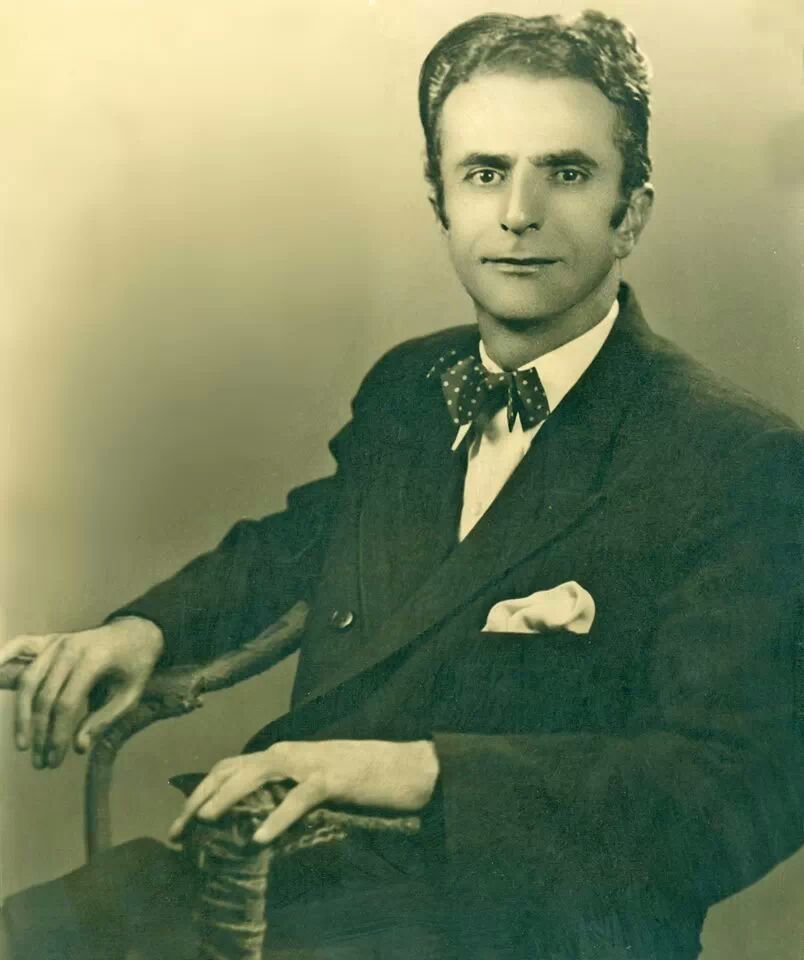

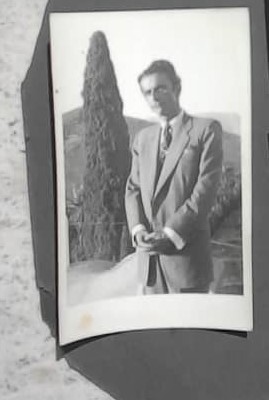


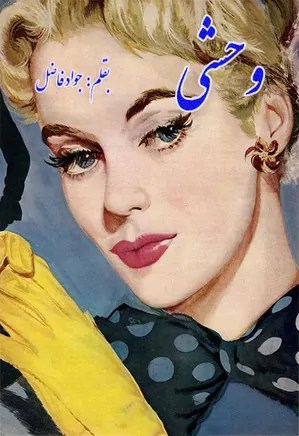


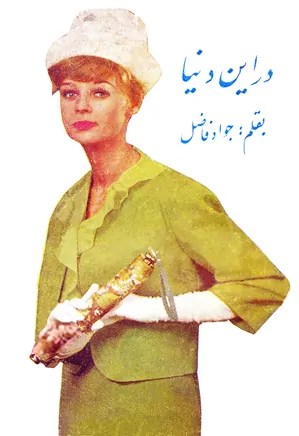


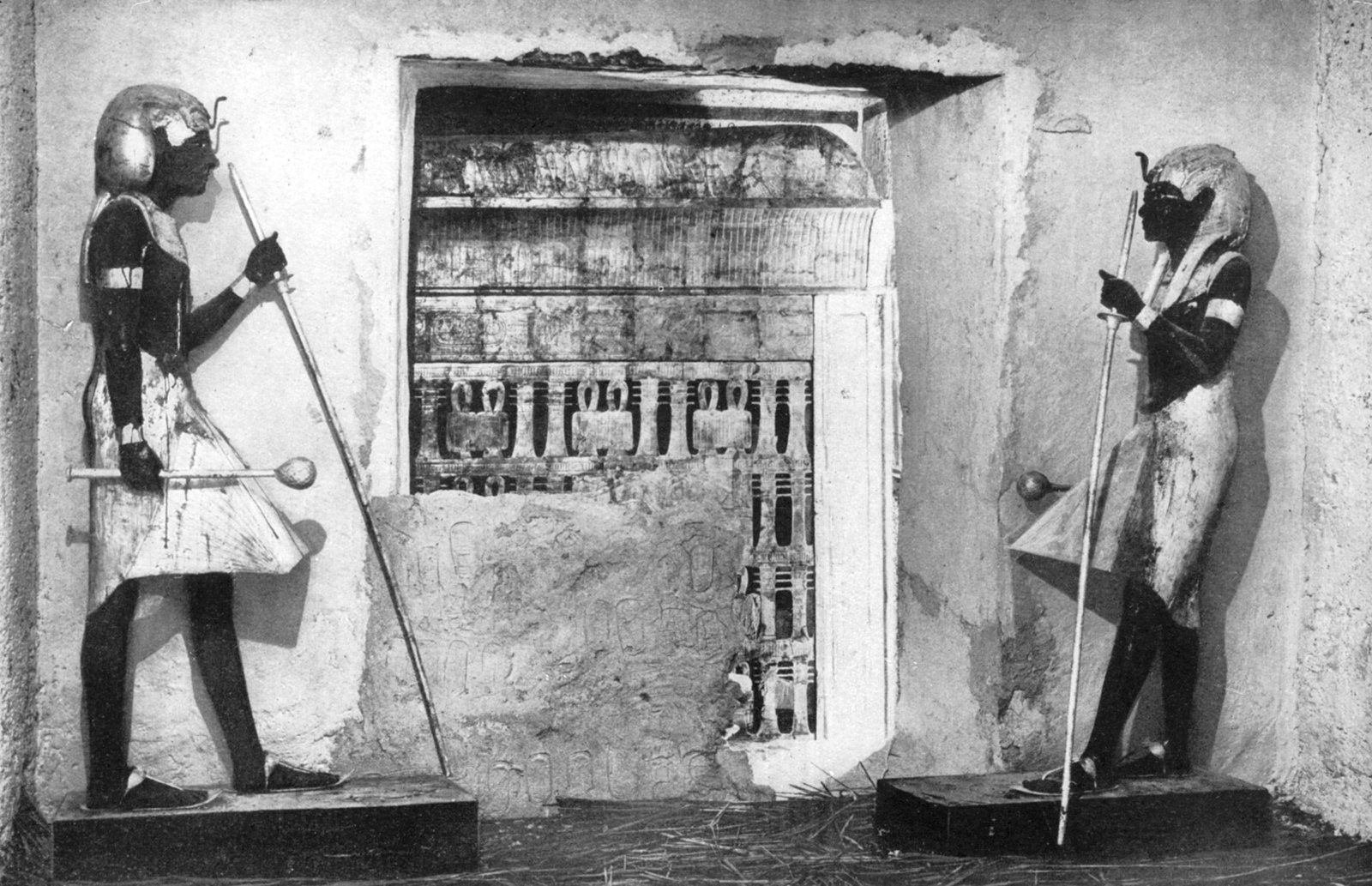


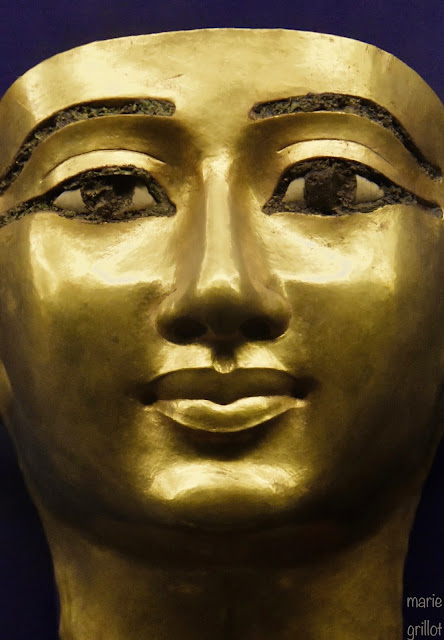

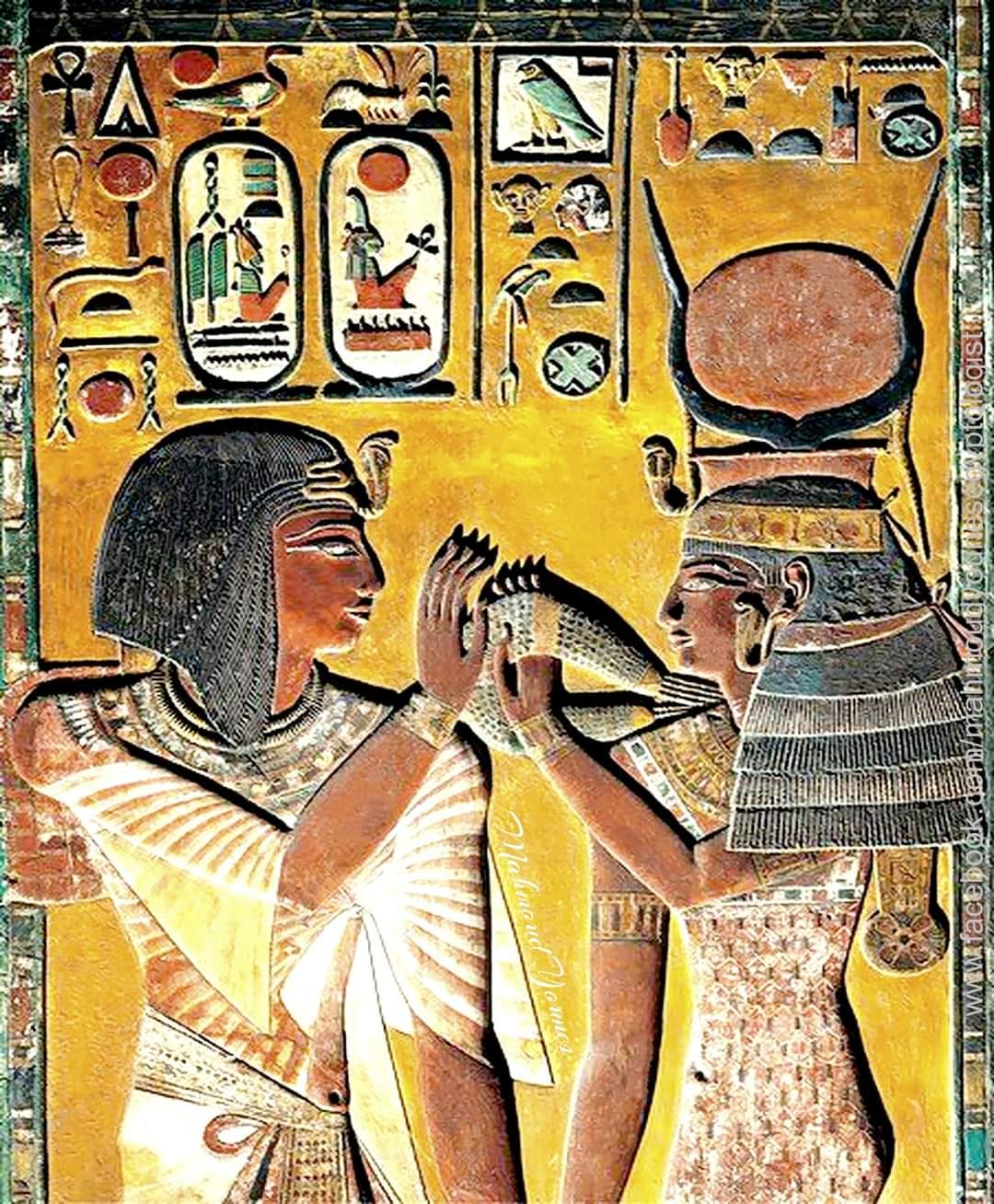

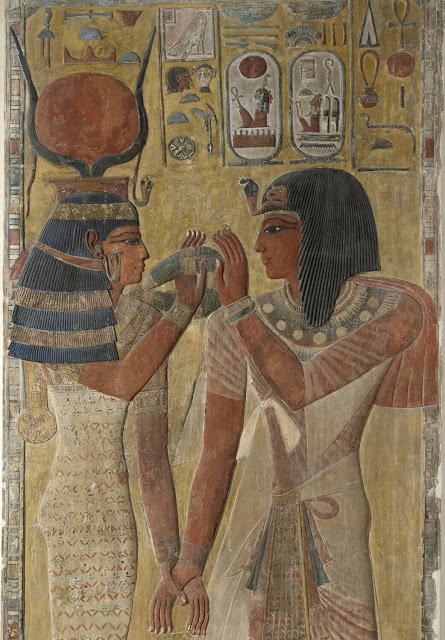
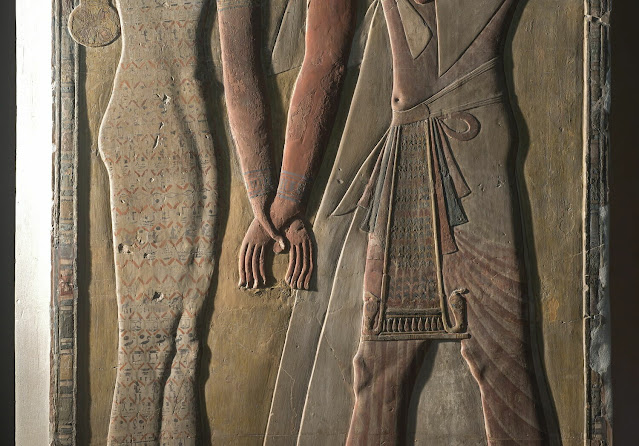
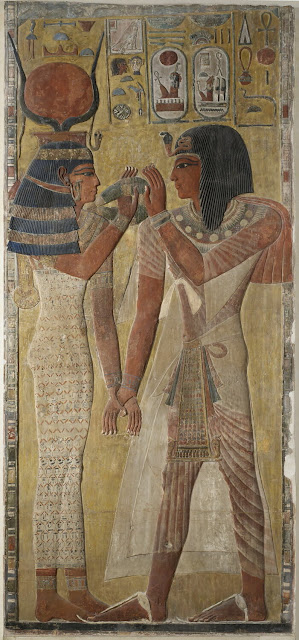
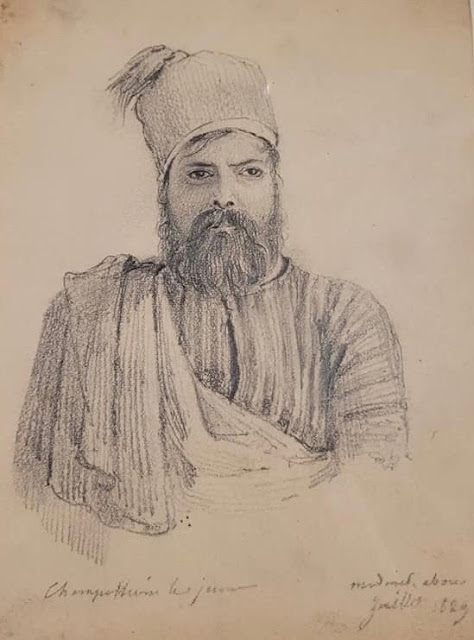


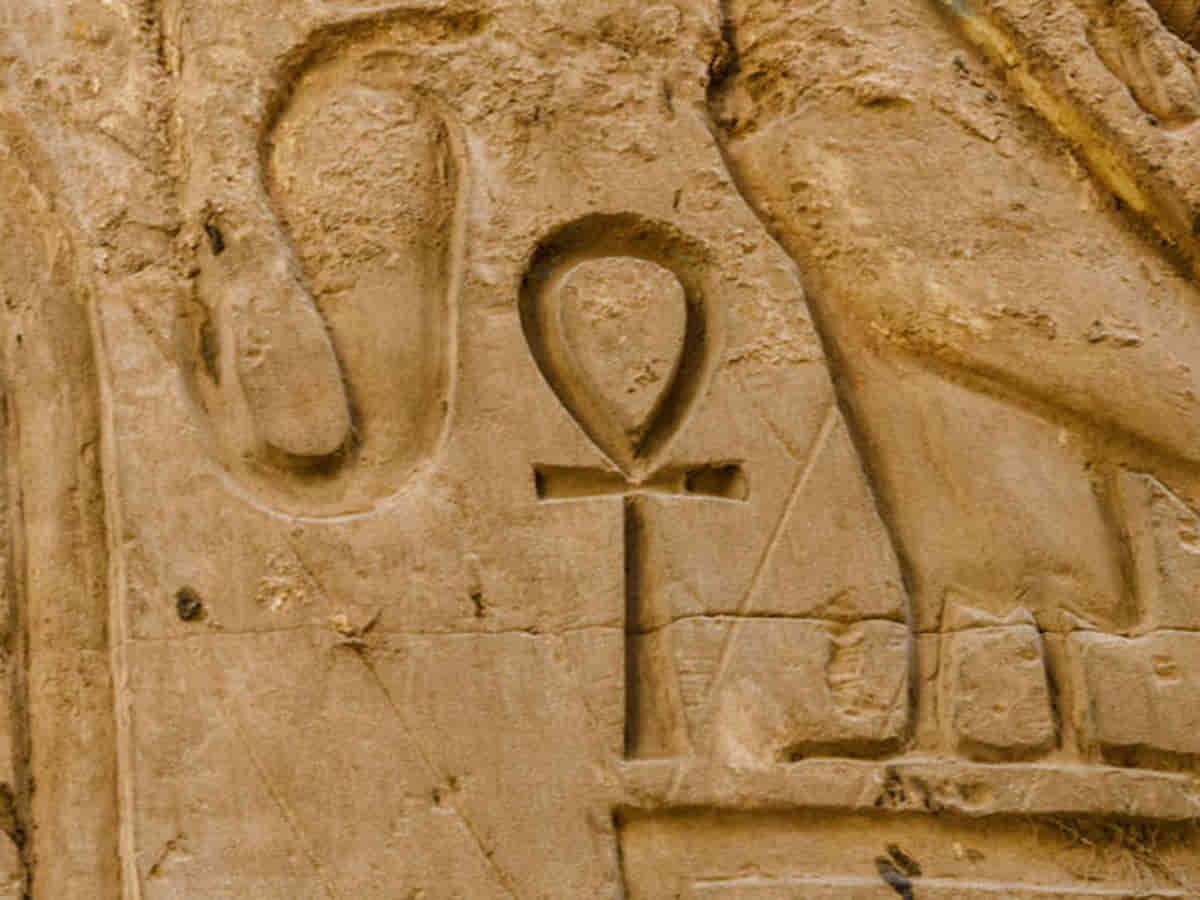


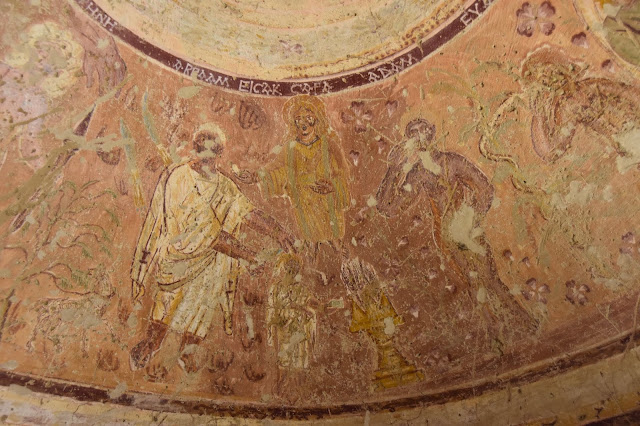
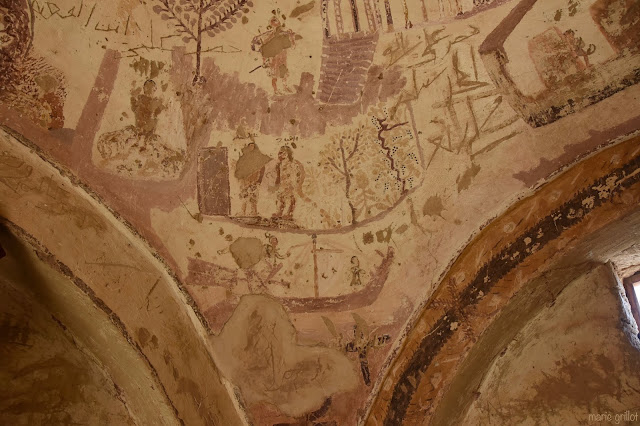

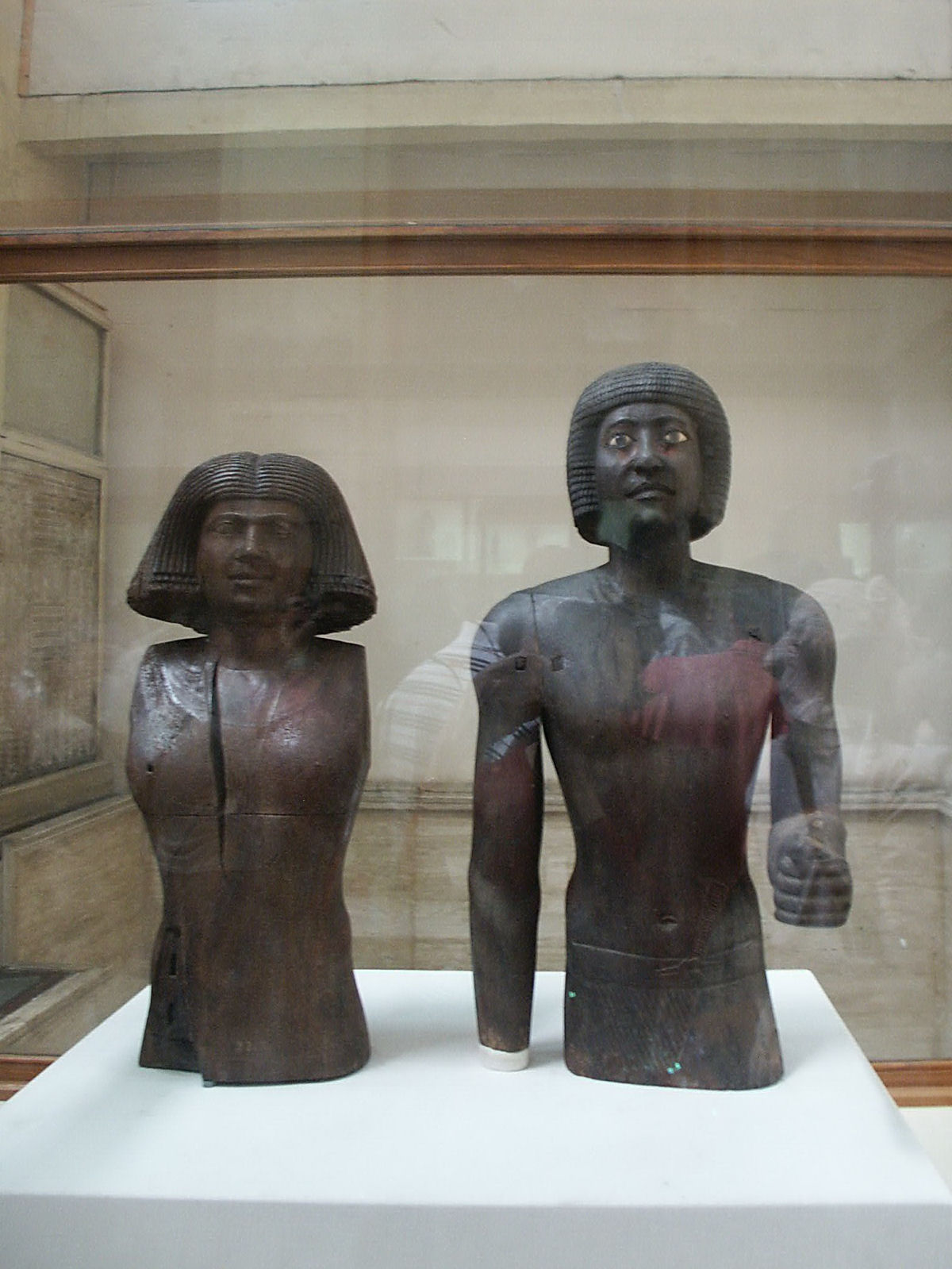
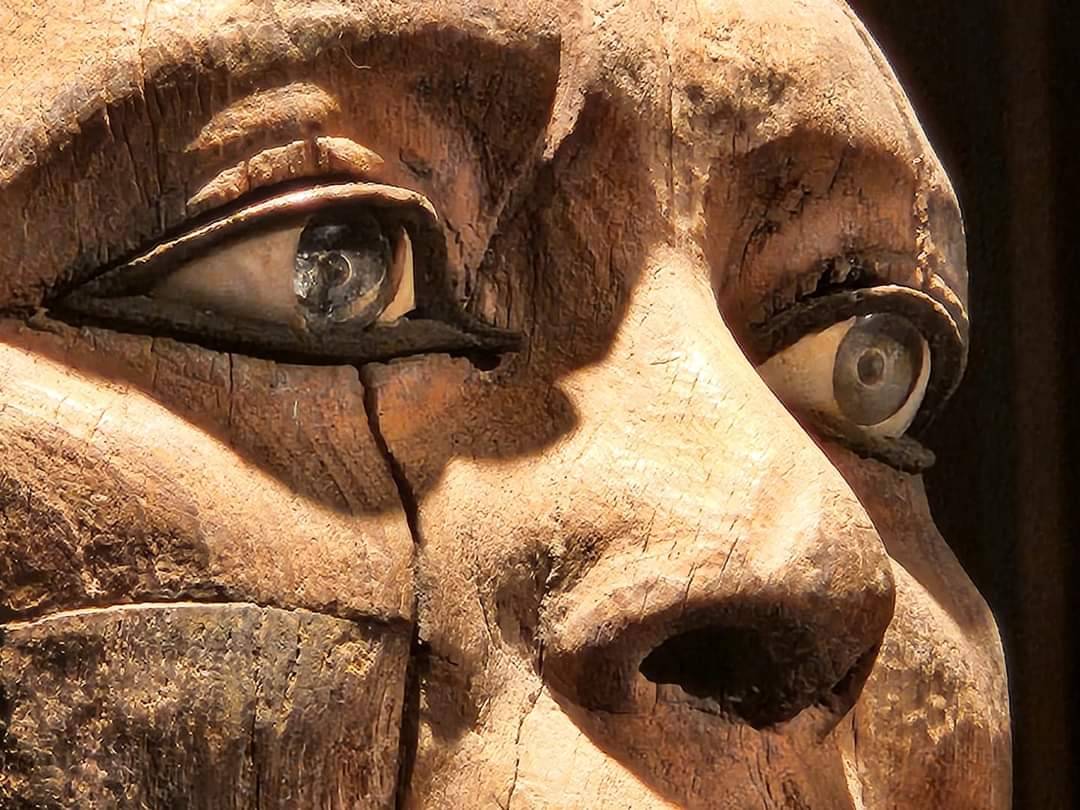


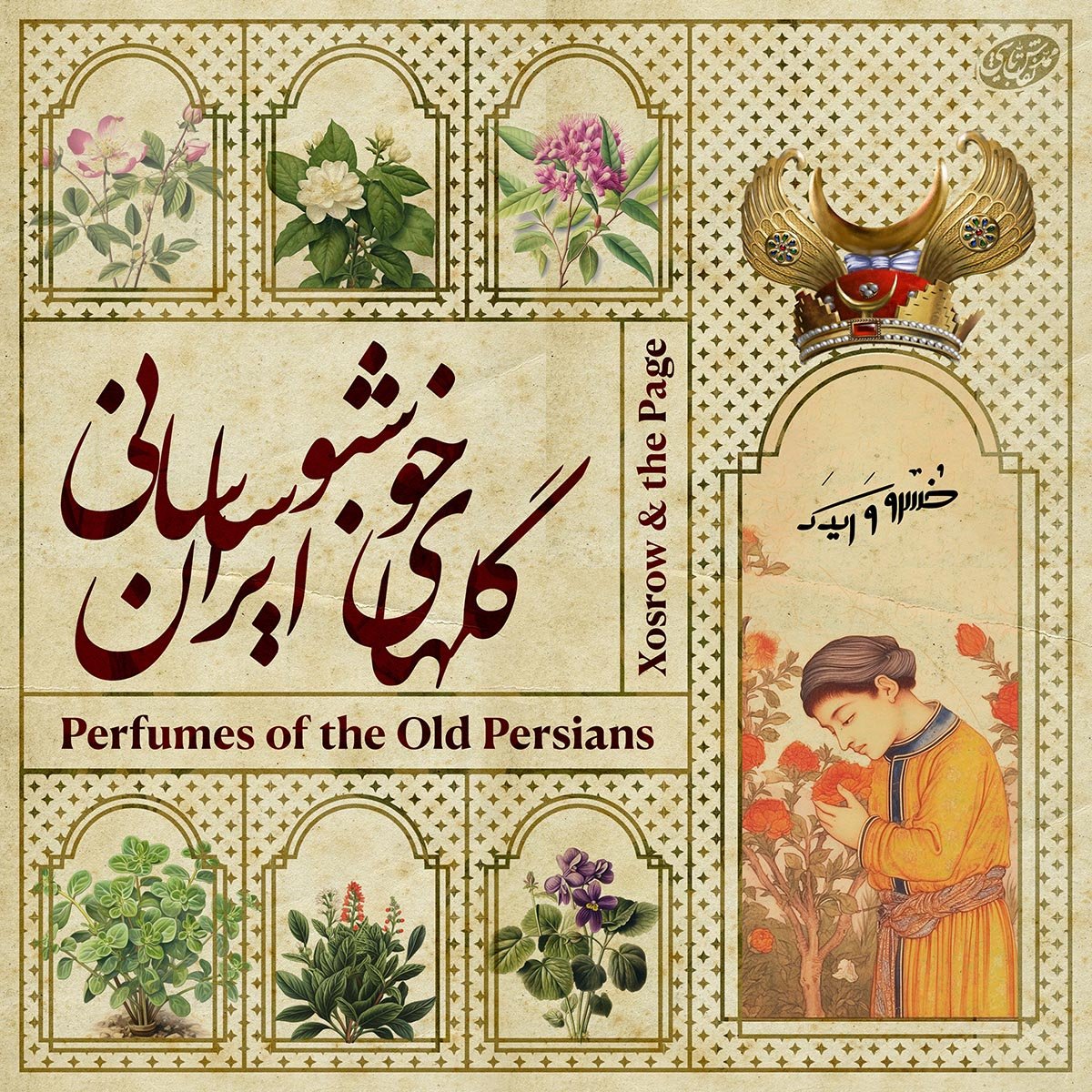

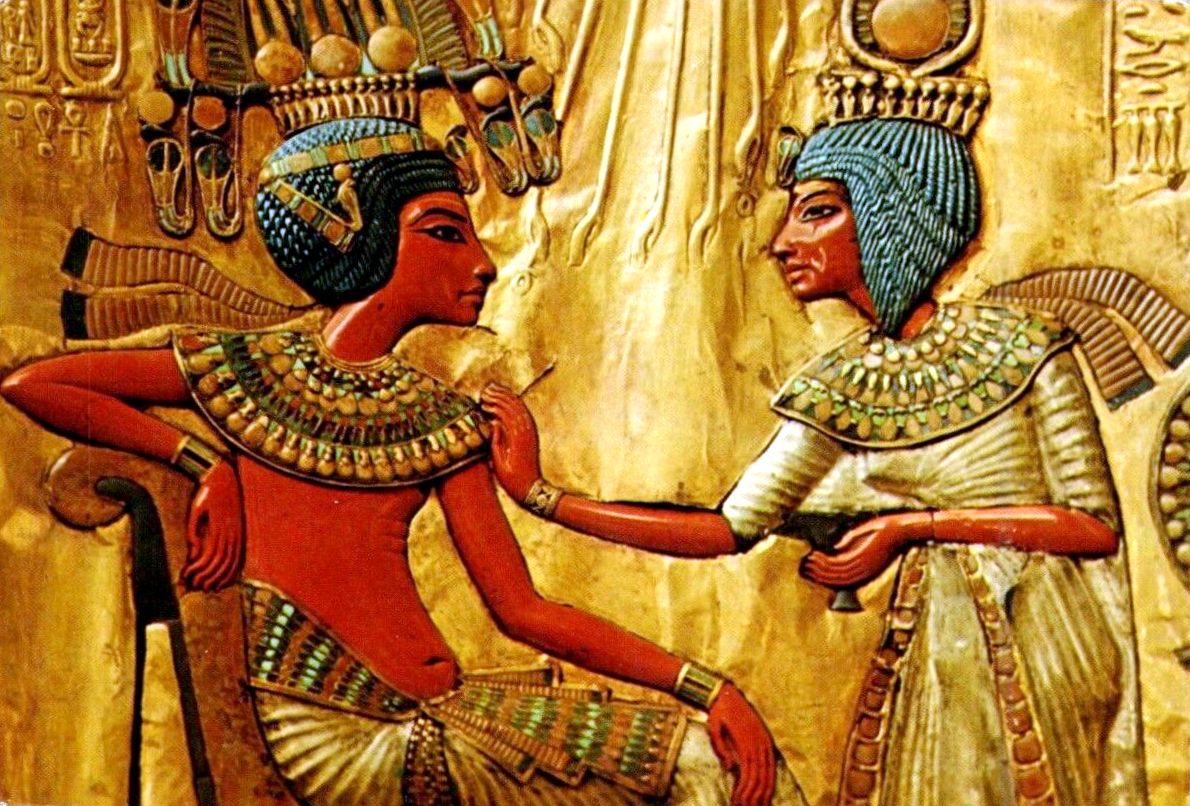
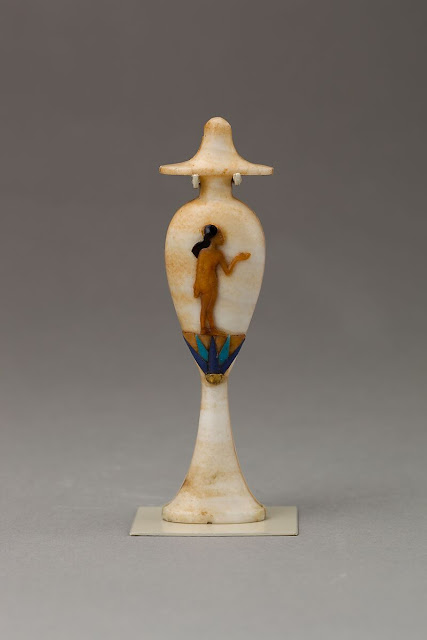


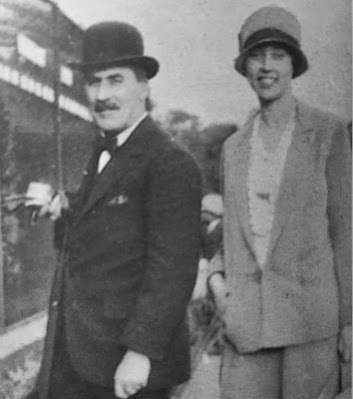
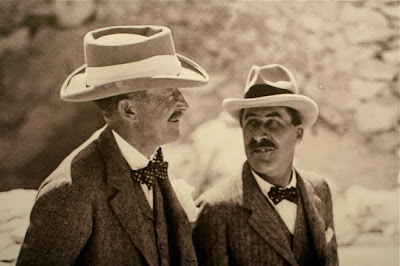



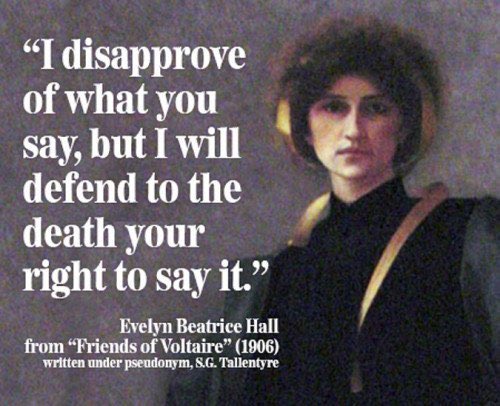
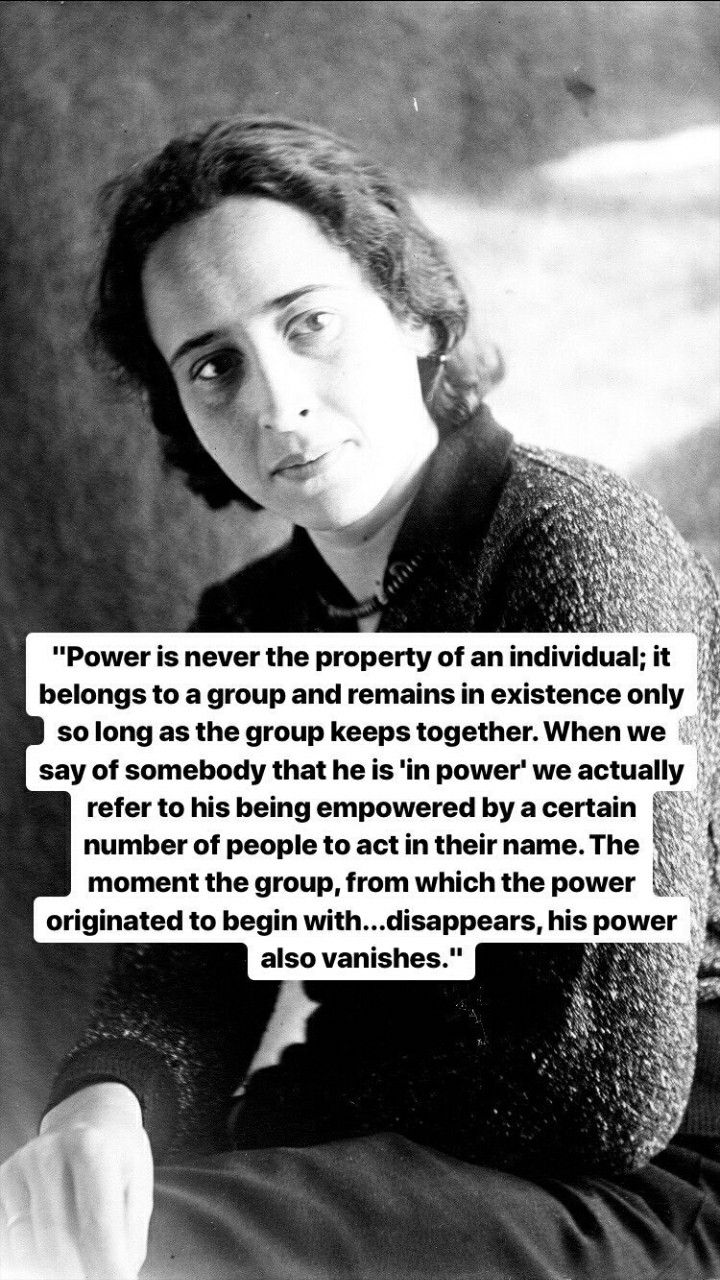

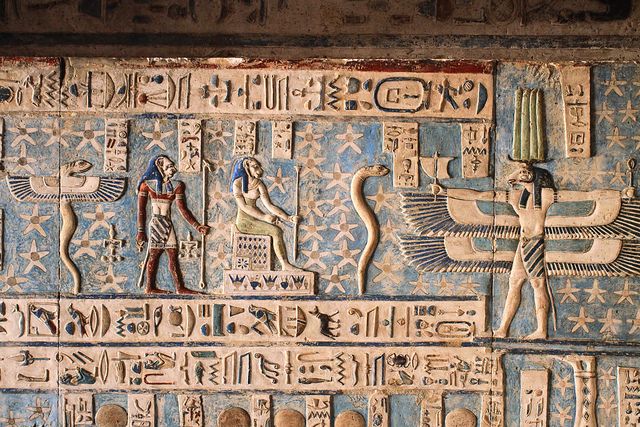

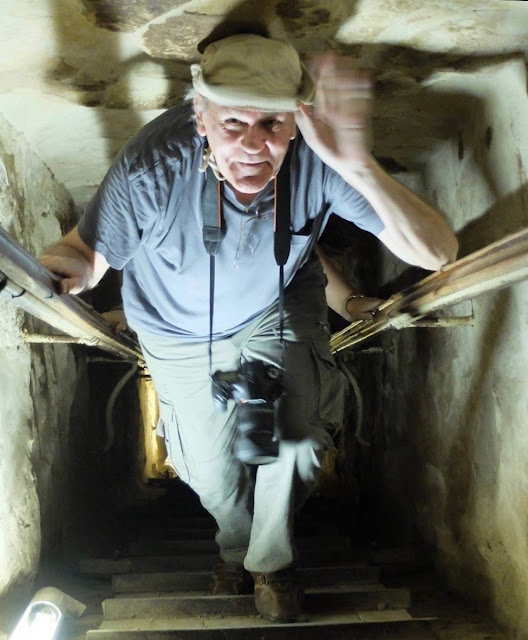

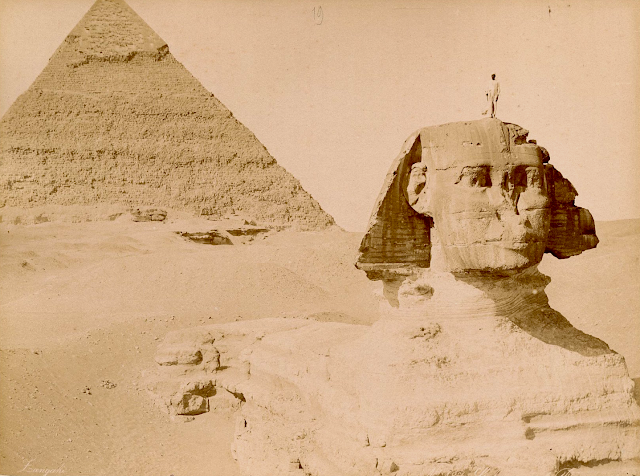

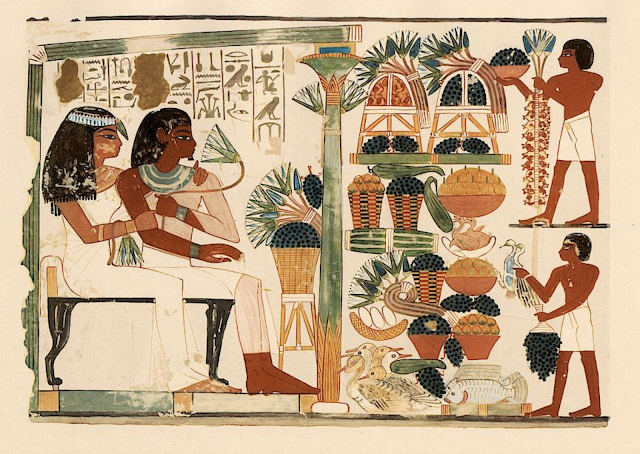
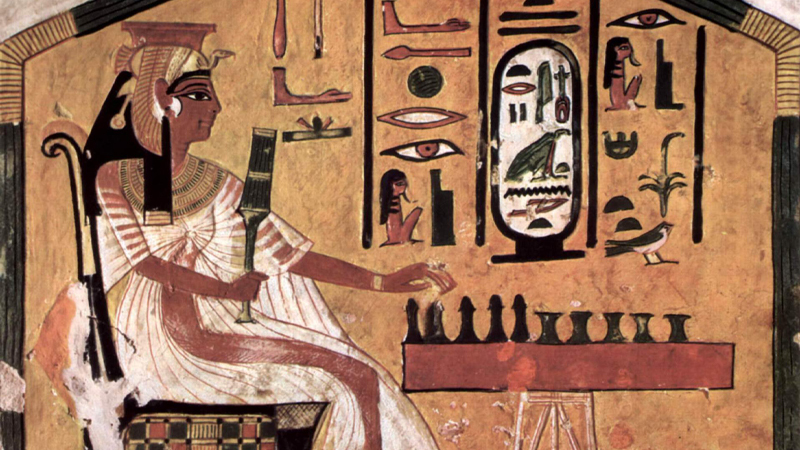
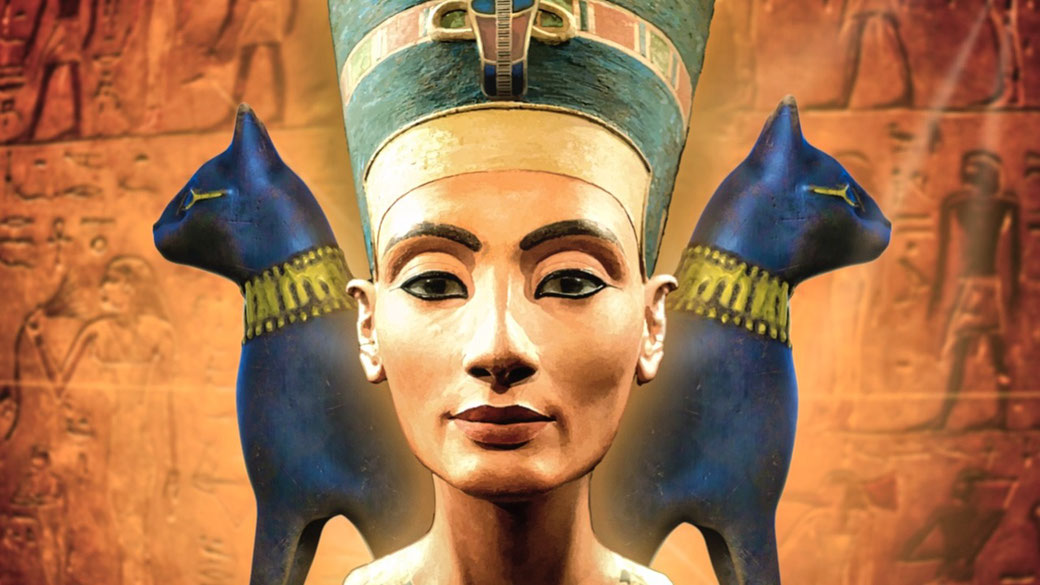

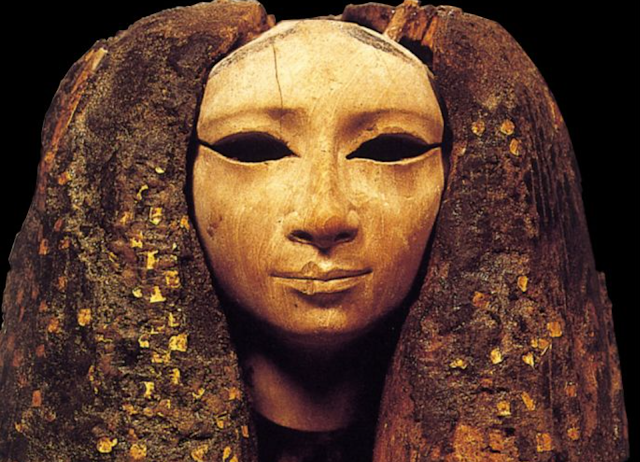
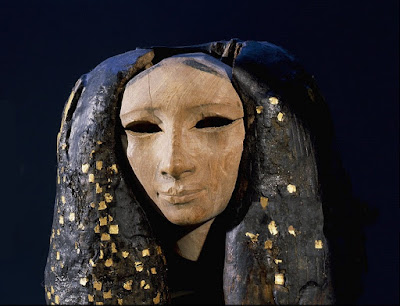
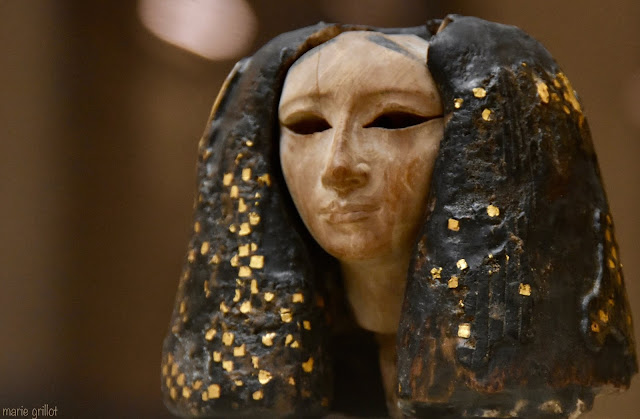

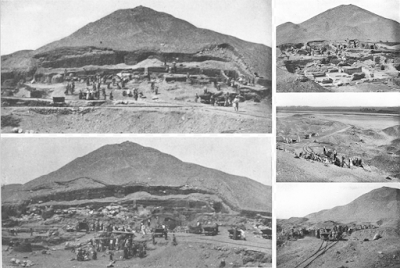

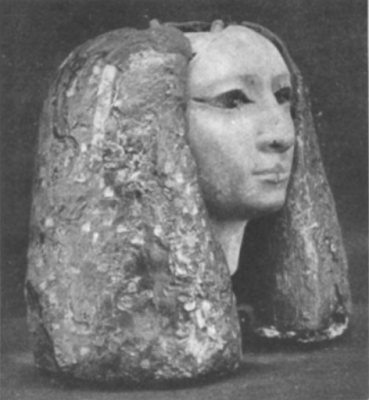

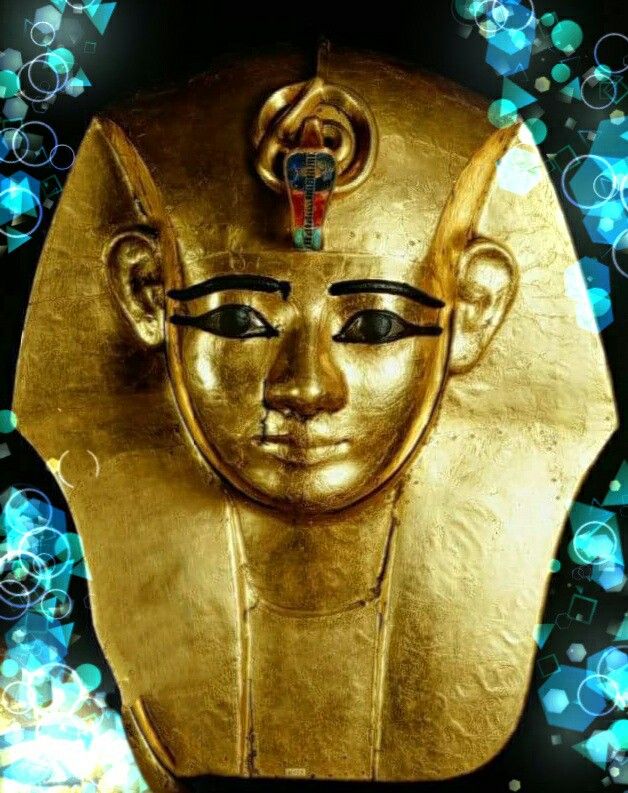

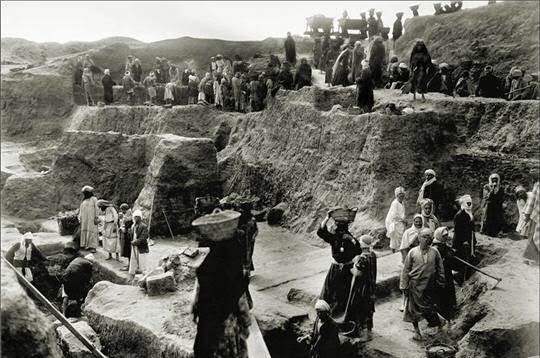


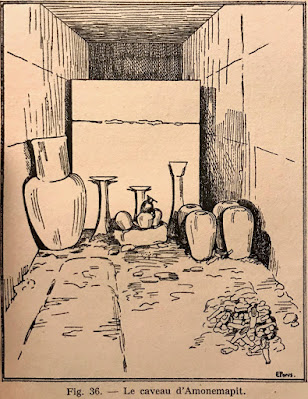
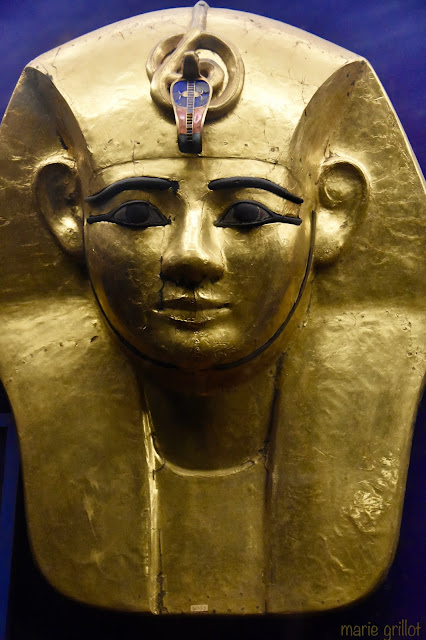
 lampmagician


You must be logged in to post a comment.