We Are Free to Change the World; Hannah Arendt. The Meaning of Freedom (Democracy)!

Standard

Sorry! I can’t simply ignore this issue or stop worrying about the current situation. Perhaps it’s because I was born and raised in a dictatorship, which gives me a deeper understanding of the coming danger than many of my friends here, who have mostly been born and live in freedom.

The question is, when a nation feels disappointed with its situation and confused about its future, how easily can its patriotism be aroused and nationalism used to heal its social wounds? It is not related to a country’s political governing and social freedom, as we observe it occurring in both directories and Western democratic nations. I often wonder why people tend to embrace nationalism during moments of last-ditch pride, frequently seen in contexts like football national cups (a common occurrence in South America), historical racism (as observed in German history), or in leaning on their ancient heritage (as seen with figures like Mussolini in Italy and the Persians, which still resonates today).

Through scientific understanding, our world has become dehumanized. Man feels himself isolated in the cosmos. He is no longer involved in nature and has lost his emotional participation in natural events, which hitherto had a symbolic meaning for him… He no longer has a bush-soul identifying him with a wild animal. His immediate communication with nature is gone forever, and the emotional energy it generated has sunk into the unconscious. (C. G. Jung 1948/1980, para 585)

In today’s world, and likely in the years to come, politics will inevitably influence our lives, whether we want it to or not. I don’t intend to denigrate anyone, but when a single individual holds leadership in one of the most influential roles in the world with vast authority, it raises alarms about the potential for tyranny. And I’m sure all friends here must admit that no one will be immune to that seduction!

The word “democracy” originates from the Greek terms “demos,” meaning “people,” and “kratos,” meaning “power.” Therefore, democracy can be understood as the “power of the people”—a form of governance that relies on the people’s will.
The idea of democracy derives its moral strength – and popular appeal – from two fundamental principles: 1- Individual Autonomy: This principle asserts that no one should be subject to rules others impose. People should be able to control their own lives within reasonable limits. 2- Equality: This principle holds that everyone should have the same opportunity to influence society’s decisions. Essentially, it emphasizes the disempowerment of concentrated power held by a single individual, transforming governance into a system where leaders serve the population rather than rule over them.

Lyndsey Stonebridge explains in her book “We Are Free To Change The World” (Hannah Arendt’s Lessons of Love and Disobedience): >In Arendt’s sense, having a free mind means turning away from dogma, political certainties, theoretical comfort zones, and satisfying ideologies. It means learning instead to cultivate the art of staying true to reality’s hazards, vulnerabilities, mysteries, and perplexities because, ultimately, that is our best chance of remaining human.<
She also reflects that fundamental questions about the human condition are not beside the point in dire political times; they are the point. How can we think straight amidst cynicism and mendacity? What is there left to love, to cherish, to fight for? How can we act to secure it best? What fences and bridges do we need to build to protect freedom, and which walls do we need to destroy?
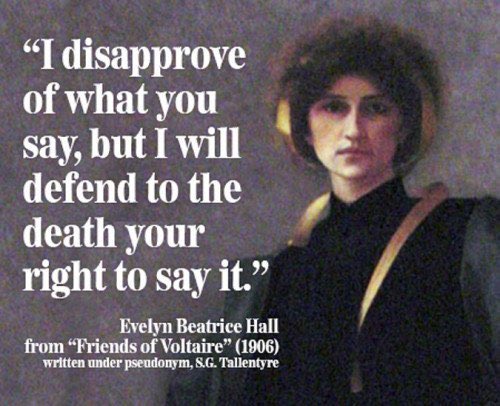
Hannah Arendt closely examined the regimes of Hitler and Stalin, their functionaries, the ideology of scientific racism, and the role of propaganda in creating what she described as “a curiously varying mixture of gullibility and cynicism.” This mixture is how individuals are expected to respond to their leaders’ ever-changing lies. In her 1951 work, “Origins of Totalitarianism,” she elaborated that this combination of gullibility and cynicism is prevalent across all levels of totalitarian movements:

In an ever-changing, incomprehensible world, the masses had reached the point where they would simultaneously believe everything and nothing, think that everything was possible and nothing was true… The totalitarian mass leaders based their propaganda on the correct psychological assumption that, under such conditions, one could make people believe the most fantastic statements one day and trust that if the next day they were given irrefutable proof of their falsehood, they would take refuge in cynicism; instead of deserting the leaders who had lied to them, they would protest that they had known all along that the statement was a lie and would admire the leaders for their superior tactical cleverness.

It is important to recognize the significant danger of trusting someone who makes promises. Why do such individuals often resort to constant and blatant lying? One reason is that it serves as a way to control their subordinates completely. These followers may feel compelled to abandon their own integrity to echo outrageous falsehoods, subsequently becoming tied to the leader through feelings of shame and complicity. Professor Jacob T. Levy from McGill University highlights the insights of prominent thinkers like George Orwell, Hannah Arendt, and Vaclav Havel. He notes that they can help us identify a specific type of falsehood. He states that “saying something obviously untrue and forcing your subordinates to repeat it earnestly in their own words is a shocking demonstration of power over them. This practice was widespread in totalitarian regimes.”
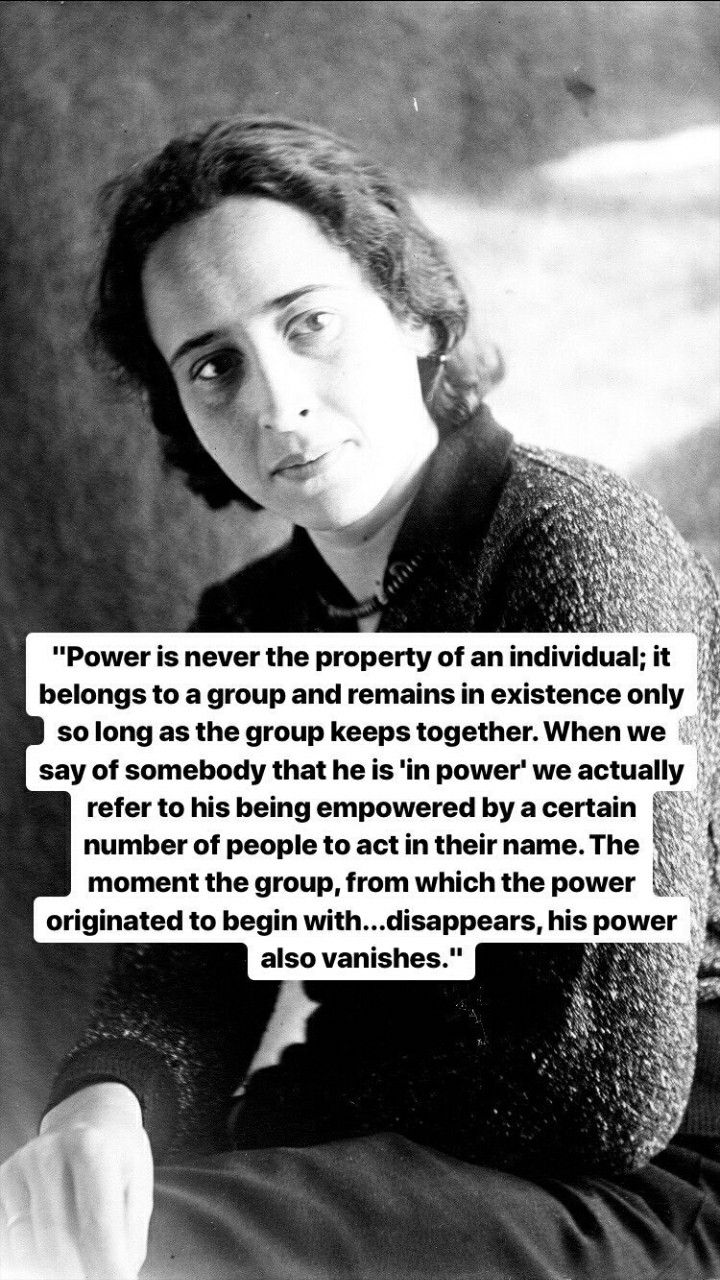
“You can read my lips… Repeat my words as I repeat them! Doesn’t this sound familiar? Arendt and others noted— as Levy writes— that “being forced to repeat an obvious lie makes it clear that you’re powerless.” She also identified how an avalanche of lies can render a populace unable to resist, a phenomenon we now refer to as ” “gaslighting”:

The result of a consistent and total substitution of lies for factual truth is not that the lie will now be accepted as truth and truth be defamed as a lie, but that the sense by which we take our bearings in the real world—and the category of truth versus falsehood is among the mental means to this end—is being destroyed.

However, time will reveal how a people or a nation can differentiate between right and wrong and how much their practice of democracy can help them recognize truth and falsehood. Democracy is not a gift that can be simply given; it requires thorough training to achieve its ultimate goal.

Thank you!

Sources:

The marginalia Open Culture

An Abstract of Egyptologists’ Travelogues.

Standard

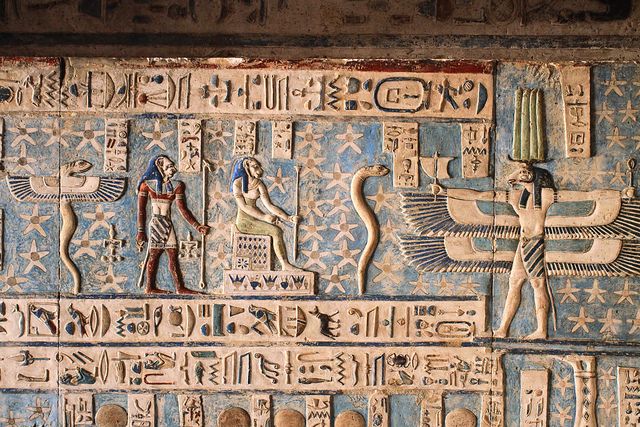
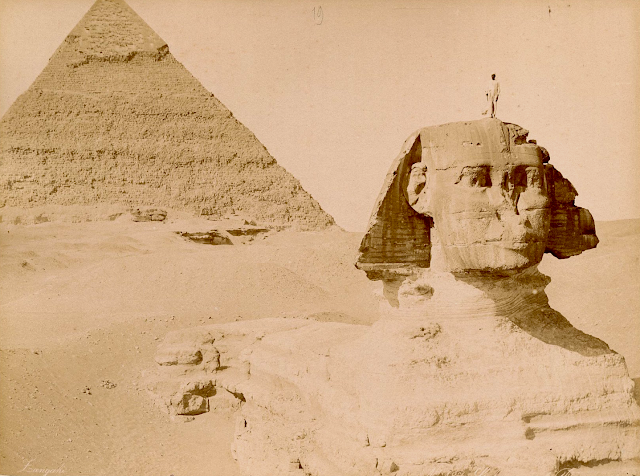
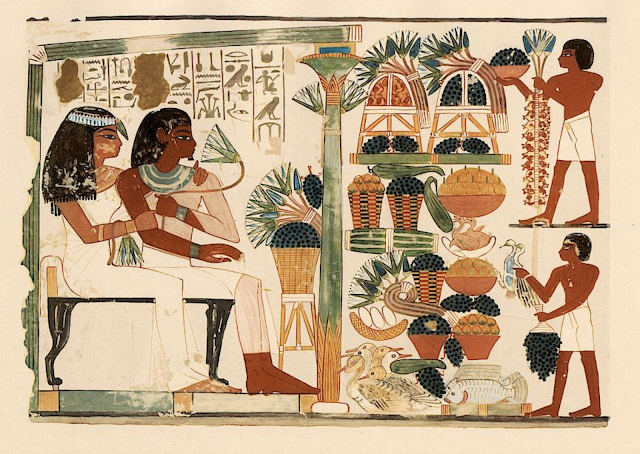
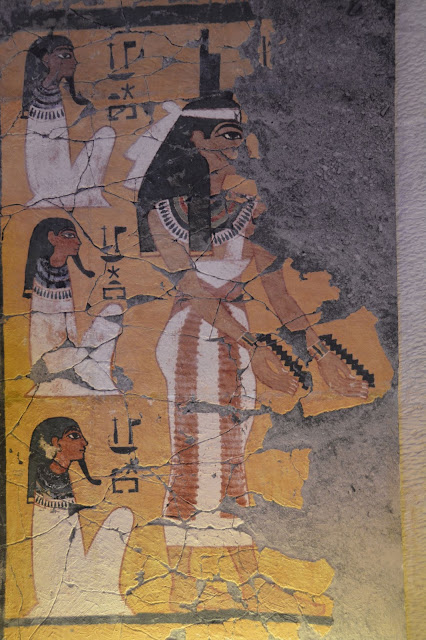
1-The Great Sphinx in Egypt is believed to have the face of Pharaoh Khafre — 2-Dendera: Egypt’s Best-Preserved Temple Complex — 3-View of the west wall, depicting Nakht and his wife, Tawy, seated before offerings (top left), Nakht hunting in the marshes (top right), Nakht and Tawy receiving the produce of the grape harvest (bottom left), and grape harvesting, winemaking, bird capturing, and plucking (bottom right) (Source: OsirisNet).

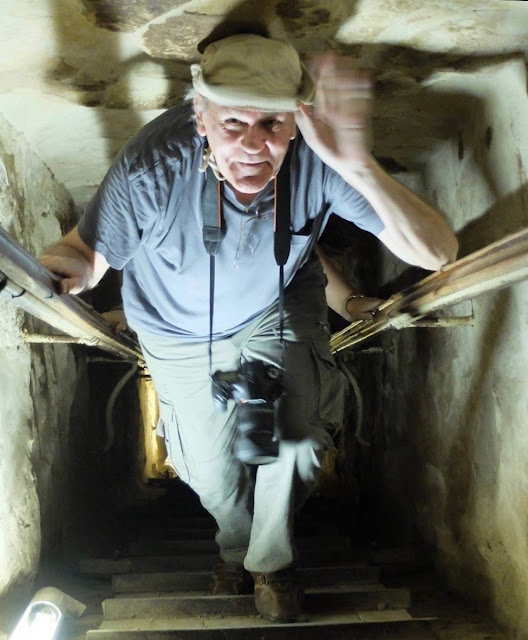
I decided to share this journal post about three short reports by great Egyptologists today in memory of Marc Chartier, an excellent journalist, human and friend whom I enjoyed and learned a lot from his works for a long time, particularly from his fascinating journey reports.

Marc Chartier (Guinevert-Durtal, 23-2-1940 – Argenteuil, 27-7-2024)
Journalist, passionate about Egypt in general and the pyramids in particular,
creator of the blogs: “Pyramidale”, “L”Egypte entre Guillemets”, “Egyptophile” and founder of the press review “Egypte-actualités.”

With forever thanks and immense gratitude to Marie Grillot, as she wrote in her post: During these periods of questioning that assail us all, Marc refocused on this sentence, full of wisdom, which is, in fact, an African proverb taken up by Aimé Césaire: “When you don’t know where you’re going, look where you come from”… These words brought him back to Guinevert, in Sarthe, to his father, to this little brother who both disappeared too soon and especially to “Mamani” who held her sons so tightly against her during the bombings…

marc sa vie
Marc Chartier (Guinevert-Durtal, 23-2-1940 – Argenteuil, 27-7-2024)
Journalist, passionate about Egypt in general and the pyramids in particular,
creator of the blogs: “Pyramidale”, “L”Egypte entre Guillemets”, “Egyptophile”, and founder of the press review “Egypte-actualités”

Let’s join these amazing trips! RIP Marc.💖🙏💖

A day in Egypt with… Mohammed Ali Kamy, Jean Capart, Léon Labat

via égyptophile

A day in Egypt with… Mohammed Ali Kamy

The Sphinx and the Pyramids – photo by Zangaki

“At the foot of the pyramids stands the Sphinx, guardian of the sacred enclosure. It is rightly considered the most famous monument, after the pyramids, of this vast field of the dead, the Giza plateau. The Sphinx is a colossal statue carved in the rock that borders the desert plateau. It must originally have been a rough rock, to which nature had given the vague contours of a crouching animal. The artists of the Old Kingdom gave it the form of a lying lion, a symbol of physical strength, and sculpted a human head, an emblem of mental strength, that of the king, as indicated by the headdress decorated with the uraeus. This fourth wonder of Giza is located north of the Valley of King Chephren temple. (…)

An imposing expression of strength and grandeur remains in the whole, even after the deterioration that the monument has undergone over time: the beard and nose have been broken (part of it is preserved in the British Museum), the neck has shrunk; the mouth smiles, the eyes look into the distance, piercing infinity and the whole face bears the imprint of Egyptian beauty. The red tint that enlivened his features has been erased almost everywhere. No work coming from the hand of men offers more strength or sovereign grandeur. (…)
What is he doing there, this impassive being under the sky, lost in solitude? What is he doing there, this being who defies time and seems to say to passers-by: “You are all mortal, I am eternal”?

The ancient historians who visited Egypt gave no information or description about it. All their attention was devoted to the pyramids. Was the Sphinx already buried in the sand since it did not attract the attention of historians? To our knowledge, the first time it was dug out of the sand was under the New Kingdom. At that time, the ancient Egyptians who lived in the vicinity of the necropolis of Giza worshipped it as an image of the God Ra under the name of Hor-em-aches, that is to say, “Horus in the horizon”, or the rising sun. The stelae discovered near the great pyramids prove that the kings sought this region of the suburbs of Memphis for hunting wild beasts and gazelles. For this reason, the ancient Egyptians called it The Valley of the Gazelles. (…) Despite the mutilations of time and men, the Sphinx retains a mighty and terrible serenity that strikes and seizes to the depths of the heart. This calm and impassive figure, whose smile sometimes seems filled with disdain and pity, bears the imprint of great wisdom. His eyes fix the infinite on the side where the sun, creator of all things, rises as if he wanted to be the first to discover, in the morning, over the valley the apparition of Re. The whole evokes a sort of mystery, and the Sphinx retains a sovereign expression of strength and grandeur even in his distress. Faithful guardian of the sacred enclosure, he always watches over the foot of the Pyramids of Giza.

The artist who conceived this prodigious statue was already a complete artist and master of its effects in the beauty of the type, the grace of the expression and the perfection of the work. One never forgets, when one has seen them, the intensity and the depth of thought of these eyes that look so far beyond the reality of things. It imposes an indefinable fear, so much that its face remains impenetrable, and its empty eyes seem to keep the vision of a crowd of distant, unknown and terrible things. How many people have not passed before it, then vanished into time? How many, among humans, are in the presence of this symbol of mystery, and are they not tempted to say to it: “Ah, if you could speak and tell what these eyes have seen that look so far beyond the reality of things!” The Sphinx, Hor-em-aches, God of the Rising Sun, seems to be the ever-living soul of old Egypt.”

(extract from “La Revue du Caire”, n° 102, September 1947)

**********

A day in Egypt with… Léon Labat (1803-1847), a great traveller and former surgeon to the Viceroy of Egypt

Bonfils, low relief of the Temple of Denderah, circa 1880

“One of the most beautiful privileges of architecture is to reveal to posterity the particular character of each person. That of the Egyptians was austere like their customs: the style was simple but imposing and sublime. Their constructions were neither frivolous nor ephemeral like most of ours. Eternity was, for them, a cult whose dogmas they inscribed on the living pages of their gigantic monuments. Everything about them bore the imprint of a noble and thoughtful character. These people, who constantly meditated on the eternal works of God, tried to imitate them as if to come closer to their ancient origin. These monuments, which they would have liked to make imperishable, were to be the object of religious contemplation for present generations and posterity. Greece, Rome, and later our modern Athens erected temples to the gods, palaces to the kings, and circuses for the people’s amusement. To this triple purpose of utility, the Egyptians knew how to add another which constitutes the specific character of their architecture: their monuments, with broad bases and large surfaces, whatever their destination, were arranged in such a way as to receive their hieroglyphic inscriptions.

A religious and conservative principle thus attaching itself to the buildings which were erected from generation to generation, the long valley of the Nile was soon dotted with an infinite number of temples, mausoleums, obelisks, palaces and aqueducts which led water into all the cities. A noble sentiment of religious piety and respect for the dead made them undertake the most prodigious constructions which human power has ever attempted: their masses, which rose up to the heavens, gave birth in the spirit of these populations a feeling of meditation and recollection which we ourselves have deeply felt at the sight of the colossal pyramids of Memphis. Not content with honouring the gods and the memory of great men by erecting monuments to them, they also wanted to give the mortal remains of their parents an asylum of rest and eternal preservation: immense hypogea were dug into the sides of the mountains and into the bosom of the earth to house innumerable mummies which were for them a sort of protest against nothingness. All the actions of these virtuous people constantly recalled the worship of the divinity and the respect for the dead. This respect was such that the Egyptians buried in the tombs of their ancestors the different objects they had loved and the instruments that had contributed to their illustriousness. Finally, they pushed their gratitude for the works of God to the point of embalming and housing in the hypogea of various species of animals. One would be tempted to believe that they wanted to extend the dogma of immortality to all the beings that heaven had brought forth on the fortunate soil of Egypt.”

(extract from Ancient and Modern Egypt, 1840)


**********

A day in Egypt with… Jean Capart (1877-1947), Belgian Egyptologist

Tomb of Nakht at Thebes by Norman de Garis Davies

“Without wishing to settle the most severe problems of aesthetics, let us now ask ourselves if it is impossible to point out in a few simple facts what one could call the awakening of the feeling of beauty among the Egyptians. The first noticeable characteristic to underline is their extraordinarily developed taste for floral decoration. The Egyptians passionately loved flowers, yet the Egyptian flora was not wealthy. They used the lotus for the most diverse uses on feast days, hung garlands at the top of walls, hung the cornice of kiosks and canopies, surrounded vases, and made necklaces and crowns with it. Decorative art, here, only had to copy the usual forms to produce fixed decorations of great richness. Jewellery will remain faithful for a long time to nature’s forms, as rich as they are uncomplicated. Isn’t this love of flowers that can also be linked to the taste for brilliant and coloured materials that will be manifested in the pieces of jewellery with inlays, in the furniture combining materials of various colours, in the carpets and mats, whose repertoire is hugely varied? A thousand clues reveal to us the taste of the Egyptians for grace, elegance, and slenderness in feminine forms. Industrial art, in particular, has drawn from its remarkable types that transform an object of vulgar utility into an object that is truly beautiful or simply pleasant to look at. When the ancient workman gave a container for make-up the form of a young girl carrying a vase on her shoulder or of a swimmer who has seized a duck, he obviously wanted to do more than provide his customer with a container for make-up. The original aim has almost disappeared, and the manufacturer’s intention has focused primarily on creating a pretty object of nature to tempt the elegant woman whose artistic delicacy is thus awakened. In this case, we find ourselves in the presence of an artist who creates beauty and, of equal importance, of a clientele demanding artistic productions. When the Egyptians reproduced grotesque figures, such as that of the god Bes or foreign captives, they intended to provoke laughter or to bring out by contrast the superiority of beautiful and graceful forms.”

(extract from Egyptian Beauty, Advertising Office, 1942)

Posted on January 8th 2018, by Unknown
Labels:  Ali Kamy (Mohammed) Capart Labat (Léon)

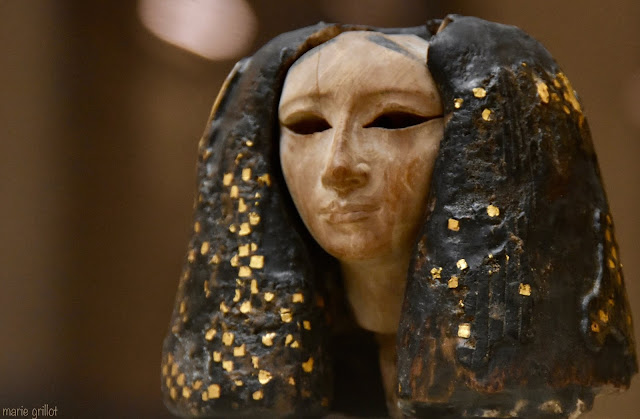
An Original Work Complete of Beauty and Femininity, The Unknown Lady from Lisht.

Standard

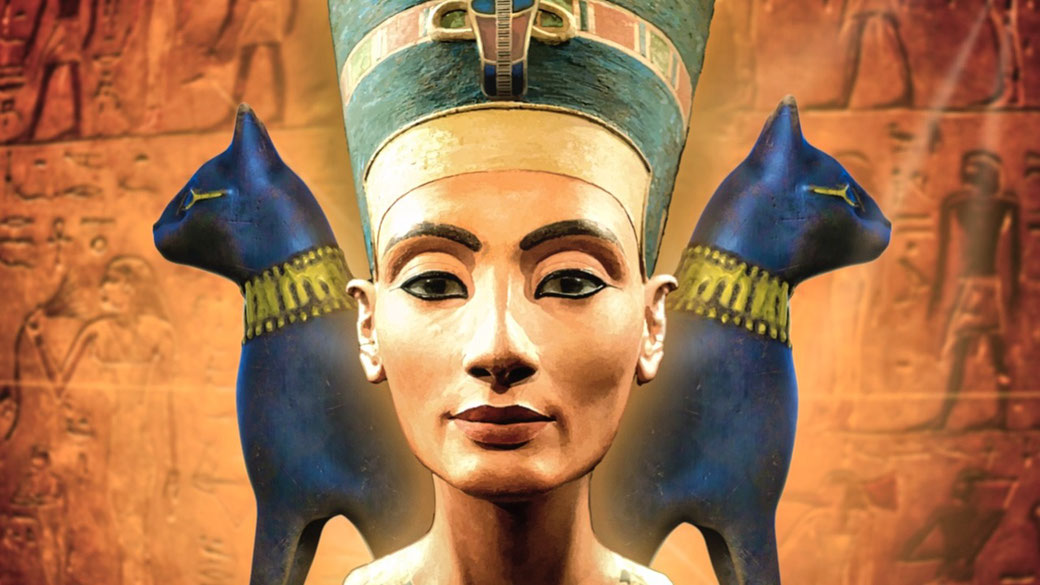
The ancient Egyptians had many beautiful women, including Queen Nefertari. She was known as “the most beautiful of them all” and was one of the most beloved queens of ancient Egypt, reigning during the 19th Dynasty. At the heart of the exhibition is Queen Nefertari, who was renowned for her beauty and prominence. She was called “the one for whom the sun shines” and was the favourite wife of Pharaoh Ramesses II.

One of the most famous figures from ancient Egypt is Queen Nefertiti. Her name, “the beautiful one has come,” has solidified her status as an iconic figure from the 14th century BC. She lived alongside her husband, Pharaoh Akhenaten, during the New Kingdom. Nefertiti’s legacy is steeped in mystery and fascination, as her renowned beauty and significant cultural impact have left a lasting impression.

Likewise: Queen Cleopatra, Queen Hatshepsut, Queen Neithhotep, Queen Tiye, Queen Twosret, Queen Nitocris… and Queen Ankhesenamun. Source: Jakada

But here, we have another one of beauty who remains unknown. Let’s read the story of its discovery by the privileged Marie Grillot.💖🙏

The Fair Lady of Lisht

via égyptophile

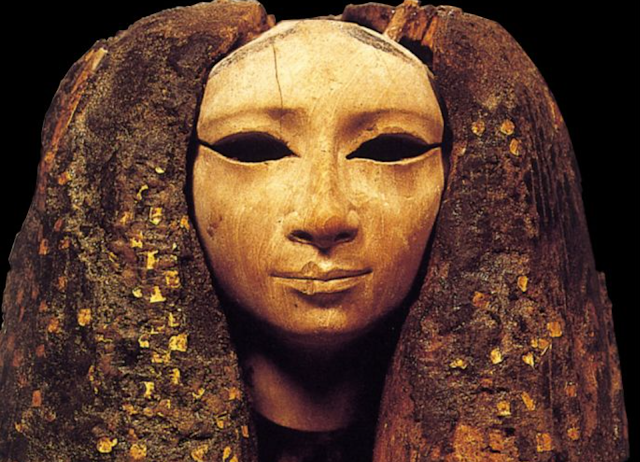
Head of the female statue – painted wood, gold leaf – Middle Kingdom – 12th dynasty
discovered in 1907 during excavations in the area of ​​the pyramid of Amenemhat I in Lisht
by the Metropolitan Museum of Art Expedition, New York – Egyptian Museum, Cairo – JE 39390

The face is noble and perfectly symmetrical. The veins of the light wood give it a feeling of life. The general expression is gentle, calm, and peaceful.

The large almond-shaped eyes, of which only the orbits remain, are absent… and, despite this, they seem to question us… What presence did they give to the face? What did they reveal? Did the glass paste and rock crystal subtly and luminously animate their pupils? These questions remain forever unanswered.

The eyebrows are treated in relief, while the shadow line is treated in hollow. The nose is well-proportioned, and the lips are thin. The slight injury they suffered reminds us of the ravages of time.

Head of the female statue – painted wood, gold leaf – Middle Kingdom – 12th dynasty
discovered in 1907 during excavations in the area of ​​the pyramid of Amenemhat I in Lisht
by the Metropolitan Museum of Art Expedition, New York – Egyptian Museum, Cairo – JE 39390

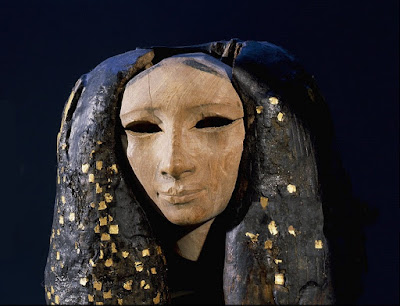
What, obviously, impresses in this head of barely more than 10 cm is the imposing wig that generously frames it and must have reached the level of the shoulders, which have now disappeared. “The enveloping mass of the added hair is worked in a darker wood and blackened with paint; it is fixed to the head in lighter wood, using tenons”, specify Mohamed Saleh and Hourig Sourouzian in their “Official Catalogue of Egyptian Museum in Cairo. The deep black of the wig is enhanced with small squares of gold leaf, which have so many luminous touches. On the other hand, Rosanna Pirelli analyzes in “The Wonders of the Egyptian Museum in Cairo”: “The fact that the wig is particularly fine at the top, compared to the width of the lateral parts, suggests the presence of a crown or a diadem.”

Head of the female statue – painted wood, gold leaf – Middle Kingdom – 12th dynasty
discovered in 1907 during excavations carried out in the area of ​​the pyramid of Amenemhat in Lisht by the Expedition of the Metropolitan Museum of Art in New York – Egyptian Museum in Cairo – JE 39390

Who was this beautiful lady? A queen, a princess, a prominent person at the sovereign’s court? The work’s quality and the artist’s mastery, indeed, suggest that it may have come from the pharaoh’s workshops. Unfortunately, this face, which was that of a full-length statue, does not allow us to identify it.

This head—often used as a model to illustrate the beauty of ancient Egyptian women—was discovered in 1907 in Lower Egypt, precisely in Lisht, between Daschour and Meidoum.

This female statue head – painted wood, gold leaf – Middle Kingdom – 12th dynasty
discovered in 1907 during excavations in the area of ​​the pyramid of Amenemhat I in Lisht
by the Expedition of the Metropolitan Museum of Art in New York – Egyptian Museum in Cairo – JE 39390 – illustrates numerous works

At the beginning of his reign, Amenemhat I “left Thebes to found a new city at the entrance to the Fayoum, named ‘Amenemhat-se-seizit-des-Deux-Terres’ not far from the current site of Lisht (“Pharaonic Egypt, history, society, culture”). In “L’Egypt Restorée”, Sydney Aufrere and Jean-Claude Golvin thus analyze the reasons which led to this “relocation”: “not only to break away from Thebes and the supporters of the last Montouhotep but also to keep an eye on the north and the Asian border, the city became the main royal residence during the 12th and 13th dynasties… They add, “Today we cannot give it any other reality and archaeological dimension than those which associate it with the two funerary monuments today reduced to two mounds: the pyramids of Amenemhat I and Sesostris I.”

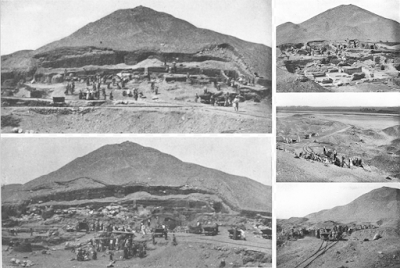
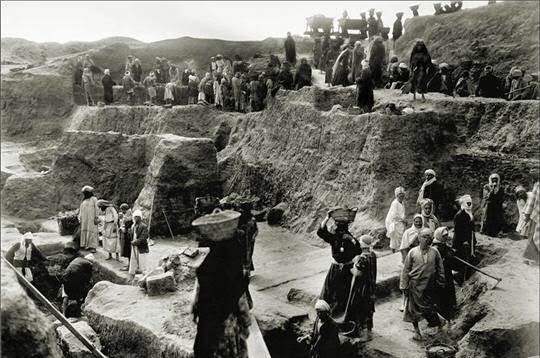
Excavation site of the Metropolitan Museum of Art Expedition in New York at the Lisht site in 1907
during the discovery of the head of a female statue in painted wood with gilding (JE 39390) from the 12th dynasty

In 1882, Gaston Maspero, successor to Auguste Mariette at the head of the antiquities service, undertook excavations on the site, work that allowed the identification of the pyramids. For practical reasons (there was sometimes up to 11 m of water, he relates), however, he was unable to go as far as the burial chamber. The study of the site was then taken up in 1894-1895 by the French School of Cairo (which, in 1898, became the French Institute of Oriental Archeology).

Then, in 1906, when Gaston Maspero returned to the directorship of antiquities, the Metropolitan Museum of Art in New York requested the concession. He obtains it and then settles in for several seasons of excavation.

Head of the female statue – painted wood, gold leaf – Middle Kingdom – 12th dynasty
discovered in 1907 during excavations in the area of ​​the pyramid of Amenemhat I in Lisht
by the Metropolitan Museum of Art Expedition, New York – Egyptian Museum, Cairo – JE 39390

Indeed, the Egyptian department of the MMA was created on October 15, 1906, and its administrators, as well as its brand new director, Albert Morton Lythgoe, saw the point of enriching their knowledge, experience, and collections.

Thus began their first campaign, financed by private funds, under the joint leadership of the director, Herbert Eustis Winlock (Harvard) and Arthur C. Mace (Oxford).

One hundred fifty workers were recruited: some, already ‘trained’ for excavations, came from Upper Egypt, others from neighbouring villages; their number will continue to increase over the years.

Head of the female statue – painted wood, gold leaf – Middle Kingdom – 12th dynasty
discovered in 1907 during excavations in the area of ​​the Amenemhat pyramid in Lisht
by the Metropolitan Museum of Art Expedition, New York – Egyptian Museum, Cairo – JE 39390
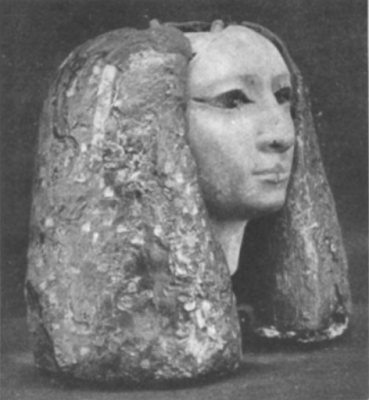
reproduced for the first time in “The Metropolitan Museum of Art Bulletin” n° 10 – Oct. 1907

Albert M. Lythgoe does not explain the exact circumstances of the head’s discovery. In the October 1907 bulletin of the MMA, although it appears in a photo with the caption “figure 2. Head of wooden statuette from Lisht, 12th dynasty”, no details are given on the place where it was found. The author relates that the excavations concerned two sectors: the cemetery located west of the pyramid of Amenemhat, which revealed tombs of important figures of the 12th dynasty, as well as a sector situated on a promontory. Over a hundred tombs have been unearthed for most of the 12th dynasty.

As the head is illustrated opposite this paragraph, we can think that its discovery is linked to these areas where dignitaries, relatives, and ruling family members had the honour of resting not far from the pharaoh.

It should be noted that her arms were found two years later, in Situ, by Herbert Eustis Winlock…

This head is displayed at the Egyptian Museum in Tahrir Square in Cairo under number JE 39380.

Marie Grilott

Sources:

The head of a woman surrounded with a placed hairdressing consists of two pieces of blackened wood, inlaid with gold, Musée égyptien du Caire https://egyptianmuseumcairo.eg/artefacts/head-of-a-woman/ The Metropolitan Museum of Art Bulletin, Vol. 1, No. 12, Nov. 1906 http://www.jstor.org/stable/i3634, http://www.jstor.org/stable/i363438 A. M. Lythgoe, The Egyptian Expedition, The Metropolitan Museum of Art Bulletin, Vol. 2, No. 4, Apr. 1907 https://www.jstor.org/stable/i363442 The Egyptian Expedition, Albert M. Lythgoe, The Metropolitan Museum of Art Bulletin, Vol. 2, No. 7, Jul. 1907, http://www.jstor.org/stable/3253292 The Egyptian Expedition, Albert M. Lythgoe, The Metropolitan Museum of Art Bulletin, Vol. 2, No. 10, Oct.1907 https://www.jstor.org/stable/3253176?seq=1#page_scan_tab_contents Mohamed Saleh, Hourig Sourouzian, Catalogue officiel du Musée égyptien du Caire, Verlag Philipp von Zabern, 1987
Sydney Aufrère, Jean-Claude Golvin, L’Egypte restituée – Tome 3 – Sites, temples et pyramides de Moyenne et Basse Égypte, Editions Errance, 1997
Christiane Ziegler, L’Art égyptien au temps des pyramides, Réunion des Musées Nationaux, 1999
Francesco Tiradritti, Trésors d’Egypte – Les merveilles du musée égyptien du Caire, Gründ, 1999
Guide National Geographic, Les Trésors de l’Egypte ancienne au musée égyptien du Caire, 2004
Pierre Tallet, Frédéric Payraudeau, Chloé Ragazzolli, Claire Somaglino, L’Egypte pharaonique, histoire, société, culture, Armand Colin, 2019

Posted 29th October 2019 by Unknown

A Magnificent Divine Falcon to Protect Wise Amenemopé’s Treasures.

Standard

Usermaatre Amenemope was an ancient Egyptian pharaoh of the 21st Dynasty who ruled between 1001 and 992 BC or 993 and 984 BC. His tomb is one of only two entirely intact royal burials known from ancient Egypt, the other being that of Psusennes I. “His Instruction” (That is about thirty chapters (more than ten commands!)) is a literary work from ancient Egypt, most likely composed during the Ramesside Period. It contains thirty chapters of advice for successful living, attributed to the scribe Amenemope, son of Kanakht, as a legacy for his son.

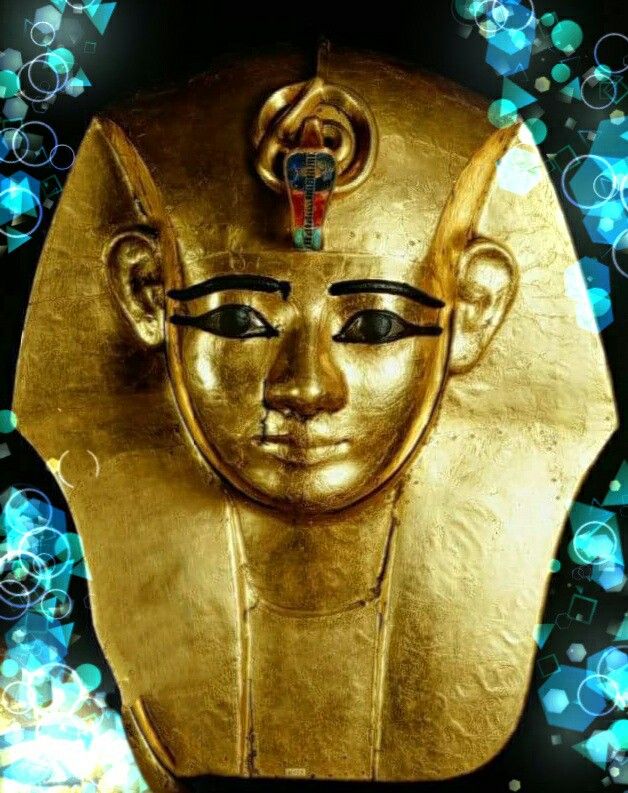
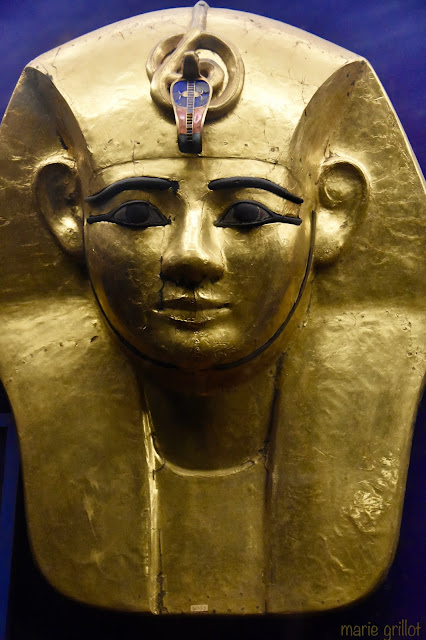
Treasure of Tanis, the golden mortuary mask of Pharaoh Amenemope. Egypt Musem

The pharaohs of Egypt were associated with Horus since the pharaoh was considered the earthly embodiment of the god. From around 3100 BCE, he was given a memorable royal “Horus name.” The falcon, representing divine kingship, symbolized the king as the earthly manifestation of Horus.

Here is the captivating story, by the brilliant Marie Grillot, of this incredible discovery.💖🙏

A falcon carrying Amenemopé’s cartridges in its talons

Via égyptophile

Falcon pendant – gold and cloisonné glass paste
21st Dynasty – reign of Amenemopé (c. 1000 BC)
from Tanis, the tomb of Amenemopé – NRT III – discovered by Pierre Montet on April April 16
on display at the Egyptian Museum in Cairo – JE 86036 (museum photo)

In May 1929, the Egyptian government awarded Pierre Montet the concession for Tanis, now known as “Sân el-Hagar”, which lies in the “Tanitic branch” of the Nile Delta, over 100 km northeast of Cairo.

In 1722, Père Sicard identified this city as the ancient Tsa’ani” (“Tso’an” in Hebrew, “Tjaani” for the Copts, Greekized as “Djanet”). The scholars of the Commission d’Egypte partially excavated it, first by Jean-Jacques Rifaud (on behalf of consul Drovetti) and then by Auguste Mariette.

Pierre Montet’s excavations at Tanis

Its ruins, covering more than 400 hectares, witness its “activity” from the Old Kingdom to Roman times. However, the rulers of Dynasties XXI to XXIII marked its golden age by choosing it as their religious and funerary capital. By mirror effect, it became the “Thebes of the North”…

Pierre Montet’s team, summarily installed on this isolated and desolate site, worked with patience and perseverance for around ten years before the time came for the “rewards”. It was inaugurated in March 1939 with the discovery of the tomb of Chechonq II… From then on, the necropolis would yield many other treasures…

Elevation view of tomb NRT III containing the tombs of Psusennes I, his wife Moutnedjemet,
then their son Amenemopé, another son of king Ânkhefenmout, the king’s chief general Oudjebaoundjed,
and in the antechamber, the sarcophagus of Sheshonq II – Royal Necropolis of Tanis

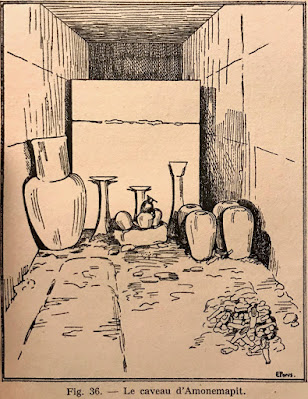
Thus, in “Tanis – Twelve years of excavations in a forgotten capital of the Egyptian Delta”, the Egyptologist Pierre Montet recounts the extraordinary day of the discovery of the tomb of Pharaoh Amenemopé: “The entrance was opened on April April 16). His Majesty King Farouk, who had arrived the day before in Saan, where he had erected a city of tents, was present, as was Canon Drioton, Director of the Egyptian Antiquities Service, and a young Egyptian Egyptologist, Professor Abou Bekr. The vault was furnished in much the same way as that of Psousennès: a granite sarcophagus at the bottom, canopic vases, metal vases, a large sealed jar, funerary statuettes and a vast gilded wooden chest that had collapsed due to the effects of time and humidity in the front half. Once these objects had been safely removed, the sarcophagus lid was placed in their place. Much less opulent than Psousannes, the new ruler had made do with a single stone sarcophagus and a wooden anthropoid coffin lined with gold. Wood was reduced to almost nothing. The gold plates were removed. Needless to say, the mummy had suffered enormously. His ornaments, less numerous than those of Psousennès, nevertheless constitute a wonderful collection: a gold mask, two necklaces, two pectorals, two scarabs, lapis and chalcedony hearts, bracelets and rings, a large cloisonné gold falcon with outstretched wings…”.

Falcon pendant – gold and cloisonné glass paste
21st Dynasty – reign of Amenemopé (c. 1000 BC)
from Tanis, the tomb of Amenemopé – NRT III – discovered by Pierre Montet on April April 16
on display at the Egyptian Museum in Cairo – JE 86036 (museum photo)

The hawk, which seems to soar powerfully into the sky, is 10.5 cm high and 37.5 cm wide. The head and legs are in gold, while the rest of the body is in gold cloisonné with pâte de verre in shades of green, perfectly simulating the shimmer of the feathers.

In “Les trésors du musée égyptien”(The Treasures of the Egyptian Museum), Silvia Einaudi describes it as follows: “The falcon is depicted in flight with its wings spread. The head, turned to the left, is made of solid gold. The beak, eye, neck and decorative motif on the cheek are in dark pâte de verre. The raptor’s wings, body and tail are executed using the cloisonné technique: glass paste in delicate shades of pink and green is inlaid with gold, giving life to a simple polychromy. The wing feathers radiate outwards, forming two rows.
On the other hand, the body is decorated with a teardrop motif that continues right down to the tail. The legs, also in solid gold, hold the ‘shen’ signs, a symbol of eternity, to which two gold plates bearing the sovereign’s name are attached. The hieroglyphs inside the cartouches are executed in coloured glass paste inlaid with gold. The plate on the right bears the pharaoh’s coronation name: ‘Usermaatra Setepenamon, beloved of Osiris and Ro-Setau (Memphis necropolis)’; on the left, his birth name: ‘Ménémopé Meramon, beloved of Osiris, lord of Abydos'”.

Amenemopé’s vault at its opening – Drawing by E. Pons
Source: Pierre Montet, “Tanis”, Payot, 1942

Amenemopé, pharaoh of the 21st Dynasty, reigned from Tanis around 1001-992 BC. The successor of Psusennes I, he was, as the book mentioned above states: “buried in the latter’s tomb, in a granite-covered room originally created to house the remains of Moutnedjemet, wife and sister of Psusennes I”. We can only wonder why this small vault was chosen as his burial place when he “had” his own tomb referenced NRT IV (NRT = Nécropole Royale de Tanis).

Face of the pharaoh Amenemopé – gold leaf (upper surviving part of his gilded wooden sarcophagus)
21st Dynasty – reign of Amenemopé (c. 1000 BC)
from Tanis, the tomb of Amenemopé – NRT III – discovered by Pierre Montet on April April 16
on display at the Egyptian Museum in Cairo – JE 86059

On May 3, May 3, in a truck protected by the army, Amenemopé’s treasure made its way to the Egyptian Museum in Tahrir Square. The falcon-shaped pendant was registered in the Journal des Entrées under reference: JE 86036.

As for Pierre Montet’s team, the dramatic events of the Second World War forced them to end their quest for the past of Tanis and turn their attention to the tragic present. Excavations will not resume until the end of the conflict…

Marie Grillot

Sources : 

The Hawk of King Amenemope http://www.globalegyptianmuseum.org/record.aspx?id=15530 Pierre Montet, Tanis – Twelve years of excavations in a forgotten capital of the Egyptian Delta, Payot, Historical Library, 1942
Pierre Montet, The royal necropolis of Tanis according to recent discoveries, Reports of the Academy of Inscriptions and Belles-Lettres sessions, 89th year, N. 4, 1945. pp. 504-517, Perseus https://www.persee.fr/doc/crai_0065-0536_1945_num_89_4_77901 Georges Goyon, The discovery of the treasures of Tanis, Pygmalion, 1987
Jean Yoyotte, Tanis l’or des pharaons, exhibition catalog Paris, National Galleries of the Grand Palais, March 26 – July 20, 1987, Association Française d’Action Artistique, 1987
Henri Stierlin, Christiane Ziegler, Tanis Trésors des pharaons, Seuil, 1987
Francesco Tiradritti, Treasures of Egypt – The wonders of the Egyptian Museum in Cairo, Gründ, 1999
Pharaons – Catalog of the exhibition presented at the Institute of the Arab World in Paris, from OctobeOctober 15 to April April 10, IMA, Flammarion, 2005

Posted 5th MaMarch 5by Marie Grillot

Holy Was The Birth in The Holy Egypt

Standard

Of course, every holy book and religious ritual teaches that giving birth and having offspring is a highly important human act on this earth. No wonder, then, that it would go in the same way in ancient Egypt.

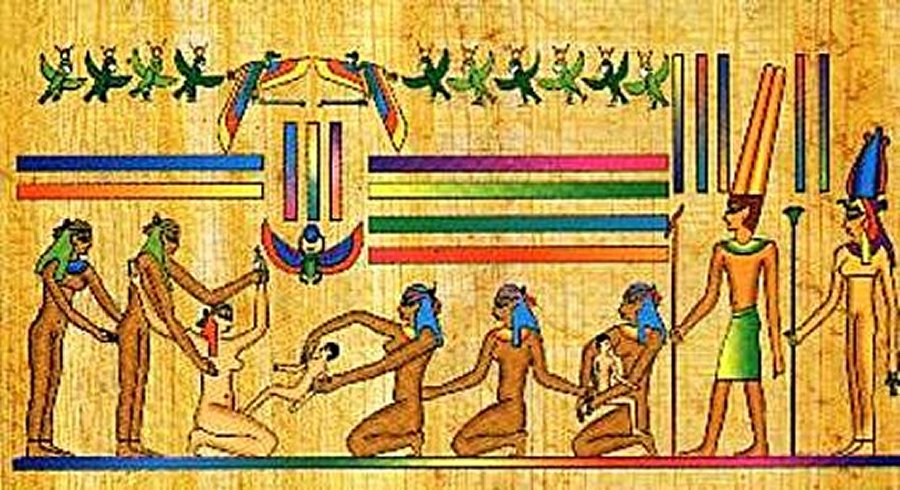
Most ancient Egyptian women laboured and delivered their babies on the cool roof of the house or in an arbour or confinement pavilion, a structure of papyrus-stalk columns decorated with vines.

isis_giving_birth, via Canada.inc

In the Yogi method, the best way to bear a child is in the water! I believe if we let the newborn child into the water immediately, they would feel happy and free and could more easily grasp their changing world perception.

Childbirth scene, Kom Ombo Temple, partial relief
Photo by G. Blanchard (2006)
via Visualizing Birth

The standard childbirth practice in ancient Egypt has long been known from papyrus texts. It looked more natural as the woman delivered her baby while squatting on two large bricks, each colourfully decorated with scenes to invoke the magic of gods for the health and happiness of mother and child.

Let’s read this interesting report by the brilliant Marie Grillot about an enchanting find and the story of constant upspring in Old Egypt!

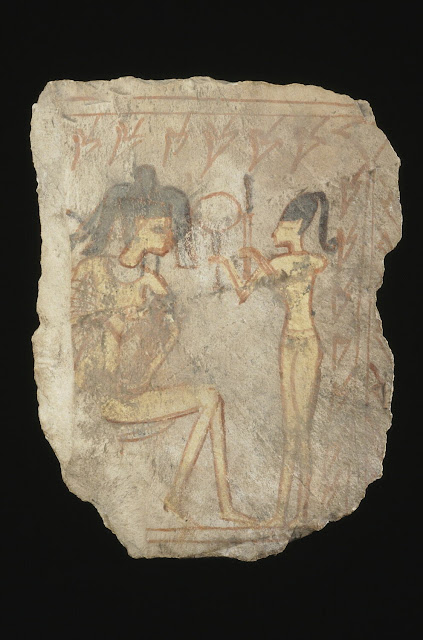
On this ostracon, a maternity scene more than 3000 years old…

via égyptophile

Figured ostracon representing a mother breastfeeding her child and her servant – limestone – 19th – 20th dynasty – from Deir el-Medineh
Department of Egyptian Antiquities of the Louvre Museum – E 25333 (previously at the Fouad I Agricultural Museum in Cairo
then in the collection of Moïse Lévy de Benzion, then in that of Robert Streitz, who donated it to the Parisian Museum in 1952)
photo © 2002 Louvre Museum / Georges Poncet

Several figured ostraca* from Deir el-Medineh illustrate this extraordinary, touching moment of motherhood, more precisely of the mother breastfeeding her newborn. The gesture, the tenderness, and the concentrated attention paid to the nurturing function remain immutable across the centuries.

This scene, dating from the 19th – 20th dynasty, is reproduced on a piece of limestone 15 cm high and 11.7 cm wide. The three characters are drawn in red ocher while their complexion is painted in yellow ocher and their hair in black.

It takes place in a beautiful plant setting, under a canopy, supported by columns (only one is visible on the right, the left part being lacunar), covered with lanceolate leaves of bindweed or convolvulus. “The leaves of bindweed have a symbolic meaning with a sexual connotation: they are often present in scenes relating to love and the renewal of life”, explains Anne-Mimault-Gout (“Les artistes de Pharaon”).

Figured ostracon representing a mother breastfeeding her child and her servant – limestone – 19th – 20th dynasty – from Deir el-Medineh
Department of Egyptian Antiquities of the Louvre Museum – E 25333 (previously at the Fouad I Agricultural Museum in Cairo
then in the collection of Moïse Lévy de Benzion, then in that of Robert Streitz, who donated it to the Parisian Museum in 1952)
photo © 2002 Louvre Museum / Georges Poncet

Emma Brunner-Traut calls this kiosk “the birthing arbour” and thinks “that it was a temporary building, raised in the open air for the moment of childbirth and that the mother remained there for 14 days until her purification”…

This birth pavilion sheltered the difficult hours of suffering inherent in childbirth, just as it witnessed the intense emotion linked to the miracle of giving life… Its aim was also, most certainly, to benefit the young, give birth calmly, rest and protect her, as well as the child, from potential external risks or dangers. In “Carnets de Pierre”, Anne-Mimault Gout evokes the interesting idea that: “These pavilions were perhaps the ancestors of the mammisis of the Greco-Roman temples, the birth chapels”.

Sitting on a curved stool equipped with a comfortable cushion, the mother is shown, turned to the right and naked, adorned only with a large necklace. Her body, leaning forward, seems to envelop and protect the infant she is breastfeeding. Unfortunately, the time has partly tarnished and erased its representation…

Figured ostracon representing a mother breastfeeding her child and her servant – limestone – 19th – 20th dynasty – from Deir el-Medineh
Department of Egyptian Antiquities of the Louvre Museum – E 25333 (previously at the Fouad I Agricultural Museum in Cairo
then in the collection of Moïse Lévy de Benzion, then in that of Robert Streitz, who donated it to the Parisian Museum in 1952)
photo © 2002 Louvre Museum / Georges Poncet

Her undone, untamed hairstyle —typical of that of women giving birth in ancient Egypt—attracts the eye. The hair raised in a totally anarchic manner on the head probably reflects the fact that during these extraordinary days, all the attention was focused on the child, to the detriment of the care given to his physical appearance…

As if to remind her that her new role as the mother should not make her forget her femininity, the young servant in front of her hands her a mirror and a kohol case. These toiletry accessories are, according to Anne Mimault-Gout, “charged with an erotic connotation linked, through beauty, to rebirth”. Young, his thin, slender body is naked. Her hair is tied in a ponytail on the top of her head, falling in a pretty curl over her shoulder. For J. Vandier d’Abbadie, “this hairstyle and the pronounced elongation of the profile evoke the iconography of Syro-Palestinian divinities – in particular, Anat and Astarte -, that is to say, that these young girls with high heads would be young asian maids”…

Figured ostracon representing a mother breastfeeding her child and her servant – limestone – 19th – 20th dynasty – from Deir el-Medineh
Department of Egyptian Antiquities of the Louvre Museum – E 25333 (previously at the Fouad I Agricultural Museum in Cairo,
then in the collection of Moïse Lévy de Benzion, then in that of Robert Streitz, who donated it to the Parisian Museum in 1952)
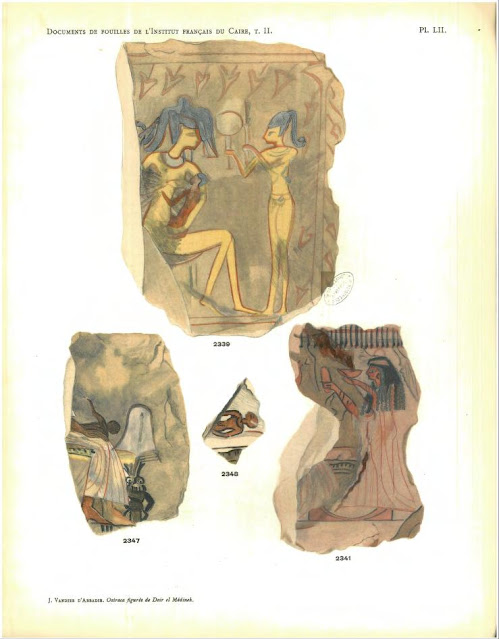
published here in Jeanne Vandier d’Abbadie “Deux ostraca figurés”, BIFAO, 1957 (p. 21-34, p. 22-23, fig. 2)

In her fascinating study “Postpartum purification and relief rites in ancient Egypt” (all of whose rich analyses, unfortunately, cannot be cited here), Marie-Lys Arnette returns to the rites represented on these figurative ostraca of the Ramesside period representing “gynoecium scenes”, as J. Vandier d’Abbadie calls them… “The actions that these scenes depict are indeed rites since they are very close formally to the representations of offerings made to the dead or the gods and follow the same codes: The beneficiary is seated while the officiant approaches them, standing and holding the objects they are about to offer in their hands. These scenes concern the period following birth, and the rites which appear there must allow the purification and aggregation of the mother. It is a question of representing the reliefs, the sequence we can attempt to restore – in a necessarily incomplete manner because the analysis depends on scant documentation”…

These representations are very precious because they are among the only ones that allow us to understand the intimacy of women… But what was their goal? E. Brunner-Traut, in particular, “suggests seeing ex-votos there. We can indeed consider these objects as having been used, in one way or another, in cults linked to fertility, but it is impossible to specify this use further”…

Figured ostracon representing a mother breastfeeding her child and her servant – limestone – 19th – 20th dynasty – from Deir el-Medineh
Department of Egyptian Antiquities of the Louvre Museum – E 25333 (previously at the Fouad I Agricultural Museum in Cairo,
then in the collection of Moïse Lévy de Benzion, then in that of Robert Streitz, who donated it to the Parisian Museum in 1952)
published here in Jacques Vandier d’Abbadie “Catalogue of figured ostraca of Deir el Médineh” II.2, n°2256-2722, IFAO, Cairo, 1937

This ostracon, which comes from Deir el-Medineh, is described by Jacques Vandier d’Abbadie in his “Catalogue of figured ostraca, 1937” under the number 2339. It is indicated as having previously been at the Fouad I Agricultural Museum in Cairo. It was then found in the collection of Moïse Lévy de Benzion, owner of a famous store in Cairo, who then offered it at auction under number 36 of his sale on March 14, 1947, in Zamalek. Robert Streitz, a Belgian architect based in Cairo, then purchased it. He kept it for several years before donating it in 1952 to the Department of Egyptian Antiquities of the Louvre Museum. It was registered there under the inventory number E 25333.

Marie Grillot

*Ostraca (singular: ostracon): Shards, silver or fragments of limestone, or even terracotta, which were, in antiquity, used by artisans to practice. This type of “support”, which they found in abundance on the sides of the mountain, allowed them to make and redo their drawings or writings until they reached excellence and were finally admitted to work “in situ” in the residences of ‘eternity.

They are generally classified into two categories: inscribed (hieroglyph, hieratic, demotic, etc.) or figured (drawing, sculpture).

Sources:
Figured ostracon – E 25333 https://collections.louvre.fr/ark:/53355/cl010004032 Jacques Vandier d’Abbadie, Catalog of figured ostraca of Deir el Médineh II.2, n°2256-2722, IFAO, Cairo, 1937 https://archive.org/details/DFIFAO2.2/page/n1/mode/2up Bernard Bruyère, Report on the excavations of Deir el Médineh (1934-1935). Third part. The village, public dumps, the rest station at the Valley of the Kings pass, Cairo, Printing office of the French Institute of Oriental Archeology (IFAO), (Excavations of the French Institute of Oriental Archeology = FIFAO; 16), p. 131-132, 1939 https://ia600606.us.archive.org/30/items/FIFAO16/FIFAO%2016%20Bruyère%2C%20Bernard%20-%20Le%20village%2C%20les%20discharges%20public%2C%20la%20station%20de %20rest%20du%20col%20de%20la%20valley%20des%20kings%20%281939%29%20LR.pdfEmma Brunner-Traut, Die altägyptischen Scherbenbilder (Bildostraka) der Deutschen Museen und Sammlungen, Franz Steiner, Wiesbaden, 1956 Jeanne Vandier d’Abbadie, Two figured ostraca, Bulletin of the French Institute of Oriental Archeology (BIFAO), 1957, p. 21-34, p. 22-23, fig. 2, IFAO, Cairo, 1957 https://archive.org/details/DFIFAO2.2 https://archive.org/details/DFIFAO2.2/page/n69/mode/2up Emma Brunner-Traut, Egyptian Artists’ Sketches. Figured ostraka from the Gayer-Anderson Collection in the Fitzwilliam Museum Cambridge, Cambridge, 1979

The donors of the Louvre, Paris, Musée du Louvre, 1989

Perfumes and cosmetics in ancient Egypt, exhibition catalogue, Cairo, Marseille, Paris, 2002, p. 99, 139, ESIG, 2002

Anne Minault-Gout, Stone notebooks: the art of ostraca in ancient Egypt, p. 36-37, Hazan, 2002

Guillemette Andreu, The artists of Pharaon. Deir el-Medina and the Valley of the Kings, exhibition catalog, Paris, Turnhout, RMN, Brepols, p. 113, no. 53, 2002

Guillemette Andreu, The Art of Contour. Drawing in ancient Egypt, exhibition catalog, Somogy éditions d’Art, p. 320, ill. p. 320, no. 168, 2013

Marie-Lys Arnette, Postpartum purification and relief rites in ancient Egypt, Bulletin of the French Institute of Oriental Archeology (BIFAO), 114, 2015, p. 19-72, p. 30-31, fig. 2, IFAO, Cairo 2015

Hanane Gaber, Laure Bazin Rizzo, Frédéric Servajean, At work, we know the craftsman… of Pharaon! A century of French research in Deir el-Medina (1917-2017), exhibition catalogue, Silvana Editoriale, p. 36, 2017

Tutankhamun: The Most Short-Term and Mysterious Pharaoh!

Standard
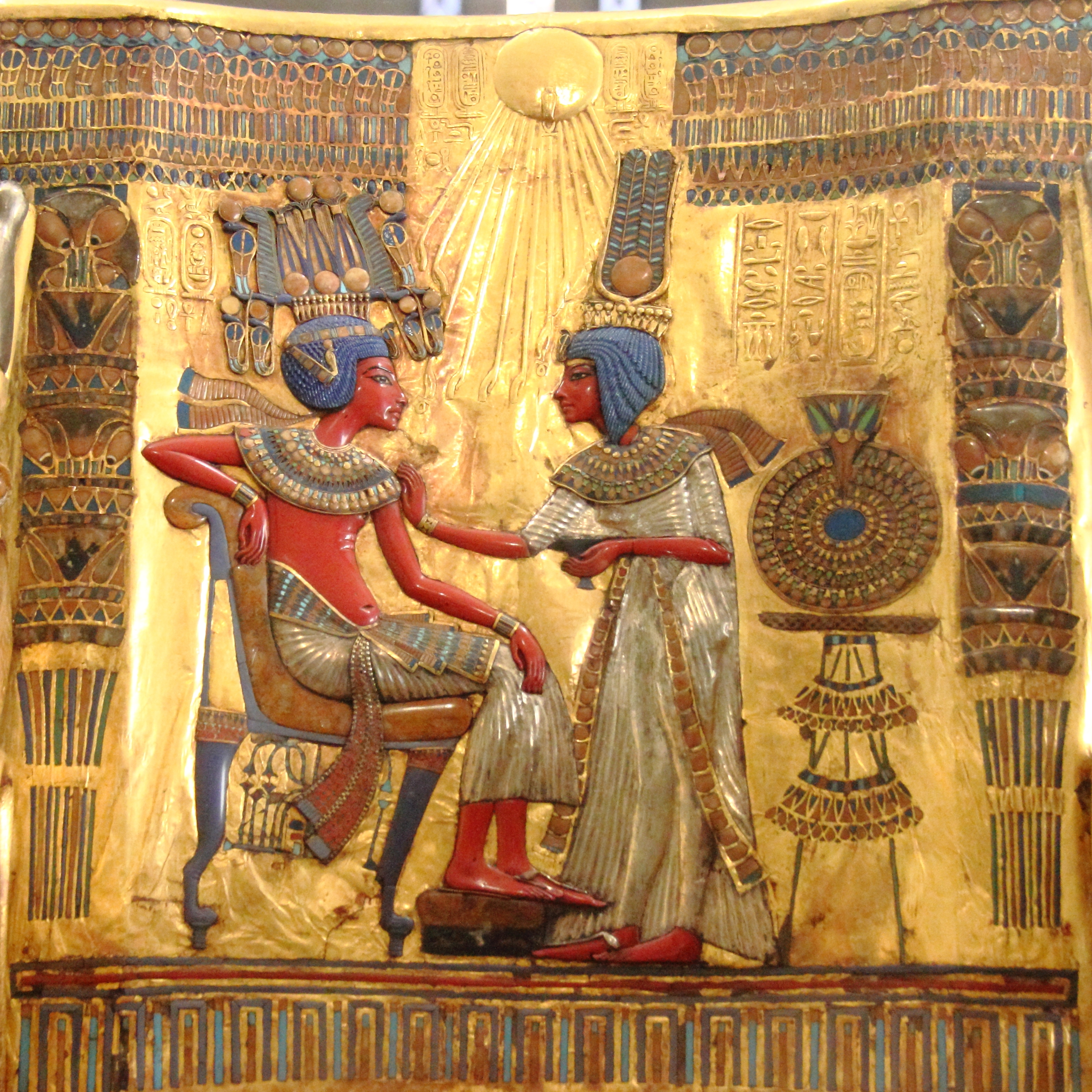
Tutankhamun and his queen, Ankhesenamun
By Tiger Cub – own work, Public Domain,

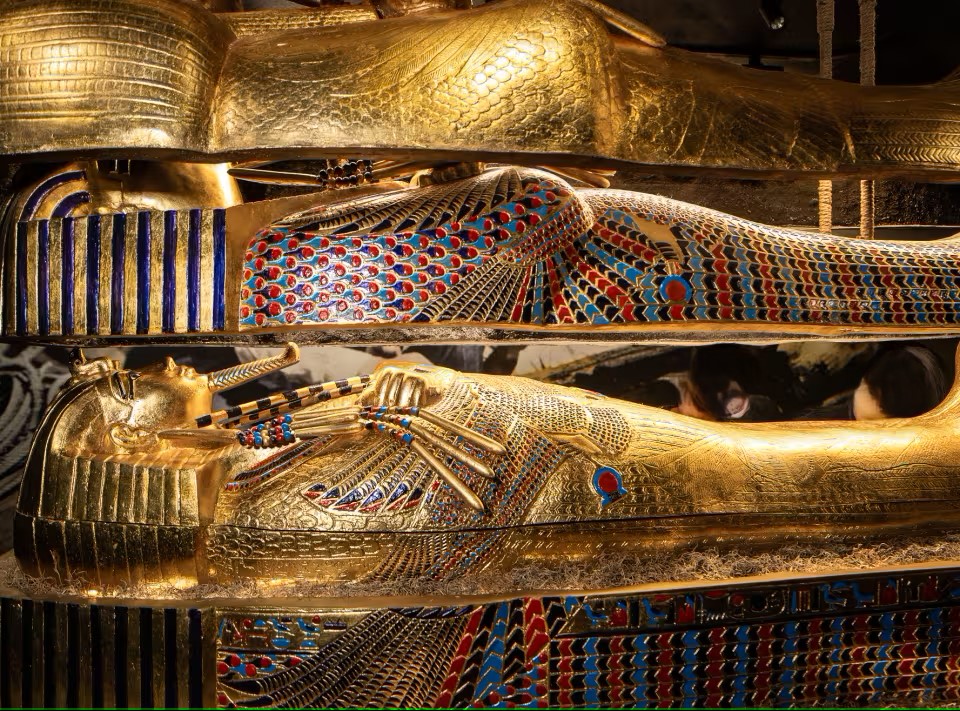
King Tutankhamun is one of the most famous rulers ever, thanks to Howard Carter‘s 1922 discovery of the pharaoh’s tomb in Egypt’s Valley of the Kings, sponsored by British aristocrat George Herbert. The find stirred the imaginations of millions fascinated by the boy king’s golden-masked mummy.

The throne of Tutankhamun, the Aten depicted above
By Djehouty – Own work, CC BY-SA 4.0,

He and his tomb are (one of) the most beautiful and, tragically, the most robbed and plundered in ancient Egyptian explorations. No wonder the shining gold and humans’ greed! Nonetheless, the efforts of the good side of humans still try to restore and discover more details of the life of this fascinating man, and they will continue for sure!

Here, we read an exciting story by Marie Grillot and Marc Chartier about a deep investigation and discovery using modern technology.

Tutankhamun: the story continues…

via égyptophile

In November 1922, after ten years of excavations and research in the Valley of the Kings, Howard Carter and Lord Carnarvon finally discovered the first step of Tutankhamun’s tomb, which they had been desperately searching for.

Within this KV62, with an area of just over 100 m², a team of the best experts will work on clearing and saving the objects. Some will devote nearly ten years to it, and the whole world, fascinated by this young pharaoh emerging from oblivion, will marvel at the priceless treasures surrounding him for his afterlife.

For more than 90 years, the number of visitors who have entered the pharaoh’s tomb to absorb a small part of his eternity has continued to increase, endangering his survival. The humidity generated by these visits significantly deteriorated the paintings and generated mould, causing significant damage. This led the Antiquities Department to limit the number of daily visits and close access to the site to the public in 2011.

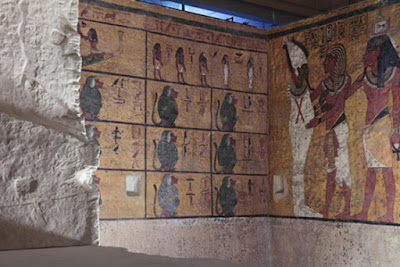
This context, which seemed inevitable, was understood in 2002, and the basis for constructing a replica of the KV62 was studied.

Illustration Factum Arte

The company Factum Arte, founded by the British painter Adam Lowe and based in Madrid, was chosen to build this replica. The Egyptian Ministry of Tourism and Antiquities and funds from the European Union partially financed it.

Experts in these new technologies have implemented, used, and piloted innovative techniques, the most advanced of which is 3D. In 2009, for many months, the Factum Arte team invested in the tomb to memorize every centimetre with the highest precision. “The first work consisted of carefully recording the relief of the walls and the sarcophagus with a scanner specially designed for the occasion. Its resolution reached one hundred million points per m². Then, the second stage consisted of photographing the paintings with a very high resolution and faithfully respecting the colours.”

Armed with this data, Factum Arte technicians returned to their premises in Madrid, where they began manufacturing the facsimile in the form of hundreds of high-density polyurethane panels. These were assembled on-site to form the four walls of the mortuary chamber. The inauguration of the “double” tomb took place in April 2014.

And this is where another part of this beautiful story begins…

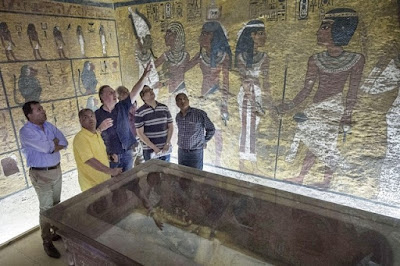
Egyptian Minister of Antiquities, Mamdouh Al Damati, listening to British Egyptologist Nicholas Reeves,
near the sarcophagus of Tutankhamun – Photo: AFP/ Khaled Desouki

Nicholas Reeves, an English Egyptologist and foremost specialist in Tutankhamun, carefully studies the photos taken by Factum Arte in the burial chamber. This room is the only one in the tomb, and it is decorated with paintings: “rudimentary, classic, of austere simplicity” executed on a plaster coating painted yellow. These paintings reflect the ritual name given to it in antiquity: “the Hall of Gold.” He then noticed reliefs which could be blocked openings overtures onto two rooms unexplored until now. By pushing further his reasoning, he believes that one wall (the north wall) would be Queen Nefertiti’s burial place, while the other (the west wall) would be a storage space.

Nicholas Reeves supports his hypothesis – contested, it is necessary to recall, by other Egyptologists – first of all on his interpretation of the frescoes of the northern wall of the tomb (which represent the young king Tutankhamun performing a funerary ritual for his mother, Queen Nefertiti), then on the fact that Tutankhamun died prematurely, at the age of 19, and that, due to lack of an available tomb, the priests would have taken the decision to reopen Nefertiti’s tomb, ten years after his death, to bury the young king in a hypogeum not provided for him.

Jean-Claude Barré
© http://www.HIP.Institute / Philippe Bourseiller

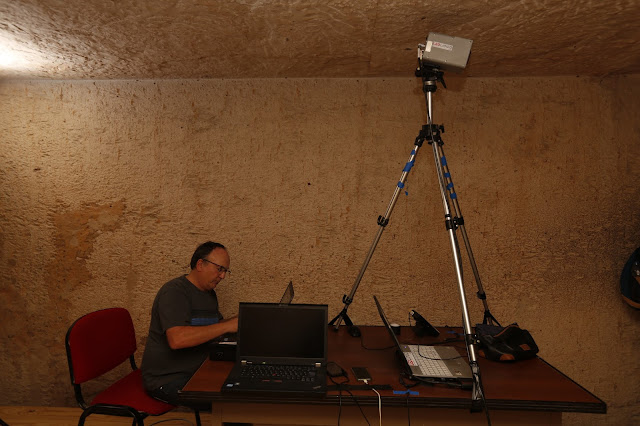
To verify this hypothesis, the Ministry of Antiquities has given the green light to enter noninvasive and nondestructive techniques onto the scene. First of all, infrared thermography is an operation led by Jean-Claude Barré, who came to Egypt as part of the “Scan Pyramids” mission. Based on images captured regularly over 24 hours, this technique can reveal temperature differences, possibly leading to cavities under a given surface. This was indeed the case in the tomb of Tutankhamun, where such temperature differences were detected through the painted coating of the north wall, without it being possible to determine the exact configuration of a hollow space or, even more so, its content.

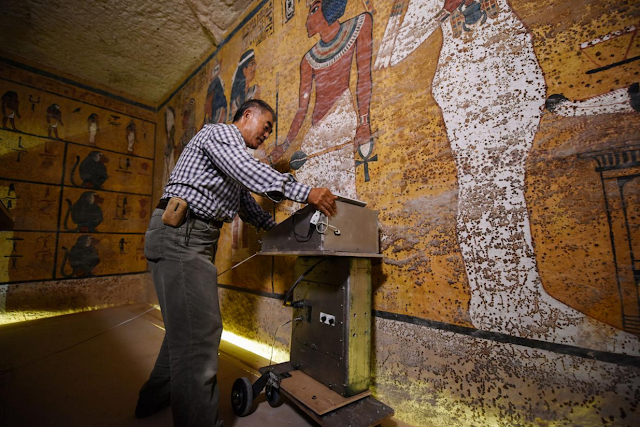
After some tests in a tomb whose configuration is already known (the KV5) to verify the effectiveness and reliability of the equipment used, the second series of surveys in Tutankhamun’s tomb was carried out using the radar technique. This device was placed 5 cm from the wall to prevent damage.

During the press conference, held in Luxor on November 28, 2015 late in the morning, at the house of Howard Carter, the Minister of Antiquities, Dr. Mamdouh El-Damaty, announced that the radar scans revealed the existence of a large void, with a long corridor, behind what we now know to be a false wall (a “ruse”, a ploy, intended to thwart possible tomb robbers) in Tutankhamun’s burial chamber. It is helpful to remember that the tomb was robbed several times in antiquity.

Hirokatsu Watanabe
Photo Brando Quilici – National Geographic

Analyzes by Hirokatsu Watanabe, a Japanese radar specialist, also provide evidence of a second door hidden in the adjoining west wall.

The Minister declared, “We previously spoke of a 60 per cent chance that something was behind the walls. But now, reading the first analyses, we can assert a 90 per cent probability.”

He specifies that the data collected will quickly be examined more deeply in Japan.

He then mentioned a possible next step: digging a small hole in the wall (on an unpainted space) of the neighbouring room, called the “Treasure Room,” adjoining the “empty” behind the wall in the burial chamber to introduce a browser camera.

Missing fragments of the wall broken by Carter, photographed by Burton
and reconstituted in the replica of the tomb – photo Marie Grillot

It is unthinkable to risk damaging or deteriorating these painted walls. It is helpful to remember that during the second season of excavation, Howard Carter destroyed part of the scene on the south wall and then recovered the fragments. Still, these practices are no longer used today.

The questions remain and even multiply… But one answer is inevitable: Tutankhamun has not finished being in the spotlight!

Marie GrillotMarc Chartier

To complete the information:

http://news.nationalgeographic.com/2015/11/151126-nefertiti-tomb-tut-egypt-archaeology/ http://news.nationalgeographic.com/2015/11/151128-tut-tomb-scans-hidden-chambers/ http://english.ahram.org.eg/NewsContent/9/40/171833/Heritage/Ancient-Egypt/Radar-test-underway-before-search-for-Nefertiti-in.aspx

A Kohl Tube, Sky-Blue Deity; A Divine Gift For An Eternal Beauty!

Standard

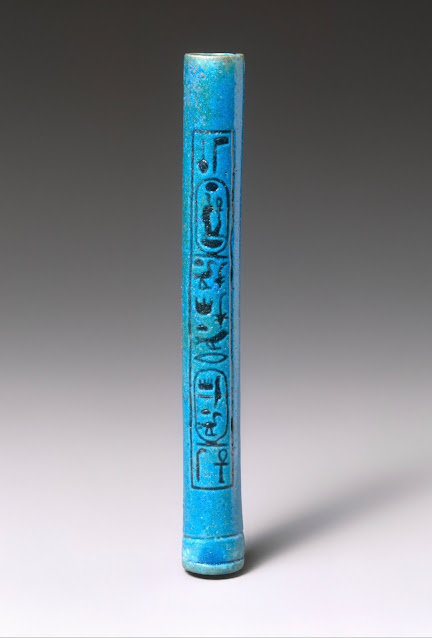
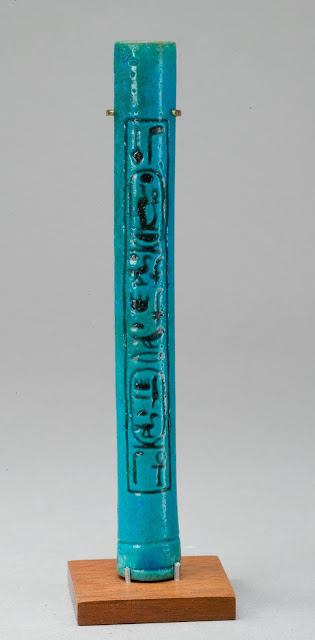
This is a deep blue glazed faience kohl tube. A column is inlaid with light blue on one side of the cylinder. This inscription is placed within a light blue frame. It reads, “The Good God, Lord of the Two Lands, Neb ma’at-re (Amenhotep III). The Kingdom, Wife Tiy, granted life.” A shallow indentation forms a border at the bottom of the tube. Condition: Small cracks at the bottom; blue glaze missing on half of the “neb” sign.

Here is another fascinating story by the brilliant lady Marie Grillot of a deity tube to help compare to divine beauty.

A kohol tube in the names of Amenhotep III and his daughter and wife Satamon…

via égyptophile

Kohl tube of Satamon, daughter and the great royal wife of Amenhotep III – earthenware – 18th dynasty
formerly in the collection of Reverend William MacGregor – acquired by Lord Carnarvon at Sotheby’s London in 1922
arrived at the Metropolitan Museum of Art in New York in 1926 by acquisition from the Carnarvon Collection – entry number 26.7.910

This delicate and elegant Egyptian earthenware kohol tube is 14.4 cm high and has a diameter of 1.8 cm. For Jeanne Vandier d’Abbadie (“Egyptian toilet objects at the Louvre Museum”), it was during the New Kingdom that kohol vases or pots which had varied shapes “were very often replaced by kohol tubes. This new form would have been introduced into Egypt under the reign of Tuthmosis III by the Asians. Indeed, it sometimes happens, from this time on, that the servants who assist the lady in her toilet have the Syrian type… These young foreigners hand their mistress the kohol tube into which the stylus is immersed…”

Originally, this tube was a simple Nile reed – hence sometimes its name “flute” -in the hollow of which the makeup was placed. For the wealthier classes of society, artisans were inspired by this natural element. They reproduced it more “luxurious” with more precious materials, ivory, for example, or, in this case, earthenware.

Kohl tube of Satamon, daughter and the great royal wife of Amenhotep III – earthenware – 18th dynasty
formerly in the collection of Reverend William MacGregor – acquired by Lord Carnarvon at Sotheby’s London in 1922
arrived at the Metropolitan Museum of Art in New York in 1926 by acquisition from the Carnarvon Collection – entry number 26.7.910

In ancient times, kohol was the makeup product par excellence; it was inseparable from the concept of beauty, intimately linked to the enhancement of the gaze. Its use has thus transcended these stretched eyes surrounded by black, which, even today, disturbs and fascinates. Made from powdered galena, it not only highlighted the intensity of the “Egyptian” gaze but also had, in this country where the light is so bright, the reverberation so intense, and the sun so burning, a protective function of the eye.

It was applied using a fine stylus – or stick. With a rounded head and a blunt tip, it could be made of hematite, wood (like ebony), ivory, and sometimes bronze or copper. No stylus is presented with this tube; one can imagine it has disappeared. Likewise, nothing indicates the presence or absence of a small “accommodation” fitted inside to store it. The sealing is also absent: in the more “rustic” models, it was done by a plug of fabric or wood.

Kohl tube of Satamon, daughter and the great royal wife of Amenhotep III – earthenware – 18th dynasty
formerly in the collection of Reverend William MacGregor – acquired by Lord Carnarvon at Sotheby’s London in 1922
arrived at the Metropolitan Museum of Art in New York in 1926 by acquisition from the Carnarvon Collection – entry number 26.7.910

In “Amenhotep III, the Sun Pharaoh”, Arielle P. Kozloff provides technical information on its creation: “The colour of the tube is medium blue, which suggests a copper base. This colour was used more frequently towards the end of the reign of Amenhotep III and during the Amarna period, unlike the cobalt-based blues that the king preferred. The dark-coloured inscription is undoubtedly cobalt-based.”

If the object is well made, the vertical inscription presented in a rectangle delimited by a black line in a column of delicate hieroglyphs is precious. Christiane Ziegler (“Queens of Egypt”) translates it thus: “The good god Nebmaâtre [Amenhotep III]; the king’s daughter, the Great Royal Wife Satamon, may she live.” She adds, “We noticed that the king’s name always accompanies that of the woman in his family mentioned on the kohol tubes.”

When we mention the wife of Amenhotep III, we immediately think of Queen Tiyi… Satamon (“The Daughter of Amon”) was the eldest daughter of Tiyi and Amenhotep III. However, explains Christian Leblanc in “Queens of the Nile”: “She distinguished herself especially towards the end of the reign of Amenhotep III by herself becoming the wife of her own father”.

Due to our current morality and contemporary conception of the family, understanding and admitting such a union is often tricky. However, well attested since at least the Middle Kingdom, this incest could only exist in the royal and divine world for reasons of an eminently sacred nature. Ordinary mortals did not practise it.

Relief depicting Satamon from the funerary temple of Amenhotep III
Petrie Museum, London – UC 14373 – museum photo

“The role of princesses was so important that two of them, Satamon and Isis, became ‘Great Royal Wives’ during the last decade of the reign, which in no way diminishes the status of Queen Tiya. Indeed, the “Theological model of divine families on which that of the king’s family was modelled favoured the adoption of different generations of women. Was Hathor not simultaneously mother, wife and daughter of the god Ra?” (Arielle P. Kozloff). Thus, different museums hold kohol tubes, identical or close to that of Satamon, with the names of Tiyi, of course, and Isis.

Its current history is found in the 20th century in the collection of Reverend William MacGregor (1848-1937). This vicar is a “prominent member of the Egypt Exploration Society and the Institute of Archeology of the University of Liverpool. He patronised numerous excavations, notably those undertaken by Naville, Garstang, and Petrie, for which he frequently and actively participated in the field. His remarkable collection of antiquities is unprecedented compared to any other private collection in England, Europe or America” was then specified in the introduction to the sales catalogue when he decided to separate it. One thousand eight hundred objects will be auctioned at Sotheby’s London from June 26 to July 6, 1922.

Reverend William MacGregor, vicar, prominent member of the Egypt Exploration Society, Institute of Archeology, University of Liverpool and patron of many excavations
(Liverpool, 16-5-1848 – Tamworth, 26-2-1937)

Satamon’s kohol tube, presented under lot 255, will be acquired by another great collector, Lord Carnarvon. The same year, it was among the artefacts lent by the British aristocrat for the “Exhibition of Ancient Egyptian Art” at the Burlington Fine Arts Club in London. Percy Newberry, responsible for writing the catalogue, describes it as follows under number 17: “Kohol tube – blue glazed earthenware -, with a vertical line of hieroglyphs in black, giving the names of Amenhotep III and the great royal wife, Sat-amon'”.

Lord Carnarvon died in Cairo on April 5, 1923, shortly after the discovery of Tutankhamun’s tomb. According to a codicil to his will, intended for his wife, Lady Almina, he had expressed his suggestions on the future of his collection in case she had to part with it, which she did, putting Howard Carter in charge of the negotiations.

Lord Carnarvon – George Edward Stanhope Molyneux Herbert, 5th Earl of Carnarvon
(Highclere – RU – 26-6-1866 – Continental-Savoy Hotel, Cairo, Egypt – 5-4-1923)
and his wife, Lady Almina

Thanks to the generosity of Edward S. Harkness, the Metropolitan Museum of Art in New York acquired it in 1926 for $145,000.

This is how this kohol tube bearing the names of Amenhotep III and Satamon arrived in the great New York Museum collections: it was registered under entry number 26.7.910.

Marie Grillot

Sources:

Kohl Tube Inscribed for Amenhotep III and Princess Sitamun https://www.metmuseum.org/art/collection/search/544512 Catalogue of the MacGregor collection of Egyptian antiquities, Sotheby, Wilkinson & Hodge, auction catalogue, sale dates: 26-30 June and 3-6 July 1922, London, 1922 https://www.abebooks.fr/edition-originale/Catalogue-MacGregor-collection-Egyptian-antiquities-Sotheby/31411328486/bd Percy Edward Newberry, Harry Reginald Hall, Catalogue of an Exhibition of Ancient Egyptian Art, London: Burlington Fine Arts Club, p. 34 no. 17, 1922 https://archive.org/details/catalogueofexhib00burlrich Rev William MacGregor https://www.tamworthheritagetrust.co.uk/articles/rev-william-macgregor Jeanne Vandier d’Abbadie, Egyptian toilet objects at the Louvre Museum, editions of the national museums, Paris, 1972
William C. Hayes, Scepter of Egypt II: A Background for the Study of the Egyptian Antiquities in the Metropolitan Museum of Art: The Hyksos Period and the New Kingdom (1675-1080 B.C.), Cambridge, Mass., The Metropolitan Museum of Art, p. 257, fig. 155, 1959
Christian Leblanc, Nefertari, “L’aimee-de-Mout”, Editions du Rocher, 1999 (pp. 185-186 on incest practised in the royal sphere)
Amenhotep III, the sun pharaoh, Meeting of National Museums, 1993
Christiane Ziegler, Queens of Egypt, Somogy éditions d’art, Grimaldi Forum, 2008
Christian Leblanc, Queens of the Nile, The Library of the Introuvables, 2009
Morris L. Bierbrier, Who Was Who in Egyptology, London, Egypt Exploration Society, 2012
Pierre Tallet, 12 queens of Egypt who changed history, Pygmalion, 2013

 Published January 6 ago by Marie Grillot

From the Ancient Times to the Modern Era: What Lesson Remains to Learn?

Standard

I am sharing an article with you at an unusual time for two reasons. First, today marks the beginning of Spring (around 6.26 am, CET), also celebrated as the ancient Persian New Year. Second, I’ll be travelling to Southern Germany for a few days over the weekend into the next, so I thought it would be an opportunity to write a few words.

This is a joyful celebration to leave behind dark and cold times and welcome brightness and warmth; the only difference to Easter is that this fiesta marks the start of a new year. It all sounds friendly and happy, though, as you might know, there is no happiness left to celebrate in Iran. Of course, the brave Iranians do celebrate it nonetheless, even though it coincides with the mourning Islamic month of Ramadan!

It looks like a never-ending battle between ancient traditional Persian ceremonies and the imposed Arabic religion. I don’t want to shout out like some lofty patriotic people who still try to prove a trampled and destroyed glory that might have been perfectly installed by Cirus the Great during his reign, who had built an enormous empire based on human rights but slowly was destroyed not only by the Arabs but even before that by the latest dynasties and their avaricious religious monks.

One of the most significant mistakes humans can make is relying on who or what they were in the past rather than who or what they are now. This happened in Iran many years ago and continues to happen now, as people keep talking about their glorious history. It seems that Iranian monarchists are attempting to use the pride of ancient Persia to promote their cause, much like how Mussolini tried to do the same with Rome for Italy. However, I struggle to understand these sentiments from my Persian friends here in Germany, who constantly talk about the greatness of Persia and its past strength. But where is that glory now? I believe that traditions can be beneficial if used consciously. A sense of pride can serve as a foundation for creating a better world for all humans.

Anyway, I wish all the people of Iran, every ethnicity or folk, a happy Nowruz with great hope for casting freedom, equality and prosperity all over the country. This will happen because the leaders are women! #Woman_Life_Freedom

Illustration by Marina Terauds 

I’m finishing this post with a short piece by an Iranian artist, Parisa Alipour. Be safe and well, everybody.🙏💖🌟✌🤗

At the top: Photo by Cory Grace / Freer and Sackler Galleries, Smithsonian Institution

Hope dies last!
Which of the most lasting gifts you can give yourself is that
Live your life this way*
To enjoy the moment
Don’t be someone’s lame…

✍ #Parisa_Zabli_Pour 📚 @audiobo0ok

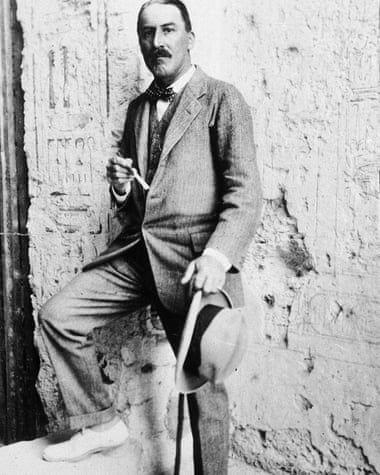
Howard “Indi” Carter

Standard

Howard Carter, a British archaeologist born on May 9, 1874, in Swaffham, Norfolk, England, is known for his significant contribution to Egyptology. In 1922, he discovered the most complete tomb of King Tutankhamun, which remains one of the most celebrated and richly endowed discoveries in the history of Egyptology. Carter passed away on March 2, 1939, in London.

Here is the story of his accidental discovery of one of the ancient heritages, as we might know it from the acts of the adventurers, with heartfelt thanks to the brilliant Marie Grillot.

The pic at the top via The Collector.

Carter finds a grave under his horse’s hoof!

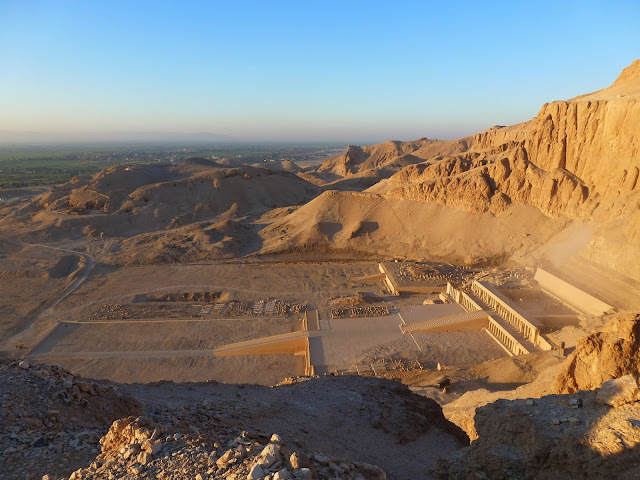
The tomb called “Bab el-Hossan” discovered in 1900 by Howard Carter, is, in fact, a cenotaph of Montouhotep II: its location (pit), in front of his funerary temple, is visible in the middle-left of this photo (photo Daniel Lefèvre)

via égyptophile

It was in October 1891 that Howard Carter arrived in Egypt to work as a draftsman and copyist for Percy Edward Newberry at the Egypt Exploration Foundation. Then, from 1893, still for the EEF, but this time under the direction of Edouard Naville, he copied the bas-reliefs of Deir el-Bahari intended to illustrate the Egyptologist’s work “The Temple of Deir el-Bahari”.
In this context, the one who, in November 1922, will emerge from oblivion, Tutankhamun will make, in an entirely fortuitous manner, his first discovery…
This “adventure” will stretch over two years and is worthy of Indiana Jones! It began in November 1898, on an exceptionally grey and rainy day in the Theban necropolis and the rocky cirque of Deir el-Bahari.

Carter is concerned about the impact of these rains on the temple murals. So, he decides to go to the site “with his colleague Charles Sillem” to observe and estimate potential damage.

The tomb called “Bab el-Hossan” discovered in 1900 by Howard Carter, is, in fact, a cenotaph of Montouhotep II:
its location (pit) is visible here

While he is in front of the temple of Montouhotep, his horse’s foot sinks into a hole… and they both fall! Carter gets up and hastens to examine what caused the fall. “Looking in the small hole formed there, I saw the traces of stonework”, he relates.

He was very intrigued and then opened up to Edouard Naville. As this sector is not in the area of his concession, he attaches little importance to it and does not encourage him to carry out other investigations.

For his part, Howard Carter will not forget this place; he promises to return there to further the research.

To do this, he knows that he must wait for his professional situation to evolve, which will happen quickly. Indeed, in 1899, Gaston Maspero, back at the head of the Antiquities Service, appointed him general inspector of monuments in Upper Egypt.

The following year, finally feeling free to carry out his first “independent” excavation, Howard Carter returned to the site and saw his intuition confirmed: it was indeed a burial! The work to clear what will be known as “Bab el-Hossan” (the horse’s grave) will prove gigantic!

Portrait of a young Howard Carter (author and date unknown)

The opening, which will have to be enlarged, leads to a corridor dug into the rock, 17 meters deep, leading to a sealed door. The clearing carried out with a large team that nevertheless takes turns tirelessly takes an incredible amount of time.

Behind the door, Carter encounters a new 150-meter corridor leading to a large room. Inside, draped, wrapped, and wrapped in linen, is a giant statue!

A well leads to a second chamber located around thirty meters lower. In it, Carter finds vases, pots, and boat models. In another well, a wooden chest bears the name of a pharaoh. This inscription will allow the statue to be identified.

Statue of Montouhotep II – painted sandstone – from his cenotaph located under his temple of Deir el-Bahari
discovered in 1900 by Howard Carter in what is generally referred to as: “Bab el-Hossan.”
Egyptian Museum in Cairo – JE 36195

It is made of painted sandstone and is 1.38 m high and 0.47 m wide. It represents Montouhotep II, ruler of the 11th dynasty. He sits on his throne, wearing the red crown of Lower Egypt and the white habit of jubilee (sed). His broad face, full lips, and a false beard are black.

Its eyes are painted white with black pupils. His hands are black, and his arms are crossed on his chest in the Osiriac position. His legs, also black, are very thick, even disproportionate. In their “Official Catalog of the Egyptian Museum in Cairo,” Mohamed Saleh and Hourig Sourouzian put forward this interesting hypothesis about the colour of its complexion: “It seems that the statue was painted black before burying it.”

As for Rosanna Pirelli (“The Wonders of the Egyptian Museum in Cairo”), she analyzes this particular representation of the sovereign as follows: “This is a strong and hieratic image of the second unifier of the pharaonic state after Menes. The statue symbolizes the double nature of the pharaoh who, during his lifetime, embodies the falcon god Horus, the mighty conqueror, while in death, he is identified with Osiris, the sovereign of the deceased.

Statue of Montouhotep II – painted sandstone – from his cenotaph located under his temple of Deir el-Bahari
discovered in 1900 by Howard Carter in what is generally referred to as: “Bab el-Hossan.”
Egyptian Museum in Cairo – JE 36195 – photo of the museum

Did Howard Carter discover the tomb of the great pharaoh? Mohamed Saleh and Hourig Sourouzian say, “The statue of Montouhotep had been ritually buried in a vault under the terrace (of his temple) and which seems to have been the initial tomb of the king, before having been transformed into a cenotaph. The entrance from this vault opened into the forecourt of the funerary monument of Montouhotep.”

Montouhotep II (“may Montu be satisfied”) reigned between 2061 and 2010 BC. AD. He led an important policy of cultural and commercial restoration.

Location of the temple of Montouhotep (partly ruined today)
in the rocky cirque of Deir el-Bahari

His funerary complex located at Deir el-Bahari was, perhaps, according to the hypothesis put forward by Edouard Naville, a temple with a double terrace topped by a small pyramid. Today, it is primarily degraded and cannot be visited. However, it can be seen from the temple of Hatshepsut, or better yet, an overview of it from the path linking Deir el-Bahari to Deir el-Medineh, which overlooks it.

This statue, “found under the hoof of a horse,” is exhibited at the Cairo Museum (JE 36195). It represents a magnificent example of the renaissance of Egyptian art from the beginning of the Middle Kingdom…

It is important to point out that, in “Howard Carter, The Path to Tutankhamun”, T.G.H. James tells us that this discovery had not been up to what Howard Carter had expected… “His disappointment was deep enough in itself, but worse still, it was increased by the fact that he had committed the stupidity to inform Lord Cromer, the British Consul General, who actually held power in Egypt, suggesting that it was possible that a tomb, possibly royal, had been found. As Maspero wrote to Naville: ‘ ‘He announced his discovery too early to Lord Cromer. Lord Cromer came to witness his success and is now in despair, having been unable to show him anything of what he had predicted. I console him as best I can because “He’s a really good boy, and he does his duty very well.”

Unfortunately, this experience led Nicholas Reeves to say in “Ancient Egypt: The Great Discoveries” that Carter then decided that, for any possible future discovery, he would wait until he was absolutely sure of what he had found before making the announcement. For Tutankhamun, he adopted this strategy:”…

Marie Grillot

Sources:
Herbert Eustis Winlock, Excavations at Deir El Bahri 1911-1931, The Macmillan Company, New York, 1942 https://archive.org/details/Winlock_Deir_El_Bahari_1911-1931 Thomas Garnet Henry James, Howard Carter, The path to Tutankhamun, TPP, 1992 https://archive.org/stream/HowardCarterThePathToTutankhamunBySam/Howard+Carter+The+Path+to+Tutankhamun+By+Sam_djvu.txt

Nicholas Reeves, Richard H. Wilkinson, The Complete Valley of the Kings, The American University in Cairo Press, 1996
Mohamed Saleh, Hourig Sourouzian, Official Catalogue of the Egyptian Museum in Cairo, Verlag Philippe von Zabern, 1997
Francesco Tiradritti, Treasures of Egypt – The wonders of the Egyptian Museum in Cairo, Gründ, 1999
Nicholas Reeves, Ancient Egypt. The Great Discoveries, Thames & Hudson, 2002, The Great Discoveries of Ancient Egypt Editions du Rocher, 2001
National Geographic Guide, The Treasures of Ancient Egypt at the Egyptian Museum in Cairo, 2004
The Egyptian Museum in Cairo, Abeer El-Shahawy, Matḥaf al-Miṣrī, American Univ in Cairo Press, 2005
Statue of King Mentuhotep the Second http://www.globalegyptianmuseum.org/record.aspx?id=14914 The Egyptian Museum in Cairo, Abeer El-Shahawy, Matḥaf al-Miṣrī

Rocky cirque of Deir el Bahari: on the right, the temple of Hatshepsut; set back, barely visible, the temple of Thoumosis III, and to the left, the temple of Menthouhotep in the courtyard of which Bab El-Hossan was found – photo taken from the Luxor City Facebook page.

Published June 21 2014, by Marie Grillot
Labels: bab el-hossan Carter Deir_el-Bahari hossan the tomb of the horse Montouhotep naville

Cloisonné Gold Pendant, a Timeless Lotus Flower!

Standard

This fascinating jewel is not only a designer piece but a symbol of birth and rebirth!
Here is another brilliant article by Marie Grillot about the secret of this magical lotus jewel, which will remain forever.

This pendant comes from the treasure of Princess Mérit (Mereret), whose tomb was found in March 1894 by Jacques de Morgan in the sector of the “northern pyramid” of Dahchour.

Kha and Merit receive offerings on a painted chest from two of their children.
By Museo Egizio

Cloisonné gold pendant of a princess of Dahchour

Cloisonné gold pendant of Princess Merit (Mereret) – gold, carnelian, turquoise, lapis lazuli
Middle Kingdom – 12th Dynasty – Reigns of Sesostris III and Amenemhat III – 1878 – 1798 BC-AD
discovered in his tomb in Dahchour on March 6, 1894, during excavations carried out by Jacques de Morgan
Egyptian Museum in Cairo – CG 53070 – JE 30877 – photo of the museum

via égyptophile

This lovely pendant is made of cloisonné gold, garnished with semi-precious stones. The brilliance that the gems reflect, their perfect execution, and their exceptional state of conservation make it difficult to believe that they are almost… 4000 years old!

It takes the shape of a “convex” shell, the upper part representing an open lotus flower. Its petals, pointing downwards, are made of a delicate and luminous cloisonné composed of turquoise, lapis lazuli and carnelian.

Cloisonné gold pendant of Princess Merit (Mereret) – gold, carnelian, turquoise, lapis lazuli
Middle Kingdom – 12th Dynasty – Reigns of Sesostris III and Amenemhat III – 1878 – 1798 BC-AD
discovered in his tomb in Dahchour on March 6, 1894, during excavations carried out by Jacques de Morgan
Egyptian Museum in Cairo – CG 53070 – JE 30877
published here in “Jewelry and goldsmiths. Booklet 3”, Émile Vernier

“Under this area, the main decoration develops. The middle is occupied by a carnelian of unusual dimensions: 0 m. 021 millimetres high and 0 m. 026 millimeters wide. Its general shape is close to a circle, part of which is cut by the upper area. All around the carnelian, a decoration is developed made, in the axis, of alternating cloisonné chevrons: lapis, carnelian and turquoise, and on each side, curved serrations of turquoise, leaving between them curvilinear triangles in carnelian followed by other small triangles of lapis, then approaching the upper area, alternating bands of lapis and turquoise and ending with an ellipse in turquoise having as its middle a small ellipse of lapis is framed by a fairly wide edge where the gold is bare. The reverse is made of a concave plate of plain gold, where we see a horizontal ring in the upper part, flat and vertically striated,” explains Emile Vernier (Jewelry and goldwork. Booklet 3).

Cyril Aldred’s interpretation follows: “The pendant… is inlaid with a motif inspired by the lotus flower from which is suspended a crown of stylized flower petals, ending in a pendant of three chevrons”.

As for Nigel Fletcher-Jones (“Ancient Egyptian Jewelry”), he specifies that “The pendant was originally suspended from a chain of gold beads to which twenty-six small oyster shells were soldered at regular intervals”.

Cloisonné gold pendant of Princess Merit (Mereret) – gold, carnelian, turquoise, lapis lazuli
Middle Kingdom – 12th Dynasty – Reigns of Sesostris III and Amenemhat III – 1878 – 1798 BC-AD
discovered in his tomb in Dahchour on March 6, 1894, during excavations carried out by Jacques de Morgan
Egyptian Museum in Cairo – CG 53070 – JE 30877 – photo of the museum

This jewel is loaded with symbols and “powers”… Thus, the oyster shell was, for a short period of the Middle Kingdom, an amulet which, according to Carol Andrews (Amulets of Ancient Egypt) “, gave health” and brought well-being to the person who wore it… As for the lotus, which is very present in Pharaonic iconography, it is not only the symbol of birth but also that of rebirth.

The stones used are also loaded with symbolism. In “The Gold of the Pharaohs”, Christiane Ziegler provides these details: “The ‘méfékat’ turquoise was extracted from Sinai where the pharaohs launched mining expeditions. Its luminous colour, evoking the growth of young shoots in spring, was synonymous with vitality and joy. Its presence in the funerary equipment undoubtedly gave the dead the joy of rebirth.” Carnelian, Héréset, “possessed the invigorating virtues of blood”. As for lapis lazuli, she explains to us: “in ancient myths, it constituted the beard and hair of the gods and had virtues comparable to those of turquoise”…

Pyramid of Amenemhat III in Dahchour
Photo by Jacques de Morgan published in “Excavations at Dahshur”, 1894

This pendant comes from the treasure of Princess Mérit (Mereret), whose tomb was found in March 1894 by Jacques de Morgan in the sector of the “northern pyramid” of Dahchour.

In his work “Excavations at Dahchour”, published the same year, he relates: “The underground necropolis that I had just opened was therefore not the tomb of the king, but rather the gallery of the princesses, one of the annexes of the tomb principal. Later, I discovered among the treasures the names of the princesses Hathor-Sat and Merit and the titles of a sixth royal daughter on the worm-eaten remains of a wooden box. Then he adds, “Meticulous examination of the floor of the galleries revealed on March 6 a cavity dug in the rock at the foot of sarcophagus C. The ground was loose,e and the worker’s foot sank into the middle of the moving debris. A few blows of the pickaxe revealed its treasures: gold and silver jewels and precious stones were there, piled up in the middle of the worm-eaten fragments of a box where they had once been kept. “

Cloisonné gold pendant of Princess Merit (Mereret) – gold, carnelian, turquoise, lapis lazuli
Middle Kingdom – 12th Dynasty – Reigns of Sesostris III and Amenemhat III – 1878 – 1798 BC-AD
discovered in his tomb in Dahchour on March 6, 1894, during excavations carried out by Jacques de Morgan
Egyptian Museum in Cairo – CG 53070 – JE 30877
published here in “Excavations at Dahshur” by Jacques de Morgan

Georges Legrain, who worked alongside him, was responsible for drawing up the first jewellery catalogue and faithfully reproducing drawings and watercolours. The large number of pieces to be presented will mean that this pendant will be described in a laconic manner: “Bivalve shell decorated with multicoloured stones on its convex part. The main design represents a lotus flower supporting an indefinite red object, from which herbs escape …”

Jacques de Morgan brandishing one of the pieces of Dahchour’s treasure (Princess Khnoumit’s tiara)
during its discovery in April 1894 in the funerary complex of Amenemhat II in Dashour
(drawing published in “L’Illustration” on May 11, 1895)

We can only subscribe to the words of Pierre Tallet in his work “Sesostris III and the end of the 12th Dynasty”: “One last area where the ending 12th dynasty seems to have particularly excelled is that of jewellery. The royal necropolises of this period thus delivered the first truly important collection of Egyptian jewellery, for the most part, intended for women in the pharaoh’s entourage: jewellery and toiletries from Sat-Hathor-Iounet to El-Lahoun, Mereret… These different lots of Precious objects, where gold, silver and various fine stones such as lapis lazuli, turquoise, amethyst and carnelian abound, give an idea of the splendour in which the royal family lived.

This pendant was registered in the Journal of Entries of the Cairo Museum under the reference JE 30877 and in the General Catalogue CG 53070.

Marie Grillot

Sources:
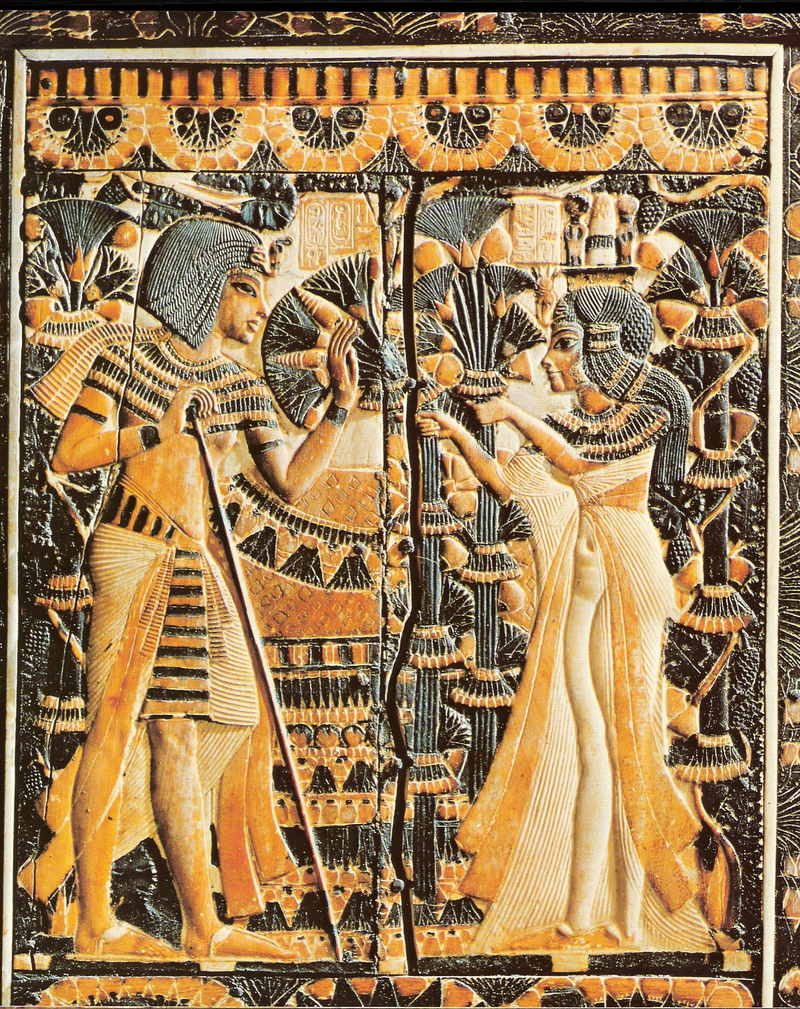
Excavations at Dahchour, Jacques de Morgan, Berthelot, M. (Marcellin), Legrain, Georges Albert, 1865-1917; Jquier, Gustave, 1868-1946; Loret, Victor, 1859-1946; Fouquet, Daniel https://archive.org/details/fouillesdahcho01morg/page/n213/mode/2up Dahchour excavations: 1894-1895, Jacques de Morgan, Wien 1903, http://digi.ub.uni-heidelberg.de/diglit/morgan1903/0049 Jewellery and goldsmiths. Booklet 3, Number 52640-53171, by Mr. Émile Vernier http://gallica.bnf.fr/ark:/12148/bpt6k57740426/f96.item.r=52859.texteImage Summary list, booklet published in 1894 by M. de Morgan; Excavations at Dahchour, II; Morgan’s catalogue, 1897 by Morgan Jacques. Letter on the latest discoveries in Egypt. In: Reports of the sessions of the Academy of Inscriptions and Belles-Lettres, 38th year, N. 3, 1894. pp. 169-177; https://doi.org/10.3406/crai.1894.70401 https://www.persee.fr/doc/crai_0065-0536_1894_num_38_3_70401 Jewellery and goldsmiths. Booklet 3, Number 52640-53171, by Mr. Émile Vernier http://gallica.bnf.fr/ark:/12148/bpt6k57740426/f96.item.r=52859.texteImage The gold of the pharaohs – 2500 years of goldsmithing in ancient Egypt, Catalogue of the summer 2018 exhibition at the Grimaldi Forum in Monaco, Christiane Ziegler Jewels of the Pharaohs, Cyril Aldred, ed Thames & Hudson Ltd. London, 1978 Ancient Egyptian Jewelry: 50 Masterpieces of Art and Design, 2019, Fletcher-Jones, N, The American University in Cairo Press Ancient Egyptian Jewelry, Carol Andrews, Harry N. Abrams, INC., Publishers, 1991 Amulets Of Ancient Egypt, Carol Andrews, published for Trustees of the British Museum by British Museum Press https://archive.org/details/AmuletsOfAncientEgypt_201707 Treasures of Egypt – The wonders of the Egyptian Museum in Cairo, Francesco Tiradritti
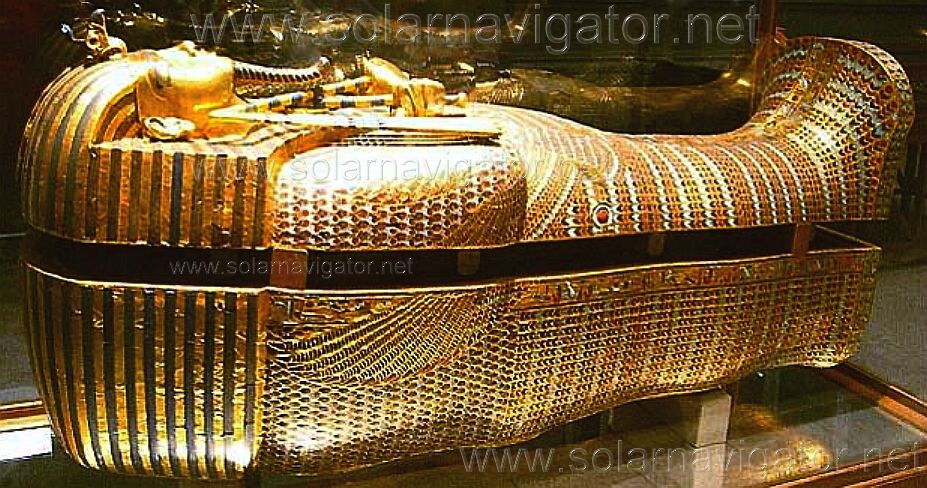
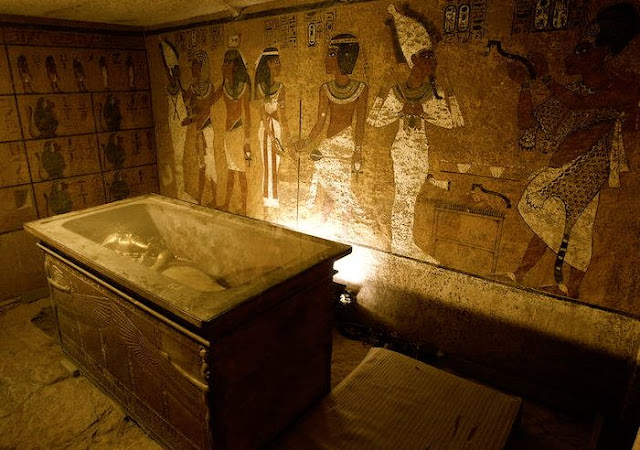
Posted December 21 2021, by Marie Grillot

Labels: CG 53070 – JE 30877 Dachour Dashour de Morgan expo Ramsès II 2023 fouilles 1894 Jacques de Morgan la villette Mereret Merit Mérit or clloisonnée pendeentif