Put your hand on a hot stove for a minute, and it seems like an hour. Sit with a pretty girl for an hour, and it seems like a minute. That’s relativity. ~Albert Einstein
I was always sceptical about the concepts of time and space. As I explored Einstein’s theory of relativity, I realised that it encompasses not just time and space, but everything else as well, including happiness.
Indeed, it pertains to an individual’s life circumstances or, more precisely, it is linked to them. For example, someone living a stress-free and trouble-free life may experience a lack of happiness, but when faced with tough times, they may find happiness more readily.
My life has been filled with challenges, but this year has been especially tough. As you know, I had issues with my lower abdomen and underwent three surgeries to fix it, or so I thought. However, a problem arose when I went to the toilet, which caused concern, and I visited my doctor. After the examination, he stated that an apparent mistake had occurred during the last operation, a part had been injured, and I would require another procedure. I won’t go into the details, but after some anxious days, I’ve managed to secure a scheduled appointment for next Wednesday, as the procedure needs to be done soon to prevent kidney issues.
I gathered some insights and words from my teacher, Carl Jung, who held that the psyche and cosmos are fundamentally timeless. Working with Einstein and Pauli, he examined a concept of timelessness that goes beyond linear clock time. Jung proposed that accurate understanding involves transcending causality because time in the psyche and reality is relative. Although our conscious mind perceives time linearly, embracing a sense of timelessness can enhance learning. His goal was to unify physical and psychic realities and how they interact.
He believed in a psychological “relativity of time,” where perception is subjective and affected by inner states. He connected this to synchronicity, implying that the psyche and material world are not always ruled by linear cause-and-effect but can relate in other ways. Jung pointed out that, similar to the space-time continuum in modern physics, the unconscious also exhibits “indistinctness” or psychic relativity, which blurs the boundaries between time and space.
For Jung: “[Synchronicity] cannot be a question of cause and effect, but of a falling together in time, a kind of simultaneity. Because of this quality of simultaneity, I have chosen the term ‘synchronicity’ to designate a hypothetical factor equal in rank to causality as a principle of explanation.” Jung, C. G. (1952). The Structure and Dynamics of the Psyche; Synchronicity: An Acausal Connecting Principle, in CW, Vol. 8.
Now, what about happiness? I tell you this: when I go to the toilet and manage to pee, I feel the entire joy of life again and find happiness!
Humour plays a vital role, and hope remained until the very end. In my seventy years, I have enjoyed good health and no surgeries, but this year I face my fourth operation. Here’s to a brighter year ahead. Wishing you all health and prosperity.
Hello everyone! Today, I want to share some thoughts that have been on my mind for a while about our world—a chaotic place—and explore the reasons behind it.
Many ideas and thoughts were swirling in my mind, and since I am not sufficiently professional to keep them all there, I hesitated to write this. However, after reading an article by The Borderline Crisis, a highly recommended blog, it encouraged me to share my thoughts.
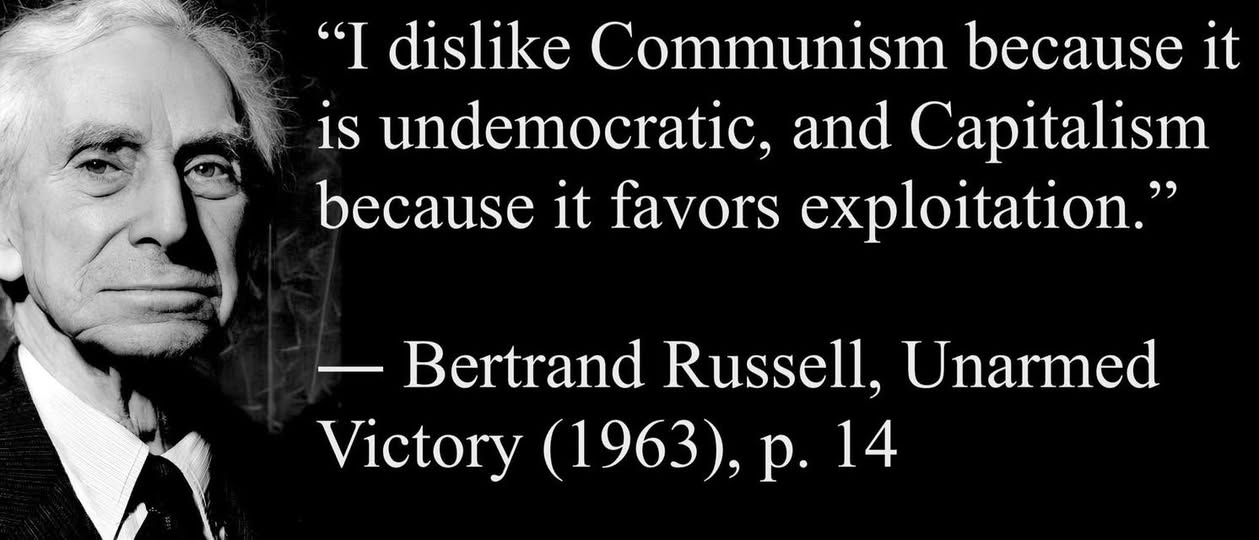
As we watch and ponder, the world and its inhabitants hurriedly head towards an abyss filled with wars and violence, driven by an unknown purpose. The wealthy continue to grow richer, while the poor become increasingly poorer. Every compassionate person wonders about the cause and reason. That was also my question, and I realised it all comes down to money. Or, more accurately, it can be best described as capitalism. Hold on!!! Please don’t walk away; I am not a communist and have no intention of promoting such ideas. I fully agree with Bertrand Russell, who stated:
“I dislike Communism because it is undemocratic and Capitalism because it favours exploitation.“ — Bertrand Russell, Unarmed Victory (1963), p. 14
Thus, concerns regarding communism and its foundational principles have diminished, while capitalism continues to gain greater influence. Why is that? Essentially, communism has shot itself in the foot by taking on a form of dictatorship, which has contributed to its decline throughout history. On the other hand, after World War II, capitalism managed to contain communism by offering people equity capital through the conventional bourgeois approach, thereby generating a fear of communism.
They created opportunities for the lower class by enabling partial instalment payments, allowing them to own possessions, and helping to dispel the notions that deprived them of their belongings. They might be burdened with their mortgage for life, but they have some possessions, such as their own house, car, TV, washing machine, etc. This approach gained popularity worldwide, including in Europe and even in Iran before the 1979 revolution. We adopted an American-style lifestyle, characterised by luxury and instalment-based spending!
This approach has been cleverly devised to encourage pride in possessions and stimulate a desire for more. I see it as a fundamental aspect of capitalism, as it drives competition among neighbours, cities, or nations to increase their assets. Consequently, people become fixated on winning more and acquiring larger and better possessions.
I call it Greed! This trait isn’t found in nature but only among humans. I noticed it wasn’t present in the communist world, as I observed when interacting with my East German customers, whom I took to visit doctors during my daily work. They all expressed satisfaction with their lives in the former GDR. One of them, a tiny older woman, told me she lived peacefully with her neighbours, free of stress, feeling a genuine sense of community and helpfulness among friends and comrades. Even one of the younger people I met at a disco one evening, who recently escaped to the West, told me that everything wasn’t too bad there. She mentioned that travelling abroad was somewhat challenging due to restrictions, but she was eager to experience and connect with different cultures.
Nevertheless, the actual outcome of reunifying East and West Germany has shown how capitalism can significantly disrupt the peaceful life of a population, exposing them to the allure and splendour of Western society, yet leaving them in a state of longing. You may be aware that after the USSR’s withdrawal from East Germany, Western investors closed all remaining factories and manufacturing facilities. This was done to conceal from the capitalist world that factories in the communist system were still operational and that life was proceeding normally there. By the way, the education system has failed under the communist dictatorship, as shown by how individuals in East Germany can swiftly adopt fascist tendencies from a corrupt communist system.
Yes! Capitalism seeks to make you see and believe only in its world and nothing else. Accordingly, the modern bourgeoisie wields enormous power to keep people conservative and instils in them a fear of losing their possessions.
Capitalism is like a worm lurking in every part of our lives, often unnoticed. This allows it to operate while we concentrate on our own concerns, such as increasing profits! Even within the art world, artists are rarely solely focused on creating their work without also considering its sale and marketing. The traditional model, where an artist creates and a manager handles everything else, is outdated. I don’t mean to suggest that all managers are honest, but it does help artists who need a quiet life to focus on their art. You are all artists, aiming to display your work here. However, if you look around, you might realise that this way of life has consumed your thoughts so completely that you no longer feel longing or curiosity about the world’s happenings. You have been completely absorbed in your own concerns related to your personal domain.
On the other hand, the craving for increased luxury and comfort remains constant. Capitalism knows no limits and is frequently used by millionaires to display wealth, which can lead middle-class individuals to develop an excessive obsession. Since not everyone can achieve millionaire status, this seemingly out-of-reach desire often results in anger, frustration, dissatisfaction, and sometimes depression. This may lead to feelings of impatience, envy, increased sensitivity, and an abrupt loss of patience. You might have observed that people in the streets shout at each other over trivial matters, drive aggressively, and honk their horns frequently. I believe this behaviour stems from capitalism.
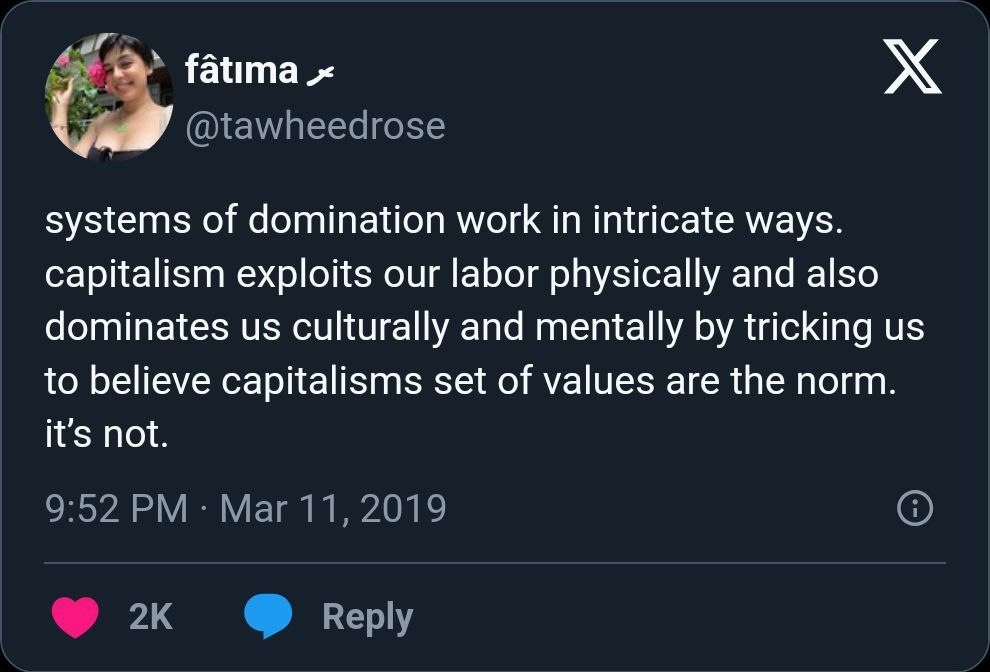
Here is an excellent explanation of capitalism I came across, not on X but somewhere else I can’t recall.
The key question is: what steps should we take? I believe our initial move should be to build a society rooted in accessible, high-quality education and robust, free healthcare, as many societal problems originate from these sectors. Following that, we need to develop a proper social democratic system—one that Rosa Luxemburg aimed to reinforce in the early 20th century, not the shallow versions currently promoted by some political parties.
I’m not discussing a proletariat dictatorship; a free society is the most important of all. I referenced Rosa Luxemburg to demonstrate my commitment to freedom, as Luxemburg followed a similar path:
She celebrated the Russian Revolution, but in a posthumously published manuscript, she sharply criticised the authoritarian policies of the Bolsheviks, advocating for democratic freedoms and famously stating, “Freedom is always and exclusively freedom for the one who thinks differently.”
She has been revered by many on the left as a martyr for the revolution. At the same time, her theories, particularly her emphasis on spontaneity and democracy, were strongly criticised by the Leninist and Stalinist traditions of orthodox communism.
In a genuine social democracy, we can devalue prices and quantities, thereby promoting a more quality-oriented lifestyle. In the capitalist world, we observe every day that prices are steadily rising, and I wonder why!
We don’t require a luxurious, speedy car or a mansion to live; these are just materials that our souls don’t need. If we carefully reflect on our lives, we will surely identify moments of genuine relaxation. I think those times are when we need fewer things and find happiness with less. Lao-Tzu offered some insightful thoughts on living with less:
“One who is content is rich.”
“He who accumulates much treasure has much to lose.”
“The greatest gift is contentment.”
Here is an excellent explanation I took from my esteemed teacher and friend, Jean Raffa, from her recent article, concerning the essence of our existence.:
Our culture profits from our yearning by promising surface solutions like money, power, safety, appearance, possessions, and sex. These things satisfy your instincts for the short term. But beneath the world’scacophonous clamour, the yearning remains. Who, amidst the hubbub, can hear the quiet voices of those who would direct you to the inner world? It’s hard to believe anything there could fulfil your needs. Harder still to pull yourself away from outer demands you’re trying desperately to fulfil. You have no time. And even if you did, how would you begin? You don’t know the way. Who would guide you? It’s too humiliating to ask for help. “I was not looking for my dreams to interpret life, but rather for my life to interpret my dreams.” ~Susan Sontag
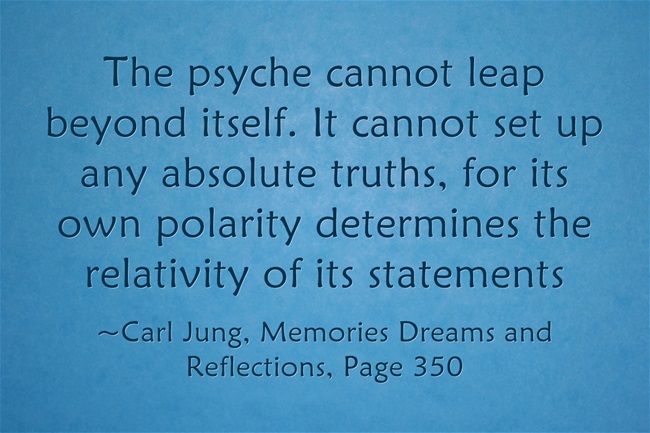
And finally, who could articulate it more eloquently than Carl Jung:
“Your vision will become clear only when you can look into your own heart. Who looks outside, dreams; who looks inside, awakes.”
~Carl Jung, Letters Volume I, Page 33.
Image credit at the top; snugsomeone (Maciej) | DeviantArt
Actually, I attended to share an extensive article today. Still, as I found out yesterday that I had to undertake a marathon with my grandchildren until midday today, I grabbed an hour yesterday afternoon when my wife took them to get some flour from the store to bake cookies to write these words. I usually turn out all connections to the world when I have the kid with me. I hope I can utter my mind comprehended enough.
As I look back into my posts, I see two posts I have written about this Persian’s traditional old ceremony. The first one, proudly to inform my friends about one of the oldest Persian festivals, and the second one, a painful hint to this elderly celebration which has been smeared with blood and suffering. Although with the hope that it would be a peaceful one this year, what a false assumption! Someone once said: If we look at this deeply, we see the differences between the old Persian rituals & festivals and all the celebrations in Islamic Iran after the Arabs occupied Persia. In ancient Persian the rituals and feasts, contrary to the Arabs, adorn love, light, and cosiness.
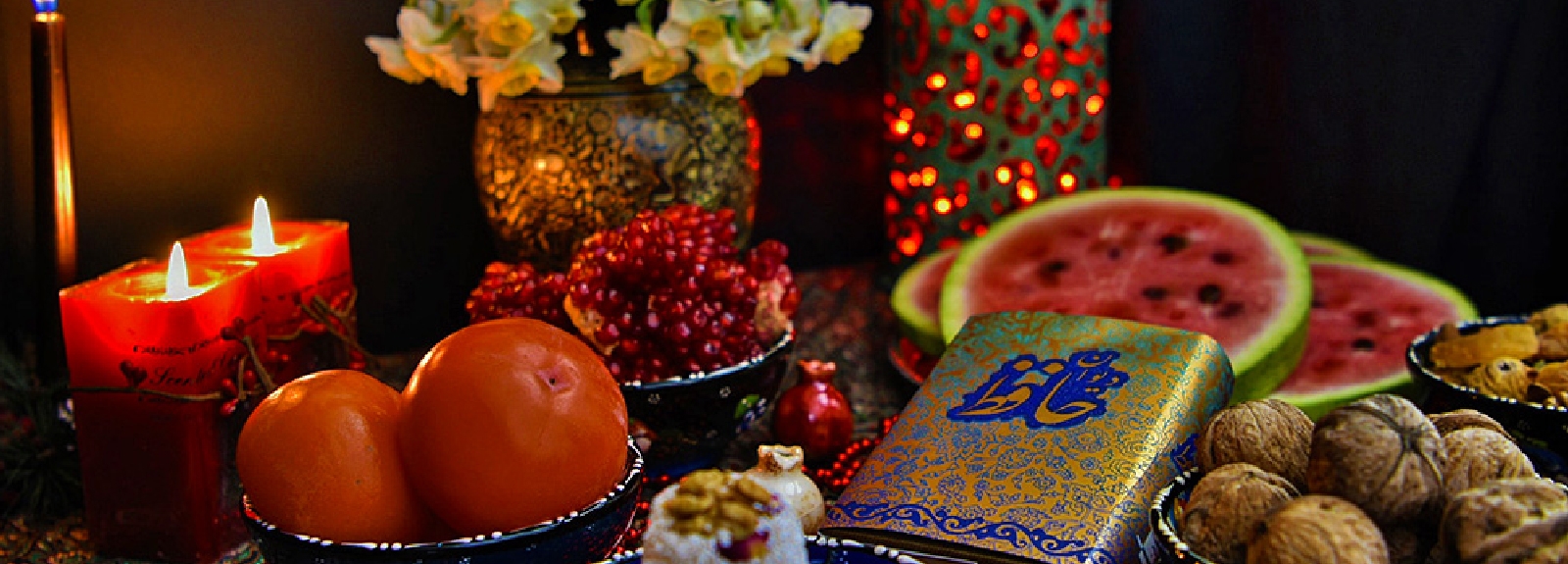
However, on every Yalda night, the Iranian winter solstice tradition, observers gather with family in a warm, cosy room and read or take an omen of fortune from FAL-E HAFEZ (Omens of Hafez) by Hafez Shirazi’s sonnets and quatrains (Ghazals). As I remember from my childhood, it was a nut and nutcracker, and the oldest woman in the family told beautiful fairytales to greet the returning sun. I am sure that this tradition will continue indefinitely under any circumstances; as I noticed on the web, they have even this year celebrated with grief and pride for their loss but with great hope to conquer evil.
It becomes clear that this fight for their right will be a war of attrition, even though it will come at the cost of bloodshed, but the secret to success is in synergy and solidarity. Together, we stand; divided, we fall!
Anyway, with my heartfelt regards, I send my best wishes to all of you, dear friend. Have a blessed Yule, Merry Christmas, and have a lovely time with your loved ones.🙏💖🌹🎅







 lampmagician
You must be logged in to post a comment.